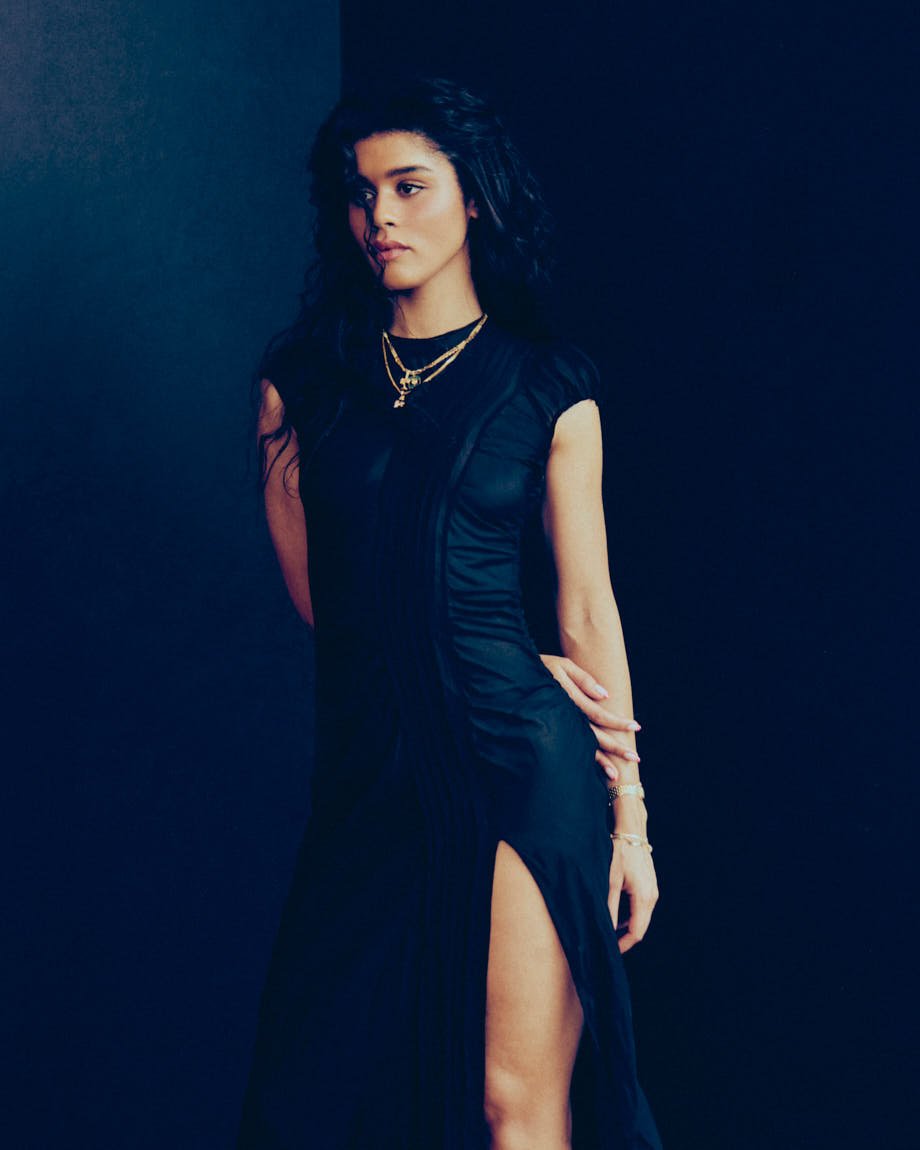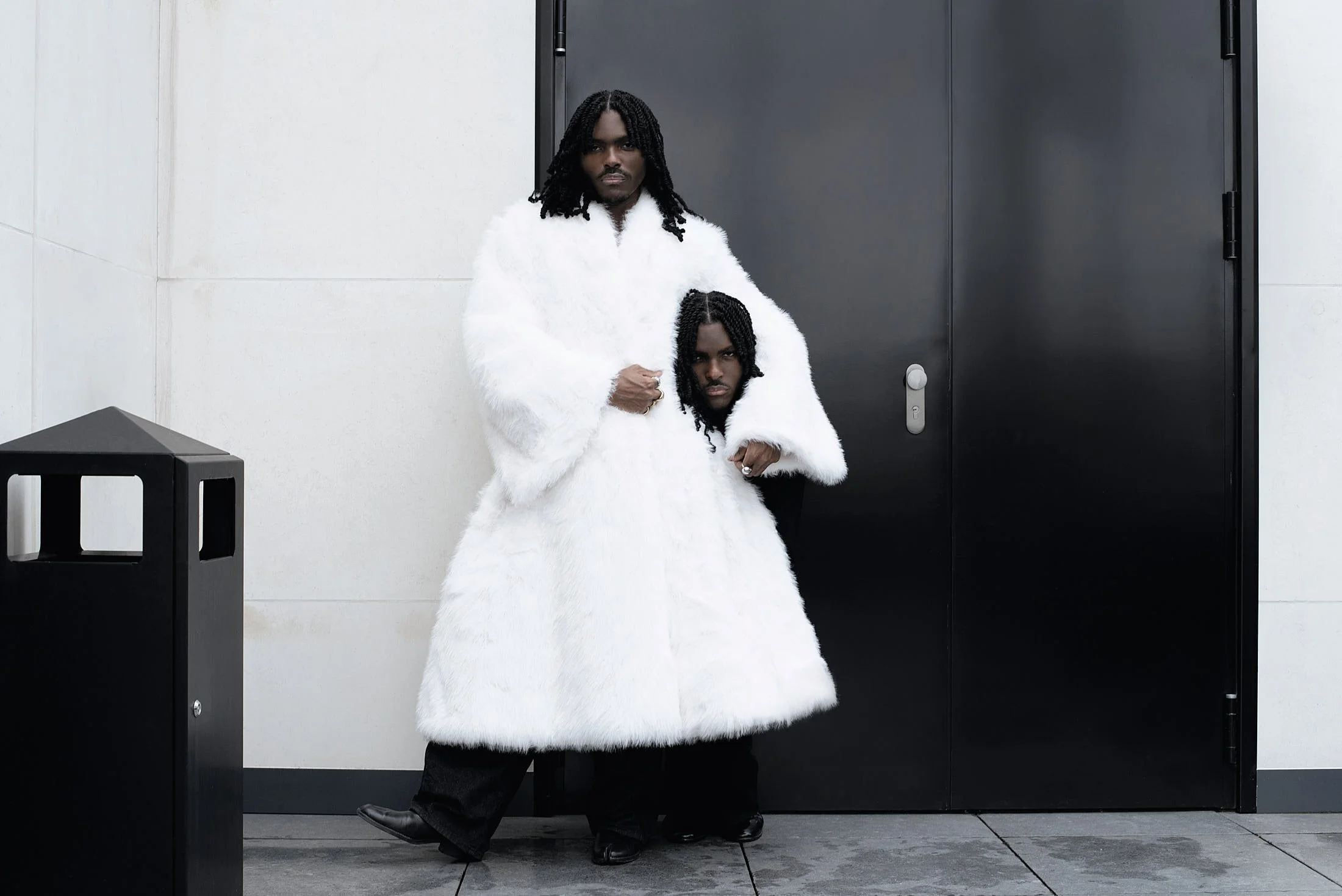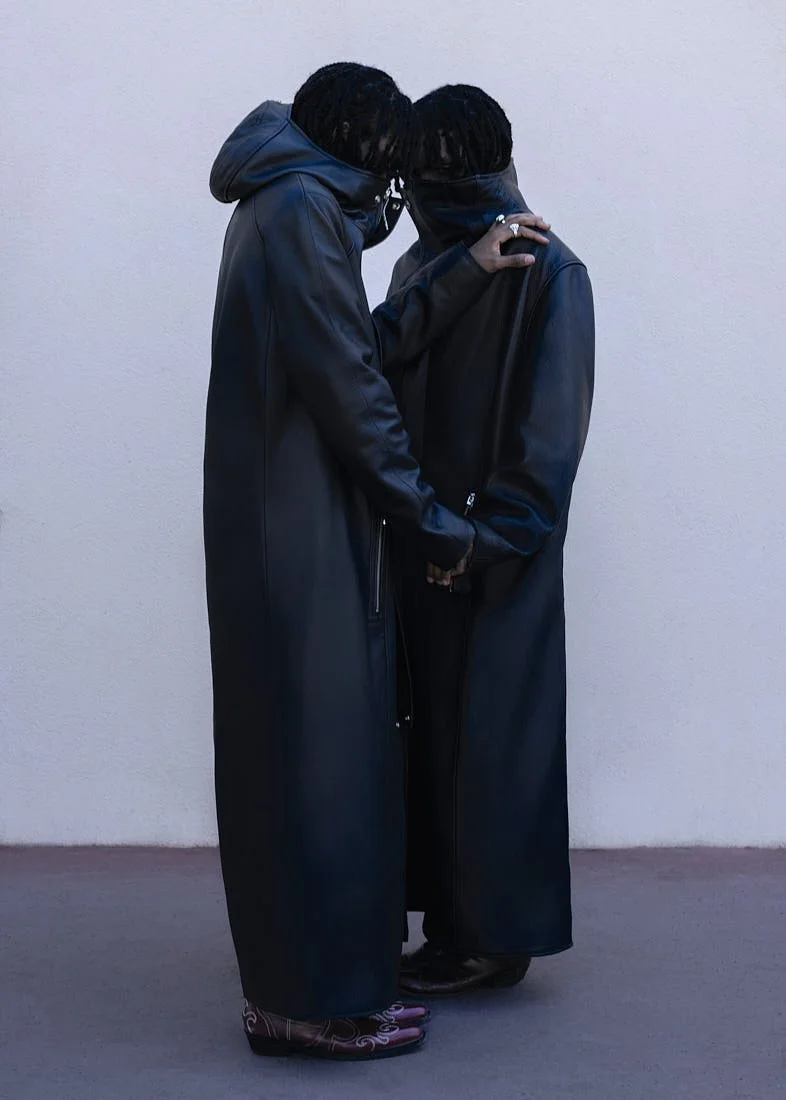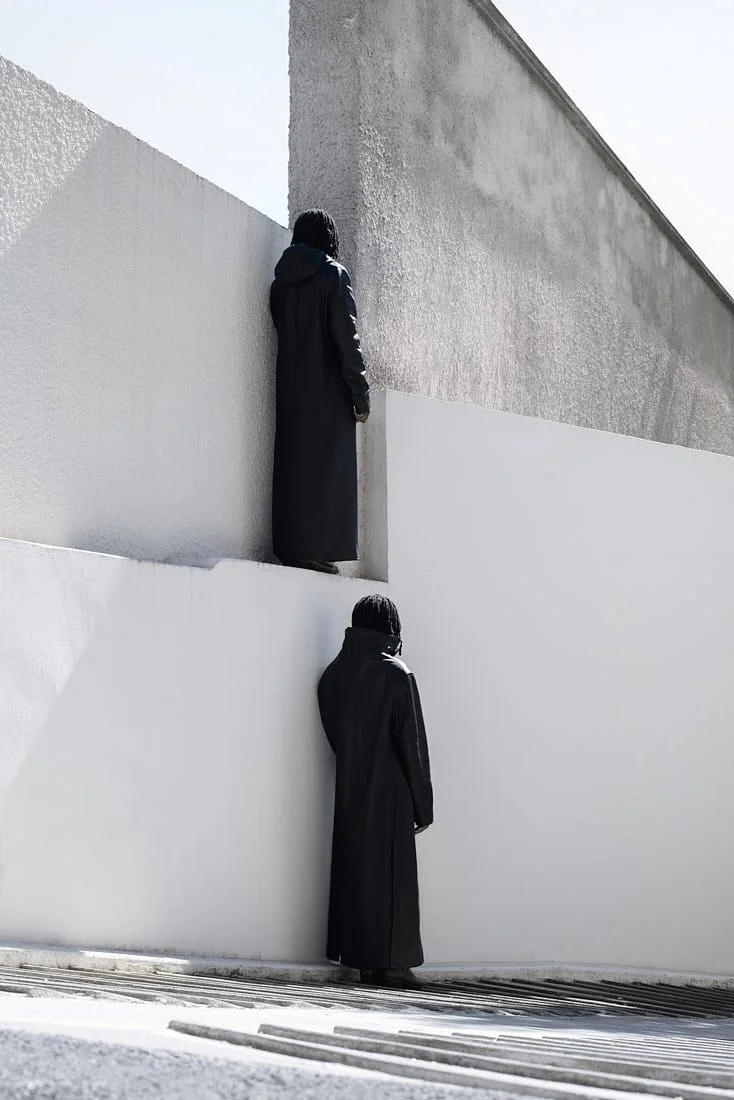
Viewing entries tagged
perspective

BEN RADCLIFFE *The Refusal to Stay in One Role

BEN RADCLIFFE *The Refusal to Stay in One Role

BEN RADCLIFFE

—
Rebellion, Reflection, and the Roles in Between


interview + written ALBAN E. SMAJLI


Ben Radcliffe drifts through interviews with the ease of someone leafing through a second-hand bookstore, picking up fragments and letting them fall. He talks about coffee as a cosmic mistake, acting as weather gone wrong, rebellion as simply switching the screen off.


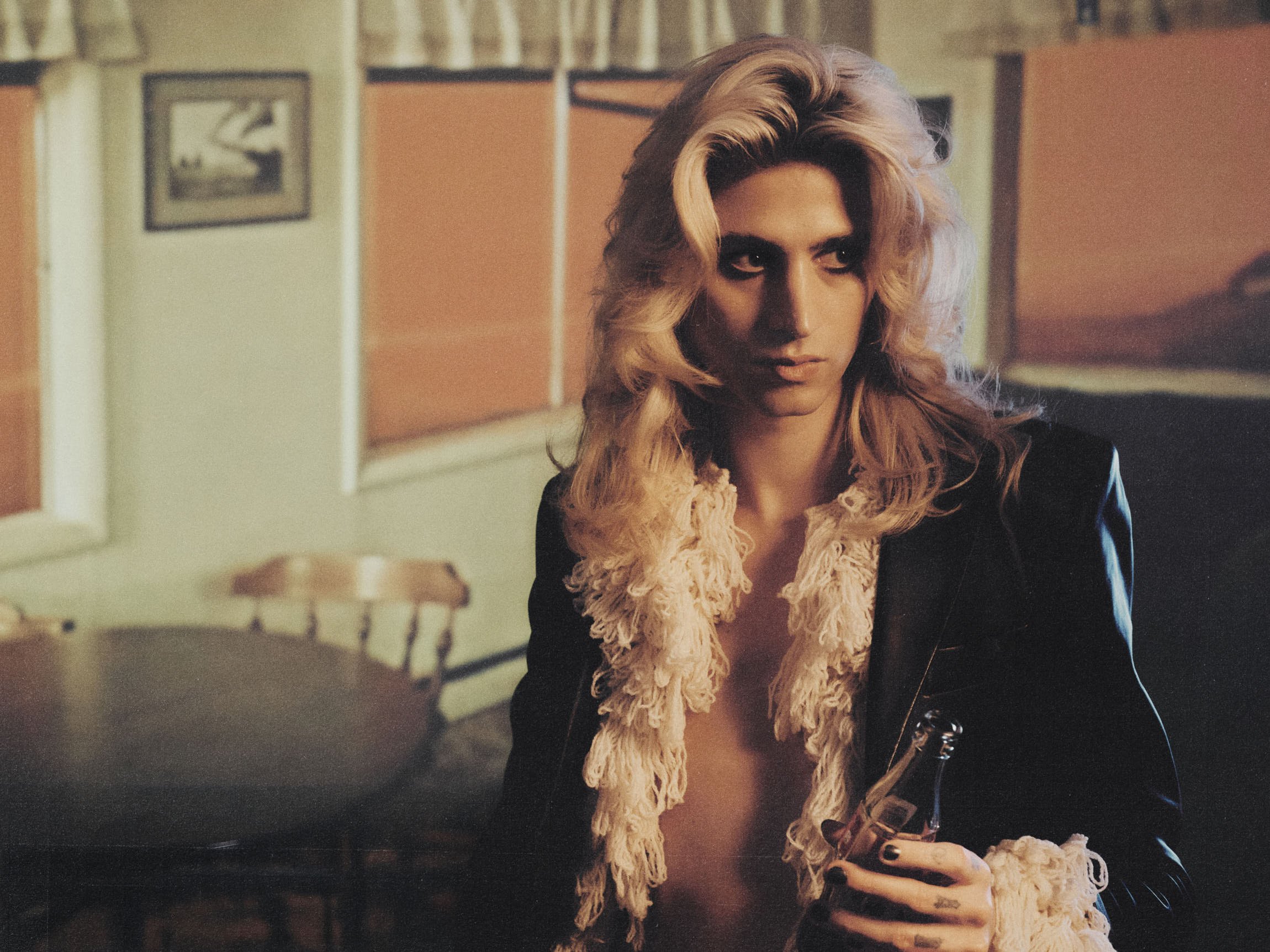
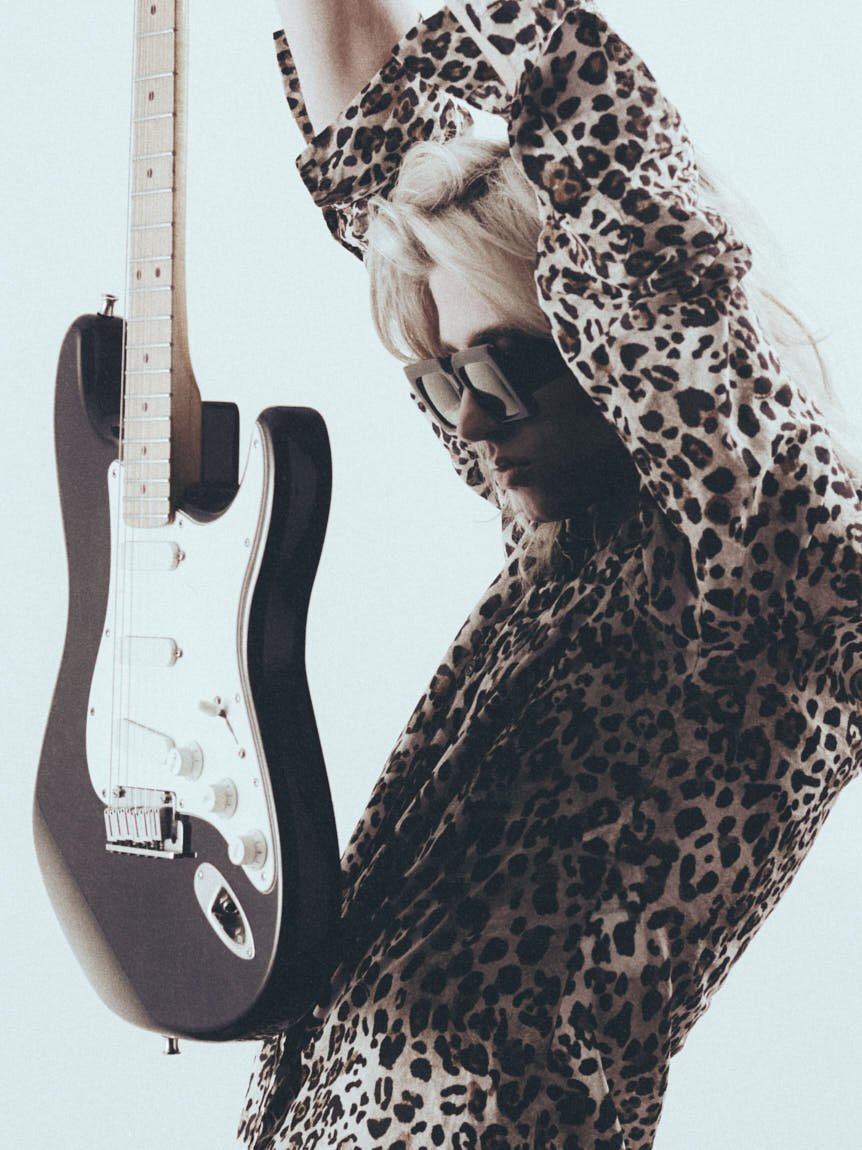
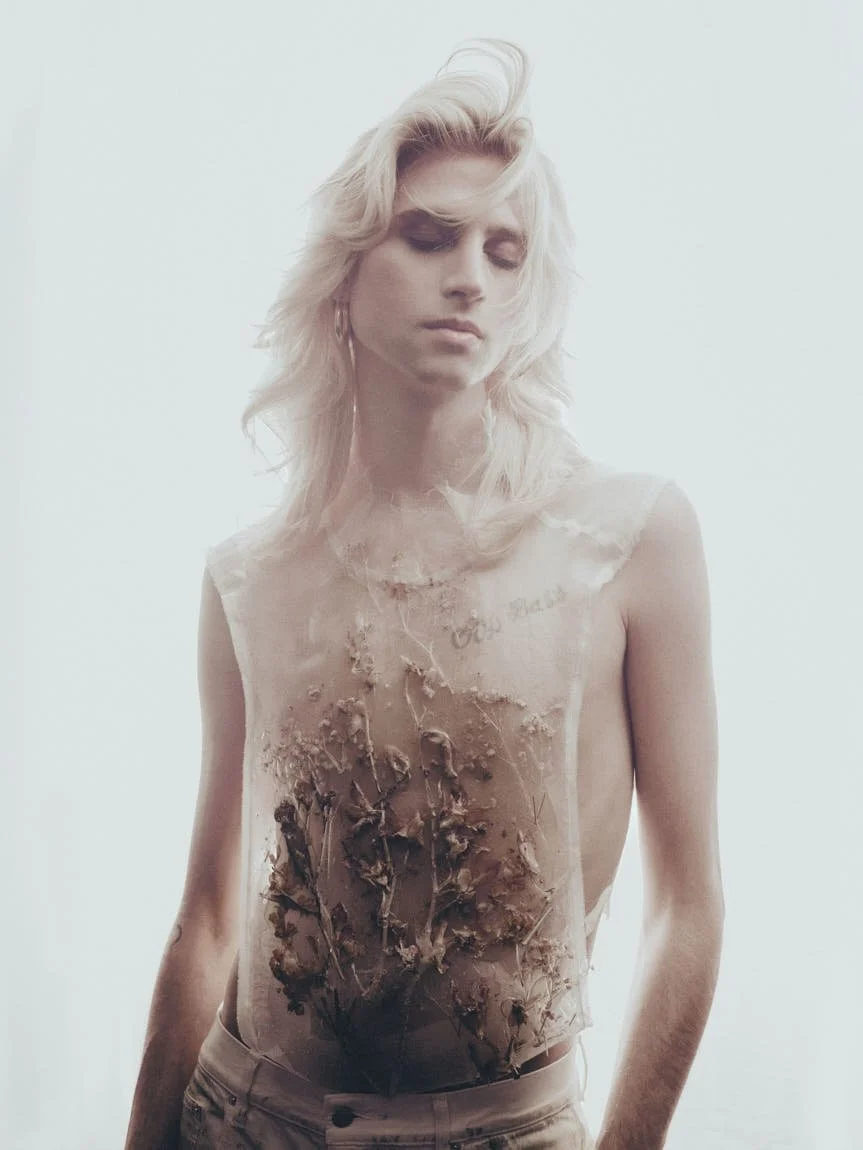
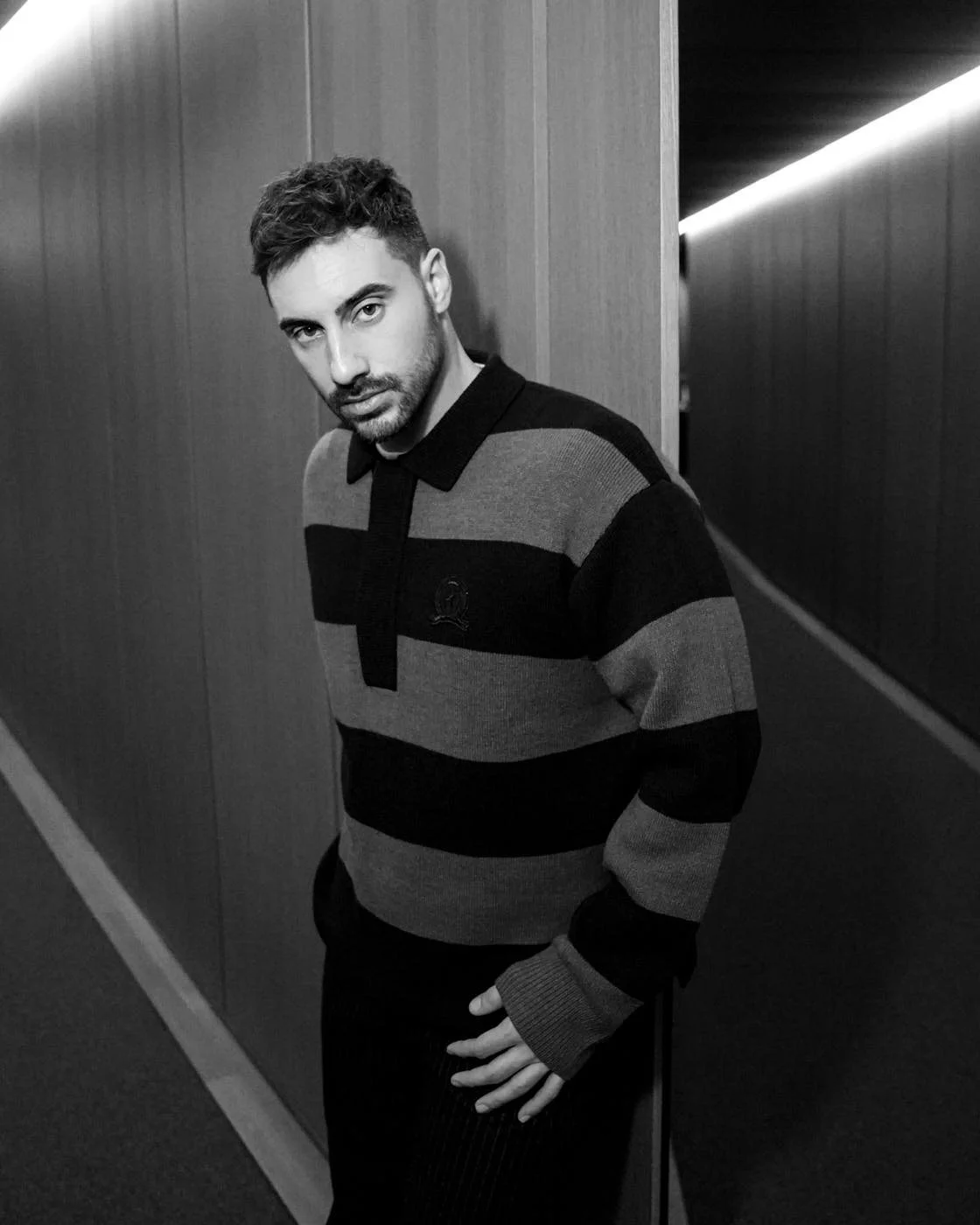
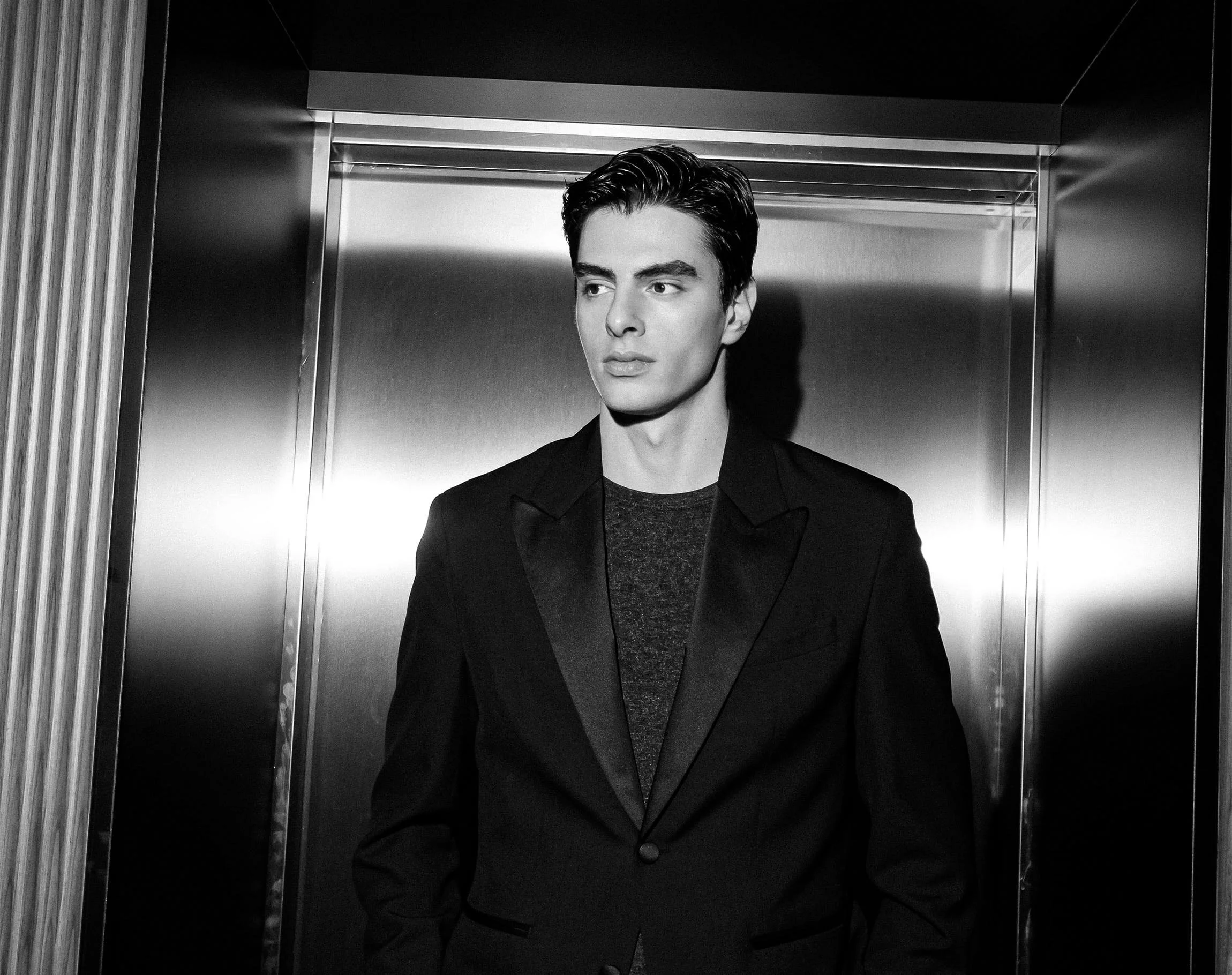
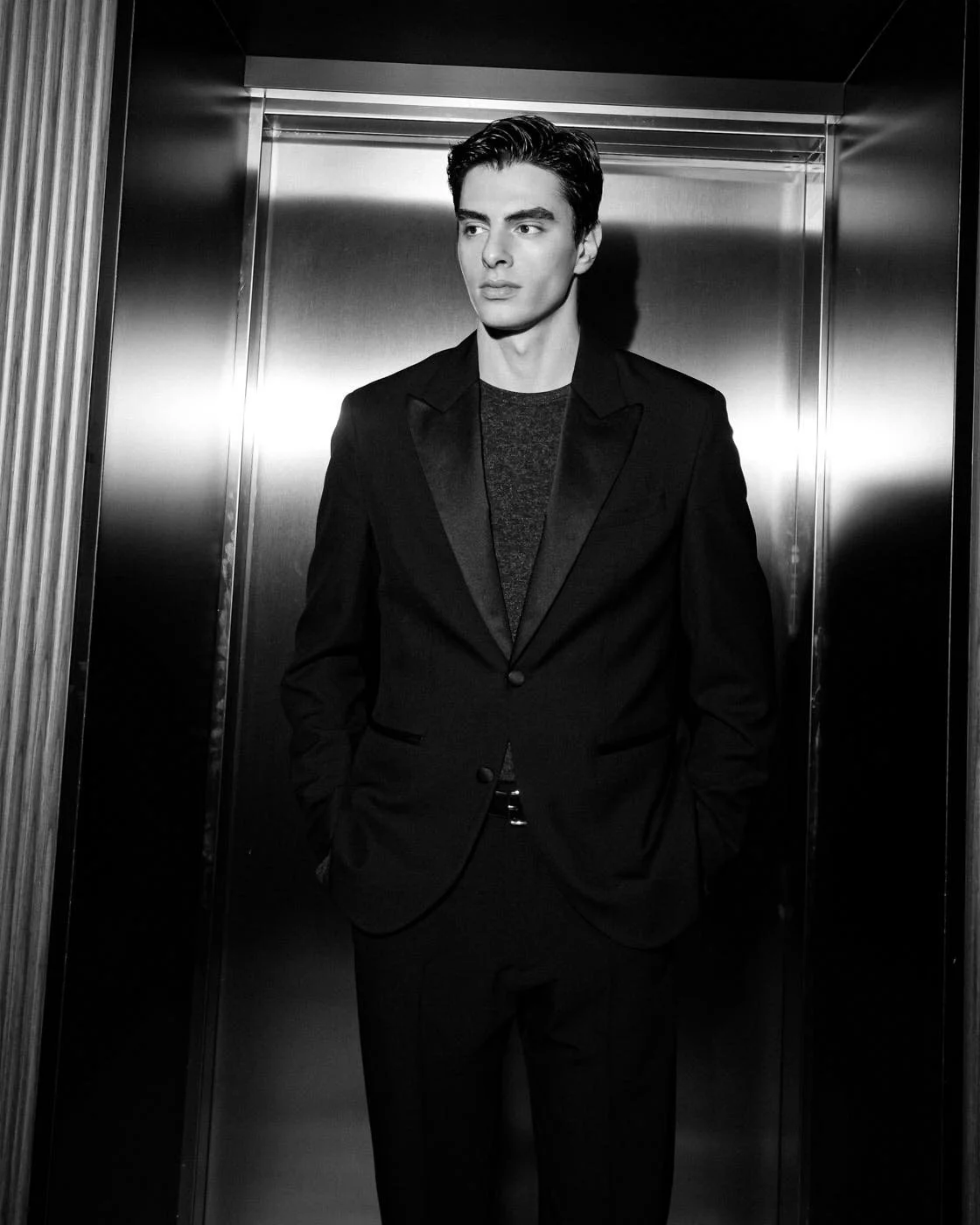
BEN RADCLIFFE LE MILE Magazine Digital Cover photo by Antonio Eugenio cover wearing Valentino FW25

Ben Radcliffe wears VALENTINO


His filmography holds soldiers, pickpockets, scandal shadows, lovers of revolutions — a drawer of misplaced identities. He remembers costumes that ignored the climate, cooling vests that worked like secret armor, rehearsed lines stripped of theatrics. What follows is Ben in his own rhythm — fragments, reflections, and the kind of unfinished lines that linger.

 
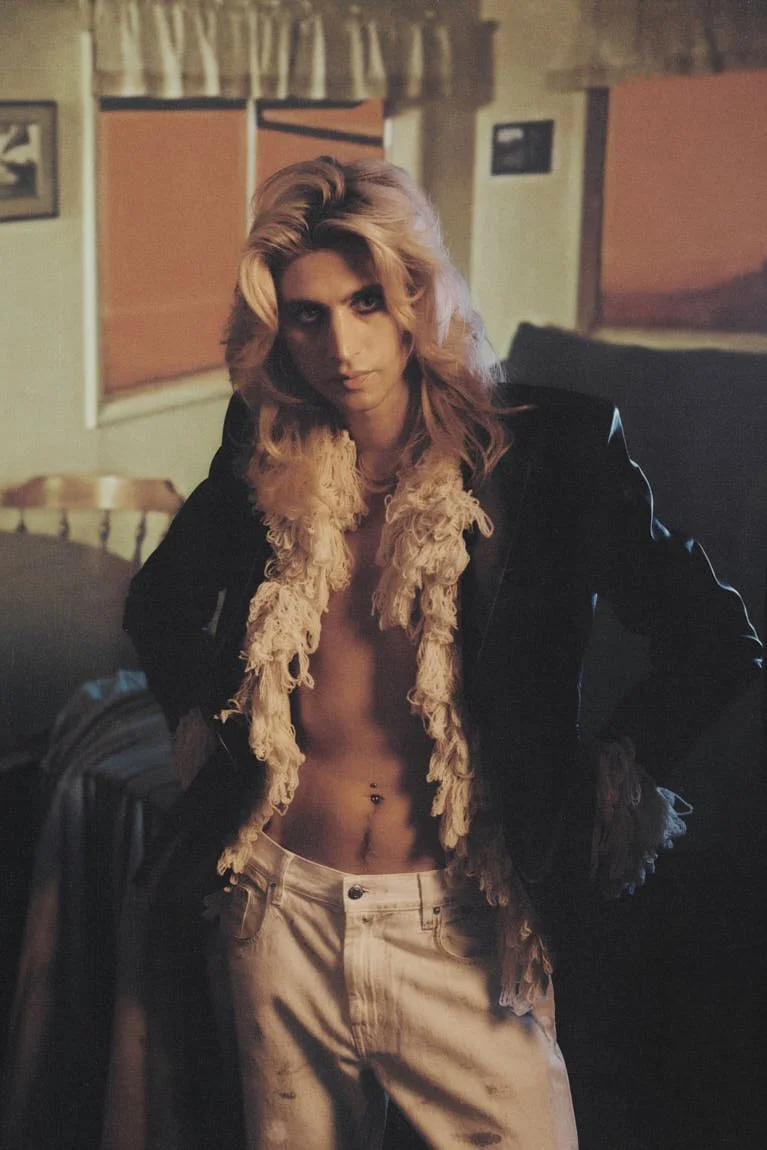
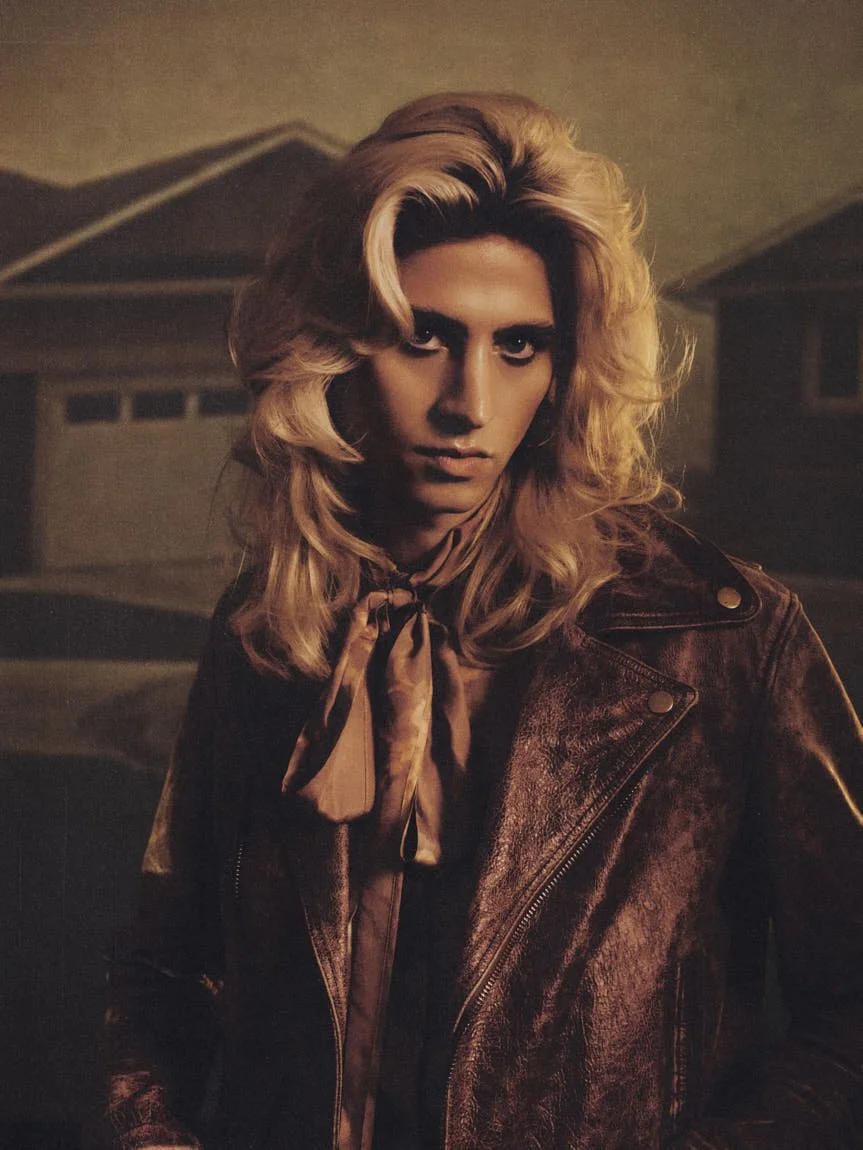
BEN RADCLIFFE LE MILE Magazine Digital Cover photo by Antonio Eugenio cover wearing Ben Radcliffe wears a shirt and coat by SANDRO, a suit by THE FRANKIE SHOP, sunglasses by PALOCERAS, a ring by TOM WOOD, and a necklace from his own collection

Ben Radcliffe wears a shirt and coat by SANDRO, a suit by THE FRANKIE SHOP, and a ring by TOM WOOD

 
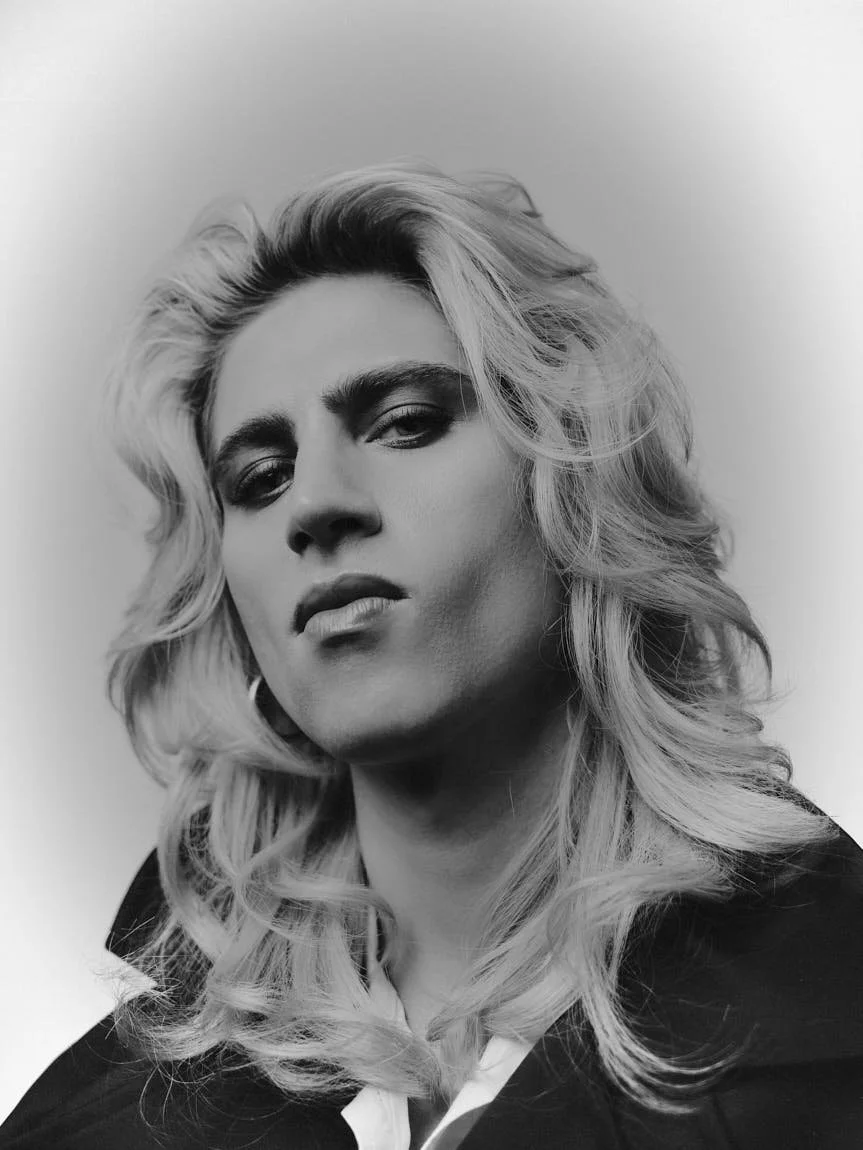
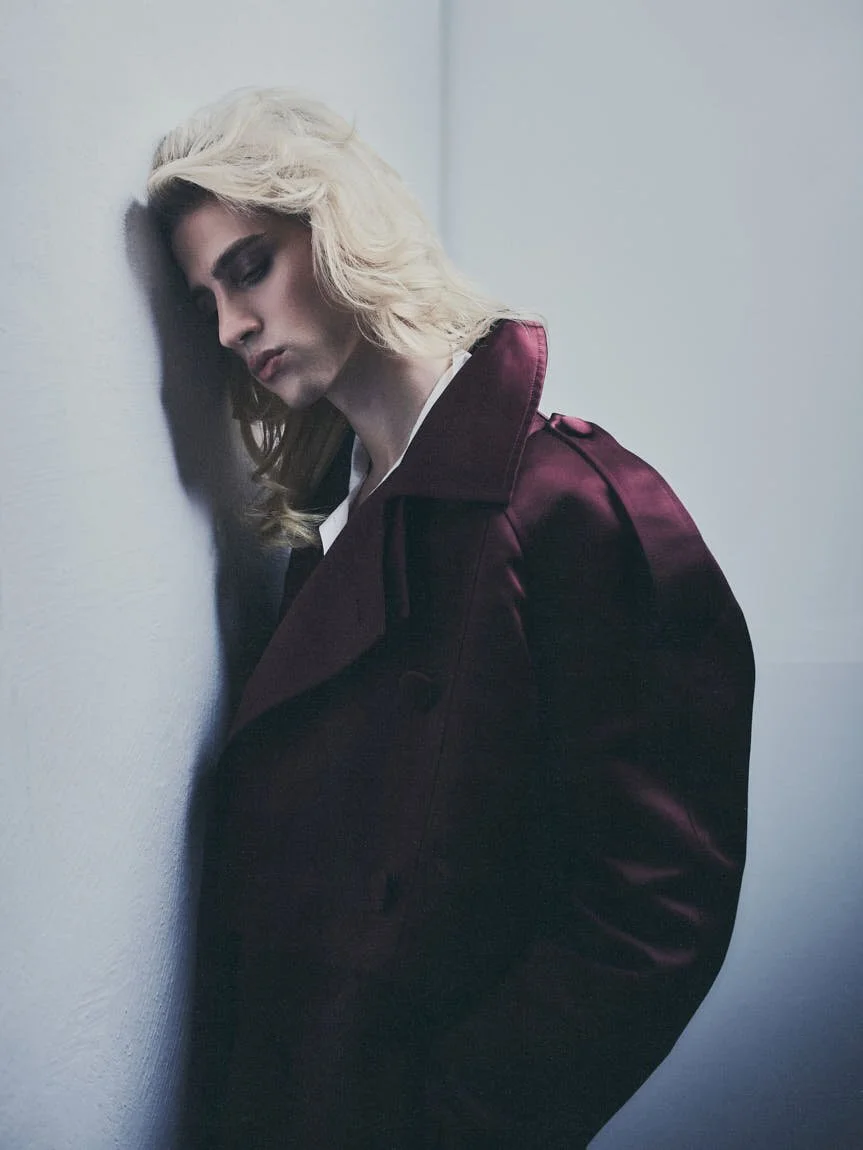
BEN RADCLIFFE LE MILE Magazine Digital Cover photo by Antonio Eugenio cover wearing Ben Radcliffe wears a shirt and coat by SANDRO, a suit by THE FRANKIE SHOP, sunglasses by PALOCERAS, a ring by TOM WOOD, and a necklace from his own collection

Ben Radcliffe wears a shirt and coat by SANDRO, a suit by THE FRANKIE SHOP, sunglasses by PALOCERAS, and a ring by TOM WOOD


Alban E. Smajli
When was the last time you went missing on purpose, switched everything off, and didn’t tell anyone where you were going? And what waited for you on the other side?

Ben Radcliffe
I do this a lot. I think sport and exercise are a great reason to switch off and escape..

There’s something almost illegal about being offline today, especially in your world. What’s your version of rebellion?

I don’t see it that way. I think it’s very easy to switch off, especially social media. If I catch myself in a long scroll session, I will usually make up for it by doing something productive.
And my favourite rebellion? Les Misérables. Or Hamilton. Big fan of revolutions you can sing along to

You’re sitting at a café and there´s no script, no screen, or role to play. Just you and a black coffee. Where does your mind wander?

Wondering, “Why did I order a black coffee?”


What part of fashion feels like acting and what part of acting feels like dressing up?

If I wear something a bit out there, then it feels a bit like acting. Which is good because it’s fun to try something new. But if you feel inauthentic, then it’s probably not the vibe.

Acting on set mostly means wearing clothes wildly inappropriate for the weather. Five layers of sheepskin in the middle of summer, or just a thin shirt and trousers when it’s -2°C and raining (like one particular scene in Fackham Hall). On Masters of the Air we actually wore cooling vests inside the planes. The costumes were very accurate, designed for -40°C at 30,000 feet, but of course we were inside a sound stage. Without the vest pumping cold water around your body, you’d basically cook. 

 
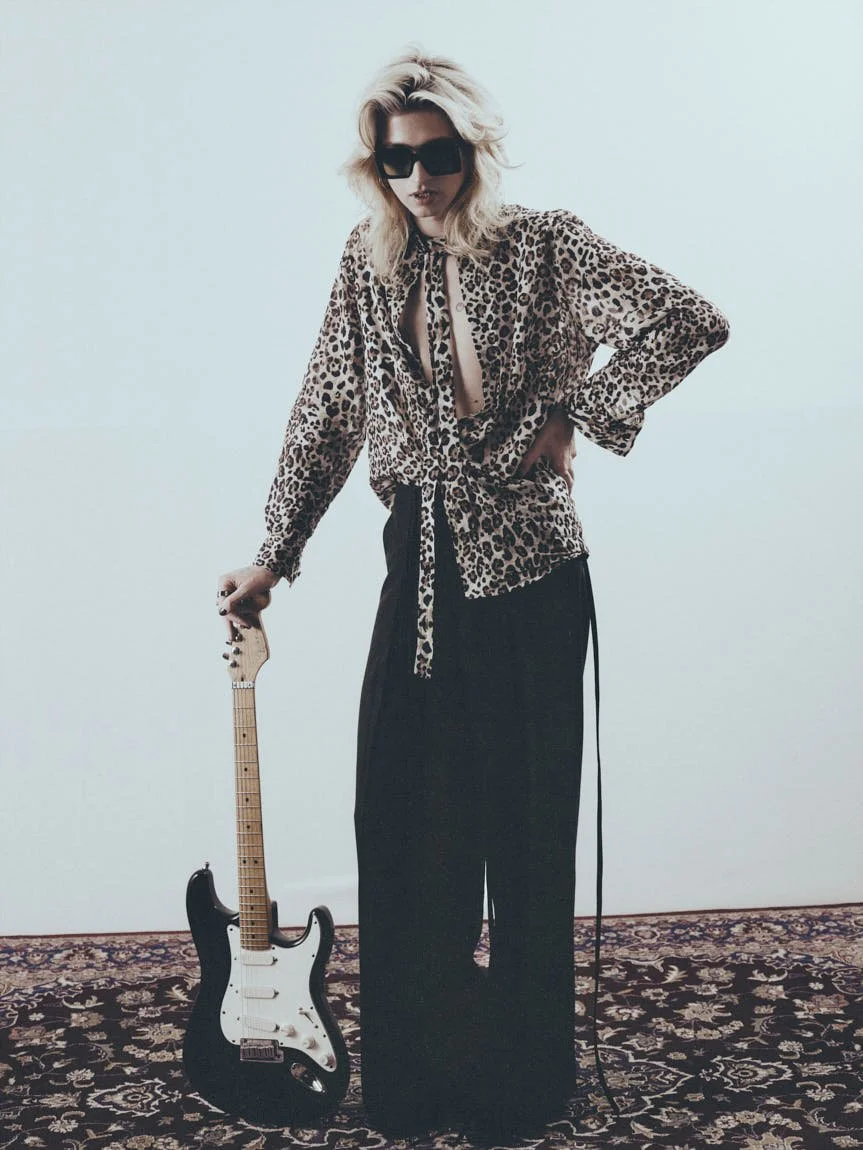
BEN RADCLIFFE LE MILE Magazine Digital Cover photo by Antonio Eugenio cover wearing Ben Radcliffe wears a full look by TOD’S, shoes and a bag by TOD’S, sunglasses by PALOCERAS, and a ring by TOM WOOD

Ben Radcliffe wears a full look by TOD’S, shoes and a bag by TOD’S, and a ring by TOM WOOD

behind the scene

BEN RADCLIFFE LE MILE Magazine Digital Cover photo by Antonio Eugenio cover wearing Ben wears a full look by TOD’S, shoes and a bag by TOD’S, sunglasses by PALOCERAS, and a ring by TOM WOOD

Ben wears a full look by TOD’S, and sunglasses by PALOCERAS


You’ve played a pickpocket, a soldier, a scandal shadow, who are you when the cameras stop rolling and there’s just your reflection in a train window?

All of the above.

You lead in Fackham Hall. Let’s say they also let you rewrite the ending, everyone waiting for you to decide what happens next. How does it all fall apart or come together?

It all comes together very nicely. I think you should watch and find out. If I was in the writers’ room, I would sit in the corner and let the geniuses continue their good work. 

 Which three films do you always come back to, without knowing exactly why?

I’m really drawn to coming-of-age movies. Billy Elliot and The Way Way Back are some favourites that I can watch over and over.

When social media gets overwhelming and the silence starts to feel sharp, do you ever retreat into something paper — a book, a magazine, anything that just lets you disappear for a while?

I’ve always been a very outdoorsy type, so I never used to be a big reader. Although I’ve definitely been getting into it more in my 20s. I listen to a lot of audiobooks and podcasts, that way I can enjoy them on the move.

What’s your weirdest ritual on set?

I don’t really have any strange rituals, but I’ve witnessed many. I’ve listened to some outrageous warm-ups from nearby trailers and many actors doing interesting things to get into character. I’m pretty basic. I make sure I know all my lines and then I say them.

Are there parts of your career so far that feel like dreams you haven’t quite woken up from?

Working alongside John Travolta. He is a personal hero of mine and someone I grew up admiring. Performing alongside him felt very surreal.

 What’s something you’ve never said in an interview but kind of hope someone would ask you one day?

“Ben, would you like me to introduce you to Sabrina Carpenter? Here is her number…

 
BEN RADCLIFFE LE MILE Magazine Digital Cover photo by Antonio Eugenio cover wearing Ben wears a vest by GEORDIE CAMPBELL, trousers by DANIEL W. FLETCHER, a jacket by DSQUARED2, shoes by ADIDAS, and a necklace from his own collection

Ben wears a vest by GEORDIE CAMPBELL, trousers by DANIEL W. FLETCHER, a jacket by DSQUARED2, and shoes by ADIDAS

 
BEN RADCLIFFE LE MILE Magazine Digital Cover photo by Antonio Eugenio cover wearing Ben Radcliffe wears a full look by DOLCE & GABBANA and shoes by G.H. BASS

Ben Radcliffe wears a full look by DOLCE & GABBANA and shoes by G.H. BASS


art direction + seen   ANTONIO EUGENIO
photo assistant   FENN REEVES
styled   KATIE DULIEU
assisted   MARTHA RALPH-HARDING & CECILIA COLLINS
grooming   CHARLIE CULLEN at Forward Artists using 111SKIN
film   SOFIA IVANOVA
talent   BEN RADCLIFFE
thanks   Caroline Fergusson and Grace Yeoman at Pinnacle PR

copyright LE MILE Magazine / Antonio Eugenio 2025

REDA ELAZOUAR *The Rhythm of The Family Plan 2

REDA ELAZOUAR *The Rhythm of The Family Plan 2

A New Pulse
Reda Elazouar on Omar, Prep and The Family Plan 2


interview + written ALBAN E. SMAJLI


Reda Elazouar speaks about The Family Plan 2 with the kind of clarity that comes from living deep inside a role. Omar began for him in a stretch of intense weeks marked by parkour sessions, stunt rehearsals, boxing drills and a steady routine that shaped his body and focus.


Actor REDA ELAZOUAR Omar from The Family Plan 2 with Mark Wahlberg shot by David Reiss for LE MILE Magazine REDA wears full look AMIRI

REDA ELAZOUAR wears full look AMIRI


The preparation built a discipline that stayed long after production wrapped; he still trains with the same consistency, still carries the structure that the job demanded. He joined a cast that already moved as a unit, and the film’s chronological shoot gave him a rare advantage, the story introduced Omar at the same pace Reda met his scene partners. The early days on set shaped the tone for everything that followed. Wahlberg’s guarded intensity, Monaghan’s warmth, the fast rhythm of the action scenes — all of it created a space where Omar’s openness grew naturally. He talks about those first scenes in London with a kind of ease, as if the city itself kept feeding the role through every corner they filmed in.

 
Actor REDA ELAZOUAR Omar from The Family Plan 2 with Mark Wahlberg shot by David Reiss for LE MILE Magazine

REDA ELAZOUAR wears full look by TODD SNYDER, belt by FRAME, boots by JIMMY CHOO, and a ring by MEJURI

 
Actor REDA ELAZOUAR Omar from The Family Plan 2 with Mark Wahlberg shot by David Reiss for LE MILE Magazine


Alban E. Smajli
When you think back to The Family Plan 2, what’s the scene that still lives in your body?

Reda Elazouar
I would have to say my introduction scene when I come out of the shower because the amount of discipline that it took to train literally changed the way I live my life to this day. In order to keep up with the amount of exercise that I was doing, after I wrapped I continued with the workouts and so I came away from the job a lot more disciplined than I was previously. The prep for that scene also involved eating much healthier than I was before so I stuck to that too, which definitely makes me live in my body differently.

How does it feel to step into a franchise where the chaos is already in full motion?

Amazing! I got to jump straight in the deep end and straight off some buildings. The first film did a great job at explaining who Dan was and the lie that his family had believed for so long but in this one, we get to the action pretty quick. Because of how familiar everyone was with each other already, it was super easy to slot in and be a part of that family dynamic. 

Working with Mark Wahlberg, Michelle Monaghan and Kit Harington — what dynamics emerged between the four of you that shaped your performance?

Since we filmed it pretty much chronologically, I didn’t know any of the cast well when I filmed my first few scenes. So our characters were getting to know each other at the same time that we were which was a welcome ‘art imitating life’ moment. That dynamic worked best with Mark as Dan had to be distrusting of Omar but as the film goes on they get closer. Michelle is so maternal as well in real life and in character so that helped make everything feel real. Unfortunately, the only scene I was in with Kit is when he’s chasing after the family so we didn't get to interact much which probably worked for the character dynamic that we had to have. Overall, though, the way all the cast were so welcoming helped me have a great time on this one.

What did this film demand from you that earlier roles didn’t touch?

A lot of physical prep in a short time. I’ve never had to physically prepare for a role before but the moment I got the call up I went straight into parkour, stunts and boxing training. I had amazing teachers in Tom Cotton and Kyle Freemantle who taught me everything I needed to know in order to look like I was a parkour professional. In the times I wasn’t training with the, I had gym sessions with Simon Waterson and Tim Blakeley to get me prepped for my first scene as Omar when he steps out of the shower. Since I had only 5 weeks to get in shape, all my time outside of these sessions were either spent walking to get my steps in or resting for the next workout. Even though it was a big task, I felt very privileged to work with amazing professionals who made the experience so smooth and enjoyable. 

After the production wrapped, what stayed with you the longest?

How thankful I was to be on a project of this size with actors that I had watched growing up. That feeling still hasn’t gone away and was there every day that I was filming. We filmed in such iconic locations around London and since I live here and walk around those locations often, I am constantly reminded of my experience.

 
Actor REDA ELAZOUAR Omar from The Family Plan 2 with Mark Wahlberg shot by David Reiss for LE MILE Magazine REDA wears full look AMIRI
 
Actor REDA ELAZOUAR Omar from The Family Plan 2 with Mark Wahlberg shot by David Reiss for LE MILE Magazine REDA wears full look AMIRI


Describe the moment you realized your character had a completely different rhythm from everyone else on screen.

It was actually in the first scene I shot which was in the Chinese restaurant. Omar first pumps the air and is happy when Dan says “you’re in” to which he replies “in what?”. That part made me realise how oblivious he was and how he doesn't really understand exactly what's going on. It’s one of my favourite moments in the film as the audience knows that type of craziness the Morgans get up to while Omar has no clue!

When you look at scripts now, what makes you pause — in a good way?

If I’m genuinely interested in the pathology of the character and start wondering why they’re doing what they’re doing then I know I’m reading a great script. Also, most of the time that I'm reading scripts is because I'm auditioning for the project and there's a certain feeling between nervousness and excitement that makes me feel like I'm reading a great script that I'd love to be unpack and work on.

Is there a role, a genre or a mood you’re currently orbiting that you haven’t played yet?

There's a few things that I can think of. I haven't yet had the opportunity of leading a film/show which I'd love to do whenever the time is right. I also would like to dive into theatre and back on the screen side, I would love to do a mockumentary. I've been writing one on-and-off for a while where I would play the three central characters and I think that could be a great challenge and also lots of fun.

What question do you ask yourself before stepping into a new character?

I’m always curious to find out what is intrinsically different about the character and I. At what point was there fork in the road where the character went one way and I went another. In that, I also learn the ways in which the character and I are similar and to what degree. So I guess to boil it down to a question it would be: “what would've had to happen in my life for me to become you?”.

Away from set life, what keeps your imagination awake?

I take acting classes in between working and mainly do improvisation with a company called Talking People. Every few months we do an improv show which helps keep me on my toes. It’s a place for me where I can flow and do some theatre in between screen roles. I also train in kickboxing which I’ve come to learn is a physical form of chess. It’s nice to be able to have a hobby in something that has completely different stakes from acting and keeps me fit and disciplined too. It also reminds me of a saying I heard once: “if you want to become a better actor, read a book on kayaking”. The things away from acting that keep my imagination alive will in turn help me become better at what I do.
Is there a piece of advice someone gave you that returns at unexpected moments?

‘Slow down’. When I first started training in theatre, I didn’t really pay attention to how fast I spoke and so when I’d rehearse I would just speed through the lines. That was most likely because I was so nervous that I wanted to finish as quick as possible but I remember my teacher Robbi telling me time and time again to slow down and make sure that I was heard. That was a tough task as when you have that adrenaline hit of being on stage, everything speeds by. But that piece of advice has helped me in all aspects of my life to just slow down and take the moment in.

If your younger self could watch you working today, what do you think he’d be most excited about?

I think the mere fact that I actually started working as an actor would be enough for my younger self to smile ear-to-ear. I was told from young how hard it was to get started in this industry, especially coming from a working-class background with no one around me that worked in the creative field. On top of that, being able to work with people in front and behind the camera that worked on projects that I grew up watching is something younger Reda would give me some cool points for.


credits
talent REDA ELAZOUAR
thanks to AMBER MOTTO / AMPR

Arnaud Eubelen *Offline Design, Reused Materials and Urban Craft

Arnaud Eubelen *Offline Design, Reused Materials and Urban Craft

ARNAUD EUBELEN
*
Material Is Offline, Everything Else Just Scrolls Past


interview + written MELANIA MUSCI


Arnaud Eubelen’s design unfolds intriguingly at the crossroads of art and industrial design. Trained between Liège and Brussels, he has cultivated a strong interest in discarded materials, a fascination that has become one of his defining traits.


His creations are deeply informed by their surrounding environment, reflecting society’s evolution through the very materials it chooses to abandon. By giving new life to what is often overlooked, his practice opens a dialogue about consumption, transformation, and the narratives embedded within everyday matter.

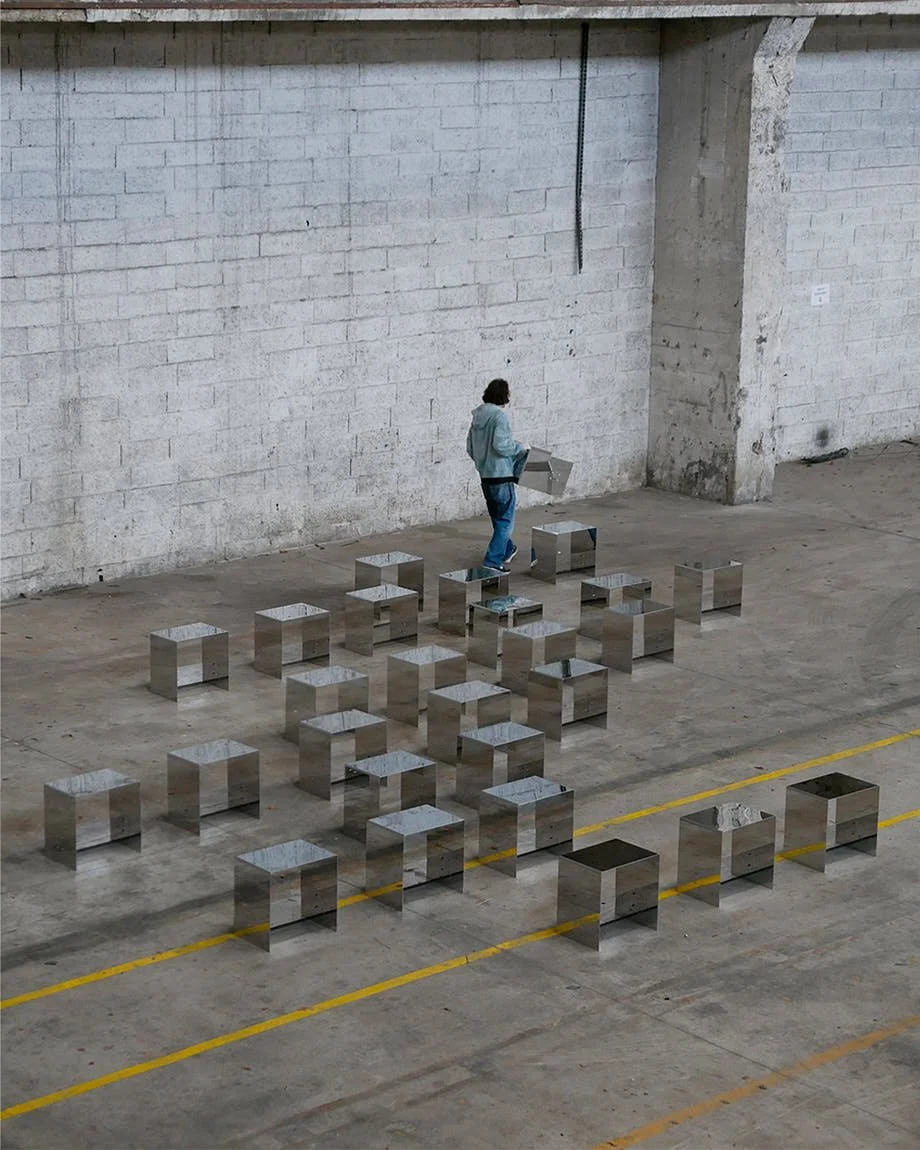
Arnaud’s pieces are unique yet reproducible. Every assembly system and proportion is engineered for duplication, ensuring his work can be reconstructed without compromising its conceptual integrity. What changes, however, is the material itself—an element at the very core of his practice—shaped by the resources available in what Arnaud calls his personal hardware store: the city itself. This approach keeps each work flexible and adaptive, anchored in a specific time and place, and deeply rooted in sensory experience.


LE MILE Magazine ARNAUD EUBELEN Artist OFFLINE Edition 39 Print Diplomatic Corps Chair

Diplomatic Corps / design by Arnaud Eubelen


“For me, the most rewarding aspect is knowing that an object will find not a definitive home, but a context where it can exist, be used, and activated.”

Arnaud Eubelen speaks with Melania Musci
for LE MILE OFFLINE Edition Nr. 39 FW25/26


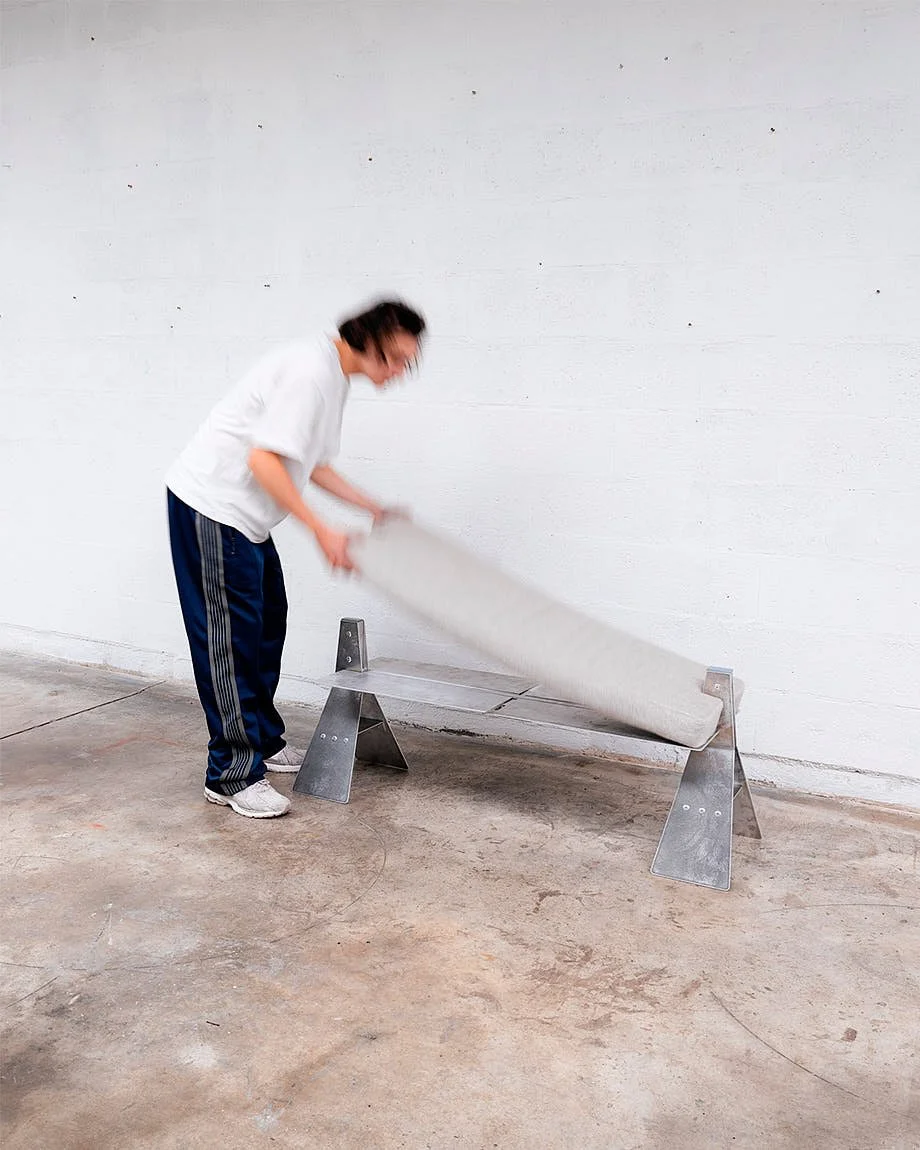
Many of his pieces are designed to invite direct interaction: objects that must be touched, activated, and transformed, shifting in shape or proportions, and encouraging audiences to rediscover a tactile dimension that is gradually disappearing from everyday life. In this sense, being offline is part of the artist’s approach and an experience shared with those who engage with his work, where touch and physical presence are essential to its meaning. Arnaud reflects on the influences that shaped him during his academic years and on how he has found a balance between analog and digital processes in his creative practice.


He addresses timely issues such as social media’s impact on the creative scene and the gentrification of cities—forces that affect today’s available materials and will shape their future use.

Rooted in research, his work increasingly looks beyond urban environments toward rural spaces free from constraints, enabling continued experimentation and new ways of embracing an offline, tangible reality.


LE MILE Magazine ARNAUD EUBELEN Artist OFFLINE Edition 39 Print He Drank Us 2019 Detail

He Drank Us, 2019 Detail / design by Arnaud Eubelen

 
LE MILE Magazine ARNAUD EUBELEN Artist OFFLINE Edition 39 Print He Drank Us 2019 Detail

He Drank Us, 2019 Detail / design by Arnaud Eubelen


Melania Musci
Your fascination with discarded materials began during your teenage years, but initially manifested through graffiti art and photography. What pushed you to experiment hands-on with these materials?

Arnaud Eubelen
I think the first key influence was my industrial design studies. At the academy, the focus was heavily on how objects are made, their composition, and the strengths and weaknesses of different resources. At that time, I didn’t have the financial means to work with expensive components, so it felt natural to turn to what was freely available around me.
During this period, I also co-founded a collective with friends. We focused on creating decorations for clubs, organizing events where most of the decor was built from items we salvaged from the streets. That experience deeply shaped my artistic approach, merging a kind of scenographic sensibility with a fascination for the objects we discovered.
Soon after, I joined an artist residency in Toulouse, France, where the entire project revolved around creating a piece from objects found on the street. That experience made me start collecting discarded items more consciously and realize that I was far more drawn to them than to new ones.
This completely challenged the principles of my academic training, which had taught me to strive for objects that seemed entirely new. Through these insights, I was able to develop my own distinct perspective and let go of the frustration that came with chasing an unattainable ideal of perfection.

In a previous interview, you reflected on how traditional design studies can often shape and standardize the vision of emerging artists, potentially leading to a certain uniformity in their work. Given this perspective, if you could go back, would you still choose the same academic path?

I don’t believe this applies universally to every school. There are many design and industrial design programs, and increasingly, art schools are becoming highly interdisciplinary, integrating different fields. However, when I attended over a decade ago, things were quite different.
Today, through my experiences as a jury member, I see many schools adopting a very open-minded approach to how we engage with objects—not only industrial ones—which promotes a broader understanding of the things we interact with daily.
Despite this, I don’t regret my studies, as they were truly formative. I attended two different schools, one in Liège and one in Brussels, each with a distinct teaching philosophy. Liège focused heavily on industrial and technical aspects, with less emphasis on artistic expression. In contrast, Brussels, while still rooted in industrial design, pushed us to think conceptually and to delve into the motivations behind our desire to create. It was less about simply solving problems and more about clarifying your core intentions.
For me, this dual experience was invaluable. That said, whether a program is suitable depends largely on your personal goals and on the school itself. Perhaps the first question any institution should ask is: What do you truly want to achieve?.

Would you mind telling me about the design phase of your work? When building something new, do you start with the idea of the final object, or do you experiment with materials until they take on a concrete form?

It really depends. Some pieces are created specifically for exhibitions, where I already have a clear vision of the final outcome, and the process is guided by that goal. Other works, however, arise simply from the urge to bring something into existence, without a predefined endpoint. In that sense, context plays a crucial role: where I produce the work, and for whom it is intended, often shape the process itself.
The materiality of the object is also deeply connected to my surroundings, particularly the area around my workshop. I draw immense inspiration from urban spaces, public or semi-private places like bars, train stations, or other environments designed for people to gather, socialize, or wait. I’ve always had a strong interest in these in-between spaces that aren’t fully private. This environment often determines the materials I find and influences the way they evolve into new forms.

 
LE MILE Magazine ARNAUD EUBELEN Artist OFFLINE Edition 39 Print Road Trip 2018 70X100X50 photo Ludovic Beillard

Road Trip, 2018, 70x100x50 / design by Arnaud Eubelen
photo by Ludovic Beillard


LE MILE Magazine ARNAUD EUBELEN Artist OFFLINE Edition 39 Print Altar Process

Altar Process / design by Arnaud Eubelen


The theme of this issue of Le Mile is "Offline," and that perfectly aligns with your process, which we could call totally analog. Have you ever integrated digital or virtual design processes into your work?

I typically use very simple digital tools. In school, I worked with more advanced software, but I found it too restrictive for my way of working and ultimately unnecessary. The programs I use now are minimal, focused mainly on proportions and dimensions rather than elaborate renderings.
They’re ideal for integrating my work into 3D models of interior spaces. For instance, if I can’t visit an exhibition site beforehand, I’ll create a basic model of the space and place digitized versions of my objects inside it.
These tools are valuable for visualizing how my work interacts with a given environment and, more importantly, for avoiding mistakes. The materials I use may not hold monetary value for others, but for me, they are unique pieces. I need to ensure I don’t waste them by making incorrect cuts or working with the wrong measurements. 3D modeling gives me precision, especially when preparing for photography or sharing my work on social media.


Staying on the topic of digital, do you think it's important for a contemporary product designer to share their work on social media? Since you're more connected to a "concrete world," do you find this challenging?

That’s a big question, and I’m not sure there’s a definitive answer, because digital platforms are profoundly reshaping our world. For example, galleries no longer hold the same authority they once did, as social media has changed how audiences engage with art and design.
On one hand, there are clear advantages. An artist can work from a small, remote studio and still reach a global audience. On the other hand, social media is largely about image. I’ve noticed exhibitions sometimes designed specifically to be “social media-friendly,” and that imposes certain constraints.
It’s a delicate issue because we still have eyes, hands, and bodies; we continue to live in the physical world. Experiencing objects in person should remain fundamental. Too often, we see images online without ever encountering the real object, and this can create a disconnect from reality and, in some cases, limit creative thinking.
This idea of disconnection is central to my work. I try to actively counter it by engaging with reality, context, and tactility. Many of my objects are interactive. You need to touch them to activate them, changing their shape or proportions.

That said, social media has undoubtedly opened doors for me. I would estimate that half of my projects have come from people discovering my work on Instagram. As I mentioned, it’s a complex subject, one we could easily spend hours exploring.


Do you think there are designers in the current art scene who are on the same wavelength as you? How do you see the world of design evolving?

Absolutely. There is a strong sense of community, or rather, several communities with distinct approaches and perspectives. For example, in Brussels, the design scene is relatively small for the country, yet vibrant, with many designers working in the hybrid space between design and art.
Belgium has only about three or four design schools, fewer than in many other countries. However, its position as a crossroads in Europe attracts a diverse group of people, many of whom stay because, I believe, life here is quite comfortable (laughs, ed.).
Within this field, I’ve noticed different motivations. Some designers focus mainly on commissioned work, responding to specific client requests, while others pursue a more expressive and personal approach.
What I find most important is the organization of independent, artist-led events. These are crucial for moving away from purely commercial considerations. Although selling work is necessary, too much commercial pressure can constrain creativity and impose standards that artists feel forced to conform to. We definitely need to break free from that.

Artists often develop a strong connection with their work. Have you ever found it difficult to part with one of your creations once it's complete and ready for sale?

Yes, definitely. However, in the end, I’m usually quite content. For me, the most rewarding aspect is knowing that an object will find not a definitive home, but a context where it can exist, be used, and activated.
It’s somewhat disheartening to think of an object being confined to a storage room or kept in a private space where the owner doesn’t interact with it.
I have held exhibitions where objects from my own apartment were displayed and sometimes sold. That created a distinct feeling of disconnection. For example, when a sofa you’ve sat on for a year is no longer in your home, it feels a bit strange, but that’s simply how it is.
What makes it easier for me is knowing that I can reproduce the piece. This concept is central to my work: my objects are designed with reproducibility in mind. All the assembly systems and proportions are engineered to allow duplication. It’s like a skeleton onto which different materials can be applied. The materiality can change, but the core system remains the same. So, while each piece may be unique in its specific materialization, it is not unique in its underlying idea or engineering.


LE MILE Magazine ARNAUD EUBELEN Artist OFFLINE Edition 39 Print Soft & Clear Prototype chair

Soft & Clear Prototype / design by Arnaud Eubelen


Considering that your upbringing in certain Belgian neighborhoods, with their social and economic complexities, was fundamental to the development of your art, how do you view the growing trend of gentrification in distressed city areas?

That’s a complex question. While I prefer not to engage in purely social or political debates, since my main goal is not to politicize my work, I can share my observations from the streets.
Gentrification, in a way, is reshaping the interiors of buildings. In Brussels specifically, many new owners and the government focus on improving energy efficiency inside buildings. This often requires renovations that are typically affordable only to those with financial means. As a result, the government unintentionally ends up assisting wealthier individuals, while those with fewer resources are pushed further out from the city center into the suburbs.
What I find particularly sad is the loss of unique interior character. Many beautiful and distinctive elements such as fine carpentry, original doors, and old floors are being removed to make way for a more standardized, “clean” aesthetic. These elements are often handcrafted objects from the past, carrying history and charm. In a way, preserving and reintroducing this character is exactly what I try to achieve by creating new objects from discarded materials.

You've often stated that you consider the city your "personal hardware store" or "materials library." Have you noticed a change in discarded materials that has gone hand-in-hand with the evolution of society?

I don’t think I’m old enough to have witnessed dramatic shifts, but it’s true that the types of discarded materials do change over time. In Brussels specifically, you can find almost anything on the street. This city has a rather unique approach to unwanted objects: people often leave items they no longer need directly on the pavement, which makes them accessible for reuse. This isn’t necessarily the case everywhere, as other European cities tend to have stricter regulations or different cultural attitudes toward street dumping.
If you know exactly what you’re looking for, you can often come across truly unique objects for free, items that can be valuable because of their history.
Naturally, there’s a lot of plastic waste, but plastic is very difficult to reuse, especially since many plastic objects carry strong, specific associations in our minds. I tend to reuse more neutral materials like wooden planks, sheets of glass, or cuttable materials such as concrete.
Historically, designers focused on creating objects by drawing them and giving them functionality. This makes it challenging to reuse objects from mass-produced functional goods because they are hard to disassemble. Moreover, more and more objects now include electronics, automation, processors, and so on. For this reason, it’s easier to reuse materials from architecture and construction. However, even in construction, the use of composite materials is increasing.

In the past, designing objects for easy disassembly was just the norm, not a “statement.” Now, packaging brands advertise how you can separate cardboard from plastic as if it were a special feature. It’s become something to highlight, whereas before it was simply how things worked.

Still on this point and regarding the gentrification we mentioned earlier, what do you think are the next materials destined for abandonment in cities that increasingly aim to escape decay?

That’s a very interesting question, and honestly, I’m not sure I have the necessary knowledge to answer it with certainty. It would require thorough analysis and in-depth research to make reliable predictions.
What I can say is based on personal observation: cardboard seems increasingly present in the streets, largely due to delivery and consumption habits. Designers like Max Lamb, for instance, have already explored its potential for furniture, which I find clever and timely.
Beyond that, it’s hard for me to make confident forecasts. I suspect that certain building materials, like insulation, could become a challenge in the future, but that’s more of an intuition than an expert assessment.

How do you believe your work and artistic practice have evolved from when you started until now, and how do you envision them evolving in the near future? What do you have planned?

My work has evolved significantly in terms of precision. Now, when I approach a project, I immediately have clearer ideas about connecting and assembling elements. I'm also focusing more on the exhibition setup and how to create interaction between the objects themselves. In terms of production, I have greater control over each step. This means my process is somewhat less experimental, and, though it might sound strange, less overtly expressive, as I lean more into that hybrid zone of truly functional, well-crafted objects. I really enjoy the paradox of questioning whether an object was mass-produced or not.
I'm also experiencing more collaboration with architects. This feels like a new, exciting step for my work: being integrated directly at the beginning of a building's life, reintroducing these types of objects for the long term. Looking ahead, I want to delve deeper into the idea of residencies, moving away from my workshop to experiment in different contexts, not just urban, but even rural settings or other environments.
Residencies, in particular, are a great way to step out of my comfort zone and alter my routines. My current work is a direct result of choosing to work with these specific materials. While this presents significant constraints, it also offers a unique shortcut. It demands constant adaptation in terms of time, economics, and technical approaches. So, in the near future, my plan is simply to continue experimenting and adapting.


LE MILE Magazine ARNAUD EUBELEN Artist OFFLINE Edition 39 Print Underground Party 2020 100x45x50

Underground Party, 2020 100X45X50 / design by Arnaud Eubelen


“My objects are designed with reproducibility in mind. The materiality can change, but the core system remains the same — like a skeleton onto which different materials can be applied.”

Arnaud Eubelen speaks with Melania Musci
for LE MILE OFFLINE Edition Nr. 39 FW25/26


header image
Corner Table, 2017 / design by Arnaud Eubelen

TOM CULLEN *Trespasses, Michael, and New Role Insights


TOM CULLEN *Trespasses, Michael, and New Role Insights


TOM CULLEN Returns Home

—
and Opens the Door to Something Wilder


interview + written ALBAN E. SMAJLI


Tom Cullen carries a certain voltage—quiet, direct, and sharper than he lets on.


In Trespasses, he steps into a story simmering with political heat and impossible desire, playing Michael, a Protestant barrister who keeps choosing love in a world that keeps telling him not to. Cullen treats the role less like a performance and more like a possession, letting the character seep in through dialect, costume, and the rugged Northern Irish landscape that became its own scene partner.

Off-screen, he’s in a different chapter: new fatherhood, a move back to Wales, a creative instinct shifting toward the messy, human corners of storytelling. He talks about vulnerability like it’s a craft, about giving editors “colors to paint with,” and about the artists who shaped his eye. We caught up with him to talk Trespasses, tenderness, and the strange freedom that arrives when life rearranges you.

 
LE MILE Magazine Tom Cullen Actor photo Will Aldersley lemilestudios Tom Cullen wears a total look by PAUL SMITH

Tom Cullen wears a total look by PAUL SMITH

 
Here you go:  LE MILE Magazine Tom Cullen Actor photo Will Aldersley lemilestudios COVER JOHNLAWRENCESULLIVAN

Tom Cullen wears JOHNLAWRENCESULLIVAN


Tom Cullen wears a jumper by JOHNSTONS OF ELGIN, a coat by WAX LONDON, trousers by 8ON8, and shoes by G.H. BASS

 
LE MILE Magazine Tom Cullen Actor photo Will Aldersley lemilestudios wears a jumper by JOHNSTONS OF ELGIN, a coat by WAX LONDON, trousers by 8ON8, and shoes by G.H. BASS


Alban E. Smajli
Trespasses explores intimacy and fracture within political tension. What drew you most to this story, and how did it live inside you while filming?

Tom Cullen
I was drawn to the powerful messaging that I derived from it. My character Michael, a controversial Protestant barrister, who defends young catholic boys against police brutality, says “We must have the bravery to choose freedom over fear”. It’s a message that is so simple, but when you dig into it, it’s surprisingly profound. Cushla and Michael are two people that choose to not be swept up in the narratives that surround them and they choose love instead, even at the risk of their lives. It’s very easy to get lost in these narratives and so it’s so important for us to take stock and not allow hate to win. It sounds altruistic and pious, but it’s true. Just look at the narratives today that are being pushed down our throats by those in power just to divide us. And it’s working. But we must choose freedom over fear.

How did you approach creating space for tenderness within a narrative so marked by conflict?

My partner, Alison Sudol, reads everything I do. She is a wise sage. She read Trespasses and said that Michael and Cushla were like two dandelions growing out of the smallest crack in a slab of concrete. I really attached myself to that image.

There is a lot on the page working against Michael. He is the hardest part I’ve ever had to play for that reason. You have to love him but there is also something unreachable about him. So the love and tenderness between Michael and Cushla was integral for the show to work. I just tried to lean into Michael’s vulnerability as much as possible. But it is his passion for life is that really opened the door to Michael and Cushla’s relationship. They find in each other a passion for life and that chemistry was very much found in my working relationship with Lola. Lola is mesmeric. They are fiercely intelligent, talented and compassionate human being. I just loved working with Lola and all the things that Michael loved in Cushla are the same things I loved in Lola. Lola’s passion for life is thrilling to be around. 

When you play a character shaped by history and division, where do you begin—voice, silence, or memory?

Obviously it’s a historical context which these characters exist in but the story itself is fictional and the characters are too. So while rooted in a history that I have quite a good understanding of - the majority of my work was character work - and thankfully I had an amazing resource to pull from with Louise Kennedy’s novel. 

A big part of my process as an actor - and I’ve got to be careful not to sound too pretentious here - is to just let the character flow through me. I have to step out of the way and just let who it is flow through. This is a slow, gentle process that comes through prep. Starting with dialect, costume, makeup…all these things help build the character from the source material and I just have to get the hell out of the way.

I can’t watch any playback when I’m working because in my head, I look like a totally different person. But when if I watch playback, I just see myself in the shot, it’s so weird and it can shatter the illusion in my head. It’s like one big episode of quantum leap!

What did the landscape of Northern Ireland give you that the script couldn’t?

It’s beautiful. And so is Belfast. The landscape itself is a character in the show.
Reminds me a lot of where I grew up in Wales. Something so calming about the rugged permanence of that landscape. It’s humbling in the best way. A reminder of your insignificance. 

 
LE MILE Magazine Tom Cullen Actor photo Will Aldersley lemilestudios Cardigan IODELE

Tom Cullen wears cardigan by IODELE, ants and T-shirt by A DAYS MARCH


Tom Cullen wears jumpers by JOHNSTONS OF ELGIN and pants by UNIQLO


In Trespasses, love feels both sacred and dangerous. How did you hold that balance?

Isn’t all love sacred and dangerous? Love is inherently dangerous. To love someone is a choice, but it’s a choice of pain, because all love will end one way or another. That’s what makes it the most beautiful, intoxicating and human choice to make; to make oneself vulnerable, to give yourself to another, is the single most profoundly brave action a human can make. We choose to love despite the pain. We choose to love in the face of grief. To love, is to accept death, right?

As an actor who also directs, how does awareness of framing and rhythm shift your process in front of the camera?

Directing and editing specifically, was the single most liberating lesson I’ve had when it comes to acting. I was lucky enough to have two brilliant actors in my first feature, Tatiana Maslany and Jay Duplass. The spectrum of performance I had to play with in the edit made my job as a director so easy. Since then I’ve enjoyed the freedom of delivering colours for the editor to paint with. It’s freeing and allows the best, most exciting work to happen. Where you’re not quite sure what will happen next. My favourite artists all exist between the lines of brilliance and disaster. I’m trying to exist there as much as possible. Let go of the control and the ego. Let it flow! 

What does this period of your career feel like—what’s anchoring you creatively right now?

Becoming a father has shattered any semblance of who I thought I was and in the vacuum left behind by sleepless nights, worry, nappy changes and the most powerful love. I have begun to reform myself as someone I like a lot more. It’s liberating to not give a toss about anything other than the very singular purpose of being a parent. Being a Dad is something I have always wanted but it’s changed me in a way that I didn’t expect.

You recently moved back to Wales—how does it feel being back in the place where your artistic instincts begin?

What a lovely question. I’d never thought about it like that. I’m reframing my move back home through the prism of this question and it’s making me quite emotional. We’re all on a journey, aren’t we? I’m not someone who really makes any plans. I turned 40 this year and that is something I never imagined happening, but having turned 40, I’m reflecting a lot. Reflecting on the journey. 

If I’d have told that little boy who grew up in the middle of nowhere Wales, making little plays for his mates on my council estate, that I'd be working as an actor one day…wow. What an incredible thing. 
And to move back to the place I had to leave to chase that dream? It’s immensely moving.

What do you find yourself searching for in the stories you choose now?

I’m interested in complexity. I want human stories, warts and all. Art should be an interrogation of the human experience. I’m inspired by filmmakers who capture the extraordinary in the quietest corners of life; Cassavetes, Joachim Trier, Chloe Zhao, Celine Sciamma, the Dardenne brothers. These are the filmmakers and the work I aspire to be a part of.

Quick fire, no commas:

A book that steadies you _____

Tom Cullen: Great Expectations 

A scene that keeps echoing _____

Tom Cullen: The dinner scene in A Woman Under influence 

A word you’re holding onto _____

Tom Cullen: Hiraeth


LE MILE Magazine Tom Cullen Actor photo Will Aldersley lemilestudios Tom Cullen wears a suit by JOHN LAWRENCE SULLIVAN, a T-shirt by A DAYS MARCH, and shoes by G.H. BASS

Tom Cullen wears a suit by JOHN LAWRENCE SULLIVAN, a T-shirt by A DAYS MARCH, and shoes by G.H. BASS


seen   WILL ALDERSLEY
styled   JACK MILLS via WERTHERS REPRESENTS
grooming   TRAVIS NUNES
talent   TOM CULLEN via TELESCOPE AGENCY

copyright LE MILE Magazine / Will Aldersley 2025

PRISCILLA DELGADO *on Transformation and Life Beyond the Screen

PRISCILLA DELGADO *on Transformation and Life Beyond the Screen

PRISCILLA DELGADO
on What It Means to Vanish and Begin Again


interview MARK ASHKINS


At seven Priscilla Delgado was already reading minds on Spanish television, headlines still calling her the little girl as if time had frozen in reruns while she kept filming, kept slipping into roles that stick to the skin long after the lights go down.


The little girl is still there, shadowing the woman who walks through sets of Euphoria lit in electric haze, rewriting herself in ways impossible to chart, transformations that accumulate one frame after another. On another project the orange jumpsuit clicks into place and suddenly the story is alive, the uniform shaping the body, escape rehearsed on rooftops with helicopters hovering, details carried into sleep, details returning in dreams.

 
LE MILE Magazine Priscilla Delgado DIGITAL COVER 2025 shot by Pablo Mas wearing Versace FW25
 
LE MILE Magazine Priscilla Delgado DIGITAL COVER 2025 shot by Pablo Mas wearing Versace FW25

Priscilla Delgado wears VERSACE


“Life gave me the chance to start my career at a very early age, and I haven’t stopped working since the day it began.”

Priscilla Delgado speaks with Mark Ashkins
for LE MILE FW25 - OFFLINE Edition


watch film


She remembers the first time a stranger renamed her in an ice cream shop, the baptism of being addressed as someone else, the odd thrill of identity folded back into fiction.


Characters sometimes stay lodged inside her, sneaking into gestures, contaminating her nights, refusing to leave with the costumes, reminding her that the boundary between role and person is porous, flimsy, optional. Scripts without punctuation, directors with too-perfect smiles, flags she reads instantly, warnings disguised as opportunities.
Offline she disappears into neutrality, outdoors where signal fades and thoughts scatter, into tasks that narrow her focus until flight mode feels like another form of presence. When the circus of productions pauses, she reaches for films waiting in the Criterion Collection or in her father’s private archive, unwatched reels stacked like maps of worlds she hasn’t entered yet. And always, there are the dogs. Coqui was the last, scooped from a roadside chinchorro in Puerto Rico between alcapurrias and a piña colada, carried into a new life within a week, another role cast, another story closed.


LE MILE Magazine Priscilla Delgado DIGITAL COVER 2025 shot by Pablo Mas wears coat DOBLAS shoes  CHRISTIAN LOUBOUTIN

Priscilla Delgado wears a coat by DOBLAS and shoes by CHRISTIAN LOUBOUTIN


Mark Ashkins
We googled you. Then we stopped. What’s one part of your life the internet keeps getting spectacularly wrong?

Priscilla Delgado
Life gave me the chance to start my career at a very early age, and I haven’t stopped working since the day it began. When I was just seven years old, I played a little girl with the superpower of reading people’s minds. That role became my first major appearance on Spanish television, and it’s one that people still remember to this day. There are still headlines that refer to me as “the little girl,” a reference I find both endearing and curious, especially considering I’ve grown into something much closer to a woman.

You just wrapped Euphoria. Were there tears? Blood? A new tattoo? What part of you got rewritten in all that neon fog?


Given the universe of Euphoria, all the possibilities mentioned are entirely plausible. It has definitely been a deeply transformative experience. I’m not sure which part of me may have been rewritten, but what I do know is that it has been fascinating to gain such a profound understanding of aspects previously unknown to me.

You’re in Virginia filming a Prison Break spin-off. Did you sneak out of set in an orange jumpsuit just to feel something? What’s your favourite kind of escape?

Everything finally came together the moment we were given the chance to try on our uniforms. After that, everything else began to take shape. My ideal escape would be running up to the rooftop and getting picked up by a helicopter.

What’s more terrifying: a script with no punctuation or a director with perfect teeth?


To me, they’re both clear red flags!

 
LE MILE Magazine Priscilla Delgado DIGITAL COVER 2025 shot by Pablo Mas wears full look ABRA

Priscilla Delgado wears a total look by ABRA

 
LE MILE Magazine Priscilla Delgado DIGITAL COVER 2025 shot by Pablo Mas wears full look ABRA


You’ve been acting since before the world fully digitised itself—do you remember the first time someone called you by a character’s name in public and you liked it?


Yes, I remember the first time it happened. It was in an ice cream shop. It felt like being baptized anew.

Is there a character you’ve played that still lingers in your laundry, in your soup, in the way you blink when no one’s watching?


I have to confess that this has happened to me. During an incredibly intense week of work, I woke up suddenly in the middle of the night and found myself slipping into some of the mannerisms of the character I was portraying at the time. It was a terrifying moment because I always try to leave the character on set. But I suppose, as in this case, sometimes it’s inevitable.

How do you stay Offline without becoming invisible? Or is being invisible the goal now?

I really enjoy being in a neutral space and allowing myself to relax. For me, this neutral space is usually being outdoors in nature.

What’s your personal version of flight mode? A lake? A locked bathroom? The inside of your own head?

Being deeply focused on a task and not allowing any distractions. For me, being on set can be synonymous with being in flight mode, although theoretically, it could also be the opposite.

You’re juggling productions like a circus performer on a caffeine drip—do you ever feel like not being good at things for a minute?

All the time, I find myself unraveling the mysteries of the world. Meanwhile, I navigate this journey with respect and an open heart, embracing every lesson, while gently reminding myself to be kind and patient along the way.

When everything wraps, what’s the first thing you really do, once the Wi-Fi dies and the makeup wipes win?

I’ll probably lose myself in watching a film, choosing from the countless gems left unwatched in the Criterion Collection and from my father’s personal archive, which may be even more vast and treasure-filled, haha.

Tell us something you’re working on that has absolutely nothing to do with the industry. 


I strive, in my own way, to be of service to society, whether by contributing to causes that need support at any given moment. One of the things I enjoy most is rescuing street dogs or fostering them, giving them love, food, and warmth, and preparing them for their new forever homes. The most recent was Coqui, a little dog I found at a “chinchorro” in Salinas, Puerto Rico, when I stopped to enjoy some alcapurrias and a piña colada. We managed to find her a home in just one week!


LE MILE Magazine Priscilla Delgado DIGITAL COVER 2025 shot by Pablo Mas wears total look by JULIE KEGELS

Priscilla Delgado wears a total look by JULIE KEGELS


“For me, being on set can be synonymous with being in flight mode, although theoretically, it could also be the opposite.”

Priscilla Delgado speaks with Mark Ashkins
for LE MILE FW25 - OFFLINE Edition


seen + direction   PABLO MAS
styled   GONZALO ORUTÑO
art direction   MARTA OCHOA and YOSI NEGRIN
movement direction   MURIEL SEIQUER
make up   LUCAS MARGARIT
hair   TRINI ASTEASUAIN
production   SOFIA FRAMES
light   CLAUDIO OCA, CRISTIAN FENOLL + XAVIER BOUZAS
digital retouch   PABLO RIVERA

Alla Kostromichova *In Her Element

Alla Kostromichova *In Her Element

IN HER ELEMENT
*
Alla Kostromichova on Beauty and the Energy That Endures


interview + written SARA DOUEDARI


There is a certain intensity that follows her — not loud, but unmistakably present.


In conversation, she moves with the same awareness she brings on set: attentive, sincere, and luminous without effort. Alla Kostromichova has built a career on resilience, discipline, instinct — and a deep respect for the creative process. Here, she speaks about growth, purpose, and the rare alignment that occurs when the right people meet on set.


LE MILE Magazine photo Stefan Kokovic Alla Kostromichova interview

Alla wears a dress by DIEGO GULLIEN and shoes by EMPTY BEHAVIOR


“When I’m given real artistic freedom — not just showing garments, but becoming something — that’s when the magic happens.”

Alla Kostromichova speaks with Sara Douedari
for LE MILE .Digital


LE MILE Magazine photo Stefan Kokovic Alla Kostromichova interview

dress by DIEGO GULLIEN

 
LE MILE Magazine photo Stefan Kokovic Alla Kostromichova interview

lla wears a dress by R.L.E and shoes by EMPTY BEHAVIOR


Sara Douedari
How has growing up in Ukraine shaped the way you move through the fashion world?

Alla Kostromichova
I grew up in a small city on the Crimean seashore, in a 40-square-meter apartment with my parents and grandfather. I was born in the USSR and came of age in the 90s, when life was extremely difficult. There was uncertainty, chaos, and very little stability. That environment taught me to rely on myself early. It made me adaptable and alert — which is exactly what you need to survive in fashion.

We didn’t have fashion magazines then — only Burda or Make It Yourself, which people shared because they were impossible to find. I remember looking at those models like they were angels from another universe. I didn’t dare believe I could belong there. My father was a musician, sometimes he painted, and we always had music playing at home — Pavarotti, Joe Cocker — even if it was recorded in terrible quality. When he passed away, I was 13, and I started working during every school vacation. Hard work became part of me. So when I entered fashion and people complained about 14-hour days, I felt lucky — because I knew what real struggle looked like.
Growing up like that made me humble, hungry, appreciative, ambitious. And, yes — I wanted to prove something. To others. But also to myself..


What was the first moment you realized your career would truly become international?

The beginning of my career was mostly rejection. I had been seen by major agencies many times — and always heard no. I walked Armani in Milan, but nothing followed. I finished university with a degree in medical engineering, but I knew I couldn’t live a 9-to-5 lab life. Two weeks after graduation, I went to Paris — to a small, unknown agency. Months later, I was confirmed as a fit model at Givenchy. Riccardo Tisci was preparing a couture collection. I spent long days in the atelier, watching a collection being created from scratch. One day, I was standing there in a gown they were adjusting on me. The window behind me opened slightly and I saw the Eiffel Tower reflected in the mirror — and then it began to sparkle. My reflection and the tower side by side.

In that moment, a quiet voice inside me said: You did it. What changed was simple: I felt relief. Relief that I wouldn’t have to return to the uncertainty I came from. Relief that I could finally help my mother. Those were the two things that mattered most..


Fashion demands constant evolution. What has helped you stay resilient — and relevant?

I think there are several personalities inside me — and one of them is a wild, creative performer who comes alive on set. When I’m given real artistic freedom — not just showing garments, but becoming something — that’s when the magic happens. It’s an exchange of creative energy, and for me, that exchange is one of the core values of my life.

Not every model can bring that slightly strange, almost otherworldly, performative energy. But when I’m on set, I feel alive. People can sense that. Discipline, professionalism, and love for the craft matter — but that energy is what keeps me here. And I felt that deeply during the shoot with Stefan. At one moment, it was like we tuned into the same frequency — instantly. That alignment is rare, and you can see it in the images.

 
LE MILE Magazine photo Stefan Kokovic Alla Kostromichova interview

Alla wears a headpiece by JEROME BLIN, bottoms by WOLFORD, accessories by MEL + MARIE, and shoes by RAMI AL ALI


LE MILE Magazine photo Stefan Kokovic Alla Kostromichova interview

headpiece by JEROME BLIN


Through Ukraine’s Next Top Model, you became a mentor to new talent. How did teaching change you?

It changed me completely. We filmed seven seasons, and during that time I gained a large audience — with that comes responsibility. Around the same time, I opened my mother agency KModels. Teaching felt natural to me — as a child, I used to “play school” with my dolls.

Later, I started a summer model camp for teenage girls — not only to teach modeling skills, but to help them build self-esteem. Talking to them, supporting them — that opened a new part of me. It gave my career a deeper purpose. Unfortunately, the camp had to close during Covid, and the war ended it completely. But that experience made me stronger and more responsible — and it showed me the impact my voice can have.


Today, when you think about beauty, what matters more — image or presence?

Presence. Sincerity. Depth. We live in a world where content is everywhere. Beauty that is only visual doesn’t mean much anymore. What matters to me is the feeling behind it — a real connection.
In my agency, I see beauty in potential — in watching girls grow into strong, independent, self-aware women. In coaching, I see beauty when someone allows themselves to be authentic, vulnerable, real.

A truly beautiful person is someone who gives themselves the freedom to be sincere. Not perfect — sincere. Especially now, with AI and everything becoming more artificial, the value of real human presence has only grown.For me, the most beautiful thing is sincerity.

 
LE MILE Magazine photo Stefan Kokovic Alla Kostromichova interview

Alla wears a headpiece by SANDRINE BOURGMODISTE, a top by MAISON MOGHARAB, and shoes by RAMI AL ALI


talent ALLA KOSTROMICHOVA

all Images (c) LE MILE / Stefan Kokovic

 
LE MILE Magazine photo Stefan Kokovic Alla Kostromichova interview

Alla wears earrings and bracelets by MELISSA + MARIE and a dress by JUANA MARTIN


“A truly beautiful person is someone who gives themselves the freedom to be sincere. Not perfect — sincere.”

Alla Kostromichova speaks with Sara Douedari
for LE MILE .Digital


seen   STEFAN KOKOVIC
hair + make up   MARYSE KANARELLIS
stylist   STEPHEN BARRINGTON via STUDIO CTRL
bts   ANGEL FERRER BOSCAN
photo assistant   YANA LAUMONIER
beauty assistant   BEATRICE ROSE FATIER
interview   SARA DOUEDARI

Just Riadh *The Shape of Stillness

Just Riadh *The Shape of Stillness

JUST RIADH
in the Flow of His Own Frequency


interview + written ALBAN E. SMAJLI


Just Riadh carries a sense of awareness that feels immediate yet measured, a creative rhythm that unfolds from the inside rather than reacting to what surrounds him.


His world moves through frames that blur laughter and reflection into a single gesture, where editing becomes thought and motion becomes language. Nothing about his presence feels rehearsed; it moves with the quiet logic of someone who listens before he speaks, who lets feeling lead before structure appears. His work hums at the pace of attention, absorbing fragments of daily noise and turning them into a texture of emotion that lingers longer than the scroll it lives inside.


LE MILE Magazine Just Riadh Maxence Renard lemilestudios Cover

Riadh wears a total look ALAIN PAUL for the cover


“Being alone isn’t a void, it’s just the moment when you can finally hear yourself.”

Riadh Belaïche speaks with Alban E. Smajli
for LE MILE .Digital


When Riadh talks, the energy shifts from movement into something slower, almost cinematic in the way ideas form and stretch.


Riadh describes silence as a necessary state, a soft, breathing space that lets meaning resurface after being dispersed by the constant pulse of connection. Each sentence lands as if it has already travelled through stillness, carrying traces of observation, intimacy, and restraint. There is no division between what he shows and what he holds back, only a continuity that runs through everything he makes — an instinctive trust in rhythm as a way of existing. For LE MILE, he opens that rhythm further, revealing the subtle architecture of how emotion takes shape before it becomes visible. The conversation unfolds like an unseen edit, alive with the sense of something quietly assembling itself beneath the surface. His presence stays within the moment, without urgency or distance, holding time long enough for it to mean something again.

 
LE MILE Magazine Just Riadh Maxence Renard lemilestudios Cover wears a total look by ACNE STUDIOS

Riadh wears a total look by ACNE STUDIOS


Alban E. Smajli
When you put your phone down, how long does it take before you feel alone?

Riadh
Depends on the day. Sometimes silence feels like a break, sometimes it feels like a slap. I’ve learned that being alone isn’t a void, it’s just the moment when you can finally hear yourself. We spend so much time connected that we forget what our own thoughts sound like. When I put my phone down, it’s almost like meeting myself again — awkward at first, then peaceful. I don’t always feel lonely; sometimes I just feel quieter. It’s not emptiness, it’s space. And that space reminds me that my worth doesn’t depend on notifications or numbers. It’s weirdly grounding, like hitting pause on a world that never stops talking.


Your videos move fast — when does speed turn into emotion?

When the pace starts saying what words can’t. Speed, for me, is how life feels when it’s too much — messy, loud, but real. I edit the way I think, so the chaos isn’t random; it’s emotional. Sometimes a fast cut says more than a sentence ever could. It’s the rhythm of scrolling, switching, reacting, but under all that motion, there’s a heartbeat. I like to think people don’t just watch the energy, they feel it. The movement becomes meaning. It’s not about keeping up, it’s about catching a feeling that flashes by in a second before it disappears again.


You’ve built a version of yourself online. What remains when the camera cuts?

Pretty much the same person, just quieter. The difference isn’t in who I am, it’s in the energy. Online, you give; offline, you breathe. When the camera cuts, I’m not performing, I’m just being. There’s something refreshing about not having to think in captions or timing jokes. That’s when I get to be slower, softer, and real in a way that doesn’t need to be posted. People assume creators are always “on,” but most of us crave silence. When the camera’s off, I’m not the highlight reel, I’m the unedited version. And that’s where I remember why I started doing this in the first place.

 
LE MILE Magazine Just Riadh Maxence Renard lemilestudios Cover Riadh wears a total look by DRÔLE DE MONSIEUR

Riadh wears a trenchcoat by AMI, scarf by HERMÈS, and a shirt by UNIQLO


LE MILE Magazine Just Riadh Maxence Renard lemilestudios Cover Riadh wears a top by AMI, tie by CÉLINE (vintage), pants and skirt by JADED LONDON, and shoes by TABI.

Riadh wears a top by AMI, vintage tie by CÉLINE, pants and skirt by JADED LONDON, and shoes by TABI


Your humor connects millions. What colour does quiet take in your world?

A soft grey. Not sad, not bright, just balanced. Quiet isn’t absence for me, it’s recovery. It’s the colour of breathing out after being loud for too long. People see humor as constant energy, but real humor needs stillness too. The funny stuff often comes from moments when I’m not trying to be funny, when I’m observing instead of performing. In the quiet, I remember that making people laugh isn’t about noise, it’s about connection. And to connect, you have to pause sometimes. Grey is that in-between shade where new ideas start forming before the next laugh arrives.


What does your younger self ask you now, from before all of this began?

He’d ask, “Are you still real?” And I’d tell him, “Still real, just better framed.” I think he’d be surprised, maybe proud, but also a little suspicious. There’s always a fear of losing your truth when people start paying attention. I’d tell him it’s okay to grow, to shape yourself, to play with light and angles, as long as you don’t forget your core. The kid I was didn’t care about followers; he just wanted to make people feel something. I try to stay loyal to that version, the one who created out of joy before anyone was watching.


Imagine a story you haven’t posted yet — what happens in it?

A guy turns off his phone and realises the world’s still here. It’s funny and a bit sad, maybe too real to post for now. In that story, he walks outside and everything feels louder, slower, more alive. He’s confused at first, like he forgot how to exist without a screen telling him how. Then he starts noticing things: people, sounds, small coincidences. It’s not a viral story, it’s a quiet one. No hashtags, no filters, just presence. Maybe that’s why I haven’t made it yet. I think I need to live it before I can share it.

 
LE MILE Magazine Just Riadh Maxence Renard lemilestudios Cover Riadh wears a long veste by COURRÈGES, sunglasses by GUCCI, pants by THE FRANKIE SHOP, and shoes by NEW BALANCE

Riadh wears a long veste by COURRÈGES, sunglasses by GUCCI, pants by THE FRANKIE SHOP, and shoes by NEW BALANCE


talent JUST RIADH

credits
all Images (c) LE MILE / Maxence Renard

 
LE MILE Magazine Just Riadh Maxence Renard lemilestudios Cover Riadh wears a top by AMI, scarf by HERMÈS, shirt by UNIQLO

Riadh wears a total look by DRÔLE DE MONSIEUR


“He’d ask, ‘Are you still real?’ And I’d tell him, ‘Still real, just better framed.”

Riadh Belaïche speaks with Alban E. Smajli
for LE MILE .Digital


seen   MAXENCE RENARD
assistant photography   ELLIOTT SB
art direction   BENJAMIN DAUGEARD
make up   CHRISTOPHE PUJOL
assistant make up   CLEMENCE HELFMAN
hair   CLOTHILDE LAISNE
styling   FLORIAN SUDRES
assistant styling   AYRTON
movement direction   ISMAÏL
set design   DEBORAH SADOUN
production   MATIAS FAURE
assistant production   PAOLA RURIACK

SANDRA YI SECINDIVER *Building Yutani and Trusting the Silence

SANDRA YI SECINDIVER *Building Yutani and Trusting the Silence

SANDRA YI SECINDIVER
on Building Yutani and Trusting the Silence


interview SARAH ARENDTS


Sandra Yi Sencindiver enters each project with precision that borders on ritual. Every element—tone, costume, space—serves a purpose. She talks about collaboration as architecture, where everyone builds toward the same tension.


In Alien: Earth, she gives shape to Yutani, head of Weyland-Yutani, a woman written into the myth of control. The world around her character mirrors her gravity, the sets by Andy Nicholson, the sculptural tailoring of Suttirat Anne Larlarb, and jewelry imagined from other planets.

 
LE MILE Magazine Sandra Yi Sencindiver Ian Kobylanski Cover wearing Loro Piana and Cartier earring
 
LE MILE Magazine Sandra Yi Sencindiver Ian Kobylanski wearing Loro Piana shoes

shoes LORO PIANA


“Even though I’ve done this my whole adult life, I still have the feeling that I’m just getting started.”

Sandra Yi Sencindiver speaks with Sarah Arendts
for LE MILE .Digital


Sencindiver recalls the process as a study in trust. “You don’t need to make it big or loud,” she says. Her Yutani moves through rooms built on deference, a force measured by stillness and authority.


Between acting and directing, she occupies two distinct frequencies. In Watch, her film that unfolds like a slow pulse, she shaped rhythm through minimalism and control. As a director, she speaks of patience, tone, and the invisible choreography between crew and camera. As an actor, she returns to intuition and the chemistry of shared focus. The conversation moves through laughter, sharp honesty, and the pleasure of making. She speaks of Geek Girl, of award nights that end in chaos and applause, of risks still waiting in the dark corners of arthouse cinema. Sandra Yi Sencindiver is refining energy, tuning stories until they vibrate at the right frequency. Each project marks another layer in a career defined by curiosity, precision, and presence.

 
LE MILE Magazine Sandra Yi Sencindiver Ian Kobylanski wearing Loro Piana and Cartier jewelry

total LORO PIANA
jewellery CARTIER

 
LE MILE Magazine Sandra Yi Sencindiver Ian Kobylanski wearing Loro Piana and Cartier jewelry eating orange


Sarah Arendts
When you step into Yutani in Alien: Earth, the room changes. Do you script that power in advance, or does it arrive in the moment, born out of breath, posture, accident?

Sandra Yi Sencindiver
There is no accident involved, but there is trust. I will get back to that. So many people build Yutani up to be Yutani. It all starts on the page, the way she is written. In the way other characters talk about her. How they pay reverence to her. Then there is the choice of venues, the exclusivity and grandeur of the locations. The way Andy Nicholson dresses the set with such beauty. Suttirat Anne Larlarb, who’s just brilliant, developed this whole concept for her: exclusivity, exquisite tailoring, reptilian, almost brutalist jewelry. We imagined she wears rare stones and metals from other planets. We talked about Yutani as a woman who dresses for no one—not for men, but simply because she takes pleasure in aesthetics, in peacocking for herself. And at the same time, she knows her pristine appearance reflects her role as head of Weyland-Yutani. So, we never see her casual, never informal.

Then you have Connie Parker and Sanna Seppanen, creating a new makeup and hair look for her every single time. They are amazing.

Now back to the issue of trust. With someone who is that powerful, I don’t think you need to make it big or loud. You need to trust that a few but precise choices will be enough. I remember Noah writing: “she has the poise of someone who owns a fifth of the entire planet”. And in episode 1 we even learn she owns a lot of the solar system too, ha! So, I thought that kind of power would translate to walking on water. And I made her soft-spoken, because she’s so used to being listened to. She doesn’t need to raise her voice or move loudly—people naturally give her space. Well, until she meets Boy K, who gives reverence to no one.

Season 2 of Geek Girl is loading—
in one word, tell me the energy of your character this time around. Now expand it into a sentence that only she could say.

“Filip, tell this journalist that Yuji cannot be reduced to one sentence!”

WATCH was yours from the very first line on the page. If the film had a heartbeat, what BPM would it tick at, and who or what sets the metronome?

A very slow heartbeat, that slowly but steadily rises into an eerie, panicked pace—but eventually finds a kind, restorative rhythm at the end.
I wanted everything to feel playful and harmonious on the surface, with just a hint of something slightly off. As if all the pieces are bright and cheerful, yet there’s an undercurrent of unease you can’t quite place. That subtle tension builds quietly, until the truth begins to reveal itself. Then, a few twists shift the focus—leading toward a kind of resolution, but not the one you expect.

Seeking Hwa Sun—nominated for the Danish Academy Award Robert, an echo across the industry. Do you remember the exact second the news reached you, and what sound was in the room?

Well, a couple of months before the announcement, a jury shortlists 10 films from all the Danish entries to Odense International Film Festival and then the academy votes. And on awards night at the festival, they announce the final five nominees. So, when they called out our names, there was this huge roar of excitement and applause from the packed venue. Quite thrilling and overwhelming.


LE MILE Magazine Sandra Yi Sencindiver Ian Kobylanski dress  NANUSHKA  tights  FALKE  jewellery  CARTIER
 
LE MILE Magazine Sandra Yi Sencindiver Ian Kobylanski dress  NANUSHKA  tights  FALKE  jewellery  CARTIER

dress NANUSHKA
tights FALKE
shoes JENNIFER CHAMANDI
jewellery CARTIER


Draw me a split-screen: left side Sandra the actor on set, right side Sandra the director in the edit suite. What does each version of you whisper to the other?

They don’t speak at all, ha ha. The tasks are so different—they’re two completely different sides of me. On set, I try to be present in the moment, connect with the people around me, and focus on what the director, my co-stars, and the scene needs. I’m a piece of the bigger picture. In the editing room, I’m the one moving the pieces around, thinking about what came before and what comes after—deciding on the bigger picture. My brain is switched on in the editing room, whereas on set I try to let my body, intuition, and impulses guide me when on set.

Quick-fire, no commas:

book that shaped you

– “Trust” by Hernan Diaz, it really plays with and utilizes perspective as a storytelling device. It was conceptually something that inspired me a lot when writing Seeking Hwa Sun.

a scene that broke you

– oh, I’m such a softy when it comes to films and TV. I cry over so many beautiful and brutal pieces of art. I recently rewatched Parasite, and two scenes are just heartbreaking. The first is when Song Kang-ho’s character, the father posing as a driver, sees his daughter stabbed to death but can’t acknowledge knowing her—and so he can’t help her. And then the ending, when his son, played by Choi Woo-shik, spins this fairy tale about someday becoming successful enough to save his father from the basement. Both are devastating.

a silence you treasure

– when you’re with someone you know so well that you can share a space in silence and not feel the need to fill it with words.

a risk still waiting

– a female auteur offering me a dangerously dark part in an indie or arthouse film. Something Isabelle Huppert would have said yes to 20 years ago.

If tomorrow you had to build a film with nothing but three props and a window, what would you choose, and how would the story unfold?

Oh, what a fun task! I’d choose two characters who live in the same room but at different points in time, and they’d have the same three props: a cat, a bottle of milk, and a bed. You’d watch each of them live through one day in this room—two different people, the same three props, the same window view, but completely different perspectives on life.

Complete the chain for us:

On set I _____

try to be kind and patient. Actors spend a lot of time waiting between scenes—it takes an army to get everything just right. And then sometimes we’ll do the same scene over and over again from every possible angle. It can take hours of shooting to cover just a few minutes on screen. Both the waiting and the repeating can be exhausting. But you also want to give energy to your co-stars so they can shine, and at the same time conserve enough energy for your own moments in front of the camera—so they matter. And of course, the crew are under huge pressure too. There are so many moving parts, and the least we can do is be kind and patient, because everyone really is doing their best. Funny how the hardest work can also be the thing I absolutely love.

Behind the camera I _____

try to be calm and patient. Before I started directing, I thought it was mainly about sharing your vision and giving artistic direction. And sure, that’s part of it—but it’s just as much about setting the tone and the work ethic on set, and about seeing and bringing out the best in your cast and crew while still respecting budget and time. It was such an eye-opener to realize how important every single person and their role is. That experience has made me a more mindful actor, with even greater respect for everyone on set.

At home I _____

wish I were cooler and more patient. Most of the time I really do try to be kind—but why is it that the world gets your best bits, while the people you love most sometimes get the short end? Luckily, my husband and children show me an incredible amount of love and patience. And my kids, especially, are experts at calling me out when I’m being short-tempered. But they all know—because I tell them every single day—that they’re my favorite people in the world, and I love them to pieces.

In the future I _____

wish to bring more great stories to the audience. Even though I have done so my whole adult life, I still have the feeling that I am just getting started!


LE MILE Magazine Sandra Yi Sencindiver Ian Kobylanski total  THOM BROWNE  jewellery  CARTIER

total THOM BROWNE
jewellery CARTIER


LE MILE Magazine Sandra Yi Sencindiver Ian Kobylanski dress  ISSEY MIYAKI  jewellery  CARTIER

dress ISSEY MIYAKI
shoes JENNIFER CHAMANDI
jewellery CARTIER

LE MILE Magazine Sandra Yi Sencindiver Ian Kobylanski dress  TORY BURCH shoes  JENNIFER CHAMANDI  jewellery  CARTIER

dress TORY BURCH
shoes JENNIFER CHAMANDI
jewellery CARTIER


“She [Yutani] dresses for no one—not for men, but because she takes pleasure in aesthetics.”

Sandra Yi Sencindiver speaks with Sarah Arendts
for LE MILE .Digital


photographer + creative director IAN KOBYLANSKI
styling ELENA GARCIA
set design LOUIS TOLEDO
make up SASHA MAMEDOVA
hair ABI IGZ
lighting assistant NICOLA SCLANO

RAPHAEL DIOGO *Five Days Under Lights

RAPHAEL DIOGO *Five Days Under Lights

RAPHAEL DIOGO
*Five Days Under Lights


interview CHIDOZI OBASI
written ALBAN E. SMAJLI


Raphael Diogo grew up between waves and asphalt, with Venice Beach feeding a body in constant movement, Jiu-Jitsu classes, soccer drills, skateboards, surfboards, mornings in Gold’s Gym where sweat turned into chance, a scout stopping, a conversation beginning, the kind that opens a door without announcing itself.


Modeling was already part of his family’s vocabulary, both parents carrying it as a lived memory, so when the first steps came it felt less like invention and more like continuation, though with the restless energy of someone who wants to carve out his own form.

 
Raphael Diogo LE MILE Magazine digital cover fw25 photo Anka Garbowska
 
Raphael Diogo LE MILE Magazine digital cover fw25 photo Anka Garbowska wearing Valentino on cover

total VALENTINO


“Getting the call for Jean Paul Gaultier’s Le Male campaign brought tears of joy, a moment of true fulfillment.”

Raphael Diogo speaks with Chidozie Obasi
for LE MILE .Digital


The notebooks filled with sketches, the hours of training, the steady rhythm of curiosity all folded into the way Raphael speaks about patience, about humility, about the strange elasticity of time inside this industry. He insists on gratitude as foundation, on respect as gesture, on presence as currency, and in that insistence there is no trace of calculation, only the sense of someone who has already faced enough uncertainty to know that the ground beneath him shifts constantly.


Jean Paul Gaultier’s Le Male campaign marked the rupture, five days in Bulgaria under lights and choreography, a job that required preparation of body and mind and delivered the quiet shock of tears when confirmation arrived, not from insecurity but from the sudden weight of arrival. That moment stretched into confidence, into a sense of place, into a reminder that careers are built in accumulations, in the way encounters layer upon each other, in how journeys fold back and expand again. Now in New York, Raphael continues the unfolding. Work, relationships, lessons, always the search for what comes next without a rush to define it too quickly. The horizon remains open, and with it the possibility of passing on everything he has gathered since 2019, the small fragments of knowledge, discipline, and energy that shape him in this present moment.

 
Raphael Diogo LE MILE Magazine digital cover fw25 photo Anka Garbowska cap  POLO RALPH LAUREN shirt, sweater, coat + trousers  PAUL SMITH ring  TITLE OF WORK sneaker  VANS

cap POLO RALPH LAUREN
shirt, sweater, coat + trousers PAUL SMITH
ring TITLE OF WORK
sneaker VANS

 
Raphael Diogo LE MILE Magazine digital cover fw25 photo Anka Garbowska total look EMPORIO ARMANI custom eyewear KAT & PAUL AOUN

total EMPORIO ARMANI
custom eyewear KAT & PAUL AOUN


Chidozi Obasi
First things first: could you introduce yourself to us?

Raphael Diogo
My name is Raphael Diogo. I’m an American/Brazilian model, born and raised in Venice Beach, CA. I grew up staying active—whether it was Brazilian Jiu-Jitsu, playing soccer for the LA Galaxy Academy, or skating and surfing with friends. I’ve also always had a creative side, spending free time painting and sketching. I now live in New York City, where I’m continuing to pursue my modeling career.

What made you venture into modelling?

Funny enough, both of my parents used to be models. I never gave it much thought until I was scouted while working out at Gold’s Gym in Venice one morning. At first, I was a bit skeptical, but then I realized I had nothing to lose—so why not take the risk? It really helped having the support of my parents when I was taking those first steps.

When did you realize you wanted to make a career out of it?

I’ve always taken pride in giving my best in anything I do. After being scouted, I spent the first few months learning everything I could about the industry. What kind of jobs are out there? Who’s doing them? Can people really support themselves financially doing this? How do I get to the top? I became obsessed with the opportunities and how much creativity the industry allowed me to express. The spontaneity of it all—every day being different—kept me excited about what could come next.

What has been the most challenging aspect of modeling?

The hardest part has been staying patient with myself and my journey. It’s so easy to compare yourself to others, especially with social media. My self-belief is strong, but there are times when I forget how far I’ve come—especially when things don’t go the way I hoped. I’ve learned that timing is everything. We all want to be part of amazing experiences and hit certain milestones, but we have to trust that the time will come.


Raphael Diogo LE MILE Magazine digital cover fw25 photo Anka Garbowska blazer FEAR OF GOD tank top CALVIN KLEIN leather pants RHUDE shoes RALPH LAUREN jewelry TITLE OF WORK

blazer FEAR OF GOD
tank top CALVIN KLEIN
leather pants RHUDE
shoes RALPH LAUREN
jewelry TITLE OF WORK

 
Raphael Diogo LE MILE Magazine digital cover fw25 photo Anka Garbowska short + vest ISSEY MIYAKE bracelet + necklace TITLE OF WORK sneakers VANS

short + vest ISSEY MIYAKE
bracelet + necklace TITLE OF WORK


 And how about your biggest pinch-me experiences?

That would definitely be getting the call that I was confirmed as the lead in Jean Paul Gaultier’s Le Male fragrance campaign. I flew to Bulgaria to shoot five days of TV commercials, print, and digital assets. It was the first time I really had to prepare myself—both physically and mentally—for a job. That experience gave me a level of confidence I hadn’t tapped into before. There were definitely tears of joy. It was a moment of true fulfillment.

 Is there anything you’d change about your career?

Absolutely nothing. I’m incredibly grateful for every moment that has brought me to where I am today. To everyone who has believed in and supported me since day one—thank you from the bottom of my heart. There were plenty of tough times, but I’ve been fortunate to have a support system that encouraged me to keep striving for greatness.

What have been your biggest lessons?

The importance of humility and gratitude. It doesn’t matter who you are or what you’ve accomplished—what matters is how you present yourself and how you treat others. I aim to show up with a positive and professional attitude and to treat everyone with respect. We’re all human, and our time is valuable. I feel lucky to work with such talented individuals, and I’ll always do my best to spread love and positivity.

Final hopes?

I want to continue this journey for as long as possible. Building relationships and creating memories—that’s what it’s all about. Since starting in 2019, I’ve learned so much, and I’d love to pass that knowledge on to anyone just getting started.


Raphael Diogo LE MILE Magazine digital cover fw25 photo Anka Garbowska shirt, blazer + trousers ZEGNA necklace TITLE OF WORK sneakers VANS

shirt, blazer + trousers ZEGNA
necklace TITLE OF WORK
sneakers VANS


Raphael Diogo LE MILE Magazine digital cover fw25 photo Anka Garbowska
Raphael Diogo LE MILE Magazine digital cover fw25 photo Anka Garbowska beret  EMPORIO ARMANI tank top  CALVIN KLEIN leather pants  RHUDE jewelry  TITLE OF WORK

beret EMPORIO ARMANI
tank top CALVIN KLEIN
leather pants RHUDE
jewelry TITLE OF WORK


“I want to continue this journey for as long as possible. Building relationships and creating memories—that’s what it’s all about.”

Raphael Diogo speaks with Chidozie Obasi
for LE MILE .Digital


Raphael Diogo LE MILE Magazine digital cover fw25 photo Anka Garbowska neck scarf HERMÈS coat + jacket BRIONI trousers DRIES VAN NOTEN jewelry TITLE OF WORK sneakers VANS

neck scarf HERMÈS
coat + jacket BRIONI
trousers DRIES VAN NOTEN
jewelry TITLE OF WORK
sneakers VANS


DEBORAH DE LUCA *Equality at 140 BPM

DEBORAH DE LUCA *Equality at 140 BPM

DEBORAH DE LUCA
*Equality at 140 BPM


written + interview ALBAN E. SMAJLI


Born in Scampia and wired for motion, Deborah de Luca takes the booth as a surveyor might seize a blueprint, her compass a strobe that scans the crowd.


She draws tempo across faces like lines of elevation, setting three instinctive tracks as a base layer, a quiet study before construction begins. From there she lifts the room piece by piece, each transition a new frame rising into place, until the set breathes as a structure of rhythm and light. Lately the final touch often glimmers with a Gigi D’Agostino refrain — a silver filament stretched through a contemporary shell, binding past and present in one luminous design.

Silence holds a private garden key for Deborah. Life surrounds her with music in studios, in clubs, in cars, so she seeks stillness and lets it refill the body. Between the first record and the last drop new selves appear and dissolve, across long marathons of four to seven hours, a full cycle of morning energy, afternoon charge, evening glow. One word: equality, a law for dance floors where categories melt and a single pulse writes a passport for everyone.


LE MILE Magazine Deborah de Luca Techno DJ Cover Digital 2025 wearing dress by VERSACE FW25
 
LE MILE Magazine Deborah de Luca Techno DJ Cover Digital 2025 wearing dress by VERSACE FW25

dress VERSACE
shoes LE SILLA


“In a techno club, it doesn’t matter if you’re white, Black, gray, yellow, Christian, Jewish, atheist—inside, we’re all of the same religion: techno.”

Deborah de Luca speaks with Alban E. Smajli
for LE MILE .Digital


Her faith moves through cosmic grammar. God equals the universe, a field of energy, color, and music that answers when addressed with intention. She runs her label since 2013, appetite vivid for sound, image, cinema, miles. Tastes shift like seasons of the tongue, sometimes heavy and hard, sometimes featherlight and melodic, especially in the final hour when the sun inside her sets leans toward amber. Craft sits on both shoulders during those passages, melody braiding with steel, her signature: hard pop, techno fluent.
Small rooms feed her with a certain charge, afters where the ceiling breathes and the floor talks back, like that morning in Florence when the dial locked into hard art techno and a new facet snapped into view. The ugliest sound in her memory came from plastic whistles pecking at the kick, a fashion that squealed and left a sour ring. Spin her catalog from end to start and a path appears, a gradual climb shaped by taste and by the sound of her city, a line that rises in small steps and keeps rising.


When the lights rise and the room exhales, a ritual follows. Fifteen minutes of fierce self audit, choices weighed and corners checked, then a homing current toward bed, toward two dogs, toward the sunset that washes the house in gold and resets the chest. Flights create a sealed capsule where the pilot drives and the grid fades into distance, films flicker, thoughts wander, and nerves surrender. She wants the work to live on, a structure that other hands can lift and carry, music that glows with memory and future. Deborah de Luca composes momentum and mercy in the same breath, a builder who treats crowds like cities and nights like blueprints, and across seven hour marathons or one hour transmissions the mission stays constant, read the room, raise the structure, leave them with a song that follows them home. For a long, long while. Always.

 
LE MILE Magazine Deborah de Luca Techno DJ Cover Digital deborah wears Top: Voft Knit
Skirt: Rick Owens

top VOFT KNIT
skirt RICK OWENS

 
LE MILE Magazine Deborah de Luca Techno DJ Cover Digital deborah wears Top: Voft Knit
Skirt: Rick Owens


Alban E. Smajli
Your sets feel like architecture. What’s the last thing that shattered your sense of control?

Deborah de Luca
I take “architecture” as a compliment, but honestly, there’s not much pre-built. The first three tracks I already know, because I need time to read the room and understand who’s in front of me. Those first 15 minutes are my time to analyze. From there, I build what comes next. Maybe that’s architecture, but it happens live, piece by piece. Only when I play a DJ set that’s streamed online, like for the Street Parade or my live shows from the Vele di Scampia or at Maradona Stadium those are the only sets I prepare at home. They’re not random but carefully studied since they’ll have media exposure. I decide on the tracks beforehand, or even create some pieces specifically for the occasion, but I never fix their order.

You grew up in Scampia. Now you tour the world pulsing through Funktion-Ones. Is there still a part of you that hears silence and gets suspicious?

Actually, I love silence, I don’t become suspicious. When I get in the car, I turn the music off; if a driver is with me, I turn it off; if I’m at a restaurant, I like silence. Because I live constantly with music—when I make it, when I listen to others, when I work in clubs, or when I hear someone play before or after me. So I need silence, I look for it, it regenerates me.

How many versions of you exist between the opening track and the last drop at 4:37 a.m.?

The first track is always mine, the last one is usually not, especially lately, when I like closing with a Gigi D’Agostino piece from the early 2000s. So no, I’m not the same from the first to the last track. I take a journey, especially if I play long sets of 4, 5, even 7 hours. I’m not the same person from the first to the last record. Sometimes I come back, then I drift away—it’s the same in life. You wake up one way in the morning, by afternoon you have different energy, and in the evening it changes again.

Do you believe in God? Or just in bass?

I believe, but not in the God most people think of—not that man with long hair and blue eyes, born in Jerusalem, who should have been darker-skinned anyway. I don’t believe in that. I believe in the universe. For me, God is the universe. When you ask for something, you ask the universe. The energy comes from the universe, you attract it. To me, that’s the same thing—God is the universe. But it has no human figure; it’s everything around us: energy, colors, music. That, for me, is God.


LE MILE Magazine Deborah de Luca Techno DJ Cover Digital deborah wears Top: Voft Knit
Skirt: ISZA, Lip ring: Ask & Embla

top VOFT KNIT
skirt ISZA
lip ring ASK & EMBLA


You run your own label. Do you still feel hunger, or is it something deeper now? Obsession maybe, or ritual?

I’ve managed my label alone since 2013. I’m always hungry, and that will never pass—whether for music, colors, friendships, films, travel. Hunger will never leave me. Sometimes I just change tastes—sometimes I want sweet, sometimes salty. In music, sometimes heavier, harder; other times softer, like in the last hour of long sets. But yes, the hunger never fades.

Do you miss the chaos of small clubs? The kind where the smoke machine breaks and the floor sweats back at you?

I miss the energy of small clubs a lot. Sometimes, when after a festival I play a little after-party in a small place, I’m really happy, because you’re closer to people. It also gives me a different idea of music, I play differently. For example, last time in Florence, in a club after a festival, I was much harder than usual—very art-techno. I discovered a new side of myself there.

What’s the worst sound you’ve ever heard on stage?

When the sound system isn’t as it should be and the monitor speaker starts crackling, it’s terrible — it breaks the magic.

If someone played your full discography backwards, what message would emerge?

You’d hear the journey. Where I started slowly, climbing step by step—not mountains, just hills. I evolved with my own taste, with people’s taste, with the sounds around me, with the influences of my city. You’d hear that it’s been a steady path upward—not of highs and lows, but always slowly rising.

Techno doesn’t need words, but if it did—what would yours be? Just one.

Equality. In a techno club, it doesn’t matter if you’re white, Black, gray, yellow, Christian, Jewish, atheist—nobody cares. Inside, we’re all of the same religion: techno. And that’s something very beautiful.

What keeps you OFFLINE when your whole life runs on voltage and signal? Or is OFFLINE just a myth sold to the unplugged?

My home, my dogs, the sunset at home. Also when I fly. Yesterday I had a 14-hour flight and could have connected, but I didn’t. On planes, I let the pilot drive, I rest, I disconnect completely. When I’m not flying, it’s still my dogs and my home that keep me offline.

You’ve built something—music, myth, a kind of feminine rage wrapped in steel. Do you ever worry it’ll outgrow you?

No, I don’t think it can become bigger than me. Music is understandable for everyone, and even if it grows, it remains something elementary. I never feared it could outgrow me.

When the lights come up and the bodies thin out, when it’s just sweat on the floor and silence in the booth, where does your mind go? Who do you become when the music stops?

Honestly, I’m very tough on myself. The first 15 minutes after a set I spend thinking I haven’t done my very best—that I should have played another track, that something was too easy, too commercial, or too hard. Even when everyone says it was great, I criticize myself. Then I can’t wait to get into bed, and to go home to my dogs.


Deborah de Luca Cover LE MILE Digital FW25 underwear


“For me, God is the universe. Energy, colors, music—that, for me, is God.”

Deborah de Luca speaks with Alban E. Smajli
for LE MILE .Digital

 
Deborah de Luca Cover LE MILE Digital FW25 underwear

top YVY LEATHER
panties MAISON CLOSE


photographer NICHOLAS FOLS
styling + production ANCA MACAVEI
styling assistants JYOTHSANA SELVAM + LESLIE GUERRA
assistant on set MELISSA RUSSO