
Why Louis Vuitton’s Fall-Winter 2026 Trunk Edition focuses on trans-seasonal menswear
written LE MILE
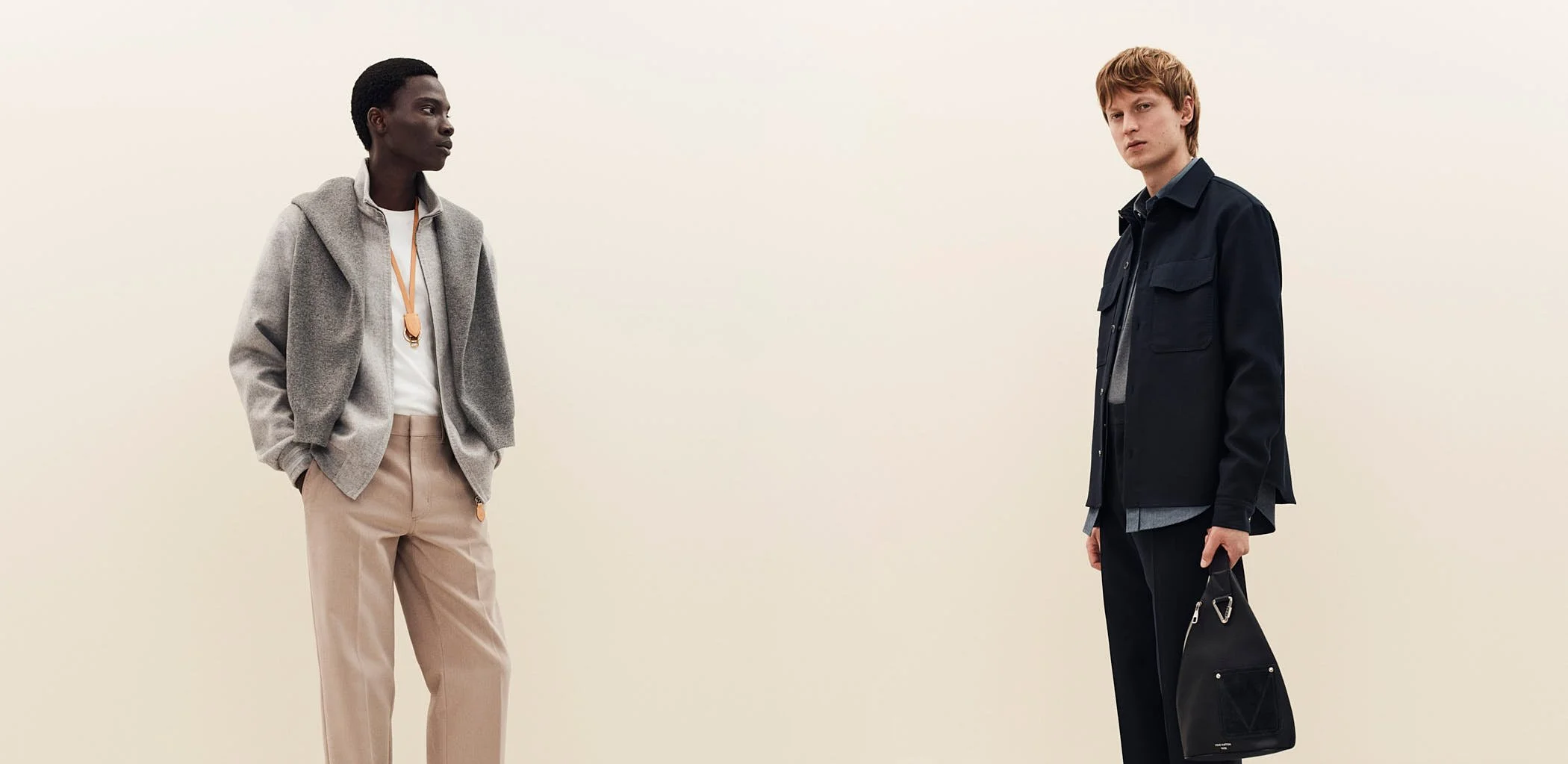
Louis Vuitton will launch the Fall-Winter 2026 Men’s Trunk Edition on 5 February 2026. The project is developed under Men’s Creative Director Pharrell Williams and introduced as a complete men’s wardrobe designed for extended use across seasons. The initiative arrives at a moment when large fashion houses are consolidating menswear around durability, material performance, and long-term relevance as central design priorities.
Since his appointment in 2023, Williams has overseen menswear at Louis Vuitton with an emphasis on coherence across product categories. His role operates at the scale of an institution, where creative direction intersects with manufacturing, global retail, and legacy product codes. The Trunk Edition sits within this framework, focusing on how menswear functions as a system of use.
The name Trunk Edition references the canvas trunk introduced by Louis Vuitton in 1854, the company’s first commercial product. Historically, the trunk was conceived as a modular object engineered for transport, storage, and repeated handling. Within the Fall-Winter 2026 collection, this reference establishes a functional lineage. The trunk serves as a model for organizing clothing and accessories around adaptability, construction, and sustained wear.
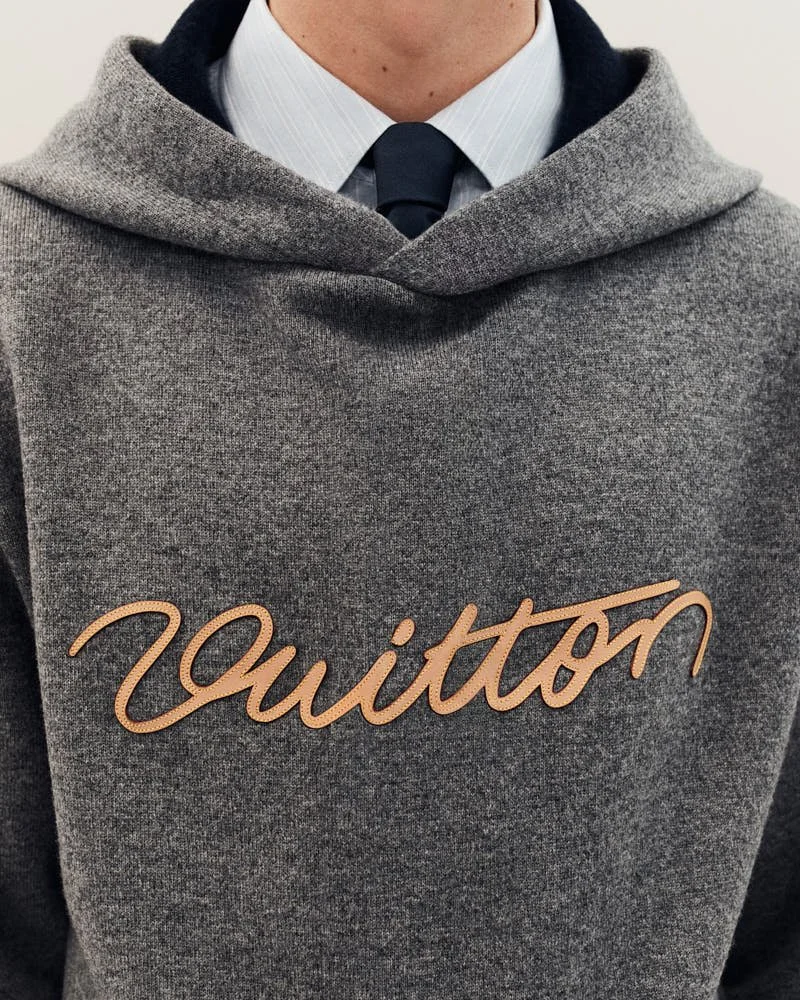
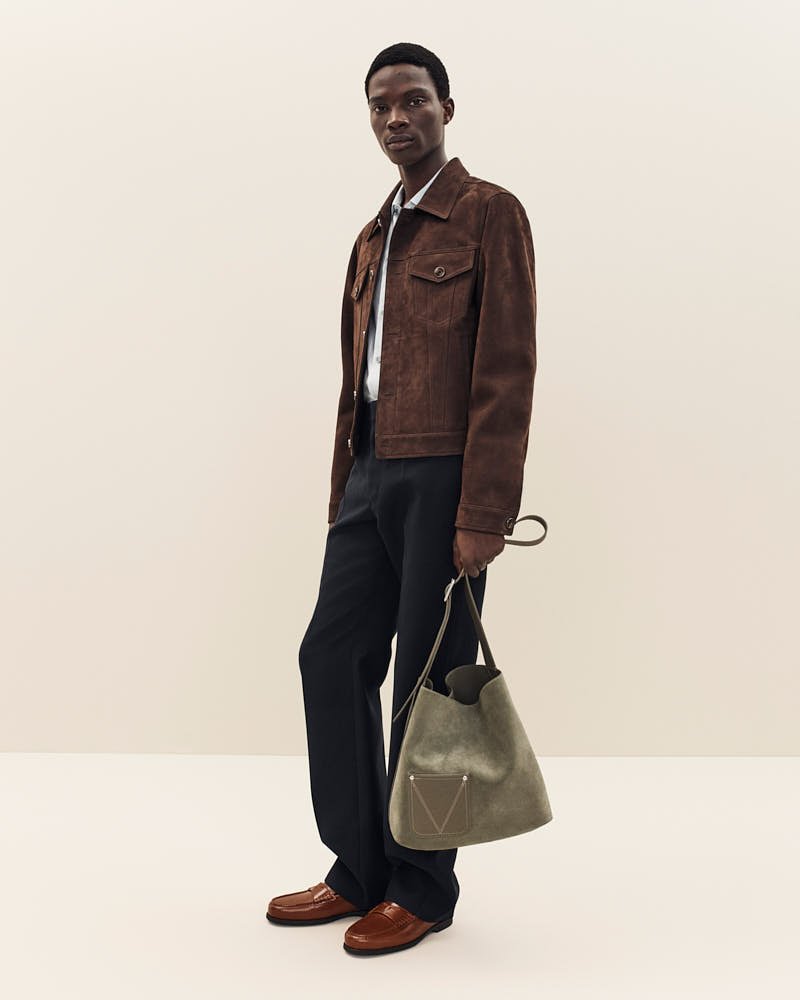
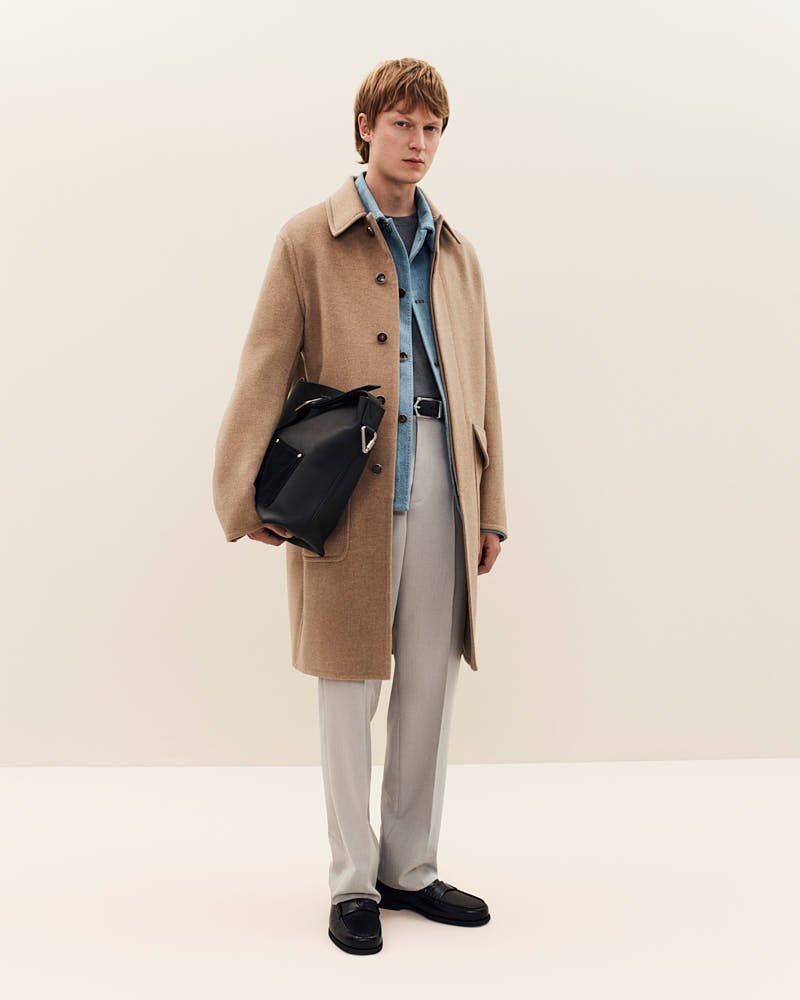
What Louis Vuitton proposes with the Trunk Edition is a deliberately finite wardrobe. Ready-to-wear, footwear, and leather goods are treated as interdependent elements, organized to cover daily use. The materials selected, silk-wool, cashmere blends, cotton-silk fabrics, nubuck, suede, signal an investment in textile behavior and wear over time. Construction choices such as double-face garments and unlined tailoring indicate an interest in how clothing moves, layers, and adapts across conditions. The muted palette of beige, blue, brown, black, and khaki reinforces this logic, limiting visual disruption within the wardrobe.
The same discipline applies to accessories. Footwear is restricted to three models, establishing a narrow but intentional range of use. Leather goods appear through the LV Touch line, where bags function as tools of movement. References to historical forms like the Steamer bag operate at the level of structure and purpose, anchoring contemporary formats in a long-standing logic of transport and daily carry.
Within contemporary menswear, the emergence of projects framed as complete wardrobes signals a shift in how value is articulated at the upper end of the market. Emphasis moves toward coherence, material decision-making, and garments designed to remain in circulation across multiple seasons. These priorities respond to practical changes in how menswear is bought, stored, and worn, particularly at the scale of global luxury houses, where continuity increasingly carries economic and cultural weight.
The Fall-Winter 2026 Men’s Trunk Edition enters this context as a concrete proposal. Its global release on 5 February 2026 positions it as a working wardrobe available through Louis Vuitton boutiques and retail channels, encompassing ready-to-wear, footwear, and leather goods within a single framework. At Louis Vuitton, this logic is implemented at institutional scale, where menswear, footwear, and accessories are planned together as a durable wardrobe. The Trunk Edition functions as a reference point for how the house structures menswear development beyond the seasonal cycle.
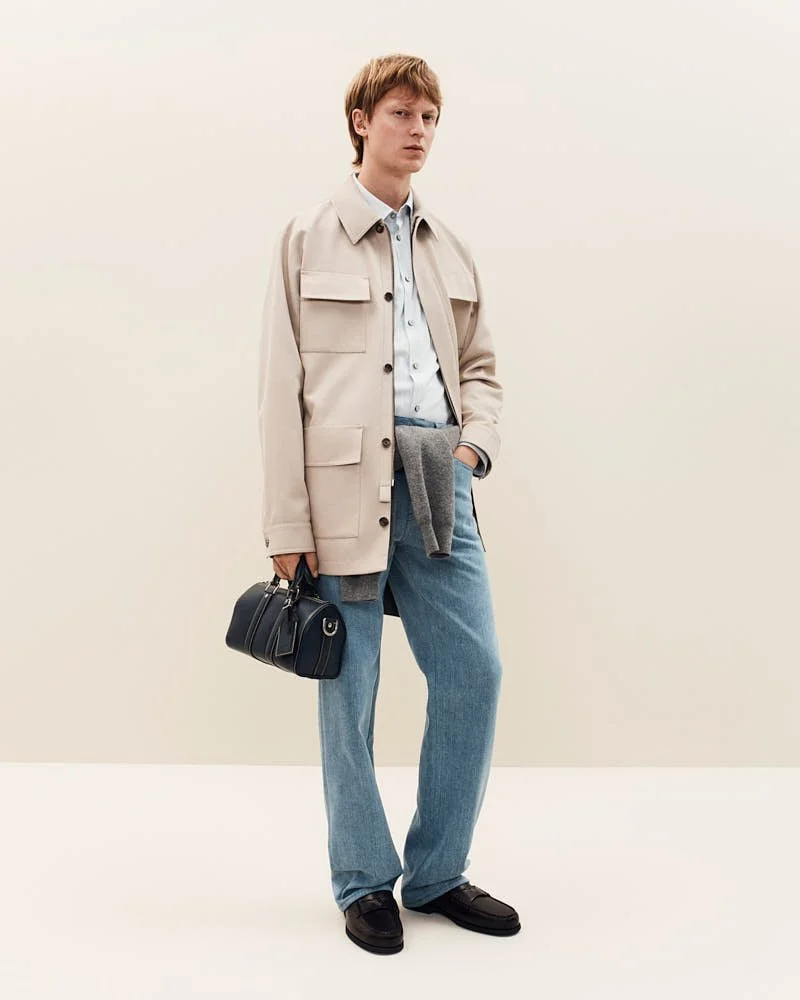
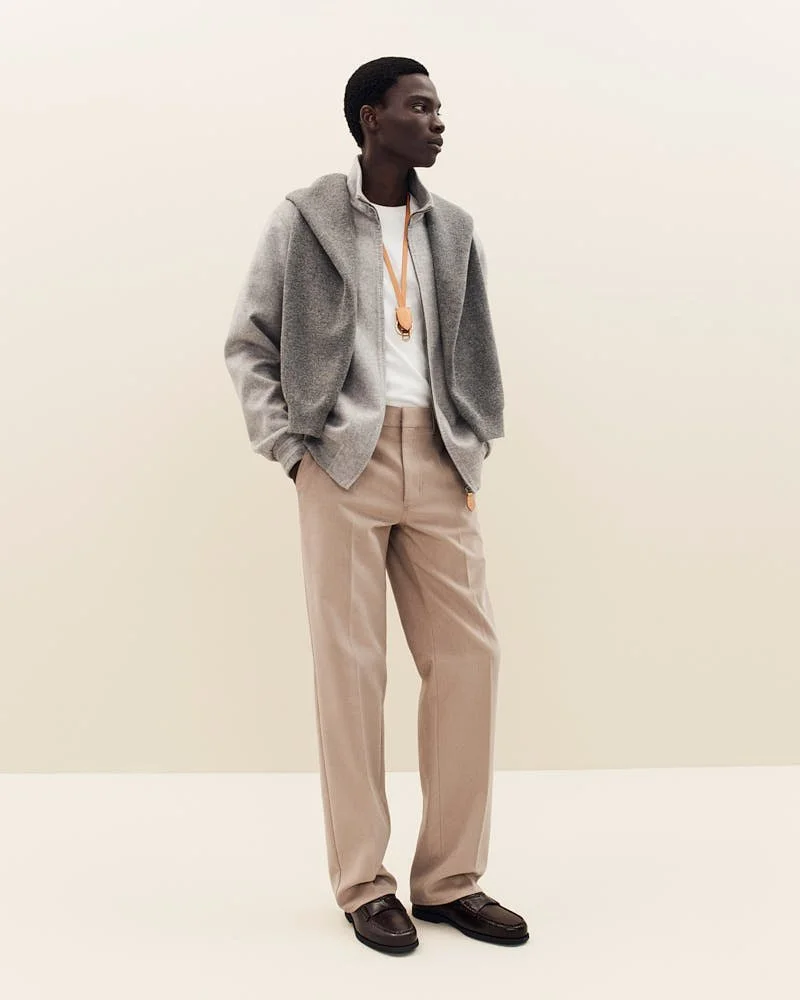
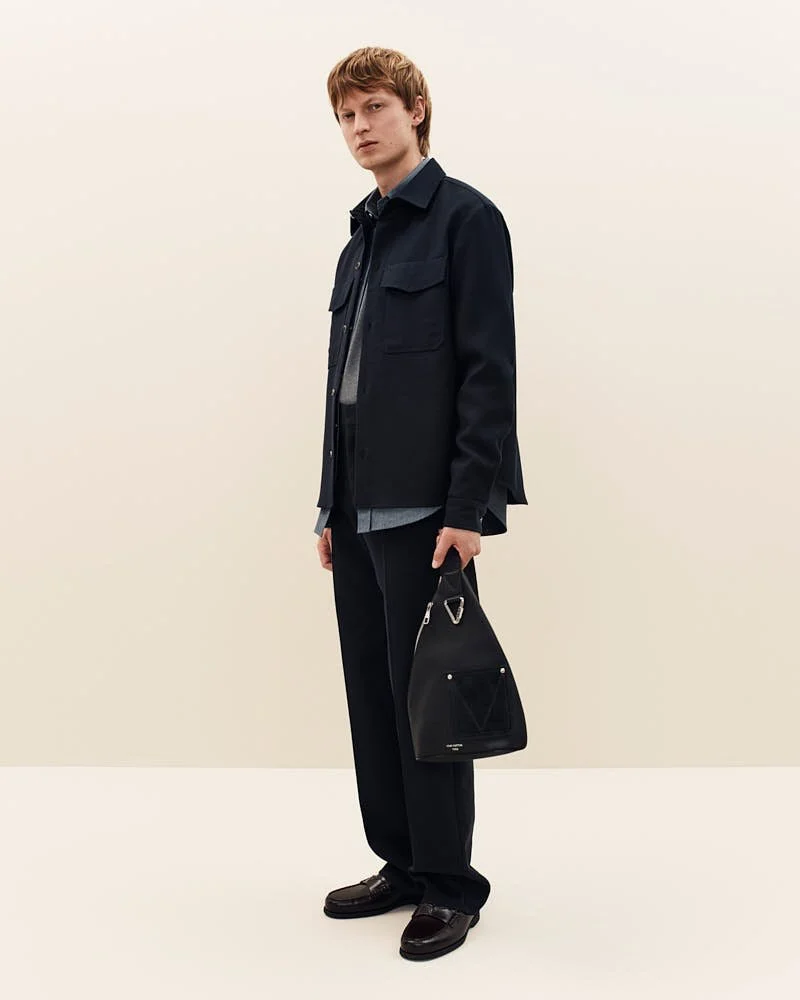
LOUIS VUITTON FALL–WINTER 2026 MEN’S TRUNK EDITION
collection by PHARRELL WILLIAMS / men’s creative director LOUIS VUITTON / launch 5 February 2026
content and imagery courtesy of LOUIS VUITTON Press