.specials
Shivin Singh on Absent Findings and Making Fashion in the UAE
written LE MILE
Before founding Absent Findings, Shivin Singh studied finance and accounting. In conversation with LE MILE, that background becomes less a biographical detail than a way of thinking through clothes. His answers keep returning to decisions about what a limited fabric allows, what an heirloom sari can survive, what a craftsperson can realise and what a young studio should protect before scale begins to change the conditions of the work.
Absent Findings is built from materials that already come with consequences, from deadstock fabrics that cannot be reordered once they are gone to heirloom saris that carry family life, craft and time before they enter the studio. Singh is careful not to treat either as a surface reference. A fabric can determine the role of a garment before the collection is complete. A sari can be cut and transformed, but its fall, border, colour and rhythm still have to remain present in the new piece. Here, memory becomes part of the construction instead of remaining decoration.
Singh also speaks about the UAE as a place where tailoring skill and practical knowledge have long existed, while the structures and recognition around luxury production still have to be built with consistency. For Absent Findings, this is tested at the level of standards, through pattern development, material testing, fittings, leather goods and the proximity between design and production.
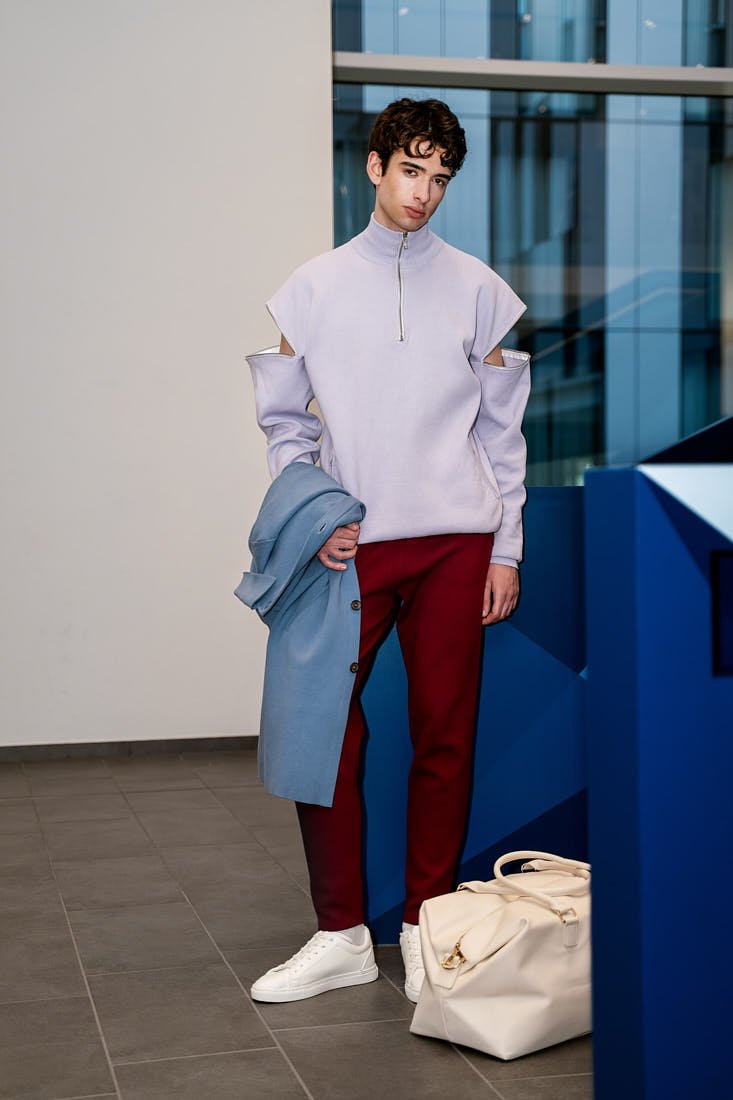
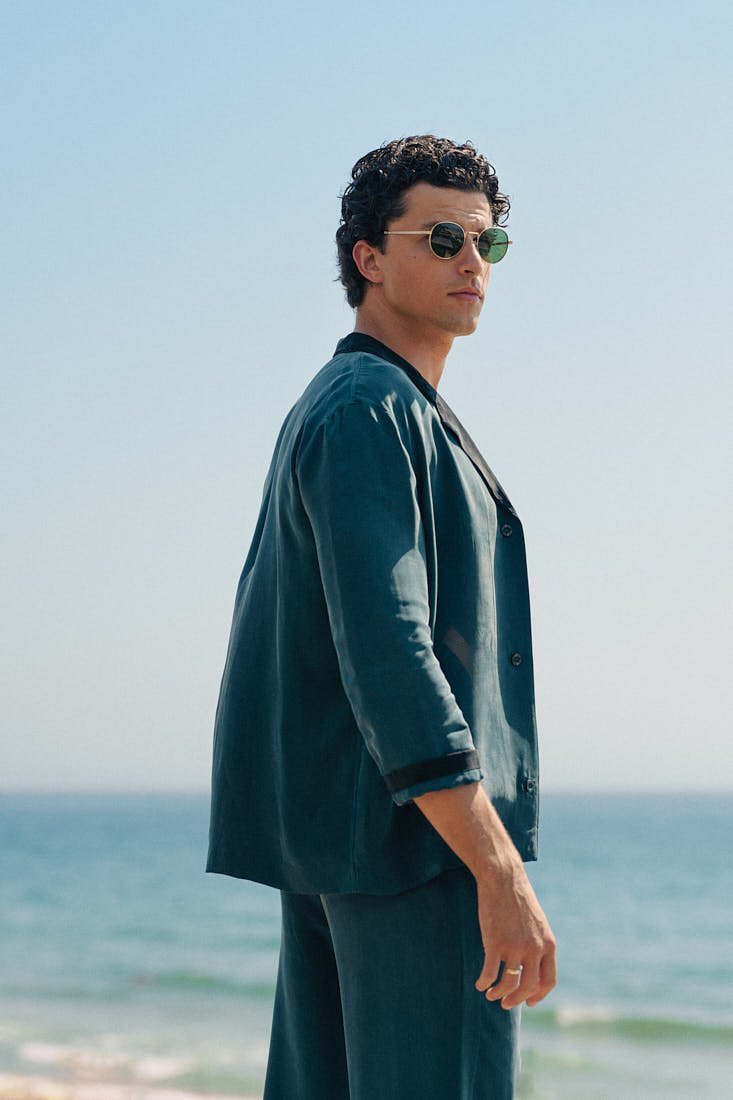
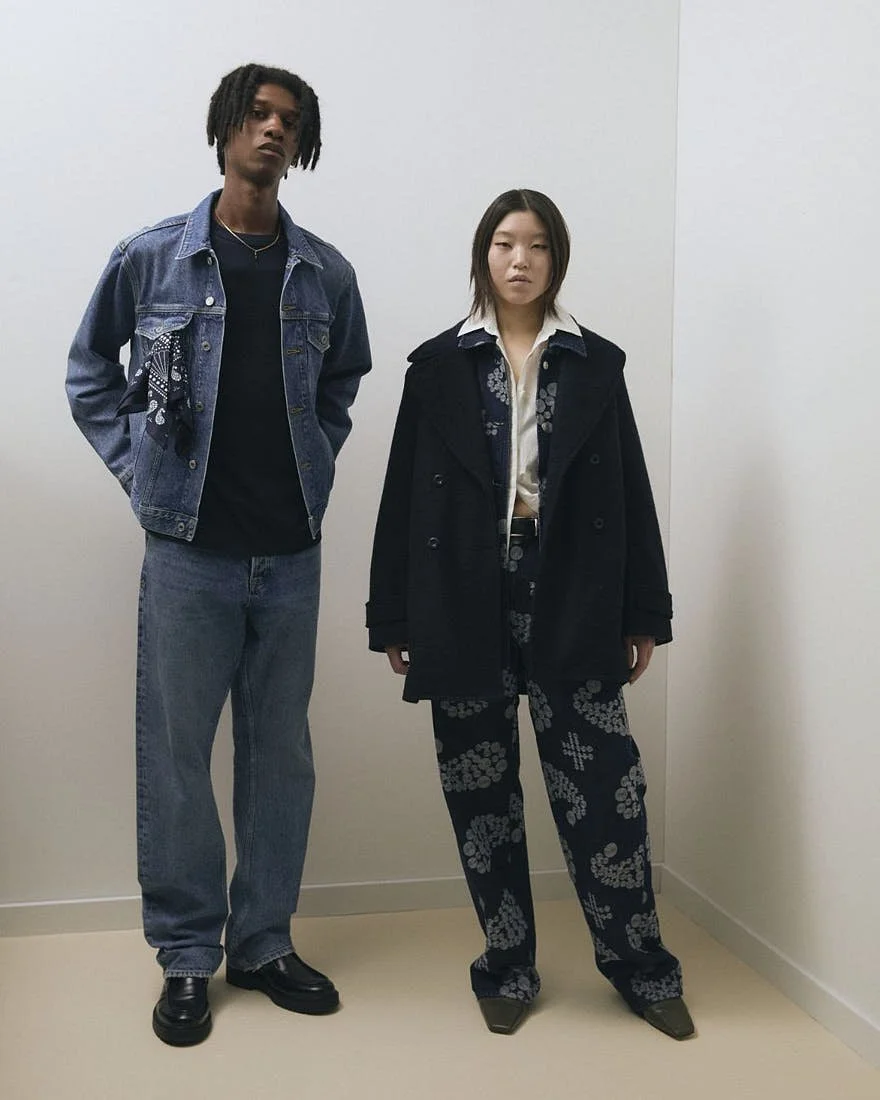
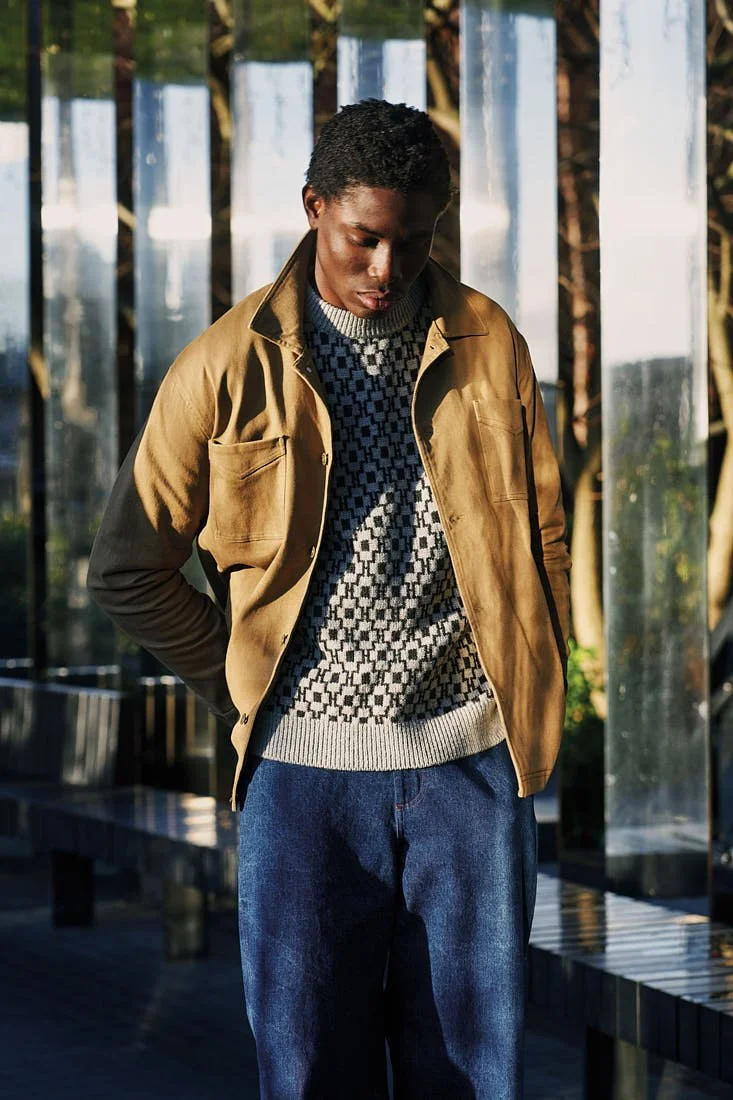
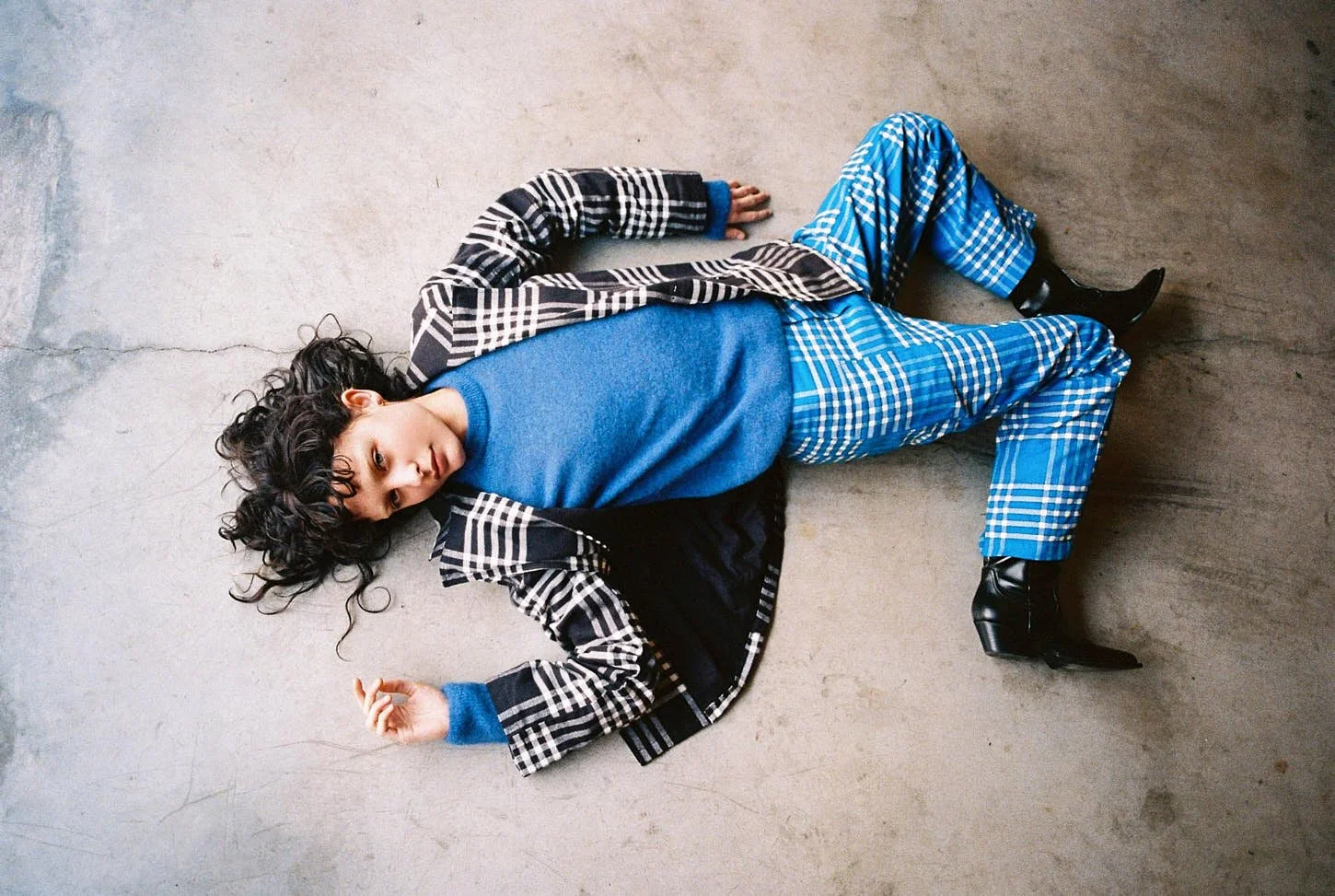
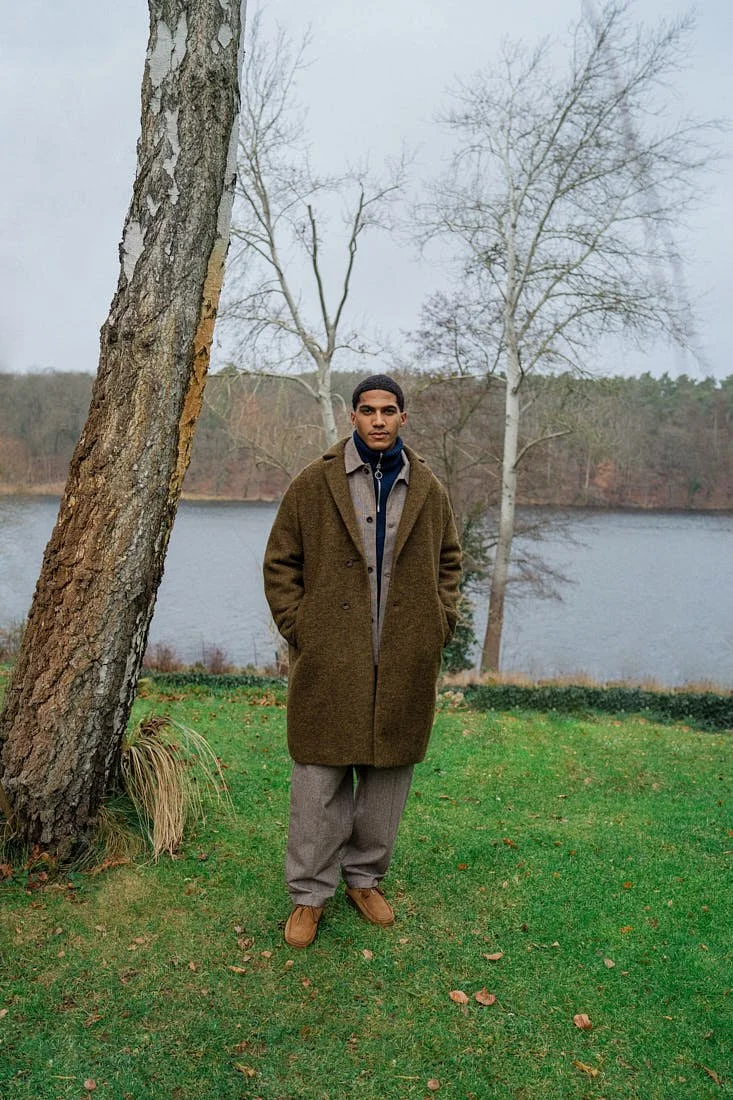
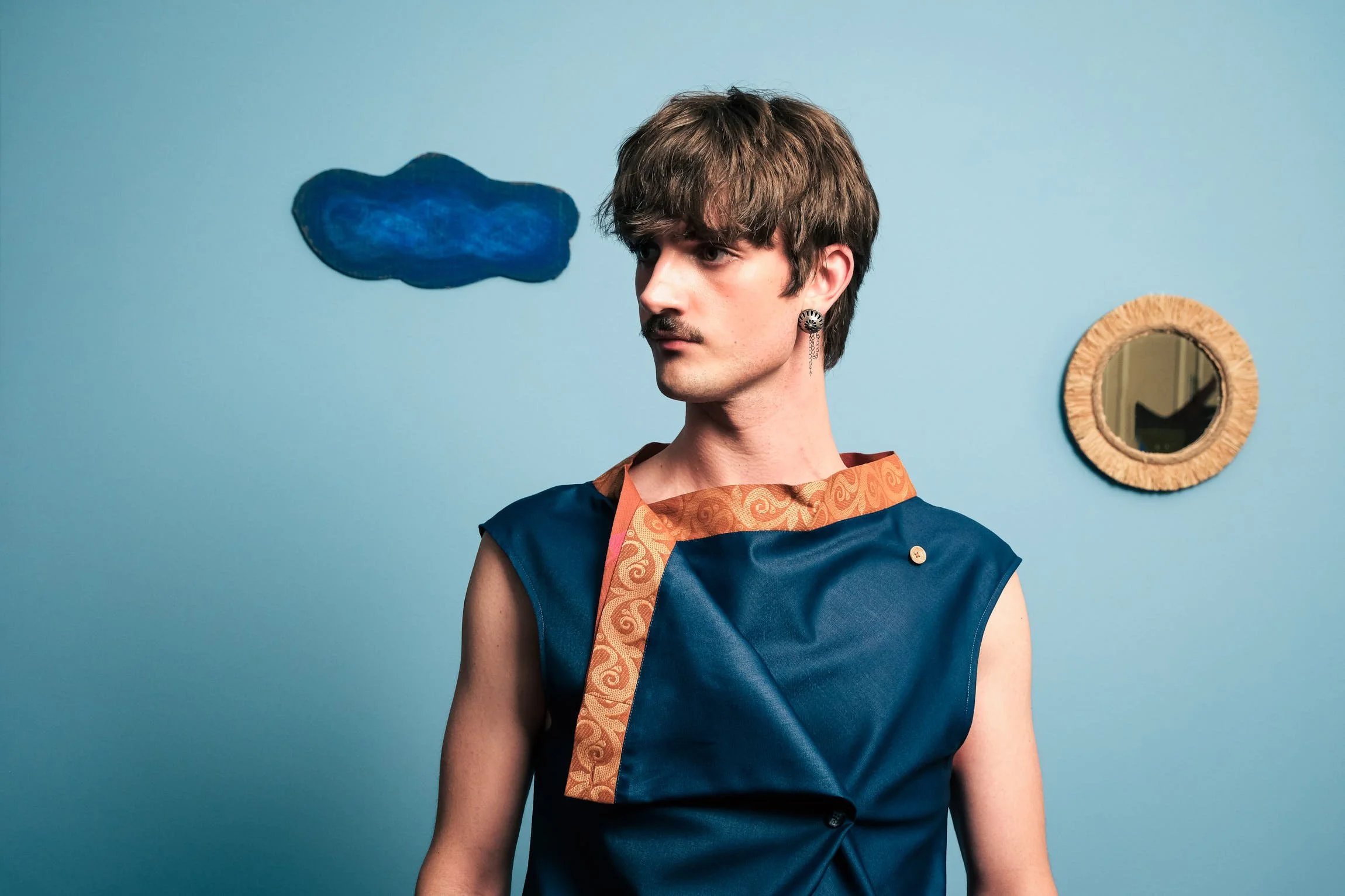
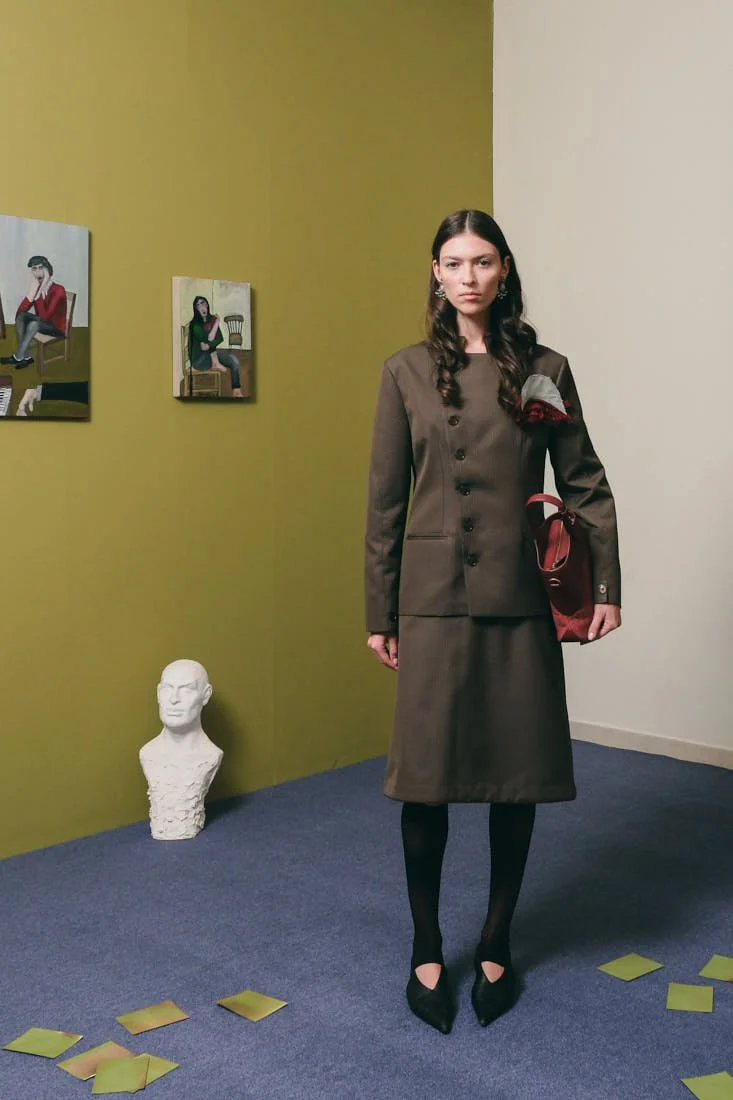
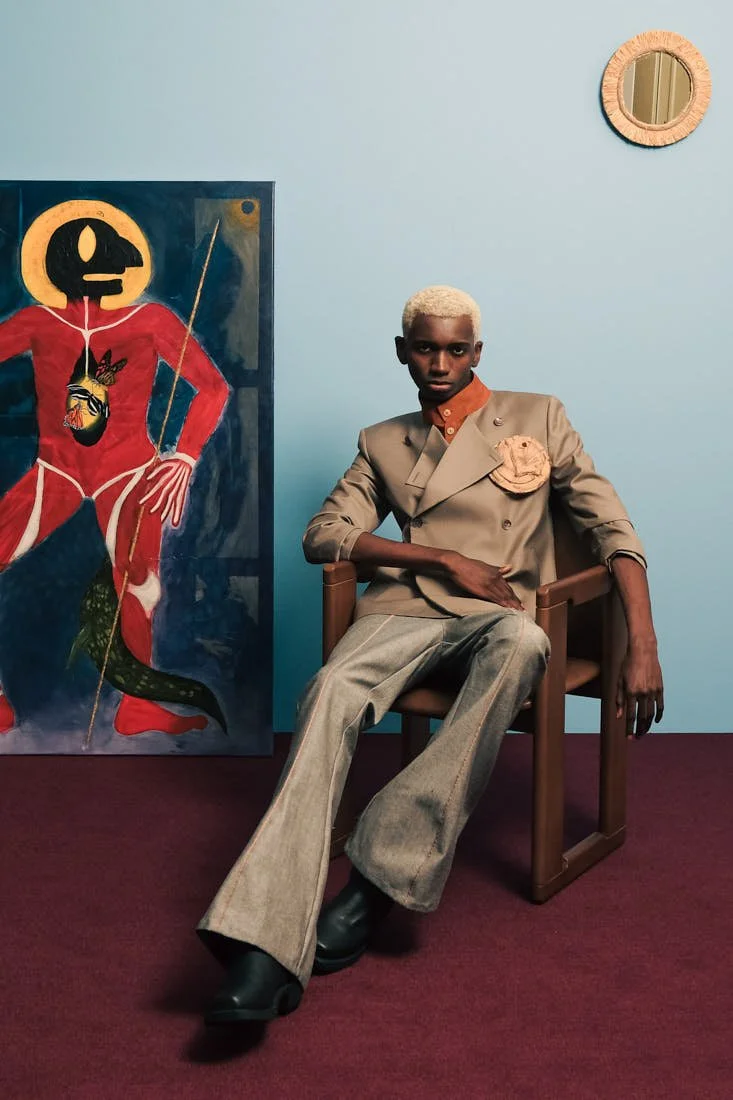
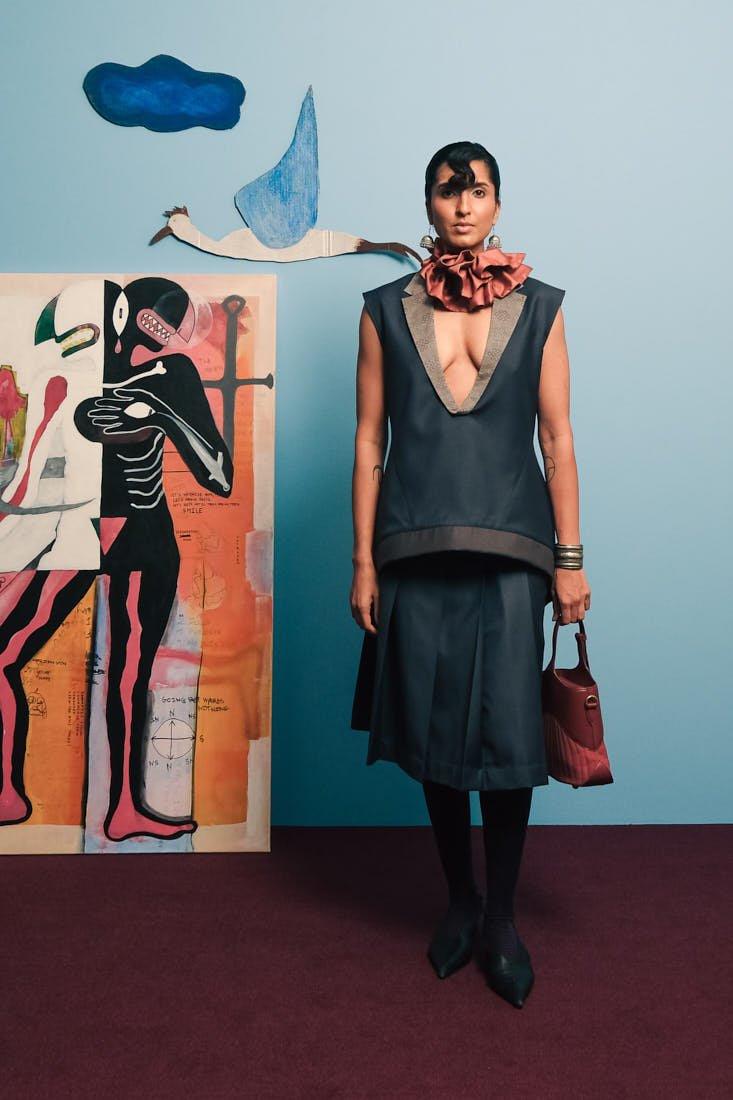
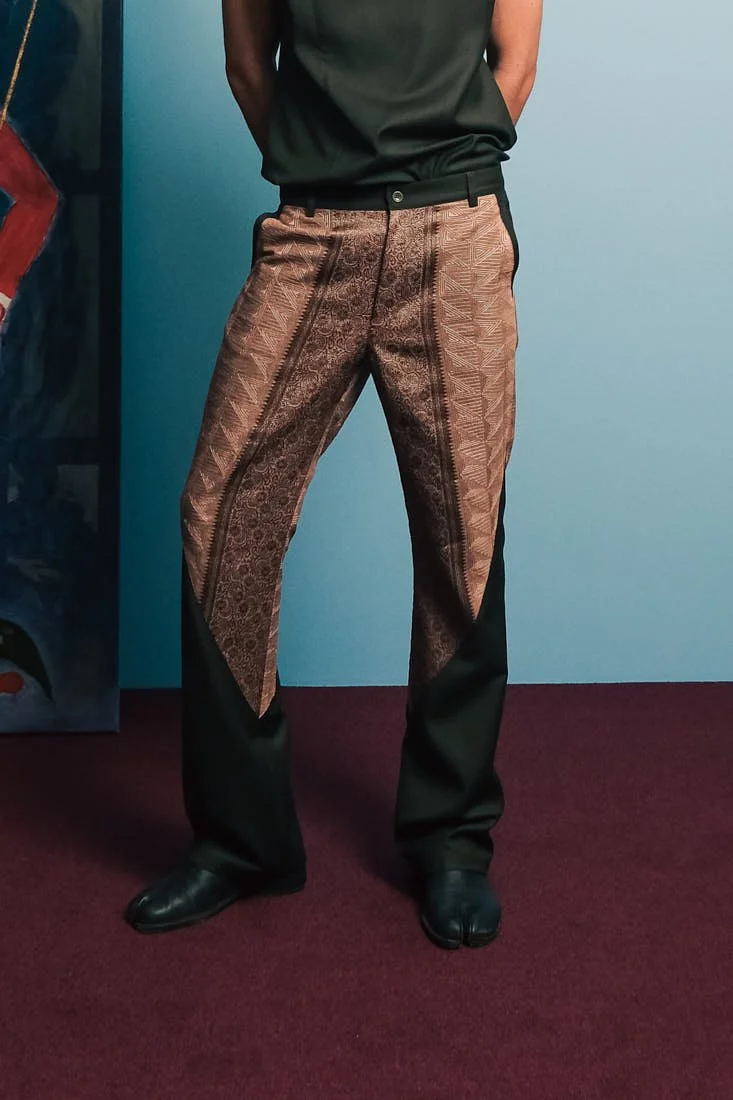
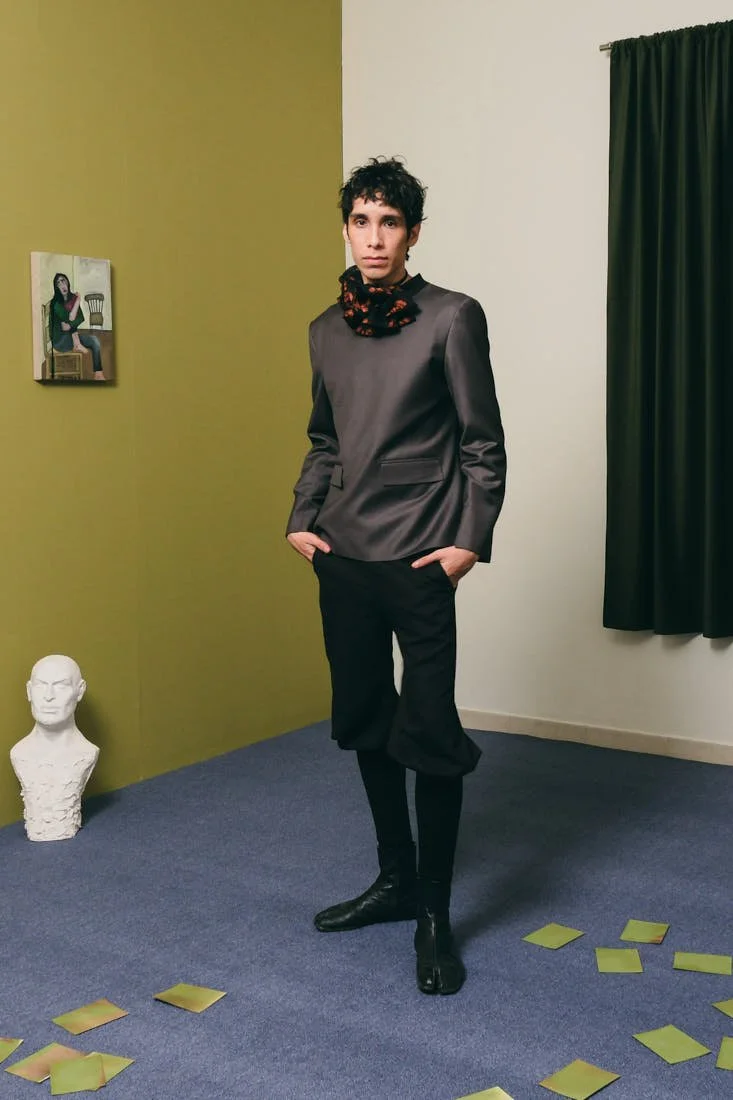
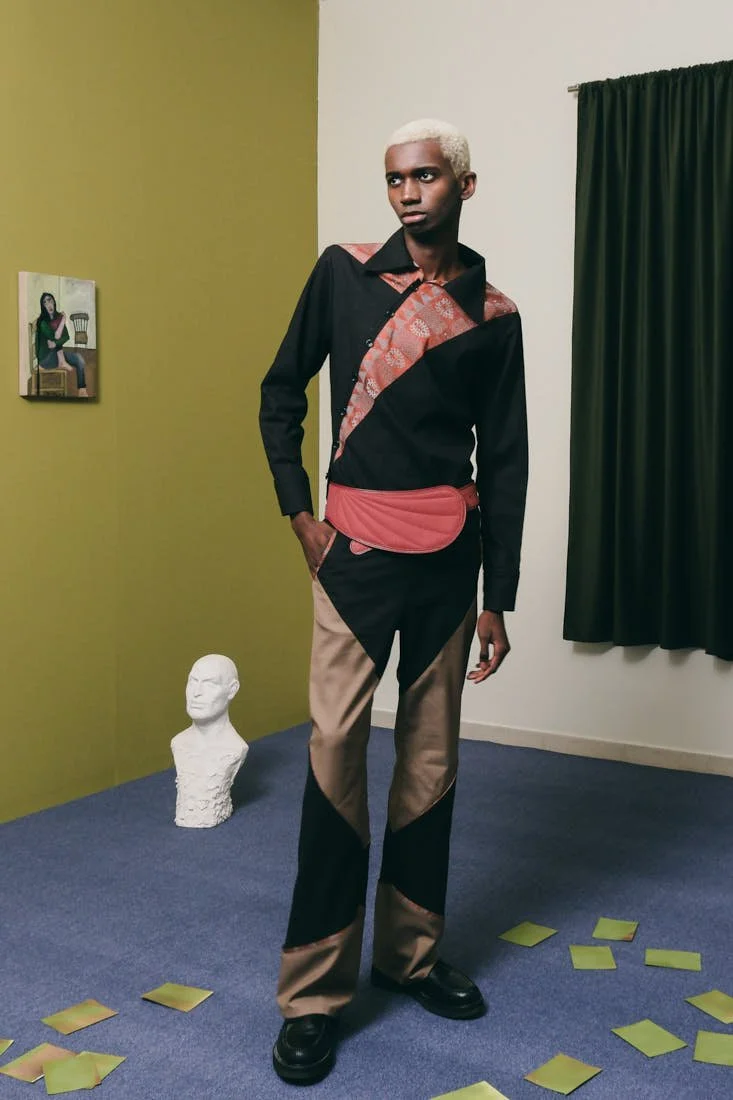
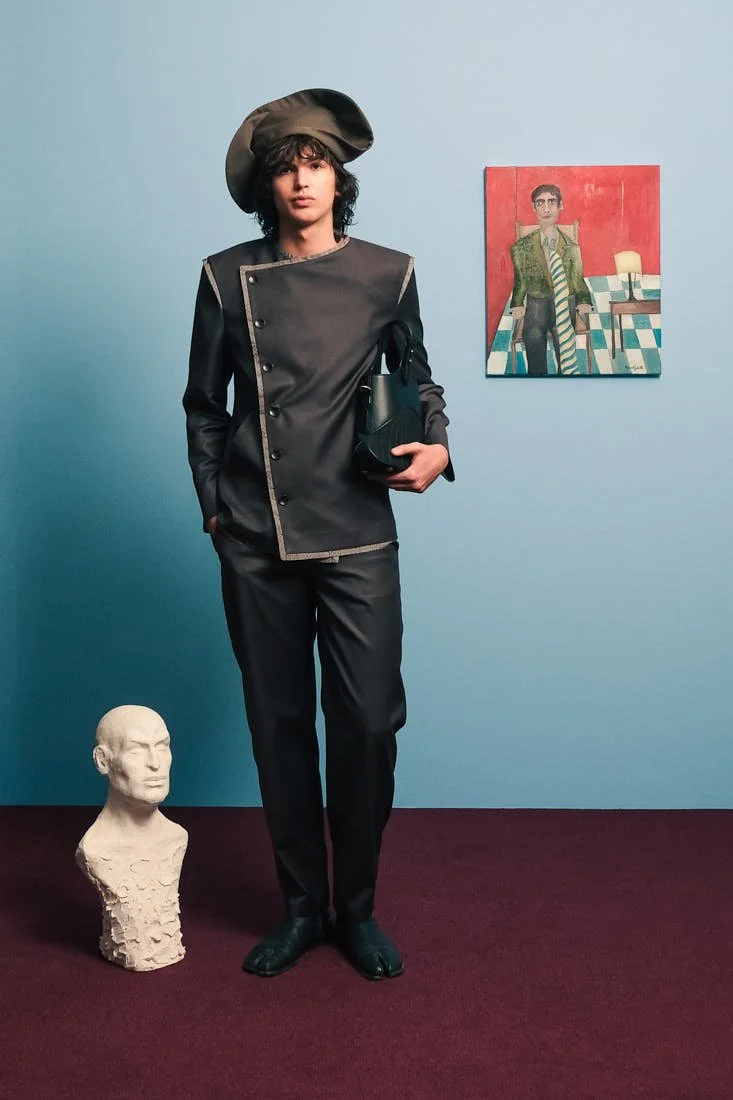
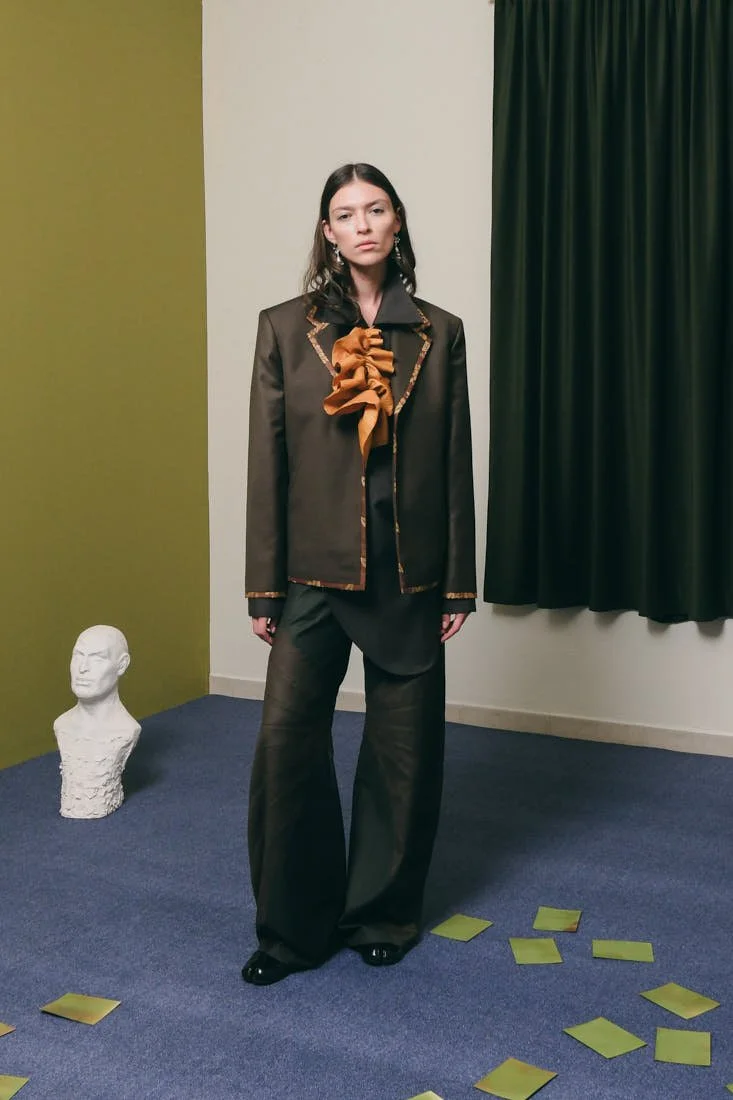
In the SS27 collection, that discipline becomes visible in clothes in which tailoring, sari-derived fluidity and a theatrical sense of setting are held closely together. What follows is an interview about the conditions behind the clothes. Singh speaks about finance, saris, deadstock, architecture, surrealism, Milan, the UAE and the people whose hands and images shape Absent Findings from within. The result is a conversation with a designer who is less interested in mythology than in the exact point where material, memory and making begin to depend on one another.
LE MILE
Which decision at Absent Findings still reveals your background in finance and accounting?
Shivin Singh
My background in finance and accounting still reveals itself in the way I scrutinise every creative decision at Absent Findings. I do not want the brand to exist simply as something visually beautiful; every idea must have an internal logic, a practical justification and a clear point of differentiation.
That mindset played a significant role in developing our approach of combining deadstock fabrics with heirloom saris. Both materials can be understood as forgotten fabrics, one left behind by overproduction, the other often stored away despite carrying generations of memory and craftsmanship. Bringing them together felt emotionally and conceptually coherent, while also satisfying the more analytical part of my mind. Even when the outcome is poetic, I need the reasoning behind it to be rigorous. For me, creativity becomes stronger when the story, material choices and commercial reality all support one another.
Architecture, the sari, memory and surrealism return across your collections. What has to change in your understanding of a reference before it enters another collection?
Architecture, the sari, memory and surrealism are fundamental to who I am, so they have naturally become cornerstones of Absent Findings’ creative language. I do not think my understanding of a reference has to change completely before it returns, but it must deepen. Each collection should reveal another dimension of it rather than simply repeat what came before.
In the first two collections, we focused strongly on the curved architectural lines of Le Corbusier’s Palace of Assembly in Chandigarh. The shape became a recurring motif across the garments, to the extent that some people began to see it as our version of a monogram. It is rare for a young brand to develop something recognisable so early, so I believe it is important to preserve it, not by overusing it, but by self-referencing it when it feels relevant. My relationship with the sari is still being decoded. With every collection, I try to isolate and simplify another aspect of it: a draping technique, a line across the body, a construction principle or the emotional weight held within the fabric. The challenge is not only how to reinterpret these elements in a contemporary way, but also how to work with the saris themselves. I may have ten beautiful heirloom saris in front of me and have to ask how I can preserve their memory and craftsmanship without allowing the result to become nostalgic.
Surrealism is more instinctive and difficult to repeat by nature. It often emerges through stories, images and dreams, many of them from conversations with Laura, who remembers and shares her dreams far more frequently than I do. Some of those dreams eventually become the starting point for an entire visual world.
The references remain, but my access to them changes. I have to keep studying them, questioning them and finding new ways for them to exist within the language of Absent Findings. Fine art, film and music references may shift from season to season according to my current obsessions, but the underlying concerns remain constant.
When you cut into an heirloom sari and translate it into a new garment, what are you careful not to lose?
Cutting into an heirloom sari is one of the most nerve-racking parts of the process because the intention is not simply to preserve it, but to transform it quite drastically without losing its grace.
We are especially careful to retain the fluidity and natural fall of the sari, which is why these textiles often become softer, more flowing silhouettes. This brings an important balance to Absent Findings, particularly alongside the precision and structure of our tailoring.
We also try to preserve the point where the body of the sari meets its border. There is a distinctive break in colour, texture and visual rhythm at that junction, and I find it incredibly beautiful. It feels like an area of consequence, a visible moment of transition within the textile. Wherever possible, we allow that meeting point to remain present in the final garment, so the sari’s original language is not erased even as it becomes something entirely new.
Which design decisions have to be made earlier when deadstock cannot be reordered?
The availability of deadstock fabric plays an important role in how we plan both the collection and the production cycle. Because the material cannot be reordered, we have to understand very early how much of it we have, which garments it can realistically support and whether it should be used for a statement piece or a design intended for wider production. Interestingly, the fabrics available in the smallest quantities are often the ones I fall in love with most. Those materials naturally become the medium for the more narrative and design-intensive looks within a collection. Their scarcity works well in that context because those pieces are usually produced in very limited numbers anyway.
When we have a more substantial quantity of a deadstock fabric, we can approach it with greater freedom. It can be developed across multiple garments, sampled more extensively and used for pieces that may become part of the core commercial offering.
The limitation therefore shapes the hierarchy of the collection very early. The quantity of a fabric does not only determine how many garments we can make; it often influences the role that garment will play within the wider story for that collection.
Sajid first entered your life through alterations to your mother’s saris. How has working with him changed the way you design?
My way of designing has changed as I have become more aware of our combined strengths, of what Sajid and I can achieve through prototyping and sampling, and what the broader production team can execute consistently. I now design with a clearer understanding of how an idea can be realised, while still leaving room to challenge the limits of our existing techniques.
At the same time, Sajid has become a far more experimental pattern cutter. He is increasingly open to unconventional methods and new ways of constructing a garment, while continuing to deepen the tailoring skills that have always been central to his practice.
The result is a more intuitive working relationship. I understand how far I can push an idea, and he understands how to interpret that idea without losing its intention. Our individual strengths have gradually become part of a shared design language.
You have said that the UAE should be recognised as a luxury producer. Which forms of craft, production and knowledge were already present in the region, and what did Absent Findings have to develop for itself?
Many of the essential capabilities were already present in the UAE, particularly within the tailoring community. There are highly skilled craftspeople here, many of them from the Indian subcontinent, who have developed an extraordinary understanding of construction through years of practical experience. Their knowledge is often instinctive: they have learned by making, altering and solving problems directly with cloth. What was often missing was not talent, but structure. The region has not always placed enough value on the craft of making, and the role of a designer has sometimes been reduced to having a good eye, creating graphics or identifying trends, while production is outsourced elsewhere. By the time those ideas return as finished garments, they can already feel disconnected from their original context or even a season behind.
My training at Polimoda allowed me to bring a more systematic approach to the skills that were already here: professional pattern development, sampling procedures, material testing, quality control and a clearer relationship between design and production. When that structure is combined with the instinctive abilities of local craftspeople, it becomes incredibly powerful.
For our leather goods, Absent Findings had to develop many of the specific standards ourselves. We worked through questions of edge burnishing, reinforcement, leather handling, construction methods and finishing until the bags could meet the level we expected from an international luxury product. The underlying talent was present, but it needed direction, experimentation and a shared standard of excellence.
We take immense pride in making everything in the UAE. I sometimes bring our Gallery Bag into major luxury retailers and mention to the sales associates that it was produced here. Their surprise is revealing. These are people who work closely with luxury products every day, yet many still struggle to imagine that a bag of that quality could be made in the UAE.
That perception is exactly what I want to change. I understand the emotional power that labels such as “Made in Italy” or “Made in France” can carry; I felt it myself growing up. My ambition is for “Made in the UAE” to eventually command the same respect, not through branding alone, but through the quality, discipline and integrity of the objects we produce.
Absent Findings designs for men and women, yet SS27 entered Milan through the menswear calendar. What does menswear mean to the brand now?
Absent Findings began as a purely menswear brand, but that definition shifted very quickly. At our first pop-up during BRED Abu Dhabi, we saw that many women were drawn to the tailored jackets, trousers and shirts, in effect, to the entire offering. It made us realise that there was also an archetypal woman to whom the brand was speaking very directly. From that point, we began approaching the collections with a broader perspective. We looked at the clarity with which brands such as Lemaire and Phoebe Philo communicate to their clientele, and considered how Absent Findings could position itself as a gender-fluid brand. Phoebe Philo is not presented as unisex, for example, yet I know many men who deeply desire the clothes. That kind of attraction beyond an assigned category is something I find very relevant.
Our relationship with Ms Michelle Ngonmo and the Afro Fashion Association has also been instrumental. They have strongly supported the brand’s direction and created opportunities for us to present the work, including our inclusion within the Milan Fashion Week menswear calendar. We have now shown there twice and received a great deal of encouragement.
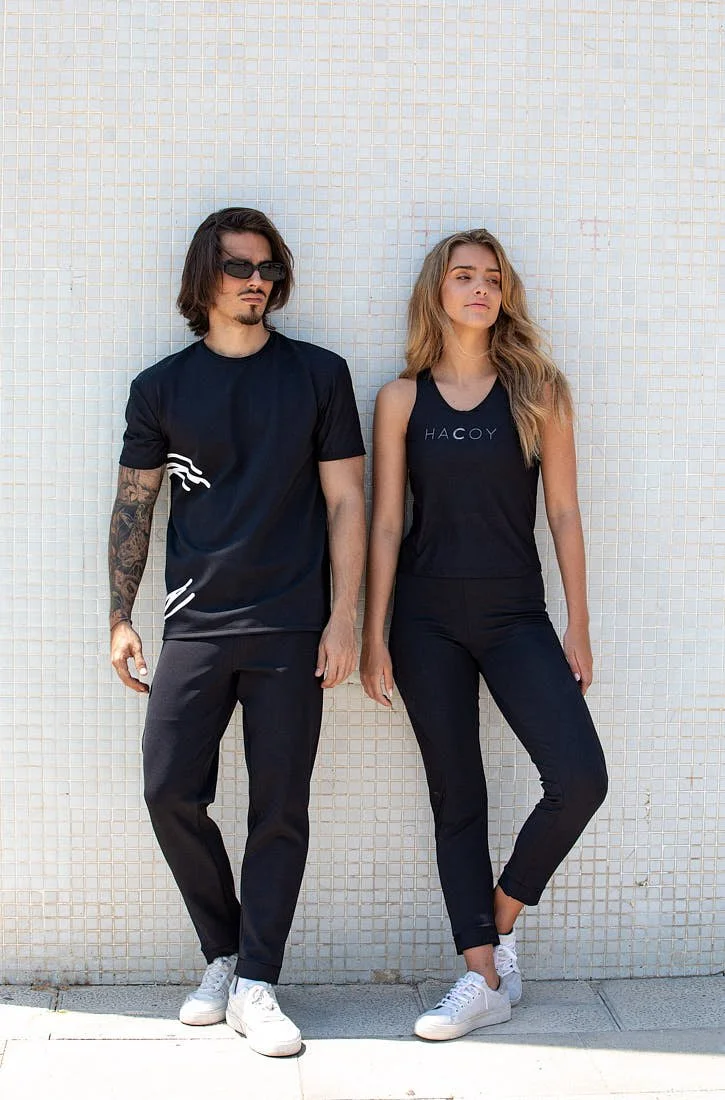
Menswear therefore remains the structural foundation of Absent Findings. We still draw heavily from menswear tailoring codes, particularly in construction and quality of finish, but the voice of the brand has evolved. Today, the majority of the collection is unisex, with perhaps one or two looks each season conceived specifically as womenswear.
Entering Milan through the menswear calendar does not restrict the brand; it gives context to where our construction language began. It also helps buyers understand the Gallery Bag and the wider product offering as part of a complete, gender-fluid world rather than as isolated accessories.
Tell us about the first customer who changed your idea of who Absent Findings was for.
Our first customer outside of friends and family fundamentally changed my understanding of who Absent Findings was speaking to. I met him during our first pop-up. He was a man in his late thirties or early forties, wearing a Yohji Yamamoto shirt, beautifully oversized wool shorts and a pair of Raf Simons x adidas Replicant shoes, which immediately brought back a lot of memories for me. Before we had even spoken, I felt that he understood the world of the brand. He was a dentist from Al Ain, but deeply interested in design and extremely confident in his own taste. He knew what he liked and did not seem to need external validation for it. That quality stayed with me and became central to how I began defining the Absent Findings customer. The brand is for someone who trusts their taste, understands the value of considered design and recognises intention without needing excessive decoration. There is always room for frivolity and play, but it should feel purposeful. That first customer showed me that our audience could not be defined simply by demographics. It was an attitude: self-assured, discerning and quietly individual.
Has Laura Puscasu ever shown you something in your own collection that you had not seen while designing it?
Laura is the Art Director of Absent Findings and my fiancée, and she shows me something new in the work almost every day. Through her visual storytelling, she creates the world in which the garments exist, often making the designs feel more layered and interesting than they did to me during the development process. She has an ability to play with texture, pattern, light and composition in ways that reveal qualities in a garment long after I have mentally moved on from designing it. Sometimes I see one of her images and think, perhaps we really are doing something good. Then I have to pull myself out of that satisfaction and continue working.
She also helps shape the emotional context of each collection from very early on. While we are developing and prototyping, we try to build the atmosphere around the collection and live within it. Many of the details that eventually define that atmosphere come through Laura’s dreams, which she remembers vividly and shares with me. They often reveal unexpected connections in the clothes and allow me to see my own work from a completely different perspective.
For SS27, the collection was placed inside a theatrical apartment created with artists, filmmakers and furniture designers connected to the UAE. What did that setting reveal about the clothes?
The setting allowed us to understand more deeply something we had always sensed: that Absent Findings speaks to the avant-garde spirit emerging within the UAE’s artistic community. We are not separate from that movement; we are simply contributing to it through fashion. The paintings in the apartment were borrowed from artists we deeply admire, each of whom is creating a singular and honest body of work. Placing the clothes alongside their work, as well as within furniture and sculpture created by people connected to the region, made the collection feel less like an isolated fashion presentation and more like one element within a broader cultural setting.
It showed us that the garments are most alive when they exist in conversation with other forms of expression. Absent Findings is for everyone, but its point of view is intentionally singular. That apartment made clear that the brand belongs among people who are building distinct worlds of their own. We are deeply grateful to the artists Sara Kamar, Farah Soltani, Inés Boubakri Haddad and Ahmed Emad; to Khaled Hassan of Forma Object for the furniture; and to Simon SPX for the music that helped complete the setting.
As Absent Findings becomes more visible, what do you most want to protect about the way the studio works?
I most want to protect the intimacy and intention behind the way we make. Every garment is created by a single craftsperson rather than being passed anonymously through a production line. That relationship between the maker and the garment gives the work a consistency and humanity that I never want to lose.
I also want to preserve the way deadstock fabrics and heirloom saris come together naturally within each piece. The materials should never feel forced into a sustainability narrative. Their histories, textures and limitations must remain integral to the design itself. People often tell us that our studio does not feel like it is in Dubai, and I understand what they mean. Dubai can be quick to embrace a particular aesthetic completely, whereas our space resists that kind of uniformity. The walls are covered with references, experiments, Laura’s work and my own, constant reminders of who we are as creators and where the collections come from.
As we grow, I do not want the studio to become cleaner, safer or more impersonal. I want its point of view to become even stronger. We have learned to produce work at an international level while facing all the constraints of a young independent brand. As some of those constraints begin to disappear, the quality and ambition should grow, but the closeness, curiosity and discipline of the studio must remain unchanged.
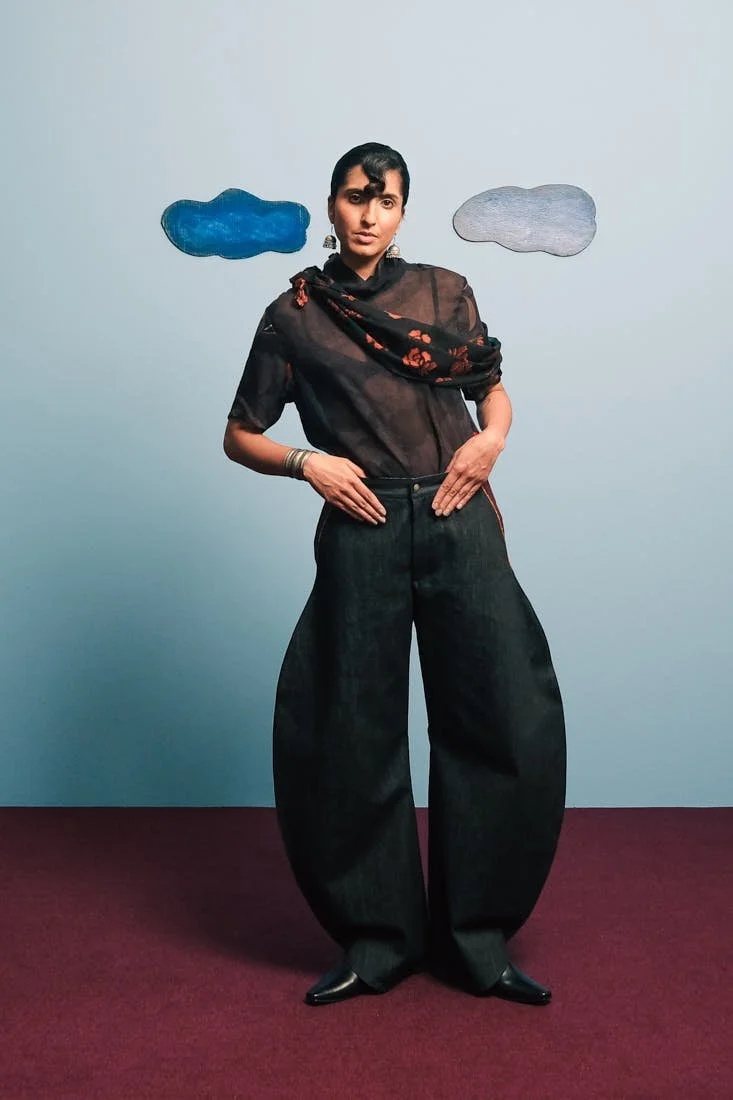
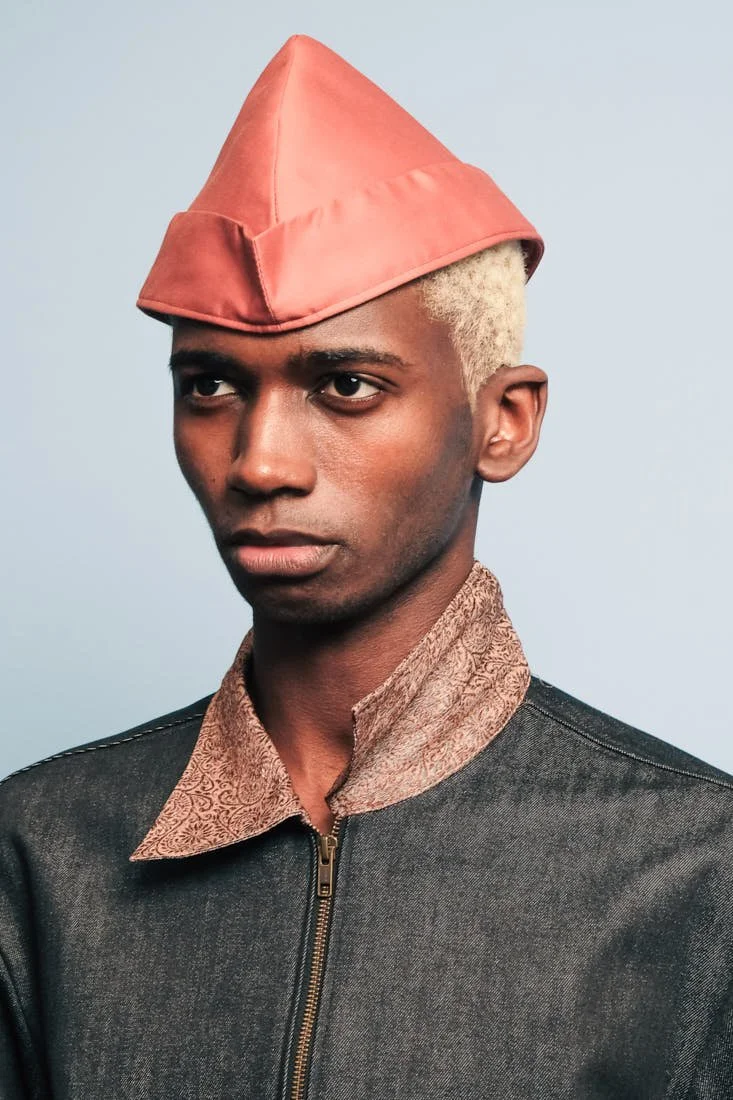
— Explore the Full Collection at www.absentfindings.com
all images by Absent Findings
credits
Photography & Art Direction Laura Puscasu
Styling Shivani Sudhir
Hair Grenezza Muji
Set Design Laura Puscasu, Shivin Singh & Ravinder Singh
Talents Oliver Raison, Dinika Govender, Leonardo Fabio Romero Santos, Karina Ilieva, Semyon Peresypkin, Noah Bashir & Sara Zabihi
Film Direction Yassin Yassin & Laura Puscasu
1st AC Abdulla Almualla
Executive Production Subrata Singh & Ravinder Singh
Production Shivin Singh
Original Soundtrack “Cascade” from The Carrington Project by Simon SPX
Kit Hire Koko Films & KC24