perspectives
An Image Rarely Appears All at Once
text CARLO MORRONE + TIM JAHN
Carlo Morrone first shared a selection of works with two short texts on his process and DÉJÀ-VU. What followed was an exchange between his initial reflections, an editorial reading of the images and a further reflection written in response to that reading.
Across the works, architectural fragments, thresholds, objects and traces of human use create spaces that feel familiar without belonging to a specific memory. The exchange gradually shifted from the origins of those fragments towards the body, possible actions and the question of why a place can seem recognisable before it is fully understood.
The feature retains that progression, moving from Morrone’s own starting point to LE MILE’s reading and back to Morrone in his response.
Born in Rome in 1988 and raised in Calabria, southern Italy, Morrone studied architecture and engineering in Italy, with periods in Madrid and Berlin, before moving to Paris, where he collaborated with the studios of Renzo Piano, Ricardo Bofill and Jean Nouvel on international projects. Drawing had been part of his life from an early age; his mother is a painter. After several years working as an architect, his artistic practice emerged as a natural continuation of that experience, allowing the same questions to take a different form. He lives and works in Paris.
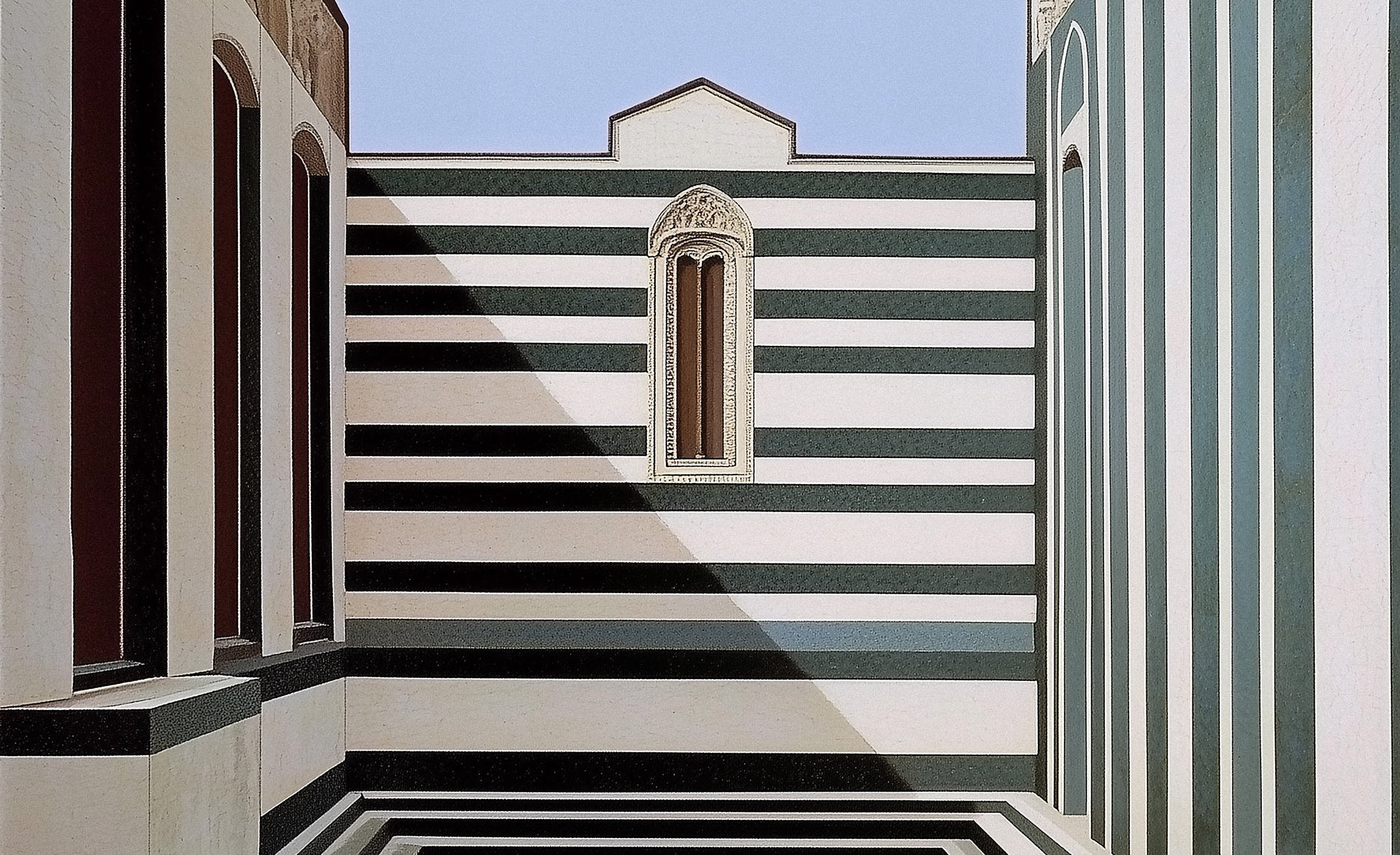
Carlo Morrone - Untitled, 2025
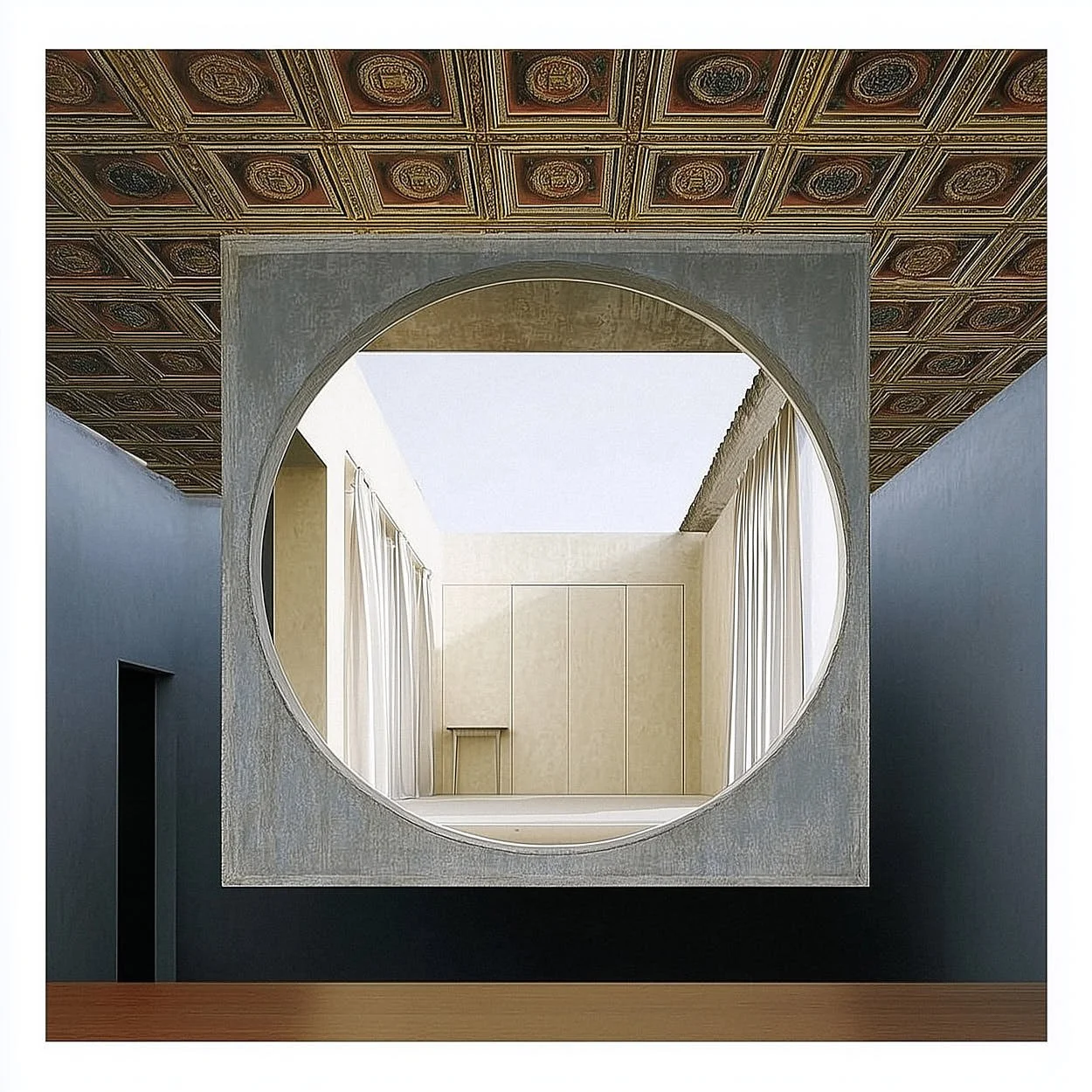
Carlo Morrone - Untitled, 2025
Carlo Morrone
An image rarely appears all at once.
More often, it arrives carrying the weight of something that seems to precede it. Not a memory in the personal sense, but a quieter form of recognition. We feel that we have already encountered it, although no precise place or moment comes to mind.
The images I make are built from fragments that belong to different worlds and different centuries. Architectural forms, religious iconography, anonymous objects, gestures, proportions, familiar silhouettes. Once removed from their original context, these elements cease to function as references. They begin to exist as something else.
What interests me is the moment when an image no longer feels constructed but discovered.
An image is usually the result of a long accumulation of fragments collected over time: paintings, anonymous photographs, everyday objects, places visited years before, or spaces that continue to exist only in memory.
Most of these fragments remain dormant for a long time. I don’t collect them with a specific work in mind. They simply stay with me until, often unexpectedly, they begin to establish relationships with one another.
That moment marks the real beginning of the work.
From there, the process becomes one of continuous adjustment. I move elements, remove them, change their scale or position, sometimes by only a few millimetres. These almost invisible decisions are often the most important. They determine whether an image remains a composition of separate parts or gradually acquires the feeling of something whole.
Once detached from their original context, fragments lose their historical identity. What interests me is not where they come from, but what happens when they coexist within the same image.
Perhaps every image already exists in a latent state, scattered across our collective visual memory. The work is not to invent it, but to bring distant fragments into a relationship until they suddenly recognise one another. When that happens, the image acquires an unexpected sense of inevitability.
This is why I am less interested in originality than in resonance.
Certain forms survive because they continue to inhabit us long after we have forgotten where they came from. They move silently through paintings, architecture, cinema, domestic interiors and sacred spaces, shedding their historical identity while retaining an emotional one.
My work tries to remain within that threshold, where the familiar becomes uncertain and the unfamiliar feels strangely remembered.
Perhaps DÉJÀ-VU is not about the repetition of an image.
Perhaps it is the moment when an image remembers us before we remember it.
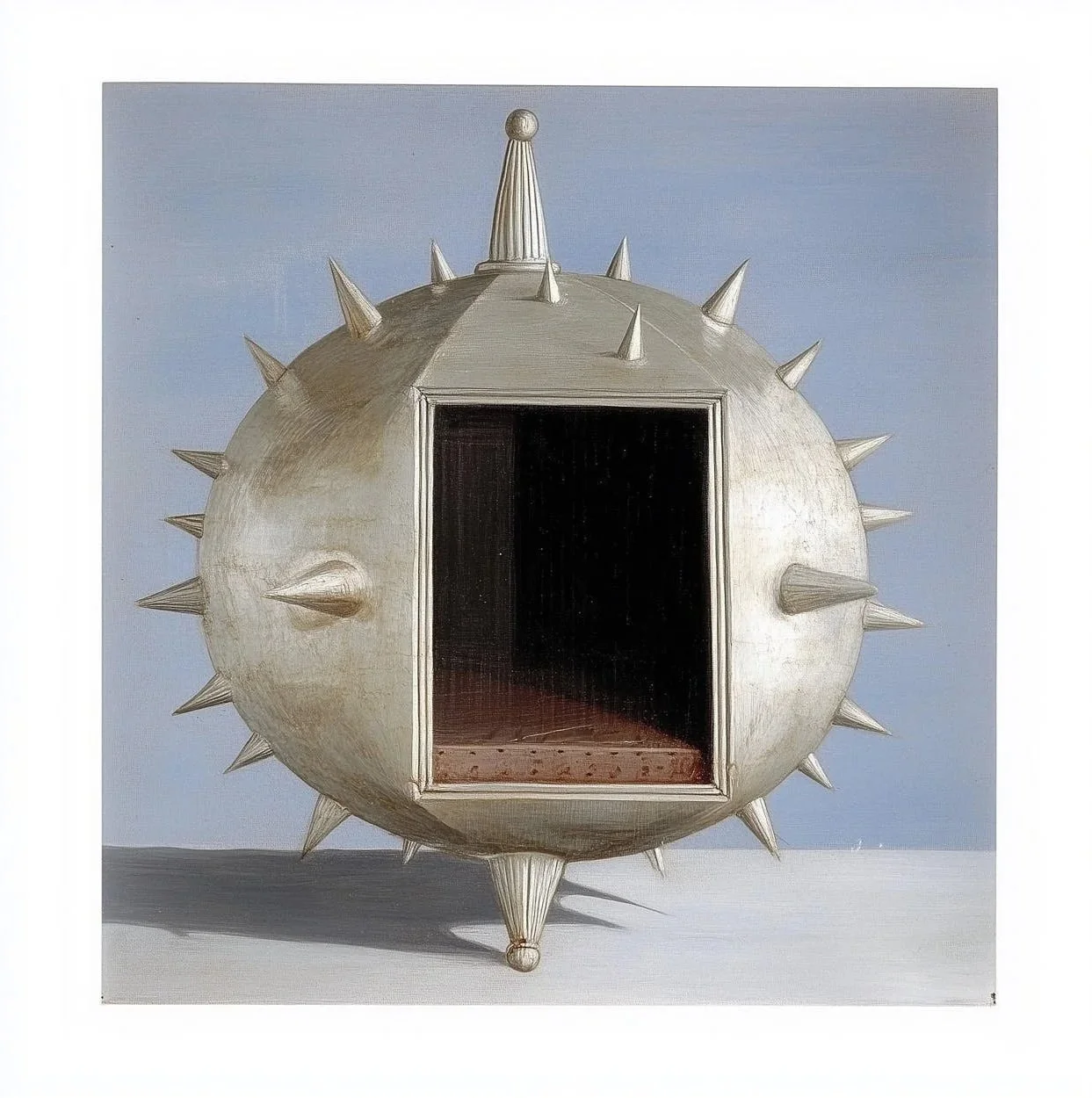
Carlo Morrone - Untitled, 2024
Tim Jahn
One of our first observations was that people seemed absent from many of the works. The longer we looked, the less adequate that description became. Figures, hands and fragments of faces do appear. What is more often interrupted is not human presence itself, but the connection between body, space and a clearly legible action.
Spaces without visible figures are not disembodied, because beds, curtains, doors and architectural openings remain defined in relation to human use. Previous, possible or anticipated bodily actions seem to remain inscribed in them.
We do not merely see these spaces; we test them, probably largely unconsciously, against our own bodily experience. Could we stand, lie down or pass through? Is an opening actually accessible? Is the space inhabitable, or only spatially convincing within the image?
The forms address our bodily knowledge, but do not fully meet its expectations.
This led us to a provisional reading that has stayed with us. You do not primarily show people in spaces; you show how spaces and objects presuppose them. When selecting and arranging fragments, do you think about the body as a measure or potential user of a space?
You describe how elements cease to function as references once removed from their original context, and how they lose their historical identity. We found ourselves asking what survives that detachment. Perhaps what disappears more decisively is their specific context of use, location and particular history.
At first, we also focused on the recurrence of certain objects. Over time, it seemed less important which objects reappeared than which spatial situations they produced. Arches, doors, windows, curtains and framed views open a space and withhold it at the same time.
Many of the spaces also feel less abandoned than suspended. Abandonment would already imply a history. The conditions for an action are present, while the action itself remains absent.
Perhaps recognition does not arise only from the visual or historical familiarity of the fragments. It may also come from our bodily and cultural knowledge of them. A room can feel familiar although we have never entered it, because its proportions, openings and possible uses already belong to our spatial experience.
The familiar remains active in the individual parts, but the whole cannot be traced back to an original memory. In a finished composition, do you experience this familiarity with something that has never existed as a whole?
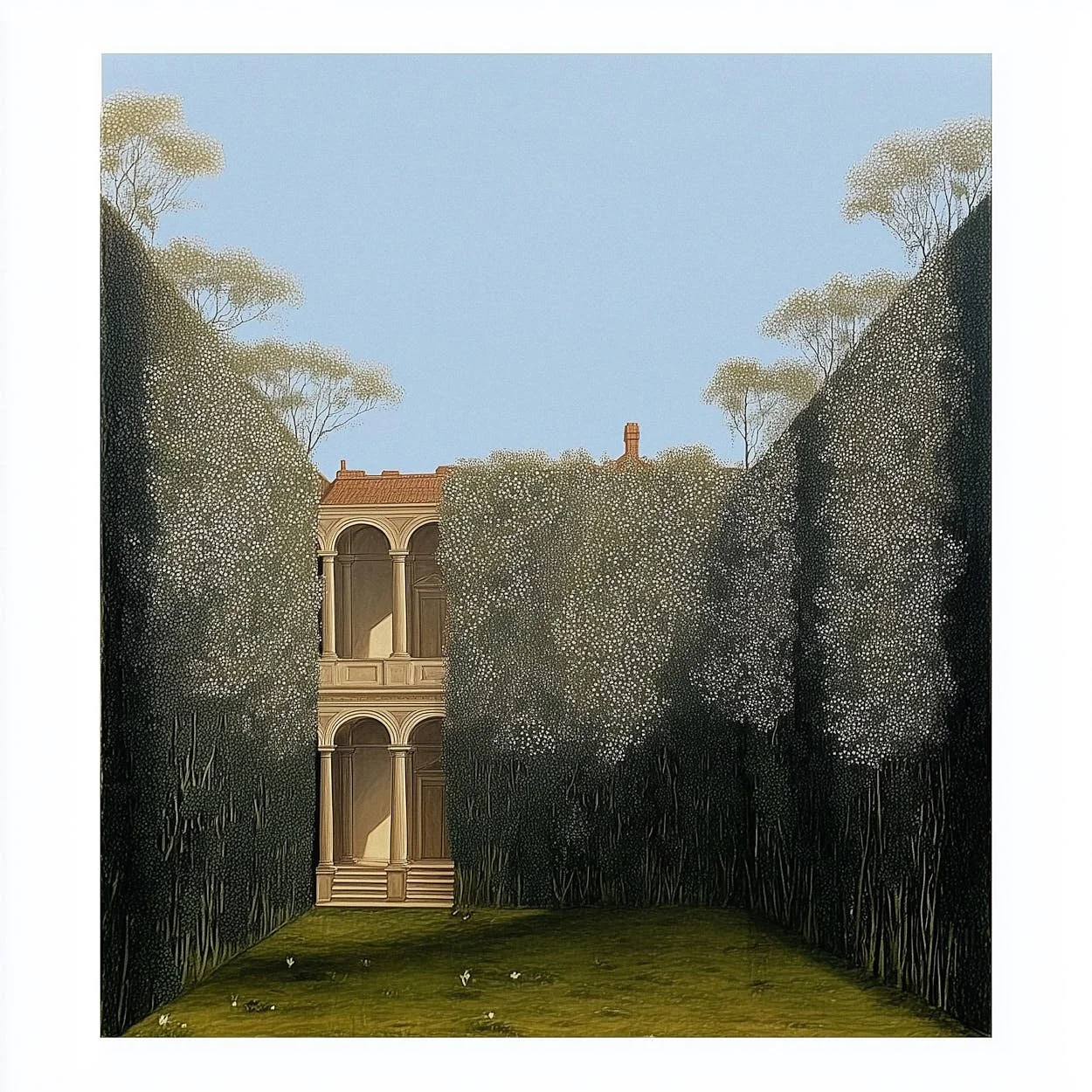
Carlo Morrone - Untitled, 2026
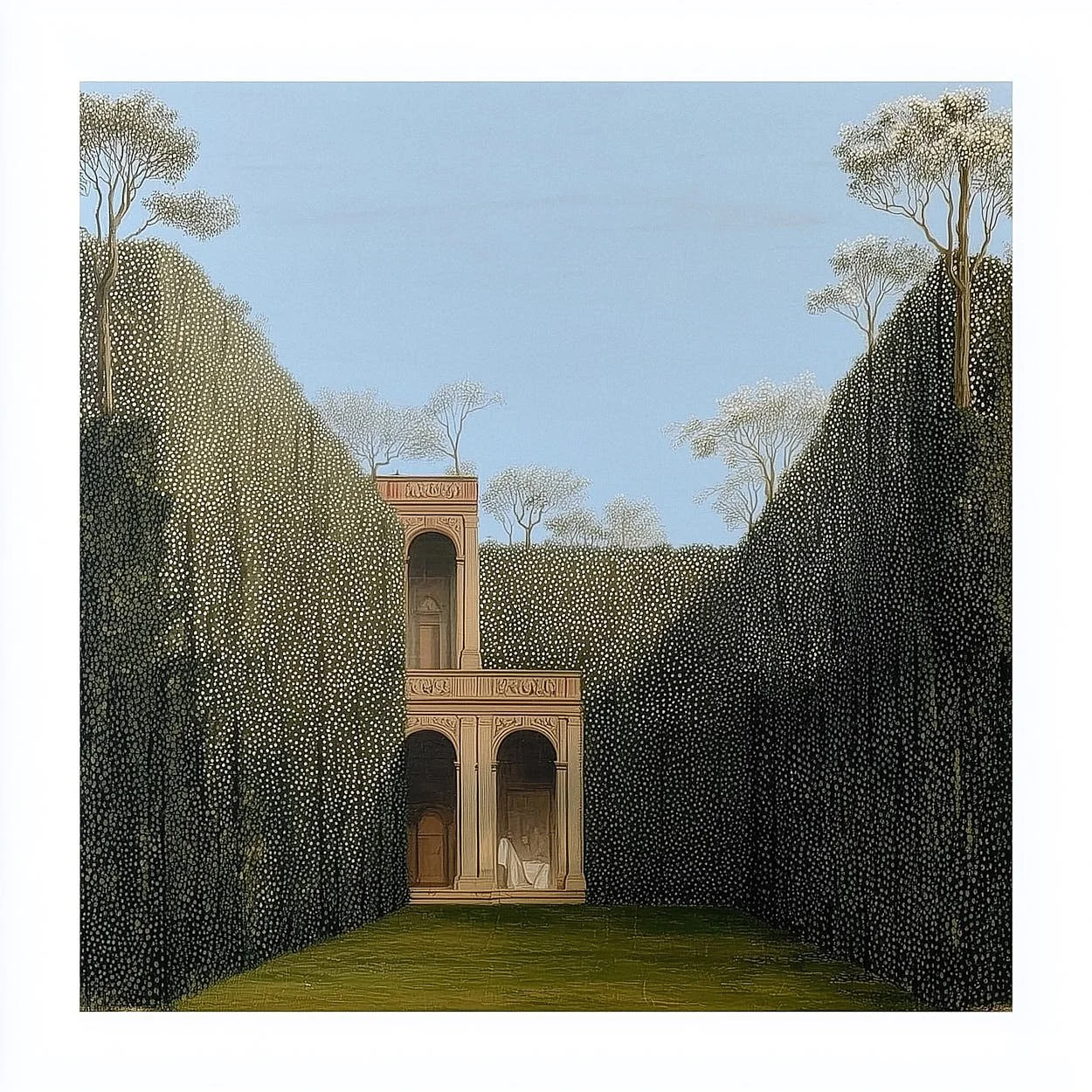
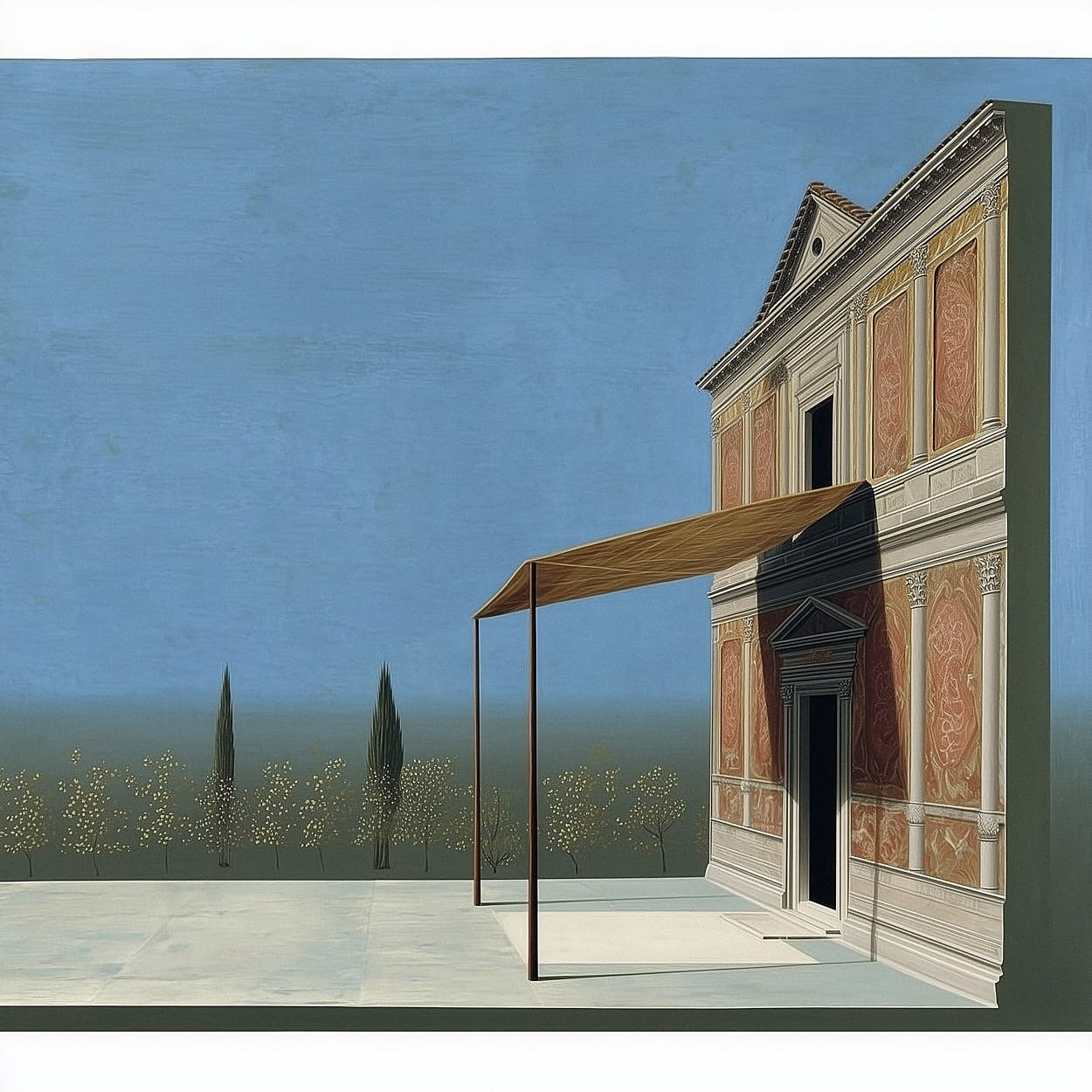
Carlo Morrone - Untitled, 2026
Carlo Morrone
Until reading your text, I don't think I had consciously distinguished between the absence of figures and the interruption of action. Yet the moment I read it, it felt strangely obvious.
When I begin an image, I rarely think about a figure first. I usually find myself thinking about a space. Not necessarily a real place, but a spatial relationship that somehow feels believable.
Even when no one is present, I instinctively ask myself whether someone could inhabit that room. Could they cross that doorway? Sit on that chair? Move around that table? Stand beneath that opening?
I don't consciously analyse these questions while I'm working. They happen almost instinctively. Looking back, I think they come from years of drawing and imagining architecture, where space is always measured through the possibility of a body moving within it.
Perhaps this is why the body often remains present even when it is absent. Not as a figure, but as a measure.
You describe these spaces as physically plausible yet somehow impossible to inhabit completely. I hadn't thought about them in those terms before, but I recognise what you mean.
If the space became entirely impossible, it would lose its sense of familiarity. If it became completely functional, it would simply become architecture. I'm probably searching for a point where both realities can exist at the same time. A room that feels convincing enough to enter, yet never entirely allows you to understand how it works.
The way you describe fragments also stayed with me. I don't think the fragments ever become neutral. A bed still suggests rest. A doorway still suggests passage. A curtain still implies the possibility of revealing or concealing something. They never completely lose the memory of what they once did.
Perhaps what disappears is something else.
Not identity, but biography.
The fragment no longer belongs to a particular place, person or historical moment, yet it continues to carry traces of the gestures that once surrounded it.
If a fragment remains too closely attached to its original meaning, it risks becoming a quotation. If it loses every trace of its past, it risks becoming generic. What interests me is the unstable space between those two conditions.
Until you pointed them out so clearly, I don't think I had realised how often thresholds appear. Doors, curtains, arches, windows, passages... they seem to return almost instinctively. Perhaps because a threshold is never simply an object. It always implies something beyond itself. Even when nothing actually happens, these elements quietly activate our imagination.
Perhaps that is also why I don't experience these places as abandoned. They simply remain available.
I think I'm less interested in absence than in possibility. The image remains open. Not incomplete, but unresolved.
Perhaps this is also where the feeling of familiarity begins to shift. We recognise what a doorway or a window is supposed to do. Yet the image quietly interrupts those expectations. Everything remains believable. Nothing behaves exactly as expected. I hadn't thought about this relationship between thresholds and recognition before, but it now seems difficult to separate the two.
This brings me to your final reflection on DÉJÀ-VU, which perhaps stayed with me more than anything else. For a long time, I thought the feeling of familiarity in these images came mainly from the fragments themselves. But your text made me wonder whether recognition begins somewhere else.
Perhaps it begins with space.
Or perhaps with the body.
Sometimes I have the feeling that I recognise an image before I understand it. Not because I have seen that exact place before, but because something about its proportions, its silences or the relationships between its elements already feels strangely familiar.
While I'm working, I still know where every fragment originates. At first, those references remain quite present.
Then, almost without noticing, something changes.
There is usually a moment when I stop looking at the fragments individually. The image begins to function as a whole.
The original sources don't disappear. I could still point to each of them if someone asked me. But they no longer determine how I experience the image. They become part of its history rather than its meaning.
It feels less like constructing something than recognising something that somehow already existed, although I know perfectly well that it didn't. Not because the image reproduces a forgotten memory, but because it creates the impression that it belongs to a memory we never actually had.
As I was writing these notes, I realised that this feeling isn't reserved for the viewer. It sometimes happens to me as well.
The image eventually becomes unfamiliar in a very particular way. I still remember every decision that produced it, yet I can no longer reduce it to those decisions. It acquires a kind of independence.
Perhaps that is also why, once a work is finished, I rarely feel that I have fully understood it. In a sense, I begin looking at it in much the same way as everyone else.
And perhaps that is the closest I can come to describing what DÉJÀ-VU means in my work.
Not the feeling of remembering a place.
But the feeling of recognising something that has only just come into existence.
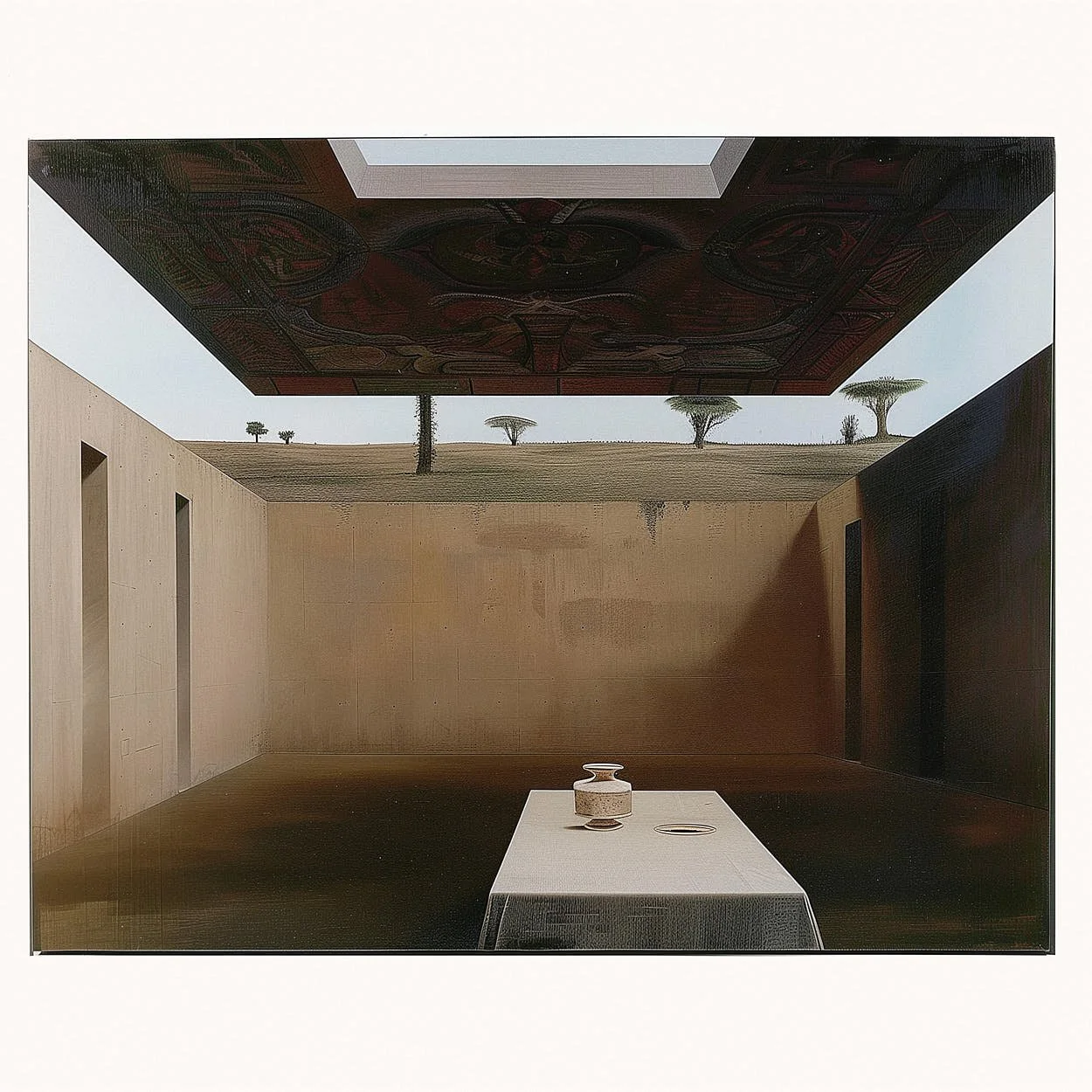
Carlo Morrone - Untitled, 2024
all art works (incl. header) courtesy Carlo Morrone
— more on CARLO MORRONE: www.carlomorrone.com