Ctrl + X
IT’S ABOUT THE CUT, THE WOUND AND THE IMAGE
interview + written HANNAH ROSE PRENDERGAST
Destruction isn’t more natural. Just easier.
Deconstruction, on the other hand, is Veronika Georgieva’s native language.
With her trusty scissors, she frees photographs, slides, and film from an eternity of official events. This version feels truer to how it actually happened.
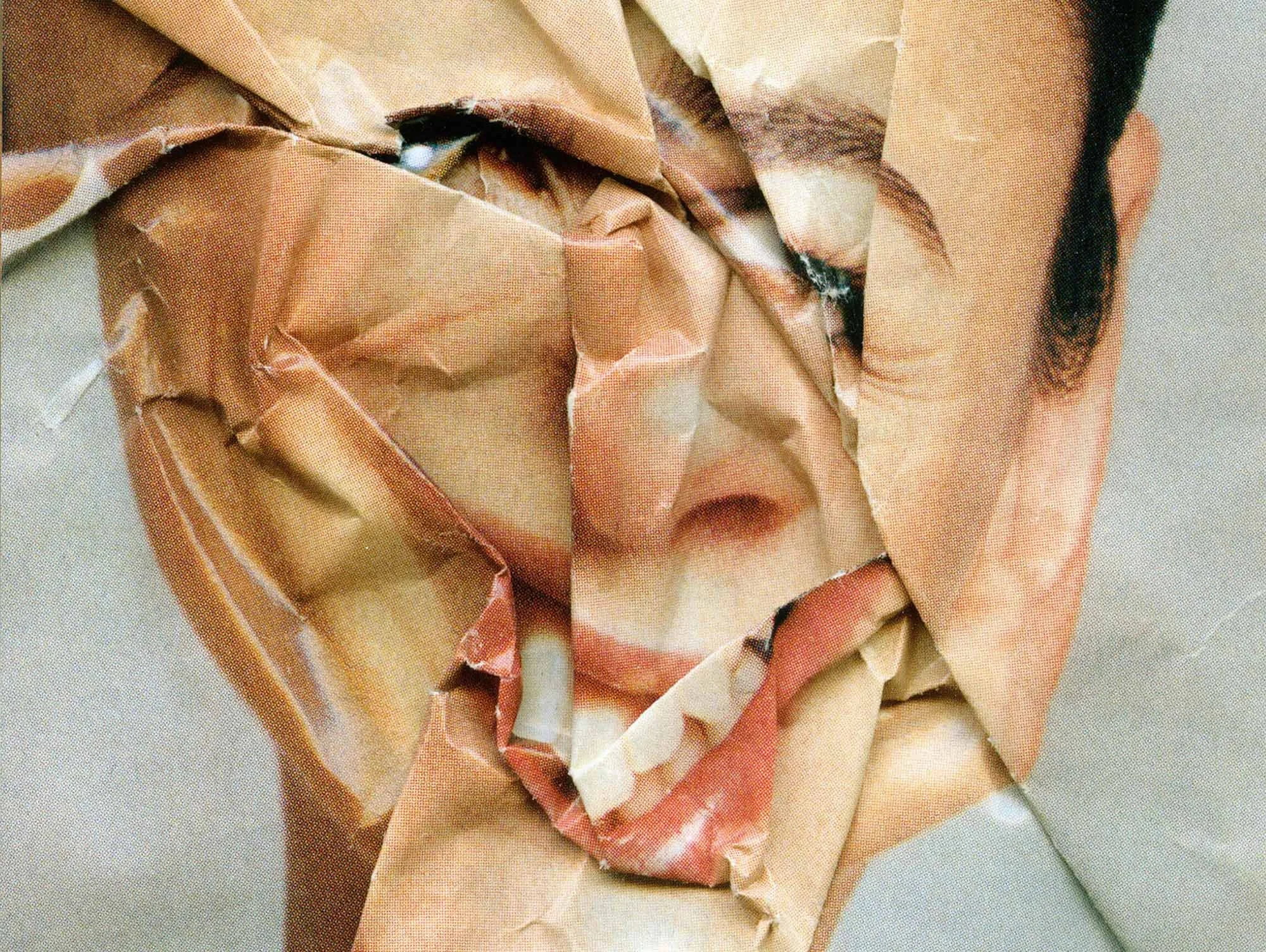
Paper Surgery is a delicate operation to restore the soul; it’s also an SS 2010 ad campaign for Comme des Garçons.
Pulled from her own archive and that of complete strangers, the source material stings the same. The rest is just recovery.
No need to name the wound or explain the cut—the light will get to it. If not, a fashion magazine will.
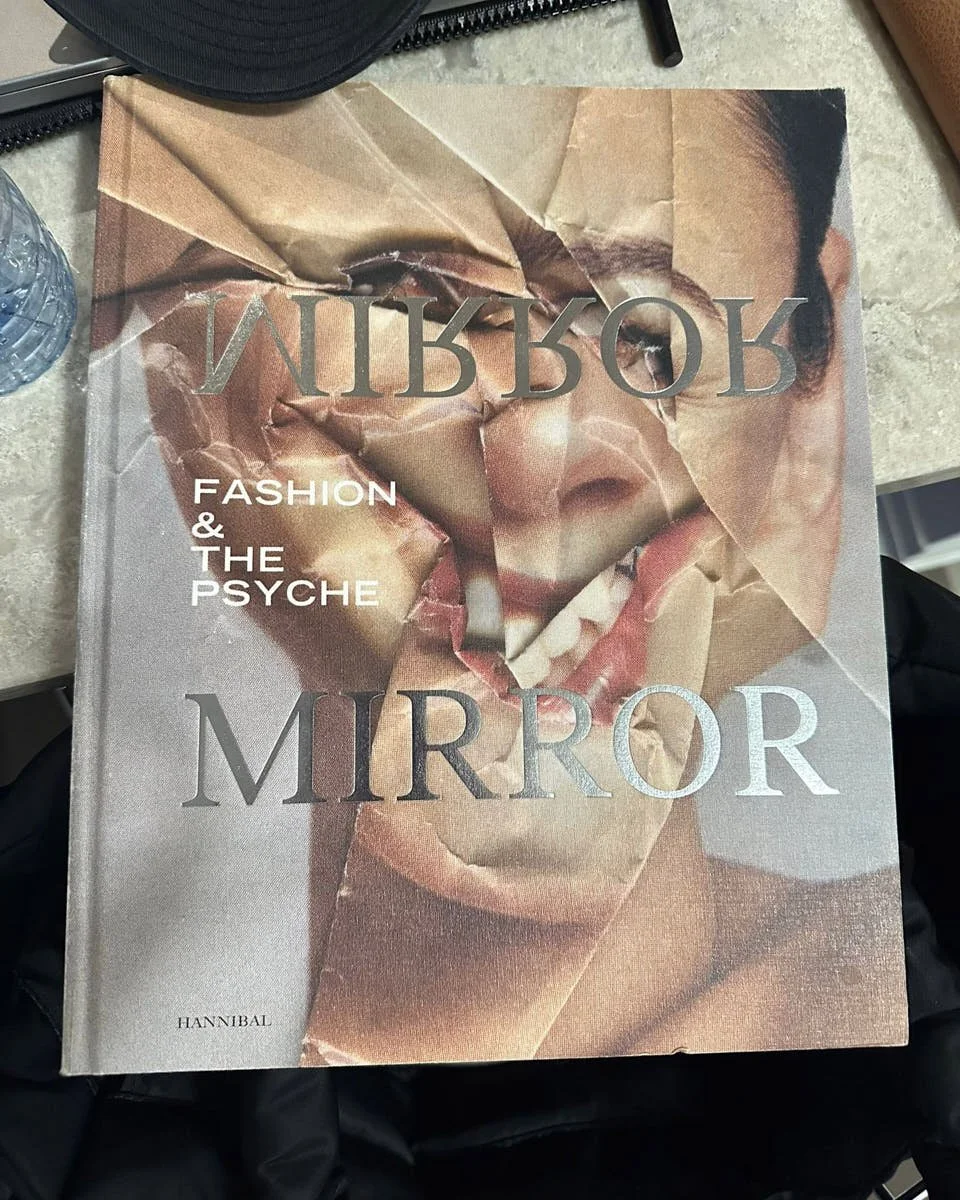
Paper Surgery Series, Hannibal
Image courtesy of Veronika Georgieva
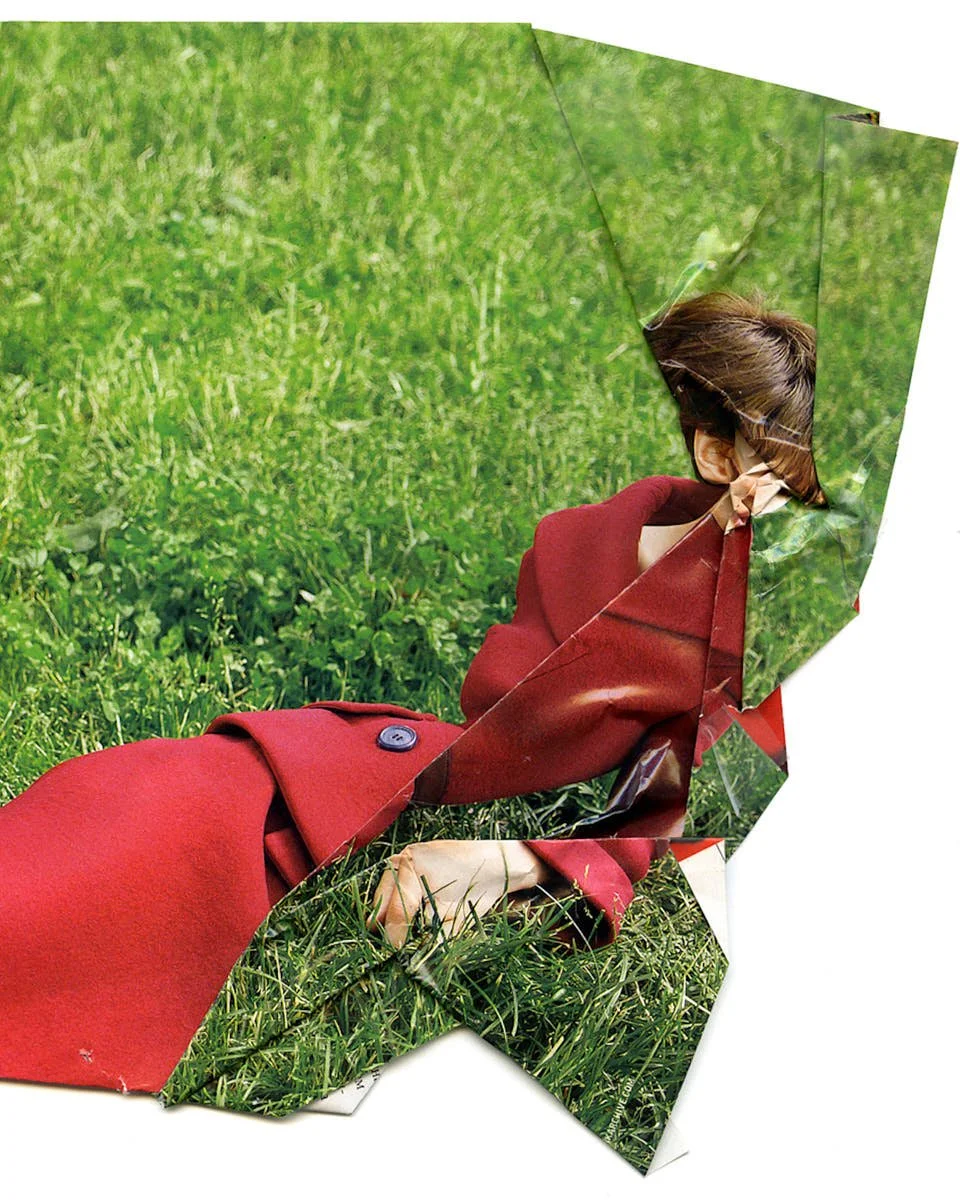
I Loved You For So Long. from Paper Surgery Series.
Image courtesy of Veronika Georgieva
Hannah Rose Prendergast
What’s lost when you try to replicate Paper Surgery digitally in Photoshop?
Veronika Georgieva
The imperfections in my work aren’t just visual; they’re conceptual. They challenge ideas of control. The accidental tears and unpredictable folds from physically manipulating paper are essential to the series. When you try to replicate this digitally, even with the most skilled attempts, the result feels too precise. It loses the raw touch that defines this aesthetic. And I’m just not interested in doing that. I love accidents too much.
All my works exist on the threshold between control and surprise, even for myself. Otherwise, I’d be bored by my own creativity. There’s good boredom and bad boredom—like good and bad cholesterol. I need the material to surprise me. I’m deeply annoyed when there’s no excitement of the unknown, no “accidental mistake.” I need a physical dialogue with the material, with its resistance, to feel that I’m an artist alive.
Why does deconstruction feel so natural to your creative process?
There’s absolutely no rule. But it’s important to distinguish between destruction and deconstruction. Destroying isn’t more natural—just easier. Deconstruction is harder because it’s analytical. Its goal is creation: building something new. I’d like to think creation is ultimately more natural for humans than destruction. At least, I want to believe that, even though recent years seem determined to prove the opposite.Deconstruction may look like destruction to anyone unwilling to engage with the process. People often ask, “Why did you ruin this dress?” or “Why cut up those photographs?” But I adore deconstruction. My methods break habitual perceptions of ordinary things, sometimes pushing them to the point of unrecognizability.
What are the risks of starting with a political message?
The risk isn’t politics in art, it’s politics as art’s predetermined script. The strength of art lies in interpretation. When it begins with a fixed political premise, it can end up privileging the artist’s authority over the viewer’s freedom to engage. A didactic mural about climate change, for instance, might dictate a single correct reading. But a more ambiguous work, like Anselm Kiefer’s scorched landscapes, leaves space for multiple, active interpretations.
True subversion doesn’t force the world to understand—it lets people feel and outspeak. Overtly political art can be easily co-opted. When power meets dissent, it often inoculates itself by sanitizing and selling it back. Think of Banksy’s anti-capitalist murals, auctioned off for millions. Starting with politics risks turning art into a gesture absorbed by the market as “radical chic.”
How does photography influence our collective memory and perception of truth?
Truth? What truth? Personal and collective memories are both unreliable. Photography has joined the club, thanks to Photoshop and AI. Even eyewitnesses can’t be trusted. Just look at the Rashomon effect, where the same event is recalled in contradictory ways by different people. Memories depend on identity and interests. Take the myth of George Washington cutting down the cherry tree—'I cannot tell a lie'—a story invented after his death to portray him as virtuous. Isn’t it symbolic? A story about honesty that's itself a lie.
Is there an image that becomes stronger by resisting capture?
Absolutely. Like gods or monsters left unseen in horror films, the viewer’s imagination always eclipses the reveal. But this principle extends beyond horror. Any image grows stronger by resisting fixation. The moment you try to pin it down, in a photograph, a painting, even in words, it loses its spectral charge. That’s why Resnais never showed the traumatic event in Last Year at Marienbad, and why Borges described the Aleph as “a point in space that contains all other points.” The most potent visions remain unfinished, demanding the mind’s collaboration to exist at all.
This is exactly why the hidden folds in Paper Surgery, or the dark voids built from layered slides, matter more than what’s visible. Meaning crumples into layers, interpretation becomes a dance between surface and depth. The unseen isn’t absence—it’s the image’s engine.
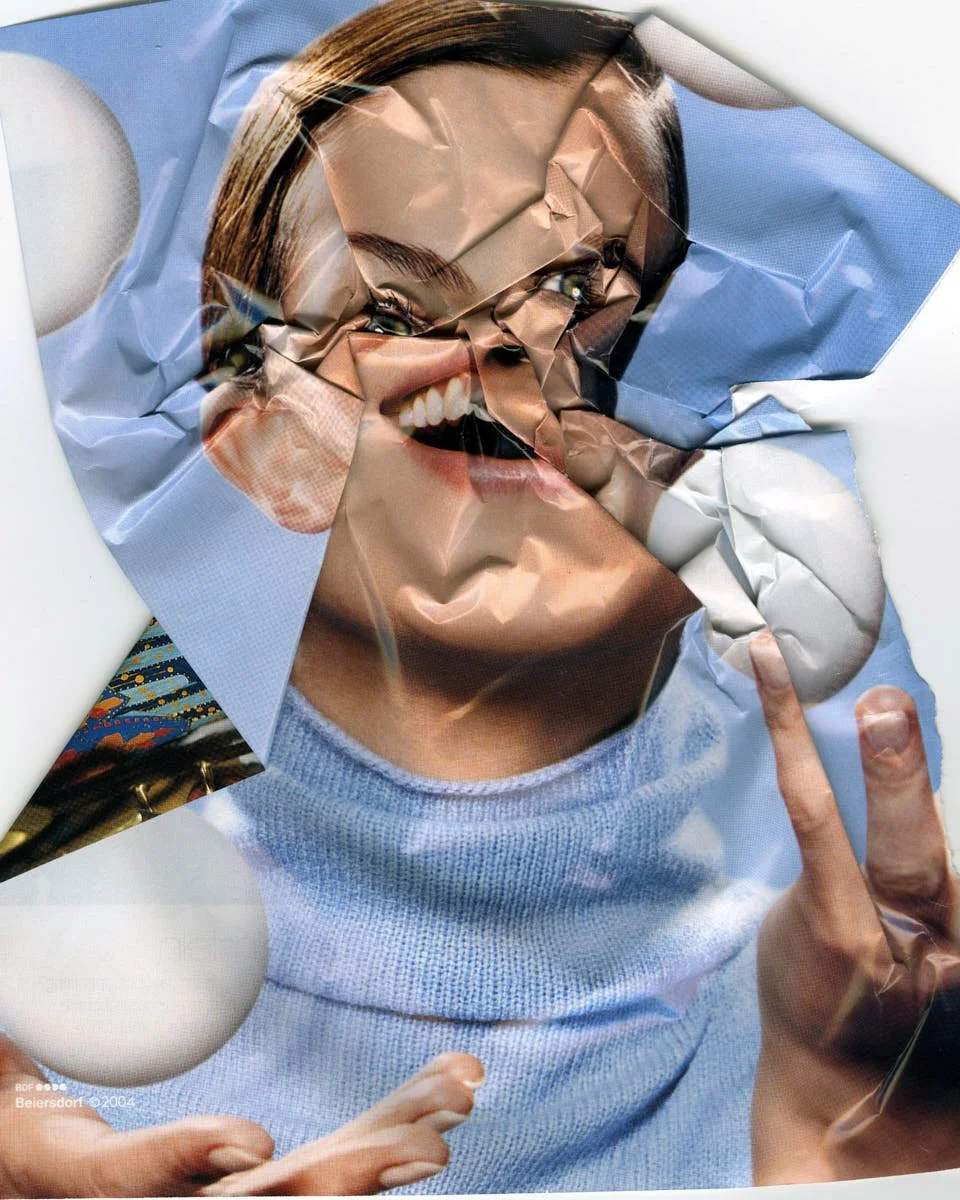
Page 9 from Paper Surgery Series.
Image courtesy of Veronika Georgieva
Do you see more character in fashion magazines today?
I don’t think so. It’s just a new grammar of control. To ask whether faces have “more character” implies we’ve agreed on what character is. Unpredictability? The marks of lived experience? Fashion magazines today reflect a cultural hunger for authenticity but deliver it as a product. Modern retouching tools simulate character (a freckle left intact, a wrinkle allowed to stay), but it’s a calculated rebellion—a corporate nod to realness.
Compare that to Corinne Day’s raw Polaroids of Kate Moss in the ’90s, where the awkwardness was unplanned—and therefore revolutionary. Today’s “flaws” are often focus-grouped: an illusion of imperfection.
How do you embrace conflict or tension in your work?
I’m currently working on a video installation for a ballet performance centered on barocco, a theme that deeply resonates with me. Barocco isn’t just a historical period; it’s a state of mind. It emerges when old systems fail—when something bursts beyond its frames, rupturing space, scale, and meaning. The ballet will unfold on an unconventional stage: a circular platform rotating around a massive metal cylinder. The venue, a former bread factory, offers almost no space for traditional scenery. The dancers appear like butterflies pinned to the cylinder, with no room to fly.
My idea is to deconstruct the cylinder with multi-channel video projections, puncturing it with virtual trompe l’œil corridors, expanding it through illusion. These corridors will stretch into receding depths, pulling viewers inward.
For inspiration, I revisited Last Year at Marienbad, those haunting black-and-white corridors shot in a German Rococo castle, that endless hall of mirrors. For weeks now, I’ve been losing myself in those imagined passageways. I want to go there, to see that place. Though I know reality could never match the film. Some inspiring places are better left unvisited, preserved only in the mind.
In a world where authorship is fragmented, what still truly belongs to the artist?
The process. The moment. The thrill. Love and death.
Everything belongs to the artist.
The decision to designate it as art.
The vulnerability of offering it to the world, knowing it will be rewritten, reclaimed, or erased.
The act of bravery belongs to the artist.
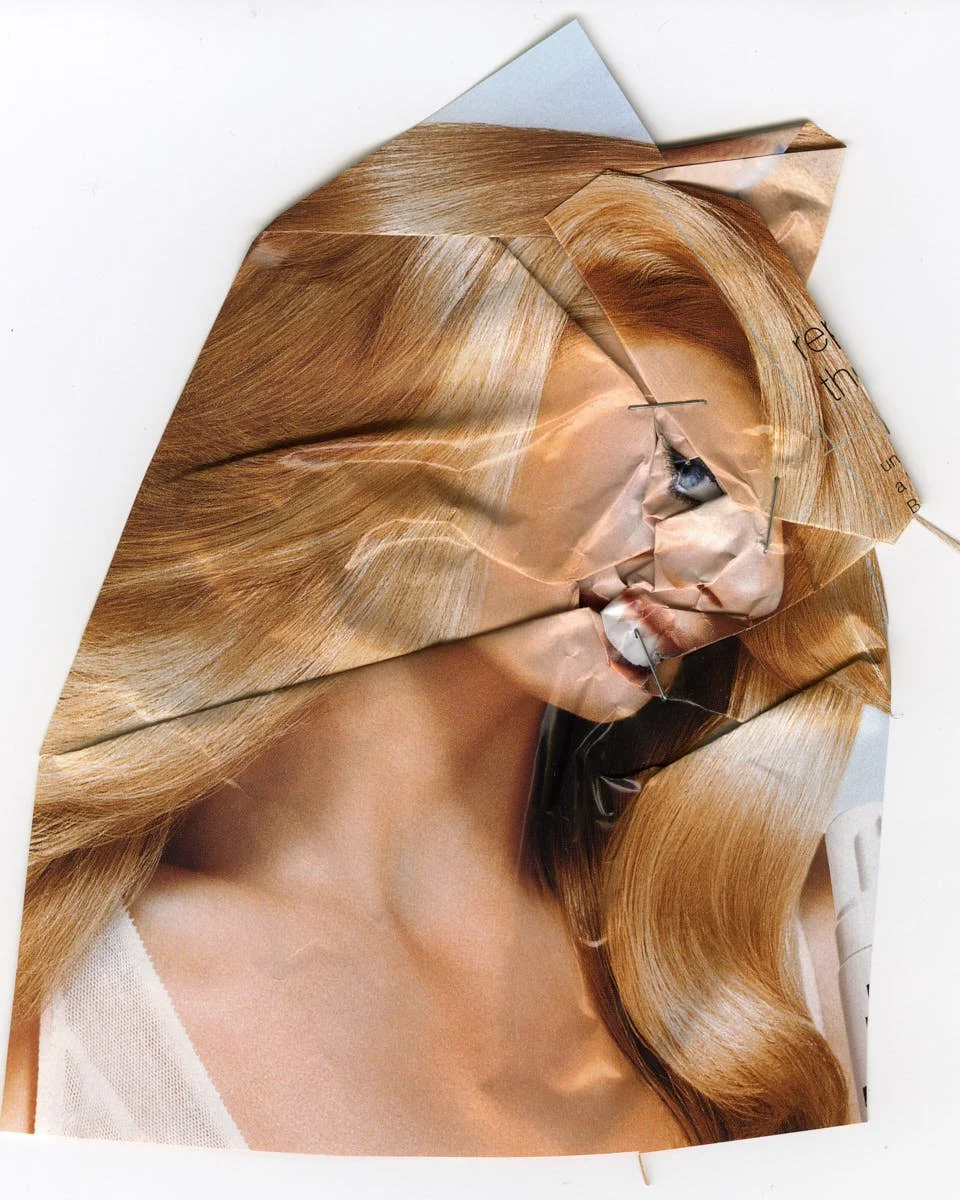
Page 57 from Paper Surgery Series.
Image courtesy of Veronika Georgieva
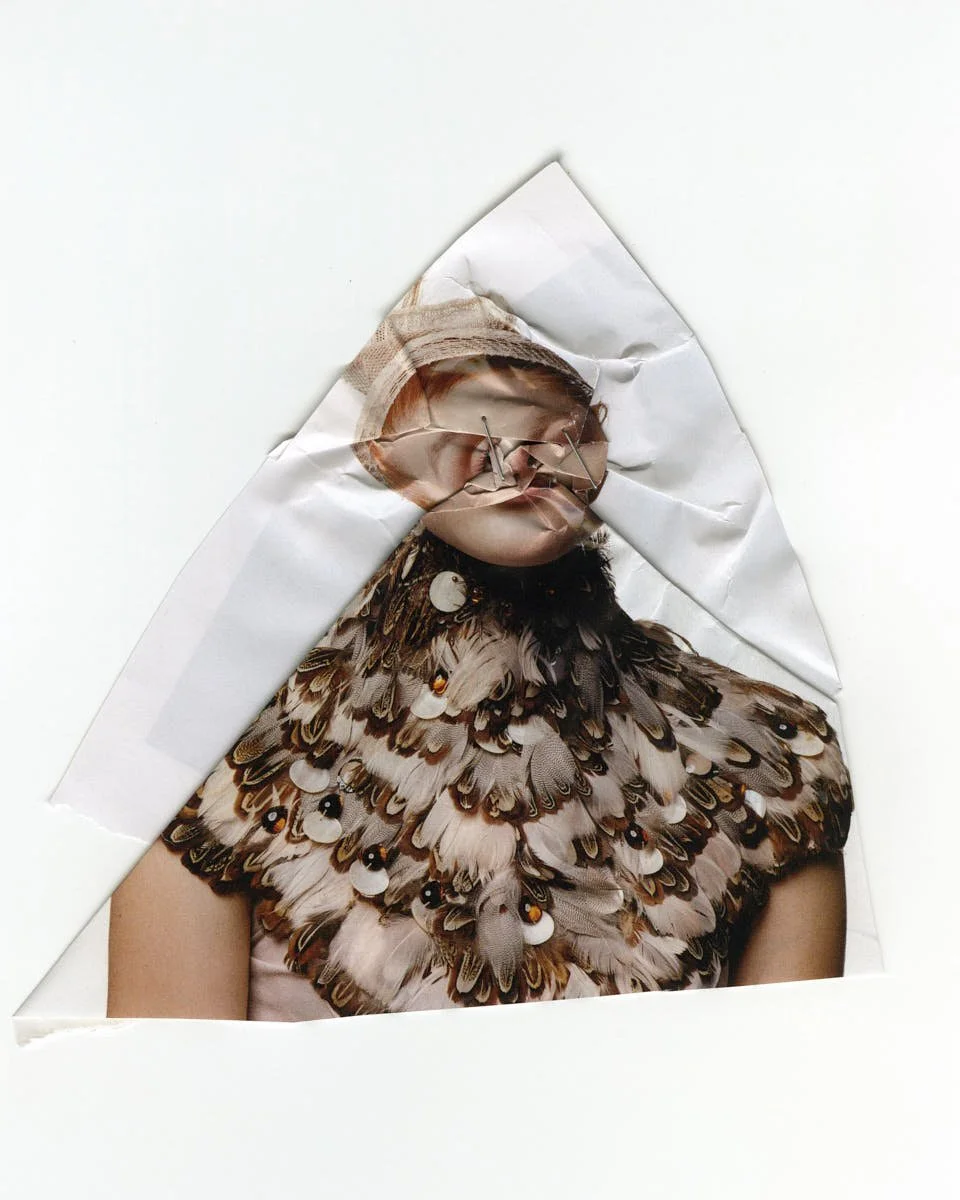
Page 55 from Paper Surgery Series.
Image courtesy of Veronika Georgieva
What image will you always return to?
Martin Kippenberger’s self-portrait. He stands with a crudely made sign around his neck, something you might expect to see on a lost child, a drunk, or an Alzheimer’s patient. Instead of a name or instructions, he scrawls: “Please, don’t send me home.” To me, it encapsulates the artist’s eternal paradox: the simultaneous search for home and flight from it—the dull comforts of the familiar. It’s desire rooted in impossibility: a lost paradise, forever out of reach, yet perpetually pursued.
A chaotic journey without a map.
The purpose of purposelessness.
Unfiltered traces of a personal destiny.
Moments of raw emotional gesture.
The coveted “mistakes.”
That time before morning arrives with its regrets and clean-ups.
The choice-free, guilt-free, unfiltered ride.
Can an image that wounds also offer healing?
I don’t know about healing, but I can tell you about the wound. In Camera Lucida, the French philosopher Roland Barthes introduces punctum—a term I adore. Punctum is an accidental detail in a photograph that “pricks” or “bruises” the viewer, creating a deeply personal, often painful resonance. As Barthes writes: “The punctum is a sting, speck, cut, little hole—it is also a cast of the dice. It wounds” me.
That’s why it remains elusive: punctum doesn’t reside in the image itself but in the collision between image and life. Barthes describes how a photograph of his mother evoked profound sorrow in him, though to others, it was just an ordinary snapshot. Punctum can’t be planned or manufactured; it arises spontaneously, unique to each observer, tethering emotion to image.
I suppose if you understand why an image reopens a wound, healing follows naturally. It lies in refusing to let pain stagnate. Like champagne, best drunk once opened, or it sours into vinegar and poisons you. As Rumi wrote: “The wound is the place where the Light enters you.”
Is there something you’ve cut that you wish you hadn’t?
Scissors are a girl’s best friend. They’ve never betrayed me. Not yet. Everything I’ve cut—and I’ve cut a lot—I’ve never regretted. When I was a young girl growing up in the Soviet Union, stores had limited clothing, and what they did have was usually ugly. But I always wanted to be stylish, so I learned to sew. I sewed everything, fromraincoats to pants, shorts to dresses, even a summer suit for my mom. I once designed and sewed an entire fashion collection.
With my architecture degree, paper models and cutting were already part of my routine. But after becoming a mother twice over, I only had time to cut. By then, I was living in New York City, surrounded by secondhand stores filled with more clothes than I’d ever dreamed of. To create unique designs that fit my figure, I cut endlessly.
Once, my dear friend Renata was shocked to learn where I’d gotten such a lovely belt. I’d started by cutting up a whole dress, but ended up trimming it down until only the belt remained—perfect for my vision.
When should you go offline?
I can tell you when not to go online: when you’re bored. Boredom is the mother of creativity—those who get bored turn to something new, something unique. It’s a huge problem, especially for kids today, who are never bored. They can fill every second with social media, immersed in the lives of others, forgetting their own. To create, you need a vacuum. Being online offers everything except a vacuum.
In his essay In Praise of Boredom, one of my favorite poets, Joseph Brodsky, frames boredom as a portal to self-awareness and existential clarity: “When hit by boredom, let yourself be crushed by it; submerge, hit bottom. In general, with things unpleasant, the rule is: the sooner you hit bottom, the faster you surface. The idea here … is to exact a full look at the worst. The reason boredom deserves such scrutiny is that it represents pure, undiluted time in all its repetitive, redundant, monotonous splendor.”
The notion of time is important for the artist. And when you’re online, time flies. The sad thing is, it flies unnoticed.
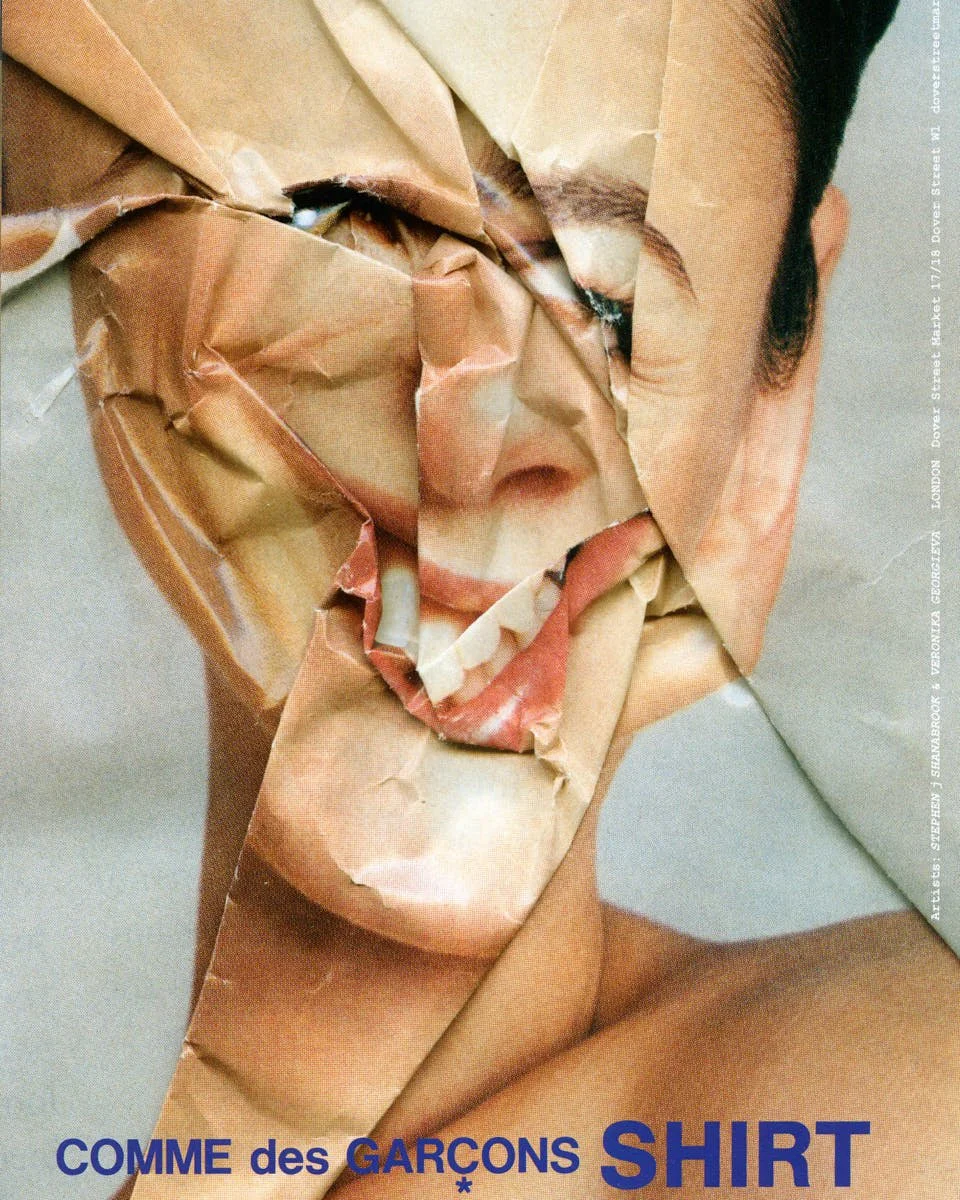
Comme des Garçons campaign. collaboration with Stephen j Shanabrook
Image courtesy of the artists & CdG