Three Stripes and the Codes of a Generation
From Neukölln to Canvas with Cosima Kaibel
interview + written ALBAN E. SMAJLI
Adidas appears in contemporary painting with a frequency that would have seemed unlikely a generation ago. The three stripes have moved beyond sportswear and entered the visual vocabulary of a younger generation of artists. Tracksuits and sneakers circulate through studios and canvases in cities like Berlin, London or New York as a shared cultural code, carrying references to belonging, migration histories, street culture and urban identity. For many painters today, these garments carry a particular duality. They are instantly recognizable yet deeply ordinary.
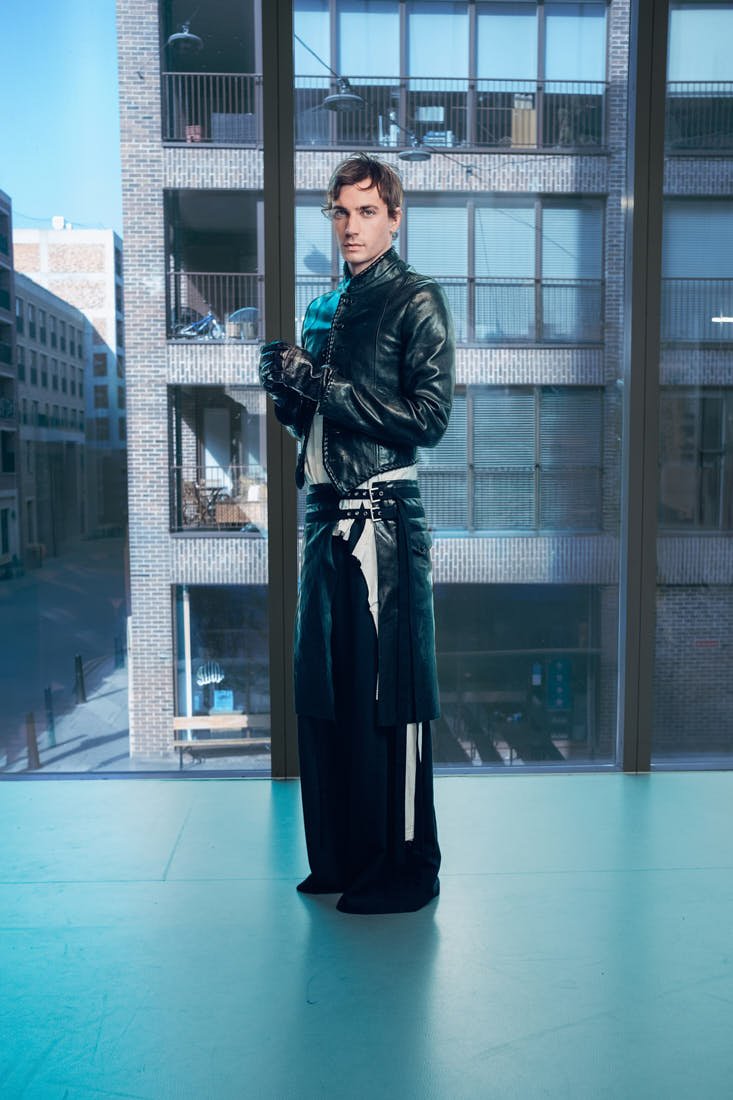
leather bomber jacket by ESRA VON KORNATZKI
A tracksuit can signal attitude, nostalgia, irony or intimacy depending on how it is framed. Adidas has quietly become part of the visual language through which contemporary identity is read and expressed.
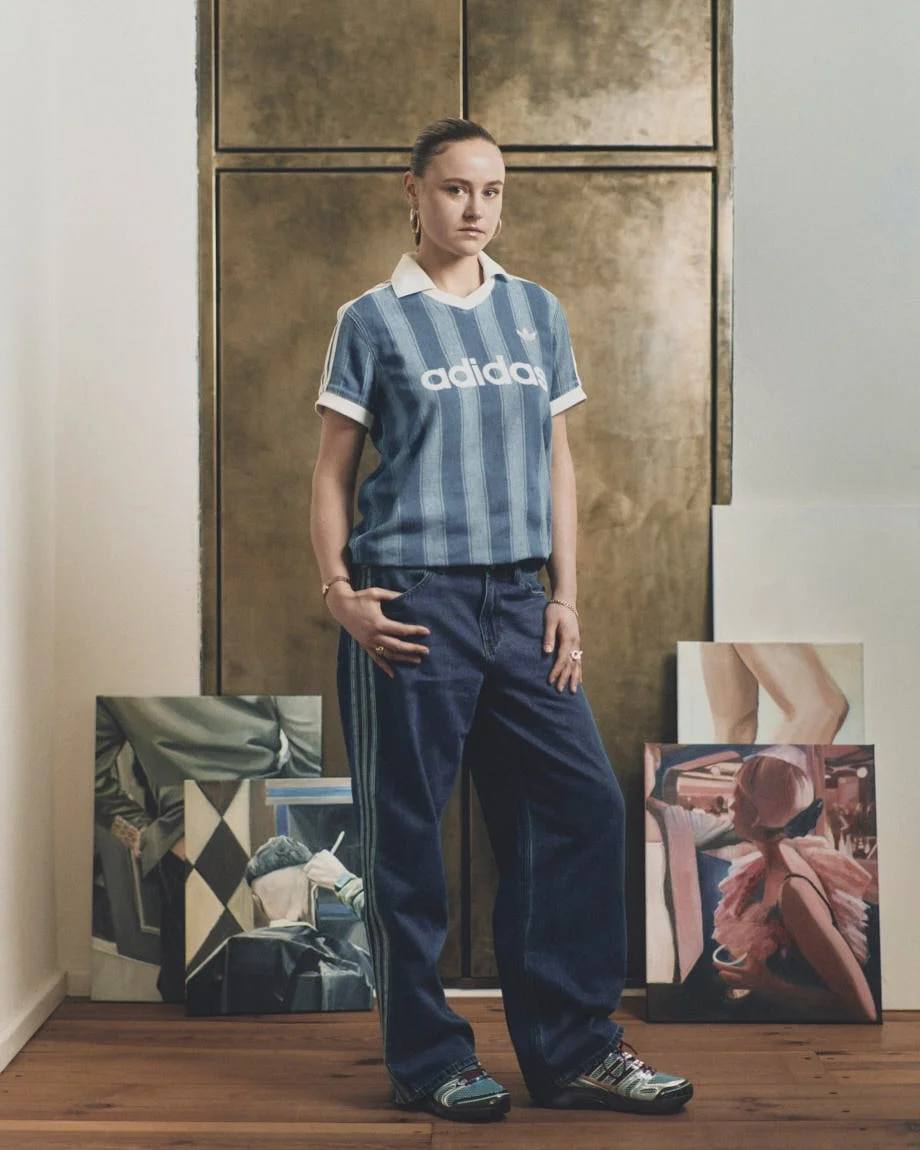
Berlin-based artist Cosima Kaibel approaches this language from within the environment that shaped her. After years abroad, she returned to Berlin, where her work continues to circle around Neukölln and the subtle social codes embedded in everyday scenes.
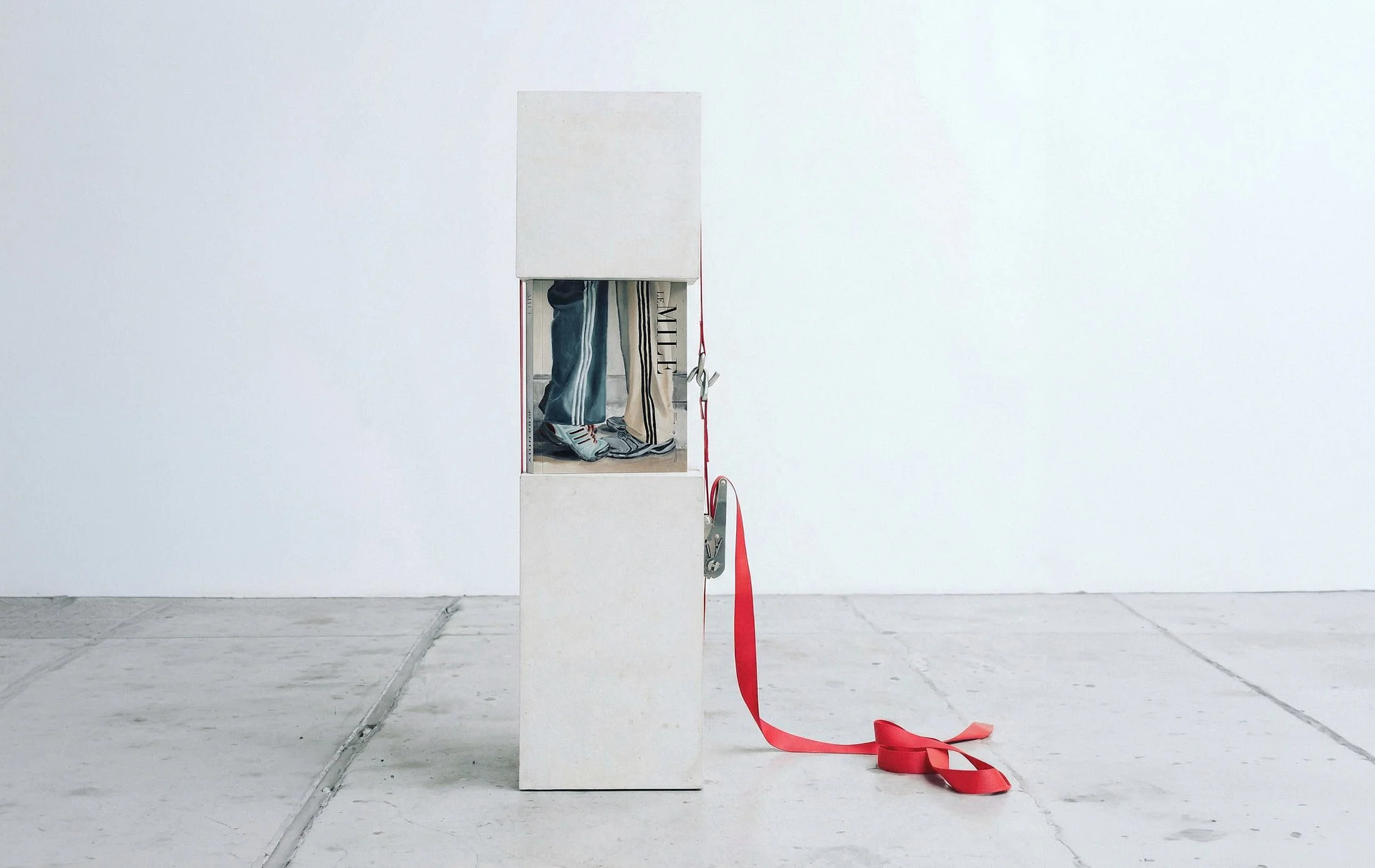
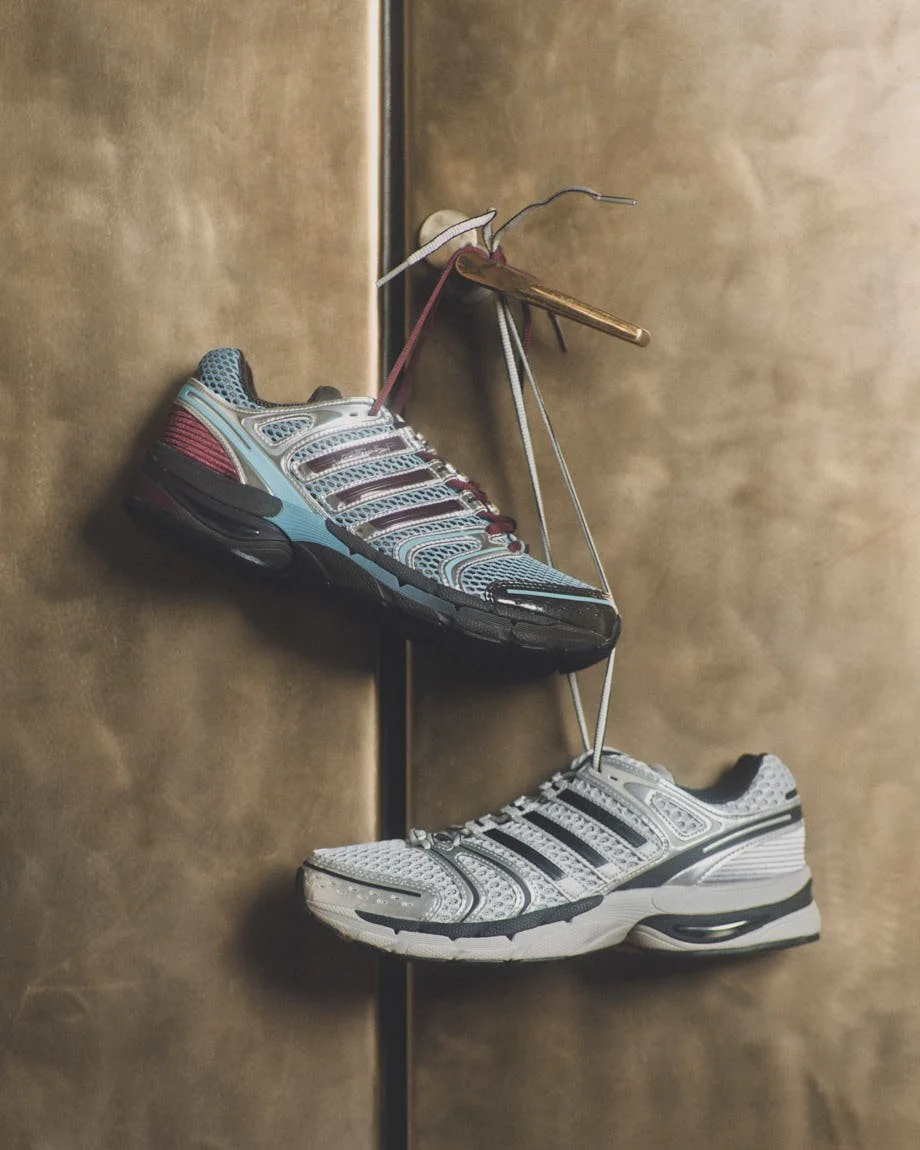
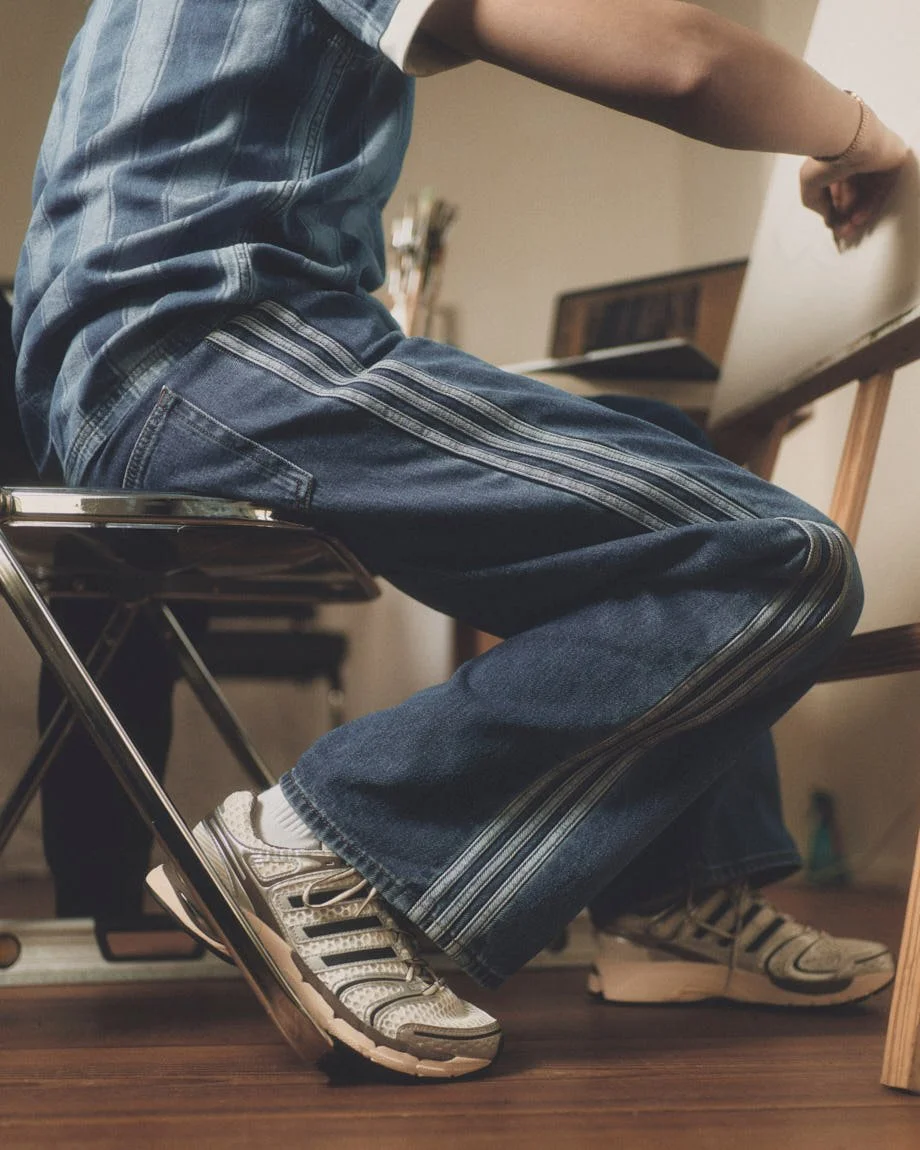
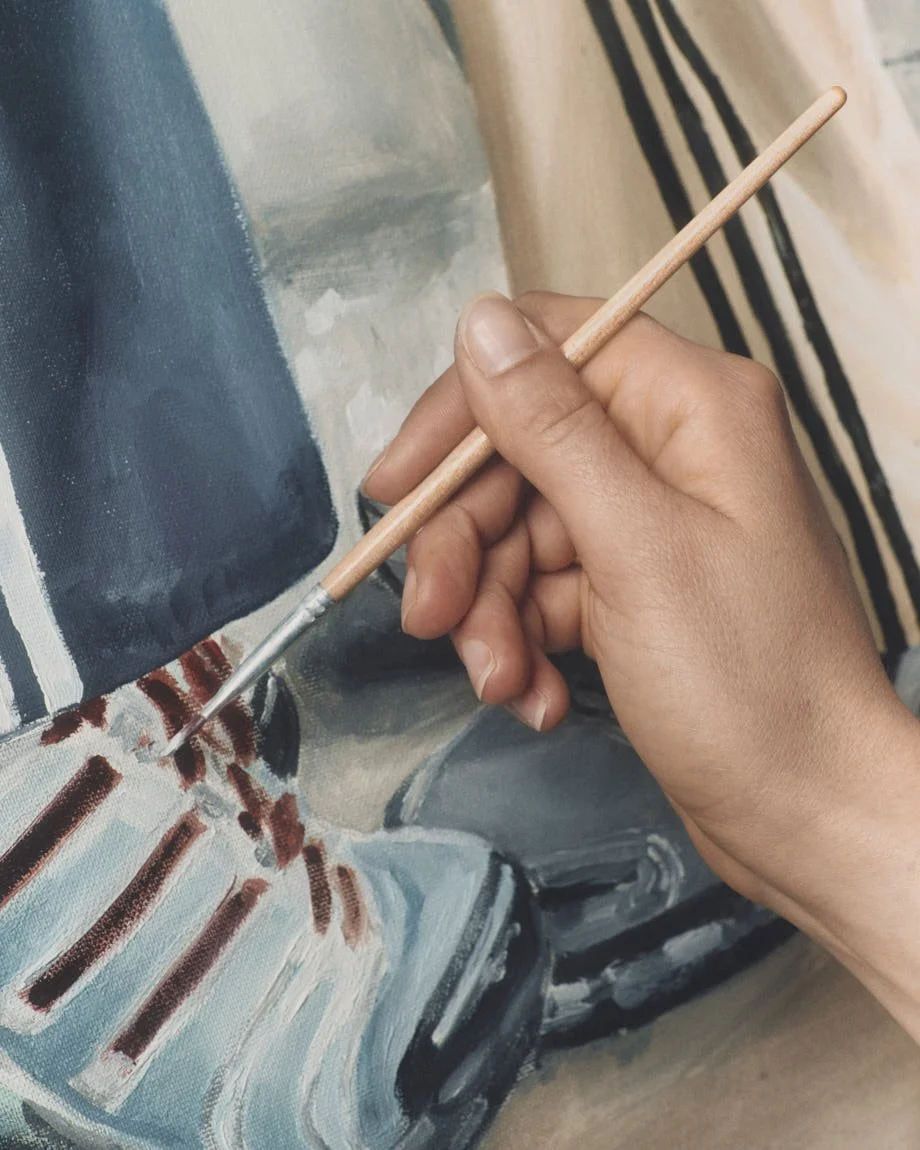
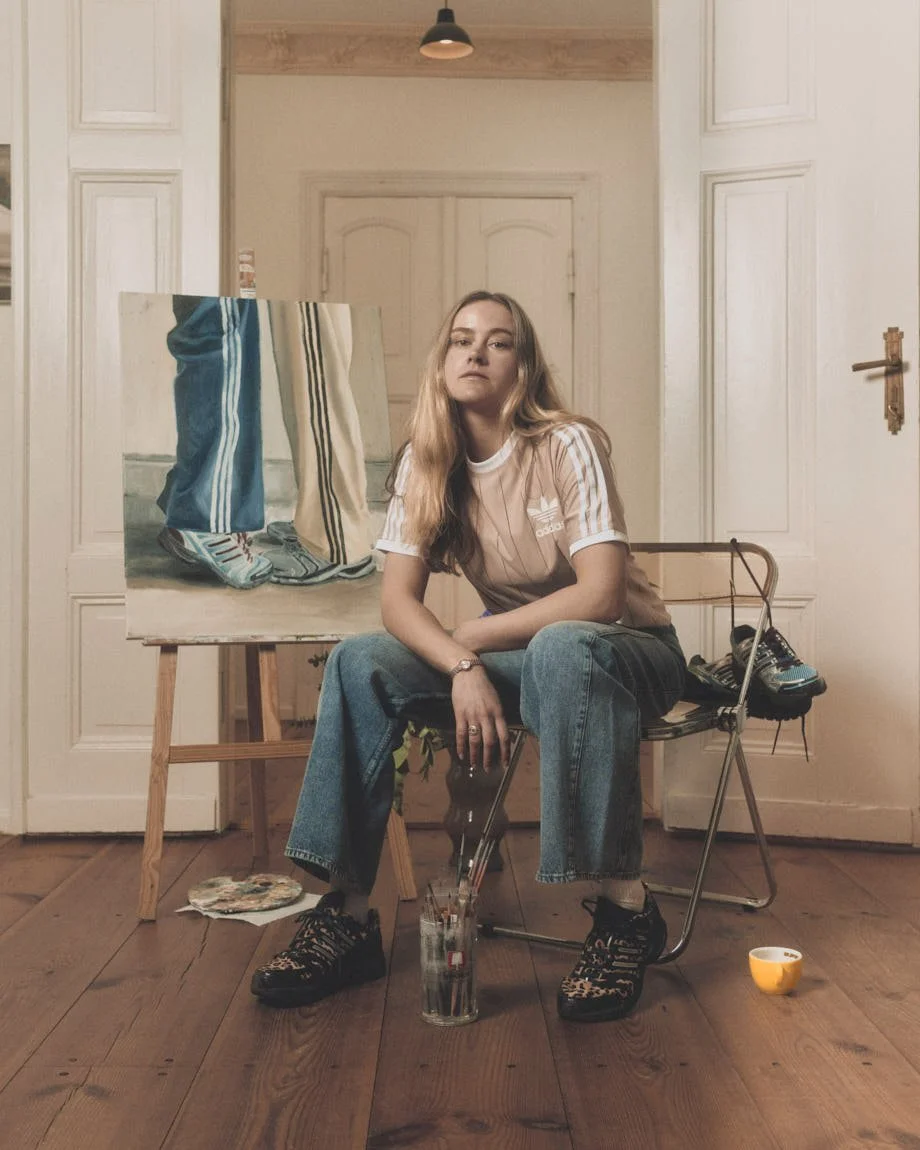
For this collaboration with Adidas, Kaibel condenses the scene into a fragment where two figures meet, visible only from the legs down, Adidas trousers falling into Adistar Control 5 sneakers as the three stripes trace quiet lines along the bodies. Everything above the frame remains open. Without faces, identity unfolds through posture, fabric and proximity, allowing the viewer to complete the moment while reflecting Kaibel’s wider interest in how bodies are framed and interpreted in contemporary visual culture.
Alban E. Smajli
You lived in the UK, China, Uruguay, India, France and Italy before coming back to Berlin. Did leaving make you see the city more clearly, and why did you decide to return and paint it again? How does place shape identity for you?
Cosima Kaibel
Leaving and coming back definitely changed my perspective on the city. It made it feel much more like home. Exploring different places made me realize what’s special about Berlin to me and see the magic in things I thought were normal before, like the mix of cultures on Sonnenallee or the Queer culture here, the rough down-to-earth attitude of Berliners and the way all of these shape the whole energy of the city. Seeing things that are different helped me realize that there is no universal ‘normal’, but that ‘normal’ is always relative. That was freeing.
I believe that places are a big part of identity. They determine our experiences, what we learn, what we see, values people hold up around us. All of that eventually shapes who we become. Even if you try to live in your own bubble, you still move through streets, hear languages, deal with people. That does something to you, even if it means rejecting your direct environment. Traveling made me realize how much I do identify as a Berliner, if not a Neuköllner. (44 Represents! - That’s the number of the part of the district where my school was.)
Painting scenes from the city and my district is a way for me to show my appreciation for this place and the things it stands for in my view. I paint it because it formed me.
What does identity mean to you right now?
To me identity means knowing who I am, which is rather an ongoing process than a fixed definition. It’s about understanding what matters to you and why. When I look at the people and places I grew up with, I understand myself better. Shared experiences stick. School friends, old memories, stupid stories you still laugh about - that creates belonging. Even if everyone came from different backgrounds and went in different directions later on.
Identity isn’t just how you see yourself. It’s also who you experienced things together with. I’m also interested in how identity is performed.
Through clothes, posture, the way someone stands or moves. You don’t just have an identity - you show it. Sometimes consciously, sometimes not. That’s something I explore in my Neukölln series and in my newer series „Anything Butt Dates“ - Bodies carry projection, control, vulnerability, stories, and power.
For our first ever painted cover, you decided to show only the lower body, from the thighs down. Why did you leave out the faces? What changes when identity is told through posture, fabric and sneakers?
Omitting faces is something I often do in my work, because they often don’t matter for what I want to show. Posture, fabric and sneakers are carriers of cultural meaning and stories. A tracksuit, for example, is never just sportswear; in Neukölln it becomes part of a shared visual language. When faces disappear, the image becomes less about “this person” and more about structures: belonging, subculture, class, gender expression - which is what I’m more interested in, when I choose to paint this way.
At the same time, leaving out faces creates space for projection. The viewer completes the image, fills in what is missing, invents a story beyond the frame. I’m interested in that openness. I don’t want to over-explain or resolve everything. I want to provoke a certain unresolved tension, a friction that keeps the image alive.
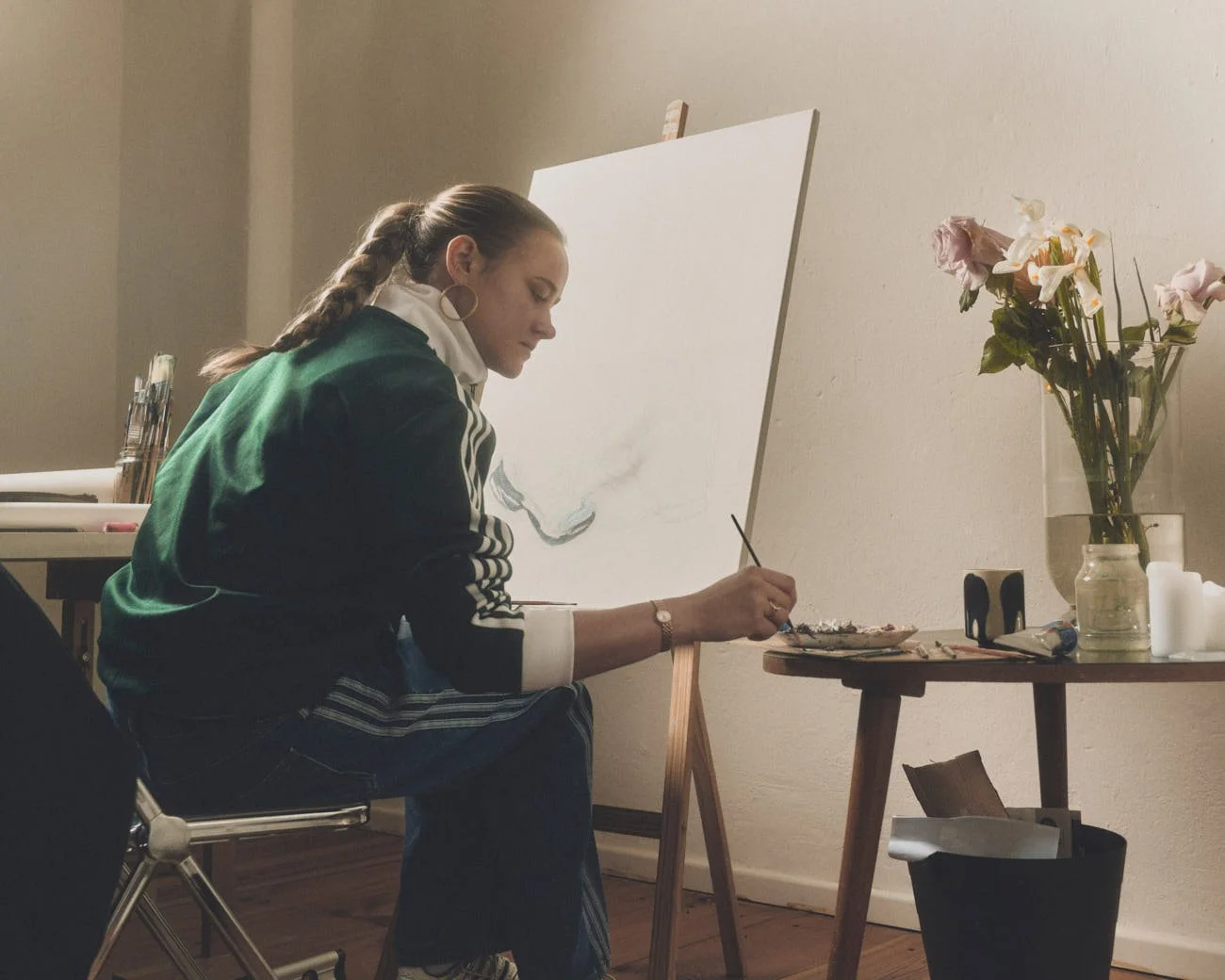
watch the making of
/ directed and filmed by FURKAN CETIN
And what do you imagine is happening beyond what we see (We only see part of the scene and everything above the frame is open)? Is that anonymity protective, political or simply poetic for you?
For me, it’s just a love scene. Two people kissing. Whether they’re men, women, or something else doesn’t matter. If that becomes political, that says more about society than about the image.
Also, in general I like to omit details in the stories I write and the images I create, when they’re not necessary. In this image it’s about two people in a moment of affection. It doesn’t matter which gender they identify with or what skin color they have. I also find it boring to be too explicit.
In “Anything Butt Dates,” anonymity has a protective dimension. The project deals with male bodies as carriers of social role models, beauty ideals, and power structures, but also as vulnerable and relational beings. In a digital culture shaped by dating apps and photographic self-exposure, the act of showing and withholding becomes charged. Omitting details protects the privacy of the models and shifts attention to the politics of the gaze itself.
When you paint Adidas, do you think of it as a brand, or more as a shared cultural code for your generation?
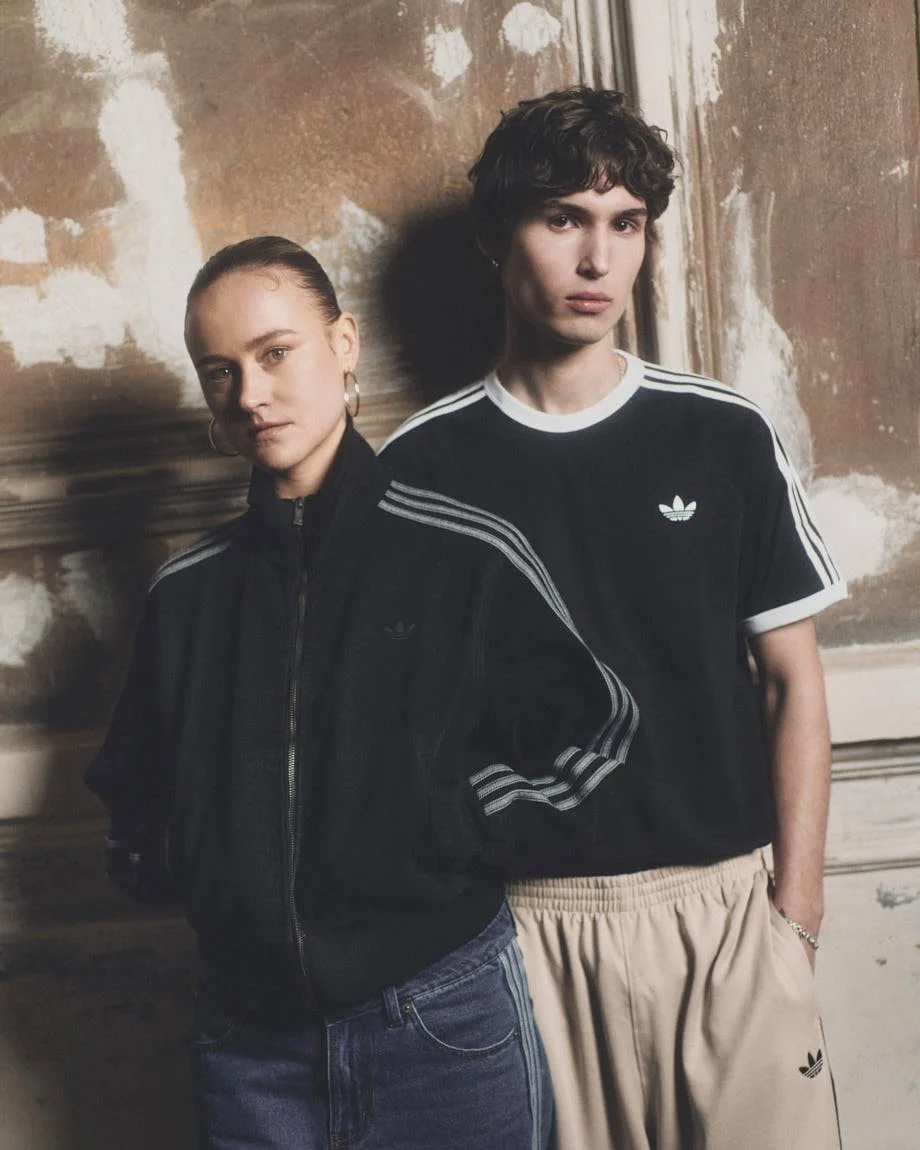
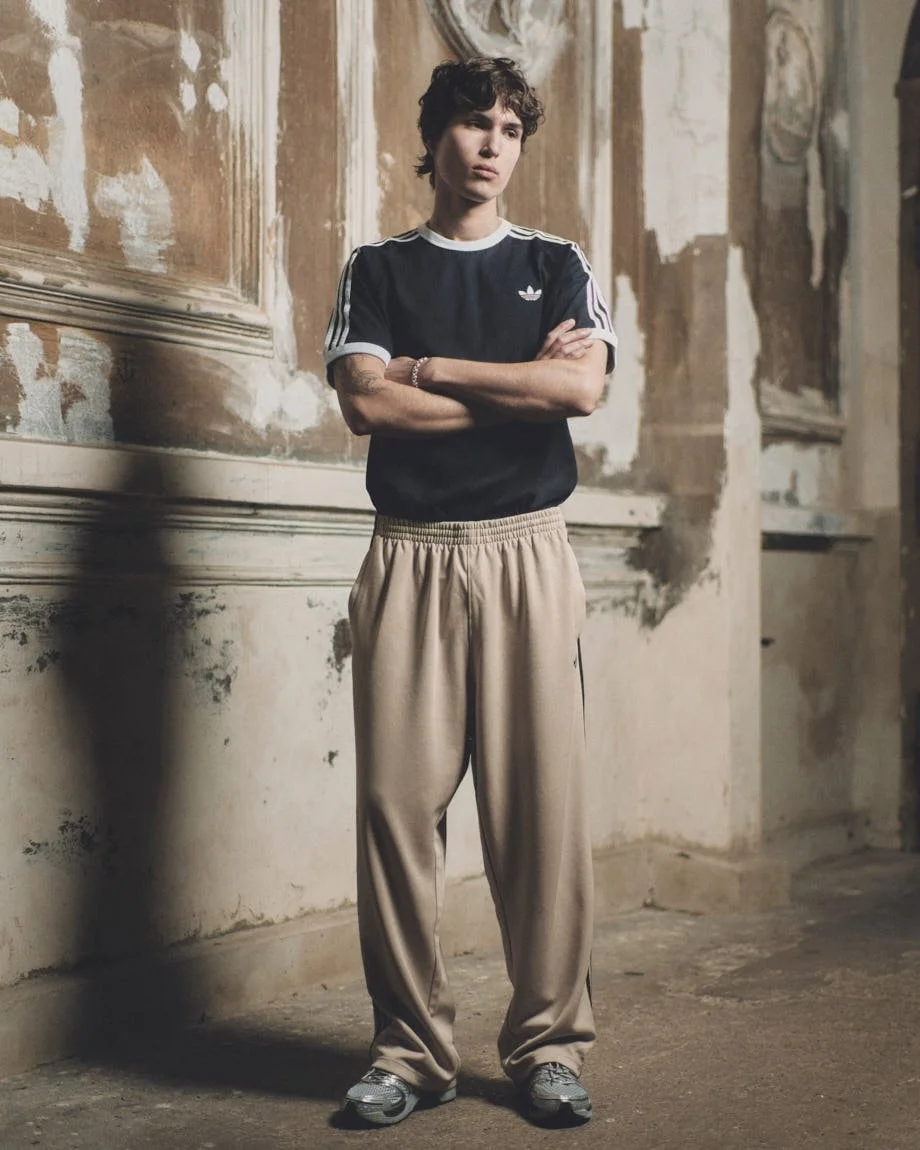
Both - but primarily as a cultural code. In Neukölln, certain brands function almost like dialects. A three-stripe tracksuit carries references to migration histories, masculinity, street culture, aspiration. It can signal belonging or stereotype at the same time. I’m interested in that ambiguity. When I paint something like that, I’m not advertising a brand - I’m painting a social symbol. It’s similar to how Renaissance painters depicted fabric folds to signify status. Today, a tracksuit can communicate just as much.
That’s also why, in the painting with the tracksuit, I gave so much attention and care to the material itself. I treated it with a kind of tenderness - to show the texture, the shine, the weight of the fabric. By rendering it with that level of detail and affection, I elevate something often dismissed as ordinary or stereotypical and show how it carries dignity, complexity, and beauty. Even if the cover isn’t officially part of the Neukölln series, it speaks the same language.
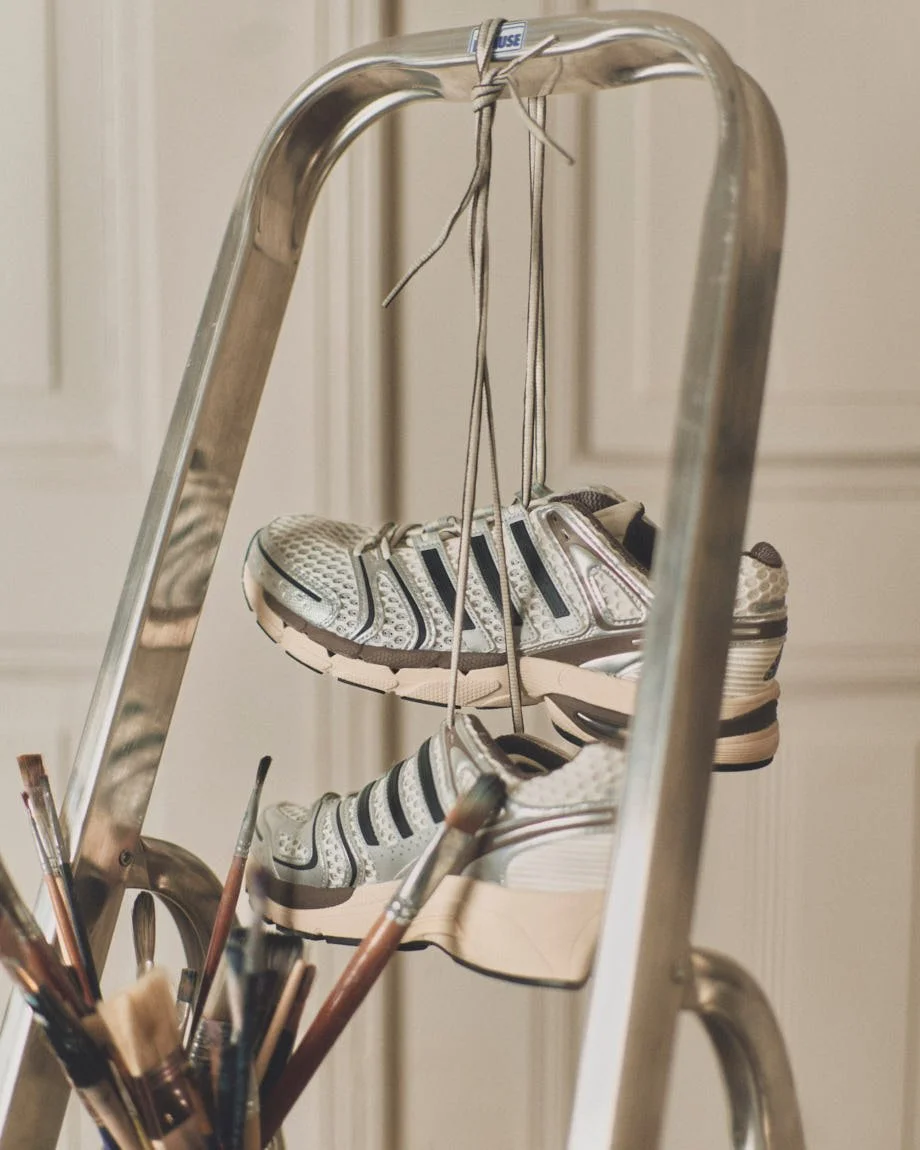
Cropped bodies, sneakers close to each other, stripes running down the legs. You don’t see faces but you immediately read identity, generation, intimacy. Clothes tell the story.
In this image, the brand almost disappears.
The stripes become lines connecting the bodies.
It’s less about a logo, more about proximity and shared code.
You’ve often explored who is looking and who is being seen (especially in your series "Anything Butt Dates"). In this cover, without faces, who really holds the power of the image?
Me and the viewer. The models I work with agree to be directed by me. That way I create the image but every viewer has their own experience with it. They can notice different aspects of it and are free to let their own imagination interpret and judge it. It’s something that’s out of my control. Once I let an image go, it’s with everyone who sees it.
What does a typical day in your studio look like right now, and what kinds of images or moments in everyday life tend to catch your attention?
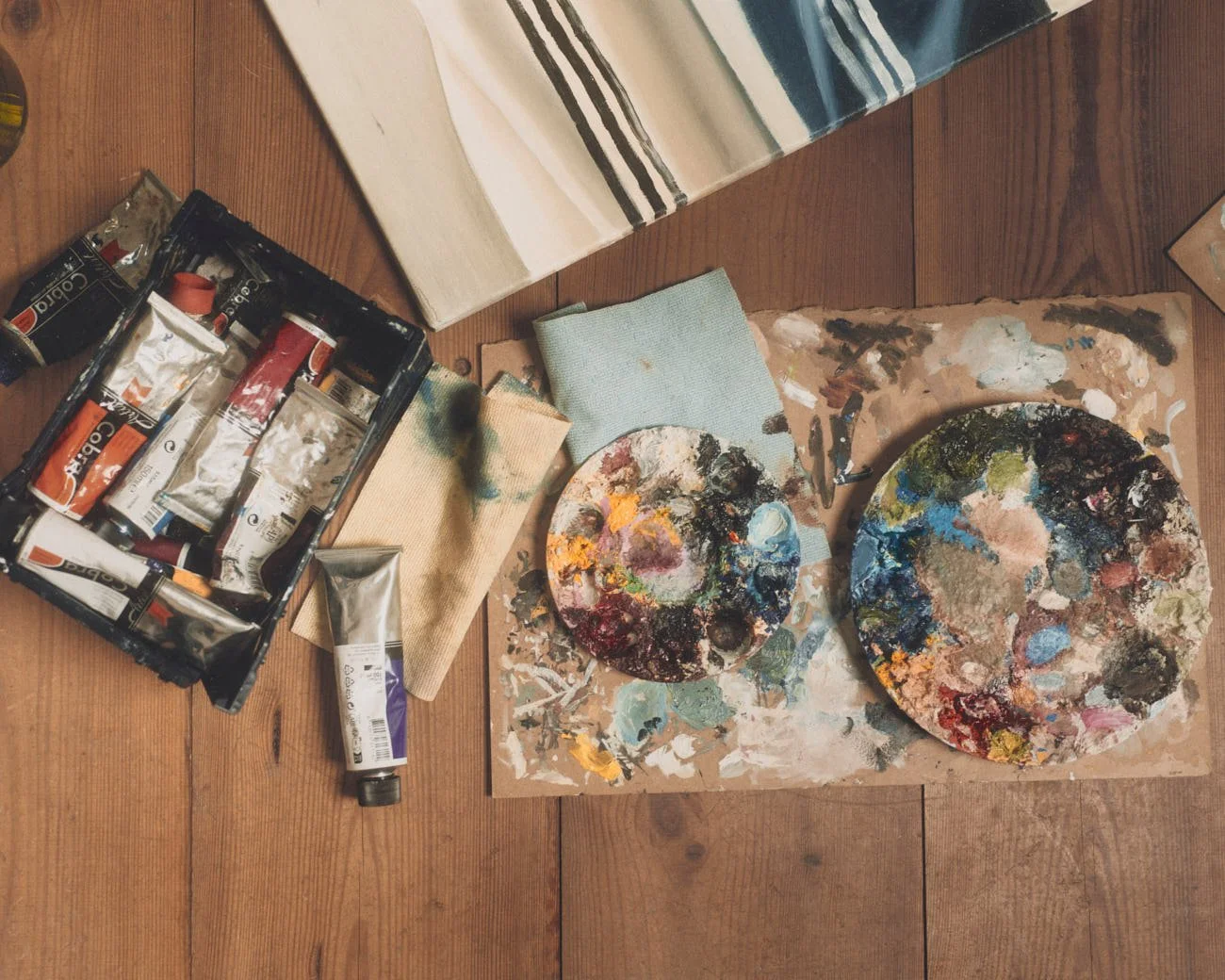
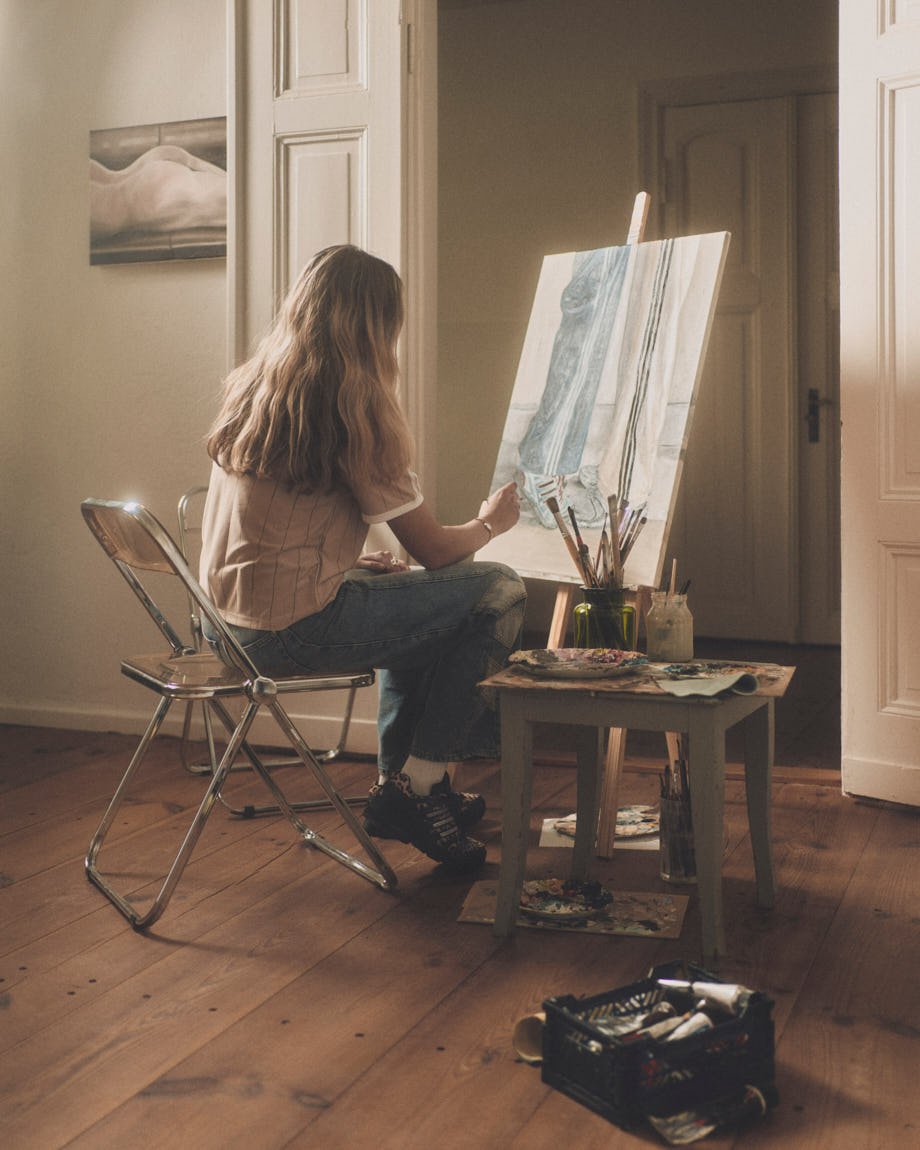
Sometimes I lock myself in, put on music, and paint for hours without talking to anyone. Other times I invite friends over. I like noise in the background and life happening while I work. I also host events here. Art shouldn’t sit in a white cube pretending it’s above everything. It’s part of society. So people come, we talk, we argue, we drink, we think.
Some days I feel like I have to go outside. Walk around. Call people. See what’s changing. Other days I don’t leave until something on the canvas finally makes sense. The beginning of a painting is usually messy, vague, like trying to remember a dream. I often don’t know what I think until I paint it. Sometimes I photograph models, sometimes I sculpt, sometimes I write. I like having a plan - and then ignoring it. Structure is good. Something to push against.
I’m drawn to things that feel slightly off. An old car overloaded with watermelons. Trash on the street, a bridal shop next to a men’s café, a male butt. Things people don’t consider “important” are usually the most interesting. They carry more story than they admit.
There is often a quiet tension in your work, between glamour and absurdity, closeness and distance. Where does that tension sit in this cover motif?
I think, in a sense, it has something voyeuristic about it, although there is nothing explicit and it’s entirely anonymous. However, it’s not me who is to judge. If I wanted to explain everything in words, I wouldn’t paint. I think the tension exists because something remains unresolved, and that’s where an image begins to breathe.
Has growing up in Berlin shaped your sense of humor and irony in your work?
Berlin has a very specific dryness.
If you don’t develop a sense of humor here, you won’t last long. So you learn to laugh at things, including yourself. People will insult you and help you in the same breath. You either learn to find that funny or you suffer.
In Berlin, a grandmother might yell at someone in Arabic while two queer guys in crop tops walk past at 8 a.m. after a club night. No one blinks. That coexistence shapes your humor. You stop taking a lot of things seriously.
I use humor as a way in. Otherwise people shut down. I’m not interested in moralizing or lecturing people. I’d rather make them look twice.
What are you curious about exploring next in your practice?
When I was painting places, I was already dealing with power. Space shows you everything: Who takes it, who avoids it, who feels safe, who doesn’t.
A city isn’t neutral, it reflects how we live together.
Now I’m focusing more on bodies. But it’s the same question. Bodies are also shaped by power, by media, by art history, by what was idealized and what was excluded. The way we’ve learned to look at bodies affects how we look at ourselves and others, how we interact, how we judge, how much space we believe we’re supposed to take up and where.
In that sense I’m not really changing the topic, I’m just zooming in.
seen
NICOLAI SAUER
styled + fashion editor KLAAS HAMMER
make up + hair LEO STERN
talent COSIMA KAIBEL
male model MERLIN FINN BARBER
head of production ALBAN E. SMAJLI
production LEMILESTUDIOS
film + direction FURKAN CETIN
in collaboration with adidas
styled + fashion editor KLAAS HAMMER
make up + hair LEO STERN
talent COSIMA KAIBEL
male model MERLIN FINN BARBER
head of production ALBAN E. SMAJLI
production LEMILESTUDIOS
film + direction FURKAN CETIN
in collaboration with adidas