
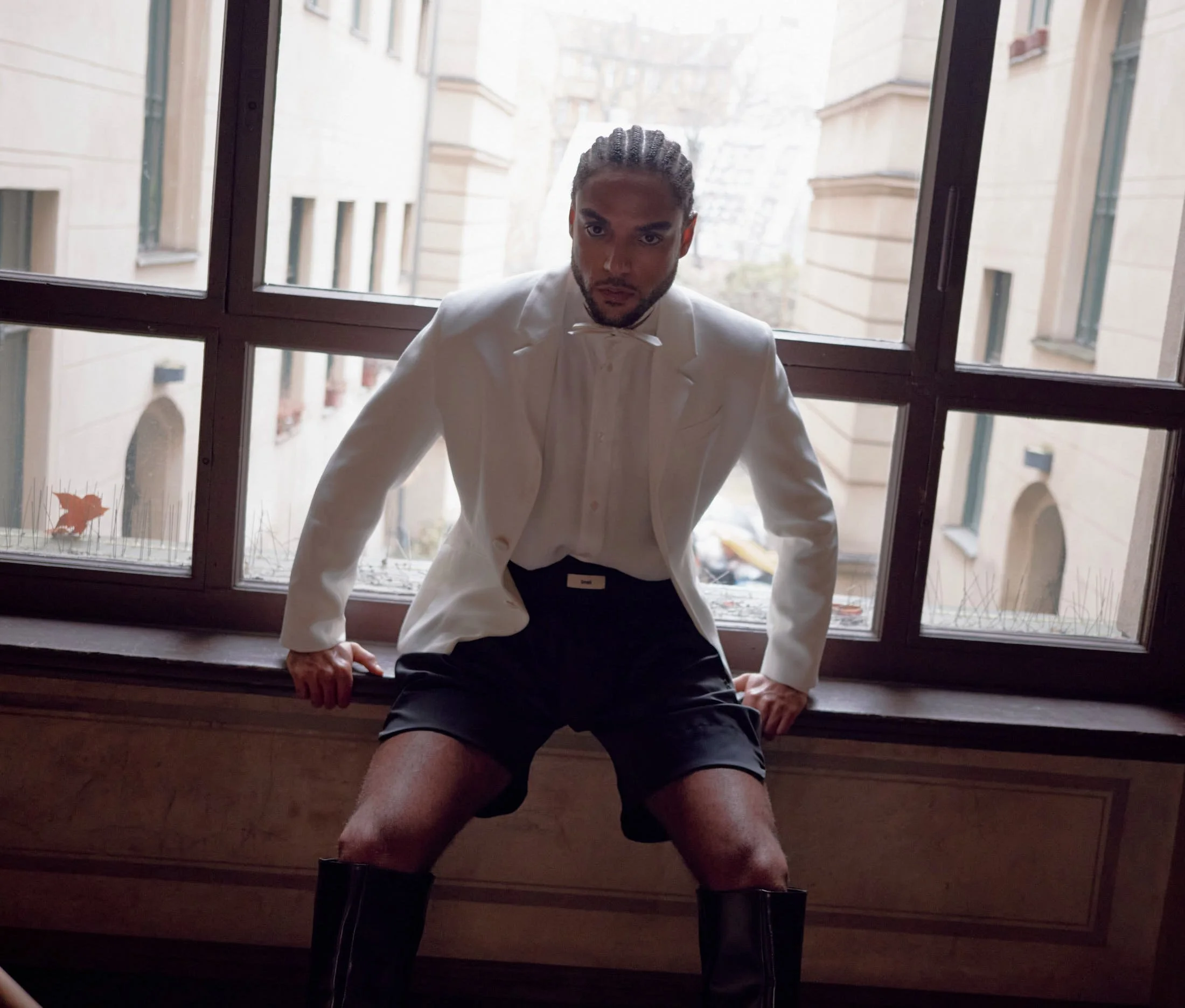
Lamin Leroy Gibba Reframes Storytelling as a Question of Power and Inclusion
interview + written KLAAS HAMMER
Lamin Leroy Gibba stepped into the spotlight with „Schwarze Früchte“, a series he wrote himself and in which he also played the lead. Honest & Radical. „Schwarze Früchte“ is exactly that. With remarkable ease, it portrays what is still too often treated as an exception: queer and black lived realities.
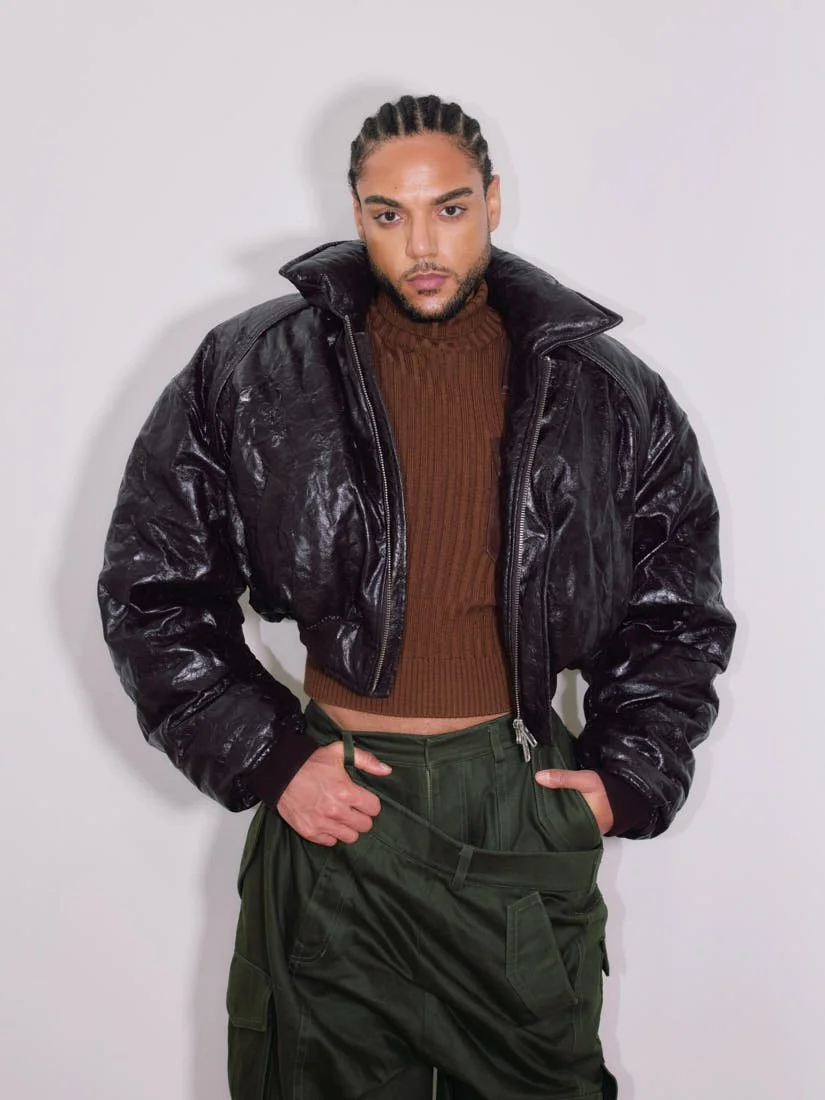
Lamin wears a total look by Juun.J
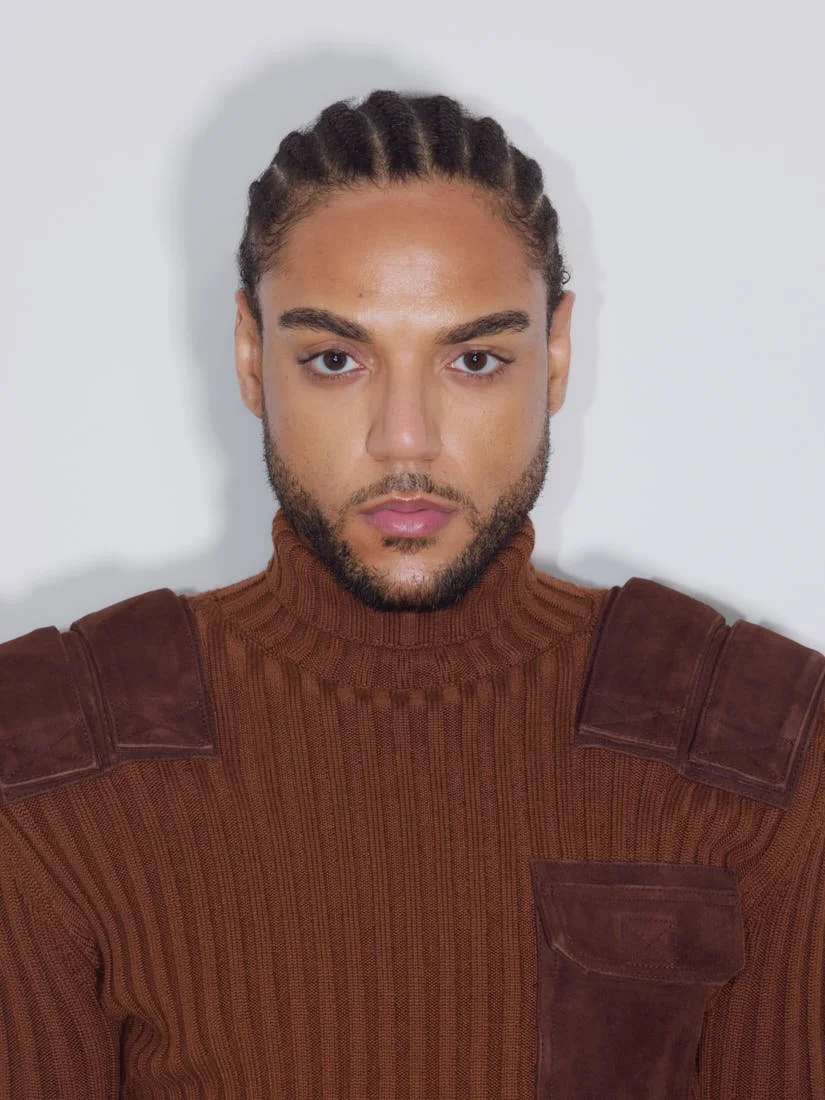
Yet as effortless as it may appear on screen, the journey behind it was anything but simple. The series was the result of years of planning, patience, and an almost obsessive perfectionism - the kind of dedication only someone who truly feels their art can sustain. Sadly, the acclaimed show will not return for another season. But Lamin is far from standing still. Telling stories that create connection — between people, perspectives, and experiences. Yet despite his enthusiasm, he remains realistic about the industry. Representation is important, he says, but inclusion is even more important. “Who produces, who writes, who casts — all of that is crucial.” Diversity in front of the camera alone is not enough if the same decisions are still being made behind the scenes. “It’s about not only showing lived realities, but truly understanding them.”
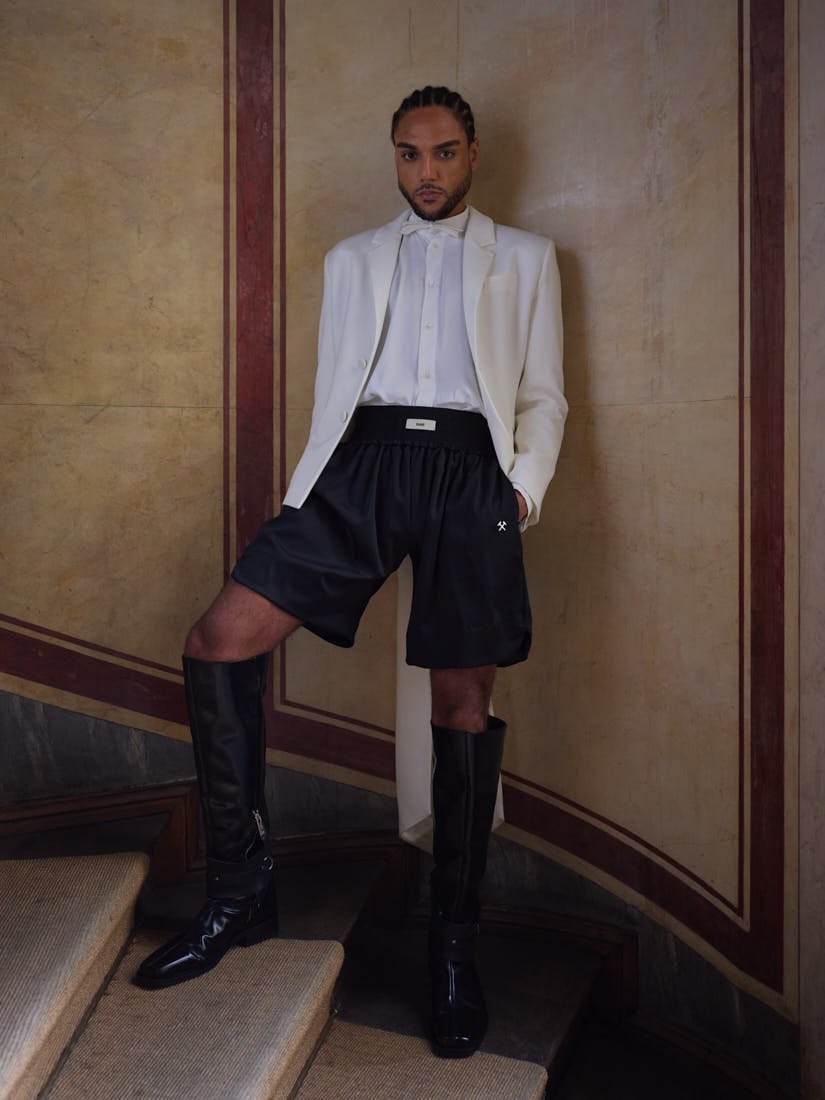
Lamin wears a total look by GmbH
Klaas Hammer
Your new play The Twins is currently running at Berlin’s Maxim Gorki Theater. What is it about, and what kind of response were you hoping to evoke in the audience?
Lamin Leroy Gibba
The play centers on the murder between twin brothers and a screenwriter who becomes fascinated by the case. She wants to turn it into a film because she sees in it an allegory for structural violence. Beyond my interest in the characters themselves, I wanted to explore questions of truth and fiction — how both are constructed, artistically and socially. The play also looks at ideas around interpretive authority and regimes of perception.
With everything I make, I try to create spaces where audiences can engage with themselves and larger questions, while hopefully feeling both challenged and entertained by it. I’m not aiming for one specific reaction. Ideally, there are as many interpretations as there are audience members.
You were part of the “Jury of the Berlinale Talents Mastercard Enablement” at the Berlinale — what was that experience like for you, especially considering that you’re still very young and, in a sense, a talent yourself?
It felt very special to be part of this year's jury. The selected filmmakers are all building pathways for change within their communities, through educational programs, improving access to resources, or film production opportunities.
Meeting them and learning about their projects was a reminder of how naturally storytelling, organizing, and community-building intersect. Both the projects and the program itself also highlight the profound inequalities that many communities around the world are affected by.
What do you hope for in 2026 — personally and for society as a whole?
In a time marked by multiple global crises, I believe the work and voices of artists are evermore important. Storytelling and art have always been ways to reflect on the world, to question oppressive structures, and to imagine alternative futures. Showing up and engaging in that work to the best of my ability feels meaningful to me.
As for society — that’s a big question. I’m wary of sounding cliché. But in the face of increasing division and dehumanizing rhetoric, I think it’s vital to remind ourselves of our shared humanity. To stay curious about experiences and realities that differ from our own. Art — both creating it and experiencing it — can be a powerful tool in that process.
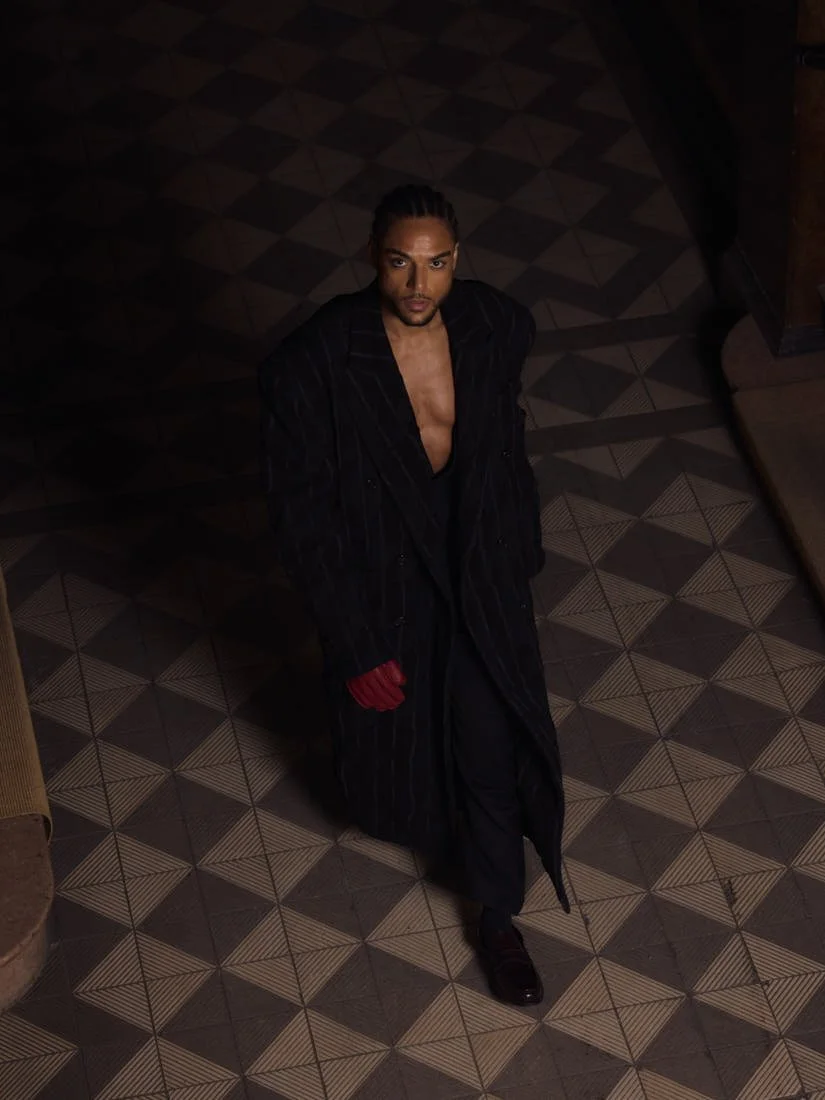
Lamin wears a coat by Juun.J, a blazer and pants by Karl Lagerfeld, and gloves by H&M Studio
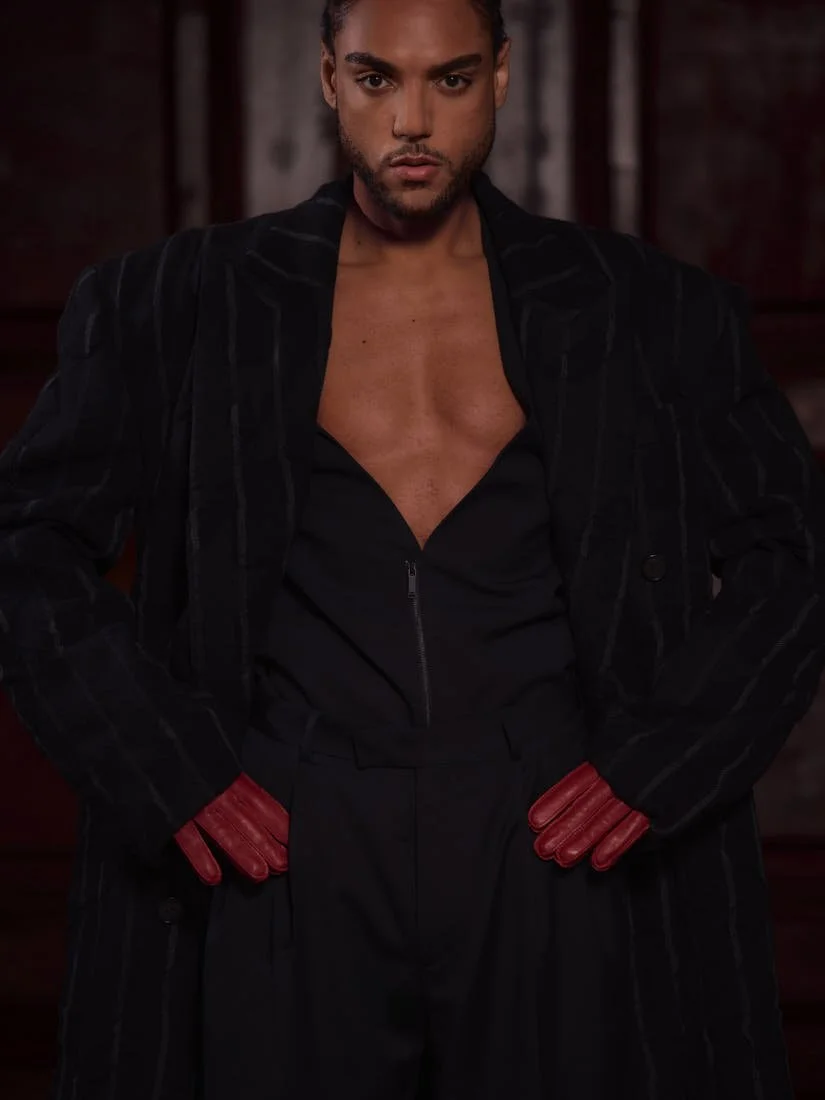
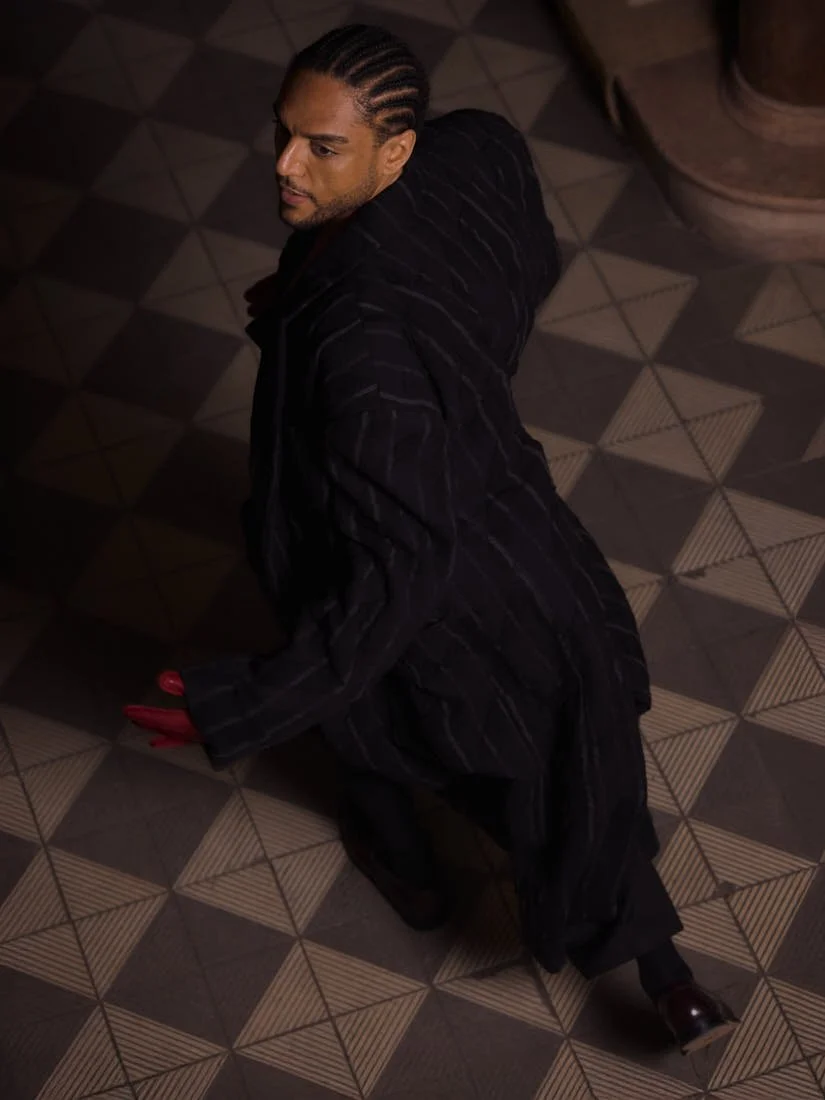
photography LEON NEVILL GALLAGHER
styling + words KLAAS HAMMER
talent LAMIN LEROY GIBBA
assistant IVA COŞKUN
copyright LE MILE Magazine / Leon Nevill Gallagher for LE MILE Magazine
styling + words KLAAS HAMMER
talent LAMIN LEROY GIBBA
assistant IVA COŞKUN
copyright LE MILE Magazine / Leon Nevill Gallagher for LE MILE Magazine