
Inside Dior’s Grammar of Forms Exhibition
Jonathan Anderson Brings Lynda Benglis Into Dior Couture
written LE MILE
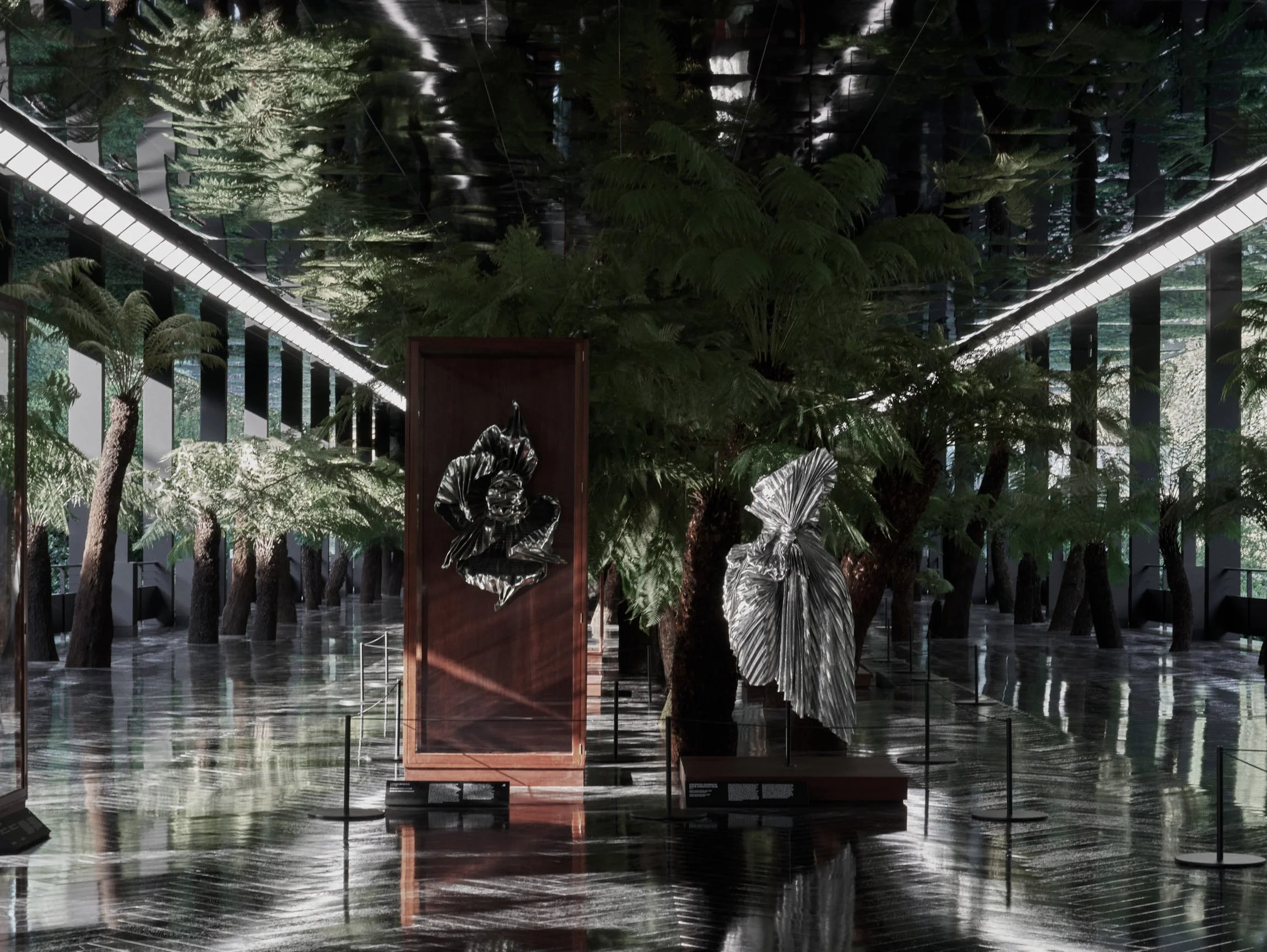
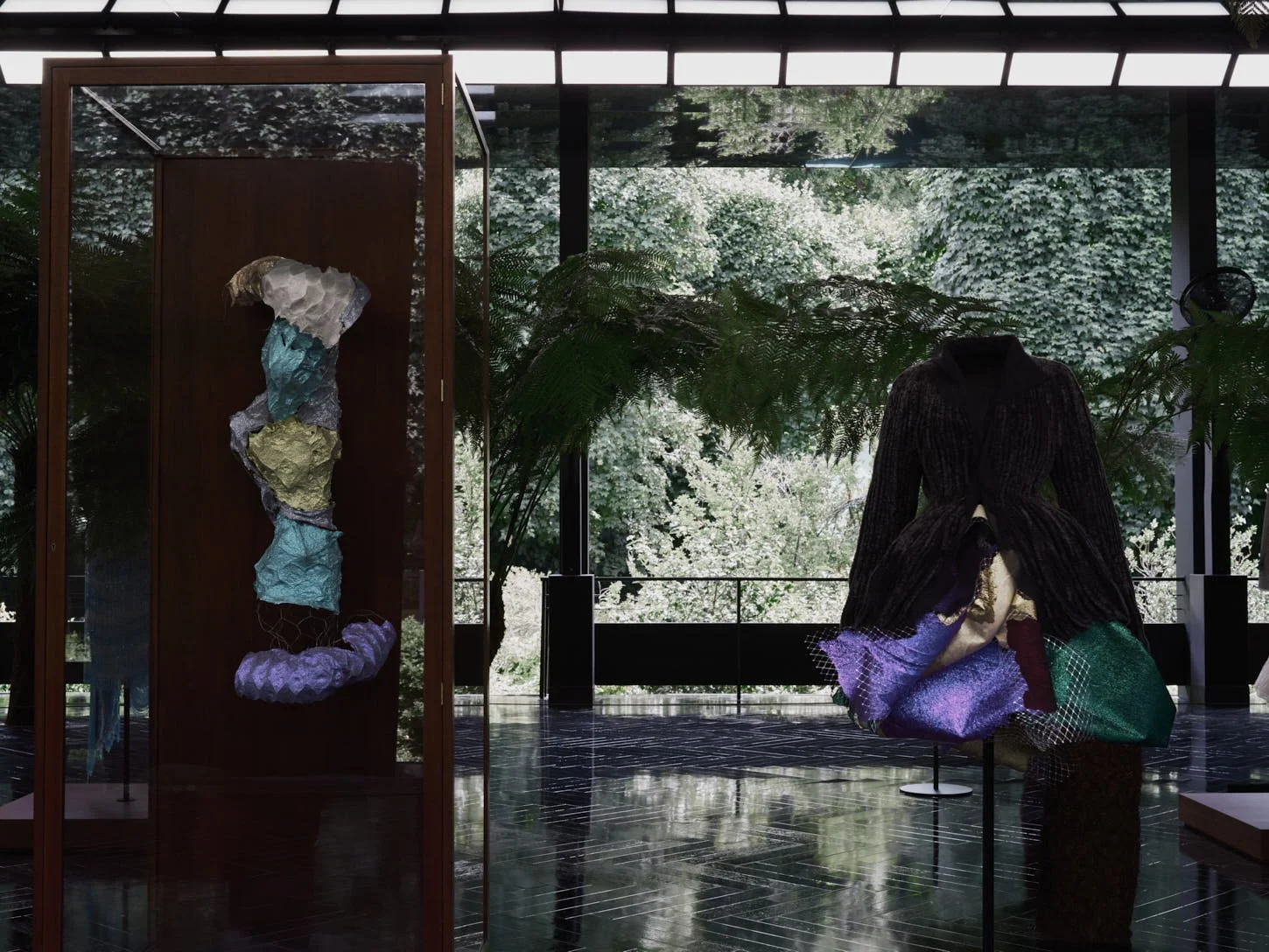
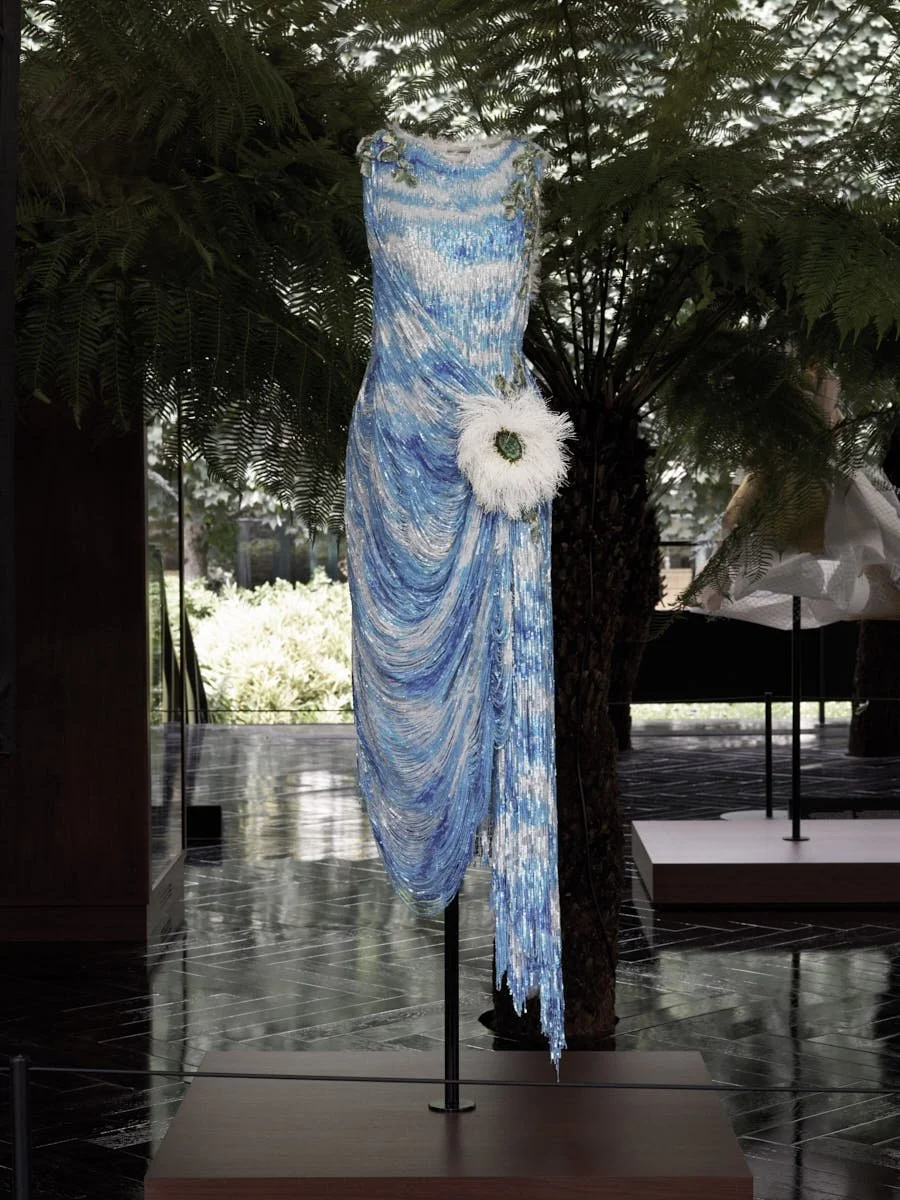
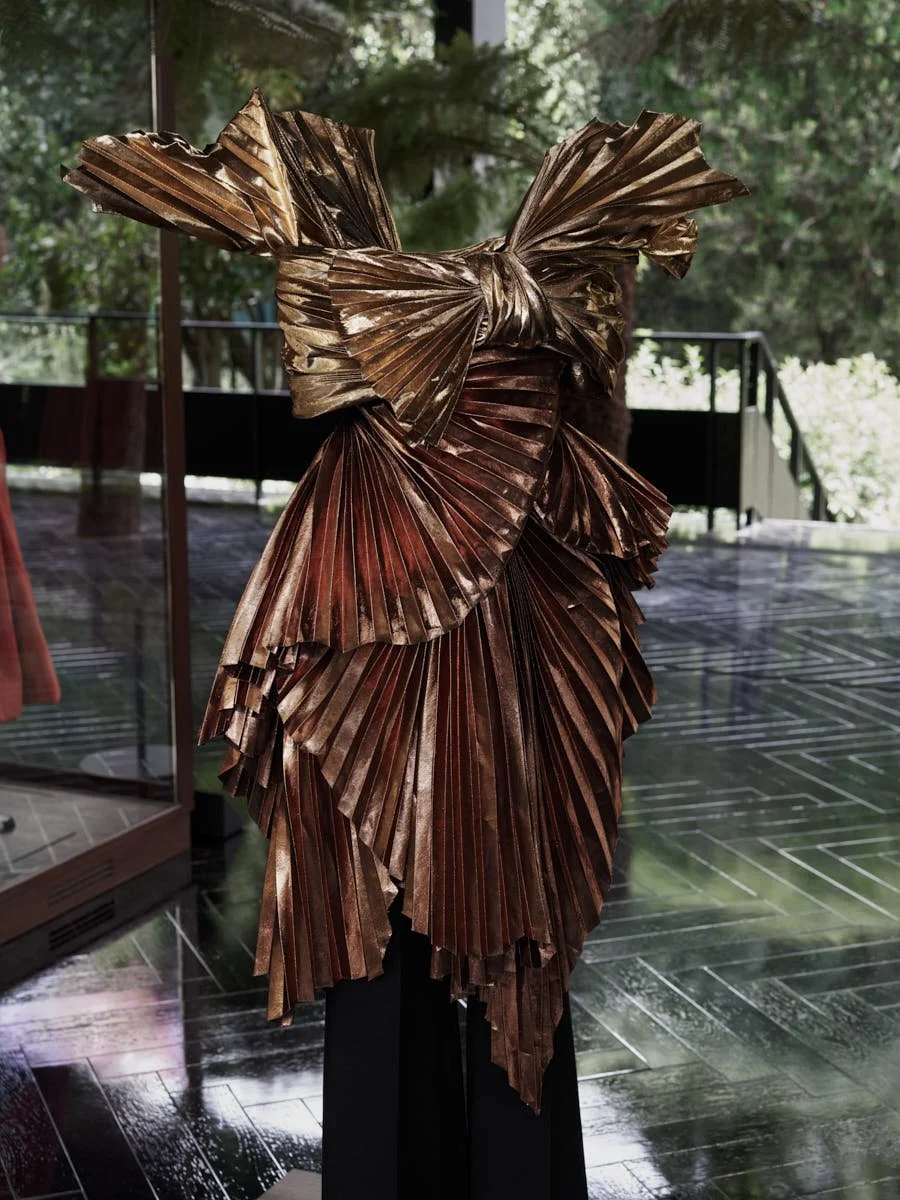
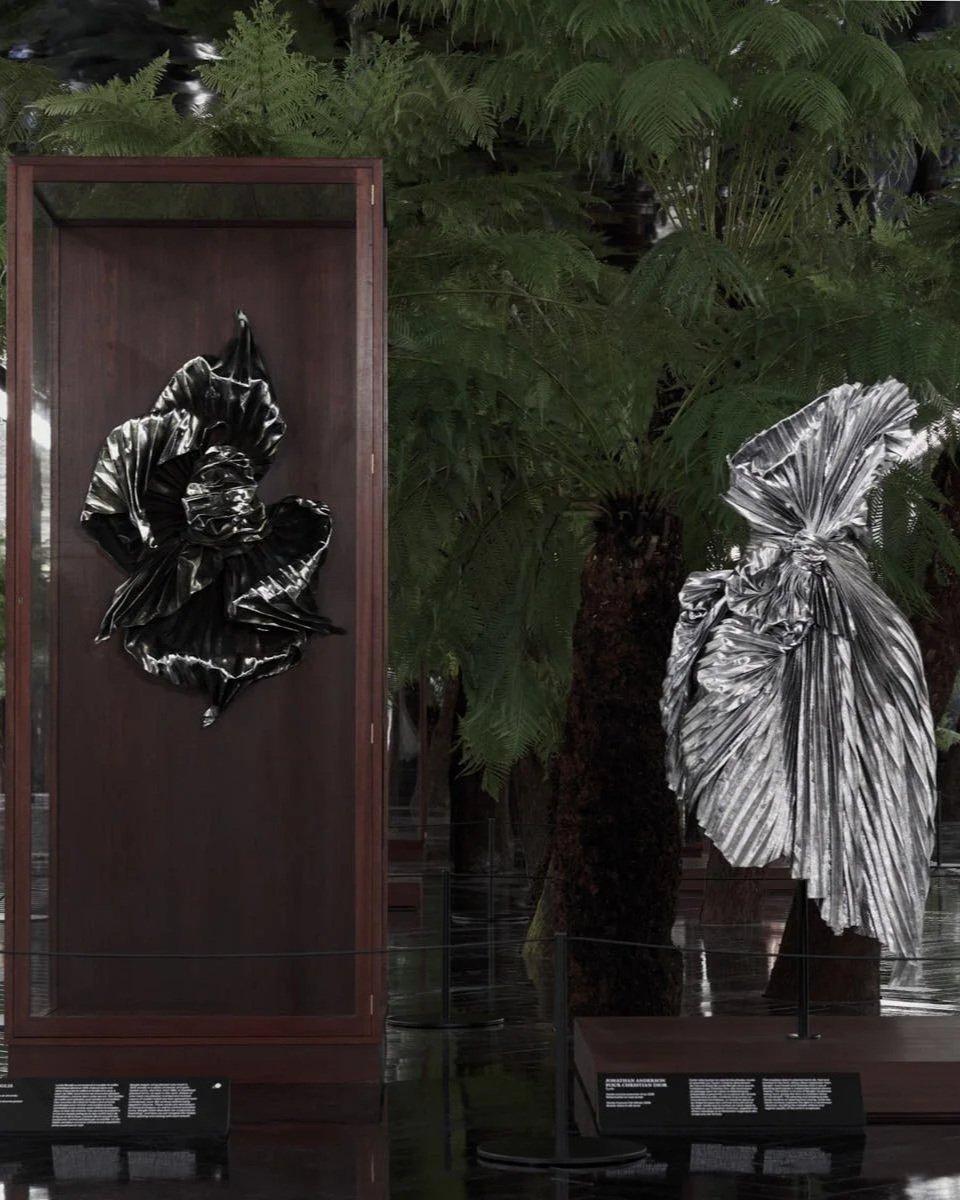
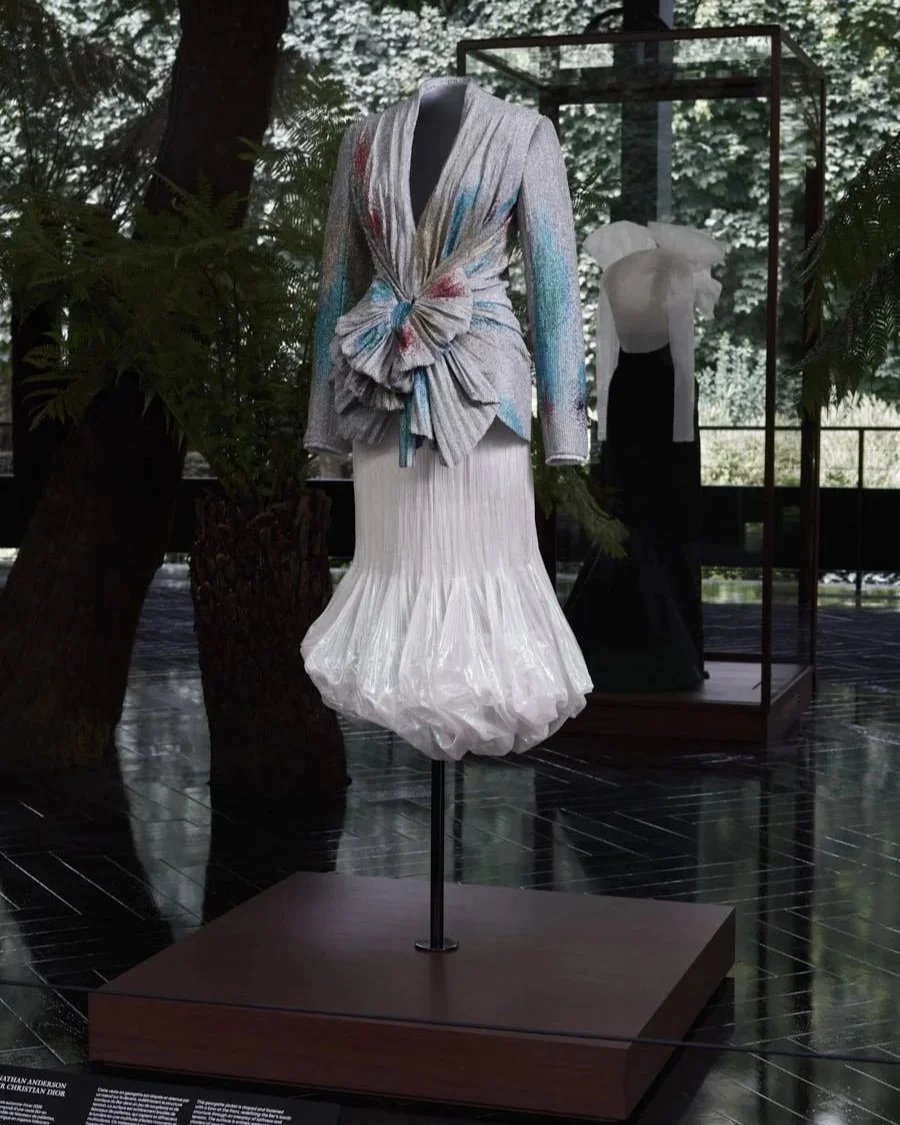
Inside the exhibition space for Grammar of Forms, Dior’s couture is placed among trees, glass vitrines, dark wood structures and a reflective floor that turns the room into something almost liquid. The same venue that hosted Jonathan Anderson’s couture show for the house now holds the collection in suspension. Dresses stand upright on slim plinths, some enclosed in tall glass cases, others left open to the surrounding greenery.
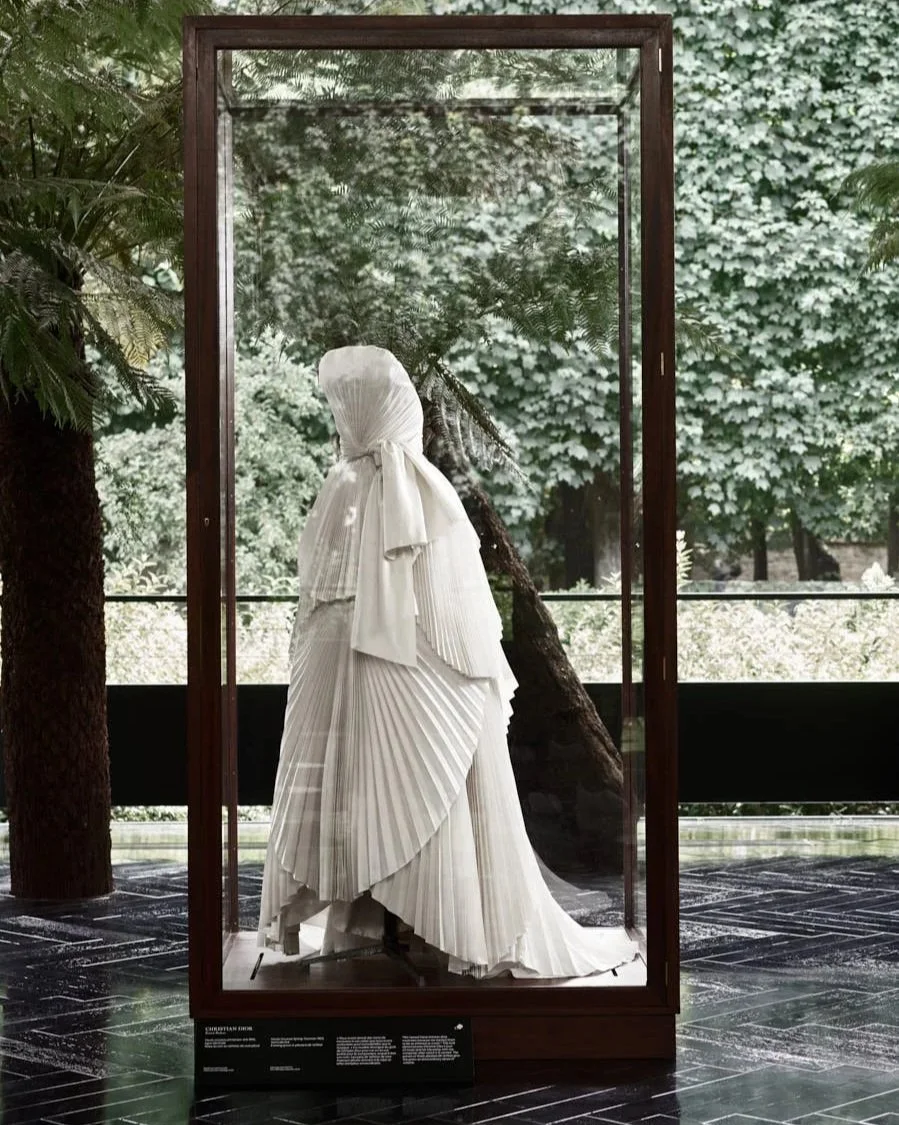
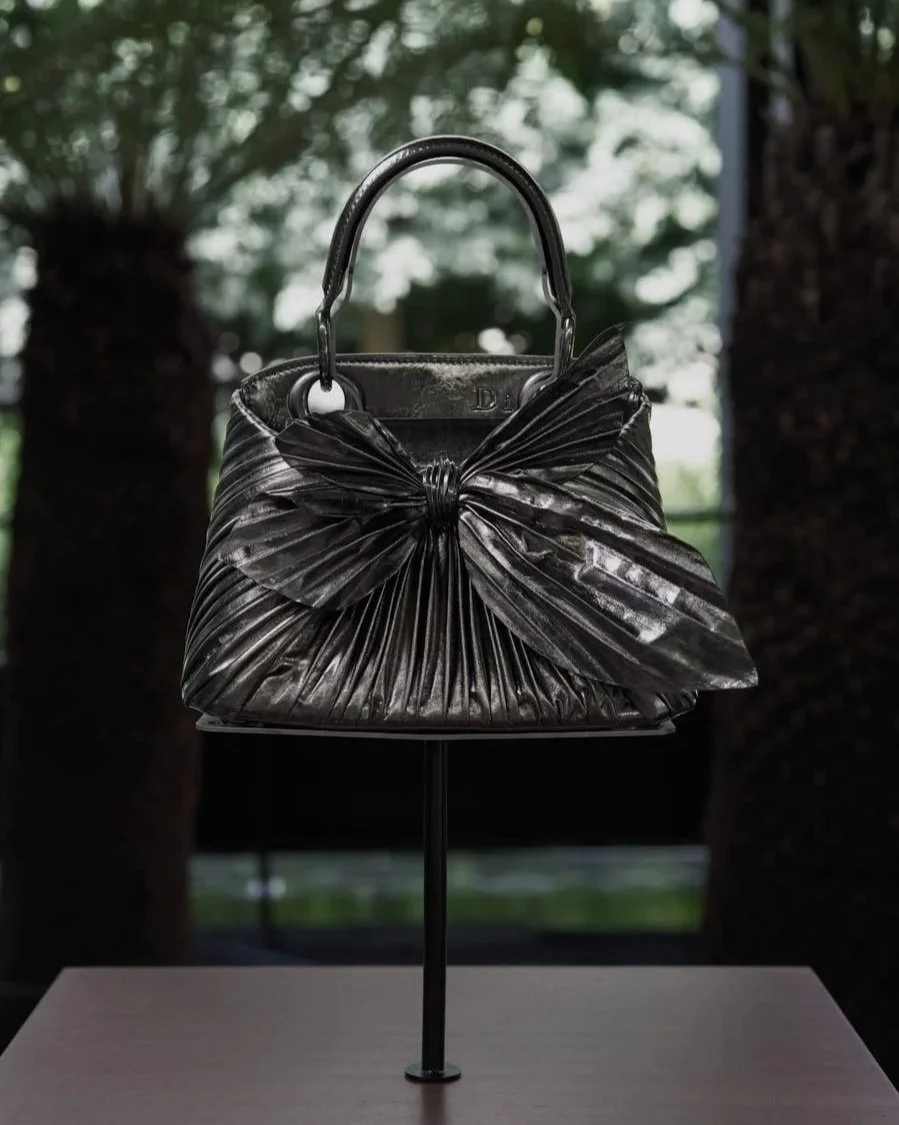
A metallic pleated form catches the light beside a black handbag, a white gown appears in a wooden frame, its folds held with the precision of a study object. In another corner, a bronze-toned dress rises from the body with sharp, crumpled volume, closer to sculpture than eveningwear. The exhibition follows Anderson’s second haute couture collection for Dior and gives each look the space to be studied up close. A fold can be read as structure, a pleat becomes a held gesture, and surfaces catch the light differently when the garment no longer passes in a few seconds. Here, the stillness makes the engineering visible.
Inside Dior’s Grammar of Forms Exhibition
with Lynda Benglis
Inside Dior’s Grammar of Forms Exhibition
/ courtesy DIOR
Inside Dior’s Grammar of Forms Exhibition
/ courtesy DIOR
Born in Lake Charles, Louisiana in 1941, Lynda Benglis became one of the defining American artists of her generation after emerging in 1960s New York. Her work moved through poured latex floor pieces, polyurethane foam, wax, metal, gold leaf and glitter. She has always treated material as something active.
It spills, bends, hardens, folds and carries the trace of the body that shaped it. Her sculptures have often been described as frozen gestures, a phrase that returns throughout the Dior project because it gives language to what Anderson is also exploring through couture.
Anderson follows Benglis’s fascination with matter at the point where it begins to shift under pressure. Fabric is pressed into pleated volume and pulled into knotted density, while certain surfaces start to resemble paper or metal. Embroidery carries the glittered intensity of Benglis’s work into the surface of the clothes. What appears spontaneous has been calculated through couture engineering, with the Dior ateliers giving each fold the support it needs to hold its shape around the body. The strongest looks carry that exact tension. The fabric seems caught in the act of becoming an object, while the body remains its point of return.
Inside Dior’s Grammar of Forms Exhibition
/ courtesy DIOR
Inside Dior’s Grammar of Forms Exhibition
/ courtesy DIOR
The connection to Dior’s own history sits in the construction. In 1947, Christian Dior’s New Look relied on an internal structure of boning and padding, allowing fabric to create a silhouette that stood away from the body. Over the following decade, the house developed lines such as Zig-Zag, Tulip, A and H, each one treating shape as something deliberate and engineered. Anderson enters that history through Benglis, using her sculptural instinct to test how far Dior’s couture construction can be pushed in fabric.
By the time the viewer leaves Grammar of Forms, the exhibition has made its clearest point about Anderson’s first movements at Dior. The house is being approached through construction and the patient intelligence of the atelier, with Benglis opening a way to think about matter before it settles into form. Her presence keeps the collection away from simple archive exercise or art-world quotation. What remains is the sense of a beginning, carefully held, with Anderson using couture to test how much force a dress can carry before it returns to the body.
Inside Dior’s Grammar of Forms Exhibition
/ courtesy DIOR
Inside Dior’s Grammar of Forms Exhibition
/ courtesy DIOR
all images
/ courtesy of DIOR Press