
A review of the Louis Vuitton Spring Summer 2027 by Nicolas Ghesquière
A Hotter Future Calls for a Lighter Louis Vuitton
LE MILE
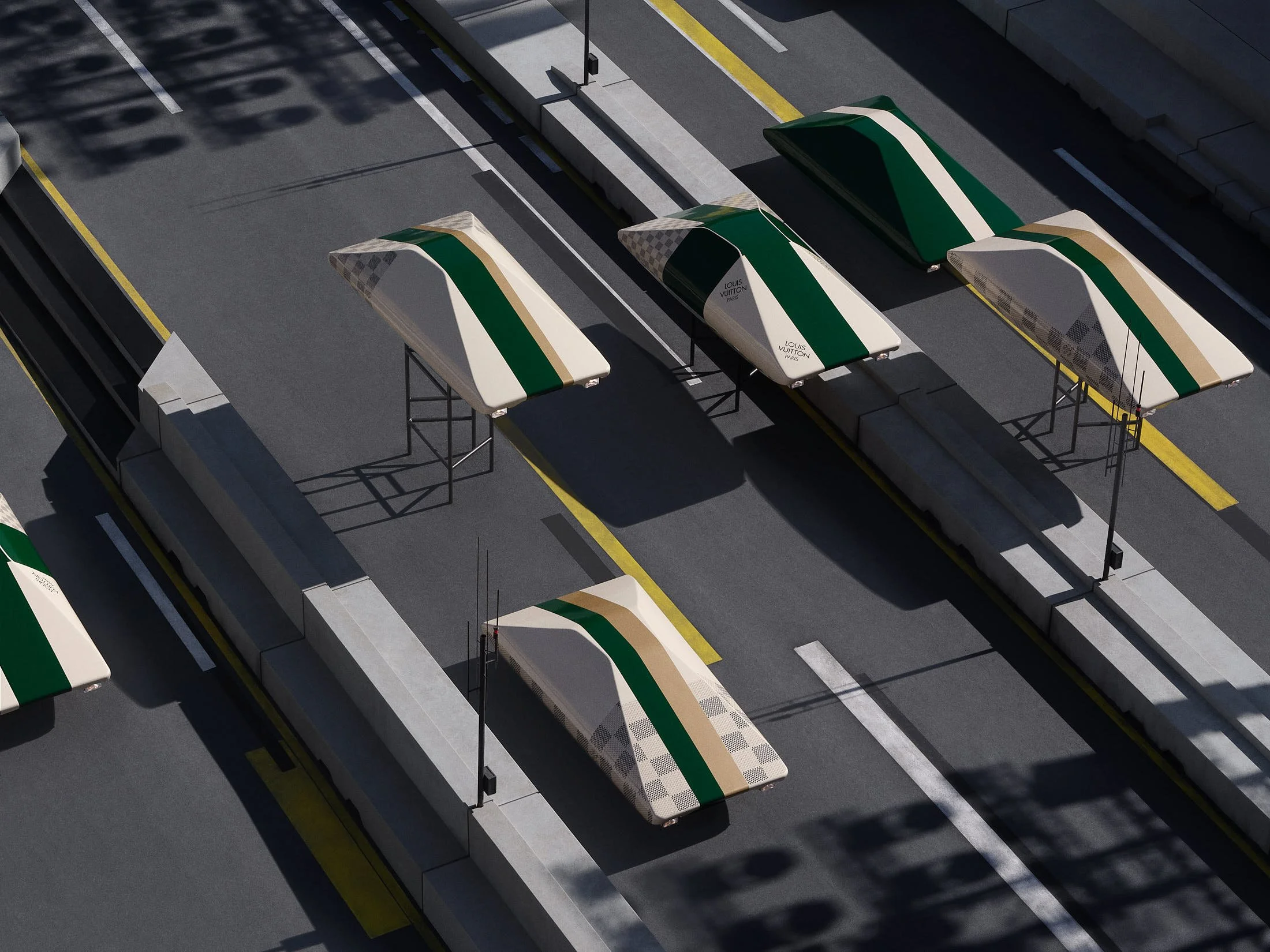
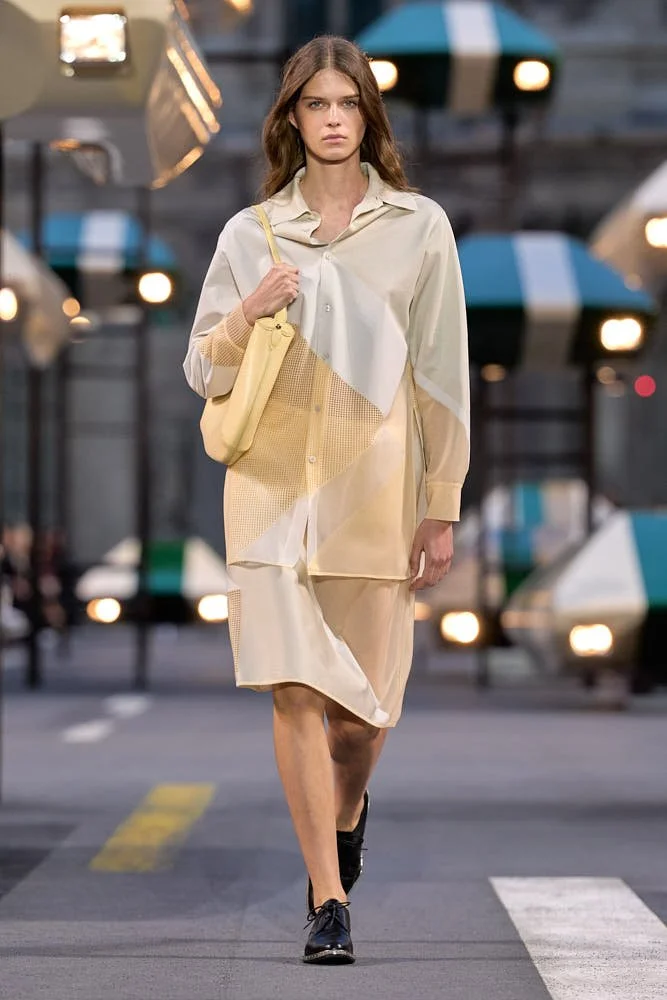
Thirty-four concept cars occupied the Louvre’s Cour Carrée as models crossed its painted road markings, an elaborate arrangement for giving pedestrians right of way. For Louis Vuitton’s Spring/Summer 2027 collection, Nicolas Ghesquière was reconsidering how much of his own architecture a woman needs to wear. He has described himself to Vogue as “a specialist in armour”; this season, the opening white dress hung from the shoulders in uneven, translucent planes, with black lace-up shoes keeping the outfit firmly on the pavement.
Louis Vuitton Womens Spring/Summer 2027 Scenography
/ Ergonomie Collection by Nicolas Ghesquière
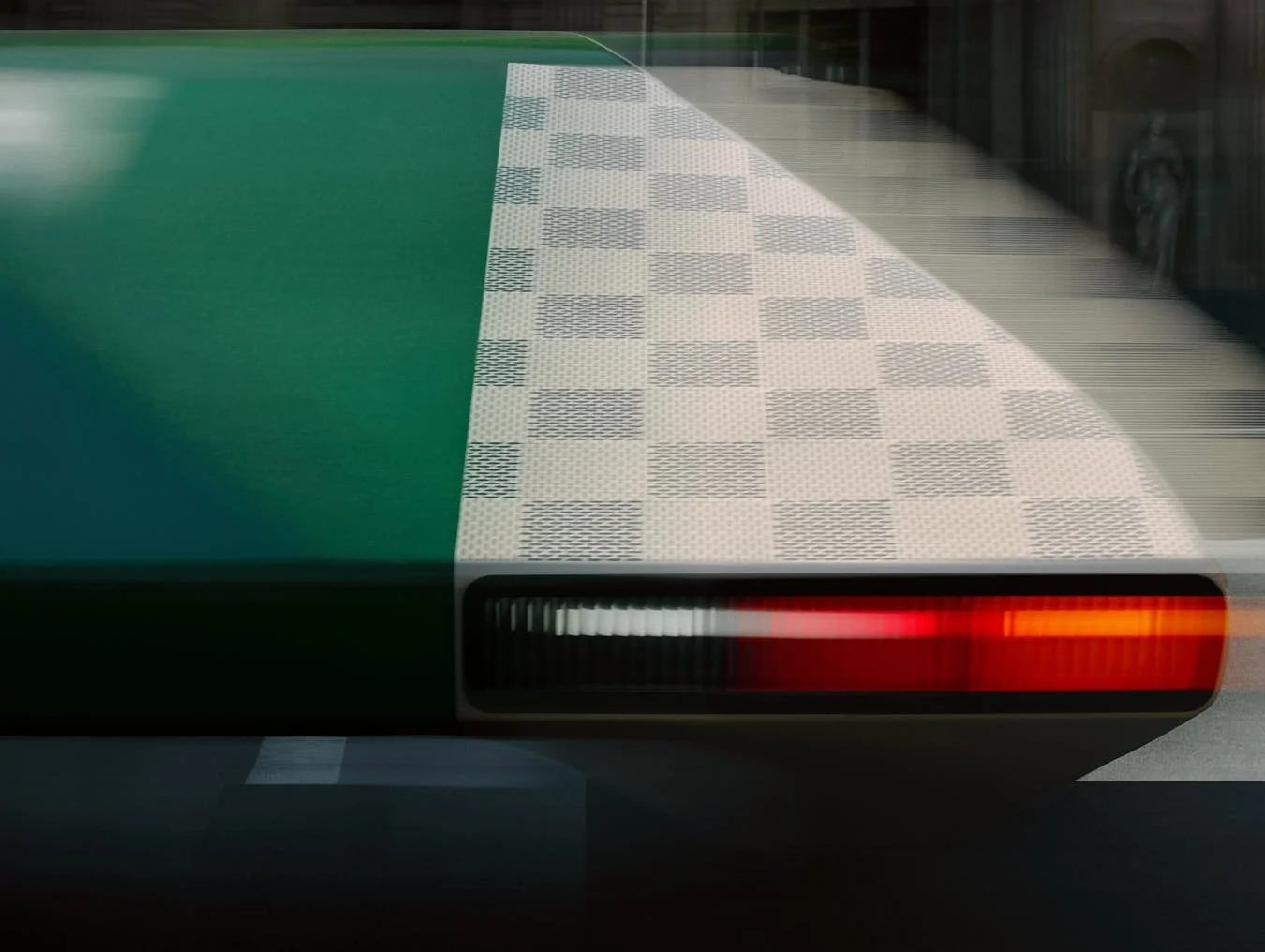
Ergonomie was the collection’s title, a word more readily associated with an office chair than a Paris runway. Ghesquière gave it a pressing reason to be here. “The world is getting warm,” he told journalists, explaining how heat had affected his thinking about clothes. James Chinlund’s wedge-shaped vehicles, raised at different heights and decorated with Vuitton’s Damier checks, imagined another technological leap in getting around. The clothes addressed the less glamorous matter of what to wear when the city becomes too hot.
Flat lids allowed luggage to be stacked; canvas lightened a covering previously made from leather. Ease was a practical problem the house set out to solve. Ghesquière returned to it inside the garment, removing internal layers from tailoring and using composite chiffons alongside scarf fabrics in silk and cashmere. The technical effort went into reducing what the customer would have to carry. That is a useful definition of luxury for a house capable of making even a journey look like an undertaking.
Louis Vuitton Womens Spring/Summer 2027 Detail
/ Ergonomie Collection by Nicolas Ghesquière
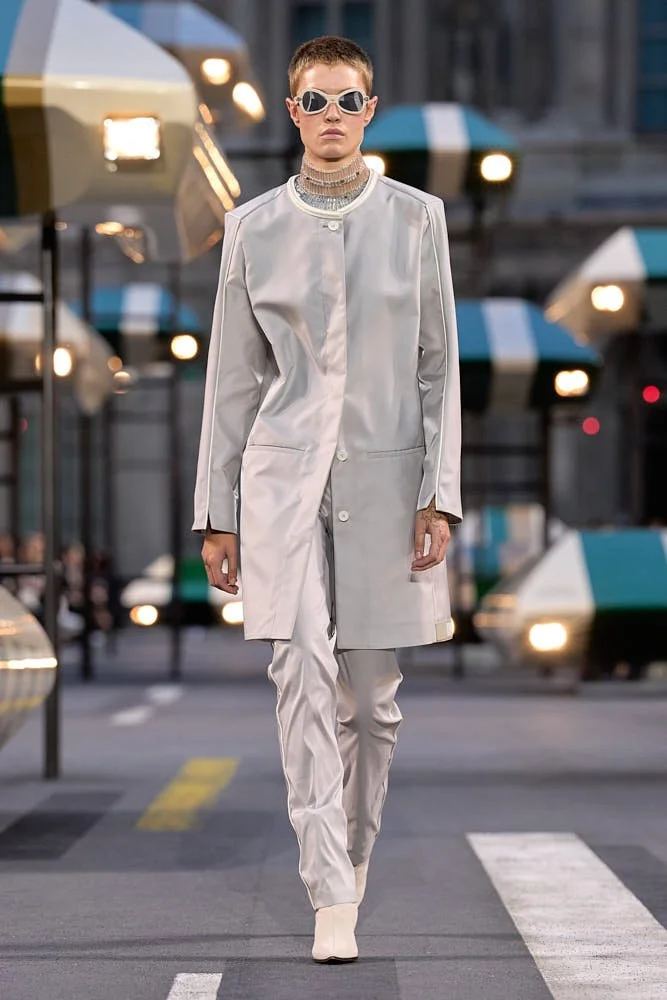
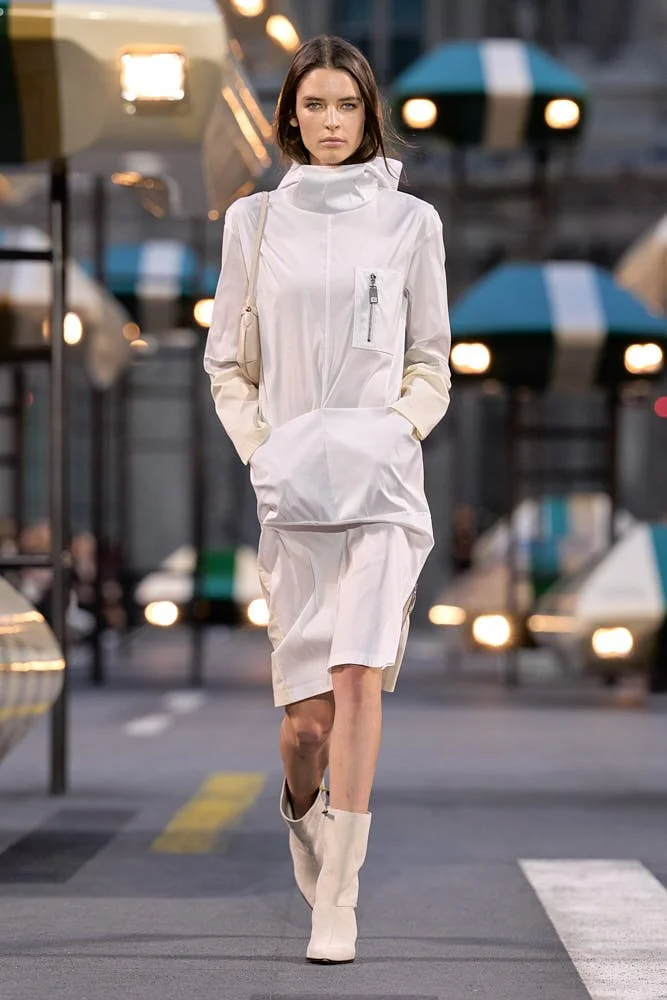
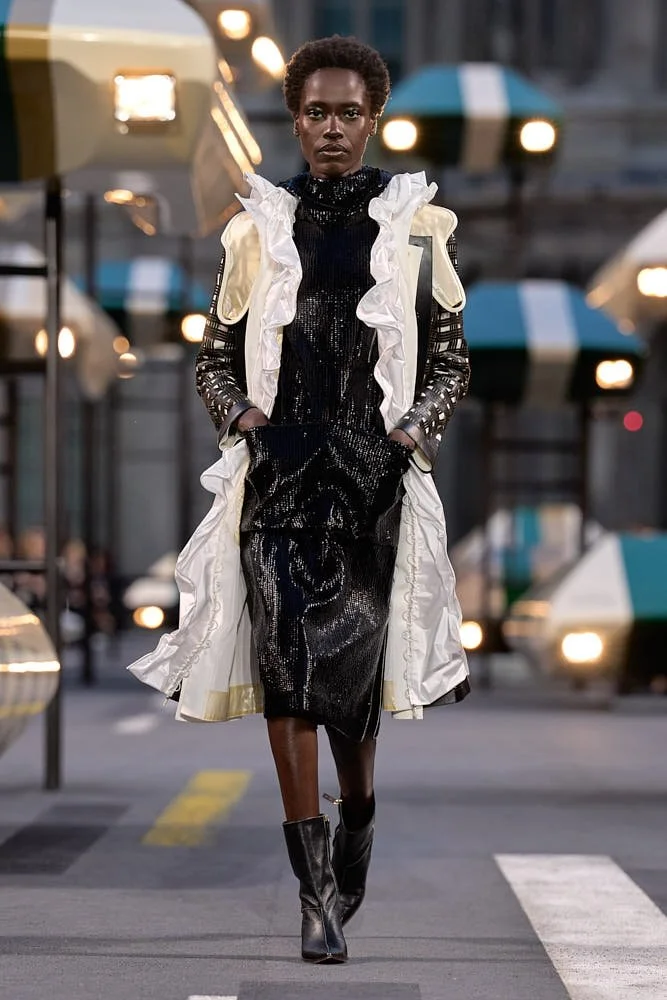
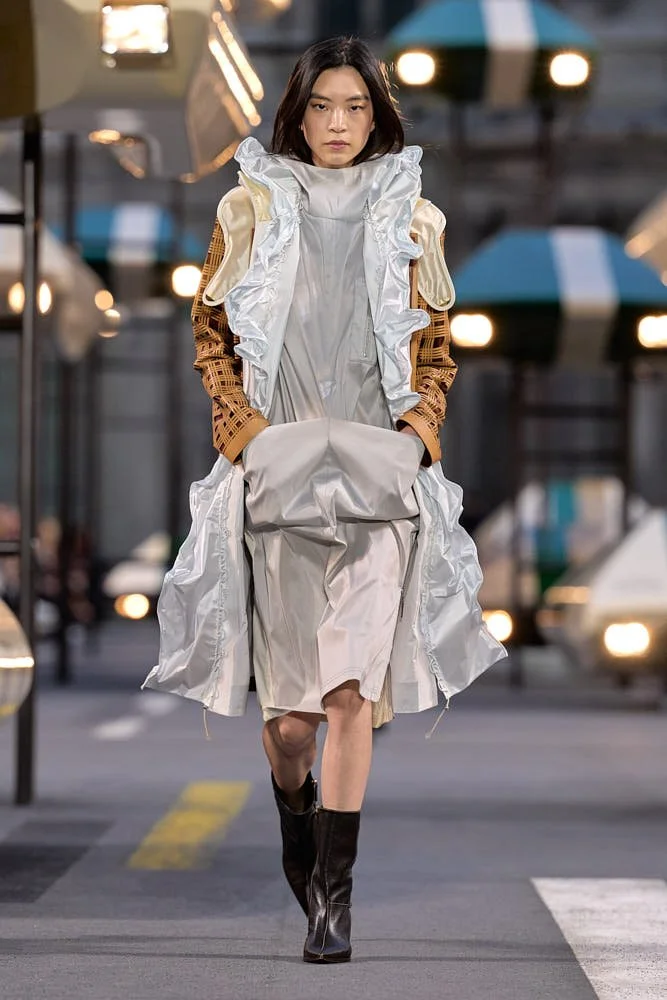
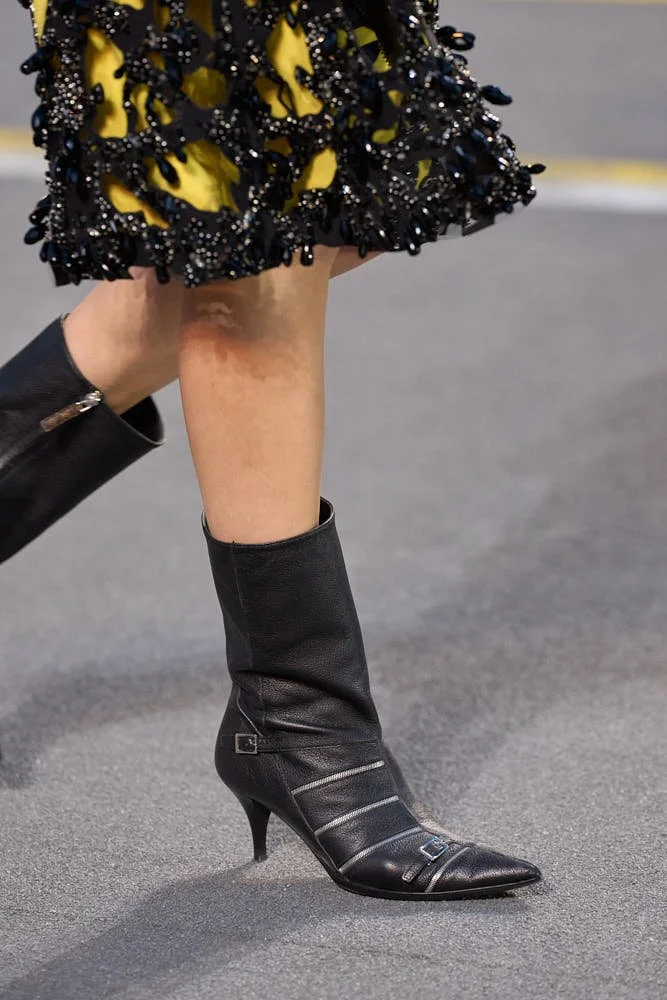
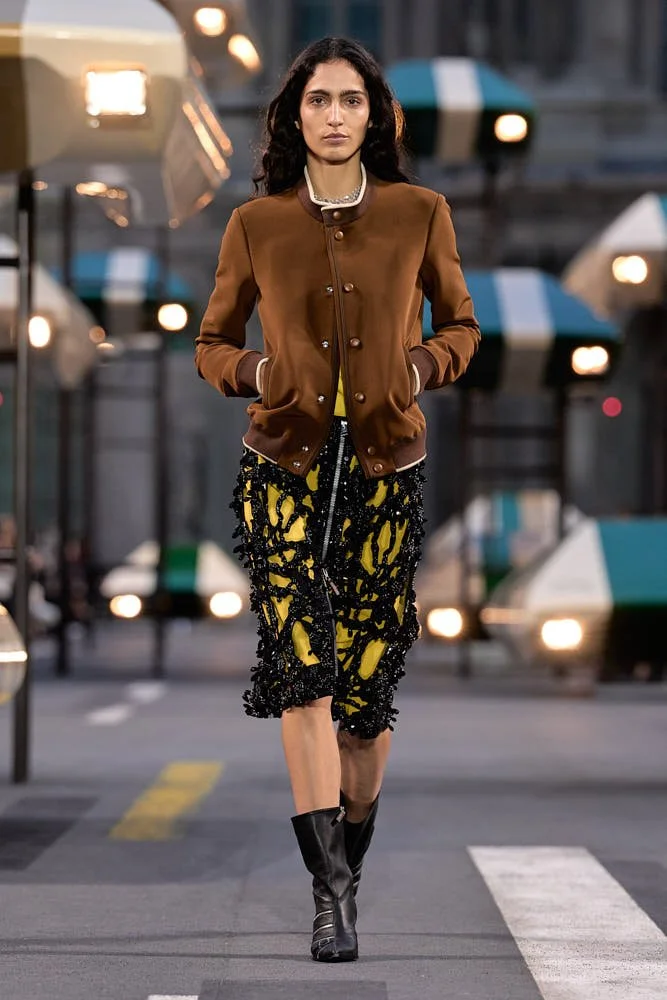
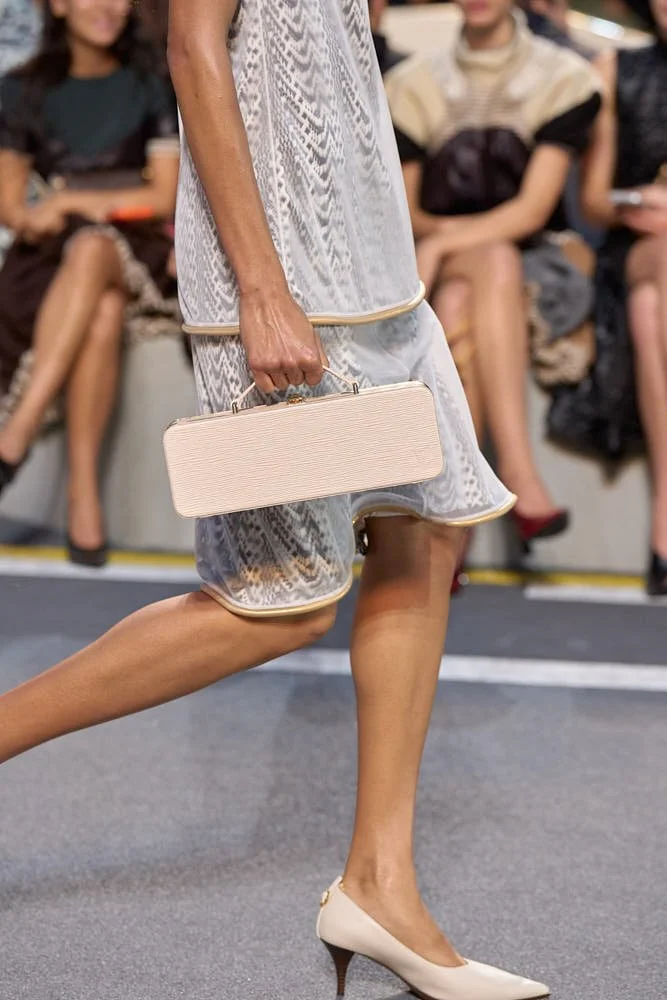
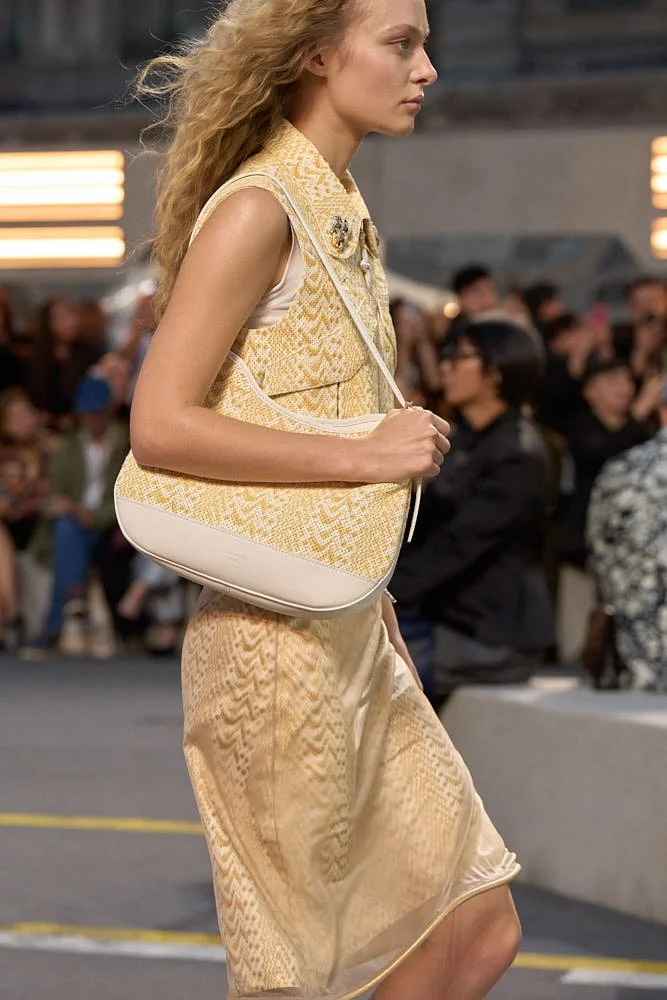
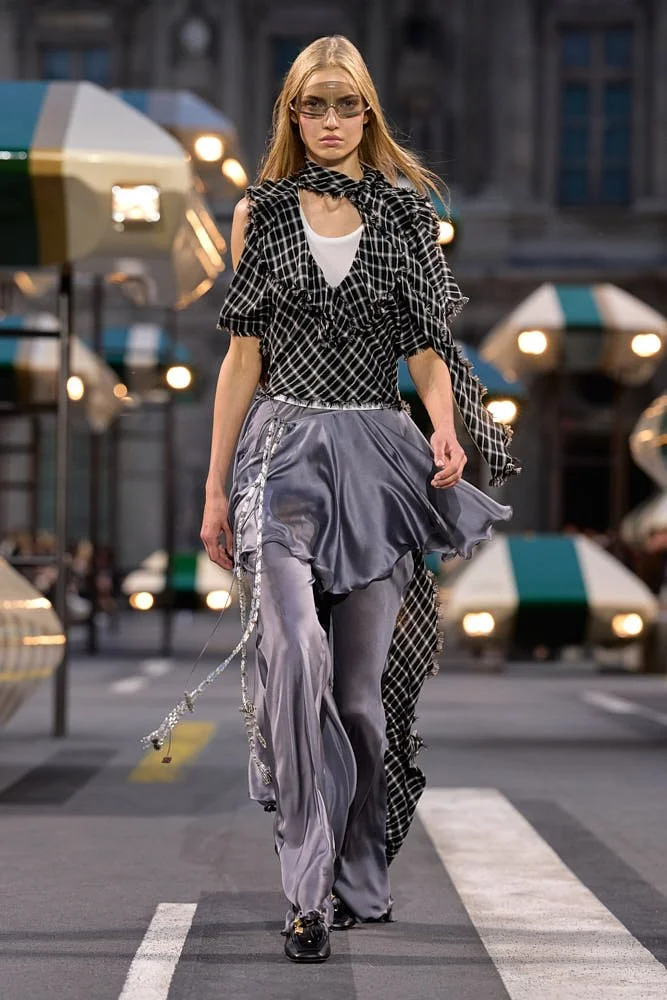
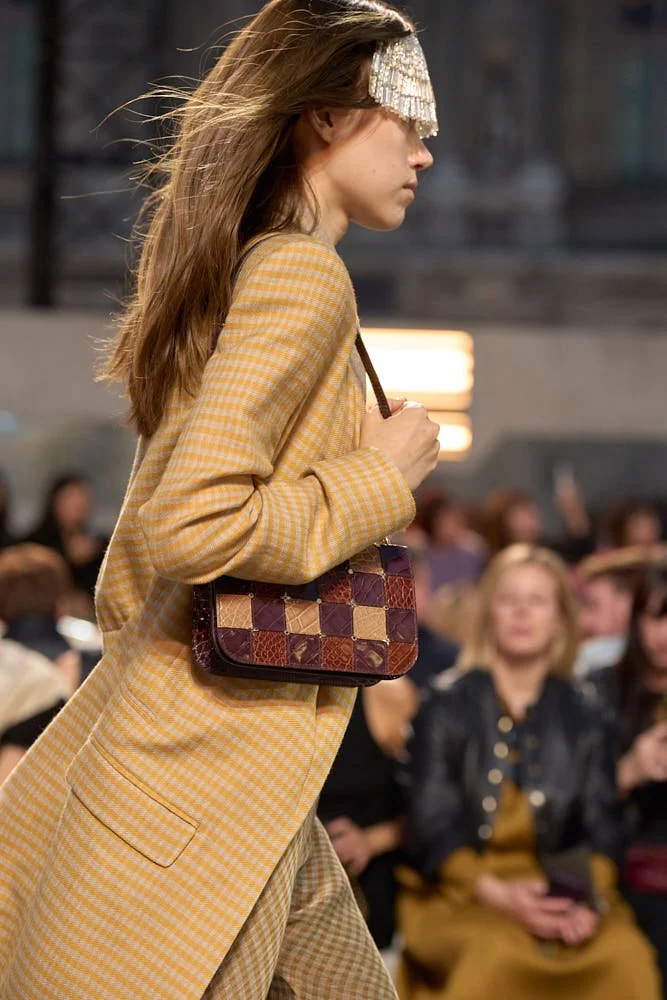
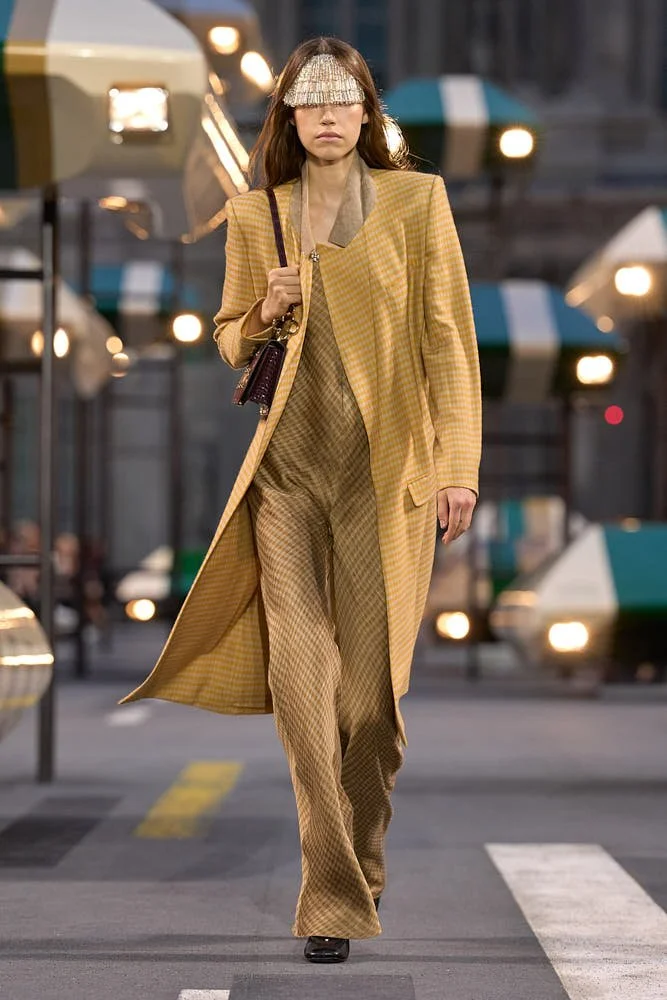
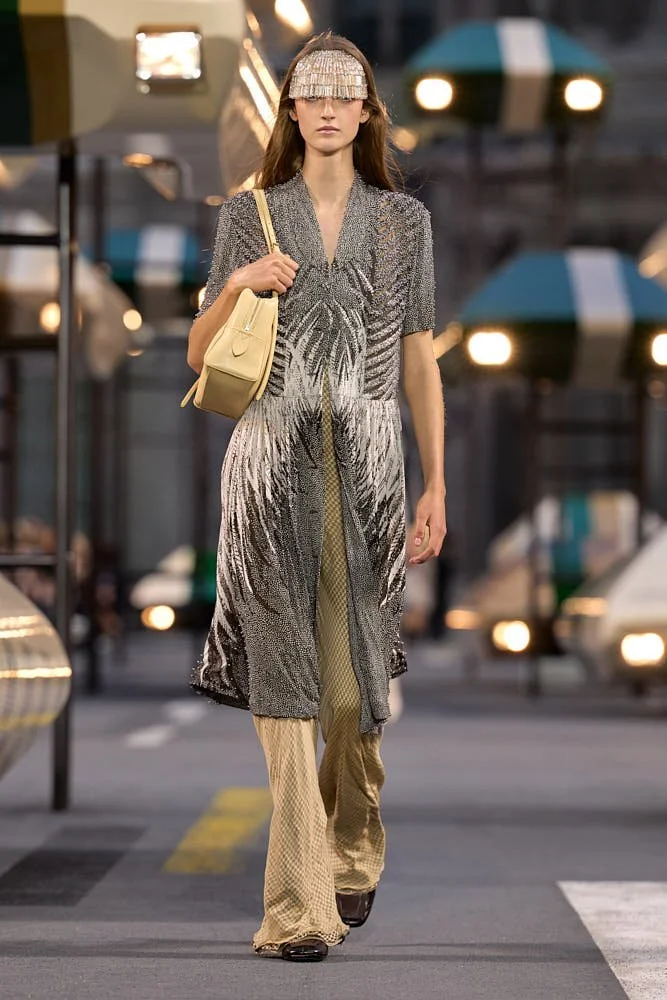
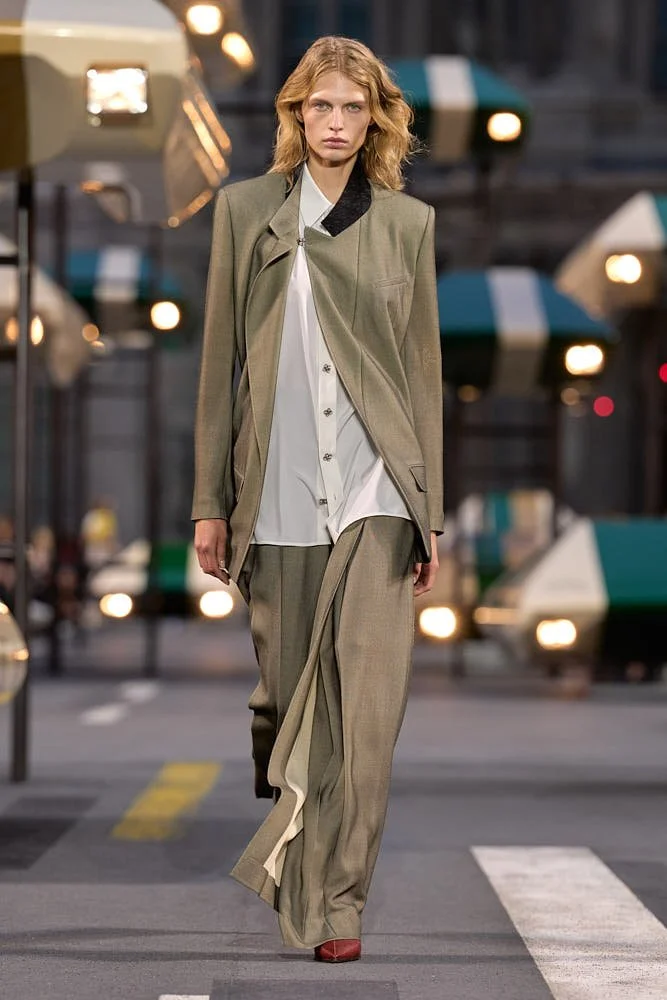
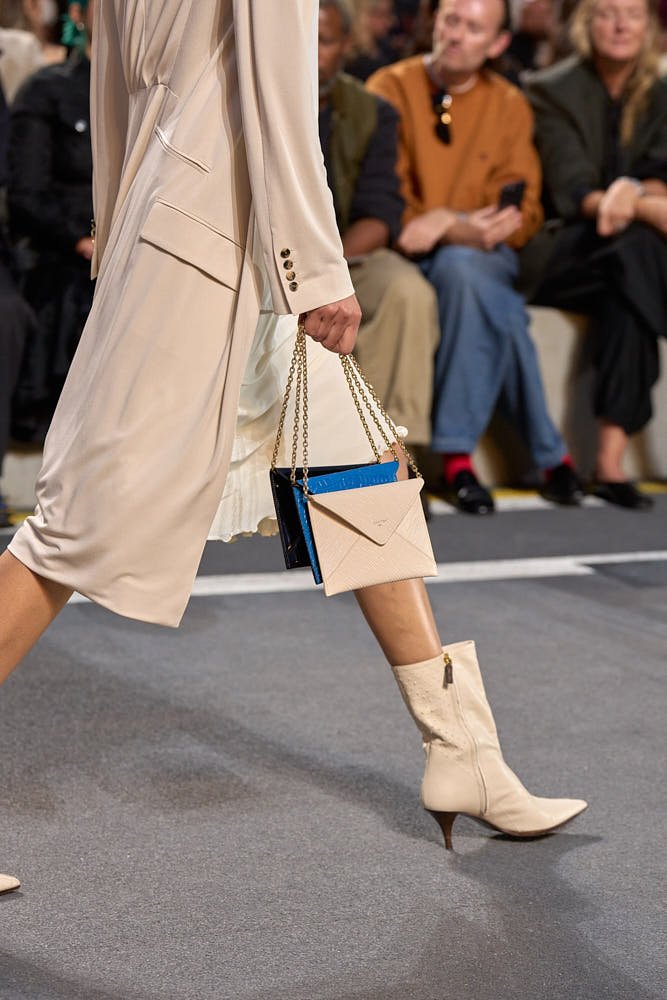
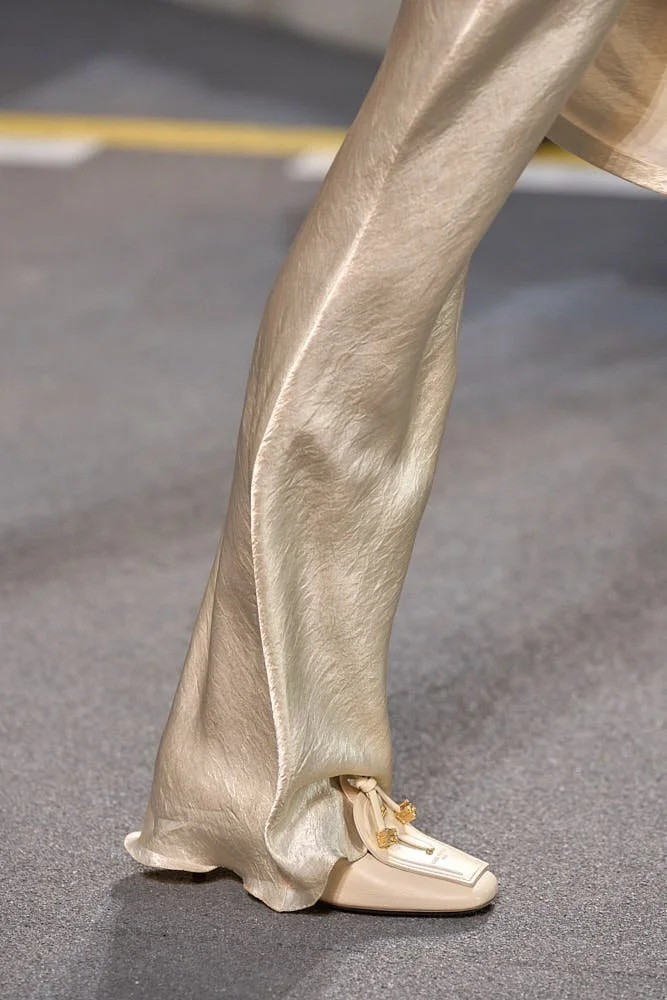
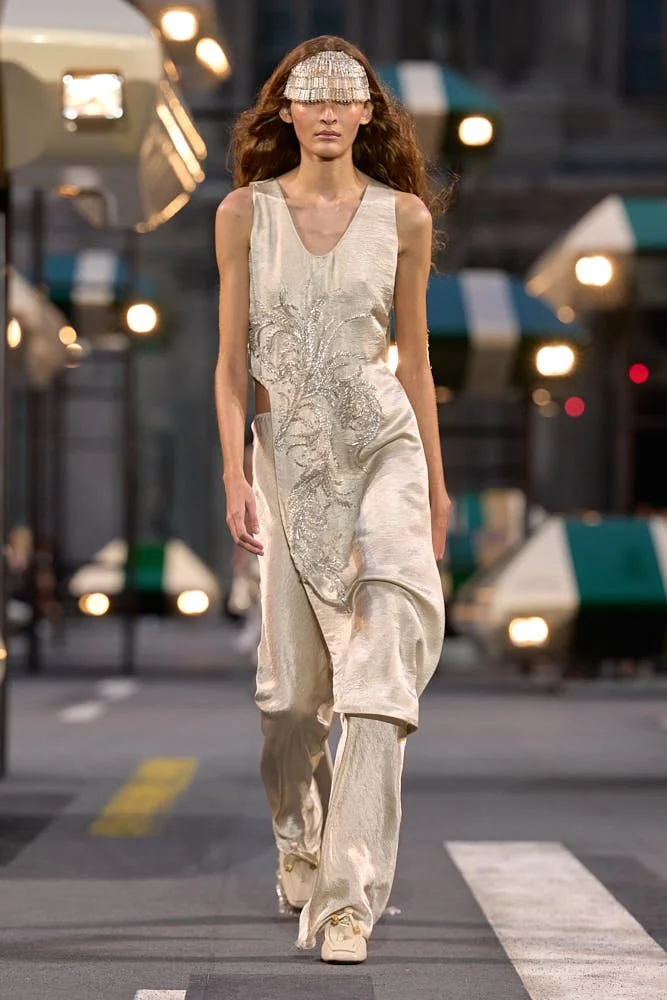
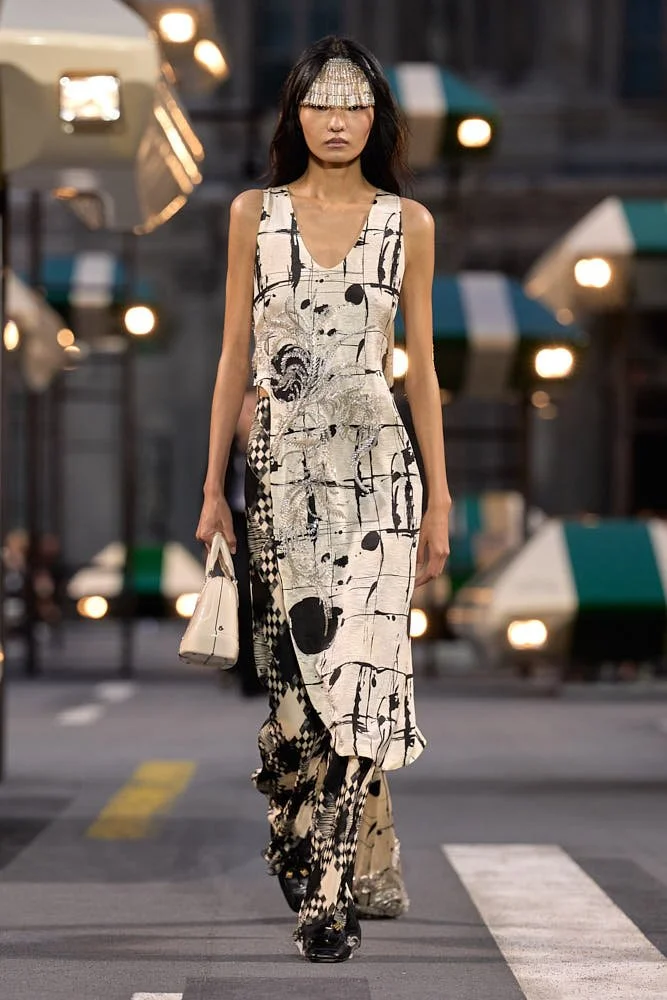
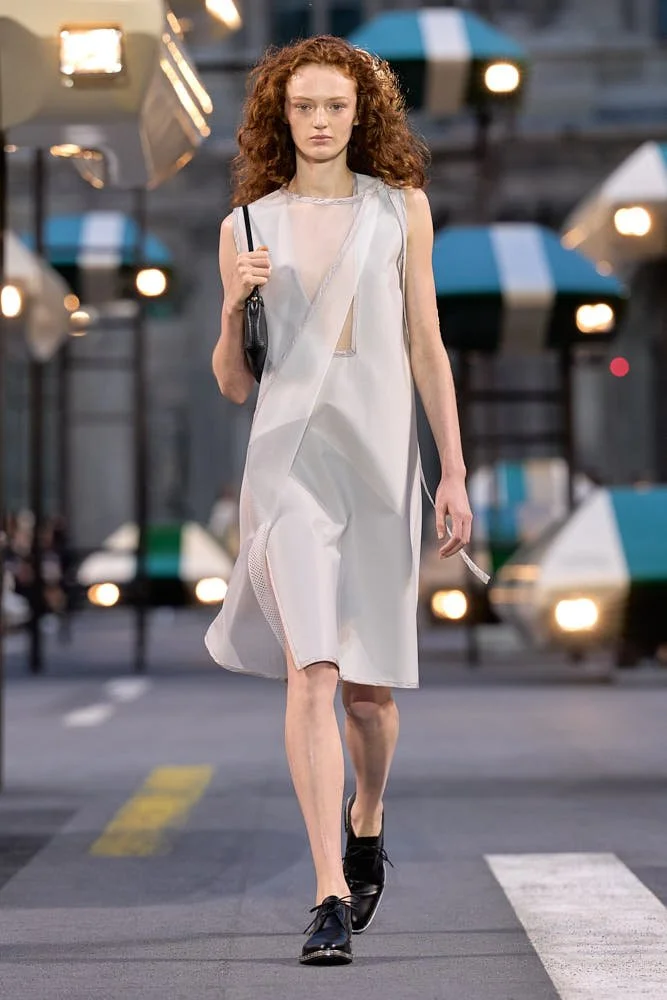
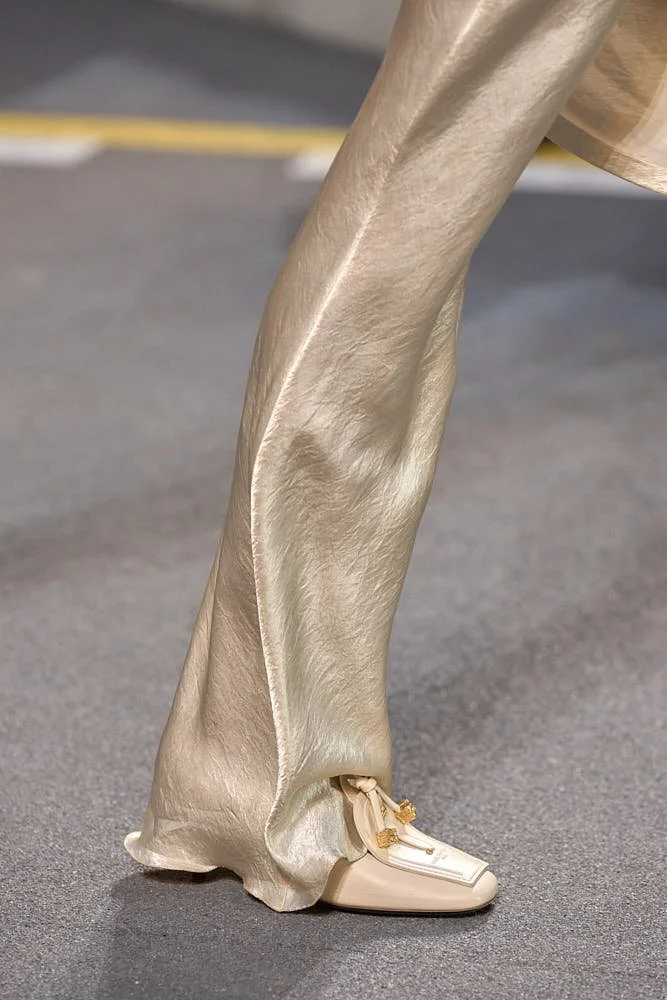
Louis Vuitton Womens Spring/Summer 2027 Detail
/ Ergonomie Collection by Nicolas Ghesquière
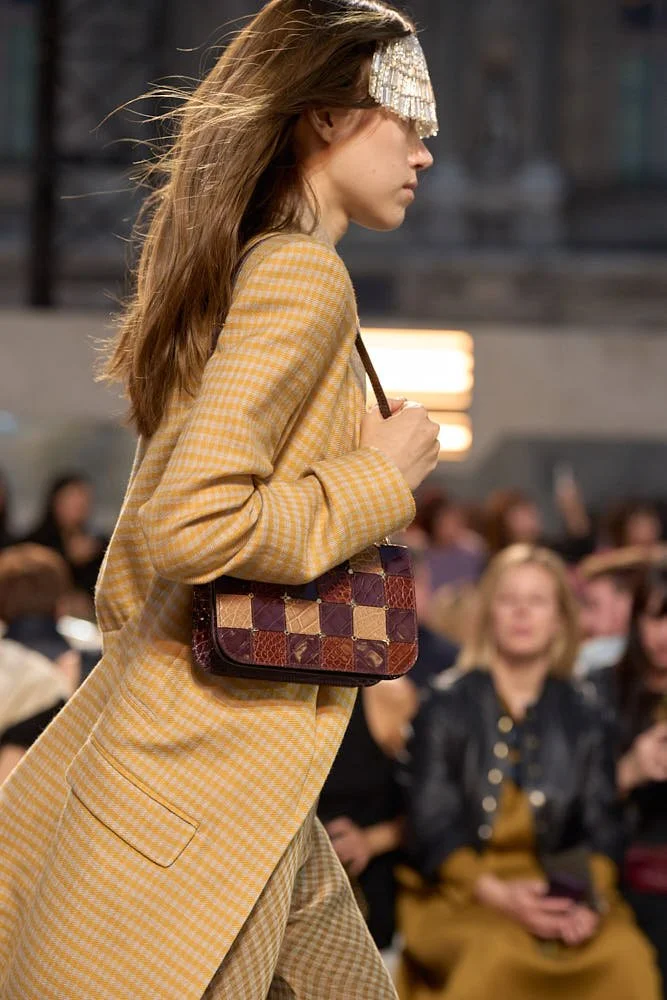
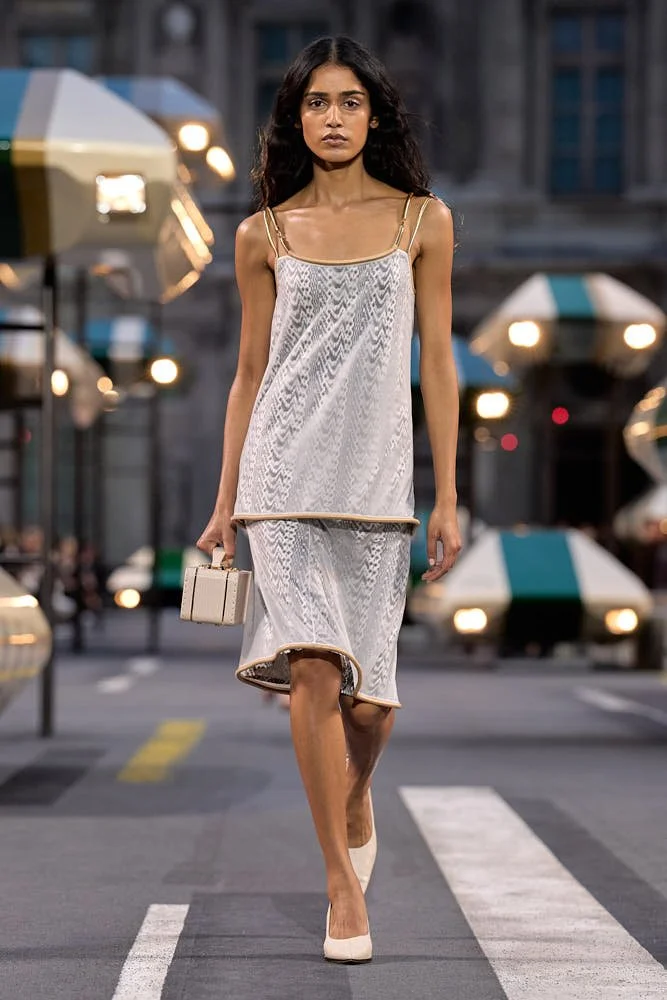
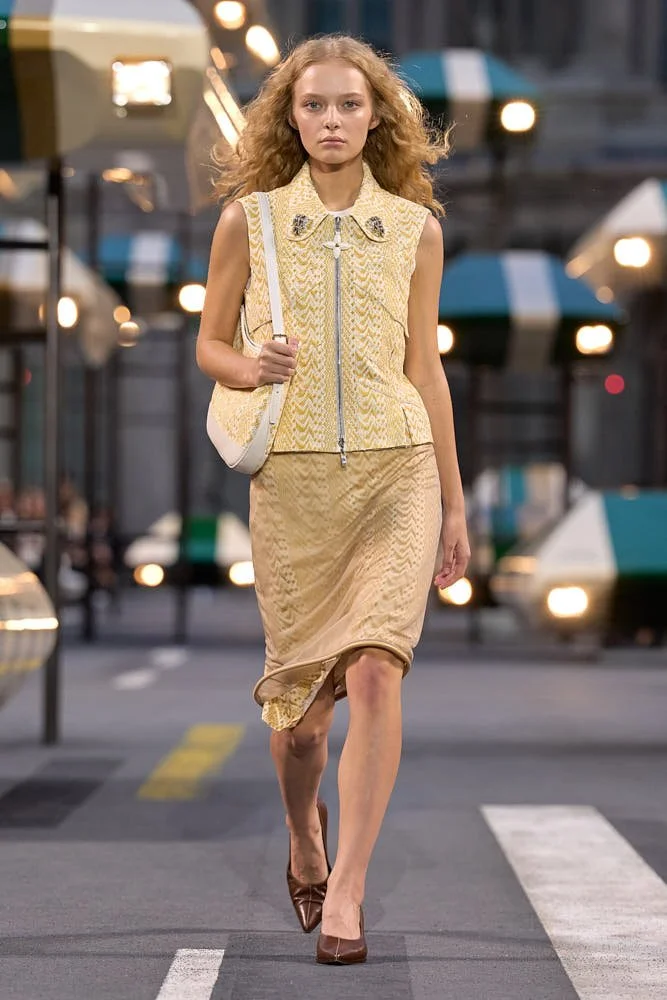
In the checked tailoring, a grey jacket extended into fabric that streamed beside the leg, while a black-and-white ensemble let its fronts fold over matching trousers. The patterns provided an orderly grid which the body kept disturbing. The opening dress had diagonal changes in transparency that complicated its surface without building volume around the wearer. This was the collection’s most persuasive work: construction that became visible through the act of wearing it.
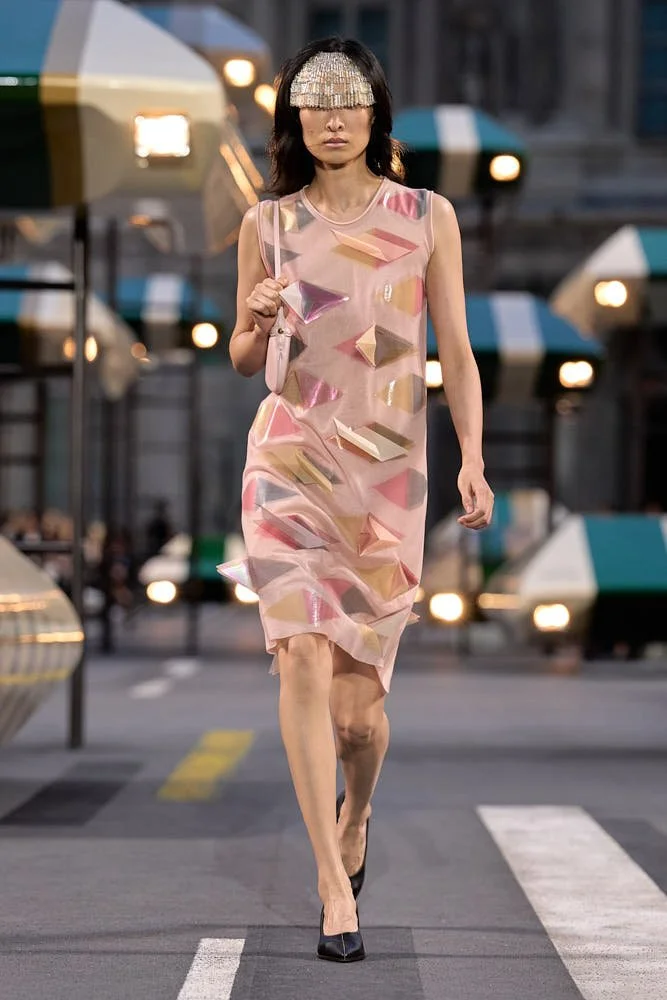
A yellow leather biker jacket over loose black trousers offered a particularly direct invitation to get dressed, with little obligation to adopt the entire Vuitton universe. The dresses scattered with iridescent diamonds asked for more attention. Their angular patches caught the light across a transparent ground, preserving something of Ghesquière’s taste for a faceted shell. He could still produce an extraordinary surface on a dress that hung quite simply from narrow straps.
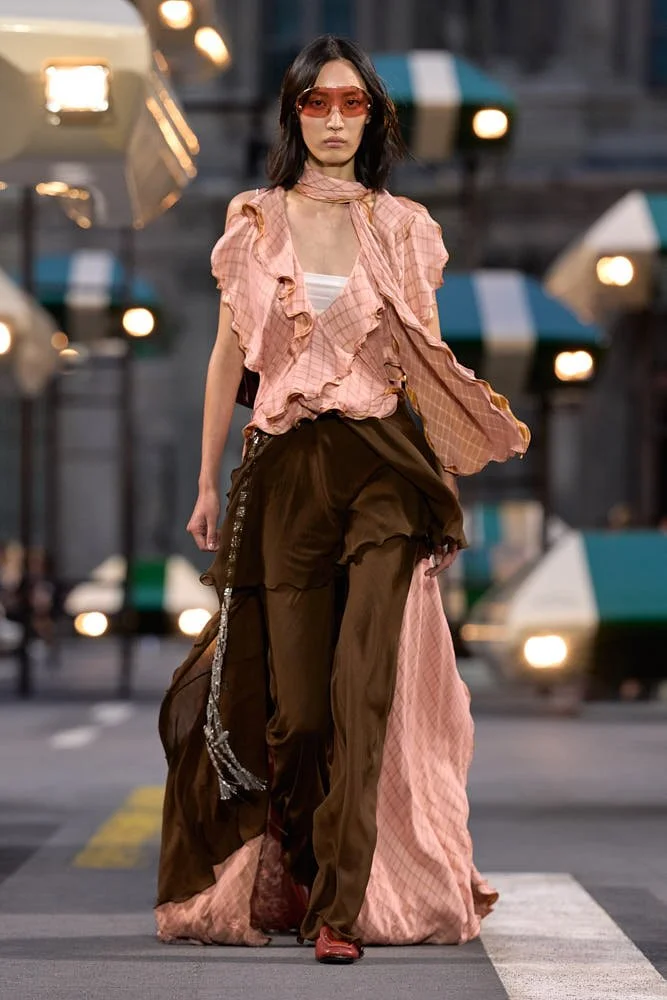
The final black suit came with a broad sweep of checked fabric gathered in one hand and trailing across the runway, a beautiful complication to give someone crossing a road. The jewelled fringes lowered over the models’ eyes also made a curious accessory for a collection concerned with accommodating the body. Ghesquière had loosened the clothes while retaining a small piece of armour directly in front of the face. Those interventions reveal the limit of the functional argument, and something essential to the collection’s appeal.
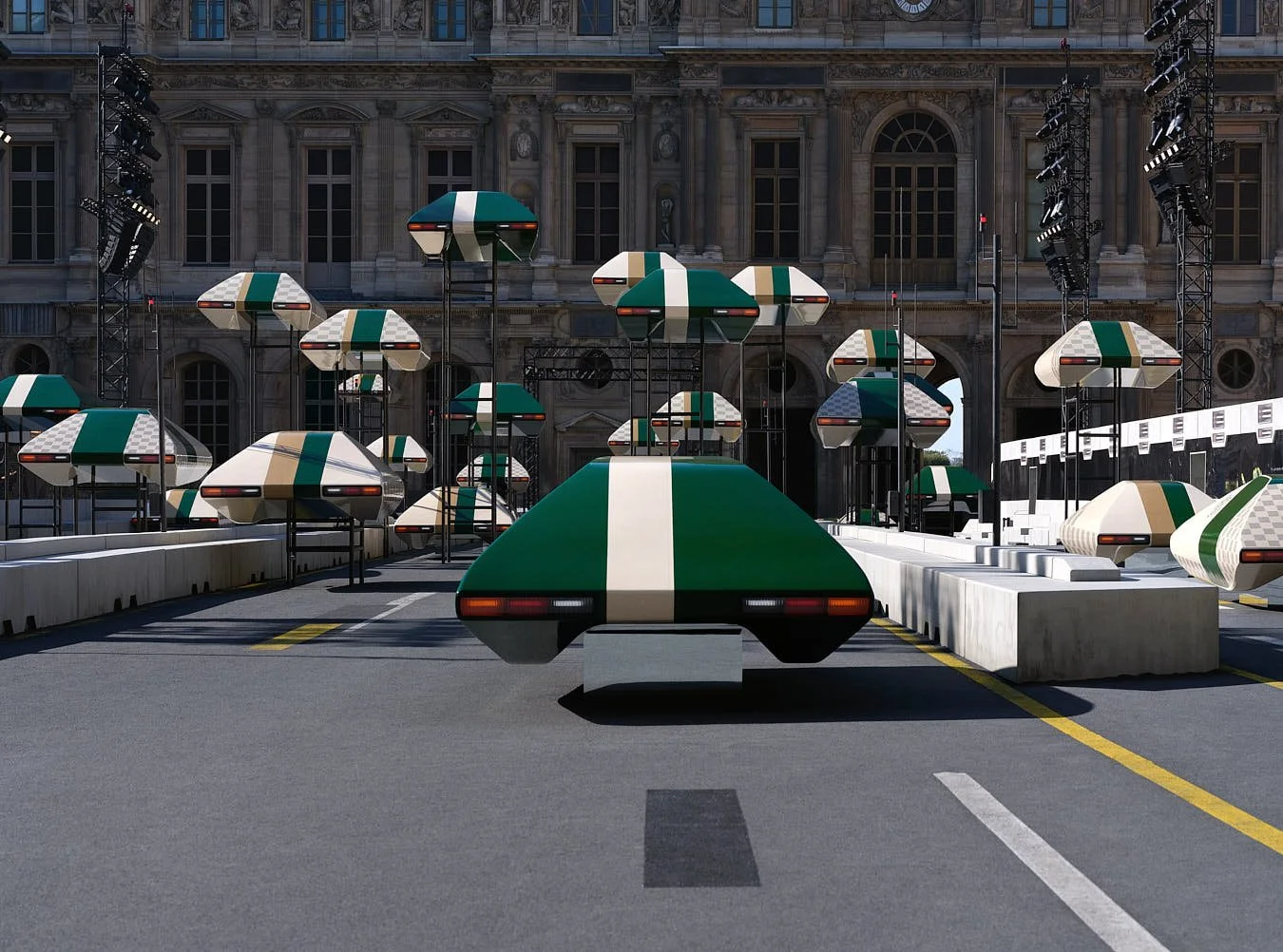
Louis Vuitton Womens Spring/Summer 2027 Scenography
/ Ergonomie Collection by Nicolas Ghesquière
Vuitton is selling the pleasure of an exceptional appearance alongside any improvement in comfort. Its quieter clothes face a different test. A nearly plain white dress is available at every level of the market; here, its cut and material have to make the distinction convincing. The fit will need to do as much persuading as the image. Elaborate engineering carries little force if its benefits remain an explanation in the show notes. The opening look made the strongest case because its construction was already legible. The angled panels shifted across the torso, leaving the dress loose enough for the wearer to determine its outline. Ghesquière has spent years making the future look extraordinary; here, he made a case for making it bearable.
all images (c) Louis Vuitton Press