Viewing entries tagged
artist

London Fashion Week 2026 - Future Fashion Stars

London Fashion Week 2026 - Future Fashion Stars

Where Do Fashion's Future Stars Come From?

Inside London Fashion Week: The Established Rebels, the Fresh Graduates and the Programme That Launched Lee McQueen


written Justina Snow


New York started fall/winter´26 fashion week with a wonderful debut of Rachel Scott for Proenza Schouler. Milan brought us the highly anticipated first prêt-à-porter show by Demna's Gucci. And it all wrapped up in Paris with a bittersweet farewell to Pieter Mulier's successful time at Alaïa. And somewhere in between, there was something spectacular London gave us too - the future of fashion (quite literally).


This is the place where future McQueens and Erdems are not taking spaces on the outskirts of the city with a few square meters for a showroom. In London, fashion week's baked-fresh-out-of-school talents are a well-respected part of the official schedule. This year's London Fashion Week schedule was embedded with 19 talented brands of NEWGEN - an official initiative by the British Fashion Council supporting young designers financially as well as with mentorship. Since launching in 1993 - when the fashion world was going crazy for supermodels and glamour - this program was the first step for the later skyrocketing careers of designers like Alexander McQueen, J.W. Anderson, Simone Rocha, and many others who are now synonymous with London fashion. And while you might have seen a lot of conversations in the past two years about LFW dying, as I bumped into Kate Moss at 180 Strand studios (where the NEWGEN runways were taking place), I knew that those talks are so far from reality.
 
 
LE MILE Magazine YAKU AW26 Morgan Williams

YAKU AW26
seen by Morgan Williams

 
LE MILE Magazine YAKU AW26 Morgan Williams

YAKU AW26
seen by Morgan Williams


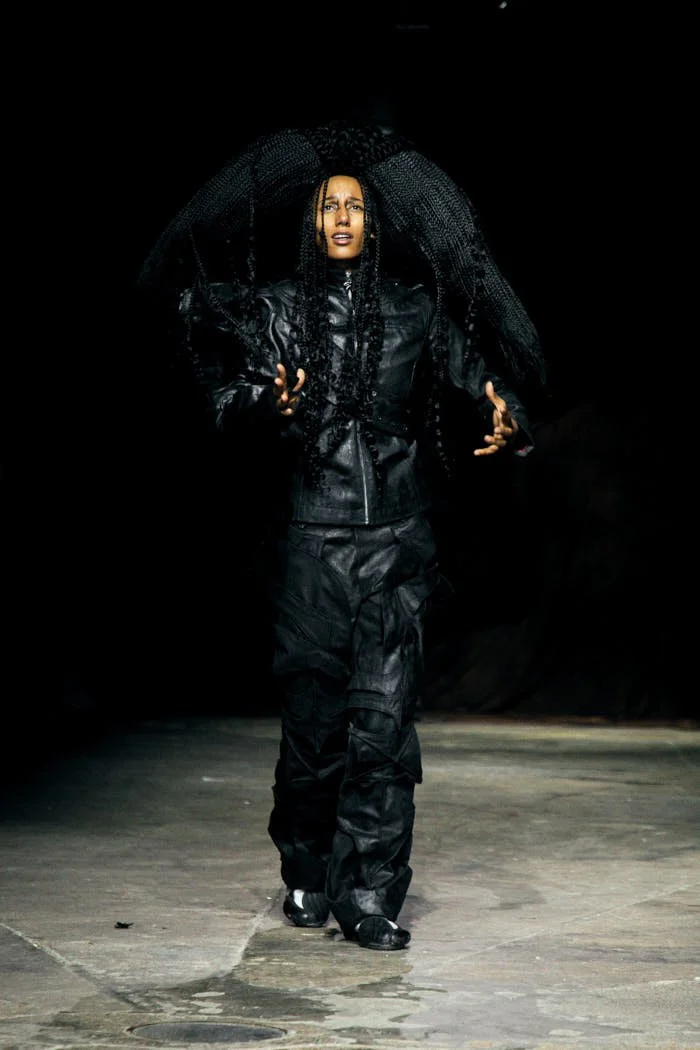
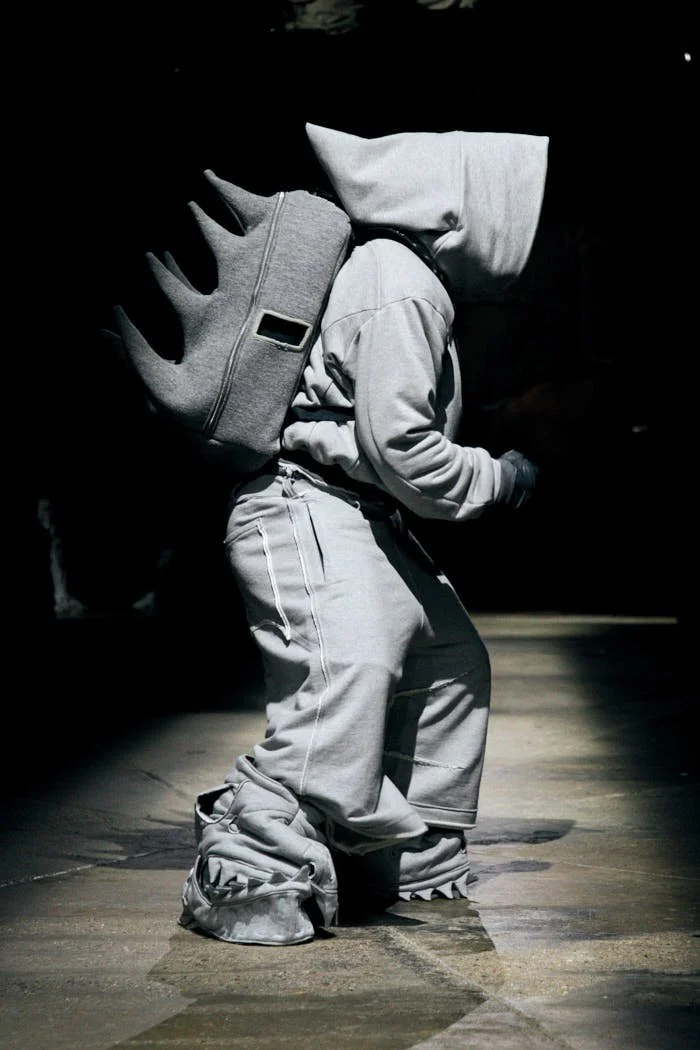
I spent a lot of time at the mentioned 180 Strand Studios this season, and I witnessed something opposite of fashion dying. I would maybe even call it a reincarnation. Fashion is definitely changing its shape. A big part of collections has become an experience in itself; presentations have become so much more interdisciplinary. One of the initiative´s brands, Yaku foreshadowed their somber mood with an installation of dark, shadow-like human figure statues, as if frozen in time. Yaku themselves said that "we're trying to make art that responds to the world rather than simply offering hope - exploring a negotiation with reality alongside the desire to evolve, because hope alone doesn't drive change." Given the state of the world, this hits close to home. And they translated this not into a runway show but into a performance of four acts, all circling around the concept of combat. And when the first model appears in choreographed movement, you know that the fashion - although very well executed - becomes part of the whole and helps translate the intention. And while flowing through martial-arts-inspired movements, the performers give so much personality to every garment they wear.


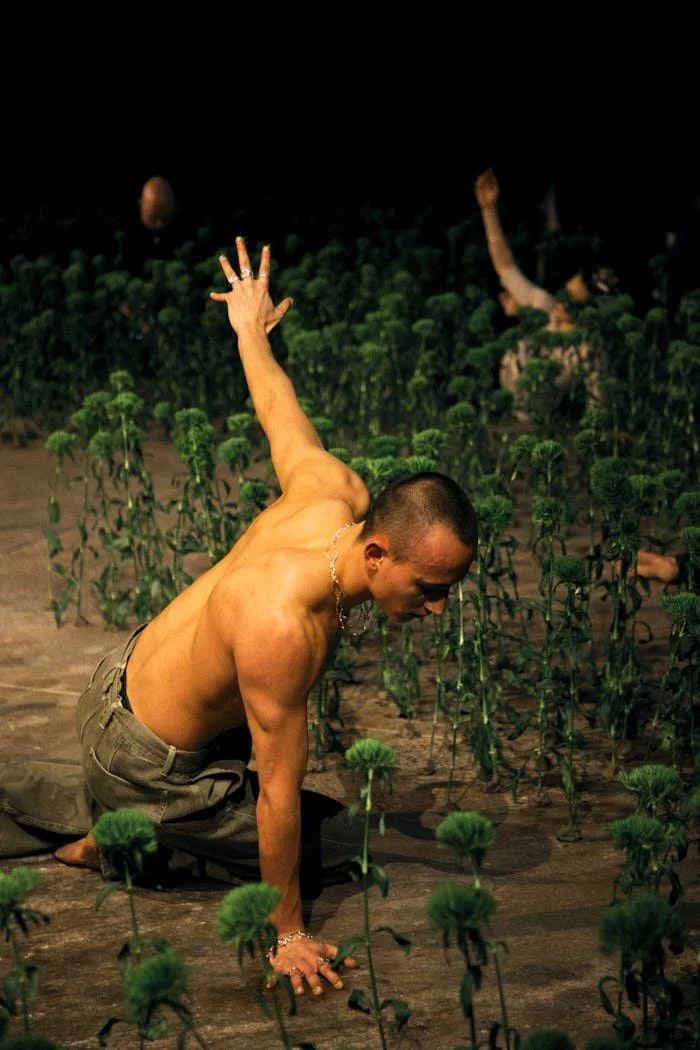
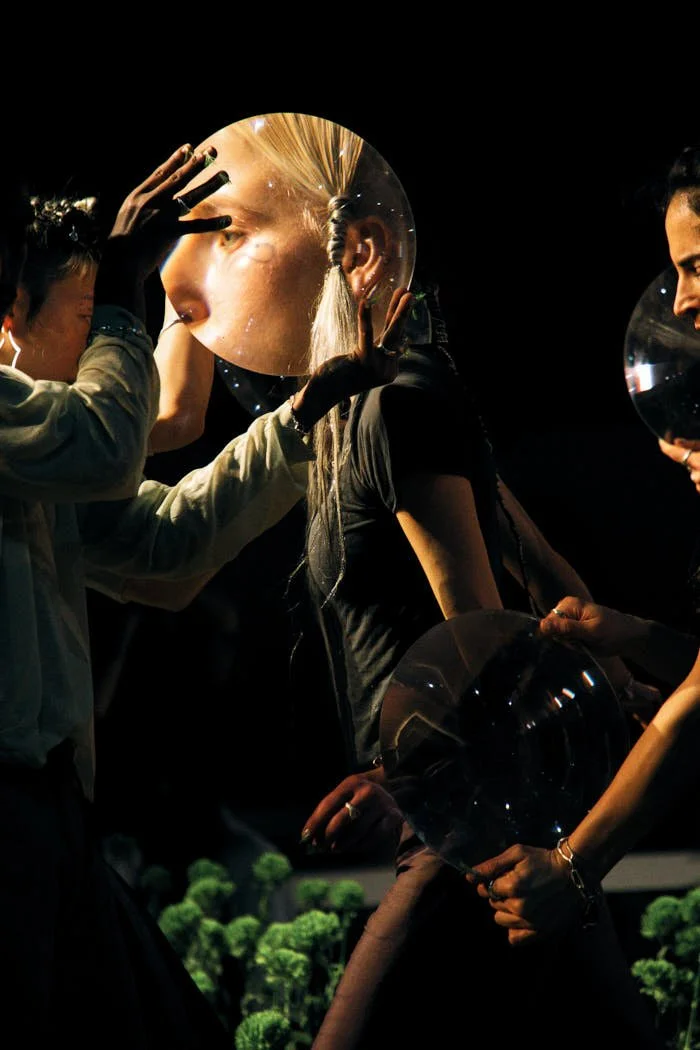
While personalisation and emotional charge remain important cornerstones this season, we also saw not only ready-to-wear collections but accessories as well. On a different occasion, when I entered the NEWGEN space (which had already become my third place by that point) for Octi's presentation, I saw a grass field. It was the opposite of a lush meadow: this field had a mysterious vibe, as the space itself is dark and concrete-dominated, yet I was face to face with nature there and then. Only after a while did I notice five bodies lying there motionless. Over time, their movements grew into a choreography that, according to the designer, illustrated the concepts of connection and "embody the fluidity and rigidity of the natural forms used in the collection." I could only describe this presentation as sensitive and magnetic - and hypnotizing, because I was sitting there staring at the choreography for almost an hour - and the designer, Octi Ransom, admitted that "I think sensitive and magnetic are also words I would use to describe the potential of jewellery." This is what we call great communication through presentation. And that's already a big achievement, as we are still largely focused on ready-to-wear collections. Octi also revealed that scale is a challenge in larger spaces: "Naturally, jewellery is physically much smaller than ready-to-wear. It usually takes up less space on the body, and becomes more of a challenge to communicate in larger spaces. But in the end I think this can work to an advantage, making room for new ideas on how this can be solved."
 
 
LE MILE Magazine Jiyuan Fan photo Han Yang

Jiyuan Fan
seen by Han Yang


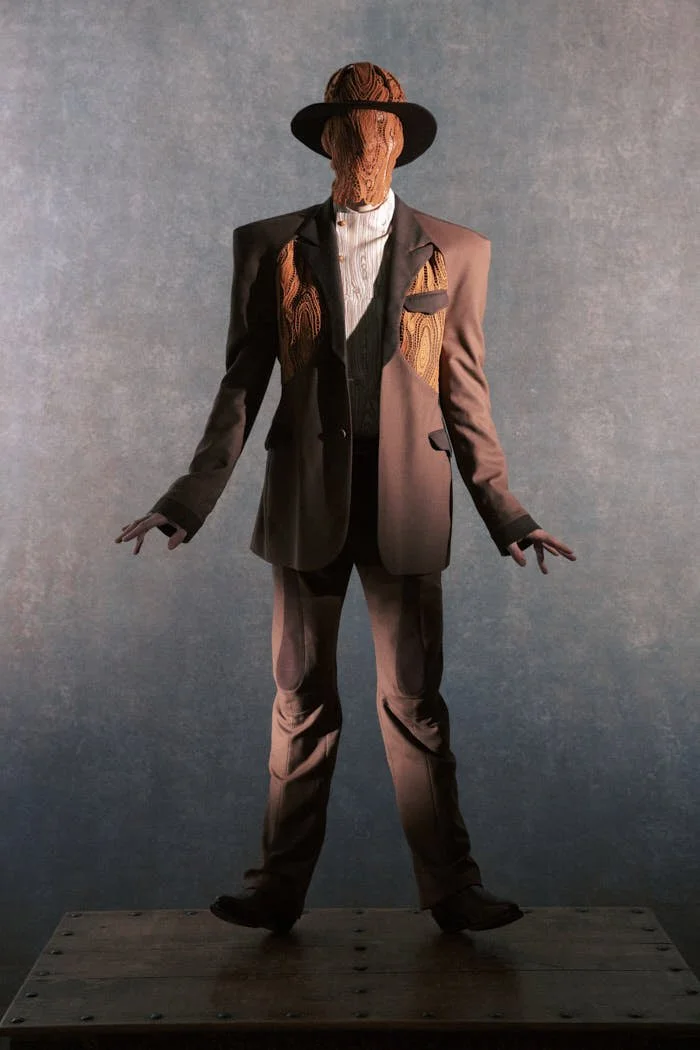
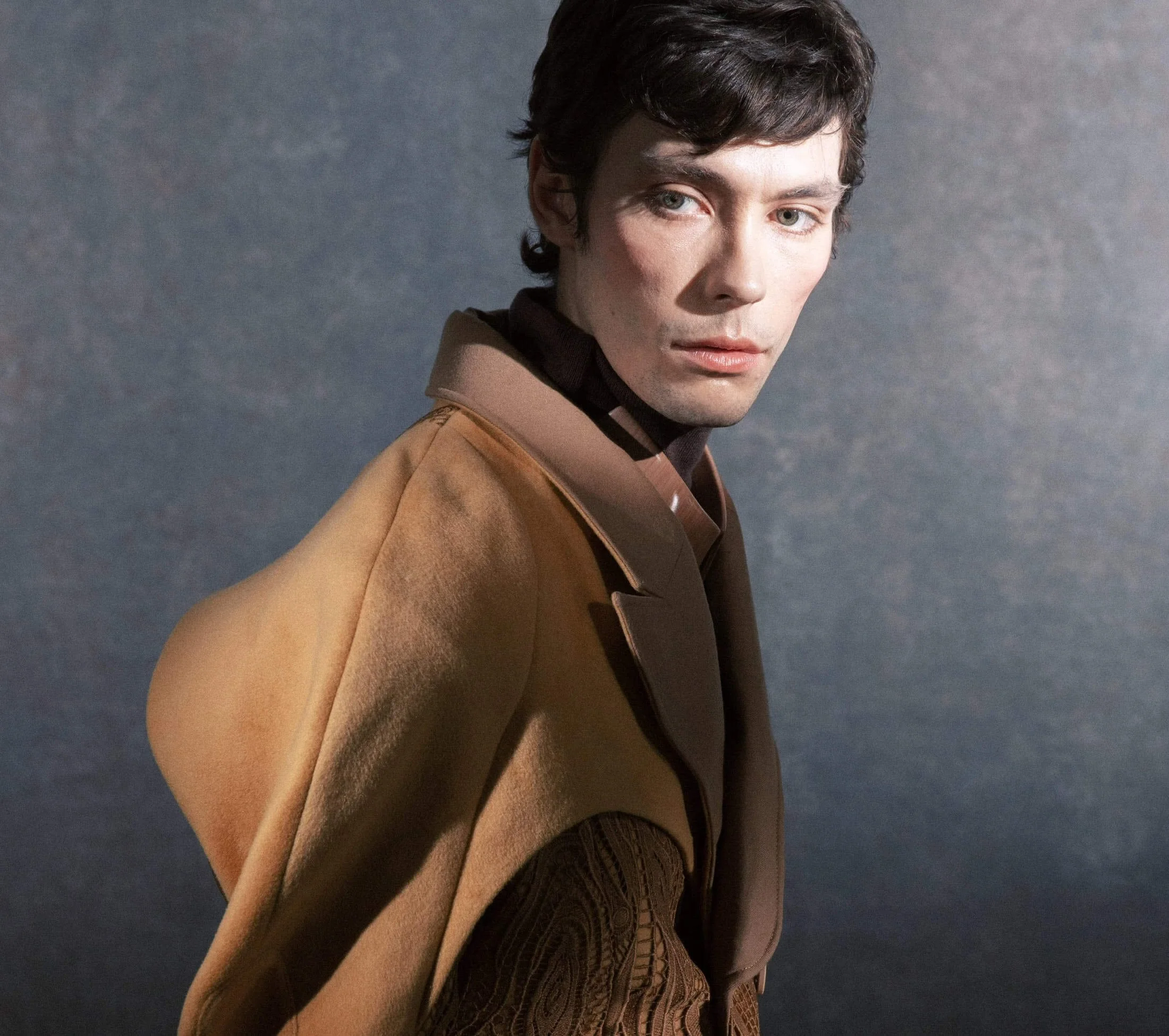
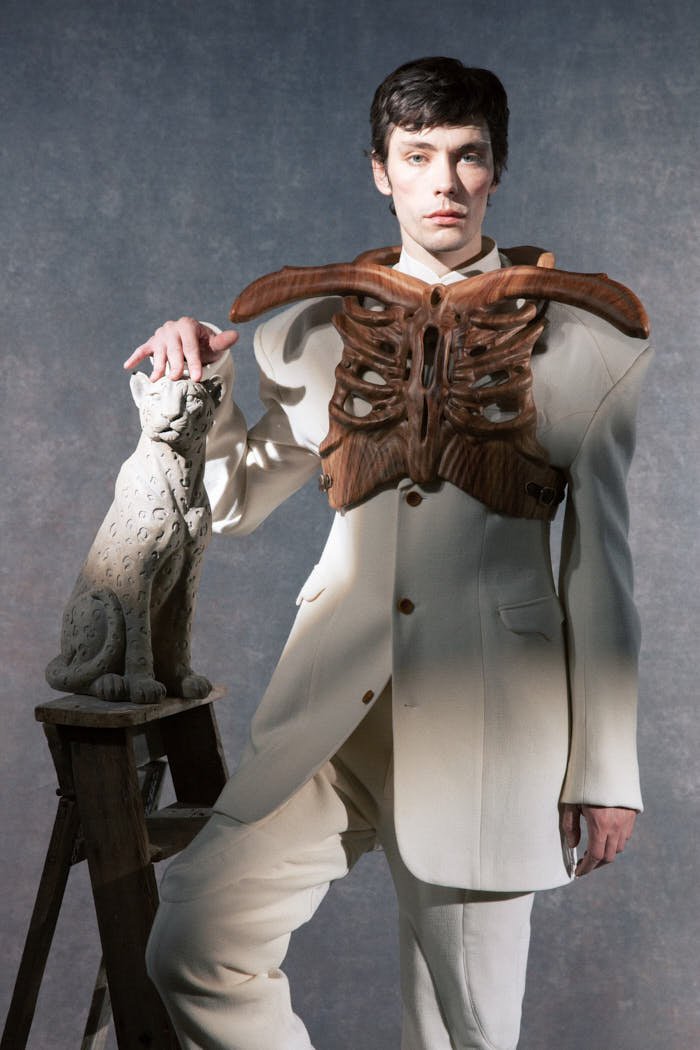
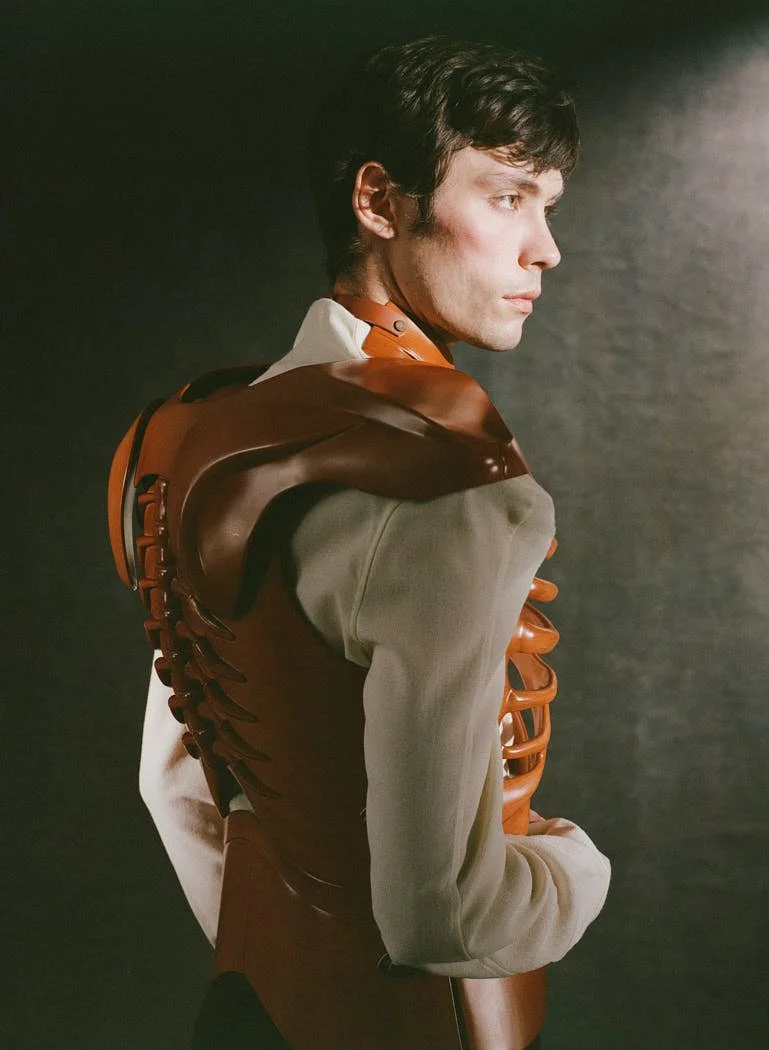
As much as NEWGEN designers steal the show, we cannot talk about fresh talents during London Fashion Week without covering the freshest of them all: MA student shows. There was one designer from London College of Fashion who stood out specifically - Jiyuan Fan. It didn't only catch my eye; it captivated me, and I felt like I was witnessing a scene from a very stylish body horror thriller - the models wore wooden-looking pieces representing skeleton parts and facial structures made out of lace, and I couldn't help but identify one more trend among young designers: alternative materials. Jiyuan himself reflected on this: "One important reason is that these materials allow designers to communicate their concepts more directly. ... I also thought about how people might remember my work. Fashion changes very quickly, and the use of materials always requires creativity and possibility. This is something every young designer has to think about." The designer's research began with hangers and human anatomy, and the project eventually raised a question about the visibility of support structures in garments. "In my collection some garments are cut according to the skeleton structure while others reveal the natural outline of the body once the structure is removed. The garments therefore have two states. One is supported by the Human Hanger structure and another exists without it. Through this process I developed my own visual language for menswear. It proposes what I describe as a new human body." - Jiyuan Fan explains.
 
LE MILE Magazine Jiyuan Fan photo Han Yang

Jiyuan Fan
seen by Han Yang

 
LE MILE Magazine Jiyuan Fan photo Han Yang

Jiyuan Fan
seen by Han Yang


Seeing so many young talents and a city supporting their growth, throughout London Fashion Week I had a lingering question in my mind: what does London have that other major fashion weeks don't? While we don't see behind the scenes, and knowing that the fashion industry is extremely competitive, the talents I got a chance to talk to - and the whole atmosphere during LFW - seem to be at ease. It's apparent that London has built something other cities haven't. At least not in this structure. While Paris has the LVMH Prize, which is a great opportunity, it requires you to already have at least two full ready-to-wear collections under your belt. New York also cannot offer the same; it usually relies on off-schedule events for young talent. So London truly seems to be more democratic in this sense. When talking about NEWGEN and London as a hub for young designers, Octi shared: "There are so many incredible young designers in London so it feels like a really special place to be creating, and I feel very grateful to be presenting as part of LFW amongst some of these people. I think presenting in this capacity anywhere as a jewellery designer is also something really exciting, and opens a door for people to be surprised by the possibilities of what this could look like."

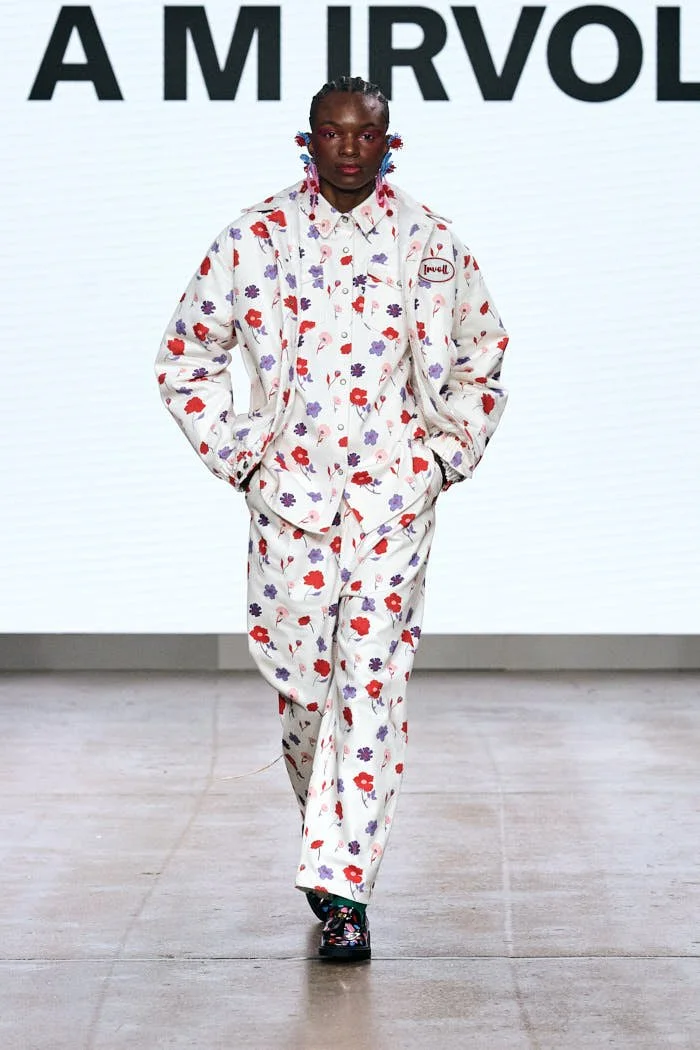
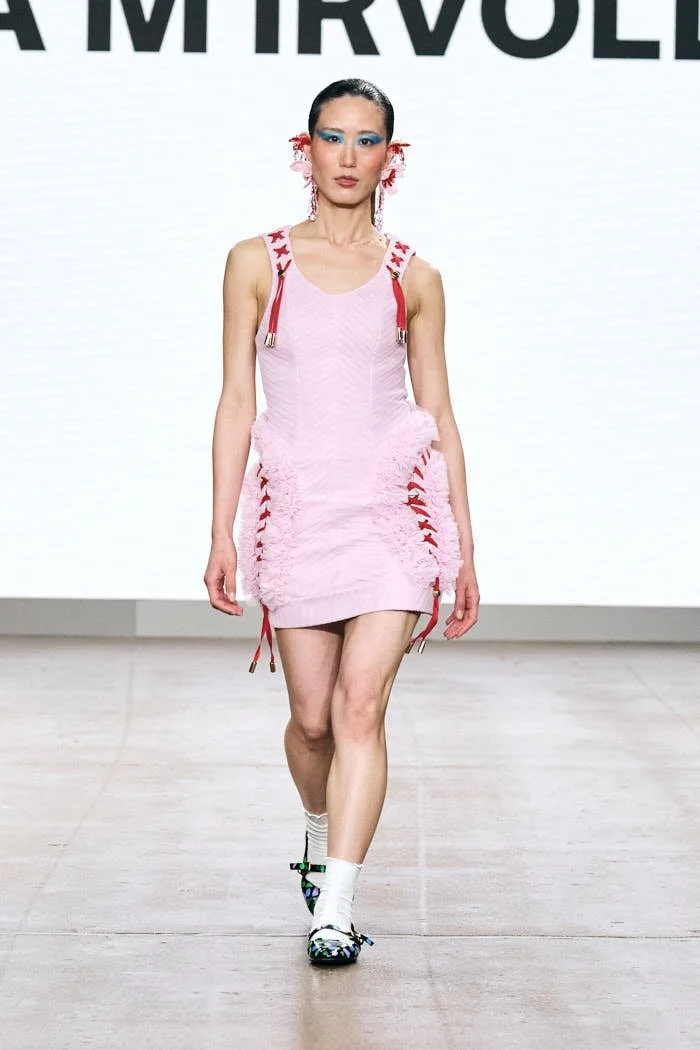
Aspirational observations also come from designers with different backgrounds who didn't get a chance to grow up in a fashion capital. Norwegian designer Fam Irvoll is one of them. If you look at her designs, you would never think this is a Nordic designer - it's something opposite of Scandinavian minimalism. Fam graduated from CSM, has designed for the likes of Lady Gaga and Rihanna, and this is the sixth time she's showing her collection during London Fashion Week. I was curious whether London as a city had been a building power for her aesthetic. Fam reflects: "In my country I don't really fit in. . . . London did inspire me while I lived here, I was very much into the rave scene. With a lot of students from CSM we would just go crazy, the drag queen scene is also big. I became who I am because of London and the gay scene."
 
LE MILE Magazine Fam Irvoll photo Olu Ogunshakin

Fam Irvoll
seen by Olu Ogunshakin

 
LE MILE Magazine Fam Irvoll photo Olu Ogunshakin

Fam Irvoll
seen by Olu Ogunshakin


Jiyuan Fan also makes no secret of the fact that living and creating in London specifically plays a big part: "Living in London for two years was also a very fulfilling experience. London offers many fashion opportunities. Designers such as Kiko Kostadinov, Aitor Throup and Charlie Constantinou have built strong identities here. If you walk around Soho you can easily feel the strong energy of many independent designer brands. Even if you do not buy anything, simply observing their craftsmanship and fabrics can teach you a lot." I can only confirm that London, especially during London Fashion Week, has a creative aura about it - even just people-watching or browsing through a vintage shop is a contagious experience for unconventional fashion inspiration.

And nowhere is that energy more visible than inside the shows themselves. You rarely see an empty space during a NEWGEN or fashion school show. Quite the opposite - you will see a wall of standing fashion lovers just trying to soak in everything a young designer has to offer. I tried to answer the question of why London attracts so much interest in young talent, and at the same time why the rumour had been circulating that London Fashion Week is dying. Maybe it's simply about the big brands, maybe people have grown fatigued by them? Maybe they lack something that young talent can offer? Octi didn't want to treat them as two separate categories: "I think it really depends on the brand. But something I personally love when I look around at this generation of creatives is how the stories of the designers themselves are such an important part of the work, and how it's communicated. I think this then leads to so many interesting new outcomes, which all feel very different to one another."

Talking to these young talents left me extremely uplifted and hopeful. London is as we like it: diverse, unconventional and open. We would all do well to watch these talent programmes very closely, because one thing is certain: we are witnessing the rise of future stars, and trust me, you'll want to say you knew them from the beginning.
 
 
LE MILE Magazine OCTI AW26 photo Morgan Layla Williams

OCTI AW26
seen by Morgan Layla Williams
 
 
LE MILE Magazine OCTI AW26 photo Morgan Layla Williams

OCTI AW26
seen by Morgan Layla Williams
Weekend Max Mara SS26 - A Weekend with an Artist

Weekend Max Mara SS26 - A Weekend with an Artist

How WEEKEND MAX MARA Brings Contemporary Artists Into The Language Of The Trench Coat


written LE MILE


For Spring/Summer 2026, WEEKEND MAX MARA expands its ongoing “Signature” capsule initiative with A Weekend with an Artist, a project that places contemporary artists at the center of the design process. The collection focuses on a single garment — the trench coat — and invites five internationally recognized artists to reinterpret the house’s Canasta trench as an individual artwork. The artists involved are Victoria Kosheleva, Paola Pivi, Tschabalala Self, Tai Shani, and Shafei Xia.


Their contributions form a small series of artist-designed pieces presented within the WEEKEND MAX MARA collection. The project was curated by art critic and curator Francesco Bonami, whose career includes directing the Venice Biennale, curating the Whitney Biennial, and serving as artistic director of BYArtmatters in Hangzhou. The collaboration reflects a long-standing relationship between fashion and contemporary art, one that has repeatedly reshaped the cultural position of clothing. Since the late twentieth century, fashion houses have increasingly invited artists into their design processes. The reasons vary, visual experimentation, cultural relevance, and the possibility of placing garments within a wider artistic conversation. Projects of this type also blur the boundaries between exhibition culture and fashion production. Garments circulate in retail spaces and on bodies, while simultaneously operating as artworks or limited objects shaped by artistic authorship.

The Max Mara project builds on this tradition by focusing on a single archetypal garment. The trench coat functions here as both product and canvas. Bonami describes the aim as offering “through an iconic garment, the opportunity for individual and personal expression.” The selection of artists follows curatorial logic. Distinct visual languages, generational diversity, and independence from market trends were central to the choice of participants.


Max Mara Weekend SS26 SIGNATURE COLLECTION A WEEKEND WITH AN ARTIST LE MILE Magazine

WEEKEND MAX MARA SS26 Signature Collection
A Weekend With An Artist, Tai Shani

 
Max Mara Weekend SS26 SIGNATURE COLLECTION A WEEKEND WITH AN ARTIST LE MILE Magazine

WEEKEND MAX MARA SS26 Signature Collection
A Weekend With An Artist, Tai Shani


Each artist approaches the trench through their existing artistic vocabulary. Russian artist Victoria Kosheleva worked directly on a prototype coat, painting motifs that later became the basis for printed reproductions. Her visual language merges contemporary imagery with references to classical painting, a direction she has described as “cyber expressionism.” For the trench project she imagined the garment as a theatrical surface. Checkerboard patterns, swirling lines, flowers, and a stylized eye spread across the coat, producing an image that resembles stage costume design as much as clothing.

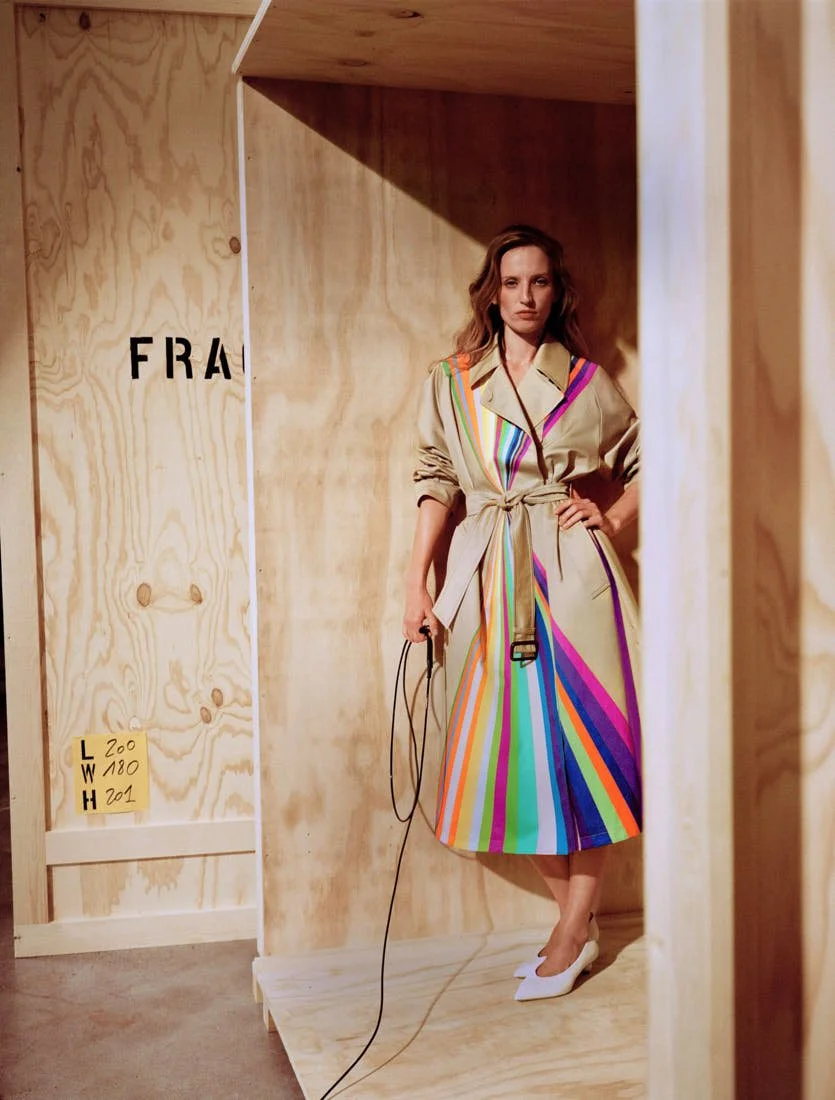
Italian artist Paola Pivi, known for installations that reframe everyday objects, introduced a palette influenced by the light and color of Hawaii, where she currently lives. Vertical rainbow stripes run across the coat, narrowing toward the waist and creating an hourglass structure. The pattern references the double rainbows frequently visible in the island’s sky, translating a natural optical phenomenon into a garment surface.


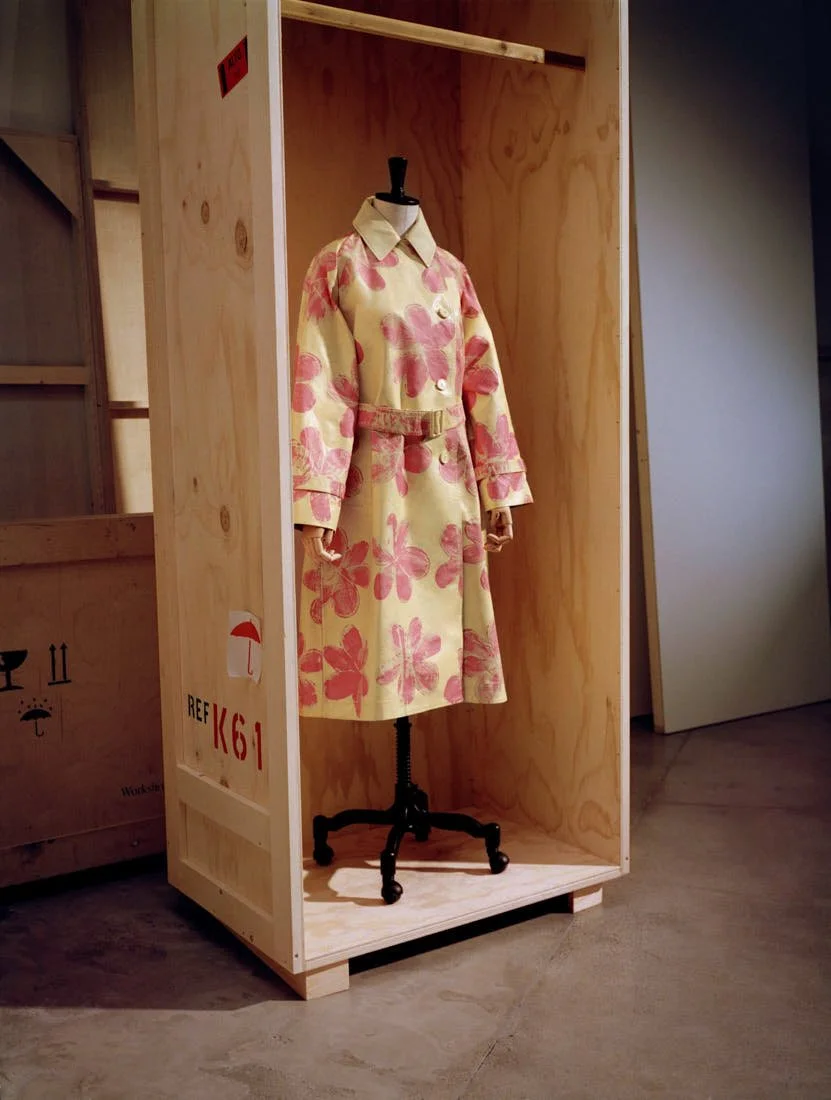
Tschabalala Self approaches the trench through her ongoing exploration of identity and symbolism. Born in Harlem, Self works across painting, sculpture, and installation. Her trench coat appears in lacquered pastel yellow and carries her recurring “Infinity Flower” motif. The flower refers to cyclical growth and transformation. The pattern is applied through a stamping technique inspired by batik dyeing processes, introducing a craft reference into the garment’s production.

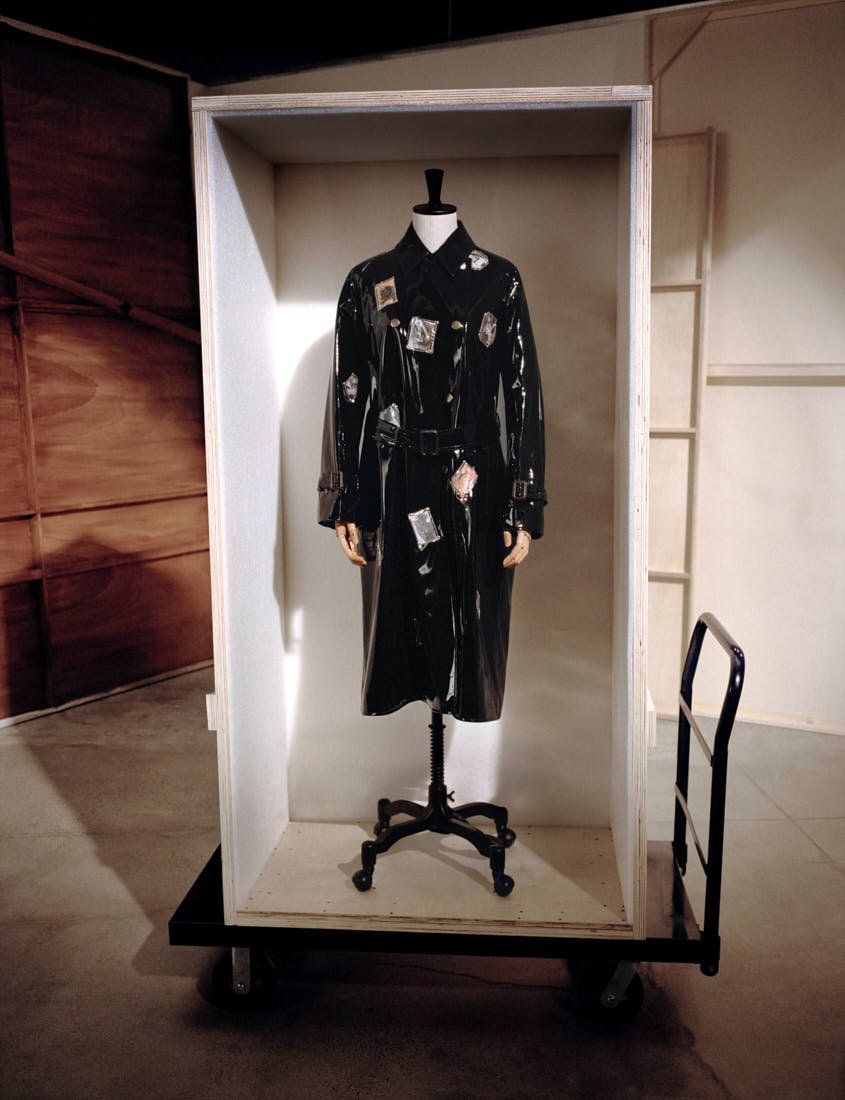
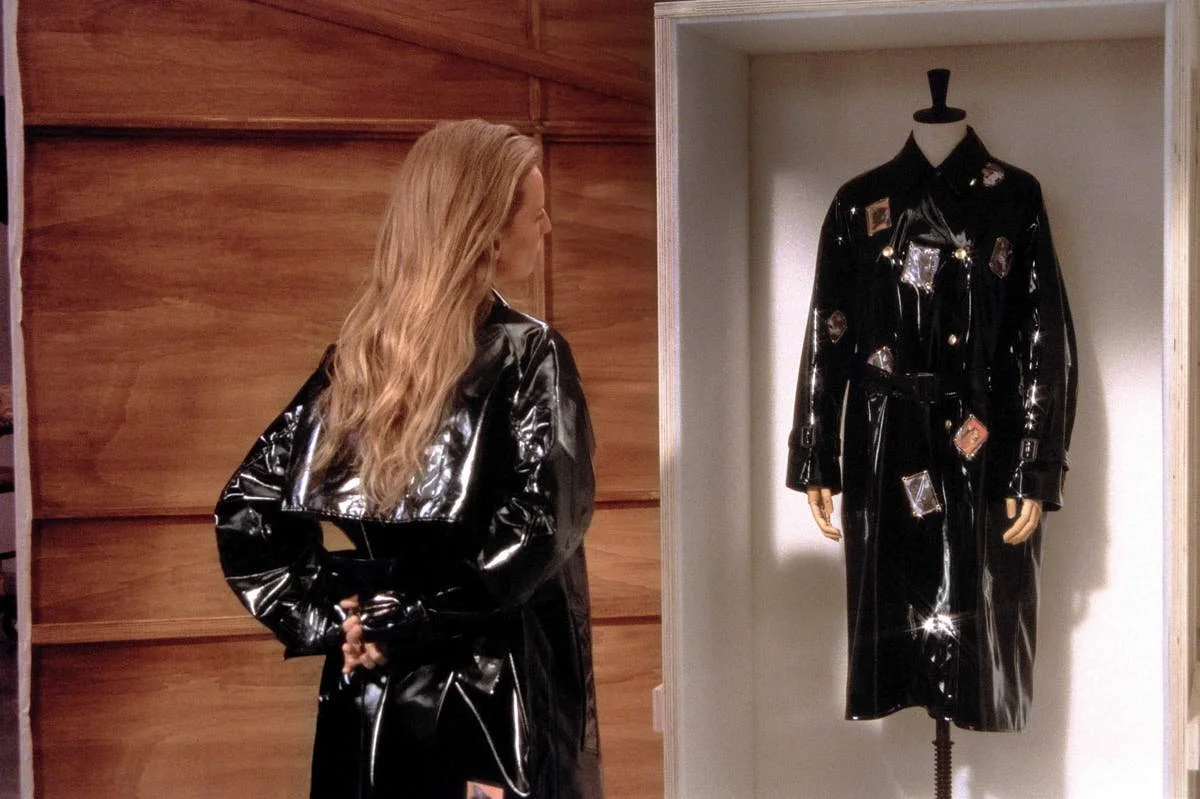
British artist Tai Shani brings a different aesthetic register. Her multidisciplinary practice spans film, performance, writing, and installation, often exploring feminist histories and collective structures. For the collection she designed a glossy black vinyl trench decorated with hand-drawn cat illustrations. The imagery references mid-century pin-up iconography while playing with the trench coat’s cultural associations with secrecy and disguise.


Max Mara Weekend SS26 SIGNATURE COLLECTION A WEEKEND WITH AN ARTIST LE MILE Magazine art work

WEEKEND MAX MARA SS26 Signature Collection
A Weekend With An Artist, Shafei Xia


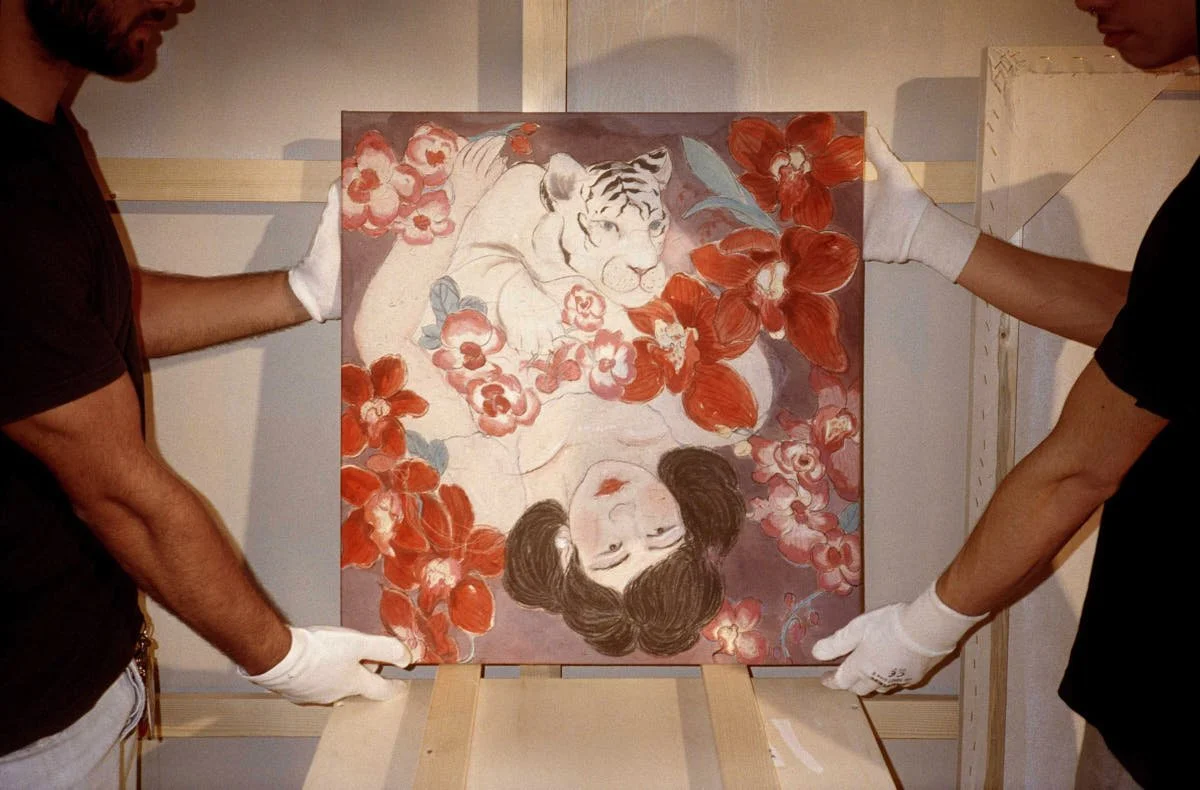
The youngest artist in the project, Bologna-based Chinese painter Shafei Xia, contributes a watercolor composition originally painted on sandalwood paper. Her image shows a woman merging with a white tiger, surrounded by floral forms that spread across the coat’s back. Xia’s work often draws on historical East Asian erotic painting traditions while incorporating references to European art figures such as Luigi Ontani. The trench translates this visual narrative into a wearable surface.

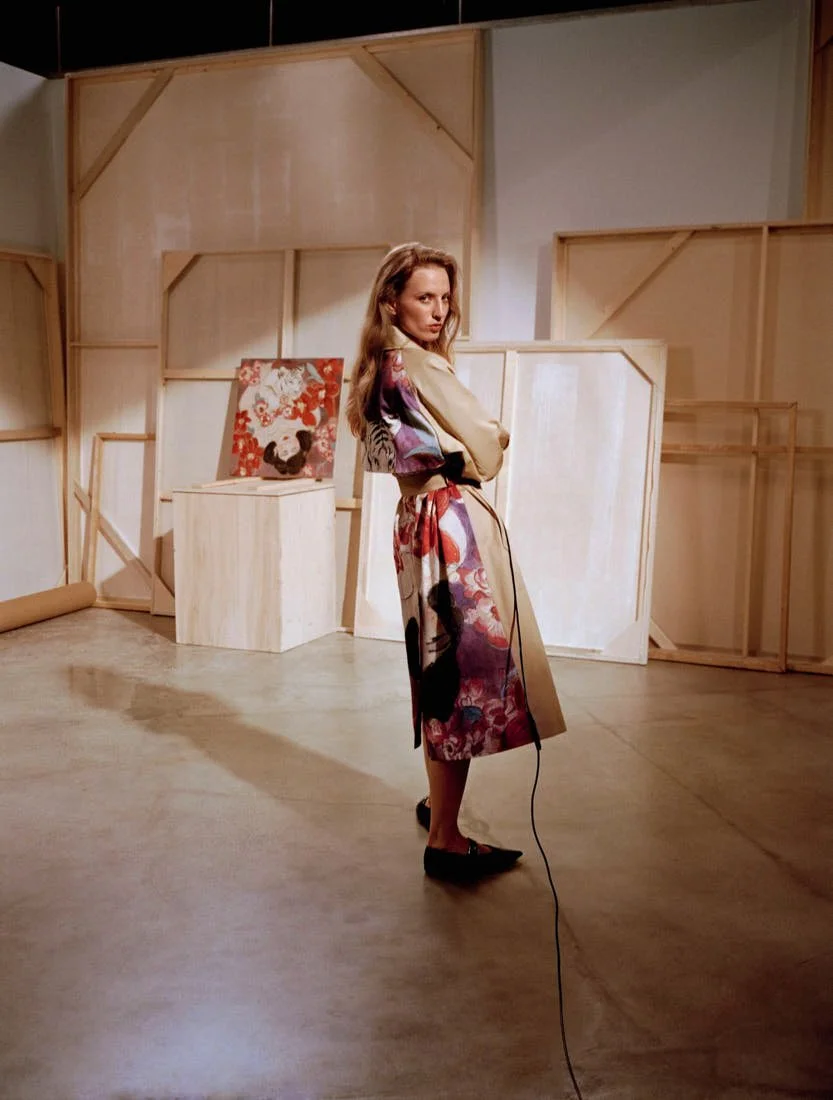
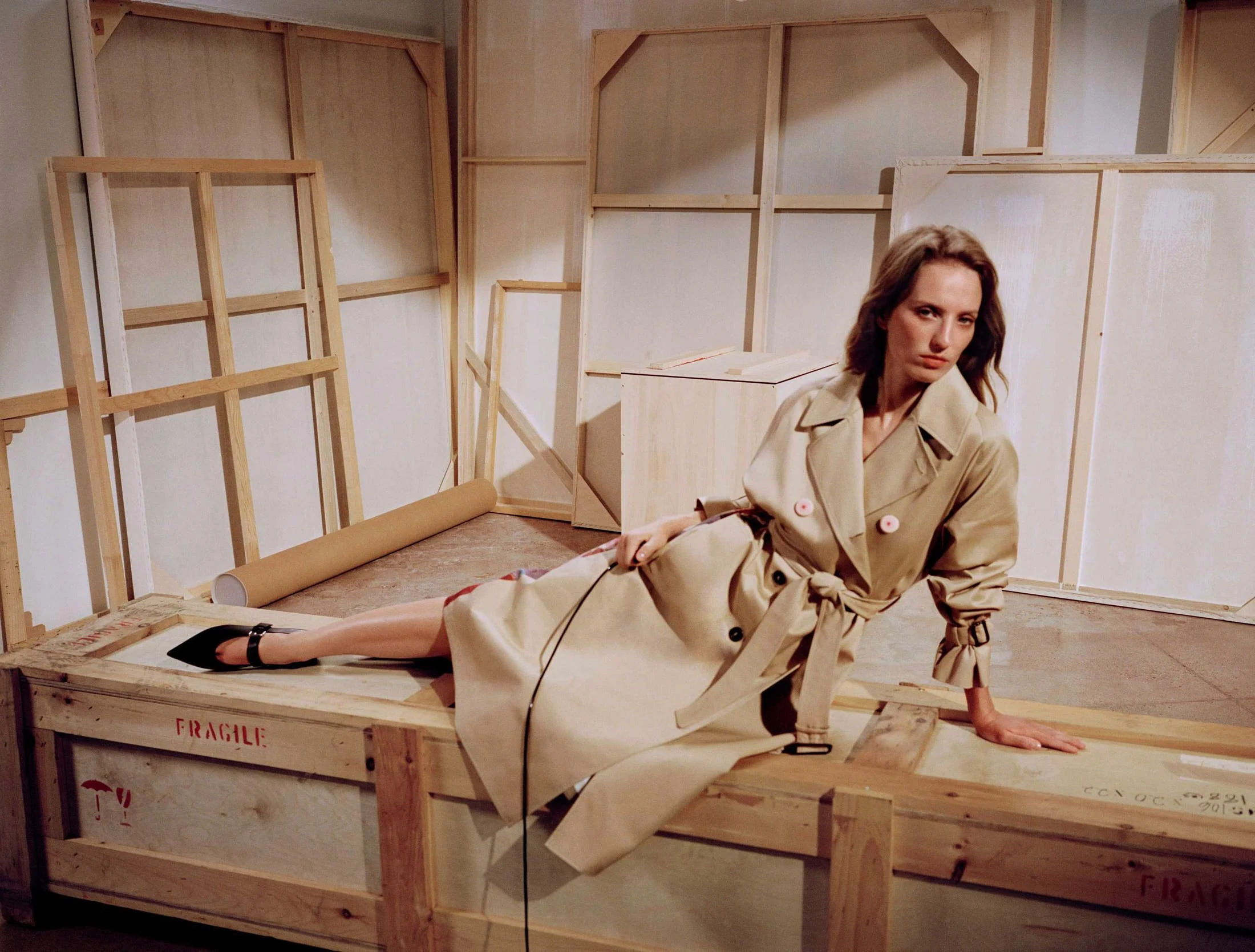
The campaign accompanying the project was photographed by Petra Collins, an artist and director whose photographic work helped define the visual language of the 2010s. Collins appears in the images herself, wearing the five trench coats in a studio environment that resembles a storage warehouse filled with artworks. The setting positions the garments within an exhibition-like space, reinforcing their identity as art objects as much as clothing pieces. Artist collaborations of this kind continue a broader pattern within fashion history. Yves Saint Laurent’s Mondrian dresses of 1965 translated modernist painting into couture construction. Louis Vuitton’s partnerships with Takashi Murakami and Yayoi Kusama transformed accessories into mobile artworks. Prada has long worked with artists and architects across installations and runway environments. These examples demonstrate how art collaborations can operate as genuine exchanges when artists maintain their visual language rather than adapting to brand aesthetics.

 
Max Mara Weekend SS26 SIGNATURE COLLECTION A WEEKEND WITH AN ARTIST LE MILE Magazine rainbow coat

WEEKEND MAX MARA SS26 Signature Collection
A Weekend With An Artist, Paola Pivi

Max Mara Weekend SS26 SIGNATURE COLLECTION A WEEKEND WITH AN ARTIST LE MILE Magazine coat with flower prints

WEEKEND MAX MARA SS26 Signature Collection
A Weekend With An Artist, Tschabalala Self

 
Max Mara Weekend SS26 SIGNATURE COLLECTION A WEEKEND WITH AN ARTIST LE MILE Magazine

WEEKEND MAX MARA SS26 Signature Collection
A Weekend With An Artist, Shafei Xia


Projects like A Weekend with an Artist sit within this lineage, they highlight how garments can function as cultural surfaces where artistic practice and fashion design intersect. In this context, the trench coat becomes more than an outerwear staple. It carries the visual vocabulary of five different artists, each using the same garment to explore form, symbolism, or narrative. A small series of wearable works moves between fashion production, artistic authorship, and collector culture, positioning clothing simultaneously as design object and artistic medium.


all visuals
WEEKEND MAX MARA SS26

Valentino Garavani DeVain - Age of Electric Couture

Valentino Garavani DeVain - Age of Electric Couture

VALENTINO GARAVANI
*Craft, Code and the Curious Case of DeVain


Valentino Garavani DeVain appears in the digital ether with a calm, almost ceremonial presence, occupying that peculiar zone where craft speaks to code and the instinct of the atelier leans toward the logic of algorithms. A quiet meeting unfolds between centuries of handwork and the cool hum of computational imagination. The maison’s dedication to gesture, material and emotional precision finds itself mirrored by an AI engine that renders its own forms of ornament and atmosphere, a pairing that feels unexpectedly harmonious and gently provocative, as if couture and circuitry were testing the edges of each other’s worlds without losing their sense of poise.


Thomas Albdorf opens the procession. In his mirrored chambers the bag performs a gentle act of multiplication, slipping between reflection and refraction with the calm confidence of an object aware of its own charisma. His studio becomes a small observatory where materials converse with their own silhouettes and symmetry grows its own contemplative pulse.

Enter The Void descends deeper, their world resembles a dream rescued from a half-remembered video game and dipped in an extraterrestrial ocean. Fishes drift between cacti, hotel chandeliers rise from dunes and the bag glows like a passerby who has wandered into someone else’s subconscious. This is surrealism with the autofill function humming quietly underneath, the kind that feels familiar and feverish at the same time.


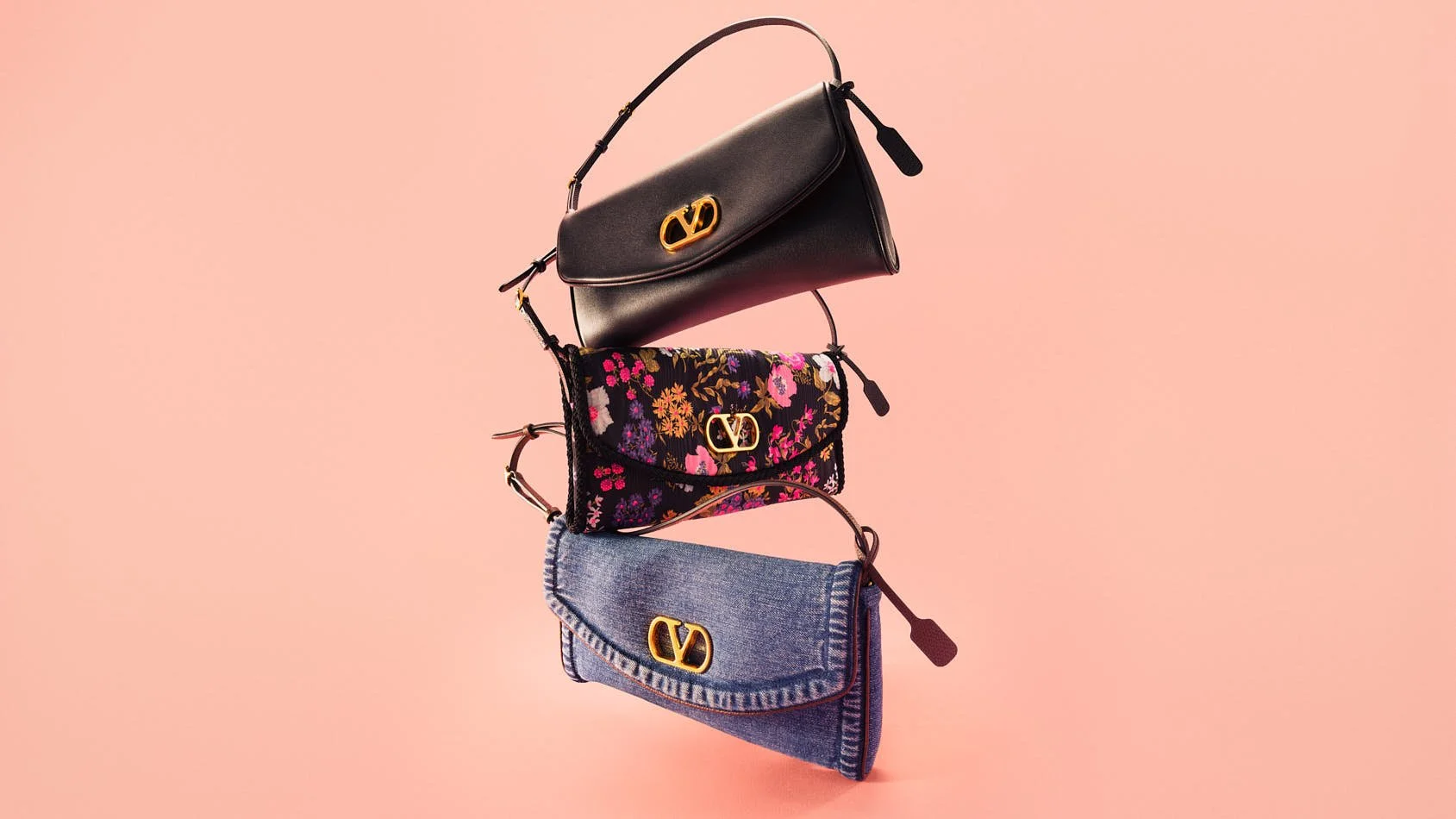
Maison Valentino presents DeVain as the new protagonist in a sprawling visual experiment, inviting five artists to take the bag far from the usual marble floors and closer to the evolving frontier where images appear before they exist. In a cultural landscape that worships immediacy, this series arrives as an ode to crafted illusion, stretching the definition of what creative authorship can become when imagination merges with machine logic.

 
Paul Octavious VALENTINO GARAVANI DEVAIN DIGITAL ai art CREATIVE PROJECT LE MILE Magazine

Paul Octavious
still from the film below


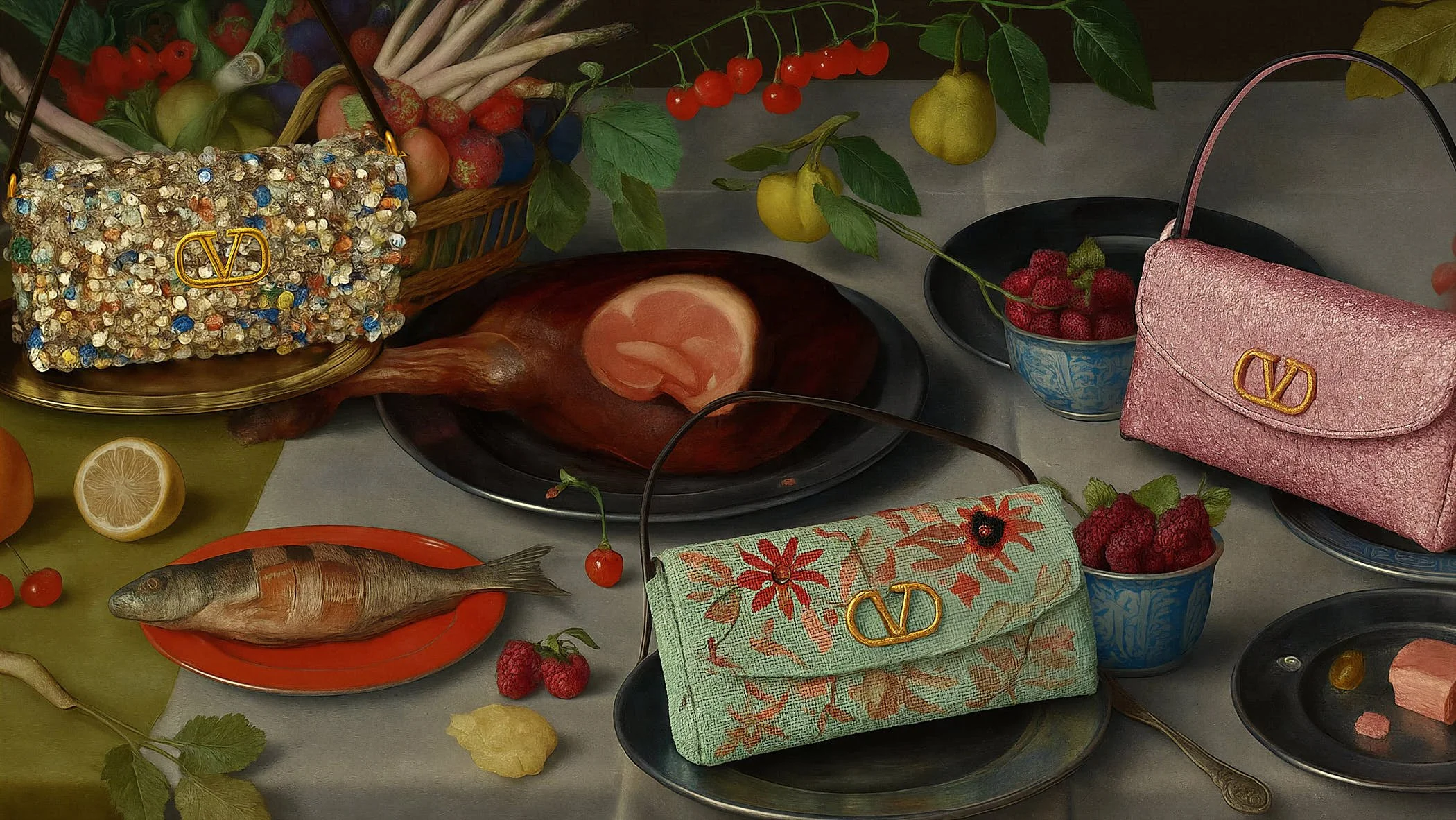
Paul Octavious transports DeVain into the long corridors of art history. Sixteenth-century still lifes breathe again, except this time they blink, shift and fold into layered animations. The bag perches among fruits and goblets like a visiting character who has slipped through a tear in a tapestry. Octavious choreographs a conversation between centuries without asking for permission, giving classical composition a sly digital pulse.

Annie Collinge builds a world where objects and cut-out figures share the same mischievous logic, creating a tableau that feels playful on the surface and quietly uncanny underneath. The bag appears among her colours and silhouettes like a character stepping through a handmade stage set, moving through scenes where humour and strangeness sit comfortably side by side. Her universe blurs reality just enough to remind viewers that imagination always has its own rules.

 
Valentino DeVain LE MILE Magazine video by Total Emotional Awareness screen

Total Emotional Awareness
still from the film below

Total Emotional Awareness leads DeVain through a landscape where pop forms stretch, multiply and reorganize themselves with dreamlike intent. Geometry expands, colours pulse and the bag moves through a vision that feels sculpted from pure imagination. Their world hovers between play and philosophy, creating a visual rhythm that absorbs DeVain into an ever-shifting field of possibility.


Z_Captures throws DeVain into sharp contrast with everyday pop objects, creating collisions that feel playful and deliberately disorienting. The bag sits among bold colours and unexpected pairings, adopting a presence shaped by tension and surprise. His compositions turn contrast into structure, allowing fantasy and pop culture to occupy the same vivid frame.


Tina Tona finishes the first chapter by exploding the visual field entirely. Her collages vibrate with color and hand-cut energy, weaving fragments of memory, culture and playful rebellion. The bag slips between viewpoints, blooming into countless versions of itself. Tona’s world has texture, movement and a joyful refusal to stay still.

Albert Planella approaches the bag as if it were an apparition. Here DeVain becomes mutable and cinematic, drifting between clarity and haze with a rhythm that feels borrowed from dreams. His images hold their breath while shifting into new states of being, as if the bag were quietly considering who it wants to become next.


For a house that reveres human craftsmanship, this digital series introduces a new tension. Energy-hungry algorithms sit beside centuries of artisanal knowledge. The contrast generates friction, and the friction generates light. The visuals shimmer with a strange kind of beauty, born from human impulse and computational curiosity. DeVain emerges from the experiment slightly transformed, carrying the patina of a bag that has travelled through mirrors, deserts, dreams, archives, memories and machine logic. The result feels like a quiet promise that creativity, in all its evolving shapes, still belongs to those who dare to stretch the image until it reveals something unexpected.


note
The video and image works in this project were created by nine participating artists: Thomas Albdorf, Enter The Void, Paul Octavious, Albert Planella, Tina Tona, Animus Pax, Annie Collinge, Total Emotional Awareness and Z_Captures. The AI-generated visuals were produced by Enter The Void, Paul Octavious, Albert Planella, Animus Pax and Total Emotional Awareness; all imagery by Enter The Void was created with the informed consent of the portrayed models and all participating talents.

George Byrne x Son of a Tailor *SS25

George Byrne x Son of a Tailor *SS25

Wear the Contrast
SON OF A TAILOR
*George Byrne’s Capsule for Wildfire Relief


written AMANDA MORTENSON


A city is never neutral in George Byrne’s work. Its forms, shadows, lines, and spaces absorb and reflect.


This sensitivity to urban rhythm now moves into textile, as Byrne unveils a limited-edition capsule of T-shirts created in partnership with Copenhagen label Son of a Tailor. The three-piece capsule is part of the brand’s Canvas series, which invites artists to use the T-shirt as a medium of expression. Byrne’s works for this collection were made during a focused period in Copenhagen, with all proceeds supporting California wildfire relief via the California Community Foundation’s CalFund.

 
George Byrne Clock Tower 2024 LE MILE Magazine Son of a Tailor

George Byrne
Clock Tower, 2024

George Byrne x Son Of A Tailor Shirt SS25 LE MILE Magazine
 
George Byrne Pink and Blue Wall 2024 LE MILE Magazine for SON OF A TAILOR

George Byrne
Pink and Blue Wall, 2024


“It wasn’t just fashion for the sake of it—there was a great cause at the heart of it, and that made it meaningful.”

George Byrne on his collaboration with Son of a Tailor
SS2025


The connection is personal. “Supporting wildfire relief in California gave the project a personal edge,” Byrne says. “It was a way to give back to a city that’s given me so much.” Printed on 100% Supima cotton, produced in Portugal and made-to-order, the shirts are available in both custom and standard fits. Each of the three artworks is limited to 250 editions, individually numbered and never to be repeated. The scale of the print dominates the back; the front carries a label marking its edition. These aren’t souvenirs, but archive-bound objects made for wear.

The pieces emerged through Byrne’s immersion in Copenhagen—his first time in the city. “Landing in Copenhagen from LA does feel like being dropped on another planet—in the best way,” he says. “The pace, the architecture, the way people move through space—it all shaped how I engaged with the project.” His compositions draw from what he calls a dialogue between environments: the structured rhythm of Copenhagen and the emotional texture of Los Angeles. Having lived over a decade in LA, Byrne is deeply familiar with its volatility.

“Wildfires are a part of life here. I grew up in Sydney, so I know that strange orange light, the acrid air,” he shares. “It changes how you see things. I wanted to take that emotional residue and build it into something constructive.”


For Son of a Tailor, choosing Byrne for the Canvas series was more than an aesthetic alignment—it was a reflection of shared intent. “There’s a kind of understated elegance in inviting an artist to work with the T-shirt,” says Andreas Langhorn, co-founder and product director of the brand. “George’s approach to architecture, color, and form felt right for the Canvas series. And knowing he already wore our T-shirts every day added another layer of authenticity.”

Langhorn had followed Byrne’s work since his book Post Truth and was particularly drawn to his interpretation of West Coast light. “That aesthetic struck a chord with me,” he notes. “My family lives in California, so there was also a personal draw. It all came together very naturally.”


“We designed this Canvas edition to let the artwork breathe... It’s wearable art with purpose.

Andreas Langhorn, Co-Founder of Son of a Tailor


George Byrne White Wall LE MILE Magazine Son of a Tailor SS25

George Byrne
White Wall

George Byrne x Son Of A Tailor Shirt_LE MILE Magazine


The collaboration is produced in alignment with Son of a Tailor’s values—zero overproduction, full transparency, and B Corp certification. Every shirt is made-to-order to avoid waste. “We designed this Canvas edition to let the artwork breathe,” Langhorn says. “The oversized prints reference vintage graphic tees but with refined construction.”

Byrne sees the gesture of donating all proceeds not as marketing but as an act of alignment. “You don’t often see that level of commitment—100% of proceeds,” he says. “It shows what’s possible when you lead with values.” Langhorn echoes the sentiment: “Sincerity is everything. People recognize when something is real. This collaboration reflects who we are—and who George is—on many levels.”

The George Byrne x Son of a Tailor capsule is available for pre-order from April 24 at sonofatailor.com