.special

Why the Rubber Watch Strap Has Become Luxury's Favourite Upgrade


The quickest way to change a luxury watch is not to buy another one. Across collecting culture, the premium rubber strap has moved from pool-deck afterthought to design statement, and the swap itself has become one of the most considered gestures in modern watch wearing.


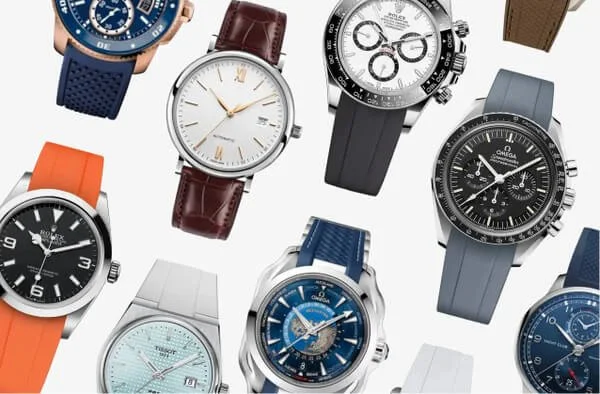
A watch is usually treated as a finished object. The case, the dial, the bracelet — all decided long before it reaches a wrist. The strap is the one element left open, and over the past few years it has become the part people actually play with. At watch meet-ups and across collectors' feeds the same pattern repeats: a steel diver on forest-green rubber, a Royal Oak on navy, an Aquanaut in a colour its maker never offered. The habit even has its own vocabulary now. Collectors talk about a strap rotation the way they once talked about a watch box.

Rubber earned this position slowly. Hublot put a gold case on a natural rubber strap in 1980 and was treated as a provocation. Patek Philippe's Aquanaut arrived on its composite strap in 1997 and became a waiting-list watch. By 2015, Rolex had developed the Oysterflex, an elastomer band it considered refined enough for an Everose gold Yacht-Master. When the most conservative names in watchmaking ship precious metal on rubber, the material argument is over. What remains is a question of quality, because not all rubber is the same — and the difference is visible from across a room.


What Separates FKM Rubber From Silicone

The word "rubber" covers everything from the band bundled with a fashion watch to the fluoroelastomer straps engineered for dive instruments. Premium rubber watch straps are cut from FKM, a vulcanised fluoro-rubber first developed for aerospace seals. It shrugs off UV, salt water, sunscreen and sweat, holds a clean matte surface instead of the greasy shine of silicone, and, crucially for anyone who has owned a cheap strap, does not work as a lint magnet. FKM also keeps its edges. Two years in, a good strap still looks machined; a silicone one looks chewed.


Fit Is the Real Luxury

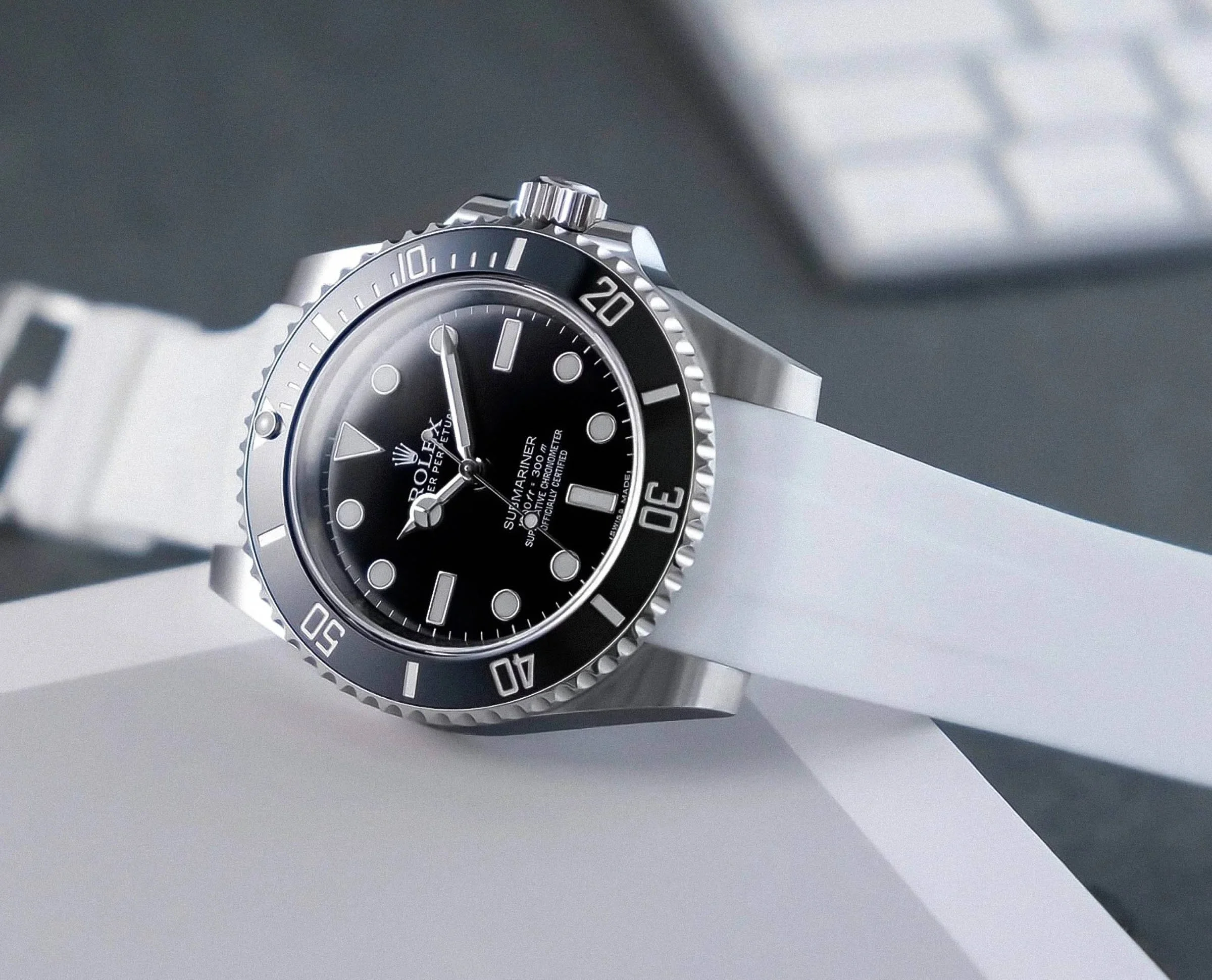
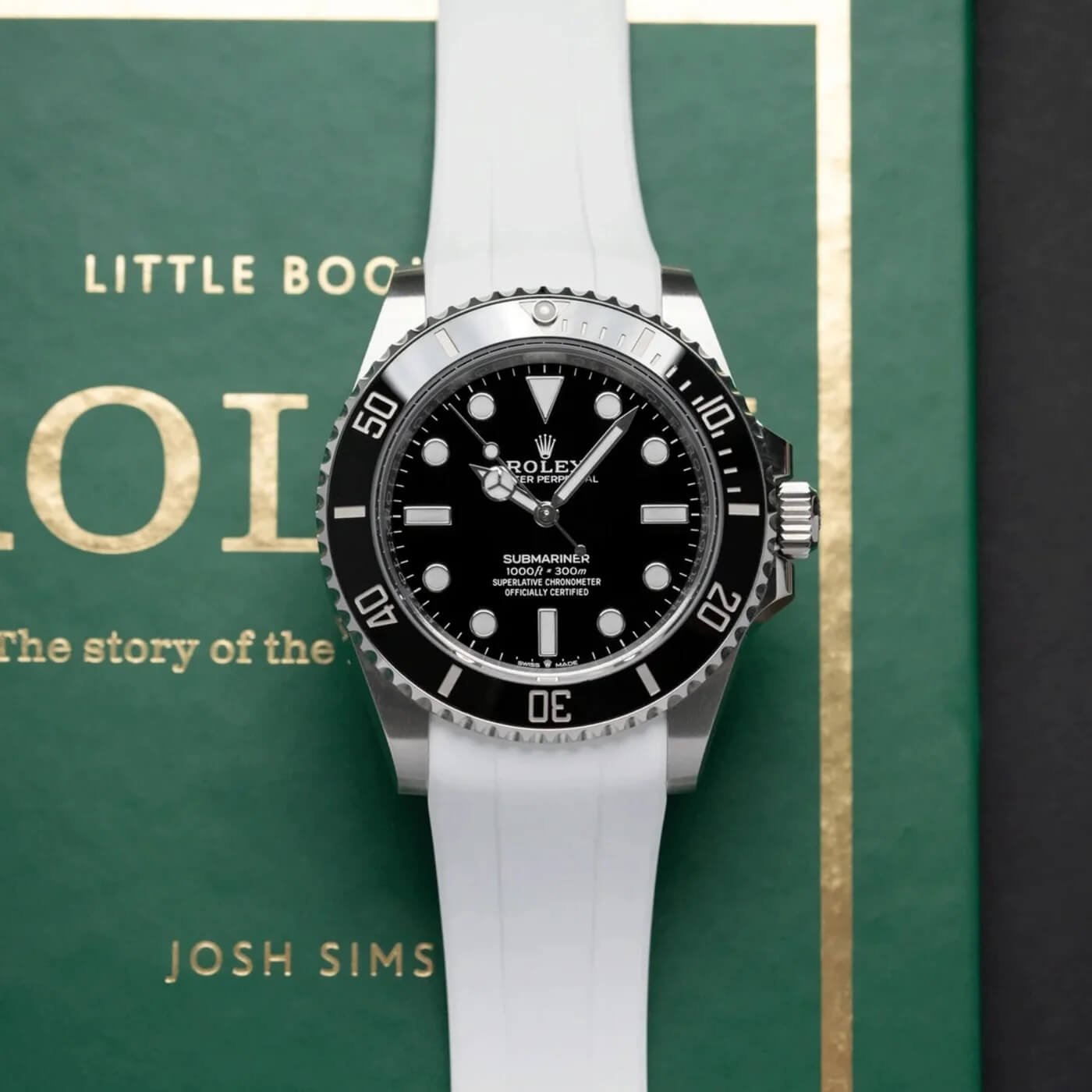
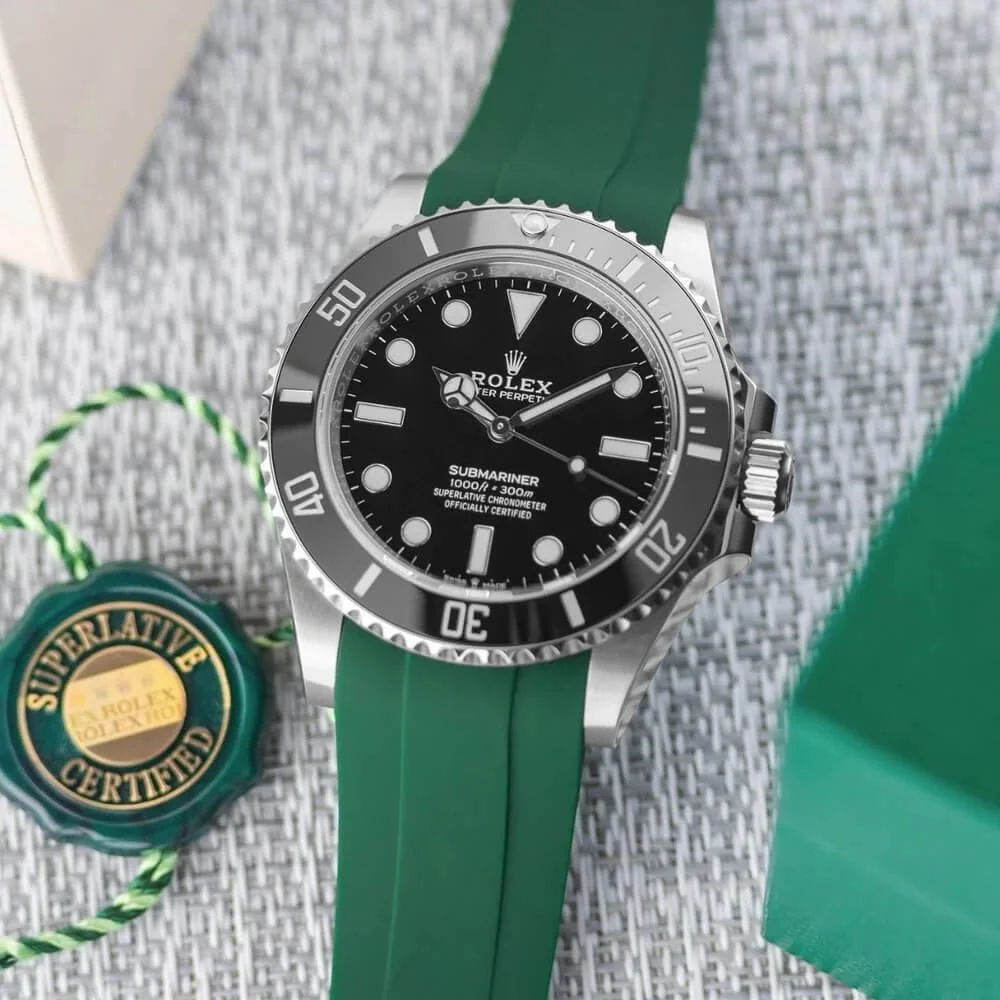
The other half of the equation is fit, and this is where the aftermarket has quietly become sophisticated. A generic 20 mm band leaves a gap between strap and case that reads as an afterthought. A model-specific strap is engineered the way the original bracelet was: curved ends shaped to one particular reference, correct lug geometry, a deployant clasp that sits flat against the wrist. Specialist labels have built entire catalogues around this idea. Helvetus, for instance, makes premium rubber watch straps engineered for individual models — a Rolex Submariner, an Audemars Piguet Royal Oak, a Cartier Santos, a Patek Philippe Aquanaut — so the strap meets the case without daylight, and backs every rubber piece with a lifetime warranty. On the wrist, the effect is closer to a factory option than an accessory.


The Fashion Case for the Swap

For a fashion audience, the appeal is obvious: colour. Steel and gold commit a watch to one palette; rubber does not. A black-dial diver on burnt orange behaves like a different object, a two-tone dress watch on olive green suddenly reads off-duty, and a white strap in July does what white trousers do. There is a practical logic under the styling one, too. The original bracelet stays in the box, unscratched and ready for resale day, while the rubber takes the beach, the gym and the aeroplane without complaint.

That may be the real reason the upgrade has stuck. A premium rubber strap costs a fraction of the watch it carries, takes minutes to fit with a spring-bar tool, and changes the piece more than any amount of polishing ever will. Same case, same movement, different watch. In a culture that keeps asking what to buy next, the most persuasive answer of the season is not a new watch at all. It is what you put it on.