
.specials
A Jacket, a Shirt, a Coat — Nothing More, Nothing Less
HAKA beja and a Material-Driven Approach to Contemporary Menswear
At HAKA beja, each jacket remains tied to the availability of its fabric, and that condition already says a great deal about how the work is made. In a fashion system organised around calendars, images and recurring releases, clothing usually enters circulation with its timing already decided. Material follows the idea, quantity follows the plan, and the garment arrives as part of a larger visual proposition, while HAKA beja operates from a different starting point. Here, availability sets the terms, fabric determines direction, and a piece reaches release only once its form, construction and proportion have settled over time. What results carries a quiet clarity that feels increasingly rare in contemporary menswear, as these are clothes whose value does not depend on novelty at the moment they appear but on whether they remain convincing once they are worn, handled and returned to.
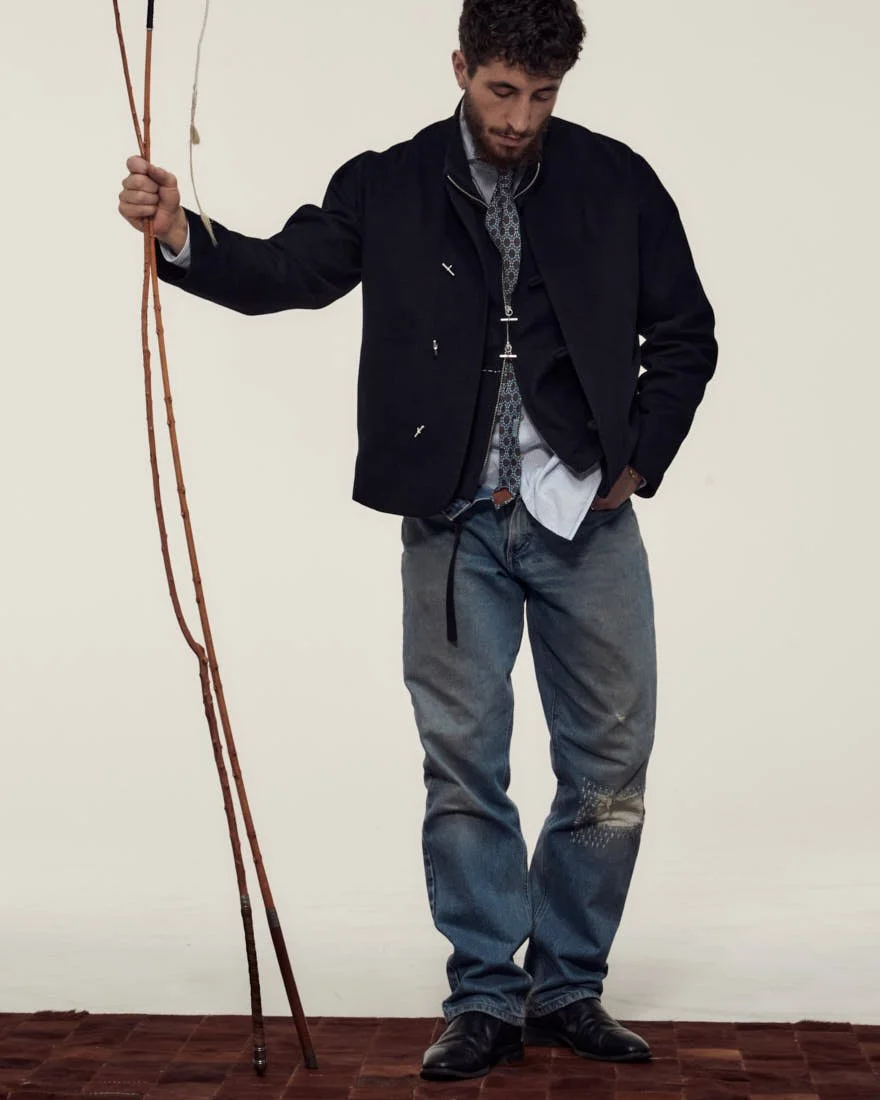
That orientation did not emerge from a conventional fashion trajectory. Textiles were present early on through family connections to the industry, and Benjamin Seeßle had originally intended to train as a tailor for menswear. During a dual degree in fashion management, he spent his practical phases at a long-established retailer in Lower Bavaria whose history lay in trouser production. The people around him understood fabric, construction and quality with real precision. At the same time, he found himself unable to connect to either standard retail fashion or the codes of high fashion, which led him to begin making his own pieces from leftover cloth within that environment. Those first samples were developed as a private practice, shaped by an interest in traditional menswear and by a desire for clothing that could retain simplicity without becoming generic.
That sense of simplicity remains central to the brand and is easy to misread, as HAKA beja does not chase extravagance and does not rely on conceptual overload to produce significance around the object. Seeßle describes the outcome with almost disarming directness as simply a jacket, a shirt, a coat, a phrasing that shifts attention away from inflated authorship and back toward the garment itself. These pieces are designed with precision, but they do not perform design as spectacle, and their authority comes from material, cut, hardware and use.
The structure of the brand follows the same logic. There are no classical seasonal collections, no complete SS or FW proposals assembled for a date on the calendar, no artificial limitation staged as scarcity, as HAKA beja instead works in individual products developed independently of a fixed release structure. Overproduced luxury fabrics are sourced first and used until they are gone, which establishes the central condition under which each piece is developed. Availability does not enter at the end as a practical restriction but acts at the beginning and shapes what can come into being at all. Quantity is therefore limited by actual supply, and each piece remains bound to the specific fabric from which it was developed, so that once that material is gone, the exact constellation of material, cut and finish cannot simply be repeated.
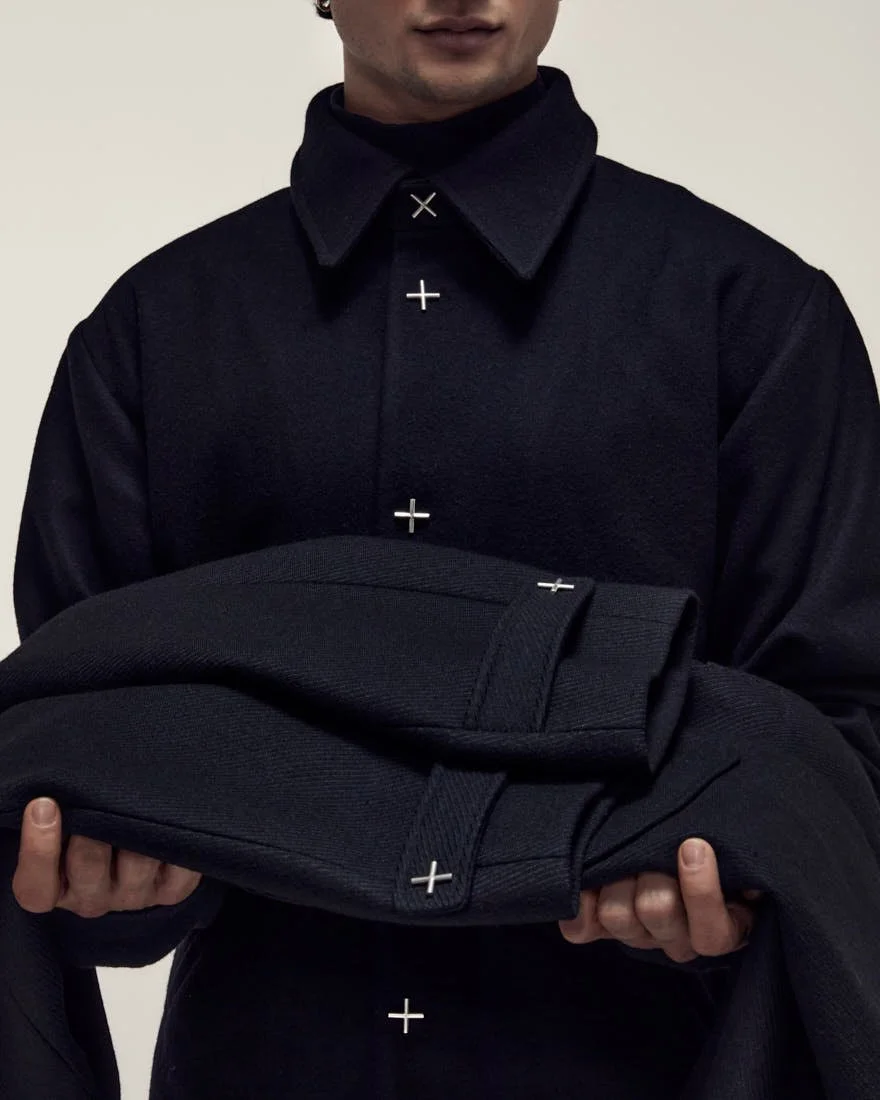
This results in a different temporality, as garments are not created to complete a line-up or to satisfy the expectation of seasonal renewal, but develop over months through vision, modelling, tailoring and adjustment until they hold together. Influences enter from far beyond fashion in any narrow sense, with references ranging from film, personal environment and hunting to craft, gardening, everyday labour and food culture. The language of classic menswear and the Alpine region remains visible throughout, though never in the form of costume or citation, appearing instead as discipline in silhouette, restraint in proportion and a functional clarity that leaves room for variation.
Food culture is especially important here, and it gives the brand one of its most useful images. Seeßle speaks of the laid table with friends or family as a guiding idea behind HAKA beja. The image works because it is less metaphor than method. A good meal prepared for others depends on the quality of ingredients, on manual work, on time and on care in presentation, while it also establishes a difference between consumption and appreciation. The host selects well, prepares carefully and plates with attention, creating a situation in which everyone present responds accordingly, as pace changes, perception sharpens and behaviour follows. Within that setting, clothing enters the same field of respect, where one dresses properly for such an occasion to acknowledge the people around the table and the effort that has gone into what is being shared.
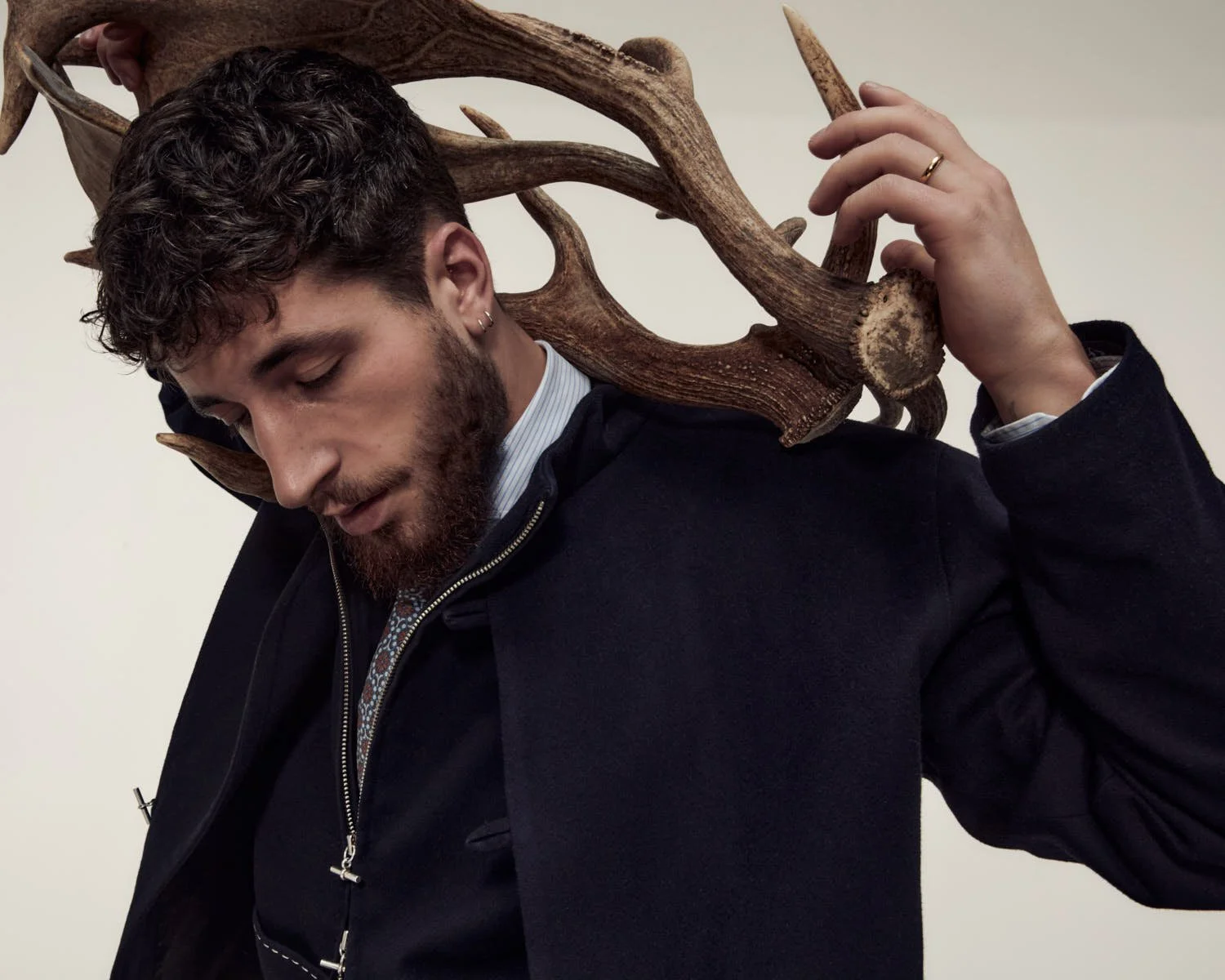
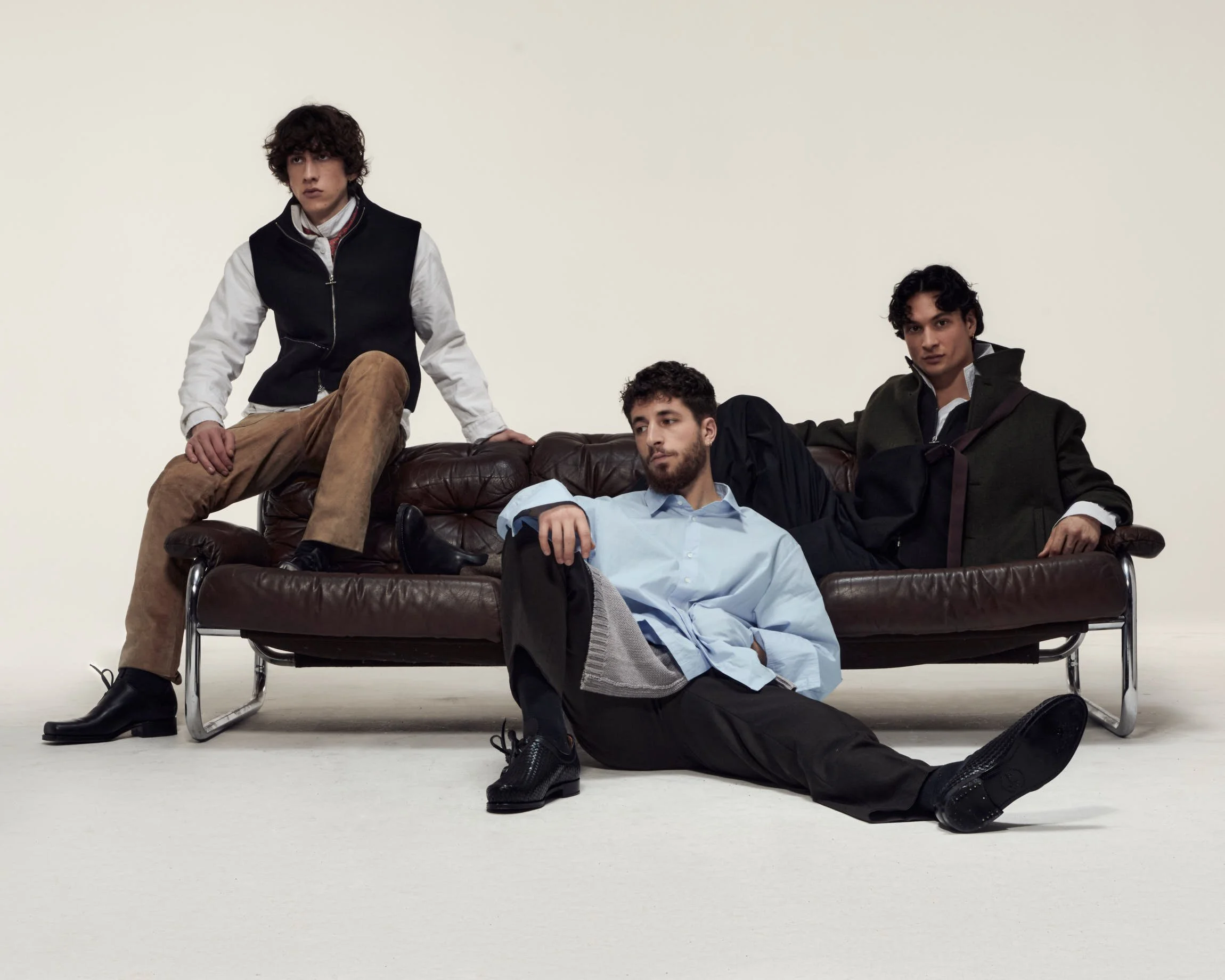
photographer LEO KÖHLER / stylist NATALIA WIERZBICKA / assistant DOMINIK EHRENGRUBER / hair + make up EVA HERBOHN / studio OAT MILK STUDIOS / models PAOLO FIORE, ADRIAN GABOR VITUS VON ZOLYOMI, JANIS BITARAF
From that perspective, HAKA beja becomes easier to understand, as the garments do not ask to be read through fashion images first but belong to a larger idea of conduct in which material quality, craft and presentation shape how an object is received and how one behaves in relation to it. This is also why the brand’s simplicity feels substantial rather than reductive. It is grounded in selection and preparation, where good natural ingredients, manual work and careful presentation form the basis of thinking and making. The analogy to cooking remains direct and extends from product development to the way a finished piece enters life.
The process begins with material, as only natural fibres are used, chosen for durability, tactile presence and the way they record wear over time, while wool, cotton and silver form the basis of the work. The fabrics often come from overproduced stock originally made for major luxury houses, sourced through European suppliers such as Nona Source in France. Sampling takes place in Germany, silver components are produced through jewellery foundries and goldsmiths in southern Germany, and construction is handled by tailoring partners in Italy and neighbouring European contexts. The phrase Made in Europe is often used loosely in contemporary branding, but here it refers to a production chain that remains concrete, localised and traceable.
What distinguishes HAKA beja is that this material logic does not announce itself through overt virtue signalling, as the garments do not read as proofs of concept for sustainability discourse but stand on their own as resolved objects. Dense wool fabrics with a firm hand allow jackets and outer layers to hold shape with striking assurance, while proportions are handled with intelligence, often through shorter lengths that shift visual weight upward and subtly alter the movement of the body. Shirts, ties and tailored references persist, while workwear and Alpine dress introduce a different register of utility and familiarity, so that the result sits in a precise zone of tension once described as roughness and elegance, remaining materially legible.
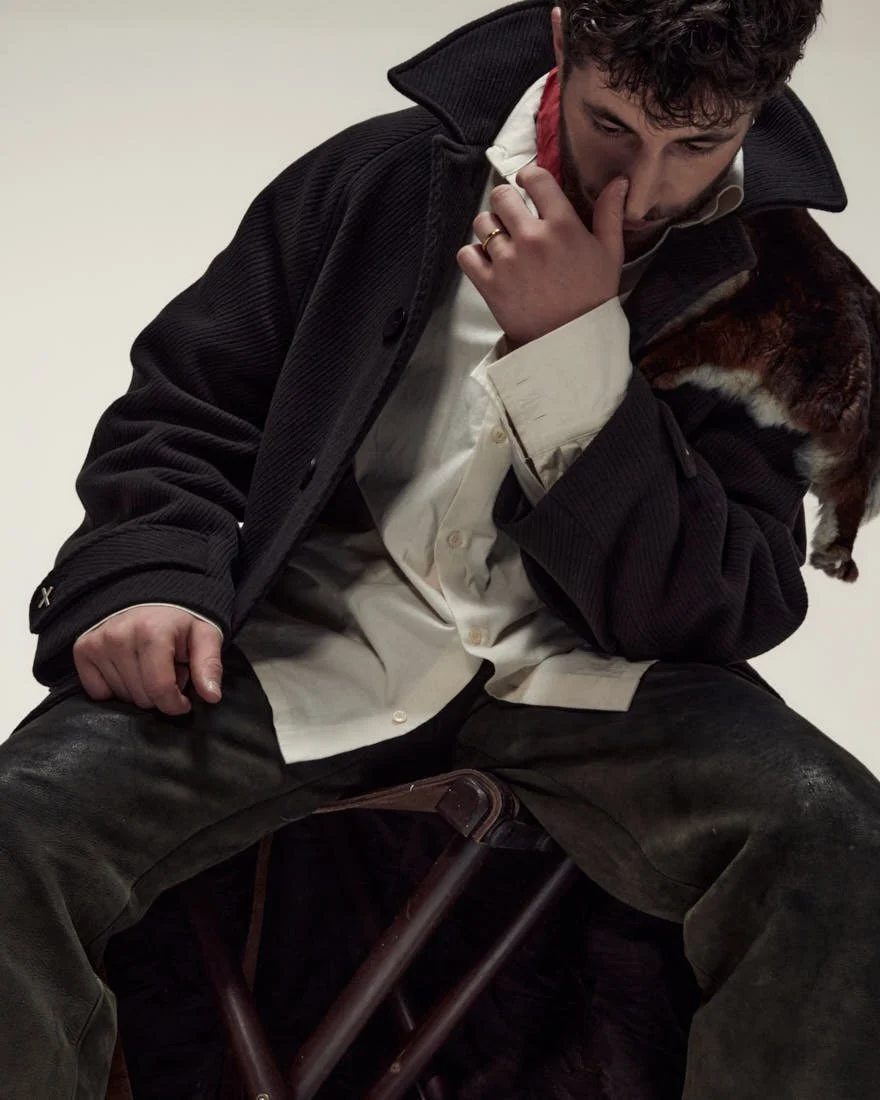
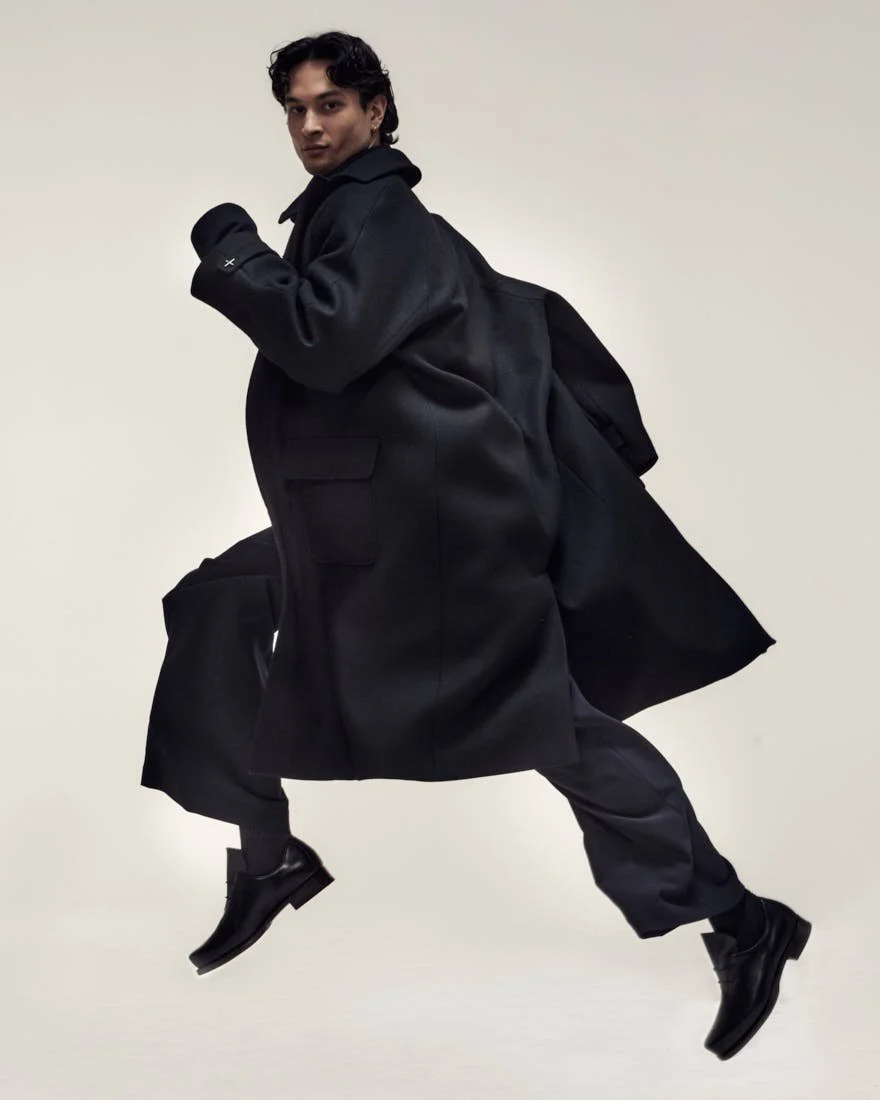
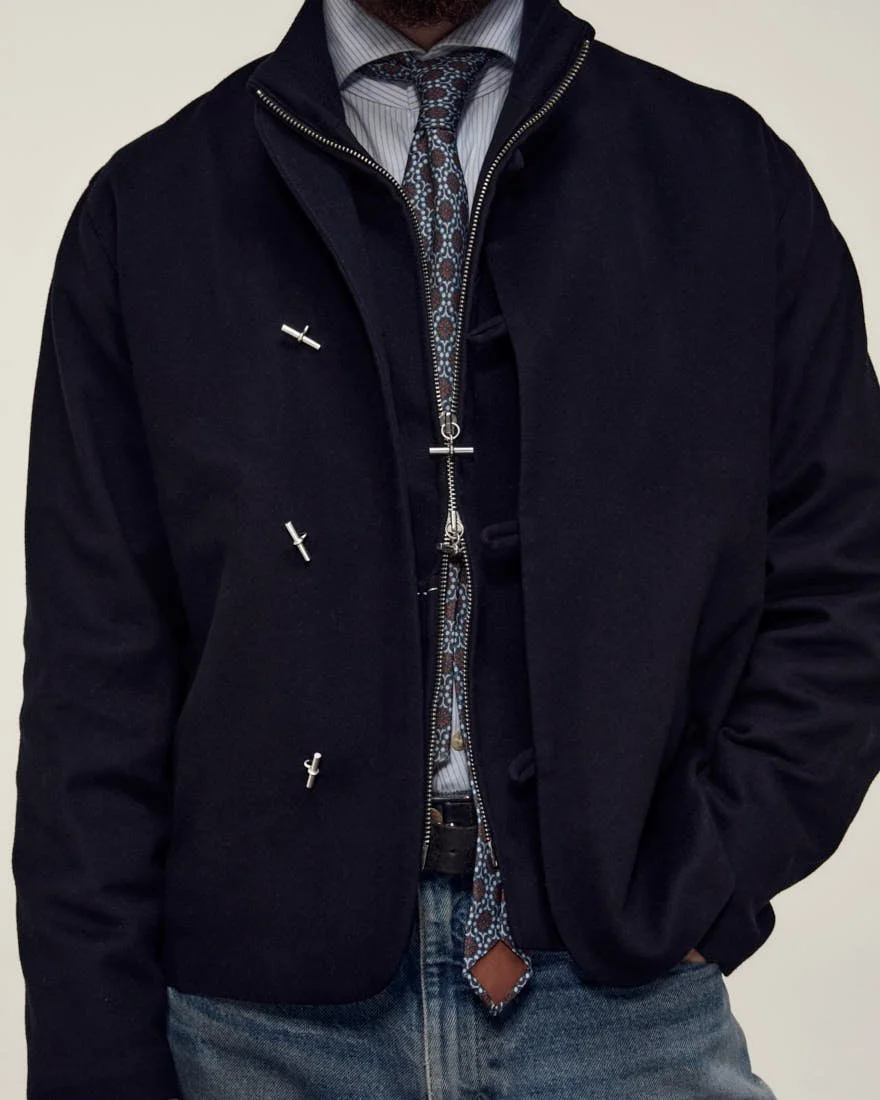
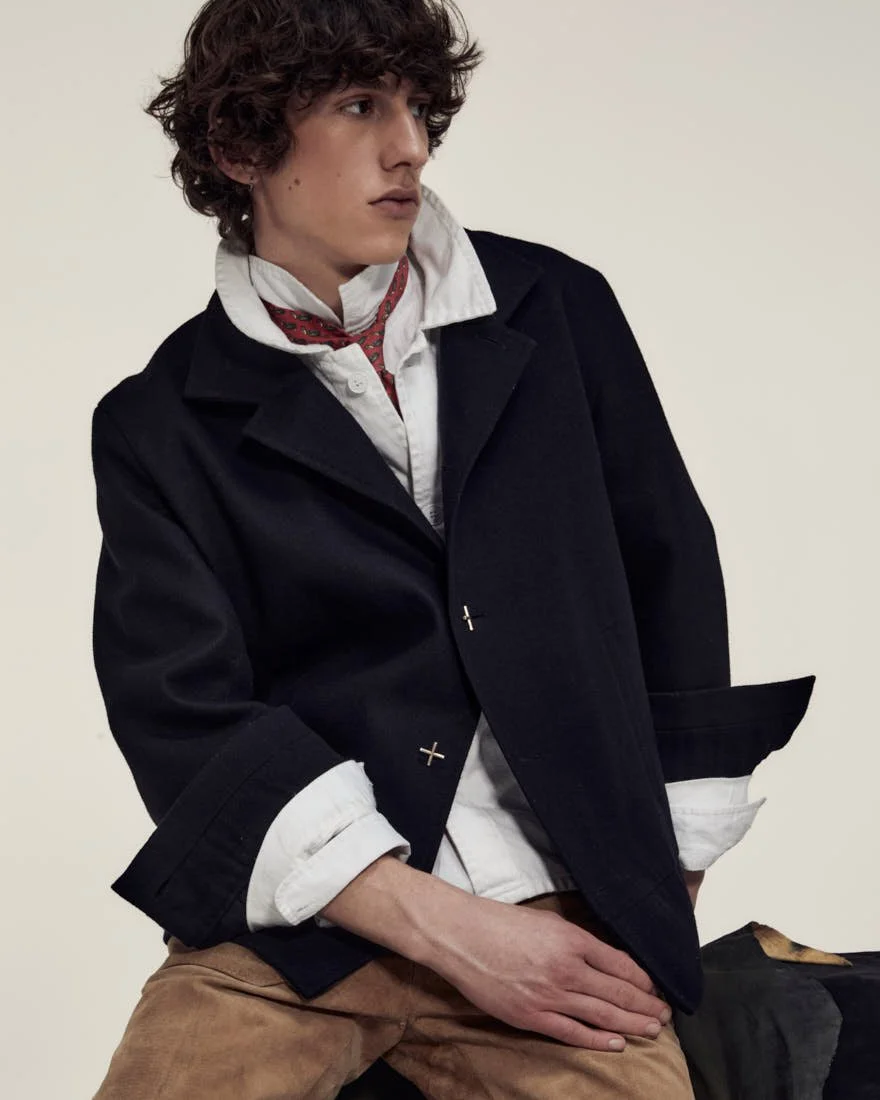
This tension becomes particularly visible in the silver elements, where fine cross-shaped fastenings in 925 silver appear on several jackets with exact placement, functioning as closure and structural point at once. The act of opening and fastening carries a slight resistance, making wear a more deliberate interaction, while each element retains its own material character and remains visibly marked. The relationship between textile and metal stays legible instead of dissolving into styling effect, and Seeßle’s preference for silver over gold, expressed with notable directness, reflects a clear distinction in perception, where silver reads as genuinely valuable without becoming loud. Even the naming system refuses unnecessary narrative inflation. Terms such as Korpus, Rumpf, Kittel or Sack do not construct mythology around the product but simply identify types. A jacket remains a jacket, a vest remains a vest, and variation takes place through cut, material and handling, which keeps attention on labour and execution rather than on storytelling frameworks imposed from the outside.
What emerges from all this is a practice with a rare degree of internal consistency, in which material, time and use remain closely aligned throughout. The pieces do not rely on collection logic, on theatrical image production or on the designer’s self-mythology to establish relevance, but instead shift the focus toward a more demanding question of whether a garment can remain persuasive through construction, touch, proportion and repeated wear. At HAKA beja, clothing does not gain value by appearing, but proves itself through use over time, as garments are worn, returned to and recognised for the consistency of their material, construction and form.
images (c) HAKA beja
DISCOVER HAKA beja: haka-beja.de
Explore Made in Europe garments released in small series, with a focus on raw natural materials, craftsmanship and contemporary design.