
.specials
Where Objects take their Place
Portofino Ceramica and the Structure of Contemporary Tableware
Ceramic objects rarely stand alone as they enter use immediately, shaping how food is placed, held, and perceived, and defining situations through weight, proportion, and surface. At Portofino Ceramica, that condition informs the work from the beginning.
Portofino Ceramica
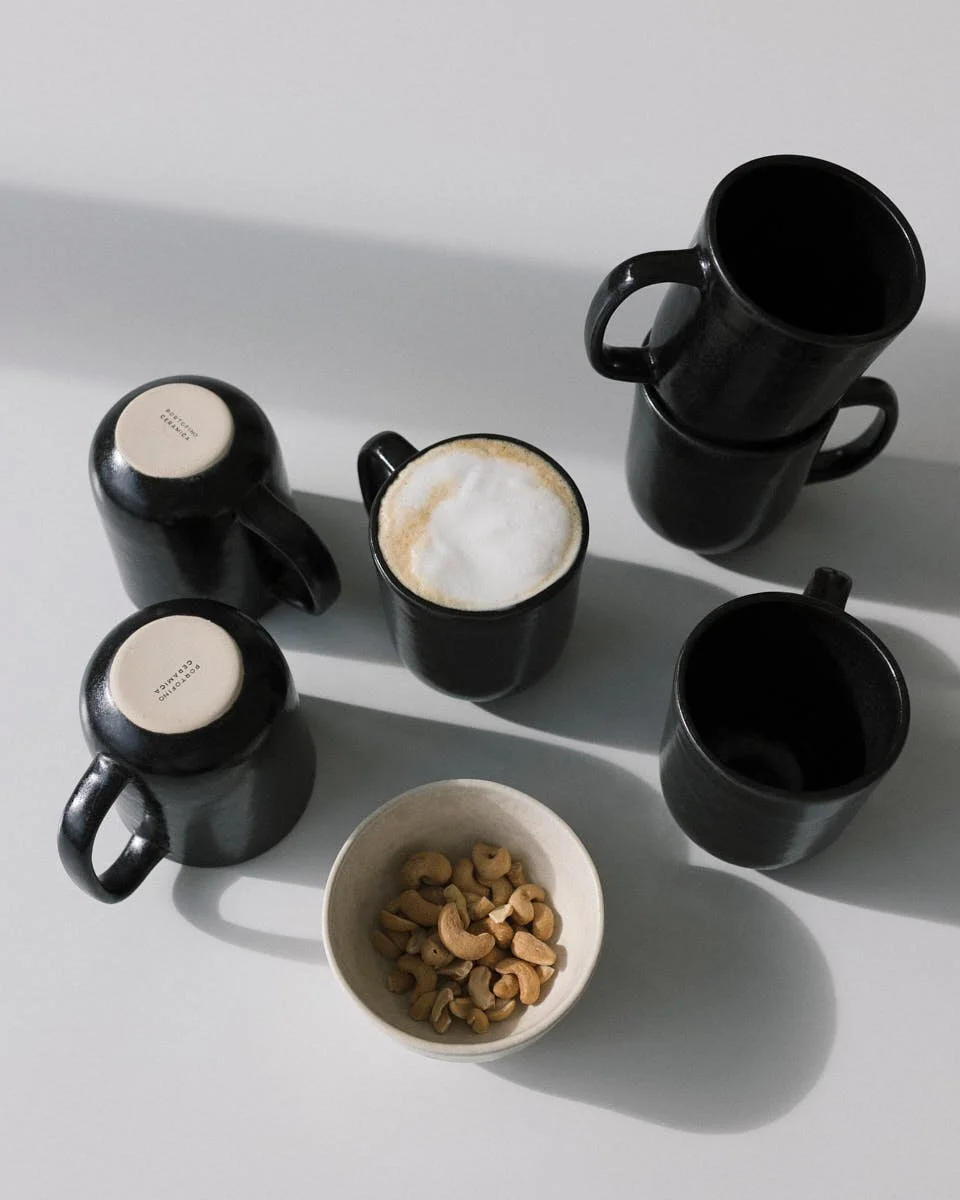
Bento Cups
Portofino Ceramica
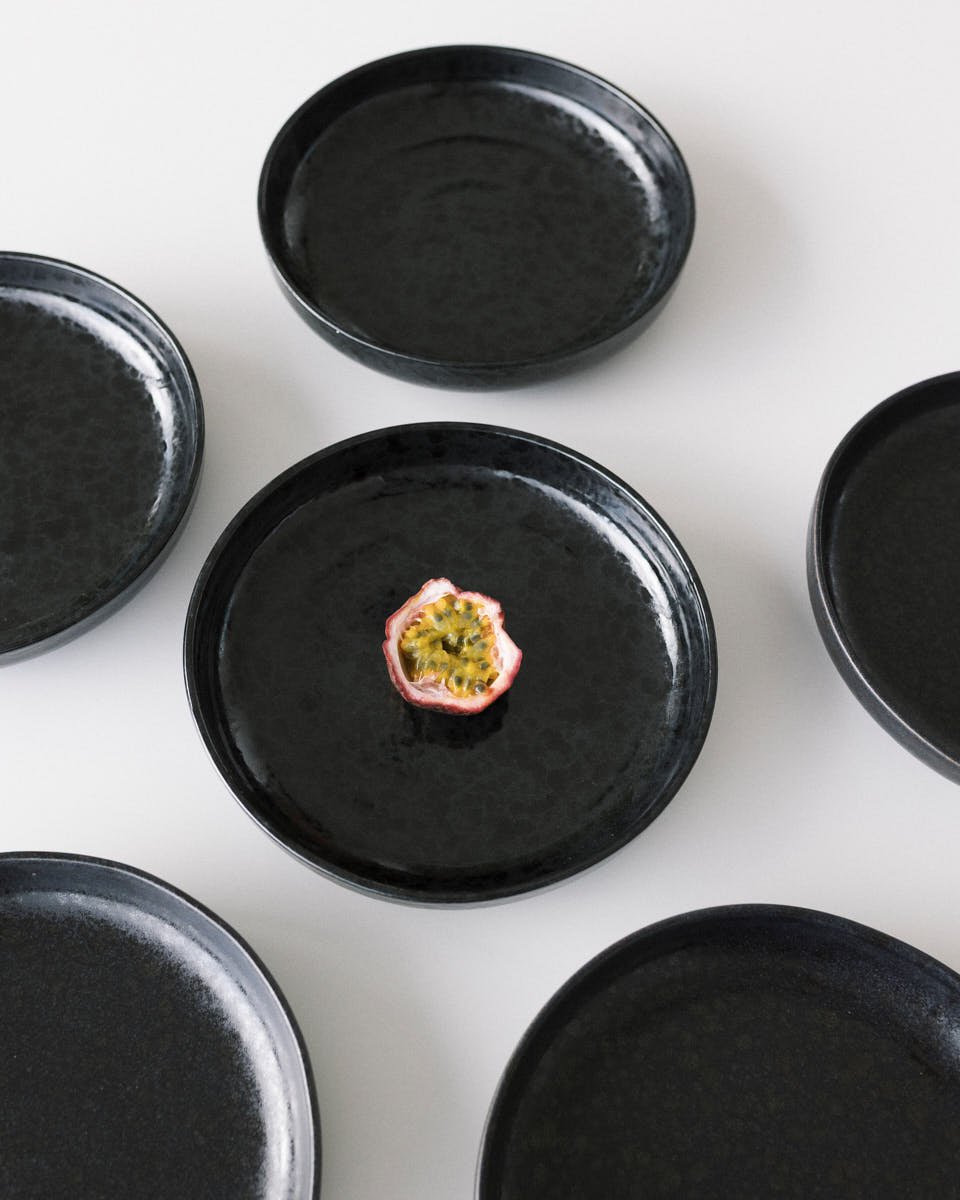
Bento Diner Plates
Portofino Ceramica
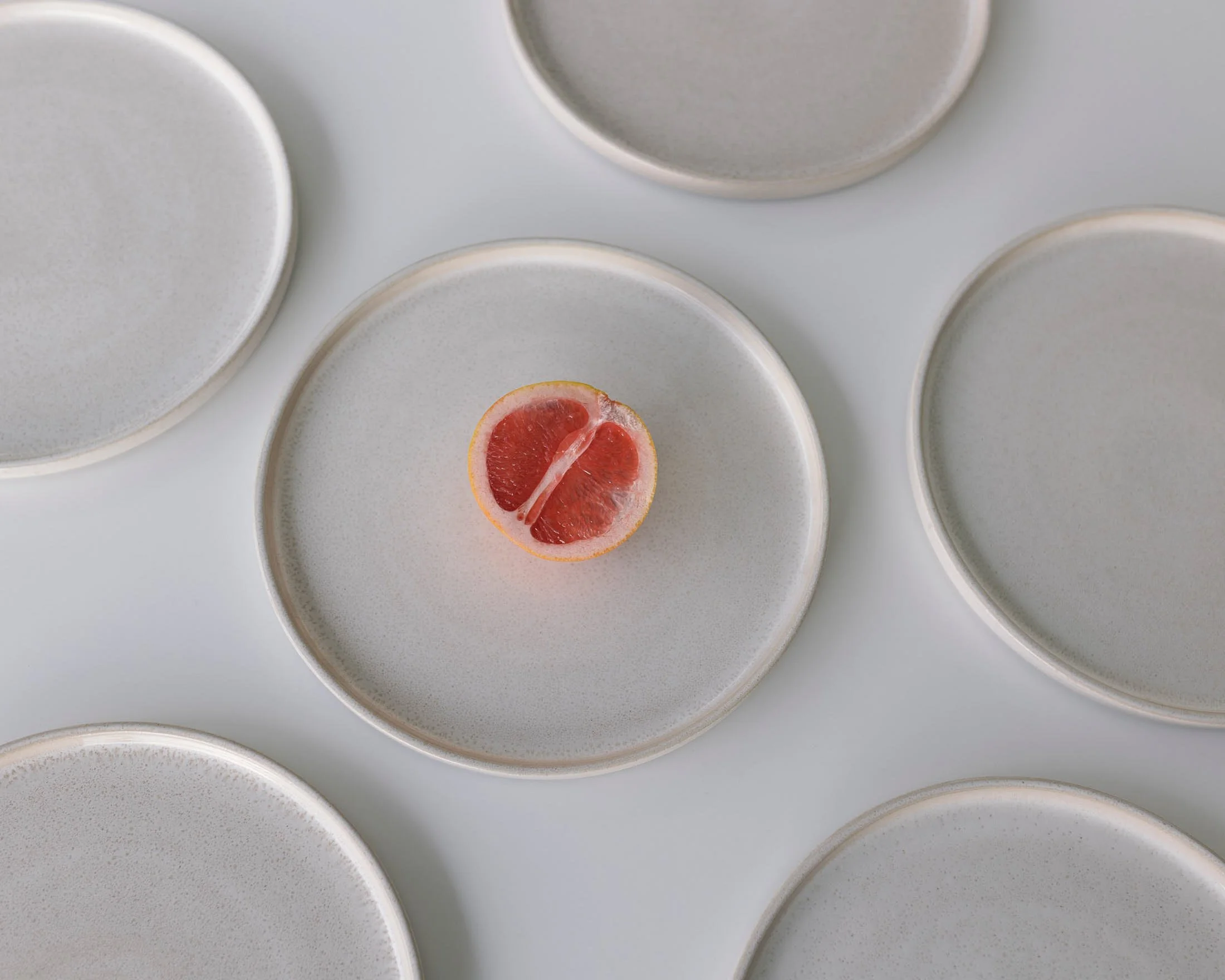
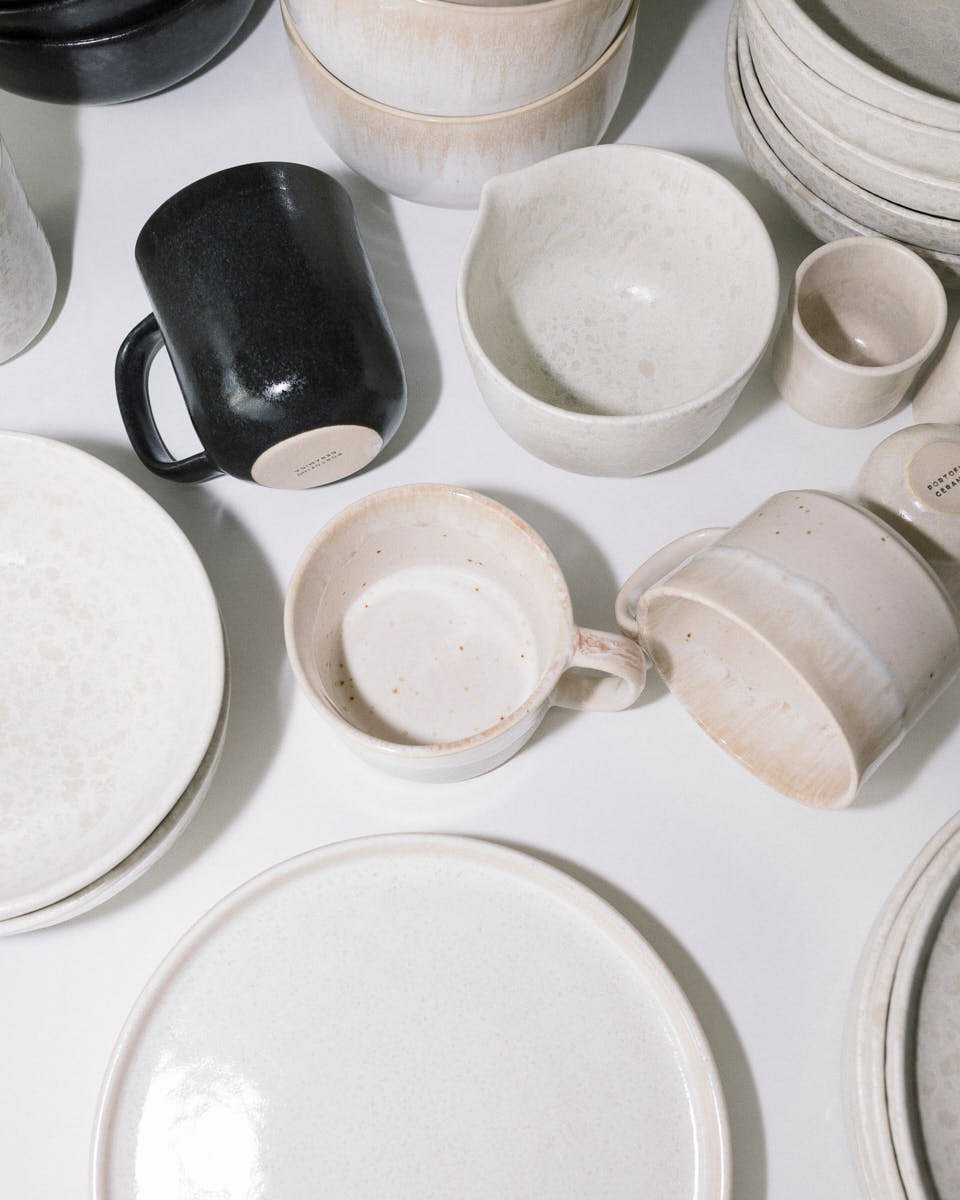
Elsa & Bento Tablewear
The brand traces back to a family business founded around thirty years ago, originally centred on the trade of Italian ceramics. Now led in second generation by Phil and Zoi, the company continues its family structure while gradually redefining its design direction. Production moved to Portugal as the European ceramic landscape evolved, placing the work within a production context shaped by technical precision and long-standing ceramic know-how. What defines the process is gradual refinement, with forms adjusted over time and decisions building on what already exists.
Design takes shape through close exchange with the producers, as ideas originate within the brand and develop further through technical knowledge and an understanding of clay that shapes proportion, feasibility, and finish. Form does not arrive fully resolved but stabilises between intention and material behaviour, shaped by both.
This dynamic continues directly in production, where material behaviour determines each stage. The initial forms are cut from clay plates and shaped by hand, giving each piece its slightly irregular contour. Stoneware is then refined and finished by hand, dried to stabilise its structure, then fired at high temperatures to establish durability. In some cases, drying takes place under natural conditions before firing. Glazes are applied manually and reach their final state only in the second firing, where surface, tone, and texture settle. Subtle variations remain visible in colour and reflection, with the overall character remaining consistent.
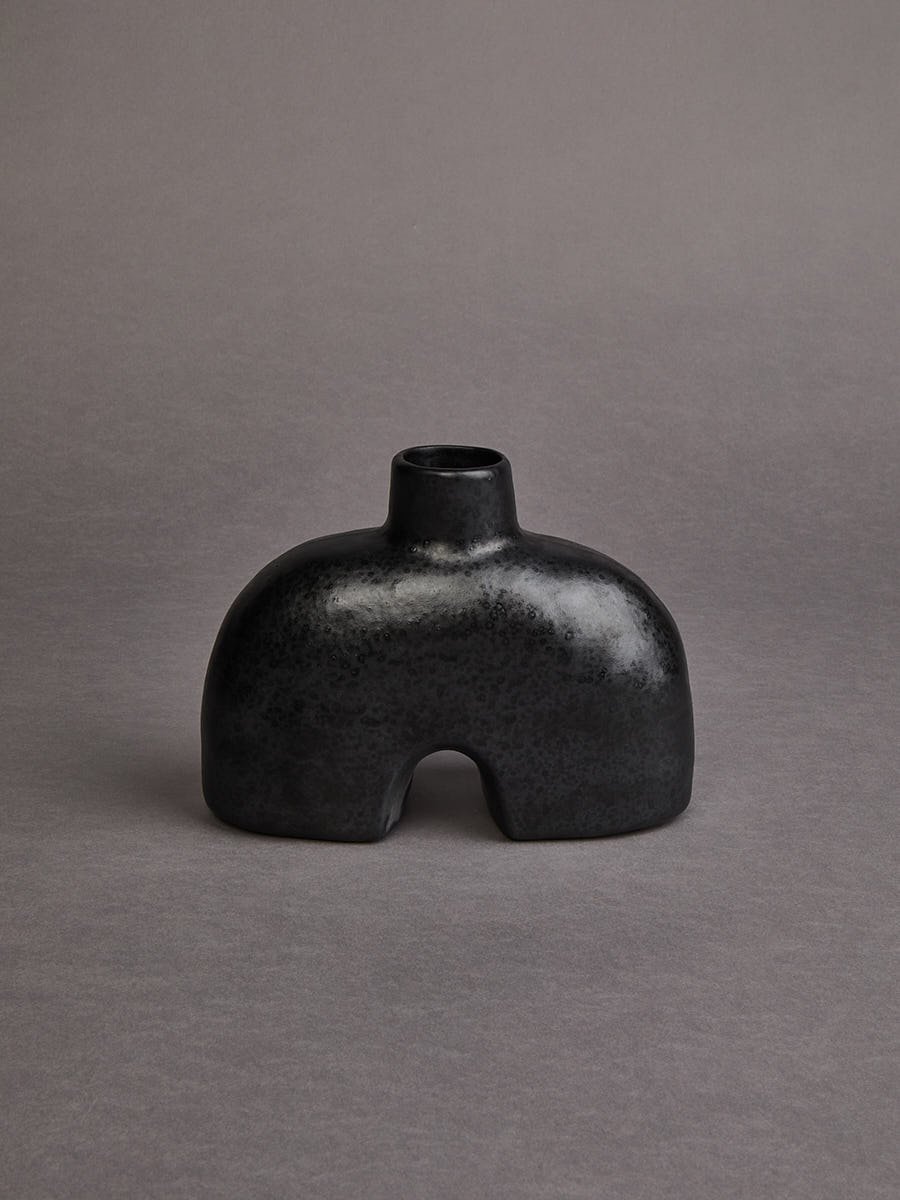
Portofino Ceramica
Alvo Vase
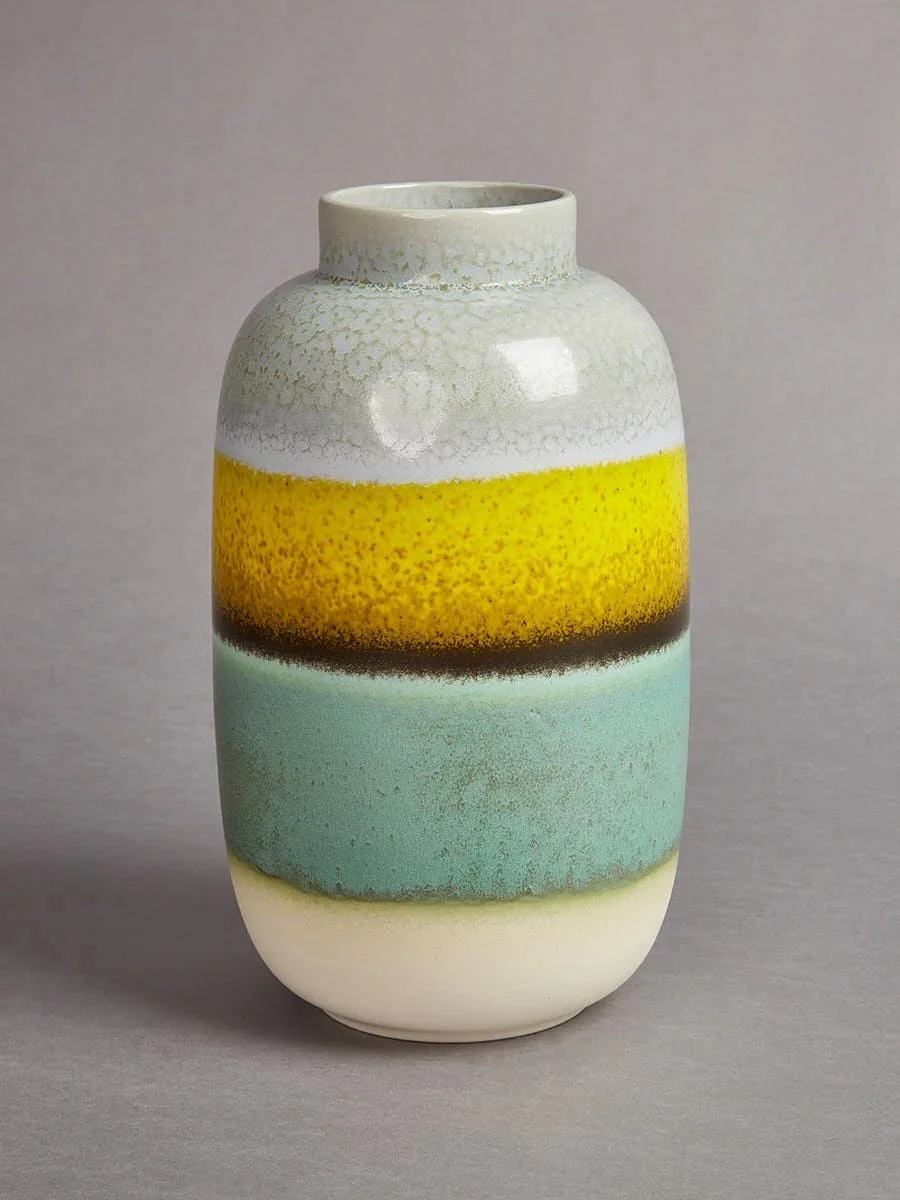
Portofino Ceramica
Rio Vase
These differences give the collection variation within a coherent whole, reflecting the nature of hand-applied processes and raw material behaviour. They become perceptible in handling and light, allowing objects to exist together without becoming identical. In the Elsa series, this approach translates into a precise, tactile form. The matte exterior absorbs light and stabilises the object visually, while the reactive glaze inside introduces depth and variation. Its qualities are most evident in use, in the way heat is retained, the surface responds, and the object settles in the hand.
Bento shifts the emphasis towards surface interaction, where matte and glossy glazes meet within each piece and shift with movement and light. Reflections change, edges soften or sharpen, and the surface remains active while retaining its restraint. The palette of beige and black reinforces this direction.
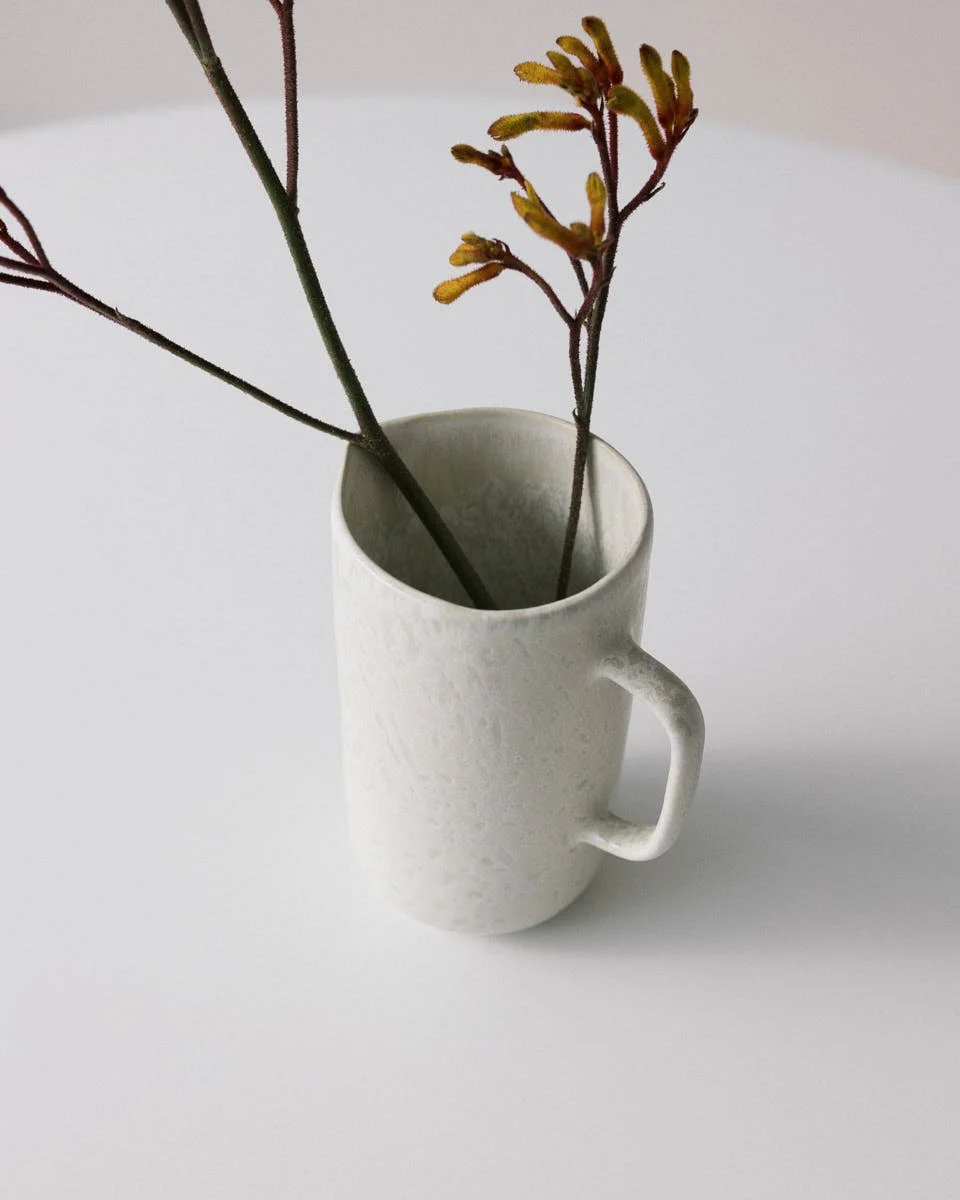
Portofino Ceramica
Bento Jug
On the table, the pieces relate through proportion and spacing, with plates, bowls, and vessels aligning without hierarchy and allowing arrangements to emerge from context. They remain adaptable, moving between everyday use and more composed settings without adjustment. This flexibility is sustained by a material structure designed for continuity in use, as high firing temperatures ensure durability and resistance to regular handling, including dishwashing, while weight, edge definition, and surface remain perceptible, allowing the objects to continue registering physically in use.
The same thinking extends to sourcing, packaging, and logistics. Manufacturing in Portugal concentrates specialised knowledge and keeps material sourcing regional, while packaging and distribution in Germany maintain control over handling and reduce plastic use, with a focus on durability, responsible production, and reduced material waste. They form part of the same overall approach.
A different emphasis appears in the vases, where use becomes less central and silhouette takes on greater presence. In pieces such as Rio, Alegra, or Alvo, vertical proportions and more pronounced forms define space more directly, allowing material and surface to be read without mediation.
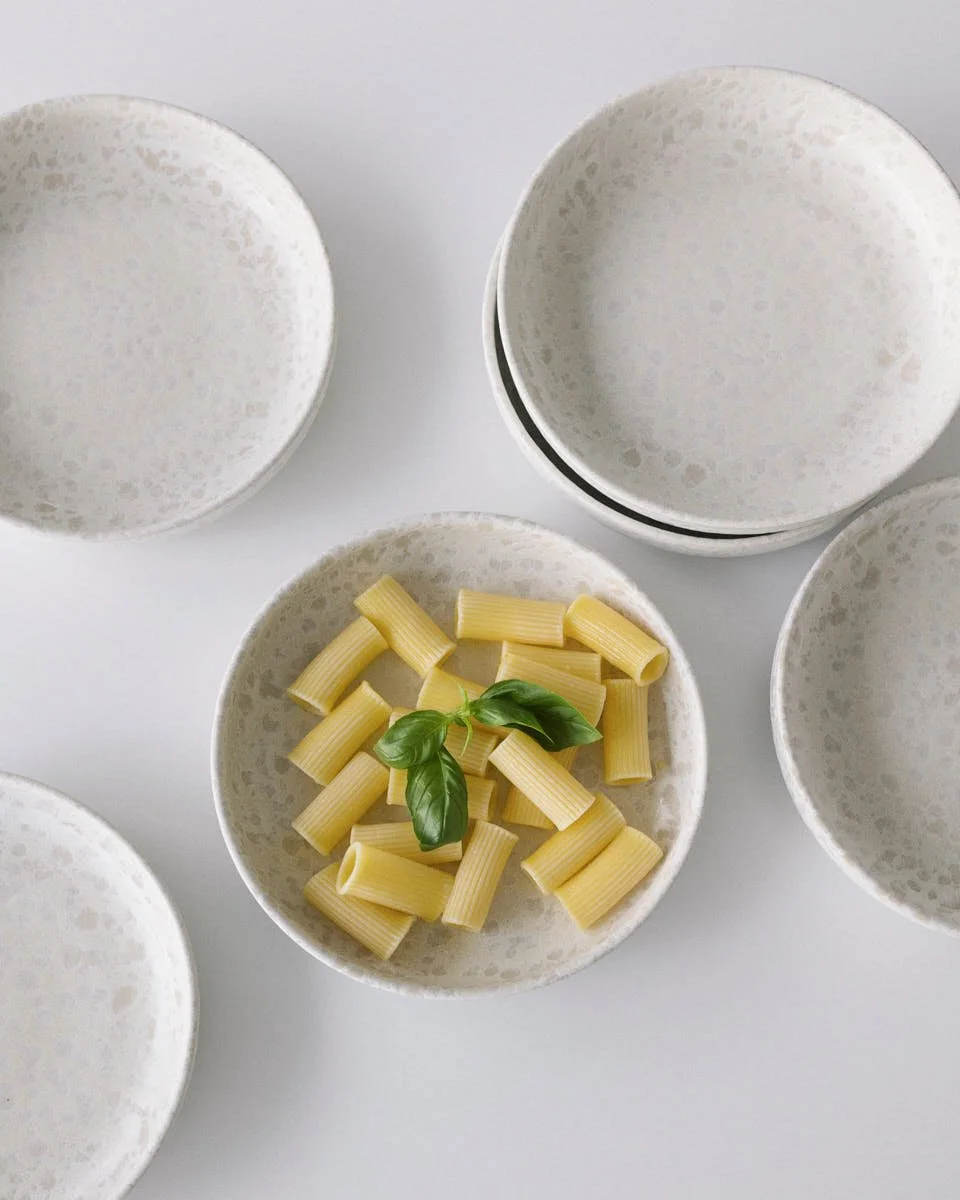
Portofino Ceramica
Bento Bowl
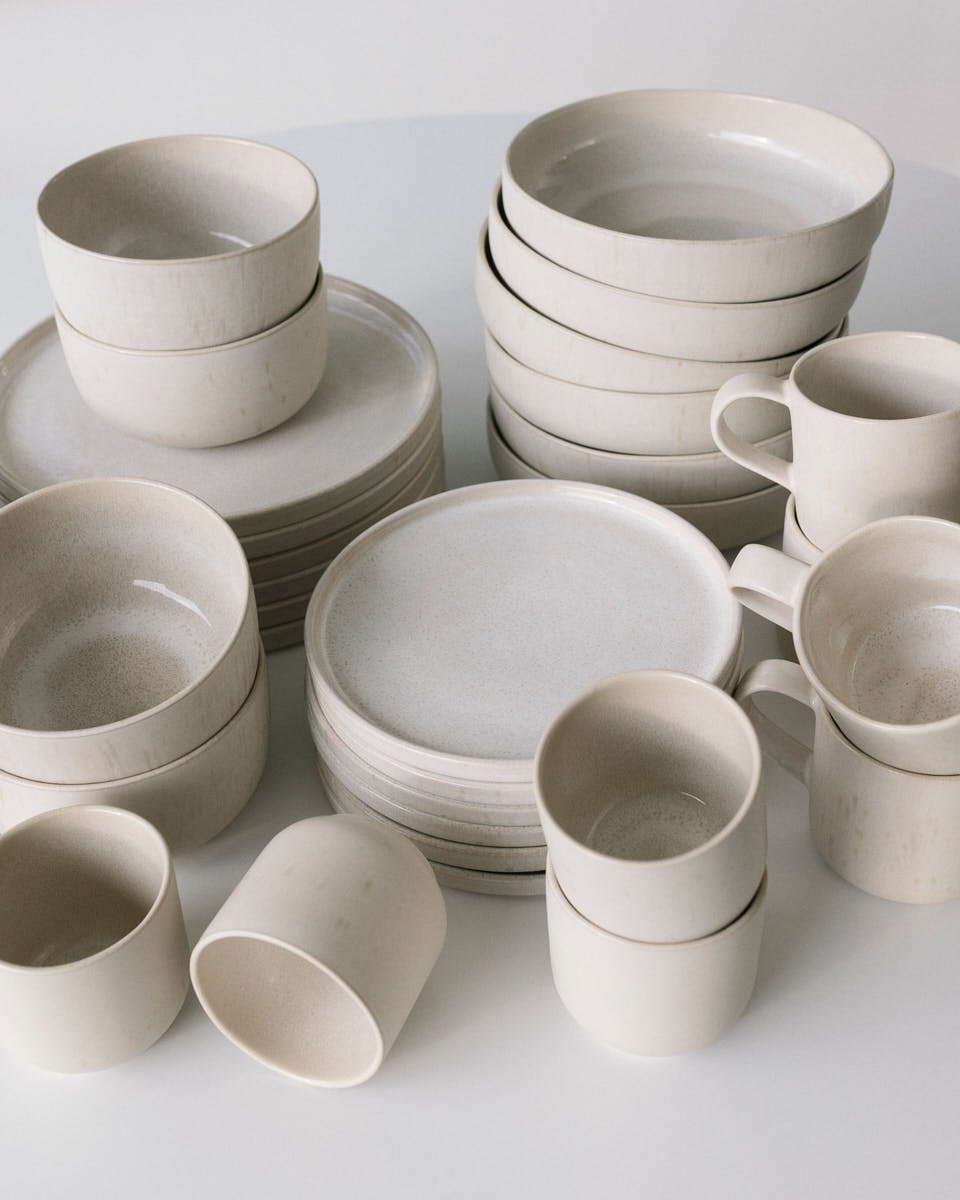
Portofino Ceramica
Elsa Tablewear
Across the collection, refinement remains continuous, with forms reduced until they hold, surfaces calibrated until they stabilise in light and use, and variation contained within a narrow range.
The collection settles into everyday contexts through repetition and continued handling, carrying a clear identity through proportion and material presence. Its coherence lies in how pieces relate in use, through scale, spacing, and surface, forming a system that can be extended over time. In practice, the system stays open, shaped by how it is arranged, adapted, and lived with over time.
images (c) Portofino Ceramica seen by Aimilia Theofilopoulos
DISCOVER PORTOFINO CERAMICA: portofino-ceramica.com
Explore contemporary tableware, stoneware ceramics, and handmade collections including plates, bowls and vases.