
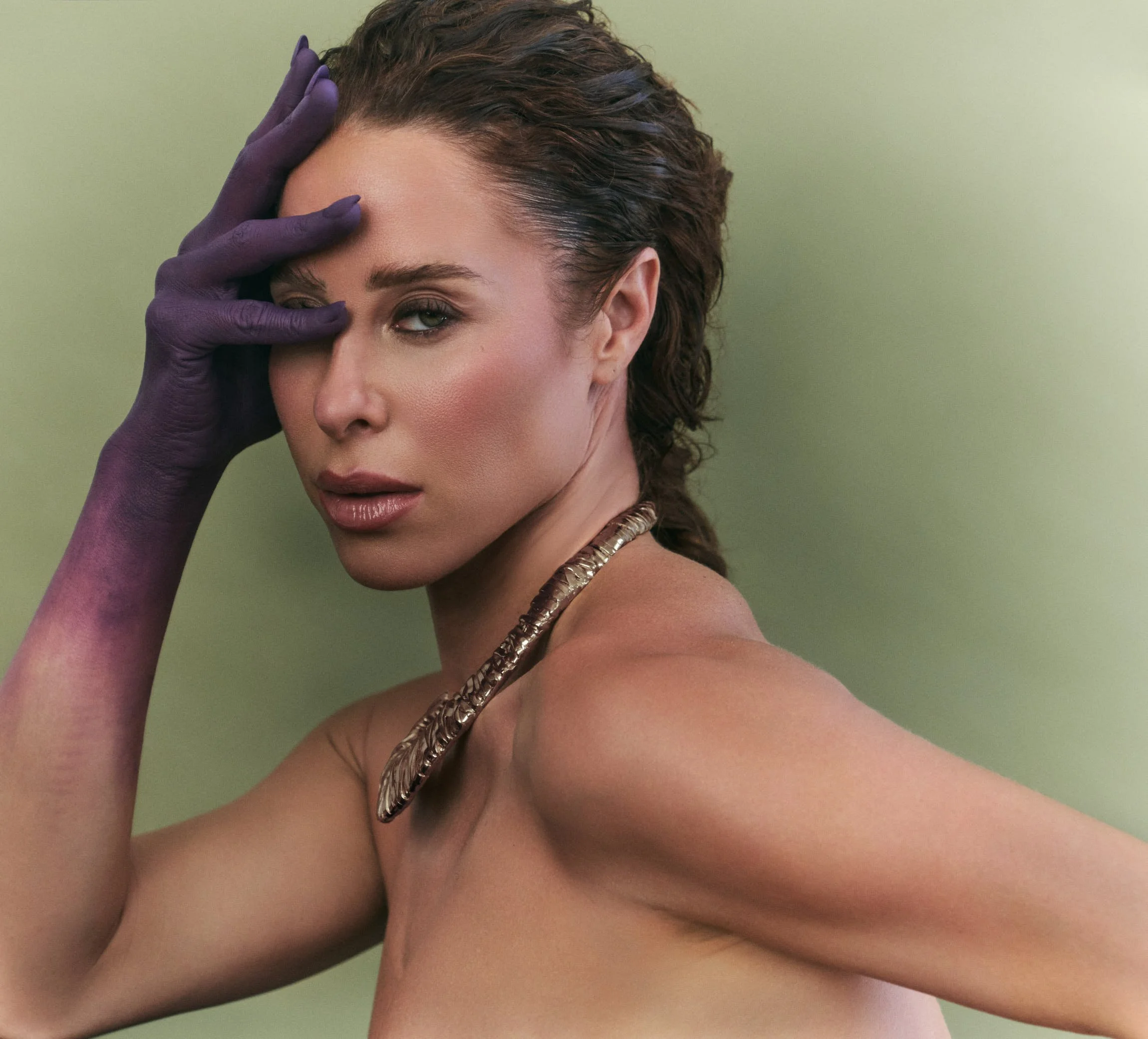
perspectives
A Kind of Alchemy with Kennedy Yanko
a conversation between RACHEL ROSSIN + KENNEDY YANKO
At some point, Kennedy Yanko and Rachel Rossin are talking about copper, ancient Egypt and the possibility that a phone can become an extension of the body. A few minutes earlier they were discussing St. Teresa, Hilma af Klint and what it means to recognise yourself in something you have made. None of these subjects arrives as a detour. They are part of the same curiosity about how humans give meaning to material, images and technology, and about what happens when we know a medium so intimately that it begins to alter the way we think.
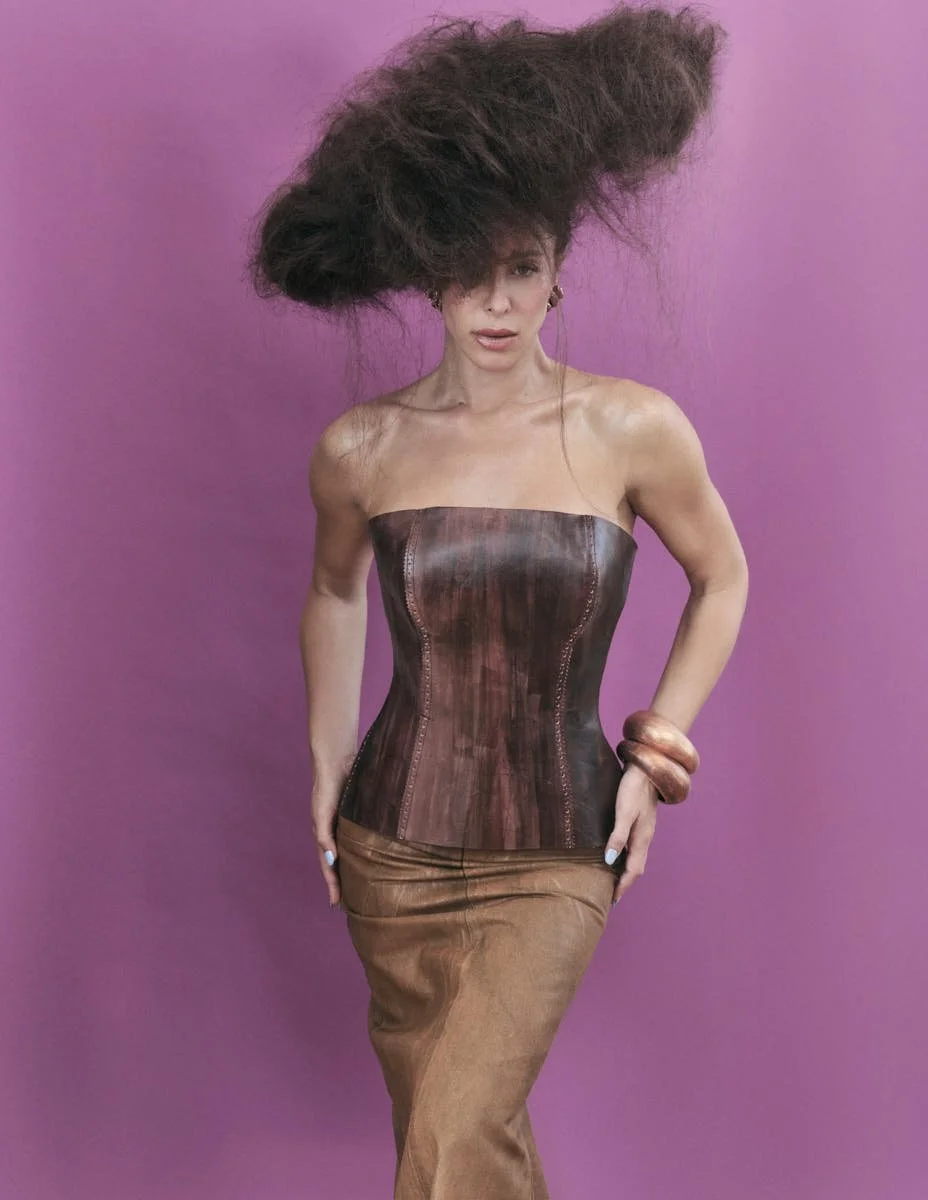
Kennedy wears a corset by PETRA STELLAM, a skirt by PRIVATE POLICY, bracelets by ALEXIS BITTAR and earrings by PAOLA SIGHINOLFI
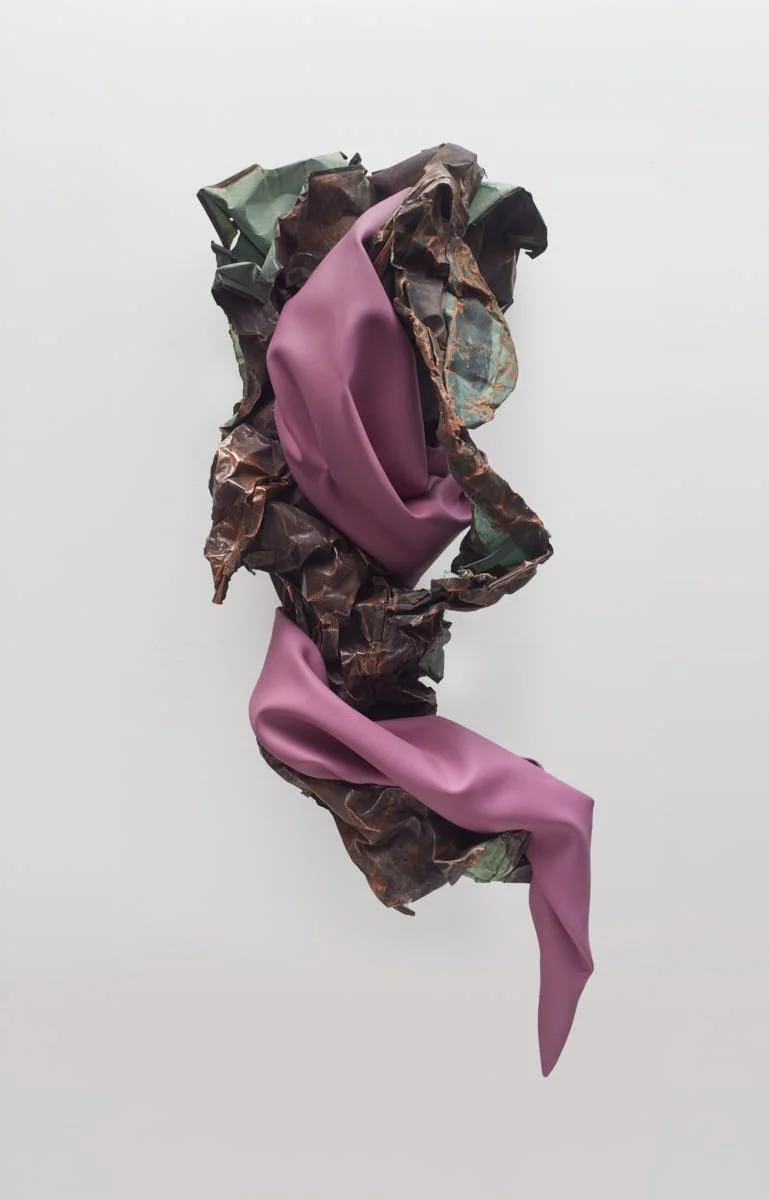
Kennedy Yanko - I Have Shaped Into A Kind Of Life, 2023
Paint skin, copper, 208 × 89 × 53 cm
Photographed by Martin Parkesian
That question comes naturally to two artists whose practices move through very different kinds of matter. Yanko works physically and at scale, bending, cutting and welding salvaged metal alongside the paint skins that have become central to her sculptures. Rossin has spent years moving between painting, virtual reality, programming and digital environments, often looking at the increasingly unstable border between a body and the technologies surrounding it. Yet when they speak, the expected opposition between physical and digital disappears almost immediately. A piece of copper carries electricity and centuries of technological history. A smartphone carries memory, attention and parts of the self. Both can become something the body learns so thoroughly that using them begins to feel instinctive.
Their conversation keeps widening from there, through mysticism, biography, metallurgy, AI, Pythagoras, attention and the peculiar freedom of abstraction. It is serious without becoming solemn, partly because Yanko and Rossin are just as willing to talk about being “dark and horny” or the absurdity of alien theories as they are about transcendence. What holds the exchange together is less a theory than a shared suspicion that technological progress has not made the oldest questions obsolete. If anything, it keeps returning us to them. What is a body, what deserves our attention, how much of ourselves do we place into the things we make, and what kinds of knowledge might disappear when tools become faster than our ability to understand them?
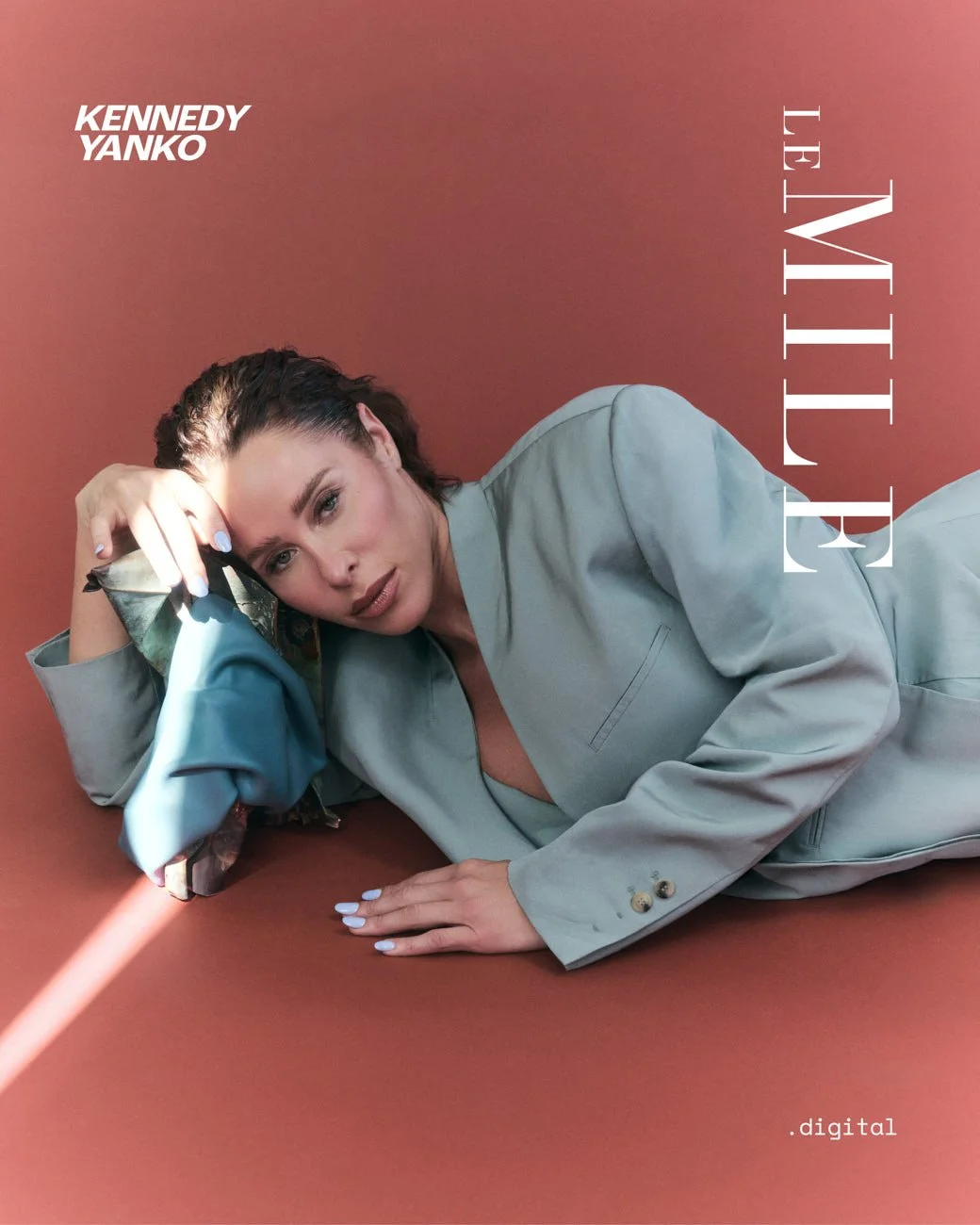
Kennedy wears a jacket by GIADA
Kennedy Yanko - The Poet, 2024
Paint skin, copper, 25 × 25 × 20 cm
“I'm not looking for myself — I'm repeating something over and over so that I can exist in this physical body, in this world.”
Rachel Rossin
When I think of your practice, I think of scale. I think of you in the junkyard. Was that five years ago? You're doing it all the time, right? But there's that video of you in there with the gloves, and you look so at home in it. And that remark about feeling like a painter as you're dragging scrap metal around, in a sick outfit — it's so sweet.
But a lot of the questions you forwarded me had to do with the avatar, personhood — that sort of outcropping of what it is to negotiate what feels both like a consequence, or a symptom, of celebrity culture, which is really just a kind of consumerism, combined with what it is to be female. It felt like a bit of both.
Kennedy Yanko
It's a good time to talk about this… The first question I had was, is an artwork another kind of self that we invent?
This is going to be different for everybody, but for me, I'm doing my best to make something that's very true, that only I feel like I can see. It's going down into the smithy of my soul, the James Joyce of it, or the Duchamp conduit. I have this kind of pantheon, or genealogy, of artists and people who are kin to me. I guess you could call that a self, but it feels like something even beyond personhood sometimes. It feels more like prayer than personhood, often.
A thousand percent.
It's manic, in a way — like you're St. Teresa, bringing… the Carmelite nun who's the subject of that famous statue, The Ecstasy of St. Teresa.
Someone was literally just talking about that the other day.
She wrote this incredible book called The Interior Castle, about the states of the soul as you try to find God and transcendence. What she describes feels a lot like an art practice. You do it over and over again, moving through different states of ascending. There are so many parallels throughout human history — Greek oracles, the Zoroastrians of ancient Persia. It's fun to think about art-making in that context, because I do feel like it's closer to that than to objecthood, or even pop art, or what we've inherited. We do the other stuff in service of this bigger thing.
But there's a fidelity to that, and then you're also in a body, and there's commerce and all this other stuff that makes it really complex and fun. And on top of that — oh, I'm also a woman.
I love that you're defining it as complex and fun. That's a really great attitude, Rachel.
It is! It's a pain in the ass, and then it's fun…
I think that's actually why we're drawn to doing this work. For me, I always find my answers in the obstacles. I don't have a lot of ideas that I'm trying to make; I'm more responding to what's in front of me. I think that's the transmutation that happens for me in making art and finding myself in the work. I'm not looking for myself — I'm repeating something over and over so that I can exist in this physical body, in this world.
I think of the pieces as fragments of myself. I'm sitting in my living room right now, looking at a piece I made in 2015 — an older rubber work — and it really looks like my higher self. I often feel like the work is my higher self.
When I study artists, I need to know their biography — what they experienced — to understand how and why they're digesting the world and history the way they are, and why it comes out the way it does. That's what makes it so interesting to me — their biography, and how their DNA is always similar in everything they touch, regardless of medium. Your practice is such a dynamic, multifaceted example of that.
Yeah, I do what I want. What's the process for you when you see something you like? Is it that instinct of “I need to know about this person,” or do you find something biographical first and then investigate the work? What comes first?
It's two directions. Sometimes I'm watching or looking at something for a long time — maybe a friend or peer I've worked with for over ten years — and then they do a great show, and I start spending more time with their interviews and the work in a different way. It's a slow build.
Or the more common way — I see it and I'm obsessed, like a moth to light. Anne Truitt's work, for instance… and her biography. I've actually found a lot of artists through their writing, like Hilma af Klint, especially female artists. As far as research goes, I'm drawn to what they're creating, and if it's powerful, I need to know more. There's a part of me that goes all in, but that's maybe once a year.
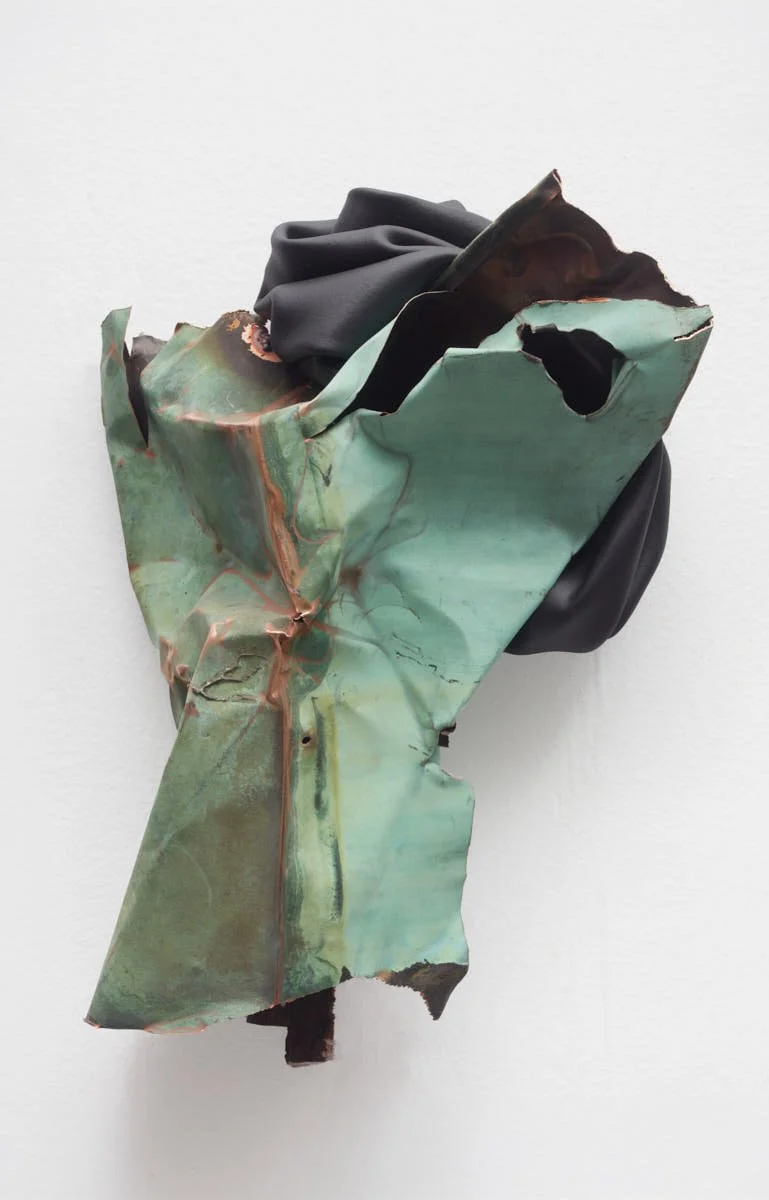
Kennedy Yanko - Something Has Tried To Kill Me And Has Failed, 2023
Paint skin, copper, 48 × 33 × 15 cm
Photographed by Martin Parkesian
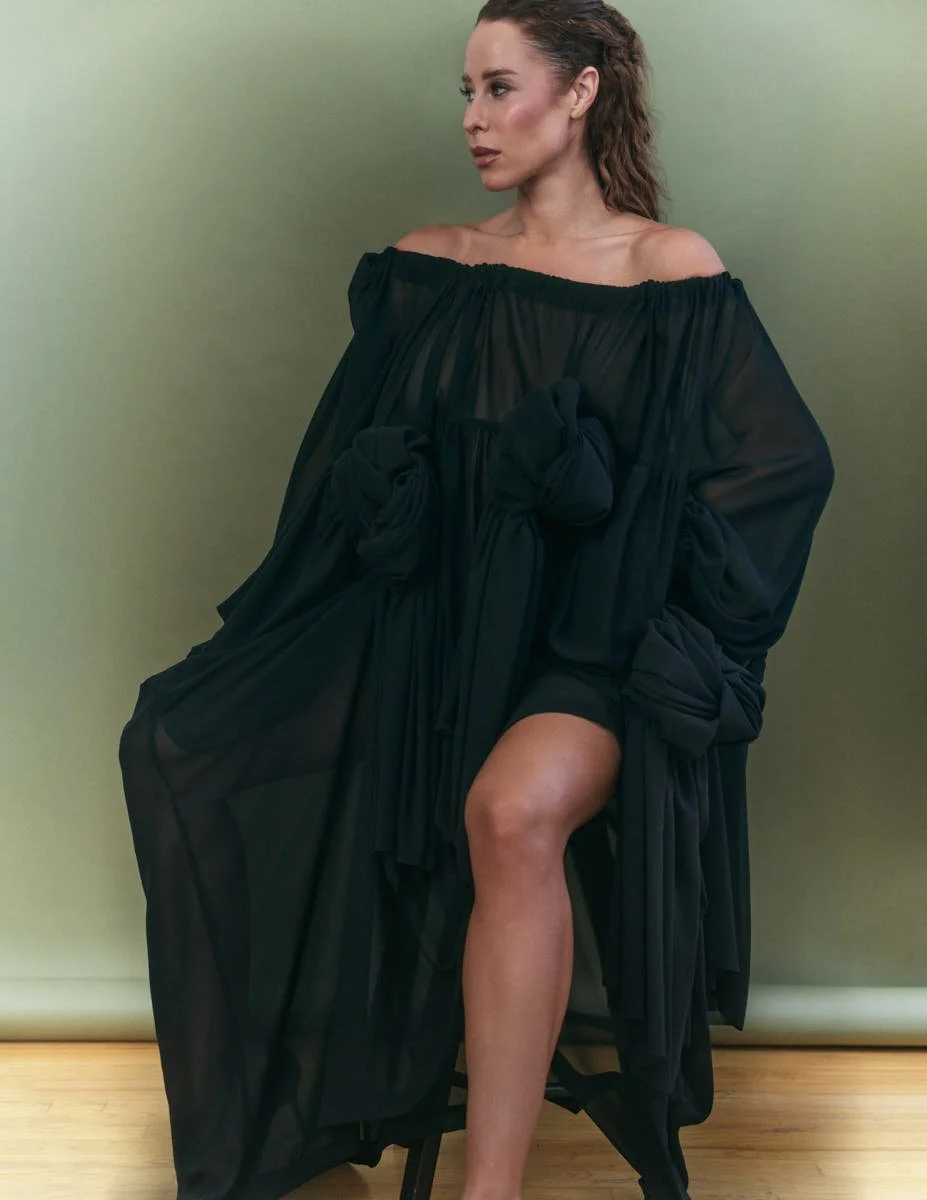
Kennedy wears a dress by COMME DES GARÇONS and shoes by JIMMY CHOO
Rachel Rossin
The Hilma af Klint thing is interesting. Have you read her biography?
Kennedy Yanko
Yeah, I did a show in response to her work called Moving Weight in Stockholm. We worked with the foundation and borrowed a piece from her. I spent years in communion with her studies on botanicals and her way of living. Have you spent much time with her work?
I read her biography recently and thought, “Of course this person made that work,” but I had questions about how she was able to do it financially. She's a scion. An aristocrat. She had an allowance, so she really got to do whatever she wanted, which is so different. That work, for that time, is strange, and that she's a woman doing it is strange too. I had a lot of questions about that, about that kind of lottery of life. Was that also what you're talking about when you want to know someone's biography? What material someone's bringing into the work?
It's more just the stories of their life. Did you see the Jeffrey Dahmer series? It was so interesting to see what created a psychopathic killer. What happened in that person's life to make them that way? That's always informative to me. What's shocking is how it manifests, and I think there are two different artistic practices there. Hilma is a great example of someone who was able to gather community and build art with her financial support. Judy Chicago is another. She built a community off her own back, no support, and built a women's school. I love everything about her. In her biography, she speaks at length about what it took to store The Dinner Party for two decades, financially, eventually.
It's incredible, impractical, gorgeous and vital, all at once. It makes me really grateful. Taking a step back from it, there's an appreciation for how ludicrous and how logical it is at the same time.
One thing I thought was interesting between our backgrounds — I'm from Missouri, but I didn't really realise Missouri is “the South” until I'd lived in New York for fifteen years. And I grew up very Christian.
Oh, wow.
Right now, the show I'm working on for Paris is at the Cité de l'Architecture et du Patrimoine, the largest architecture museum in the world. It has mouldings from churches all over France on the walls — big, beautiful arches, angels, gargoyles.
The research for this show has been really interesting, because I'm always drawn to the mystics and the metaphysical. It's funny you brought up the ecstasy of that nun — what was her name again?
St. Teresa. She was part of the Carmelite order, the Carmelite monastery.
It's crazy that you brought that up. Monsieur Zohore brought that up to me last night. A lot of my research right now is very much in the sense of ecstasy. I found this book about Mary Magdalene — a channeled text by Tom Kenyon and his wife, Judi Sion. In the Gospels, Mary Magdalene is only mentioned four times, but in this channeled book, she talks about how our sex — the coming together of the masculine and feminine in the womb and the body — is our closest place to God and to creation, which it is, obviously, but it's been perverted by institutions, even down to the language we use for it.
I'm interested in energy work, and researching what that means historically and scientifically, in relation to these materials coming together — the metal, the skins, the movements. A lot of it is dark and horny and death, and some of it is really beautiful and lifted. They almost need each other to exist. These dualities of the human experience, what it means and takes to transcend. I don’t mean to transcend this physical body and this world, but to heighten our consciousness. That's a lot of what I'm researching through this project right now.
Which metals are you thinking of for that?
The metal in this photoshoot we're talking about—
It's all copper, right? Copper's my favorite. It's the weirdest.
Tell me about your relationship to copper, what you've seen in it. Copper is a great material for me because I can bend it with my hands. I don't even need a machine. So light, malleable, so sensuous.
Exactly. First, it's the carrier of electricity, which, going back to mesmerism, these conversations beginning in the eighteenth century about what electricity is, as a carrier of life force.
But where my mind initially went, extolling copper, was to the beginning of civilization in the Fertile Crescent, in Mesopotamia. Copper starts being used, and the difference is we could make alloys with it. That's why the Bronze Age existed. Human beings could make alloys that were stronger, and that's the foundation of why Eurasia — Europe and Asia — were at such a different level of technology than the Americas, which really only had soft metals, like gold. I was thinking about copper being this soft thing that could be turned into something. It's like the earliest form of alchemy.
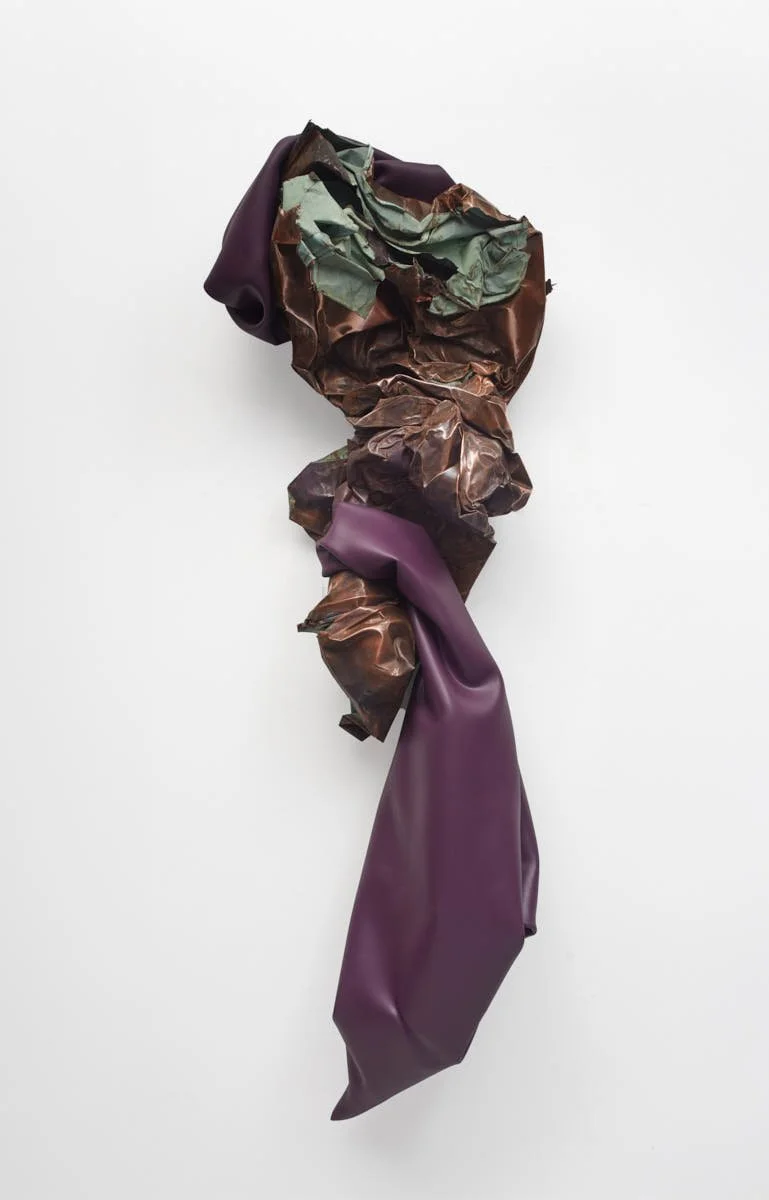
Kennedy Yanko - What Did I See To Be Except Myself, 2023
Paint skin, copper, 196 × 69 × 43 cm
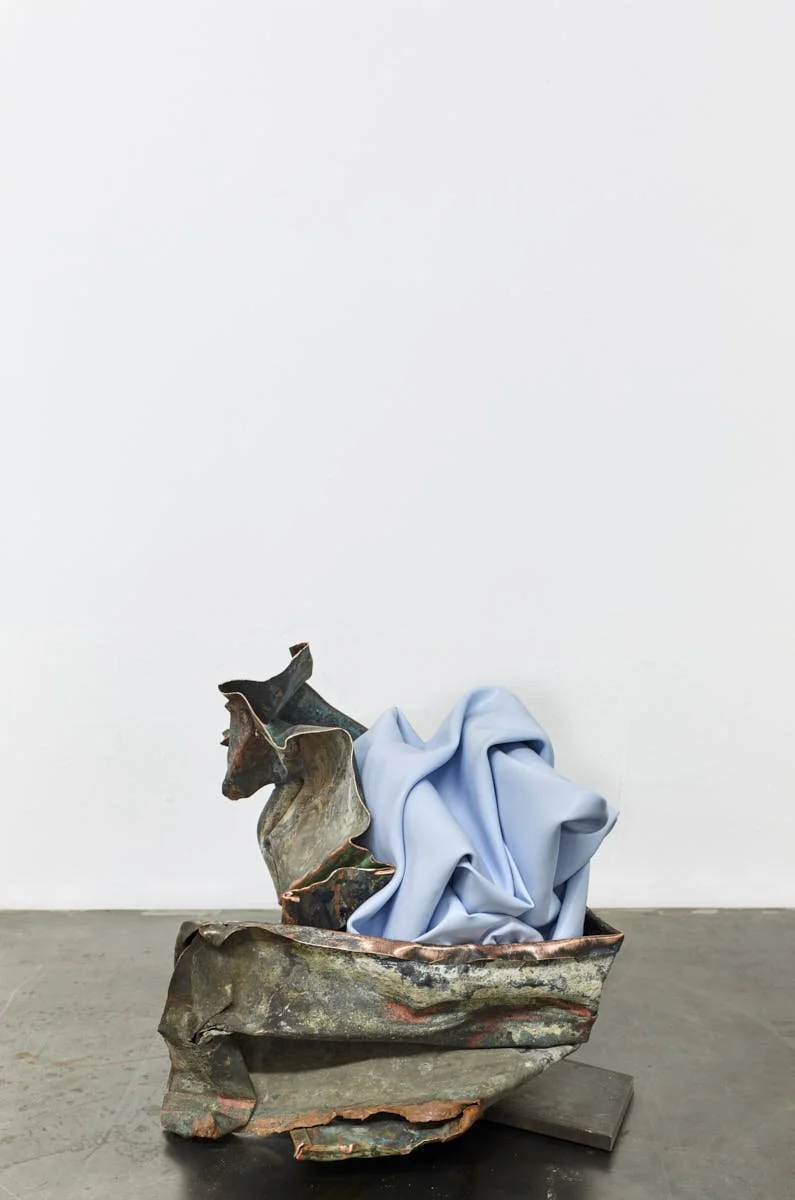
Kennedy Yanko - Occupied, 2019
Paint skin, copper, 23 × 28 × 23 cm
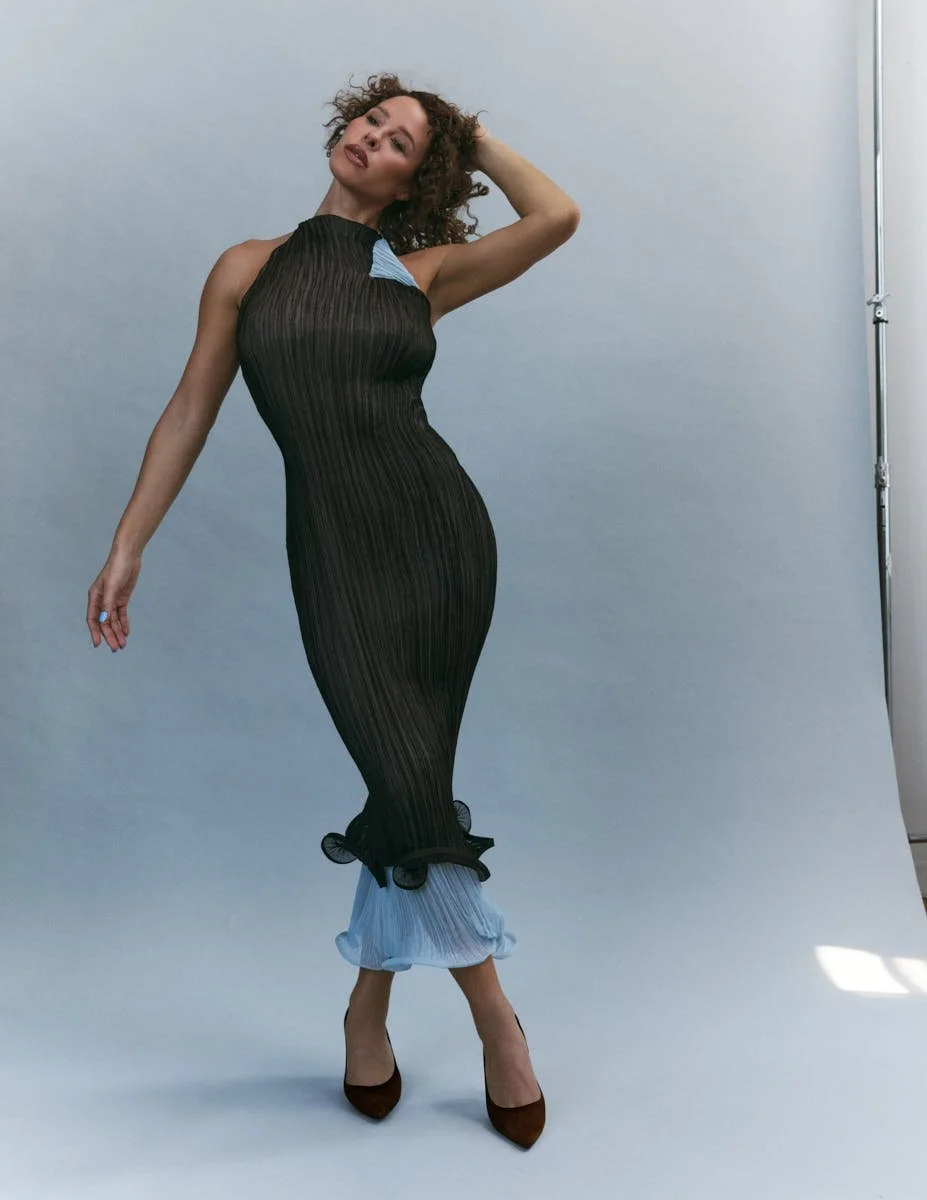
Kennedy wears a dress by YASSMIN SALEH and shoes by JIMMY CHOO
“Your relationship with that kind of material knowledge is actual alchemy, not just the metaphor. There's an ancient human idea about knowing material.”
Kennedy Yanko
Solid into liquid. It's such an interesting experience working with metal, watching it, or even just being in the yards. My relationship to metal is funny, because I watch this thing that buildings are made out of crack like a twig when it's broken. I have a strange relationship to something so powerful and strong. And then, when you're welding, watching it turn into this very subtle liquid.
Rachel Rossin
Interesting.
Even the way you can build so quickly with it. You can build something huge, fast. It gives you a certain sense of power.
Yeah, that reminds me of the spooky alchemy in some research I've been doing on what ancient peoples were doing — this idea of “knowing the stone.” There's a quarry — I think it's the quarry of Hatshepsut, the only known female pharaoh of Old Kingdom Egypt, a really interesting person. Her obelisk is the only one still standing where it was originally erected.
The tradition was this idea of “knowing the stone.” When they were pouring these enormous single pieces of granite, weighing 230 or 250 tons, they would know the stone and its veins in a way that's hard to imagine now. As a sculptor, that's what you're reminding me of — this kind of knowing that comes from working with a material for so long.
And the “ancient aliens” stuff is really about people losing touch with that. Thinking the only way these people could have known this is if they were aliens. But no, we just forgot how to do a lot of things because of what industrialization has done to us. Your relationship with that kind of material knowledge is actual alchemy, not just the metaphor. There's an ancient human idea about knowing material. Like the title of one of Susan Sontag's journals is As Consciousness Is Harnessed to Flesh.
Do you think the aliens-built-the-pyramids thing is bullshit?
I really do. I think it's an insult to humanity. Sure, it's possible, and science is always changing, but there's so much actual writing from human beings that the people who made those TV shows didn't bother to consult real archaeologists about. We have records of the architects on-site. There's an incredible tomb builder named Kha who I love. We have access to a lot of that knowledge.
I think it's a kind of human flaw, or feature. When something absolutely unbelievable happens, we want to attribute it to unbelievable means instead of what's often actually true. When you lose the ability to know what it is to quarry stone personally, or build things personally, it becomes stranger to imagine a people without cranes building cranes. But there were cedar forests in that area used at the scale of redwoods, all deforested, which is its own lesson in desertification. No, I don't think aliens built the pyramids.
Why do you think the most futuristic technologies keep bringing us back to these ancient questions? Ancient material sometimes feels more futuristic than the technology we have today.
Because the technology of the past was at body scale. It was in service of extending the body. You got on a horse to make your body faster, or you built a crane. We're living in the age of information technology, with globalization at a scale that's hard to comprehend. We don't manufacture or grow food in the same places we live. Our bodies and minds have become extended in ways that have outpaced our own evolution.
It's like what Marshall McLuhan says about how, with every technology we adopt, we make a corresponding amputation. Our autonomy is stretched so thin that it's hard to compensate for that in brains and bodies evolving at such a slower rate. Today we have extremely advanced information technology that exists not to extend the body but to extend our psychology and cognition.
Using the Egyptians as an example, their society was completely God-centered. They called it heka. It's hard to imagine. I think what you're describing is that we're like a fish trying to describe water. We only know the way our own society is built, so it's hard to imagine a world where people are building pyramids in service of God and death.
It's different, but it's still the same medium, and I think the adaptability of the human is totally available. When I hear you talk about ancient work in relation to new technology, and these ancient workers with alloys, I think about how, when you really work a medium, it becomes an extension of your body. When you really know and understand it. The same way our phones have become.
Yes.
One of my favorite thinkers, Buckminster Fuller, has this quote, “To do more and more with less and less until eventually you can do everything with nothing.” Technology is making things ever smaller, we're packing more information into smaller spaces, and we're developing communication technologies. He thought evolution would eventually move from miniaturization to telepathy.
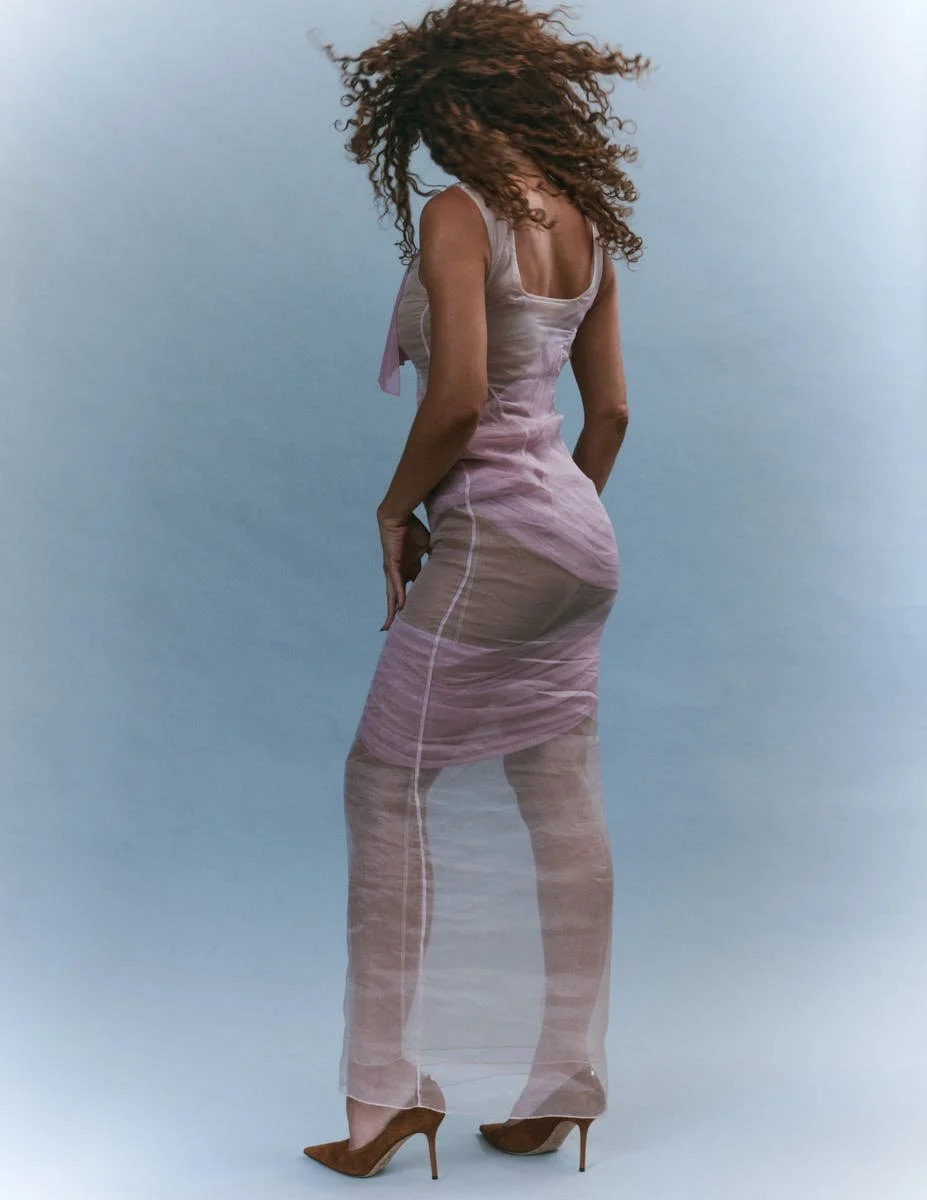
Kennedy wears a dress by YASSMIN SALEH and shoes by JIMMY CHOO
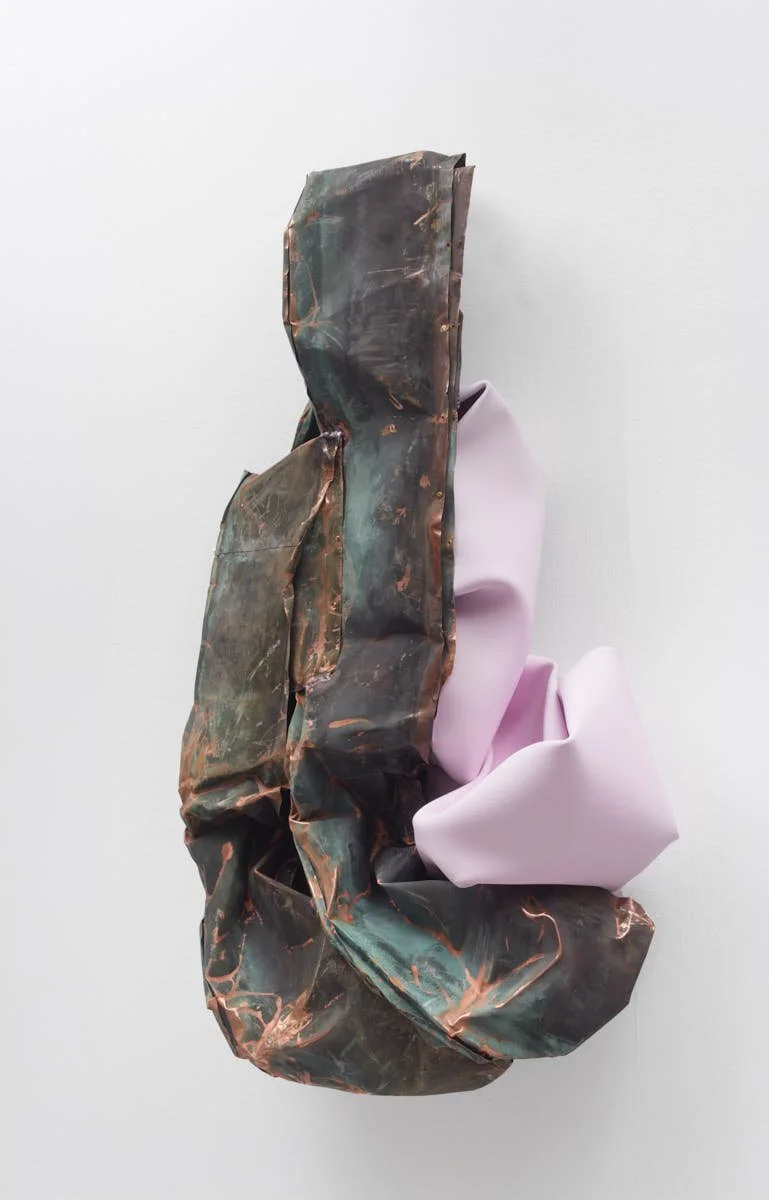
Kennedy Yanko - Come Celebrate With Me, 2023
Paint skin, copper, 130 × 76 × 41 cm
Photographed by Martin Parkesian
“I'm not interested in reform. I don't think it's worth trying to fix something. I think what we have to do is focus, build and be what we want to see.”
Rachel Rossin
Yeah, probably. That is where we're going. It's going to get very spooky, very fast.
I think a lot of people realize AI isn't really the problem. It is an issue, but we're so beyond that. It has more to do with how poorly prepared we are for the integration of those algorithms into biocomputing, or technology at the scale our bodies operate. We're in a nice place where technology is still separate, built out of metals.
We've only, in the last ten years, truly started. CRISPR was just approved by the FDA to start curing really difficult diseases. It's incredible to be living through this. And especially information technology works exponentially.
Back to the ancient stuff. It's all coming from the same place. What you were saying about Buckminster Fuller made me think of the cult of Pythagoras. He had a religion, one of my favorite things, way beyond St. Teresa. His god was really math, fractal-based math. He had a cult in the southern part of Italy, in ancient Greece. That's where the Pythagorean theorem comes from. He founded a lot of the reasoning behind why we have sacred spaces. His beliefs and findings, which are incredible, because it was all about math. He was like, “Of course this is God, look at it.” That's the foundation of why sacred spaces in ancient Greece had those proportions. He influenced ancient Persia too. It's really amazing.
Kennedy Yanko
It was all about celebrating?
Well, that was God — beyond God, really. Like, “Look at this cube.”
That resonates with me deeply, because it's about the reverence of presence, the miracles we have in every moment. I look at the leaves of an orchid and see the same design as on my fingertips.
That's real.
Perfect.
That's exactly it — as above, so below. Pythagoras believed God doesn't have a face, that it's this fractal that's everywhere… but it's something like, God is here, and God is here, and this is obviously God. It's like what you're saying. It's everything. God doesn't have a face. This is really cool.
I think these questions are so relevant today, because as we experience this rise in technology — and more space and time — we're going to lose language, we're going to lose different forms of intellect. A lot of things are going to change. It's going to be weird and different, but this is what happens, and I think there's a necessary responsibility for the individual to focus, to find focus, to use the tools to build a vibrant life in this world. And I think we have to fight for that, so it can grow in parallel. I’m talking about attention, focus and responsibility.
Oh, the attention economy. That's why we need art. It's one of the only languages we have that's outside of that. It's so undervalued, especially in America. Where we come from, we see the effects of it. You can see throughout time similar patterns of people being stripped by the contexts, or the societies, they're born into.
I love the story of Lucille Clifton you mentioned earlier. She's a great example of someone who saved herself with the ability to find meaning despite everything. Today's times can ask you to become a machine, which isn't a conspiracy. It's a byproduct of how fast things are moving, how things are built, because we're operating at a scale beyond human scale. So the way to find autonomy, sovereignty or fulfillment in the very little time we have here is what you're talking about, and why these things matter.
I try to get into the mindset of what that culture does to people. All you have to do is drive through America and see what it's doing to people. It's not a fun way to live. I like this conversation, because it's talking about the deeply sacred and the profane, the serious and also — not that serious. There's joy in it too.
I love that you bring in the necessity of art. Everything we're talking about is looking toward the future — I'm not interested in reform. I don't think it's worth trying to fix something. I think what we have to do is focus, build and be what we want to see.
The power of art that people forget, because of the commerciality around it, is that there are no rules. In science there are so many rules. But I can bring a scientist, a neurologist and a historian into a room and have an incredibly provocative, expansive, profound conversation around art, across all of our different mediums, one that could open doors and worlds. If I do that solely through science, or solely through the parameters of literature, things get stuck. That's also why I personally love abstraction so much. It creates a portal, a world for the imagination.
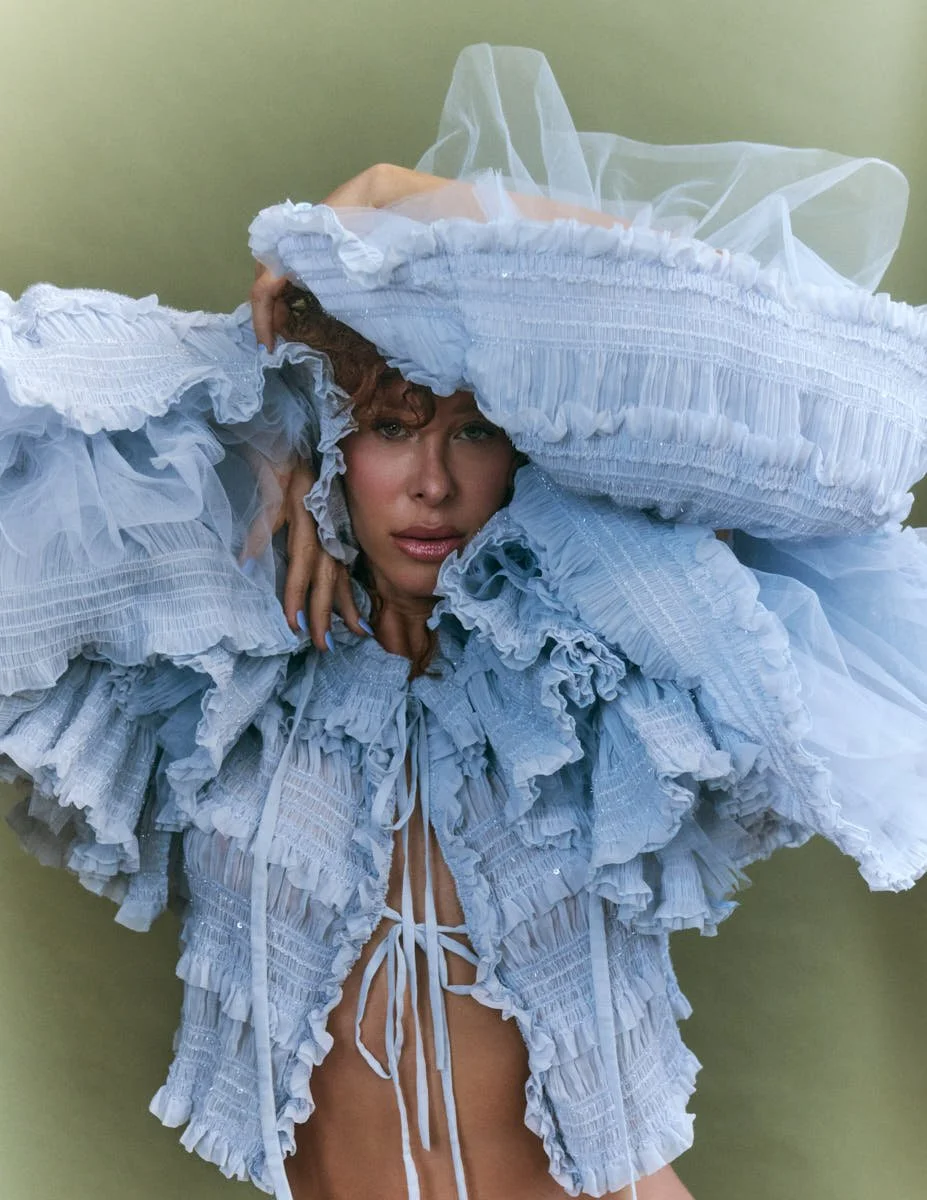
Kennedy wears a ruffled jacket by AKNVAS
artist KENNEDY YANKO
fashion photography TAKAHIRO OGAWA
artwork photography MARTIN PARSEKIAN
styling PACO LAMPECINADO
hair ERICA RHODEN
make up ESTEBAN MARTINEZ
creative direction PACO LAMPECINADO + KENNEDY YANKO
assistant HARUTO FUJIMOTO
production PACO LAMPECINADO + MUSICISMUSE
copyright LE MILE Magazine / Takahiro Ogawa / Kennedy Yanko / Martin Parsekian