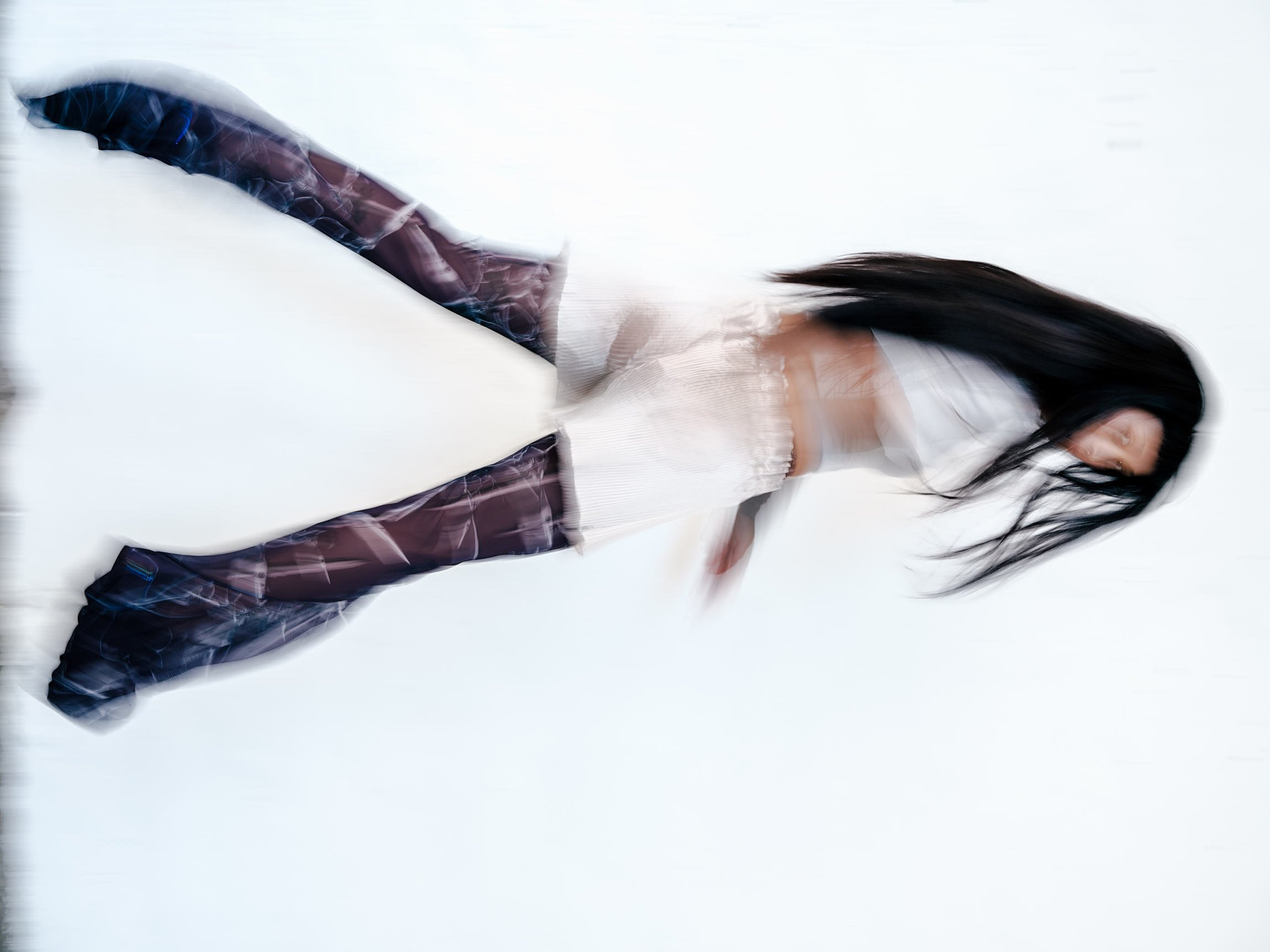
An interview with Barnett Cohen
Barnett Cohen turns Queer Surveillance into Choreography
interview + written KLAAS HAMMER
Somewhere between a caress and a punch, between the desire to be seen and the instinct to disappear, lies the unsettling territory of pain is a cave. For New York-based artist and choreographer Barnett Cohen, the body is never simply a body. It is a site of negotiation, where intimacy and aggression, tenderness and resistance, become difficult to distinguish. His work moves through these contradictions with an urgency that refuses easy interpretation.
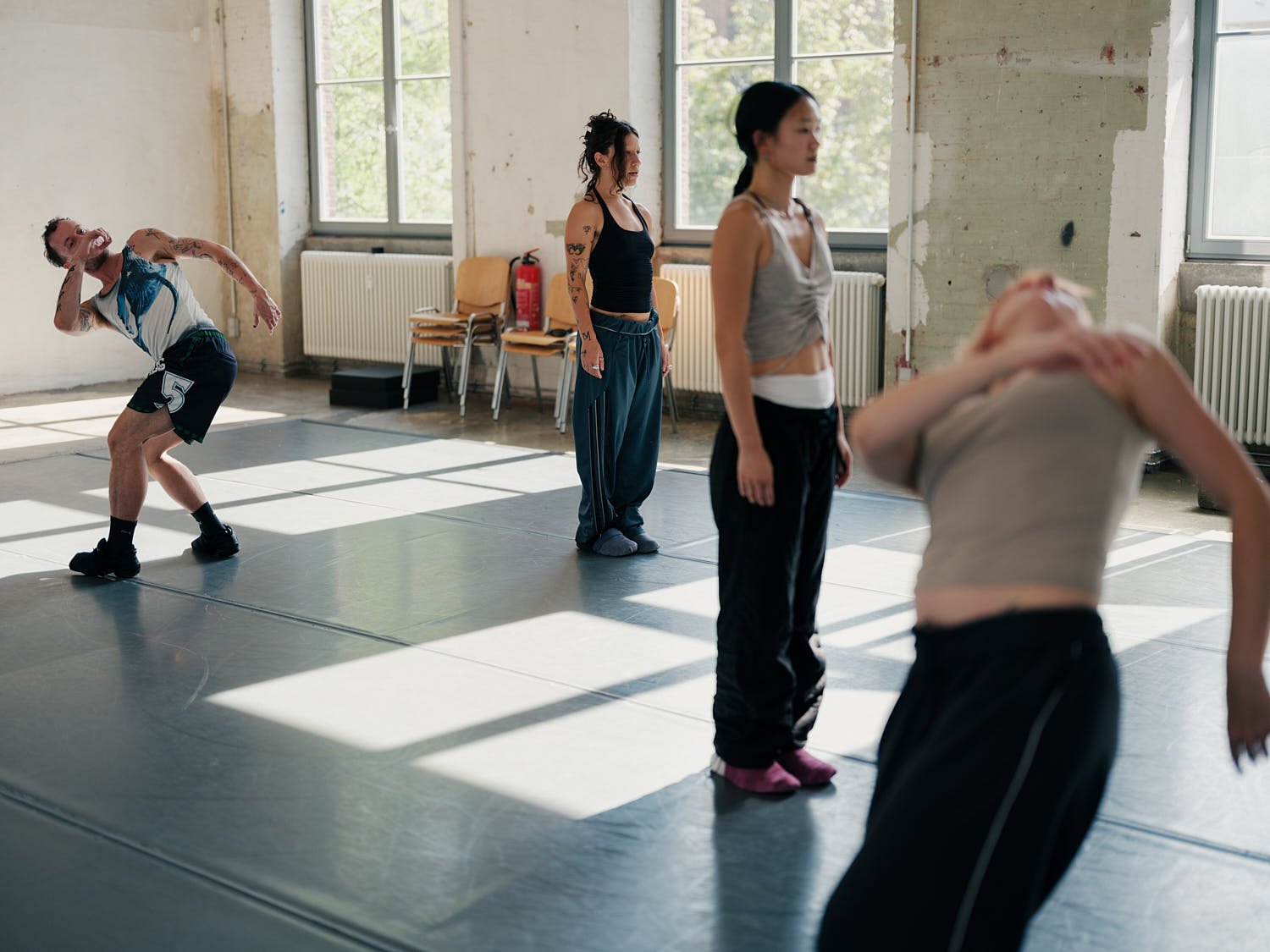
/ during rehearsals for Barnett Cohen’s contemporary dance performance pain is a cave at Callie’s Berlin, photographed by Peteris Viksna.
Built from text-based scores that draw on everything from queer theory and speculative fiction to dating app exchanges and the language of everyday life, pain is a cave unfolds as a choreography of fragments, collisions, and fleeting moments of connection. Rather than offering a linear narrative, Cohen creates a world that is deliberately elusive - one in which meaning shifts, bodies evade categorization and vulnerability becomes both a political and physical condition. As the piece takes shape during a six-month residency at Callie’s in Berlin, its questions feel particularly resonant. In a world increasingly defined by surveillance, polarization or the spectacle of violence, Cohen turns towards the complexities of touch and the possibilities of collective experience. Performed in the round, pain is a cave challenges the distance between audience and performer, asking what it means to witness, to participate, and to care.
Ahead of its premiere at Sophiensæle on December 4 and 5, LE MILE meet Cohen to discuss the politics of intimacy, the productive chaos of their creative process, and the radical potential of remaining unreadable.
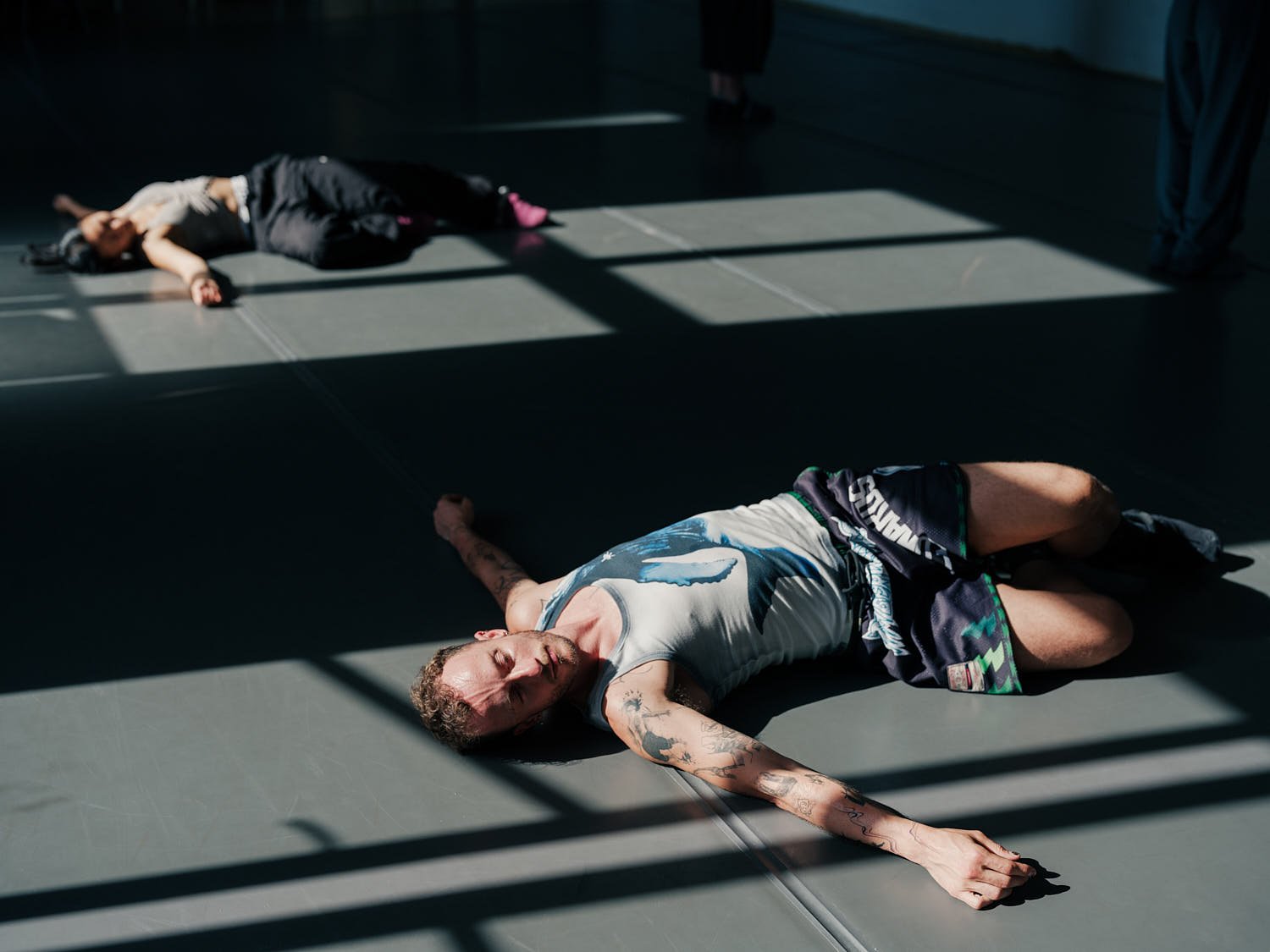
/ dancers during rehearsals for Barnett Cohen’s contemporary dance performance pain is a cave at Callie’s Berlin, photographed by Peteris Viksna.
Klaas Hammer
Before „pain is a cave“ became a performance, what was the initial impulse behind it? Was there a particular image, feeling or question that you kept returning to while developing the work?
Barnett Cohen
I compose text-based scores for dance performances. Any performance I make begins with me writing, an act of summoning and of digging. There is never a singular idea or particular image that motivates me into action, but rather a perpetual desire to alchemize the strange totality of everyday life into language that is more intuited than arrived at a priori. This holds true for pain is a cave. The writing is a vast amalgamation of my many distracted thoughts and concerns, hybridized with found language I have accumulated from text messages, dating app exchanges, speculative fiction, queer theory, and poetry.
You work with text-based scores that eventually become choreography. How did the writing for pain is a cave evolve into movement, and were there moments when the bodies in the room took the piece somewhere your words hadn't anticipated?
The text and the choreography operate along separate chronologies and in distinct spheres: the desk, where the writing occurs, comes first. The rehearsal room, where the movement is generated, comes after. Once I am finished composing a score, I bring it into the rehearsal room where, through the repetition inherent in the process, I transfer ownership of the text to the performers. In that handover, the score becomes sonic material. It no longer retains my meaning. It belongs to the collective. Over a six-month residency at Callie’s in Wedding, we are building the performance second by second, minute by minute. As we make new material, I am invariably surprised by where we go. In one recent rehearsal, New York-based performer and frequent collaborator Sally Butin morphed a chunk of text about making out with someone at the rave into an arrangement of sound reminiscent of Philip Glass’s Einstein on the Beach. We have also opened rehearsals each week to invited guests, followed by a short conversation, so the presence of strangers folds into the work as well (anyone who would like to attend can DM me).
The piece draws on a wide range of cultural references, from online conversations and speculative fiction to rave culture and TikTok. How did you decide which fragments belonged in this particular work, and what connects them beneath the surface?
No decision about what enters my work is fully conscious. I opt instead to create space in which ideas can emerge that are in conversation with whatever material precedes them. I do not, for example, say directly, “we need some of this and then some of that.” Rather, that results in this and this results in that. Recently, we pulled a sliver of choreography from a music video we found online into the work, and it immediately became weird and drippy, more reminiscent of a contorted body in the throes of food poisoning. I am, however, intentional when it comes to stitching the language and choreography together. Because my work is purposefully incoherent, it requires recurring choreographic elements (e.g. hard pauses, militaristic pivots, or anxious breaths) to suture its uncanny qualities together into one piece, into a total work.
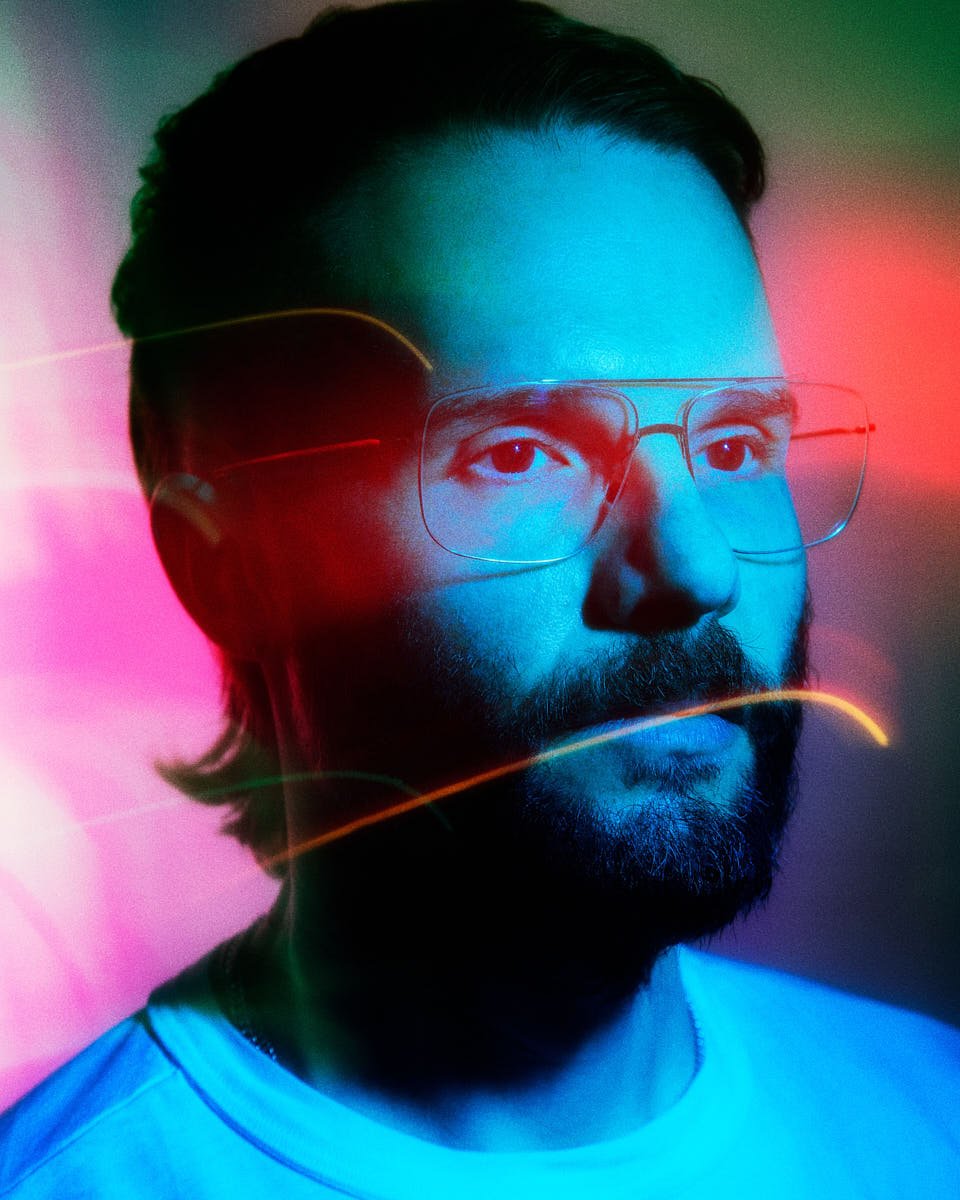
/ portrait of artist and choreographer Barnett Cohen, photographed by Andrew Hallinan.
In pain is a cave, physical confrontation and intimacy exist alongside one another. What did you want to explore through this juxtaposition, and has its meaning shifted as the choreography has developed?
As a queer person living in a world on fire, I am politically and corporeally invested in the line between love and violence, care and hate, caress and punch. I am curious about what happens when we smudge the line between these light and dark forces, which results in an amorphous gradient of bodily shapes that evade legibility. When we hug someone hard whom we have not seen in years, when we become physically enmeshed with a stranger on the dancefloor, when we fuck, we might experience this sensation, a pressure that is neither wholly soft nor wholly hard. A fair amount of the physical coupling in pain is a cave, where performers make contact with each other, draws on a kind of experimental stage combat, a discipline that simulates harm through total care for one's partner.
The work engages with different ways of existing in a body, from the desire to be visible to the need to remain unseen. How do these tensions take shape in pain is a cave, and what do they reveal about the relationship between queerness and vulnerability?
I subscribe to the theory Bogna Konior articulates in The Dark Forest Theory of the Internet, which borrows from science fiction to describe an online world where to be seen is to become prey. I believe it is in the best interest of queer people to retain the possibility of illegibility, even when, here and there in a few cities, some of us feel momentarily safe. That safety is never guaranteed, as we see with astounding clarity in the US and here in Germany with the ascendancy of the AfD. Alongside this anxiety about visibility, I resist the transparency assumed of us by the very surveillance systems we use to promote ourselves and our work. In pain is a cave, this nervousness becomes choreography: the work moves with such agility and speed that it evades capture, refusing to be labeled and thus known.
The performance places the audience close to the action, making spectators part of the world unfolding around them. How does this proximity change the experience of the piece, both for the performers and for the people watching?
Staged in the round, pain is a cave dispenses with the fourth wall implied in proscenium architecture. Performers speak directly to audience members or hold their gaze for long periods. On the level of the performative experience, this charges the work with energy, reduces passive spectatorship, and implicates the audience in the collective thrill of world-building. On a more subliminal yet political level, it challenges the default position of the bystander, the contemporary posture most of us inhabit as we watch mass death unfold on our phones.
As you prepare to bring pain is a cave to Berlin, is there something about the work that you still haven't fully resolved, or a question you hope the performance will leave open rather than answer?
Nothing in my work is ever fully resolved; it is only temporarily appeased.
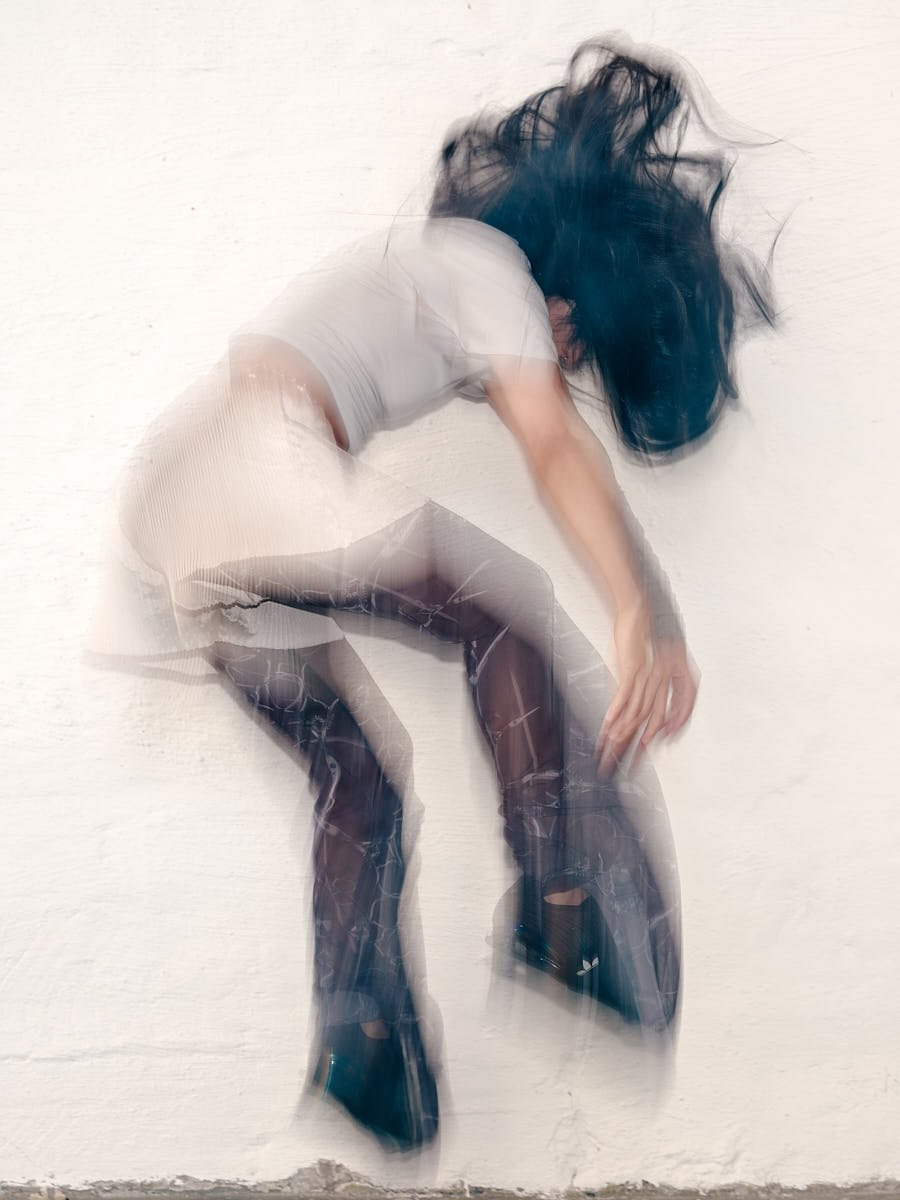
/ Barnett Cohen’s pain is a cave, photographed by Peteris Viksna.
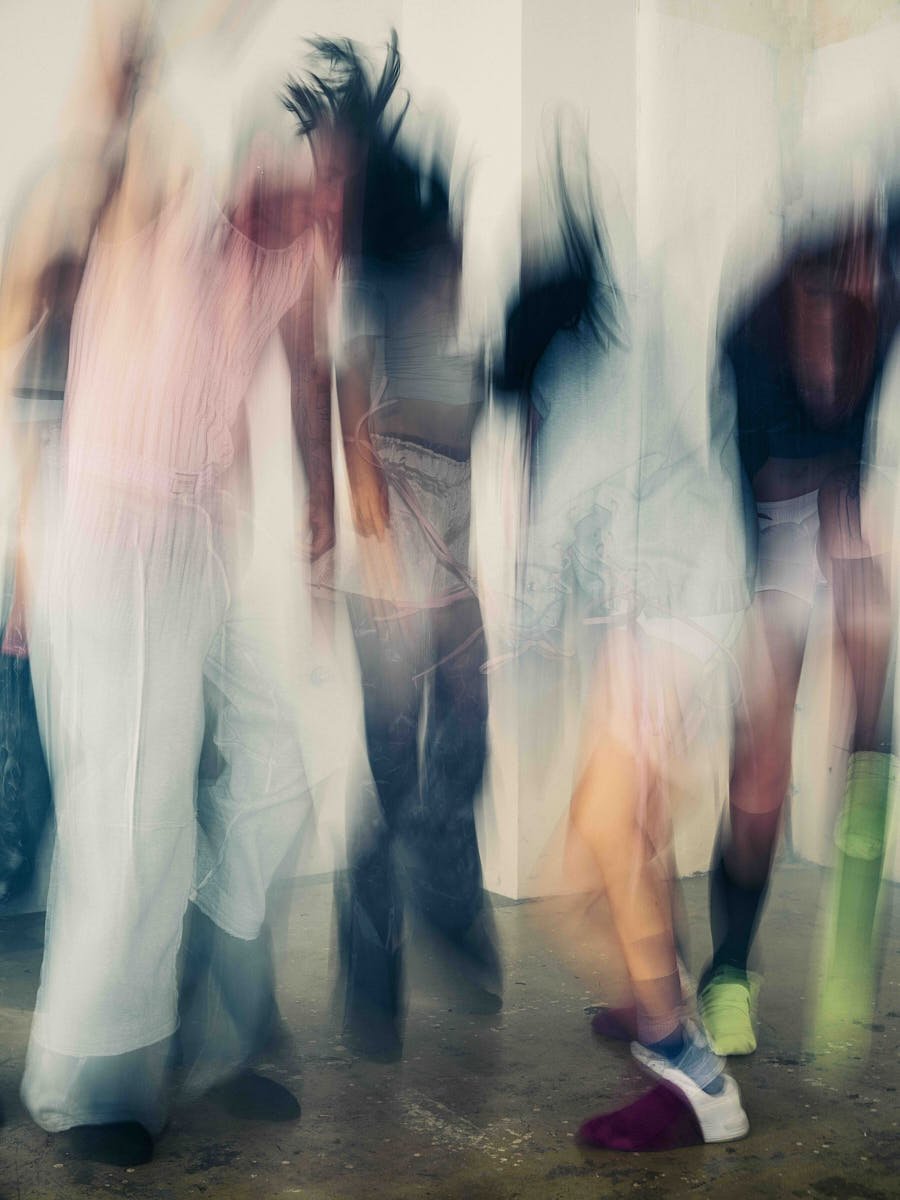
/ Barnett Cohen’s pain is a cave, photographed by Peteris Viksna.
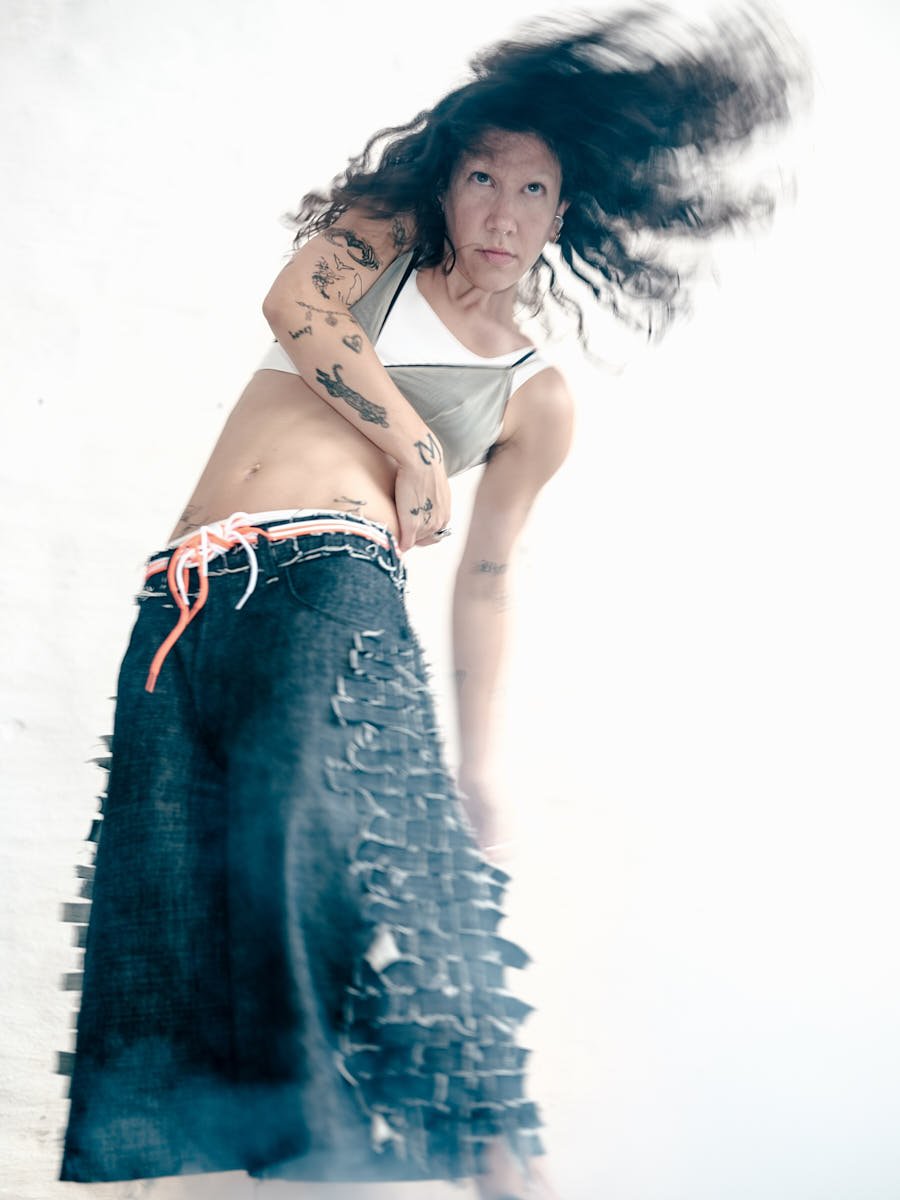
/ Barnett Cohen’s pain is a cave, photographed by Peteris Viksna.
portrait BARNETT COHEN
photography ANDREW HALLINAN
pain is a cave, BARNETT COHEN, 2026
photography PETERIS VIKSNA
styling JENNILEE & MANÉ BONAMIN
looks MARIS+PYPER & NOWRUBI
performers SALLY BUTIN, INA JIA GUO, TED LITTLEMORE, MAQUE PEREYRA & VERONIKA TIKHONOVA
location CALLIE'S BERLIN