Double-click to edit...
.digital
Madior Fall On Art, Identity And Longing To Belong
written CHIDOZIE OBASI
The first thing you notice about rising screen star Madior Fall—aside from his raven locks and framed cheerful features—is his presence: soft, but assured. He emotively reflects the way he speaks: confessional, unfiltered, and strikingly relatable, with a pensive melancholy and wit that linger in equal measure. When we dive deep into conversation, there’s an uncanny fire in his voice—delivered like a knife disguised in soft butter. Or better put: Raw, emotional, intimate; and at times, cutting.
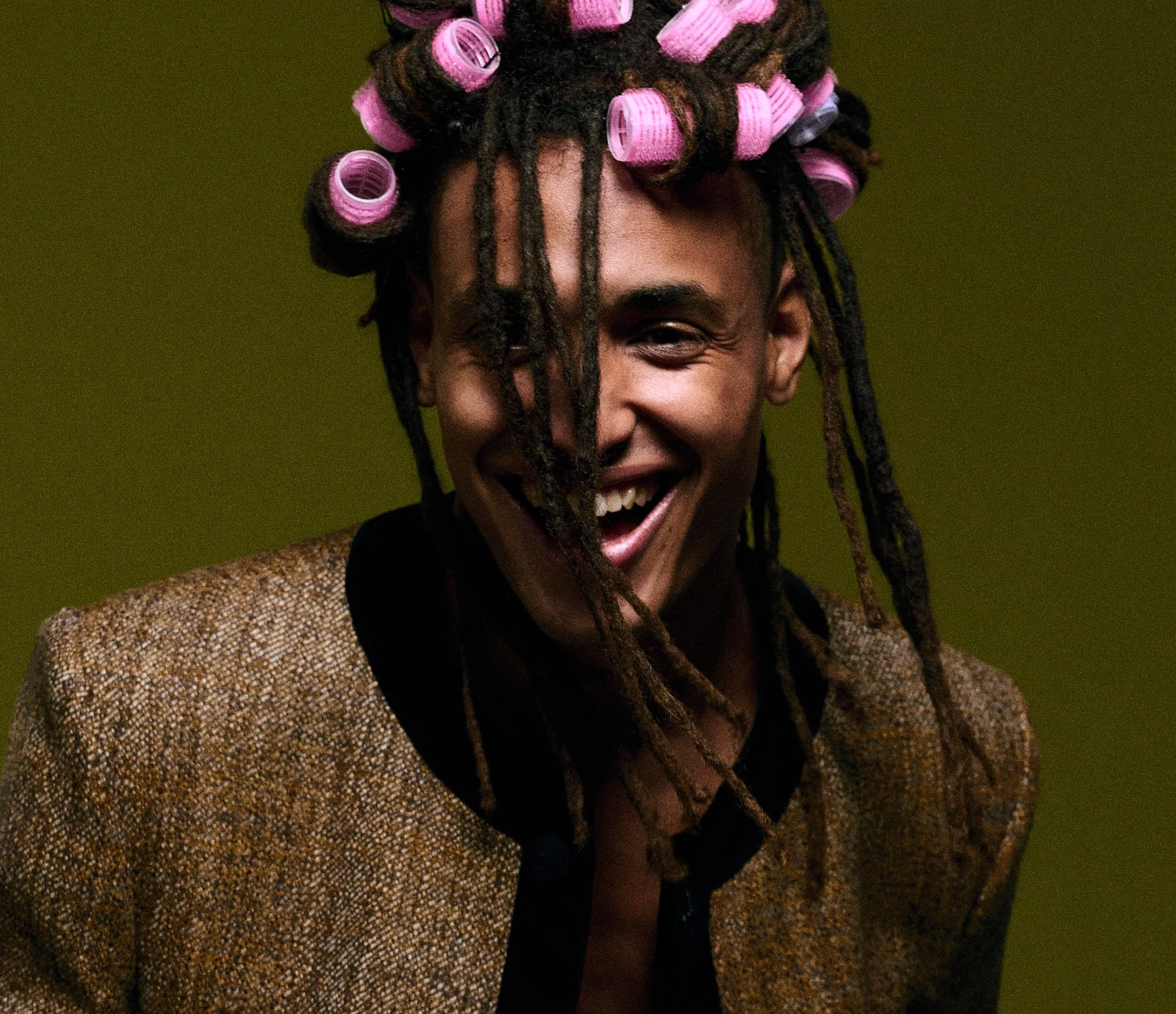
Really cutting. Born to a Senegalese father and an Italian mother, Fall grew up in Paris, raised amid French culture, but moved to Italy when he turned four. “I have a blend of cultures in me,” he shares. “There’s a little bit of Senegalese, a little bit of Italian, a little bit of French; I see myself as an Italian from a cultural perspective, but I was infused with many different realms,” he confesses. He emerged, like many of his contemporaries, from the confines of his childhood bedroom toward the end of the COVID-19 lockdown; in fact, his willingness to break boundaries as a second generation Italian, doesn’t stem from ego, but from a deep-rooted belief in his artistic vision. When we speak in October, we’ve just wrapped his LE MILE shoot, a set buzzing with laughter and lightness (despite the early AM start). And yet, beneath the ease, there was no mistaking his sense of poise and control. Every shot was met with intent and consideration—a kind of deliberate self-curation unfolding in real time. Below, the actor unpacks all-things identity, discrimination, and future hopes. You’re welcome.
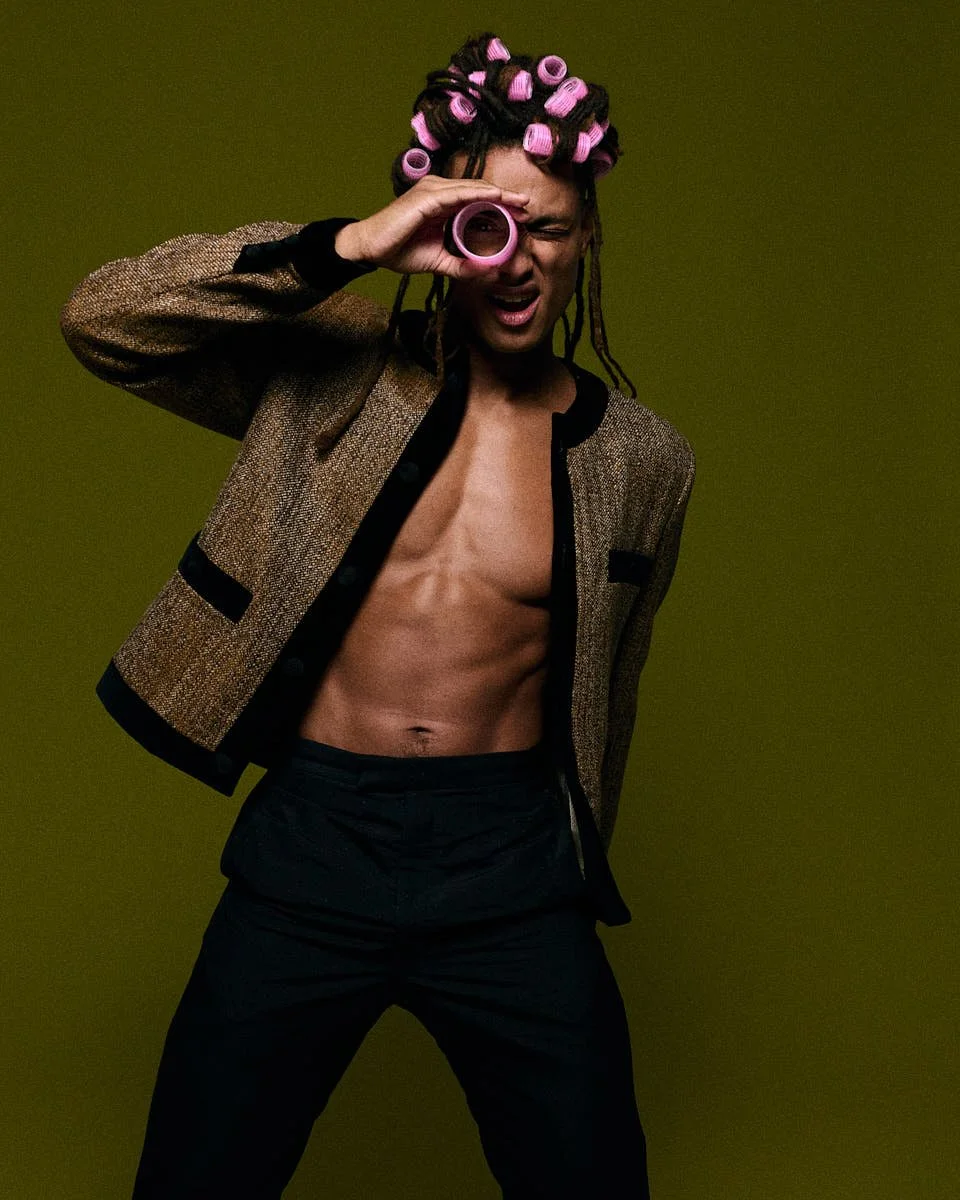
Madior wears a total look by VALENTINO
Chidozie Obasi
How would you say that your Senegalese culture shaped your identity as a person and as an individual?
Madior Fall
It’s a bit strange, because my dad was adopted when he was two years old from a European family. He's not very connected to his cultural roots, and had to reconnect at a later stage of his life. He’s 64 now, and he only reconnected around a decade ago. I grew up not knowing the language, Wolof. I went to Senegal when I was fourteen, and figured out so many things about myself because I think so many of them are in the blood. Going there for the first time for me was such an impactful thing, because I now understand where some of my taste and demeanour come from. I’m still learning, because I never went back to Senegal from that time, so it’s been a long time.
Could you now unpack how you got into the creative and fashion industry?
It was really by accident. I was trying to find a way to make money at seventeen: I went to school, but I didn’t have any special skills. My mother was the one who recommended me to try modelling. I went to an agency and they told me I was too short. And then the next day, out of nowhere, an agent at Crew Model Management noticed me in the metro. From that moment, I started modelling, fell in love with fashion and what it meant to be an insider and not an outsider.
Who and what were your key influences while growing up?
Professionally speaking, I think Denzel Washington was one of my biggest inspirations. Seeing a Black man on screen portraying roles with such depth was something that I was really looking up to because I wanted to become an actor of that calibre. And I still want to, obviously. But you know, I come from the basketball world because I used to play basketball for about ten years. I used to dream about becoming an NBA player, but I’m too short for that. But LeBron James’ dedication and work ethic is something that really drove me to work hard on anything that I do. Barack Obama was also a big influence in my life because, in our world, growing up and seeing a Black man in that position, it was a first time for everybody. I personally never saw that in the Occidental world. When he became president, it gave me such hope.
And in terms of personal influences, do you have any?
My dad is one of my biggest mentors and inspirations because he’s the one who’s the hard worker in my family, and he’s the father figure I look up to. And he always told me to follow whatever your heart tells me to do. My mom is an innovator because she’s the one who, in the 1970s, saw my dad—a Black man in Italy—which was not something common. And she fell in love with him and built a family with him.
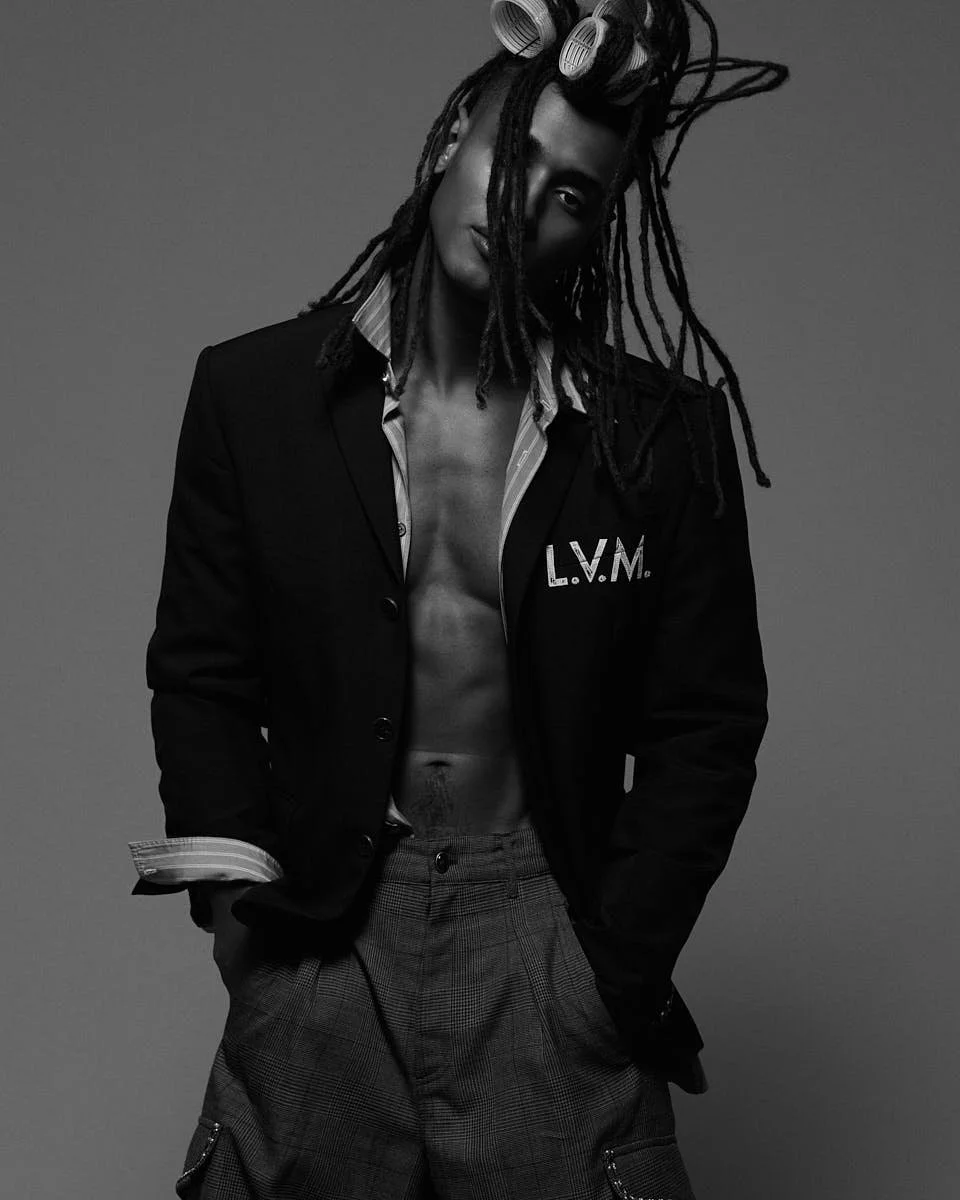
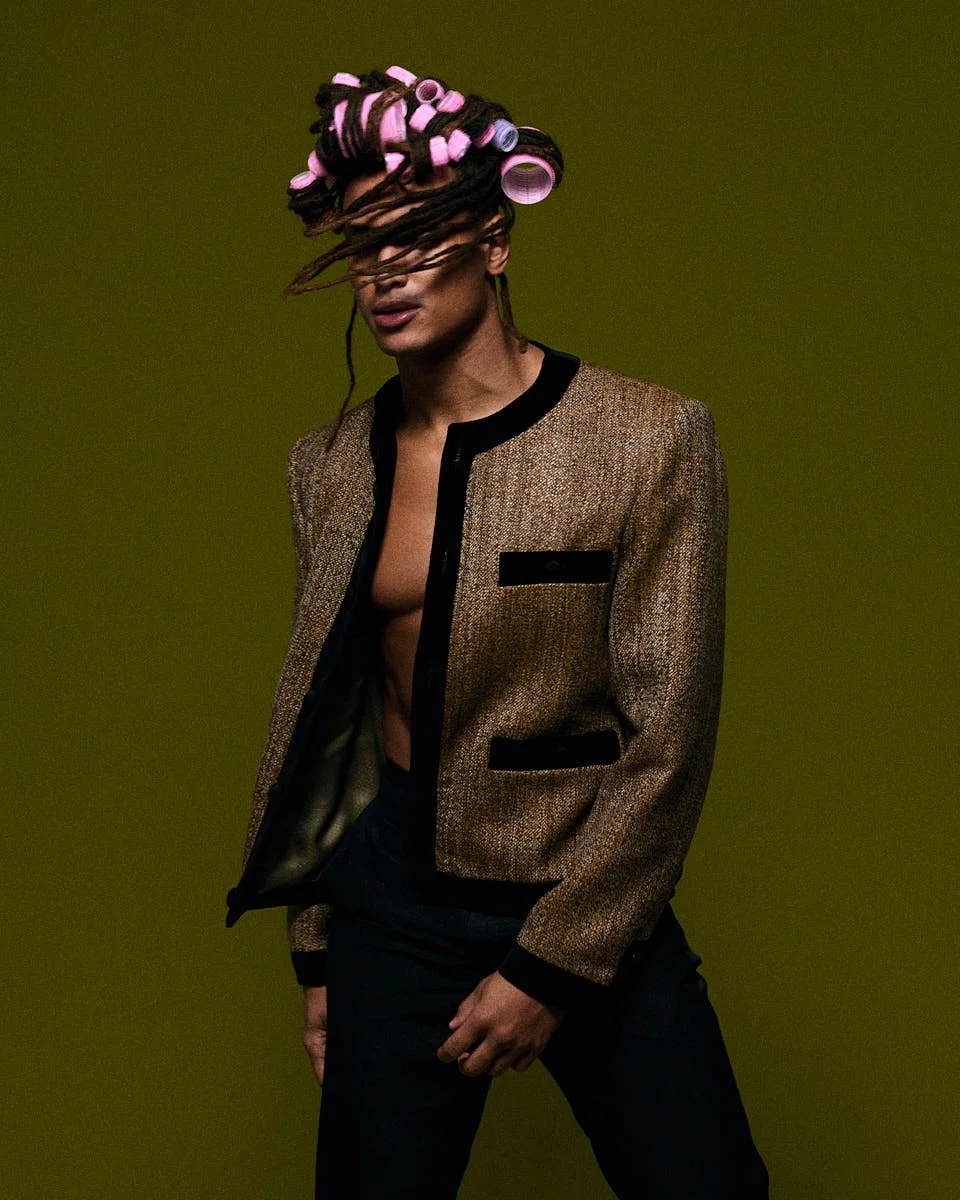
Madior wears a total look by LOUIS VUITTON
And now tell me, how was it growing up as part of an Afro-Italian family?
It’s interesting because I’m mixed race. I’m right in the middle of Italians and Senegalese culture. I never really felt Italian until a certain stage when people started treating me differently. I see how they treat other people, but something in society made me feel like an outsider in a way. When I was a kid, I didn’t feel that at all, because when we’re kids, we don’t really have those notions. But then when you grow up and see how some people start treating you differently, you start feeling like you’re not exactly part of the society a hundred percent. You’re somewhere an outsider or different. I always knew I was Afro-Italian, but it never made me feel less Italian. So perhaps it’s more of a belonging aspect as opposed to a cultural one.
So what made you pivot to acting?
Acting was always my dream as a kid. I used to watch Will Smith and wanted to be like him. I wanted to do movies, like action ones. In my life, I really never crossed paths with acting; I tried theatre when I was in school, but then I had the opportunity to do an audition for a TV show called Zero, which ended up being my first role ever. And I really had no experience at that time. So from there, I really fell in love with acting.
There’s been many roles that you’ve encompassed and embodied that have shaped your career so far. What would you argue your biggest pinch me moments have been, and which ones would you say have shaped you the most as a professional?
Well, any time on set for me was really thrilling. But if I want to be specific, perhaps on La Dolce Villa, my first American production, was a dream because I always wanted to work within a US crew. I ended up working for an American production in Italy, but with an American director, Mark Waters, who’s huge. He directed Mean Girls, a very big movie. When I was on set with him and he was giving directions, I realised I was doing what I’ve always wanted to. But at times, I have somewhat of an imposter syndrome. But then you just do the work and it’s so great to have the opportunity and learn from these people. Being infused with such knowledge of the industry and of the work really teaches you the depths of this profession. You have to know where you are and know where you’re headed, always taking a step at a time.
Talking about Campus Drivers, could you unpack the storytelling, the filming process, and how it came about?
Campus Drivers was released in November, and it’s based on three books by C.S. Quill, a French writer. It’s a new romance and a story about these four drivers who are kids from university. They created this app with their four cars, and drove people around the campus. Every book is around one of these characters, and I play Donovan. The second book is about my character, but I’m still in the first one. This was the opportunity I was looking for in France because I speak French, and I never had the chance to act in the language. We shot in the south of the country for about four months, and I worked with such great people. We really became friends and I got to see what it is to work in France with a French team.
Talking about The Label and Postcards from Italy, what’s the storyline and how did you get approached?
In The Label, I have a bigger role while in the other production my character is less in plain sight. In The Label, out on Netflix, the TV show recounts a story of a music label, and I play a singer. It was really a challenge for me because I never sang: I’ve done a musical, but it was not that easy.
Moving on to deeper territory: the lack of systemic representation in the acting realm is an ever-evolving issue that can no longer be brushed aside. From fake allyship, racism to wokeism, Black creatives have borne the brunt for centuries. How was your personal experience with racial injustice, discrimination, and how have you tackled this throughout your life and career?
It’s been a rollercoaster. When I started in fashion, there was a wave of fashion brands wanting Black people. I rode that wave, but my question was: was that authentic? Because before that, I never got approached by the luxury fragment of the industry. But moving back to cinema, which is something that is closer to me right now, I’m going to speak for Italy. I think it’s slowly getting better. When I started, Zero was the first ever moment that I saw a Black person on screen speaking Italian without an African accent, which was something so mind-blowing for a lot of people. And after that, I started seeing it a little more. Obviously, we’re still miles away from where we should be.
And have you ever felt tokenised or discriminated against?
I wouldn’t say discriminated, but most certainly tokenised. Oftentimes, you get castings that depict you as the cliché of an idea of what white people think Black people are or could potentially be perceived as (by the eye of the viewer). I try to avoid those kinds of roles because my message is different. I want to show a little Black kid that is watching my movies that he’s represented and not made fun of. And so, for me, the way I choose my roles is very important. It has to have some sort of humanity, not just an image of what they think it is. We’re miles away from where we should be, but I see it getting better, especially with the presence of Black writers.
How do you tackle mental health rejection?
It’s been tough, especially in the beginning, getting used to rejections, as one always has some sort of expectations. You have to build tougher skin because it’s a business where you will get maybe 99 no’s and one yes. And that one yes is going to be the right thing for you. And if you don’t have that in you, it’s going to be tough to survive in this business because you’ve got to be attached to the process and not the outcome. I personally love the process of acting for someone, finding a character—even just the exercise of doing a self-tape—and a casting.Otherwise, my mental health will deteriorate fast. But in an industry where everything is a show and a trivial portrayal of one’s image, I try to stay authentic to who I really am and to what that kid really wanted.
Where do you wish to take this path next?
My hope would be to have an international career. I’ve always wanted to travel for my work. And my challenge right now is to ensure I’m able to act credibly in three different languages: Italian, French, and English. I’m focused on expanding my career in these three different countries, which are America, France, and Italy, while representing people from these countries.
Any final reflections?
It’s actually refreshing to have someone actually ask me about my experience with my struggles due to my skin colour, but also my culture, the mix, and the blend of it. I know you understand that, really. I hope kids from all over the world, Italy, France, feel represented by what I do. And inspired. That’s what I hope.
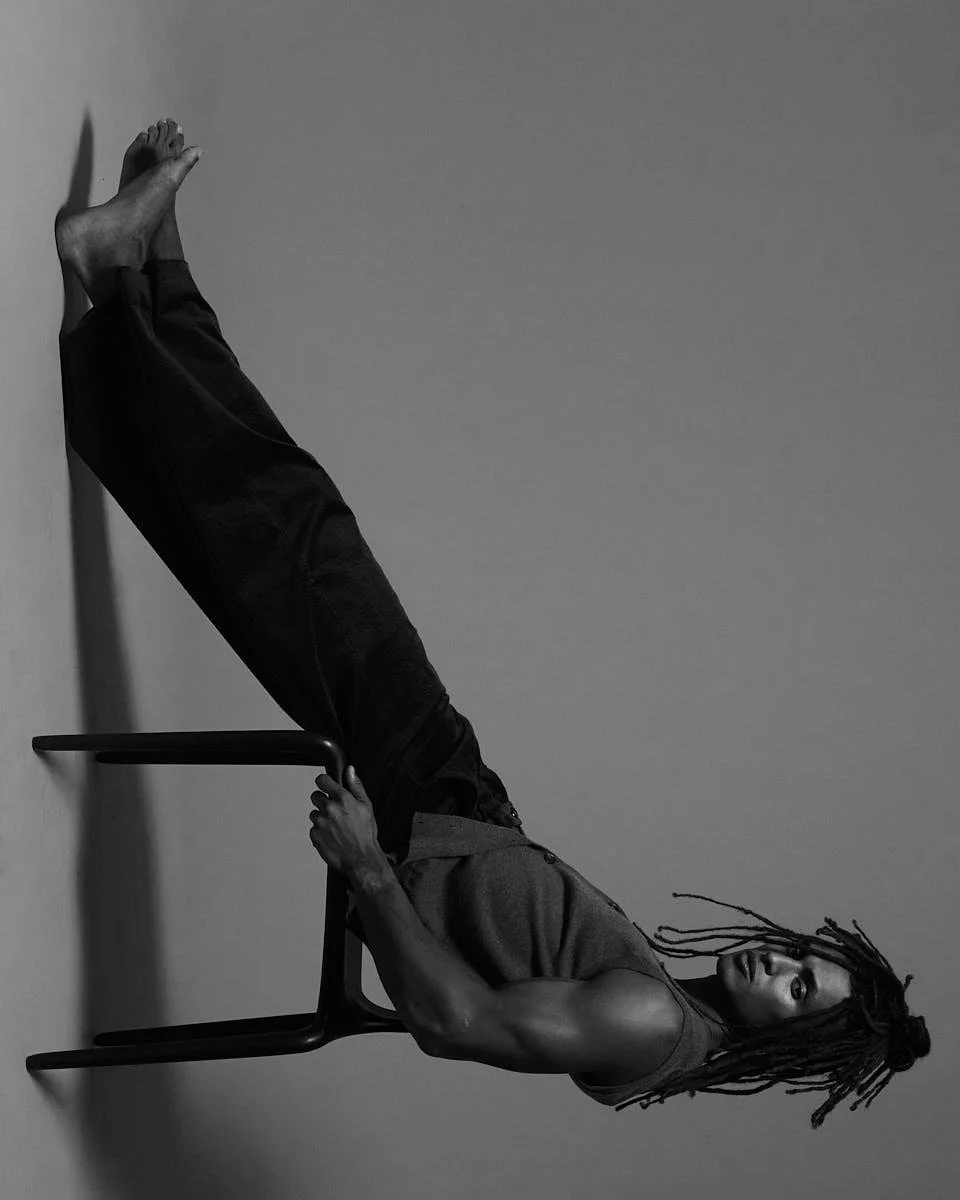
Madior wears a vest by LORO PIANA and trousers by QUARTO ATTO.
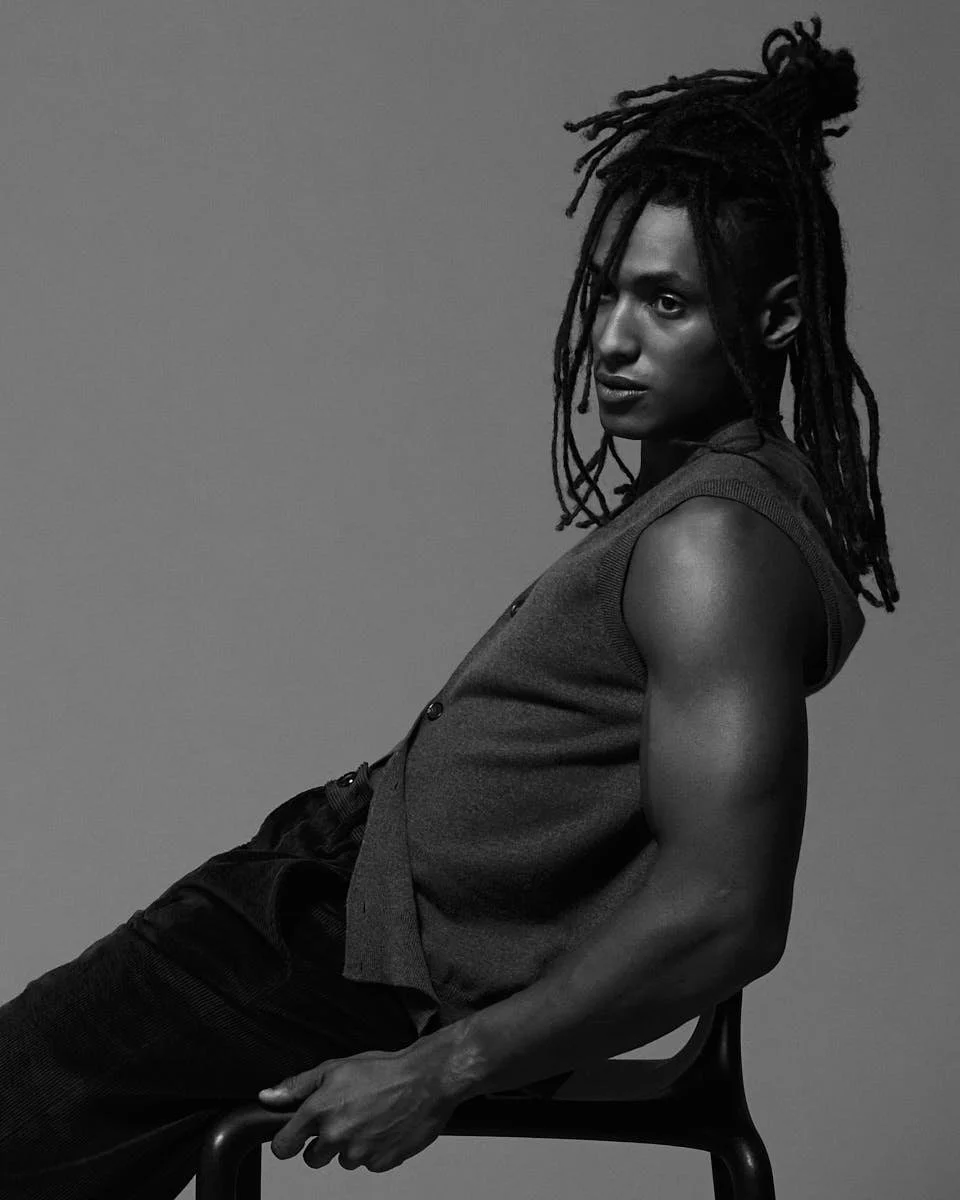
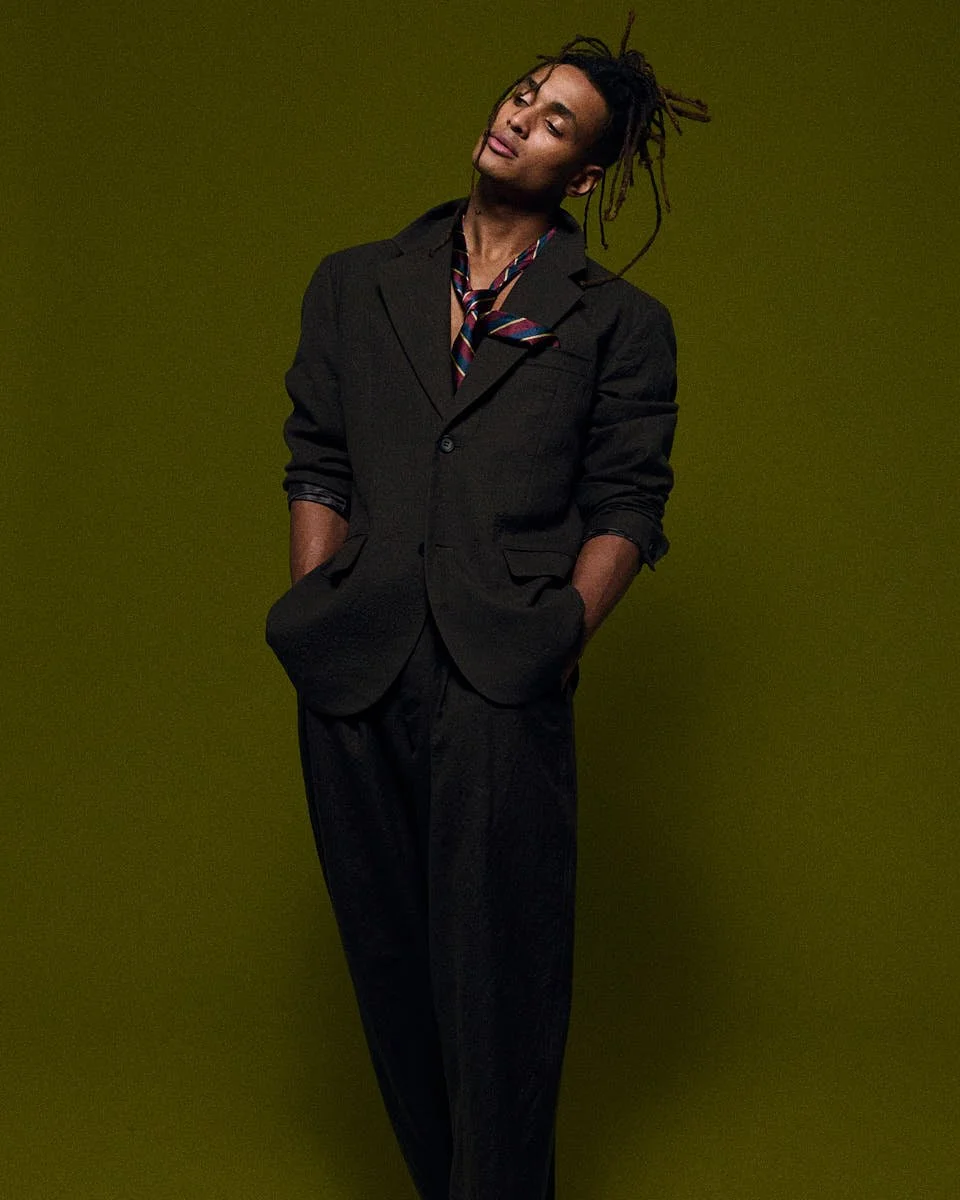
Madior wears a total look by IM MEN, a tie by SEBAGO and shoes by CHURCH’S.
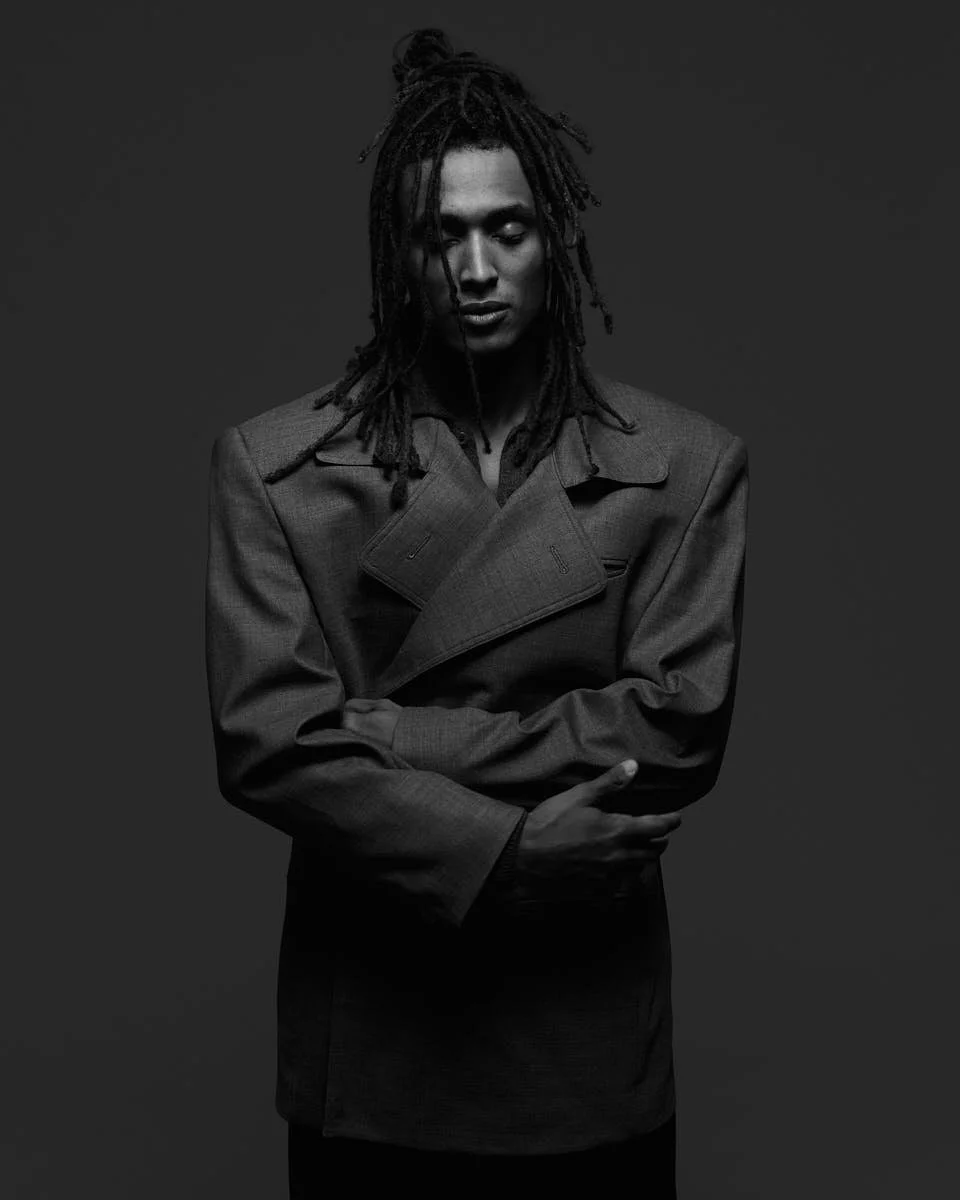
Madior wears a blazer by ACT N1 and a sweater by SON OF A TAILOR.
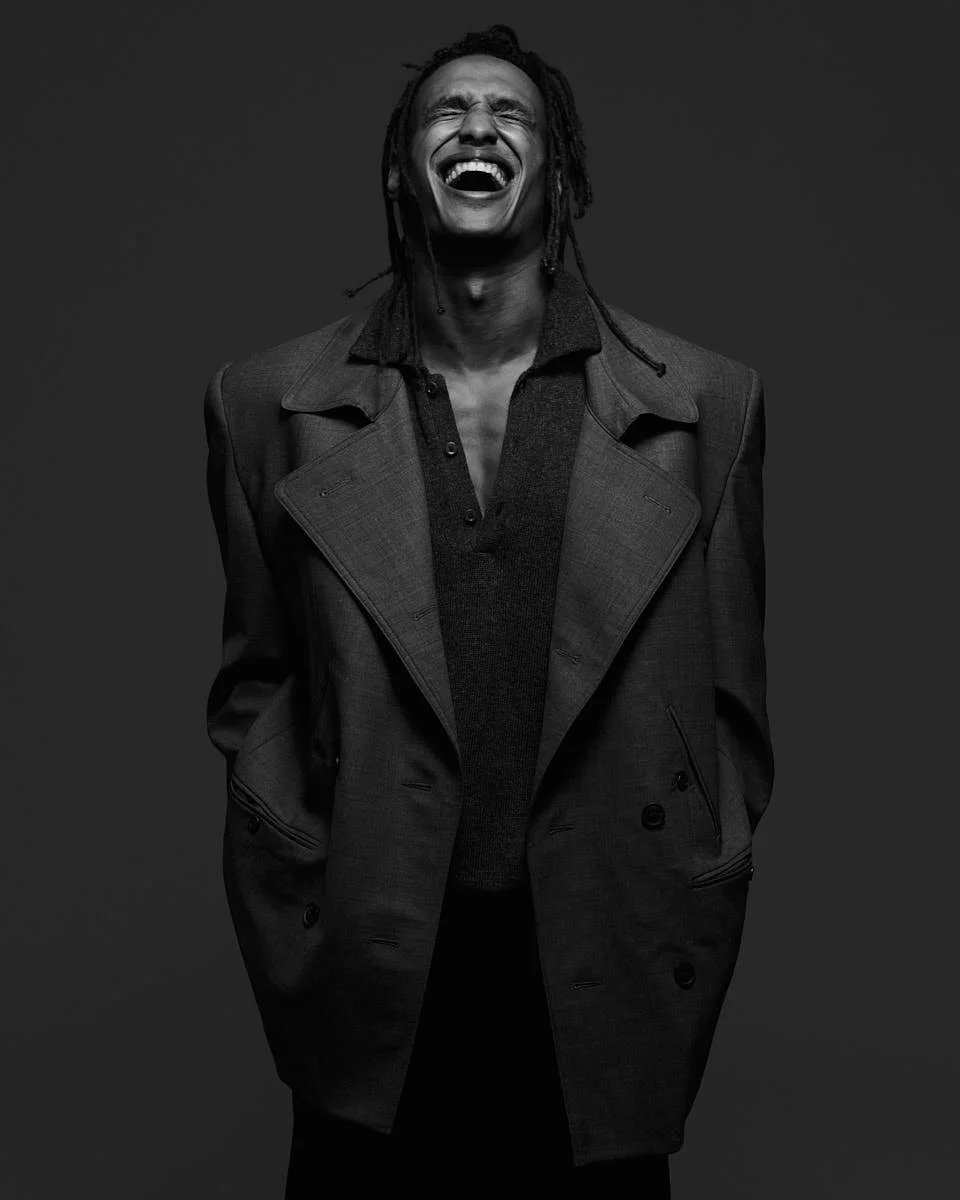
talent
MADIOR FALL
photography COSIMO BUCCOLIERI via STUDIO REPOSSI
fashion market director + stylist CHIDOZIE OBASI
head of production JESSICA LOVATO
contributing fashion editor EDWARD PUSCA
fashion coordinator FILIPPO CANCELLIER
make up DIANA DJURDJEVSKI via STUDIO REPOSSI using MARE SKINCARE
hair GIOVANNI ERROI via THE GREEN APPLE ITALIA
photography assistant ANTONIO CROTTI
fashion assistants ISABELLA RUIZZ + SIMONA VERNAZZA + AURORA TOMASELLI + ANNA LAMASTRA + EMMA DE GUARDA + GIUSEPPE MUSSO + LETICIA SALVIONI + SEBASTIAN TOMMY SINANI QUISPE
credits
all Images (c) LE MILE
and Cosimo Buccolieri