
.specials
Two Centuries of Engagement Rings with Antique Jewellery
A ring made a century ago can reveal a surprising amount about itself. Its metal, the cut of a stone, the setting, a hallmark, an engraving or a later repair can place the ring within a specific time period. What usually gets lost is the more personal information. Who wore this ring? What was the occasion on which it was given and how did it reach the next owner?
For twenty years, Oliver Rheinfrank and Dirk Holzfuss have stood at this point between the known and unknown. Rheinfrank Antique Jewellery specialises in antique and vintage jewellery from the early eighteenth to the late twentieth century, with showrooms in Berlin and Munich and an extensive online shop. The collection spans Georgian, Victorian, Historicism, Art Nouveau, Edwardian and Art Deco pieces alongside later twentieth-century jewellery, including rings, bracelets, brooches, lockets, earrings, men’s jewellery and engagement rings.
When Rheinfrank and Holzfuss began building the company, antique jewellery was still perceived, Rheinfrank recalls, as old-fashioned and commercially uncertain. He was working as a stylist and studying art when his first buying trip took him to Stockholm. Looking closely at the workmanship of the rings, brooches and necklaces changed his understanding of the field. London, Barcelona and Paris followed before he embarked on buying trips across Europe.
Those early journeys developed into a network of more than 40 international dealers, with contacts extending from Italy to the United States. For a period, Rheinfrank moved to London to coordinate acquisitions and work more closely with international dealers, whilst Holzfuss spent time in Milan maintaining relationships with clients in Italy.
Such networks are fundamental to a trade built around objects that have already changed hands. Estates are divided, family ownership ends, collections are sold and dealers exchange pieces across borders. Jewellery can disappear into private possession for decades before resurfacing somewhere else. Cultural anthropologist Igor Kopytoff described objects as capable of passing through different social identities over time, changing their status as they are bought, gifted, inherited, stored and sold again. With jewellery, those shifts are particularly tangible because ownership and personal use repeatedly alter the meaning of the same physical object.
At Rheinfrank & Holzfuss, finding these pieces and deciding which ones enter the collection remains largely Oliver Rheinfrank’s responsibility, while Dirk Holzfuss concentrates more closely on sales. Their account of the past two decades suggests that this division has been productive precisely because these separate roles. Rheinfrank has a weakness for elaborate individual pieces whose commercial prospects may not be immediately obvious, whilst Holzfuss keeps the wider business moving around those decisions. This tension helps to explain why unusual single pieces coexist with categories that appeal to a broader clientele. The business itself has grown from a twelve-square-metre sales space to a Berlin showroom of 165 square metres with more than 60 vitrines. A second showroom opened in Munich’s Glockenbachviertel in 2025, giving the company another physical setting for a collection that had already developed an international audience online.
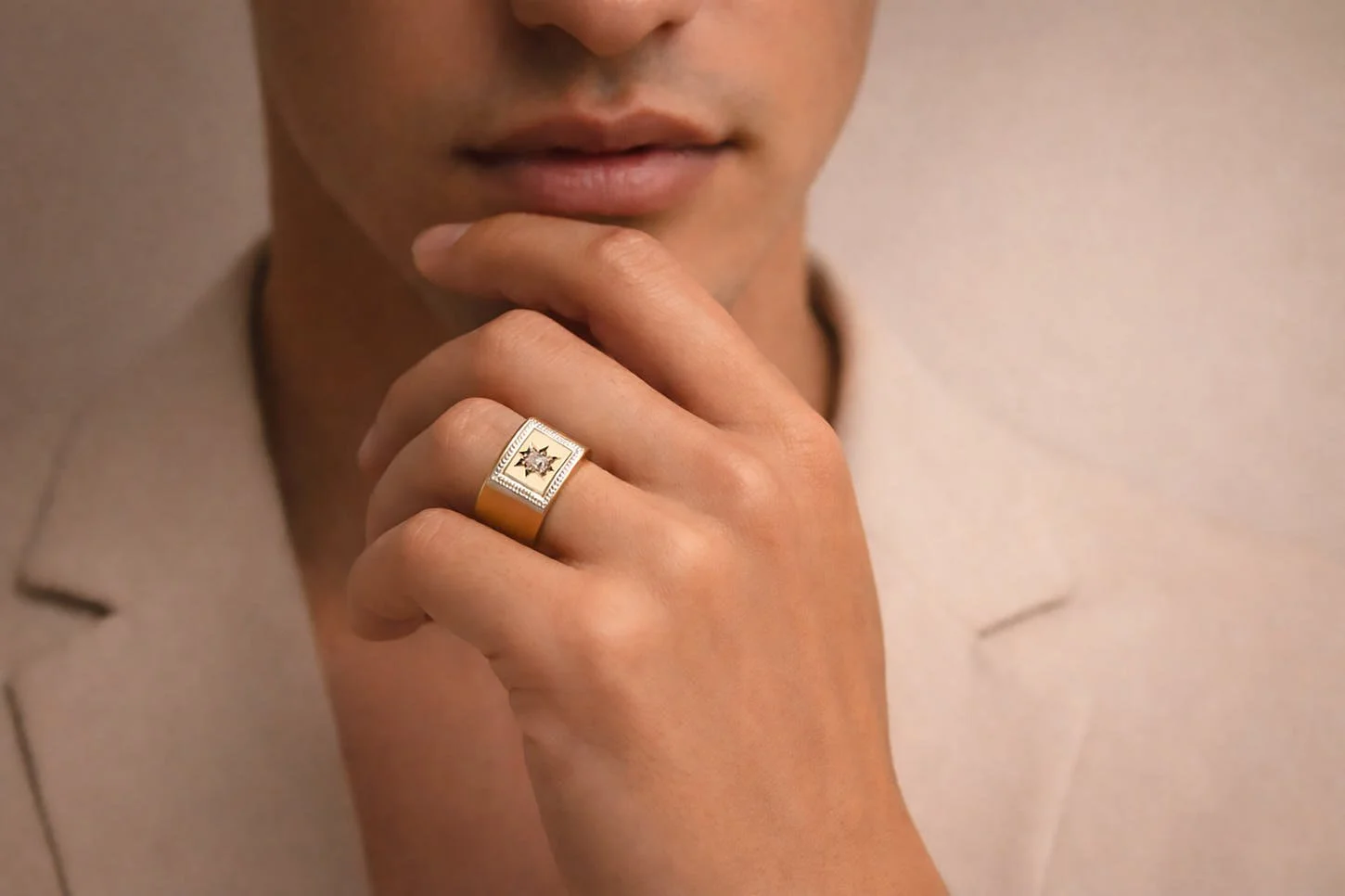
Before a piece is offered for sale, its material authenticity is examined and all available information about it is documented. Each purchase is presented with a detailed Rheinfrank certificate of authentification. Any stone of exceptional quality is also verified by an independent gemmological report. There is also a limit to how far an examination should go. Rheinfrank & Holzfuss does not routinely remove mounted gemstones simply to obtain more precise laboratory grading, since doing so would require dismantling historical work. A sufficient amount of information can be established through hallmarks, construction, gemstone cuts and workmanship.
Antique jewellery is embedded with personal history. Rings have marked courtship, marriage, remembrance and mourning, whilst lockets and portrait miniatures have kept images and traces of absent people close to hand. Engravings can preserve initials or dates, repairs show later intervention, and signs of wear records continued use even when the circumstances behind it have disappeared. None of these traces produces a complete biography, but together they manifest an earlier life.
This is not an archive in the institutional sense; these pieces are selected with the expectation that they will leave again, which means history must coexist with the present. As such, practical wearability is a priority. Rheinfrank & Holzfuss works with a network of three master goldsmiths alongside specialists in antique jewellery and gemstones. Ring sizes can be altered, clasps repaired and damaged elements restored where necessary. Jewellery is given a thorough quality inspection before it goes to sale, and purchased rings can generally be resized within 24 hours.
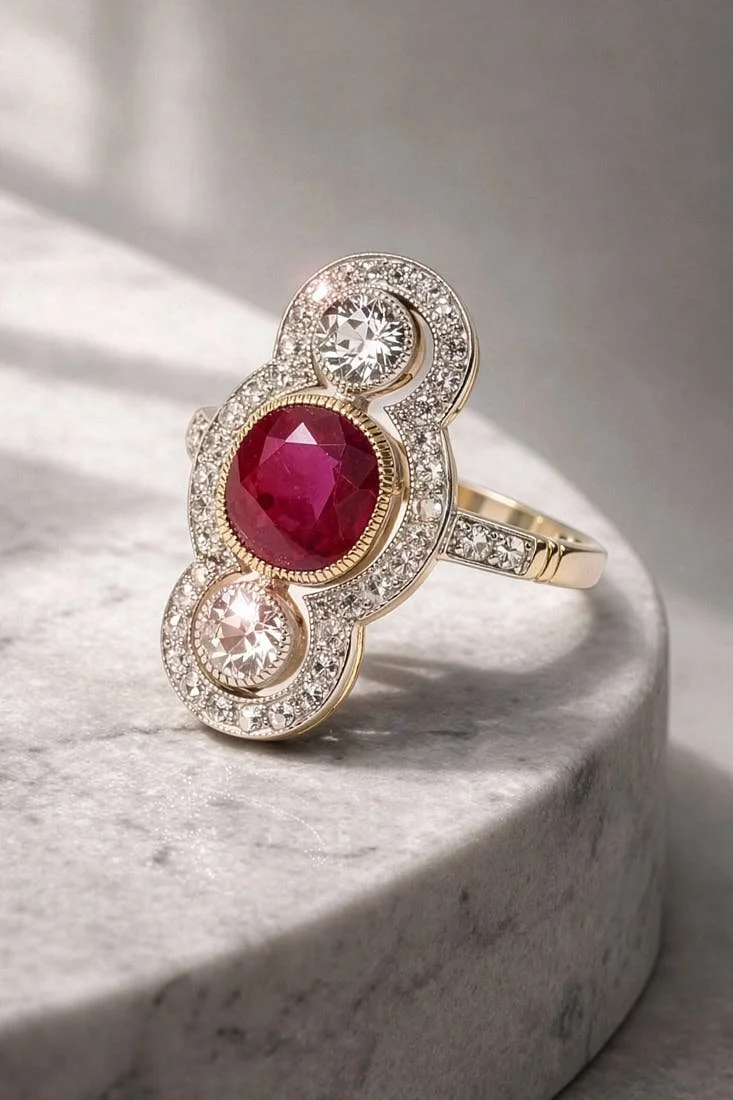
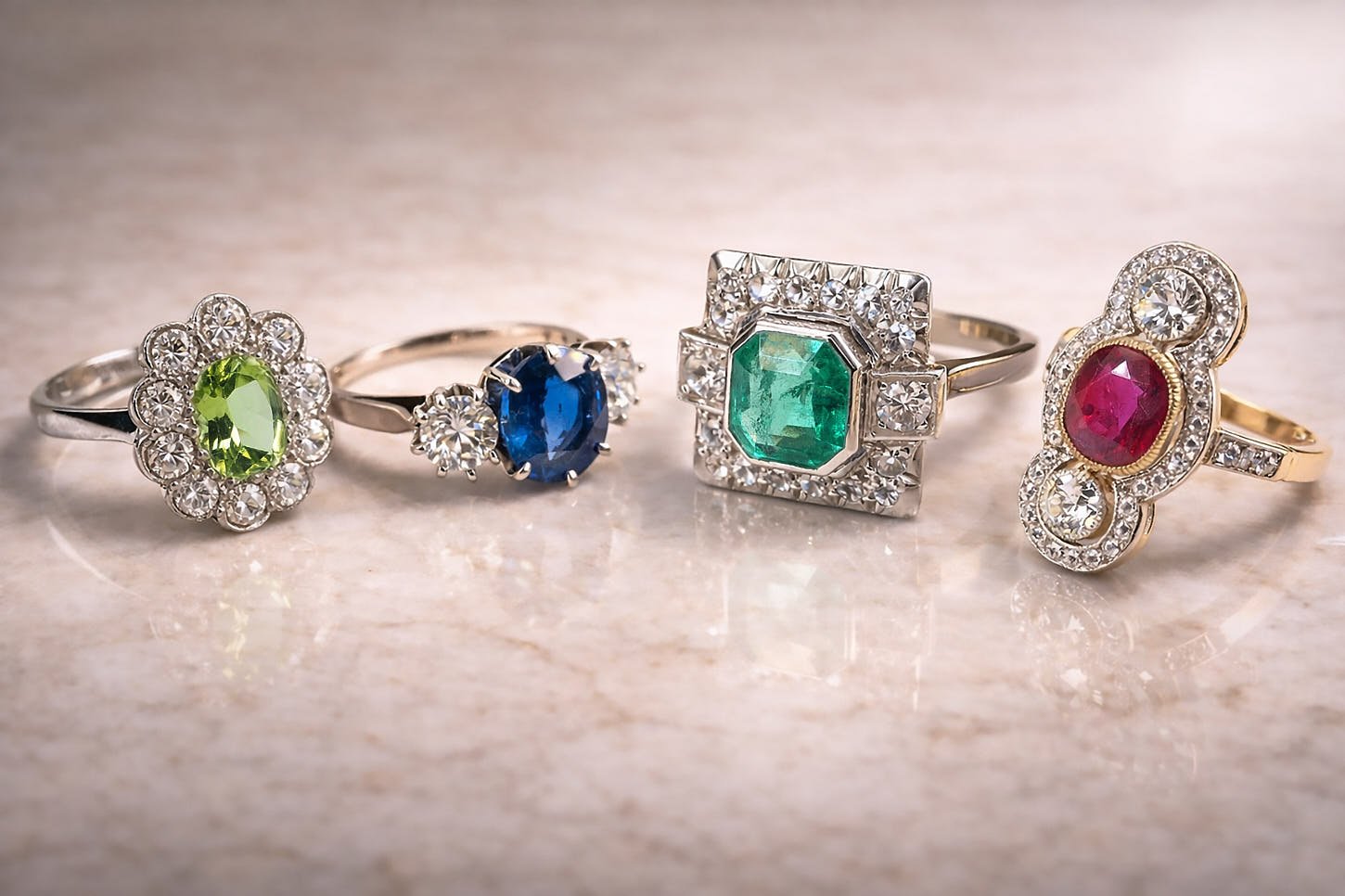
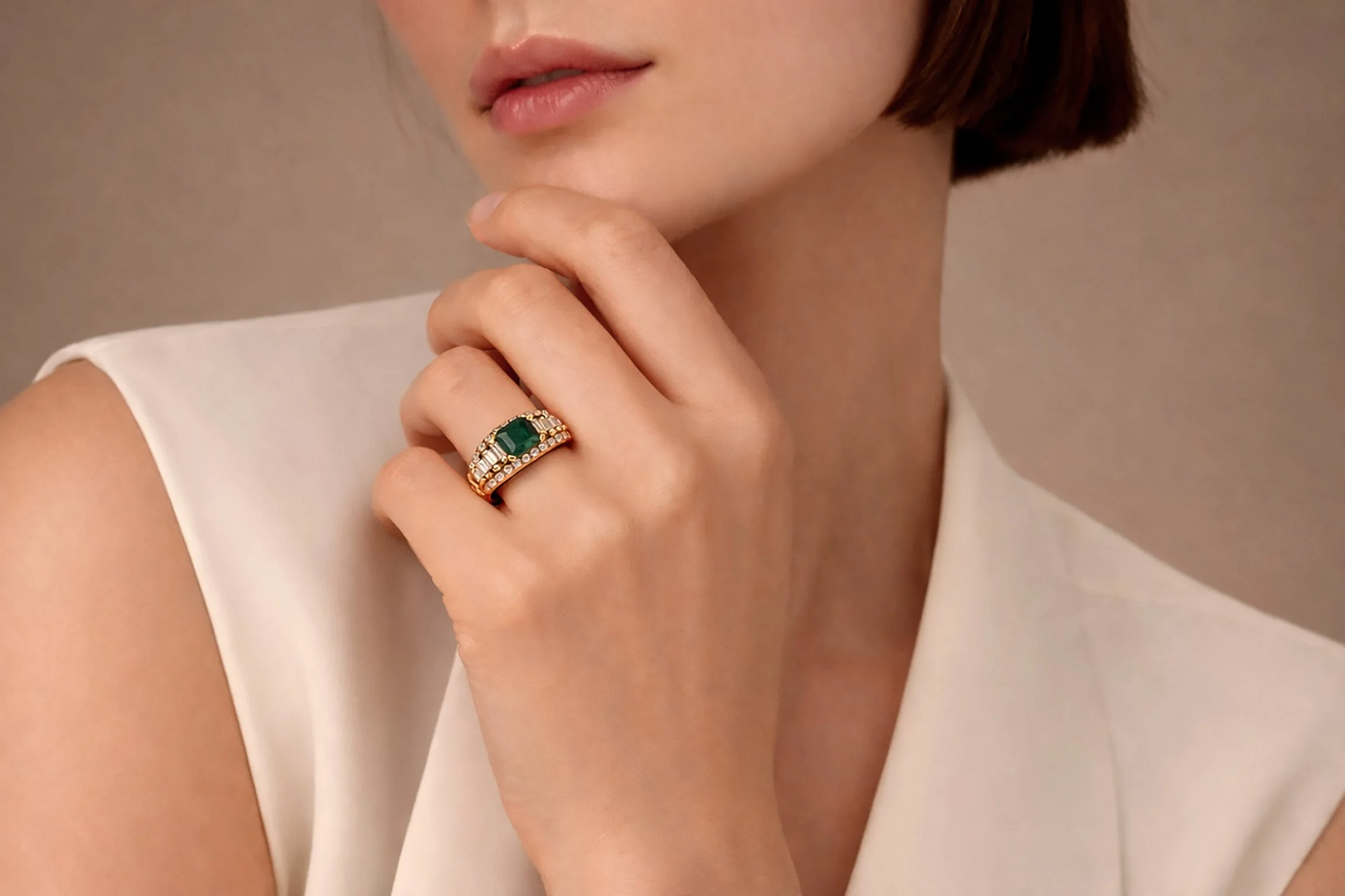
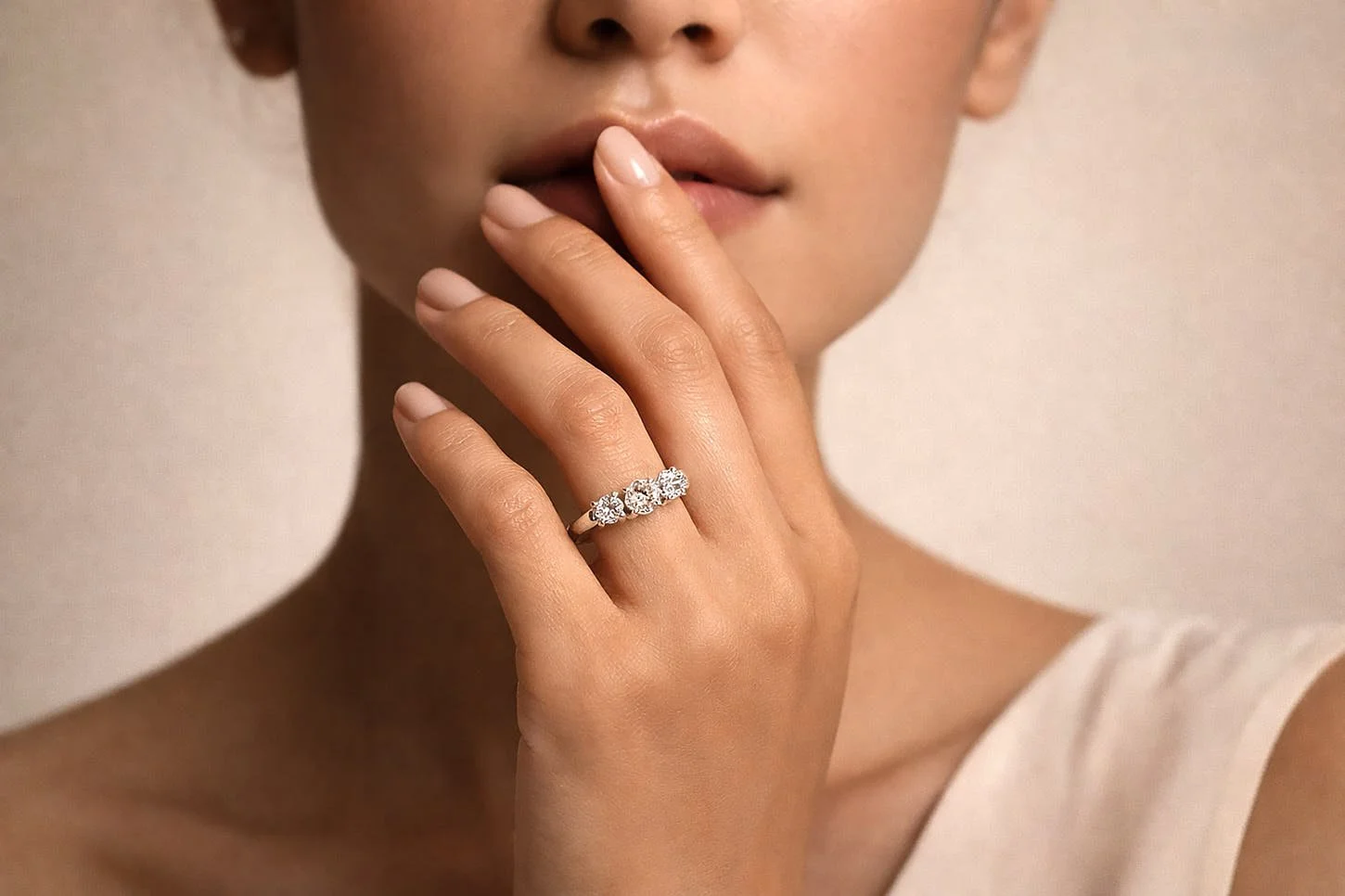
Engagement rings have a leading position within the wider collection. Rheinfrank & Holzfuss describes its selection of antique and vintage engagement rings as the largest in Germany. Diamond solitaires appear alongside rings set with sapphires, rubies, emeralds and other coloured stones, with examples extending across more than two centuries of jewellery making. The new owner of an antique engagement ring will only add to its story.
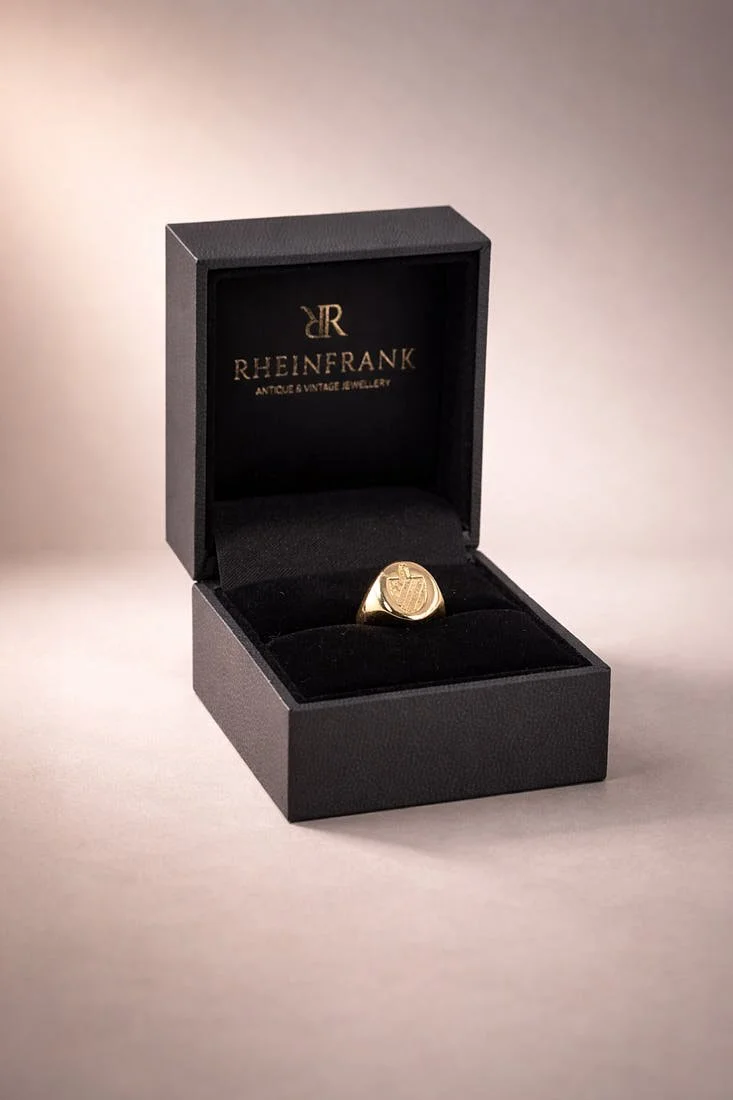
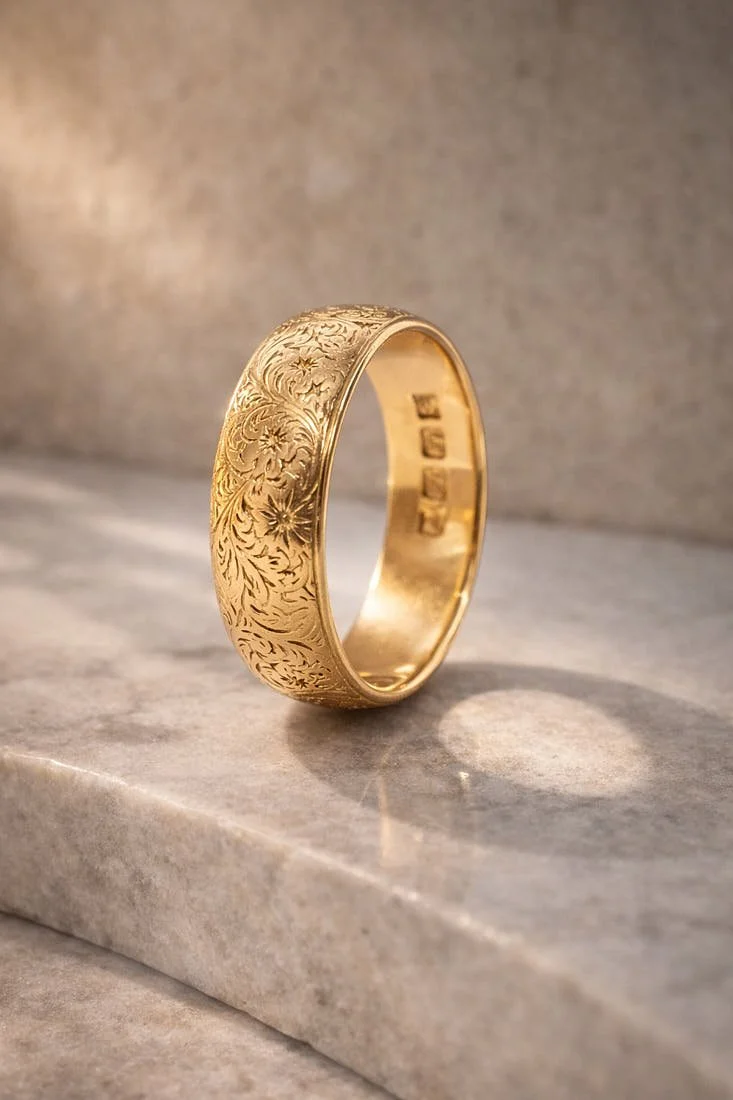
The audience for such pieces has changed considerably since Rheinfrank and Holzfuss began. Rheinfrank describes today’s customers as often around thirty, international and far removed from the much older clientele once associated with antique jewellery. Diamond bangles from the Victorian era mingle beside Edwardian crafted rubies. Art Deco sapphires sit beside aquamarine rings. Gold wedding bands, signet rings, cufflinks, lockets and later vintage solitaires are all to be found at Rheinfrank & Holzfuss. Seen together, these pieces make it clear that vintage is too broad a label to describe the differences in metalwork, stone cutting, ornament and proportion. Much of the range can be explored online, while the two showrooms remain places to see those distinctions at first hand. Rheinfrank Antique Jewellery can be visited at Linienstraße 44 in Berlin Mitte and Klenzestraße 41 in Munich, with both locations open to visitors with or without an appointment.
What distinguishes antique jewellery does not lie in a total chronicle of its history - for much of it cannot be recovered. Its power rests within this coexistence of the known and the unknown. That incompleteness becomes tangible when someone holds a ring, brooch or bracelet and decides its past life will now continue in theirs.
— Explore more at
www.antique-jewellery.de
content credits
Images Antique Jewellery, generated with AI