
.specials
Aberta and the Expanding Language of onomao
LE MILE
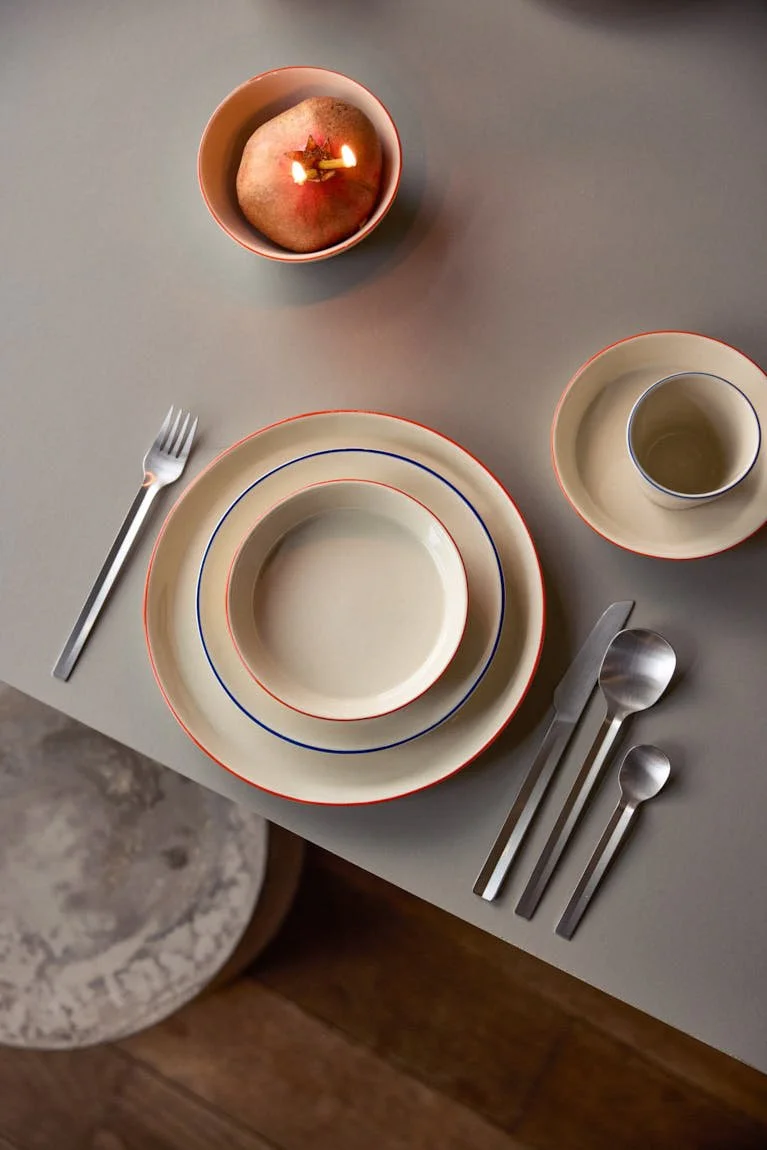
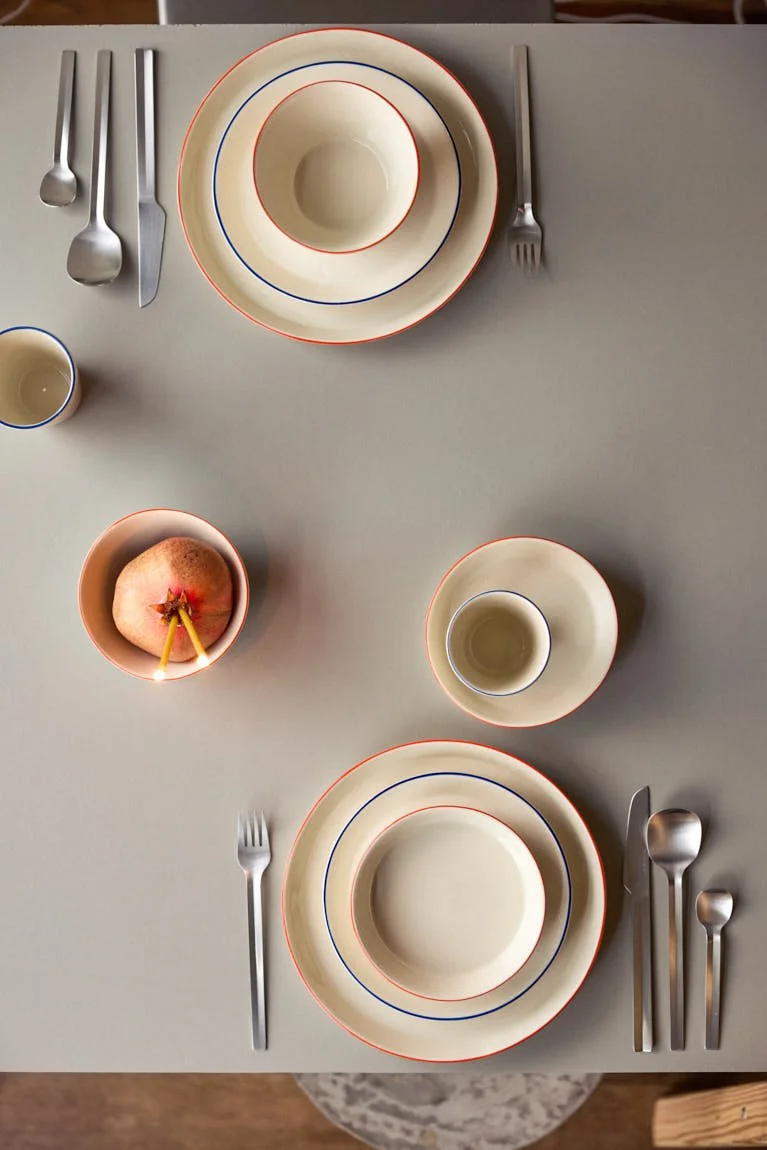
Among onomao’s four tableware collections, Aberta is perhaps the clearest exercise in proportion. Developed as a stoneware collection for everyday use, its plates, bowls, cups and jug share a conical geometry that opens gently upwards, giving the collection its name, Portuguese for “open”. The proportions change considerably from one object to the next, while a fine hand-painted line in blue or orange finishes each piece at the rim and gives the family another point of recognition.
onomao
Traditional collection - natural white
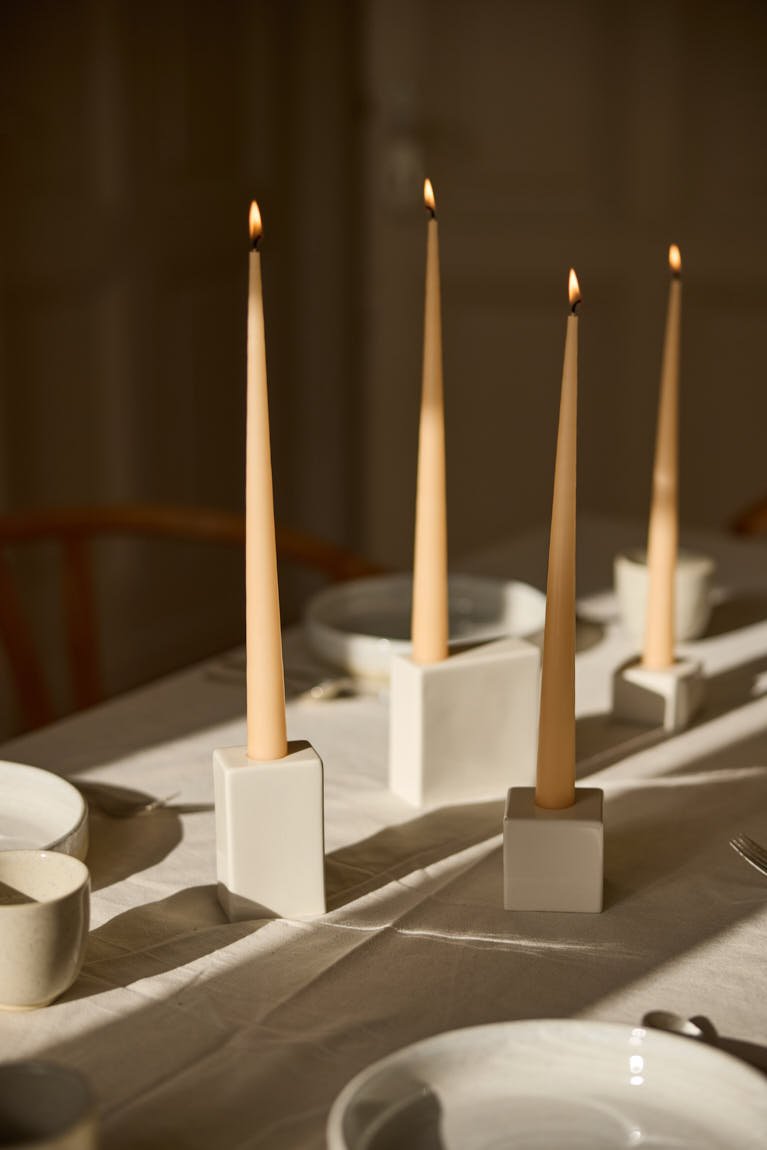
candle holders (GMK x onomao) - white
onomao
Aberta collection
onomao
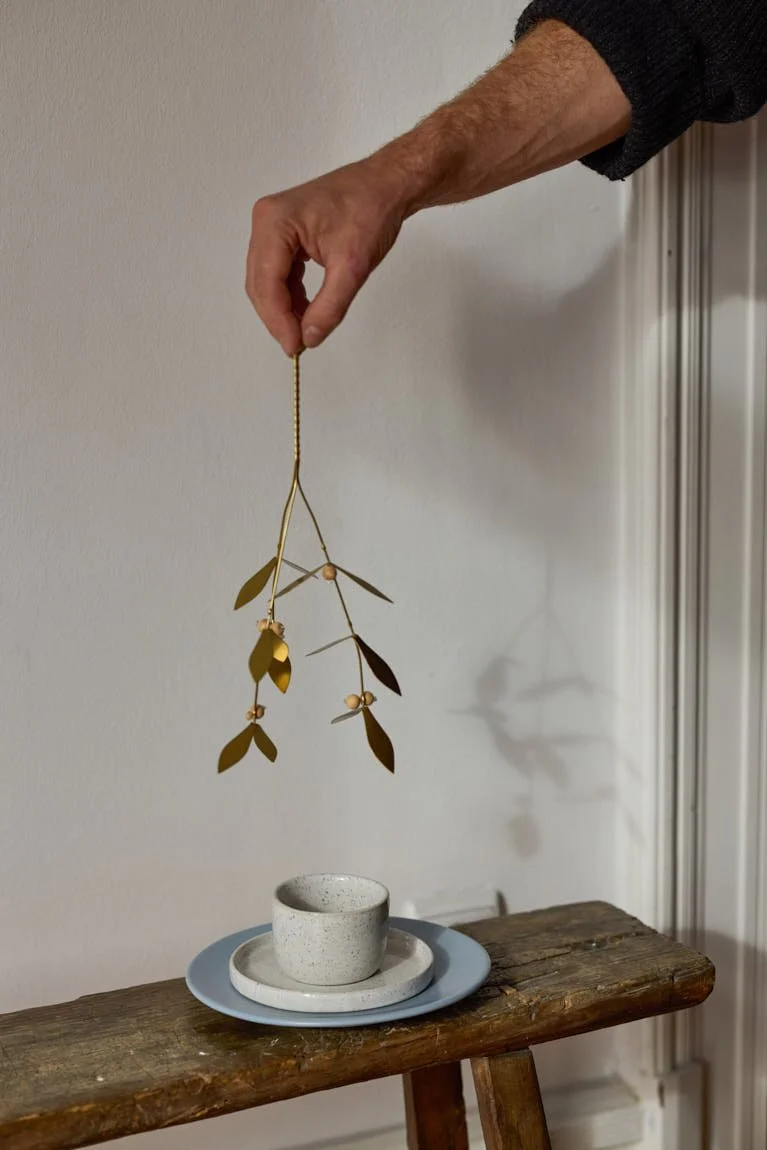
Traditional collection - sand
The underlying form proves surprisingly adaptable. A plate spreads the geometry low and wide, a bowl gives it depth, a cup pulls it further upright. The relationship remains visible, while each piece keeps its own proportion. Stoneware gives the shapes physical substance, while the painted edge sharpens their contour and adds a subtle point of emphasis. Small differences in shape, colour and texture remain part of the handmade production.
There is nowhere for a weak proportion to hide in a collection this spare. A relatively small shift in height or width can alter the character of a vessel, and Aberta depends on those adjustments being convincing from object to object. Its coherence comes from repeating a formal principle while allowing the purpose of each piece to modify it.
In clay, that clarity becomes harder to control. Ceramic production introduces its own variables through drying, firing and glazing, while the hand-painted border introduces another degree of variation. onomao has developed its ceramics through samples and direct exchanges with Portuguese manufacturers since its early years, with forms and glazes adjusted as prototypes move between design idea and workshop. Arthur Wystrychowski has described visits during which changes could be discussed with the makers and tested directly.
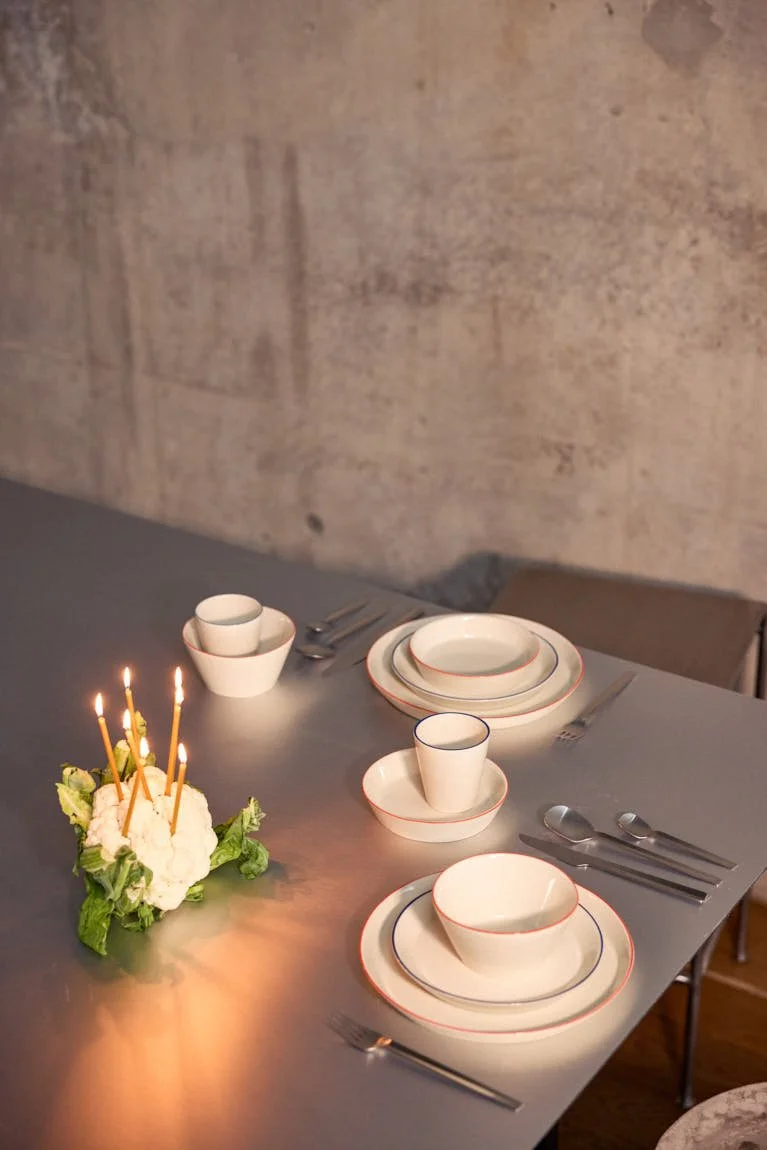
onomao
Aberta collection
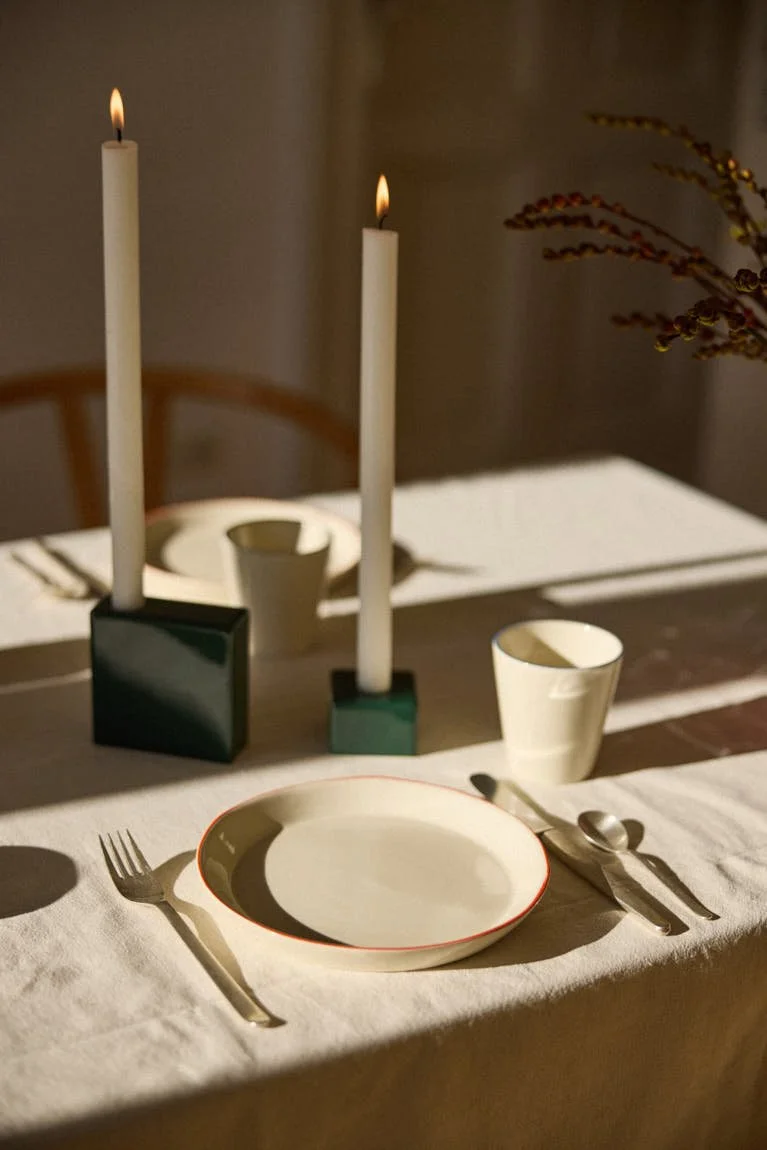
onomao
Aberta collection
candle holders (GMK x onomao) - green
Introduced as onomao’s third ceramic collection, Aberta was also the first the company produced in Alcobaça in central Portugal. The family manufactory was founded in 1988 and has particular experience in hand painting. That makes the narrow coloured border part of an established production skill within the workshop itself.
The relationship between designing and learning how things are made has followed onomao from the beginning. Brothers Arthur and Felix Wystrychowski founded the company in Cologne in 2018 after both had developed close personal connections to Portugal. Arthur studied landscape architecture in Berlin, while Felix lived in Portugal for several years, trained as a chef and later became a graphic designer. Their training came from adjacent fields, and their early collections developed through an exchange of ideas, samples and revisions with the manufacturers who would eventually produce them.
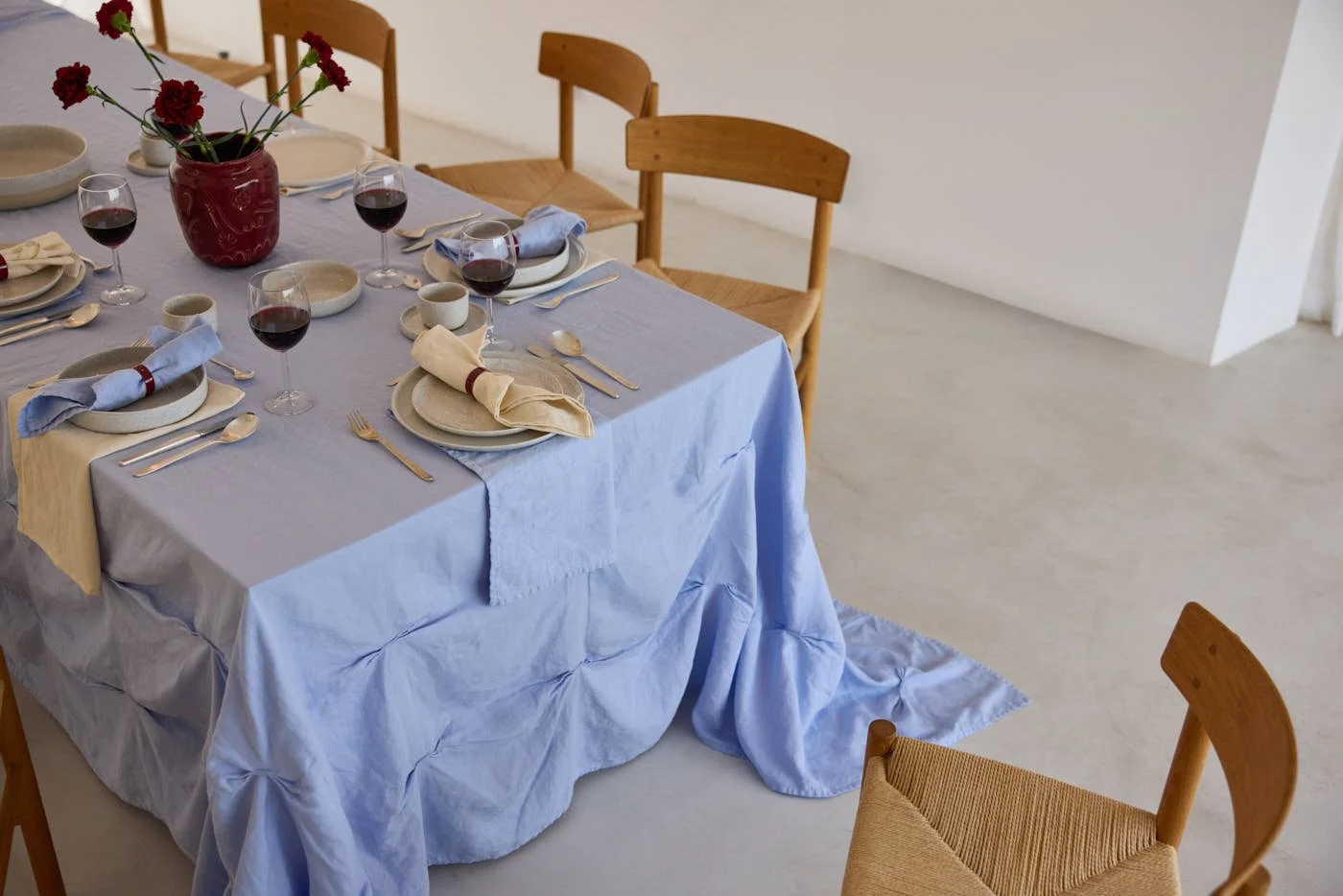
onomao
Traditional collection - sand
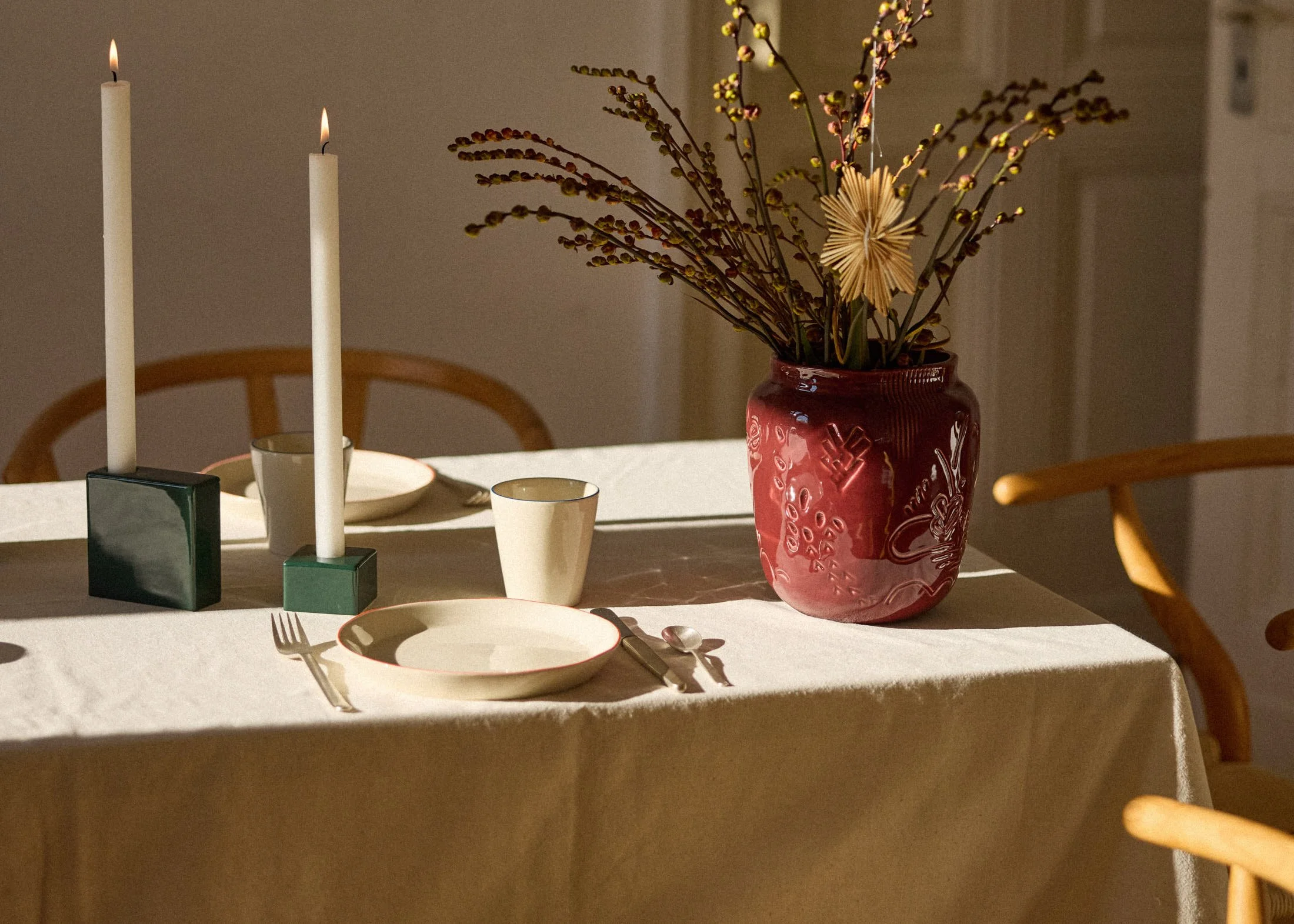
vase II (Enguerrand Poncelin x onomao) - fig
tablecloth draped & cloth napkins (erlich textil x onomao)
That curiosity eventually became hands-on when onomao installed its own pottery studio inside the Cologne office, allowing the team to work directly with clay and test new designs at the wheel. The office occupies a former bakery, and the space once used for its oven now contains a ceramic kiln. Understanding a production method changes the questions a designer can ask of it, and Arthur has spoken explicitly about knowing the possibilities and limitations of ceramic production when developing new objects.
Today the tableware catalogue moves through distinctly different silhouettes. Traditionell works with more robust forms and numerous glazes; Klassik introduces softer, organic profiles set on a small base; Pura shifts into thin-walled porcelain. Aberta occupies its own position among them, defined by its opening contours and the graphic precision of its painted rim.
Collaborations have widened that vocabulary further. With fellow Cologne label erlich textil, onomao extended the table into cotton-linen tablecloths and napkins, taking an existing relationship between the brands into another material category. Casa Lawa changes the temperature again. The Sicilian guesthouse and creative project founded by Lukas Lewandowski brings a background spanning hospitality, food and design into a more expressive ceramic collaboration, still produced through Portuguese workshops.
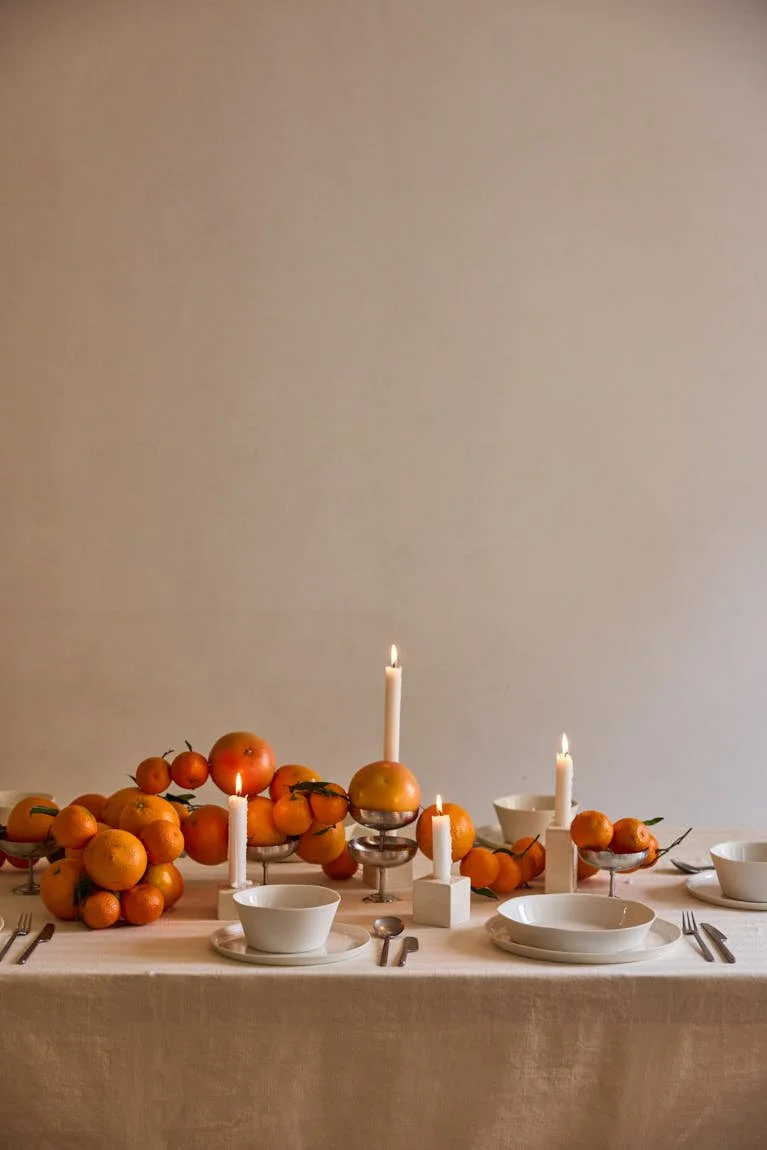
onomao
Pura collection - white
candle holders (GMK x onomao) - white
onomao
Aberta collection
The common ground lies in a design process shaped by material knowledge, close work with makers and attention to use. Outlines, colours and surfaces are free to change. Atelier onomao extends that approach through projects with outside artists and designers.
Aberta holds a particularly clear position within this broader field. Its conical premise moves easily between different functions, while colour has been assigned a precise place within the design. The collection has character, yet no single gesture has been asked to carry all of it.
onomao
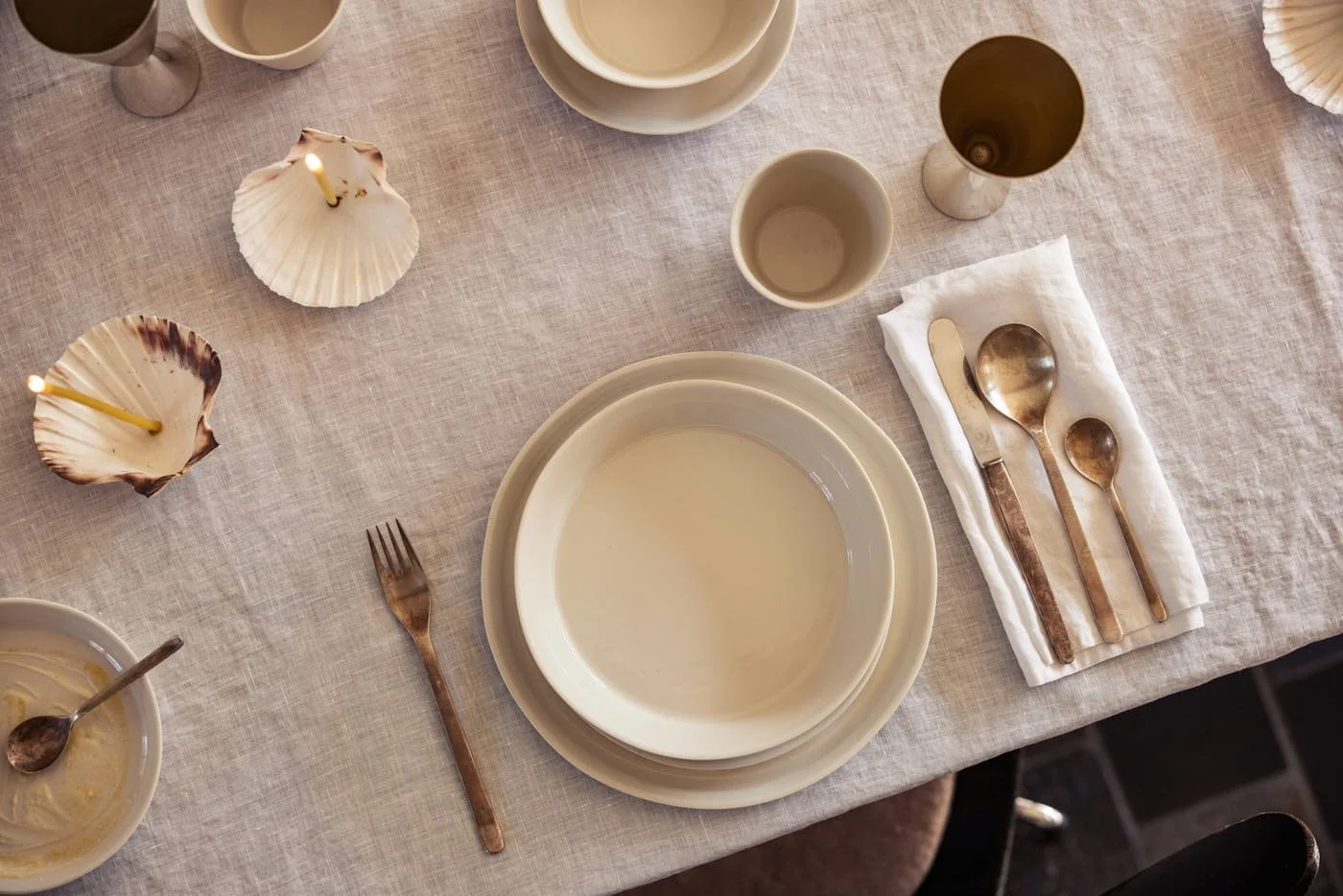
Pura collection - white
Tableware is handled, washed, stacked and returned to the cupboard until its presence becomes part of routine. By then, novelty has disappeared. What matters is how naturally a cup sits in the hand, how convincingly a bowl holds its proportions, and how readily different pieces find their place together. Aberta is particularly persuasive at that stage, when design has stopped introducing itself and simply has to keep working.
images (c) onomao
DISCOVER MORE: www.onomao.com
Explore onomao’s world of contemporary tableware, handmade ceramics and considered objects for everyday living.