
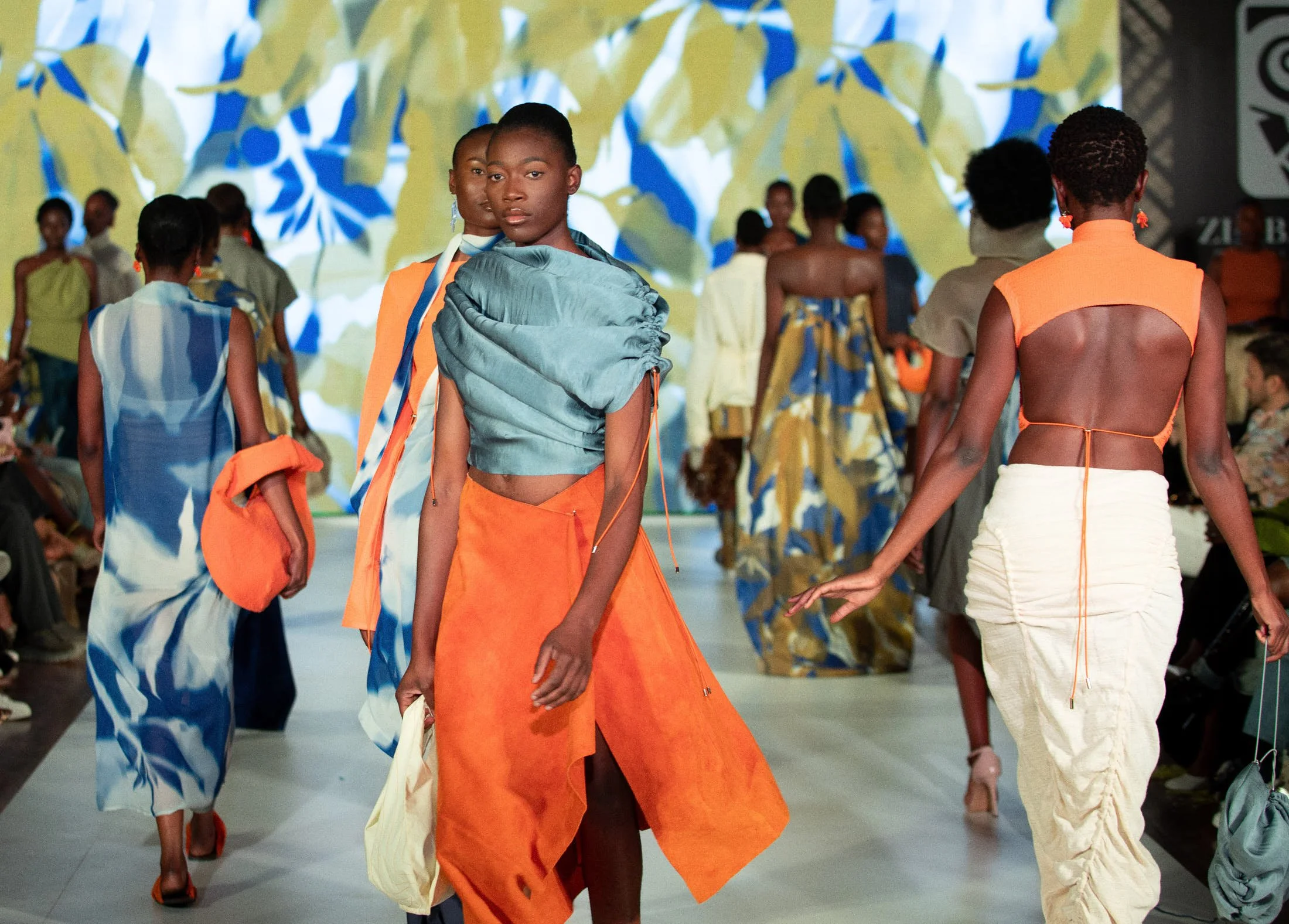
Double-click to edit...
Interview with Priscilla Chigariro, Founder of ZFW
Priscilla Chigariro’s Vision for Zimbabwe Fashion Week
written CHIDOZIE OBASI
Zimbabwean-born, Boston-hailed Priscilla Chigariro—founder of Zimbabwe Fashion Week and The Sp_ce, a new retail concept based in Massachusetts—has a journey that has been anything but conventional. With early stints as a model, with dreams of becoming a designer, somewhere along the way she discovered that her interests extended beyond creating fashion.
“I became fascinated by the industry itself, how it operates, how designers build businesses, and more importantly, why incredibly talented creatives from countries like Zimbabwe were struggling to access the same opportunities as their counterparts elsewhere,” she tells LE MILE. Growing up in Zimbabwe shaped how she sees the world. “We are incredibly creative and resourceful people, but we also come from an environment where opportunities and infrastructure can be limited,” she admits. “I think that taught me to be resourceful, to find solutions and, perhaps most importantly, not to wait for someone else to create the opportunities I wanted to see.” Today, Chigariro’s work is largely about building platforms and creating access, whether that’s through Zimbabwe Fashion Week, the Hunhu Council of Fashion or The Sp_ce. “The underlying motivation has always been the same: creating opportunities for talented people to build meaningful, sustainable careers and businesses.” Below, Chigariro speaks to LE MILE’S Fashion Market Director unpacking all-things influence, growth and hope. You’re welcome.
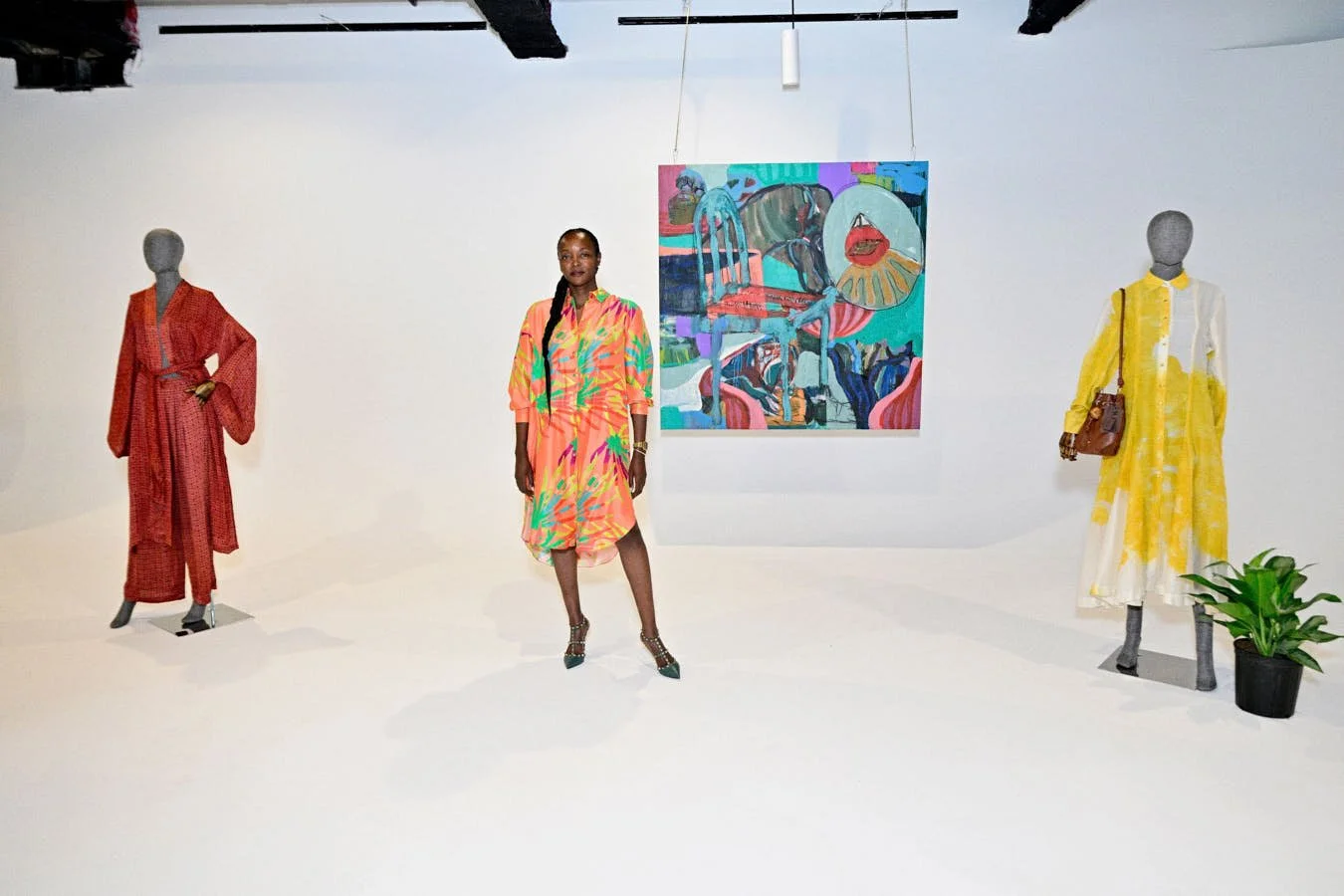
Inside The Sp_ce in Wellesley, Massachusetts with Priscilla Chigariro, Founder of ZFW.
Chidozie Obasi
Were there any specific influences or references that inspired you while growing up, and how have they informed your practice?
Priscilla Chigariro
My parents were probably my greatest influences growing up. They were both artistic in their own way, and I was fortunate to grow up in an environment where creativity, ambition and hard work were always encouraged. My father was actually a model in his twenties before going on to build a very successful career in the insurance industry, which eventually enabled him and my mother to purchase the farm where I grew up in Zimbabwe. My mother was incredibly creative. She was an excellent knitter and taught me how to sew my own clothes from a young age. I’ve always loved working with my hands, whether it was sewing, making things or experimenting with different creative ideas. Both my parents encouraged me to pursue whatever interested me and, more importantly, to keep improving at it. My father always said to us growing up, “If you’re going to do something, anything, make sure you’re the best at it.” That stayed with me and has probably been one of the biggest driving forces throughout my life. I’ve never been particularly interested in doing something just for the sake of doing it. I’ve always wanted to see how far I could take an idea and how much better I could make it. I also had quite an entrepreneurial streak from a young age. At twelve, I started my own hair-braiding business, and looking back, I don’t think I ever lost that entrepreneurial spirit. I loved the idea that I could create something with my own hands and turn it into a business. My early success in modeling eventually led me into the fashion industry, but I think the foundations were laid long before that. My parents gave me the confidence to try things, the discipline to work hard at them and the belief that I didn’t have to limit my ambitions. In many ways, that’s still how I approach everything I do today. I see possibilities, I get excited about what something could become, and then I set about trying to make it happen.
Before venturing into the business side of fashion, you were a model and envisioned becoming a fashion designer. What made you pivot, and what was the urge to start something bigger in Zimbabwe?
I initially wanted to become a fashion designer, and modeling was really my introduction to the industry. But the more I learned about fashion, the more interested I became in the business behind it. I realized quite early that Zimbabwe had talented designers, but we didn’t necessarily have the structures or platforms that could support them in building successful careers. There was creativity, but there were very few opportunities to showcase that creativity professionally, connect with the international industry or build commercially viable fashion businesses. I started Zimbabwe Fashion Week in 2010 because I felt that something needed to change. I wanted Zimbabwean designers to have a platform that could stand alongside fashion weeks elsewhere in the world. At the time, I probably didn’t fully appreciate the scale of what I was taking on! I was passionate, perhaps a little naive, but I believed very strongly that Zimbabwe deserved to have a place in the global fashion conversation. Sixteen years later, that belief hasn’t changed. What has changed is my understanding of what it actually takes to build an industry.
Since launching Zimbabwe Fashion Week in 2010, you’ve expanded beyond runway shows into business talks and retail. Why was it important to build a wider fashion ecosystem?
I think one of the most important lessons I’ve learned over the years is that a runway show, no matter how beautifully produced, is not enough to sustain an industry. When we started Zimbabwe Fashion Week, the immediate goal was visibility. We wanted to create a professional platform where designers could showcase their work and where the industry could come together. But as the years went by, I began asking myself what happens after the runway. A designer can create an extraordinary collection and receive wonderful press coverage, but if they don’t have access to buyers, production support or the knowledge required to run a business, what happens next? That’s why we’ve increasingly focused on the business and educational components of Zimbabwe Fashion Week. Our panels, conversations, masterclasses and industry partnerships are just as important to me as the runway shows. Through the Hunhu Council of Fashion, we’re also working towards creating a more structured approach to industry development. I want us to move beyond celebrating creativity for a few days each year and begin building something that has a real economic impact. For me, the ultimate measure of success isn’t how many shows we’ve produced. It’s how many designers have been able to grow their businesses, create employment and find sustainable markets for their work.
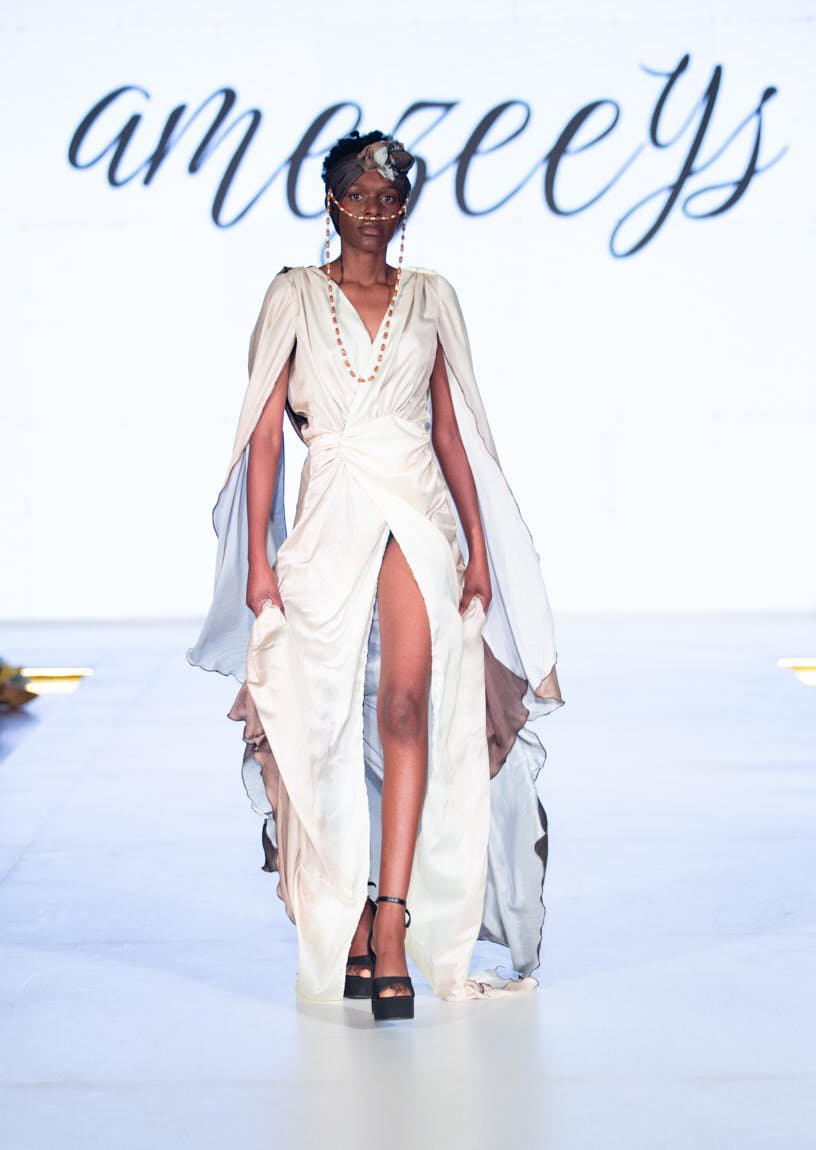
A design by Amezeeys on the runway.
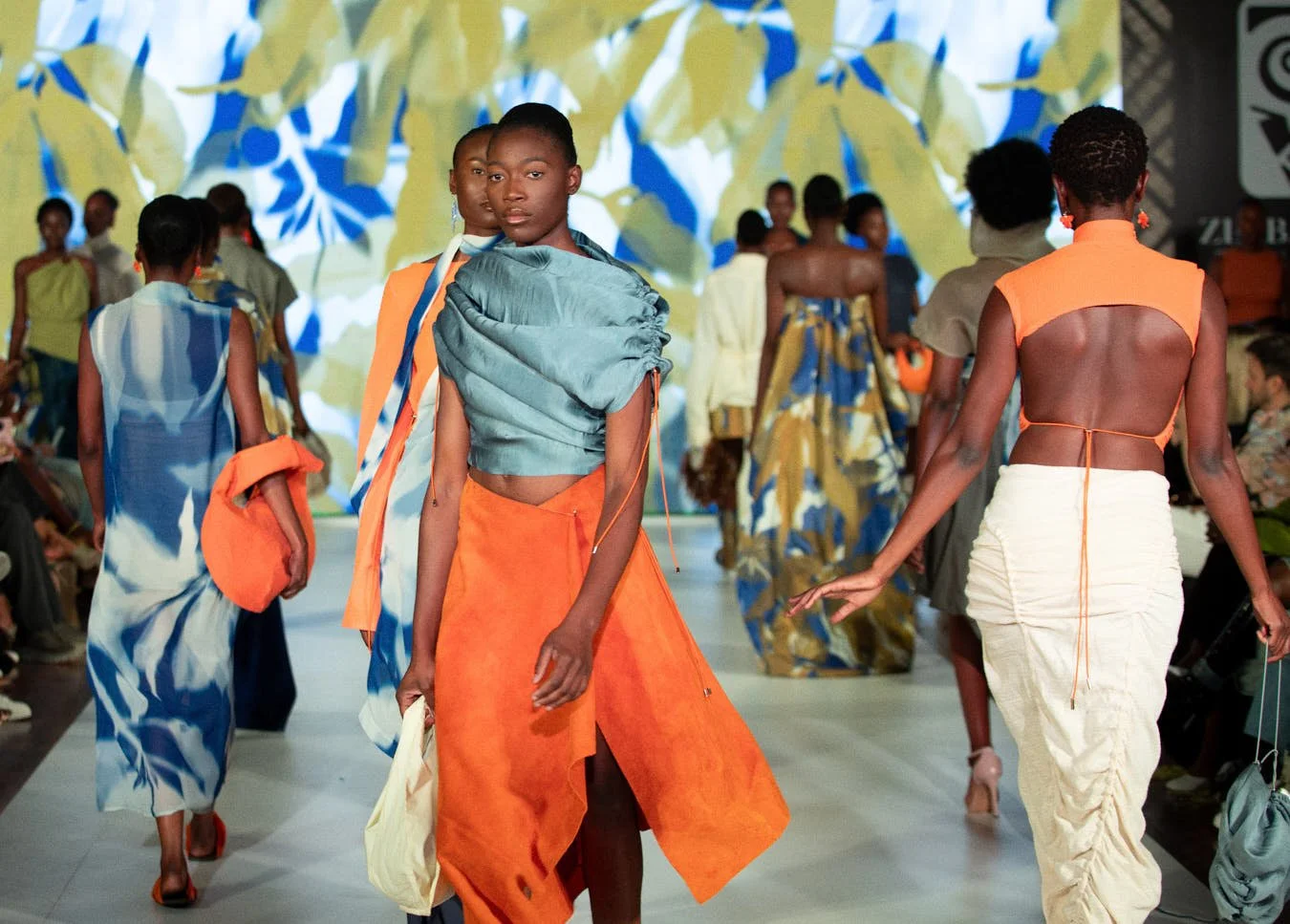
A runway presentation by Empowerment Design Studio.
Let’s discuss the launch of The Sp_ce in Massachusetts. How are you creating a bridge between designers from emerging fashion markets and international consumers?
The Sp_ce is probably the most natural evolution of everything I’ve been working towards over the last sixteen years. With Zimbabwe Fashion Week, we created a platform for designers to be seen. But I wanted to take that a step further and create an opportunity for their products to actually reach consumers. The Sp_ce is a curated retail and experiential concept that brings together contemporary fashion, accessories, design and lifestyle brands from emerging markets, alongside other independent designers whose work shares our appreciation for creativity, quality and craftsmanship. Our first location is in Wellesley, Massachusetts, just outside Boston, and we’re building both a physical retail experience and an e-commerce platform. What’s particularly important to me is that we’re not asking consumers to shop with us simply because a product comes from Africa or another emerging market. We want them to shop with us because the design is exceptional, the quality is there and the product speaks to them. I believe that is an important distinction. We want to create an environment where these brands are presented with the same level of sophistication, consideration and attention to detail as any other contemporary or luxury brand. The Sp_ce is also about introducing consumers to designers and creative perspectives they may not otherwise encounter. I want people to discover something beautiful, learn about the person behind it and develop a genuine connection with the brand. Ultimately, it’s about turning international visibility into real commercial opportunities.
How do you intend to challenge traditional perceptions of African fashion and celebrate contemporary design, craftsmanship and luxury from Zimbabwe on the global stage?
I think the first thing we need to recognize is that African fashion is not one thing. Africa is an incredibly diverse continent, with different cultures, aesthetics, design philosophies and creative influences. Yet internationally, African fashion is still so often reduced to a very particular visual identity, usually associated with prints, traditional textiles or cultural references. There’s absolutely a place for all of that, and our heritage is something we should celebrate. But African designers are also creating beautiful contemporary fashion that doesn’t necessarily fit into those expectations. A designer from Zimbabwe should be able to create a beautifully tailored minimalist collection, for example, without feeling that they need to incorporate a traditional print for their work to be recognized as African. I want to see our designers given the freedom to express themselves without being confined by geography or other people’s expectations of what African fashion should look like. Luxury, to me, is about craftsmanship, quality, originality and the experience surrounding a product. Those qualities aren’t exclusive to any particular part of the world. Through Zimbabwe Fashion Week and The Sp_ce, I want to help change the way these designers are presented and perceived. Not as an alternative category of fashion, but as part of the wider global design conversation. And I think the most effective way to challenge those perceptions is simply to allow the work to speak for itself.
What is your long-term vision for helping designers build sustainable businesses through international market access, commercial development and meaningful industry connections?
My long-term vision is to create a much more connected ecosystem, where emerging designers have access to the resources and opportunities they need at different stages of their development. One of the biggest challenges designers face is that the journey from creating a collection to building a commercially successful brand can be incredibly difficult, particularly in markets where the supporting infrastructure is still developing. Through Zimbabwe Fashion Week, we’re able to identify talent, facilitate conversations, provide exposure and build industry relationships. Through the Hunhu Council of Fashion, the ambition is to support broader industry development, education and professional opportunities. And with The Sp_ce, we’re beginning to address the commercial side by creating a direct connection between designers and international consumers. Of course, there is still so much work to be done. Production capacity, consistency, pricing, logistics and access to capital are all very real challenges. But I believe that by approaching these challenges collectively and building meaningful partnerships, we can begin to create a model that offers designers much more than a moment of visibility. I want to see designers building businesses that can survive and grow independently of the platforms that initially introduced them to the world. That, for me, would be real success.
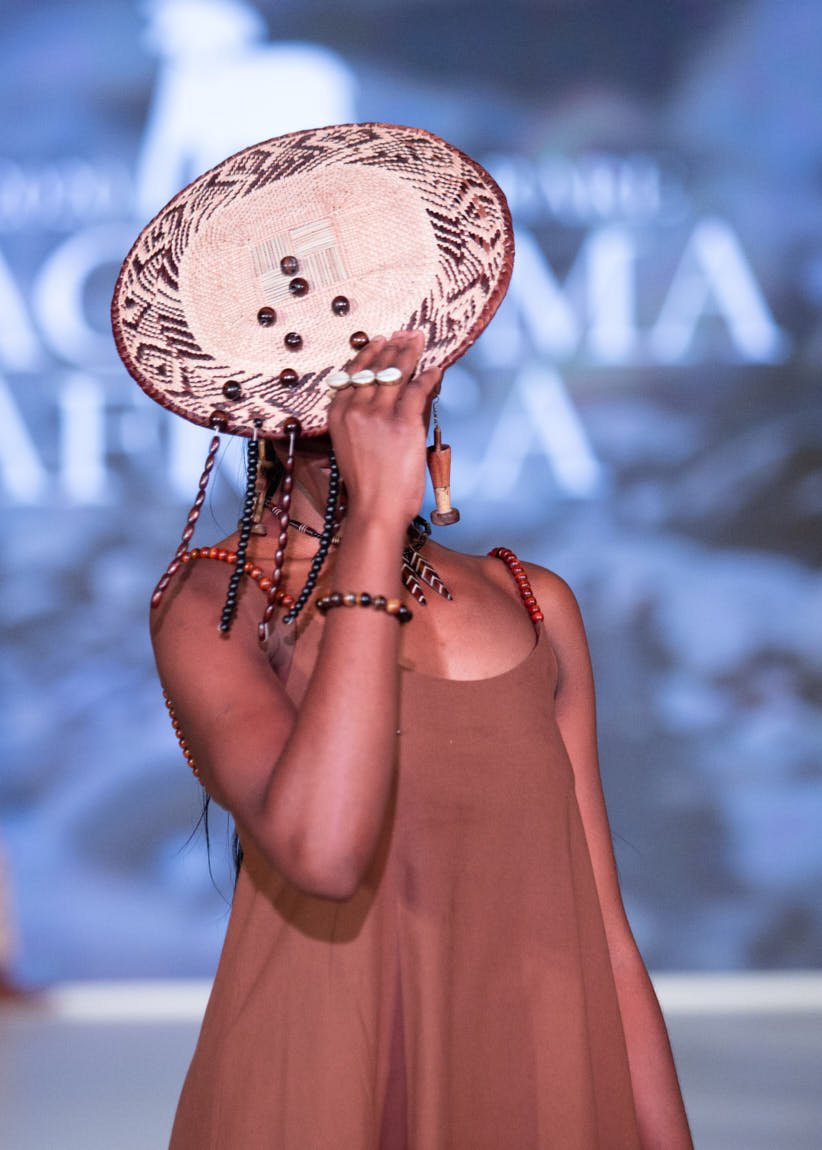
A runway look by Machuma Africa.
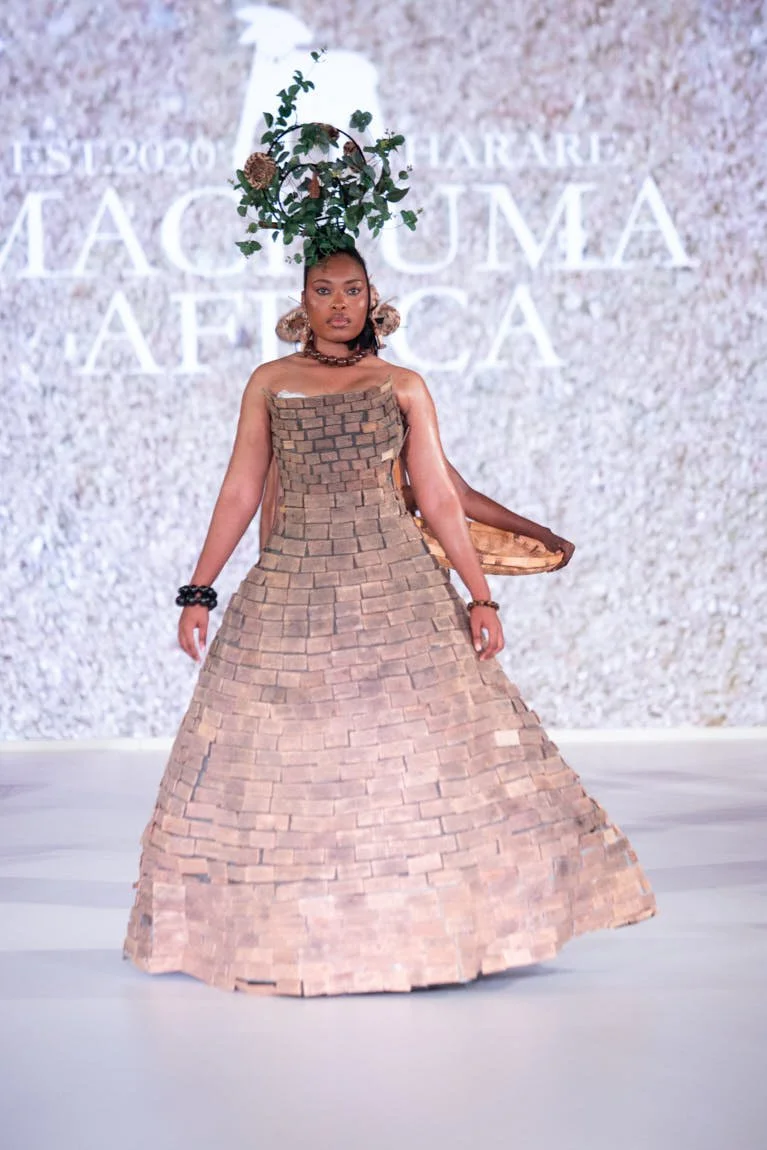
A sculptural design by Machuma Africa.
What’s the long-term vision for Zimbabwe Fashion Week?
My vision for Zimbabwe Fashion Week has always been bigger than the event itself. I want ZFW to become a respected institution that plays a meaningful role in the development of Zimbabwe’s fashion and creative industries. After sixteen years, I’m incredibly proud of what we’ve built, particularly given the challenges of operating in an environment where sponsorship and industry infrastructure can be difficult to secure. But I also recognize that for ZFW to have a lasting impact, it needs to continue evolving beyond the vision of one individual. The establishment of the Zimbabwe Fashion Week Trust is an important part of that journey. We’re working towards creating a more sustainable institutional framework that can support the event, strengthen partnerships and ensure that the work continues for generations to come. I’d love to see Zimbabwe Fashion Week become a destination for international buyers, editors, creatives and industry professionals, while remaining a platform that is genuinely accessible and valuable to Zimbabwean designers. I also want us to continue developing the educational and business aspects of the event, creating stronger links between talent, industry and commerce. Ultimately, I would like Zimbabwe Fashion Week to be recognized not simply as an annual fashion event, but as an institution that helped shape the development of Zimbabwe’s fashion industry.
Final thoughts and hopes you’d like to share?
I think we’re at a really interesting moment for fashion, particularly when it comes to emerging markets. There’s a growing appetite for independent brands, thoughtful design, craftsmanship and products that have a story behind them. And I believe there is an enormous opportunity for designers from countries like Zimbabwe to be part of that conversation. But opportunity alone isn’t enough. We have to continue doing the work of building businesses, developing infrastructure, creating partnerships and opening doors. If there’s one thing I’ve learned over the last sixteen years, it’s that building something meaningful takes time. There have been incredible highs and some very difficult moments, but I still believe as strongly in the potential of our creative industries as I did when I started. Perhaps even more so now, because I’ve seen what is possible. My hope is that the next generation of Zimbabwean designers won’t have to overcome quite as many obstacles as those who came before them. I’d like them to inherit an industry with real opportunities, one where their talent can translate into successful businesses, meaningful careers and a genuine place in the global market. And if the work we’re doing today contributes to that, even in a small way, then I think it will have been worth it.
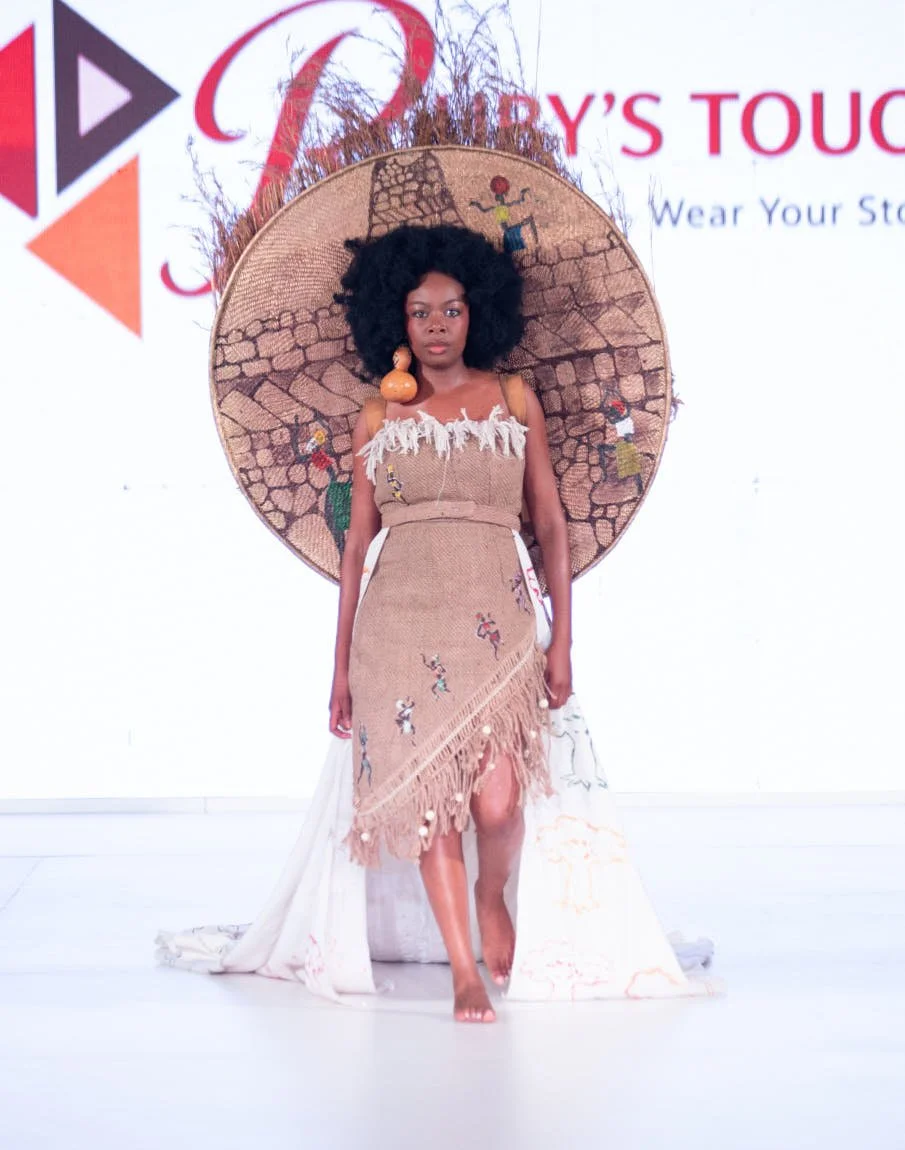
A runway creation by Ruby's Touch.
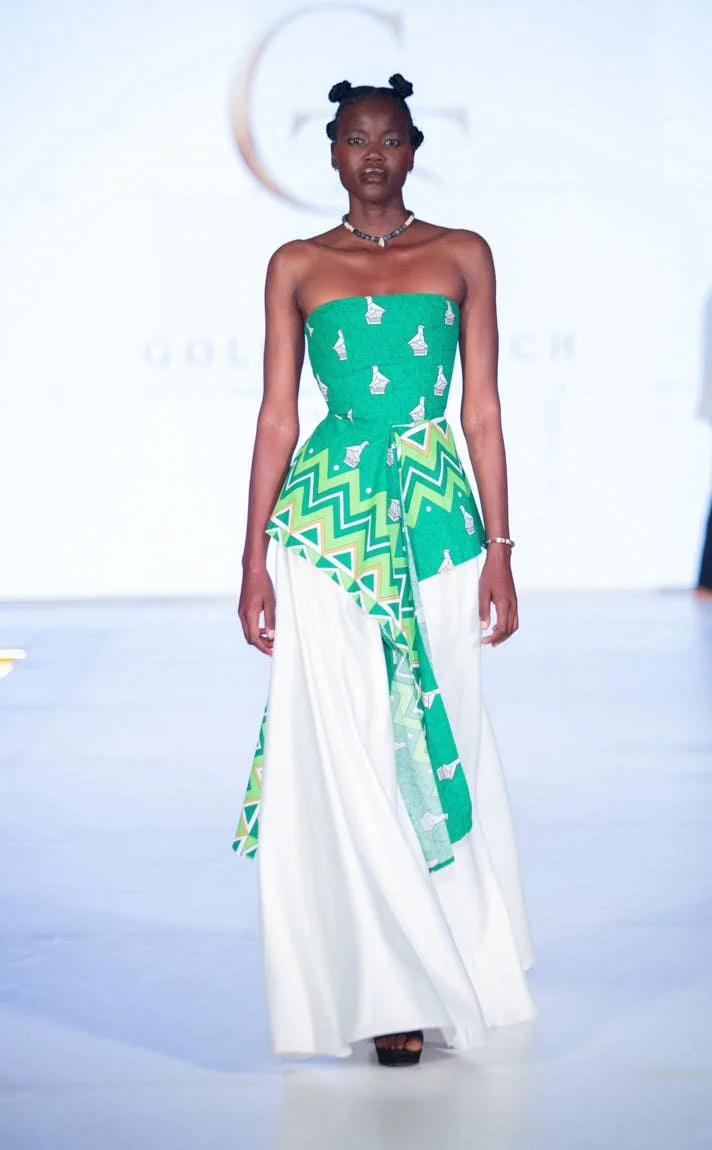
A design by The Golden Touch on the runway.
follow ZFW @zim.fashionweek
—all visuals provided by Priscilla Chigariro, Founder of Zimbabwe Fashion Week