Frieze London 2026 — From First Encounters to Second Impressions: Nine Discoveries
Post-Frieze: Beyond the Booth
written TAGEN DONOVAN
This year’s Frieze saw painting and sculpture take precedence over screen-based art, whose relative absence seemed curious at a time when so much of our cultural experience is mediated through technology. Rather than signalling a rejection of the digital, this renewed attention to materiality offered an unexpected counterpoint to its growing influence. Alongside the emphasis on the material, questions of identity and belonging emerged through the construction of personal worlds, while other practices turned their attention to the systems and conventions through which modern life is shaped. What rang true throughout was a revisiting of inherited histories, complemented by a reconsideration of the familiar objects that punctuate the everyday. In some sense, there was a unison in the ways artists looked beyond appearances to examine the assumptions that govern how we understand ourselves and the strange new world around us.
Some of the most compelling presentations came from independent galleries such as Rose Easton, Ginny on Frederick, Diez and Eastcontemporary; equally noteworthy was the younger generation of artists championed by more established galleries. The significance of these presentations extended beyond the commercial transactions of the fair; several works entered public collections, including Jessica Wilson's Sweet Nothing (2025-2026), acquired by Centraal Museum in Utrecht, and three works by Okiki Akinfe for Abbot Hall in Kendal through the inaugural Dasha Shenkman Focus Fund. Through acquisitions of this nature, the art fair reveals a purpose beyond its commercial machinery – one that opens avenues for wider public engagement and contributes to a shared cultural inheritance.
Rather than attempt a comprehensive account of Frieze London 2026, this slightly unorthodox index brings together nine artists and their representing galleries, whose practices suggest a cultural zeitgeist extending beyond the confines of the algorithm and into more tangible realms. Moving between what was presented at Frieze and the wider artistic worlds from which these works emerged, it becomes a collision of sorts between what was shown and what remained unseen – an invitation, perhaps, to look beyond the booth and pursue the discoveries that outlast the ephemerality of the fair.
Rose Easton x Amanda Moström

Amanda Moström, Rocky, 2026
Billy goat skin and chair 94 x 51 x 55 cm 37 x 20⅛ x 21⅝ in. Courtesy the artist and Rose Easton, London.
Photographed by Jack Elliot Edwards
the artist
Amanda Moström (b. 1991) deals primarily with the erotic, albeit in an unconventional sense. Subtly humorous and rich in psychosexual undertones, her photographic work frequently appropriates familiar imagery and transforms it into something more provocative and intimate, complicating it with restaging or re-contextualisation. Her interest in expansive forms of sensuality extends to her bronzes, which upend the medium’s associations with solemnity and multiplicity by existing as one-off pieces that are deliberately imperfect, showing signs of human touch. Moström is inspired by the writing of the theorist Audre Lorde, who was quick to separate eroticism from the strictly pornographic or explicit, reclassifying it as “the personification of love in all its aspects.” Throughout her practice, Moström explores the conceptual and physical potential of softness, upending a cultural hierarchy that often prizes hardness and solidity instead, both materially and emotionally. The resulting works coax the viewer, made complicit by the act of looking, into confronting their own boundaries and preconceptions.
the artwork
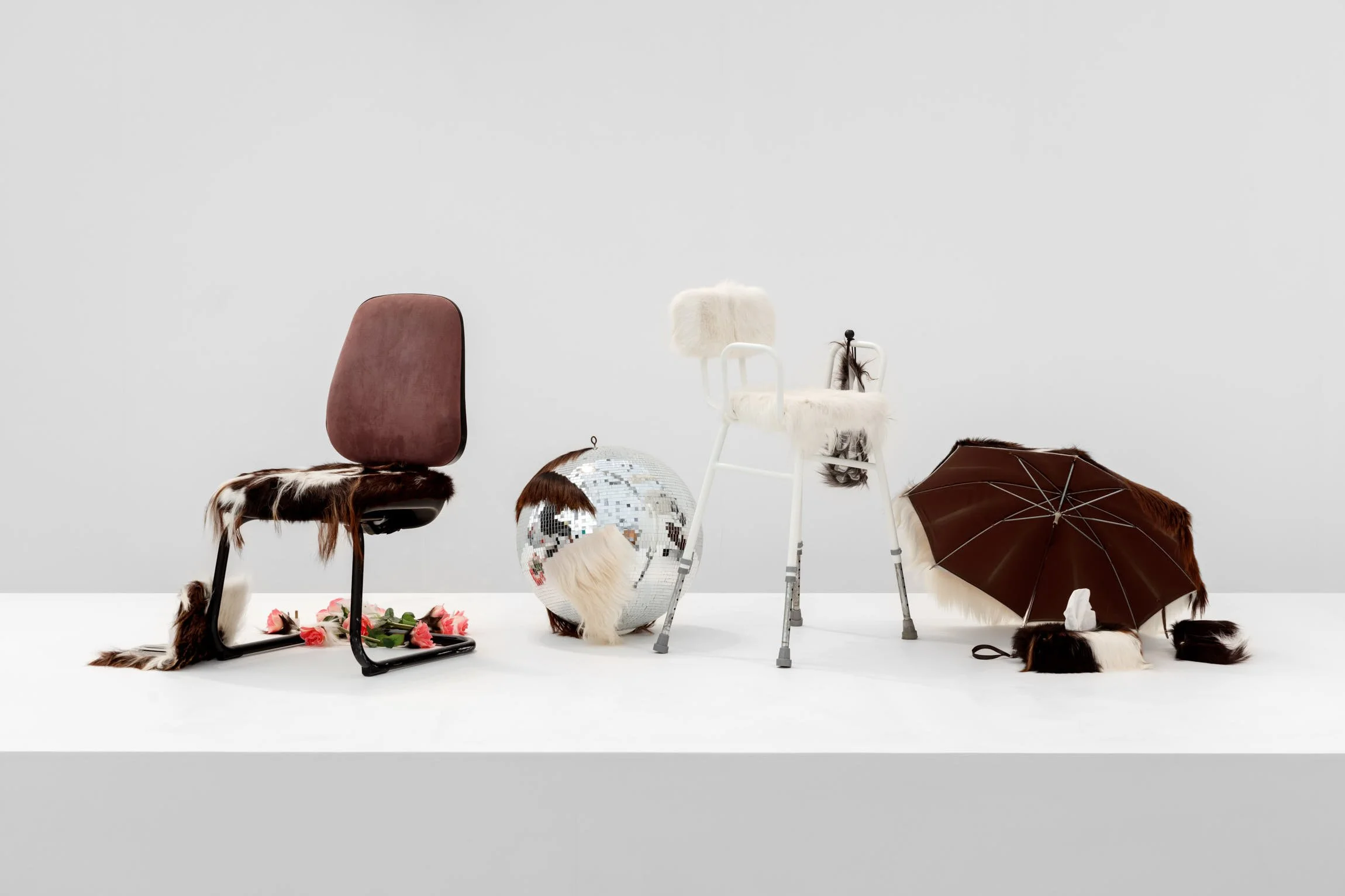
Amanda Moström's Bikini Bottom (2026) presents an installation of familiar, second-hand objects clad in sections of billy goat hide — sourced from male goats considered redundant within dairy farming. Arranged on a low platform and reconfigured daily, the objects occupy a shifting stage that reflects the marketplace from which they were acquired. The installation explores the politics of care and the economics of exchange, questioning how value is produced through use and attention.
the gallery
Since its inception in 2021, Rose Easton gallery has played a notable role in London's contemporary art landscape, particularly in championing emergent artists. Easton's operational philosophy for the gallery is rooted in providing a platform for practices that might otherwise struggle to find institutional or commercial support. Easton has frequently articulated a view on the necessity for greater opportunities for artists in the early stages of their careers, especially in an environment where traditional educational pathways and funding can be challenging.
Easton's curatorial vision supports artists through various phases of their development, valuing creative processes that include contemplation, experimentation, and even periods of perceived inactivity. This is exemplified by the gallery's representation of artists whose work might challenge conventional notions of visibility.
Further reading: Elaine M.L. Tam's accompanying text on Bikini Bottom HERE.
Diez Gallery x Jessica Wilson
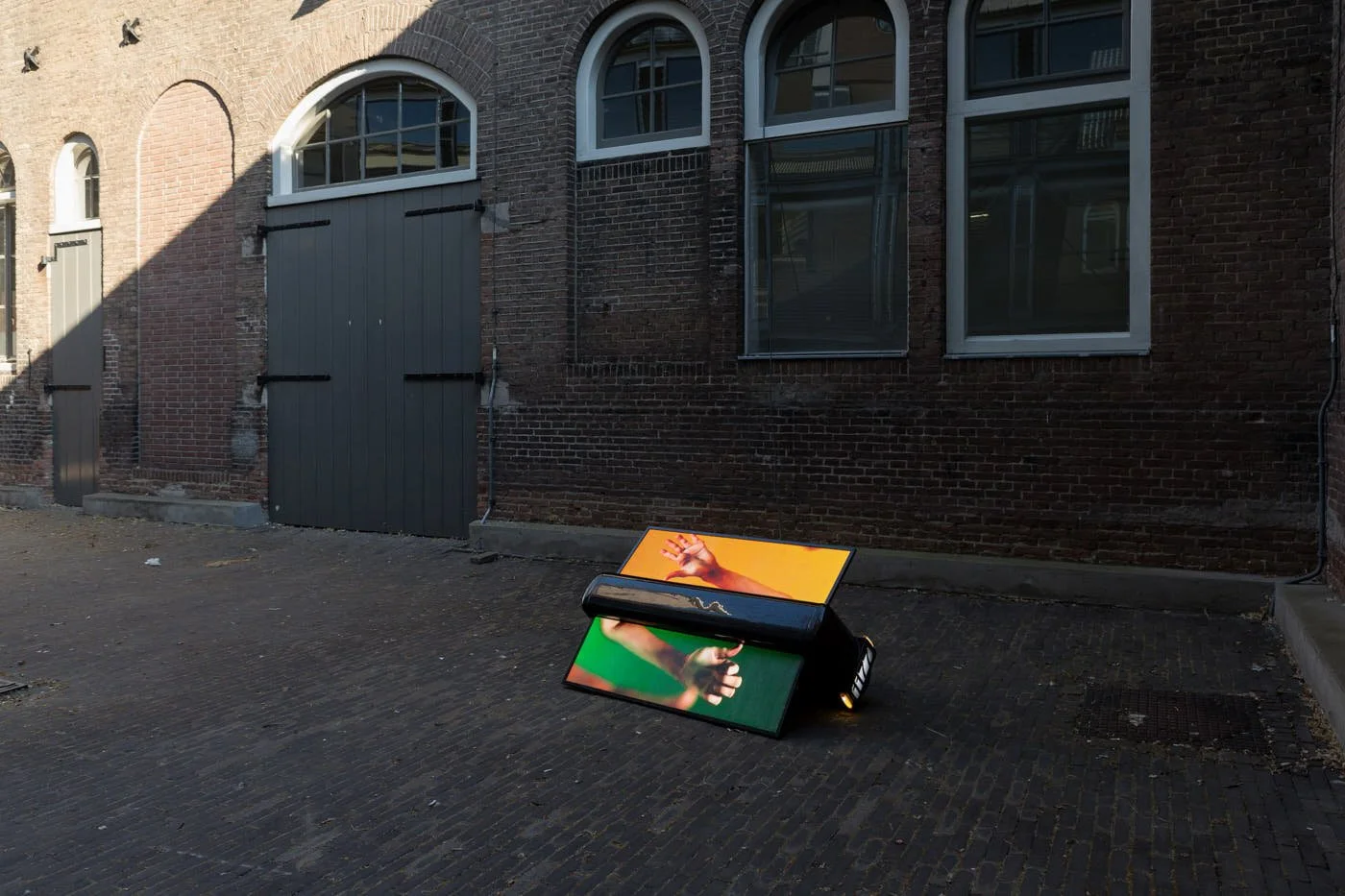
Jessica Wilson, The Commute, 2025
Repurposed LED taxi top, custom software, CG animation, 8:37 65 x 136 x 70 cm (25 5/8×53 1/2×27 1/2 in), Diez Gallery
the artist
Jessica Wilson (b. 1991, New York City) lives and works between Amsterdam and New York. Her work occupies a space where computer-generated animation and sculptural installation are treated as a sophisticated interrogation of the somatic and material effects of virtual systems, moving away from hyperreal spectacle toward an awkward, haptic sensitivity to human inexactitude. Wilson is a multidisciplinary artist whose practice is deeply rooted in the belief that everyday infrastructure—from anthropomorphised electrical outlets to repurposed NYC taxi tops—can act as a surrogate for psychological states of neurosis and anxiety.
Wilson was a resident at the Rijksakademie (2023–2025) and has exhibited at Petrine, Paris (2026), and diez, Amsterdam (2024), among others. Her moving-image works have screened at the ICA, London (2025); IFFR, Rotterdam (2020); and the New Museum, New York (2020). An upcoming solo exhibition at SculptureCenter, New York, opens in November 2027.
the artwork
Sweet Nothing (2025-2026) comprises 12 repurposed LED taxi tops, custom mapping software and CG animation presented on an infinite loop. In October 2026, the work was acquired by the Centraal Museum in Utrecht — marking Wilson's first work to enter a museum collection.
the gallery
Diez is an Amsterdam-based gallery with an international outlook, founded in 2022 by Diego Diez. With a background in fine arts, Diego first established several nonprofit initiatives, which became the starting point for a practice that now moves fluidly between experimental projects and the commercial art world. The gallery has become a place where many young artists present their first exhibitions, while also showing the work of figures from previous generations whose practices have deeply influenced them and their surroundings. This intergenerational dialogue defines the gallery’s identity, fostering a program that embraces both risk and sustainability. With its base in Amsterdam and projects that extend through pop-up spaces and international fairs, diez maintains a sensibility that is open and playful, yet grounded in everyday life, committed to creating meaningful encounters with contemporary art.
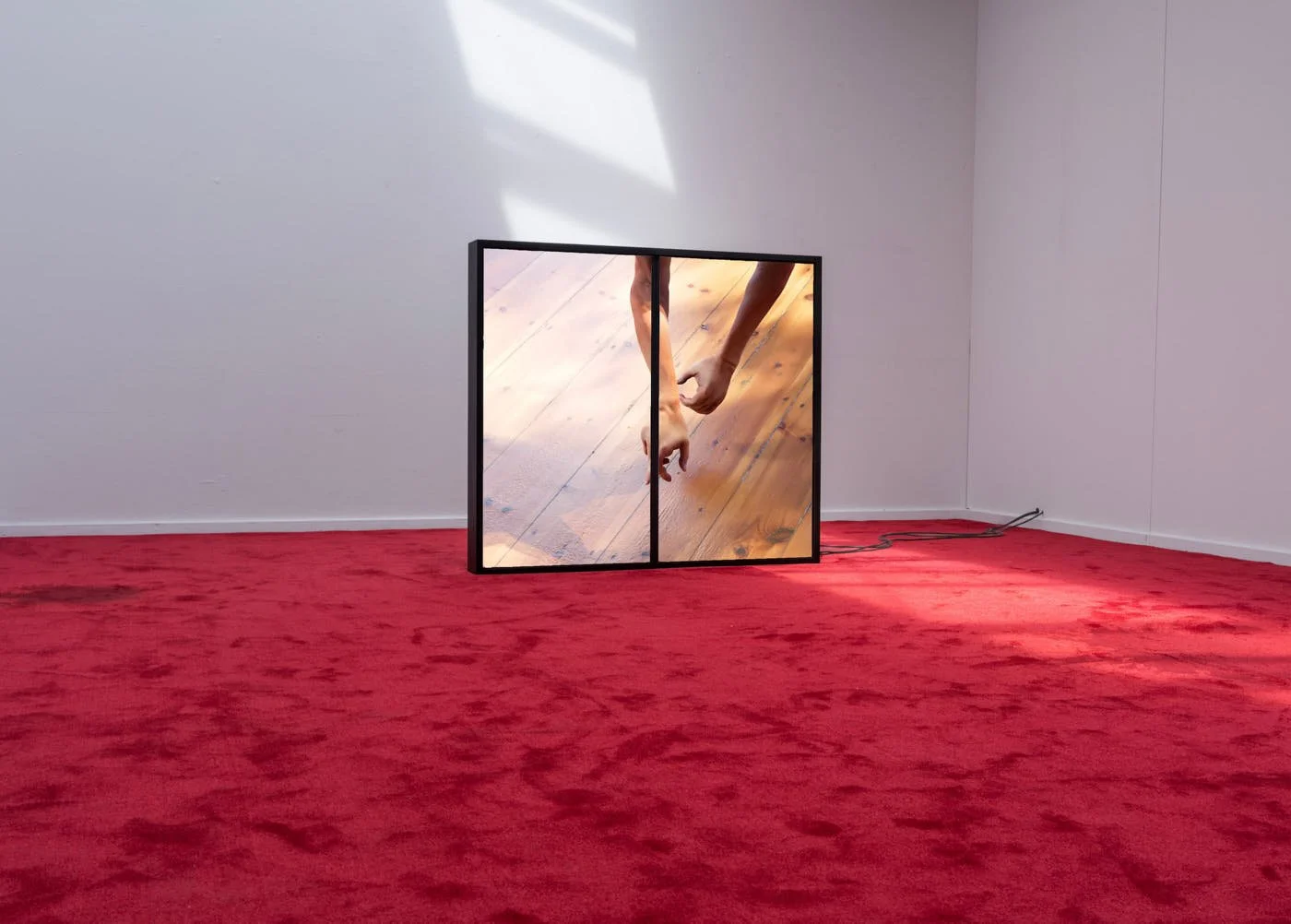
Jessica Wilson, Pretend I’m Dead, 2024
CGI animation, sound, 5:08, Ed 4 + 2AP, Diez Gallery
Ames Yavuz x Stanislava Pinchuk
the artist
Stanislava Pinchuk (b. 1988, Kharkiv, Ukraine) lives and works in Melbourne, Sarajevo and Barcelona. Pinchuk is an artist working between data-mapping and information-mining, conflict topographies, legacies of literature and the politics of translation. Pinchuk’s practice spans film, architecture, installation, performance, drawing, tattooing, painting and sculpture. Currently serving as an Official War Artist of Australia, Pinchuk has previously held career surveys of her work at Heide MoMA and FAC.
Recent exhibitions include the 17th Gjon Mili Bienniale at the National Gallery of Kosovo (curated by Valentine Umansky, Tate Modern) and a solo institutional exhibition at The Dallas Contemporary Museum of Art. Pinchuk is the director of the roaming, radical architectural design school The Anti/Monumental Laboratory, which is currently the opening faculty unit of the experimental Masters Degree in Critical Design at the Elisava University of Architecture & Engineering in Barcelona.
the gallery
Founded in Singapore in 2010, Ames Yavuz emerged from a vision to champion the transformative voices emerging from Asia’s contemporary art scene. The region’s artistic innovations and critical dialogues remained underrepresented on the global stage. Over fifteen years, the gallery has evolved into an internationally recognised platform representing over forty artists and estates. Their practices span continents and disciplines, from painting and sculpture to moving image, installation, and photography.
Central to the gallery’s programme is a commitment to long-term artist development and cross-cultural exchange. Rigorous curatorial practices form the foundation of all programming. Long-term collaborative relationships with artists are cultivated and sustained over many years, often spanning a decade or more. This generates intellectual rigor and meaningful dialogue around art’s role in society’s most pressing conversations. Through solo and group exhibitions, participation in leading international art fairs, and cross-cultural collaborations, the gallery remains committed to presenting work that challenges conventions.

Stanislava Pinchuk, The Wine Dark Sea, set I, detail, 2021
Photo by Matthew Stanton. Courtesy of the artist and Yavuz Gallery
the artwork
The Wine Dark Sea
The Wine Dark Sea (2021) speaks to the Odyssey’s primary question of hospitality – as how we treat our visitors, and what it says about us, rather than our guests. While Homer’s Odyssey is embraced as the first ‘migrant novel’ and key foundation of global literature and democracy – we are perhaps unwilling to do so for the near-identical narratives of exile on our own doorstep. Odysseus’ story, like those illegally detained for 9+ years in Australia’s off-shore migrant detention centres, is one of seemingly permanent exile – moving from island to island, with an unknown prospect of reaching home.
The texts of both the leaked condition reports of illegal off-shore detention and the great epic of oral poetry were written and recited by many authors and contributors, and covering many subjects – eventually falling to credit under one umbrella, be it Homer or Transfield. The Wine Dark Sea interrogates such fragmentation of narrative into its installation specifications, referencing Homer’s tomb on the island of Ios, Greece. Composed of modular and stackable rocks, it is forever swapped and re-arranged into vernacular forms by visitors through millennia, without a final form – akin to the process of story-telling itself.
Similarly, The Wine Dark Sea is not touched by the artist, and invites a guest kindred to the world of the artwork to arrange and interpret the sculptures and narratives for each showing.
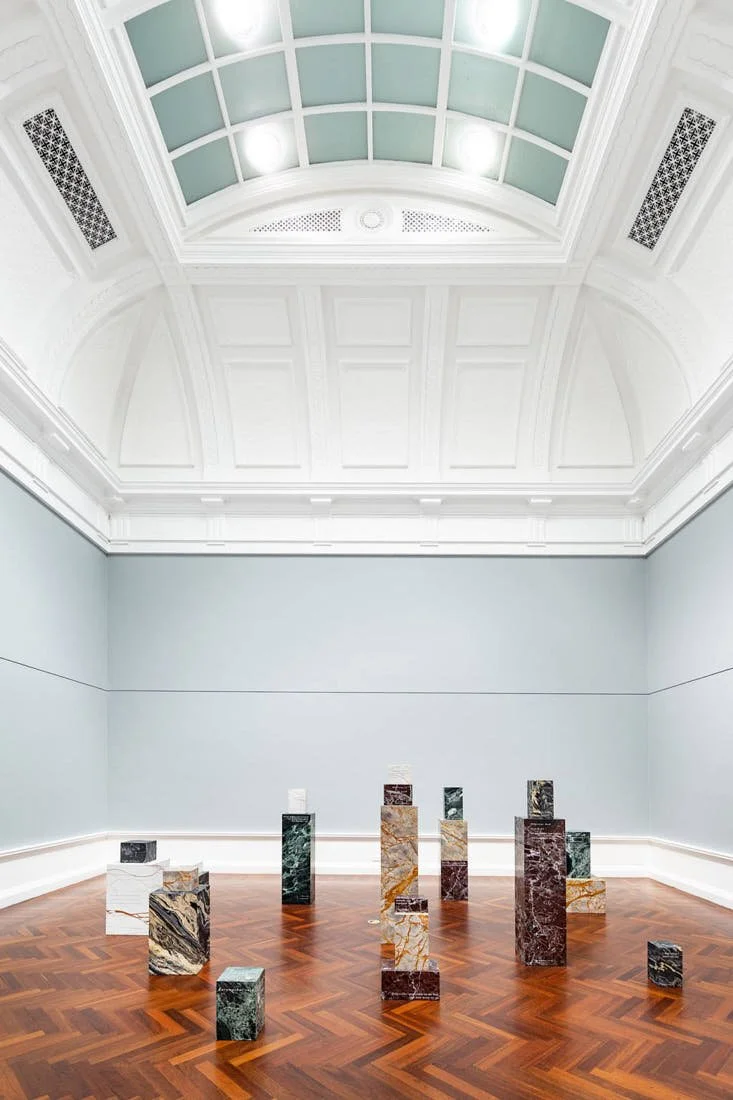
Installation View: AGSA Biennale: FREE/STATE, 2022 Curator & Arrangement: Sebastian Goldspink Collection of the Art Gallery of South Australia

Installation image of Each apparition searches for an eye, 2025
at Frieze London, 2026. Courtesy of the artist and Ames Yavuz.
Photographed by Deniz Guzel
the artwork
Each Apparition, Searches for an Eye
Each Apparition, Searches for an Eye presents a series of 100 photo-portraits of soldiers from the artist’s deployment into combat training for the Armed Forces of Ukraine. Instructed to obscure all identifying features to elude enemy facial-recognition software, the resultant erasures into her film negatives recall 19th-century ‘spirit photography’: whereby daguerreotypists experimented with emergent long-exposure technology to capture ghosts onto silver plates.
Critically, the daguerreotype's unprecedented visual fidelity also produced the first photo-portraits of soldiers: a road littered with cannon-balls in Sevastopol, Ukraine taken during The Crimean War in 1855. This erasure onto film negatives to allow a public record, means committing facial expressions and identity markers solely to the private memory of the artist: which must be further made in anticipation of how region-based convolutional neural networks may evolve in sophistication in the near-future. In this gesture, it is to both simultaneously attempt to bypass and freely catapult the frames into the murky, perma-speculative realm of 21st Century ‘operational images’.
The following photo-sculptural installation interrogates how the fundamental phenomenologies of a photograph remain, its components simply re-arranged in a different order; the unseen eye behind a lens, the passport-size portrait untouchable under glass, the information veiled behind a curtain, the hardware plate, the migration of the captured image – be it through a portable frame or a fibre-optic cable, and the process of sensitisation, by which the more exposure time to a subject’s face still means a greater clarity. Curiously, the same facial recognition technology is now being used to identify previously unnamed sitters of these earliest 19th Century soldier portraits, matching facial structures against wider data-sets of historical photographs and archives.
Each Apparition, Searches for an Eye proposes that the central question of our biotechnological relationship may not be simply the idea of a sentient ‘ghost in the machine’, but rather of the necessity to become a ‘ghost to the machine’: a phenomenon already embodied by recent frontline legends such as the Ghost of Kyiv. An elusive apparition for another ghost; one which first searches for an eye to be seen, an eye to be localised, classified, mapped to a wider face, and verified.
G Gallery and Sargent’s Daughters x Rachel Youn
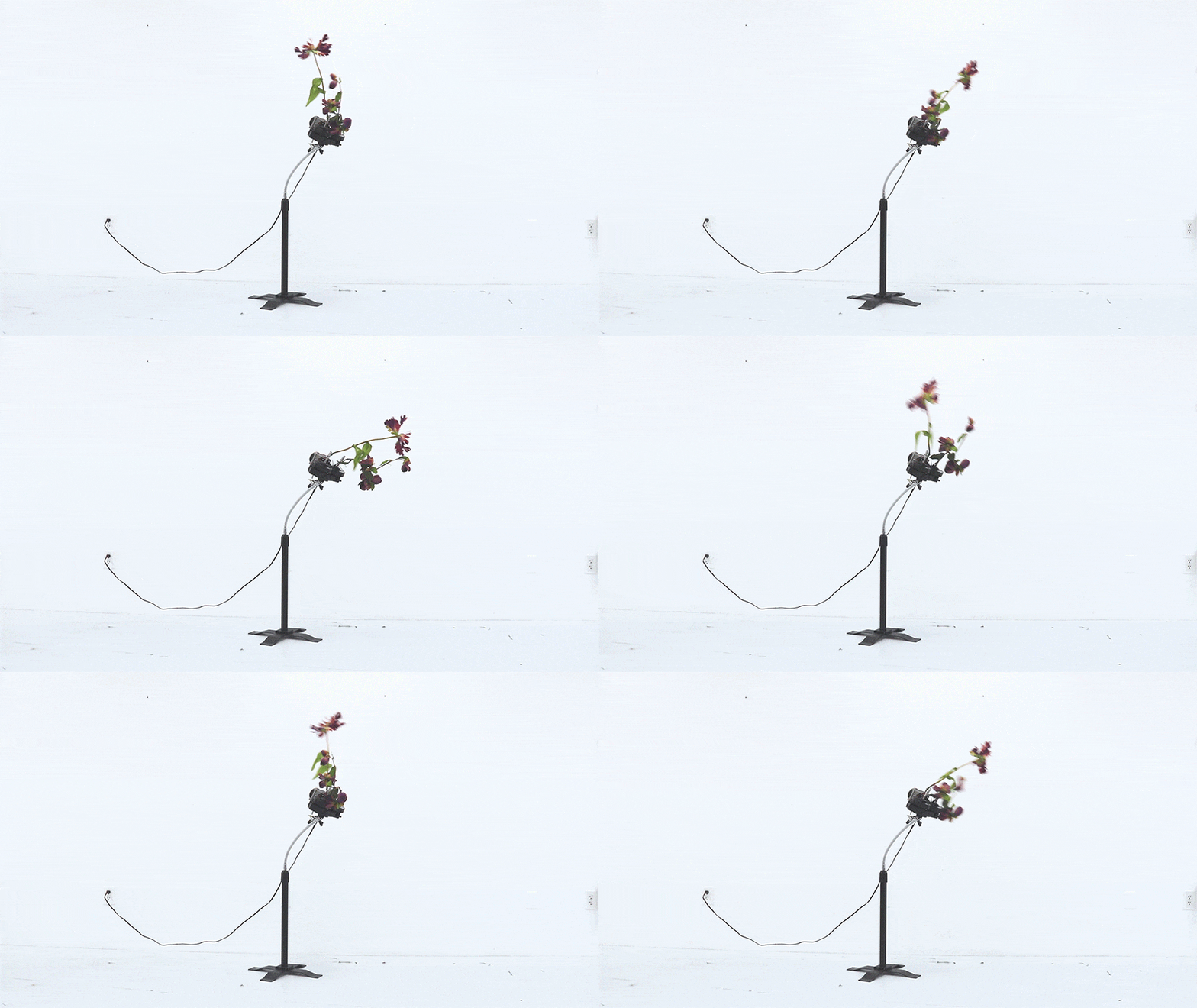
Rachel Youn, Untitled, 2022, shiatsu massager motor, artificial flowers, tablet stand, 147 × 91 × 51 cm. Via Soy Capitán
WATCH: Rachel Youn's kinetic sculptures in motion, via Design Boom.
the artist
Rachel Youn (b. 1994, Abington, Pennsylvania) is a sculptor and installation artist whose practice centres on kinetic sculpture. Salvaging motors from exercise equipment, massagers and baby swings, Youn animates artificial plants and other everyday materials, coaxing a strange tenderness and wit from the mechanical. Their interest lies in the artificial sense of human touch machines can evoke, questioning how movement might lend otherwise inanimate objects a sense of agency.
Youn received their BFA from Washington University in St. Louis and MFA from the Yale School of Art. Their work has been exhibited internationally, including solo presentations at Sargent's Daughters in New York and the Contemporary Art Museum in St. Louis. At Frieze London 2026, Sargent's Daughters × G Gallery presented Youn's work in cross-pollination, alongside Choi Yoonhee and Yaron Michael Hakim.
the artwork
At Frieze London 2026, Youn presented a series of artificial plants that find themselves at the mercy of repurposed massage devices, whose mechanisms, originally intended to imitate human touch, lend their botanical counterparts an awkward semblance of life. There is something both comical and faintly pitiful about these involuntary movements; in their mechanical attempts at intimacy, the sculptures seem to acquire a vulnerability ordinarily reserved for living things.
the gallery
Sargent’s Daughters was founded in 2014 in New York's Lower East Side. The gallery takes its name from the painter John Singer Sargent, who was an innovator working in a traditional medium. Accordingly, the gallery’s interest is in artists whose work combines the same qualities of tradition and the cutting edge. In addition to exhibitions by represented gallery artists, Sargent’s Daughters creates collaborations as a platform for exploring new conversations within a wider context and presents a strong female program, often highlighting overlooked artists working outside the established gallery world. The gallery has a history of granting young artists their first exhibition opportunities. Sargent’s Daughters was the first to exhibit Jordan Casteel, Cy Gavin and Wendy Red Star in their debut NY solo shows, as well as placing works in major museums such as the Museum of Modern Art in New York City.
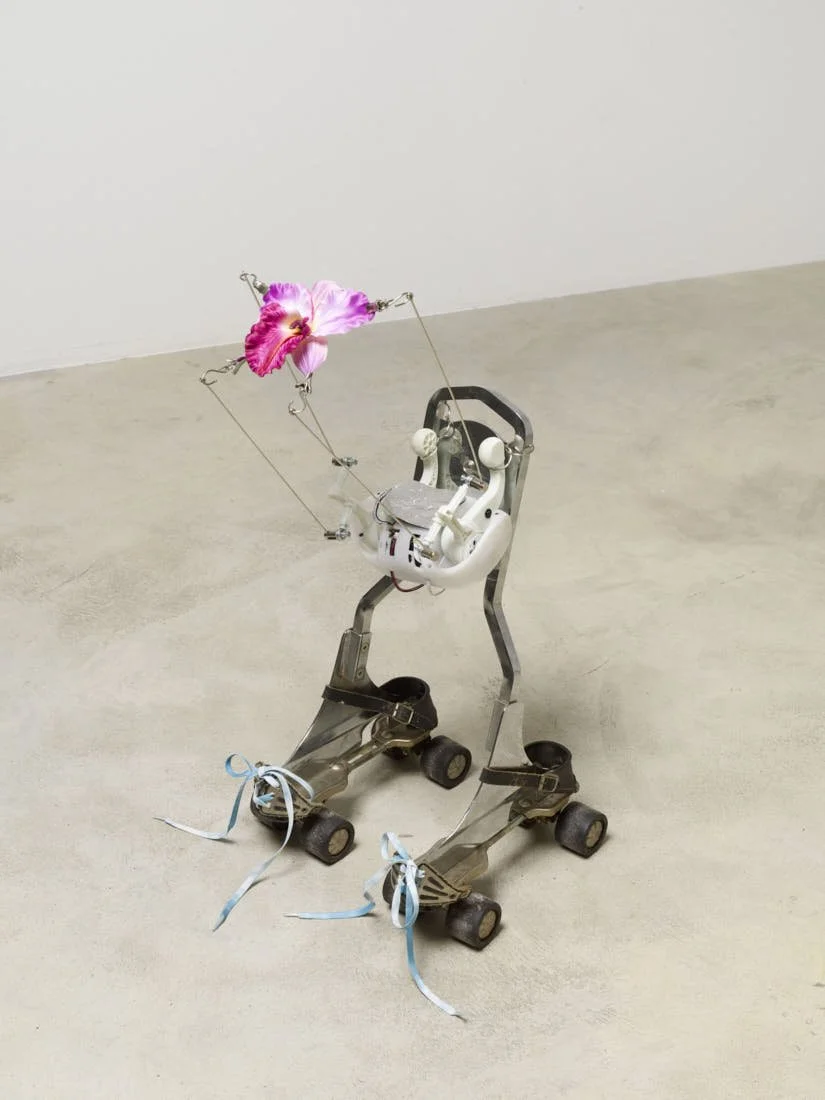
Rachel Youn, Rend, 2024
sissybar, roller skates, shoulder massager, hardware, fake flower, shoelaces, 75 × 35 × 30 cm. Photograph via Soy Capitán

Rachel Youn, Endure, spring horse frame, shiatsu neck massager, artificial orchids, polyurethane swivel casters, stainless steel bird spikes. installed at Sargent's Daughters for Restraint New York, NY December 2024. Photography courtesy Nicholas Knight
Carlos/Ishikawa x Issy Wood
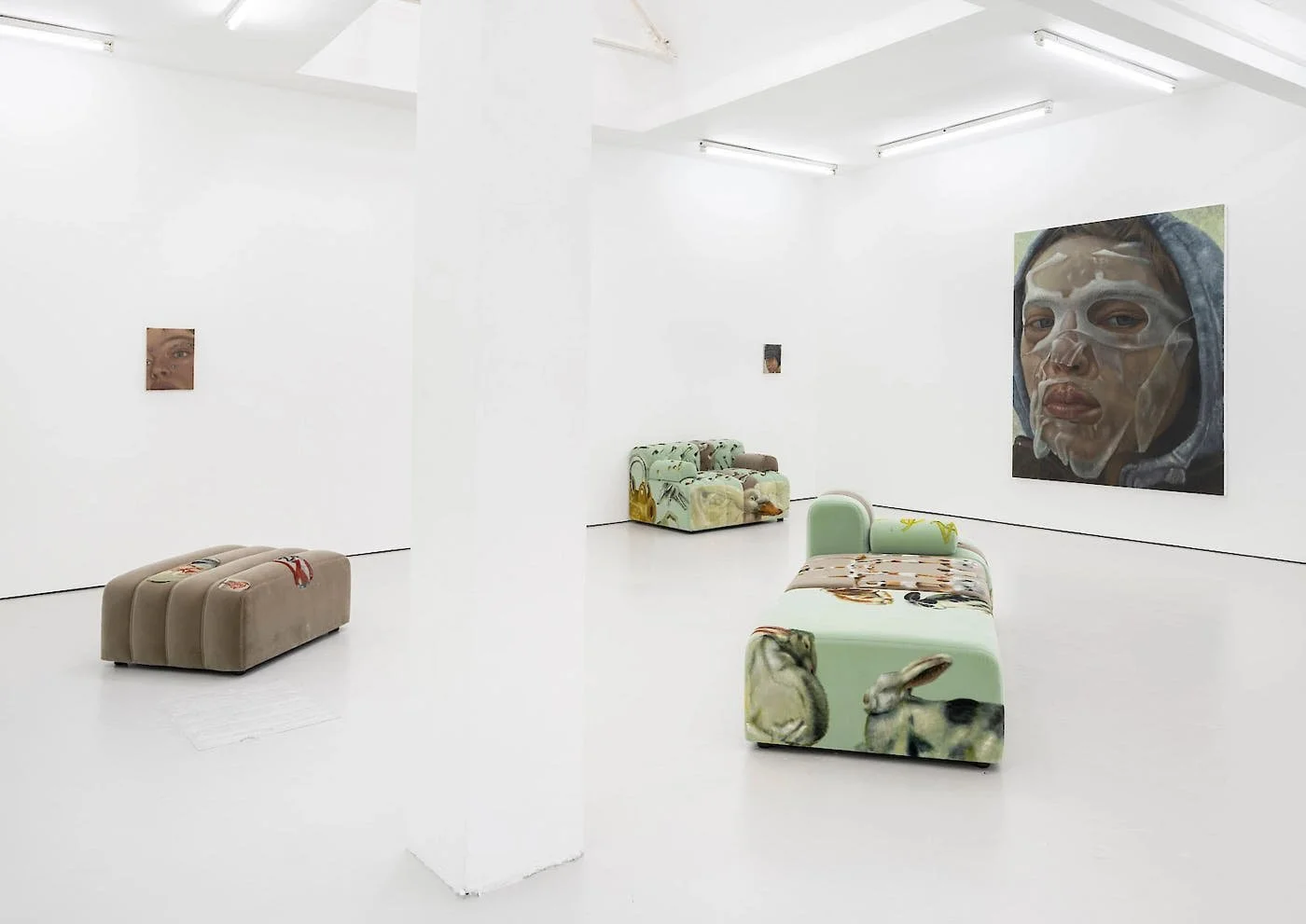
Installation view, Furni, Carlos/Ishikawa, London, 2023. Photo: Damian Griffiths. ©Issy Wood
the artist
Issy Wood (b. 1993, Durham, North Carolina) is a British-American painter and musician who describes herself as a ‘medieval millennial’. Working between the conventions of traditional painting and the visual excesses of the twenty-twenties, Wood draws upon an eclectic archive of imagery from obscure corners of the internet. Her tightly cropped compositions frequently depict everyday objects and fragments of the human body, rendered with a peculiar intimacy that belies their mundane origins. Working in oil on surfaces ranging from linen to her characteristic velvet, Wood's use of short, dabbed brushstrokes creates a hazy realism in which familiar objects take on an unsettling psychological charge. Beneath their seductive surfaces lies a preoccupation with desire, and its uneasy entanglement with personal identity and consumer culture.
Wood studied at Goldsmiths and the Royal Academy Schools in London. Her work has been exhibited internationally, including solo presentations at Goldsmiths CCA, Lafayette Anticipations and Kistefos. In October 2026, the National Portrait Gallery inaugurated its new Artist Focus programme with Issy Wood: Self-Portraits, bringing together eleven paintings from a series begun in 2020.
the artwork
Wood's ongoing series of self-portraits, begun in 2020, occupies a more intimate corner of her practice. Initially conceived, in part, as an alternative to conventional press photography, the paintings offer the artist a means of negotiating her own visibility. Through tightly cropped compositions, face masks and gestures of concealment, Wood complicates the relationship between self-representation and exposure; the painted image offers a likeness while retaining something of the artist's privacy.
the gallery
Founded in London’s East End in 2011, Carlos/Ishikawa’s program focuses strongly on artists with wide-ranging, multi-disciplinary and experimental practices. The artists represented by the gallery work with performance, sound, internet, dance, film, installation and text, as well as painting and sculpture. The program exhibits international artists, offering many artists their first solo shows in London.
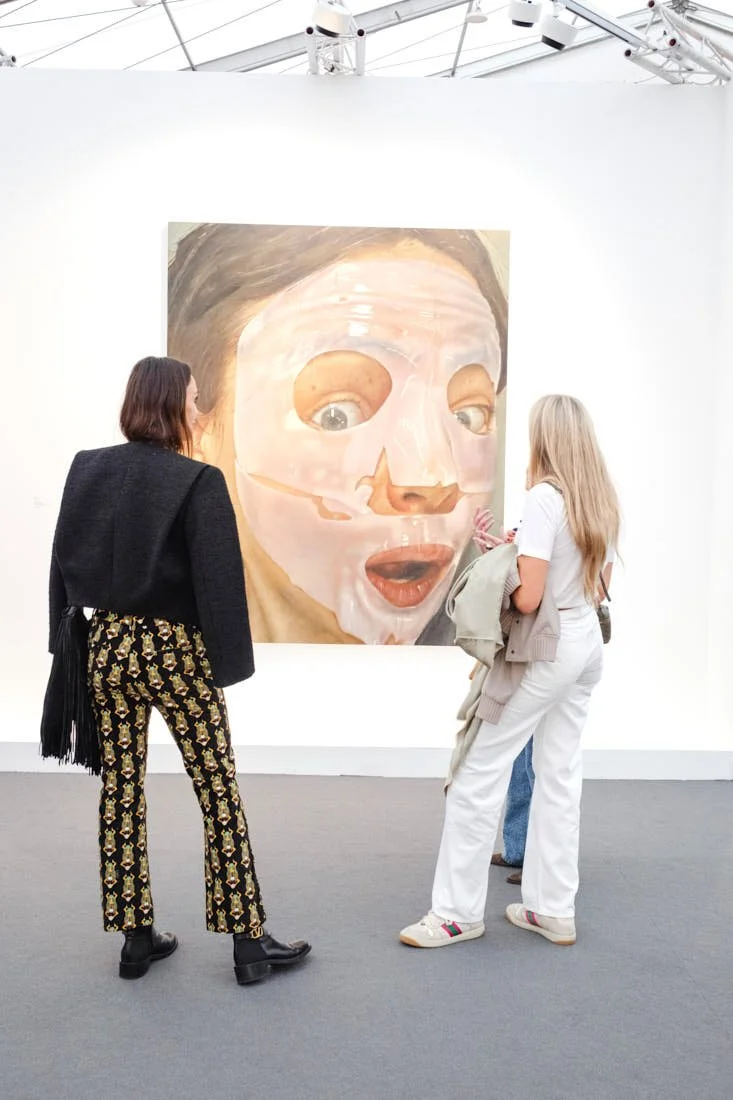
Carlos Ishikawa, Frieze London 2026. Image by Linda Nylind. Courtesy of Frieze

Installation view, Fish, Fish, Duck, Issy Wood, 2026, Kistefos Museum. © Issy Wood
EastContemporary x Anastasia Sosunova

Anastasia Sosunova ‘Public Feelings’, 2025, scrap metal (fragments of cars), etched zinc, polystyrene, water from Villa Unity and the lake from the night of 18 January, found objects.
Photographed by Jonas Balsevičius
the artist
Anastasia Sosunova (b. 1993) is a visual artist working across video, installation, sculpture, and printmaking. Her practice sits at the fault line between DIY, underground culture and hegemonic systems, tracing how magical thinking persists within the mechanics of community mobilisation. Sosunova’s moving-image works operate as case studies, exploring how authority and belief shape individual and collective behaviour today: from vernacular wood sculpture to pseudo-medicine to corporate religion. Rooted in a printmaking background, she often reads fan bases, cults and movements using print media theory as a framework, exposing the machinery of political myth-making and the contours of contemporary folklore.
Sosunova’s works have been exhibited at major biennials, including Gwangju, Kaunas and Lyon, as well as at leading art institutions across Europe and beyond.
the artwork
Preppers (2026), an installation combining film and sculpture, draws on the artist’s long-term research into Kesko Senukai, the largest DIY retail chain in the Baltics. Combining devotional aesthetics and apocalyptic symbolism, the work proposes DIY as both a means of survival and a mythology of contemporary capitalism.
the gallery
Eastcontemporary is dedicated to the research, development and support of international artists through exhibitions, public programmes and partnerships. Founded in Milan in 2020 as a non-profit project space, it evolved into a contemporary art gallery in 2021, with a particular focus on providing a global perspective on the Central and Eastern European art scene, alongside regions historically and culturally influenced by the former Soviet Union, including Southeastern Europe and Central Asia.
The gallery aims to increase the international visibility of artists from these regions while creating connections between often distant artistic communities. Its public programme extends beyond exhibitions, encompassing talks, performances, music and publishing-related events. Recent examples include a discussion around Poor but Sexy: Culture Clashes in Europe East and West, a stand-up performance by Mila Panic, a DJ set by Stach Szumski and a performative talk by Slavs and Tatars at Spazio Maiocchi in collaboration with SPRINT.
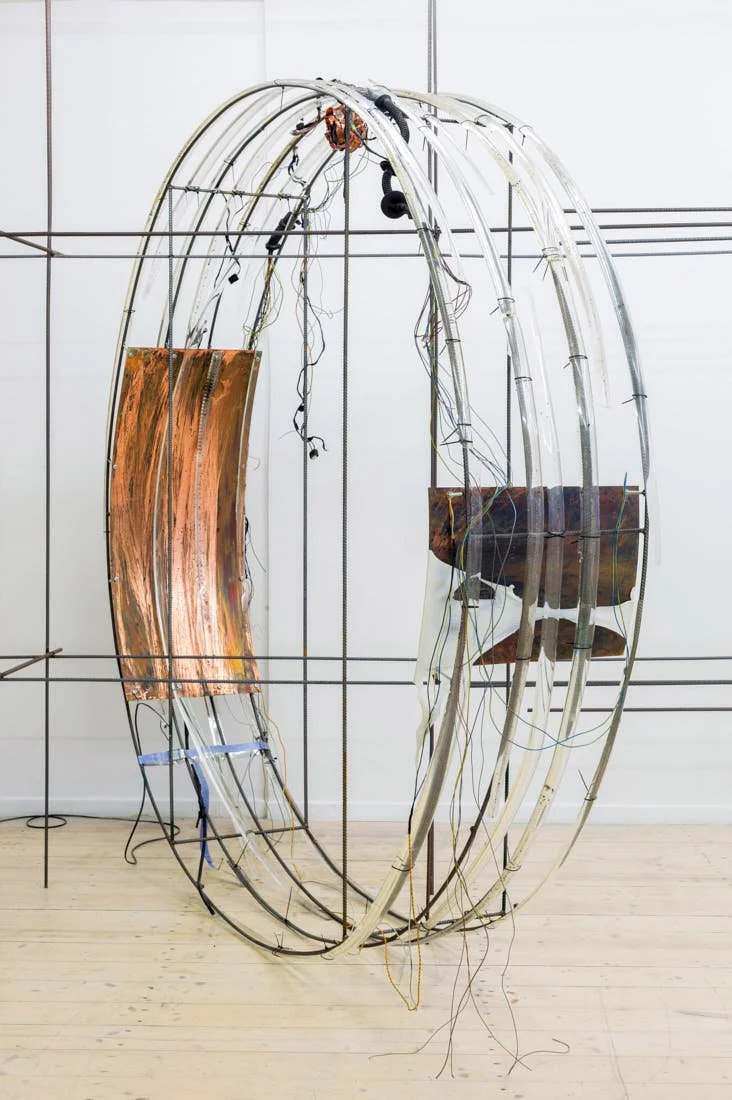
Anastasia Sosunova, DIY at Editorial, Vilnius, Lithuania 2023. Install shots courtesy of the artist and Editorial, Vilnius
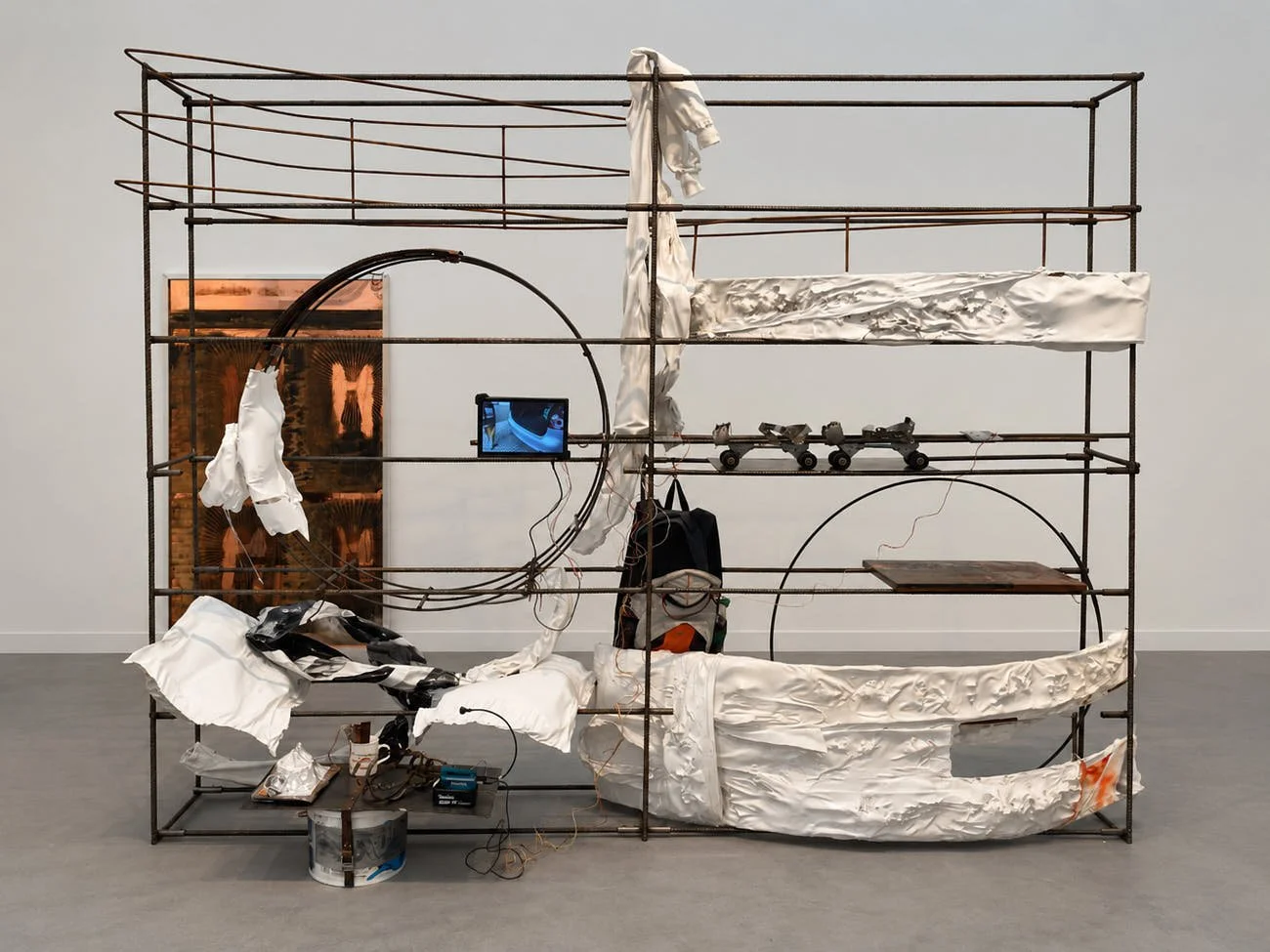
Anastasia Sosunova, Preppers (2026). Installation view at Frieze London 2026, presented by eastcontemporary.
Photographed by Tagen Donovan, 2026
Ginny on Frederick x Okiki Akinfe

Installation view, Okiki Akinfe, Where the Wild Things Are at Ginny on Frederick. Courtesy of the Artist and Ginny on Frederick.
Photographed by Stephen James
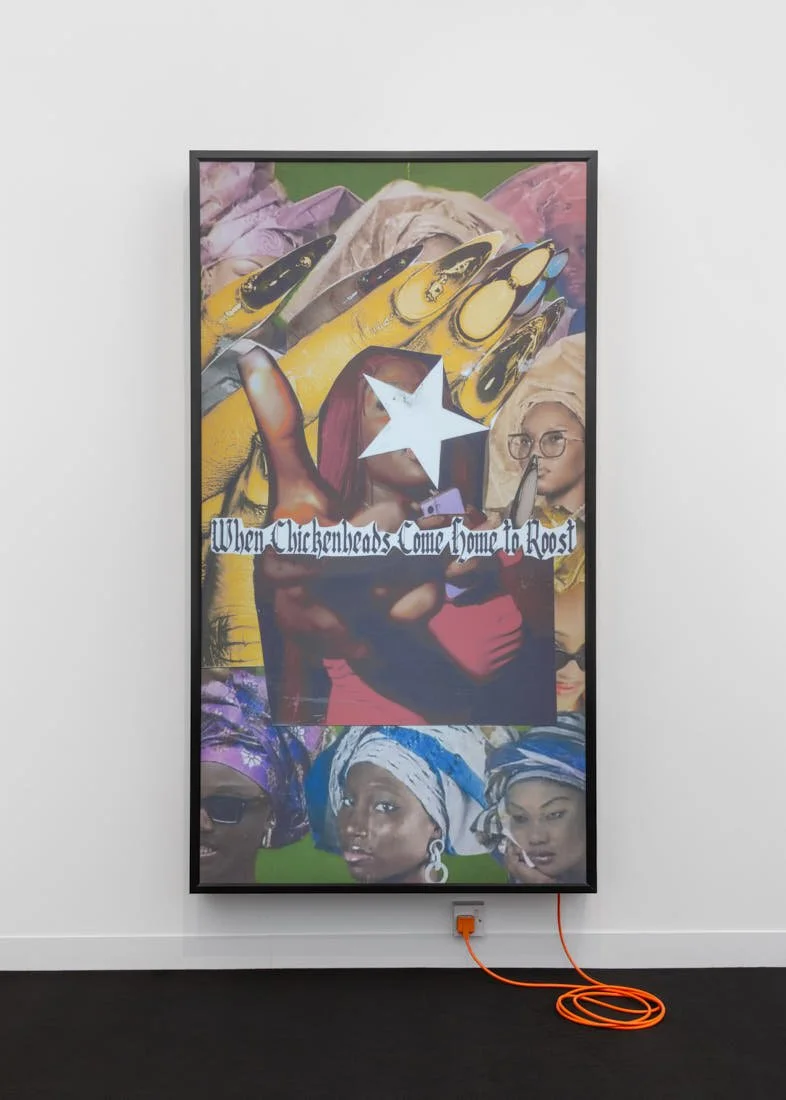
Okiki Akinfe, When Chickenheads Come Home to Roost, 2026. Photography by Corey Bartle-Sanderson
the artist
Okikioluwa Akinfe (b. 1999) is a Nigerian-British artist based in London whose multidisciplinary practice spans painting and drawing. Central to her practice is the construction of an alternative archive that challenges conventional representations of Black identity. Encompassing ‘The Black lens’, a subversive tool of her own creation, Akinfe interrogates stereotypes by exposing their absurdity, shifting the perspective from the white gaze towards a Black gaze.
Akinfe graduated from the Slade School of Fine Art in 2022 before completing her MA in Painting at the Royal College of Art in 2023. She has received the Basil H. Alkazzi Scholarship Award and the Freelands Painting Prize. Her work has been exhibited internationally, including at Ginny on Frederick in London, and has entered public collections, including Abbot Hall in Kendal.
the artwork
Okiki Akinfe’s distinctive painterly style draws on the traditions of underpainting. By leaving sections of the canvas exposed and retaining the faint grids and measurements used to build an image, Akinfe foregrounds painting as a process of looking, thinking and making, rather than concealing its labour behind a finished surface. Fame is a Gun (2026) is a self-portrait depicting the artist sitting backwards on a chair. One arm stretches out in front of her, casting a shadow across her face, while her hand forms the shape of a gun. The gesture occupies an ambiguous space between playfulness and self-fashioning, complicating the relationship between how one chooses to be seen and how one is perceived. The title introduces a further tension, suggesting that fame can be both a form of agency and something less easily controlled.
At Frieze London 2026, the inaugural Dasha Shenkman Focus Fund, facilitated by the Contemporary Art Society, supported the acquisition of three works by Akinfe for the collection of Abbot Hall in Kendal: a painting, a lightbox work and a preparatory drawing. Established to acquire works from the fair’s Focus section for UK public collections, the fund recognises emerging artists at a critical moment in their practice.
the gallery
Founded by Freddie Powell in 2020, Ginny on Frederick is a London gallery whose beginnings were decidedly unconventional, taking its name from Powell's mother and its original premises on Frederick Terrace in Hackney. Following the closure of its first space during the pandemic, Ginny on Frederick reopened in 2021 in a former sandwich shop near Smithfield Market, where it remains based.
With a programme shaped by friendships and close artistic relationships, Powell approaches the gallery as much through facilitation as conventional art dealing. Its modest physical dimensions have become integral to its identity, encouraging artists to develop exhibitions in direct response to the space. Despite its relatively short history, the gallery's programme has attracted recognition at Frieze London, including the Camden Art Centre Emerging Artist Prize in 2023 and the Nicoletta Fiorucci Foundation Prize in 2025.
Read LE MILE’s Tiny Galleries Feature with Ginny on Frederick, London HERE.
Victoria Miro x Kudzanai-Violet Hwami

Installation view, Booth D12, Frieze London 2026.
Courtesy of the artist and Victoria Miro
the artist
Born in Gutu, Zimbabwe in 1993, Kudzanai-Violet Hwami currently lives and works in London. Her work reveals a deeply personal vision of Southern African life. Drawing on personal experiences of geographical dislocation and displacement, Hwami’s paintings combine visual fragments, sourced from collections of photographs, which collapse past and present. Many of her paintings feature self-portraits and images of her immediate and extended family. Powerful nudes are another point of departure, boldly raising questions about the black body and its representation, as well as sexuality, gender and spirituality. Hwami’s influences include music, such as Zim Heavy and Afrobeats; and literature, including the works of Aleksandr Solzhenitsyn and Carl Jung. Maintaining a process which involves experimenting with photography and digitally collaged images, using these to create large works on paper or canvas in combination with intensely pigmented oil paint, and often incorporating other media and techniques, such as silkscreen, pastel or charcoal.
In 2016, the same year she graduated from Wimbledon College of Arts with a Bachelor of Fine Arts, Hwami was awarded the Clyde & Co. Award and the Young Achiever of the Year Award at the Zimbabwean International Women’s Awards, as well as being shortlisted for Bloomberg New Contemporaries. In 2019, Hwami presented work at the 58th Venice Biennale as part of the Zimbabwe Pavilion, the youngest artist to participate in the Biennale.
At Frieze London 2026, Victoria Miro presented recent paintings and a sculpture by Hwami in a special installation conceived by the artist for booth D12. The presentation coincided with her inclusion in British Art Show 10: A Chorus of Strangers, which began its national tour in October.
the artwork
Victoria Miro's presentation at Frieze London 2026 brought together four paintings by Kudzanai-Violet Hwami — Sorbus Hymn II (2025), Animus (2025), Scapegoat (2025) and Witness (2025) — alongside the sculpture Containing Multitudes (2025). The sculpture's title draws on the words of American poet Walt Whitman, whose declaration, ‘I contain multitudes’, has long resonated with Hwami's practice.
the gallery
Victoria Miro is celebrated for its commitment to artists whose visionary and singular practices shape the landscape of contemporary art. The gallery presents a programme that reimagines how art is made, accessed and experienced through exhibitions in its London and Venice spaces and on LIVE / ARCHIVE, as well as through international art fairs, museum collaborations, commissions and residencies in the Venice studio.
By advancing the use of new technologies, Victoria Miro is at the forefront of presenting art beyond gallery walls, enabling collectors, curators and the public to connect with art anytime and anywhere in the world, while significantly reducing carbon emissions. The gallery shapes artistic inquiry by bringing together acclaimed writers, critics and thinkers to collaborate with artists on exhibitions, commissions, new writing and conversations that open perspectives on culture.

Kudzanai-Violet Hwami, A Making of Ghosts, installation view, Victoria Miro, London, 2023.
Courtesy of the artist and Victoria Miro
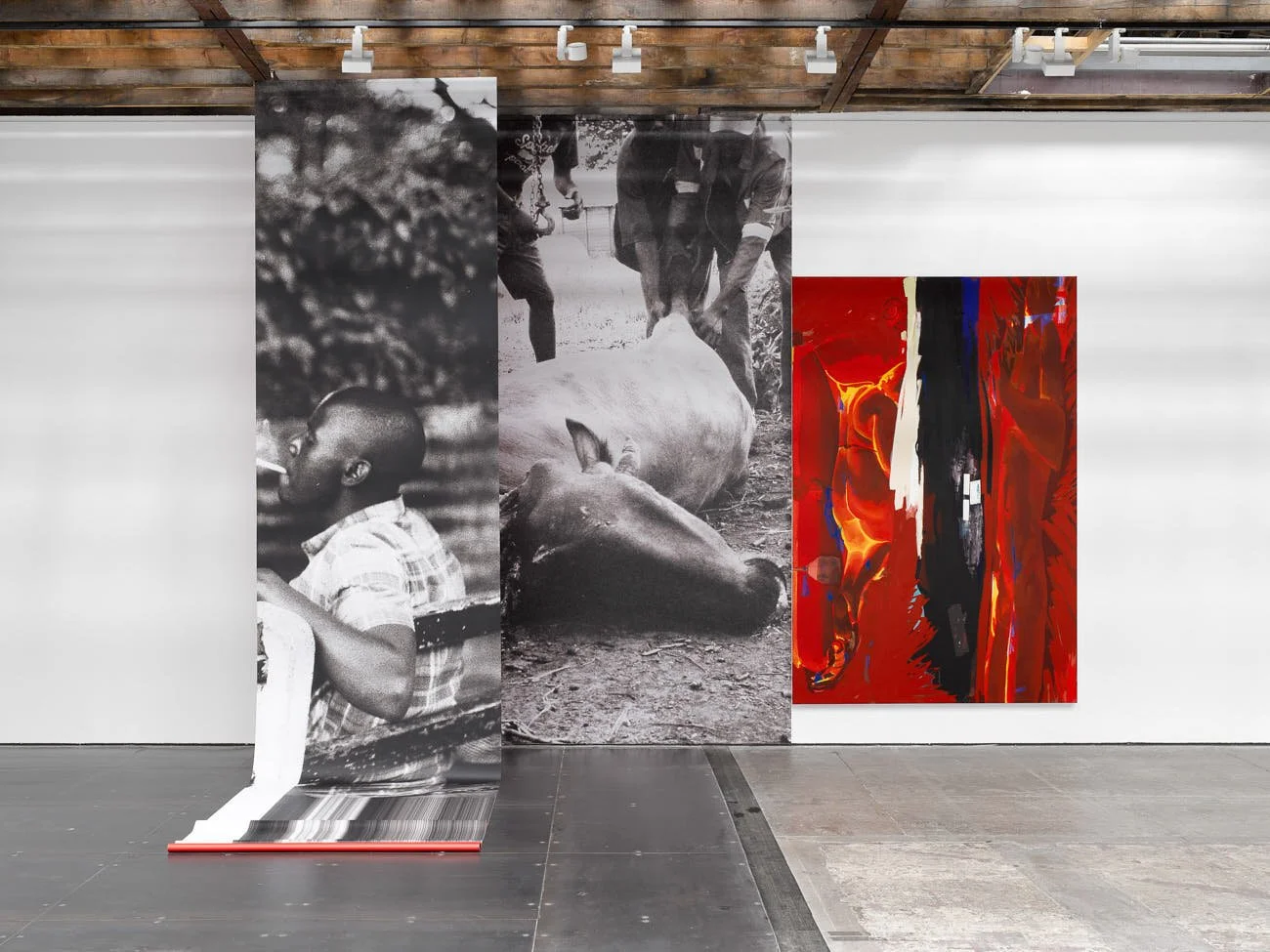
Kudzanai-Violet Hwami, A Making of Ghosts, installation view, Victoria Miro, London, 2023.
Courtesy of the artist and Victoria Miro
Public x Steph Huang

View of the Focus Section at Frieze London. Public, London, 2026
the artist
Steph Huang (b. 1990, Taiwan) is a London-based multidisciplinary artist whose practice explores themes of labour, value and commerce through the cultural biographies of everyday objects and spaces. Working across sculpture, installation, film and sound, she transforms mundane materials into minimalist yet poetically resonant installations. Her work uncovers the historical and transcultural narratives embedded within consumer culture while critically examining its environmental and human costs.
the artwork
For Frieze London 2026, Public presented Lili Deli, a solo presentation of new works by Steph Huang investigating the systems of mass production and commerce that underpin the global food industry, alongside its transcultural and historical dimensions and profound impact on the natural environment. Comprising two hand-built bar carts, a freestanding privacy screen and a series of found and sculpted objects arranged on custom shelving, the installation takes the form of a critical audit of our consumption habits; an intervention that asks viewers to reconsider the true cost of our global pantry.
the gallery
Public is a London-based contemporary art gallery dedicated to supporting international emerging artists and promoting cross-cultural exchange. Established in 2020, the gallery presents a diverse curatorial programme that encourages ambitious projects, intergenerational dialogues, and non-traditional modes of seeing and thinking. In 2025, Public expanded its brutalist East London space within the Middlesex Street Estate, incorporating the neighbouring unit to create a second multi-story exhibition space and a combined total of five levels across both sites. The gallery is run by co-directors Alex Harrison, Harry Dougall, and Nicole Estilo Kaiser.
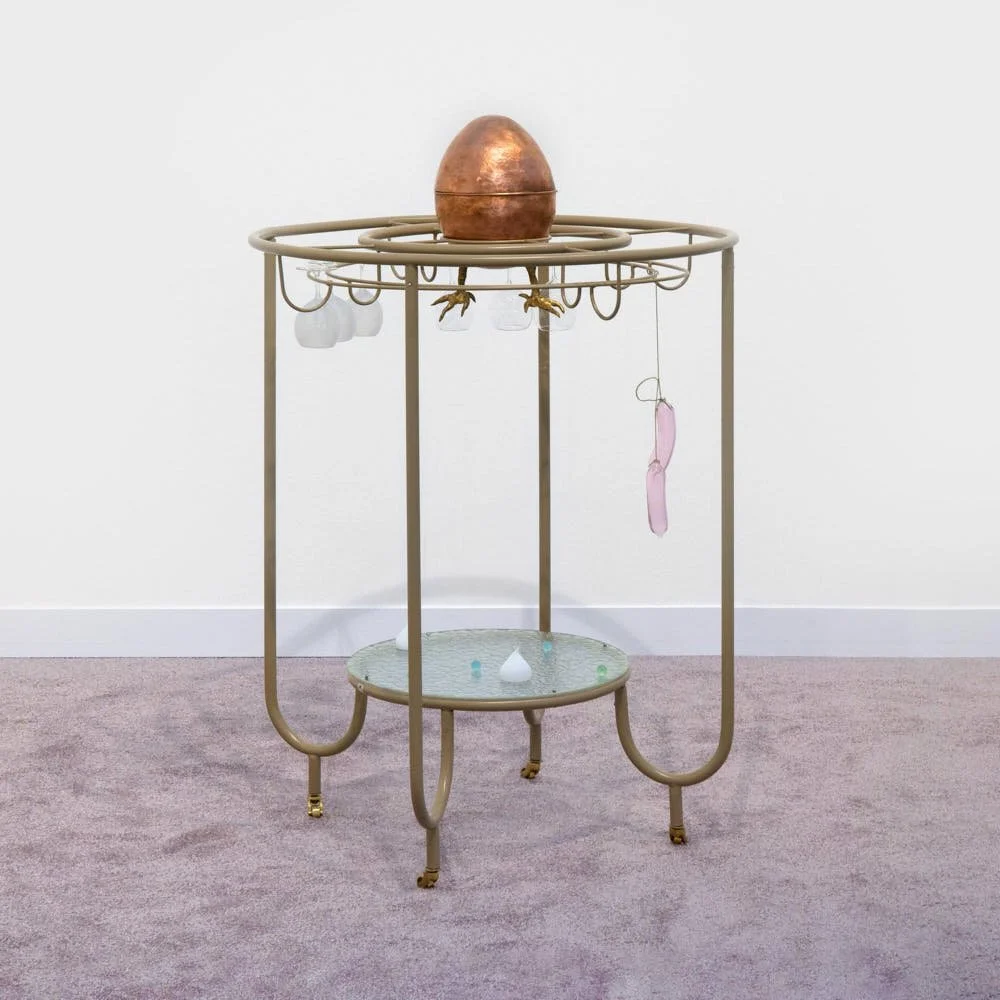
Golden Egg's Matinee, 2026, Hand-blown glass, powder-coated mild steel, copper, bronze, brass, string, 126 x 82 x 82 cm. Frieze London. Public, London, 2026
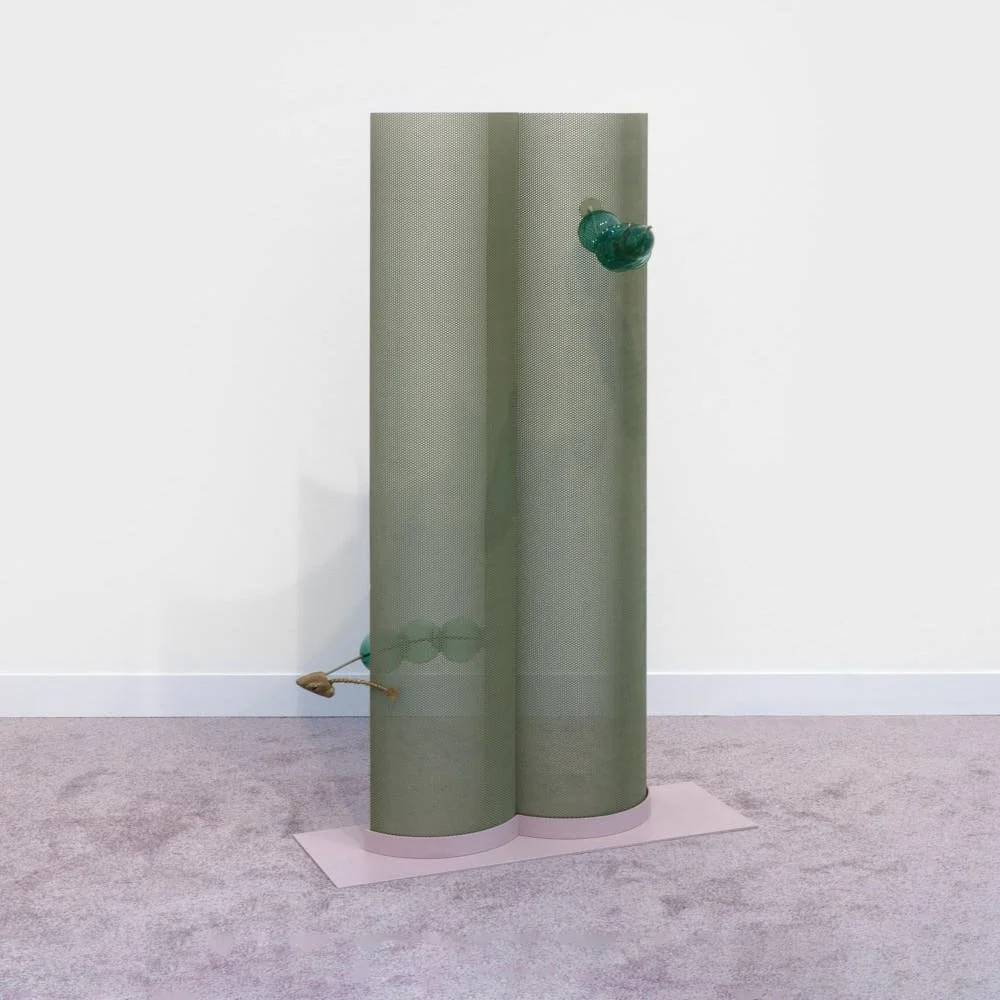
High Seas, 2026, Hand-blown glass, mild steel, bronze, paint, 147 x 90 x 68 cm. Frieze London. Public, London, 2026
header image credit
Amanda Moström, Bikini Bottom, 2026. Courtesy the artist and Rose Easton, London. Photography by Jack Elliot Edwards