Viewing entries in
photography

Nhu Xuan Hua at Fotomuseum Winterthrur

Nhu Xuan Hua at Fotomuseum Winterthrur

Nhu Xuan Hua in the Afterlife of Images


written LE MILE


Nhu Xuan Hua works with images much like others work with language, carefully and intuitively, aware that every gesture carries the weight of memory. Born in 1989 and based in Paris, the French–Vietnamese artist moves between fashion photography and an increasingly expansive artistic practice that investigates inherited histories, diaspora, and the fragile architecture of remembrance.
 
 
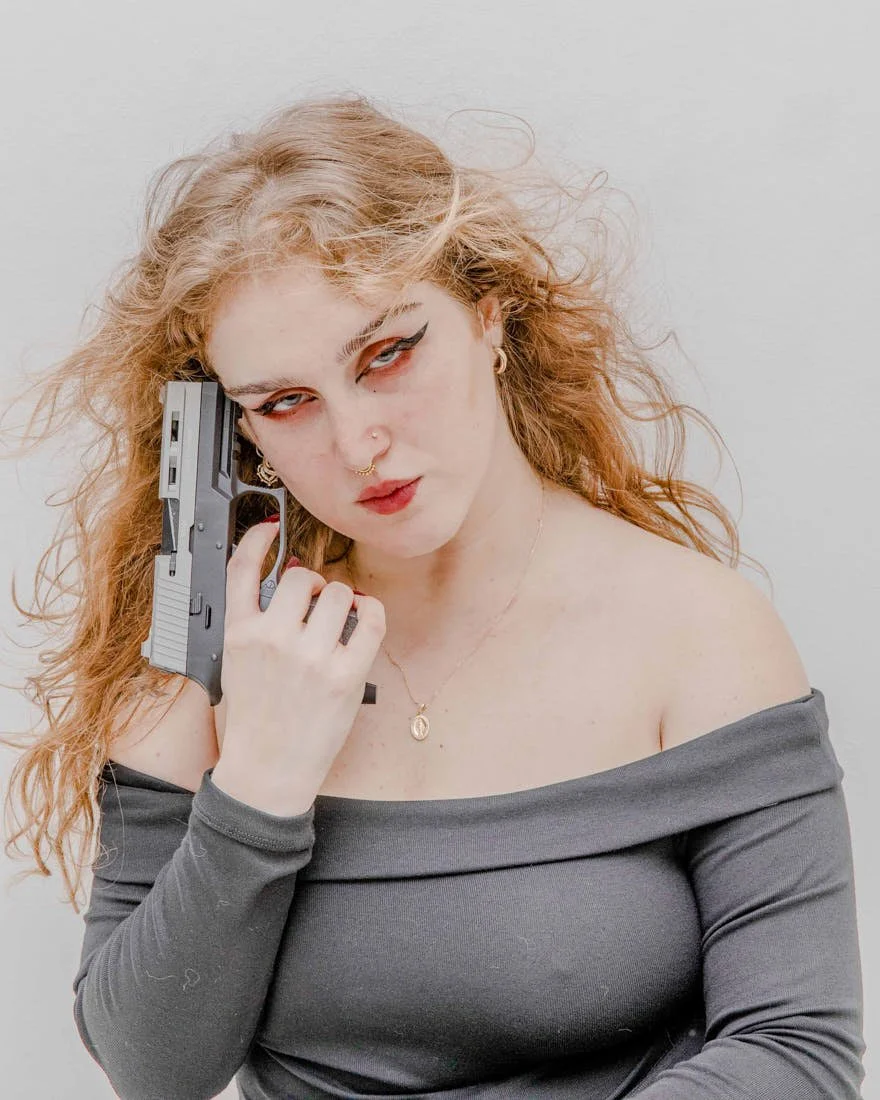
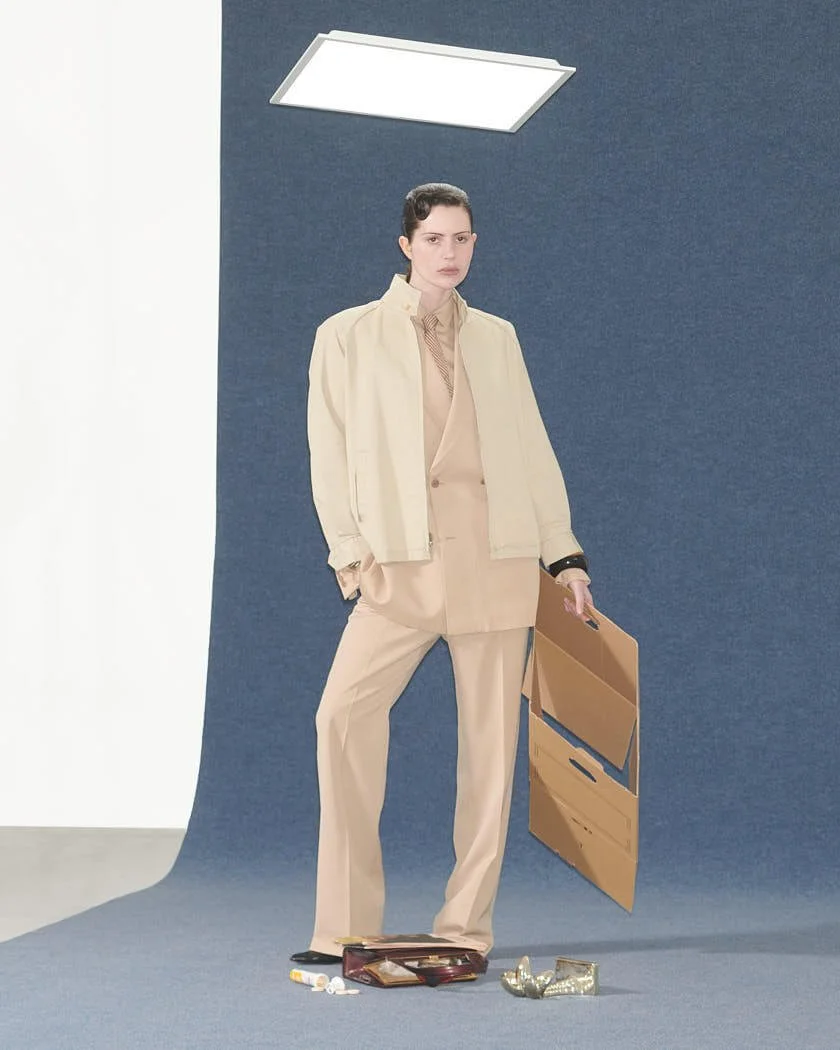
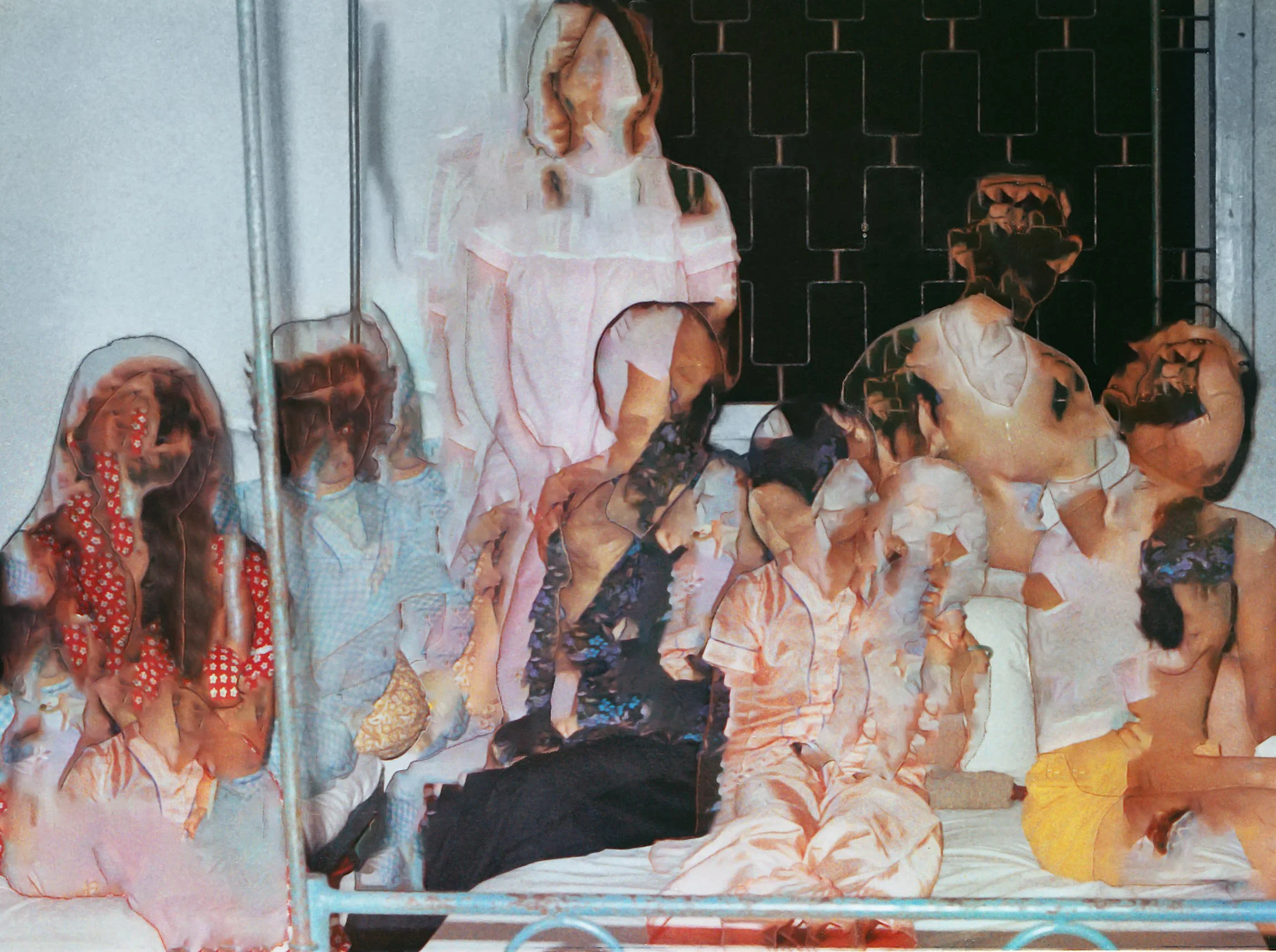
Nhu Xuan Hua Les oubliées - Archive from the year ’70, 2016-2021 for LE MILE Magazine Galerie Anne-Laure Buffard

Nhu Xuan Hua, Les oubliées, Archive from the year ’70, 2016-2021
(c) Nhu Xuan Hua, courtesy of the Galerie Anne-Laure Buffard


Her images often begin long before the shutter is pressed, as words, fragments of archives, gestures and symbols gather slowly until they form a constellation from which a photograph can emerge. In Hua’s work, memory appears as something unstable, a presence that returns, shifts, dissolves, and reappears in new forms.


Hua first became widely known through collaborations with international fashion houses such as Dior, Maison Margiela, Chanel and Gucci. Over the past years, her practice has moved steadily toward a more autonomous terrain where photography intersects with archives, mixed media, and conceptual storytelling. Her publication Tropism, Consequences of a Displaced Memory marked a pivotal moment. Built around photographs from her family albums, the project reflects on migration, distance and the ways history continues to echo across generations. Images become surfaces where personal memory and collective experience intersect.

This ongoing exploration now enters a new context in the exhibition One Another – Nhu Xuan Hua and the Collection of Fotomuseum Winterthur, where the artist’s work enters into dialogue with the museum’s photographic collection and expands toward broader questions of visual continuity, rupture and belonging.
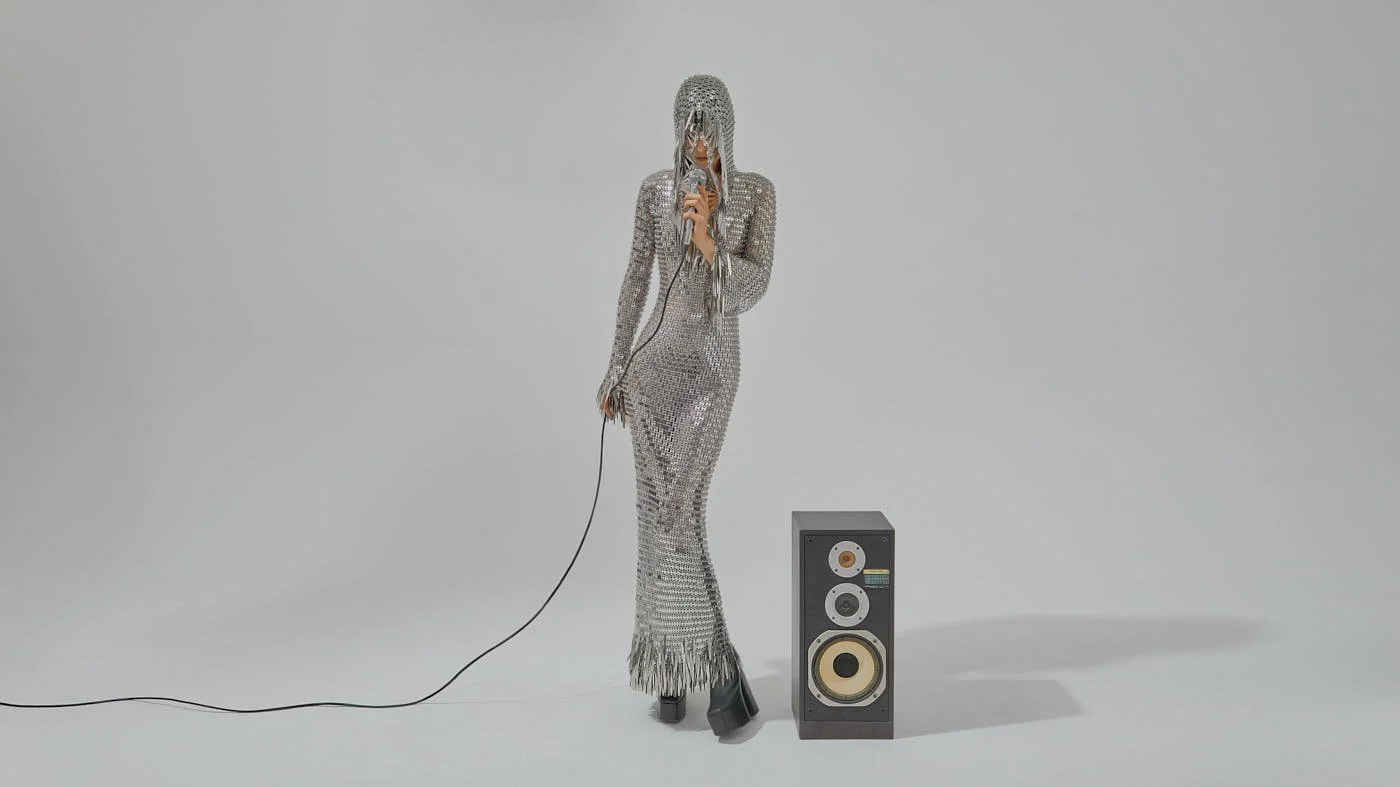
 
 
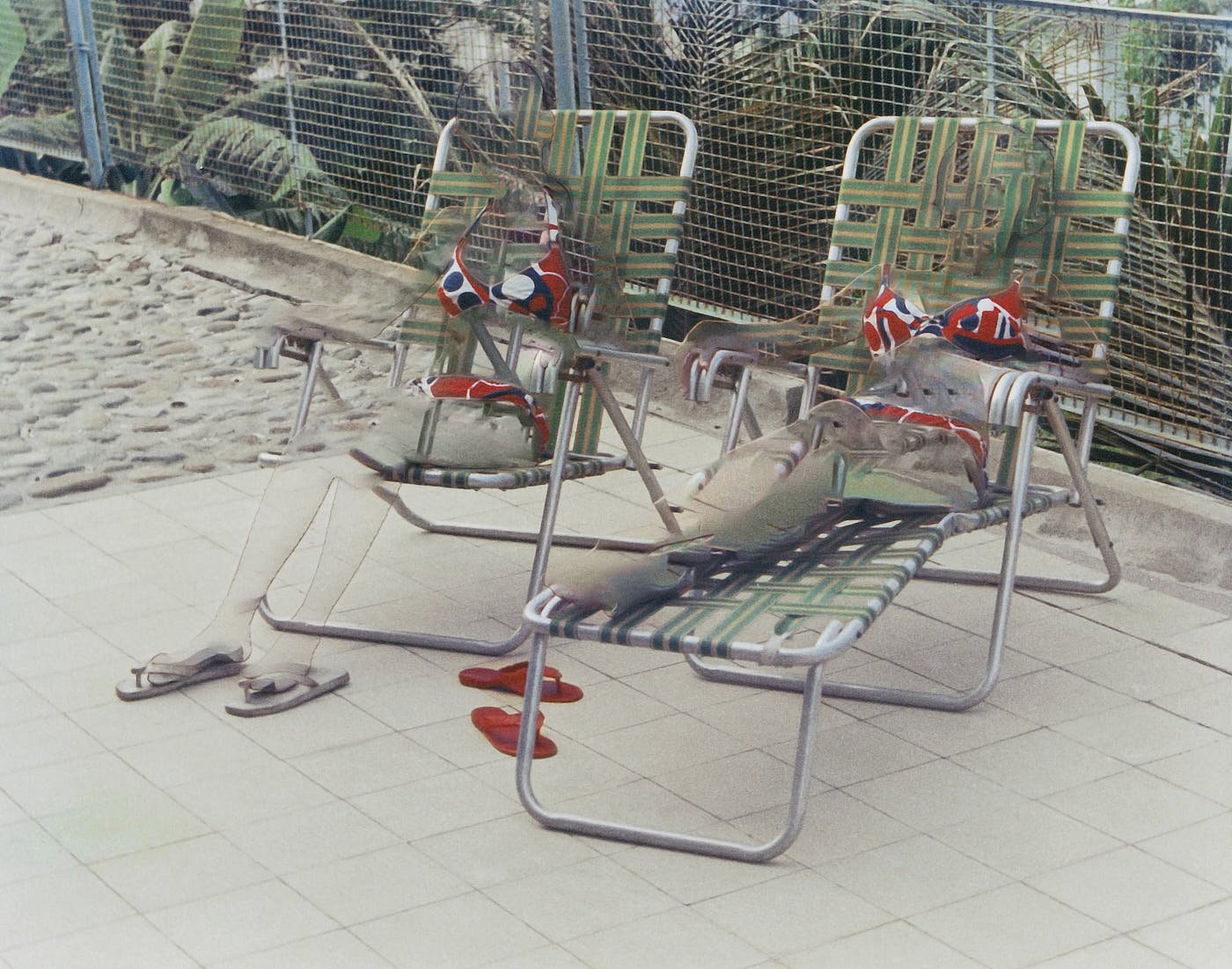
Nhu Xuan Hua Singer "How much love can be repeated?", 2020 for LE MILE Magazine Galerie Anne-Laure Buffard

Nhu Xuan Hua, Singer "How much love can be repeated?", 2020
(c) Nhu Xuan Hua, courtesy of the Galerie Anne-Laure Buffard


LE MILE
Memory appears as a driving force in your work; where does it first enter your process?

Nhu Xuan Hua
It is always lingering. I believe the foundation of creativity lies in memory and emotional experience, at least this is true for me. I trust my emotions to guide me. Remembering is both something we can summon and something that arrives unannounced. That duality is what I find beautiful. It is also what moves me. Creating, however, is different. The mind and the heart must allow a passage from the spirit into the physical world. There needs to be an opening.

Depending on the project, memory enters differently. For Tropism, Consequences of a Displaced Memory, I wanted to let things come toward me. I worked with instinct, intuition, and the unknown. It was almost a surrender. With commissioned work, the process shifts. When I am given a departure point (a new collection for a brand, the theme of a magazine issue) I find pleasure in digging into memory from that anchor. A starting point calls memories forward immediately. Then the work becomes excavation: connecting fragments, layering meanings, building dialogues that become more and more complex.


What stays unresolved for you when working with family archives?

It is an infinite, multilayered journey. I think many children of immigrants from my generation are trying to bridge an emotional distance, with our parents, our family history, our homeland. There is often a silence. Working with archives becomes a way to open a dialogue with what was never said. I have realised that even when bridges are built, they remain fragile. Communication can be restored, but there will always be new moments of loss, new quests to hold everything close. With time, I learned to accept this incompleteness. What shapes us is not the answers but it is the search itself.
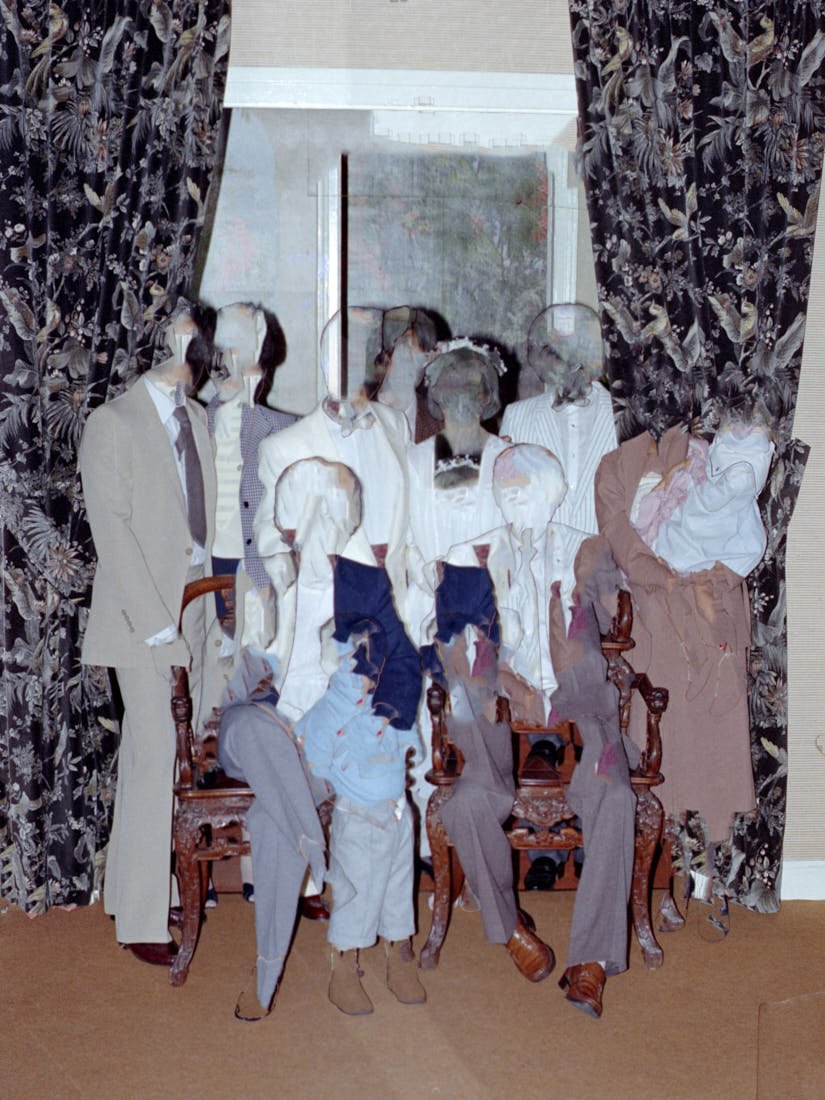
 
Nhu Xuan Hua, Family portrait at the wedding, Archive from the year 85, 2016-2021 for LE MILE Magazine Galerie Anne-Laure Buffard

Nhu Xuan Hua, Family portrait at the wedding, Archive from the year 85, 2016-2021, (c) Nhu Xuan Hua, courtesy of the Galerie Anne-Laure Buffard
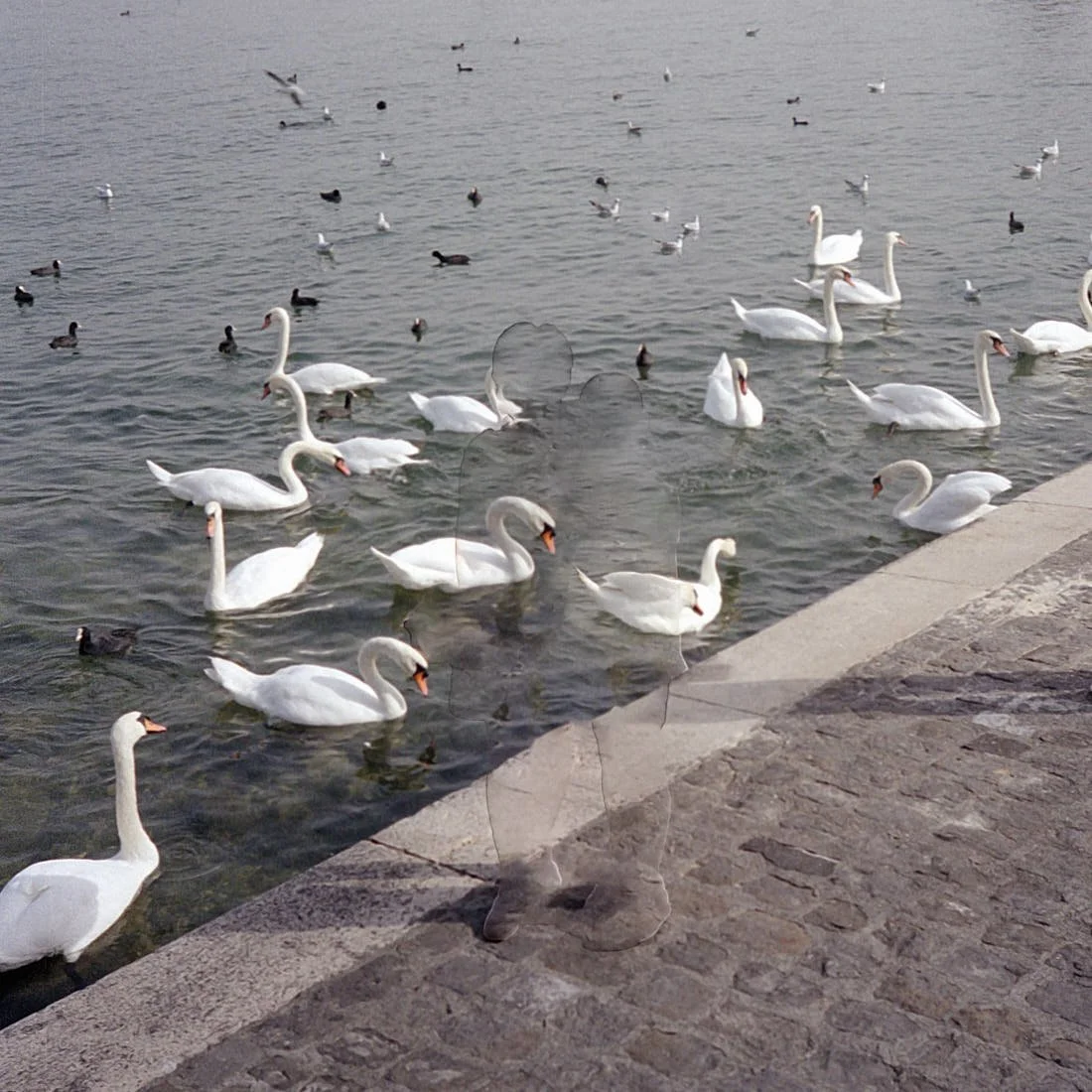
 
Nhu Xuan Hua, Swan, Archive from the year 2000, 2016-2021 for LE MILE Magazine Galerie Anne-Laure Buffard

Nhu Xuan Hua, Swan, Archive from the year 2000, 2016-2021
(c) Nhu Xuan Hua, courtesy of the Galerie Anne-Laure Buffard


Tropism, Consequences of a Displaced Memory draws from inherited material; what responsibility do you feel toward images that predate your own authorship?

It was strange to learn to see these images as objects rather than as the people they represent. There is something almost violent in that shift. When communication is fractured, you invent other ways of speaking. In French, we distinguish between langue and langage. La langue is the shared tongue- a structured system we are supposed to master to understand one another. Le langage is expression: poetic language, the language of the body, the language of silence.

In my family, we never fully shared the same langue,French, Vietnamese, or French Sign Language. None of us completely mastered the same communication system, so clarity was always slightly out of reach. I chose poetry as my language, the language of the heart. Because it is a space where we can meet beyond grammar.
I will never alter the original archives. They belong to family albums carefully assembled by my grandparents on quiet afternoons when they were still alive. My responsibility is not to transform the originals, but to create a parallel language around them. To author the passage I build for myself.

Displacement runs through your practice as an emotional condition; how do you keep it present without illustrating it?

Repetition is essential. I feel like I am drawing a map from one exhibition to another, reusing symbols and gestures to anchor my family’s history, the way you carry certain objects with you each time you move houses. When you are displaced, what you keep becomes more revealing than what you leave behind.

Displacement also has something ghostly about it. A lingering presence. You do not need to see the details of a face to feel the weight of its gaze. I try to work with that sensation rather than illustrating displacement directly. It is a shared human experience. Loss is universal. You do not need to name it for it to take shape. The mind recognises familiar traces instinctively. Memory is something we all carry, it allows absence to remain present without being described.

How does the act of editing reshape the meaning of memory for you?

In Beloved, Toni Morrison speaks about the concept of “rememory”, an image that lingers beyond the boundaries of a single mind. A recollection. A re-membering, gathering the scattered pieces of a body so it can walk again. Editing reshapes that idea in my process. In Tropism, Consequences of a Displaced Memory, editing becomes a way to resist forgetfulness. It feels like an excavation a slow unveiling that perhaps only ends when every colour has been revealed. I see post-production as painting. There is a subject, a color palette, textures. You move from an undefined contour toward clarity. From blur into vision.

In your studio practice, what usually comes first? Is it image, gesture, or concept?

Usually, the concept comes first. Especially in commissioned work. I create constellations of words and images that I live with for a while. They circulate in chaos on paper, on my computer desktop, in my phone notes. I let them breathe before forcing structure onto them. Gradually, a framework emerges. Only then do I begin to think concretely about the photograph itself: the staging, the gesture, the image. The concept becomes a container where the image can exist.
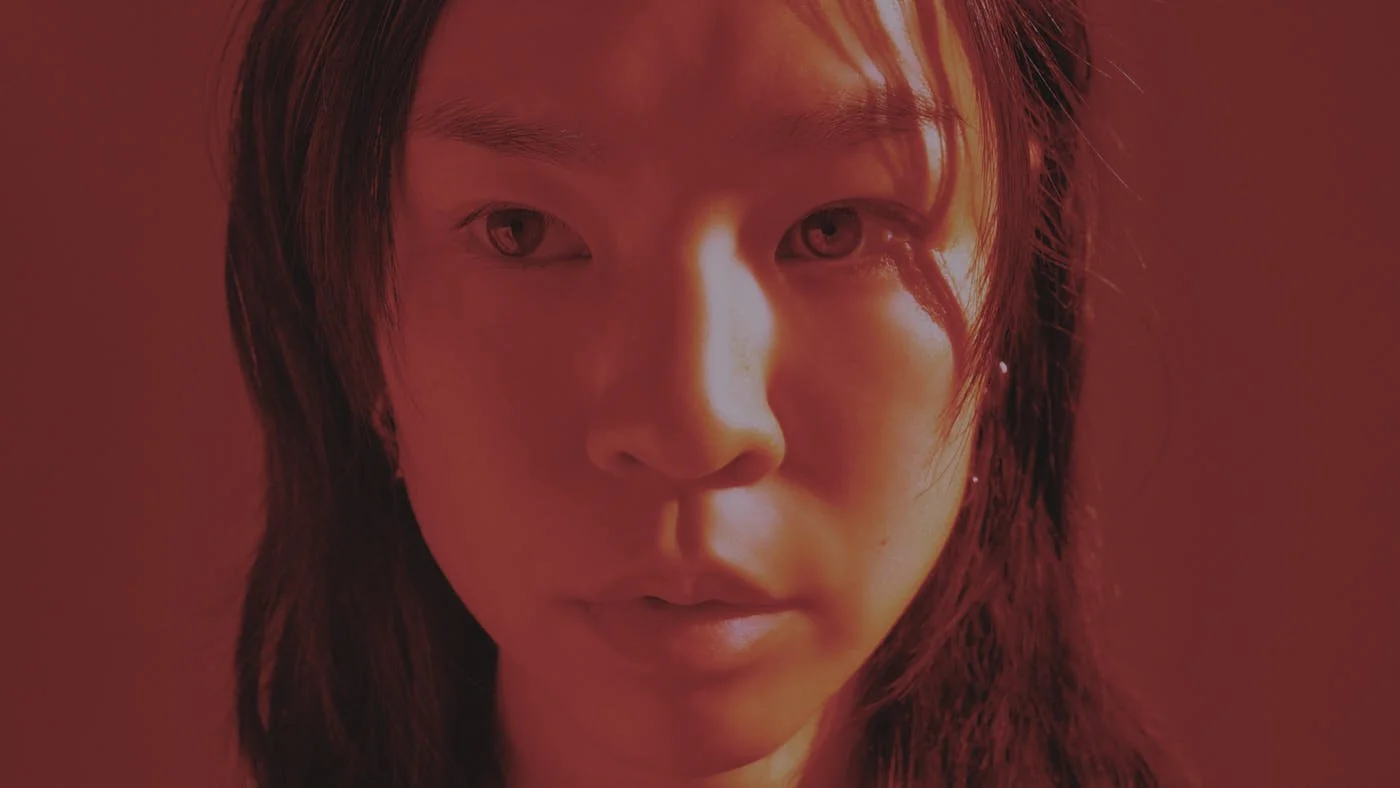
 
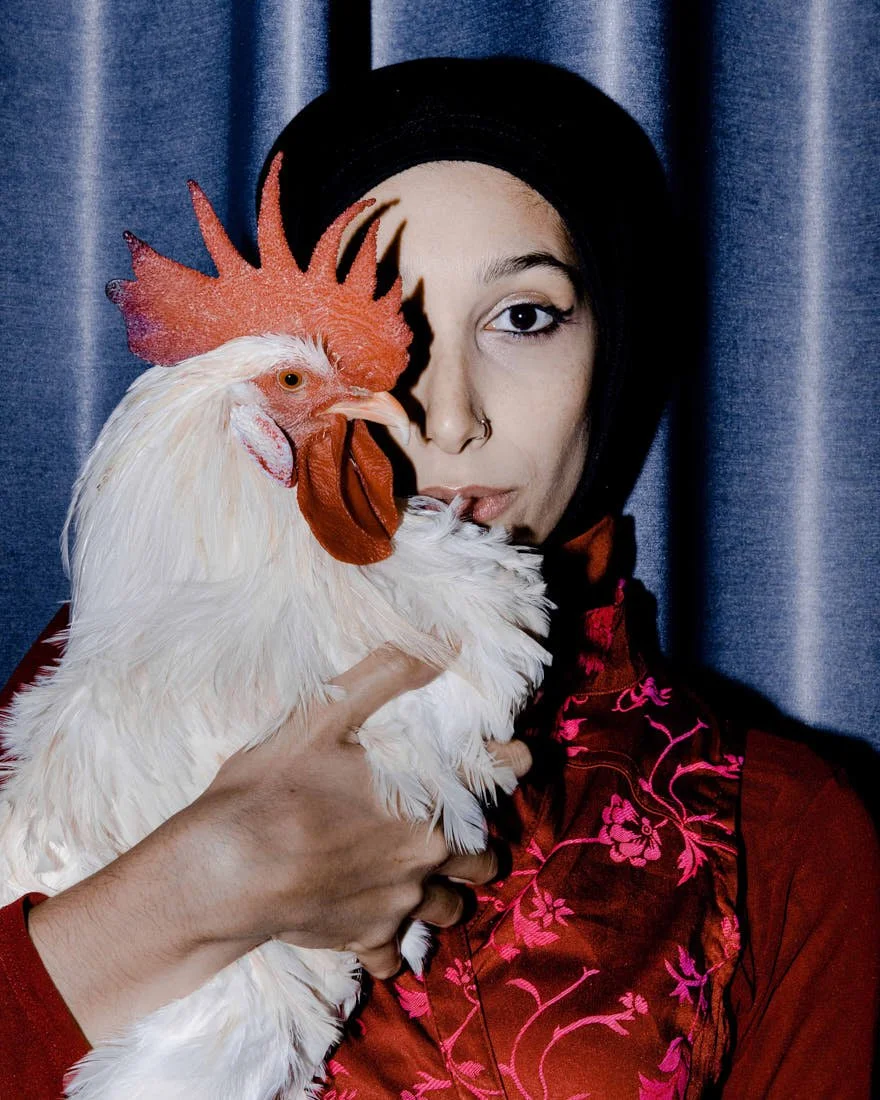
Nhu Xuan Hua, Selfportrait for LE MILE Magazine Galerie Anne-Laure Buffard

Nhu Xuan Hua, Selfportrait


Your work often carries a dreamlike logic; how do you leave space for the unconscious to operate?

You have to be gentle with the world you create for yourself especially if it was born out of survival. For me, it is both a coping and a healing mechanism. It is rooted in observing my household. My father, who is orally deaf, carried his world through paintings and drawings. My mother built a perfect home for her family, that was her form of art. They both constructed illusions that made life more bearable.

In my own way, I created a similar theatre, where scripted plays meet reality. When you have to interpret language without the proper tools, you invent your own. If my grammar is not strong enough, then I expand my visual language to replace words. The unconscious enters through that expansion, through looseness, through trust, through allowing images to form before fully understanding them.

What changes for you when an image leaves the personal realm and enters public circulation?

When I was working primarily in fashion photography and commercial projects, the emotional involvement ended once the project was released. At the end of the day, the work promoted or sold something, it was ultimately a service. I infused my research into it, but only my creative team might have known the deeper layers. I did not have to speak about them publicly.

With exhibitions, everything changed. People come not only to see the work but to understand the thinking and the emotional process behind it. Releasing Tropism, Consequences of a Displaced Memory was a turning point. It revealed to me the lack of representation of stories from the Vietnamese diaspora. There was a public demand and a community demand, to see and hear these narratives. I felt it too. I was also in demand of it. It was overwhelming. I felt a sort of responsibility to carry a voice not only for children of Vietnamese immigrants in France, but for anyone who experienced displacement. Family archive images create immediate familiarity. They allow viewers to connect with something ordinary that has been elevated into something sacred. Something comforting. Like a hug.

When my work entered national collections and prestigious private collections, alongside exhibitions in institutional spaces, I felt immense gratitude. It felt like building a pantheon for my family, for ordinary people who endured so that we could arrive at this moment. When my gallery told me about my first national acquisition, I shared it with my family because they are the ones in those photographs. They answered: “You made us eternal.” Something felt sealed that day.

How did engaging with the collection at Fotomuseum Winterthur influence the way you thought about continuity and rupture?

At first, I approached the collection intuitively. I projected my intimate experiences onto it, searching for emotional dialogues. Through conversations with Alessandra Nappo, who curated the exhibition, I realised that shared experience often begins in the heart. Visual familiarity plays a crucial role in my practice, especially because visual interpretation shaped how I communicated with my parents.

I observe posture, gesture, the position of a body, whether human, animal, natural, or inanimate, and transfer meaning into it. Feeling a living presence in animals, nature, or objects is essential in this exhibition. It creates this bond I seek between all existing forms. How rupture, separation, displacement, disconnection, loss forces you to create a familiar environment in order to survive those catastrophes that life brings.

At this moment in your practice, what feels most urgent to protect from disappearance?

We are living through a moment where images can be generated endlessly. With the rise of AI, the boundaries between constructed, manipulated, and lived realities are becoming increasingly fluid. I am not against these tools, I believe they can expand vision, open new territories, and help us explore imagination in ways we could not before. But what feels urgent to protect is the emotional chaos at the origin of an image. An authentic image does not come from perfection. It comes from friction. From doubt. From memory that resists clarity. From vulnerability. From something unresolved. If AI becomes a tool that polishes everything into seamless surfaces, then we risk losing the trembling part, the hesitation, the fragility, that makes an artwork human. For me, truth in image-making is not about documentary purity. It is about emotional sincerity. About allowing the image to carry the weight of lived experience, even if that experience is fragmented, distorted, or dreamlike. Technology can assist vision, but it should not replace the internal necessity to create. What I want to protect is the space where imperfection, memory, and emotional disorder can still shape an image. Because that disorder is not a flaw it is the proof that a human being stood behind it. And that presence matters.
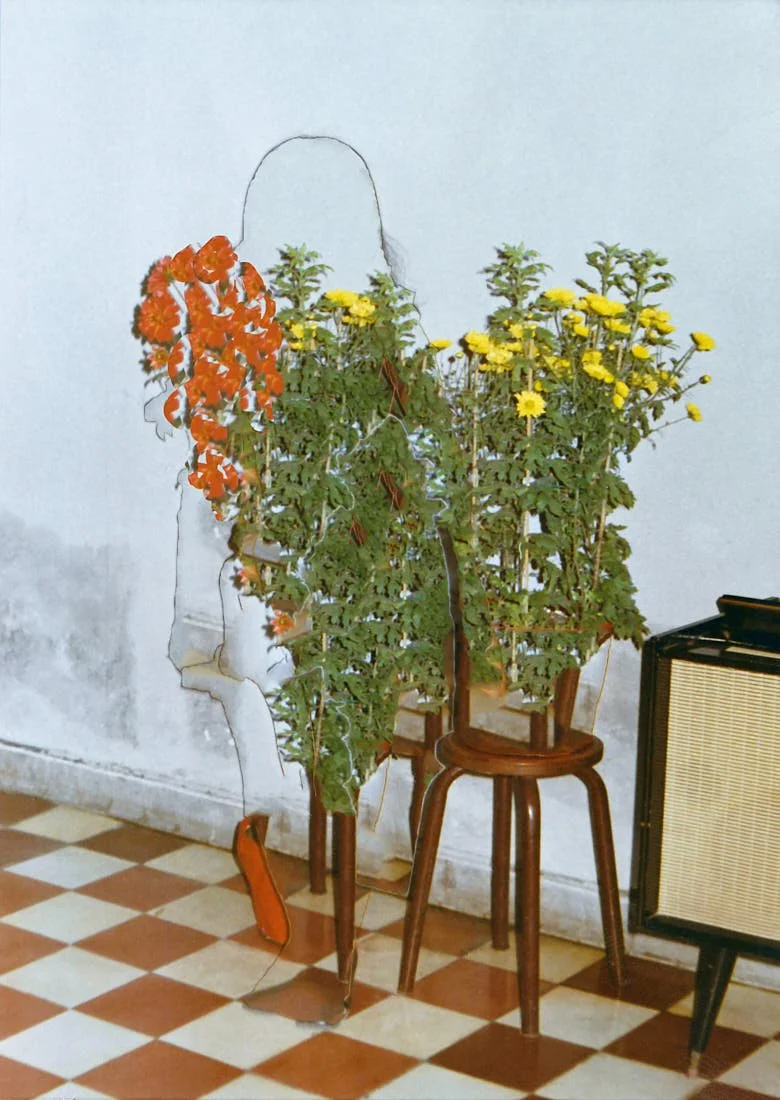
 
Nhu Xuan Hua, Untitled, Archive from the year 72, 2016-2021 for LE MILE Magazine Galerie Anne-Laure Buffard

Nhu Xuan Hua, Untitled, Archive from the year ’72, 2016-2021
(c) Nhu Xuan Hua, courtesy of the Galerie Anne-Laure Buffard
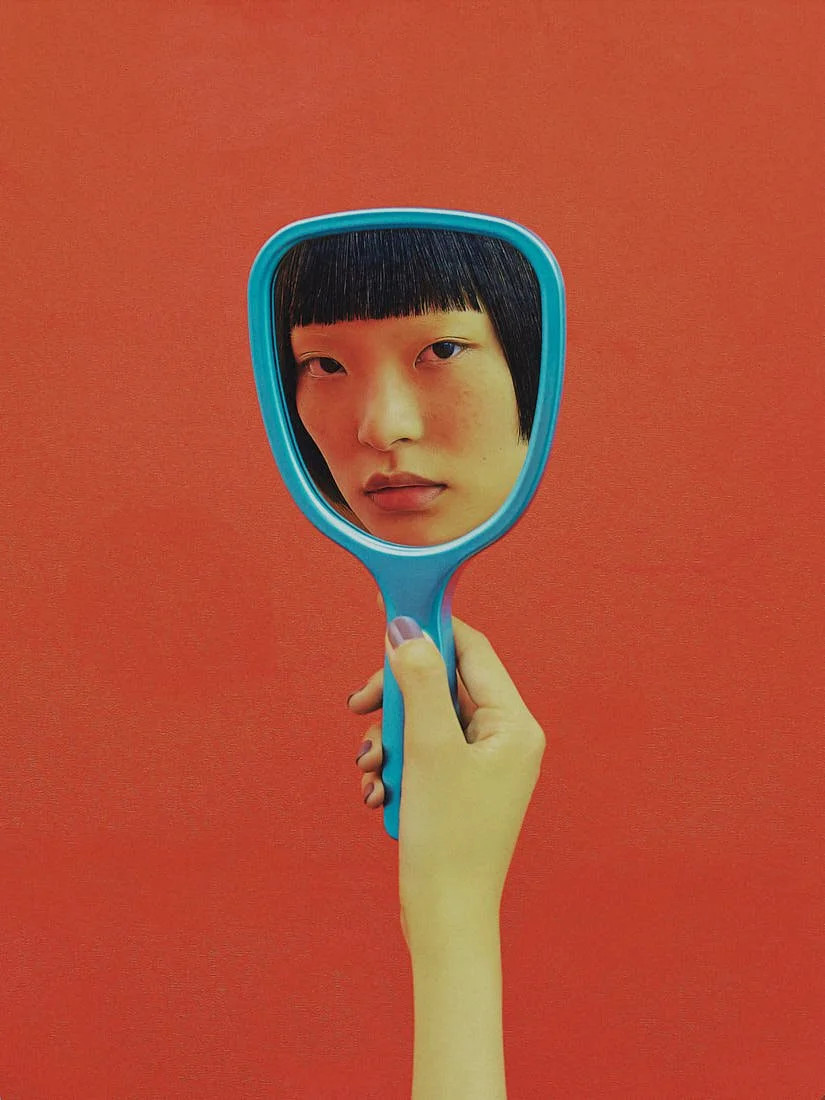
 
Nhu Xuan Hua, Chen, 2016 for LE MILE Magazine Galerie Anne-Laure Buffard

Nhu Xuan Hua, Chen, 2016
(c) Nhu Xuan Hua, courtesy of the Galerie Anne-Laure Buffard


One Another – Nhu Xuan Hua and the Collection of Fotomuseum Winterthur is on view at Fotomuseum Winterthur to 11 October 2026.

credits
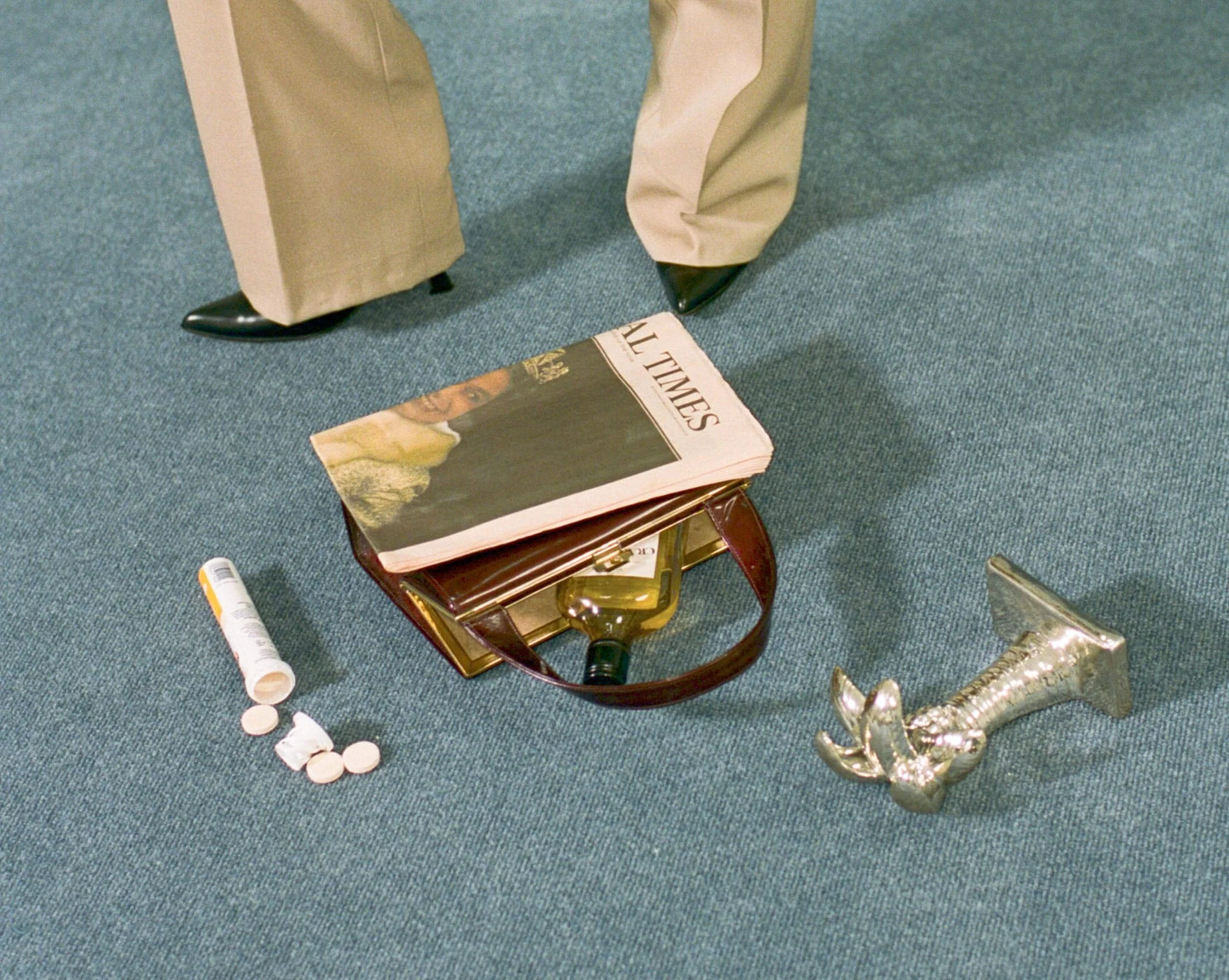
header image: Nhu Xuan Hua, Home, Archive from the year ’72, 2016-2021
(c) Nhu Xuan Hua, courtesy of the Galerie Anne-Laure Buffard
Loose Joints *Editing Photobooks, Materiality and Contemporary Photography

Loose Joints *Editing Photobooks, Materiality and Contemporary Photography

Editing the Language of Images at Loose Joints


written LE MILE


Around the world, photographers continue to return to the book as a place where images can gather, unfold and remain in conversation with one another over time. Within that landscape, Loose Joints has become one of the most attentive independent publishers shaping how contemporary photographic work enters the world as a physical object.


Daniel Arnold for Interview Magazine – You Are What You Do

You Are What You Do by Daniel Arnold
Published by Loose Joints
© Daniel Arnold, 2025. Courtesy of Loose Joints


Founded in 2014 by Lewis Chaplin and Sarah Piegay Espenon, Loose Joints emerged during a moment of renewed energy around independent publishing, when new forms of self-publishing, book fairs and specialist bookshops began creating momentum around the photobook again. Rather than responding to a defined gap, the project grew organically from that atmosphere. The ambition was simple and precise, to publish the kinds of books the founders themselves wanted to see in the world and to work closely with artists whose practices demanded a carefully considered editorial form.


At the centre of Loose Joints lies a sustained conversation with artists, with each publication developing through an extended process that moves from editing and sequencing to design, production and distribution, all handled within the publishing house itself. This continuity allows the structure of the book to emerge slowly, with the pacing of images, the scale of the format and the tactile qualities of paper and binding becoming part of the work’s meaning.

The photobook becomes a space where visual thinking takes shape across pages. The rhythm of the sequence carries the reader through a field of images that gradually reveals its internal logic. Chaplin and Espenon reflect on that editorial process through a selection of recent titles: Roe Ethridge’s Rude in the Good Way, Hicham Benohoud’s The Classroom, Daniel Arnold’s You Are What You Do and Tealia Ellis Ritter’s The Model Family. Each project approaches identity, memory and authorship from a different angle while revealing the quiet intensity with which Loose Joints continues to shape contemporary photographic publishing.


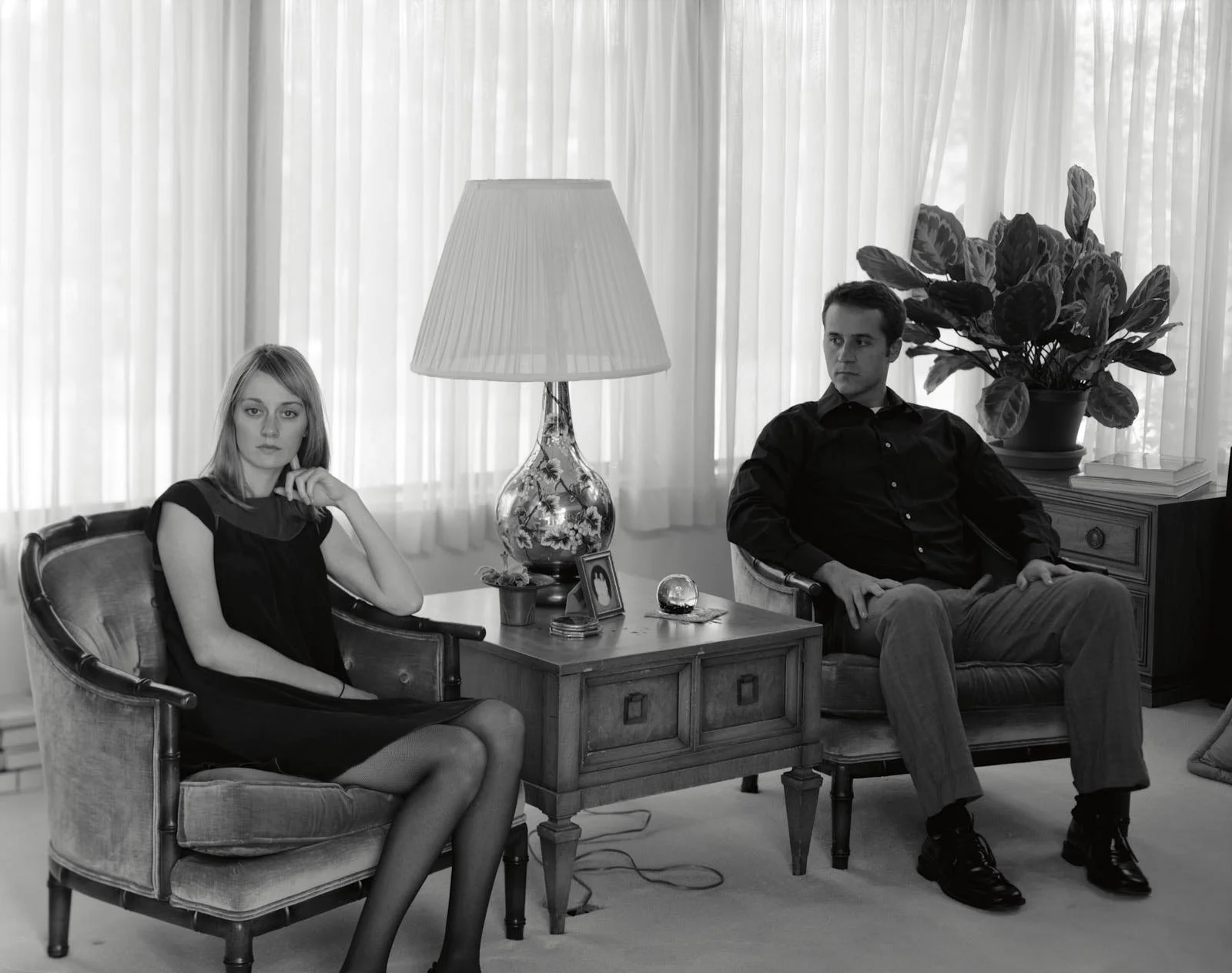
The Model Family by Tealia Ellis RitterPublished by Loose Joints© Tealia Ellis Ritter, 2021. Courtesy of Loose Joints

The Model Family by Tealia Ellis Ritter
Published by Loose Joints
© Tealia Ellis Ritter, 2021. Courtesy of Loose Joints


LE MILE
Loose Joints was founded in 2014, at a moment when photography books were already abundant but attention was fragmenting. Looking back, what gap did you feel urgently needed to exist then, and how has that original intuition shifted over time?

Loose Joints
I wouldn’t describe 2014 as a moment of fragmentation in a negative sense. If anything, it was a moment of expansion. From around 2010 onwards, there was a significant resurgence of interest in independent photographic publishing — driven by new models of self-publishing, greater online accessibility, and a network of bookfairs and bookshops that created momentum around the format. Loose Joints emerged organically from that context. We didn’t start with a mission to fill a gap, but rather to make the kinds of books we wanted to see in the world by artists whose work wasn’t always finding a home in mainstream publishing. That early experimental impulse has remained central, but the scale and depth of what we do has grown with time.


What does independence actually mean on an editorial level, in the day-to-day decisions around selection, sequencing, scale, and pacing?


For us, editorial independence means being closely involved at every stage of the process. We rarely work with external editors or designers. Every book is the result of a direct and sustained conversation with the artist. Beyond the editorial side, we also handle our own production, distribution, fulfilment and press, which allows us to remain flexible and responsive. Independence isn’t just about content. It’s about being able to adapt and make decisions quickly and thoughtfully, from concept through to delivery.

 
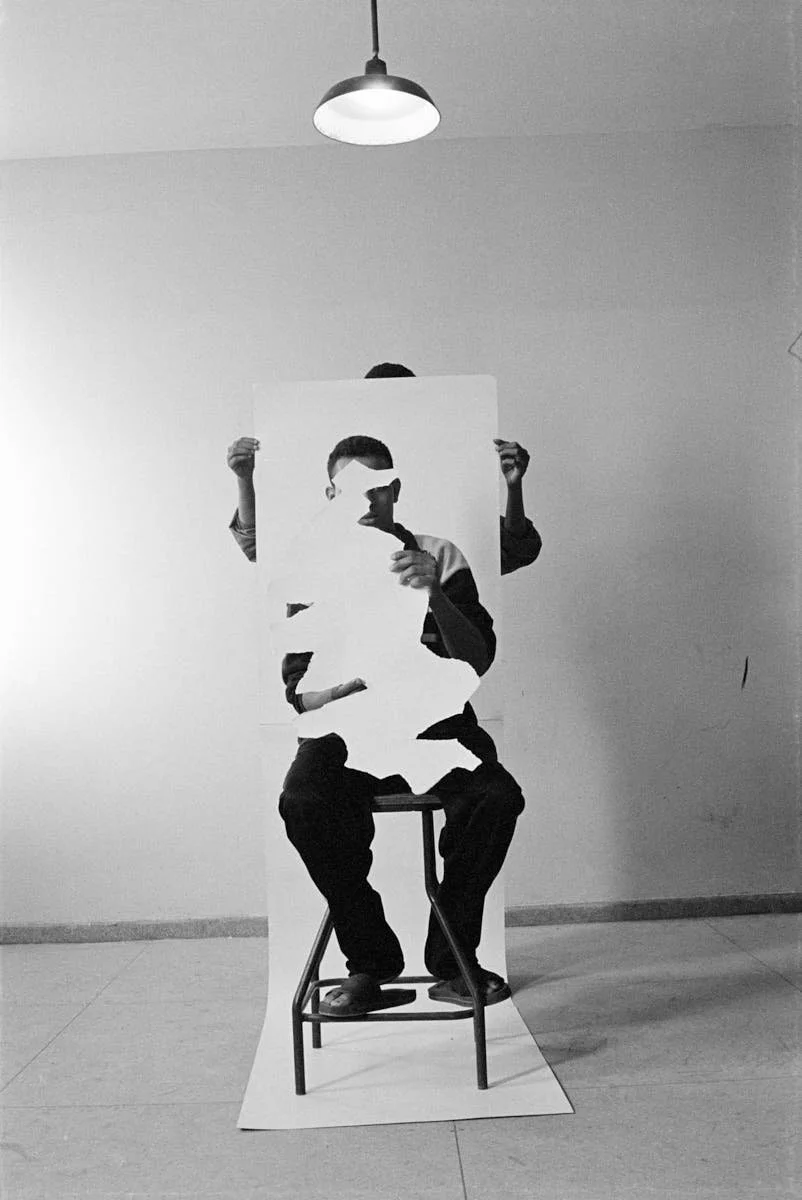
The Classroom by Hicham Benohoud Published by Loose Joints © Hicham Benohoud. Courtesy of Loose Joints

The Classroom by Hicham Benohoud
Published by Loose Joints
© Hicham Benohoud. Courtesy of Loose Joints

 
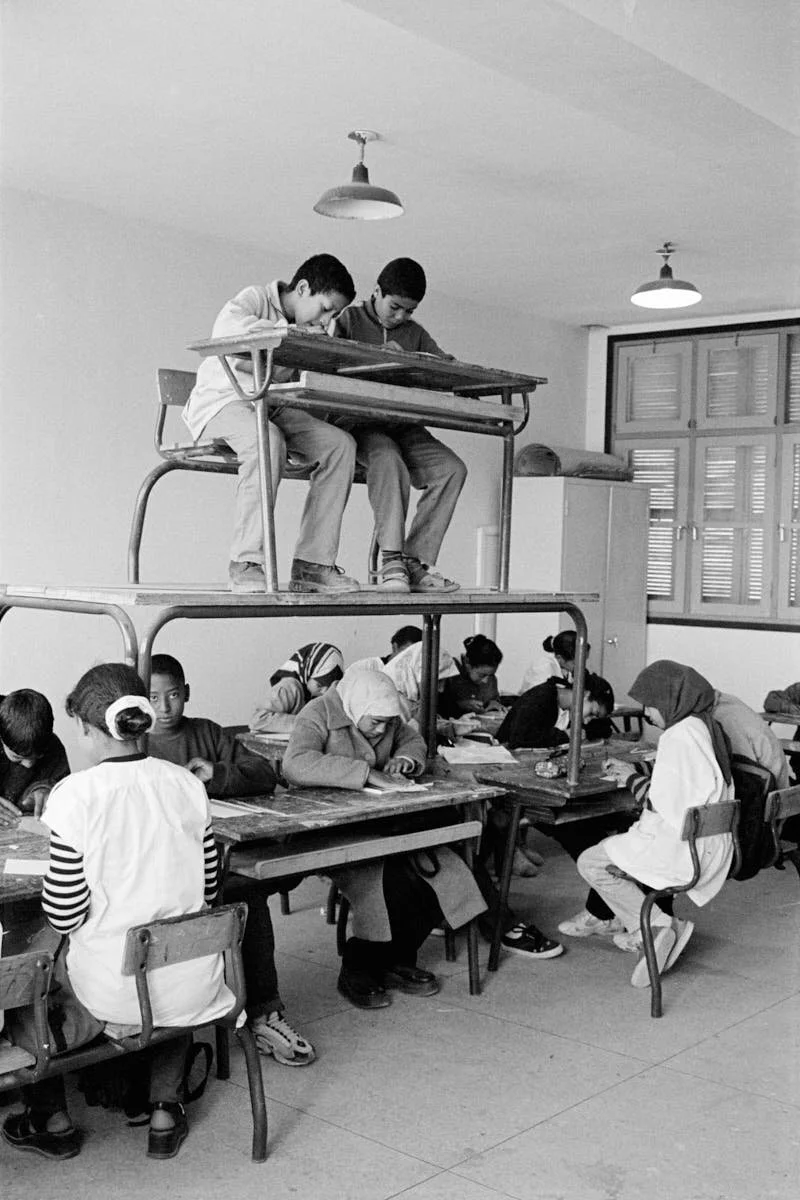
The Classroom by Hicham Benohoud Published by Loose Joints © Hicham Benohoud. Courtesy of Loose Joints

The Classroom by Hicham Benohoud
Published by Loose Joints
© Hicham Benohoud. Courtesy of Loose Joints


What signals tell you that a body of work is ready to become a book rather than remain an exhibition, an archive, or a loose constellation of images?

We rarely approach books as translations of exhibitions. Most of what we publish has never been shown in a gallery context, and if it has, the book tends to take a different form entirely. We’re interested in work that feels like it belongs on the page, where the rhythm of the book adds something to the experience of the images. That often means the project has a certain internal coherence or narrative potential, but we also respond to a sense of urgency or necessity in the artist’s voice.

How do you balance editorial authorship with restraint, especially when the work touches on identity, politics, or intimacy?

It’s about building trust. Some projects require more input from us, others are already quite fully formed. But we always take time to understand the artist’s perspective and what they’re trying to communicate. When the subject matter is personal or political, our role is often to help create space for the work to speak clearly and with intention, without over-framing or reducing its complexity. That balance comes from knowing when to support and when to step back.

What does the book still offer that digital circulation cannot, particularly in relation to memory and authorship?

Books and digital platforms serve different purposes, and we see them as complementary rather than oppositional. We invest heavily in how our books are communicated online, through press materials, photography, video, and digital previews, because the majority of people will encounter the work that way. But the book remains a unique medium. It offers a structure, a rhythm, and a physical experience that can’t be replicated digitally. It allows for a sustained engagement with the work, and for many photographers, it remains the most meaningful and durable way of presenting their ideas.

The Classroom by Hicham Benohoud revisits work made decades ago but reads as sharply contemporary. What drew you to this project now, and how do you approach reactivating historical material without flattening its original context?

We had seen a small selection from The Classroom years earlier and were immediately struck by its visual language, a bold use of performance, politics and the body that felt surprisingly current. The work was created in the 1990s in Morocco by a self-taught photographer working with his students, using a darkroom he built next to the classroom. It was ahead of its time in many ways. For this new edition, we worked closely with Hicham to access the full archive of negatives, many of which had never been printed. Sarah Chaplin Espenon edited directly from the contact sheets, allowing us to revisit the material at its source and present a fuller, more nuanced reading of the work.

 
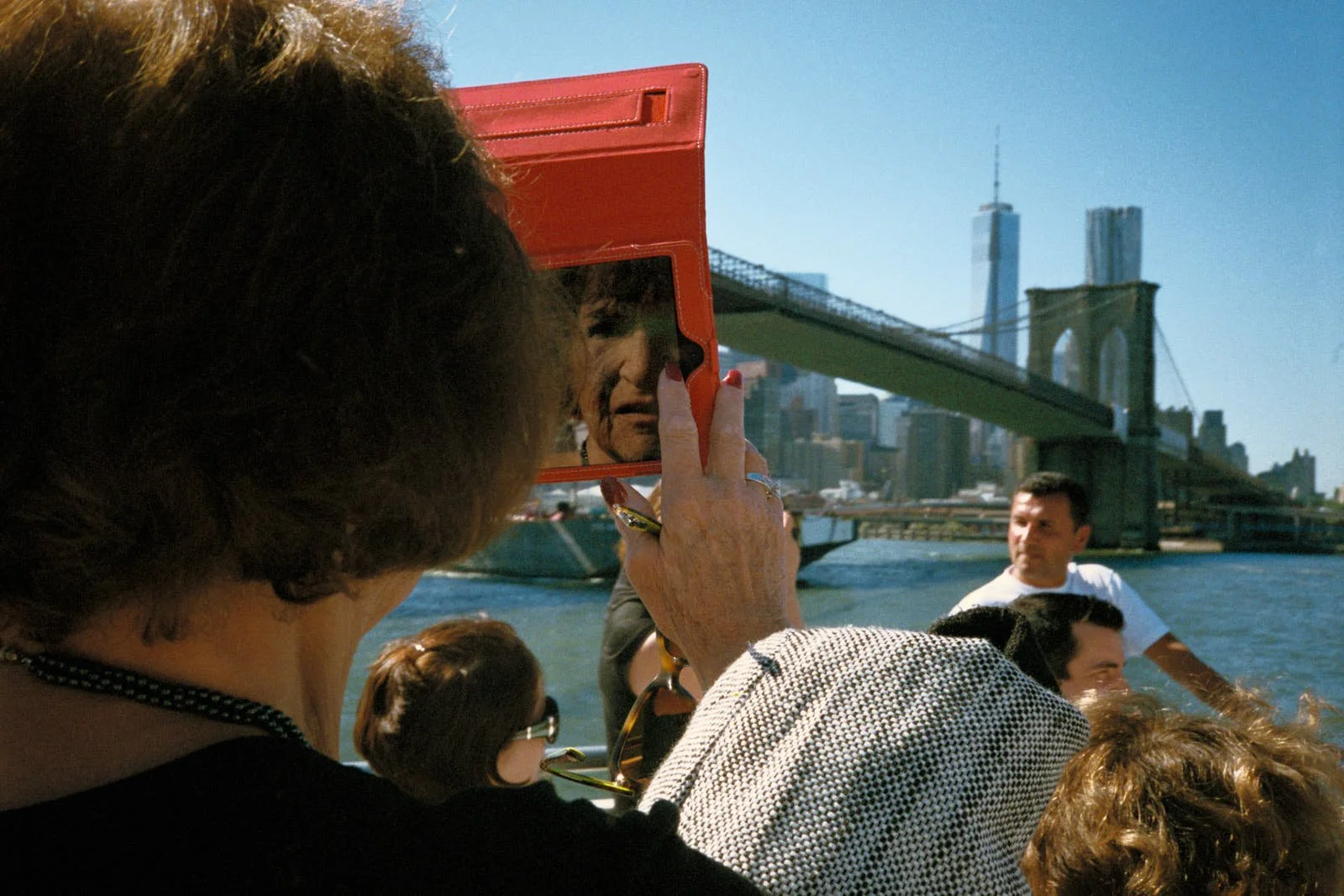
You Are What You Do by Daniel Arnold Published by Loose Joints © Daniel Arnold, 2025. Courtesy of Loose Joints

You Are What You Do by Daniel Arnold
Published by Loose Joints
© Daniel Arnold, 2025. Courtesy of Loose Joints


Daniel Arnold’s You Are What You Do draws from an immense archive of street photography. When editing a body of work drawn from such an immense archive, how do you decide what ultimately shapes the book?

Daniel’s working method is compulsive and nonlinear — he doesn’t build in series, so it was important to establish an internal logic that felt true to the work. Sarah and Daniel went through thousands of images, looking for visual threads and emotional contrasts that could shape the structure of the book. The aim was to reflect the depth and spontaneity of Daniel’s photography, while creating a form that gave the reader room to breathe. Compared to his earlier work, this book feels more reflective. it shows the full range of his practice, from the loud and absurd to the quiet and intimate.

How do you think about taste, desire, and discomfort when editing Rude in the Good Way by Roe Ethridge, where commercial, personal, and art photography intersect?

Rude in the Good Way began as a small idea — a fourth book to sit alongside Roe’s three earliest self-published titles, which we were reissuing as a set (In the Beginning). But over time it expanded into a standalone project, as Roe began exploring themes of sexuality and desire and we encouraged him to take this further. The editing process was about embracing the friction in his work — between polished and lo-fi, humour and vulnerability, image and intent. Roe’s practice is inherently layered, and this book allowed us to surface a different register within it.

The Model Family by Tealia Ellis Ritter deals with proximity, family, and long-term looking. How does editing change when the photographer is so deeply entangled with their subject, and when time itself becomes the main material?

Tealia’s work is emotionally complex: it’s about family, but it doesn’t romanticise. The photographs span decades and blend personal material with more inscrutable images, so part of the challenge was finding a structure that could reflect that fluidity. We deliberately avoided a chronological approach. The captions, placed along the bottom edge of the pages, create a kind of fractured timeline that shifts across generations. The aim was to build a book that reflects the instability and ambiguity of memory without simplifying the work’s emotional landscape.


The Model Family by Tealia Ellis Ritter Published by Loose Joints © Tealia Ellis Ritter, 2021. Courtesy of Loose Joints

The Model Family by Tealia Ellis Ritter
Published by Loose Joints
© Tealia Ellis Ritter, 2021. Courtesy of Loose Joints


Across these four books, identity appears as something unstable, negotiated, and often unresolved. How do you approach projects where identity is central but resists clear definition?

The projects we respond to tend to hold tension, or ambiguity, or complexity. In those cases, our role is to ensure the book holds space for those qualities without flattening them. That requires time and sensitivity — and often means spending extended periods with the artist to understand how the work relates to their broader practice and background.

Your books are immediately recognisable as objects, so how early do material decisions such as format, binding, or paper enter your process, and how closely are they tied to the psychological register of the work?

Those decisions are made early, often in parallel with the edit. We begin each project by thinking through its material and tactile qualities, as well as practical questions like scale, pricing, and durability. We design all our books ourselves, and for us, production is never a decorative layer, it’s an extension of the concept. The format, binding, and finish should all deepen the reader’s experience and reflect something essential about the work.

Many younger photographers look to independent publishers as cultural gatekeepers, so how do you remain open to new voices without reproducing a fixed aesthetic or house style?

We keep our submissions open, and over half our projects each year are initiated by us reaching out to artists whose work we’ve discovered or admired. We’re not interested in cultivating a house aesthetic. Our list is diverse by design, and what links the books we publish is a sense of urgency, clarity, and commitment. We look for work that feels essential to the artist, and for artists who see the book as a meaningful stage in the life of the work, not just a credential or endpoint.

Finally, when you imagine Loose Joints ten years from now, what do you hope will feel continuous, and what do you actively hope will have changed?

What I hope remains is the focus: a number of carefully developed projects each year, produced with care and rigour. We do not believe that growth is a sustainable model for both the world and for a publisher. What I’d like to see change is the level of structural support available to publishers. Production costs have risen dramatically in recent years — we’ve seen increases of over 40% since 2019 — and these increases create more reliance on outside funding to make books happen at the level and scope we set for our releases. Meanwhile, the wider photography ecosystem continues to lean heavily on independent publishers to support emerging voices and take creative risks and reveal the artists of tomorrow, often without commensurate funding. If that doesn’t shift, we’ll start losing the very publishers that play crucial roles in making the contemporary photography landscape as rich as it is.


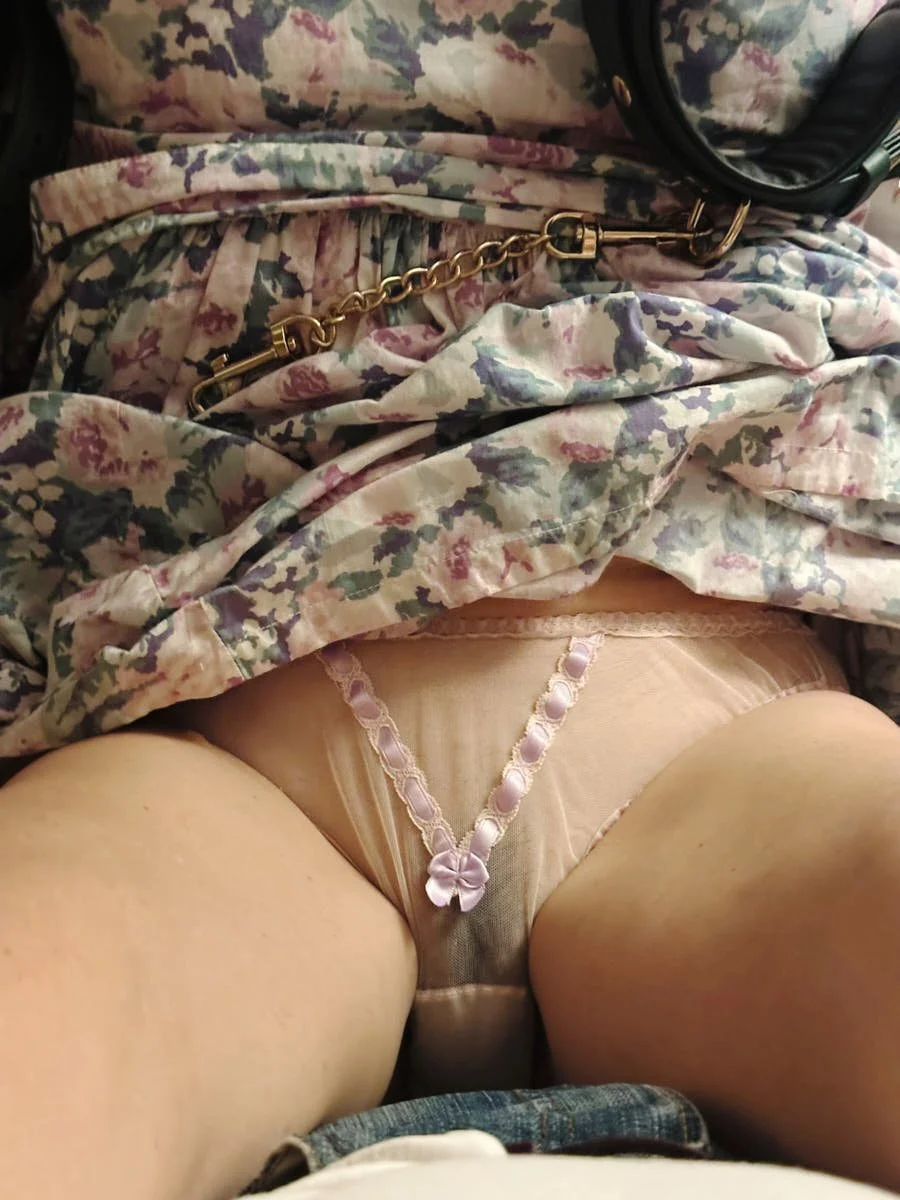
Rude in the Good Way by Roe Ethridge LuLu With Pink Bow Panties Published by Loose Joints © Roe Ethridge. Courtesy of Loose Joints

Rude in the Good Way by Roe Ethridge
LuLu With Pink Bow Panties
Published by Loose Joints
© Roe Ethridge. Courtesy of Loose Joints

 
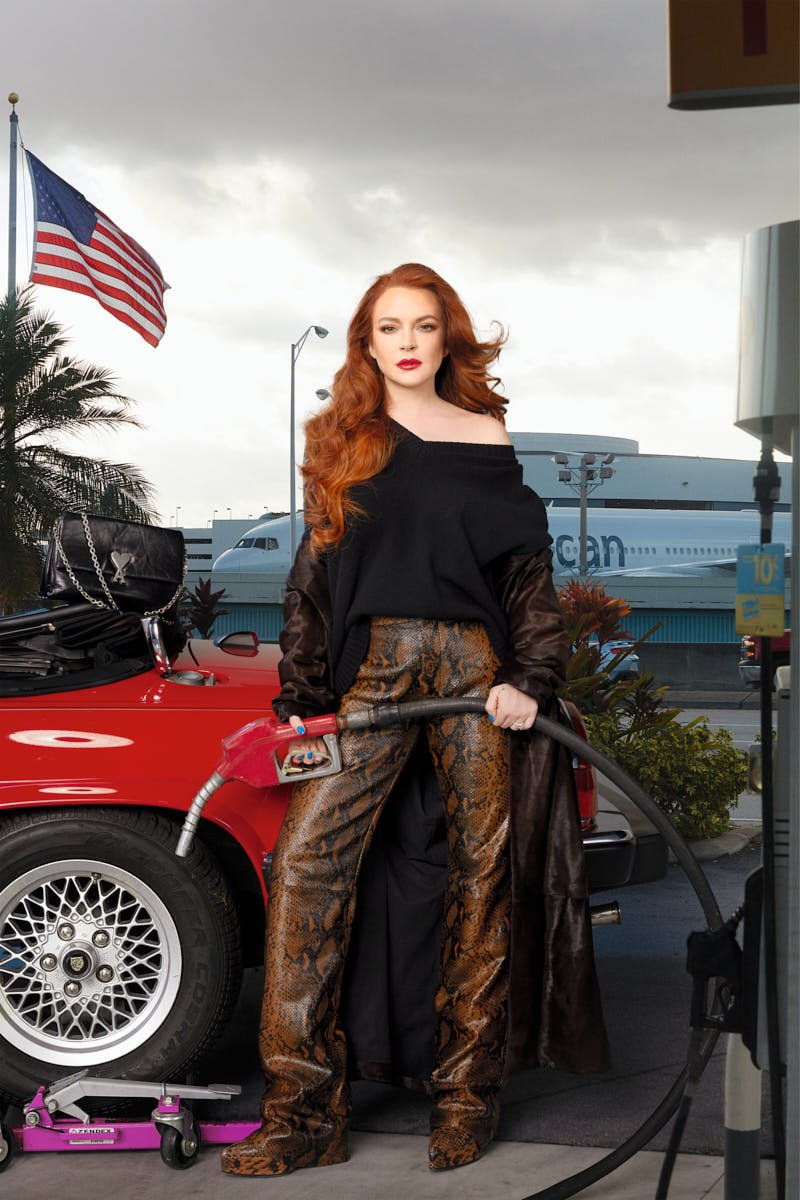
Rude in the Good Way by Roe EthridgeLindesey Lohan at a Gas Station in Miami for Interview Magazine

Rude in the Good Way by Roe Ethridge
Lindesey Lohan at a Gas Station in Miami for Interview Magazine
Published by Loose Joints
© Roe Ethridge. Courtesy of Loose Joints


credits
header image: Rude in the Good Way by Roe Ethridge, Published by Loose Joints, ©Roe Ethridge, 2025. Courtesy of Loose Joints

MYRIAM BOULOS *The Photographic Worlds

MYRIAM BOULOS *The Photographic Worlds

The Photographic Worlds of Myriam Boulos
Pas de mode d’emploi pour le chaos


interview + written ALBAN E. SMAJLI


A city simmers beneath its own legends, the flavor of diesel and cardamom mixing with the hum of aftershocks and the slow unfurling of light across battered facades, and it is here that Myriam Boulos lifts her camera, not in search of the dramatic or the picturesque but to gather the residue of touch, the quiet accumulation of moments that cling to walls, slip through open doors, and root themselves in skin.


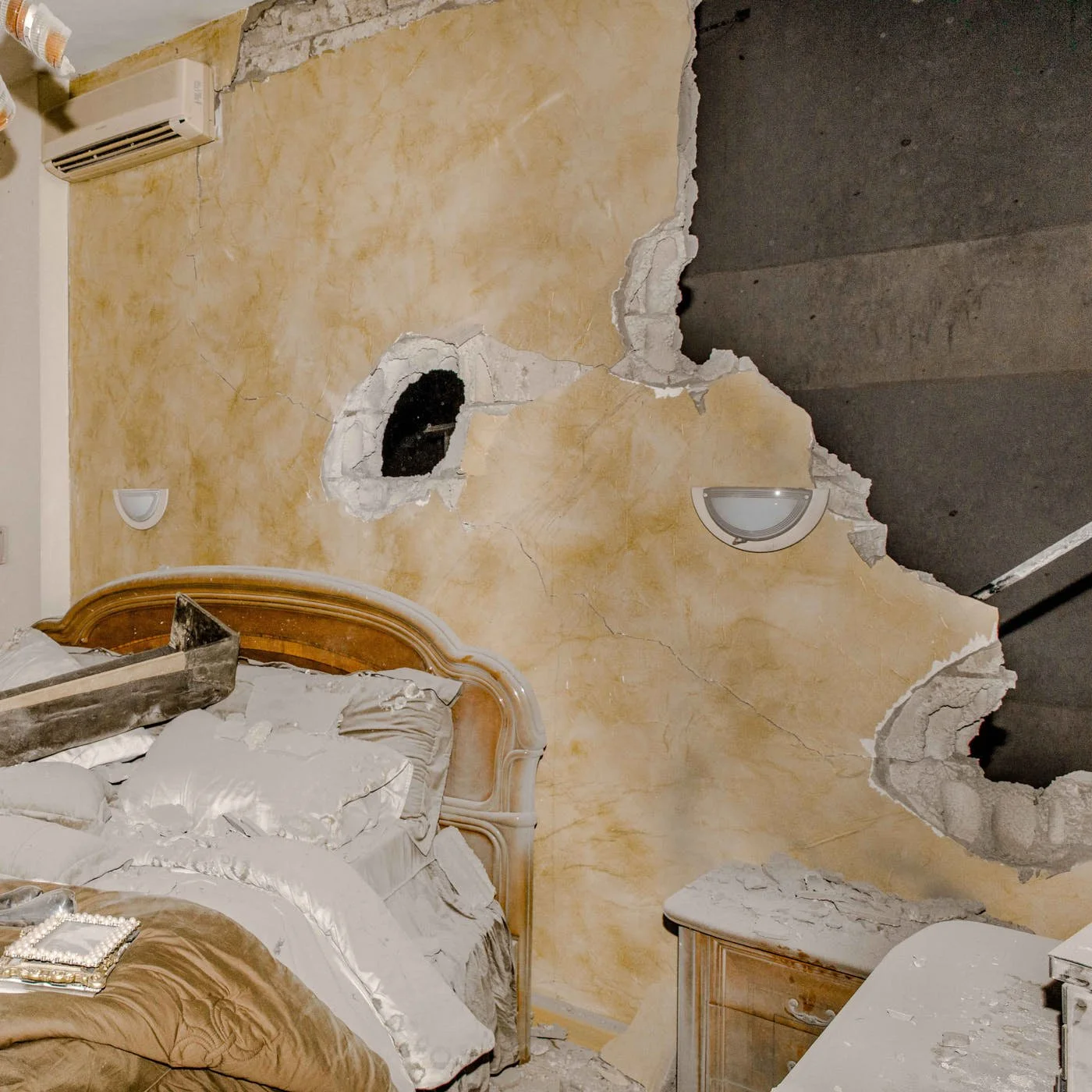
Sexual Fantasies 2023 photographed by Myriam Boulos LE MILE Magazine

Myriam Boulos
Sexual Fantasies 2023

 
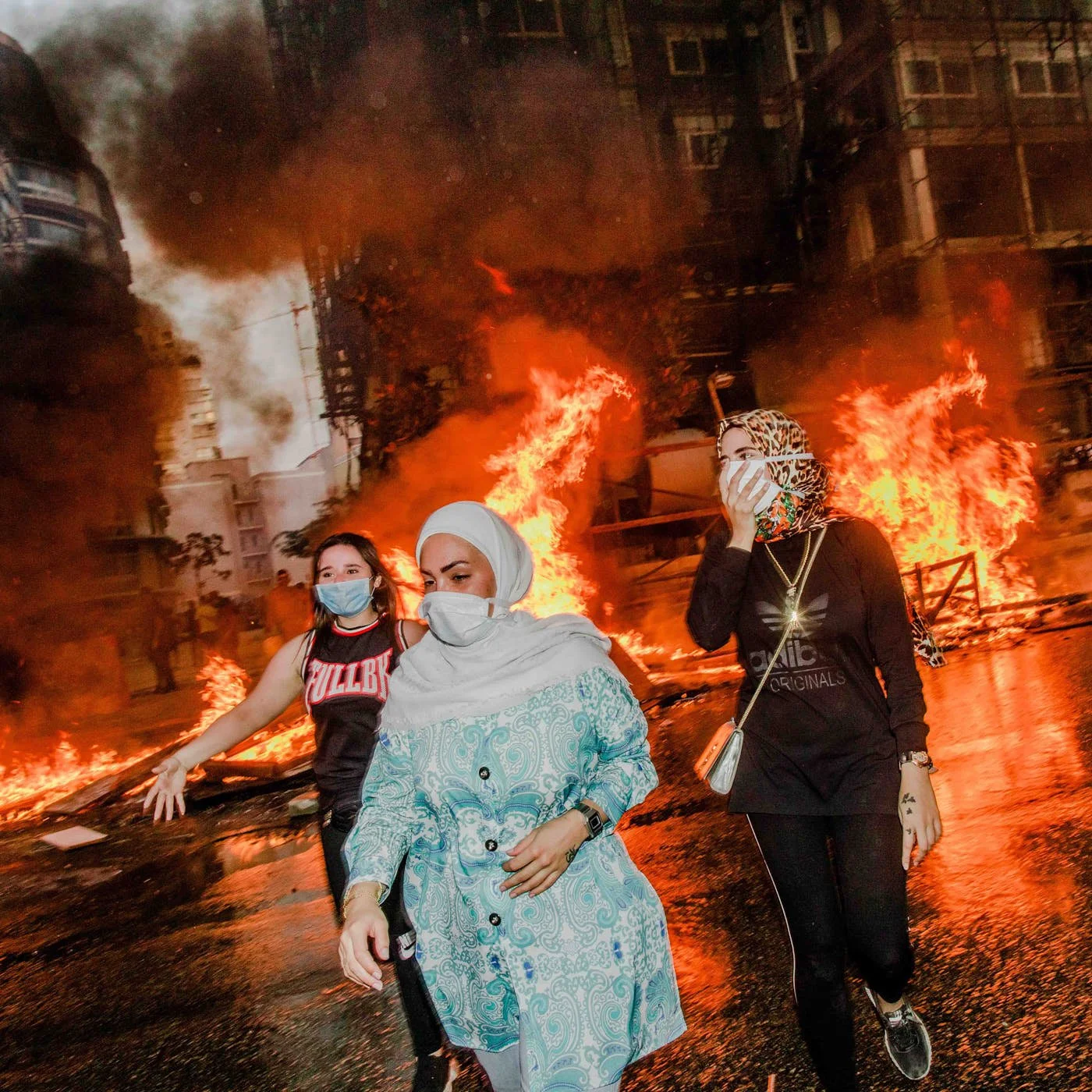
Ongoing War, 2024 photographed by Myriam Boulos LE MILE Magazine

Myriam Boulos
Ongoing War, 2024


Beirut, compass and constant, shapes her visual language—a grammar built on light leaking around corners, voices echoing in courtyards, the thick air bending time, bodies weaving through memory and anticipation. Each photograph absorbs the density of this world, carrying the textures and temperatures of lived experience without the urge to isolate or resolve, every frame a continuous exchange, a movement toward feeling without the pressure of conclusion.

The Foam Paul Huf Award, long established as an amplifier for new photographic perspectives, acknowledges Boulos not through ceremony or simple recognition but by making space, a shift in the ongoing geography of the medium, allowing a current to pass from the streets of Beirut into the global bloodstream of image-making. The work circulates as a living archive, a collective diary shaped by encounters, complicity, and the urge to bear witness without reducing complexity to explanation.

Myriam Boulos moves with a certainty shaped by intuition, the city’s sound and temperature anchoring her practice even as the images begin to travel—entering new rooms, new languages, new ways of seeing. As she prepares her solo exhibition at Foam, the work assembles itself as an ecosystem, layering tenderness, unrest, desire, and refusal into a sequence that resists summary and insists on being felt. In these images, the right to feel is inhabited, lived, and sustained, and the city—her city—never steps outside the frame. The conversation that follows steps into this territory, unfolding through a landscape shaped by accumulation, intuition, and the enduring presence of feeling that moves steadily through each image and word.


Alban E. Smajli
You shoot in chaos, but your images feel calm. Is that contradiction intentional?

Myriam Boulos
Ouf, I never thought of my images as calm! It is funny because people also perceive me as a calm person, but in my head, things are anything but calm. Maybe my images are a way of exteriorizing and organizing my internal chaos?

Offline—does that word feel like a refuge, or a threat?

Both. It makes me dream of the idea of refuge, because I think most of us are addicted to the online world, but it also makes me think of the minutes right after the Beirut port explosion, when we were forcibly offline without understanding what was happening and without being able to reach our loved ones. It also makes me think of Gaza, which is forcibly offline on the worst nights of Israeli bombings during the ongoing genocide.

Offline can also suggest being disconnected from dominant systems or structures. Do you see your practice as a conscious step outside of what photography is "supposed" to be?

Honestly, I am not trying to fit or not fit into anything when I create images; I am just trying to be honest with myself. The images are encounters between my internal world and the universes of the people I photograph. But I do consciously and constantly deconstruct the medium of photography, which is historically colonial and patriarchal.

How do you decide what to show, and what to protect?

Being aware of the power of images and our responsibility as photographers, when I take risks, it is hand in hand with the people in the images: they are the ones who choose what they want to show or hide. From there, I usually follow my gut; I know when a picture is a big crush for me or not. I know if I want to share it with the world or not.

You mention that your images are also about the right to feel, to desire, and not be defined by normalized pain. What emotional truths are you most committed to revealing?

It is important for me to take space with our emotions in general. As a highly sensitive person, I always feel a lot, and this comes with the bad habit of trying to hide my emotions in order not to be “too much.” Photography is a way of channeling my emotions without feeling any shame. It is also important for me to document different types of emotions and realities as a way of defying Western media’s often stereotyped, reductive, and harmful representations of our region.


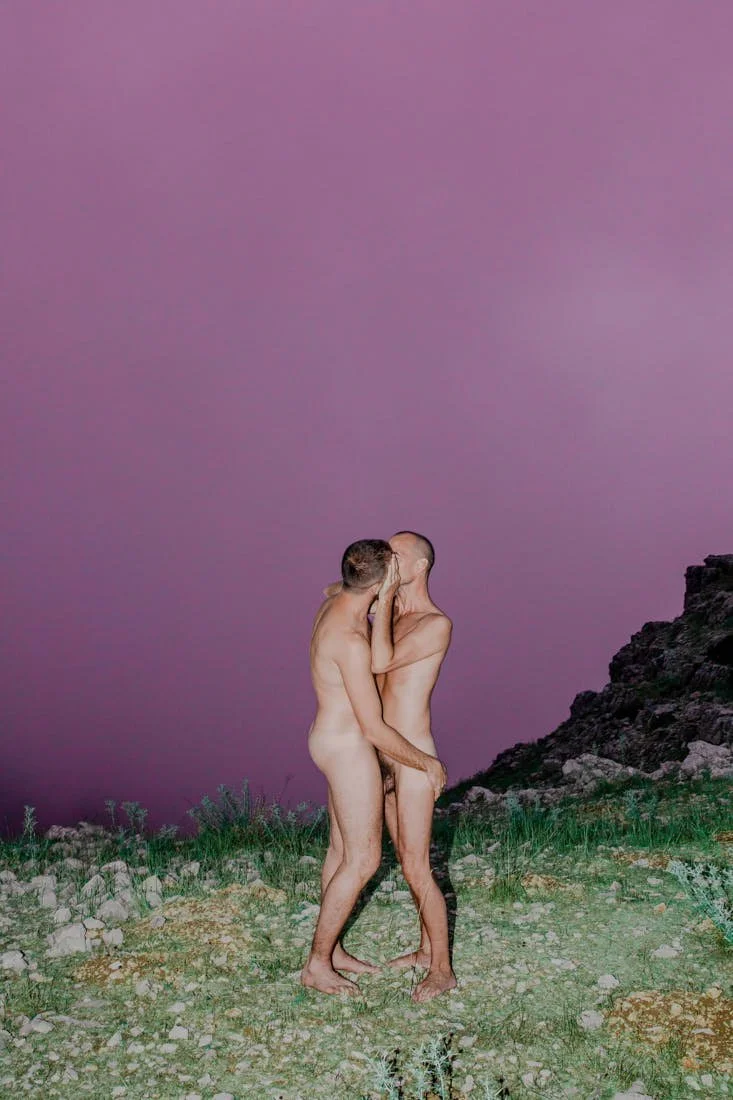
Whats Ours 2019 photographed by Myriam Boulos LE MILE Magazine

Myriam Boulos
Whats Ours 2019


Who are you photographing for?

For myself, for the people in the images, for people who will find themselves in these pictures, and for people who do not think like me.

Sexual fantasies, war, neuro divergence—your work isn’t afraid of complexity. What’s the one thing people always get wrong about it?

Complexity makes it difficult for people to put me in boxes. I think the person behind the images is one thing people tend to get wrong!

What’s the most fragile thing you’ve ever captured and what’s a picture you couldn’t take?

Wolfgang Tillmans said, “If one thing matters, everything matters.” I think everything is fragile and should be handled and photographed with care, tenderness, and consideration. The pictures I couldn’t take are the ones I take in my dreams. It is a particularly frustrating feeling to wake up and not have a trace or a proof. Max Kozloff said, “With photographs, we have concrete proof that we have not been hallucinating.” But dreams are real to me, and I wish I could keep pictures from this world, too.

Being the first artist from the Middle East to win the Foam Paul Huf Award is groundbreaking and makes you part of a global art conversation. Do you care about that? And what does it mean to take up space as a Lebanese artist—right now, in this global frame?

I am so grateful to be part of this global conversation. I think it’s the photography industry’s role to engage with as many photographers as possible from our region. There are so many talented photographers in the Middle East, and it is necessary to see our part of the world from different perspectives and not only through a few photographers.

 
Whats Ours 2019 photographed by Myriam Boulos LE MILE Magazine

Myriam Boulos
Whats Ours 2019

 
Ongoing War 2023 photographed by Myriam Boulos LE MILE Magazine

Myriam Boulos
Ongoing War 2023


Beirut is always present. Is it your subject, your background, or your collaborator?

I think Beirut is more like my anchor. I always feel like a little alien, but in Beirut I feel more grounded. The thick air, the contrasted light, the landmarks—my body feels at home here. I feel like this is where my roots are, this is where life is, and this is where I want to understand myself and share love with others.

You once said your photos are about tenderness. Has that changed?

I think tenderness is what I will always look for—in myself, in other people, in images.

You’ve been called a storyteller. Do you feel like one or more like a collector of moments?

I feel like I am more of a collective diary-teller, if that is a word! Or a collector of diaries in the context of collective histories and experiences. But I usually call myself a documentarist.

As you prepare for your solo exhibition at Foam in 2026, what kind of visual or emotional narrative are you hoping to construct?

I hope to put together already existing work in a new way, one that will make me learn things about myself, if that makes sense.

What do you hope someone 20 years from now will feel when they look at your work?

I just hope they will feel. Anything. I can’t choose what I provoke in people, but I would be sad if my images did not provoke anything. I also hope that it brings new perspectives to people who are not informed about some realities but still have preconceived ideas about them.


First published
LE MILE Offline Edition No. 39 FW25/26

courtesy for all images (c) Myriam Boulos
header image Ongoing War, 2024 photographed by Myriam Boulos

JOSH S. ROSE *on Performance, Movement, and Photographic Observation

JOSH S. ROSE *on Performance, Movement, and Photographic Observation

Technical Romanticism
How Josh S. Rose photographs Performance as a Technical and Human Act


written + interview JONATHAN BERGSTRÖM


Josh S. Rose is a visual artist and storyteller working across photography, film, and writing. His practice brings together visual and performing arts, centering on movement, emotion, and image. Recognized for his collaborations with leading visual artists, choreographers and dance institutions, Rose has built a unique artistic language that captures other art forms, especially performance, as both a technical feat and a deeply human experience, an approach he describes as “technical romanticism.”


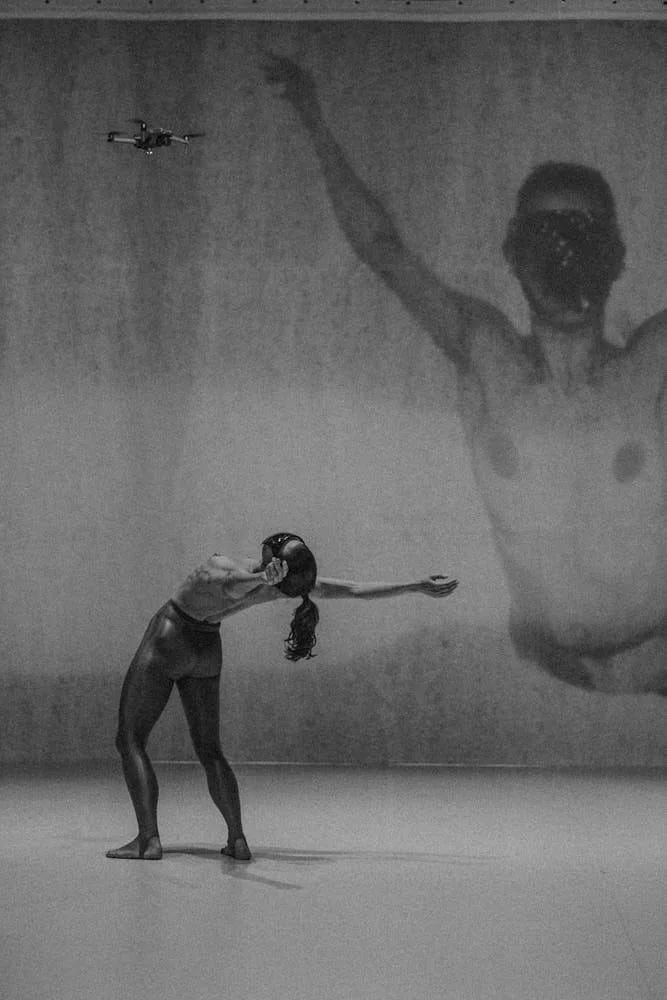
Lenio Kaklea / The Birds
Performance documentation at MOCA November 2025
Performer Nefeli Asteriou
seen by Josh S. Rose

courtesy of MOCA

 
Lenio Kaklea The Birds Performance documentation from The Museum of Contemporary Art MOCA November 2025 Performer Nefeli Asteriou Image by Josh Rose courtesy of MOCA LE MILE Magazine


From photographing Lenio Kaklea’s The Birds to developing contemplative series such as Tired and The Standouts, Rose turns his lens toward how bodies move through space, time and social expectation. Whether documenting choreography, tracking the passage of daylight, or observing everyday gestures, his work focuses on the patterns and interactions that shape each moment. In this interview with LE MILE, Rose discusses the trust required to document dance, his approach to experimentation within live performance, and the ways repetition and observation inform his evolving work.


Jonathan Bergström
How did you come to photograph The Birds by Lenio Kaklea?

Josh S. Rose
This is one of those things that happens in a minute, but really over years. Kaklea’s piece was coming to the States for the first time and being performed at the Geffen Contemporary at MOCA. Dimitri Chamblas, a longtime collaborator and prominent choreographer and artist, recommended me to shoot it, as they were looking for someone who could jump in and capture the essence of the piece. Almost every performance I capture happens either with someone I have worked with a lot, or recommended by them. Dance is very personal and needs to be captured with care, but also very technical. The light is always changing, the movement can go from fast to slow and a shape comes and goes very quickly. I’m often seeing it for the first time with the audience. So, I’ve built up the kind of trust over the years that makes me a viable person to explore still photography during a performance like this.

When photographing choreography, what visual moments are you paying attention to?

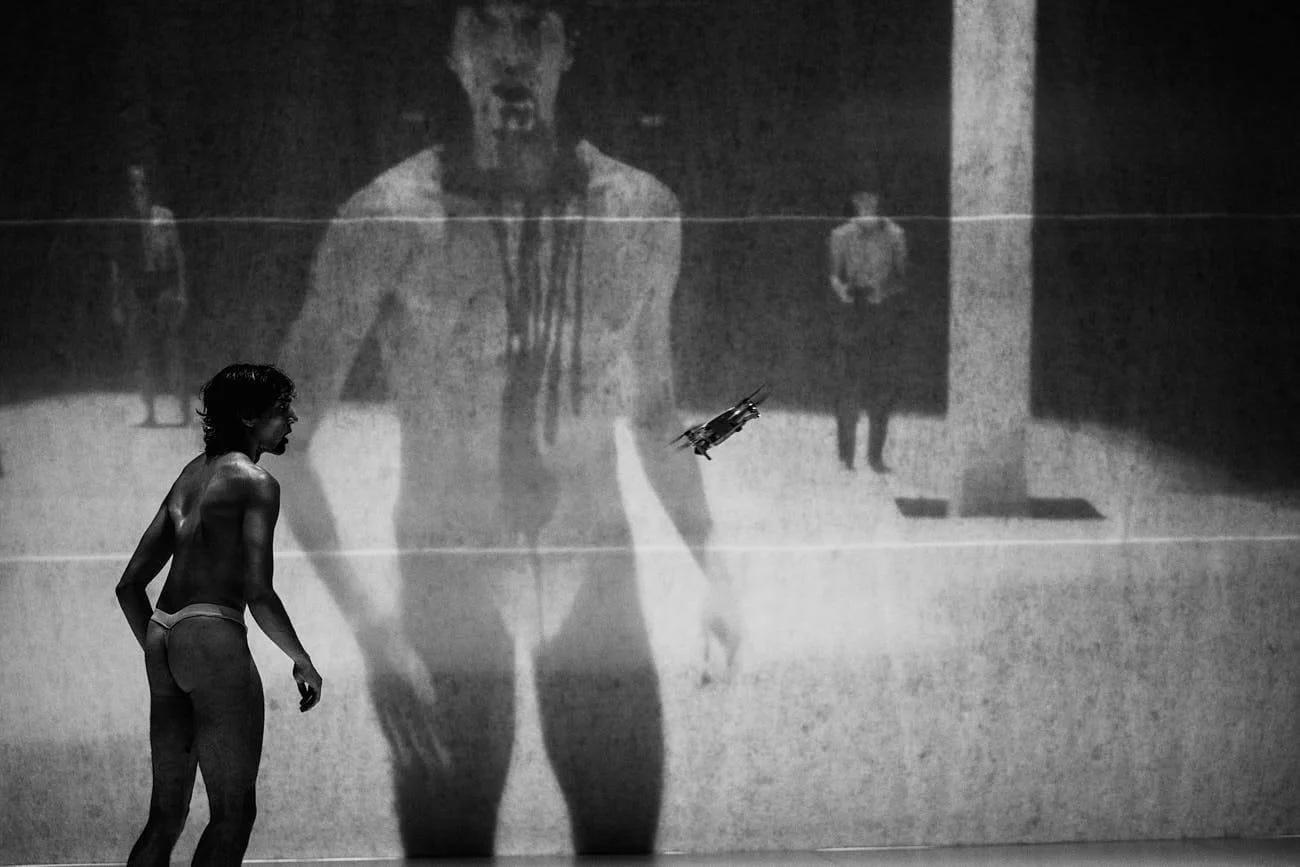
Most choreographers who design for the stage are thinking about a mix of things: there is the meaning of the piece that is expressed through blocking, movement, shape and the interplay of dancers, but there is also wardrobe, art and lighting that help define that concept. Incredible works, like what Kaklea has created, have other things going on, too. At one point, she had a performer fly a drone and projected the drone’s view to the backdrop of the stage. In another, a trapeze hangs from the ceiling. Chamblas, who I mentioned earlier, does a piece with a giant floating balloon structure above the stage. Los Angeles Dance Project has a piece running that uses artwork from Barbara Kruger.

I often shoot dancers performing in and around art installations. So, I try to understand what it is that is trying to be impressed upon the audience and then heighten or accentuate that. I’m very interested in where the interplay of these elements happen. I like to find compositions within those juxtapositions. It’s like shooting a meteor shower or something. Every shot you take is different and you have to be okay with that and accept that a lot of this is stochastic. You’re in the design, so there is no bad shot. You don’t think in terms of good or bad, but rather in deeper explorations of the meaning of the work. It’s interesting that Kaklea’s piece is called The Birds, since birds are a great example of natural patterns of design. For whatever reason, I am very comfortable in a space like that, if not entirely amazed and inspired by it. I think that excitement and curiosity fuels how I see and shoot.


Lenio Kaklea The Birds Performance documentation from The Museum of Contemporary Art MOCA November 2025 Performer Jaeger Wilkinson in the back Louis Nam Le Van Ho and Amanda Barrio Charmelo Image by Josh Rose courtesy of MOCA LE MILE Magazine

Lenio Kaklea / The Birds
Performance documentation at MOCA November 2025
Performer Jaeger Wilkinson in the back Louis Nam Le Van Ho and Amanda Barrio Charmelo
seen by Josh S. Rose

courtesy of MOCA


How do you balance documenting the work with expressing your own visual style?

My own style is a bit more experimental, or maybe looser, than it is straight documentation. Though when shooting a performance, I make sure I honor the work put into the production. Often what will happen is that I get inspired to try something within any performance and take the time to explore it. Sometimes that is literally two different cameras, but more often it’s a quick idea in between something more formal.

When I am being more expressive in my shooting, I like to experiment with double exposure, filters and often I will mess with the horizon line or find a surprising or unconventional composition. I think of these as tools for emotional expression. I think my visual style is a result of that personal approach, where my own chaotic-curious way of shooting meets the frenetic-emotional nature of dance. When it hits right, I think it sits at the edge of abstraction and that is what makes it beautiful. A certain level of unknown in art is meaningful because it leaves some things to the imagination, plays in the dark and feels wild and free. Often you have to fight against the exactitude of photography to achieve that kind of work.


Let’s talk about Tired. Why did the sun’s passage across the sky feel like the right structure for the project and what did committing to the full arc of daylight reveal that a single moment could not?

Tired is also about movement. But in this case, it is expressed through time. To feel the sun move, not by looking at it but by seeing how it changes something static, seemed like an observation worth pursuing. I became aware while shooting it that I was spinning, or the Earth was spinning with me on it. The interplay of movement here only happens if you sense the sun’s movement, or, in reality, ours. Once that idea entered into the equation, I could no longer see the piece without the narrative element of time.

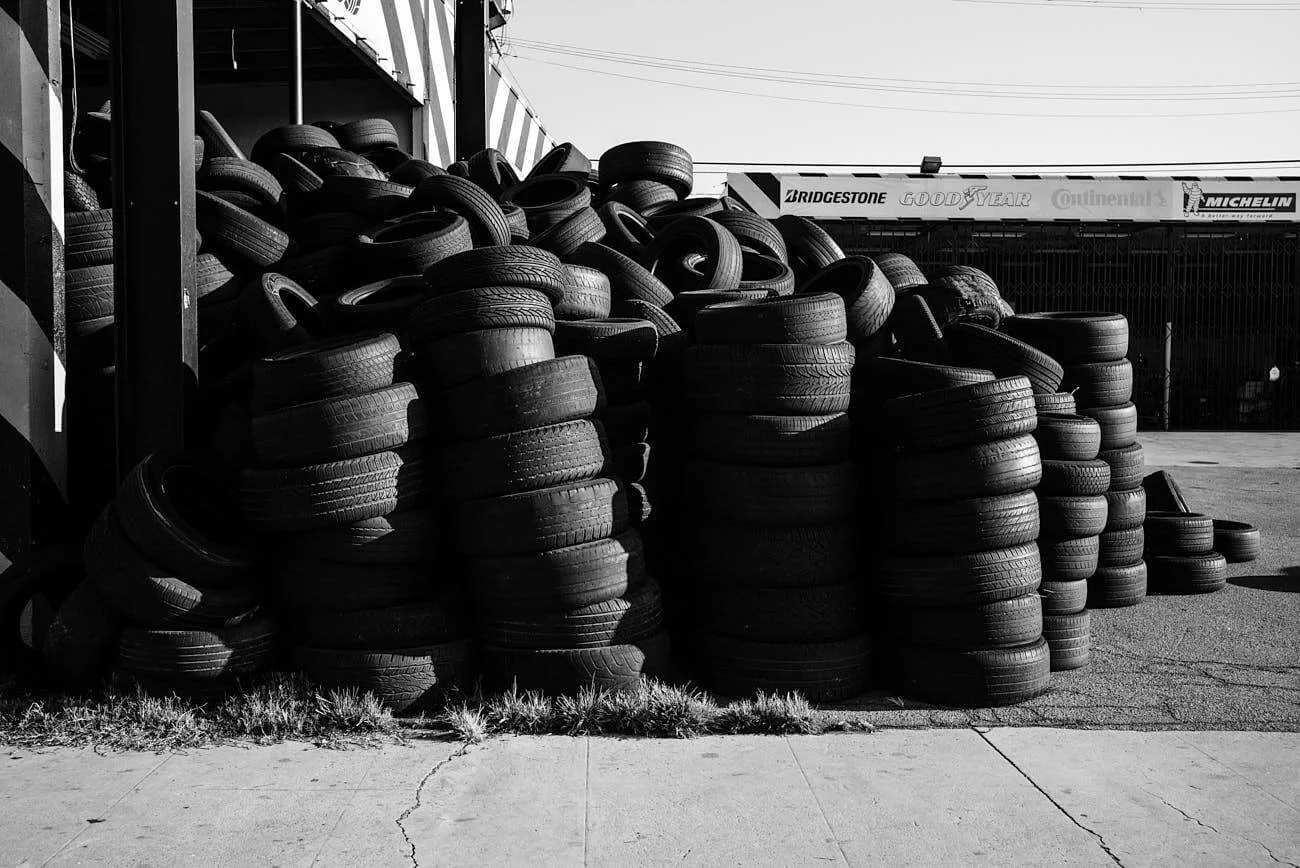
I think with Tired, the visual is so arresting. This pile of tires is immediately metaphorical. If you look at two shots of it, the movement of the sun is actually hard to notice at first. But that’s what is interesting to me. You have to ask why it’s being duplicated. When you see the difference and focus on the subtleties, that’s when the idea reveals itself. I like an image or series that invites you to explore it. Less immediate, but the potential to reveal more.


You mention the contrast between movement and stationary objects whose purpose is movement. How did that idea guide the project?

I mean, who doesn’t feel a little run over by the wheels of time? Especially these days. This is the flip side of moving, of the revolutions we go through in our lives, of aging. I think we look at tires and think, yeah, that’s me, too - round and round and round. I just wanted to make sure that idea hits you when you look at it. You might have felt a bit of that with just one image, but spread out the images over time and I think it becomes an unavoidable takeaway.


The Standouts Josh S. Rose LE MILE Magazine

The Standouts
seen by Josh S. Rose


“Dance is very personal and needs to be captured with care, but also very technical. The light is always changing, the movement can go from fast to slow and a shape comes and goes very quickly.”

Josh S. Rose speaks with Jonathan Bergström
for LE MILE .Digital


Compared to Tired, The Standouts feels more outward-facing. How did that change your role as an observer?

The Standouts is still me wondering out loud. In that work, I’m the outsider who quietly sits in the shadows and observes the louder, bolder, more assertive animals of the species. In all my photos, I feel like observation is key, but I think what might be felt in The Standouts is perhaps just a little bit more of an opinion. It’s not about all people, which a lot of art strives to be, it’s about a certain kind of person. But we all know this person, we even have a little of them in us, too. It’s not me, but it is something I recognize in me, in all of us. So, I’m observing others, but I’m questioning it inside myself, too.


In The Standouts, you describe behaviors such as running, shopping, and adding flair as efforts to “be more than who we are.” What made you want to examine these actions through this work?

I remember when I came of age and started finding myself at bars in my twenties, one of the things that stood out to me the most was the way people got louder as the night went on. To a point where, late into the night, a guy would just yell at the top of his lungs or a girl would take her top off, or cry performatively in public. It happened every time. And being, let’s just say less outgoing, it always seemed odd, behaviorally. I mean, I’ll be honest, I never liked it. But there’s a phrase, “We often dislike in others what we most dislike in ourselves.”

So, this is how I see people, or at least a subset of people, or subset of ourselves, as striving to be seen, heard and appreciated: look at me. But if I examine it, this is about me not really putting myself out there in that way and wondering about it, observing it, dealing with it.

I should talk about the stretching part. It’s purposefully rudimentary. It is supposed to feel almost clumsily done because it’s meant to show the thinking, the observation, and how when we do endeavor, it’s often less refined than we believe it to be, verging on rude, or abrasive. These are simplistic desires, being big. I’m just sort of anthropomorphizing it, having it over-manifest in them. There’s some Kafka in it.


When working on this series, did you find yourself observing people, culture, or behaviors, or all three at once?

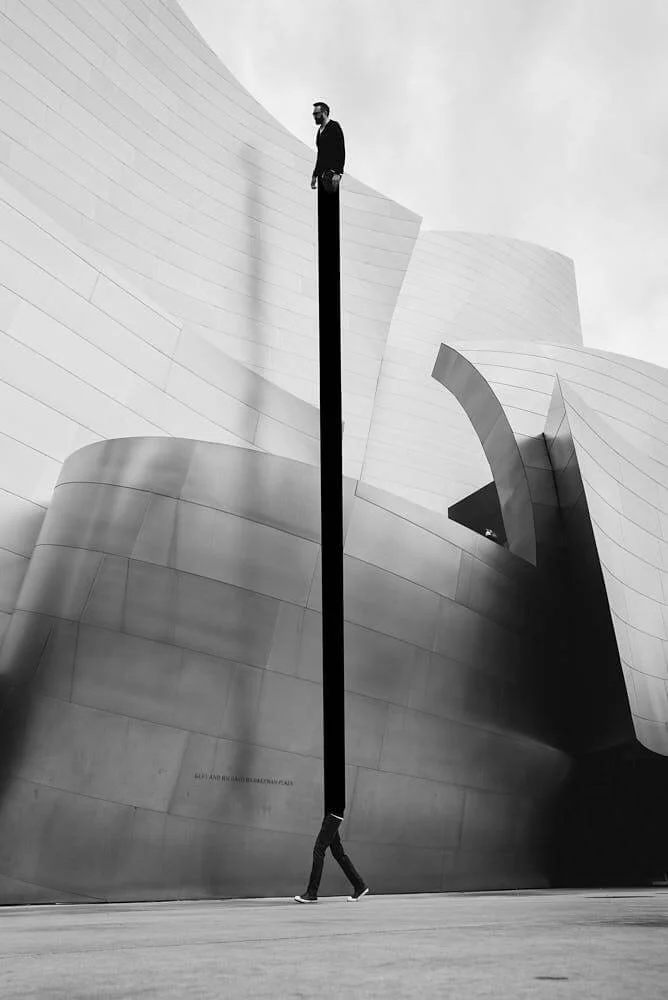
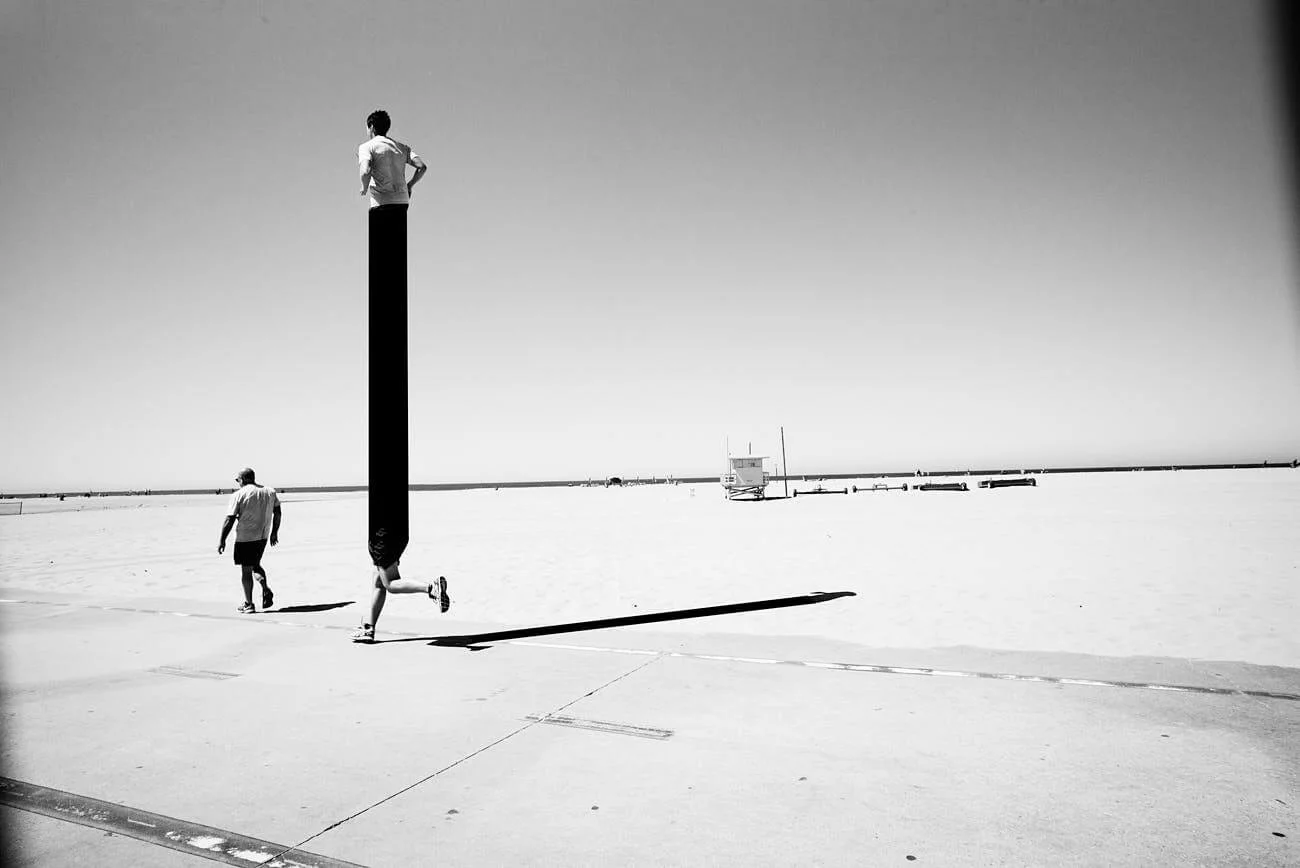
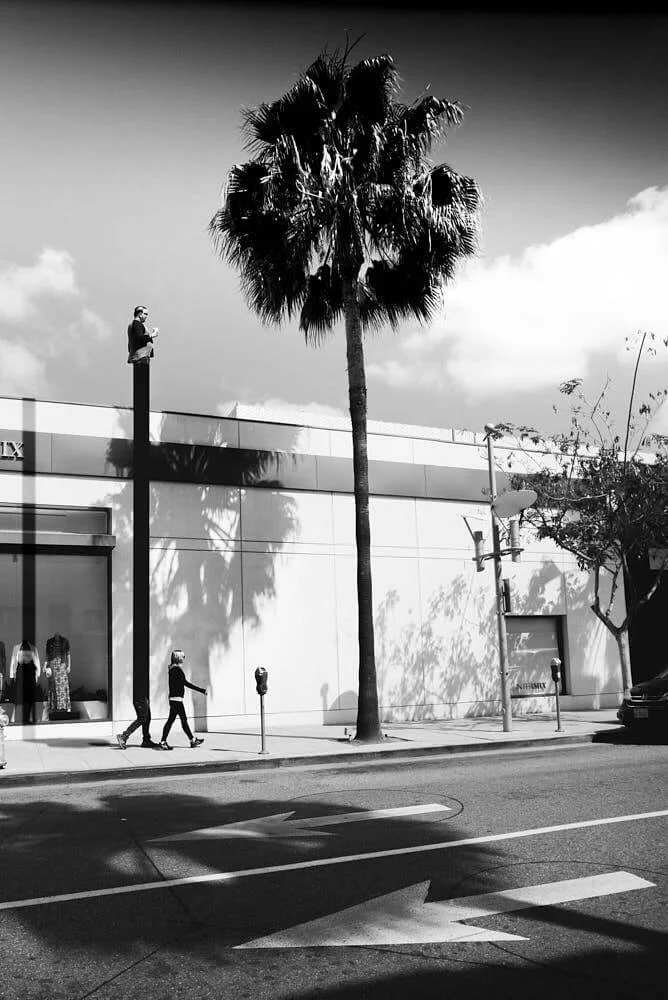
All three are access points when I’m capturing for this series because some displays are more individualistic and others happen culturally. Going to the beach and being on display in a bathing suit is cultural, so is shopping or going to a museum. But running or standing on a wall with your arms outstretched is more of a personal choice that can be behavioral or even just one person’s colorful feather display.


The Standouts Josh S. Rose LE MILE Magazine

The Standouts
seen by Josh S. Rose

 
The Standouts Josh S. Rose LE MILE Magazine

The Standouts
seen by Josh S. Rose


Each of these projects presents endurance in different forms, physical, temporal, and social. Was that connection intentional?

Humans do have to contend with endurance. Doing things over and over again creates patterns and I put myself in positions to observe and shoot these patterns. I think what the question is keying in on is that there is also a human effect from this. I think that what I am often most intent on is how we respond to our need to endure in order to live. I imagine that is coming across in all of this.

Looking across these three bodies of work, what stands out to you now that may have been invisible at the start?

Movement has been a big part of my trajectory as a photographer. A lot of people know me through my dance work. I think what is coming out as my work evolves into series like this is that there is a deeper meaning to movement; there is more to it than the beauty of doing it gracefully. You can do that, but the full spectrum of how we move through life is on display through these works.

Are there any current works or cultural movements in music, film, literature, or art that feel especially inspiring to you at the moment?

I call my work “Technical Romanticism.” It’s an homage to the Romantic painters with whom I most identify as an artist. This was a time in art when artists were making works that captured the human response to the environment around them, with all the emotions and drama that that entailed. This reaction against order, reason and restraint is important in art. It empowers the emotional being and discusses the intersection of world events with its effect on us as human beings. People responding to their environments, it takes many different forms. But all of them feel inspiring to me. That is the direction my curiosity goes when I have a camera in my hands.


Tires Josh S. Rose LE MILE Magazine

Tires
seen by Josh S. Rose


“What is coming out as my work evolves is that there is a deeper meaning to movement; there is more to it than the beauty of doing it gracefully.”

Josh S. Rose speaks with Jonathan Bergström
for LE MILE .Digital


all photography (c) Josh S. Rose

SHAHRAM SADAAT *on Photography, Identity, and Visual Culture

SHAHRAM SADAAT *on Photography, Identity, and Visual Culture

SHAHRAM SADAAT
Catches What Slips Between The Hours


written + interview HANNAH ROSE PRENDERGAST


Some sports aren’t sports at all. And yet, the groceries won’t take themselves in. Every day runs its course, but Shahram Saadat is there for the moment it falters — shut out in the hiss of closing doors. What most overlook, he catches instinctively, letting the absurdity frame itself. Life is so good at this; we rarely bother to notice everyone trying to make it in one trip. For now, you are here.


Photography by Shahram Saadat. Styling by Katie Shaw. Hair by Moe Mukai. Make-up by Stevie Squire. Casting direction by Emma Matell with casting assistance from Oliwia Jancerowicz. Set design by Sophia Willcox. Production by Sophie Hambling. Photo assistance by Dylan Massara with styling assistance from Sorcha Kennedy. Design by Stela Kost. Set assistance by Oliver Bell. Models: Cam, Don, Freddie, Isabella, James, Lian, Patrick, and Sarah.

OOO Shahram Saadat LE MILE Magazine Offline FW25


Hannah Rose Prendergast
How has growing up between British, Iranian, and French cultures shaped your perspective and the relationships you form through the camera?

Shahram Sadaat
I’ve always lived between cultures, surrounded and shaped by them — but never fully belonging to just one. Growing up in different countries with parents from different backgrounds, I picked up pieces of each place: the language, the food, the traditions, the humor. I’ve learned to adapt, to blend in, to understand people from all walks of life. At the same time, I’ve often felt like an outsider, carrying parts of many homes without ever fully settling into one. It’s a strange in-between space, but it’s also where I feel most myself. My identity isn’t tied to one culture or place; it’s made up of all the little things I’ve absorbed along the way.

You staged Target Practice in Norwich in 2022 — a setting far from American gun culture, at least on the surface. What unexpected parallels stood out to you?

Target Practice was part of an ongoing series exploring the social dynamics and demographics of British cities. Each project involved traveling to a new location with a concept in mind, allowing the work to unfold through spontaneous interactions with locals. I found striking similarities: a shared fascination with control, threat, and spectacle, shaped by media, pop culture, and imported imagery.

Working with “real” people rather than actors brought a rawness to the project. Many participants were initially taken aback by the setup, but they quickly leaned into it — adopting poses, expressions, and gestures that revealed both playfulness and deeper social conditioning. It was in these unscripted moments that the tension between reality and performance became most visible.

 
OOO Shahram Saadat LE MILE Magazine Offline FW25


How do you navigate the responsibility of representing a community you’re both part of and apart from?

It means holding a unique and sometimes challenging position: speaking from lived experience while also acknowledging that my perspective may not align perfectly with those who feel deeply rooted in that community. I carry parts of the culture with me — its values, stories, and struggles — but I also observe it from a distance, shaped by my own mixed background and experiences.

This dual position gives me the ability to translate, to bridge, and to connect. At times, it feels like I’m walking a tightrope, trying to honor the culture without claiming to speak for everyone in it. It also gives me a deep sense of responsibility: to listen carefully, reflect honestly, and represent with humility and care.


In both Jogging with Shopping and Out of Office, you explore how wellness and burnout are performed rather than felt. What draws you to these displays of efficiency and exhaustion?

We’re constantly under pressure to live efficiently — eat well, exercise regularly, and never waste a minute. Jogging with Shopping came from observing people in East London, where these expectations collide in everyday life. Society tells us to stay fit, eat healthy, and be productive, but also not to let any of it slow us down. So we merge it all — jogging with shopping bags. It’s a reflection of how wellness and efficiency get tangled, turning even self-care into something performative and rushed.

We’ve learned to wear exhaustion like a medal. In a world that measures worth by output, showing how drained we are becomes a way to prove we’ve tried hard enough, cared enough and pushed far enough. It’s not just something we feel — it’s something we display, hoping our struggle will be seen and, maybe, finally, validated.


How do you think our relationship to images has shifted, especially in the age of AI and visual manipulation?

We’re more skeptical than ever — even real images or videos can feel suspect. At the same time, we’re also more vulnerable to falsehoods, because manipulated content can look so convincing. The line between what’s real and what’s fabricated has blurred, forcing us to question not just what we see but how we decide what to trust. Believability now relies less on what looks true and more on context, source, and critical thinking.

For me, it’s less about exaggeration and more about reflection. Performance and documentationbegin to overlap — you’re not creating the surreal, you’re revealing it. In those moments, thework becomes a mirror, holding up the chaos, contradictions, or humor that already exist. It’sless about inventing absurdity and more about finding clarity within it.


OOO Shahram Saadat LE MILE Magazine Offline FW25


“Machines give us structure in a world that rarely slows down.”

Shahram Sadaat speaks with Hannah Rose Prendergast
for Offline Edition - FW 2025 Nr. 39


How does going cashless change not only how we spend, but how we value ourselves?

When money becomes invisible, transactions feel less personal and more abstract. We’re less aware of what we’re giving up, and that can blur the emotional weight behind our choices. At the same time, with digital payments and financial tracking, our worth can start to feel tied to numbers on a screen — credit scores, spending habits, digital footprints — rather than our real-world character or contributions. In a cashless world, there’s a risk that self-worth becomes more transactional, more measurable, and less human.”


In The Whale (2024), the car wash becomes “a forced moment of respite.” Why do you think we rely on machines to grant us permission to pause?

Machines give us structure in a world that rarely slows down. Notifications stop, timers end, apps tell us to breathe — it’s as if we need external validation to justify rest. In a culture that values constant productivity, a machine’s signal can feel more acceptable than our own intuition. It becomes easier to listen to an app than to our bodies or minds, because we’ve been conditioned to associate rest with guilt — unless it’s scheduled, measured, or approved by something outside ourselves.


What place does Duende hold for you and the wider community?

Duende began as a gallery space and continues today as a publishing platform. Co-run by Sophie Hambling and me for several years, our mission was to showcase emerging artists with a strong emphasis on community and accessibility. As our practices evolved, it became more challenging to maintain a regular exhibition schedule. Duende remains active, though — we continue to participate in international art fairs and publish editions throughout the year, keeping the spirit of the project alive in a more flexible form.

 
OOO Shahram Saadat LE MILE Magazine Offline FW25
 
OOO Shahram Saadat LE MILE Magazine Offline FW25


What makes a compelling lookbook image?

It comes from the everyday — those small, often overlooked moments that carry their own strange poetry. I’m drawn to the idiosyncrasies that naturally unfold: a misplaced object, an awkward gesture, a clashing pattern. These aren’t staged or manufactured — they just are. But when you frame them in a photograph, they take on new weight. You’re not just documenting something mundane; you’re elevating it. You’re exposing its quiet absurdity or beauty. In doing so, you heighten that strange, liberating feeling of who the fuck cares — a kind of irreverence that resists perfection and embraces the mess of real life. It’s not about spectacle; it’s about attention — seeing what’s already there and choosing to care just enough to capture it.

What’s the secret to successful living?

I have no idea. Let me know if you find out!


OOO Shahram Saadat LE MILE Magazine Offline FW25


“When money becomes invisible, self-worth risks becoming transactional.”

Shahram Sadaat speaks with Hannah Rose Prendergast
for Offline Edition - FW 2025 Nr. 39


all photography (c) Shahram Saadat

MIA FINEMAN *Casa Susanna

MIA FINEMAN *Casa Susanna

MIA FINEMAN
Casa Susanna - 160 Ways to Be Seen Without Being Seen


written + interview AMANDA MORTENSON


These days, visibility begins with a screen, curated, uploaded, compressed into metrics before it even has a chance to breathe. The Casa Susanna photographs were born in another tempo. Their images were exchanged by hand, slipped into envelopes, held close. The Metropolitan Museum of Art’s Casa Susanna exhibition opens a door into this quieter visual world, one that sustained a cross-dressing community in 1960s New York long before hashtags or timelines existed.


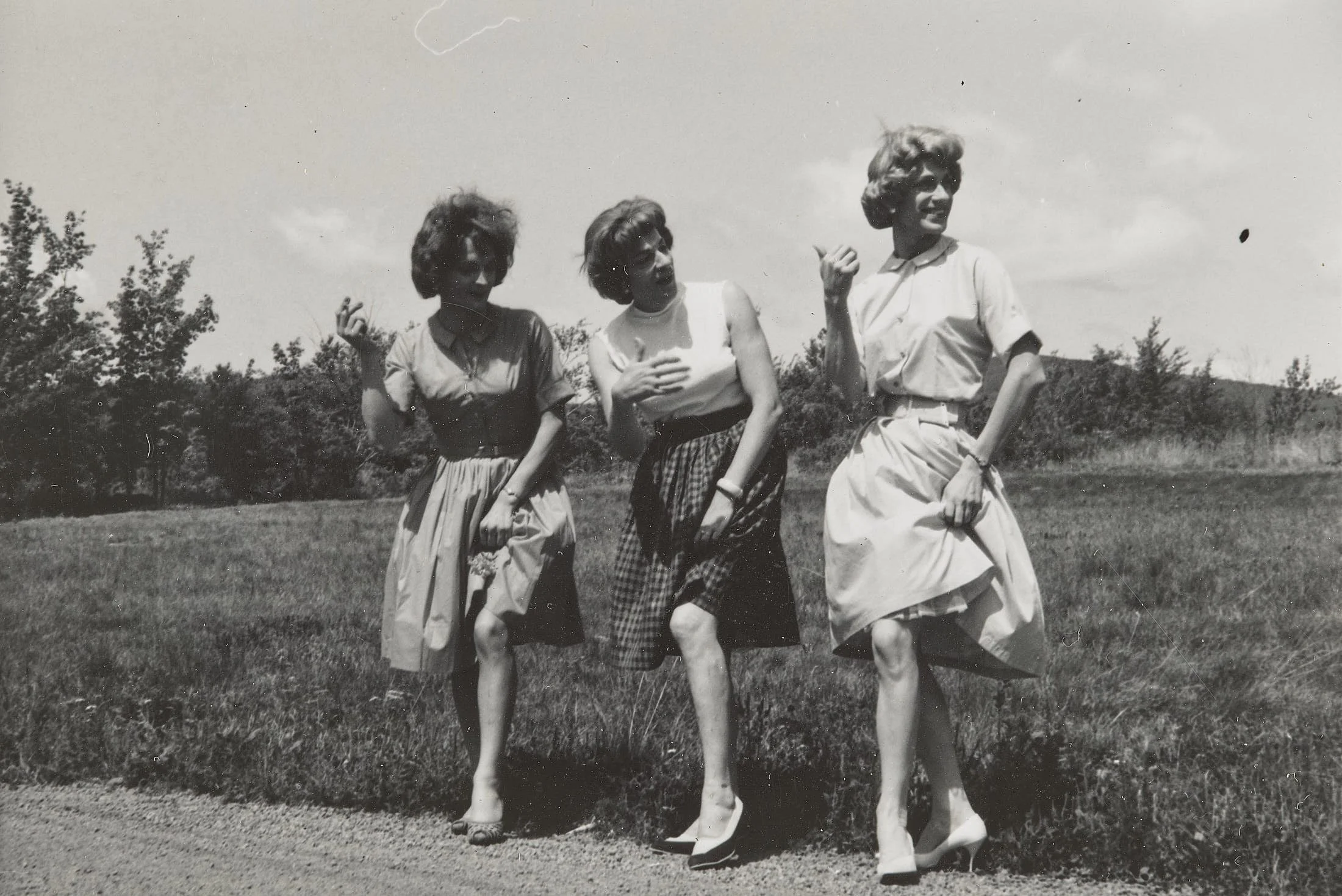
In that era of strictly defined gender roles, Susanna Valenti and her wife Marie Tornell operated two small resorts in the Catskills. They were modest in size but expansive in purpose—safe havens where guests could arrive as themselves and leave the constraints of their day-to-day identities behind. The gatherings at these resorts and in New York City became a ritual. Cameras were constant companions, tools for recording and for becoming. Each photograph affirmed an identity, captured a gesture, and expanded a shared archive of self-expression.


Andrea Susan (American, 1939–2015)
Donna (Buff/Cynthia) in a navy dress in Susanna and Marie’s, New York City apartment, 1960s, Chromogenic print, 12.9 x 9 cm
Art Gallery of Ontario, Purchase, with funds generously donated by Martha LA McCain, 2015 / Photo ©AGO


The exhibition gathers around 160 works from three major collections—photographs from the Art Gallery of Ontario, from artist Cindy Sherman’s personal holdings, and from The Met’s own collection, gifted by Betsy Wollheim, whose father was part of the Casa Susanna circle. The selection includes chromogenic prints, silver gelatin prints, and Polaroids—the latter a breakthrough technology for this community. Polaroid cameras delivered instant results without the risk of sending film to a commercial lab, a critical safeguard in a time when gender nonconformity could lead to blackmail, arrest, or worse. In their own time, members of Casa Susanna used the term “transvestite” to describe themselves, a word now widely recognized as pejorative. The exhibition uses “cross-dressing” to describe the practice of wearing clothing associated with another gender than one’s daily presentation. The photographs show the kind of femininity these guests aspired to inhabit.

The ideal was deliberate, even nostalgic—rooted in the postwar archetypes found in McCall’s and Ladies’ Home Journal: the well-put-together neighbor, the serene housewife, the respectable matron. In the photographs, every detail—hemline, handbag, hairstyle—becomes a note in the visual composition of that identity. Poses are practiced and drawn from the vocabulary of mid-century magazine photography, with a hand on the hip and a pointed foot, knees together when seated, and legs crossed at the ankle. The images carry tenderness and defiance, each present in equal measure.They resist cultural norms simply by existing, but they also protect and nurture “the girl within,” as Susanna herself described it. In this way, the lens becomes a co-conspirator, a mirror that reflects back the self each sitter longed to see.

The exhibition extends beyond the walls to include issues of Transvestia, the underground magazine that served as a lifeline for the community. Published six times a year and mailed directly to subscribers, it offered autobiographical essays, style advice, and fiction alongside readers’ photographs. Functioning as a pre-digital social network, it stitched together a far-flung group into something resembling a public, though one that operated entirely out of sight. The curatorial approach, led at The Met by Mia Fineman, preserves this intimacy. Many of the photographs are small, close to the dimensions of a smartphone screen, but their presence in the gallery invites a different kind of looking. Here, scale becomes personal, measured in proximity. Standing before them, the viewer is drawn into the same hand-held space their original owners occupied, the same vantage from which they were once studied, treasured, and shared.
The quietest details in the exhibition are often the most affecting. A snapshot of Sheila and her wife Avis in matching dresses, tailored so they could wear them together; the patterned wallpaper behind Susanna and Felicity as they laugh in a summer kitchen. These are lived moments, captured for the circle that understood them, free from the staging of outside expectations.

Casa Susanna refrains from universalizing its story, presenting its subjects outside the frame of contemporary trans narratives. It invites visitors to encounter a community as it saw itself, through the images it made for its own eyes. In doing so, it restores a fragment of history to the broader photographic canon, reminding us that some of the most radical acts of visibility happen far from public view.


“One of the most important things you cannot experience when viewing images on a screen is a true sense of scale — the physical size of a picture in relation to your own body.”

Mia Fineman speaks with LE MILE
for Offline Edition - FW 2025 Nr. 39


Unknown [Gloria in Susanna and Marie’s New York City apartment] 1960s Chromogenic print 3 1/2 x 3 9/16 in. (8.9 x 9 cm) Art Gallery of Ontario, Purchase, with funds generously donated by Martha LA McCain, 2015 Photo © AGO

Unknown
Gloria in Susanna and Marie’s New York City apartment, 1960s, Chromogenic print, 8.9 x 9 cm
Art Gallery of Ontario, Purchase, with funds generously donated by Martha LA McCain, 2015 / Photo ©AGO

Andrea Susan (American, 1939–2015)
Photo shoot with Lili, Wilma, and friends, Casa Susanna, Hunter, NY, 1964–1968, Chromogenic print 8.4 x 10.8 cm

Art Gallery of Ontario, Purchase, with funds generously donated by Martha LA McCain, 2015 / Photo ©AGO


Amanda Mortenson
These days, visibility begins with a screen. They´re curated, uploaded, compressed into metrics before it even has a chance to breathe. But the Casa Susanna images were never chasing an audience. How does their analog quietness speak to us now, in this overstimulated world?

Mia Fineman
In our current moment, when our visual lives are so completely dominated by screens, I think people — or at least some people — are beginning to crave firsthand encounters with the physicality of images, whether on the pages of books or magazines or on the walls of a museum or gallery. One of the most important things you cannot experience when viewing images on a screen is a true sense of scale — the physical size of a picture in relation to your own body. Ironically, these twentieth-century snapshots are almost exactly the size of a phone screen, created to be held in the palm of your hand.


Photography has always had a thing for secrets. When you first saw the Casa Susanna images, what did they whisper to you before you even read a word?

The first thing I noticed was that these are images of men wearing women’s clothes, makeup, and wigs — yet they are not drag queens. They are not performing an exaggerated, theatrical version of femininity. Rather, they are making a deliberate effort to appear authentic, to “pass” as ordinary women.
In their time, members of the Casa Susanna circle described themselves as “transvestites,” a term now widely considered pejorative. In the exhibition, we use the preferred term “cross-dressing” to describe the practice of wearing clothing typically associated with a gender different from one’s daily presentation.


What kind of woman did these guests want to become and what kind of woman did the camera let them be?

Their ideal of femininity was highly conventional, even somewhat old-fashioned for the time, rooted in the gender stereotypes of the 1940s and 1950s found in magazines such as McCall’s and Ladies’ Home Journal. The women they aspired to emulate were well-put-together and ladylike — the neighbor, the housewife, the respectable matron. The camera became a tool for creating and expressing these identities, drawing on the visual language of magazine photography and family snapshots. Posing was deliberate: when standing, often with a hand on one hip and one foot pointed and extended; when seated, with knees together and legs crossed at the ankles.


Unknown
Susanna standing by the mirror in her New York City apartment, 1960 – 1963 Color vintage print, 23 x 19 cm

Collection of Cindy Sherman / Photo ©AGO

Unknown [Susanna standing by the mirror in her New York City apartment] 1960 – 1963 Color vintage print 9 1/16 x 7 1/5 in. (23 x 19 cm.) Collection of Cindy Sherman Photo © AGO


“These are images of men wearing women’s clothes, makeup, and wigs — yet they are not drag queens. They are not performing an exaggerated, theatrical version of femininity.”

Mia Fineman speaks with LE MILE
for Offline Edition - FW 2025 Nr. 39


In a way, the lens was a co-conspirator, do you think these photographs were acts of resistance, or rituals of tenderness? Maybe both?

For those in the circle, seeing photographs of themselves dressed en femme was a profoundly powerful and affirming experience. The images carry a tenderness alongside a quiet resistance to prevailing cultural norms and expectations. Above all, the photographs functioned like magic mirrors, reflecting back an internalized self-image — what Susanna called “the girl within.”


How do you curate something that was never meant to be seen in a museum?

It’s not unusual. Most photographs, from the 19th century up through the present, were never meant to be seen in museums. That’s what makes the photographic medium so interesting—it’s capacious and touches on every aspect of our lives..


Let’s talk about the Polaroid. What role did that specific technology play in shaping the identities we see in these frames?

During this period, gender-nonconforming people faced intense persecution and lived with the constant threat of blackmail and denunciation. Sending film to a commercial lab carried a significant risk. A few members of the community learned to process film themselves, but the arrival of the Polaroid camera in the late 1950s proved especially popular among cross-dressers, offering both privacy and instant results.


Unknown [Lili on the diving board, Casa Susanna, Hunter, NY] September 1966 Chromogenic print 5 1/16 x 3 9/16 in. (12.8 x 9 cm) Art Gallery of Ontario, Purchase, with funds generously donated by Martha LA McCain, 2015 Photo © AGO

Unknown
Lili on the diving board, Casa Susanna, Hunter, NY, September 1966, Chromogenic print, 12.8 x 9 cm

Art Gallery of Ontario, Purchase, with funds generously donated by Martha LA McCain, 2015 / Photo ©AGO

 
Unknown [Sheila and her GG Clarissa and friend, reading Transvestia] 1967 Gelatin silver print 3 5/16 x 4 5/16 in. (8.4 x 10.9 cm) Collection of Betsy Wollheim Photo © AGO

Unknown
Sheila and her GG Clarissa and friend, reading Transvestia, 1967, Gelatin silver print, 8.4 x 10.9 cm

Collection of Betsy Wollheim / Photo ©AGO


What’s the quietest detail in the entire exhibition? The one that most people miss, but you still think about on your way home?

I was surprised to learn that several members of the Casa Susanna circle had wives or girlfriends who accompanied them to cross-dressing gatherings. There is a small photograph in the exhibition of a cross-dresser named Sheila with her wife Avis, standing together in front of a fireplace in matching patterned dresses. They had these dresses tailored so they could wear them together. Avis wrote a column for their community magazine recounting her struggle to understand Sheila’s cross-dressing, with concerns ranging from anxiety about being outed to frustration over sharing the family clothing budget.

There’s something almost radical about someone printing their truth in black-and-white and mailing it across the country, long before Likes existed. These photos were passed hand to hand, folded, hidden, held close. What does "Offline" mean inside a show like Casa Susanna, where the act of sharing was slower, riskier, and maybe more intimate?

The members of this community exchanged pictures at gatherings and sent them by mail. They also published them in an underground magazine called Transvestia. It put out six issues a year, distributed to subscribers by mail. It was a community magazine in the sense that nearly all the content was created by its readers. In effect, the magazine functioned as a social network that helped them ease their loneliness and connect with others.

If you had to choose one photograph from the show to hang in your home — not as a curator, but as Mia — which one would it be and why?

There’s a photograph of Susanna and Felicity (whose public identity was John Miller, the brother of photographer Lee Miller) joking around in the kitchen at one of the resorts. I love how it shows Susanna’s sassiness and warmth, and the playful connection between the two women. I also love their tailored summer dresses and the vintage scenic wallpaper behind them. I’d be happy to look at this picture every morning.


header image
Unknown
Susanna, Marilyn, and Marianne, Hunter, NY, 1963
Gelatin silver print, 9 x 12.5 cm
Collection of Cindy Sherman
Photo ©AGO