
Milan Fashion Week SS27 Backstage
Four Designers, Four Rooms
written MONICA DE LUNA
documented MARC HAEFFNER
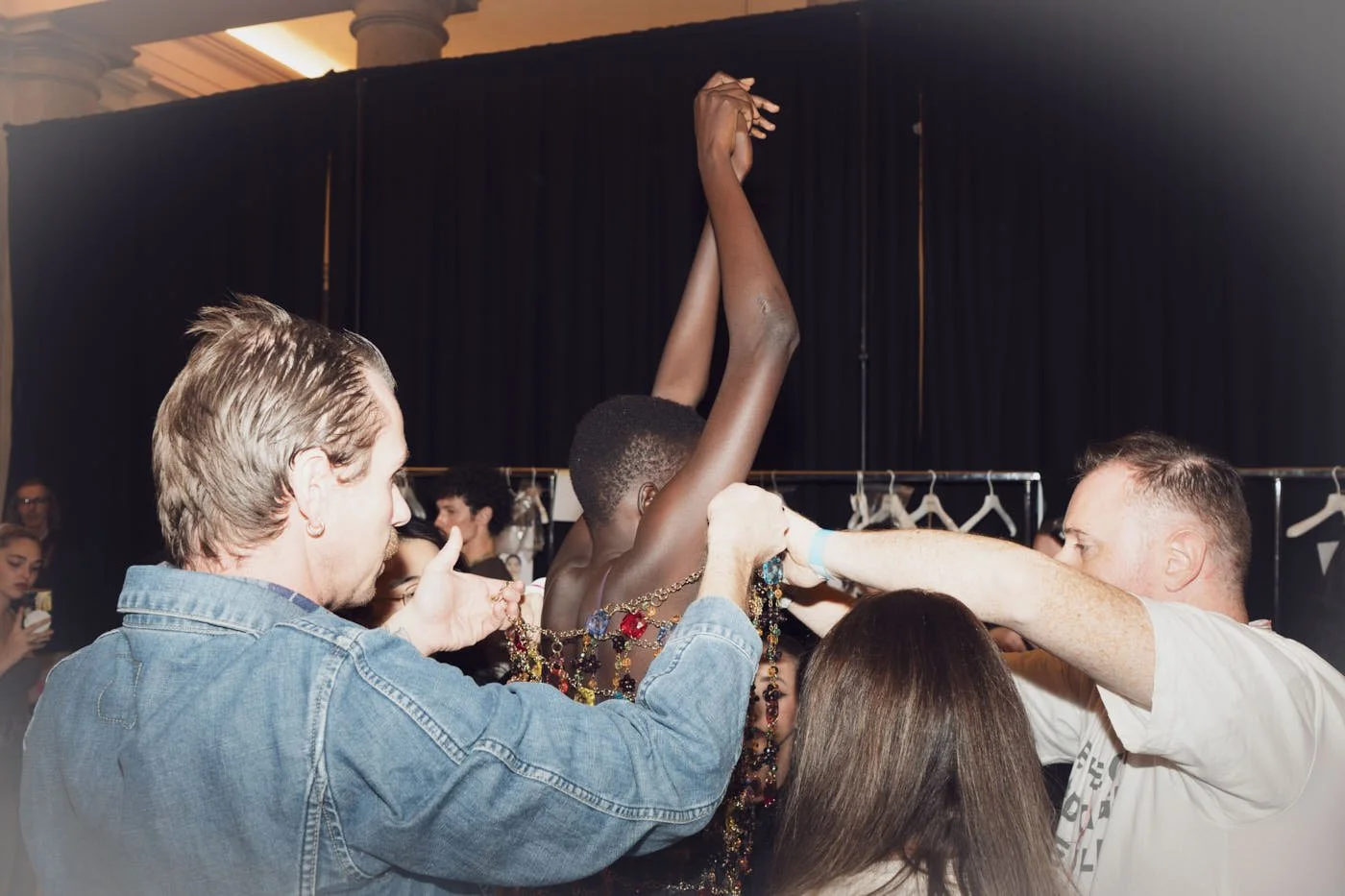
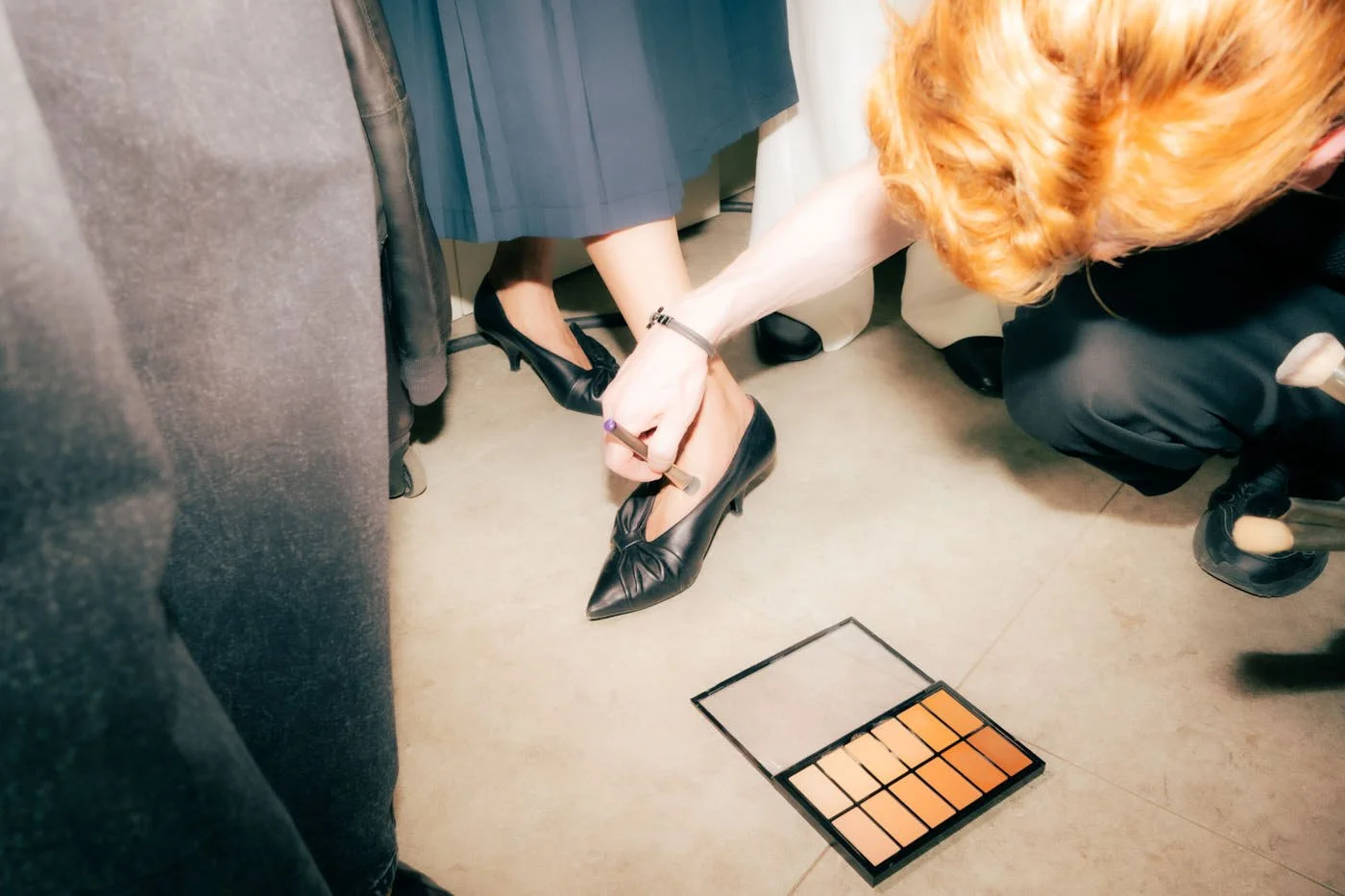
At Vivetta, a model lifts her arms while several people fasten a dress of coloured beads and chains around her. Nearby, a makeup artist kneels to brush colour onto another model’s ankle. Marc Haeffner photographed these moments for LE MILE Backstage at Milan Fashion Week Spring/Summer 2027.
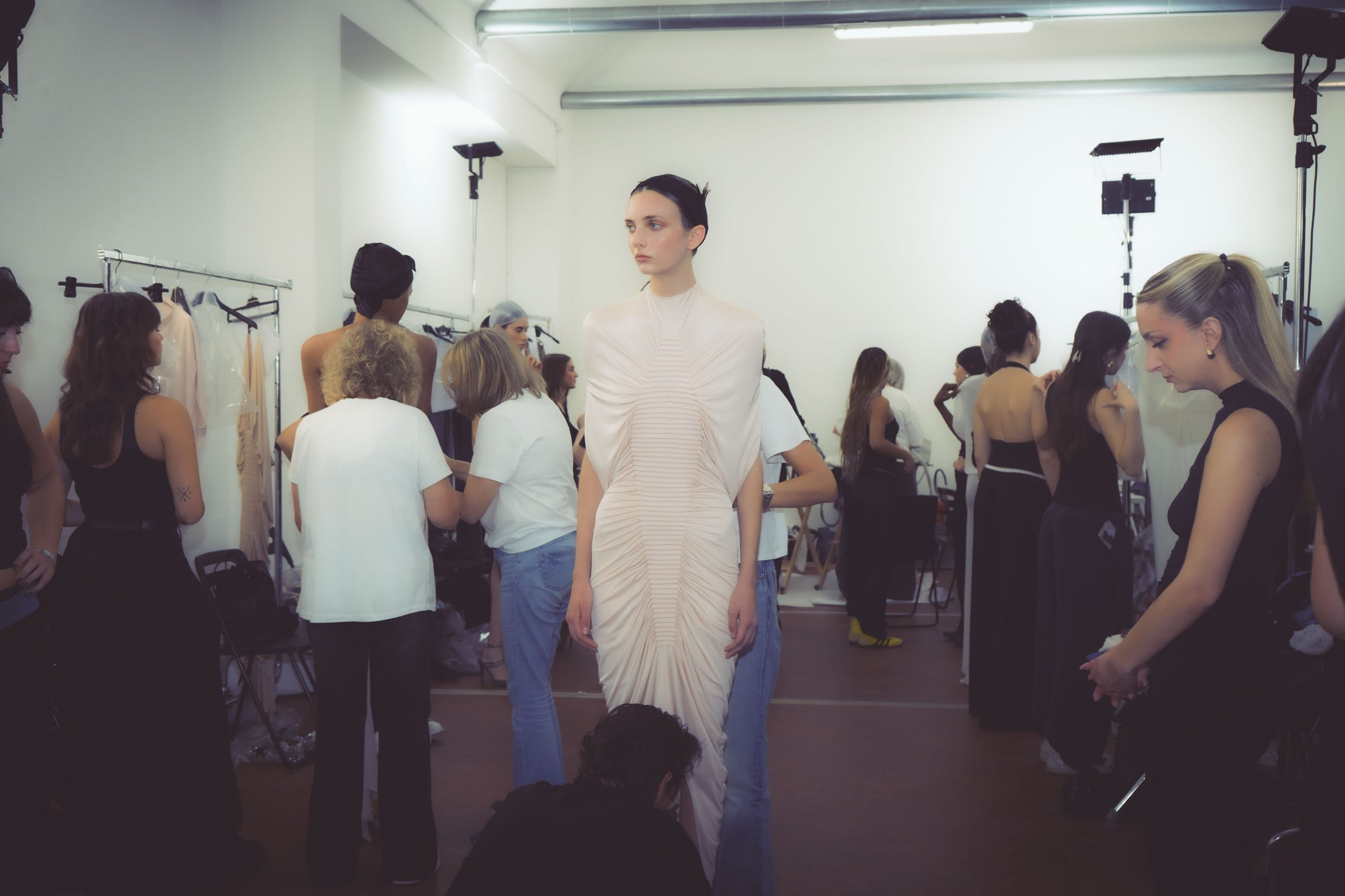
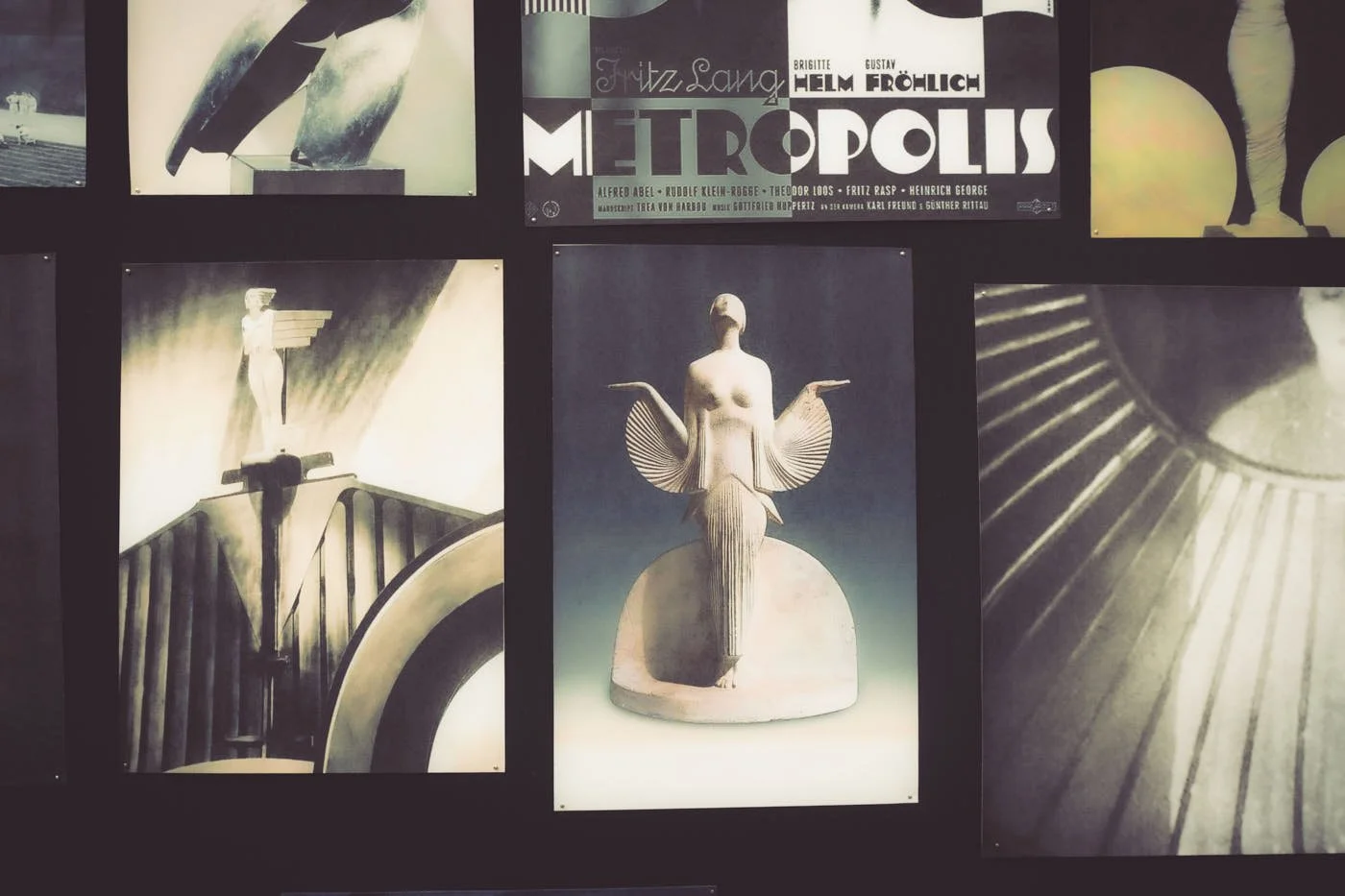
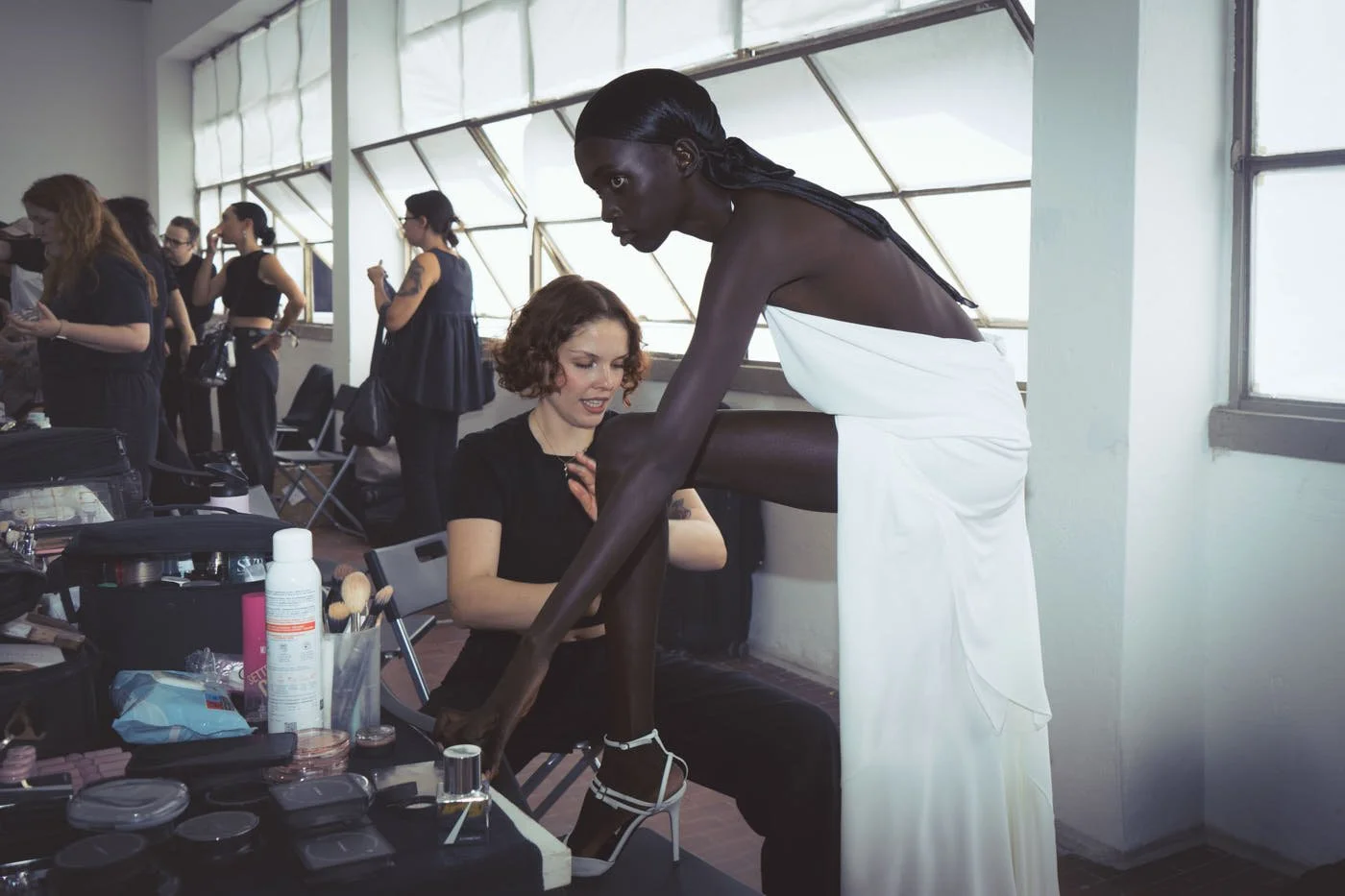
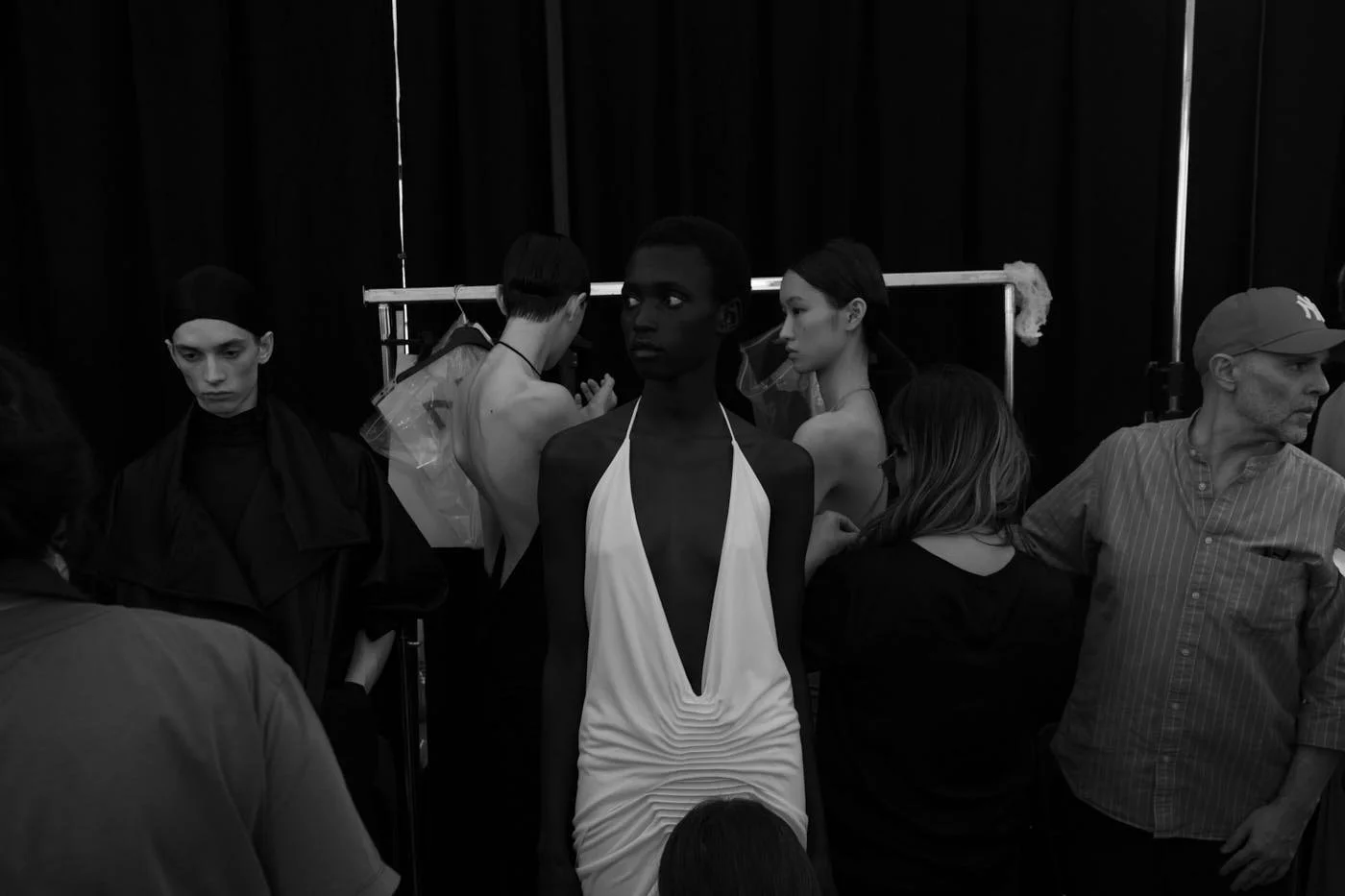
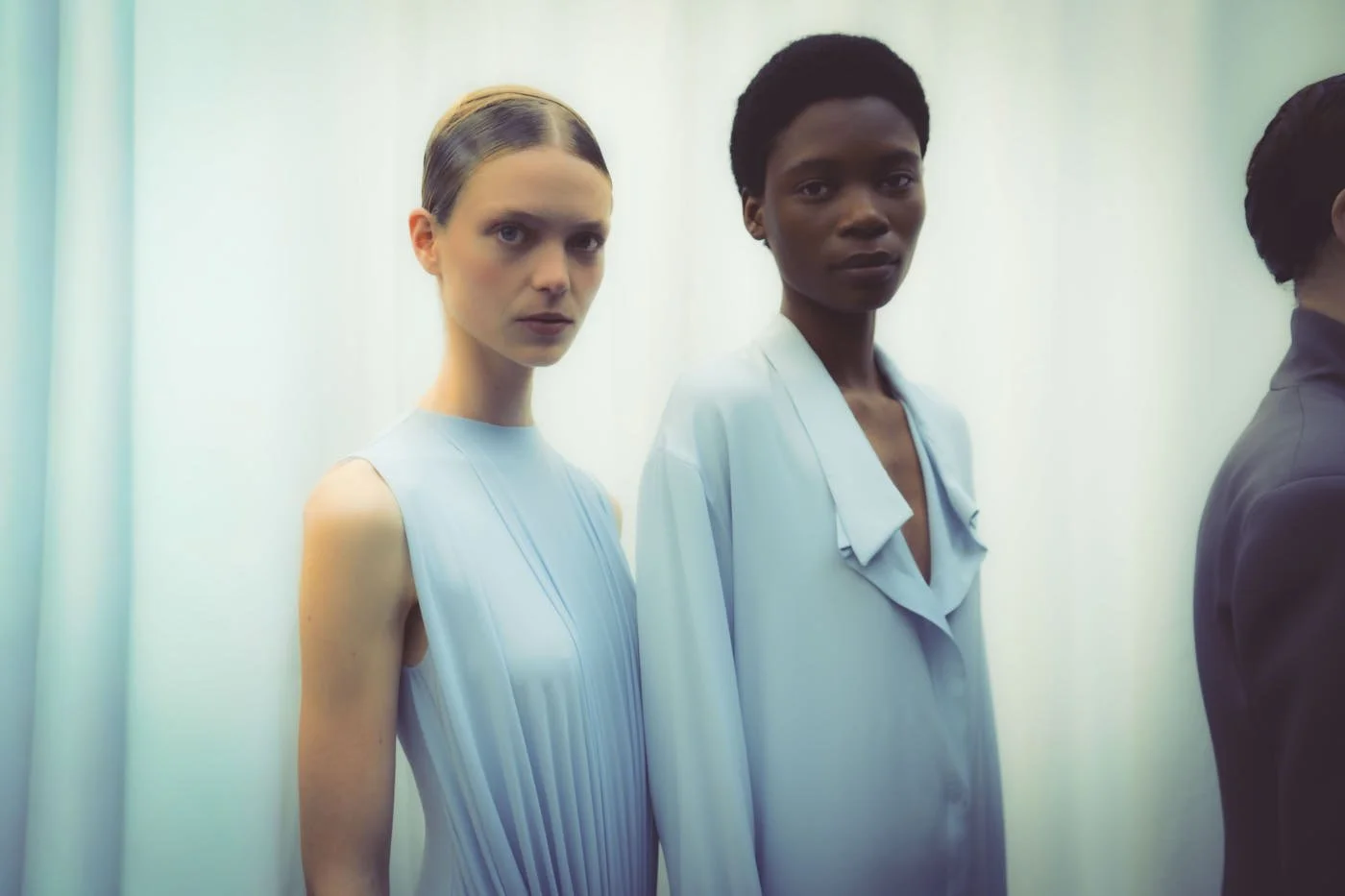
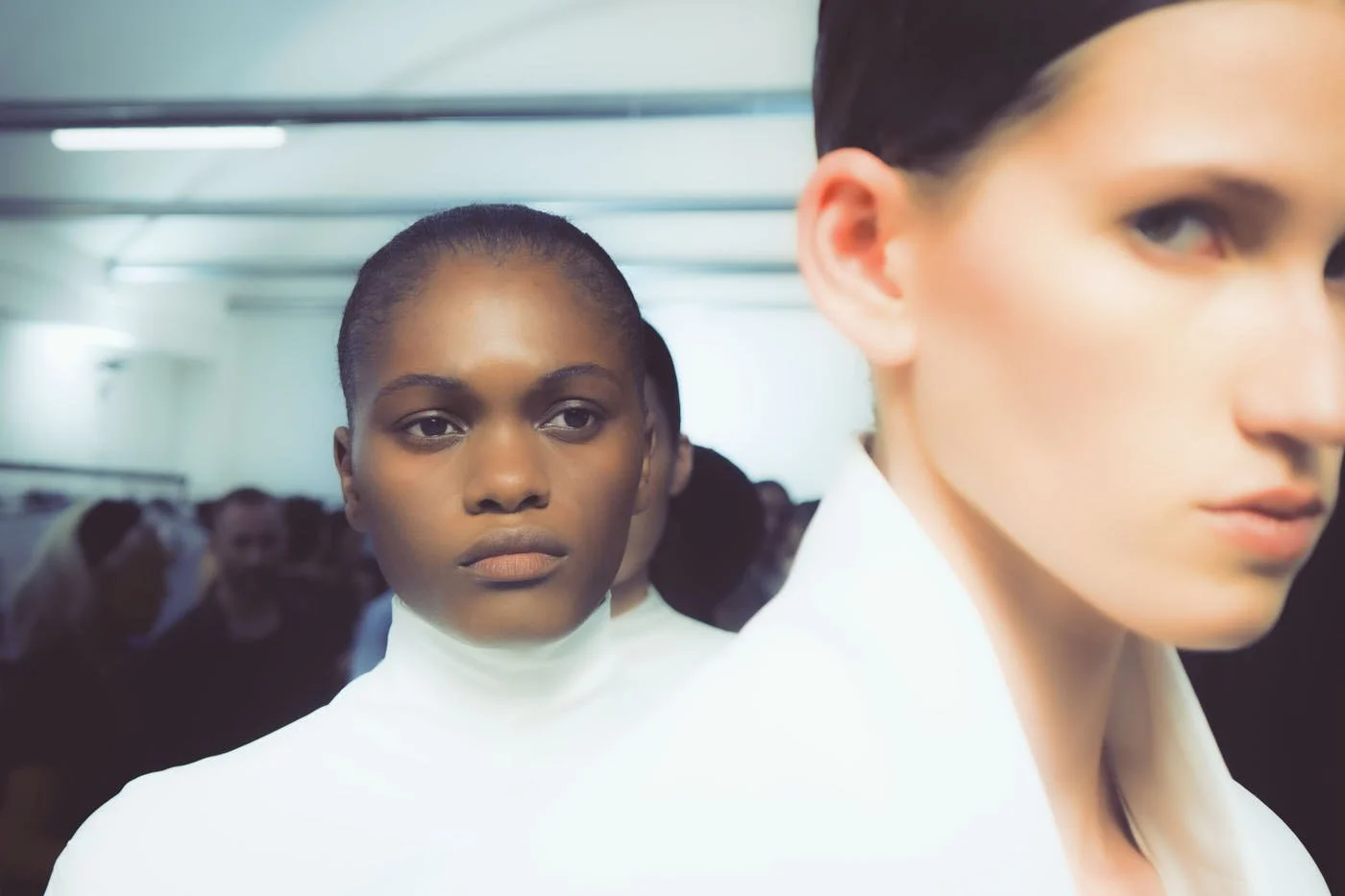
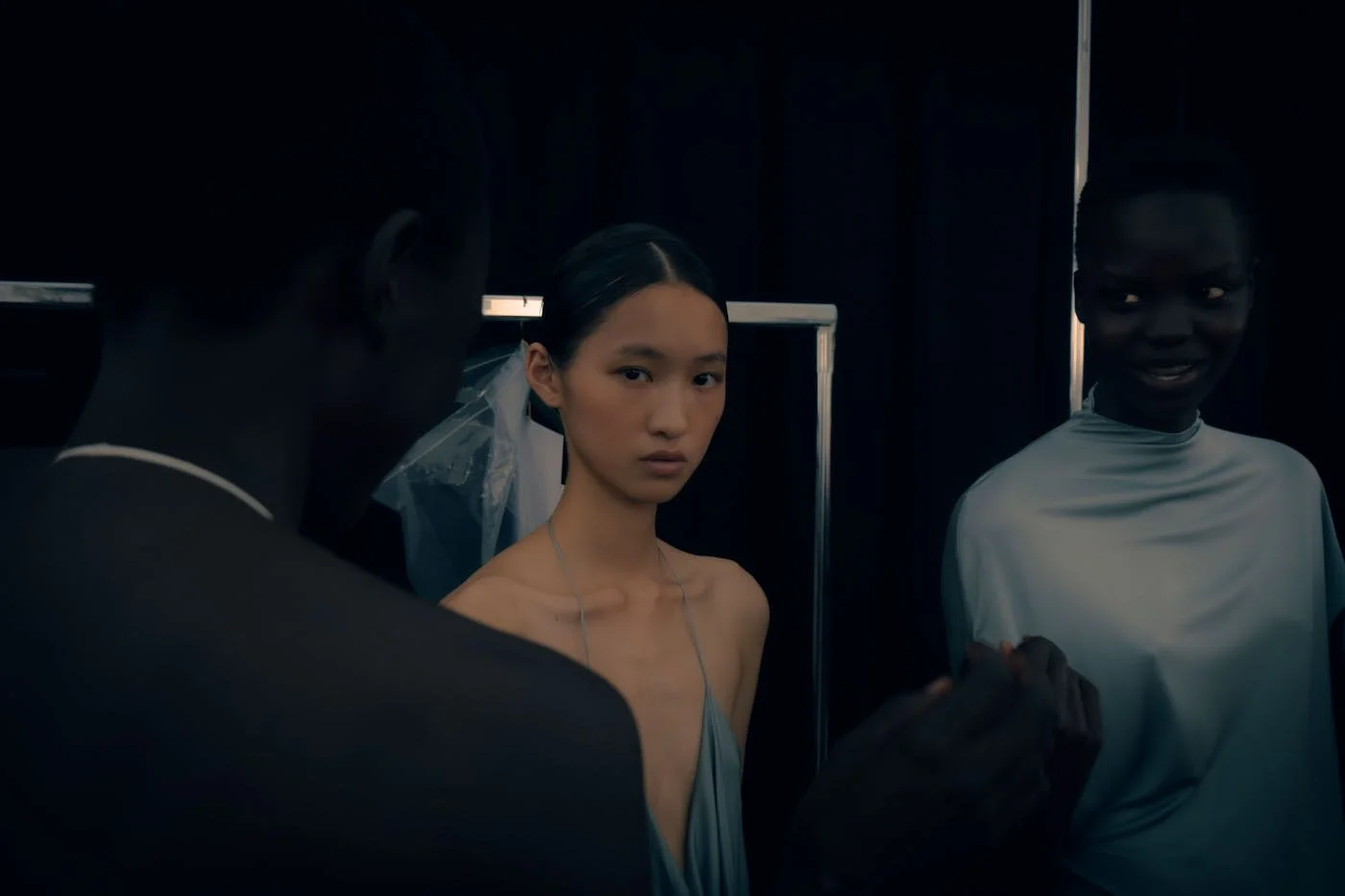
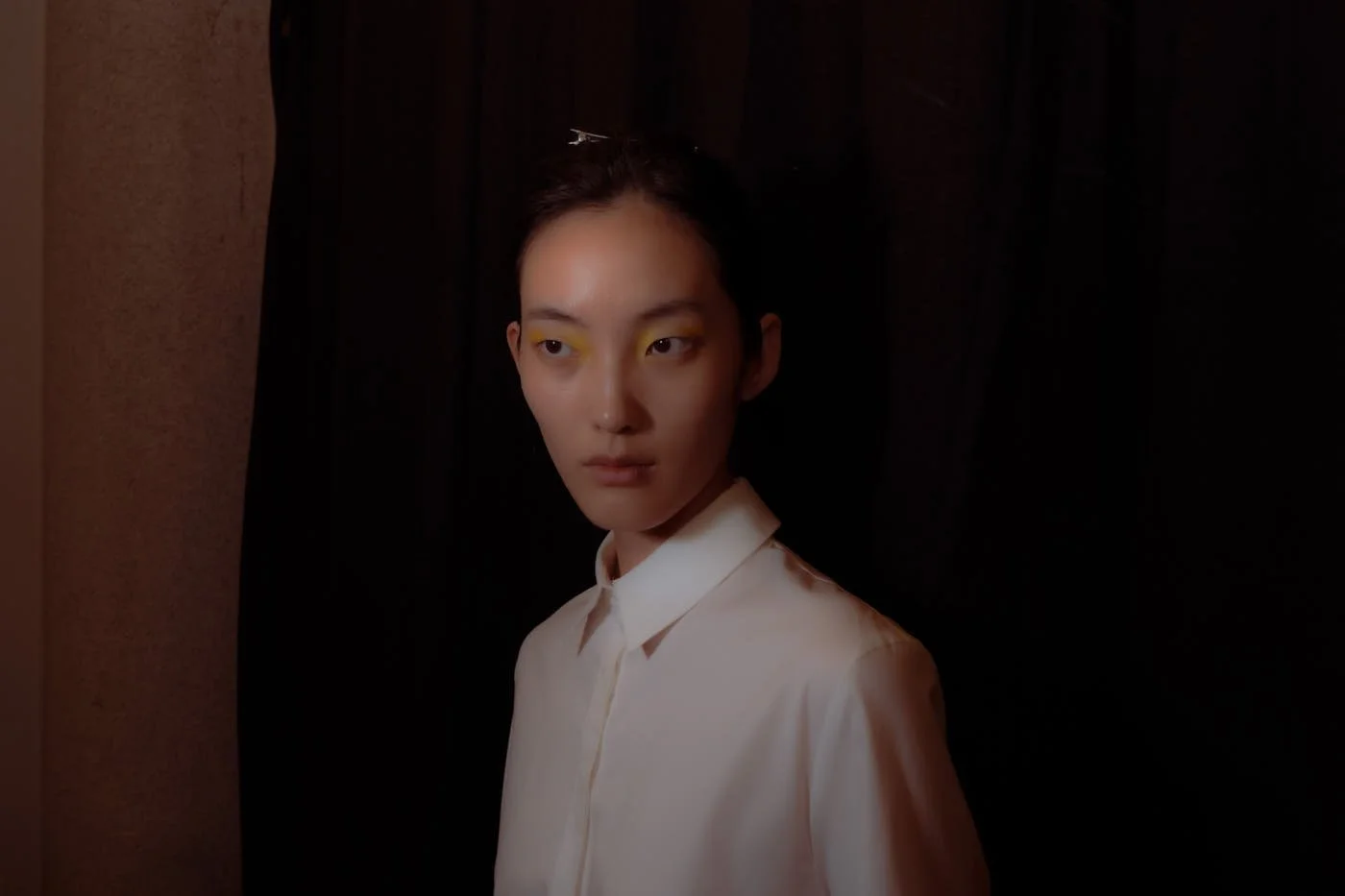
Murano’s room is brighter and busier, a model stands in a white pleated dress while someone works at her hem; another sits still as several people tend to her face and hair. Images from Fritz Lang’s Metropolis hang on the wall. Haeffner includes the makeup tables, clothes rails and people passing through the frame. He also gives the models time alone: a dress seen from behind, a face turned towards the camera, a pause before the show begins.
Vivetta’s team was working with the archive of a house whose founder had left. Murano had returned to draping by way of Metropolis. Phan Dang Hoang brought a Vietnamese folk tale to Milan; Simon Cracker recalled the costumes he had made for his neighbours as a child. Haeffner caught the clothes at the point where all those ideas had to be put on, adjusted and worn.
Francesco Murano SS27
Fritz Lang’s Metropolis Inspiration Images
Francesco Murano
Fritz Lang’s Metropolis premiered in 1927 and imagined a future set in 2026. Murano took the film’s two Marias, a woman and her mechanical double, into Éidola, his Spring/Summer 2027 collection. Haeffner photographed the reference images pinned up backstage, within sight of the team preparing the models.
Murano has worked with draping for several seasons, and here, glossy jersey was folded into precise ridges that loosened farther down the body; other dresses found their shape through panels held in place by folds, sometimes without seams. Capes covered the shoulders and opened at the back. Studs sewn onto georgette suggested chain mail, though the fabric remained soft. In Haeffner’s photographs, a model stands quietly in a white dress gathered into fine pleats. There is time to see what the folds are doing before she takes a step. Murano gave them a firmer line this season, while allowing the fabric to respond to every change in posture.
Francesco Murano SS27
Backstage
Francesco Murano SS27
Backstage
Francesco Murano SS27
Backstage
Francesco Murano SS27
Backstage
Francesco Murano SS27
Backstage
Vivetta SS27
Backstage
Vivetta
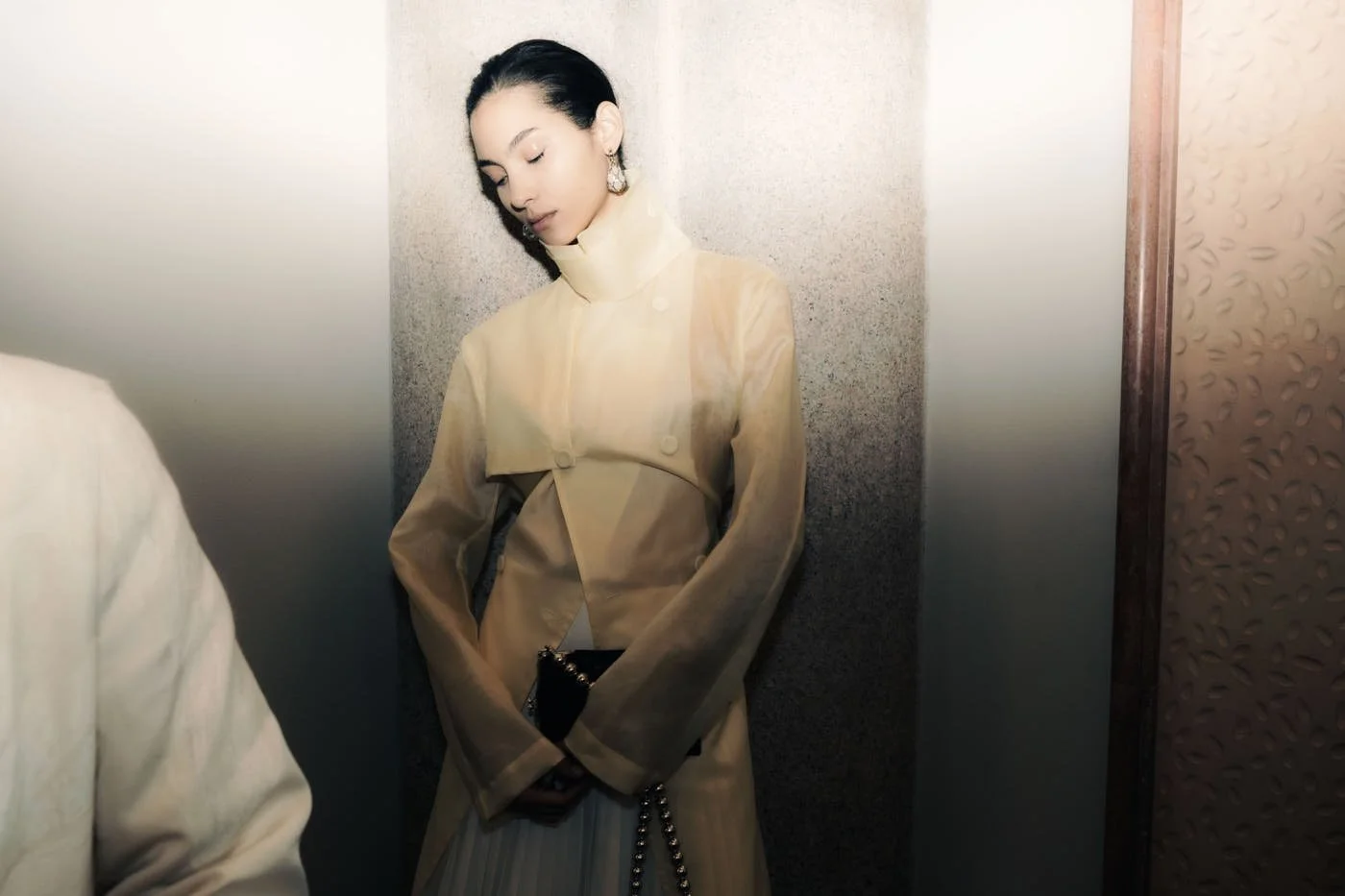
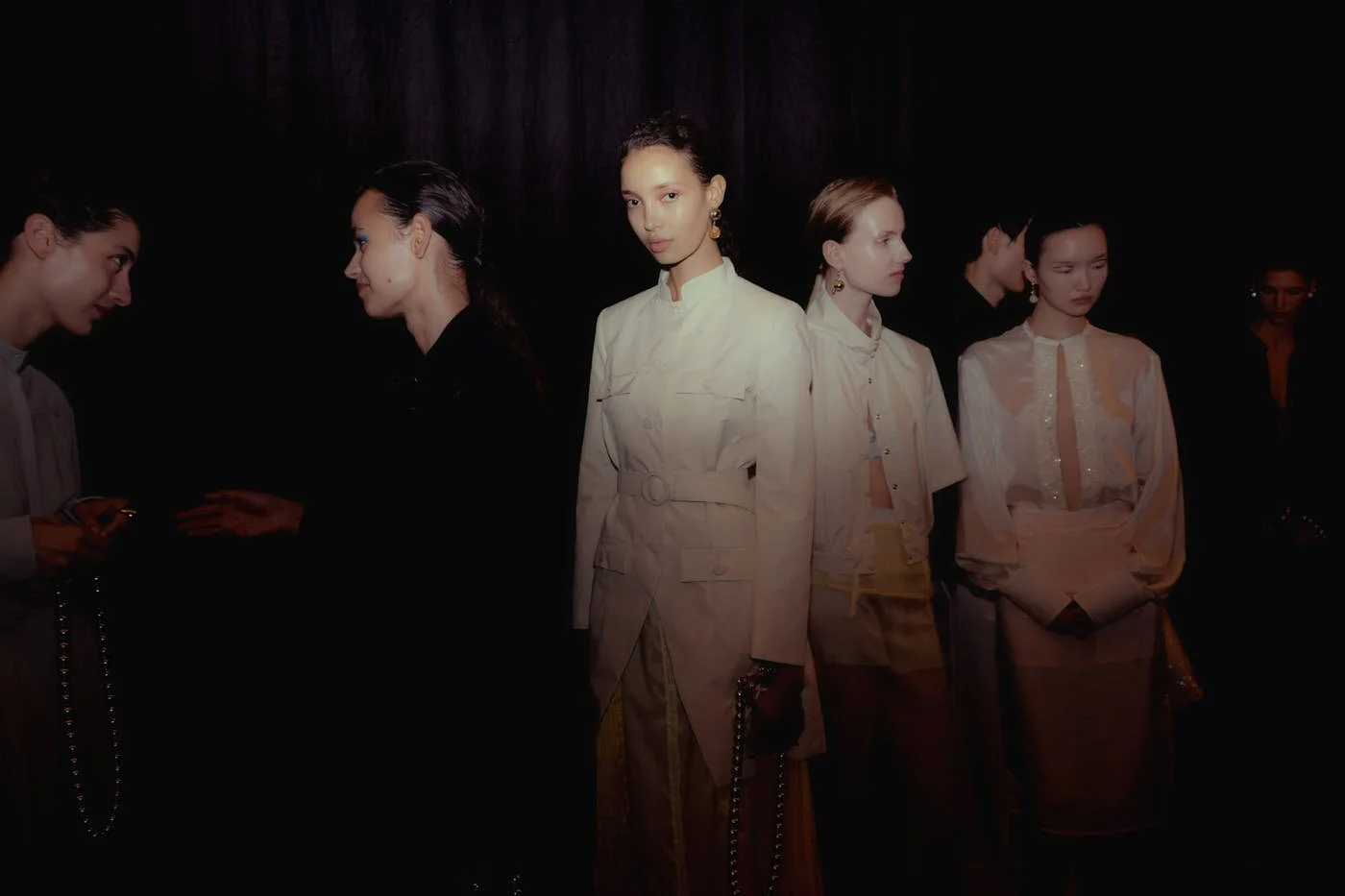
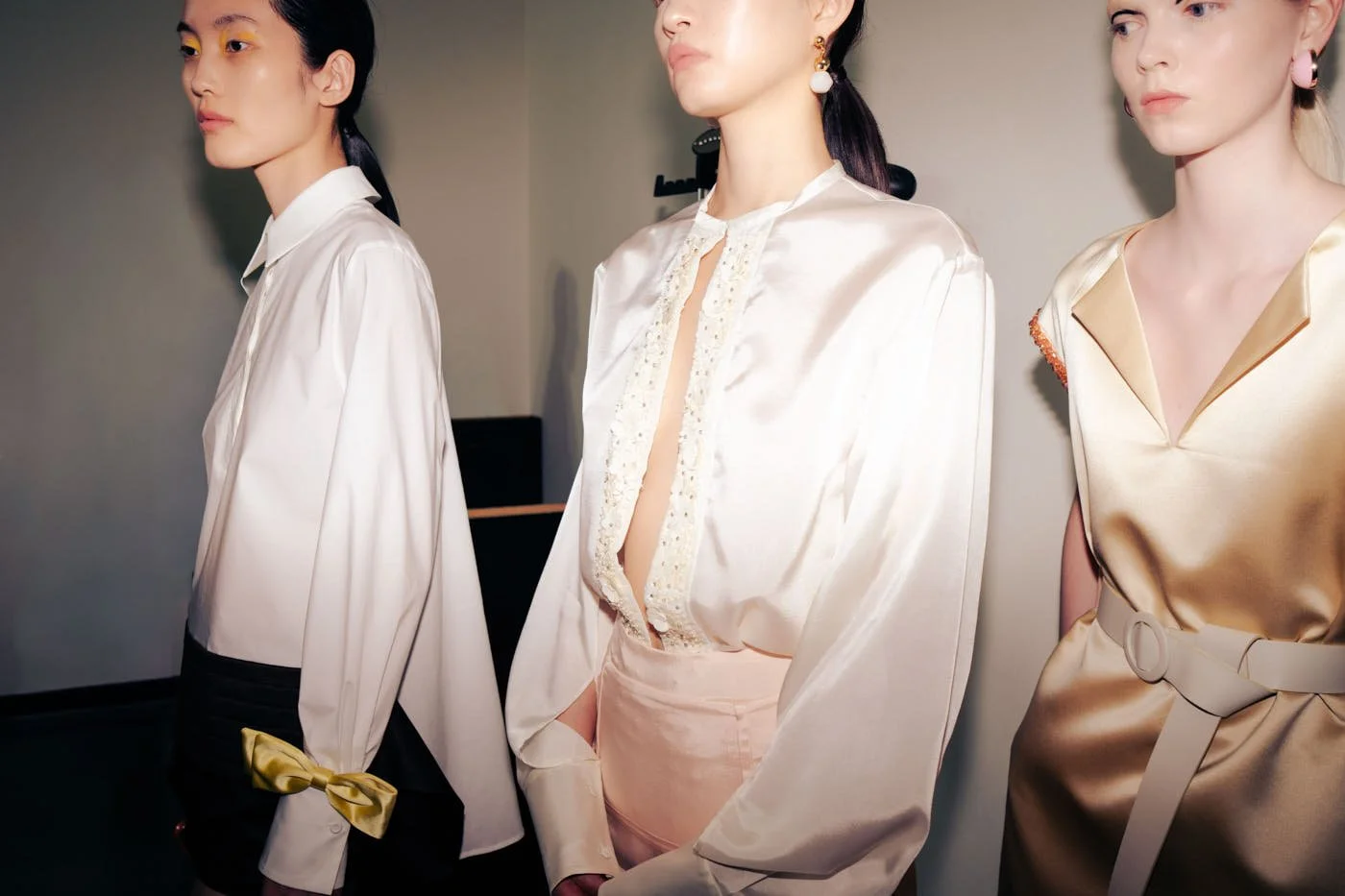
With Vivetta Ponti gone from the label she founded, Treasure & Trinkets offered a close look at what the new team intends to keep. The house’s taste for ornament was still there, though the clothes around it had grown more assured. Sheer shirts came with pronounced plastrons; long skirts and fitted jackets gave the collection a cleaner line. Pale yellow, peach and powder blue appeared alongside black and bone white.
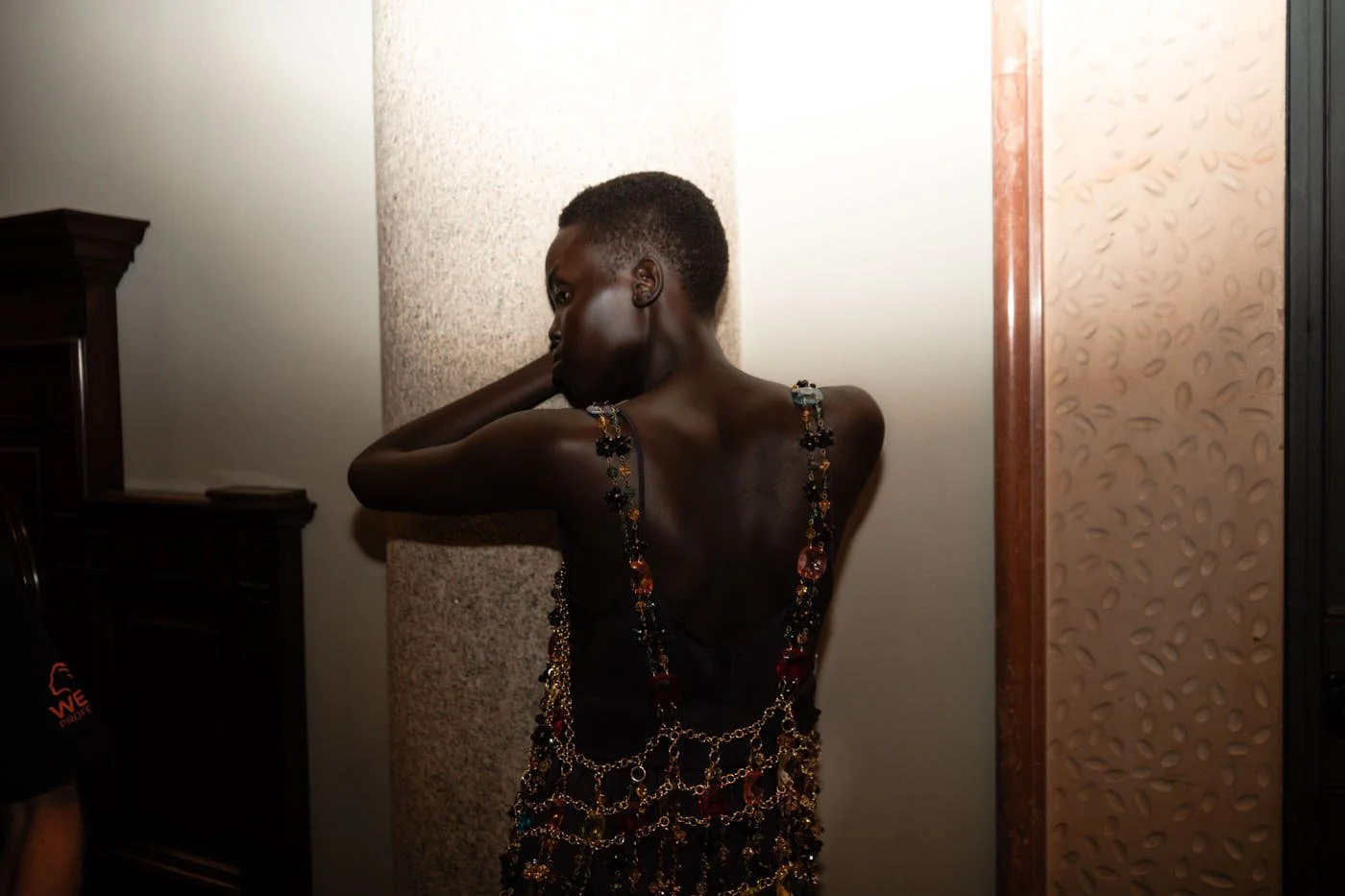
Beads and other components from the 1970s, 1980s and 1990s were collected and remade as necklaces, bags and clothing. Haeffner photographed one of the beaded pieces as several people fastened it onto a model with her arms raised. The chains had to be positioned and secured before they could hang lightly from her body. It is a lovely, practical view of a dress that could easily appear effortless on the runway. The quieter jackets and skirts gave such pieces room to be as eccentric as Vivetta has always allowed.
Vivetta SS27
Backstage
Vivetta SS27
Backstage
Vivetta SS27
Backstage
Vivetta SS27
Backstage
Vivetta SS27
Backstage
Vivetta SS27
Backstage
Vivetta SS27
Backstage
Phan Dang Hoang
Phan Dang Hoang titled his SS27 collection Tấm Cám after the Vietnamese folk tale. He focused on Tấm, who survives a series of reversals by taking new forms. The show also drew on the women of Kinh Bắc and on garments such as the áo yếm and the mỏ quạ headscarf. Hoang brought those references into a wardrobe that included loose denim, oversized jackets and eveningwear.
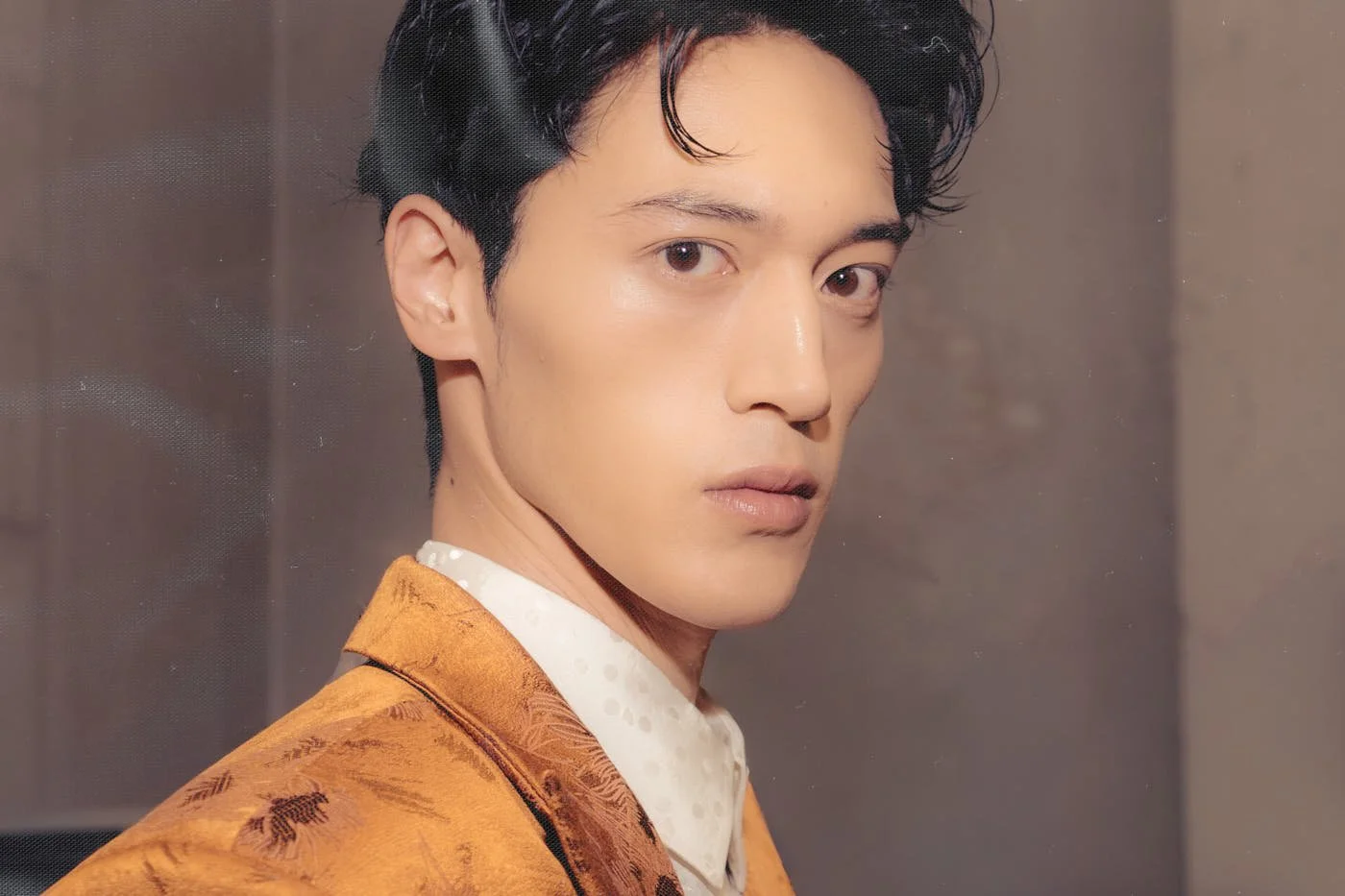
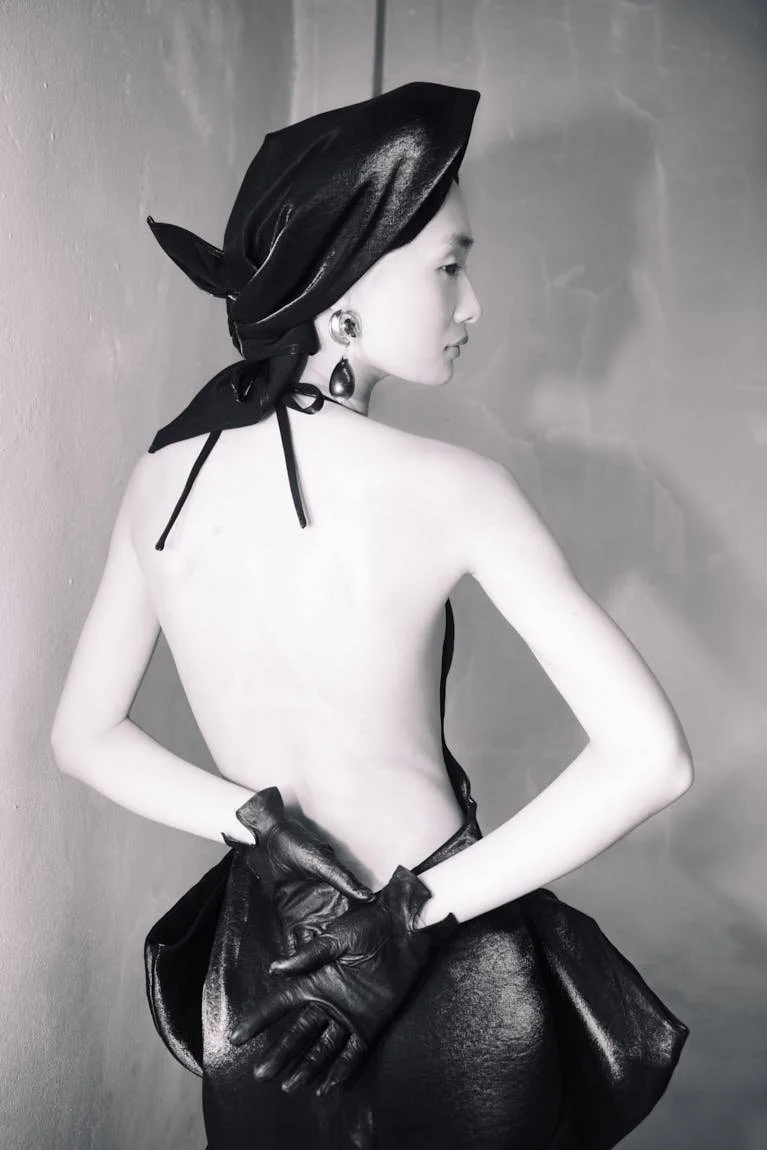
Artisans from villages in northern Vietnam used silk thread to embroider lotus flowers and golden orioles onto the clothes. The work continues Hoang’s interest in Vietnamese craft across several Milan seasons, though this collection takes its cues from a story many Vietnamese people have known since childhood. Two of Haeffner’s portraits catch different parts of the collection. One centres on a patterned ochre jacket. In the other, a black headscarf is worn with gloves and a sculpted dress. That second image is particularly striking in its simplicity.
Phan Dang Hoang SS27
Backstage
Phan Dang Hoang SS27
Backstage
Simon Cracker
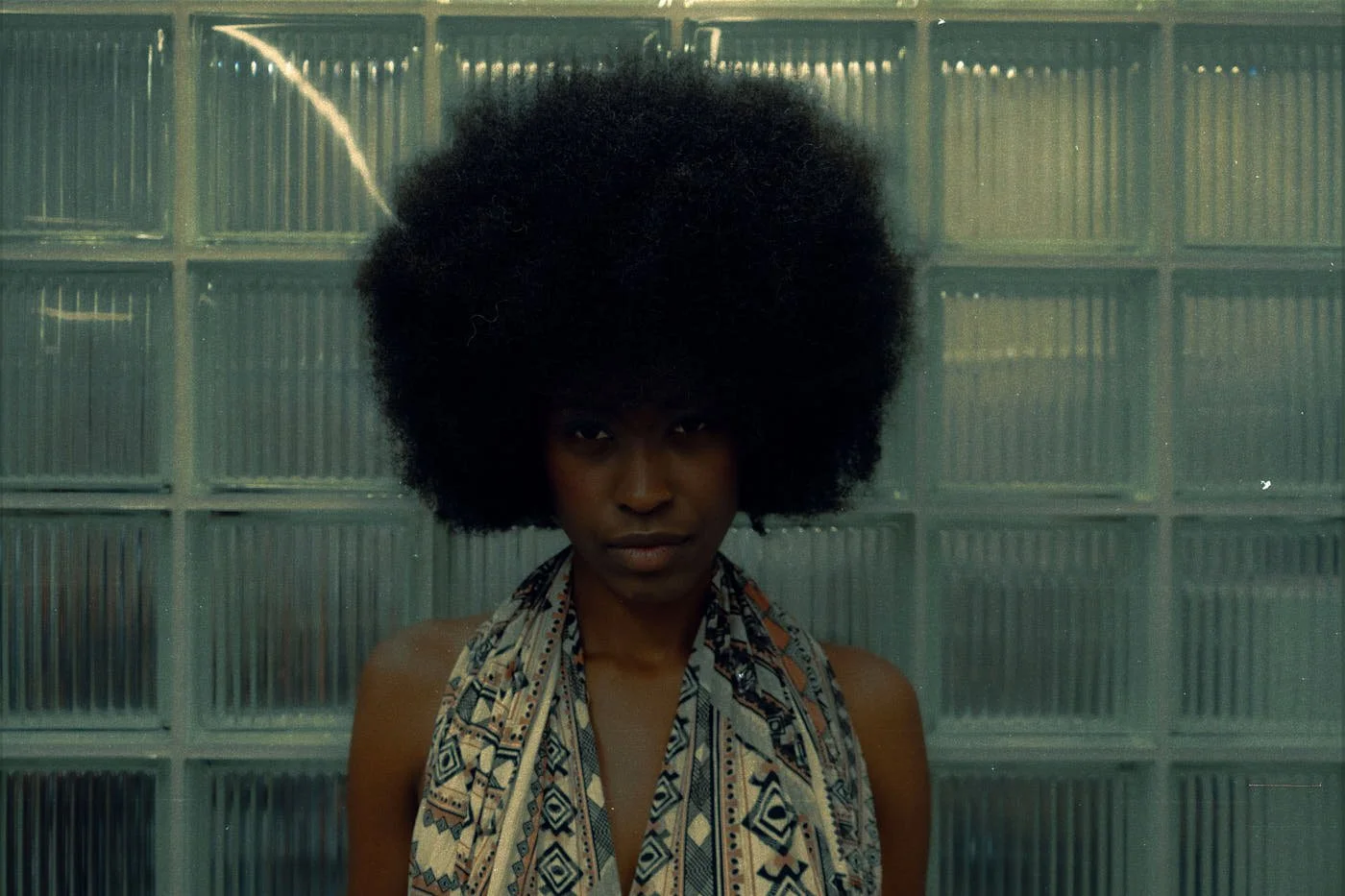
Via Francia is named after the street in Romagna where Simone Botte spent childhood summers with his grandparents. He and his cousin Nicoletta once staged a show for the neighbours, making costumes from curtains, tablecloths and clothes found in family trunks. Botte returned to that memory for Simon Cracker’s SS27 collection. He also had something direct to say about fashion’s prices: people who cannot buy a runway piece should feel free to make their own version.
Hooks let sections shift around the body and scrap fabrics were sewn into patchwork; promotional T-shirts appeared with gowns; lunchboxes became bags. Some garments were assembled entirely by hand, without electricity. At times, so much happens in a single look that the clothes get crowded out. But Botte has seen people in his community remake his earlier designs from things they already own, and Via Francia welcomes them to do it again.
Simon Cracker SS27
Backstage
Vivetta, Francesco Murano, Phan Dang Hoang and Simon Cracker, photographed for LE MILE by Marc Haeffner.