
perspectives
Grebnellaw Is Moving Into Prime Real Estate
LE MILE
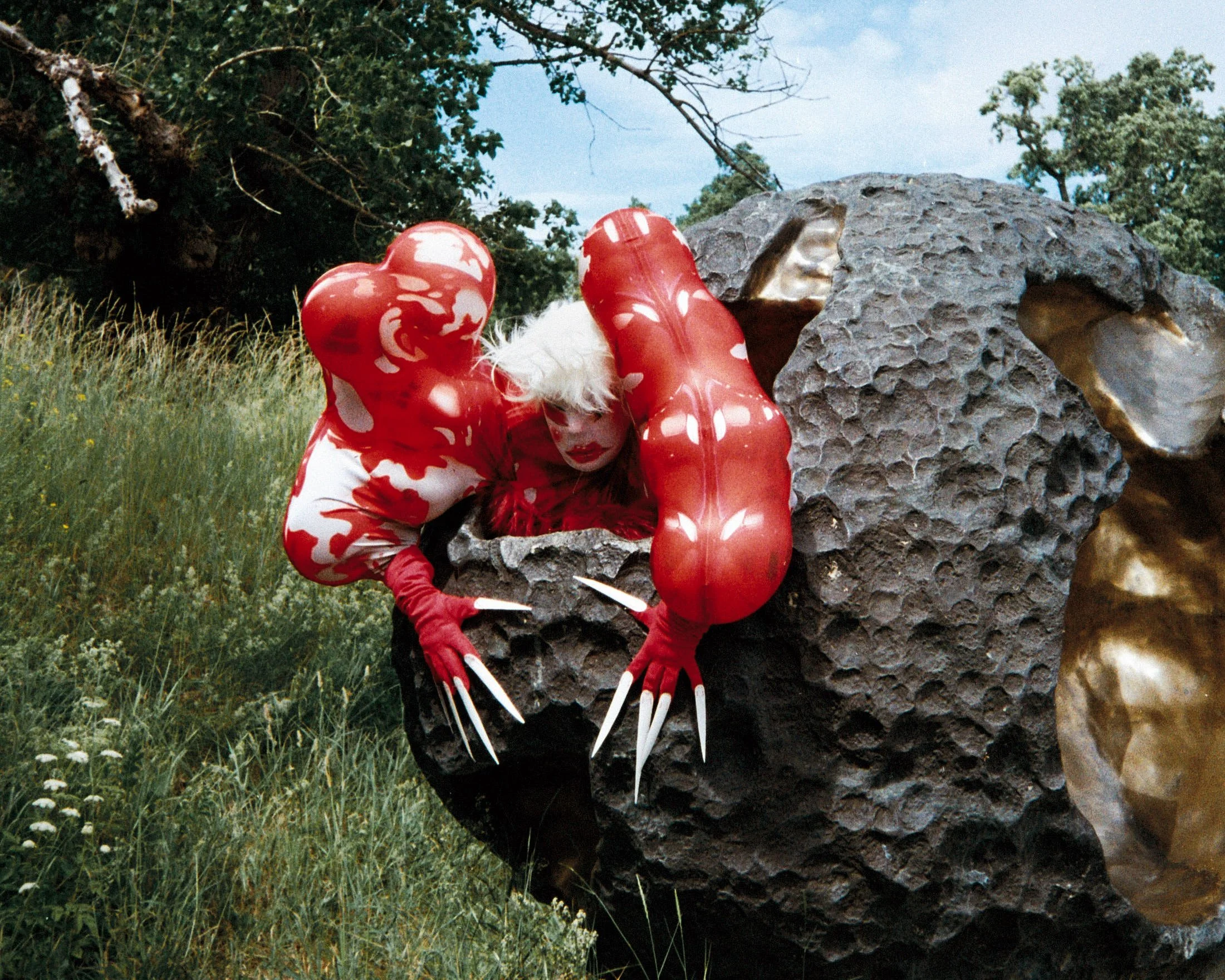
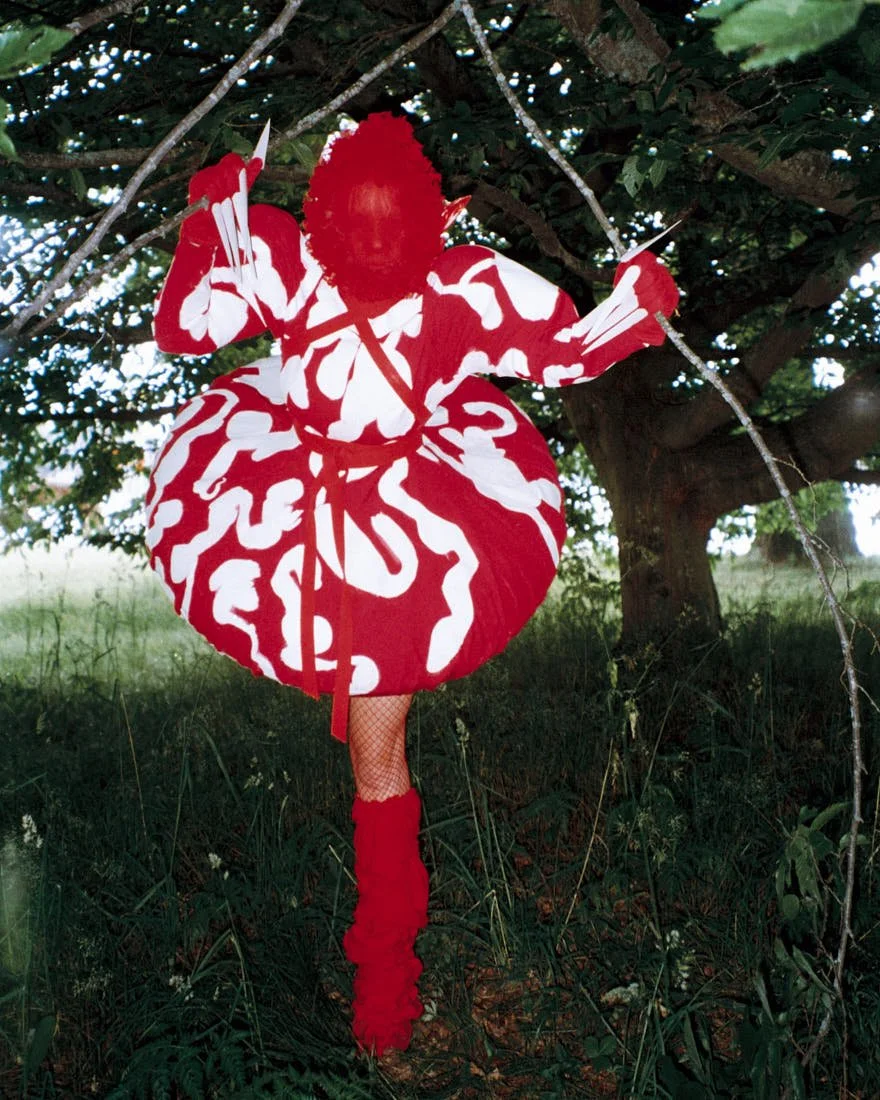
Grebnellaw has kept the work almost entirely red and white for years. The restriction began because too many choices were getting in the way, so a colour code became an obstacle that could force decisions and keep what Grebnellaw calls the “red thread” intact. It is starting to crack. Black, silver and gold were always part of the full system, and the two-colour period may now be nearing its end. The music has been equally difficult to pin down. Songs stayed off streaming because the instrumentals kept changing between performances, until SUPERSAVE THE WORLD broke the rule. Its first performance involved 25 people onstage; later it became a recording, and the version being played now has already changed again, slowed down enough for the lyrics to come further forward.
Grebnellaw
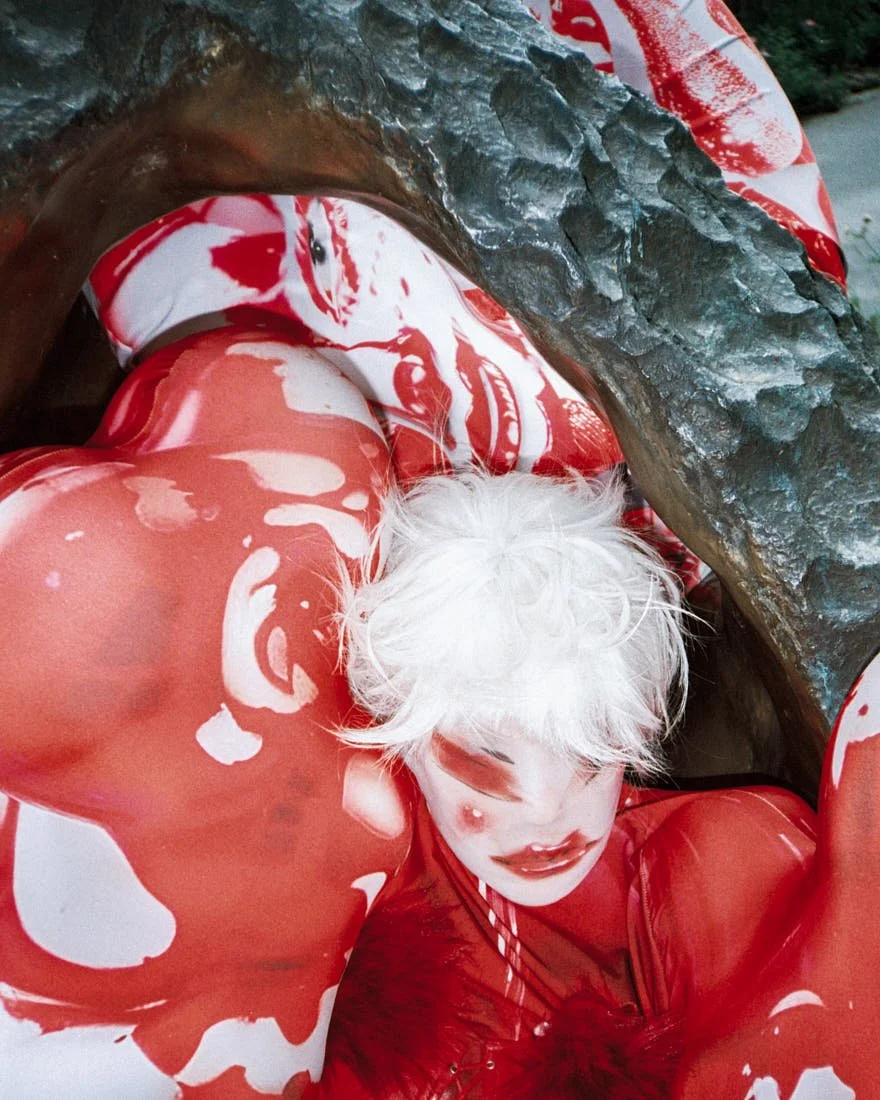
/ photographed by Daniil Kudriavtcev
Grebnellaw
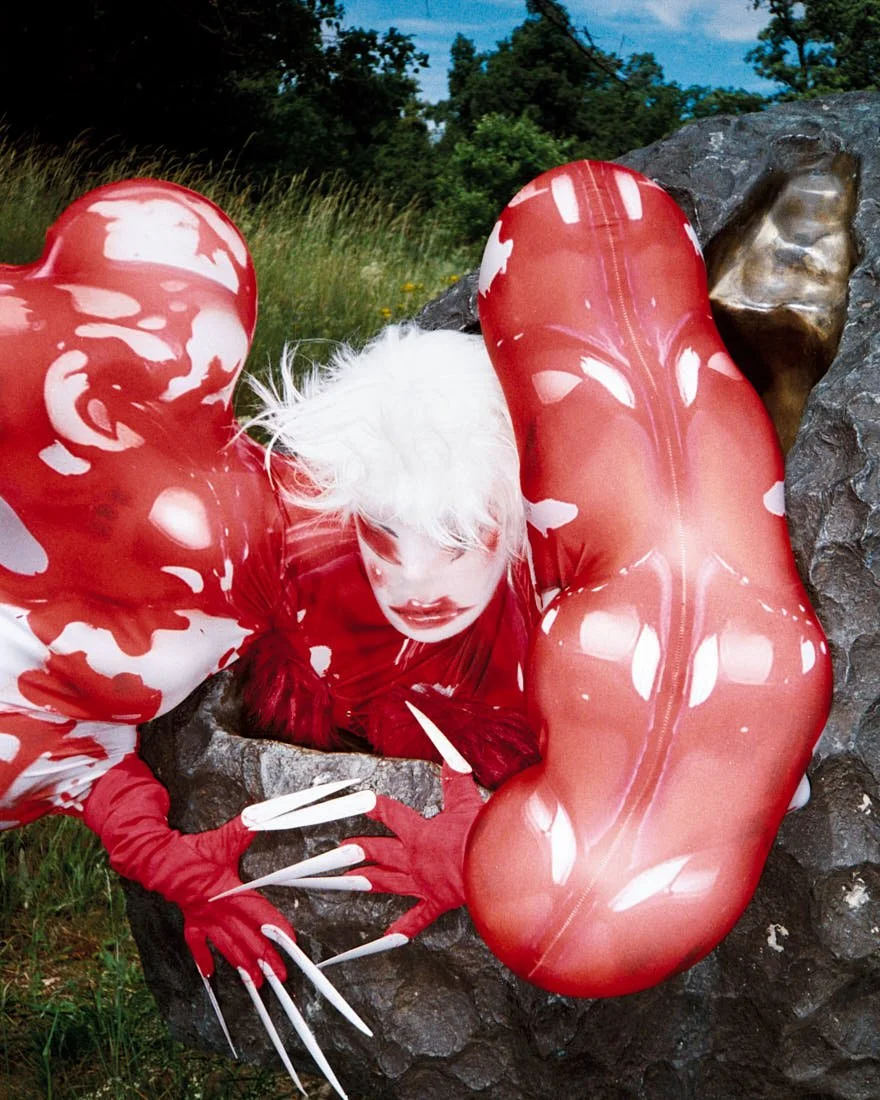
/ photographed by Daniil Kudriavtcev
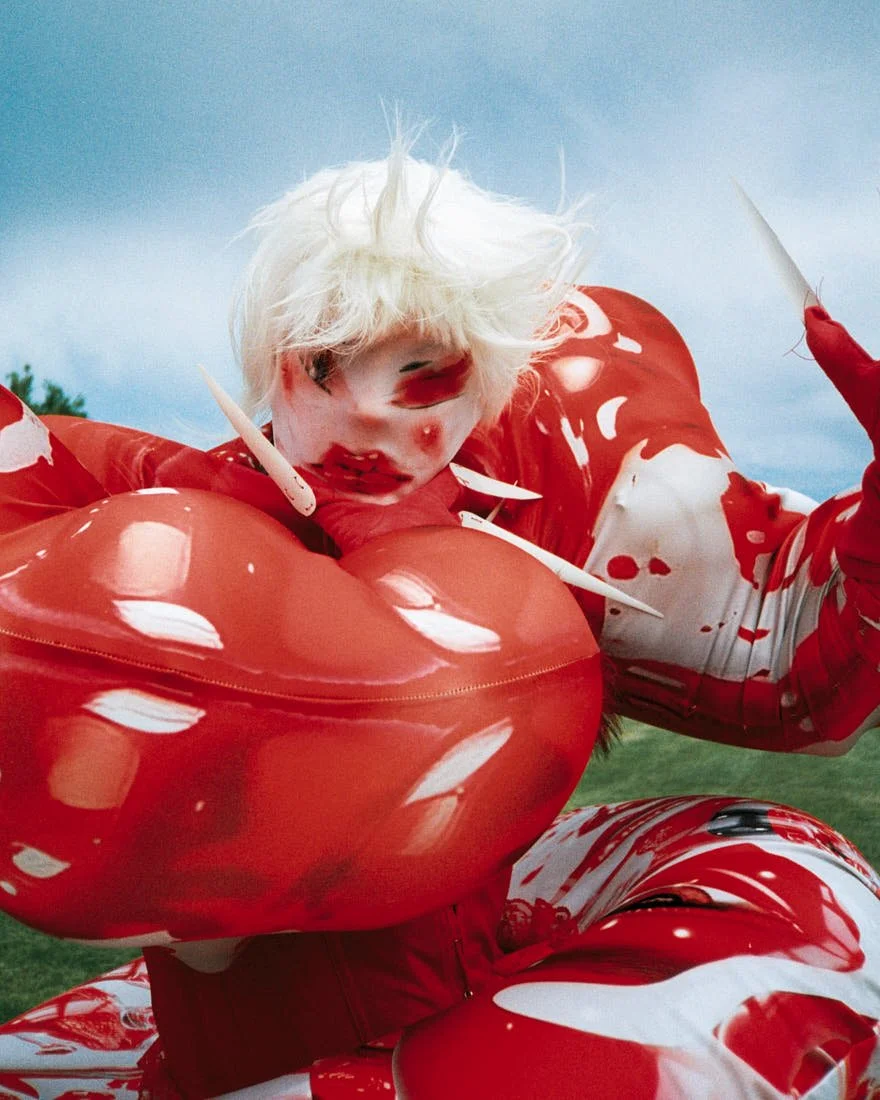
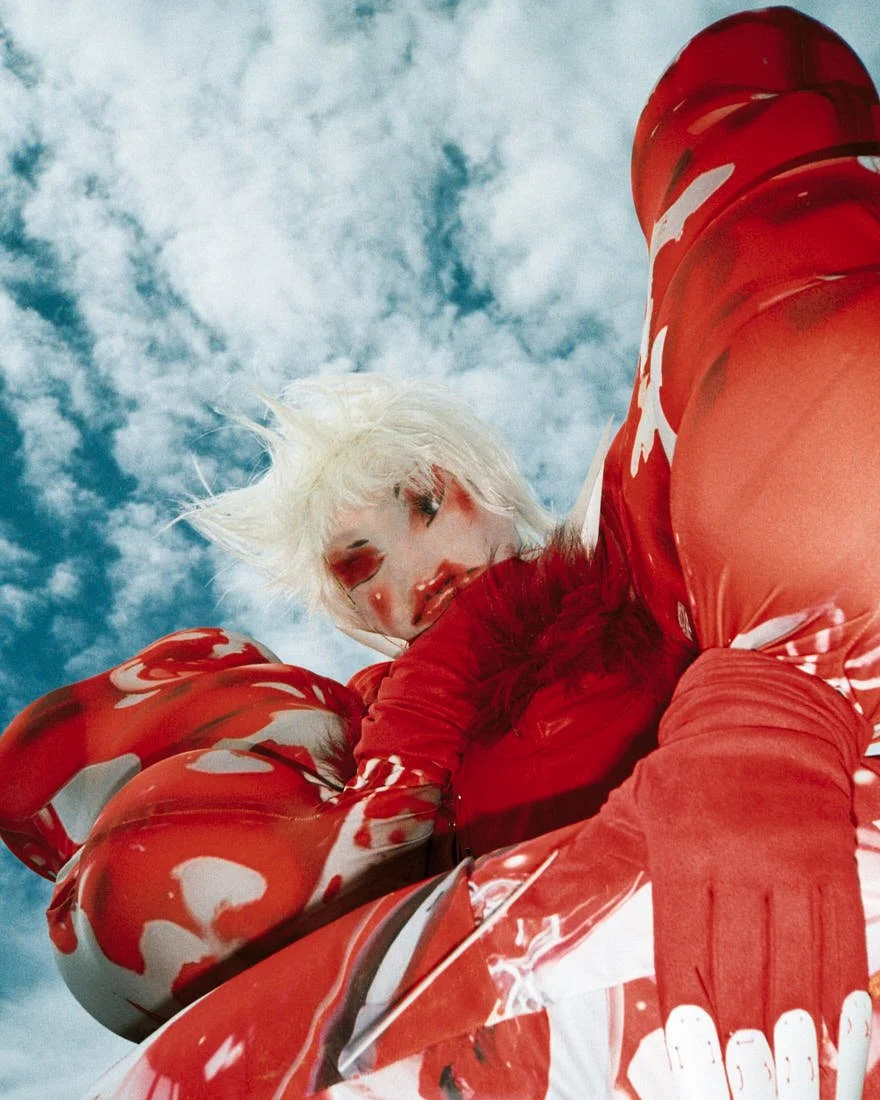
The early New Population began as digital portraits assembled from consumer debris and material found online, but their stillness eventually became frustrating. Grebnellaw wanted them to move and began building a population that other people could physically enter. Transsy can walk through Milan fascinated by gravity and the strange reliability of a coffee cup remaining where it was left, then feel completely misplaced on a drag-show stage. Pussy the Cat, meanwhile, has just returned from a large performance at Berns Salonger and is currently at home “recharging,” waiting for another reason to appear. In January, Grebnellaw plans to sleep inside Konstakademien, an old palace beside Rosenbad, surrounded by unfinished inflatable creatures and copies of classical sculpture. The home studio already contains deflated red vinyl skins, discarded textiles and electronic tracks sitting unfinished on hard drives. Grebnellaw does not always know whether a character is being made or discovered. Usually, the answer comes when it starts behaving like one.
Grebnellaw
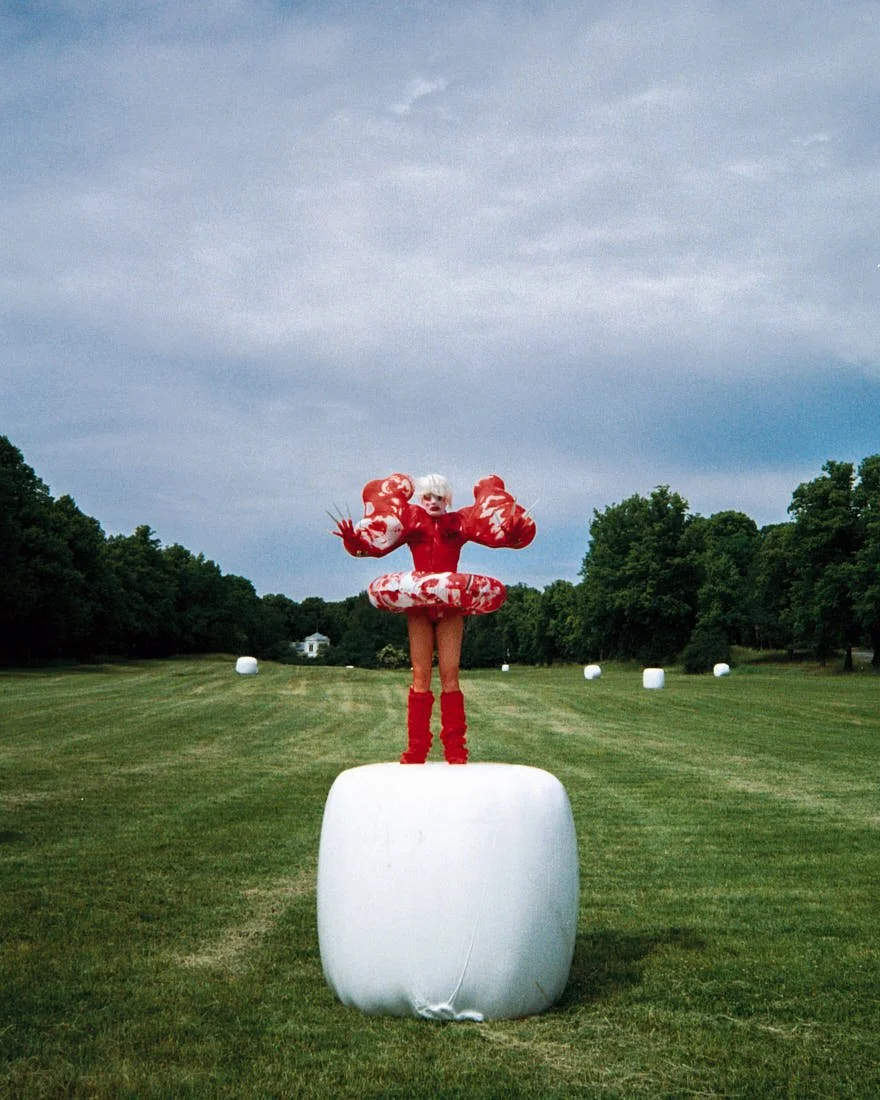
/ photographed by Daniil Kudriavtcev
LE MILE
For years you deliberately kept most of the songs off streaming because they changed from performance to performance. Then you released SUPERSAVE THE WORLD. What made that particular song worth fixing into one version?
Grebnellaw
I think SUPERSAVE THE WORLD was a bit of an anomaly. There was an urgency to it. It felt like an anthem or protest song filtered through hyperpop, and it demanded to exist as a recording. Maybe it wanted to be something people could scream together in a mosh pit. The first time we played it was as part of a huge Grebnellaw performance with 25 people on stage. It was completely insane. At that point I was much more interested in letting the instrumentals mutate with every performance, but this song somehow overrode me. It basically overwrote my instructions.
And ironically, the instrumental version I’m performing now is completely different from the recording. It’s slower and more downtempo, which I love because it brings the lyrics forward: “Evil forces can’t catch us / we’re too savvy and smart for that.” It feels empowering.
Since then I’ve written a lot of new music. It takes me time to get the words right, but I’ve also started thinking about some kind of release. It doesn’t have to be the definitive version of something. It can just be another mutation.
Red and white began partly as a way of reducing too many choices, and you once described it as an experiment to see how long the system could last before it broke down. Has it ever come close to breaking?
The system has definitely cracked, but it hasn’t fallen apart. Nuances have started appearing, and I actually think they produce a better kind of chaos. Every time I explain the colour code, I discover another aspect of how it works. Of course, that’s the point.
I realised I needed an obstacle, so I turned the colour code into a limitation. A visual code to hold the chaos together.It has dictated almost every choice, forcing me to literally keep the red thread intact. Perhaps I need more obstacles. I think I do.
But the full colour code was always bigger: red, white, black, silver and gold. So far, red and white have been enough. The two-colour phase might be coming to an end. I have a feeling the rest of the spectrum is getting restless.
The early New Population was made from the debris of consumer culture, while the Grebnellaws were described as something more organic, almost like climate refugees. Do you still recognise that distinction when you look at the population now?
I have this strange population around me and I’m trying to figure out what it wants. It existed long before I had the language or tools to render it.
The early New Population were digital portraits made from the debris of human consumer culture and the internet. Literal trash transformed into identity. At first I thought my mission was simply to make portraits of them, but then their stillness started bothering me. I wanted them to move.
That desire was one of the things that opened the door to Grebnellaw. What had been images became bodies, costumes, music and performance. Other people could enter the population too, bringing their own bodies and interpretations into it. The work became something that could move between galleries, underground clubs, public spaces, fountains, shopping malls, empty streets, tunnels and botanical gardens.
Transsy went to Milan and became fascinated by gravity, stationary coffee cups, and the fact that ordinary clothes were not made for their body. When you write from inside a character like that, what do you notice about everyday life that you probably ignore as yourself?
Through Transsy’s eyes, everyday life becomes completely absurd. Guards and police tell me to leave, while on the next street someone wants to photograph me or assumes I’m a mascot or an eccentric ice-cream vendor. But Transsy is also fascinated by the physical world. The fact that a stationary coffee cup stays exactly where you leave it feels almost miraculous. Particles behave in ways that are completely alien to everyday experience, while a coffee cup just sits there, absolutely committed to one location.
There’s something of Prince Myshkin from Dostoevsky’s “The Idiot” in Transsy: a very bubbly saint dropped in the wrong dimension, perhaps. Performing from inside Transsy can actually be quite awkward because I experience them as very shy and innocent. They don’t have an extroverted energy. Walking the streets of Milan works beautifully, but putting Transsy on a stage can feel strangely unnatural. I once performed Transsy in a drag show and felt completely lost.
Grebnellaw
/ photographed by Daniil Kudriavtcev
Grebnellaw
/ photographed by Daniil Kudriavtcev
Pussy the Cat apparently became so beautiful that beauty itself was supposed to cause panic attacks and social-media storms. Where is Pussy now?
Pussy is thriving, obviously. She’s probably somewhere with very good lighting, taking another selfie with the Kitty Cunts. Mostly she’s recharging after last weekend’s monster-scale Grebnellaw performance at Berns Salonger in Stockholm. She had some serious competition in the diva department from the rising icon and real-life performer Beata Mona Lisa (BEA) who performed “La Vie en Rouge”, not “La Vie en Rose”. It gave us all goosebumps.
For a moment it looked like high drama was about to erupt: a brutal catfight between Pussy and Bea. Somehow it completely flipped into the sweetest friendship. So Pussy is currently in peaceful deactivation in my home studio, surrounded by the secret red-and-white holy grail, recharging her batteries and waiting for the perfect moment to completely deep-fry the timeline again.
You performed at Konstakademien’s official celebration in 2025. Now you’re returning with Butcherqueen and Leffe Crumlove to enter its collection as what the project calls an “infection.” What changed between those two invitations?
The first invitation was to perform at their annual celebration. This time we weren’t invited by the institution itself, but by 6film / Cinemaqueer. We took over the auditorium for a small performance with Butcherqueen and Leffe Crumlove, but I wrote a proper script for it. The building is so pristine and historically loaded that it almost tells you how you’re supposed to behave. I wanted to work against that. I wanted to trace the ghosts in those rooms: to read the collection, the marble, and the things deliberately left out.
Your January exhibition says you will “camp out” among unfinished inflatable creatures inside Konstakademien. Are you literally planning to live in the gallery?
Yes. I am literally planning to live in the gallery. We’re talking about prime real estate. Konstakademien is an old palace next to Rosenbad, where the Swedish Prime Minister works. So I thought: why not move in?
I love the idea of living there and having visitors hang out with me in my boudoir, where the boundary between studio, dream state and exhibition disappears. And, of course, being surrounded by copies of famous sculptures. But I don’t really think of myself as the person who created this whole population and then put it into the gallery. I feel more like one of its members who happens to have access to the space. By sleeping, breathing, and working inside the installation, the exhibition can remain alive. It stays an active event rather than something completed and frozen.
What is lying around your studio right now that has not become a character yet?
Right now my home is basically a crime scene of future characters. There are deflated skins of red vinyl, scraps of second-hand textiles, foam fragments, prototypes of inflatable bodies, and electronic tracks trapped inside hard drives. A tiny piece of shiny silver. Most of it isn’t a character or an object yet. It’s just raw matter waiting for something to happen.
Sometimes I don’t know whether I’m making a Grebnellaw or discovering one. I usually know something has become a Grebnellaw when it starts behaving like one.
Grebnellaw
/ photographed by Daniil Kudriavtcev