
perspectives
Russell Young Knows Why Marilyn Still Won’t Die
interview + written JONATHAN BERGSTRÖM
British-American artist Russell Young, through his large-scale silk screen paintings, is best known for his explorations of the nature of fame and cultural mythology. After beginning his career photographing musicians including George Michael, The Smiths, and Bruce Springsteen, and later directing over 100 music videos during the height of MTV, Young has since developed a visual practice centered around the icons and images that define popular culture.
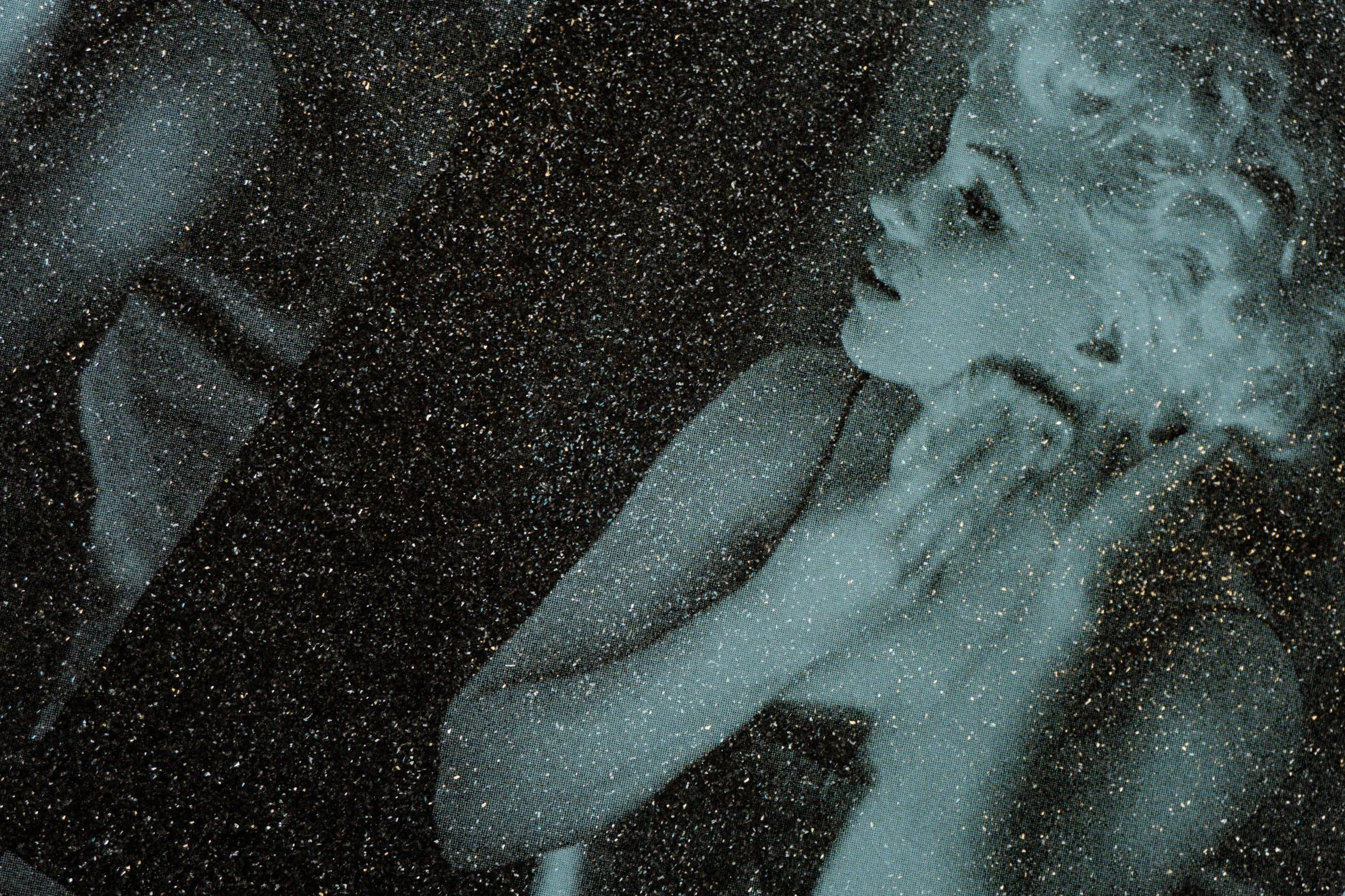
His latest series, MARILYN 100, celebrates the centennial of Marilyn Monroe through a yearlong program of exhibitions and new works created in collaboration with the Marilyn Monroe Estate and Authentic Brands Group. Given access to the Estate’s archives, Young revisits one of the most photographed figures in history through his signature hand-pulled (and often diamond-dusted) silk screens, exploring the person behind the myth and the lasting power of image that continues to remain relevant across generations.
In this new interview with LE MILE, Young discusses his lifelong fascination with Marilyn Monroe, the influence of Andy Warhol, his years photographing cultural icons, and how ideas of fame, memory, and personal history continue to shape his work.
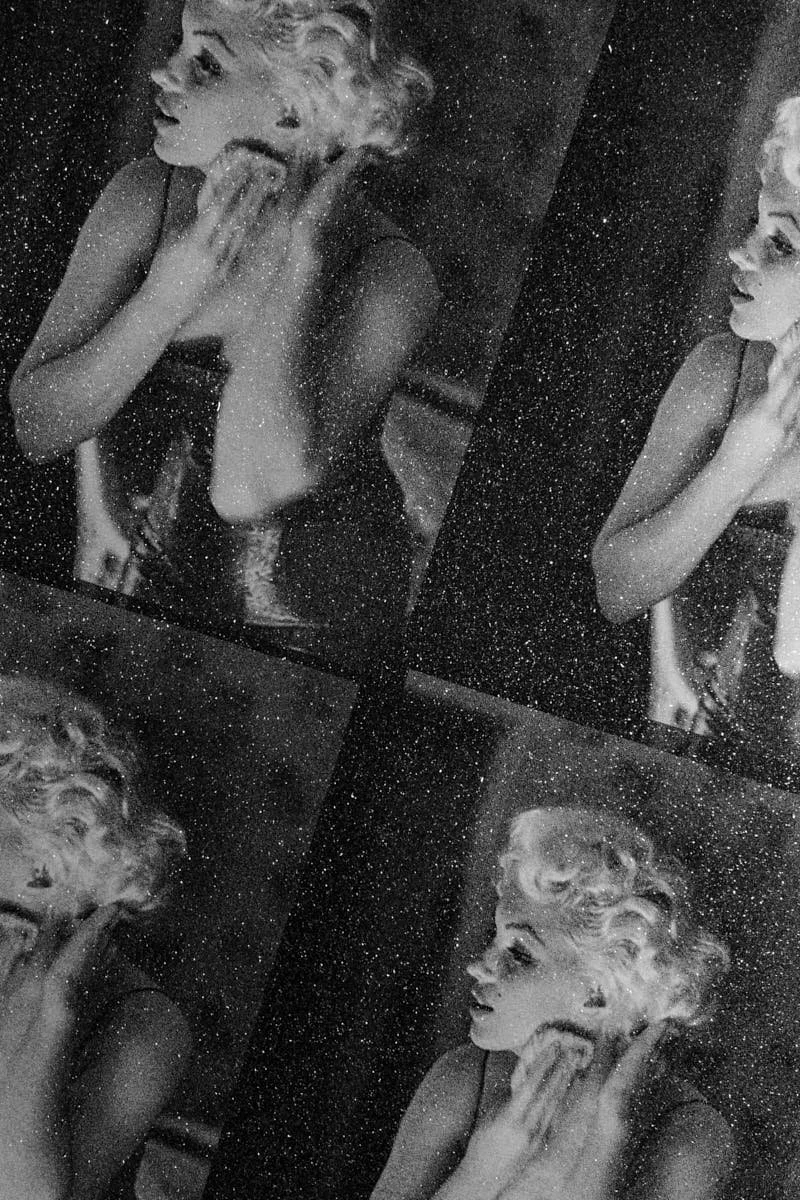
Russell Young, MARILYN 100
/ courtesy Taglialatella Galleries
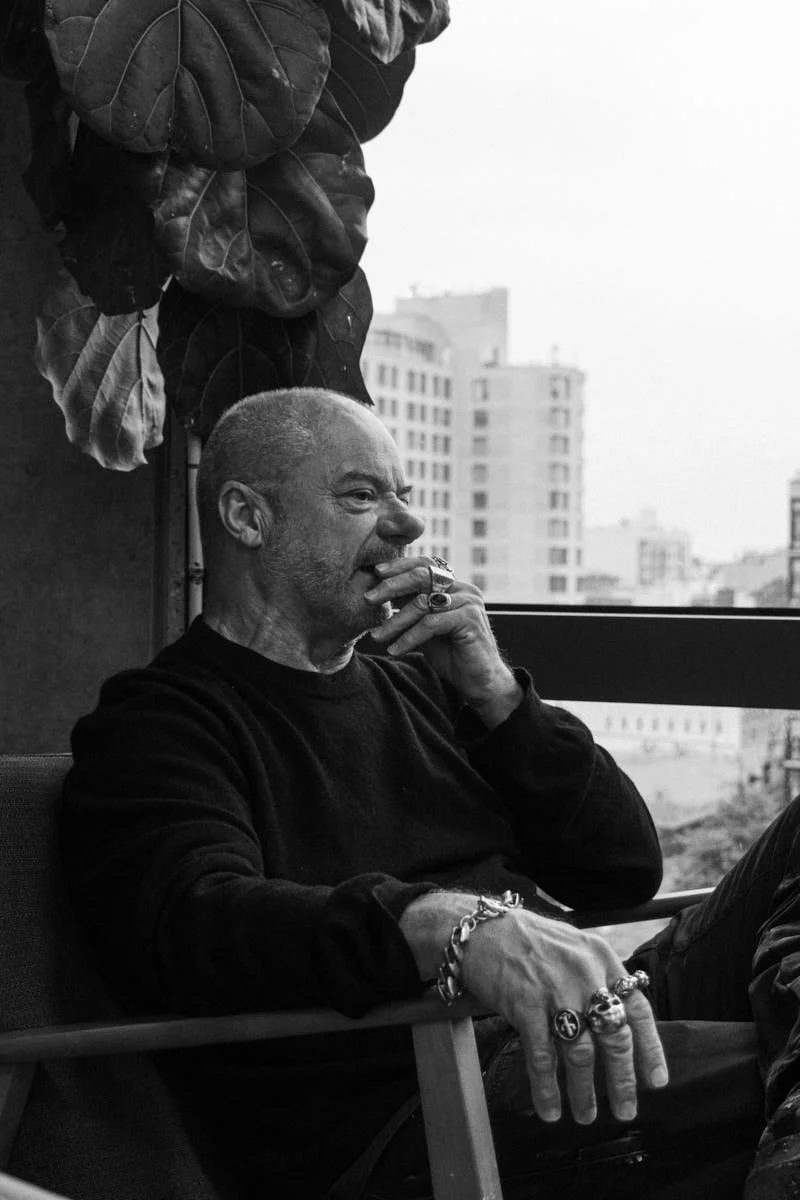
Russell Young
/ courtesy Taglialatella Galleries
Jonathan Bergström
MARILYN 100 marks the centennial of one of the most photographed and mythologized figures in modern history. How did you approach such an iconic figure through your own perspective?
Russell Young
What’s fascinating about Marilyn is that everyone already has their own relationship with her. I think Picasso and Warhol really understood the power of repetition. For a while, I moved away from that idea, but eventually I started to understand how repeating an image creates a different relationship between the artwork and the viewer. That was something I explored with Marilyn. I wasn’t trying to reinvent her. I was interested in finding the essence of what makes her image continue to resonate.
Marilyn has often existed somewhere between a real person and a collective dream. Who is she to you, and what does she symbolize in your work?
Marilyn has always been in my life. I discovered her when I was growing up in the north of England. The world around me then was very grey and tough. My father understood that I was artistic and introduced me to films, museums, and culture. Through that, I found Marilyn. She symbolized escapism to me. She represented something completely different from the environment I was growing up in. For me, because I never met her and never lived in the same period as her, she exists almost as a myth. But there was also a real person behind that mythology.
I think people forget how forward-thinking she was. She understood the industry she was in and she pushed back against it by starting her own production company. Marilyn represents both things to me: the dream and the reality. Beauty and glamour but also strength and independence. I think time creates icons, and Marilyn has become bigger than herself.
For MARILYN 100, you are given access to the Marilyn Monroe Estate archives. What was the experience of going through those materials like?
It was incredible. I thought that I'd seen almost every photograph of Marilyn, but suddenly I was discovering images I had never come across before. What fascinated me was the intimacy behind some of those photographs. I met photographer Sam Shaw’s granddaughter and we talked about his images of Marilyn in Central Park. I asked her how he captured such a personal connection. She told me Sam didn’t drive, and when he was working in Hollywood, someone at the studio asked Marilyn if she could drive him to the set each day. That’s how their friendship started. As a photographer, I’ve looked at thousands of images, and you can see when there is a real connection between the photographer and the subject. You recognize those magic moments.
At first, I focused more on Marilyn as the icon, the mythology, but going through these archives made me want to explore the more personal side of her as well.
You’ve spent much of your career exploring cultural icons and the complexities behind fame. What is it about Marilyn’s image and legacy that continues to fascinate you?
I’m fascinated by why certain people rise to the surface and become something larger. Sometimes it’s talent, sometimes charisma, sometimes timing or luck. Marilyn had that rare quality. The more artists interpret her, the stronger the mythology becomes. Marilyn keeps changing because every generation finds something new in her. That’s what fascinates me, how someone who is no longer alive can still feel so present.
Andy Warhol transformed Marilyn into one of the defining images of the 20th century, and you now work with a printing press once used by Warhol himself. What does that connection mean to you?
Seeing Warhol’s Marilyn images probably made me fall even more in love with her. His colors and repetition added another layer of mystery. Working with materials connected to that history is very special. The printmaking press we use was used by Warhol, and I have some of his old screens as well. I never say which ones I use, but I like knowing that the history and energy of those objects continue into new work.
Before becoming known as a visual artist, you photographed musicians and cultural figures like George Michael, The Smiths, and Bruce Springsteen. How did those years behind the camera influence your understanding of fame as a concept?
Being around those people taught me that some individuals have something different. There is an aura around certain people. A presence. It’s hard to explain because sometimes it appears and disappears, but there is something that makes them resonate.
I photographed many talented people who history forgot because they didn’t have that extra quality or the right moment. That has always interested me, why some people become part of culture forever and others don’t.
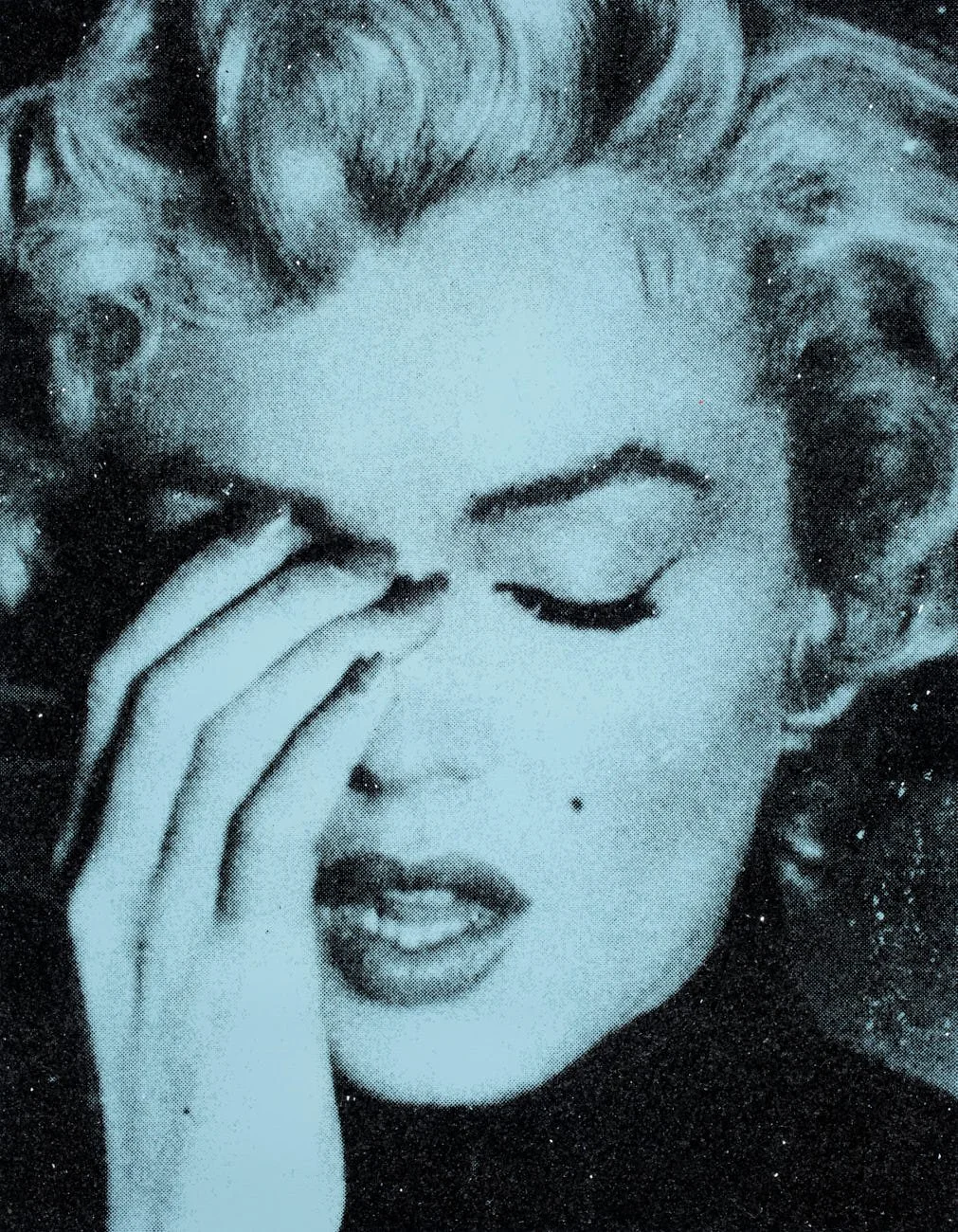
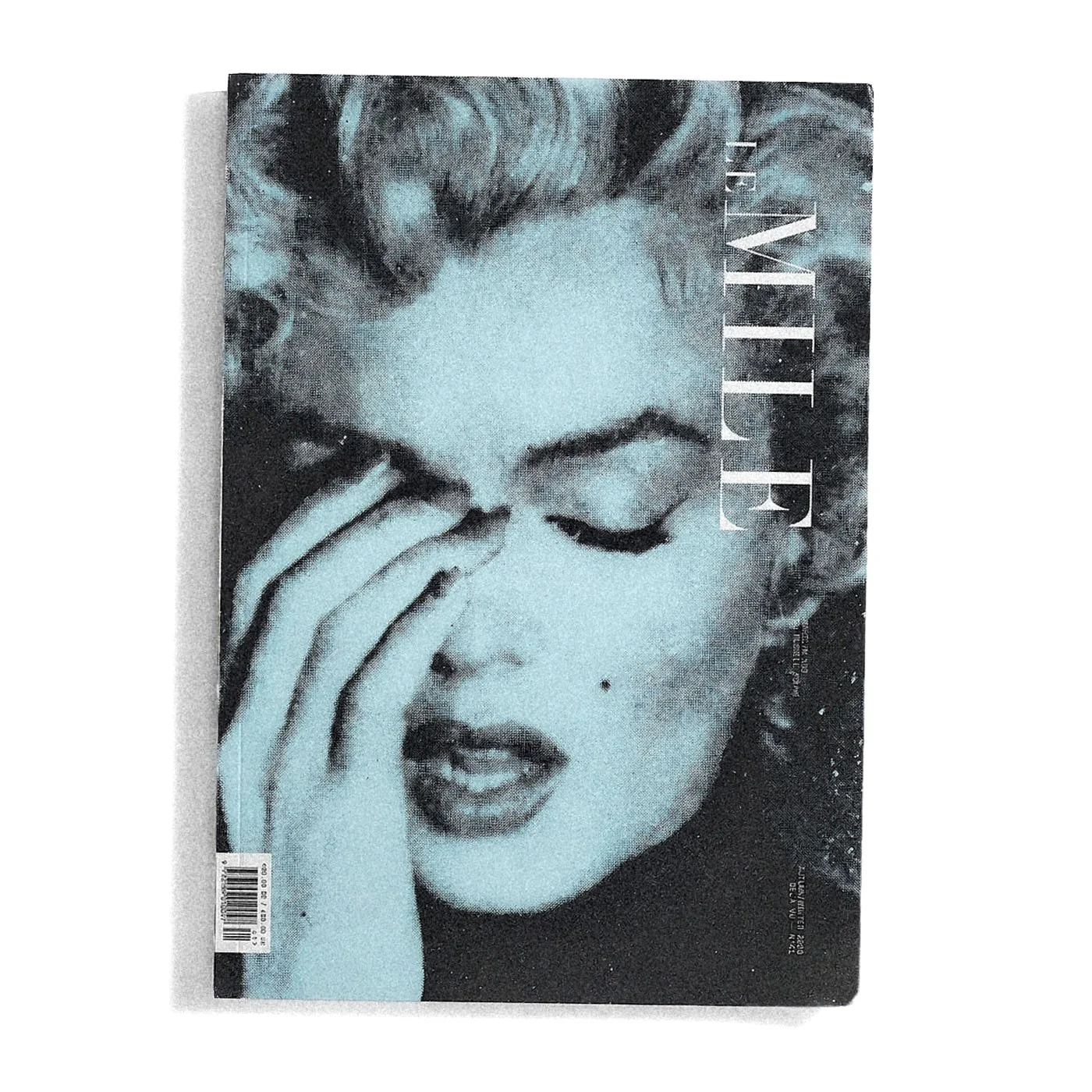
Russell Young
arilyn Crying small Diamond, Earth Blue, 2024
acrylic, oil-based ink and diamond dust hand-pulled screen print on linen
28 × 21 inches
/ courtesy Russell Young
Throughout your career, you’ve revisited some of the most recognizable images in popular culture. What responsibility comes with reimagining images that hold so much cultural significance?
Sometimes I feel like I’m a keeper of these images. I work incredibly hard to find the right photographs and get them right. The lengths I go through can be crazy.
But at the same time, it’s still my interpretation. Even words can be misunderstood and images are even more open to interpretation. Sometimes I create something and someone sees it completely differently, but I think that’s up to the viewer. They decide what it means to them.
Your own story has been shaped by questions of identity, memory, and personal history. Has creating work around cultural icons ever become a way of understanding yourself?
I think everything you create contains parts of yourself. I was adopted and I moved around a lot as a child, so I think I was always searching and looking at the world differently. The people and images I’m drawn to—Marilyn, musicians, rebels, outsiders—there’s usually something about them that connects with me personally. I’ve always been interested in people who stand apart or challenge expectations.
Much of your process is intensely physical, from hand-pulled silk screens to experimenting with unconventional materials. What does that physical connection to the artwork bring to your creative process?
That physicality is everything. When I’m in my studio, there are no phones, no computers, no distractions. I just have an old record player, and I completely disappear into the work. Hours go by without me realizing. That’s where the magic happens, when you lose yourself. The process is physical, but it’s also emotional.
After I became seriously ill with the H1N1 virus in 2010, that physical connection became even more important. I was in a coma and I had to rebuild myself. Coming back into the studio, pulling screens and making work with my hands helped me regain that strength. There was a moment where I thought, “Okay, I’m back.” I think that experience changed the way I approach everything. I stopped worrying as much about what other people think and focused on creating what feels true to me.
You’ve often worked with images connected to nostalgia, old Hollywood, counterculture, and the American West. Are you interested in preserving these myths or challenging them?
I think it’s both. I’m interested in preserving the power of these images, but also bringing my own perspective to them. I’ve always been drawn to cultural moments and people who represent something larger like Muhammad Ali, Marilyn Monroe, the Sex Pistols, the American West. They become symbols, but everyone sees those symbols differently.
Looking back from your early series Pig Portraits to your current Marilyn series, has your relationship with celebrity culture changed? If so, how?
I think it has changed, but the world has probably changed more than I have. The obsession with celebrity today is on another level. We have access to everything and everyone all the time, but I still believe real icons will exist. There are still ridiculously talented people in the world. The difference is that icons are created over time, history decides who lasts. People like Marilyn, John Lennon, and Warhol continue to live on because every generation discovers them again.
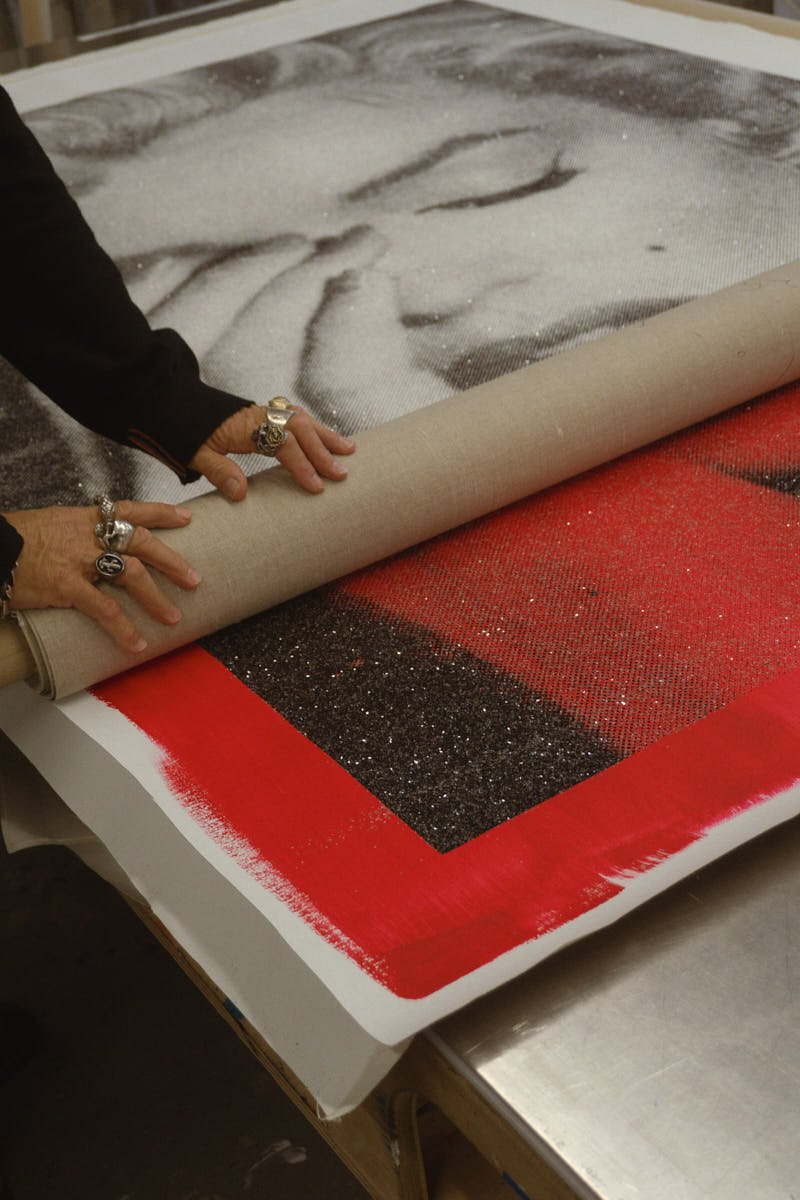
Russell Young, MARILYN 100
/ courtesy Taglialatella Galleries
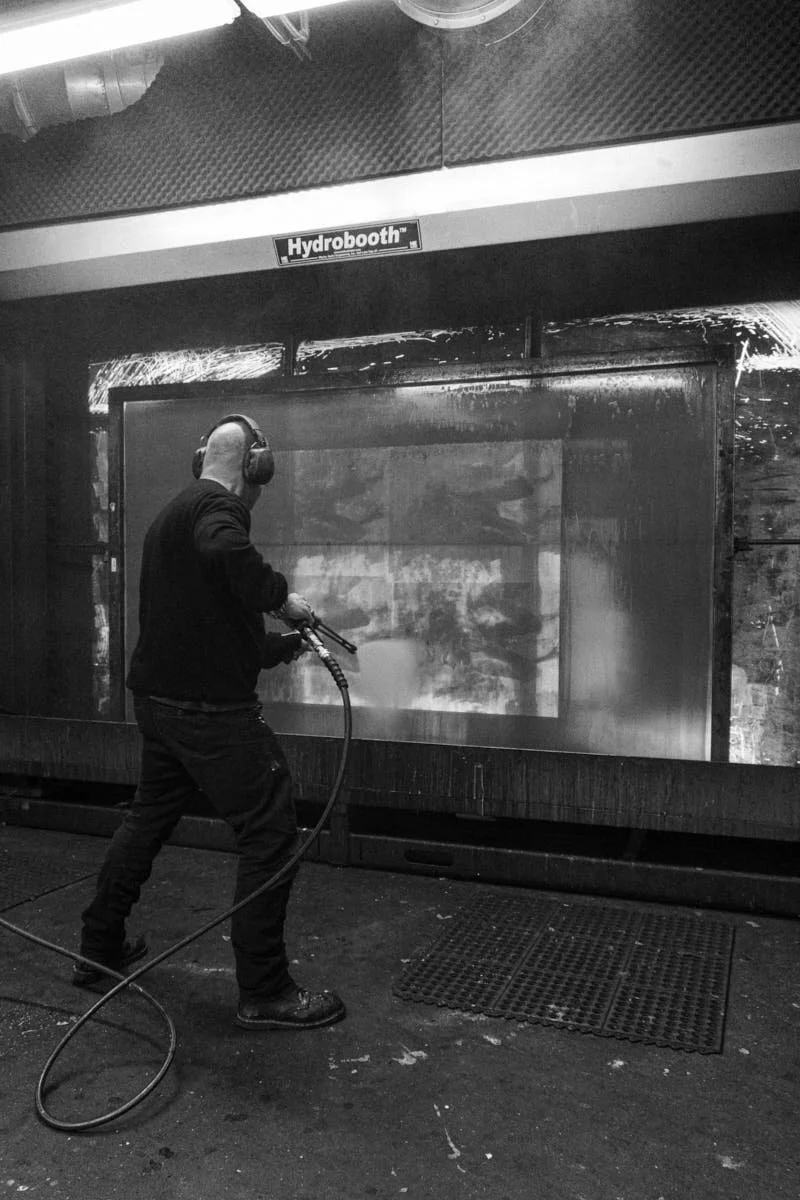
Russell Young, MARILYN 100
/ courtesy Taglialatella Galleries