
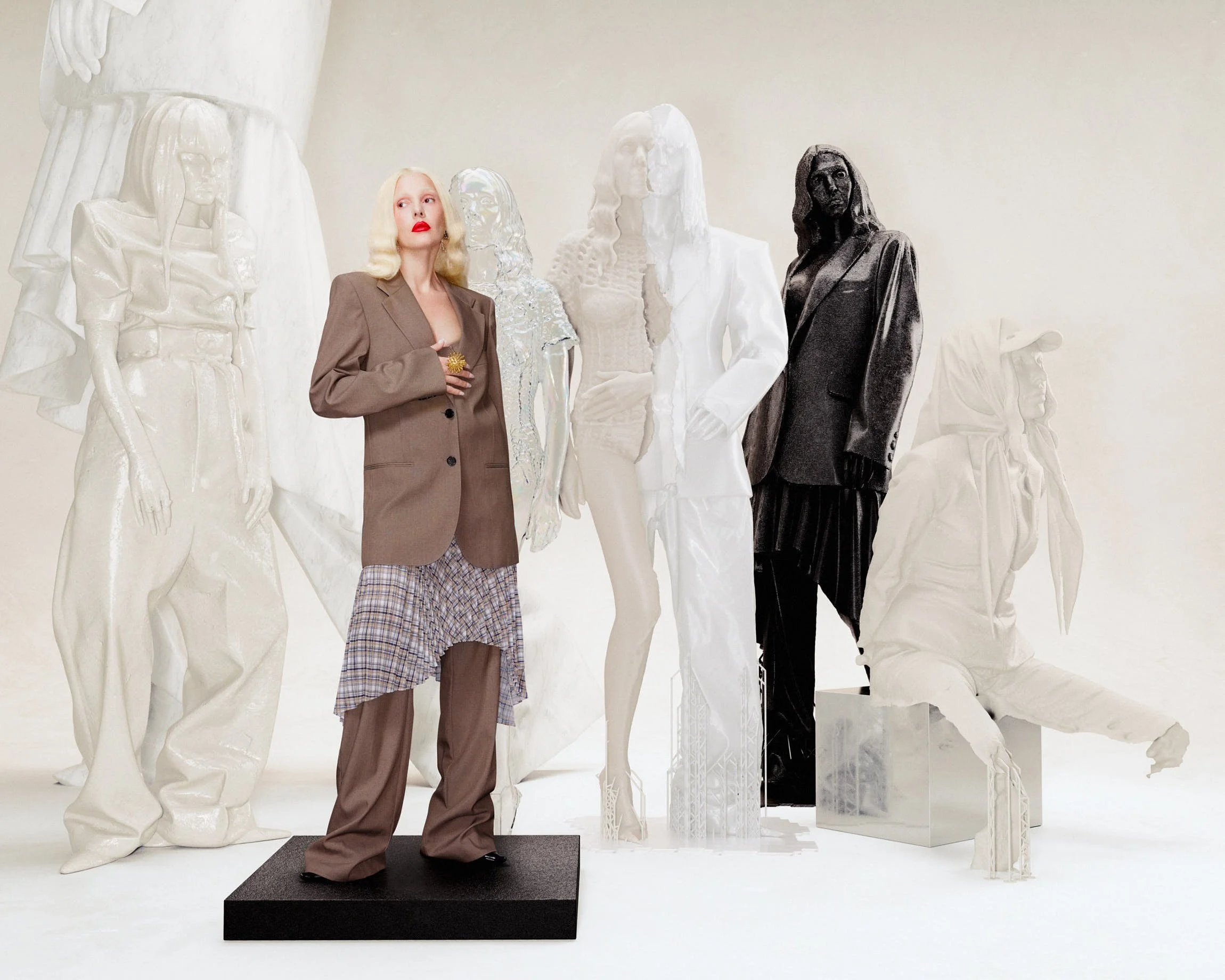
.digital
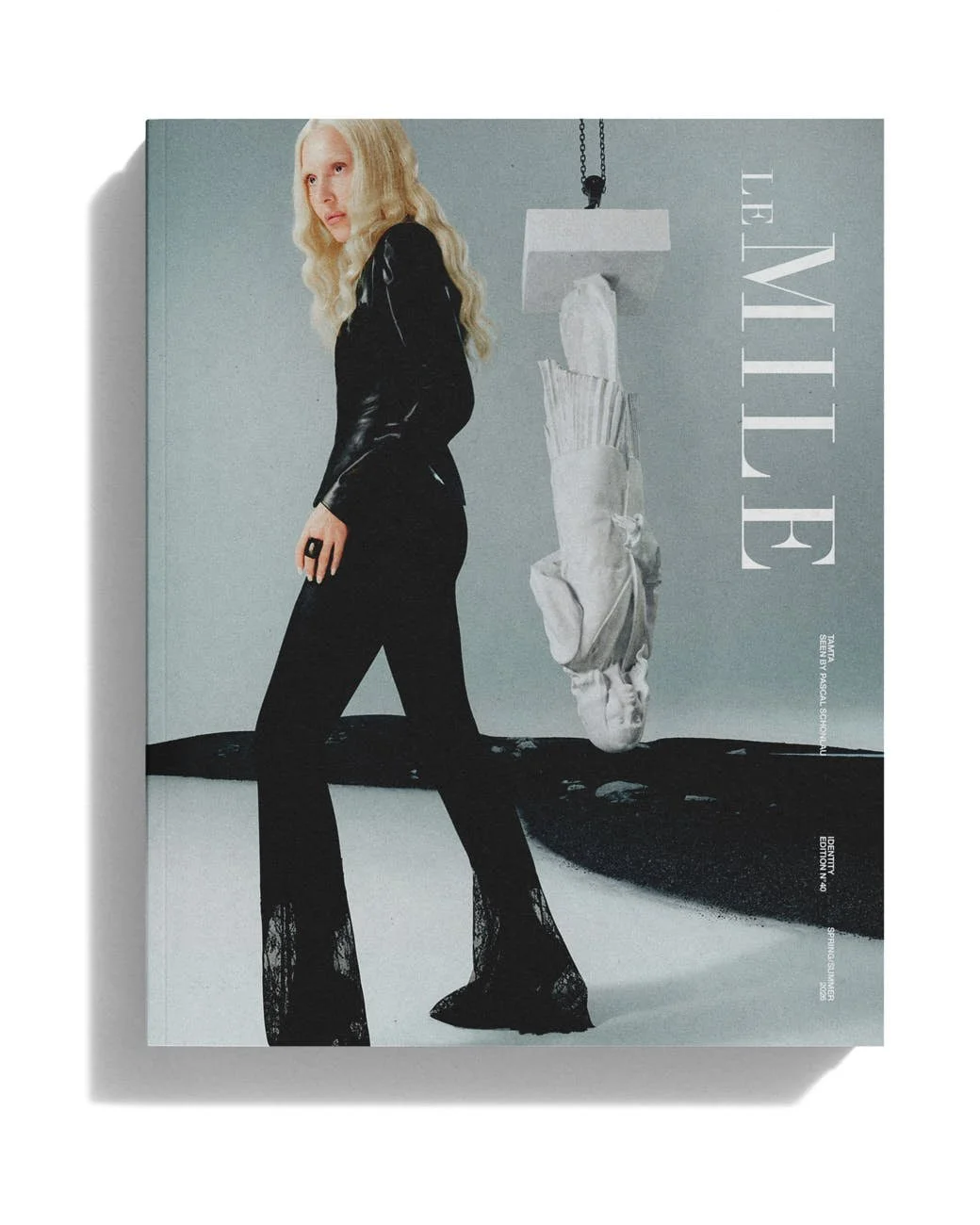
Tamta expands the Grammar of Greek Pop
written ALBAN E. SMAJLI
Tamta operates in a state of permanent transformation. The Georgian-born singer, who built her career in Greece after arriving there as a teenager, has spent years shifting the coordinates of what Greek pop can look and sound like. What began inside a commercial framework gradually moved toward a more self-directed practice where authorship, visual identity and sonic experimentation intersect.
Her recent albums Identity Crisis (2023) and The Villain Heroine (2025) mark a decisive turning point. Both projects step away from formula-driven pop and lean into instinct, control and narrative construction. Electronic textures, sharper visual codes and a willingness to occupy contradiction run through the work.
Tamta’s biography has often dominated the way her career is framed, particularly the story of leaving Georgia and rebuilding a life in Greece. The facts remain part of the context, yet her current work moves beyond origin stories. Identity here becomes a system in motion, shaped through cultural layering, instinct and experimentation.
Alban E. Smajli
What do people misunderstand about you because they think they already know your story?
Tamta
I see myself as someone who has always been in motion. Experimentation & curiosity have shaped both my life and my music for as long as I can remember. I don’t experience change as a rupture, it rather feels continuous, almost quiet.
What often gets misunderstood is that people read this evolution as a reaction, as if I woke up one day and decided to reinvent myself out of nowhere. In reality, I’ve been exploring quietly for years. The difference now is visibility. I’m allowing my instincts, my curiosity, and even my contradictions to exist out in the open. What appears sudden from the outside is simply me removing the filter.
Finish this sentence without thinking too long:
My identity collapses when...
My identity collapses when I stop listening to my instinct and I start performing to expectations. My instinct allows me to express my art as I see fit & be authentic. I think this authenticity is an element that is deeply appreciated by my fanbase.
When you made IDENTITY CRISIS (2023) and later THE VILLAIN HEROINE (2025), what changed most in how you saw yourself?
Both of these LPs mark a period where I stopped relying on commercial formulas as a way of survival and started following my own instincts instead. I allowed myself to explore what I personally love, what excites me, and what truly expresses me, without limits or expectations.
I took full creative control of my music and built a trusted team of passionate minds who share my drive. Through this process, I began to see myself more clearly, and that clarity translates into power and into music that can move people and spark emotion. What I’ve been doing over the past few years, without idealizing it, brings me genuine joy, fulfilment, and a sense of alignment that feels deeply personal.
Do you remember the first moment you realized reinvention could be a weapon?
I’ve always known there’s strength in reinvention. It’s not something exclusive to music, we all do it constantly, often without realizing it. That’s how we evolve and grow. For me, reinvention isn’t the weapon itself; it’s the power to decide when and how to use one to fight for your art and your personal evolution.
I don’t believe things are meant to stay the same for too long. Stagnation drains meaning, and I’m not someone who feels fulfilled by repeating what already exists.
If your next album had to erase one thing people associate with “Tamta,” what would it remove?
I wouldn’t want to erase anything. What people associate with “Tamta” forms the context through which my artistic vision is read. It’s all part of me, interconnected, and removing one part would inevitably shift the balance.
When you walk on stage, what do you want the audience to feel before the music starts?
Before anything else, I want to feel present myself. The stage is a safe space for me, a place where I can express parts of myself that don’t always have room in everyday life. I feel free there, unfiltered, able to move through emotion honestly and without effort. Everything begins from within, and once I’m grounded in that state, the rest can unfold naturally.
For the audience, I hope that translates into curiosity and openness, a sense that something real is about to happen. I want them to be fully in the moment with me. This isn’t meant to be consumed from a distance or behind a screen: it’s a shared experience that only exists while it’s happening.
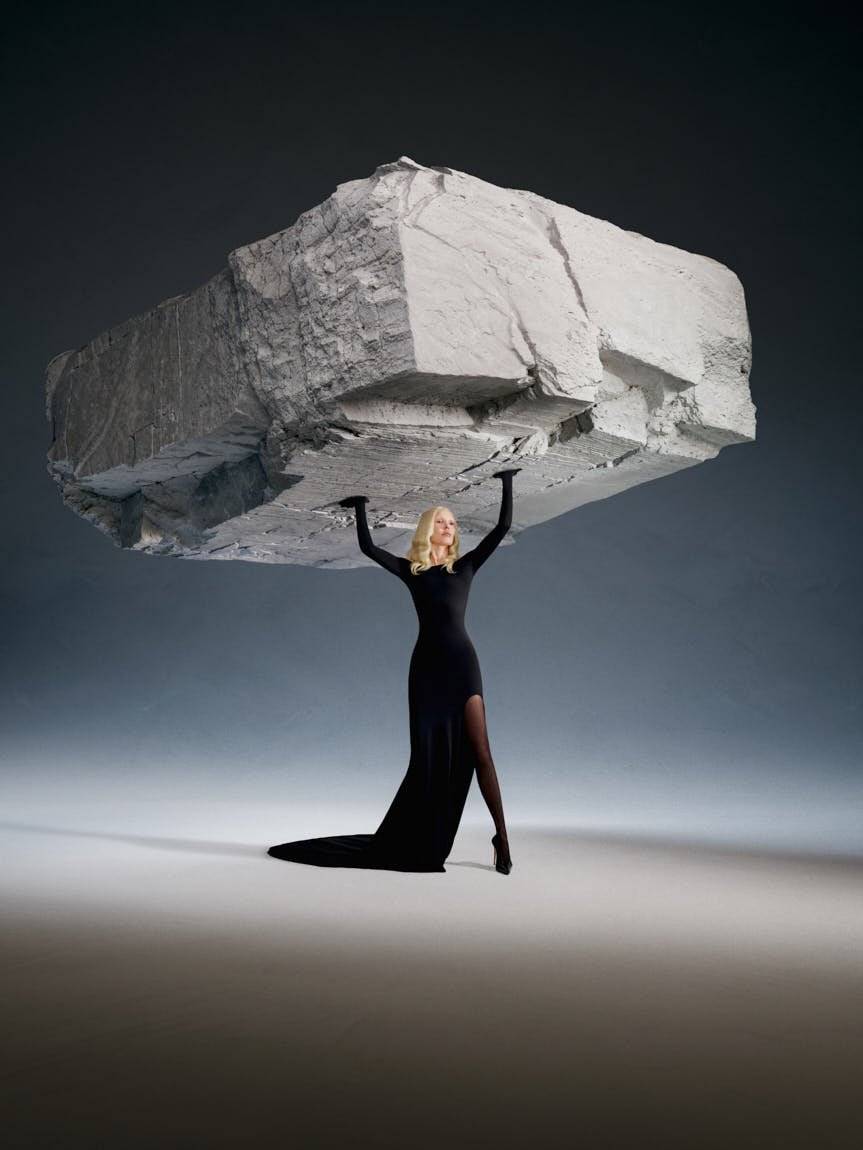
Tamta wears dress by CRITTER and shoes by MAISON MARGIELA
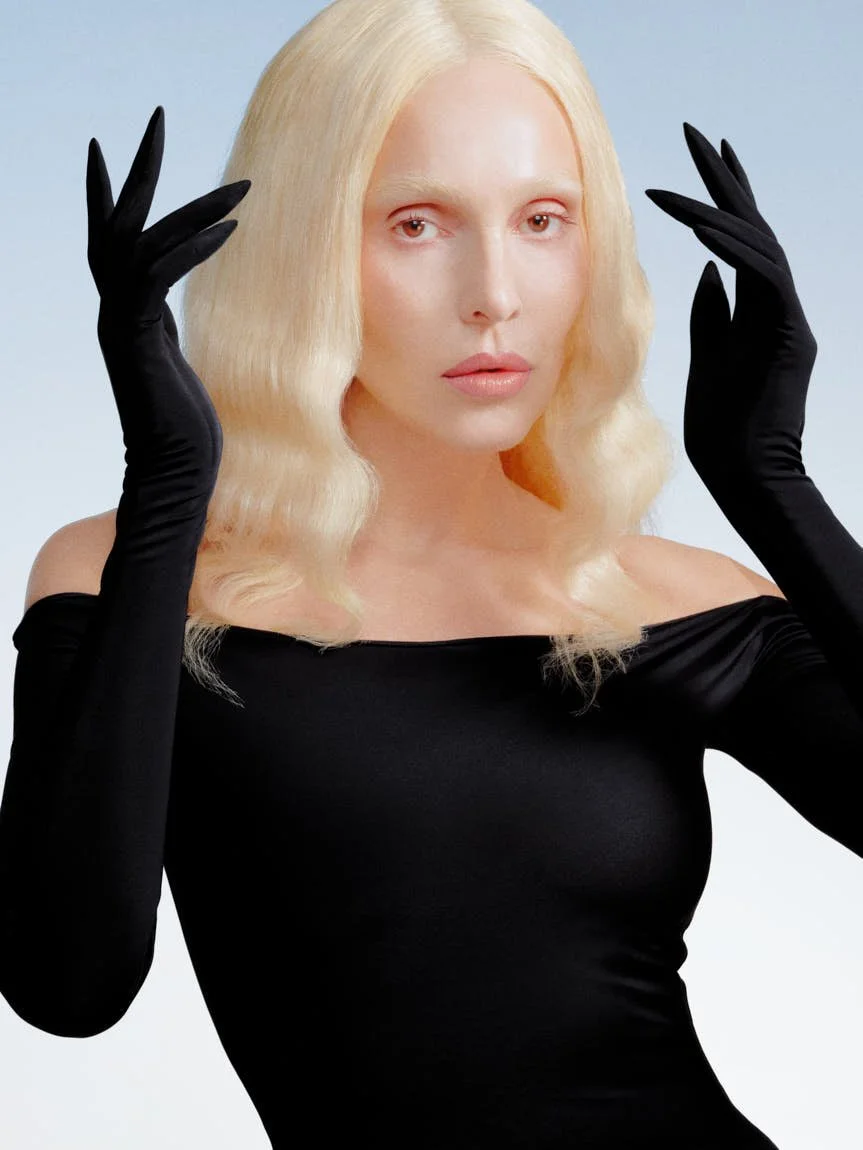
Silence, spectacle, or control — which one scares you most?
None of them truly scare me. Silence and control are both essential tools in my work, silence keeps me connected to my inner world, and control allows me to protect my vision. If I had to choose, I’d say spectacle is the one I approach with the most awareness. I don’t see it as something shallow or negative. Shock and intensity can be powerful ways to reach people, depending on the intention behind them. For me, spectacle only matters when it serves the emotion and the idea, not when it exists on its own.
Where did you feel more free to take risks — as the villain or the heroine?
As the Villain Heroine. The two aren’t opposites — they feed and complete each other. As long as I’m allowed to exist in both, risk becomes natural. That tension is where my freedom comes from.
Is there a genre or visual aesthetic that doesn’t feel right for you, even if they might work commercially?
I can’t quite pick a genre but what never felt right to me was a purely commercial approach: visually or musically. For many years, I was trying to balance my own creative instincts with the need to survive within a commercial system, without losing myself in the process.
Most of my discography is in the Greek language, while I have also worked in English at times—through fully English songs or by blending English lyrics into Greek ones. In recent years, I’ve allowed other elements that feel deeply personal to enter my work, especially Georgian influences, sometimes in the production, sometimes in the way I approach vocals, particularly when I sing in Georgian.
At the same time, the music I’ve been creating in Greek might not be considered disruptive on a global scale, but within the local context, I believe it represents something genuinely forward-thinking for the Greek pop scene. Now that I’m no longer creating from a place of survival, I feel freedom in my expression. That freedom has brought me a deeper sense of fulfilment, one that matters to me more than conventional ideas of success.
Which part of your biography comes up again and again in interviews?
The beginning of my story comes up again and again, especially my life in Georgia before moving to Greece, and then the moment of starting over in a new country. I understand why journalists return to it; the idea of someone arriving under difficult circumstances and building a place in the music industry is a compelling narrative.
At the same time, after so many years, returning to the same questions can feel limiting. I’m more interested in who I’m becoming now and where I’m headed. That’s why I appreciate interviews like this one, they allow space for evolution rather than repetition.
Imagine someone copying your aesthetic perfectly. What would they still get wrong?
In a world where images and sounds circulate constantly and are accessible to everyone, it’s natural that references overlap. We’re all exposed to the same stimuli, often unconsciously, and traces of existing work can surface without intention. That has always been the case, even before everything lived on a screen.
Of course, there are moments when imitation is intentional and obvious, and that can feel unfair to the depth of someone’s creativity and to the artist behind it. But for me, the real distinction isn’t about copying, it’s about approach. Inspiration can be respectful and even honouring, but it only becomes meaningful when it’s filtered through something personal. What matters is how you transform what you’ve absorbed, how much of yourself you allow into it, and whether it becomes something truly your own.
My aesthetic is rooted in spontaneity and instinct and it often comes together in the moment and reflects where I am emotionally at that time. By the time something could be replicated, I’ve already moved on. If my work ends up inspiring other artists, I see that as something positive. It can only be taken as a compliment.
If identity is a performance, who or what are you performing against right now?
I am performing against staticness. My work lives in movement, change, and constant reinvention, where nothing is meant to settle for too long.
Looking ahead to 2026, what can you say about the direction of your next album — and whether it will revolve around a new identity or character?
I’m very excited about what’s coming next. I can’t say much yet, but I can say that this time we’re going harder and more aggressive, while expanding into new genre territory. The next album will be primarily in English, but it will still carry elements that are deeply part of my Greek and Georgian influences, woven naturally into the sound.
It’s not about creating a new character as much as revealing more layers of myself.
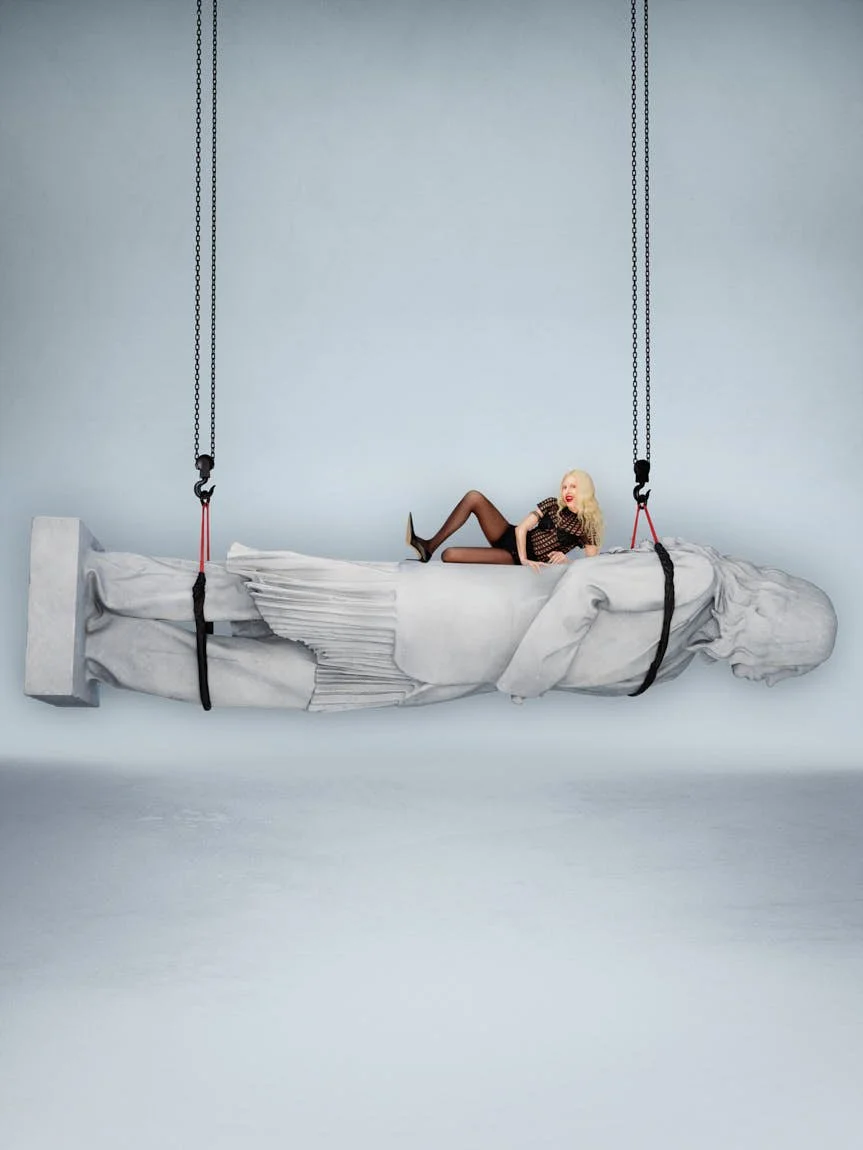
Tamta wears top and briefs by ONATERI and shoes by MARTINE ROSE
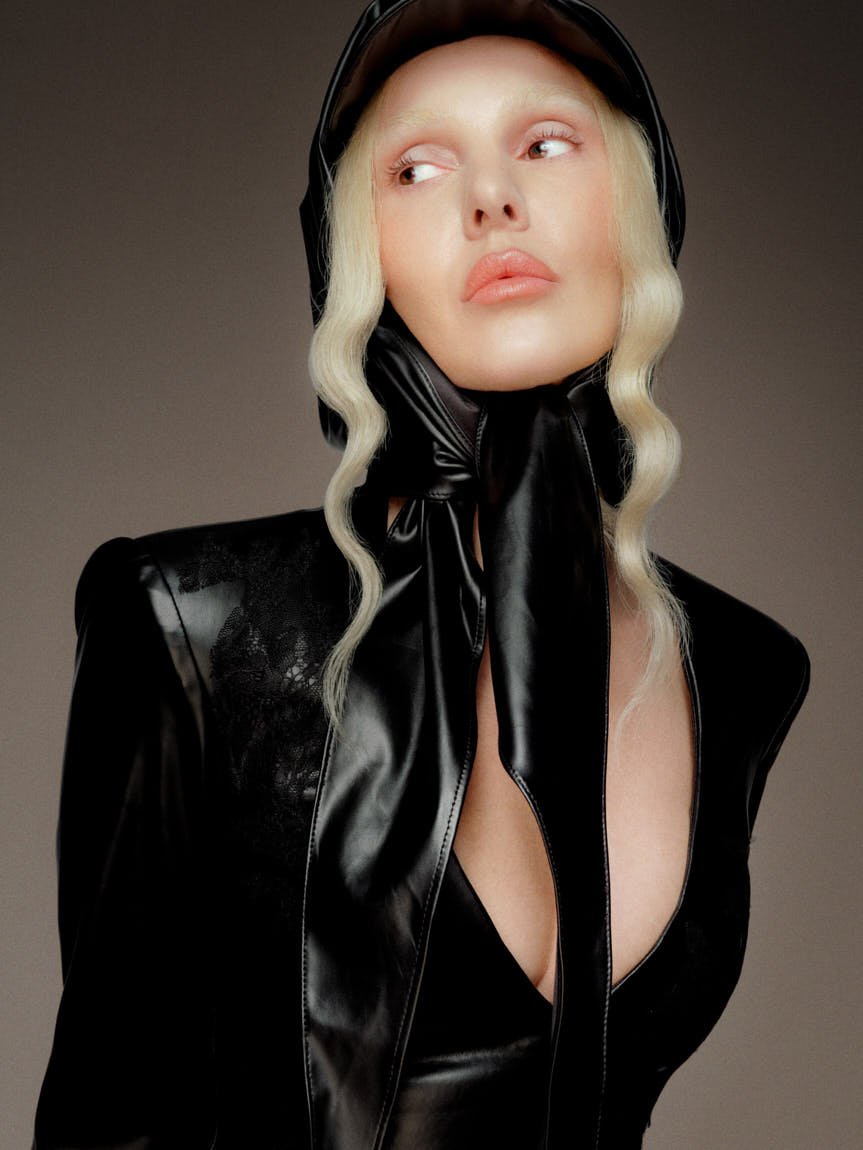
Tamta wears total look by MILÓ MARIA
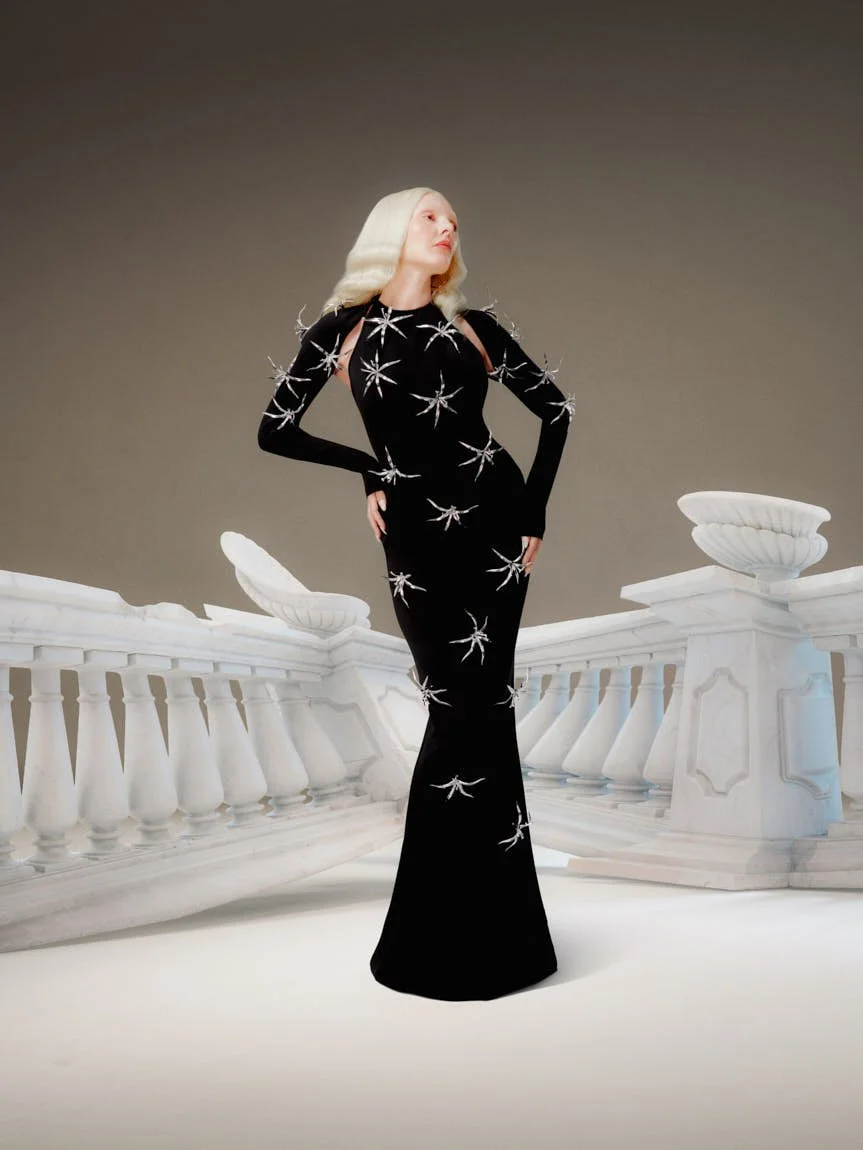
Tamta wears dress by RAY CHU and shoes by MAISON MARGIELA
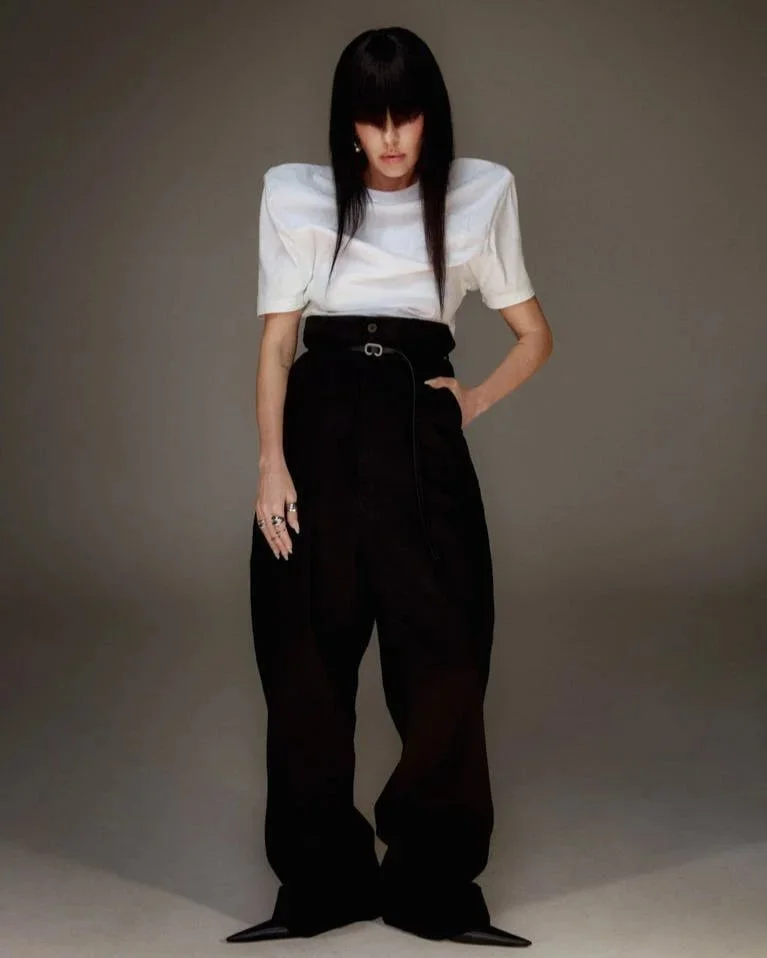
Tamta wears top and trousers by ISSEY MIYAKE and shoes by MARTINE ROSE
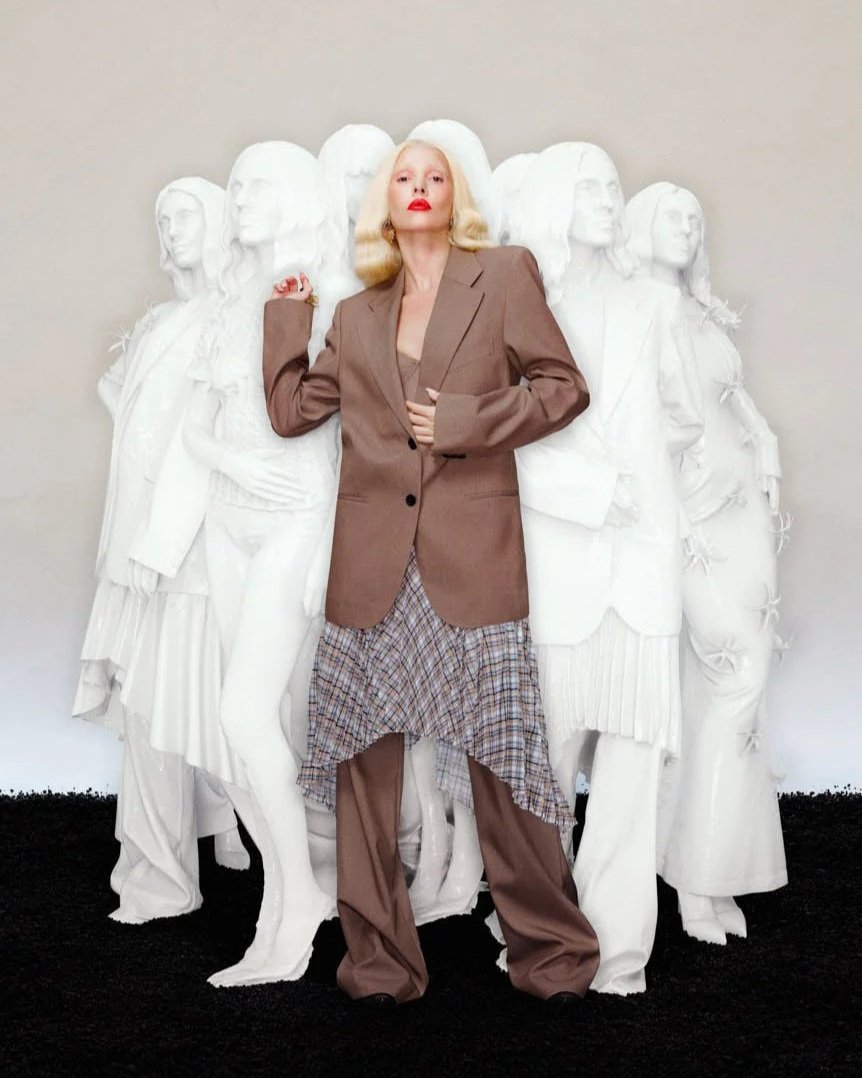
Tamta wears a total look by ACNE STUDIOS
talent
TAMTA
photographer PASCAL SCHONLAU
editor ALBAN E. SMAJLI
styling IGNACIO DE TIEDRA
make up DASHA TAIVAS
hair KENTA UCHINOKURA
digitech JAMES BRYANT
light assistant CATERINA CASTRO
CGI MARVIN LÜBKE + TOBIAS TITERA + GEORGE RUSSEL
lead post KATE BROWN
post MARIA CALOSSO + RINUS VAN DE VEN
press KREATIVE PR
photographer PASCAL SCHONLAU
editor ALBAN E. SMAJLI
styling IGNACIO DE TIEDRA
make up DASHA TAIVAS
hair KENTA UCHINOKURA
digitech JAMES BRYANT
light assistant CATERINA CASTRO
CGI MARVIN LÜBKE + TOBIAS TITERA + GEORGE RUSSEL
lead post KATE BROWN
post MARIA CALOSSO + RINUS VAN DE VEN
press KREATIVE PR
credits
all Images (c) LE MILE
and Pascal Schonlau