
Where Do Fashion's Future Stars Come From?
Inside London Fashion Week: The Established Rebels, the Fresh Graduates and the Programme That Launched Lee McQueen
written Justina Snow
New York started fall/winter´26 fashion week with a wonderful debut of Rachel Scott for Proenza Schouler. Milan brought us the highly anticipated first prêt-à-porter show by Demna's Gucci. And it all wrapped up in Paris with a bittersweet farewell to Pieter Mulier's successful time at Alaïa. And somewhere in between, there was something spectacular London gave us too - the future of fashion (quite literally).
This is the place where future McQueens and Erdems are not taking spaces on the outskirts of the city with a few square meters for a showroom. In London, fashion week's baked-fresh-out-of-school talents are a well-respected part of the official schedule. This year's London Fashion Week schedule was embedded with 19 talented brands of NEWGEN - an official initiative by the British Fashion Council supporting young designers financially as well as with mentorship. Since launching in 1993 - when the fashion world was going crazy for supermodels and glamour - this program was the first step for the later skyrocketing careers of designers like Alexander McQueen, J.W. Anderson, Simone Rocha, and many others who are now synonymous with London fashion. And while you might have seen a lot of conversations in the past two years about LFW dying, as I bumped into Kate Moss at 180 Strand studios (where the NEWGEN runways were taking place), I knew that those talks are so far from reality.
YAKU AW26
seen by Morgan Williams
YAKU AW26
seen by Morgan Williams
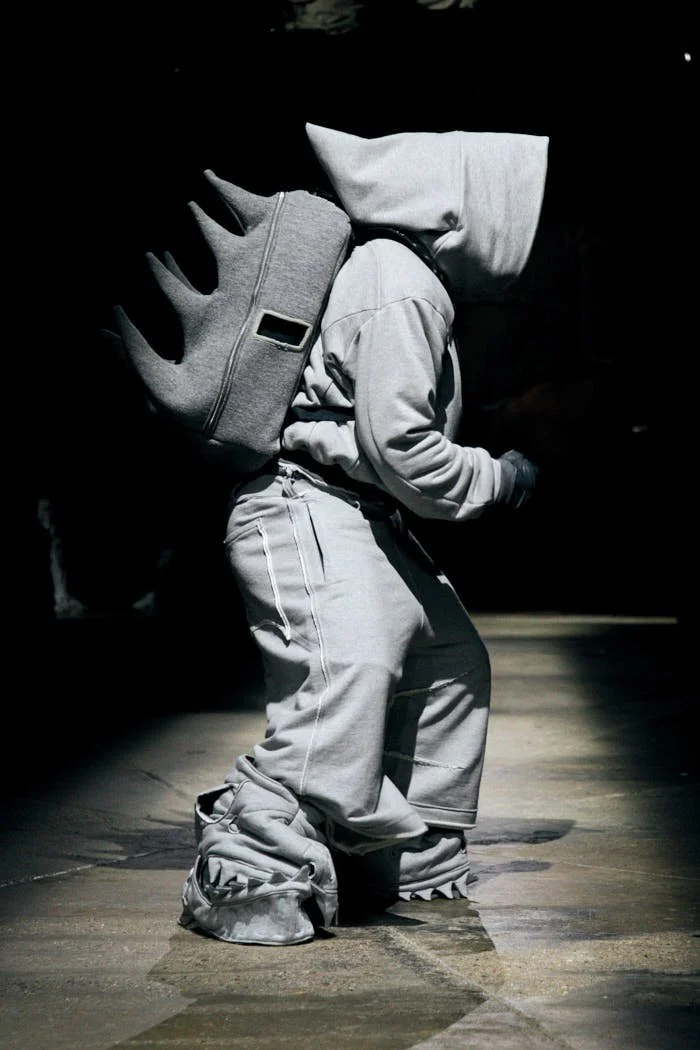
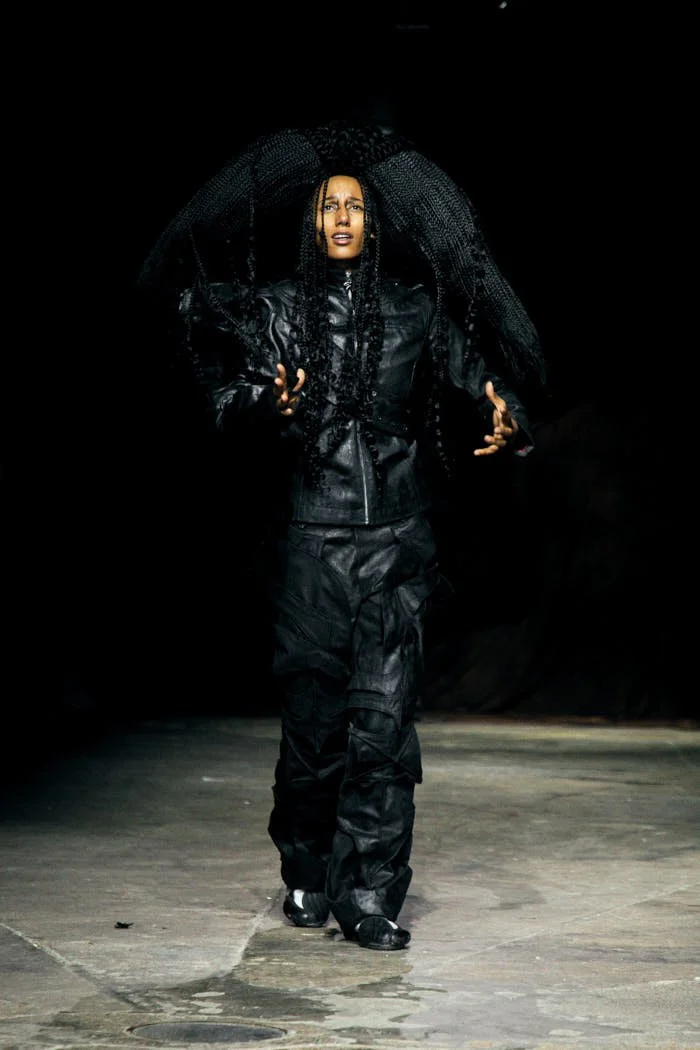
I spent a lot of time at the mentioned 180 Strand Studios this season, and I witnessed something opposite of fashion dying. I would maybe even call it a reincarnation. Fashion is definitely changing its shape. A big part of collections has become an experience in itself; presentations have become so much more interdisciplinary. One of the initiative´s brands, Yaku foreshadowed their somber mood with an installation of dark, shadow-like human figure statues, as if frozen in time. Yaku themselves said that "we're trying to make art that responds to the world rather than simply offering hope - exploring a negotiation with reality alongside the desire to evolve, because hope alone doesn't drive change." Given the state of the world, this hits close to home. And they translated this not into a runway show but into a performance of four acts, all circling around the concept of combat. And when the first model appears in choreographed movement, you know that the fashion - although very well executed - becomes part of the whole and helps translate the intention. And while flowing through martial-arts-inspired movements, the performers give so much personality to every garment they wear.
While personalisation and emotional charge remain important cornerstones this season, we also saw not only ready-to-wear collections but accessories as well. On a different occasion, when I entered the NEWGEN space (which had already become my third place by that point) for Octi's presentation, I saw a grass field. It was the opposite of a lush meadow: this field had a mysterious vibe, as the space itself is dark and concrete-dominated, yet I was face to face with nature there and then. Only after a while did I notice five bodies lying there motionless. Over time, their movements grew into a choreography that, according to the designer, illustrated the concepts of connection and "embody the fluidity and rigidity of the natural forms used in the collection." I could only describe this presentation as sensitive and magnetic - and hypnotizing, because I was sitting there staring at the choreography for almost an hour - and the designer, Octi Ransom, admitted that "I think sensitive and magnetic are also words I would use to describe the potential of jewellery." This is what we call great communication through presentation. And that's already a big achievement, as we are still largely focused on ready-to-wear collections. Octi also revealed that scale is a challenge in larger spaces: "Naturally, jewellery is physically much smaller than ready-to-wear. It usually takes up less space on the body, and becomes more of a challenge to communicate in larger spaces. But in the end I think this can work to an advantage, making room for new ideas on how this can be solved."
Jiyuan Fan
seen by Han Yang
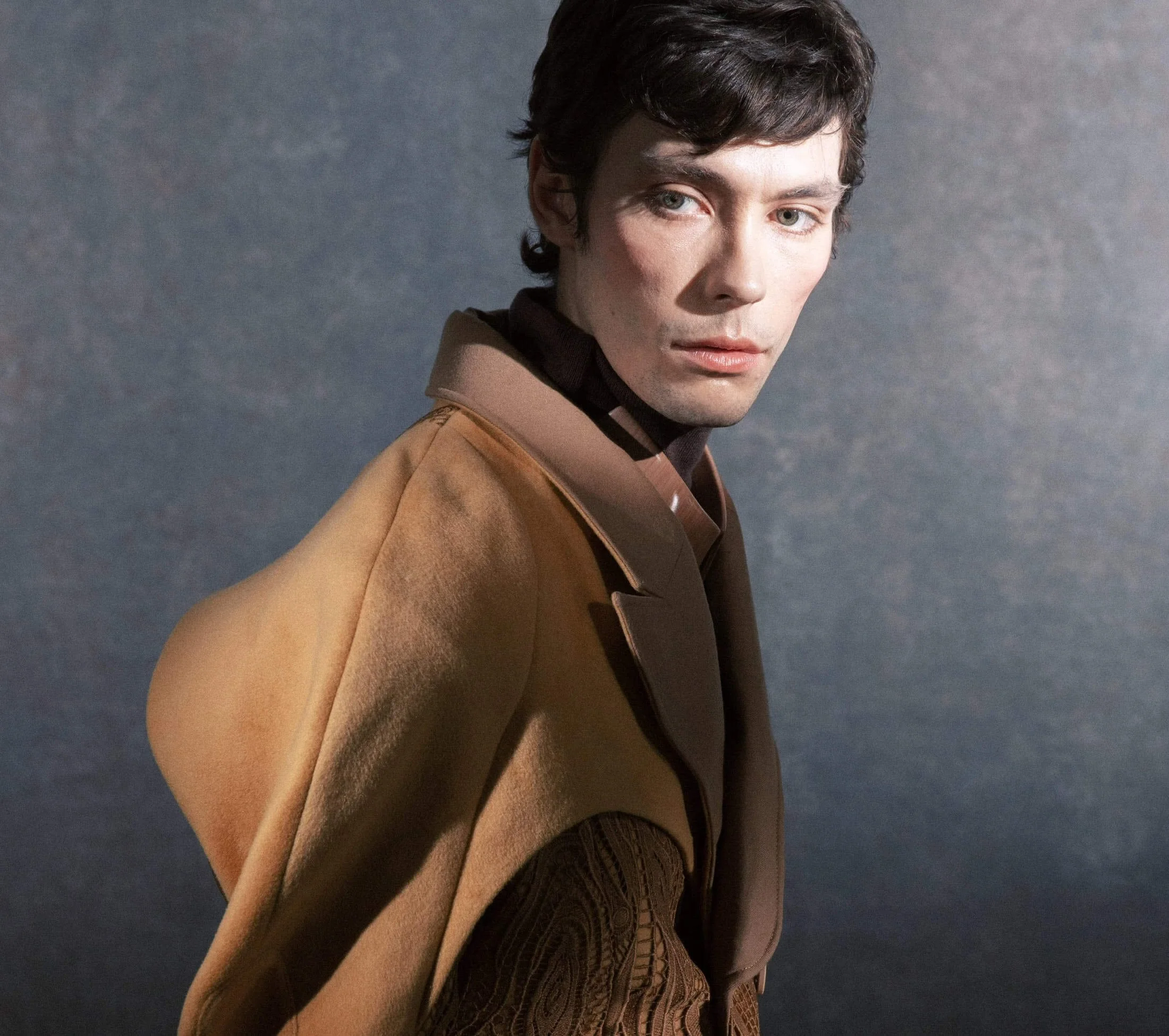
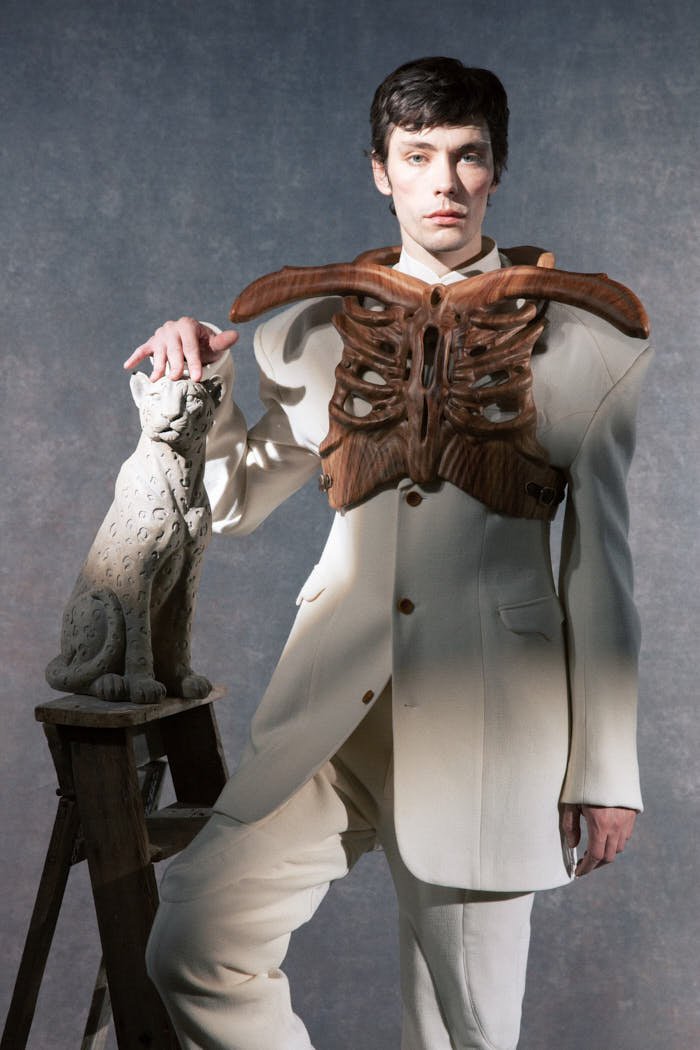
As much as NEWGEN designers steal the show, we cannot talk about fresh talents during London Fashion Week without covering the freshest of them all: MA student shows. There was one designer from London College of Fashion who stood out specifically - Jiyuan Fan. It didn't only catch my eye; it captivated me, and I felt like I was witnessing a scene from a very stylish body horror thriller - the models wore wooden-looking pieces representing skeleton parts and facial structures made out of lace, and I couldn't help but identify one more trend among young designers: alternative materials. Jiyuan himself reflected on this: "One important reason is that these materials allow designers to communicate their concepts more directly. ... I also thought about how people might remember my work. Fashion changes very quickly, and the use of materials always requires creativity and possibility. This is something every young designer has to think about." The designer's research began with hangers and human anatomy, and the project eventually raised a question about the visibility of support structures in garments. "In my collection some garments are cut according to the skeleton structure while others reveal the natural outline of the body once the structure is removed. The garments therefore have two states. One is supported by the Human Hanger structure and another exists without it. Through this process I developed my own visual language for menswear. It proposes what I describe as a new human body." - Jiyuan Fan explains.
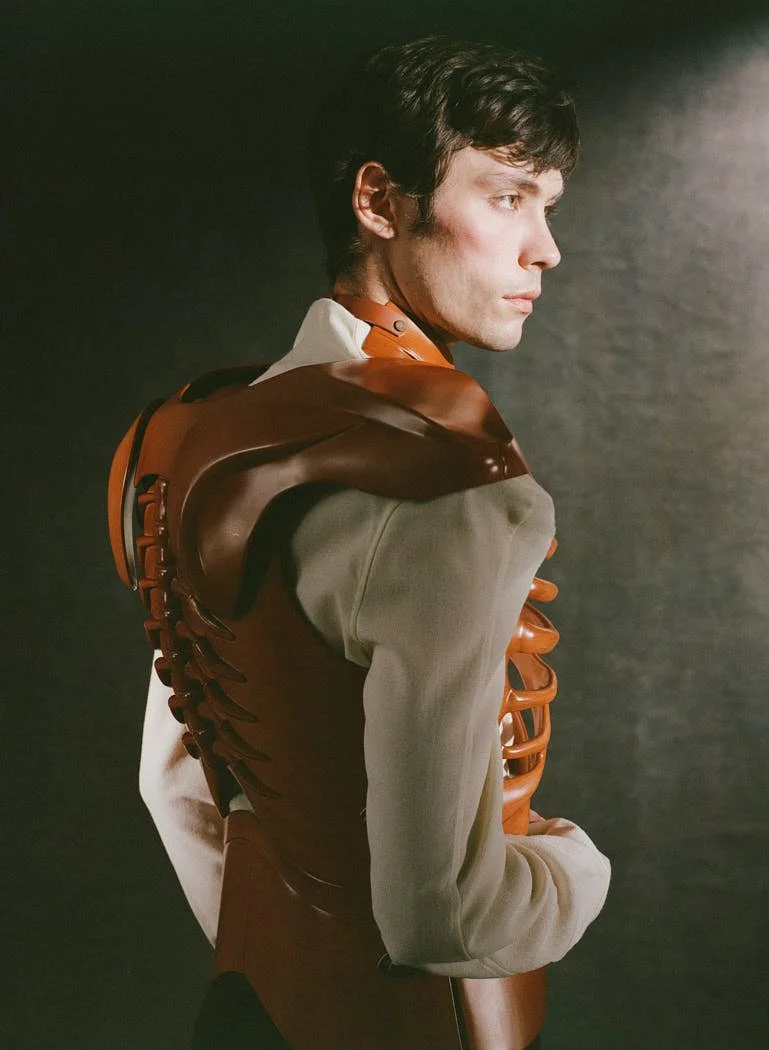
Jiyuan Fan
seen by Han Yang
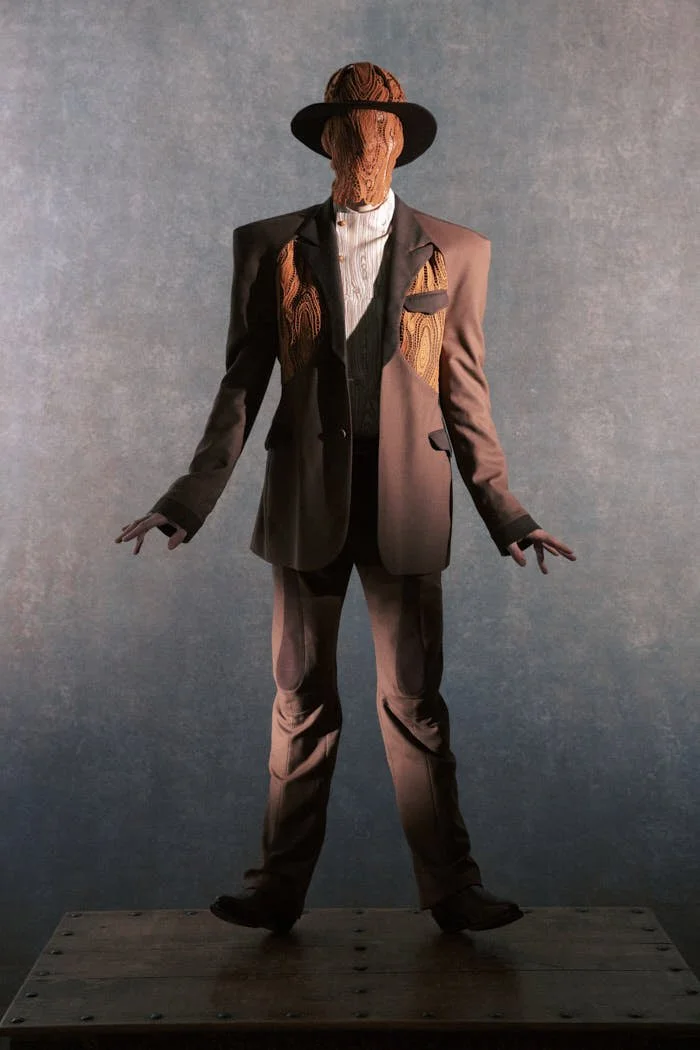
Jiyuan Fan
seen by Han Yang
Seeing so many young talents and a city supporting their growth, throughout London Fashion Week I had a lingering question in my mind: what does London have that other major fashion weeks don't? While we don't see behind the scenes, and knowing that the fashion industry is extremely competitive, the talents I got a chance to talk to - and the whole atmosphere during LFW - seem to be at ease. It's apparent that London has built something other cities haven't. At least not in this structure. While Paris has the LVMH Prize, which is a great opportunity, it requires you to already have at least two full ready-to-wear collections under your belt. New York also cannot offer the same; it usually relies on off-schedule events for young talent. So London truly seems to be more democratic in this sense. When talking about NEWGEN and London as a hub for young designers, Octi shared: "There are so many incredible young designers in London so it feels like a really special place to be creating, and I feel very grateful to be presenting as part of LFW amongst some of these people. I think presenting in this capacity anywhere as a jewellery designer is also something really exciting, and opens a door for people to be surprised by the possibilities of what this could look like."
Aspirational observations also come from designers with different backgrounds who didn't get a chance to grow up in a fashion capital. Norwegian designer Fam Irvoll is one of them. If you look at her designs, you would never think this is a Nordic designer - it's something opposite of Scandinavian minimalism. Fam graduated from CSM, has designed for the likes of Lady Gaga and Rihanna, and this is the sixth time she's showing her collection during London Fashion Week. I was curious whether London as a city had been a building power for her aesthetic. Fam reflects: "In my country I don't really fit in. . . . London did inspire me while I lived here, I was very much into the rave scene. With a lot of students from CSM we would just go crazy, the drag queen scene is also big. I became who I am because of London and the gay scene."
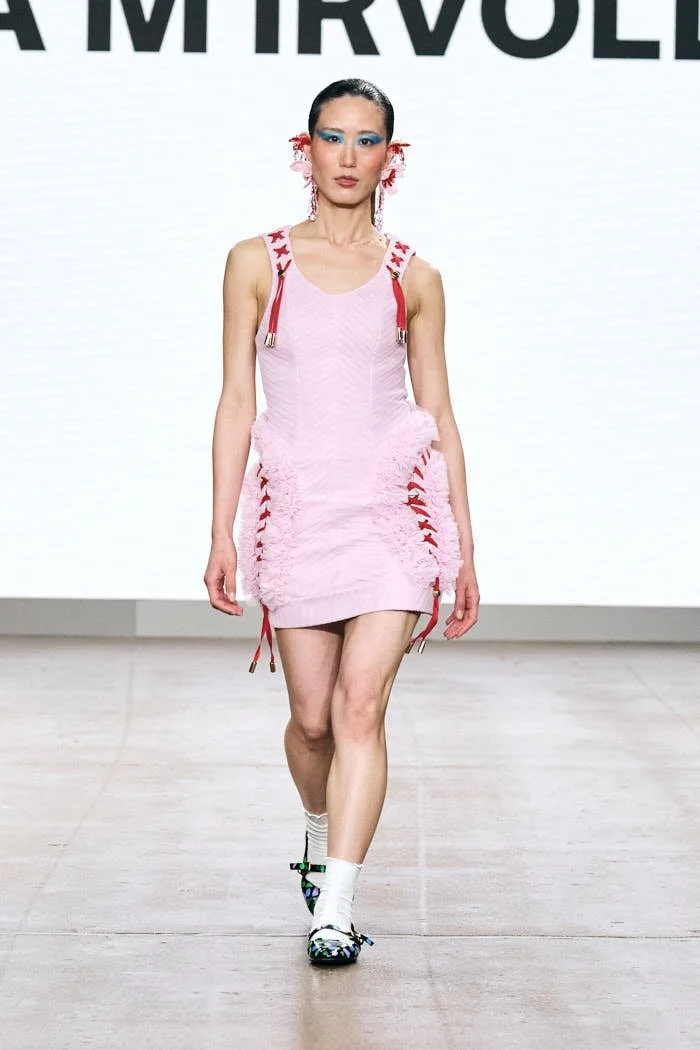
Fam Irvoll
seen by Olu Ogunshakin
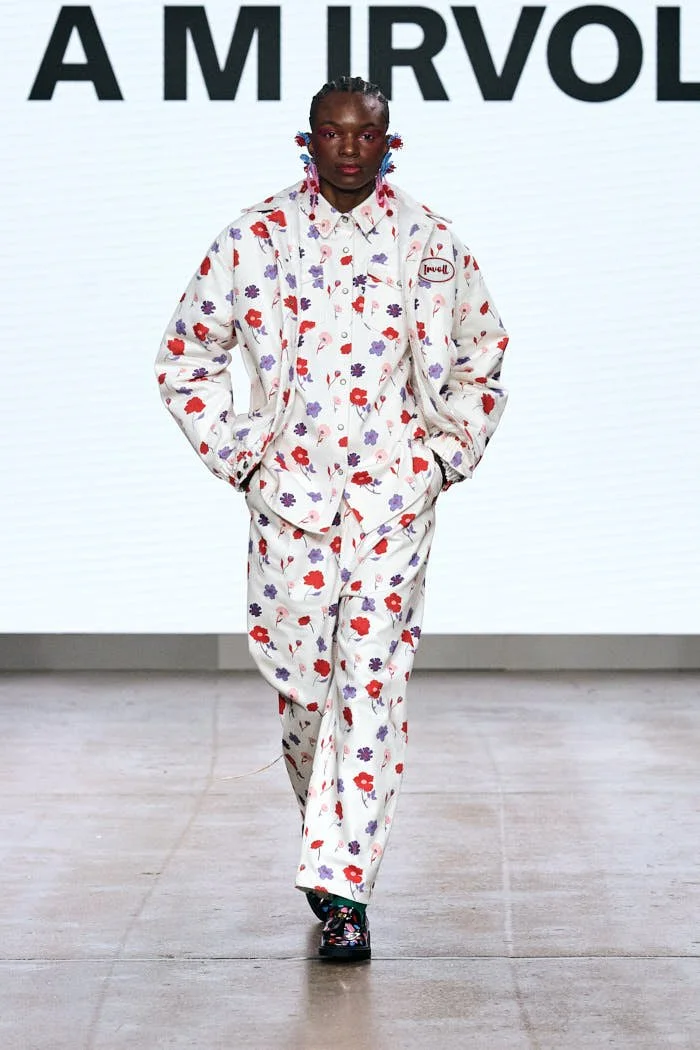
Fam Irvoll
seen by Olu Ogunshakin
Jiyuan Fan also makes no secret of the fact that living and creating in London specifically plays a big part: "Living in London for two years was also a very fulfilling experience. London offers many fashion opportunities. Designers such as Kiko Kostadinov, Aitor Throup and Charlie Constantinou have built strong identities here. If you walk around Soho you can easily feel the strong energy of many independent designer brands. Even if you do not buy anything, simply observing their craftsmanship and fabrics can teach you a lot." I can only confirm that London, especially during London Fashion Week, has a creative aura about it - even just people-watching or browsing through a vintage shop is a contagious experience for unconventional fashion inspiration.
And nowhere is that energy more visible than inside the shows themselves. You rarely see an empty space during a NEWGEN or fashion school show. Quite the opposite - you will see a wall of standing fashion lovers just trying to soak in everything a young designer has to offer. I tried to answer the question of why London attracts so much interest in young talent, and at the same time why the rumour had been circulating that London Fashion Week is dying. Maybe it's simply about the big brands, maybe people have grown fatigued by them? Maybe they lack something that young talent can offer? Octi didn't want to treat them as two separate categories: "I think it really depends on the brand. But something I personally love when I look around at this generation of creatives is how the stories of the designers themselves are such an important part of the work, and how it's communicated. I think this then leads to so many interesting new outcomes, which all feel very different to one another."
Talking to these young talents left me extremely uplifted and hopeful. London is as we like it: diverse, unconventional and open. We would all do well to watch these talent programmes very closely, because one thing is certain: we are witnessing the rise of future stars, and trust me, you'll want to say you knew them from the beginning.
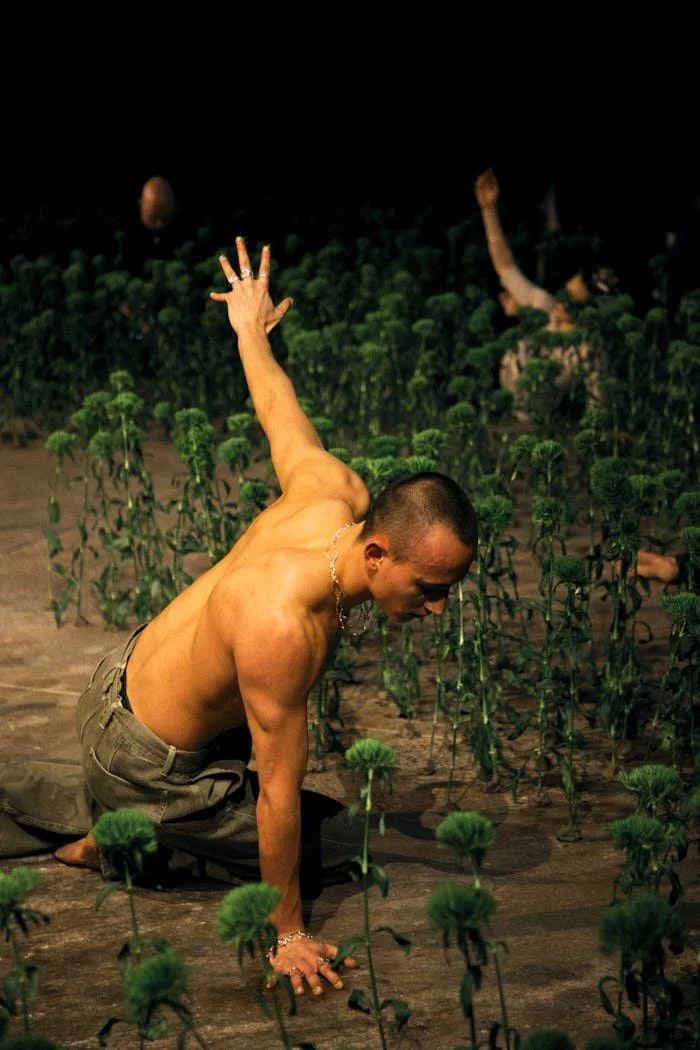
OCTI AW26
seen by Morgan Layla Williams
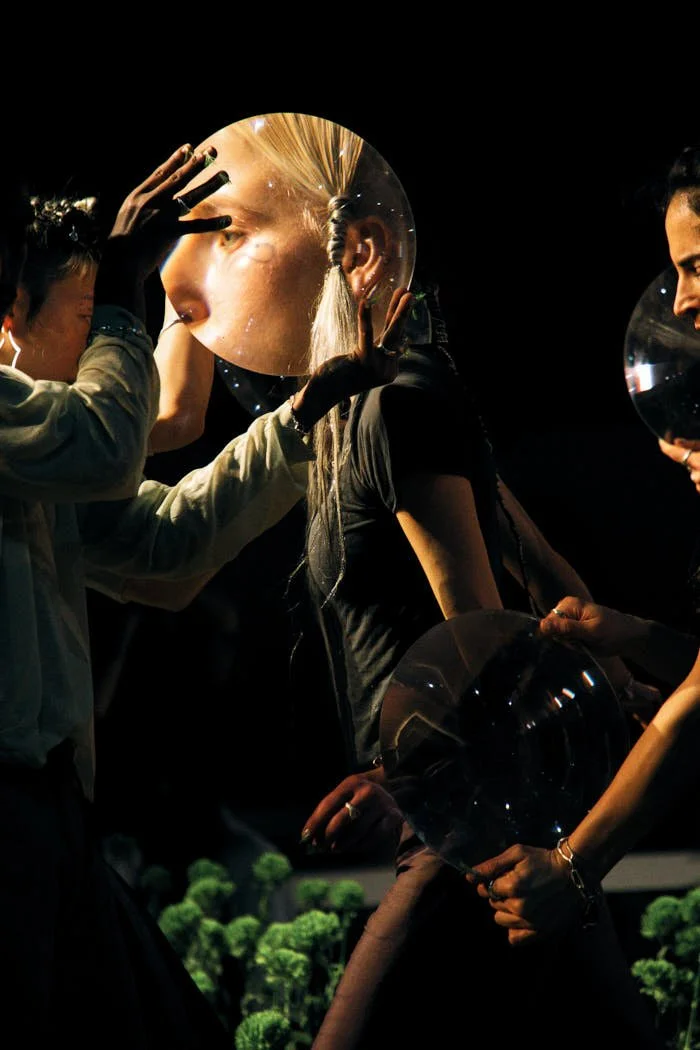
OCTI AW26
seen by Morgan Layla Williams