
Esra von Kornatzki Works with Worn Materials and Fixed Surfaces in Contemporary Fashion
interview + written SARAH ARENDTS
seen JULIAN MELZER
Esra von Kornatzki is a Berlin-based designer whose work develops from a background in sculpture and fine art studies at Universität der Künste. Her focus lies in constructing garments directly on and for the body, using methods that stem from mold-making, draping and surface treatment. Pattern cutting functions as a way of shaping the body, with each piece defined through proportion, weight and material resistance.
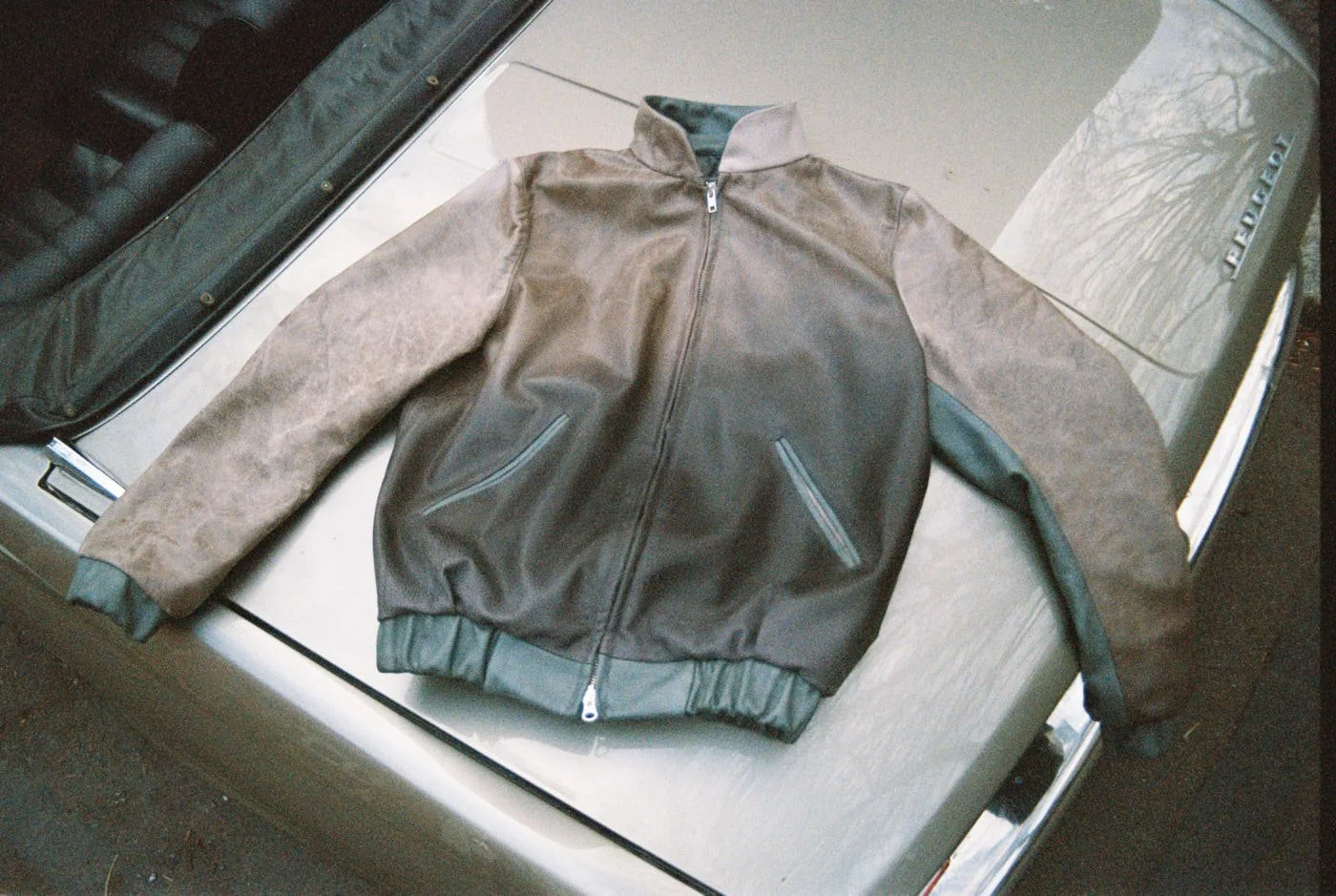
leather bomber jacket by ESRA VON KORNATZKI
She uses existing materials such as discarded leather, inherited fabrics and used saddle blankets sourced from racetracks. These materials are chosen for their surface condition and durability. Signs of wear such as creases, dirt, sweat or discolouration are not removed. Instead, they are fixed into the garment through technical processes. Saddle blankets, for example, are treated with a water-based transfer glue, silk-screen printed and then fused with a transparent foil using heat, sealing the surface and preserving the traces underneath.
Esra von Kornatzki works directly with the material rather than outsourcing production, allowing the properties of each fabric to influence the final shape. Many of the materials resist standard sewing techniques, which results in firm, structured silhouettes.
Her parallel involvement in horse racing informs the way she works with time and preparation. Materials often come from that environment, and the process of developing a garment follows a similar logic of pacing and control. The garments retain visible information about their origin and a sofa becomes a bomber jacket, saddle blankets become coats and trousers. The previous use remains present through the surface, while the function changes through construction.
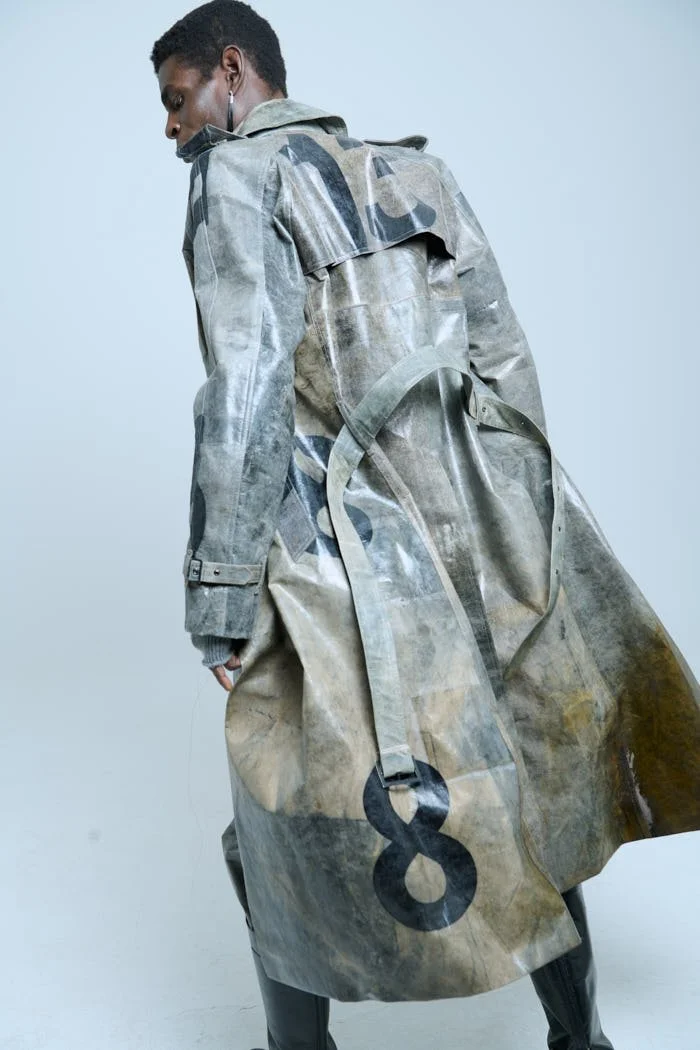
Sekou is wearing a trenchcoat from ESRA VON KORNATZKI, GDR military boots from FASHION ARCHIVE, and knitted gloves from FASHION ARCHIVE
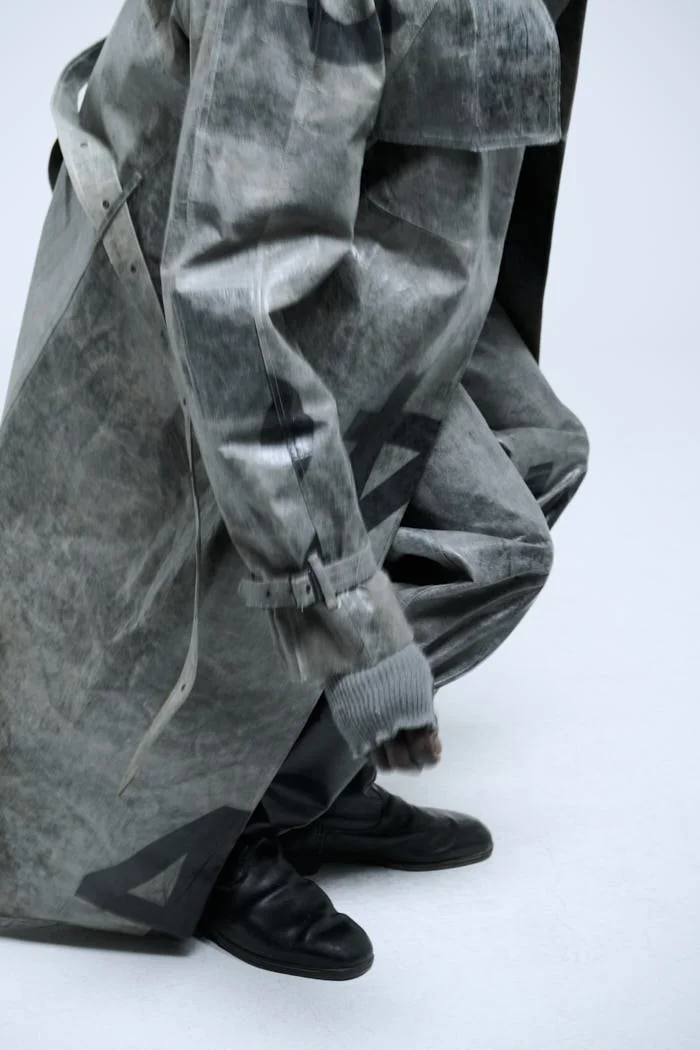
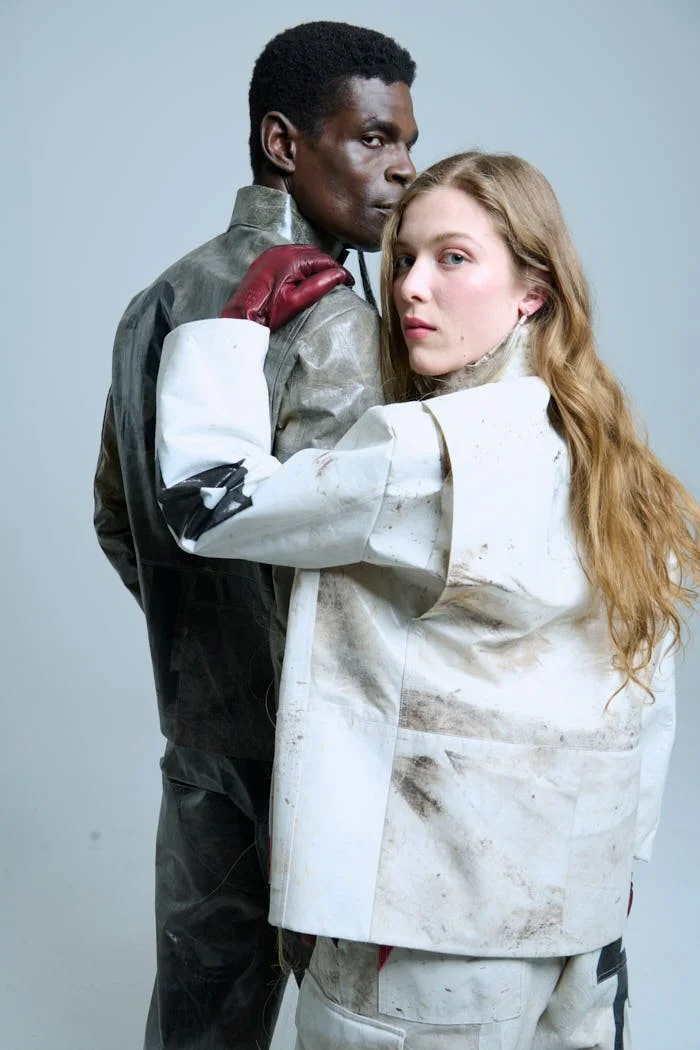
Sekou is wearing a grey suit, and Esra is wearing a white suit from ESRA VON KORNATZKI and red leather gloves from MAISON MARGIELA
Sarah Arendts
What led you from sculpture into fashion design?
Esra von Kornatzki
Sculpture has a tendency to be very removed from the body, an object in space, but I wanted to get closer to the human body and have that as my point of reference. Fashion design feels more urgent and relatable, as it implies everyday usage and thus becomes part of a new physical reality rather than something to look at. There is an intense, passionate relationship between people and their clothes that I find compelling.
How does your fine art training influence the way you construct garments?
My background in fine art shapes the way I look at and construct garments. My studies were conceptual and that translates into the way I approach fashion design. There is the symbolic meaning a material carries but also its physical abilities. My first professor was a sculptor and the second a painter. You will find both influences in the garments I make in the way I stress the three dimensional aspect of clothing, treating the body like a canvas that the clothing wraps around. During my fine art studies I became an expert in mold making. Pattern making and drapage is an extension of that skill, molding the body and changing its properties, using the garment as a medium. I like to transform the fabrics and materials I find, treating the surface using dye and methods of coating like laminating. I tend to work with stubborn materials that resist being sown, but it gives them their strong sculptural quality and firmness in the silhouettes.
What role does manual work play in your process?
I think through making. That’s another reason why I place so much value on craftsmanship, which has always caused some residual tension between me and my conceptual art training. But I think of this tension as a strength and driving force, it's part of my identity as an artist and designer. As a designer I don’t like handing over the production part of the design process. Technology has detached many from manual work and I think certain ideas and refinement gets lost in this disconnect. For example, the stubbornness of the material I work with pushes me to find creative solutions and incidentally teaches me to be patient, which definitely hasn’t been my strong suit. I like to joke that I don’t have any impulse control, which can be a source of creative output, but also needs to be channeled carefully. Time is an important factor, manual work takes time, a rare commodity in our society, but something you see and feel, when you wear the garment. For me, manual work is more than a means to an end, it's a dialogue based on the material and the vision of the form it should take.
What criteria do you use when selecting materials for a piece?
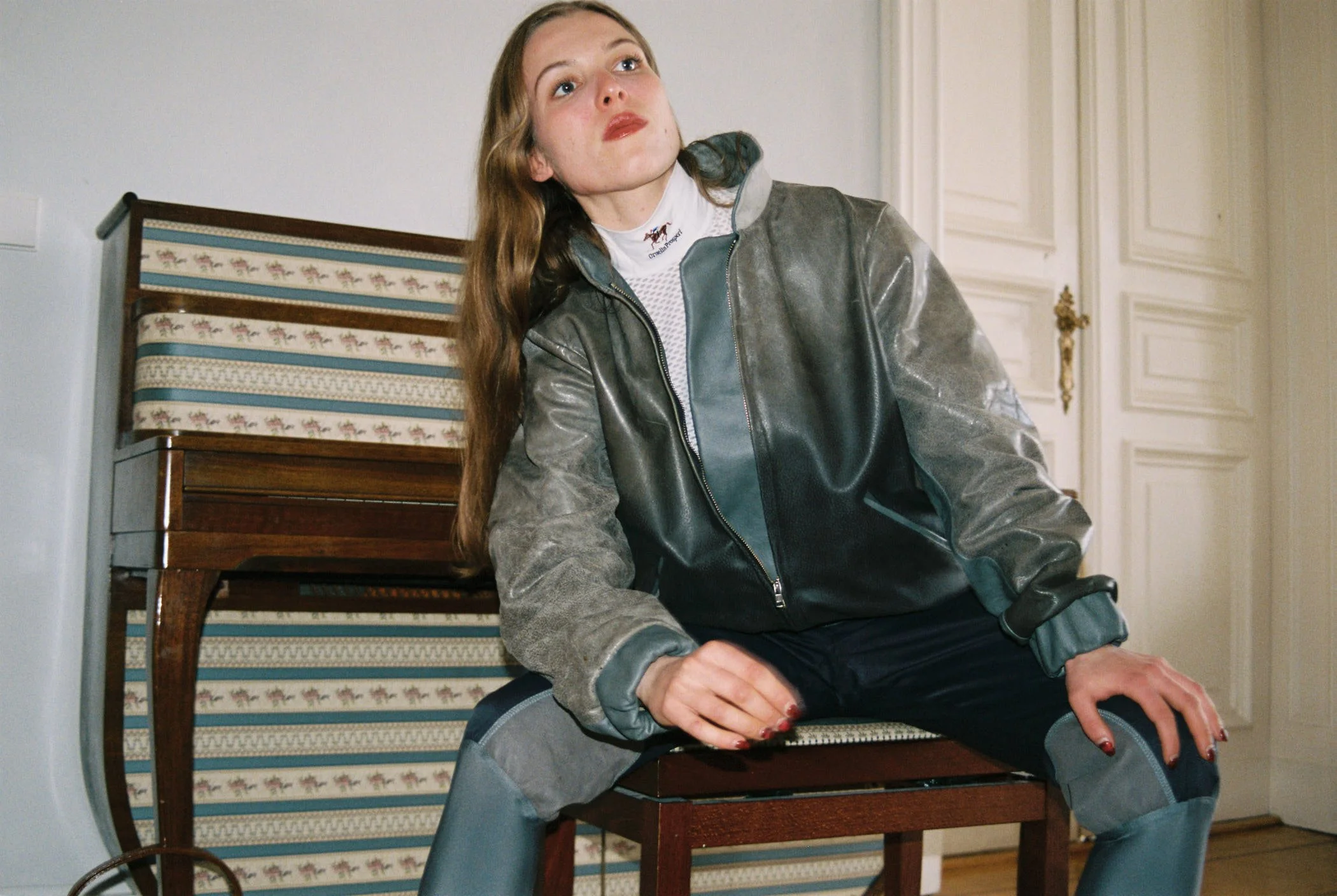
At art university it's a common notion that sculptors have a material fetish and I think it’s true for fashion designers as well. I have this obsession with the physical and symbolic qualities of certain materials that I’m intuitively drawn to and I think that materials age like fine wine. My selection process is a mixture of purpose and chance. I’m a nostalgic 90’s girl. I usually use worn materials, because I love a good story and worn materials are more likely to tell one. It started when my grandmother passed away and I inherited all her fabrics. Oftentimes I know an opportunity, when I see one. For example, I had to rework an old leather sofa for a client, the old leather was too gorgeous (showing off everybody who’s ever sat on it and every sunray that shown on it) to throw away and I came up with a piece, which is the bomber jacket, that suited the thick discarded leather of the sofa. It's the unused potential I see. For the other garments in this editorial, I sourced the material from a racetrack near me, each saddle blanket had been used once on a rainy day, meaning they were full of dirt and sweat, bearing witness to a specific moment in time, which made them interesting to me. However, I knew the material had to be modified in order to become desirable, which led me to coating it. In most cases I look for durability as well, functional, high quality materials that could last a lifetime, even if signs of usage add to their given patina, essentially continuing the story.
What changes when a worn object like a sofa or saddle blanket is turned into clothing?
The context changes. The original object disappears physically, but remains conceptually present. The new garment gives clues to its origin through traces and marks on its surface, which aren’t immediately decodable for the audience, but felt anyhow by them.
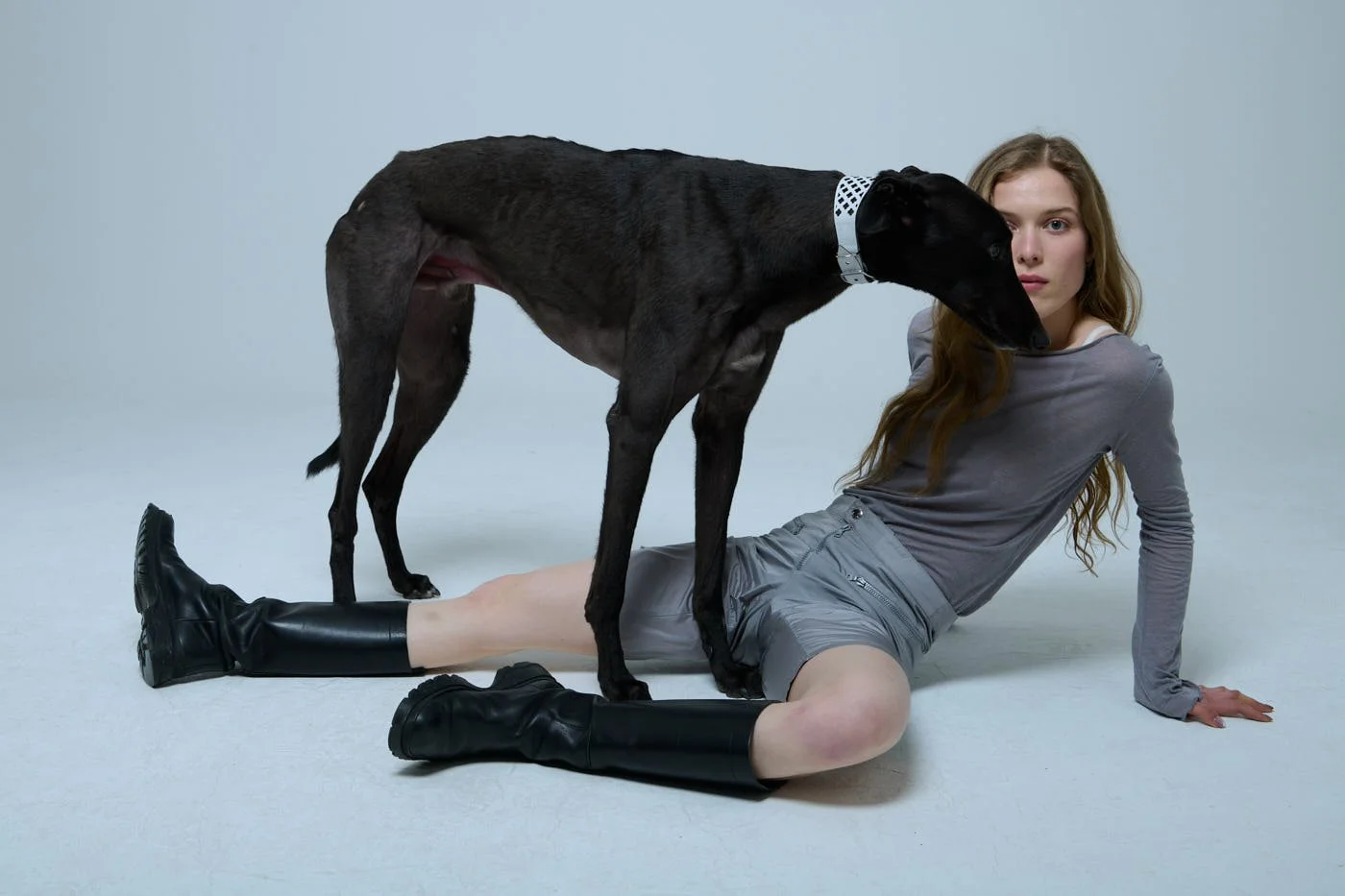
Esra is wearing a top from INTIMISSIMI, nylon shorts and boots from PRADA (via @velvetknife.archive), and Romeo Ultra is wearing a leather collar by ESRA VON KORNATZKI
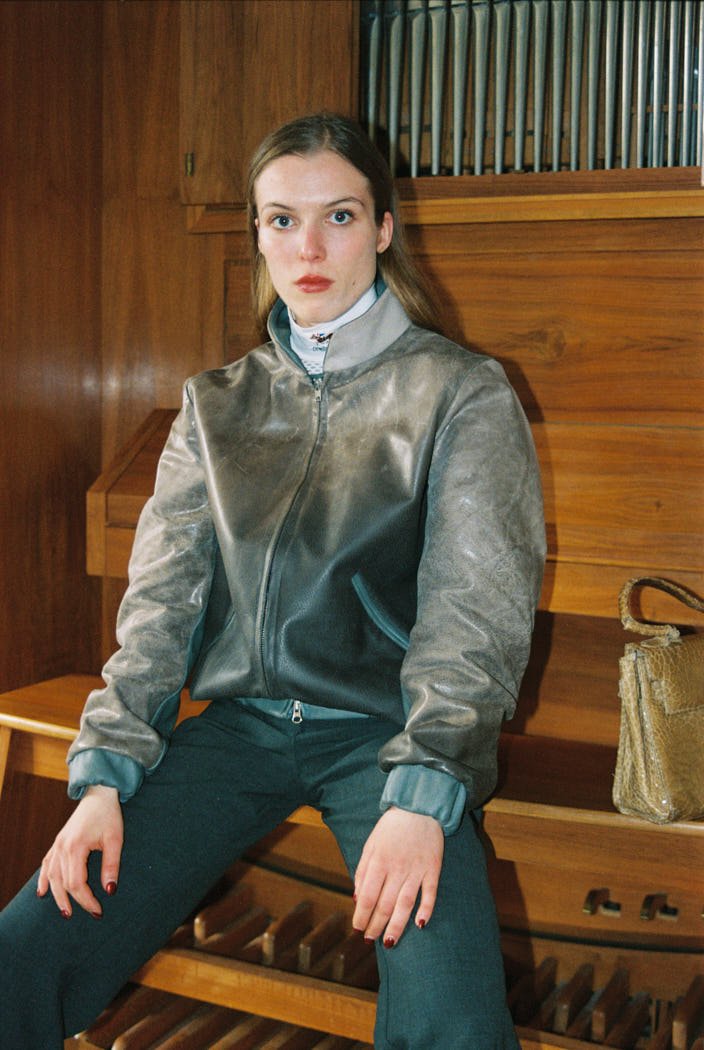
Esra is wearing a top from ORNELLA PROSPERI, a jacket from ESRA VON KORNATZKI, and pants and bag from FASHION ARCHIVE
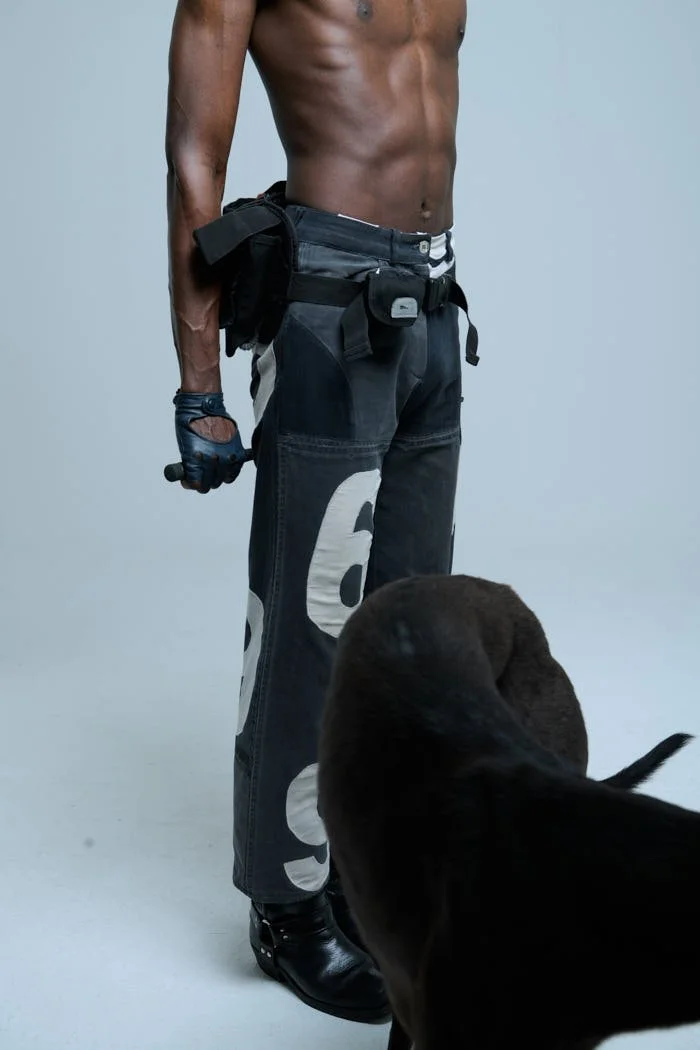
Sekou is wearing jeans from ESRA VON KORNATZKI, gloves and a waist bag from FASHION ARCHIVE
How do you technically preserve traces such as dirt, sweat or hair when coating materials?
For the saddle blankets I used a water based transfer glue (TRANSLAC BOND 55) that I silk screen printed onto the material and then fused with a glossy transparent foil using a heat press at 16o °C, essentially laminating the material and trapping the dirt, sweat and hair underneath.
What information do you want the material to retain once it becomes a garment?
I want the material to retain its history—where it came from, even if in an abstract sense—and its symbolic meaning. I’m interested in what a material carries physically and conceptually, and how that can continue to inform the garment once it is transformed.
How do you position your work within current discussions around material-driven design?
Generally speaking, material does come first in my design process and informs the outcome. I relate to practices like Martin Margiela or even Joseph Beuys, where material isn’t neutral but holds memory and meaning before it becomes form. The material has been exposed to time and happenings, which shape its physical and aesthetic reality, making it a witness and narrating agent. I hold a deep sensitivity for texture, fabric behavior, and tactility. Intuitively exploring and engineering materials while also respecting what they are rather than forcing them to fit a preconceived idea. It's a hybrid practice of a material-led, but conceptually-charged design approach.
What kind of relationship should exist between the garment and the body?
An emotionally charged one - somewhere between love, desire, mystery and comfort. A garment should be an extension of the body and soul. Fashion needs to be felt. My muses that I tailor the garments to, are often people close to me and how I feel about them shapes the garments they inspire me to make. It's another conversation: that between garment and body and I’m in a feedback loop with my muses during the design process in order to modify the garment based on their experience.
How do you ensure your work is not reduced to sustainability or upcycling?
Sustainability is not my primary motivation. I work with materials sourced outside fashion’s conventional system, rethinking their use and making them desirable for clothes, giving them a stage to tell their own story. The focus is on aesthetic and conceptual value, quality and functionality, as well as sustainability. Although I would describe myself as somewhat of a hoarder, making it a coping mechanism to repurpose materials into polished and clean garments in order to declutter—literally and metaphorically.
What are the next steps for your work within fashion?
To expand the dialogue and deepen the narrative dimension—through collaboration, new contexts, and material experimentation —while exploring accessories as an extension of the practice.
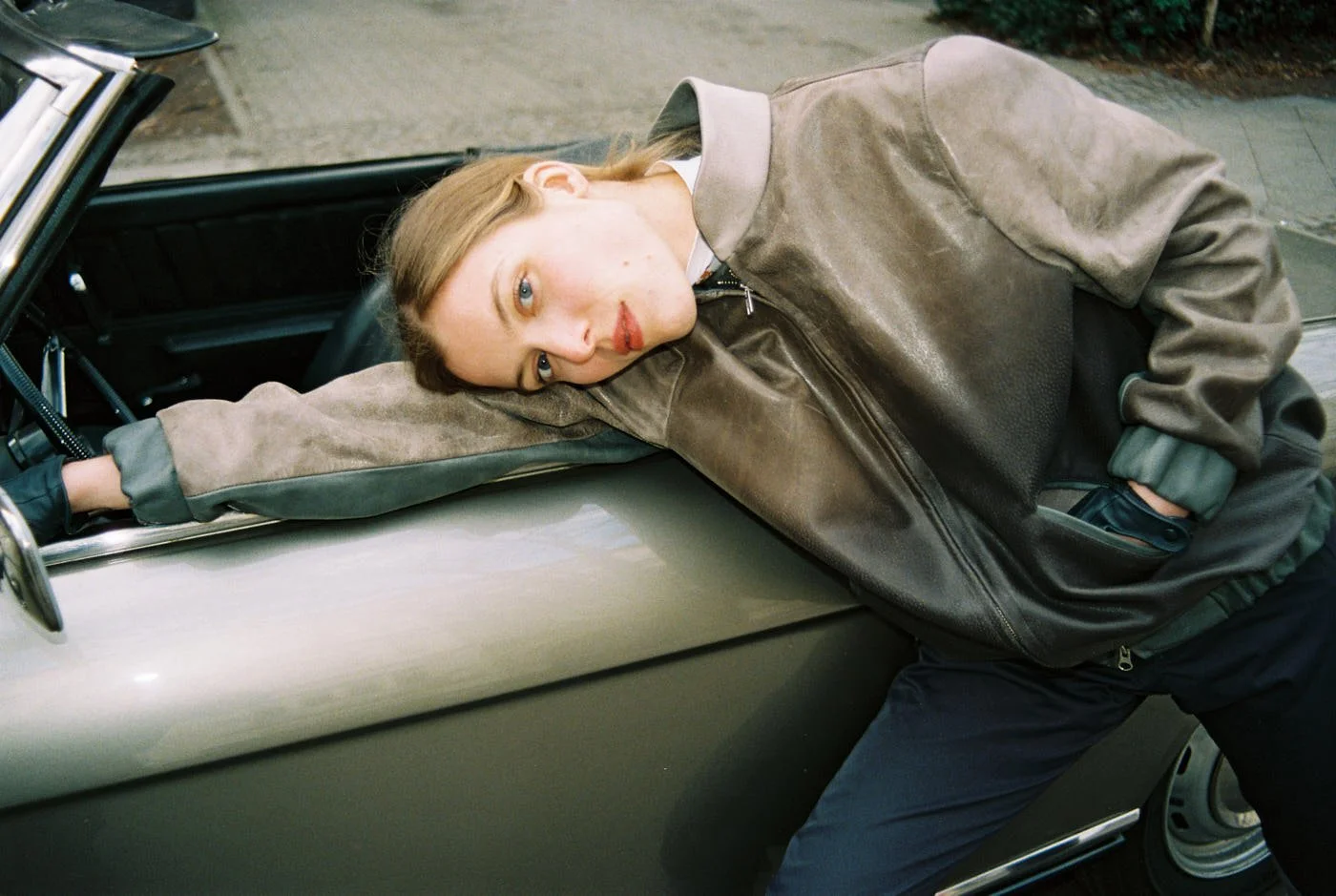
Esra is wearing a top from ORNELLA PROSPERI and a jacket from ESRA VON KORNATZKI
designer ESRA VON KORNATZKI
styling XUAN
talent SEKOU + ESRA VON KORNATZKI + ROMEO ULTRA
hair + make up JANETTE PETERS
assistant YEONGHYEON KANG