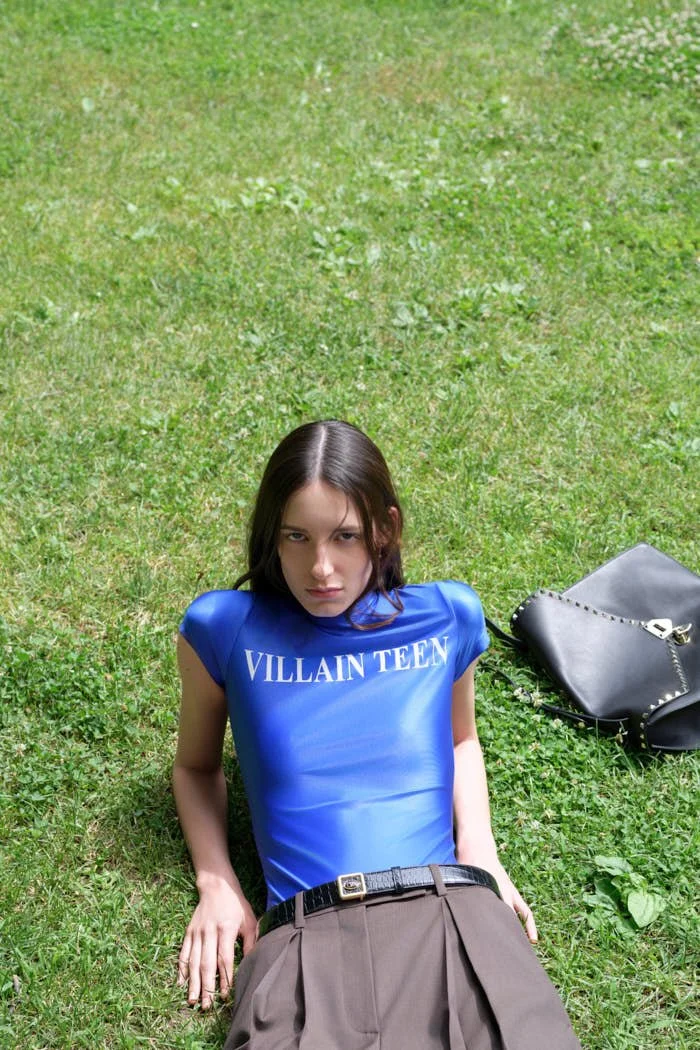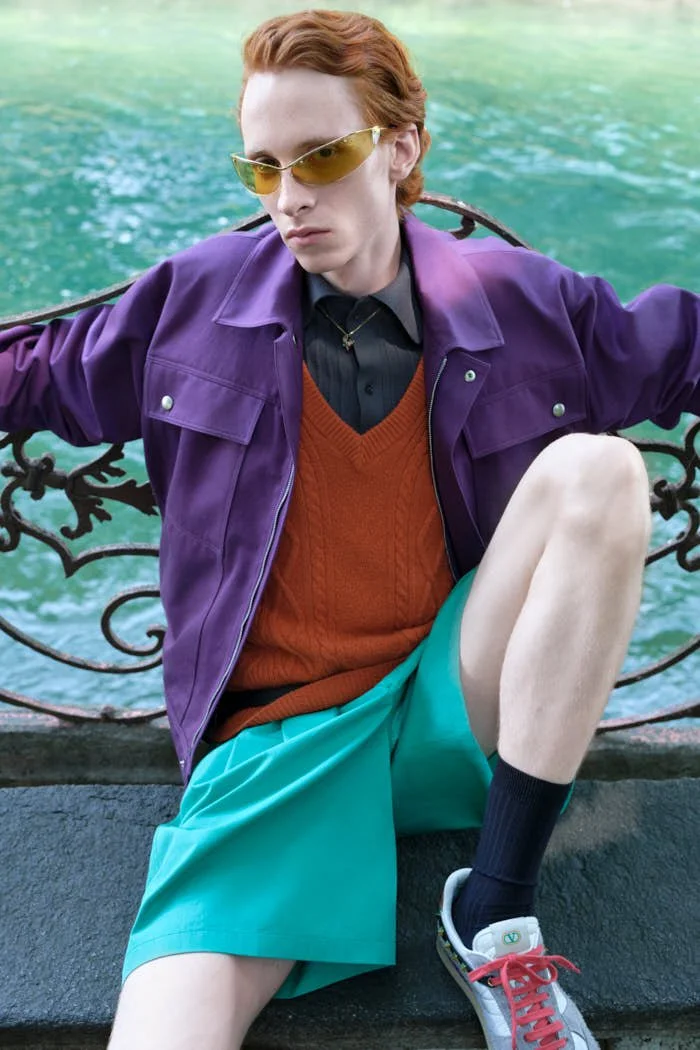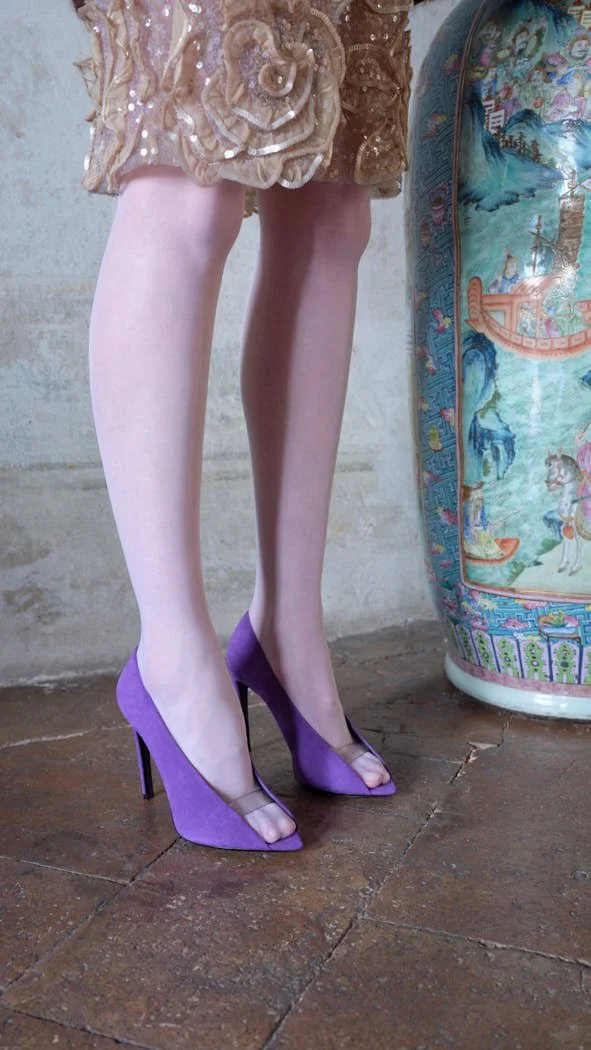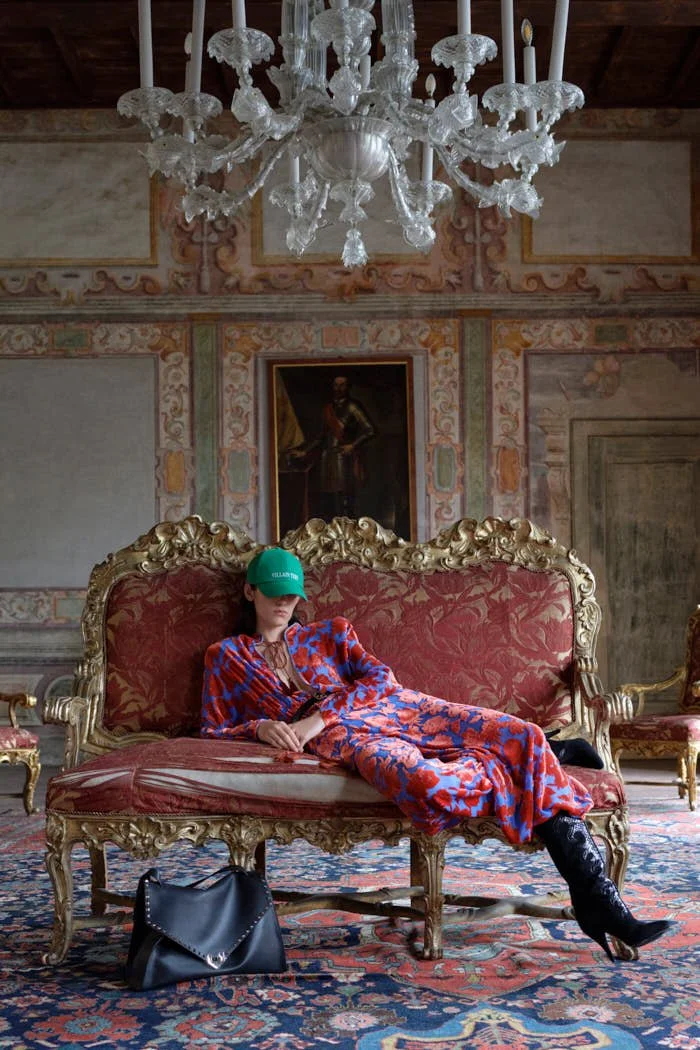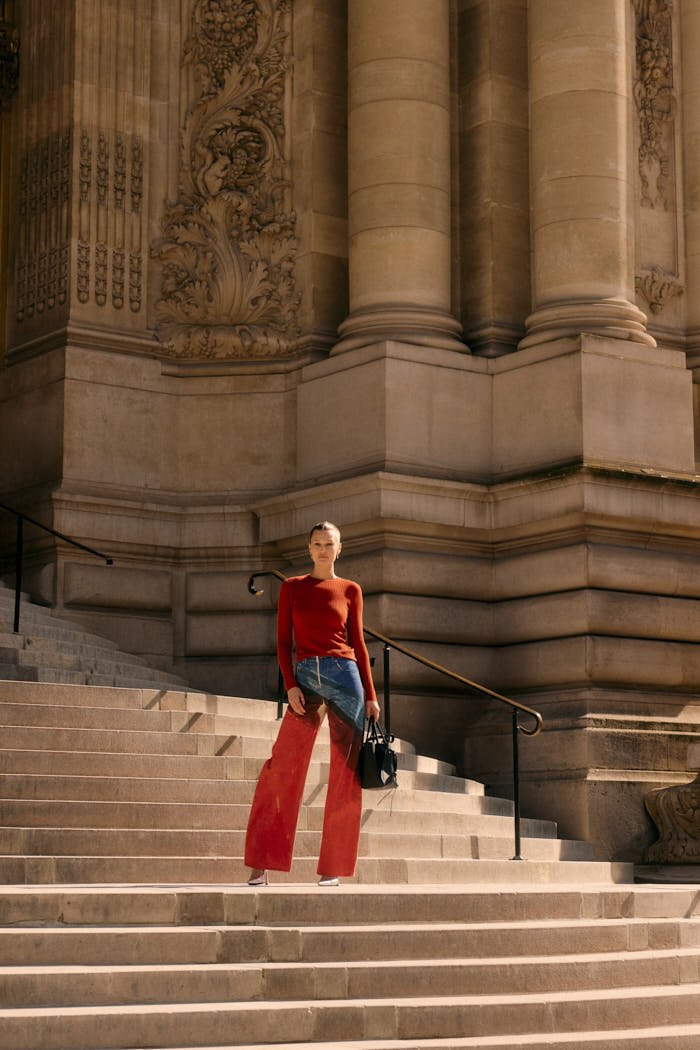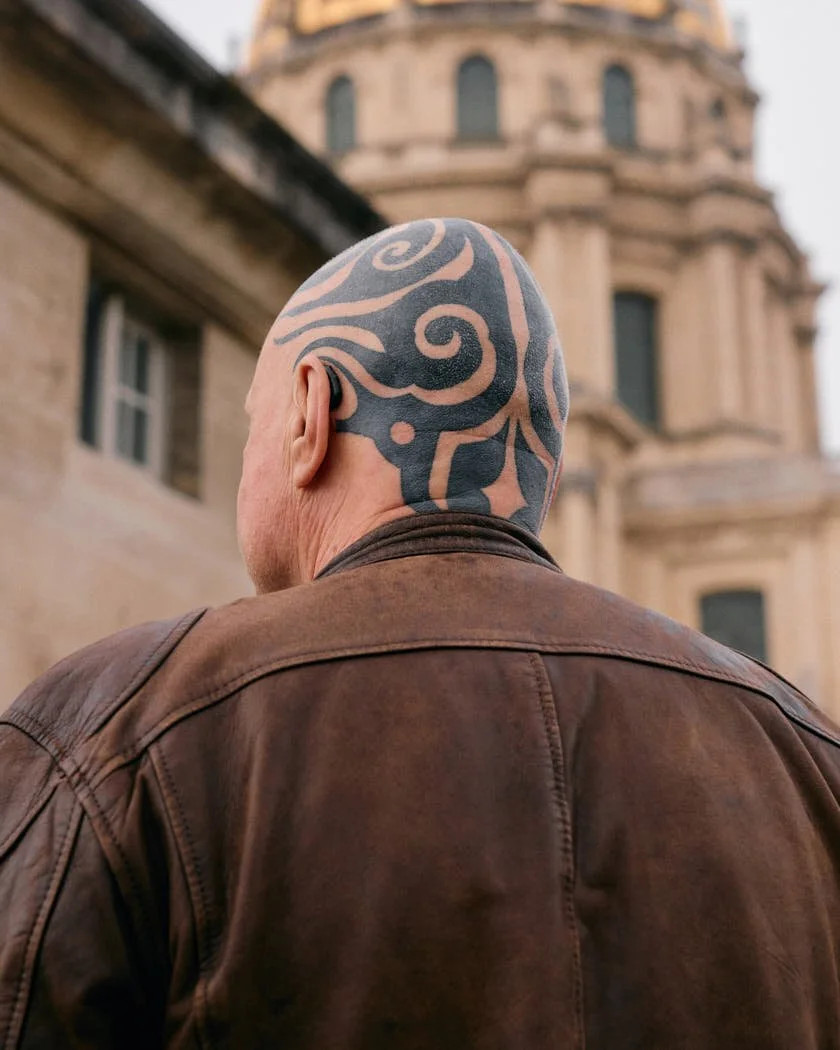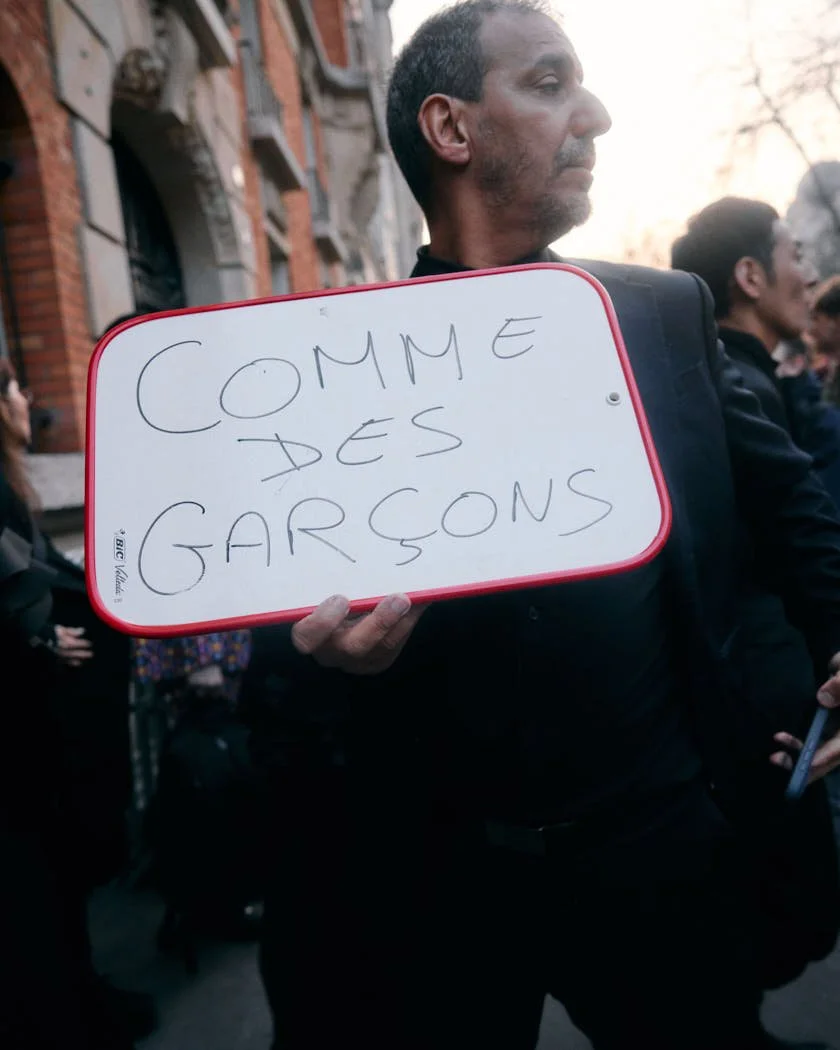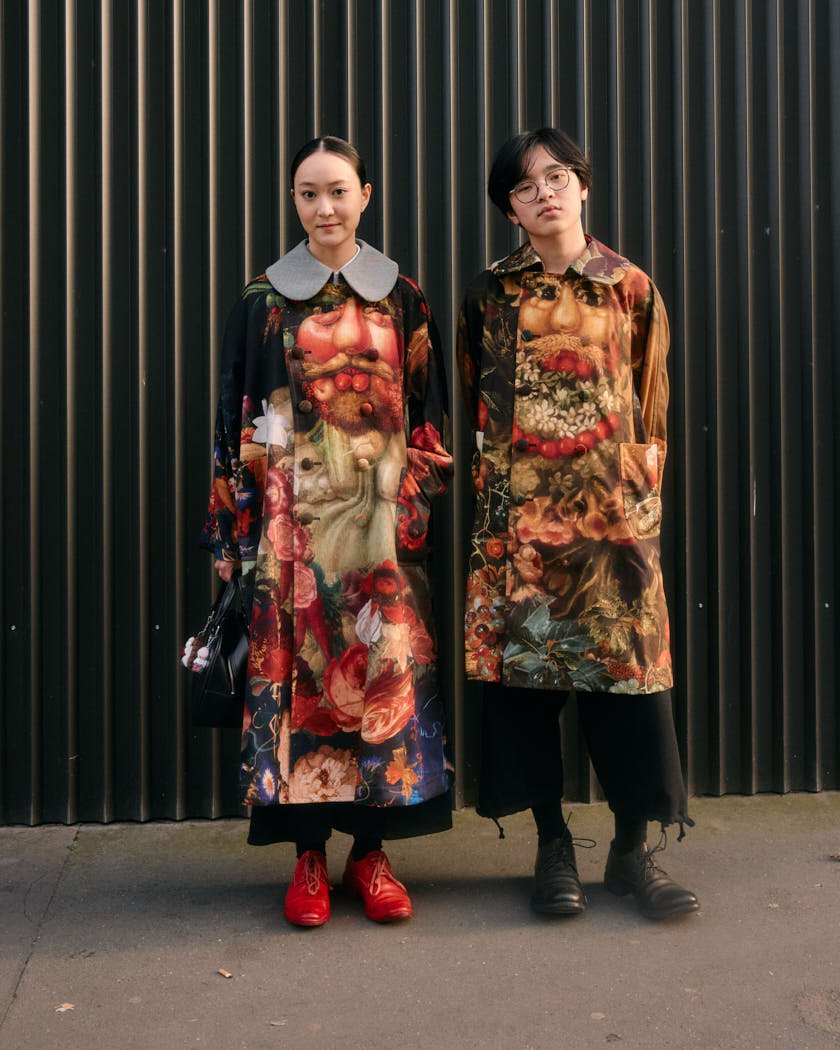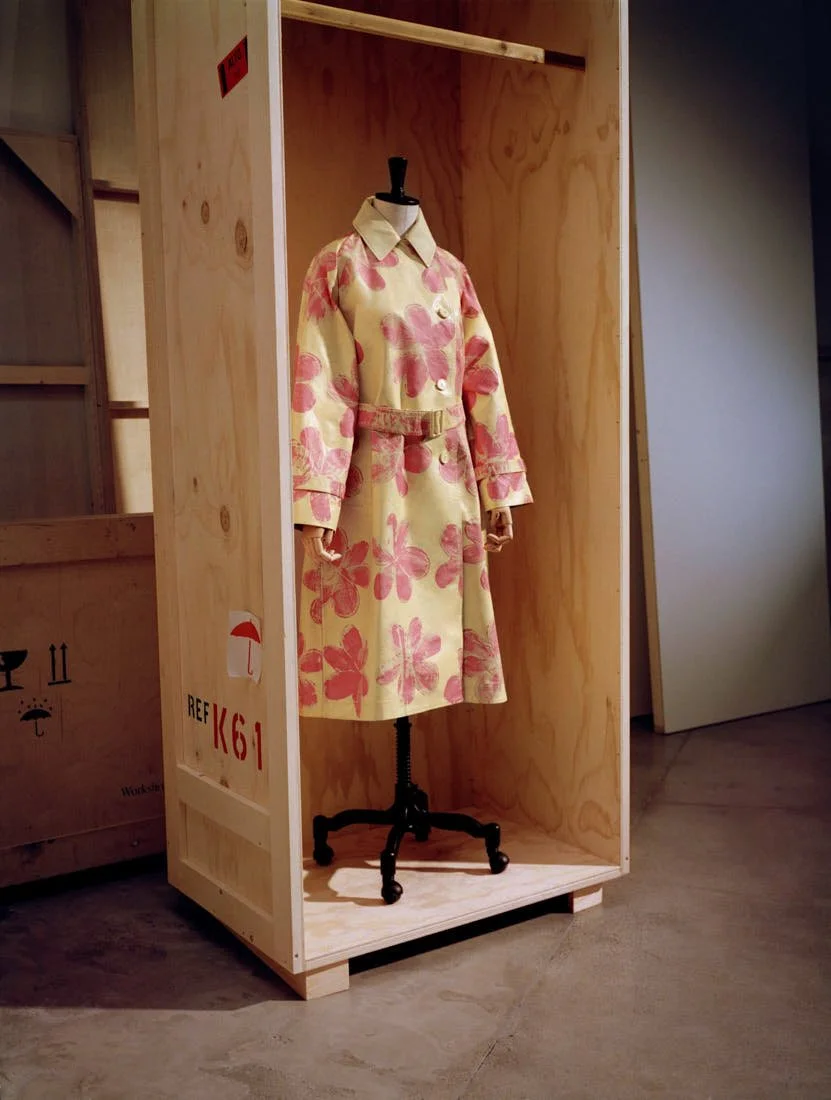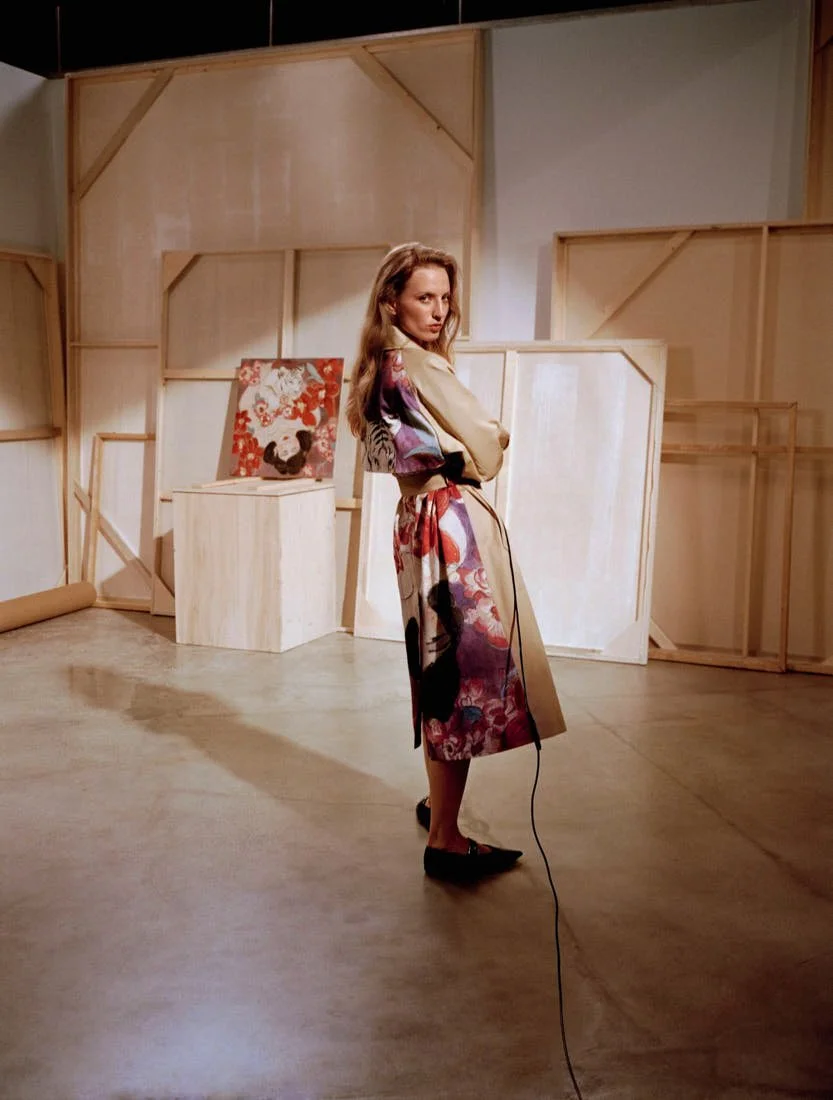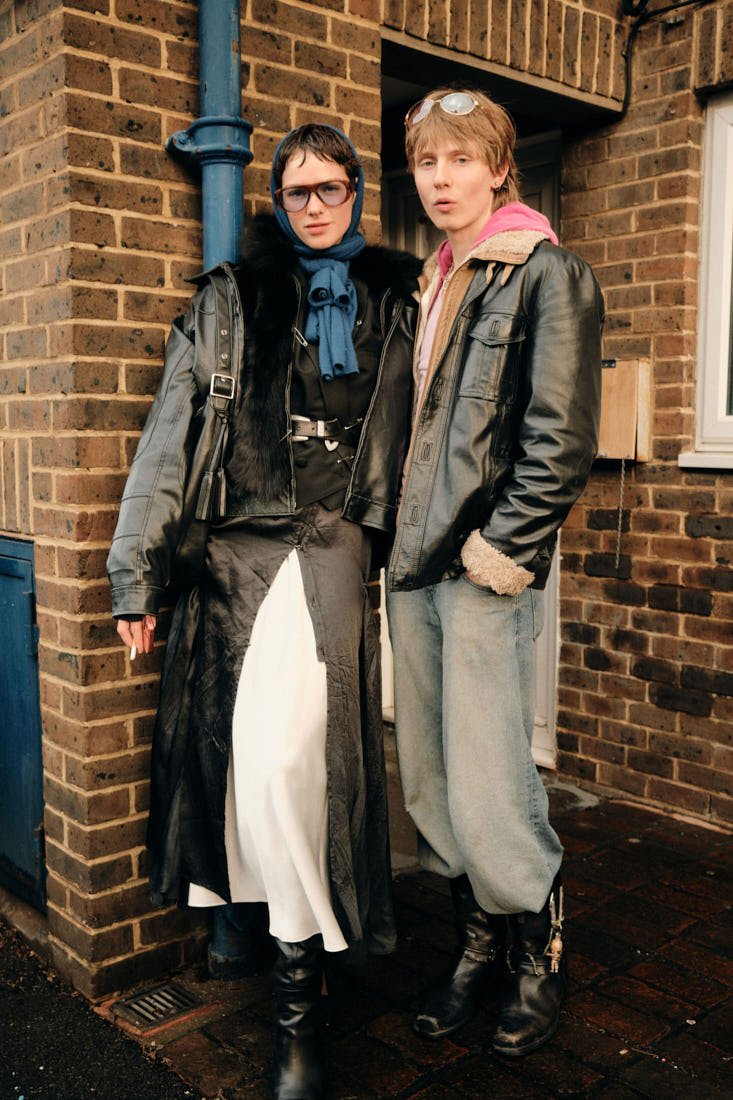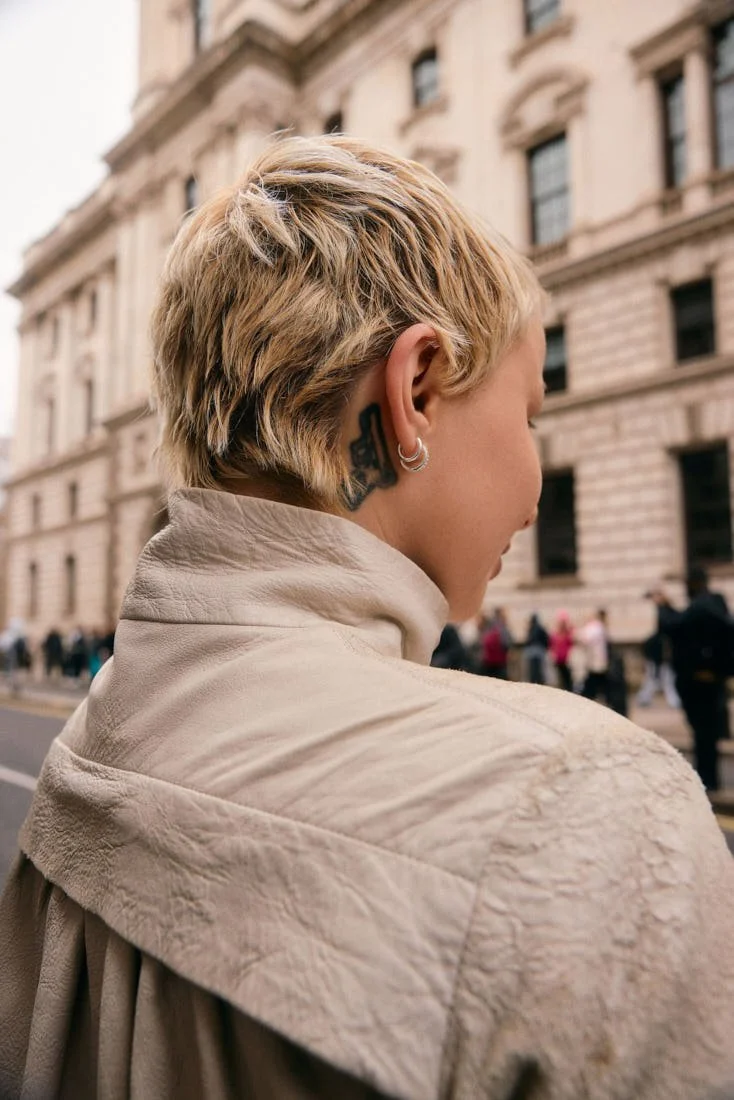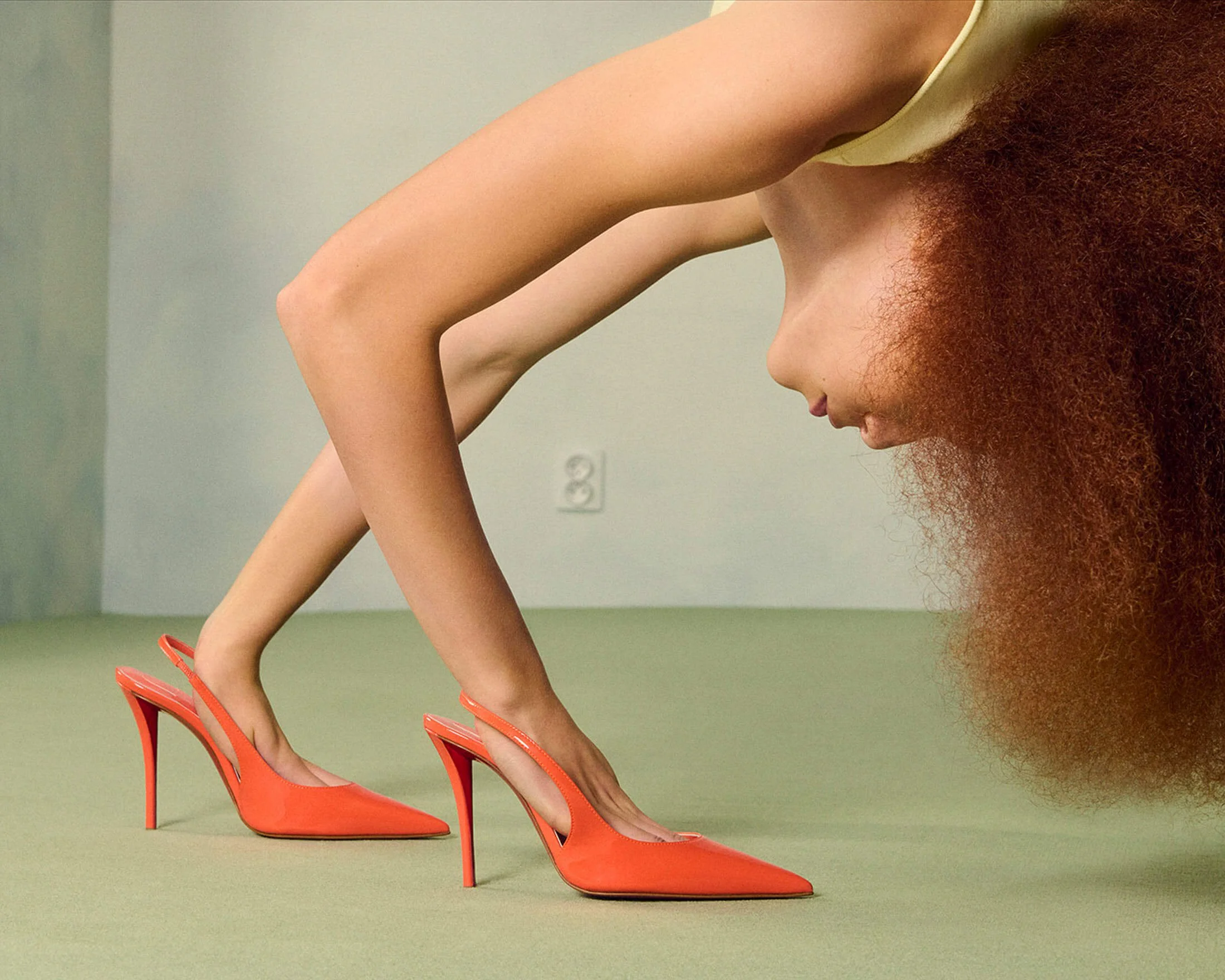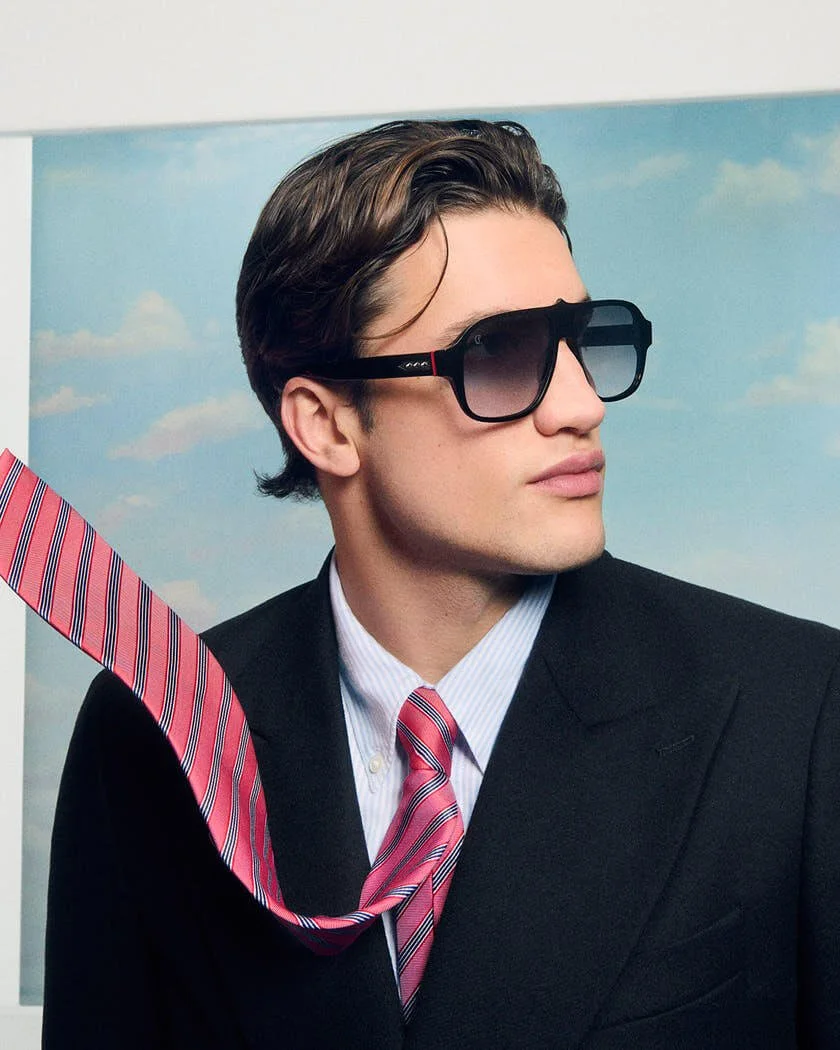
Taakk Spring/Summer 2027 - Love Letter to Irving Penn and Flowers ​

Taakk Spring/Summer 2027 - Love Letter to Irving Penn and Flowers ​

A Review of Taakk Spring/Summer 2027 Menswear Collection

TAAKK’s Love Letter to Irving Penn and Flowers


written MALCOLM THOMAS


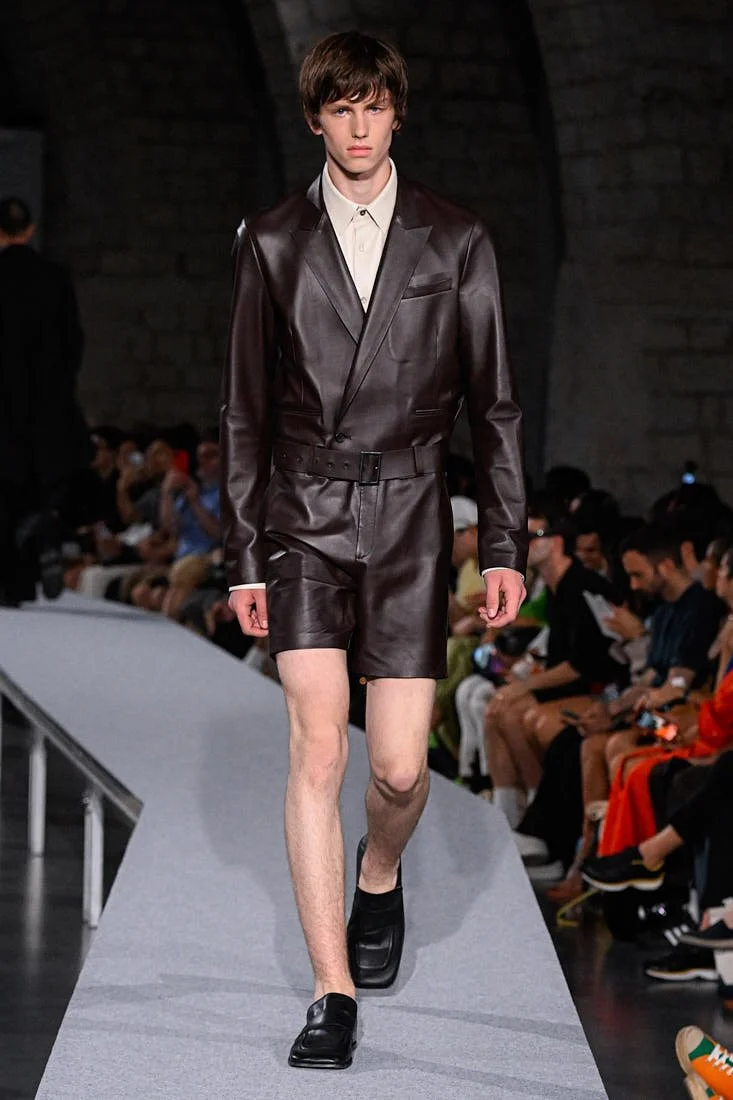
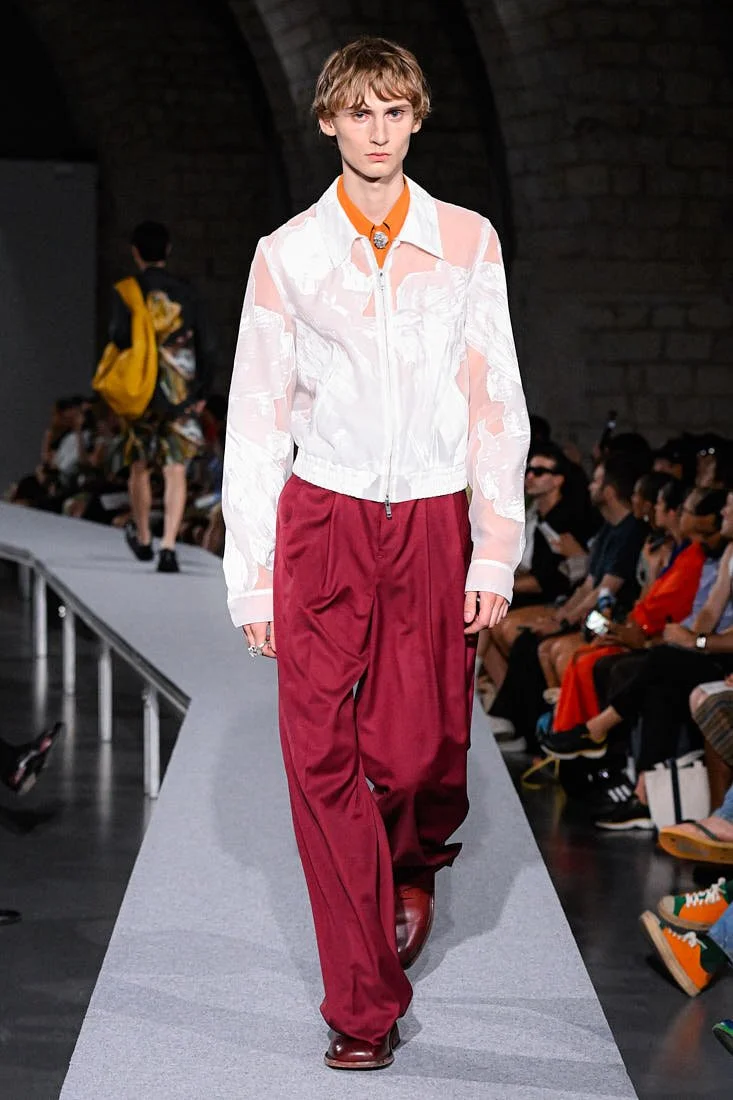
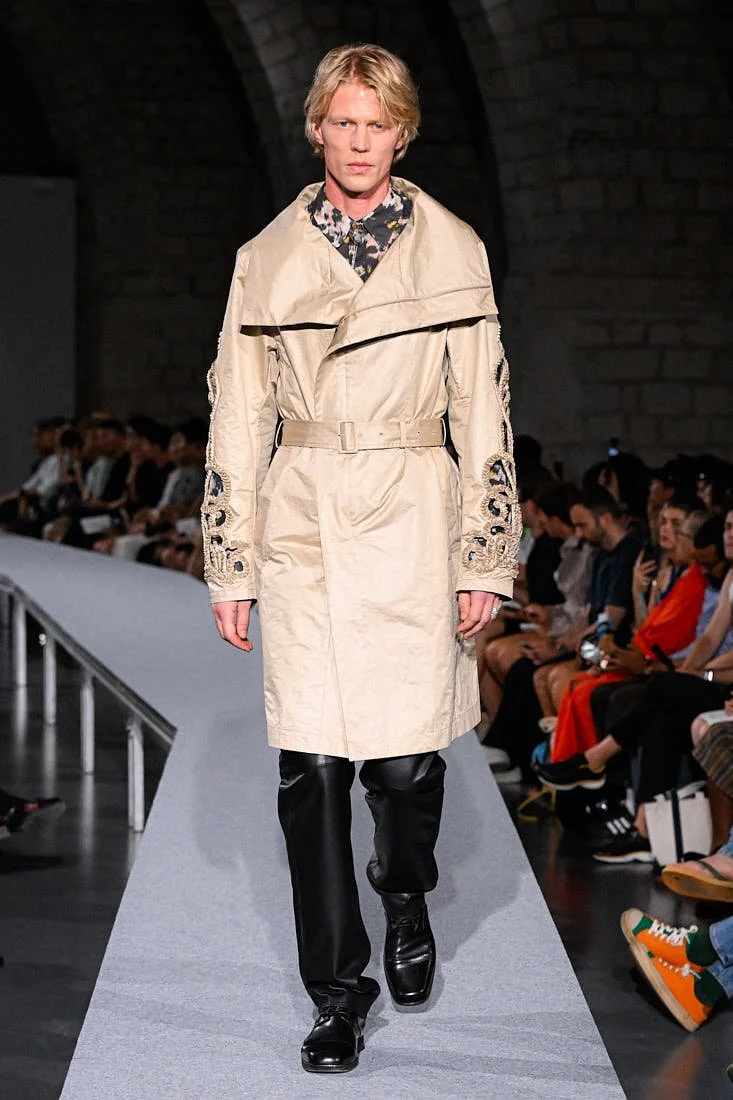
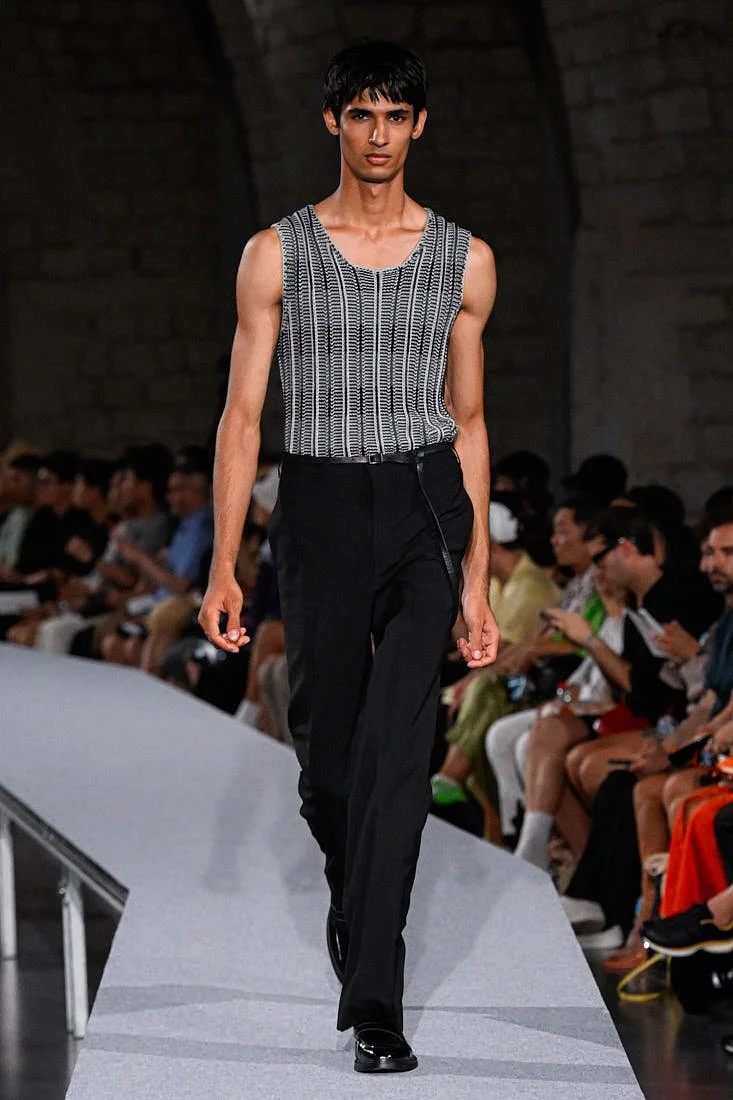
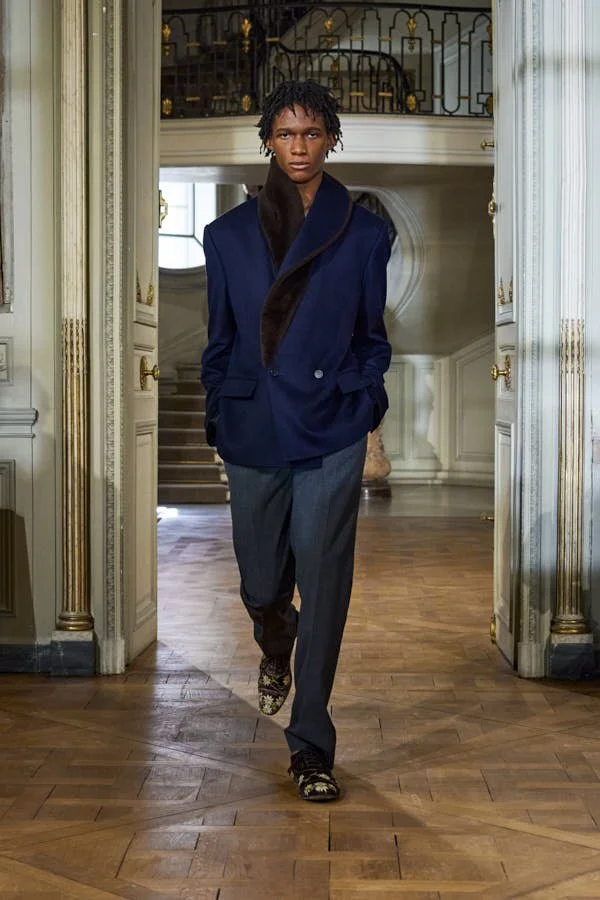
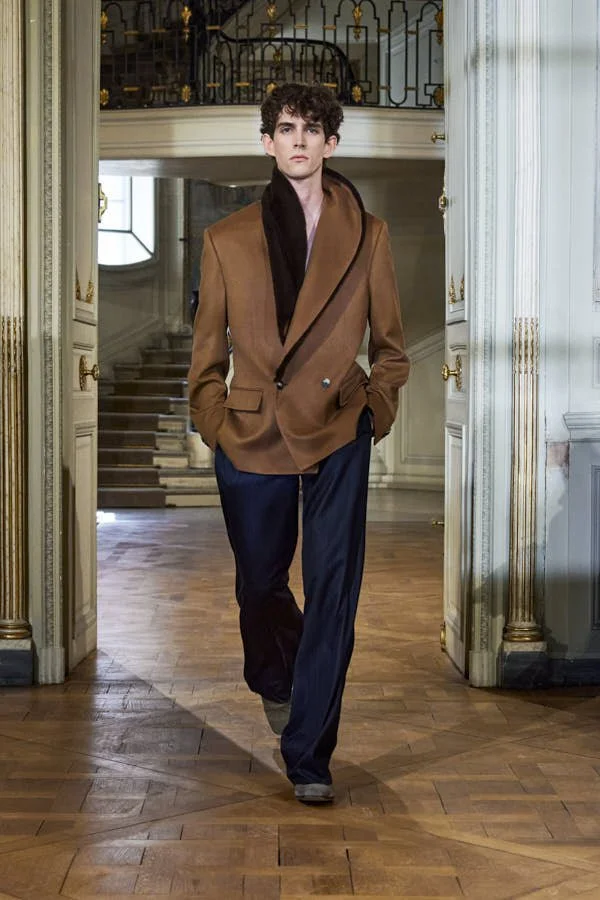
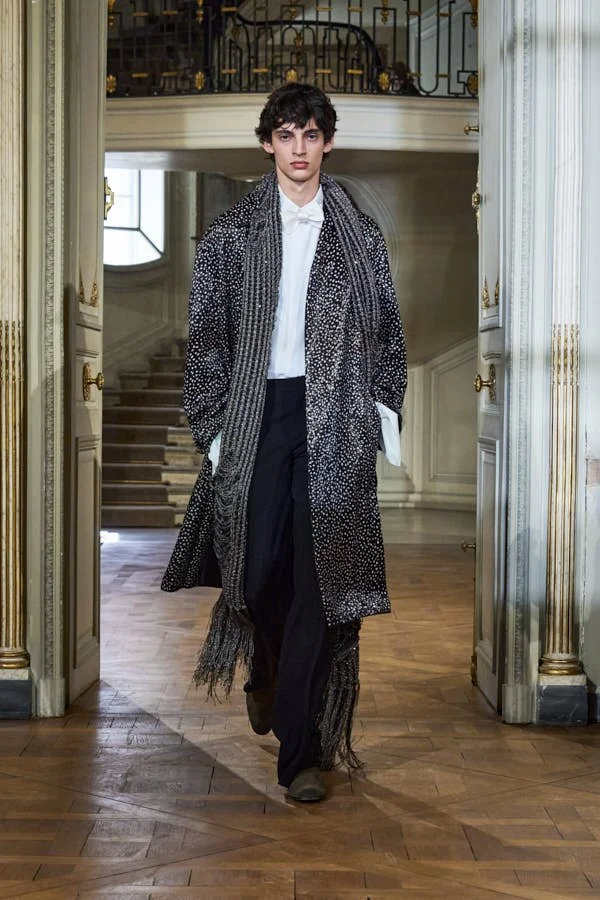
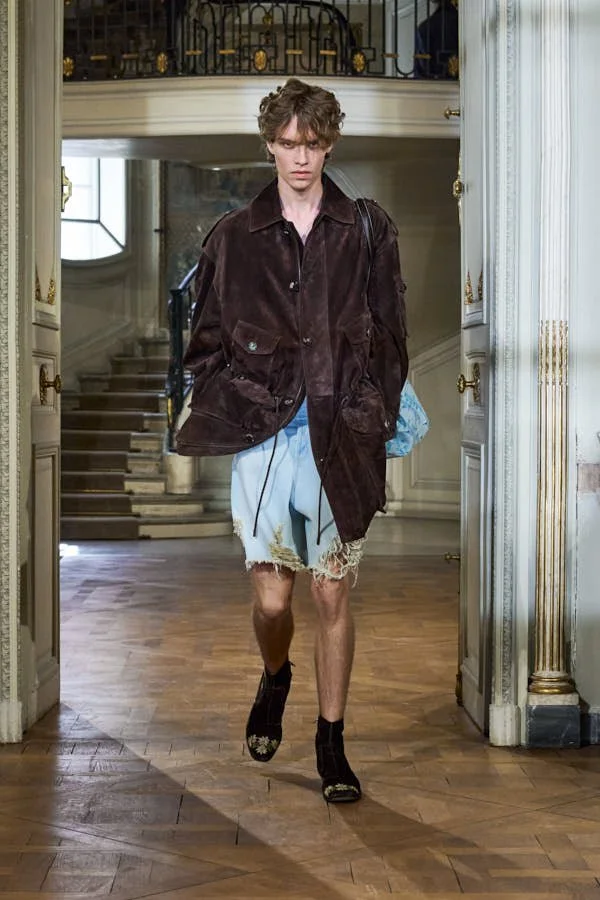
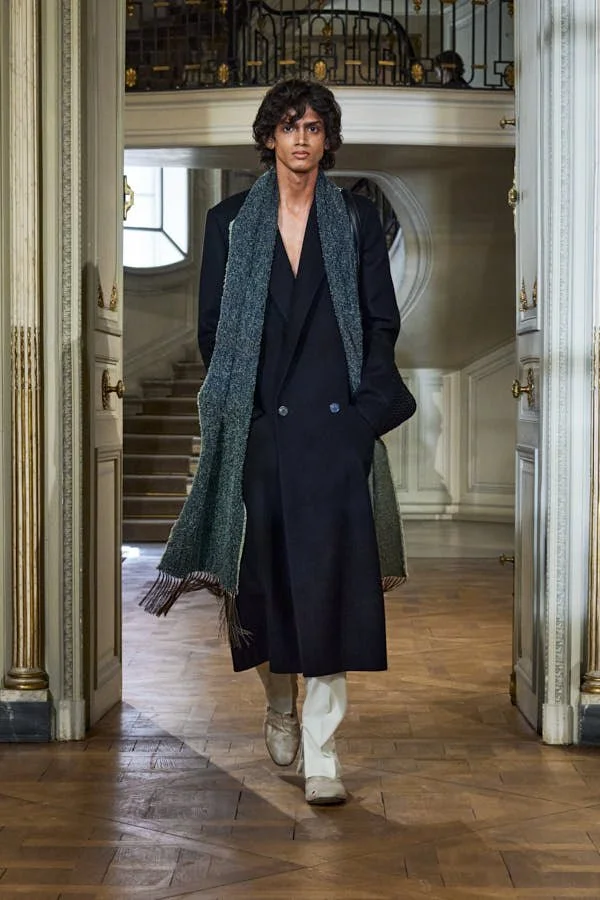
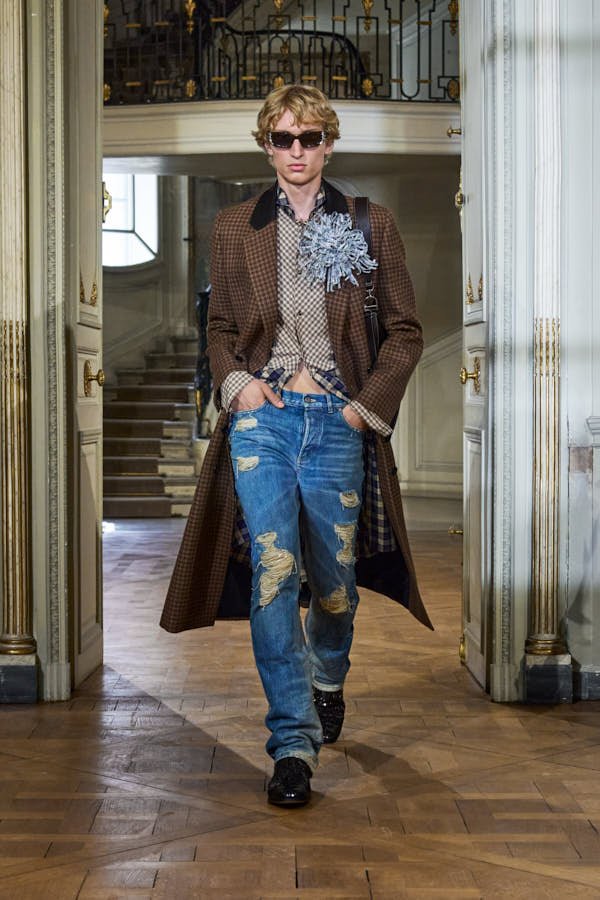
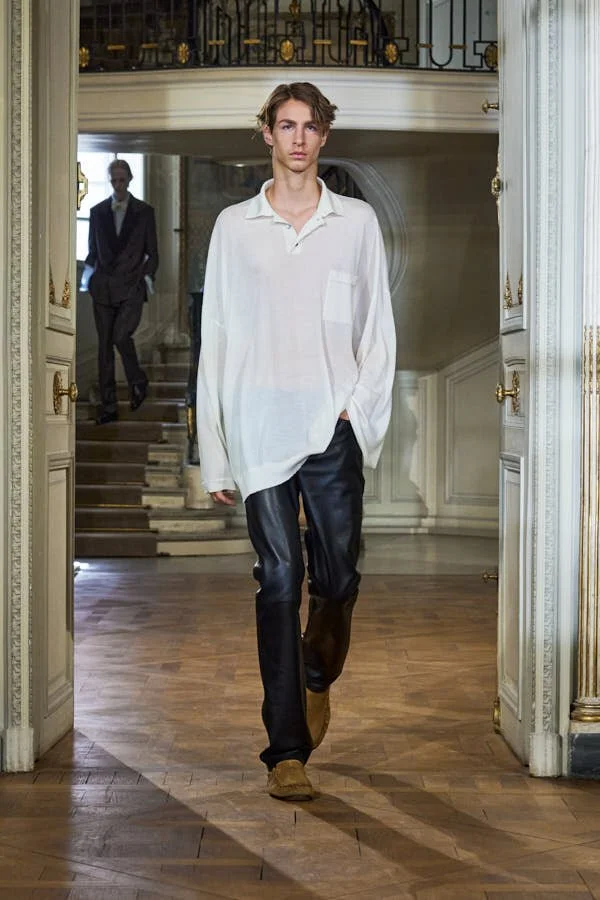
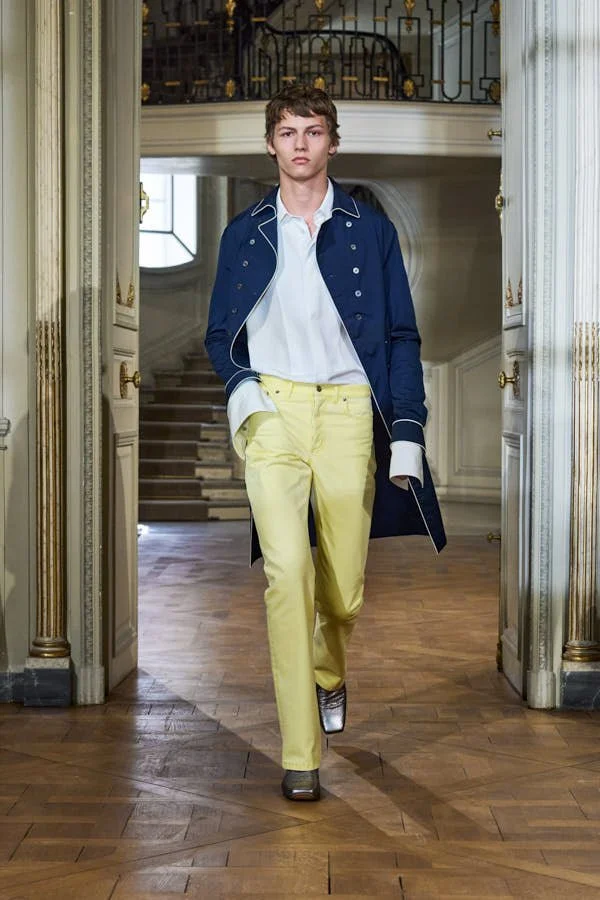
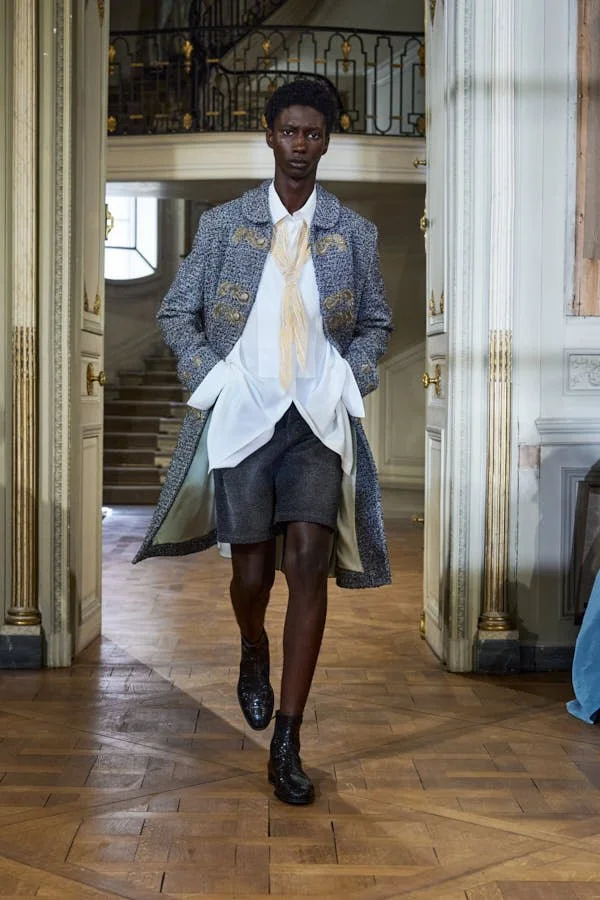
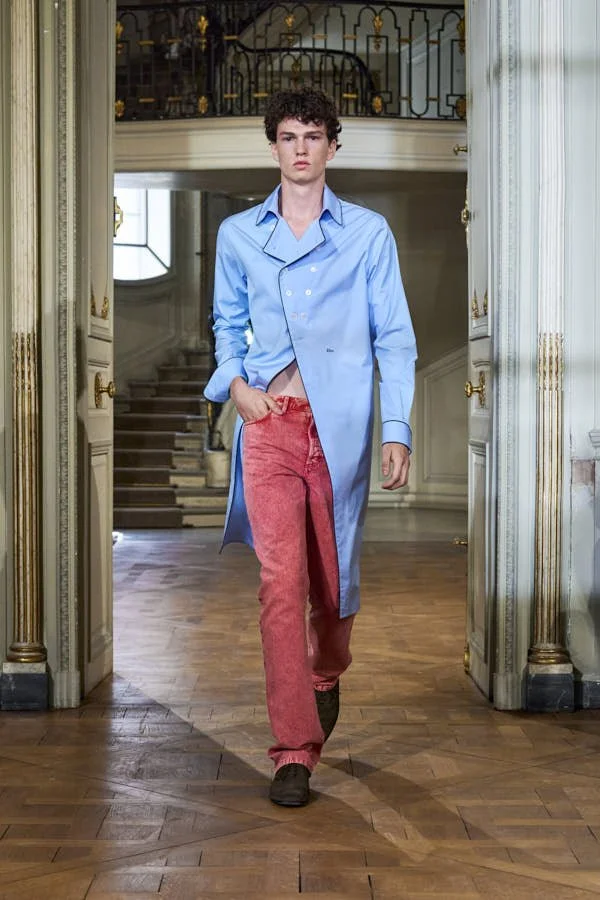
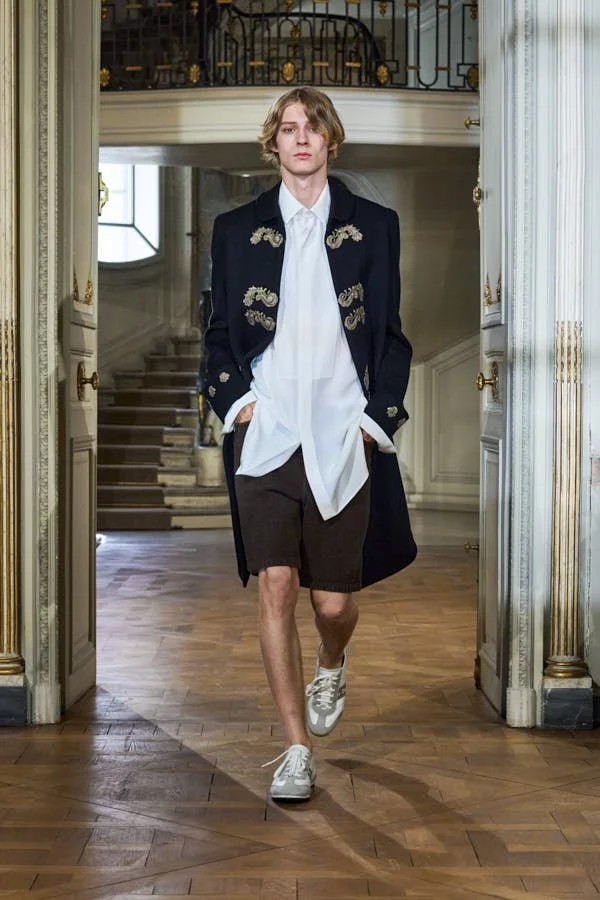
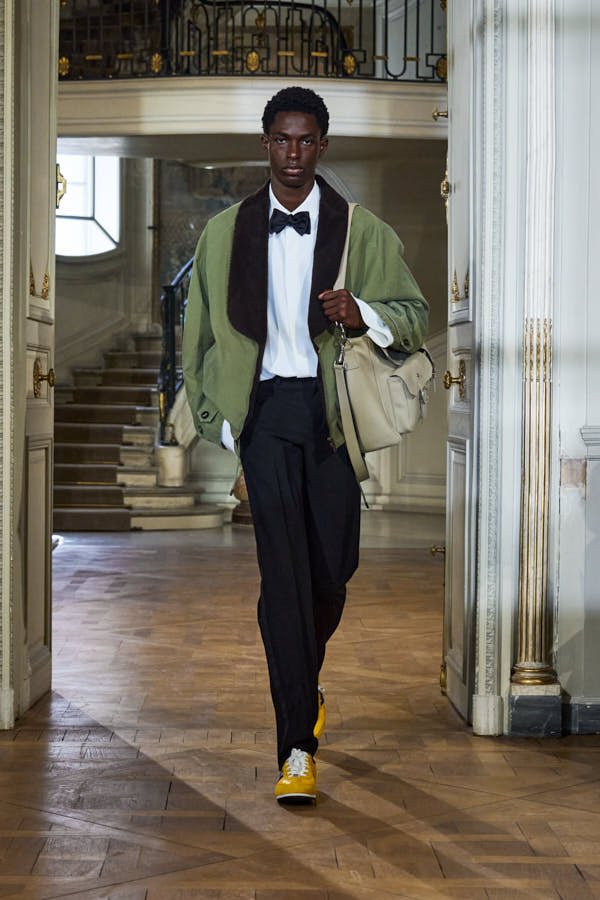
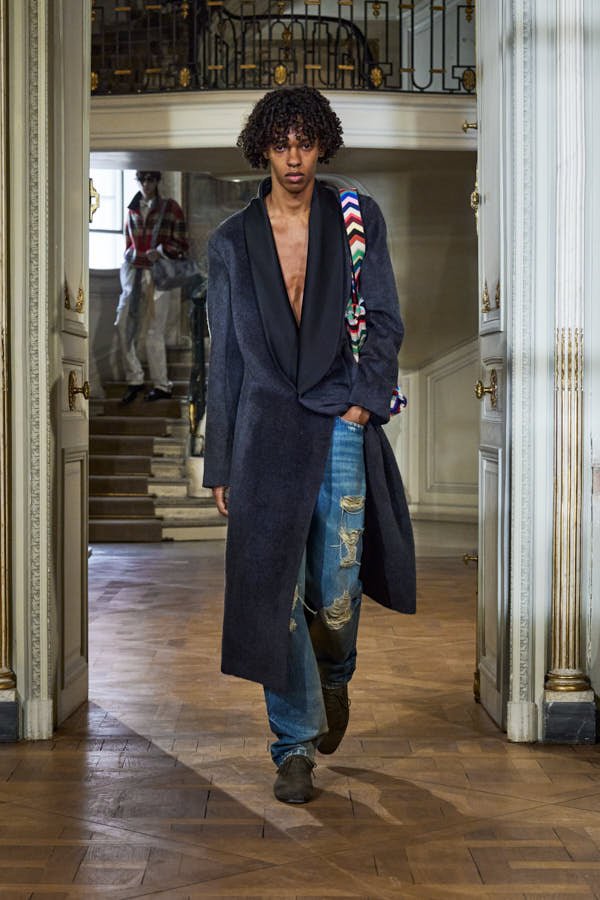
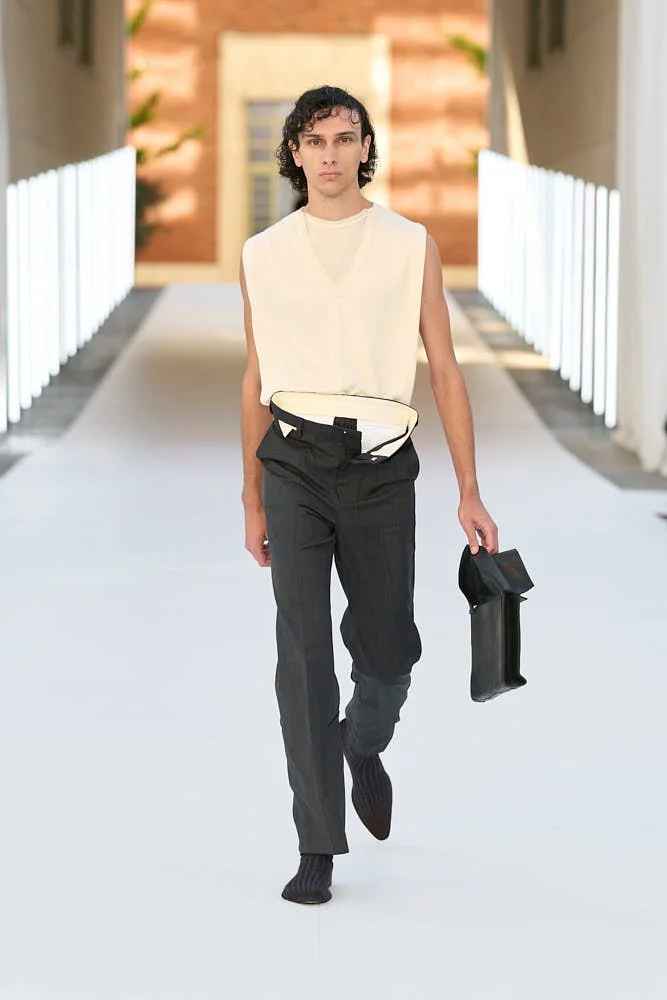
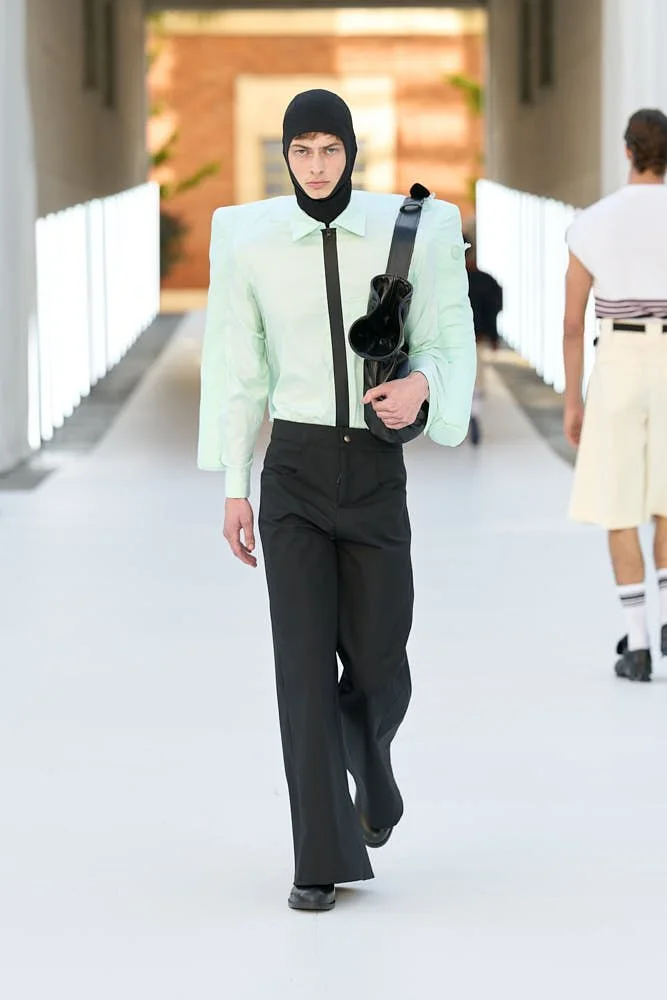
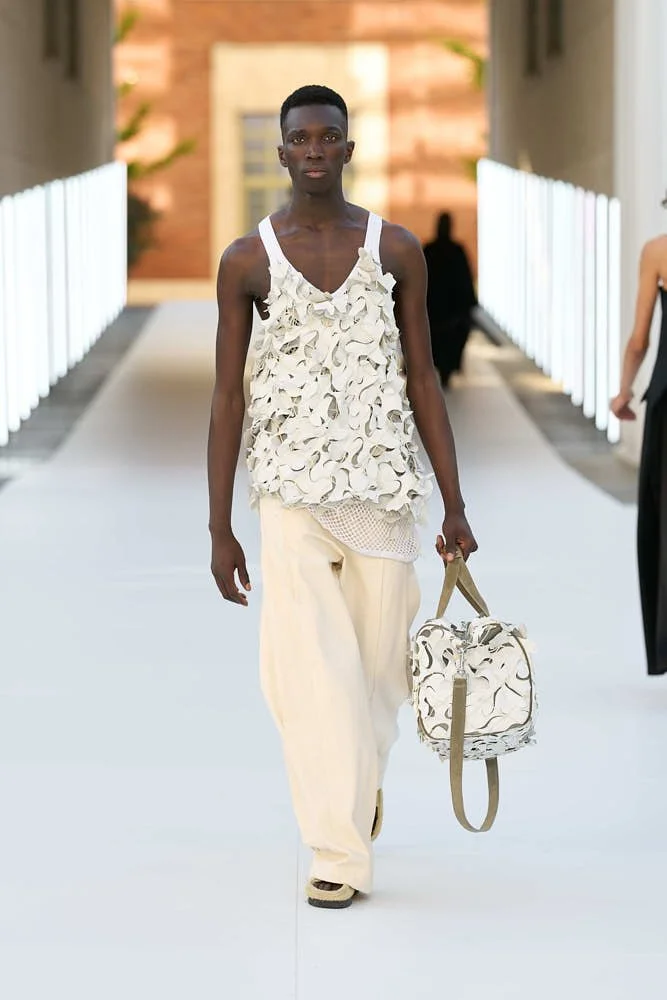
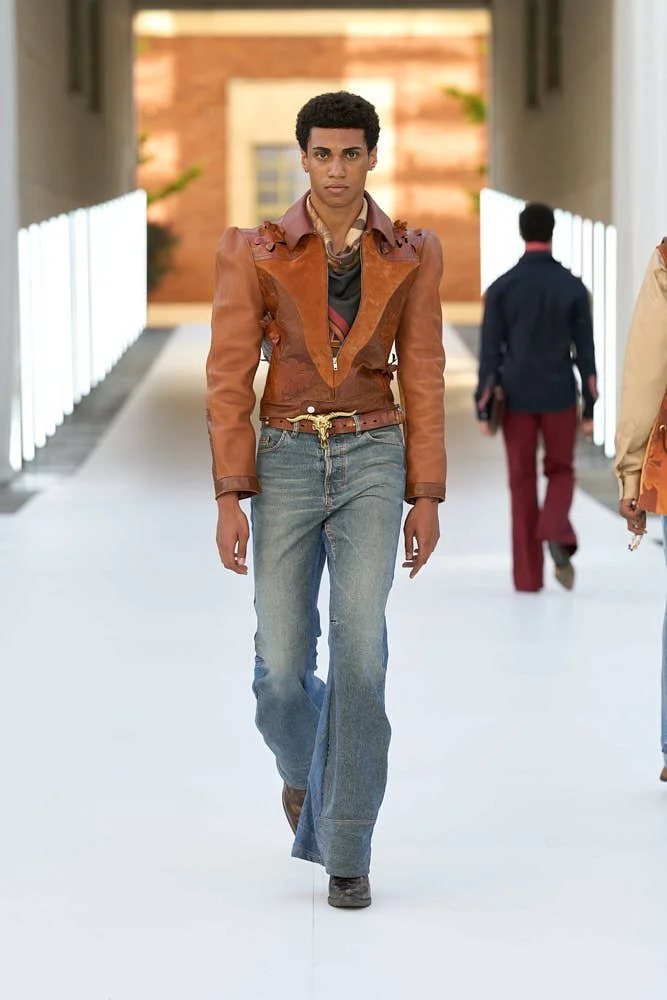
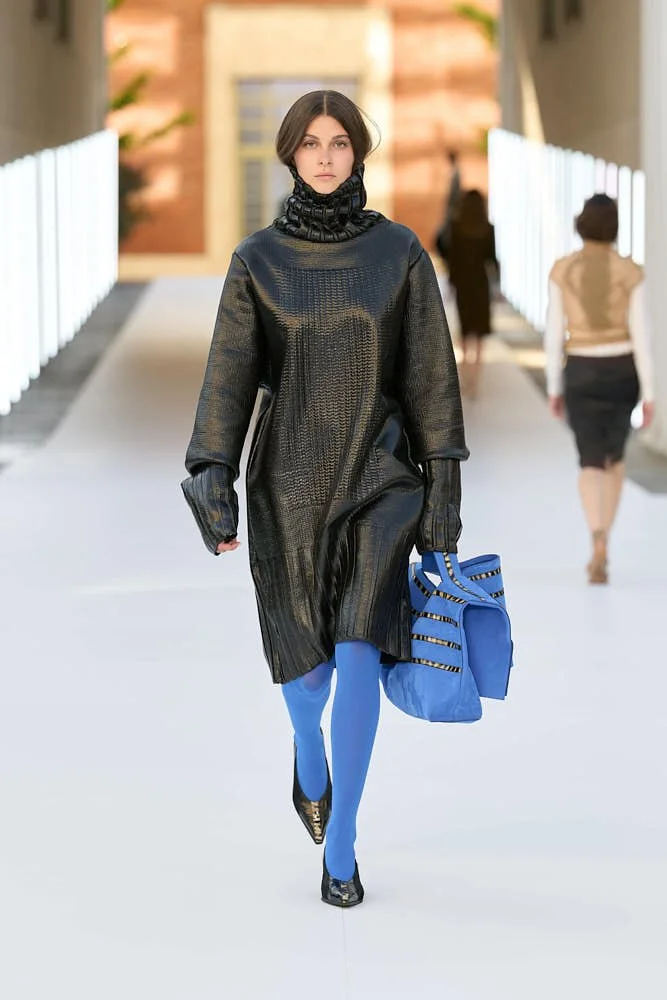
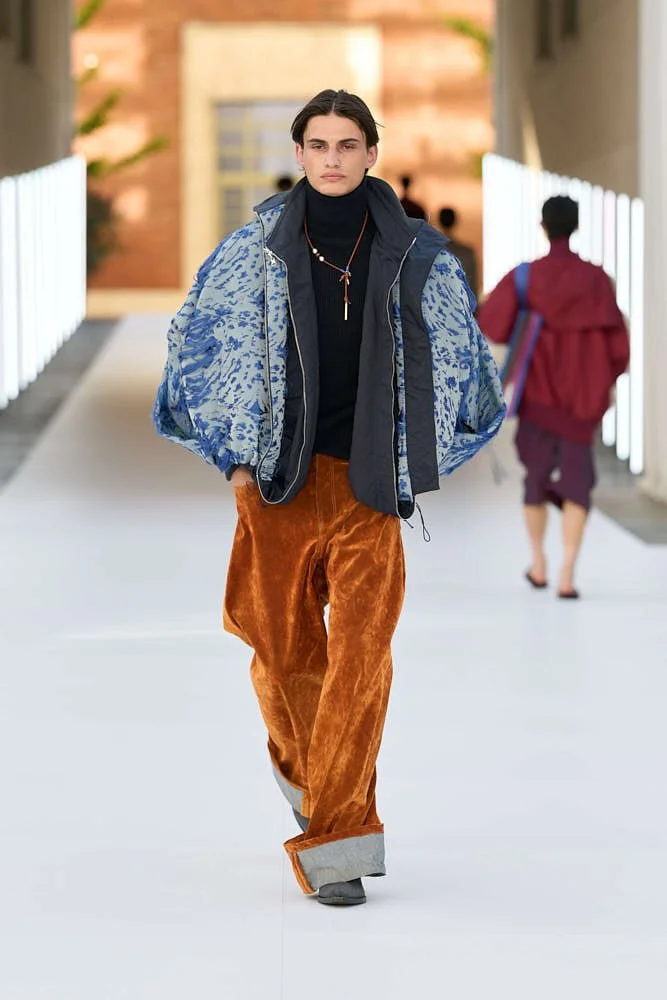
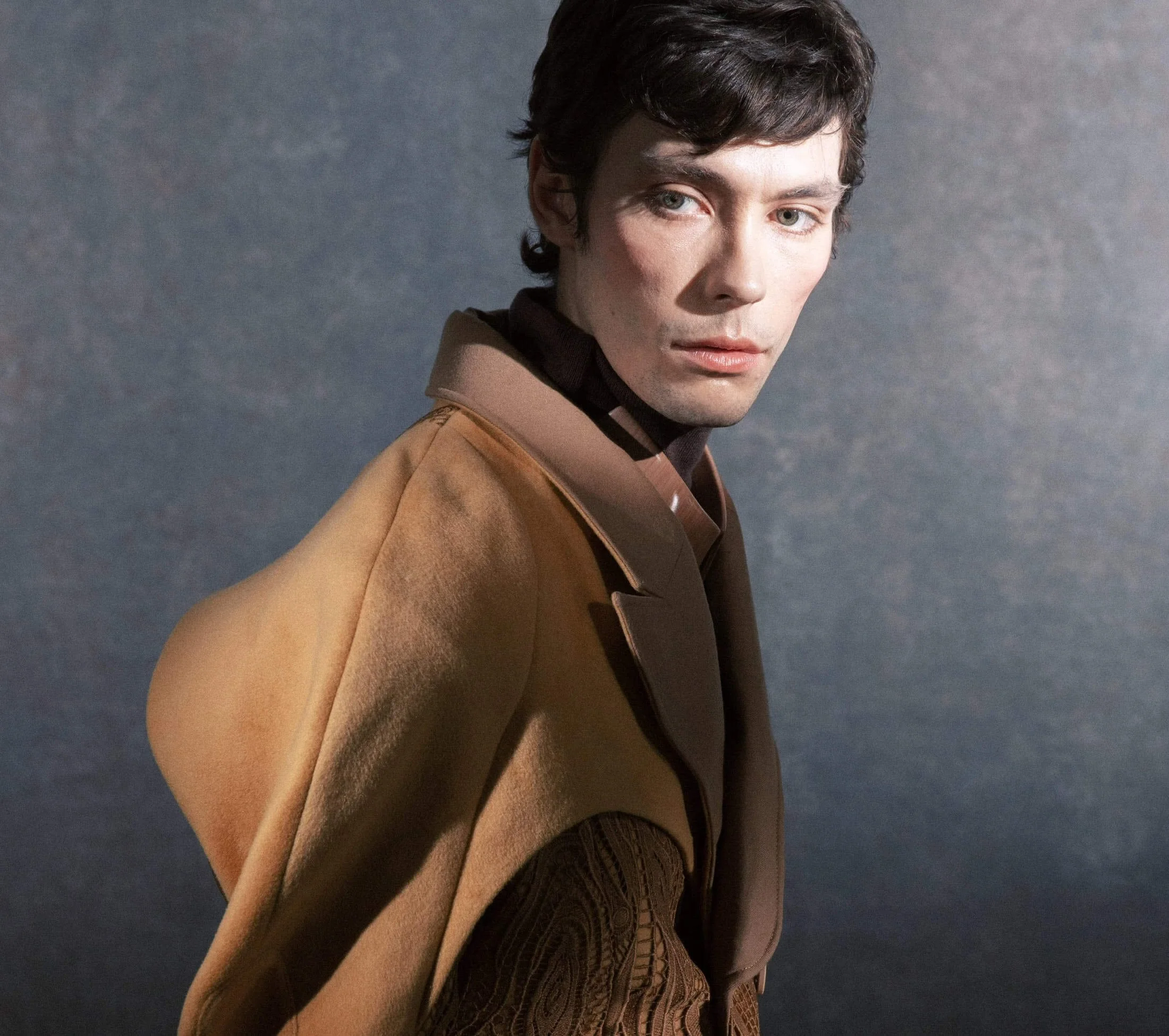
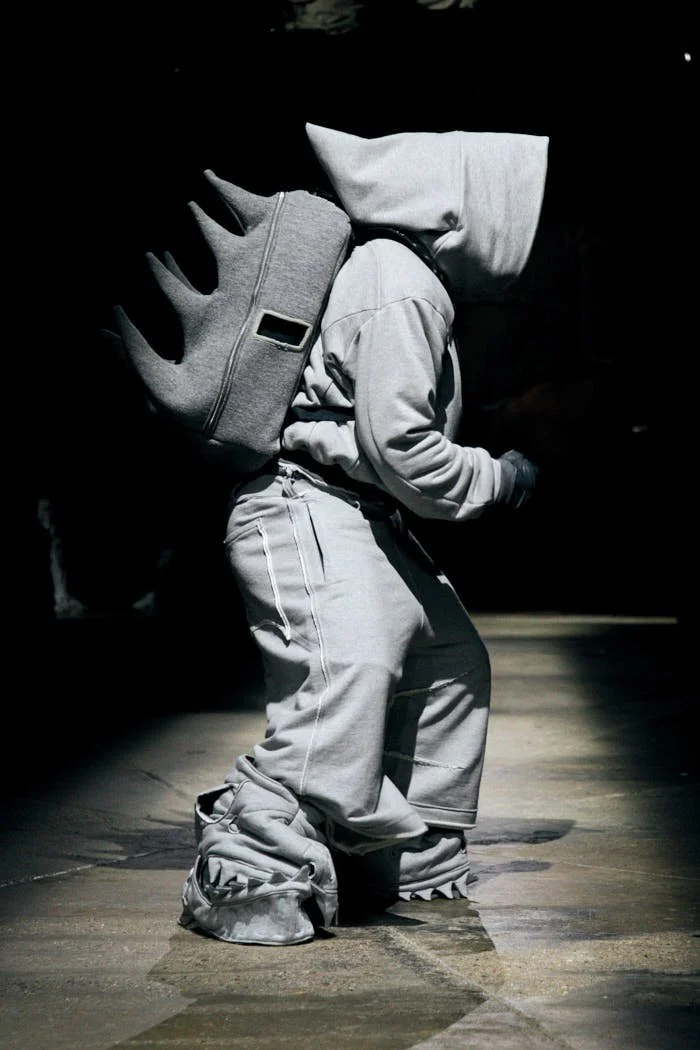
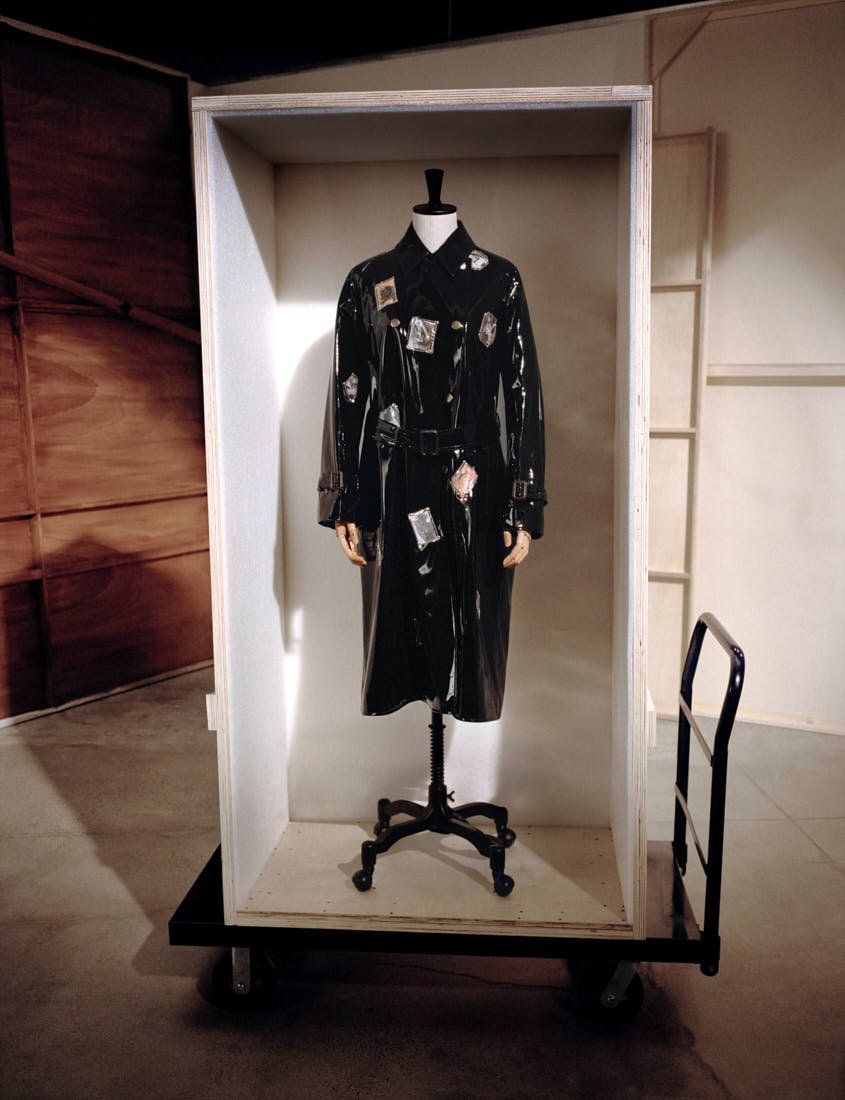
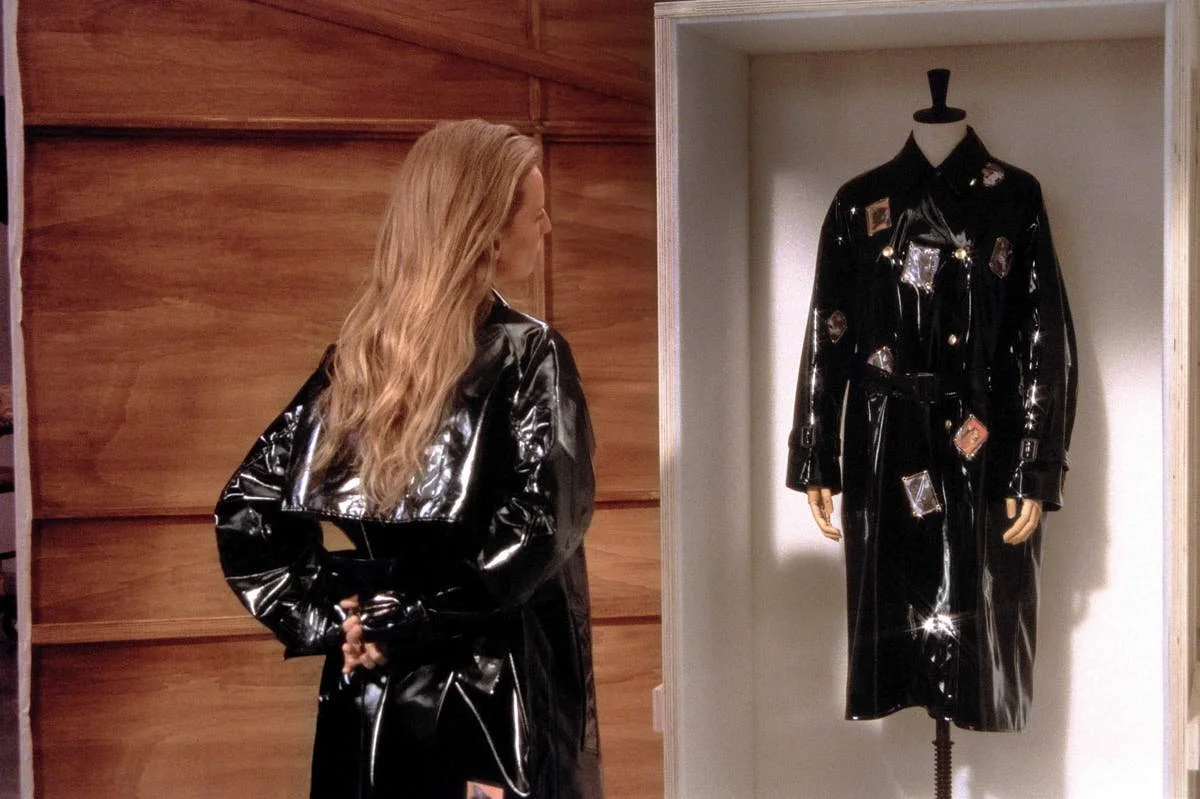
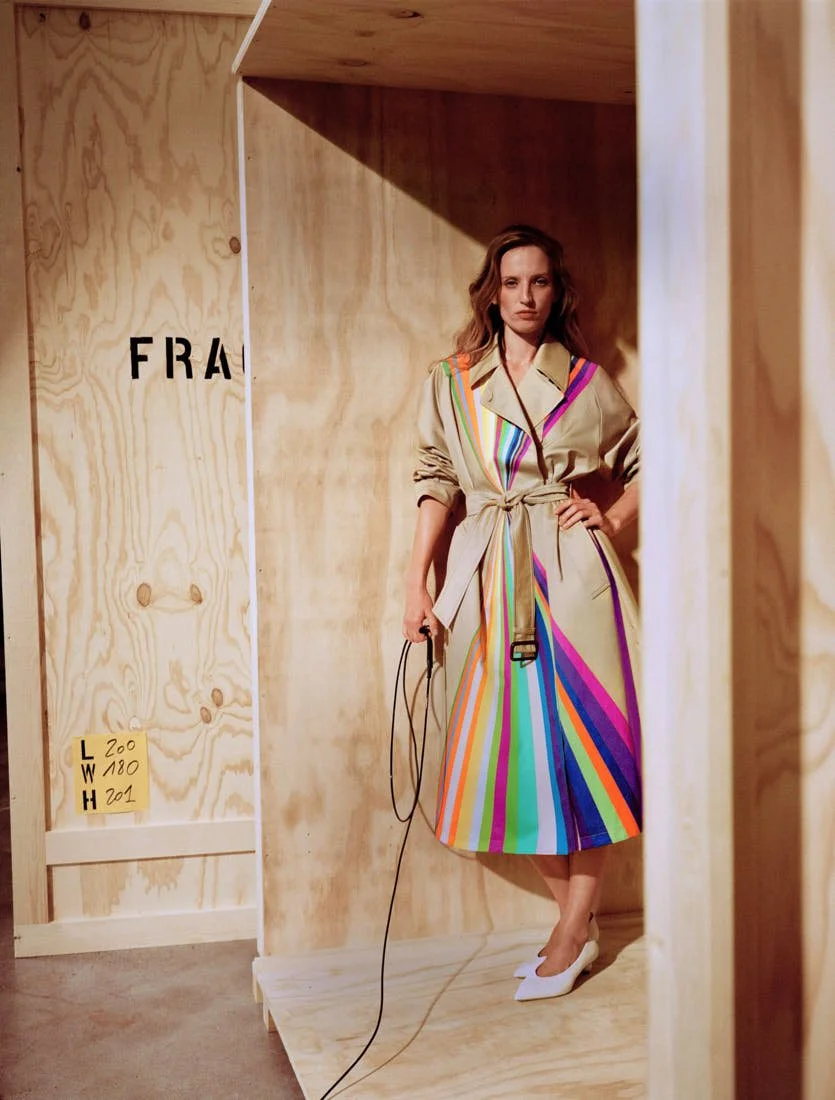
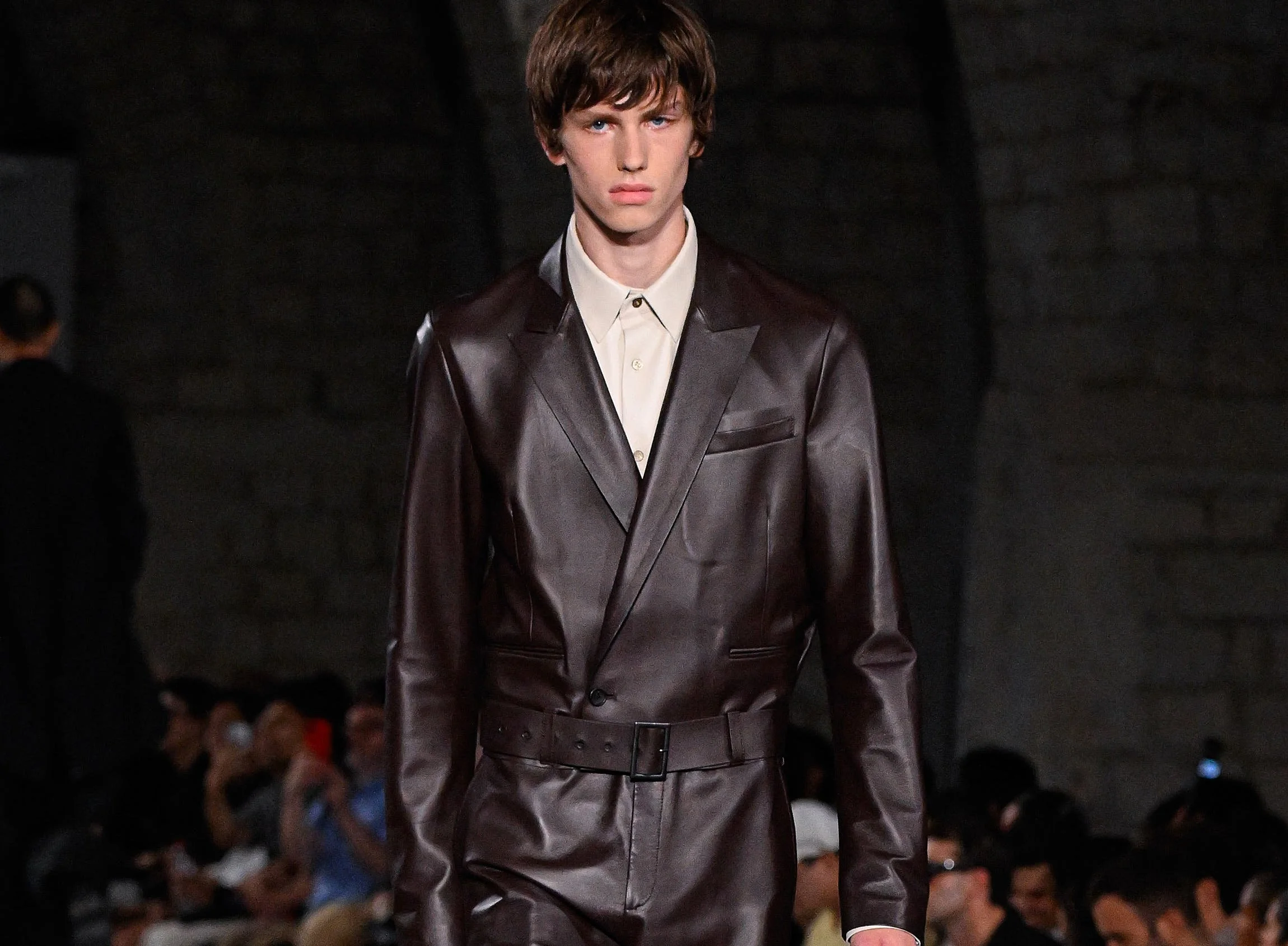
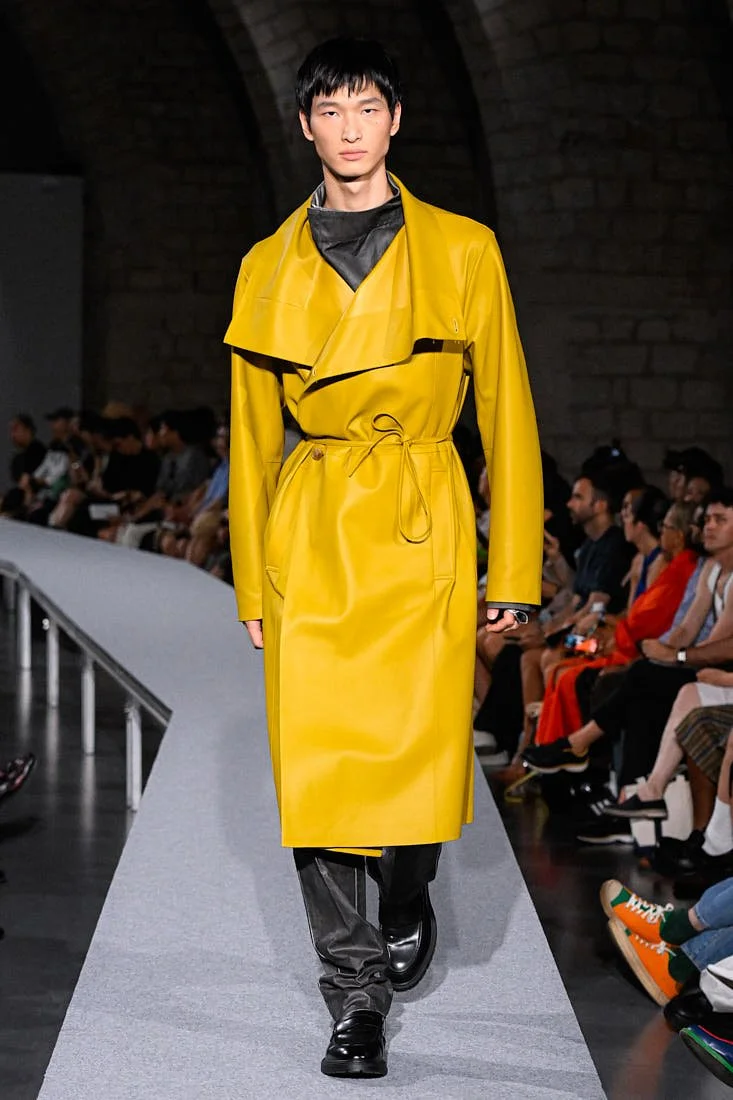
Taakk may have found its stride. Set to a playlist that could double as an action thriller soundtrack, models walked down the catwalk in chocolate and bordeaux nylon disco trenches, slouchy leather and velvet hobos, leisure suiting in sunset orange, and pinstripe embroidered sets.
 
 
TAAKK SS27 Paris Fashion Week Review LE MILE Magazine


After receiving a standing ovation for its fall/winter collection, Taakk’s spring/summer offering titled “Ability of Discovery” marks a moment of continued creative acceleration for the Tokyo-based brand. A brand whose purpose is intertwined with the innovative textile techniques that have become part of its ethos.
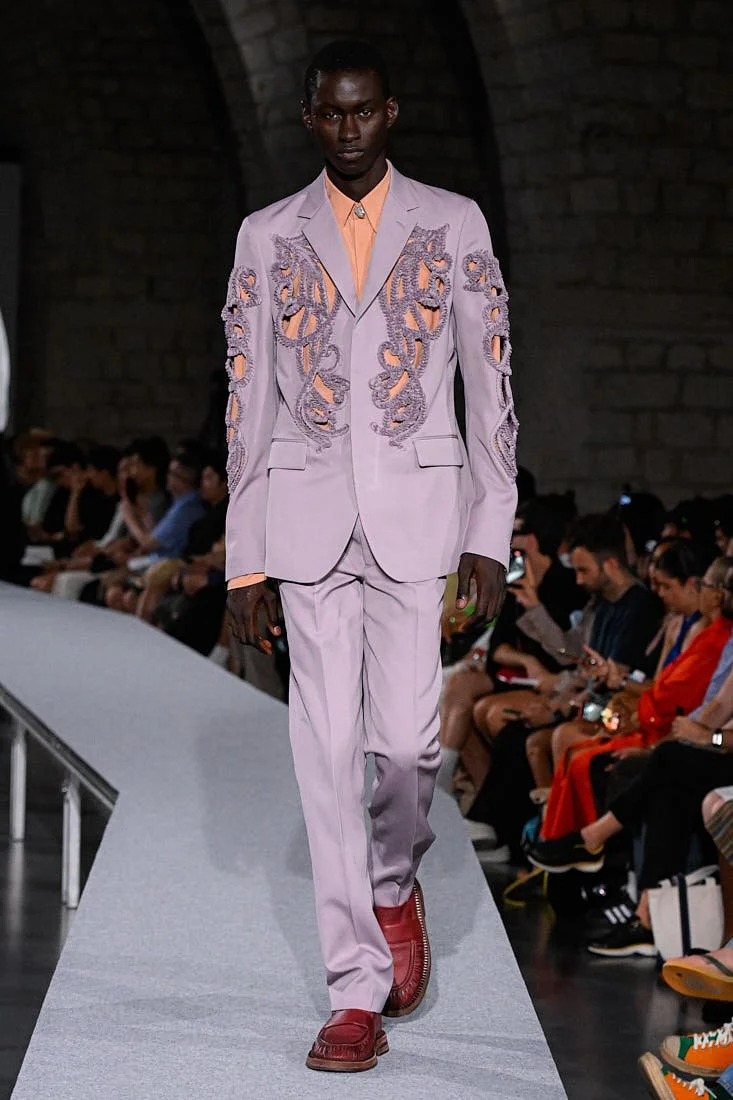
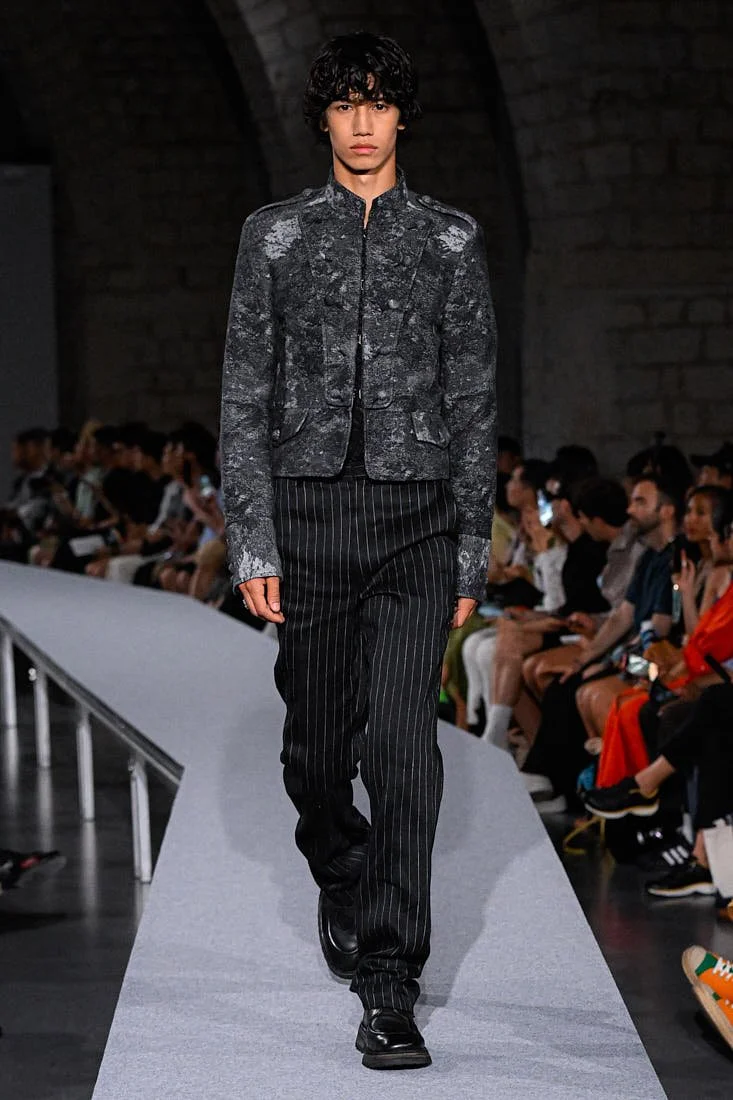
 
 
TAAKK SS27 Paris Fashion Week Review LE MILE Magazine lila suit
TAAKK SS27 Paris Fashion Week Review LE MILE Magazine black outfit
 

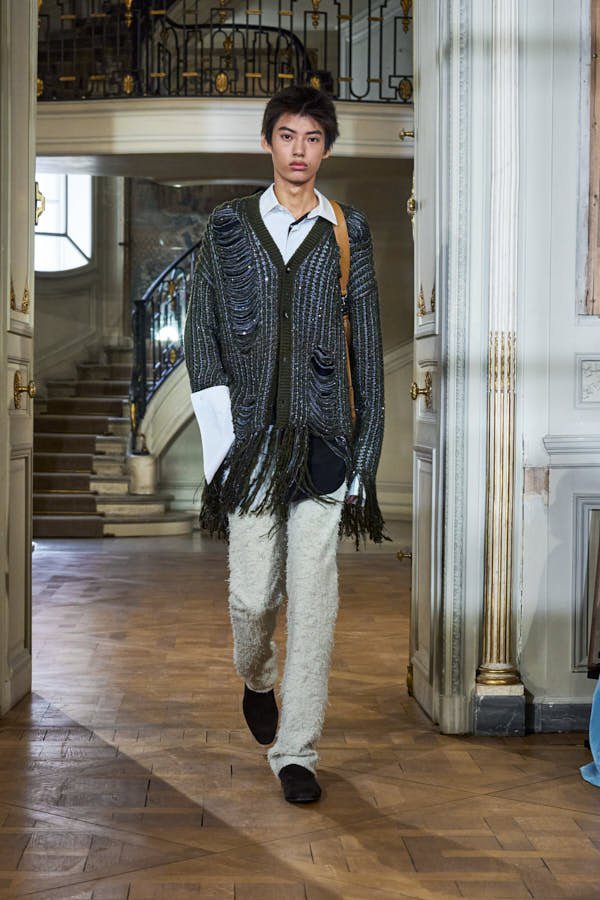
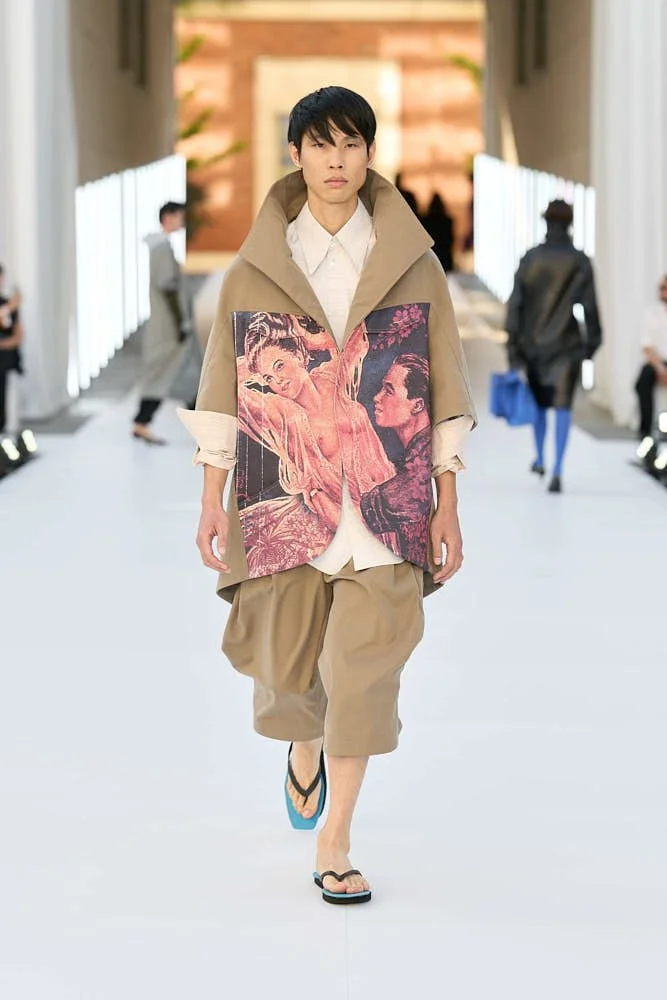
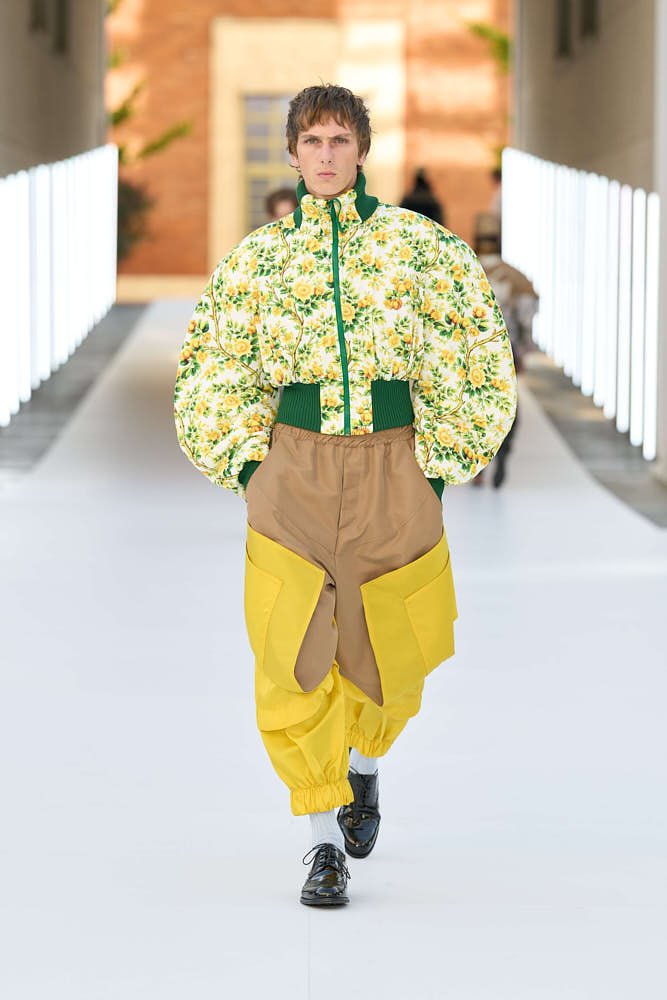
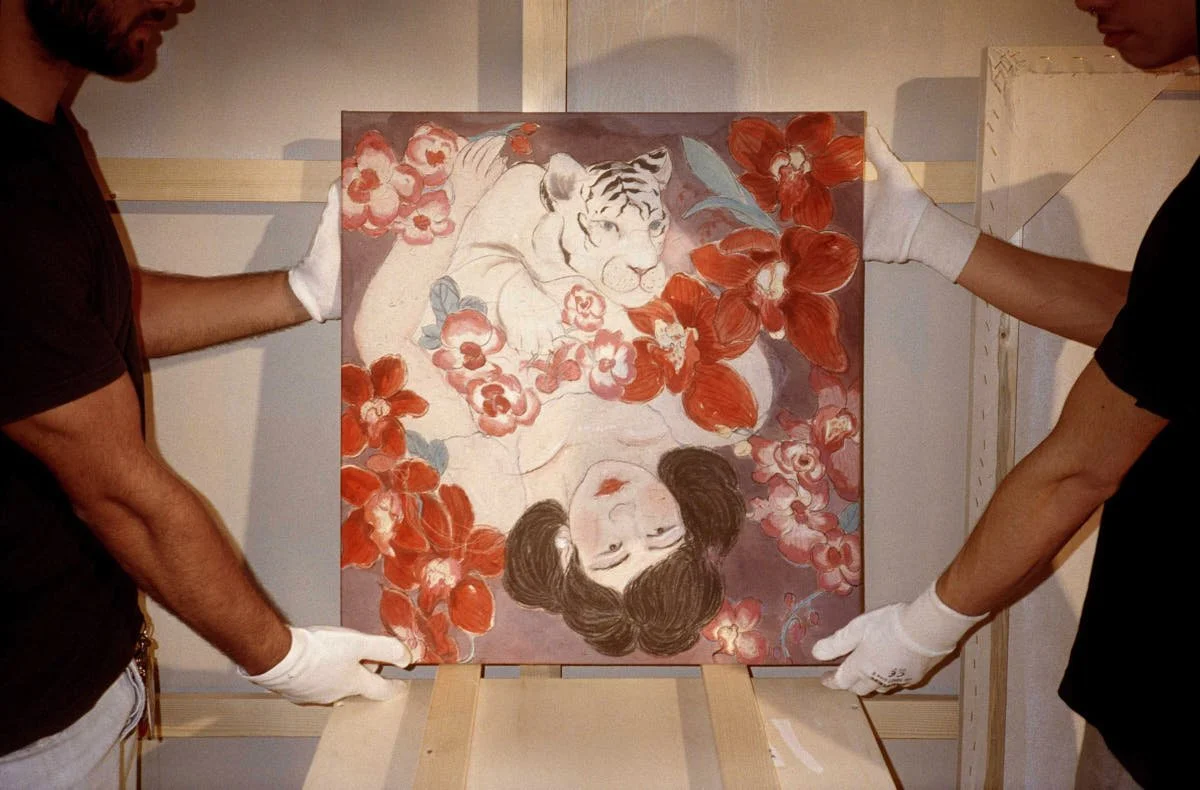
Beyond the tactile, this season, Takuya Morikawa dug deeper, exploring his own identity in an unlikely marriage of inspiration. The iconoclastic fashion photography of Irving Penn and the delicate beauty of the flower. “What continues to inspire me about Irving Penn is not simply what he photographed, but how he looked at things —the ability to transform something familiar into something entirely new,” said Morikawa.

Not new to Morikawa, however, who season after season has transformed material compositions and fabric structures into singularly gradient surfaces or developed intricate precision cutwork techniques that layer embroidery, creating three-dimensional detailing one might find snaking around backs and sleeves. These, after all, are markers of a Taakk garment.
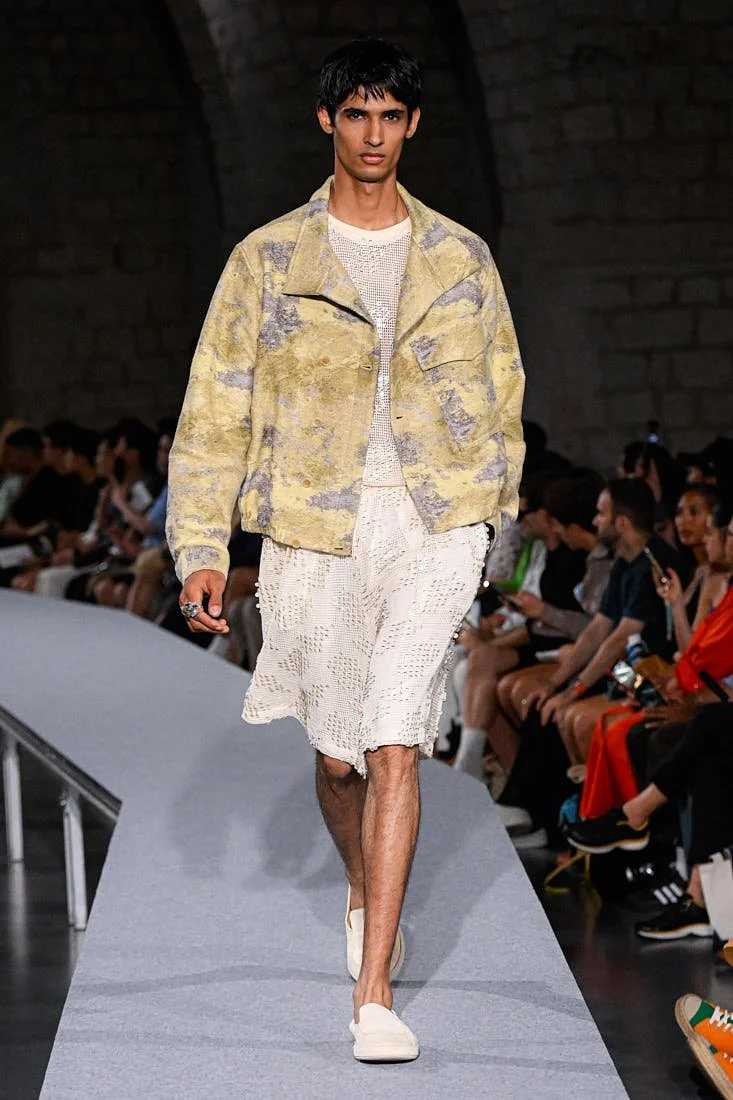
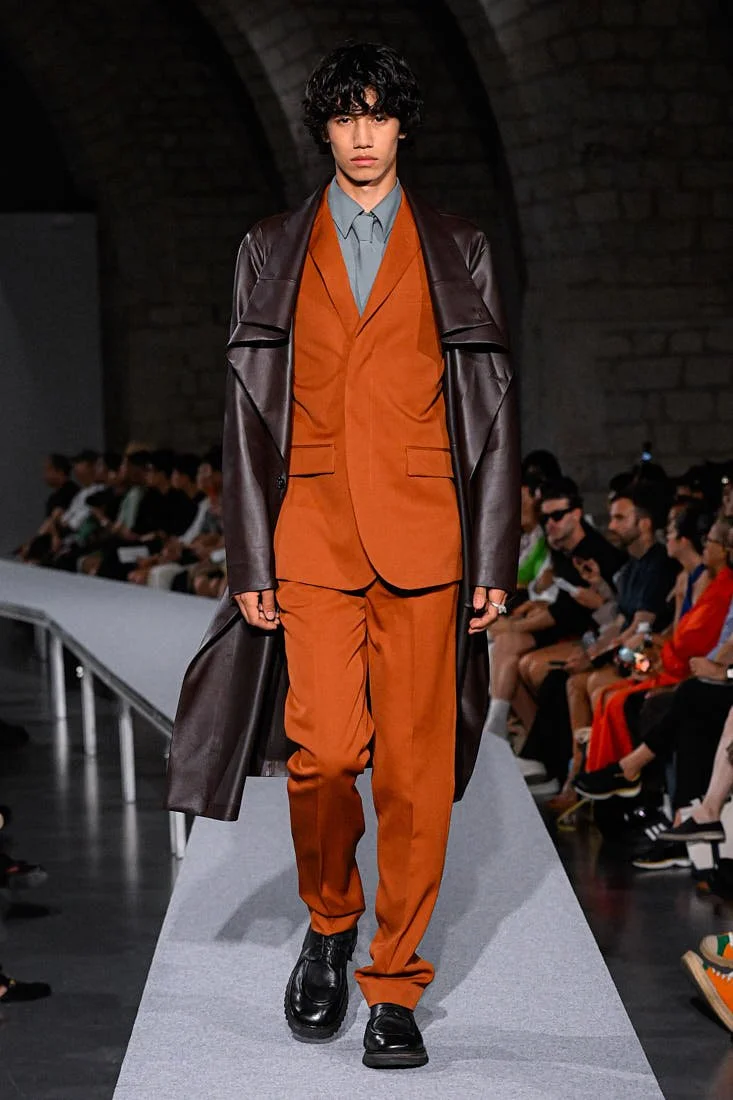
 
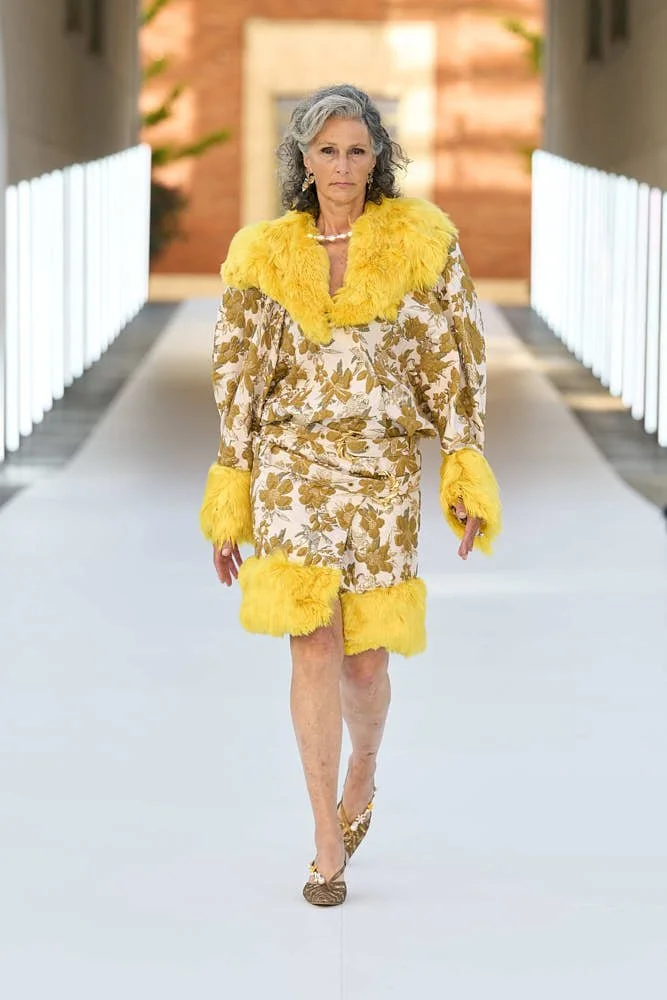
TAAKK SS27 Paris Fashion Week Review LE MILE Magazine yellow jacket
 
TAAKK SS27 Paris Fashion Week Review LE MILE Magazine orange suit and black leather coat
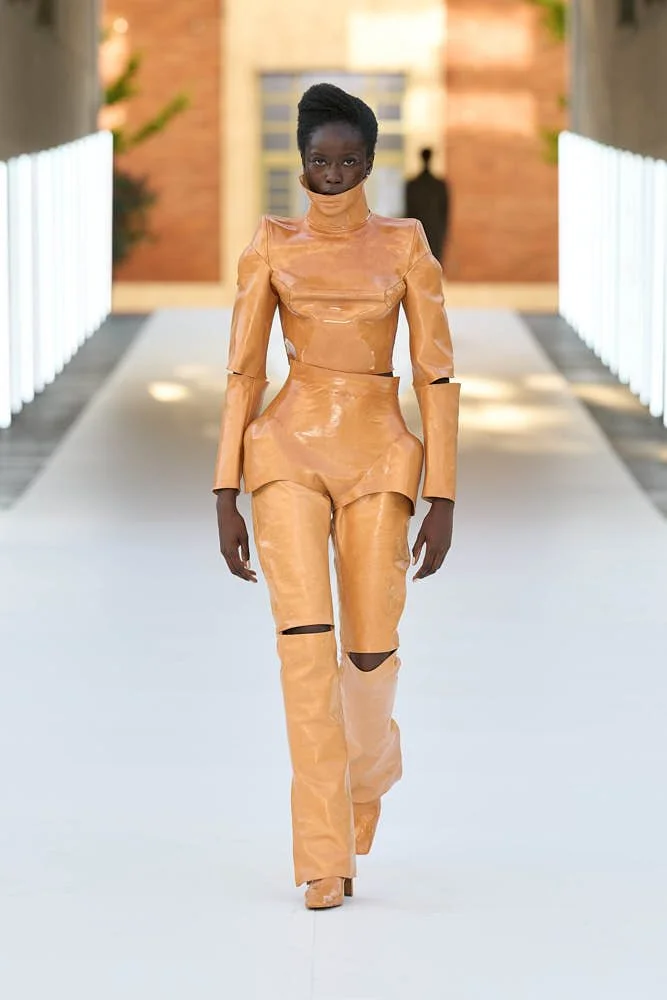
TAAKK SS27 Paris Fashion Week Review LE MILE Magazine brown leather one piece
TAAKK SS27 Paris Fashion Week Review LE MILE Magazine red trousers
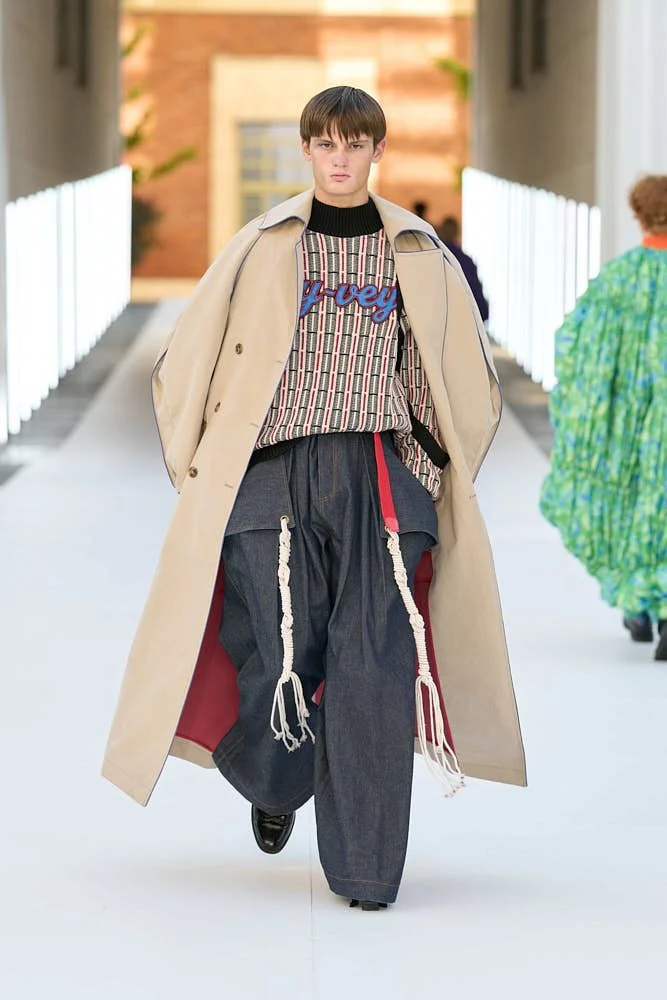
TAAKK SS27 Paris Fashion Week Review LE MILE Magazine coat
 
TAAKK SS27 Paris Fashion Week Review LE MILE Magazine
 

all images (c)
Taakk Spring/Summer 2027 / TAAKK Press
Christian Louboutin Men’s SS 2027 - Jaden Smith Expands the Christian Louboutin Universe

Christian Louboutin Men’s SS 2027 - Jaden Smith Expands the Christian Louboutin Universe

A Review of Jaden Smith’s Christian Louboutin Spring/Summer 2027 Menswear Collection

Jaden Smith Expands the Christian Louboutin Universe with his Spring/Summer 2027 Menswear Collection


written MALCOLM THOMAS


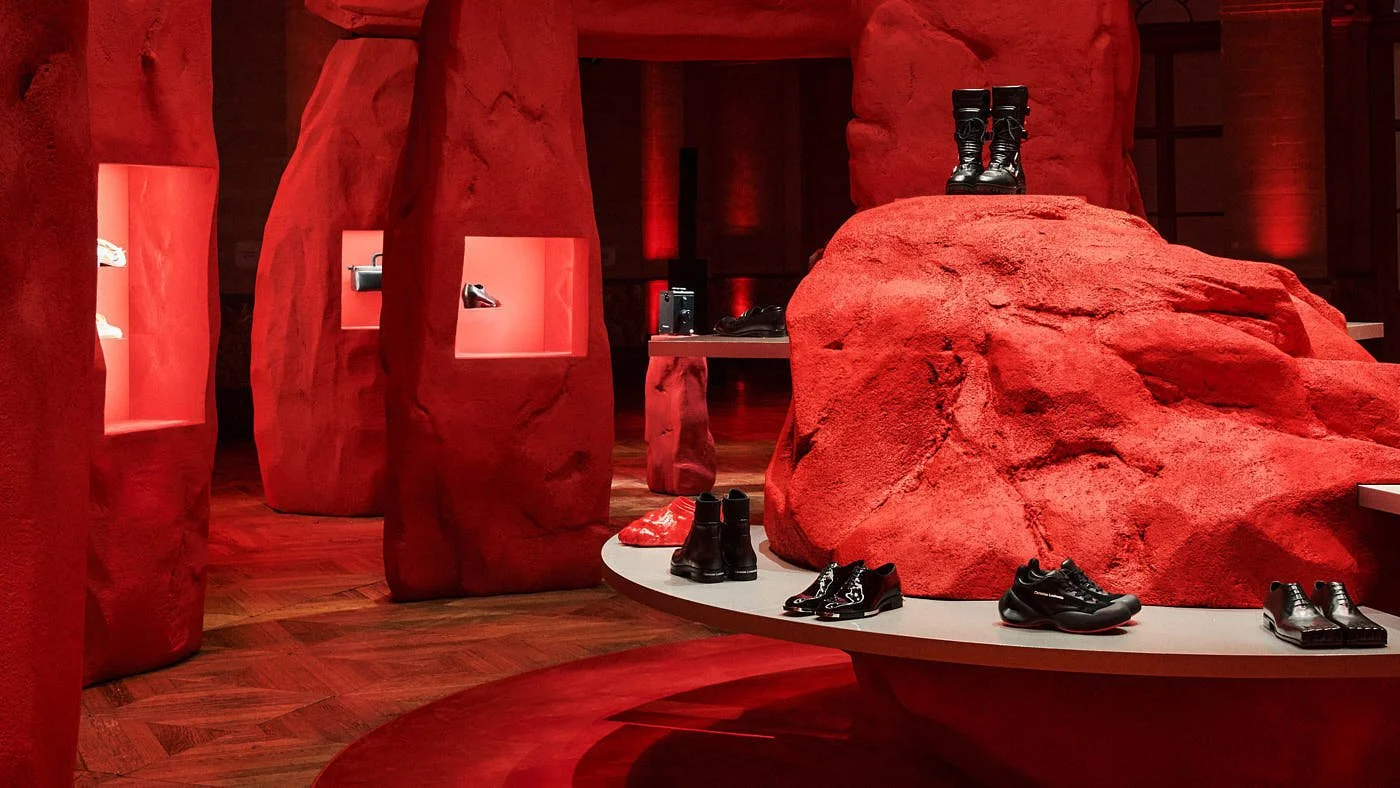
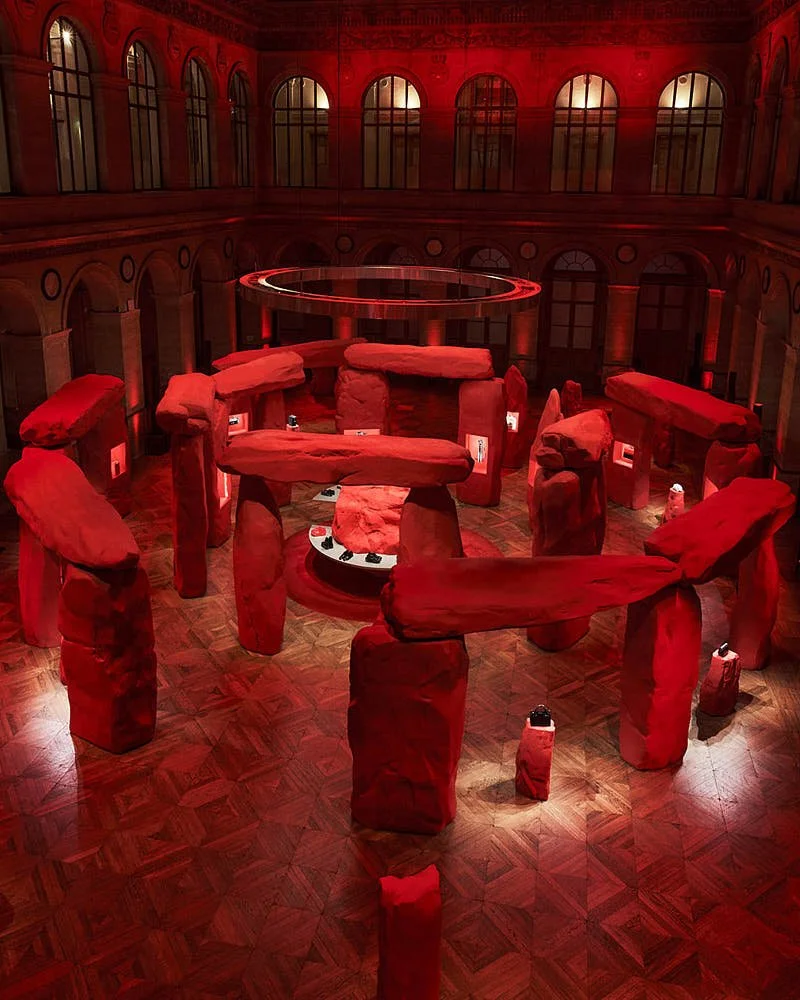
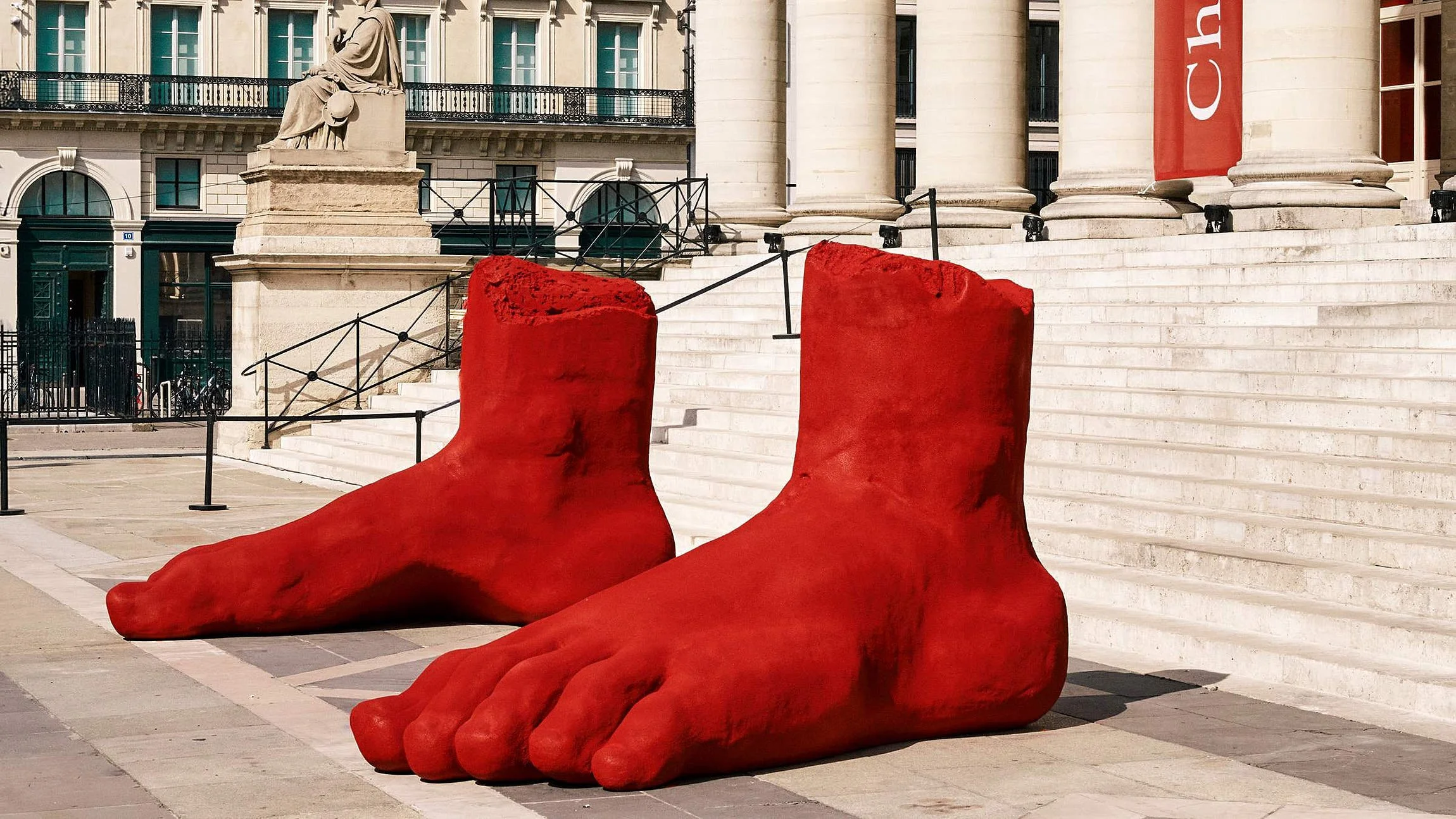
As if plucked from the ruins of Pompeii, outside the Palais Brogniart on a white-hot day in Paris, two red foot sculptures stood parallel against the stone steps behind them. A banner was draped in the distance. Outside the entrance of what resembled a Rosetta Stone, a manifesto was written. “You are now entering the ruins of an ancient kingdom. Past these doors, you leave this world and enter the realm of Christian Louboutin Men’s”.


Jaden Smith Christian Louboutin Men Spring Summer 2027 LE MILE Magazine Set Design

Christian Louboutin Men Spring Summer 2027
/ by Jaden Smith


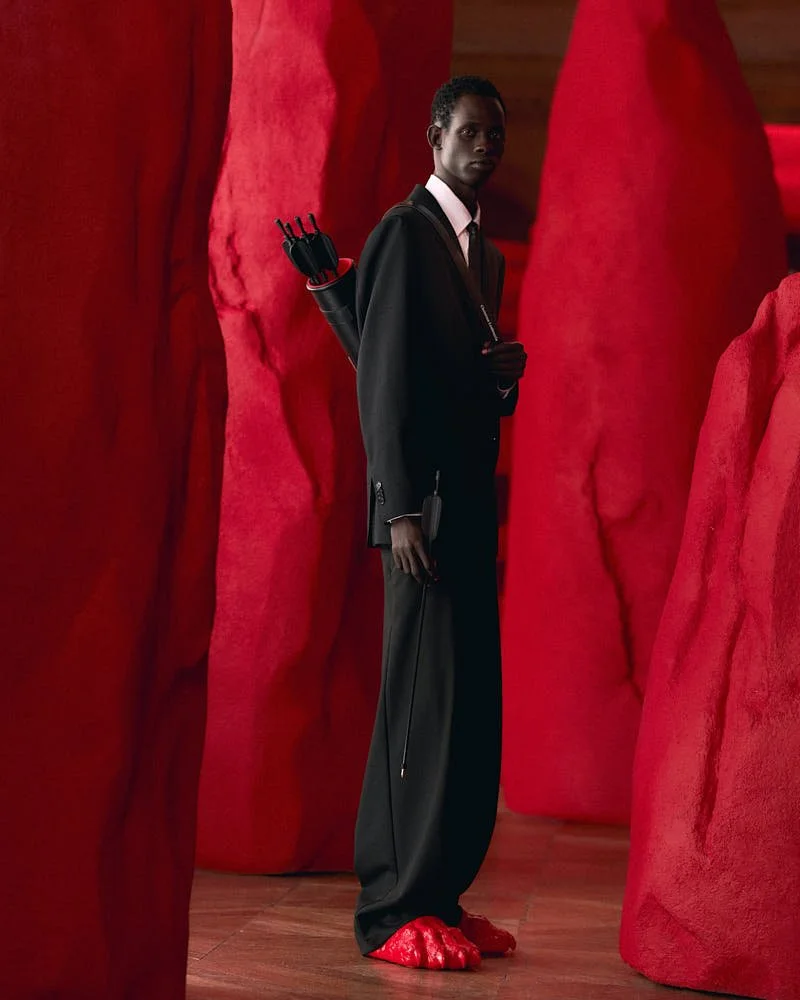
Indeed, Jaden Smith’s sophomore presentation was a cultural smörgåsbord bathed in red light. History’s biggest hits propped shoes and accessories in carved out corners and atop formations. Models navigated a crop circle with a Stonehenge-imitation structure in the background—interacting with guests and each other in passing.

 
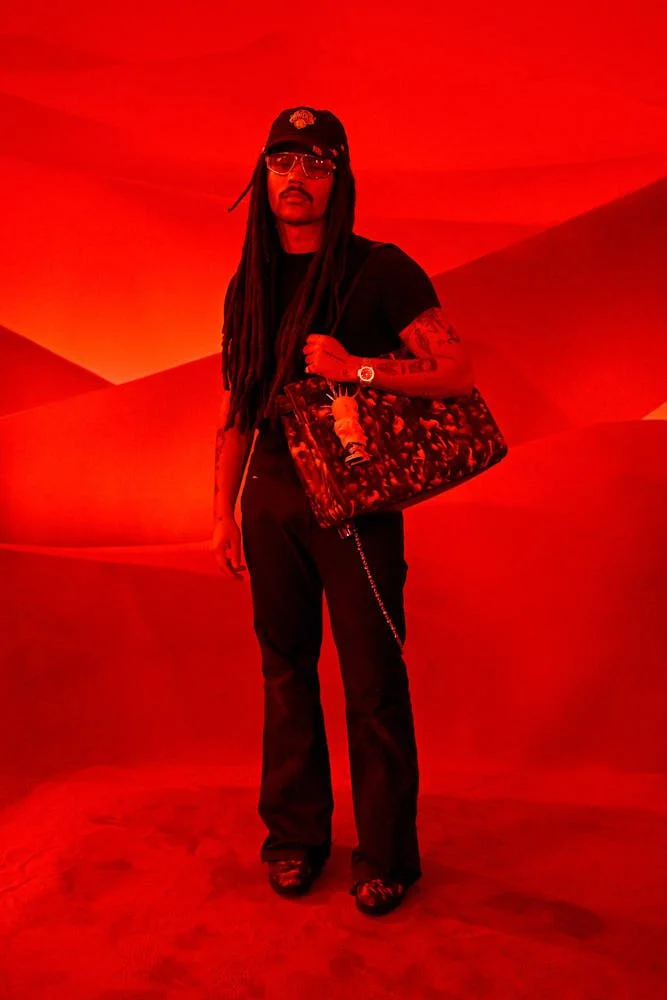
Luka Sabbat Jaden Smith Christian Louboutin Men Spring Summer 2027 LE MILE Magazine

Luka Sabbat at Jaden Smith´s Christian Louboutin Men Spring Summer 2027 Afterparty

 
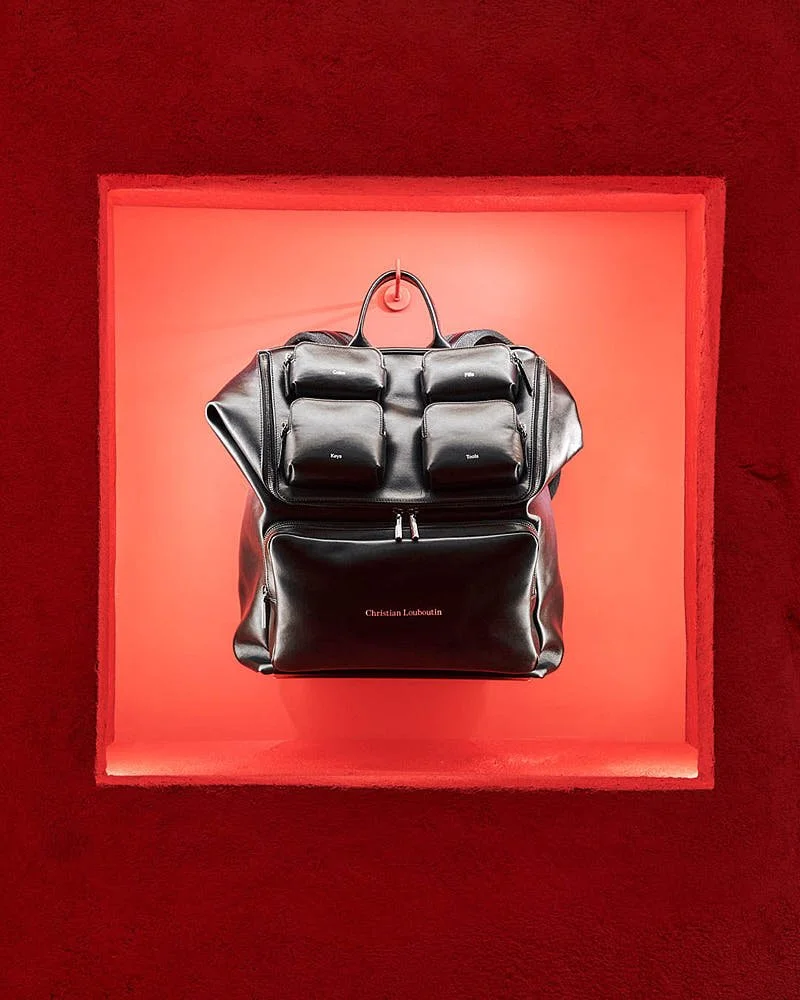
Jaden Smith Christian Louboutin Men Spring Summer 2027 LE MILE Magazine leather backpack

Christian Louboutin Men Spring Summer 2027
/ by Jaden Smith

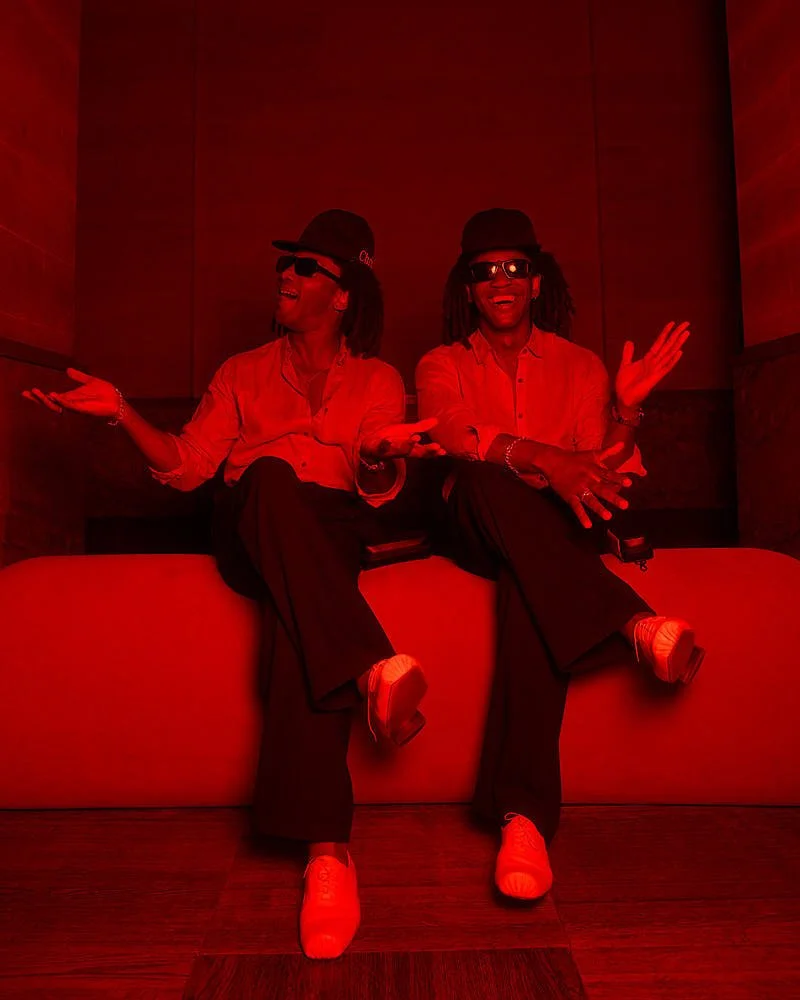
Brice and Regis Abby Jaden Smith Christian Louboutin Men Spring Summer 2027 LE MILE Magazine photo Sofia Malamute

Brice and Regis Abby at Jaden Smith´s Christian Louboutin Men Spring Summer 2027 Afterparty
/ photo Sofia Malamute


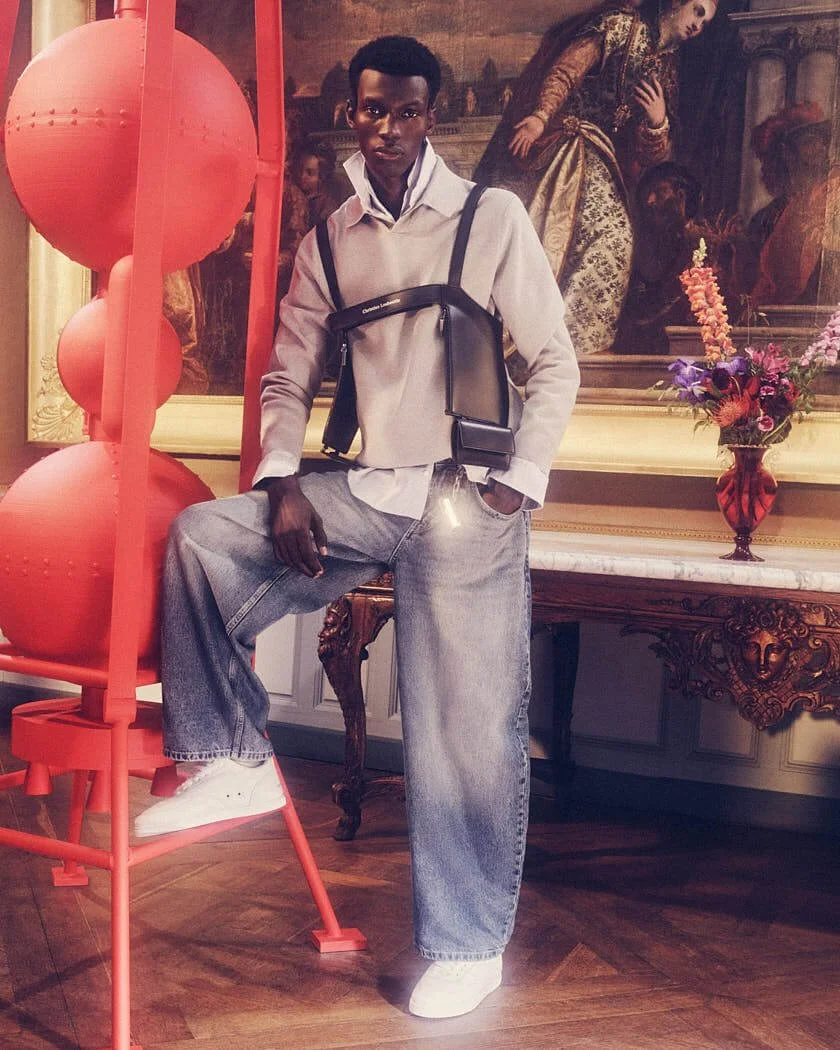
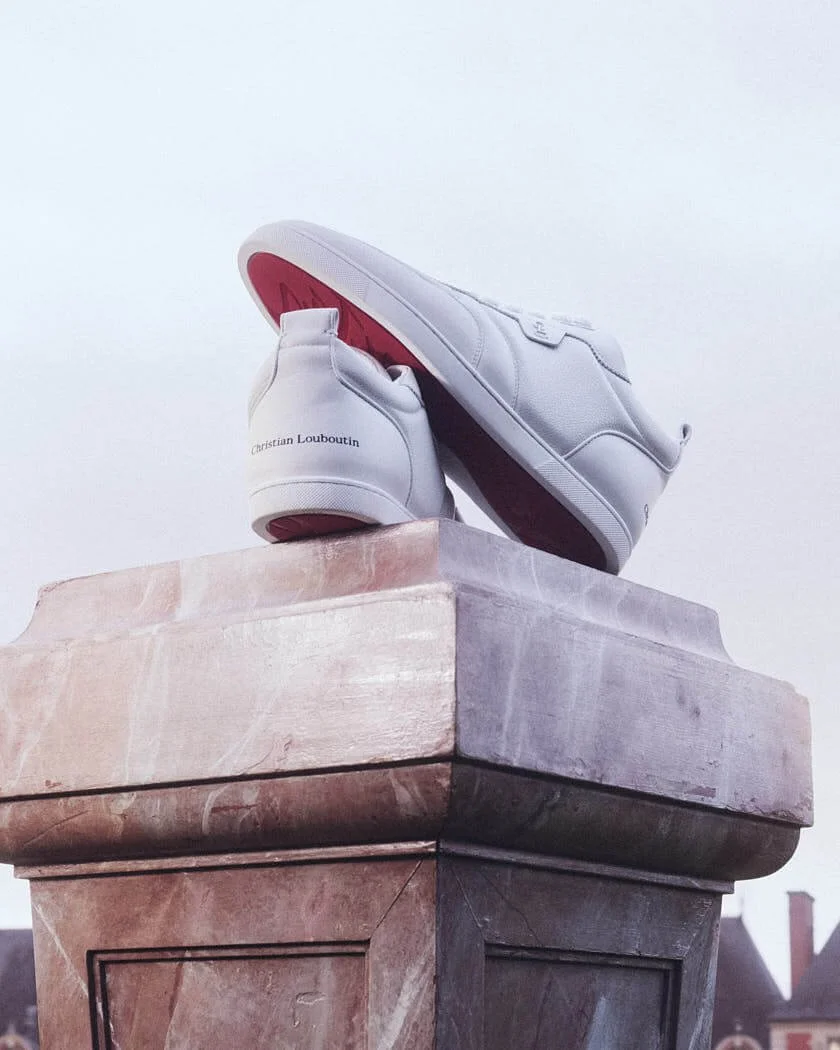
​Some pieces from the Christian Louboutin Avant-Première collection made a return, such as the Multipocket Vest and TCT Harness. Smith also expanded on Louboutin’s leather goods offerings with the Nostalgic style family, which includes the Hobo and the Backpack. Some pieces took a turn for the fantastical with The Corteo and the Louis from Louboutin’s Child Like Wonder offerings, inspired by Smith’s childhood paper cut-outs. Yet, the most conceptual symbols that the Jaden Smith x Christian Louboutin era is upon us, were Stone Mason’s Feet made from a single piece of leather and cut into square-shaped toes, and the Claw Slide, an animal claw editorialised as a wearable piece of contemporary sculpture.

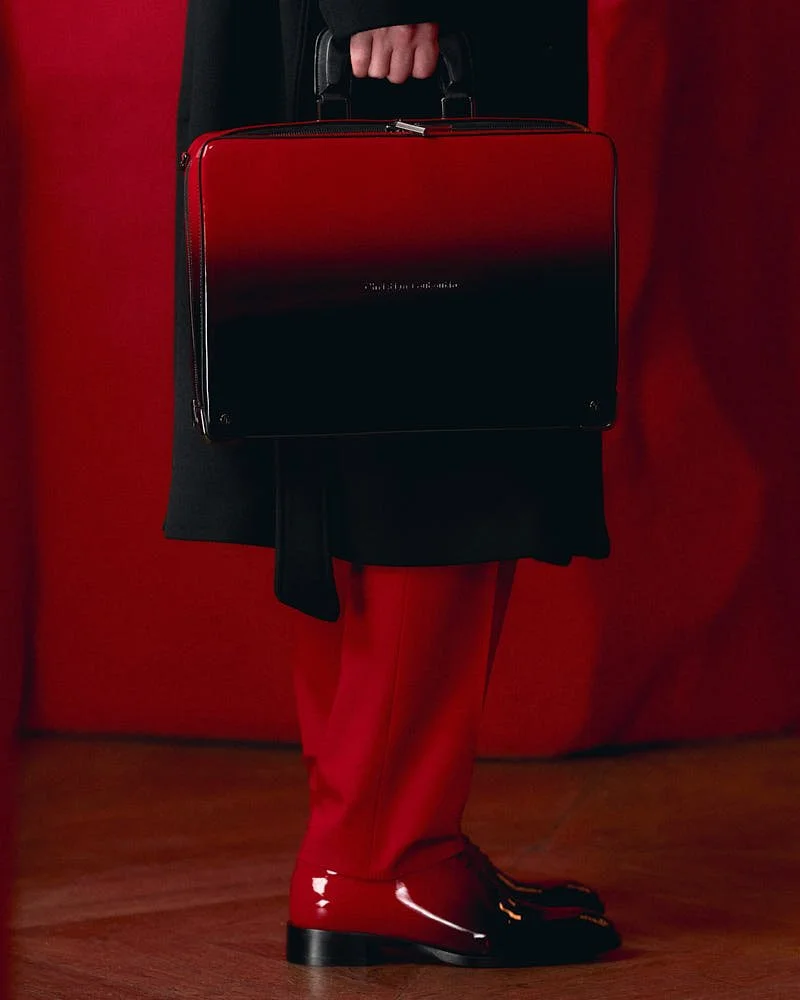
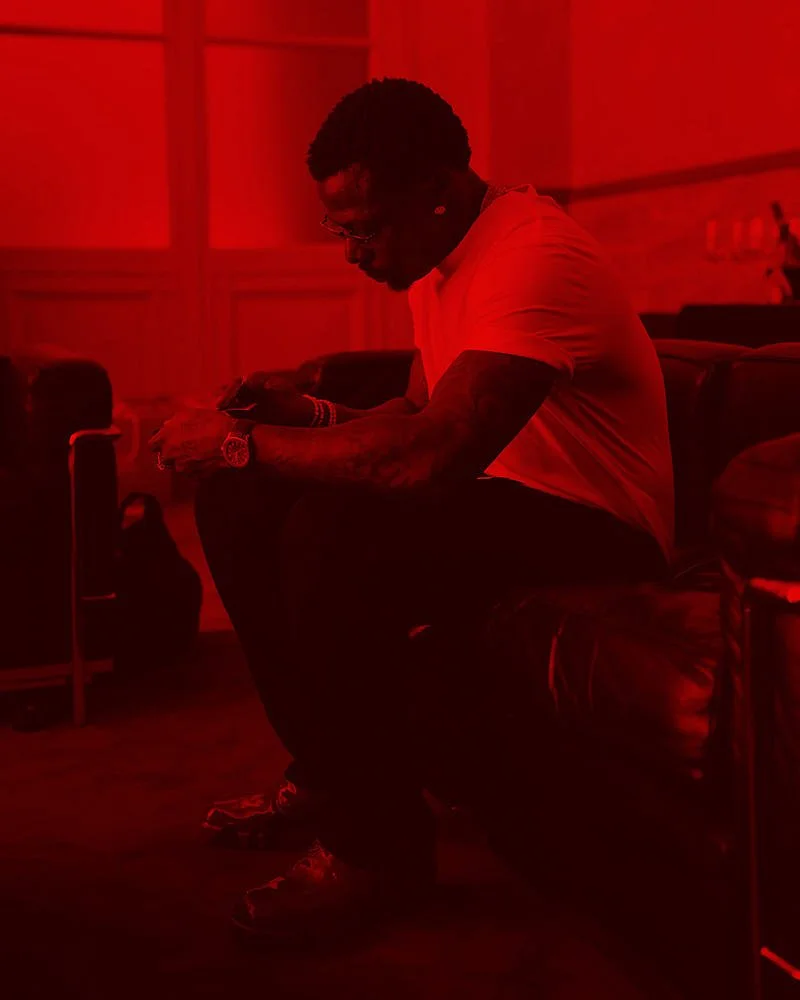
Of course, there were a variety of everyday pieces too, a patent-leather gradient evening shoe and a classic weekender being among them. Closing out his collection with an A-list afterparty that included a very fashionable Smith family outing, Jaden Smith is clearly aimed at cementing himself as king in a Christian Louboutin “kingdom” of his own design.

​

The Spring/Summer 2027 Men’s collection will launch in stores on October 28th, 2026.

 
Jaden Smith Christian Louboutin Men Spring Summer 2027 LE MILE Magazine Set Design

Christian Louboutin Men Spring Summer 2027
/ by Jaden Smith

 
Jaden Smith Christian Louboutin Men Spring Summer 2027 LE MILE Magazine Lookbook SS27

Christian Louboutin Men Spring Summer 2027
/ by Jaden Smith

Jaden Smith Christian Louboutin Men Spring Summer 2027 LE MILE Magazine lookbook bag

Christian Louboutin Men Spring Summer 2027
/ by Jaden Smith

Asake Jaden Smith Christian Louboutin Men Spring Summer 2027 LE MILE Magazine photo Sofia Malamute

Asake at Jaden Smith´s Christian Louboutin Men Spring Summer 2027 Afterparty
/ photo Sofia Malamute

 
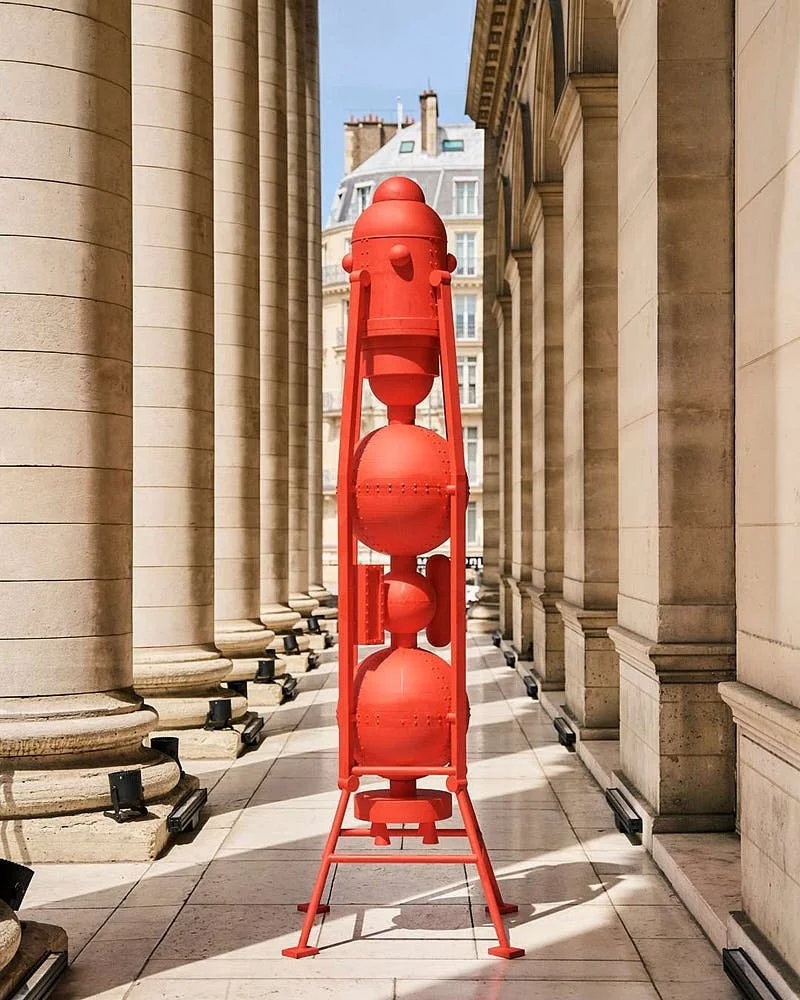
Jaden Smith Christian Louboutin Men Spring Summer 2027 LE MILE Magazine Presentation Set Design Sculpture

Christian Louboutin Men Spring Summer 2027
/ by Jaden Smith


all images (c) Christian Louboutin Press
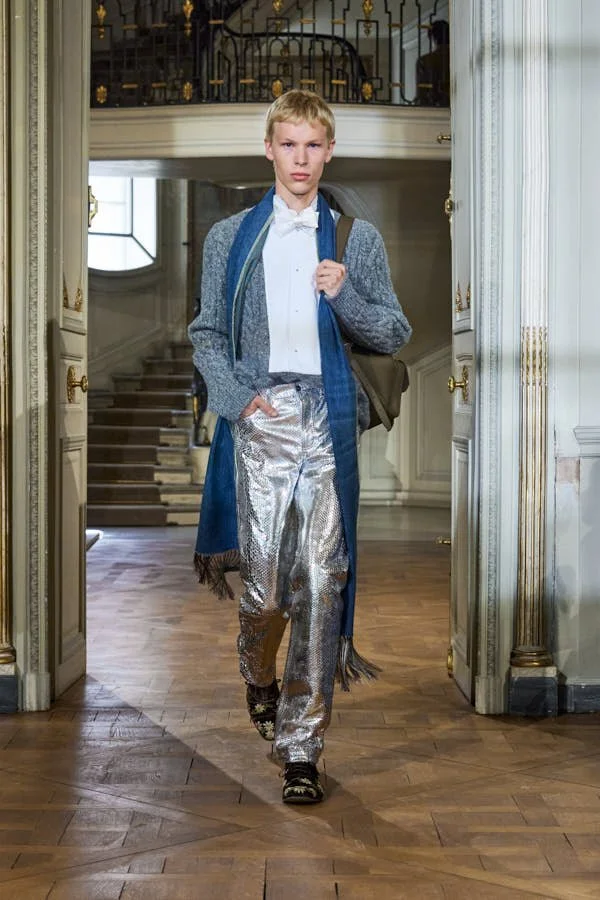
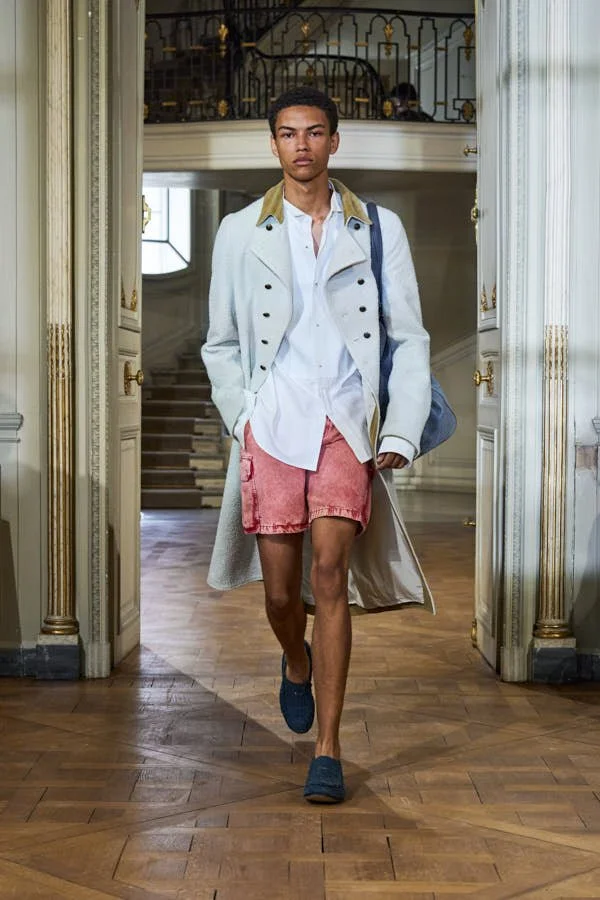
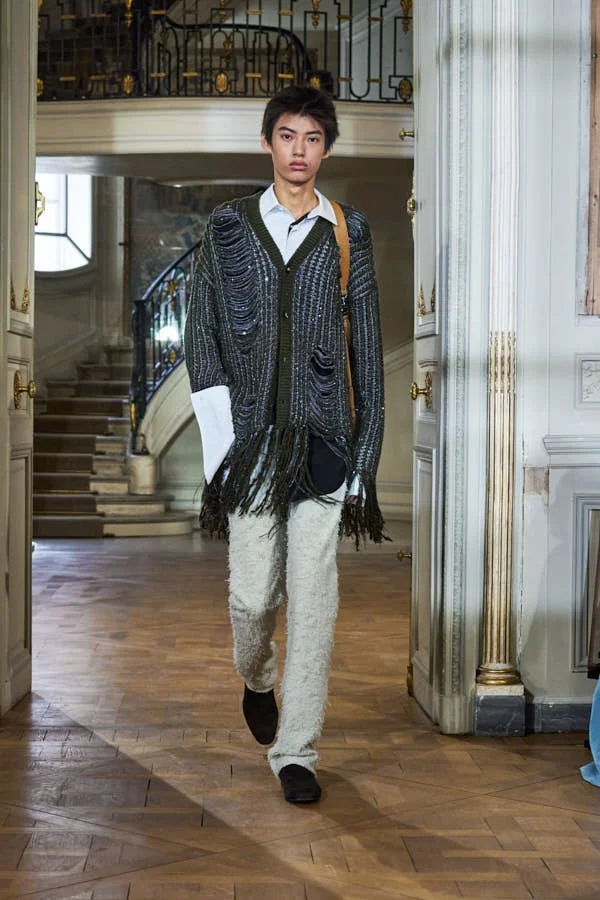
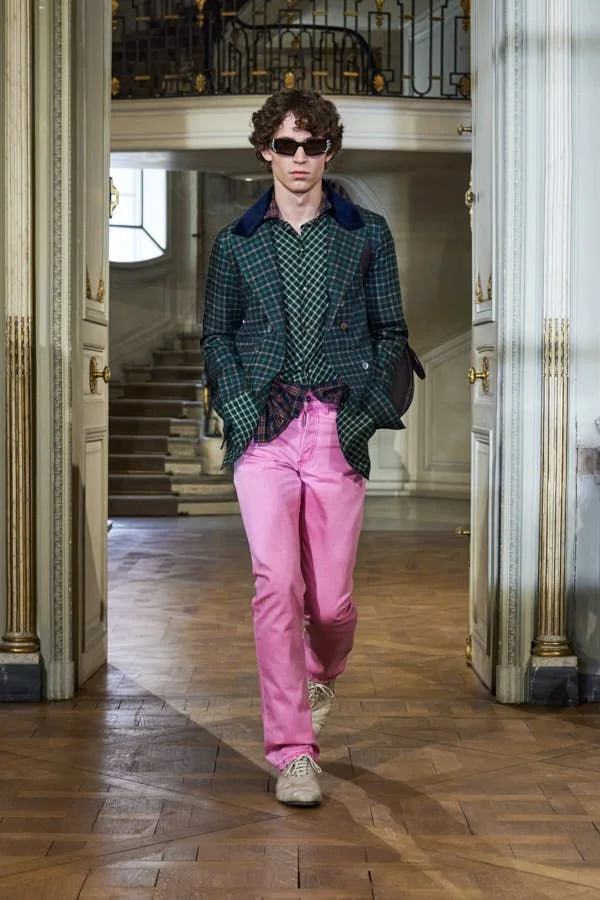
Dior Men Summer 2027 - Jonathan Anderson Remixes the House

Dior Men Summer 2027 - Jonathan Anderson Remixes the House

DIOR MEN SUMMER 2027

Jonathan Anderson Steps Out of the Museum


written ALBAN E. SMAJLI


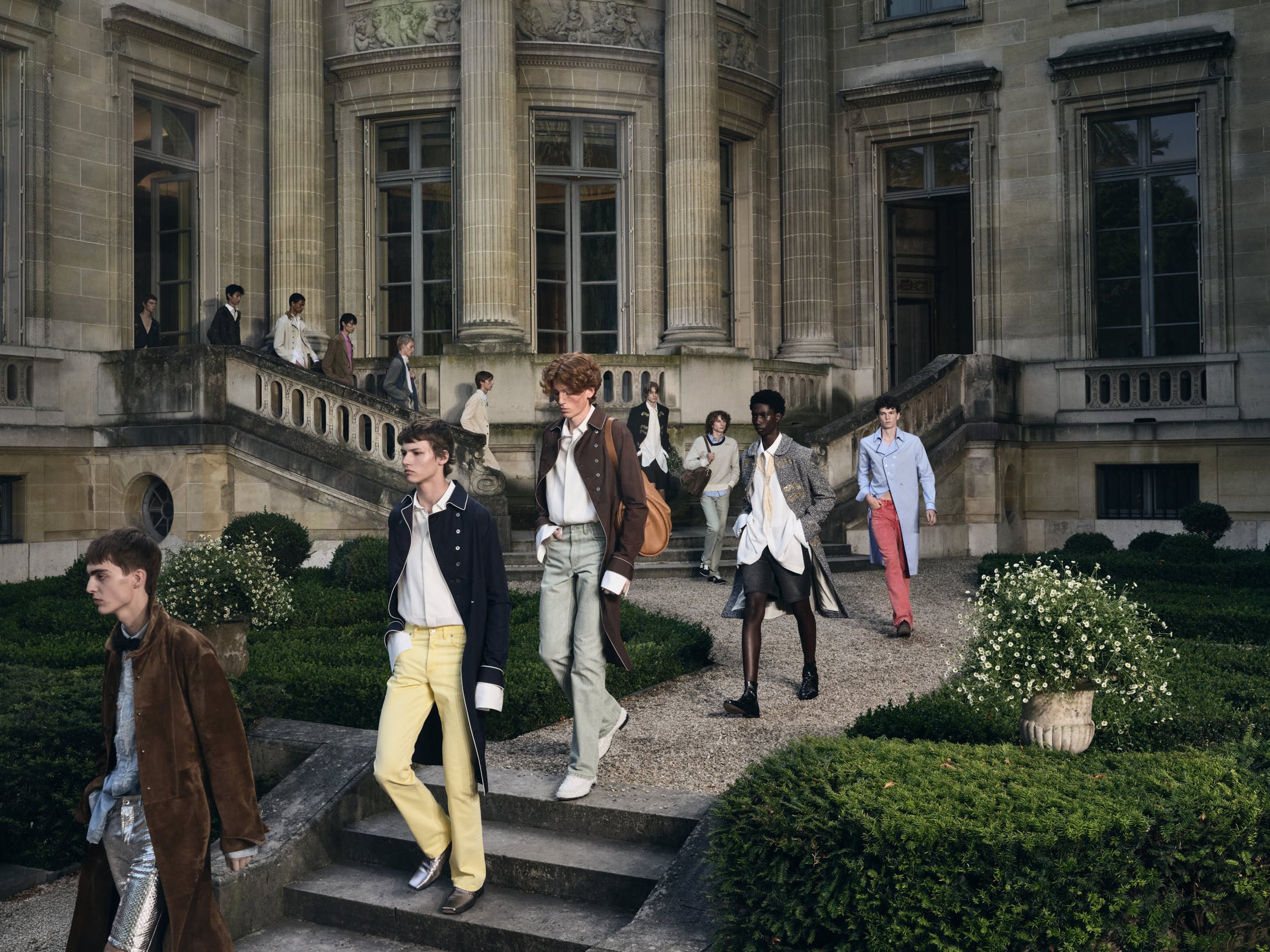
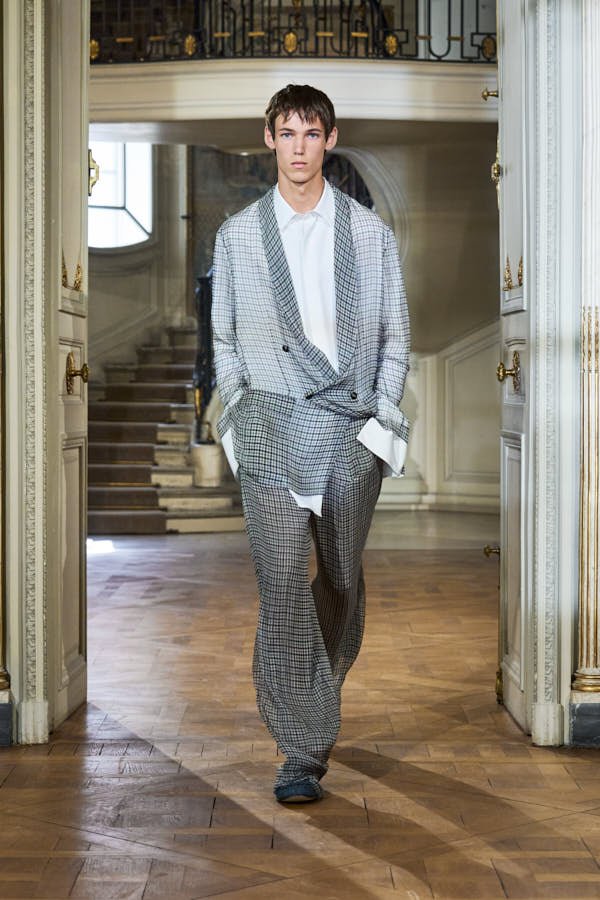
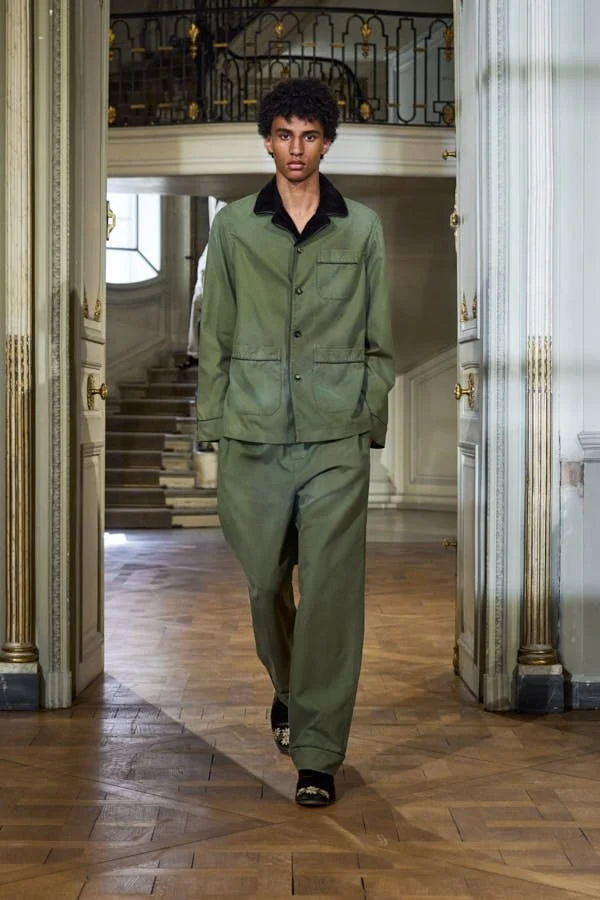
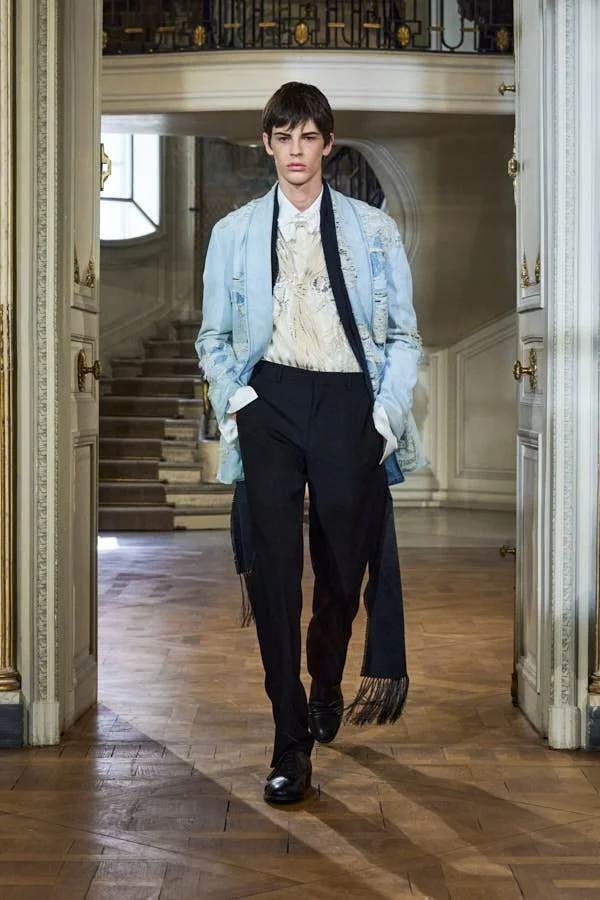
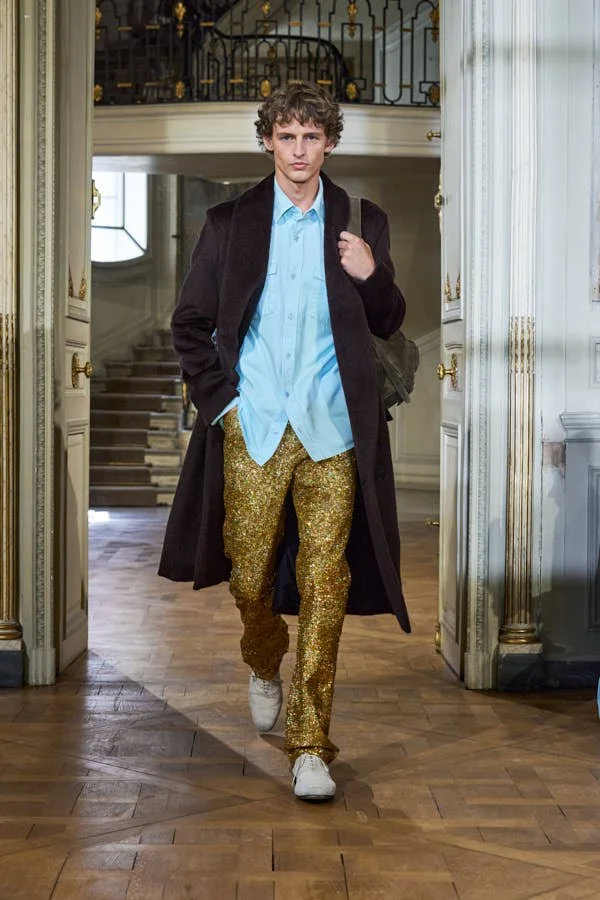
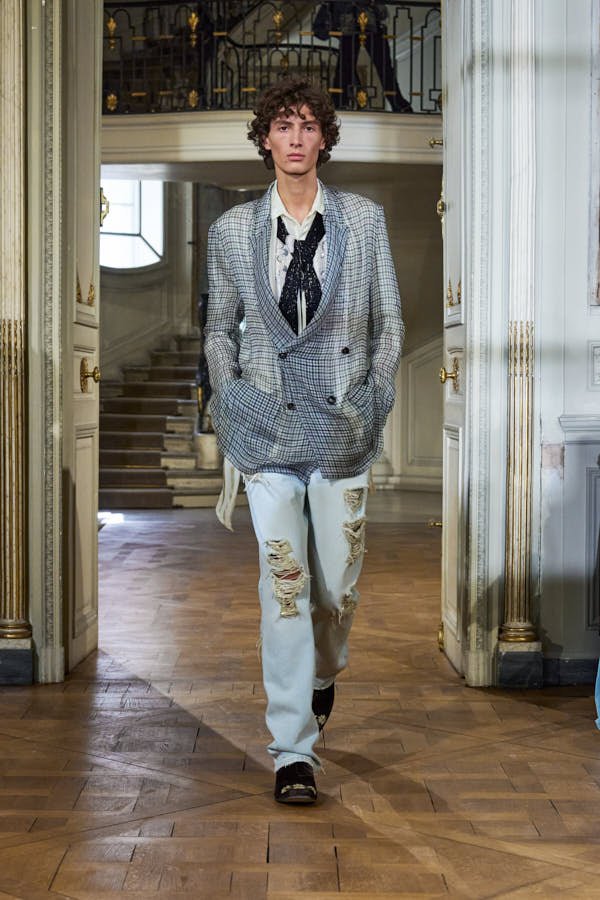
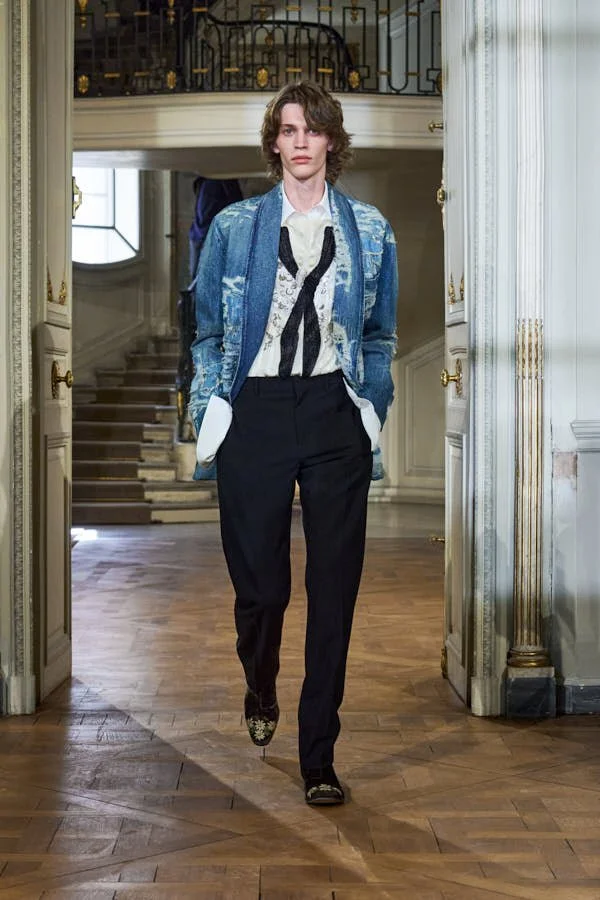
The Musée Nissim de Camondo holds the particular silence of a house kept in perfect order after life has left it. Its rooms speak through arrangement, ownership and polished surfaces, which made them unusually exact for Jonathan Anderson’s second Dior Men collection. He placed the clothes inside that stillness and let them look recently handled. Open collars, loose scarves and cuffs stretching past the wrist gave the impression of garments adjusted moments before the models stepped outside, as if Dior had been caught between the mirror and the garden.


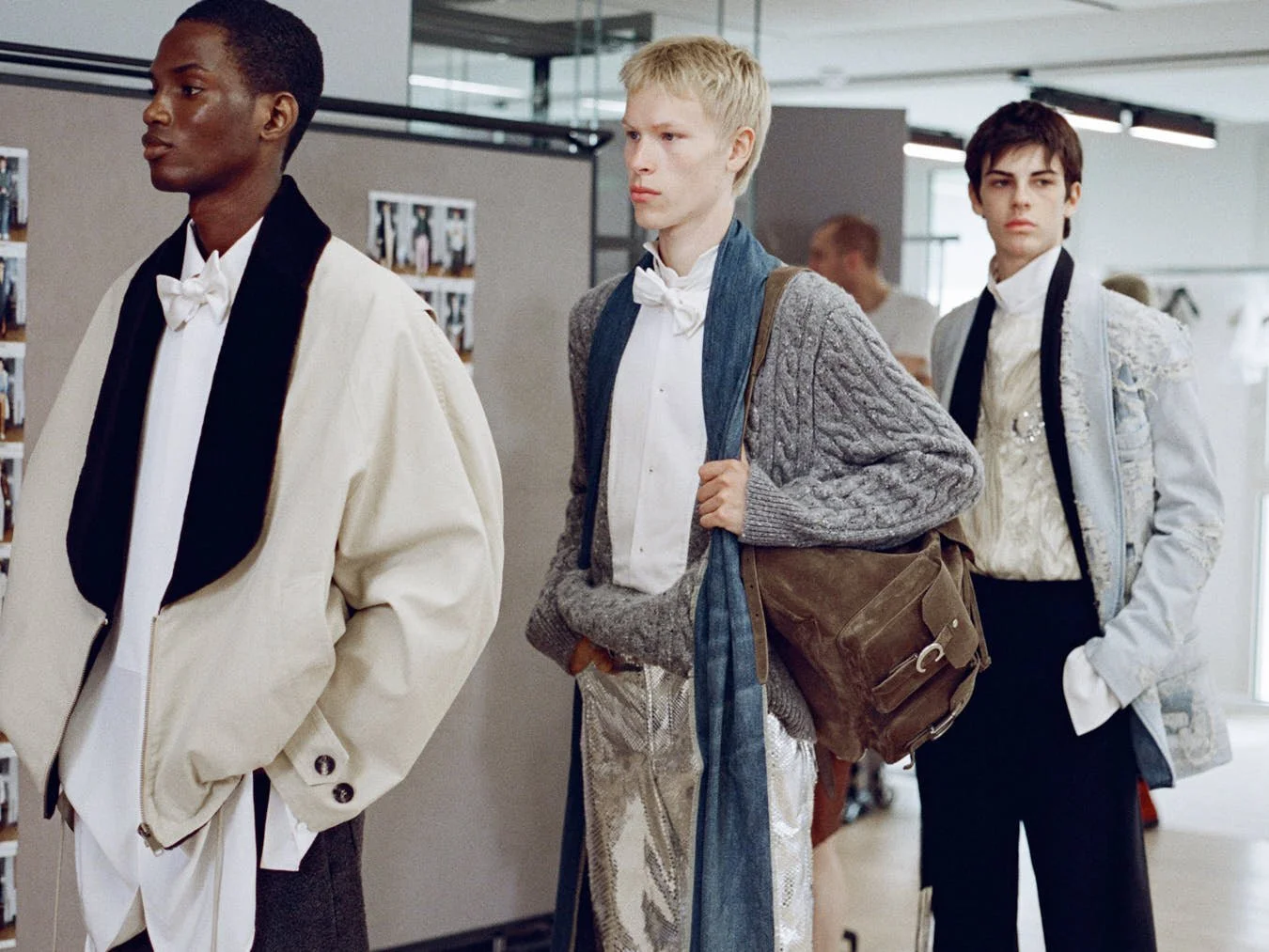
Three models backstage at Dior Men Summer 2027 wearing relaxed formal looks, including a cream jacket with black lapel, a grey knit with silver trousers and a pale embroidered jacket for LE MILE magazine

Backstage at Dior Men Summer 2027
Photo by Mireia Deulofeu


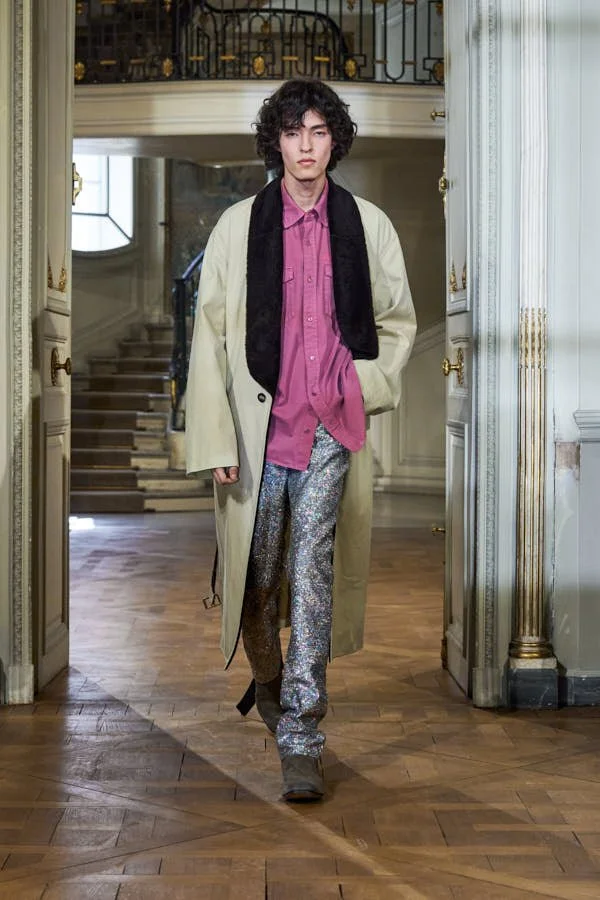
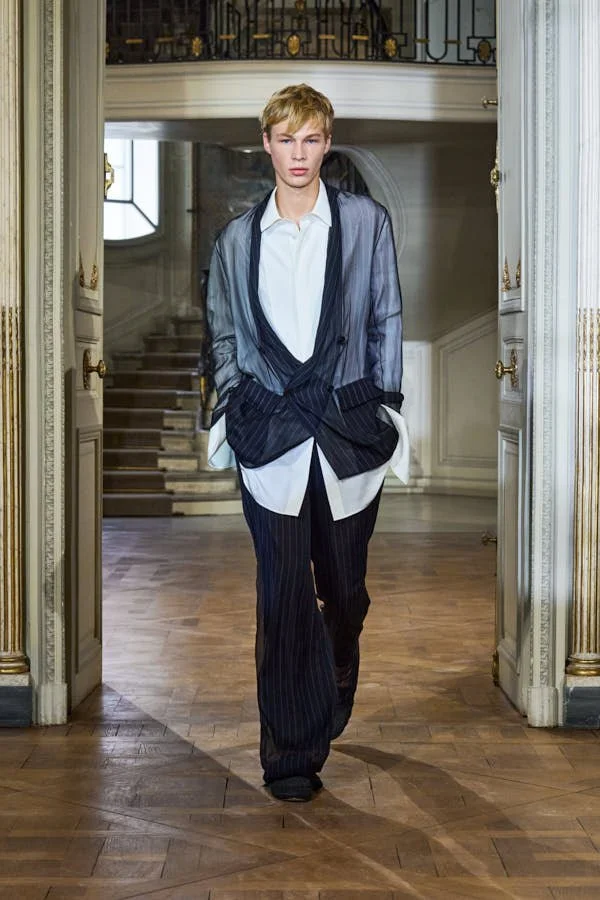
Paris was already hot in the morning, and the collection seemed to register the temperature through cut before the setting needed to explain it. Jackets sat with space around the torso, trousers fell with a wider line and sheer tuxedo layers gave formalwear a more exposed physical presence. Silver trousers cut through the garden light with a trace of night, while white shirts with soft bows brought a controlled awkwardness to the body. Anderson’s Dior remained precise, yet its precision came through touch rather than distance.

 
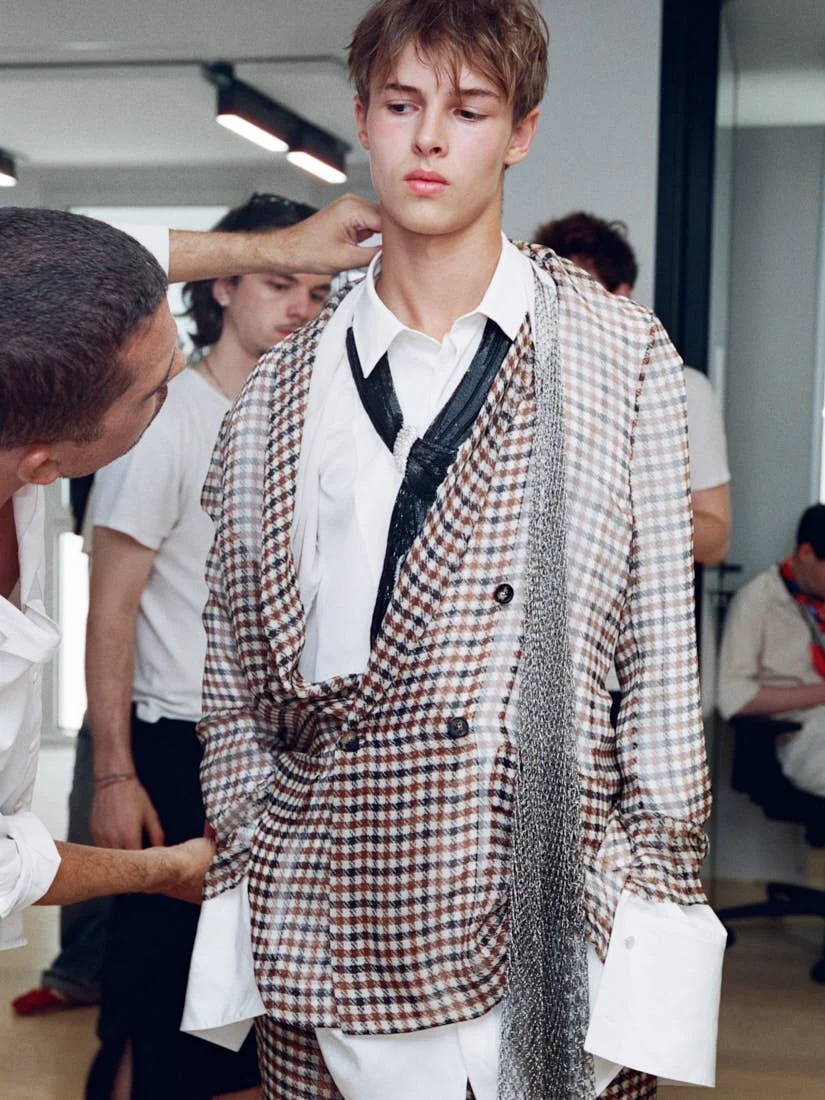
Model backstage at Dior Men Summer 2027 wearing a checked suit with extended white shirt cuffs and a loosely tied black scarf for LE MILE Magazine

A backstage fitting moment from Dior Men Summer 2027
Photo by Mireia Deulofeu

 
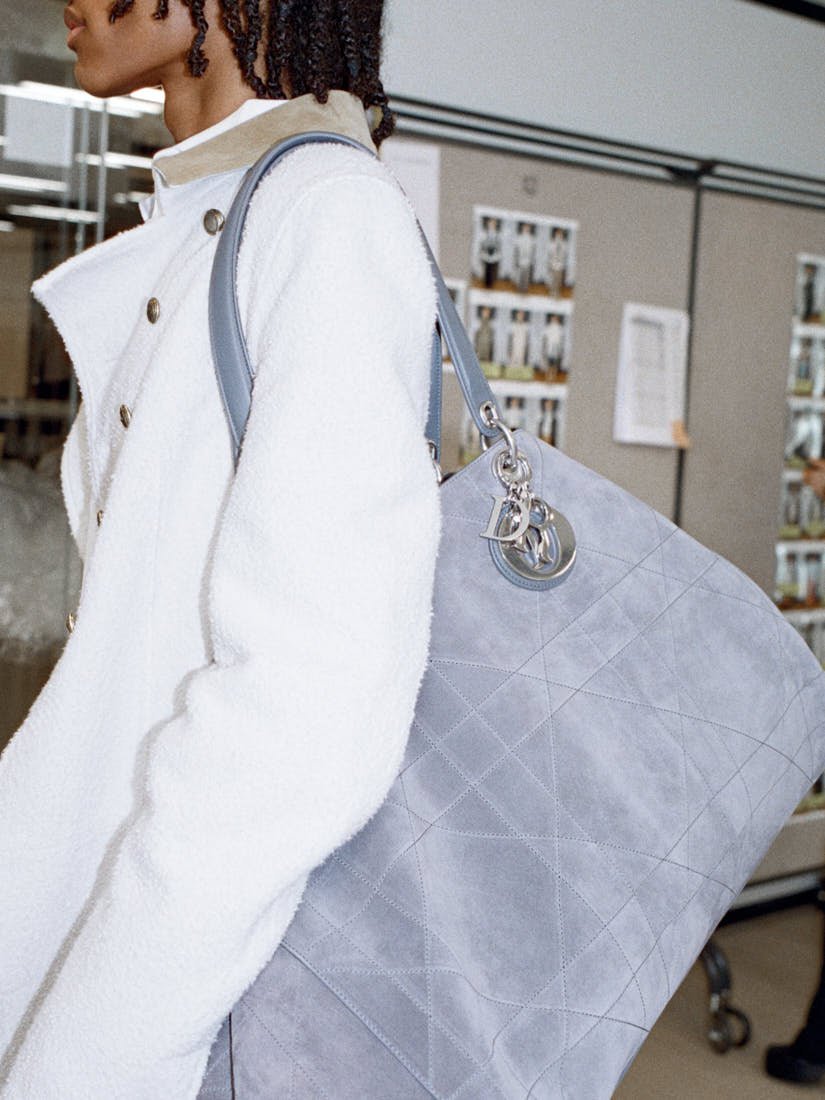
Model backstage at Dior Men Summer 2027 wearing a white textured coat and carrying a pale blue cannage tote with Dior charms for LE MILE Magazine

A backstage detail from Dior Men Summer 2027
Photo by Mireia Deulofeu


The house references worked best when they lost some of their ceremony. Houndstooth appeared as print, turning a woven code into immediate surface. Polka dots crossed sequins with a brightness that felt almost too decorative for the morning, which gave them their charge. A silk shirt repeated a trompe l’oeil scarf motif from 1979 Dior haute couture, now worn close to the skin instead of treated as an archival citation. The gesture felt typical of Anderson’s method here. He did not need to announce a break with the past, he instead changed the level at which the past appeared.

And that shift gave the collection its strongest moments. Embroidered coats suggested work still visible in the finished garment. Fringed knits and loose scarves gave the silhouette a slightly unsettled edge, while the extended cuffs made elegance look less obedient to the wrist. There was a sense of fitting left in the clothes, as a way of keeping Dior in motion. The formal line stayed intact, though the body inside it seemed freer to move, sweat, loosen and touch.

Fred again..’s custom mix with KTNA, Mabe Fratti, Jamie T and original vocals by Christine and the Queens gave the show a similar feeling of altered recognition. Familiar voices and textures passed through a different register, matching a collection in which established Dior material kept changing state. The mix moved through the preserved rooms with a slightly unsettled pulse, loosening their stillness without forcing the effect.


—see the Key Looks

 
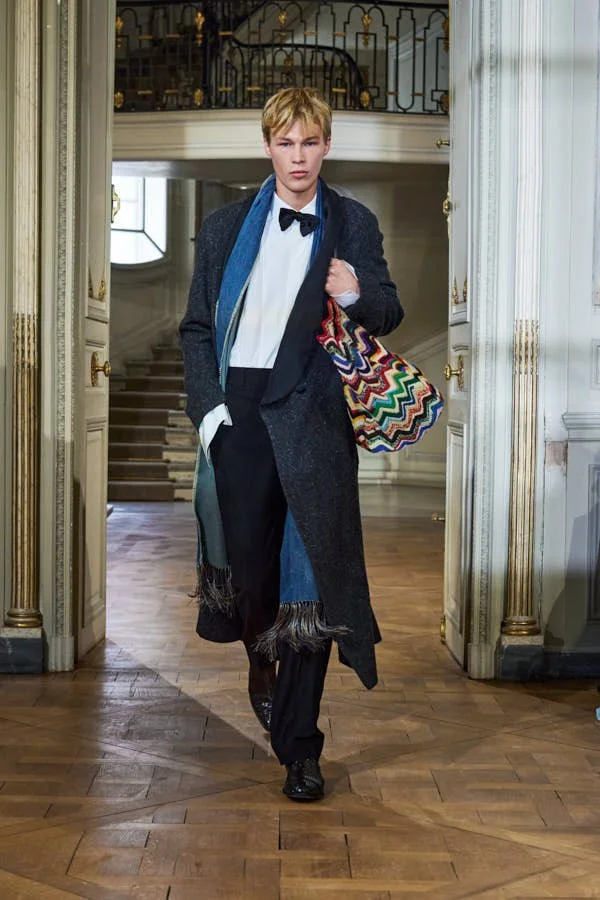
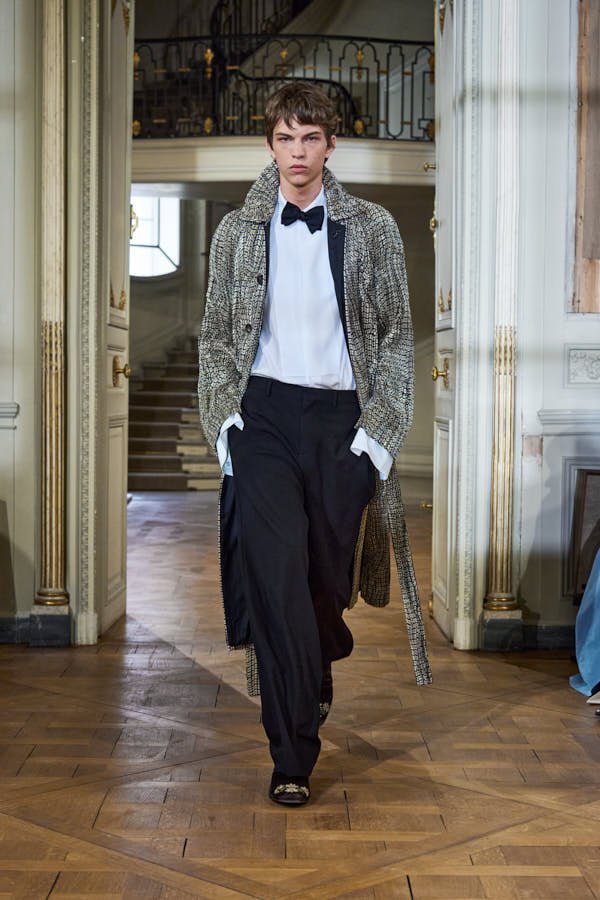
Model walks the Dior Men Summer 2027 runway in a textured grey coat, white shirt, black bow tie and wide black trousers inside the Musée Nissim de Camondo

Dior Men Summer 2027
Photo courtesy of Dior

 
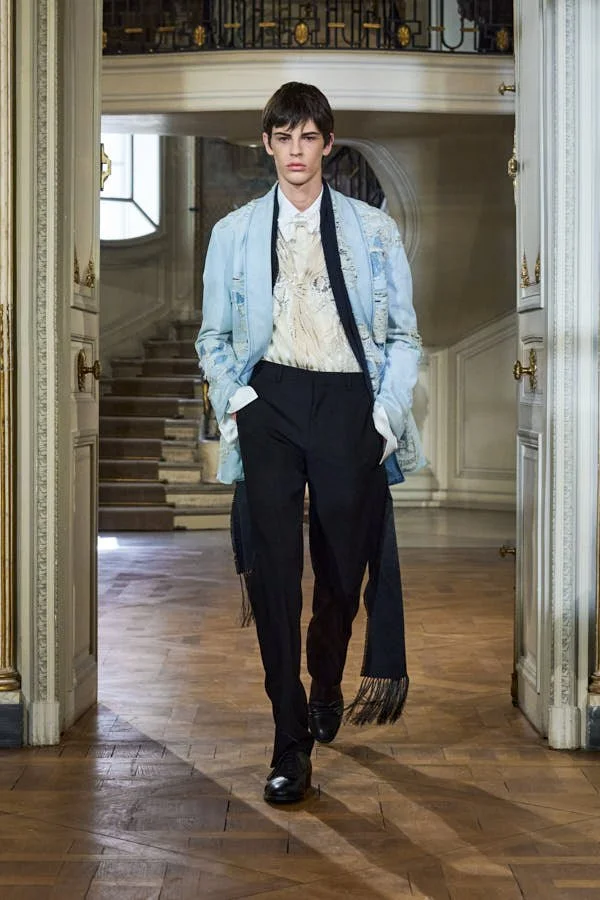
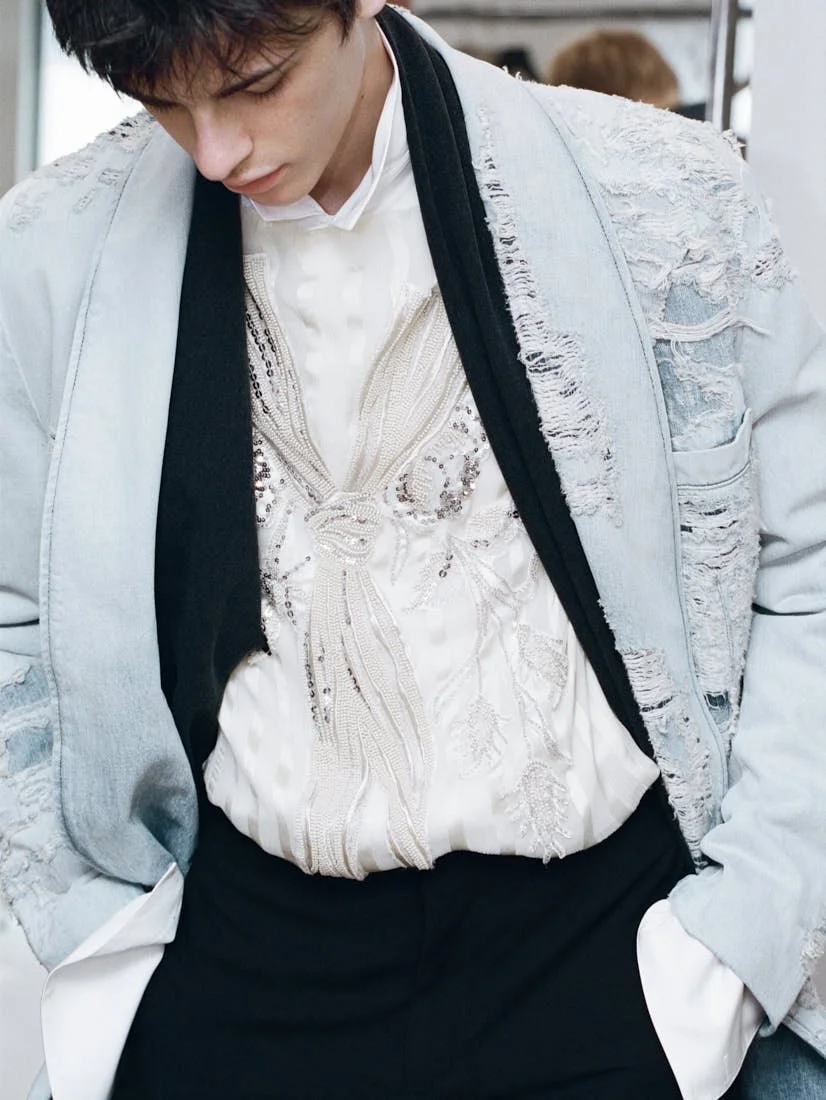
Close-up of a model backstage at Dior Men Summer 2027 wearing a pale denim jacket with frayed detailing over an embroidered white silk shirt and black scarf for LE MILE Magazine

A close-up from Dior Men Summer 2027
Photo by Mireia Deulofeu

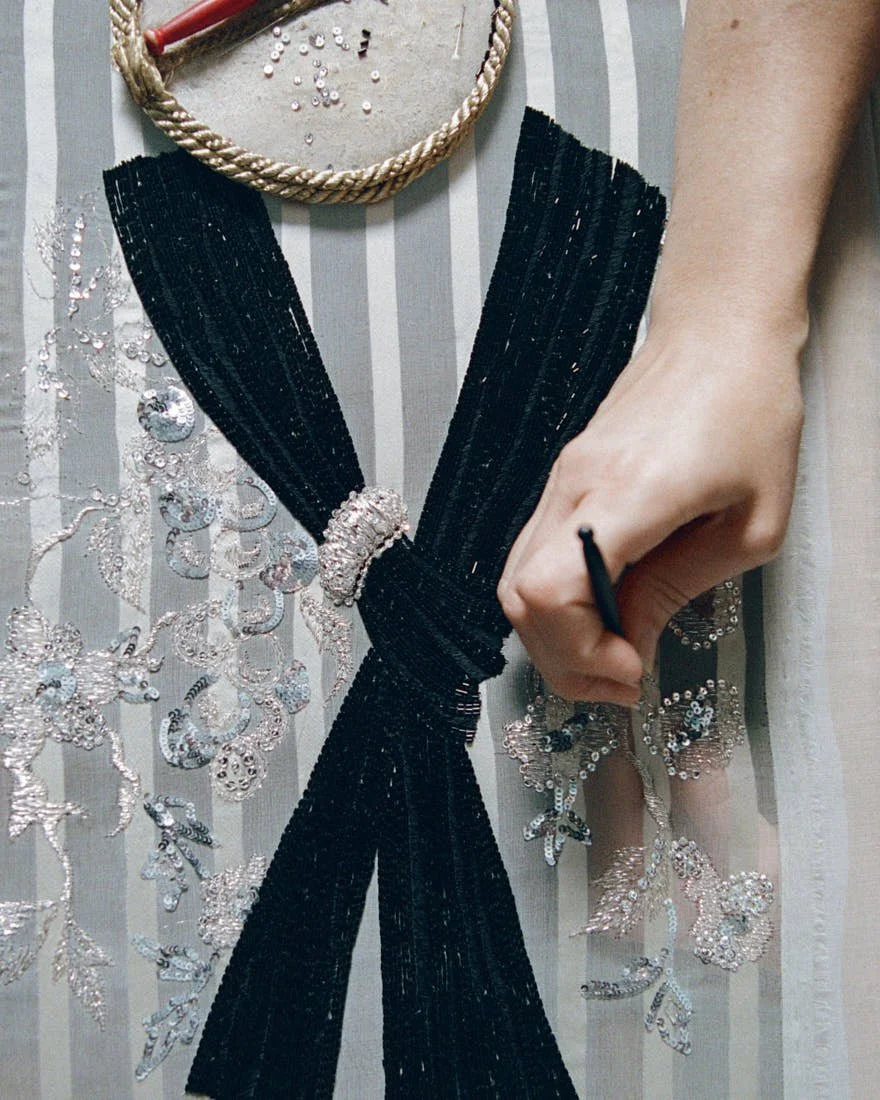
Close-up of Dior Men Summer 2027 embroidery work, showing silver beadwork, a black bow detail and hand-applied embellishment on striped fabric

A savoir-faire detail from Dior Men Summer 2027
Photo by David William Baum

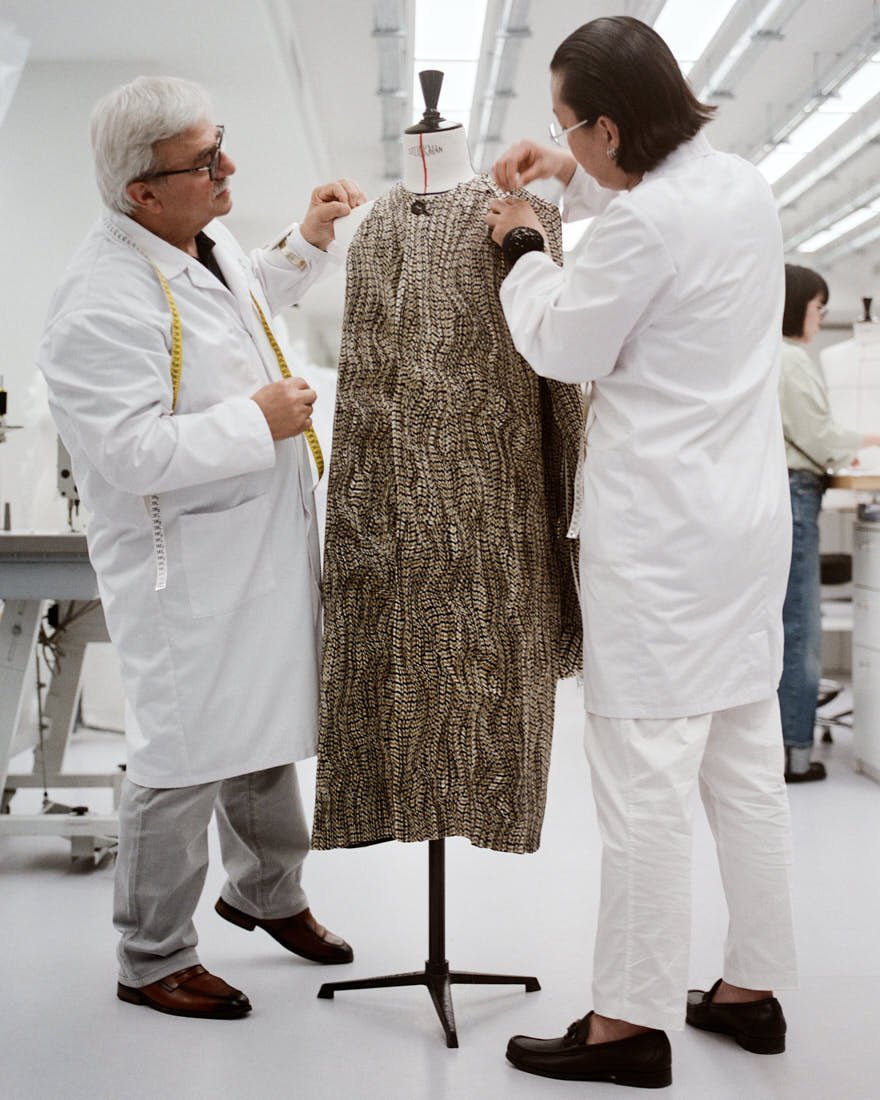
Two Dior atelier workers adjust a textured plissé coat on a mannequin for the Dior Men Summer 2027 collection

Inside the Dior Atelier
Photo by David William Baum

 
Model walks the Dior Men Summer 2027 runway in a textured grey coat, white shirt, black bow tie and wide black trousers inside the Musée Nissim de Camondo

Dior Men Summer 2027
Photo courtesy of Dior


Nineteenth-century embroidery appeared on suede lace-ups, bringing historical ornament down to the ground. Woven boots with scuffed finishes, a vintage zig-zag blanket turned into a bag and a spongy denim tote with cannage gave the accessories a handled quality, with craft moving through objects built to be touched and carried.

Anderson’s second Dior Men proposal feels strongest in that controlled state of disturbance. Nothing here collapses the house, and the collection has no interest in theatrical rebellion. Its intelligence lies in smaller acts of displacement. A formal shirt changes through the cuff, a couture motif changes through proximity to skin, and a museum changes because the clothes make it feel occupied again. Dior Men Summer 2027 brought warmth into the house, leaving the museum rooms with the feeling of clothes recently worn, adjusted and carried outside.

 
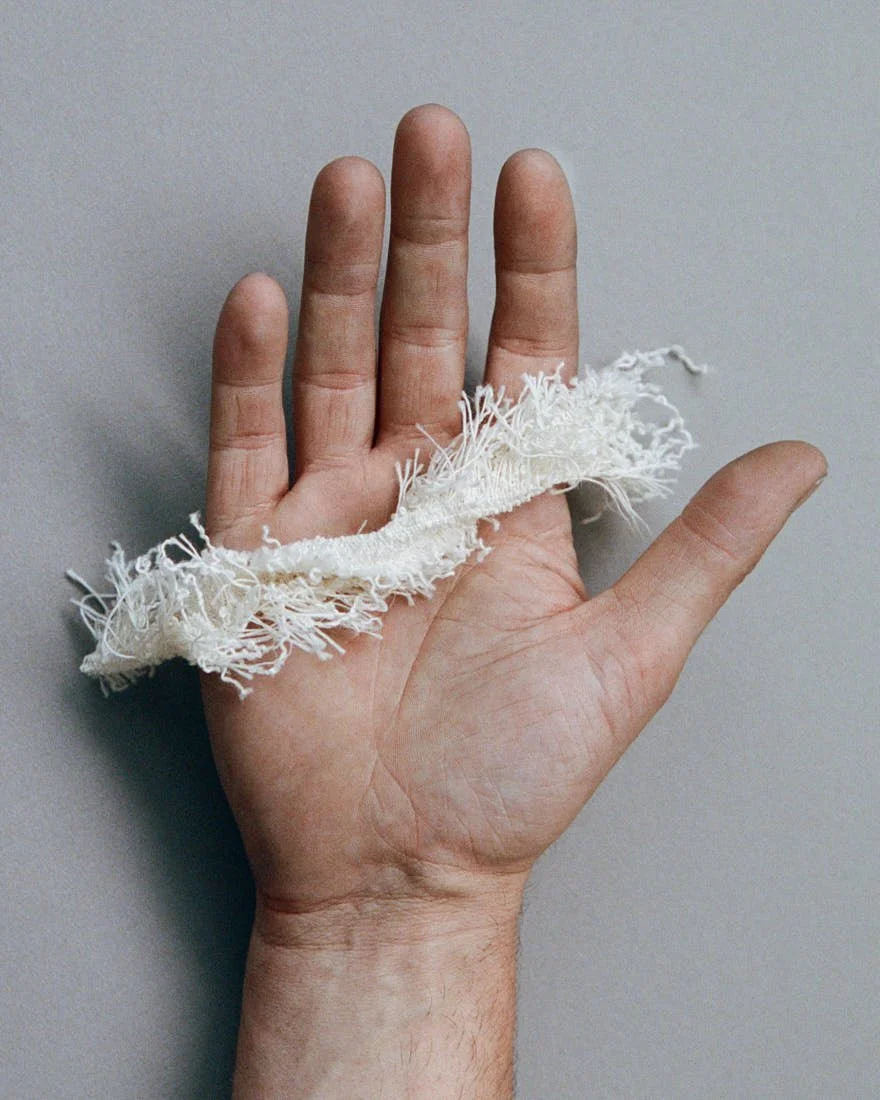
Frayed white textile sample from the Dior Men Summer 2027 collection shown against a black background and held across a hand.

A savoir-faire detail from Dior Men Summer 2027
Photo by David William Baum

 
Model walks the Dior Men Summer 2027 runway in a textured grey coat, white shirt, black bow tie and wide black trousers inside the Musée Nissim de Camondo

Dior Men Summer 2027
Photo courtesy of Dior

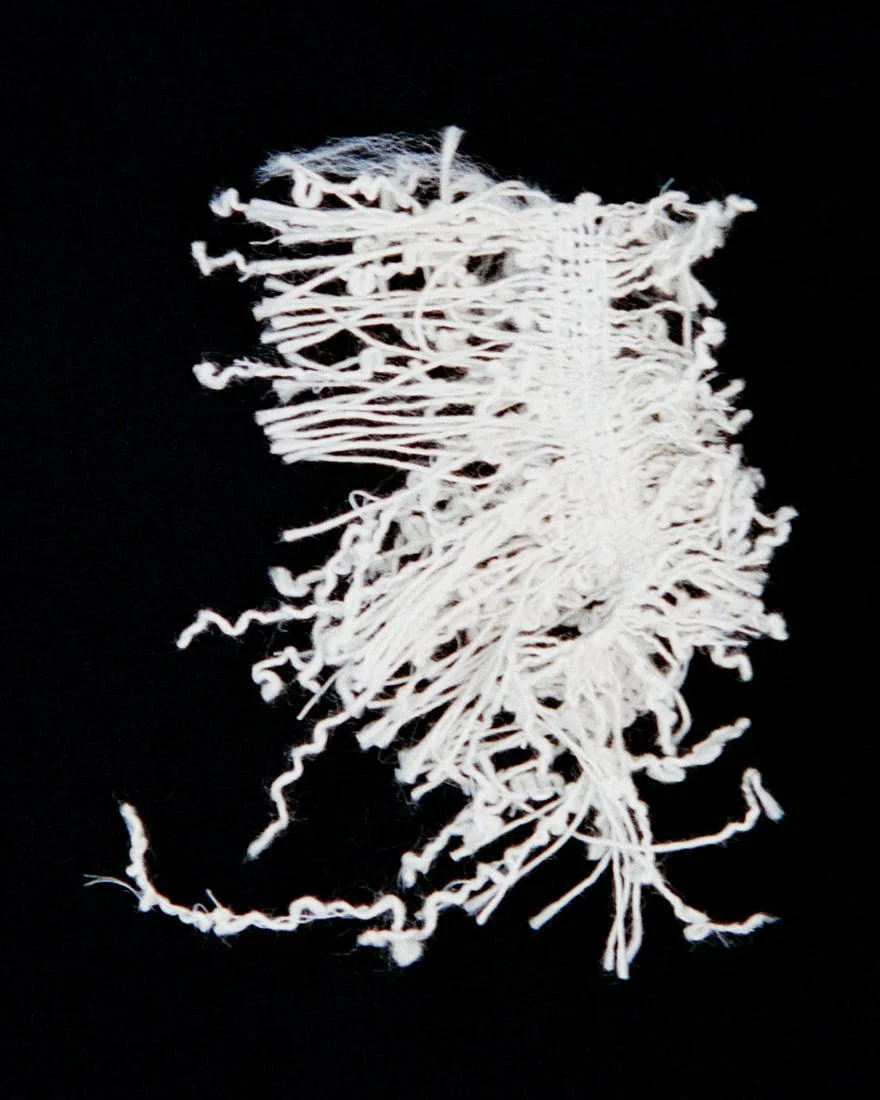
Frayed white textile sample from the Dior Men Summer 2027 collection shown against a black background and held across a hand.

A savoir-faire detail from Dior Men Summer 2027
Photo by David William Baum


all images (c) Dior

Louis Vuitton Men’s SS 2027 - Pharrell Williams’ Surf Dandy

Louis Vuitton Men’s SS 2027 - Pharrell Williams’ Surf Dandy

LOUIS VUITTON MENS SPRING/SUMMER 2027

Pharrell Williams Takes the Dandy to the Shore


written ALBAN E. SMAJLI


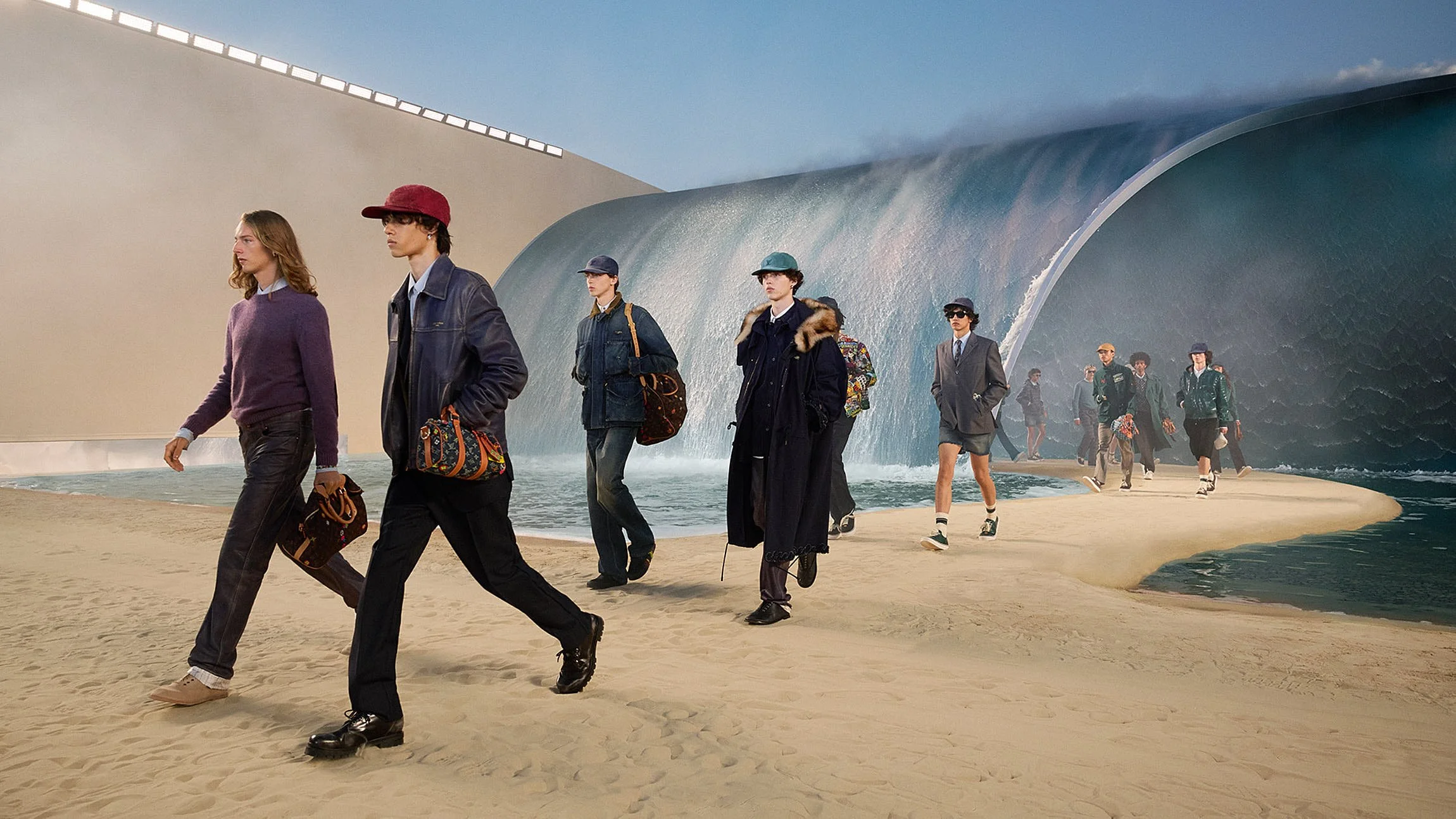
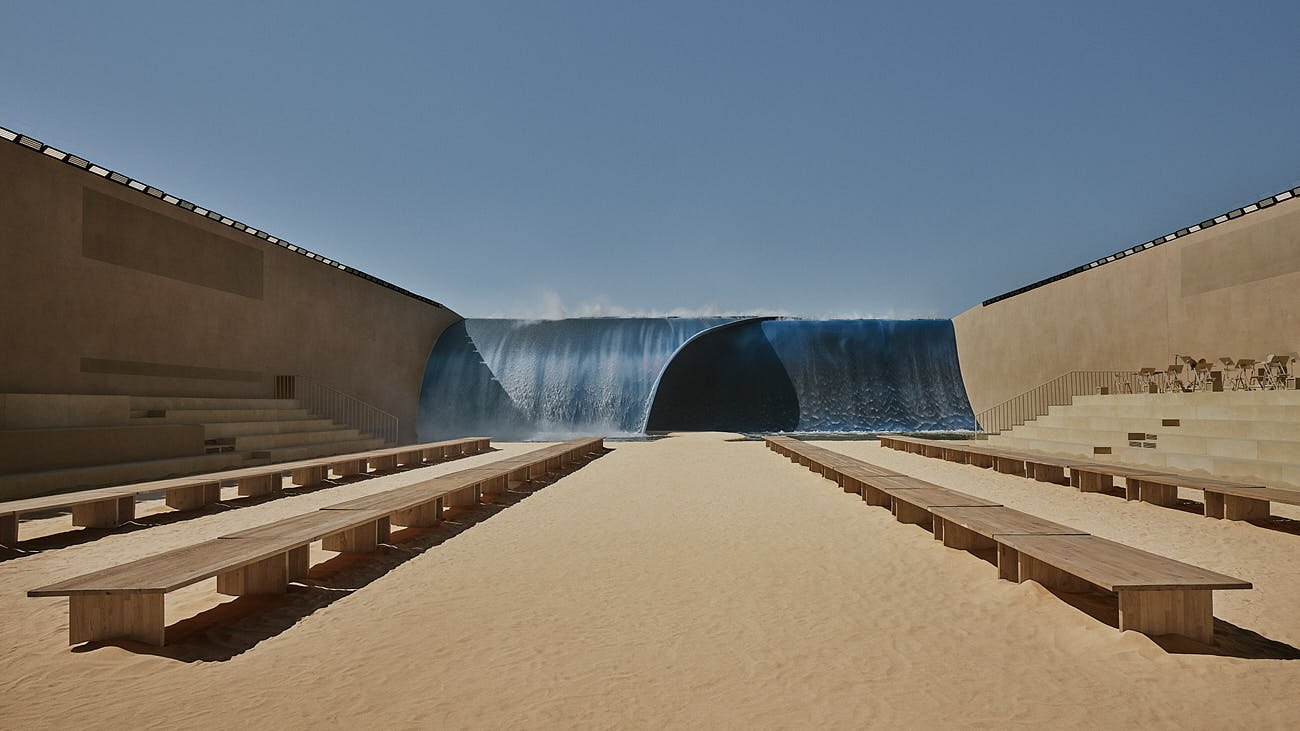
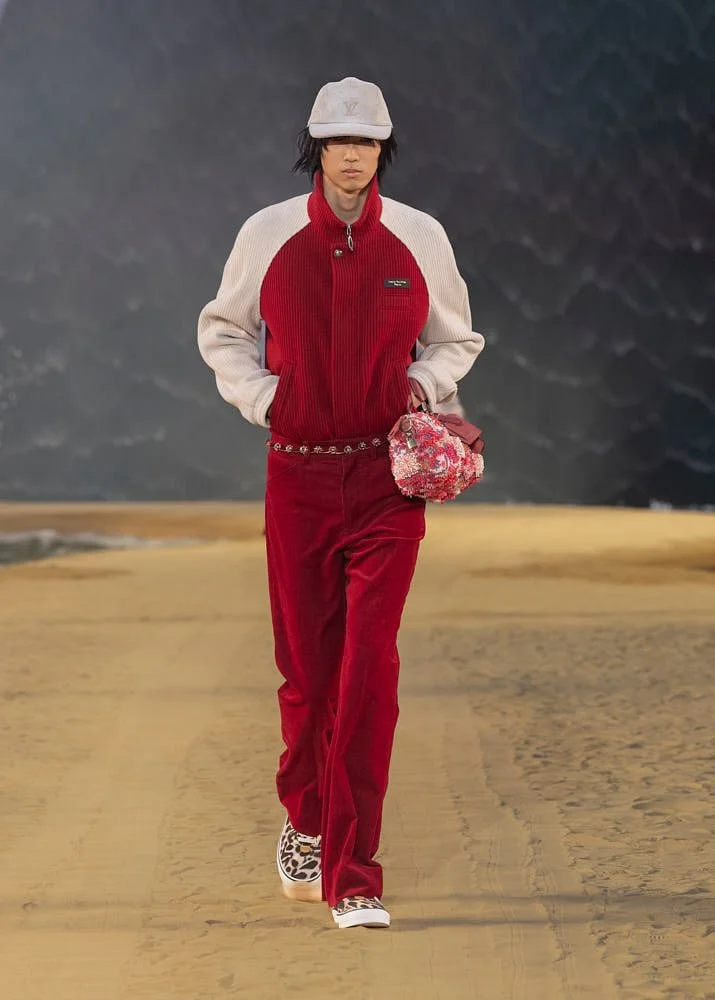
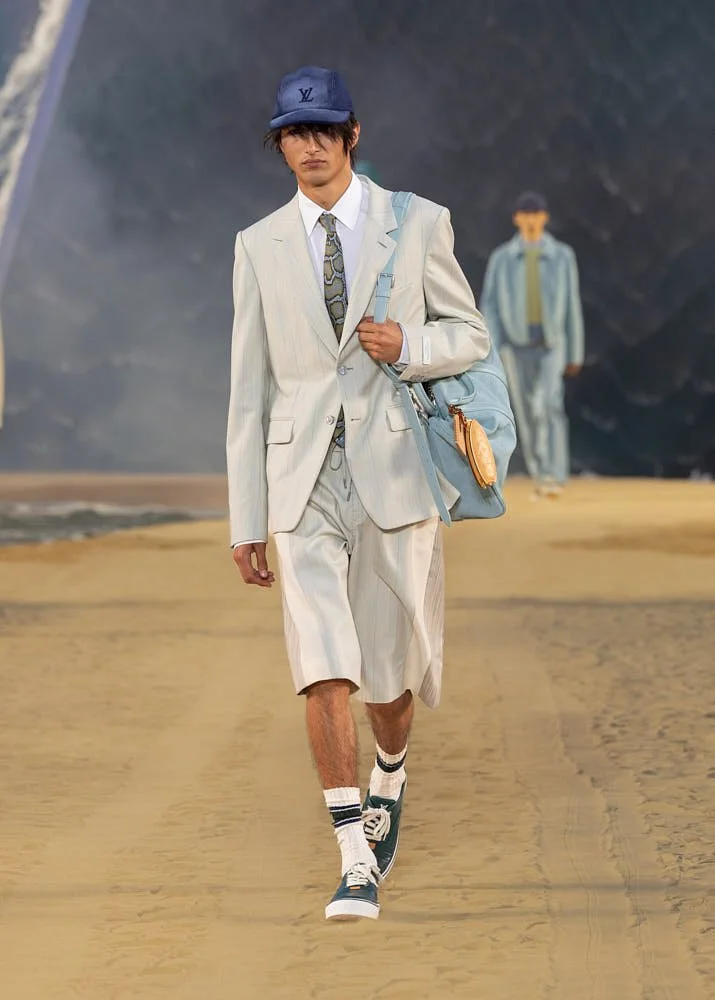
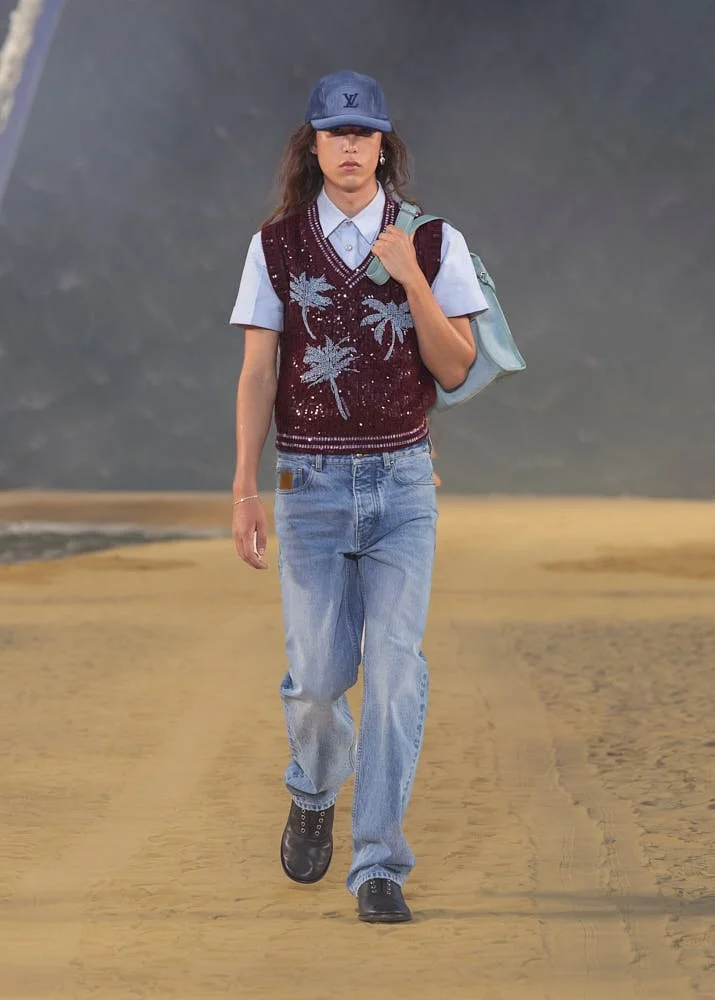
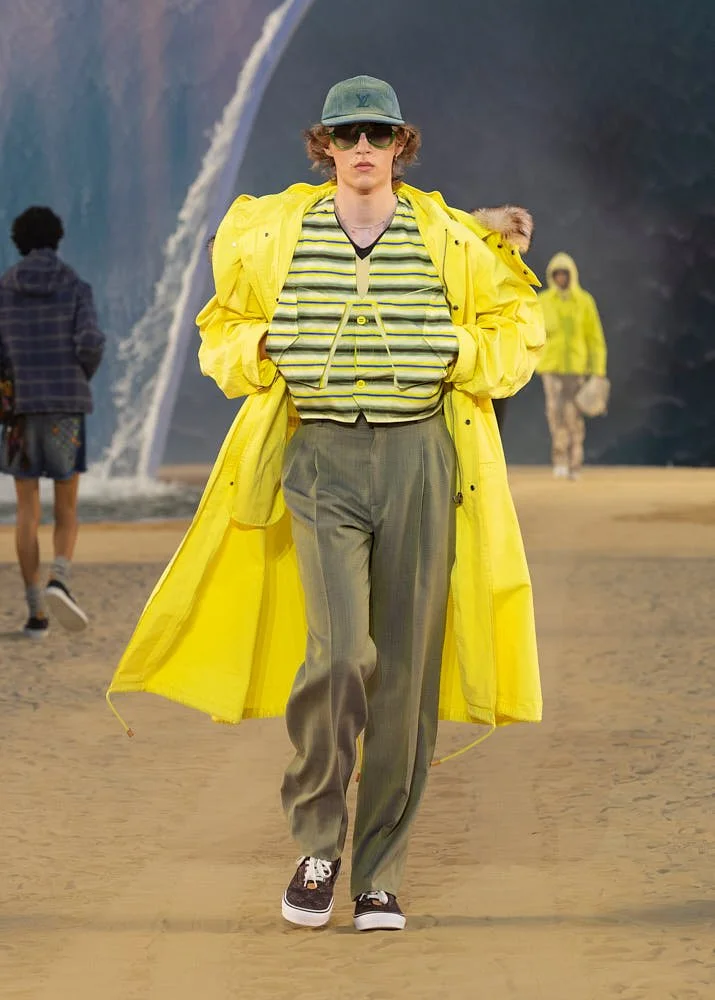
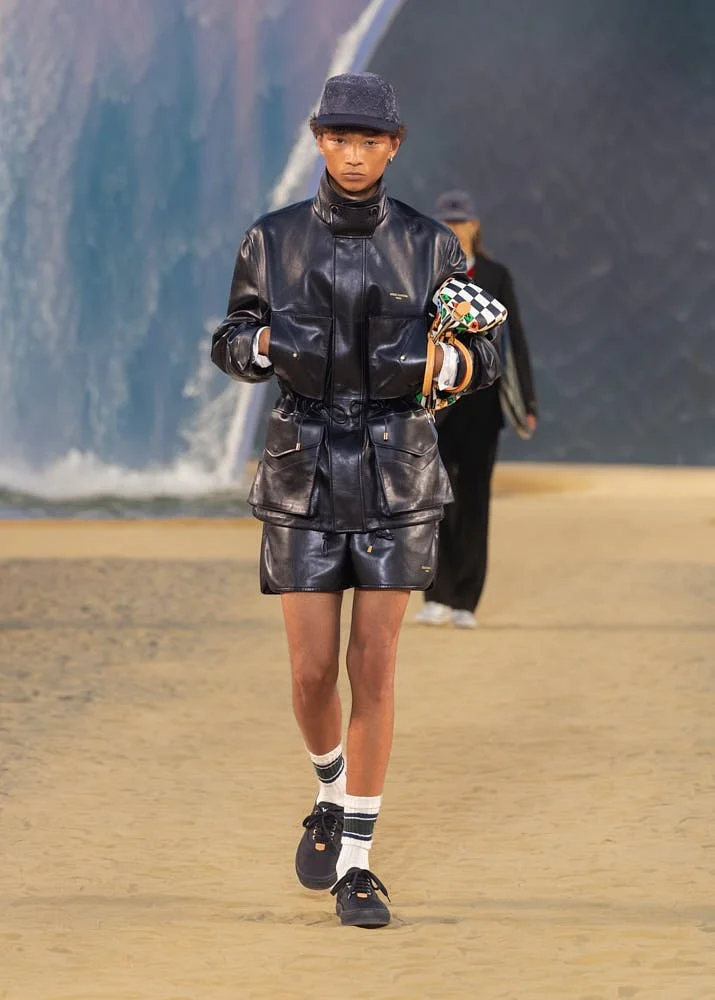
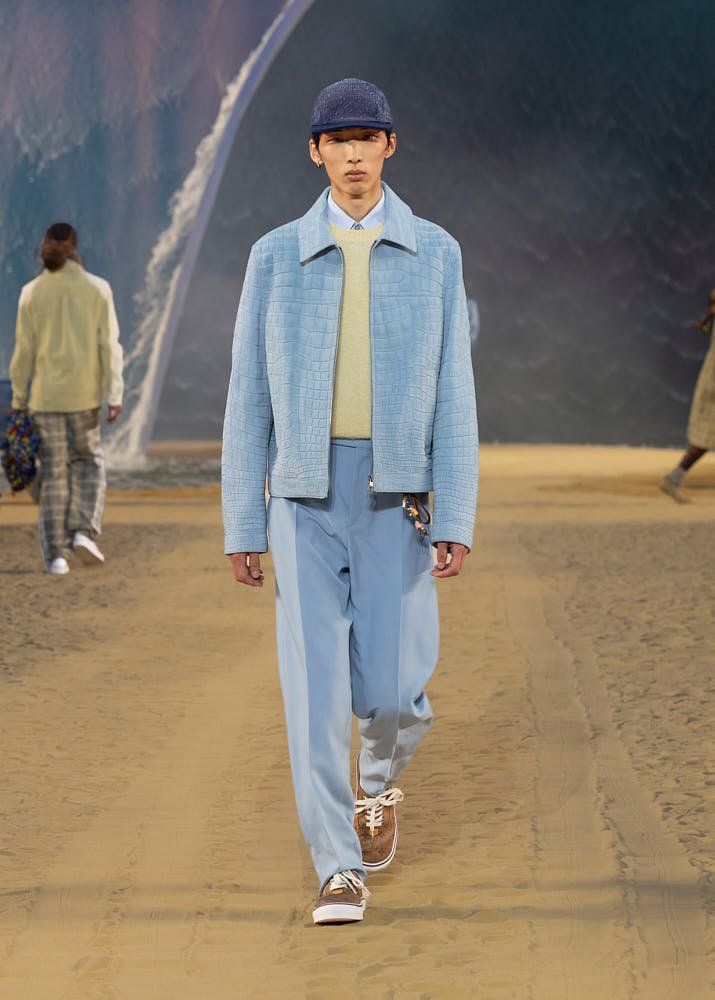
Paris still held the heat when Louis Vuitton opened its Men’s Spring-Summer 2027 show at the Cité Internationale Universitaire. The city was heavy, the evening barely cooler, and Pharrell Williams answered with sand, mist and a wall of water rising at the end of the runway. The set gave the body a suggestion of relief before the clothes came into focus. It was artificial, fully controlled, completely Louis Vuitton, and still the image worked: a beach placed inside the capital, a wave built as architecture, a summer fantasy made sharp by the temperature around it.


LOUIS VUITTON MENS SPRING SUMMER 2027 by Pharell Williams LE MILE Magazine Set Design Cité Internationale Universitaire

LOUIS VUITTON MENS SPRING SUMMER 2027 by Pharell Williams
Set Design at Cité Internationale Universitaire


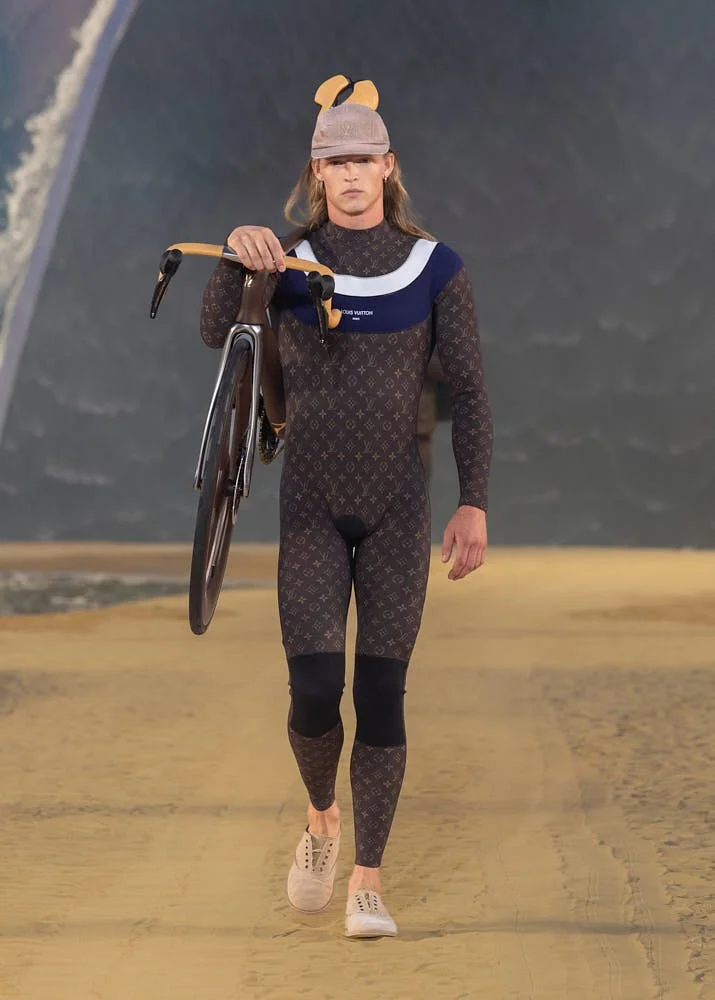
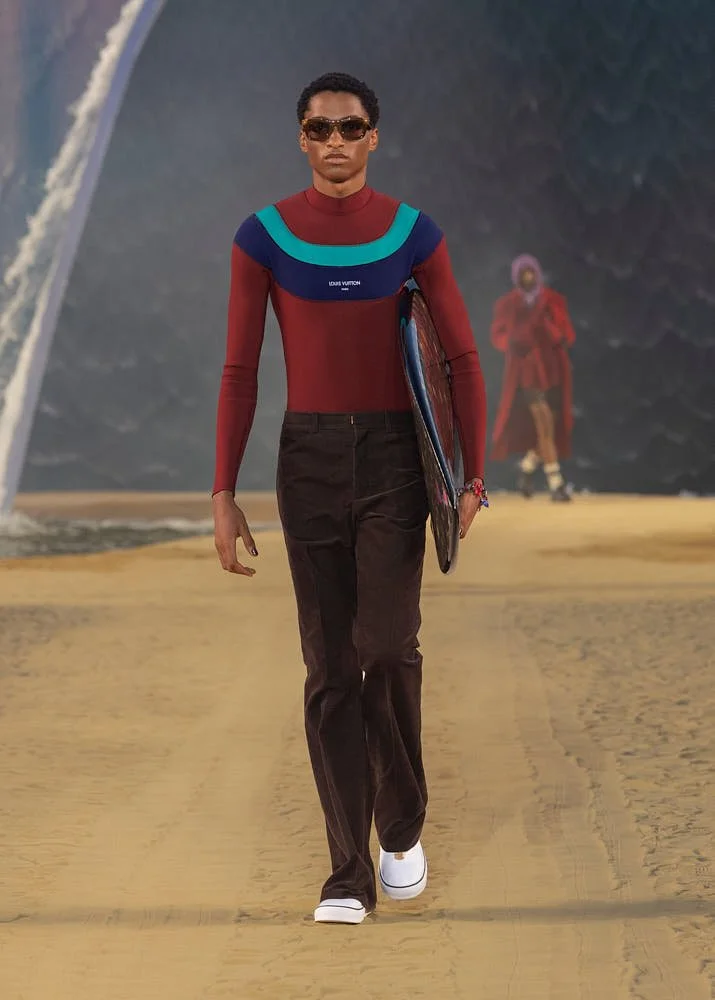
The collection took surf culture through the Louis Vuitton dandy, less as a costume, but more as a change in posture. The suit remained present, only loosened by the idea of movement: Shoulders dropped slightly and Trousers widened. Jackets sat with more air around the body. Wetsuit lines appeared inside tailoring, technical stretch tightened certain silhouettes, and waxed surfaces caught the light with a faint wetness. Pharrell’s dandy has often carried polish; here, that polish came marked by salt and surface wear.

 
LOUIS VUITTON MENS SPRING SUMMER 2027 by Pharell Williams LE MILE Magazine bike and suit

LOUIS VUITTON MENS SPRING SUMMER 2027
by Pharell Williams

 
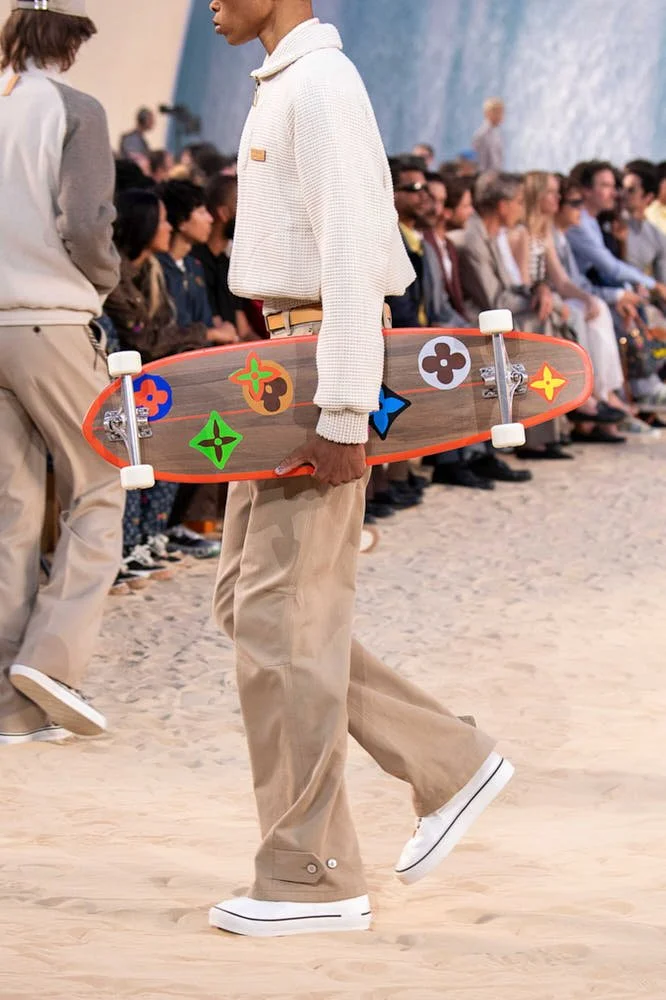
LOUIS VUITTON MENS SPRING SUMMER 2027 by Pharell Williams LE MILE Magazine skateboard

LOUIS VUITTON MENS SPRING SUMMER 2027
by Pharell Williams

LOUIS VUITTON MENS SPRING SUMMER 2027 by Pharell Williams LE MILE Magazine

LOUIS VUITTON MENS SPRING SUMMER 2027
by Pharell Williams


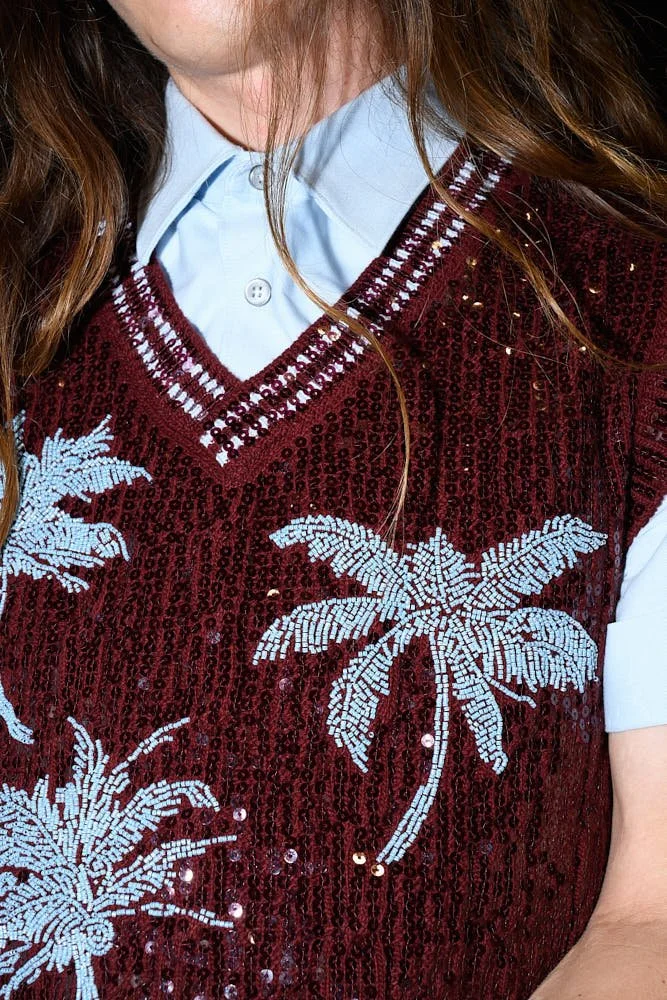
The strongest clothes had a handled quality with mended textures, weathered finishes and tactile trompe l’oeil that gave fabric the sense of having passed through use. A short could carry discipline, a knit could hold the memory of sun and a suit could take on the trace of performance fabric while keeping its formal line. This was where the collection felt most precise: in the friction between luxury craft and clothes connected to boards, beaches, travel and repair.

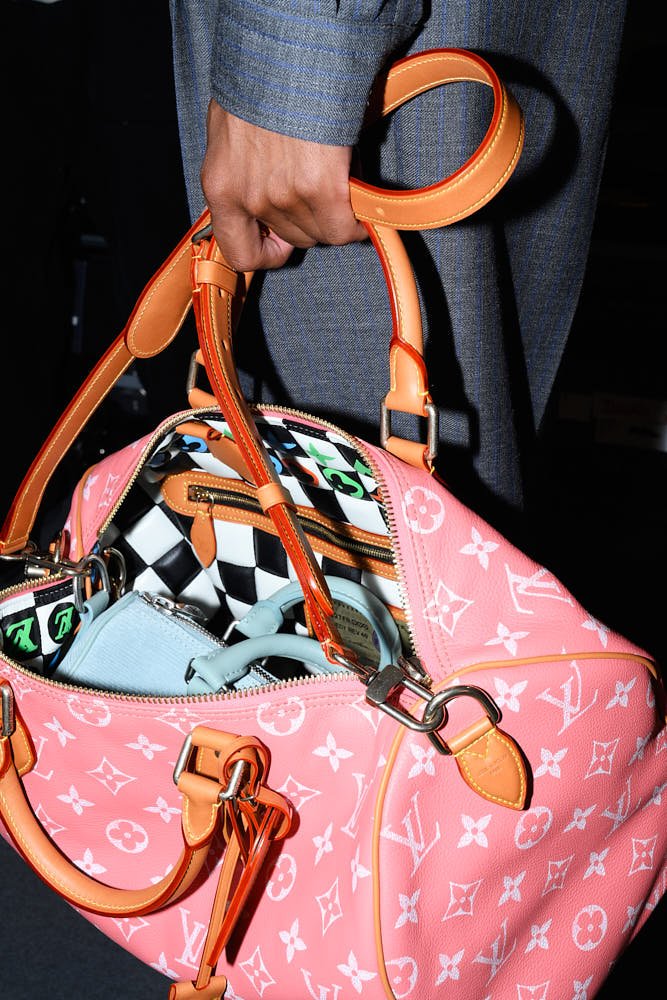
Skate culture ran through the show with a graphic snap: checkerboard motifs cut across sneakers and garments, bringing Pharrell’s own visual memory into the coastal frame. The low-cut sneakers, rubber soles and sharp surface graphics gave the collection a street-level rhythm, while acid colours broke through the sand-toned atmosphere with the brightness of surf hardware and sun-faded signage. Dark tailoring and deep green outerwear gave the eye a calmer register, keeping the collection anchored in the house’s travel vocabulary. And the silver camper near the dunes sharpened that idea, it stood like a polished shelter, sealed and reflective, a nomadic object placed inside an invented coast. Before the show, surfers Mikey February and Julian Wilson appeared in a cinematic prelude, giving the fantasy a physical source. Then came the water, the sound of it, the mist from it, the force of it held inside a Paris runway. Pharrell’s own studio-made music pushed the presentation further into atmosphere, with the wave operating as set, symbol and cooling device.

 
LOUIS VUITTON MENS SPRING SUMMER 2027 by Pharell Williams LE MILE Magazine

LOUIS VUITTON MENS SPRING SUMMER 2027
by Pharell Williams

 
LOUIS VUITTON MENS SPRING SUMMER 2027 by Pharell Williams LE MILE Magazine

LOUIS VUITTON MENS SPRING SUMMER 2027
by Pharell Williams

LOUIS VUITTON MENS SPRING SUMMER 2027 by Pharell Williams LE MILE Magazine

LOUIS VUITTON MENS SPRING SUMMER 2027
by Pharell Williams

LOUIS VUITTON MENS SPRING SUMMER 2027 by Pharell Williams LE MILE Magazine

LOUIS VUITTON MENS SPRING SUMMER 2027
by Pharell Williams

 
LOUIS VUITTON MENS SPRING SUMMER 2027 by Pharell Williams LE MILE Magazine yellow coat

LOUIS VUITTON MENS SPRING SUMMER 2027
by Pharell Williams


The environmental note came through Louis Vuitton’s support of Coral Gardeners, with reef restoration in French Polynesia linked to the house’s Regeneration 2030 roadmap. In a show built around water, that detail gave the image a practical extension beyond the runway. Spring-Summer 2027 feels like one of Pharrell’s clearest propositions for Louis Vuitton Men so far: not a break from the house’s travel mythology, but a sharper way of making it physical. The show understood destination as climate, dress as attitude, and luxury as an environment built around sensation.

 
LOUIS VUITTON MENS SPRING SUMMER 2027 by Pharell Williams LE MILE Magazine

LOUIS VUITTON MENS SPRING SUMMER 2027
by Pharell Williams

LOUIS VUITTON MENS SPRING SUMMER 2027 by Pharell Williams LE MILE Magazine bag

LOUIS VUITTON MENS SPRING SUMMER 2027
by Pharell Williams

 
LOUIS VUITTON MENS SPRING SUMMER 2027 by Pharell Williams LE MILE Magazine blue suit

LOUIS VUITTON MENS SPRING SUMMER 2027
by Pharell Williams

LOUIS VUITTON MENS SPRING SUMMER 2027
by Pharell Williams


LOUIS VUITTON MENS SPRING SUMMER 2027
by Pharell Williams


all images (c) Louis Vuitton Press
VALENTINO - Cruise 2027 Feels Like a Private Archive

VALENTINO - Cruise 2027 Feels Like a Private Archive

WHY VALENTINO CRUISE 2027 FEELS LIKE A PRIVATE ARCHIVE


written SARAH ARENDTS


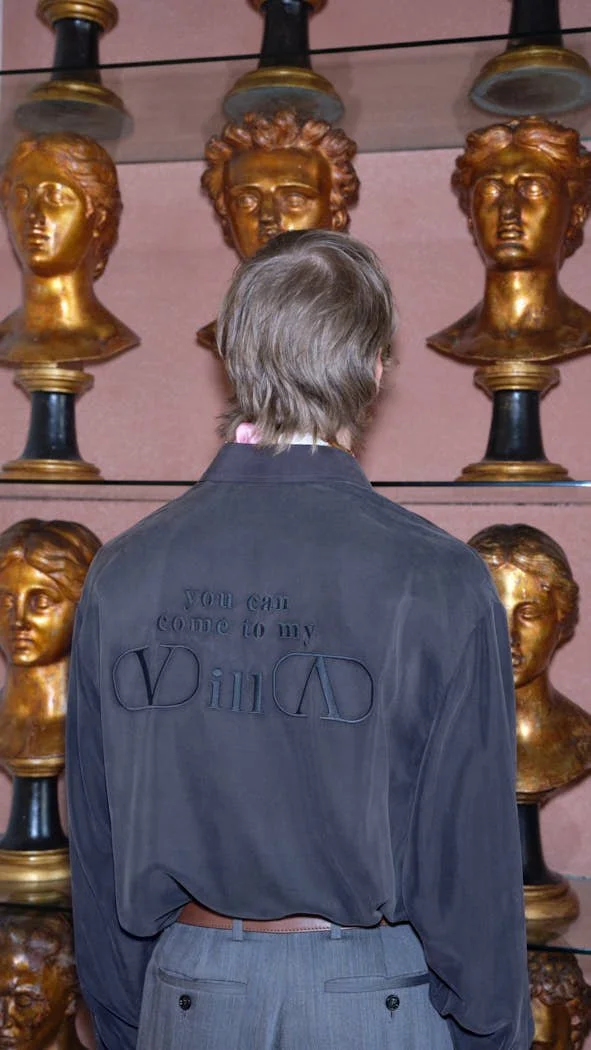
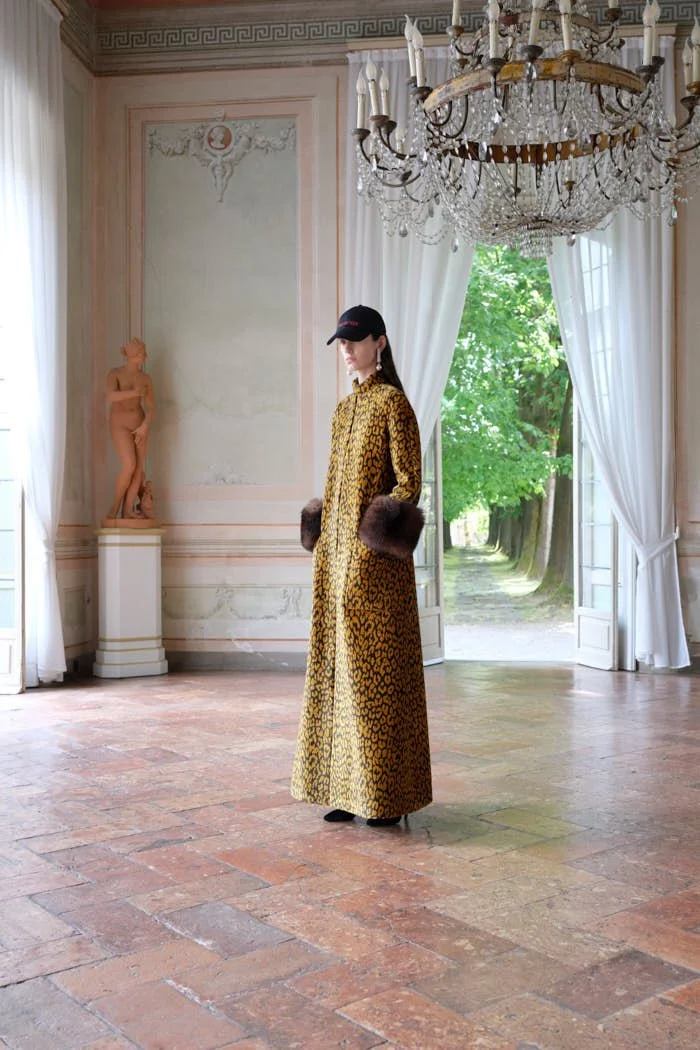
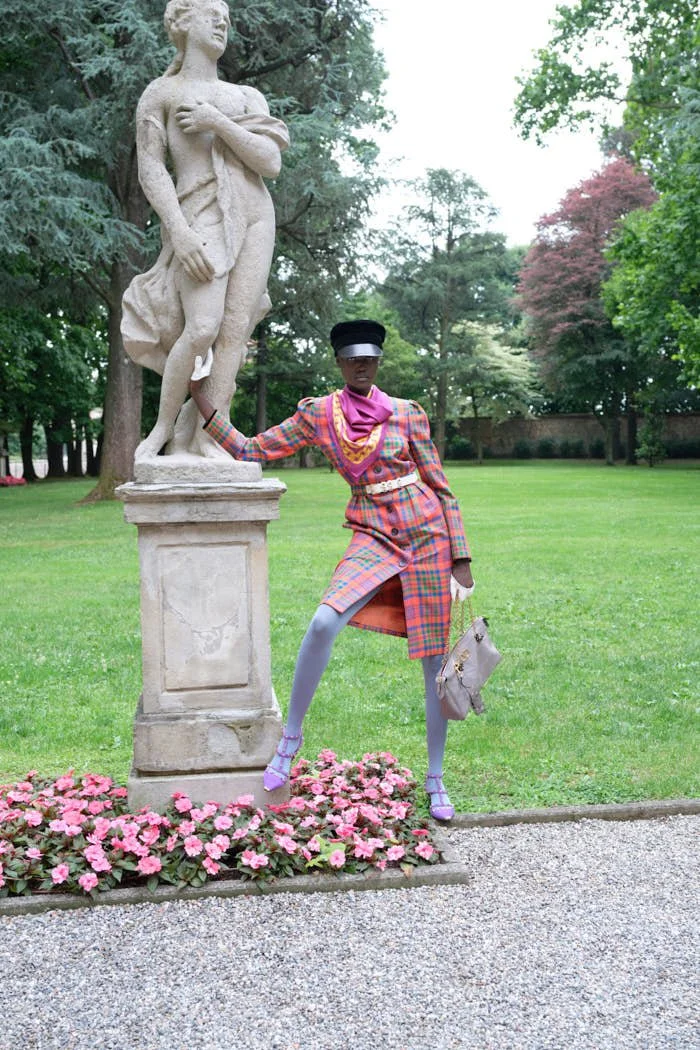
Valentino Cruise 2027 treats clothes as evidence of private life. In Liv Liberg’s campaign at Villa Gaia Gandini in Milan, Alessandro Michele’s collection sits among rooms that already feel occupied by memory, with coats, prints, shoes and bags carrying the pressure of people who have dressed for themselves before anyone looked.


VALENTINO CRUISE 2027 Campaign photographer Liv Liberg Villa Gaia Gandini Milan for LE MILE Magazine

VALENTINO / Cruise 2027 Collection

 
VALENTINO CRUISE 2027 Campaign photographer Liv Liberg Villa Gaia Gandini Milan for LE MILE Magazine

VALENTINO / Cruise 2027 Collection


The collection places women’s and men’s wardrobes inside the same emotional register. A floral print has the confidence of something found in a family photograph. A coat sits on the body with deliberate weight. Tailoring softens around the figure, while decorative surfaces give each look a sense of attachment. Michele is interested in the way garments become personal before they become public, the way a sleeve, a collar or a pair of shoes can suggest a life already in motion.

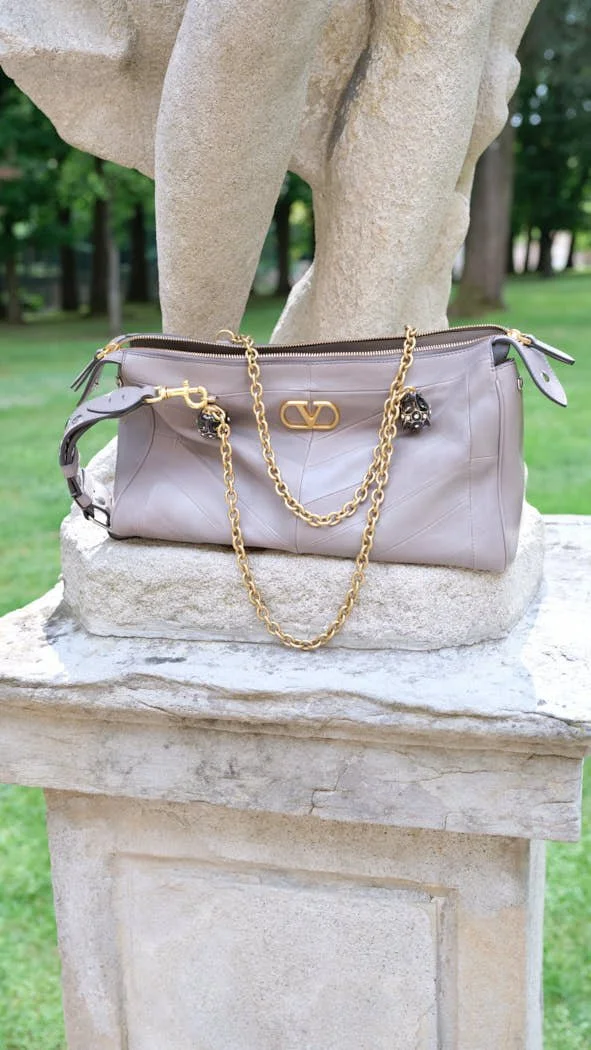
Cruise often belongs to travel, yet here the idea of movement feels closer to interior life. The collection creates characters through clothing that seems chosen with private logic. There is elegance, but it comes through possession rather than polish. A bag is held like something needed, shoes alter posture, prints bring memory into the image, and ornament becomes part of behaviour.

 
VALENTINO CRUISE 2027 Campaign photographer Liv Liberg Villa Gaia Gandini Milan for LE MILE Magazine

VALENTINO / Cruise 2027 Collection

 
VALENTINO CRUISE 2027 Campaign photographer Liv Liberg Villa Gaia Gandini Milan for LE MILE Magazine

VALENTINO / Cruise 2027 Collection


Liv Liberg’s photographs sharpen that reading: shot at Villa Gaia Gandini in Milan, the campaign places George Anderson, Valery Sergeva, Yar Aguer, Gaetan Bianchi, Dario Tonin and Khadim Diouff inside a setting filled with domestic gravity. The villa gives the collection a lived frame. Walls, mirrors and furniture hold their own presence, making the clothes feel observed by the rooms as much as by the camera. Liberg’s images carry a controlled intimacy and the models appear caught during a pause, close to speech or just after it. Their gestures keep the campaign away from pure display. A hand rests near a bag and a body turns slightly into the room.

This is where Michele’s Valentino feels most precise, because his work for the Maison has often dealt with memory, excess and character, but Cruise 2027 gives those ideas a more domestic pressure. The clothes do not ask to be decoded as symbols. They work through wear, through mood, through the friction between private taste and public image.

 
VALENTINO CRUISE 2027 Campaign photographer Liv Liberg Villa Gaia Gandini Milan for LE MILE Magazine bag

VALENTINO / Cruise 2027 Collection

 
VALENTINO CRUISE 2027 Campaign photographer Liv Liberg Villa Gaia Gandini Milan for LE MILE Magazine

VALENTINO / Cruise 2027 Collection


VALENTINO CRUISE 2027 Campaign photographer Liv Liberg Villa Gaia Gandini Milan for LE MILE Magazine

VALENTINO / Cruise 2027 Collection

 
VALENTINO CRUISE 2027 Campaign photographer Liv Liberg Villa Gaia Gandini Milan for LE MILE Magazine

VALENTINO / Cruise 2027 Collection


The campaign uses Milan as a house, a stage of possession, a place where fashion enters rooms already charged with time. Valentino Cruise 2027 gains its force from that tension: clothes carrying the trace of someone’s life, photographed in a space that seems to remember its own.


VALENTINO CRUISE 2027 Campaign photographer Liv Liberg Villa Gaia Gandini Milan for LE MILE Magazine

VALENTINO / Cruise 2027 Collection


all images Courtesy of Valentino

creative director ALESSANDRO MICHELE
photographer LIV LIBERG
hair stylist PAOLO SOFFIATTI
make-up artist JOEL BABICCI
manicurist ROBERTA RODI
models GEORGE ANDERSON, VALERY SERGEVA, YAR AGUER, GAETAN BIANCHI, DARIO TONIN, KHADIM DIOUFF
location VILLA GAIA GANDINI, ROBECCO SUL NAVIGLIO, MILAN, ITALY

Pitti Uomo 110 and Polimoda - Defining Summer 2026 Menswear in Florence

Pitti Uomo 110 and Polimoda - Defining Summer 2026 Menswear in Florence

Something Old, Something New

PITTI UOMO 110 Defies Conventions


written CHIDOZIE OBASI


The Pool is the visual and conceptual theme of the Summer 2026 edition of Pitti Immagine Uomo. In the curator’s vision, the pool is a swimming pool where a young man brushes the still surface of the water with his hand, touching his own reflection.


LE MILE Magazine PITTI UOMO 110 FLORENCE Pitti People Pitti Immagine Uomo

Pitti People Pitti Immagine Uomo


Everything in this image feels suspended, a moment of waiting, of time held back. The light is icy and vivid, like in a painting by David Hockney. The mirror of the water reflects a desire that has not yet taken shape, almost like an erotic ideal at the pool’s edge. The young man, dressed in dark, elegant suiting, is not the celebrated body of swimming iconography. He’s a modern Narcissus, a disenchanted one as a matter of fact, aware of the seductive power of reflection yet choosing to break the spell.

 
LE MILE Magazine PITTI UOMO 110 FLORENCE Vincenzo Junior Marrazzo

PITTI UOMO 110 FLORENCE
Vincenzo Junior Marrazzo

 
LE MILE Magazine PITTI UOMO 110 FLORENCE Lisa Criaco
LE MILE Magazine PITTI UOMO 110 FLORENCE Idan David Segal

PITTI UOMO 110 FLORENCE
Idan David Segal


The edition’s most prominent showcase was Polimoda, one of the world’s leading schools for Fashion and Design, which brought forth a rich selection of graduates whose innovations were inventive and traditional in equal measure. A new vision of the world shaped this season, bringing forth twenty designers from fifteen different nationalities to bring to the runway the vision of a generation shaped by instability and rapid global change. Their work reflected this fully: fearless, intimate, and profoundly human.

The collections express a deeply personal and socially engaged approach to fashion, drawing on memory, cultural heritage, and lived experience as the central pillars of their creative research. The garments do not function merely as clothing, but as emotional and conceptual statements, evidence of a generation using fashion to process, resist, and make sense of the world they have inherited. The Graduate Show marked the culmination of four years of training: a journey in which students from around the world chose Florence and Italy to develop their own creative language, drawing from their cultural roots and translating them into industry-ready work.
 
LE MILE Magazine PITTI UOMO 110 FLORENCE Aaron Dillworth

Aaron Dillworth

 
LE MILE Magazine PITTI UOMO 110 FLORENCE Emilie Wenckstern

Emilie Wenckstern

Emily Horton

LE MILE Magazine PITTI UOMO 110 FLORENCE Lucia Romagnoli

Lucia Romagnoli

 
LE MILE Magazine PITTI UOMO 110 FLORENCE Isabel Antonia Richter

Isabel Antonia Richter


Fashion has a tool to tell stories of memory, identity, and vision, at the professional debut of a new generation of designers. Every garment was conceived, developed, and realised in the workshops of the Manifattura Campus, under the guidance of some of the most respected professionals in the field. New to the 2026 edition, the mentorship of creative directors Luke and Lucie Meier, who have returned to the school where they trained and met twenty-five years ago, joining director Massimiliano Giornetti, An Vandevorst, and the faculty in guiding the development of the collections.

 
LE MILE Magazine PITTI UOMO 110 FLORENCE Jing Jirat Jitdee

Jing Jirat Jitdee

LE MILE Magazine PITTI UOMO 110 FLORENCE Jakob Nittmann

Jakob Nittmann

 
LE MILE Magazine PITTI UOMO 110 FLORENCE Victor Brial

Victor Brial


all images (c) Polimoda / PITTI IMMAGINE Press
Louis Vuitton Gives the Monogram a New Textile Presence

Louis Vuitton Gives the Monogram a New Textile Presence

Why Monogram Emblème Matters in Louis Vuitton’s 130th Anniversary Year


Louis Vuitton is marking the 130th anniversary of its Monogram with Monogram Emblème, a new jacquard canvas introduced in June 2026 as part of the Pre-Fall 2026 collection. Applied to several of the House’s most recognisable bag models, the line focuses on texture, colour and the material presence of a motif that has defined Louis Vuitton since 1896, with further colourways scheduled for September.


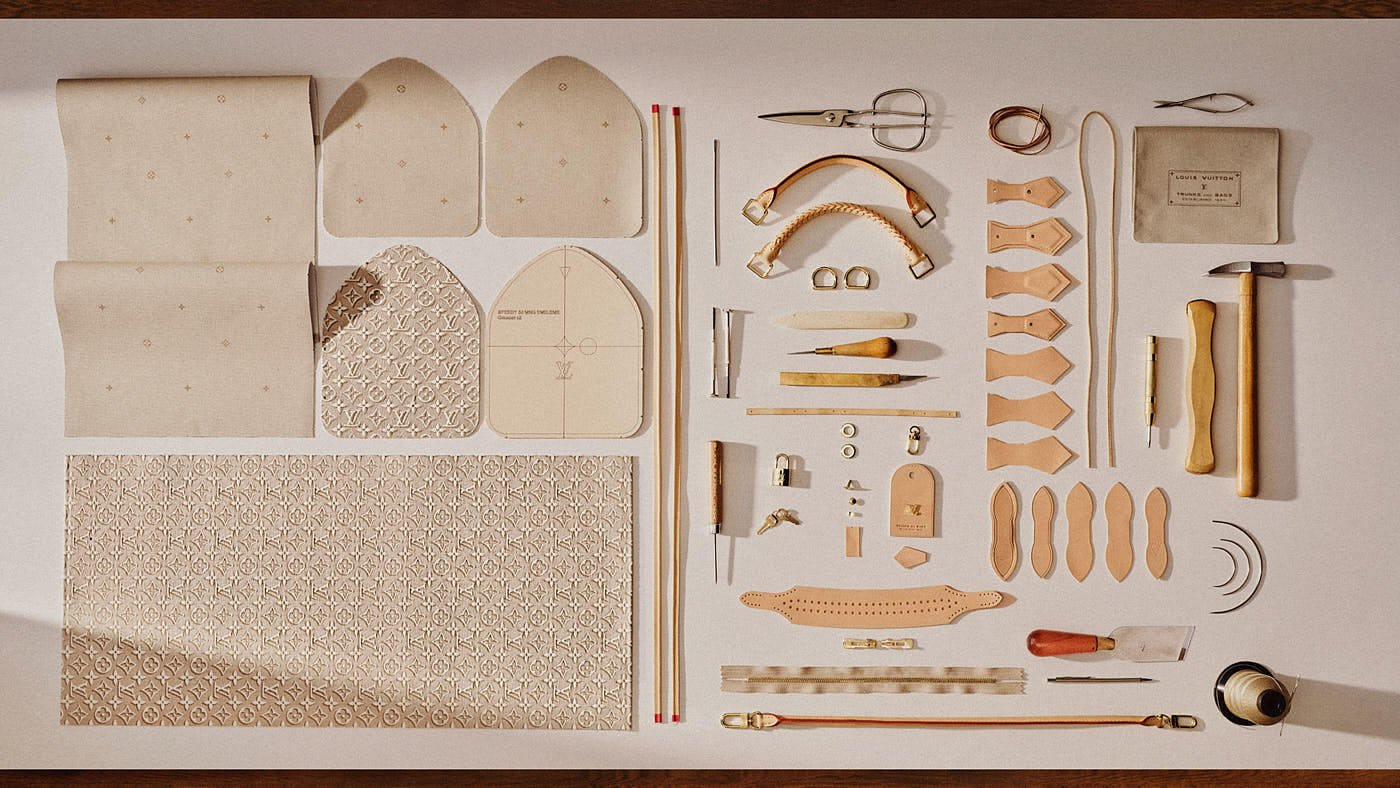
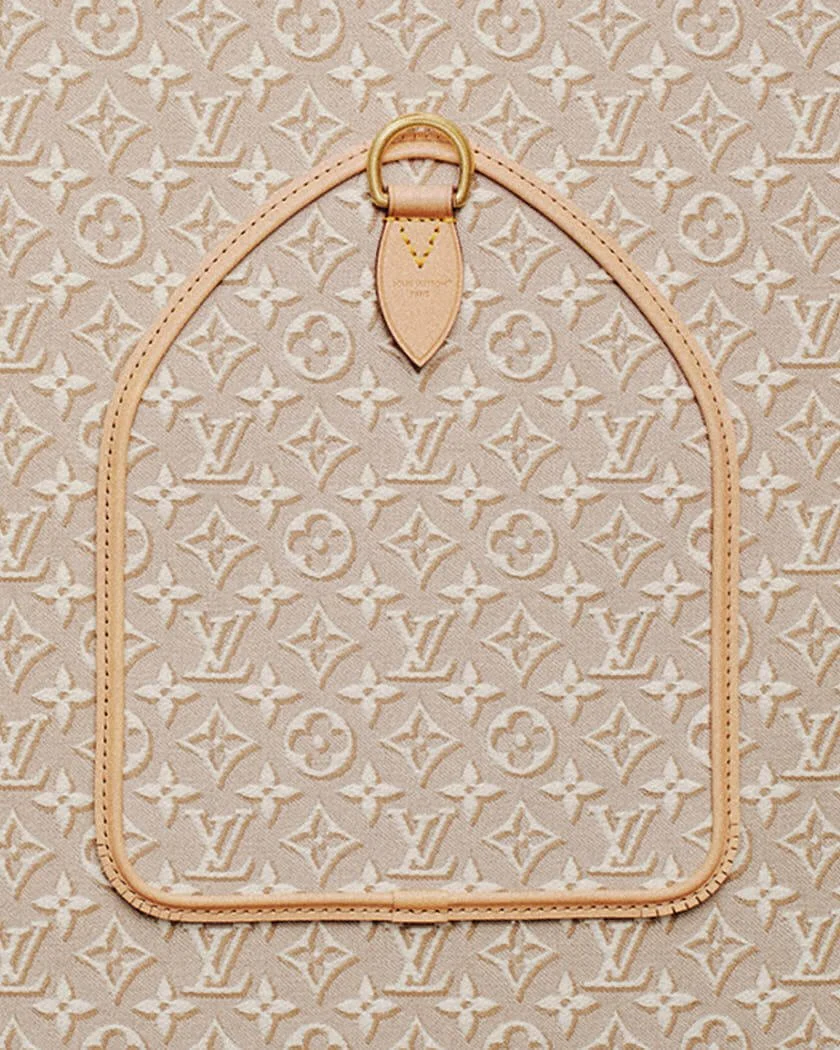
Flat lay of Louis Vuitton Speedy 30 Soft bag components in Monogram Emblème Peuplier, including jacquard canvas panels, leather trims, handles, hardware and artisan tools arranged on a worktable

All elements of the Louis Vuitton Speedy 30 Soft in Monogram Emblème Peuplier, shown before assembly


The Monogram itself dates back to 1896, when Georges Vuitton created the motif after the death of his father, Louis Vuitton. At the time, the company’s trunks had become widely copied, and the pattern served as a visual identifier and as a way of marking the House’s products more clearly. The initials and floral elements have since become one of the most repeated signs in luxury fashion, used across canvas, leather, denim, collaborations, seasonal lines and runway collections.
 
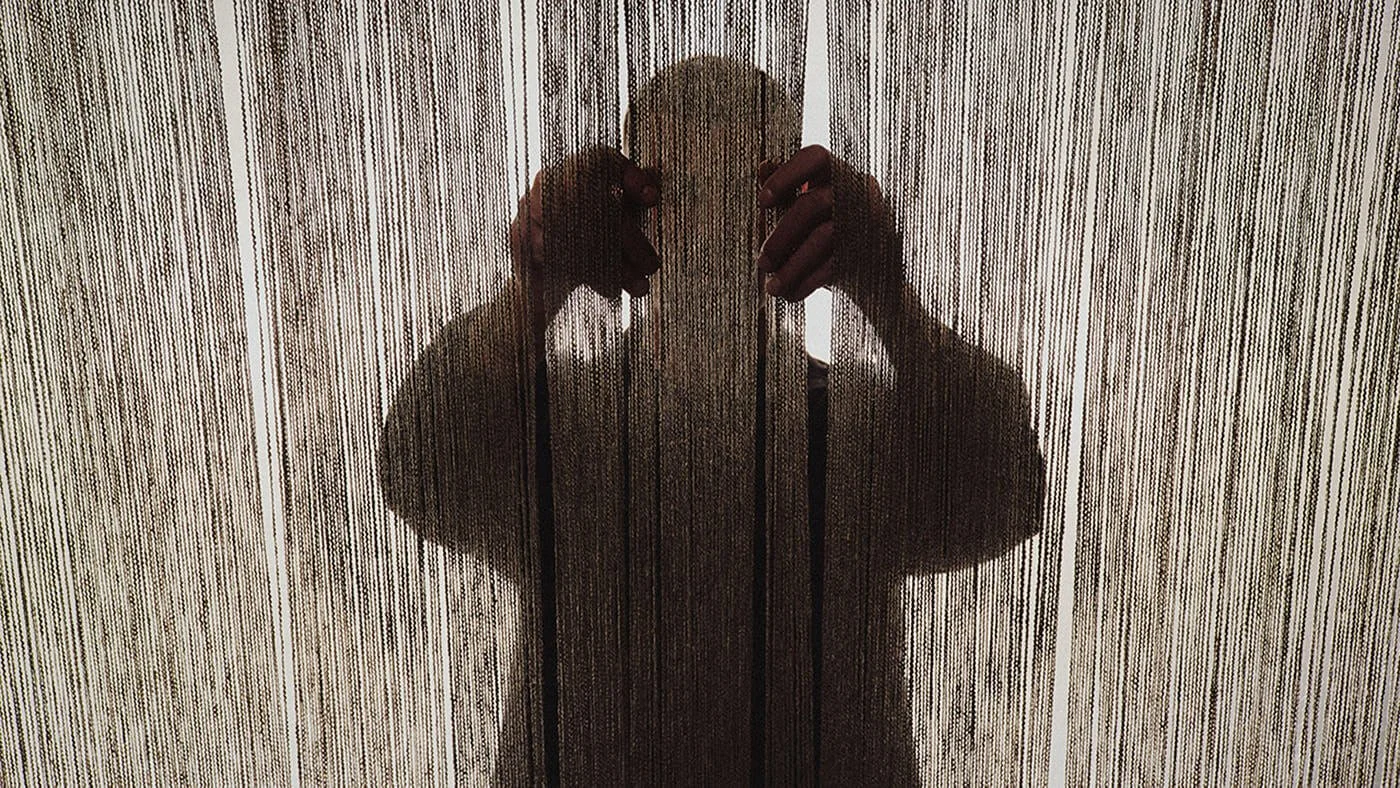
Artisan seen in silhouette behind vertical loom threads while working on the Louis Vuitton Monogram Emblème jacquard canvas

Placement of threads on the loom during the making of Louis Vuitton’s Monogram Emblème jacquard canvas

 
Close-up of a Louis Vuitton Speedy 30 Soft bag panel in Monogram Emblème Peuplier jacquard, showing the leather gousset, enchape detail, stitching and brass ring hardware

Gousset with enchape detail on the Louis Vuitton Speedy 30 Soft in Monogram Emblème Peuplier jacquard


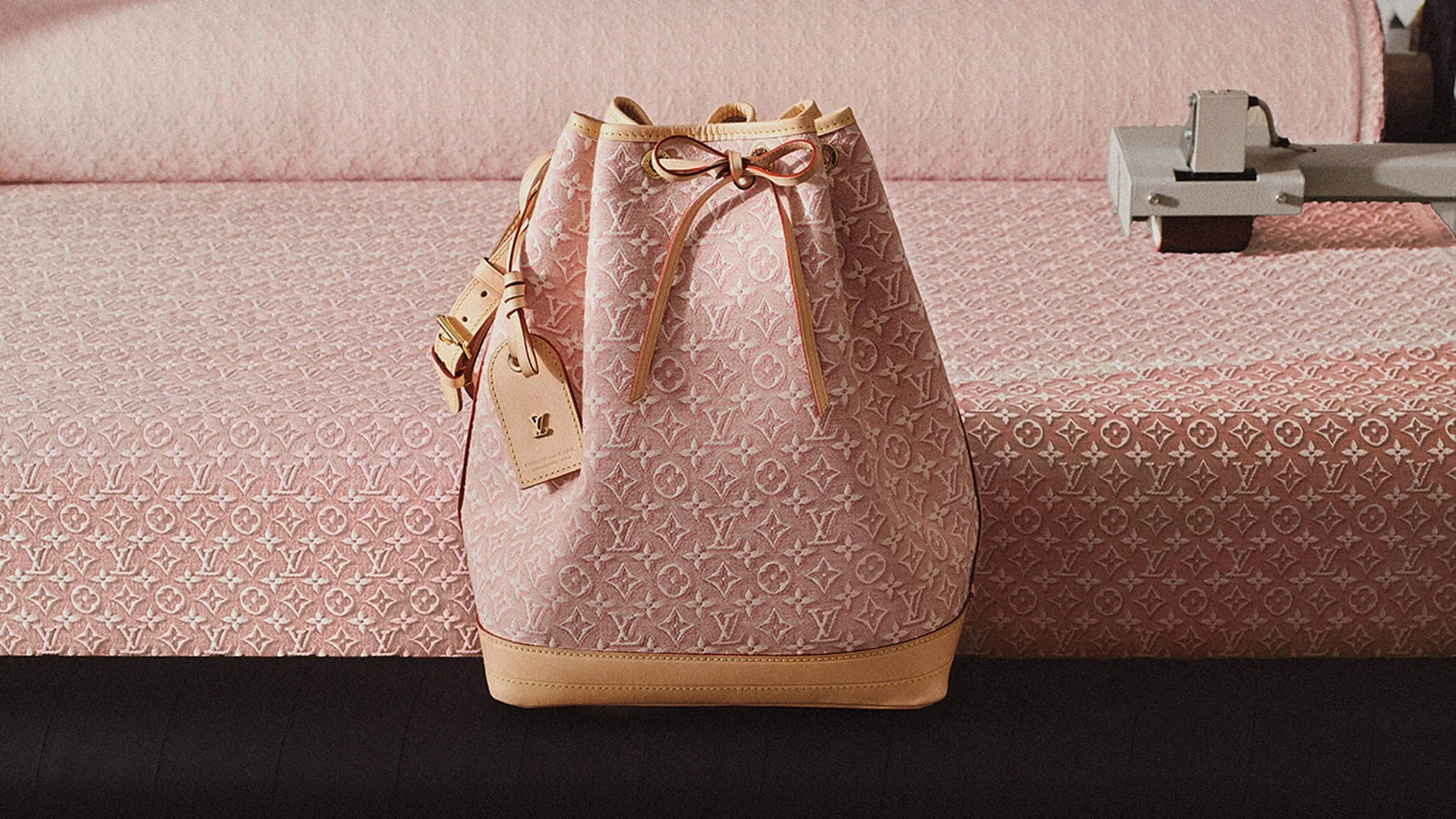
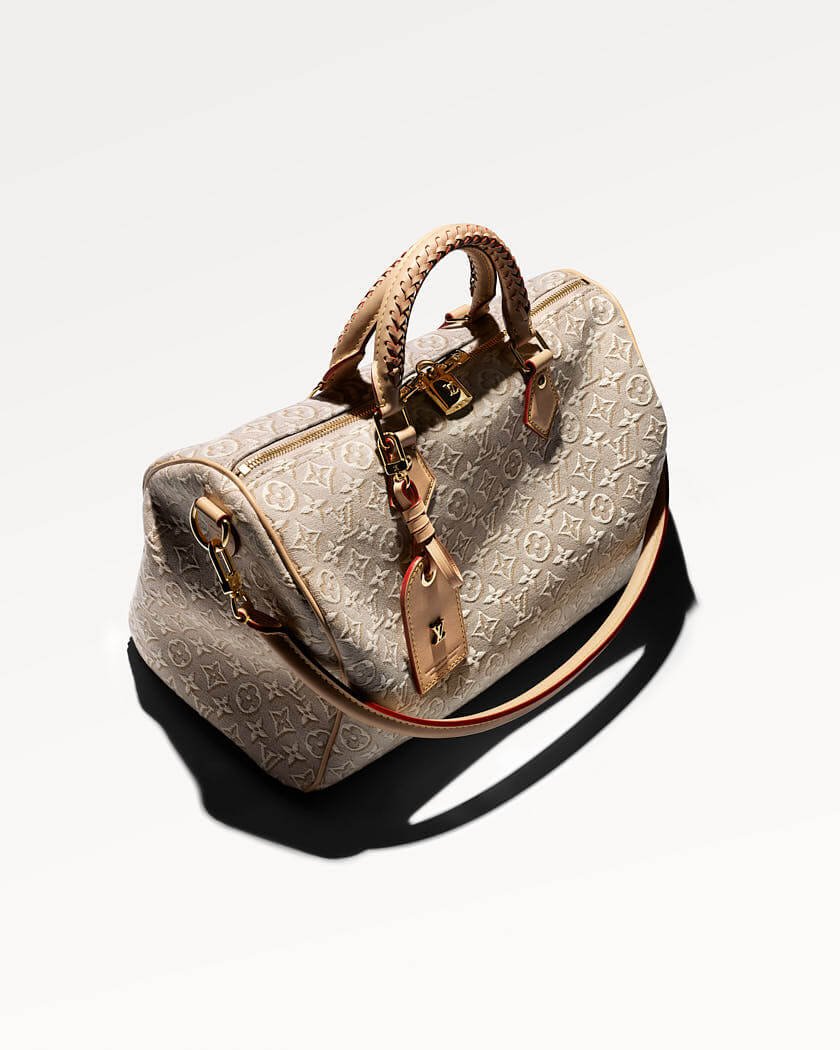
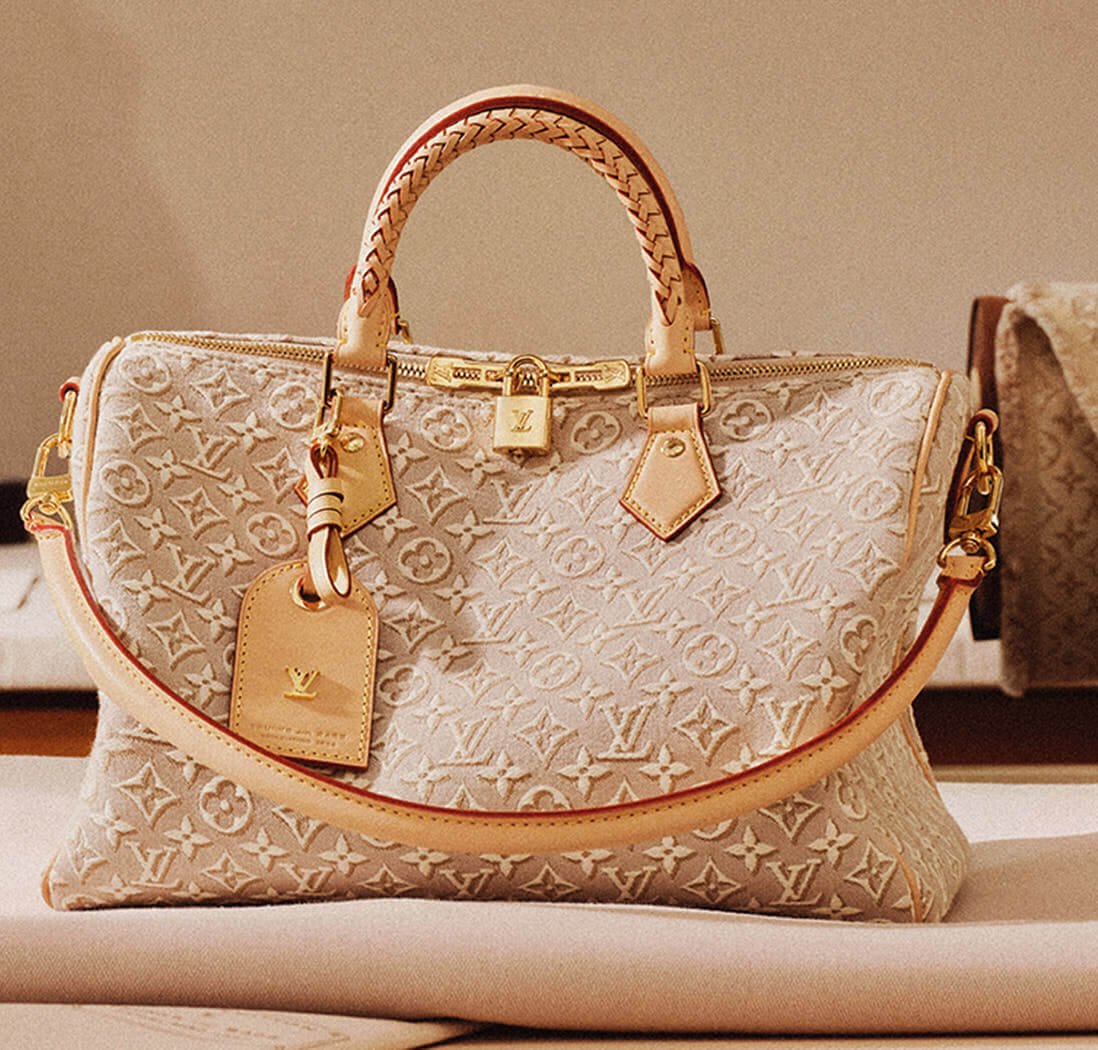
Monogram Emblème returns the focus to canvas. The new material is made from a blend of GOTS-certified cotton and linen fibres and developed as a durable, water-repellent jacquard. Louis Vuitton has given the pattern a denser layout, with an embroidery-like relief created through five differently coloured threads. The update is therefore less about changing the Monogram itself and more about altering its surface and visibility.

The shades are drawn from the Vuittonnier, Louis Vuitton’s internal colour library. The first release includes Peuplier, a tone inspired by the wooden structure of historic trunks, and Rose Ruban, which refers to ribbon detailing used on earlier trunk designs. In September 2026, the line will expand with Monogram Bleu, taken from a 1930s register, and Vert Jura, inspired by the flora of the Jura region where Louis Vuitton was born.

The choice of colour references is typical of how luxury houses now frame anniversary products: every shade, material and construction detail is tied back to an origin point. In this case, those references are relatively specific and they connect the new jacquard to trunks, regional history and documented colour records.

 
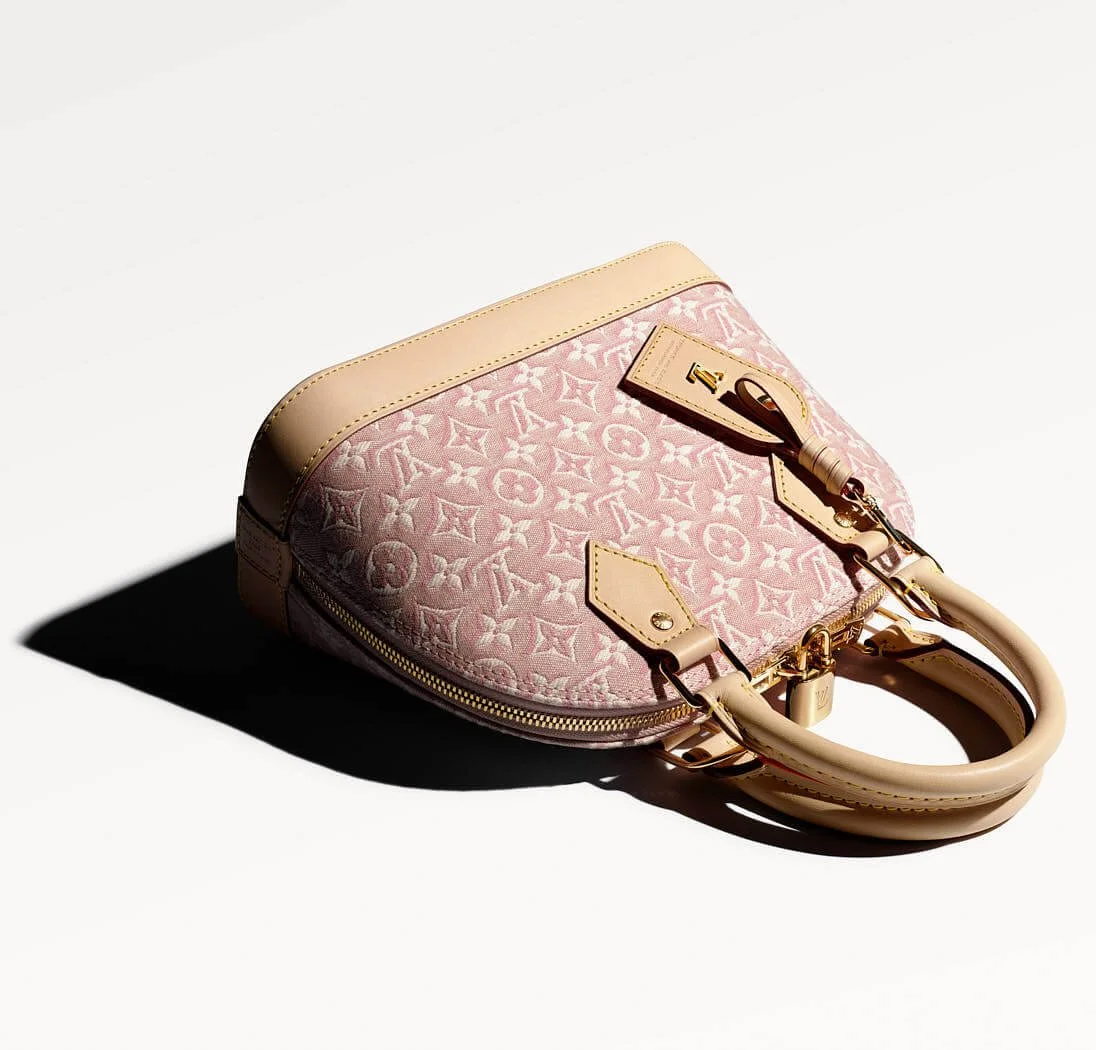
Louis Vuitton Alma bag in pink Monogram Emblème Rose Ruban jacquard with natural leather trims, top handles, gold-tone hardware and a padlock, photographed on a white background

Louis Vuitton Alma in Monogram Emblème Rose Ruban jacquard

 
Louis Vuitton Speedy 30 Soft bag in beige Monogram Emblème Peuplier jacquard with braided top handles, natural leather trims, gold-tone hardware, luggage tag and shoulder strap on a white background

Louis Vuitton Speedy 30 Soft in Monogram Emblème Peuplier jacquard


The first Monogram Emblème pieces include several established Louis Vuitton models, among them the Alma, Neverfull, Speedy, Noé and Keepall. The Side Trunk is also part of the launch, making the connection to the House’s luggage history more direct.

For Louis Vuitton, the project fits into a broader 130th-anniversary programme around the Monogram, alongside other lines such as Monogram Origine, VVN and Time Trunk. Each one revisits a different part of the House’s visual and material history. Monogram Emblème is the textile-led chapter of that programme, built around jacquard, fibre, colour and surface. It does not introduce a new symbol, and it does not attempt to detach the Monogram from the codes that made it recognisable. Instead, it changes the way the existing pattern sits on an object. The denser weave, raised surface and archival colour choices give Louis Vuitton a way to extend the Monogram anniversary without turning it into a simple reissue.

 
Louis Vuitton Speedy 30 Soft bag in Monogram Emblème Peuplier jacquard, shown with braided top handles, natural leather trims, gold-tone hardware, luggage tag and shoulder strap

Louis Vuitton Speedy 30 Soft in Monogram Emblème Peuplier jacquard

 
Louis Vuitton Side Trunk bag in Monogram Emblème Peuplier jacquard with natural leather trims, braided shoulder strap, gold-tone hardware, reinforced corners and luggage tag on a white background

Louis Vuitton Side Trunk in Monogram Emblème Peuplier jacquard


That is where the project becomes most relevant and Monogram Emblème shows how a house with a fixed visual code can still create movement inside a narrow frame. The commercial object remains clear through bags that carry one of the House’s most established patterns. The editorial interest lies in the method and Louis Vuitton is using textile development, colour records and product architecture to keep a 130-year-old motif active without visibly redesigning it.


Close-up of the Louis Vuitton Speedy 30 Soft in Monogram Emblème Peuplier jacquard, showing braided leather handles, gold-tone zipper hardware, natural leather trims and textured Monogram canvas during assembly

Assembly detail of the Louis Vuitton Speedy 30 Soft in Monogram Emblème Peuplier jacquard


all images (c) Louis Vuitton Press
Christian Louboutin - Jaden Smith Fronts Fall 2026 Menswear Campaign

Christian Louboutin - Jaden Smith Fronts Fall 2026 Menswear Campaign

Jaden Smith Debuts Fall 2026 Christian Louboutin Menswear Campaign


written MALCOLM THOMAS


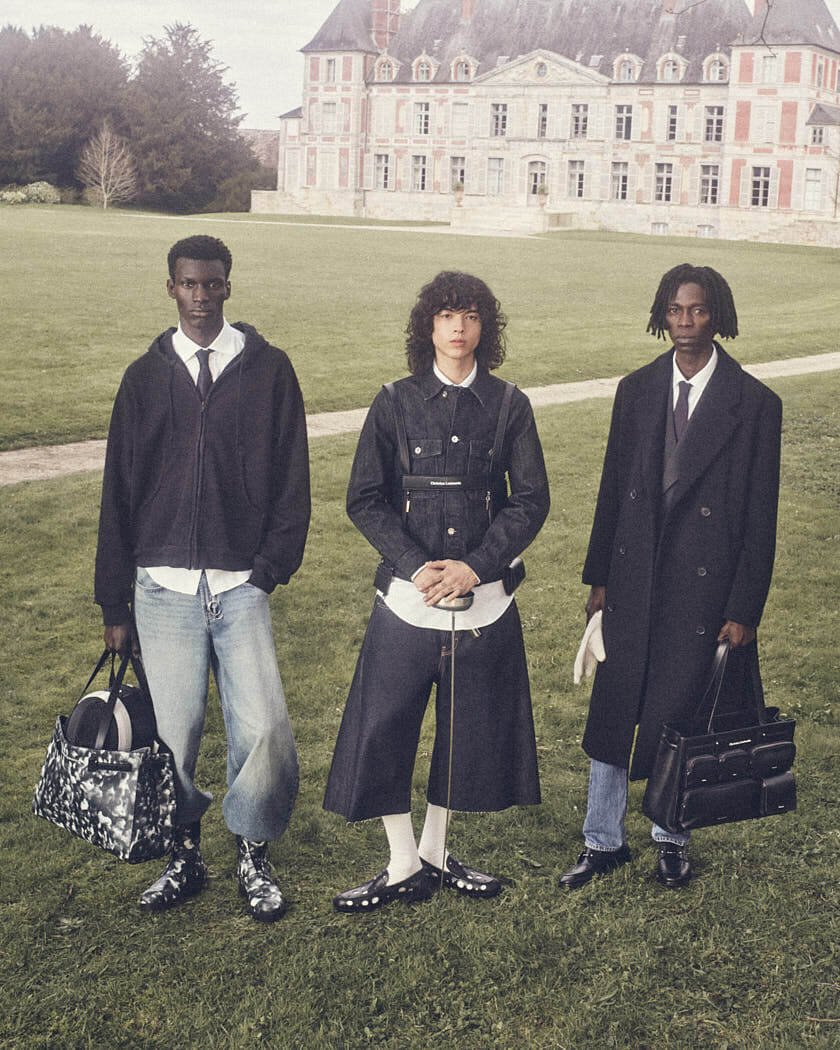
Set in a 17th-century chateau in the French countryside, Jaden Smith’s vision for his inaugural Christian Louboutin menswear collection is complete in all its rebellious grandeur. Debuting in January, during Paris Fashion Week Men’s, the Avant-Première collection marked a bold new chapter for the brand.


Christian LOUBOUTIN FALL26 MEN AD Campaign for LE MILE Magazine Digital

Christian Louboutin
Fall 2026 Men Ad Campaign


Somewhere between cinema and mythology, shoes were merchandised on antiquity-inspired columns in an elaborate exhibition. Iconographic short films were projected on walls and vintage TV monitors, including one film of Smith’s bare-chested body painted in red, representing the creative director’s full immersion into the role.

 
Christian LOUBOUTIN FALL26 MEN AD Campaign for LE MILE Magazine Digital

Christian Louboutin
Fall 2026 Men Ad Campaign

 
Christian LOUBOUTIN FALL26 MEN AD Campaign for LE MILE Magazine Digital

Christian Louboutin
Fall 2026 Men Ad Campaign


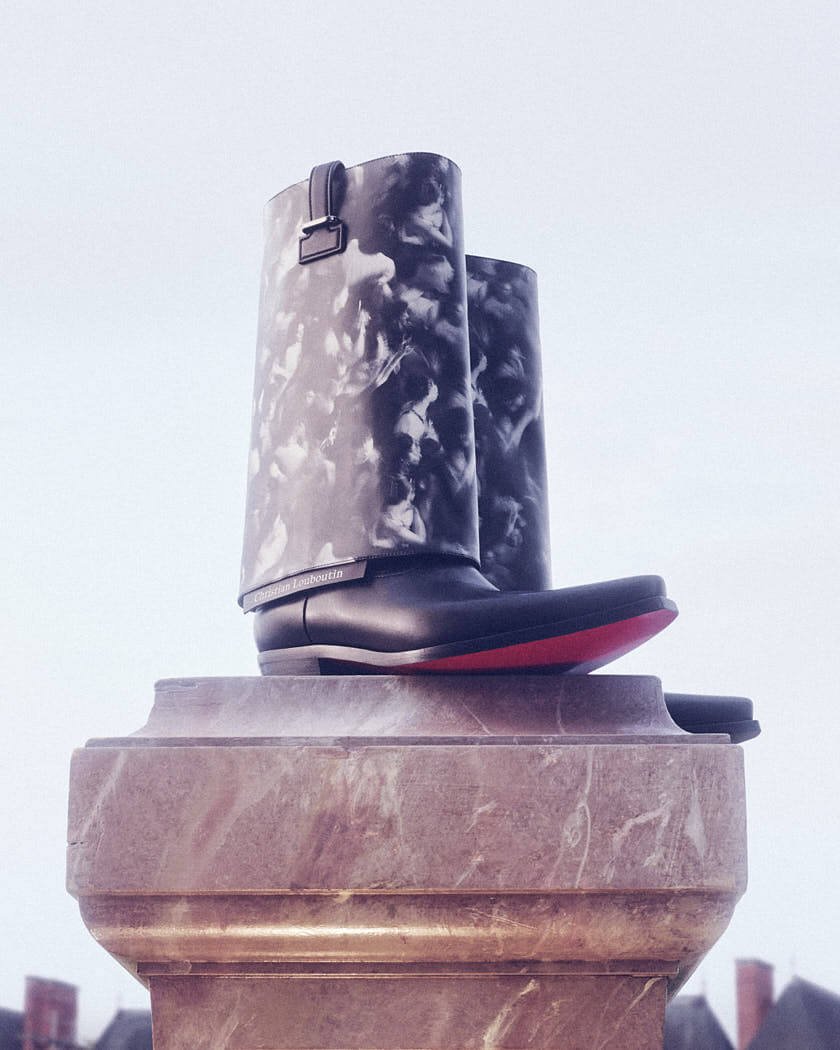
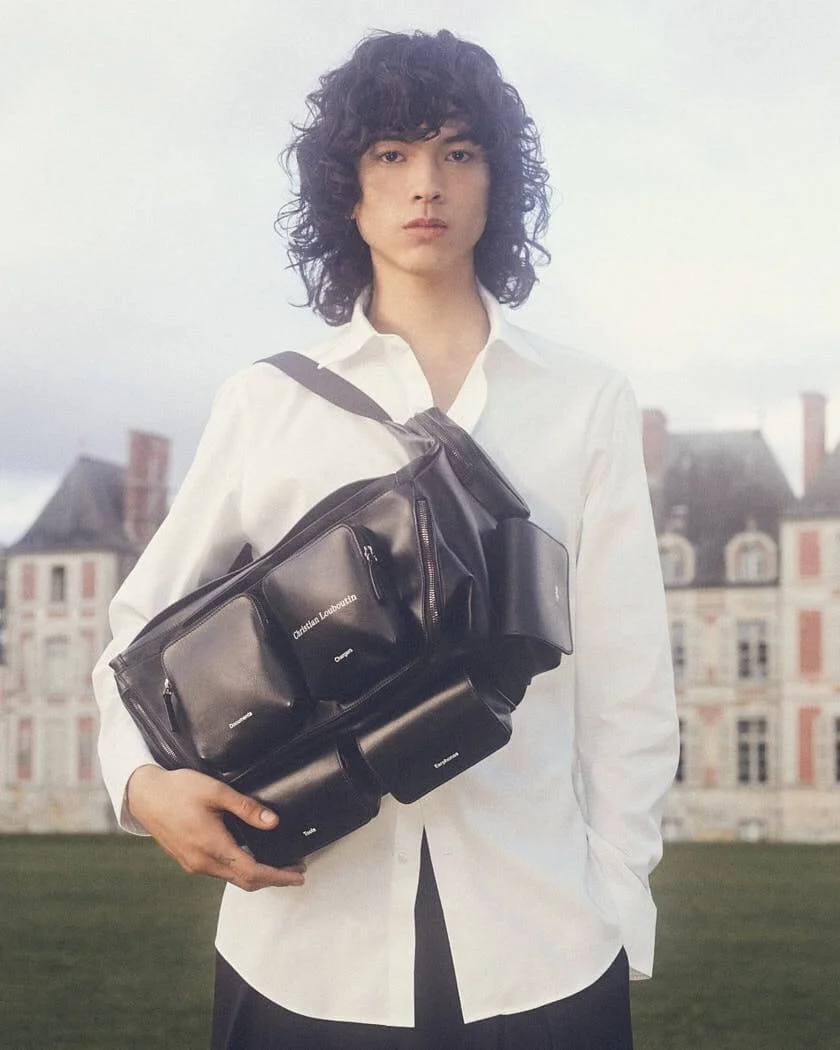
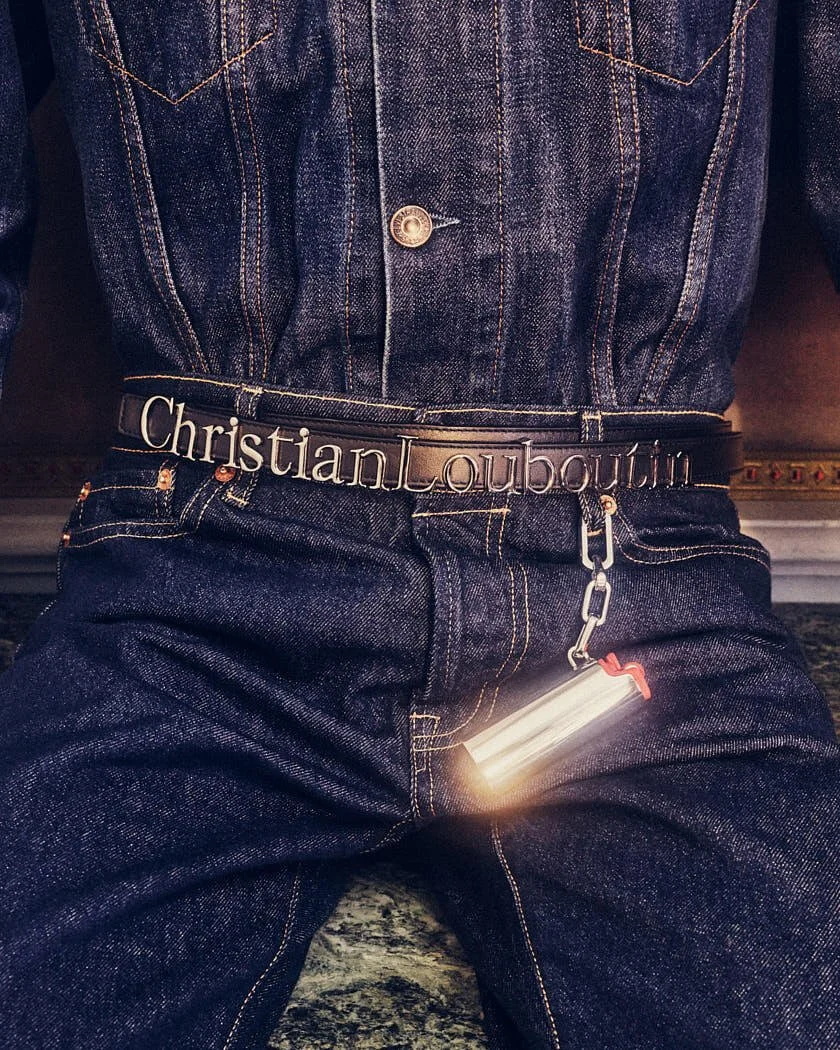
An exploration of performance-driven textures and expressive ideas and styles, such as The Molten Trapman, a rubber-soled boot available in glossy red and white molten paint, was introduced. Other new ideas included Tactical and Multi-Pocket tote bags with titled pockets and compartments, inspired by stone masons and scribes. Re-imagined pieces include Smith’s fresh take on the classic style of the Penny Loafer in addition to the Asclepius Sling and Plato and Moustachou Derby Dots dress shoes. Additional highlights included the Ennio, a cowboy boot with tubular overlay, the Chelsea Gorp, as well as skate shoes available in a myriad of colourways in low and mid-top styles. Accessories include baseball caps, belts, lighter keyrings, and can openers.

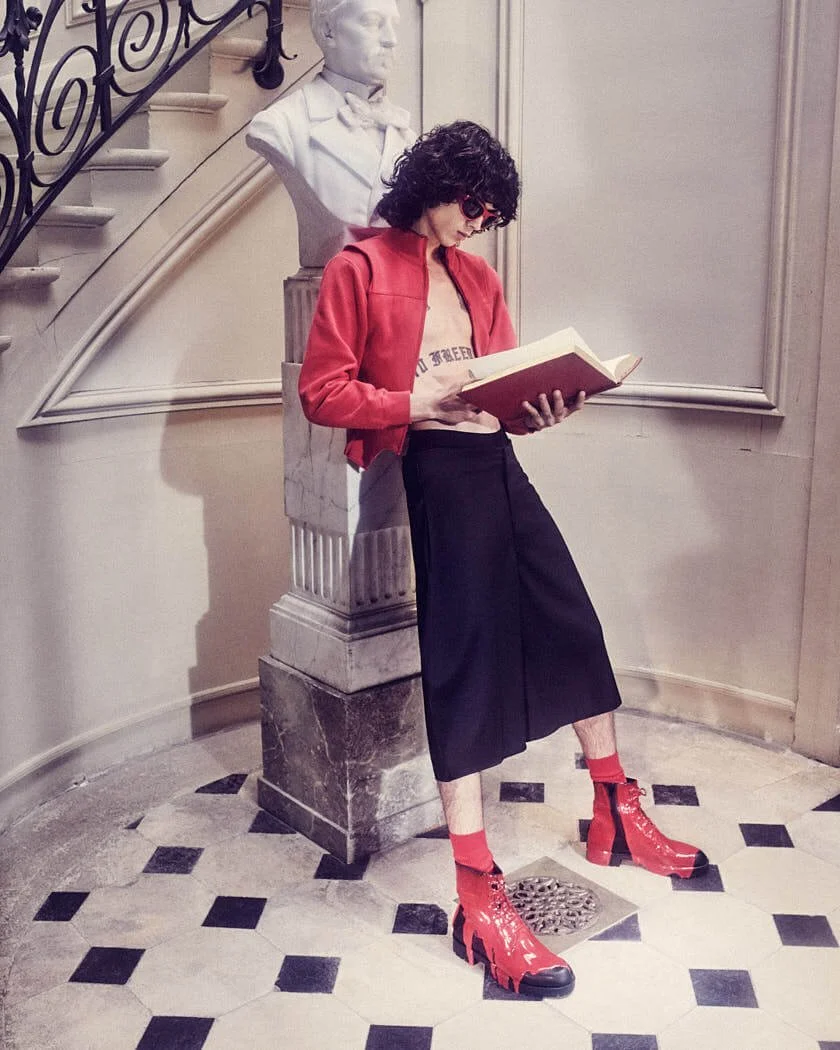
Each piece represents a character in a cinematic story. A symbiosis of heritage and individuality, whether perusing classic literature, admiring family portraits or luxuriating on the lawn, Smith’s interpretation of the house of Christian Louboutin spans generations.

 
Christian LOUBOUTIN FALL26 MEN AD Campaign for LE MILE Magazine Digital

Christian Louboutin
Fall 2026 Men Ad Campaign

 
Christian LOUBOUTIN FALL26 MEN AD Campaign for LE MILE Magazine Digital

Christian Louboutin
Fall 2026 Men Ad Campaign


Christian LOUBOUTIN FALL26 MEN AD Campaign for LE MILE Magazine Digital

Christian Louboutin
Fall 2026 Men Ad Campaign

 
Christian LOUBOUTIN FALL26 MEN AD Campaign for LE MILE Magazine Digital

Christian Louboutin
Fall 2026 Men Ad Campaign


The Fall 2026 menswear collection is now available in Christian Louboutin stores worldwide, with Jaden Smith making appearances in New York, Los Angeles, Atlanta, Paris and London.


Christian LOUBOUTIN FALL26 MEN AD Campaign for LE MILE Magazine Digital

Christian Louboutin
Fall 2026 Men Ad Campaign


all images (c) Christian Louboutin Press
Nick Woltemade Interview - World Cup 2026, Adidas and Football Fashion

Nick Woltemade Interview - World Cup 2026, Adidas and Football Fashion

Nick Woltemade and the New Shape of Football Culture


written + interview KLAAS HAMMER


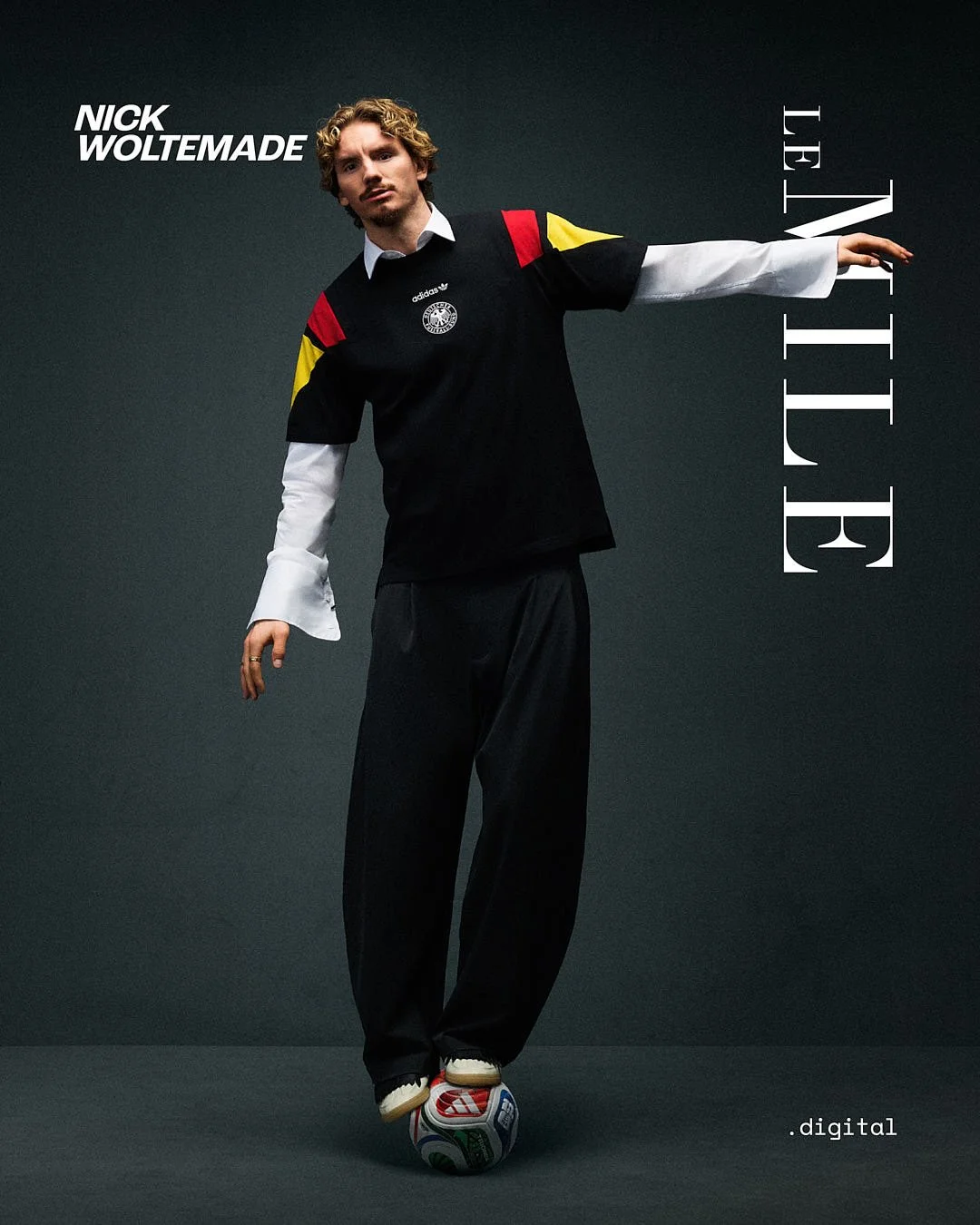
Nick Woltemade is hard to miss. There is the 6-foot-6 frame, of course, and the unusually light feet for a player of his size. Now at Premier League side Newcastle United, the young German international is part of the national team heading into the World Cup, which kicks off on June 11 across Canada, Mexico and the United States.
In conversation with LE MILE, he reflects on fan culture, the growing overlap between football and fashion, and what it means to arrive on the game’s biggest stage.


LE MILE Magazine Nick Woltemade Cover Digital Adidas Original Bringback Collection COVER


Klaas Hammer
A lot of fans see you as approachable and authentic. Do you notice that a community is starting to form around you? And when you hear chants like “Woltemade Ole Ole Ole” in Newcastle, what does that feel like?

Nick Woltemade
It’s something that has grown over the past year, and even more since I moved to England, where the fan culture is a bit different. I’ve always loved fashion, and I’d say it’s a little easier to express that in England than in Germany. People seem more open to it. I enjoy experimenting and finding my own style. Since not many footballers do that yet — compared to basketball, for example — it probably stands out more with me. But I’m happy when people respond positively to it — both football fans and people beyond the sport.

Footballers used to be seen mainly as athletes. Today, many of them also move through culture, fashion and entertainment. Do you feel that shift yourself?

Yes, I do. You can see it in the way football is consumed now — everything has become bigger, more professional, more visible. At the same time, fashion and sport are moving closer together. It feels cooler, more open, more relatable. We’re doing some really nice projects with adidas, and I’m happy to have them as a partner. Clubs are becoming more open to it as well. Newcastle, for example, are very open to new ideas and modern developments. A lot of it probably comes from basketball, especially the NBA, which is much further ahead in that sense. I don’t know if football will go in exactly the same direction, but the industry is definitely evolving. People are starting to understand that how you dress off the pitch has nothing to do with how you perform on it. At the end of the day, what matters is the performance on the pitch.

Has there been a moment with a fan that stayed with you — something that reminded you how emotional football can be for people?

My personal life has definitely changed, especially over the past year since I’ve been playing in England. Even when I was on holiday in New York, people recognized me and wanted pictures, which I hadn’t expected at all. In Bremen, my hometown, it’s probably the most relaxed. People know I’m at home there, so they also respect my privacy there. But the kids are always special.
When you see how much it means to them, and that you can make their day or even their week just by taking a picture or signing an autograph, that still means a lot. You do get used to it in some ways, but I always try to remind myself what it might mean to the fans.


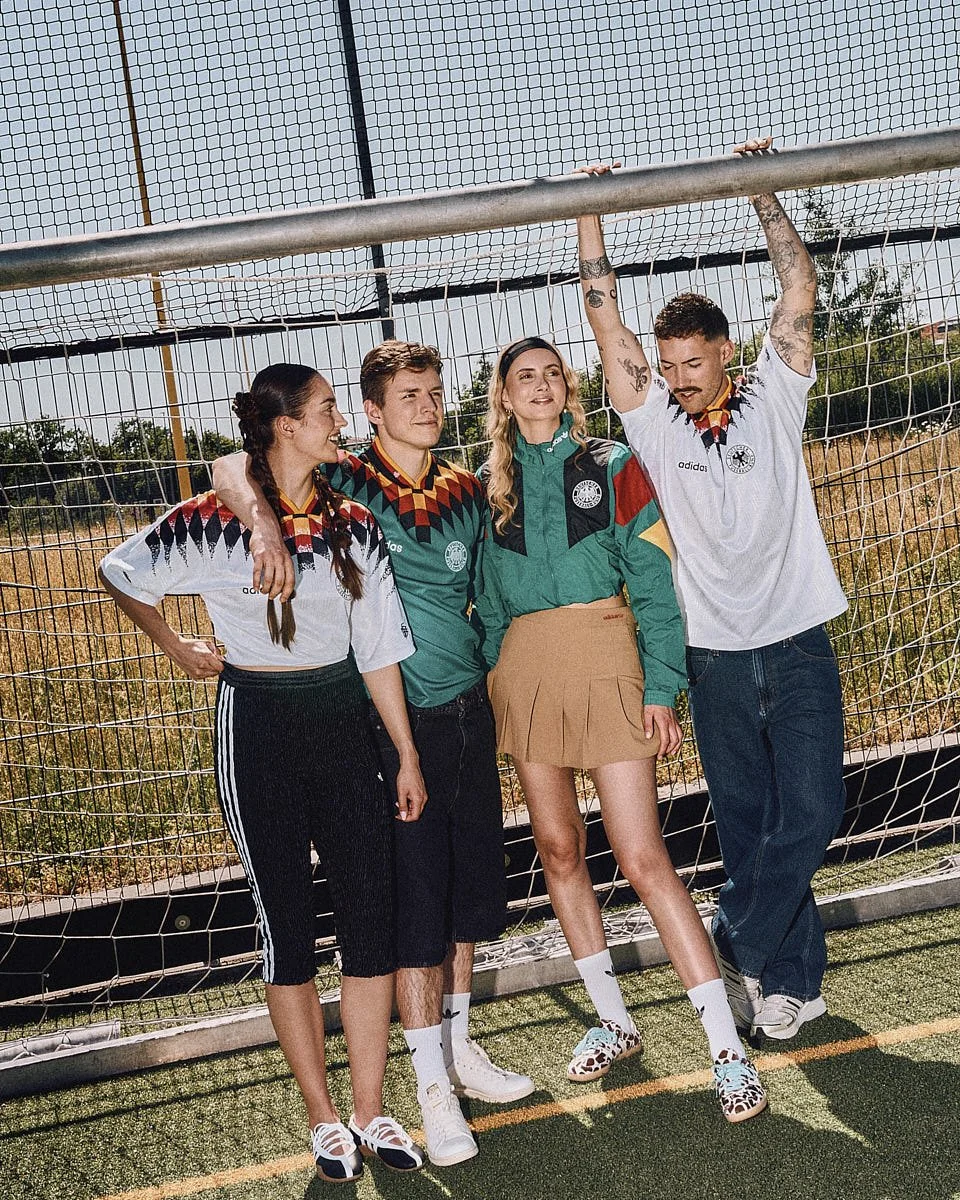
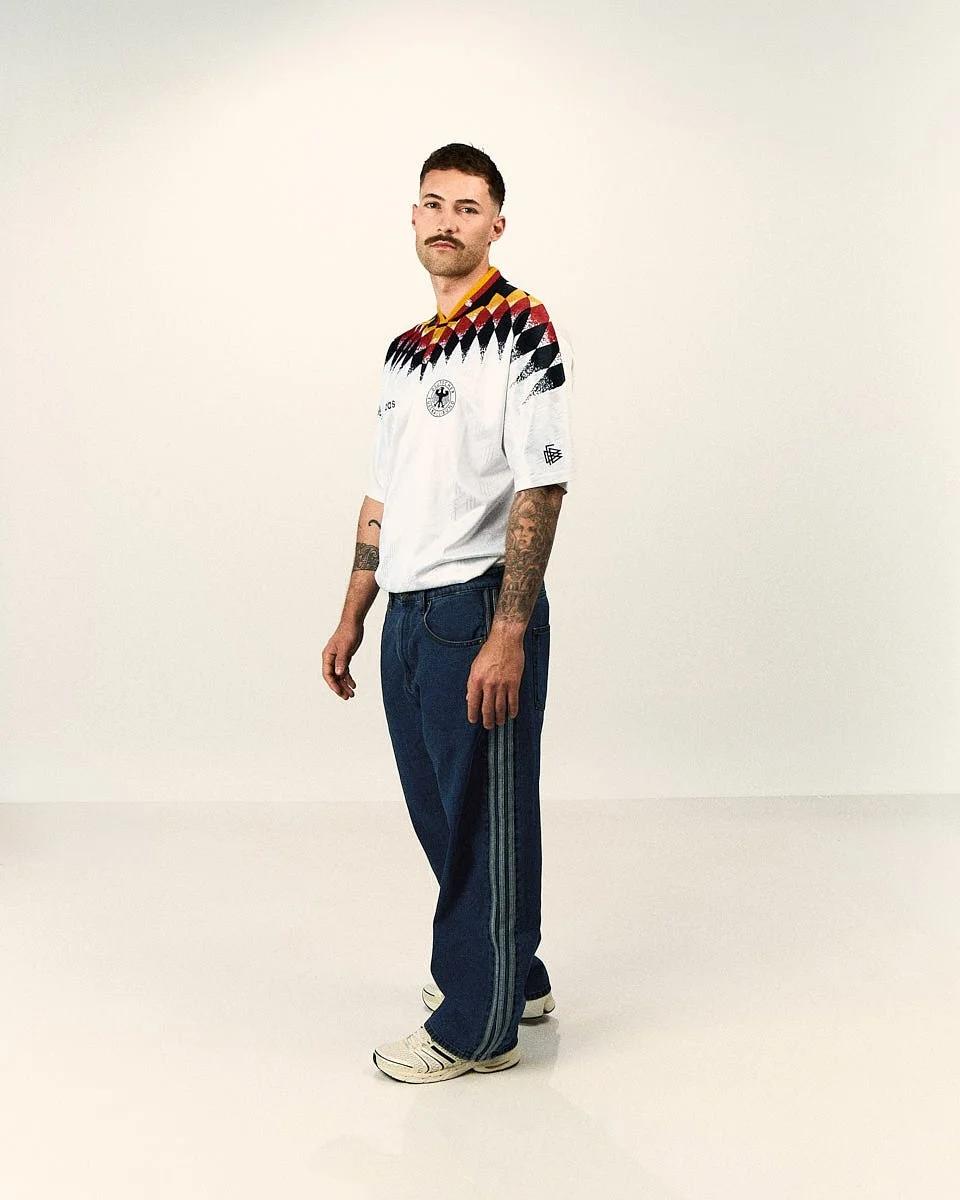
Four models wear pieces from the adidas Originals Germany EQT Bringback Collection in front of a football goal for LE MILE Magazine

adidas Originals Bringback Collection & EQT

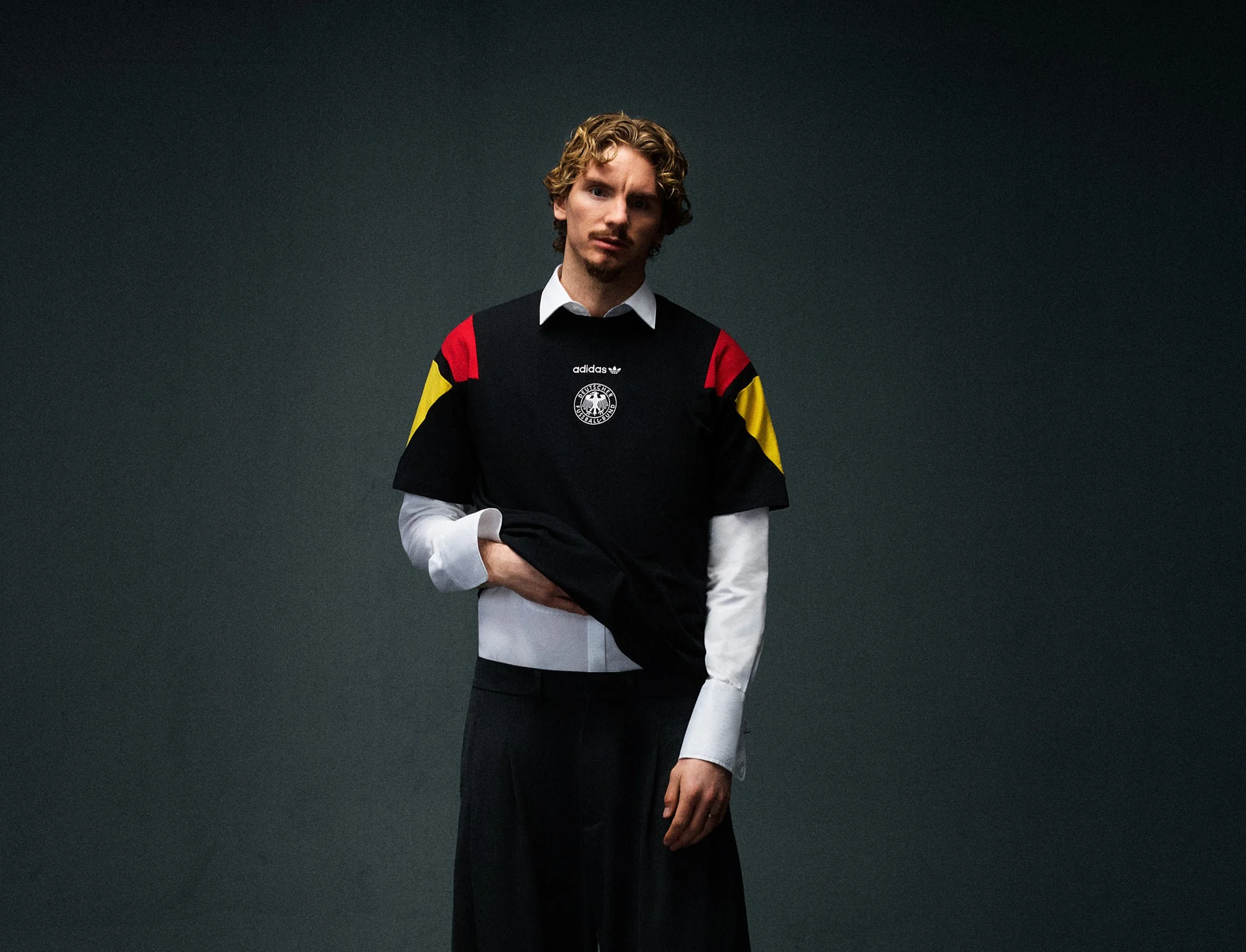
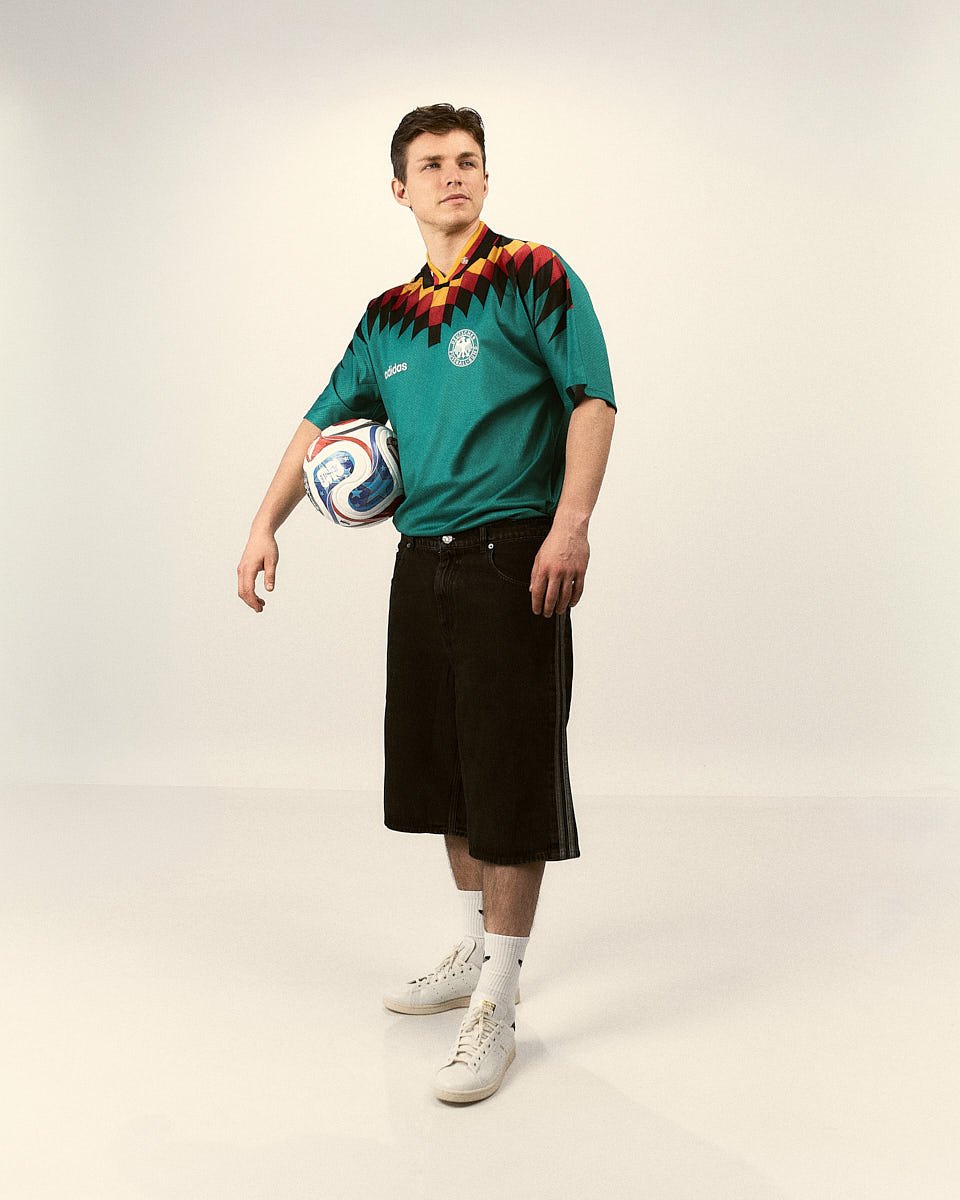
A footballer wears an adidas Originals Germany EQT shirt with black shorts and holds a football in a studio portrait

adidas Originals Bringback Collection


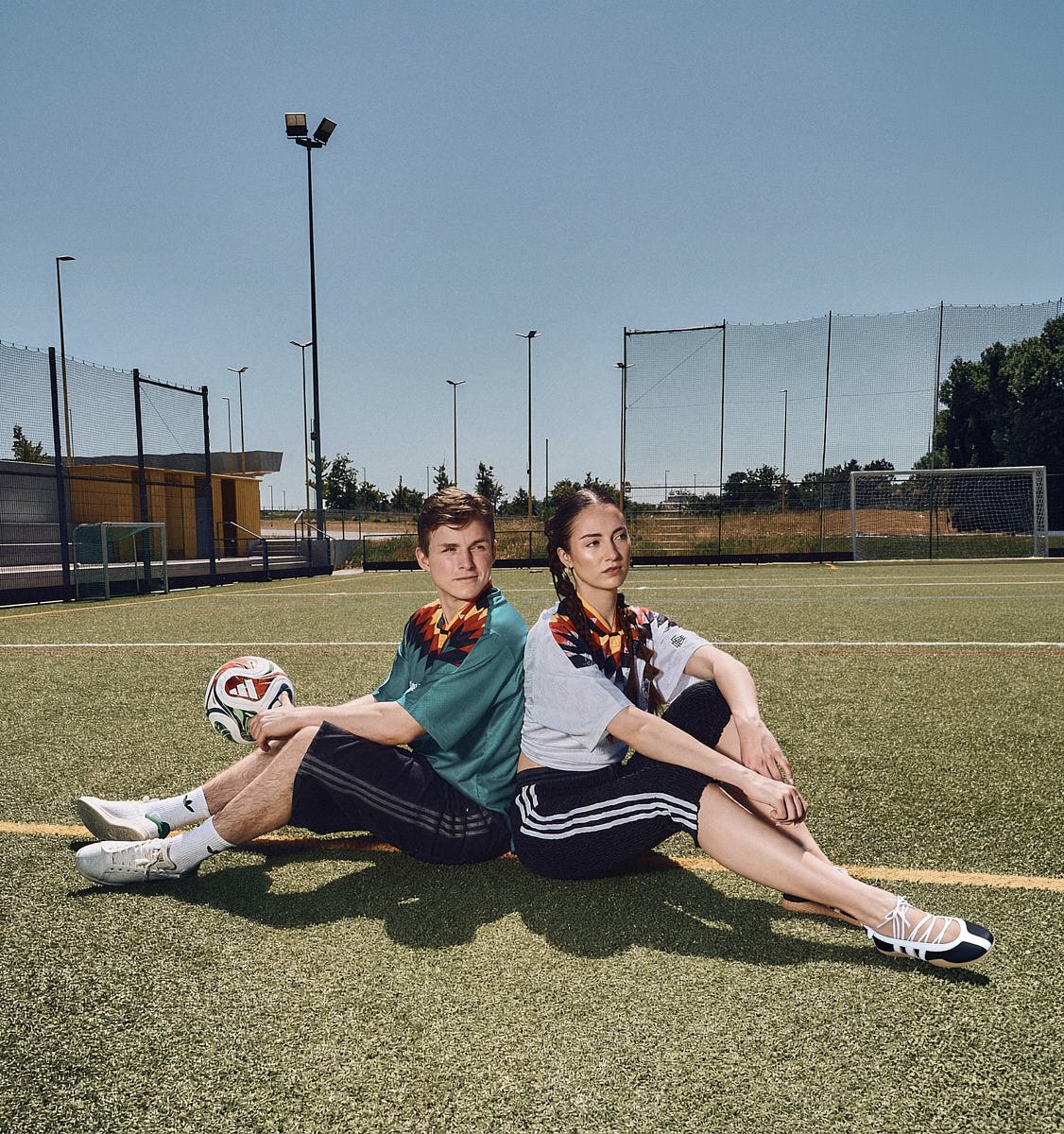
Two models sit back to back on a football pitch wearing adidas Originals Germany EQT football shirts and casual sportswear

adidas Originals Bringback Collection

 
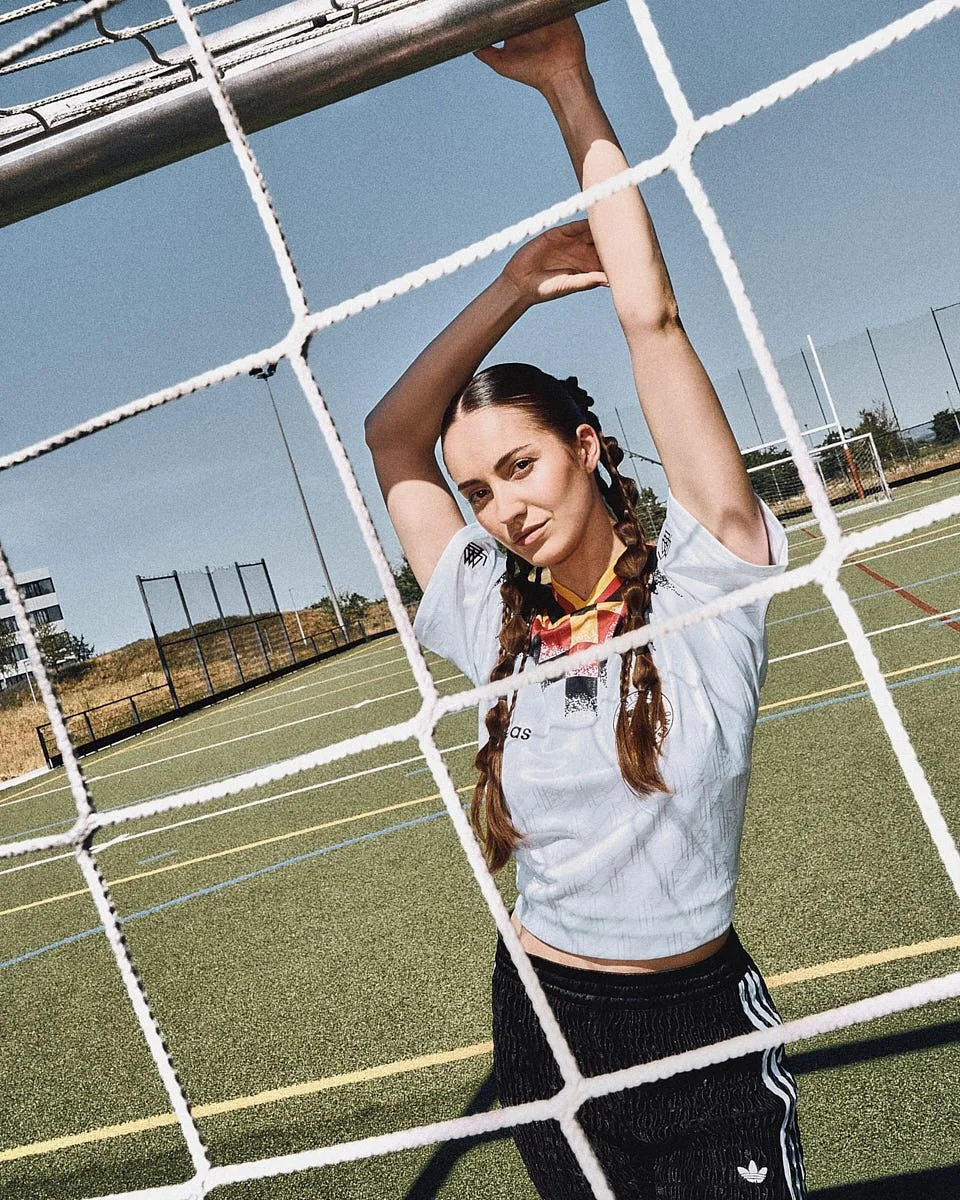
A model wears an adidas Originals Germany EQT football shirt while posing behind a goal net on a sunny football pitch

adidas Originals Bringback EQT Collection


When you think about your development as a player and as a person, who has shaped your style the most — on or off the pitch?

In football terms, Kai — Kai Havertz — was my role model, but I don’t really want to say that now because he’s here with the national team too and we play together (laughs). As a person, I always thought Neymar was cool, but football-wise, his style is completely different from mine. I’m also very tall, so there haven’t been many players in my position I could really compare myself to.
That’s why I never really had one specific role model.


Football and fashion are more connected than ever. What role does fashion play for you, and where do you look for inspiration?

I’m a huge NBA fan, and I watch a lot of the tunnel fits. I think Shai Alexander is really cool — he’s definitely my favorite player to watch in terms of style.


The World Cup is football’s biggest stage. What does it mean to be part of it for the first time?

I’ve answered this a few times now, but somehow it’s still hard to find the right words. It’s such a huge thing. It’s always been a dream, something I imagined for myself, something I always wanted to achieve. And when you’re actually in that moment and think about it, it’s still difficult to fully grasp. I still don’t think I can describe it in a way that really does it justice. I’m very, very proud, and I think everyone in the team feels that. But it’s not something you can easily put into words.


What are you hoping for from the World Cup — on and off the pitch?

I’m not a big fan of expectations, because if you don’t meet them, you’re always left disappointed. I usually try to keep an open mind and let myself be surprised by what happens. But obviously, I want to achieve the best possible results for the team and for myself. I want to play, I want to score goals, and I want to be successful with the team.

 
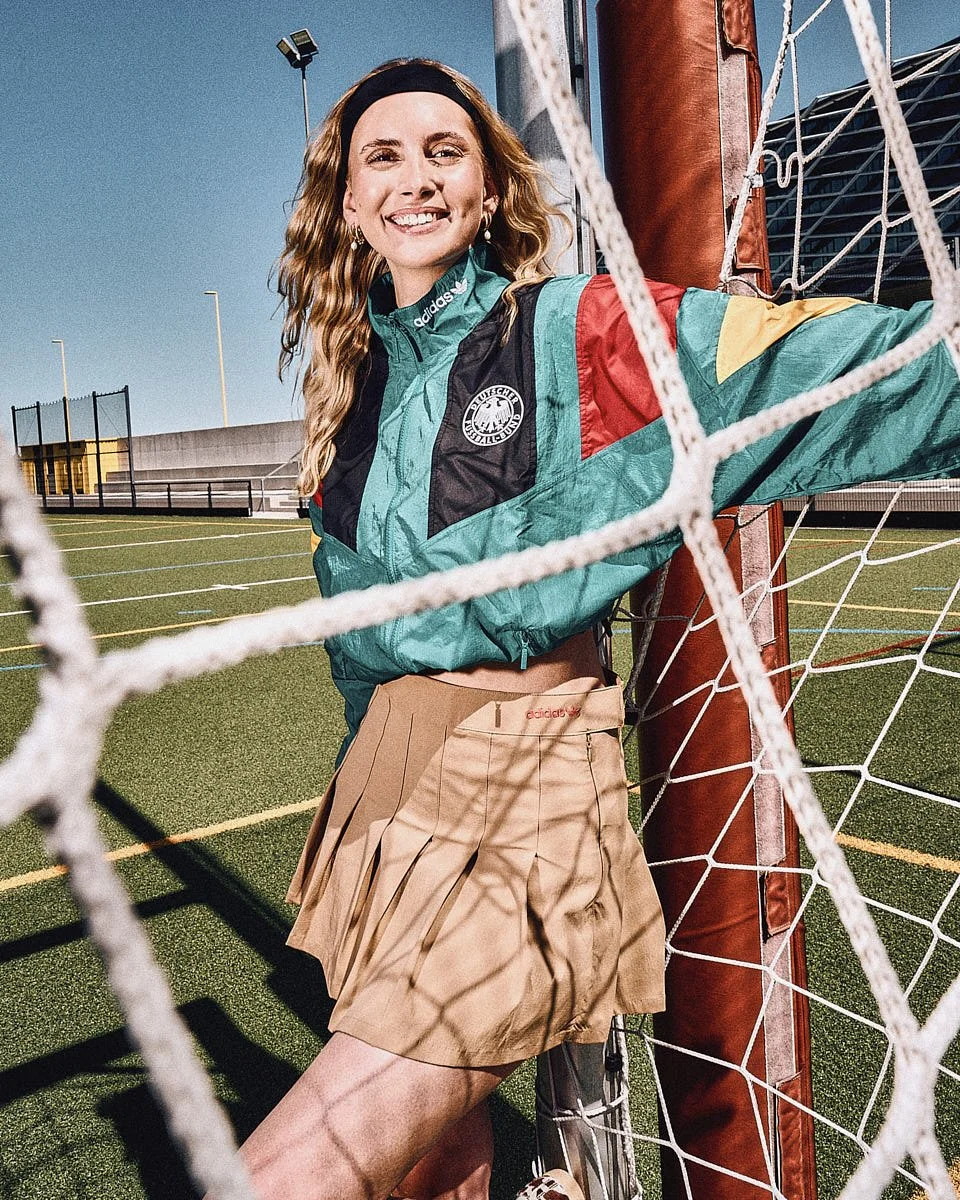
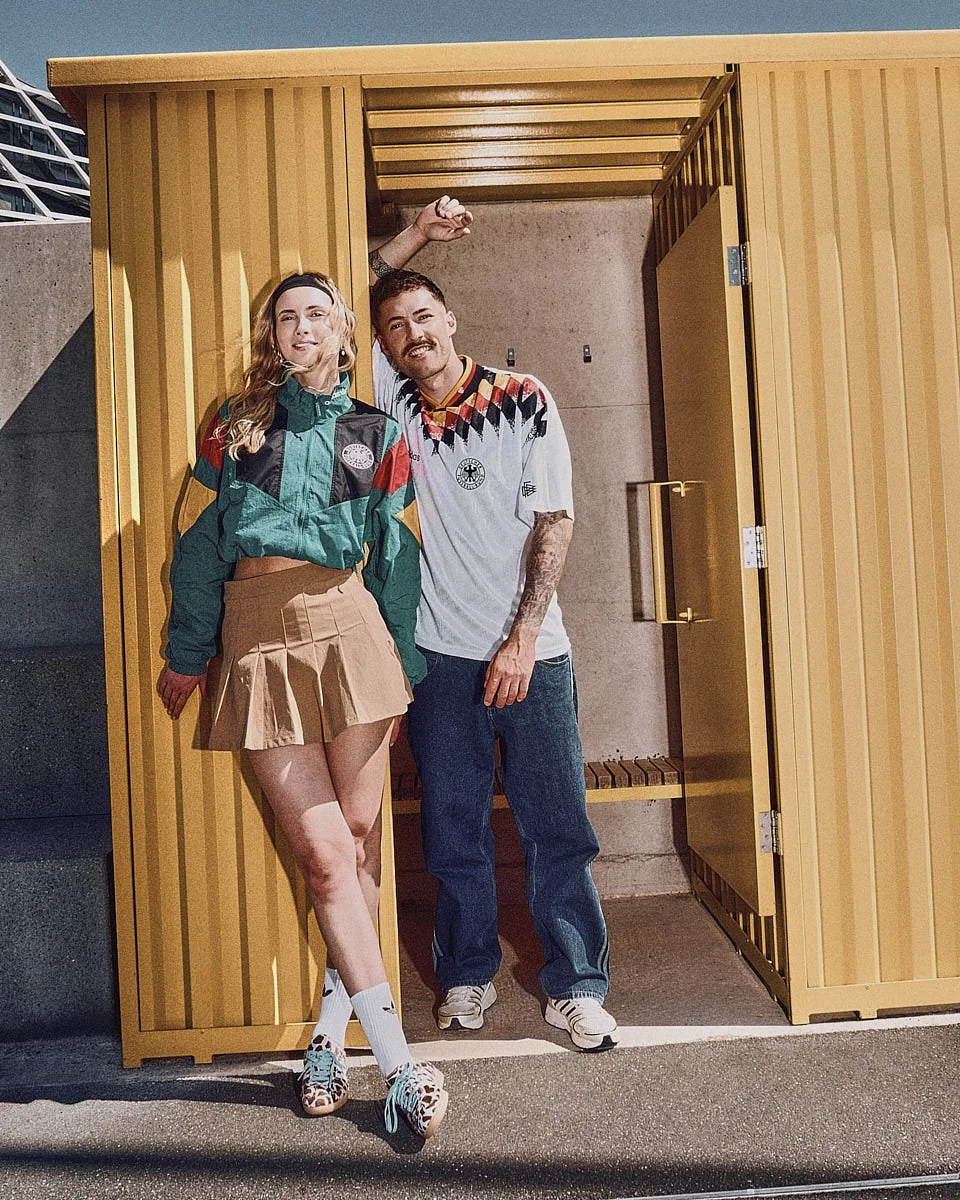
A model wears an adidas Originals Germany EQT track jacket and pleated skirt while standing inside a football goal on a sunny pitch

adidas Originals Bringback EQT Collection

A model wears a white adidas Originals Germany EQT football shirt with wide-leg denim pants in a studio portrait

adidas Originals Bringback Collection

 
Two models wear adidas Originals Germany EQT pieces while standing in front of a yellow structure near a football pitch

adidas Originals Bringback & EQT Collection


The adidas FIFA World Cup 2026 Germany EQT Collection begins with the 1990s. There are the football codes, of course, and the Equipment clarity that made tracksuits, shoulder stripes and colour blocks feel inseparable from the game. Reworked through the colours of the German national team, the collection brings back the kind of football style that starts before kick-off, outside the stadium, in the crowd and on the way home.


photographer SIMEON ASENOV
styling KLAAS HAMMER
make up and hair LISA FALK
talent NICK WOLTEMADE
models NINA IMERI + SAM THEIN + ALBAN IMERI + JOSHUA FEES
production coordination ALBAN E. SMAJLI
thanks to adidas + ALBINA IMERI

Steinway and Studio Paelis - Bringing Straw Marquetry Into Sound


Steinway and Studio Paelis - Bringing Straw Marquetry Into Sound


How Steinway and Studio Paelis Bring Straw Marquetry Into Sound


written ALBAN E. SMAJLI


Inside the Steinway & Sons factory in Hamburg, sound begins long before anyone touches a key. It begins in the way wood is selected, bent, left to rest, carried from one station to the next. It sits in the smell of lacquer and timber, in the concentration of people who seem to know exactly how much pressure a material can take before it stops cooperating. The place has its own tempo, shaped by patience, repetition and the quiet understanding that every surface, joint and invisible adjustment will eventually become part of a sound.


During a visit to the manufactory, what stays with you first is the intimacy of the place. The factory carries the weight of an institution and still moves with the rhythm of a family workshop, where people greet each other across rooms filled with half-built instruments and where every station seems connected to the next through a chain of knowledge passed from hand to hand. A grand piano becomes itself slowly here, through many specialists, many materials, many moments of judgement that remain invisible once the instrument reaches a concert hall or a private home.
 
Le Mile Magazine Steinway & Son Straw Marquetry Piano in collaboration with Studio Paelis by Manon Bouvier-Toth

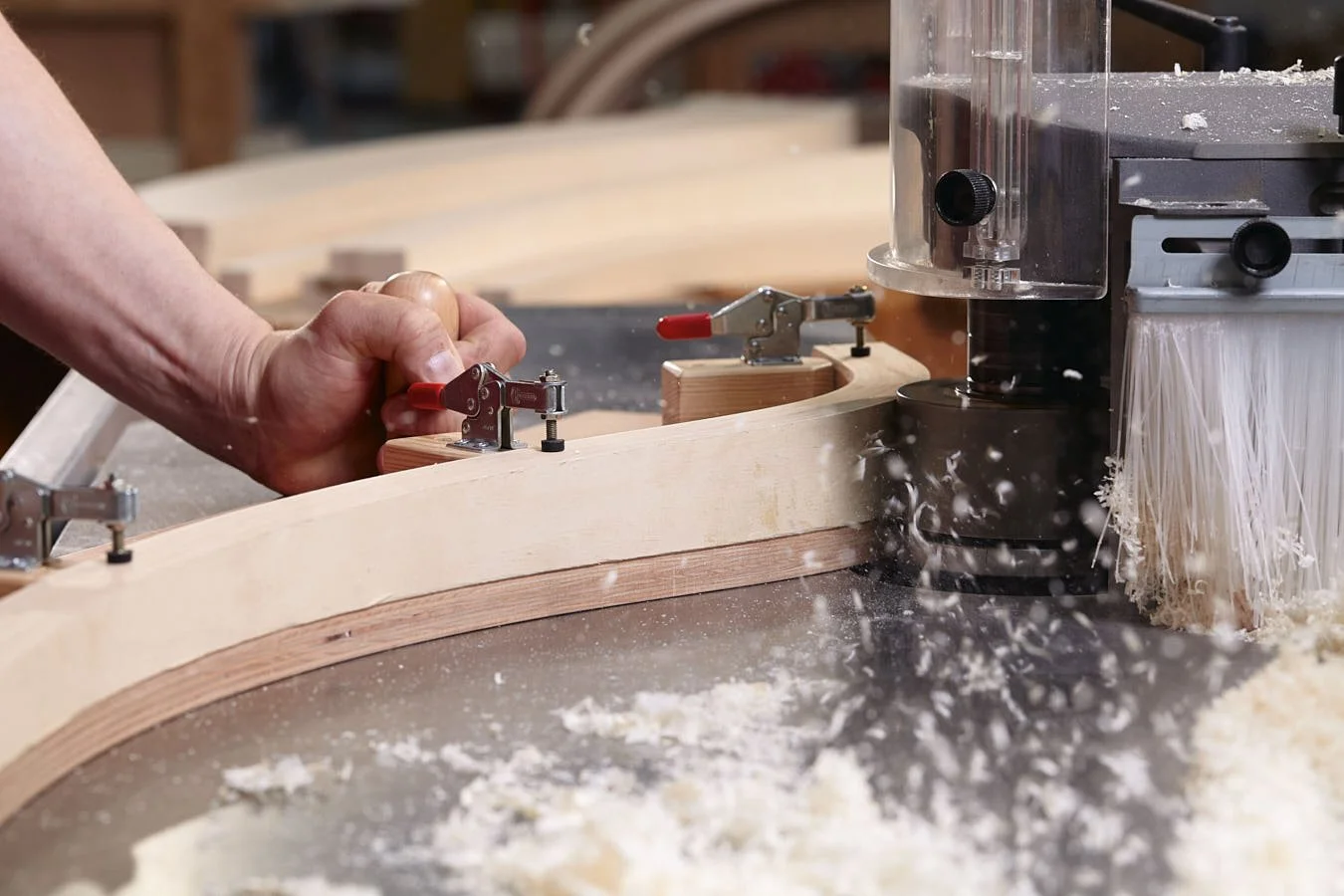
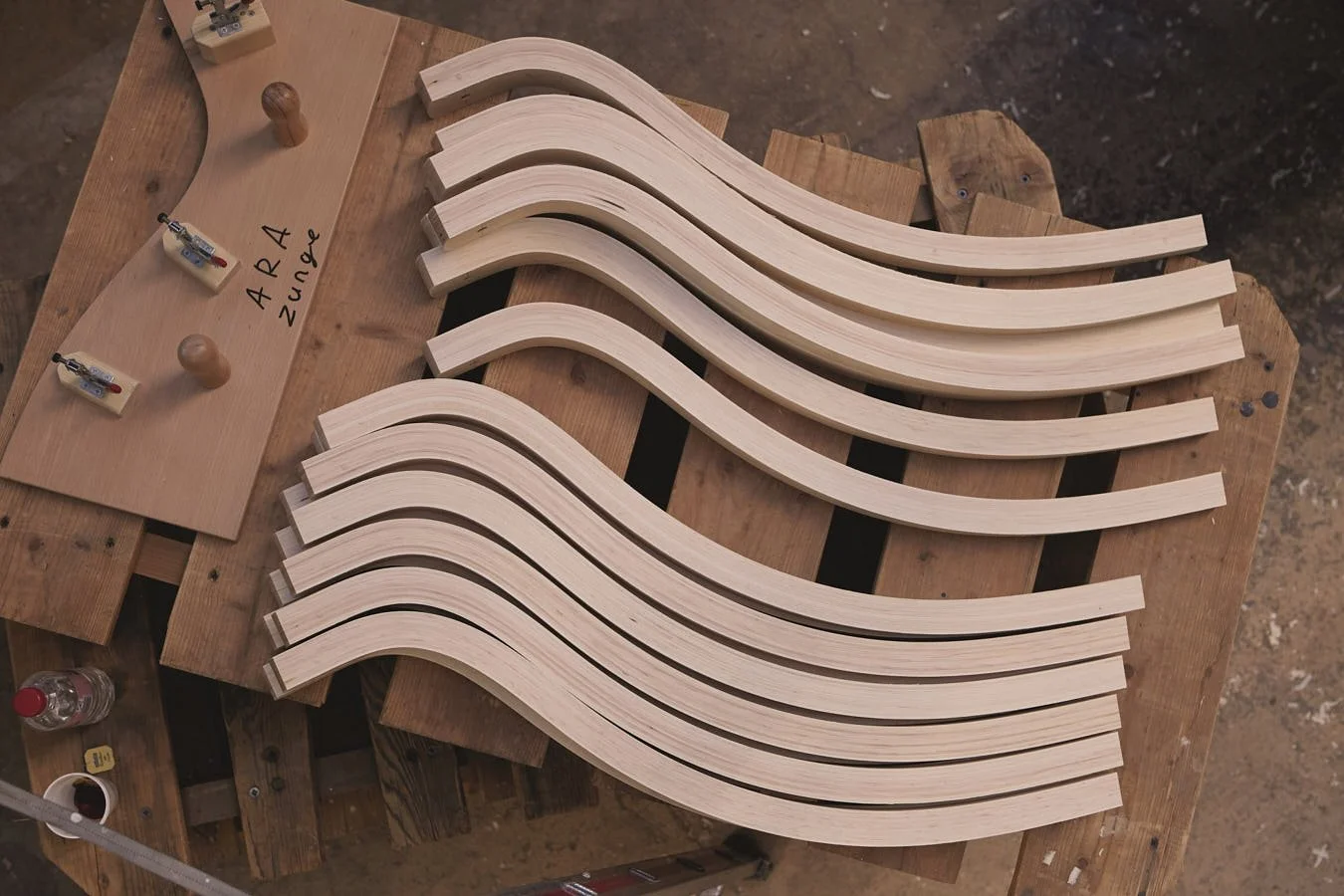
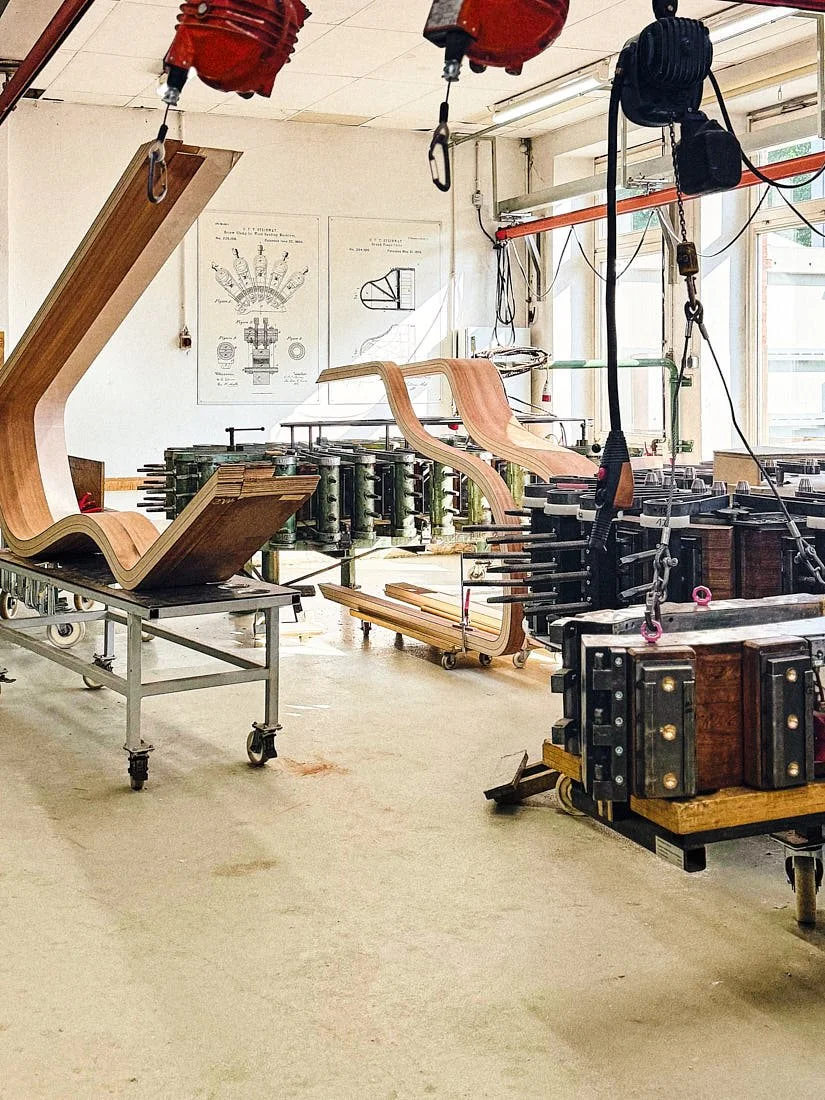
Inside the Steinway workshop, the piano begins with pressure, movement and wood dust, as each curve is guided into shape before the instrument takes form.

 
Le Mile Magazine Steinway & Son Straw Marquetry Piano in collaboration with Studio Paelis by Manon Bouvier-Toth

Curved wooden elements for the ARA Lounge piano are laid out in sequence, showing the quiet precision behind a form that later appears almost fluid.


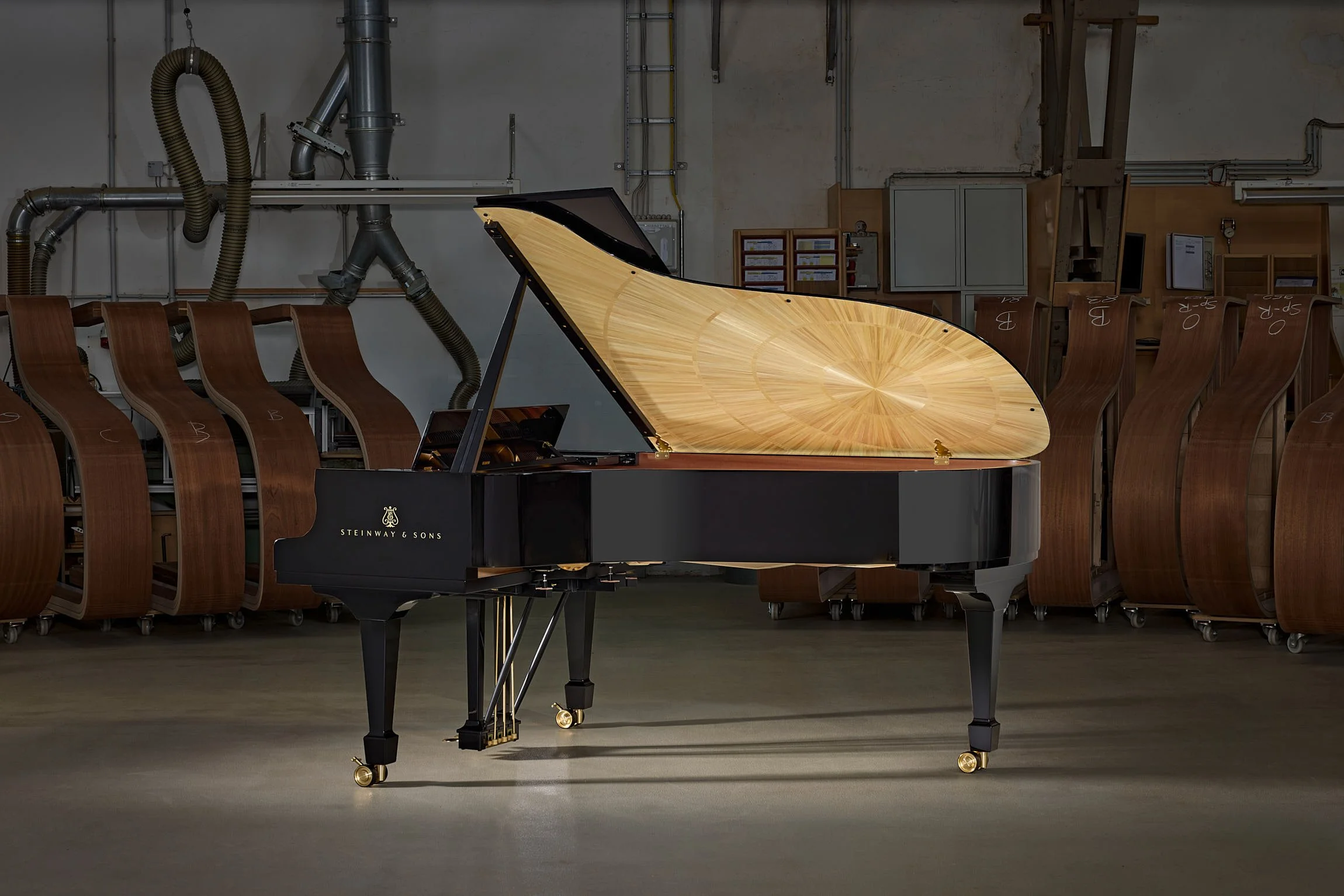
It felt almost inevitable, then, that Manon Bouvier-Toth would bring straw into this world with such precision. The new Steinway & Sons x Studio Paelis Masterpiece Straw Marquetry Collection marks Steinway’s first collaboration with an artist working in straw marquetry, a technique that reached prominence in Europe in the early 17th century and was long used to refine furniture and rare objects with a surface that behaves almost like light itself. Straw marquetry carries a natural shimmer, a silky glow, a way of shifting under the smallest movement of the eye. In the hands of Bouvier-Toth and her Lyon-based atelier, Studio Paelis, this historical craft feels immediate, sharp and alive.

Bouvier-Toth founded Studio Paelis in 2016 and has since shaped it into one of the rare contemporary ateliers dedicated to rye straw marquetry. Her work moves through bespoke interiors, exceptional objects, wall panels and commissions for design professionals, interior architects and luxury clients, always with a language that feels precise, sensual and quietly architectural. In her hands, straw becomes a material of quiet precision, guided into surfaces that seem to shift with the room around them.

 
Le Mile Magazine Steinway & Son Straw Marquetry Piano in collaboration with Studio Paelis by Manon Bouvier-Toth

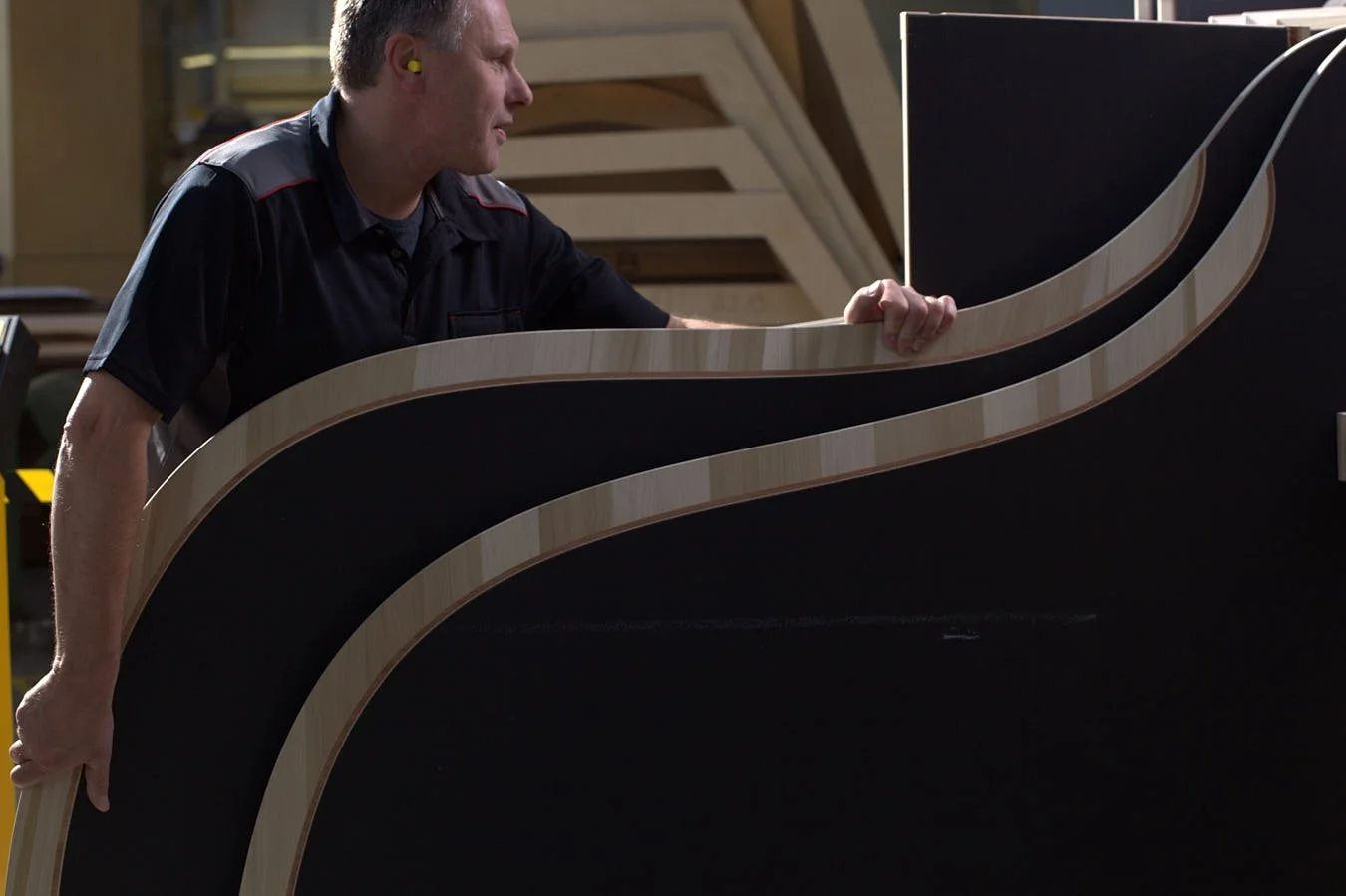
The piano’s body takes shape in the workshop, where the long wooden lines are held, checked and guided before disappearing beneath the final surface.


Le Mile Magazine Steinway & Son Straw Marquetry Piano in collaboration with Studio Paelis by Manon Bouvier-Toth

The frame of the piano moves through the workshop in open stages, with its sculptural lines already visible before the final body is closed.

Image by LE MILE


Le Mile Magazine Steinway & Son Straw Marquetry Piano in collaboration with Studio Paelis by Manon Bouvier-Toth

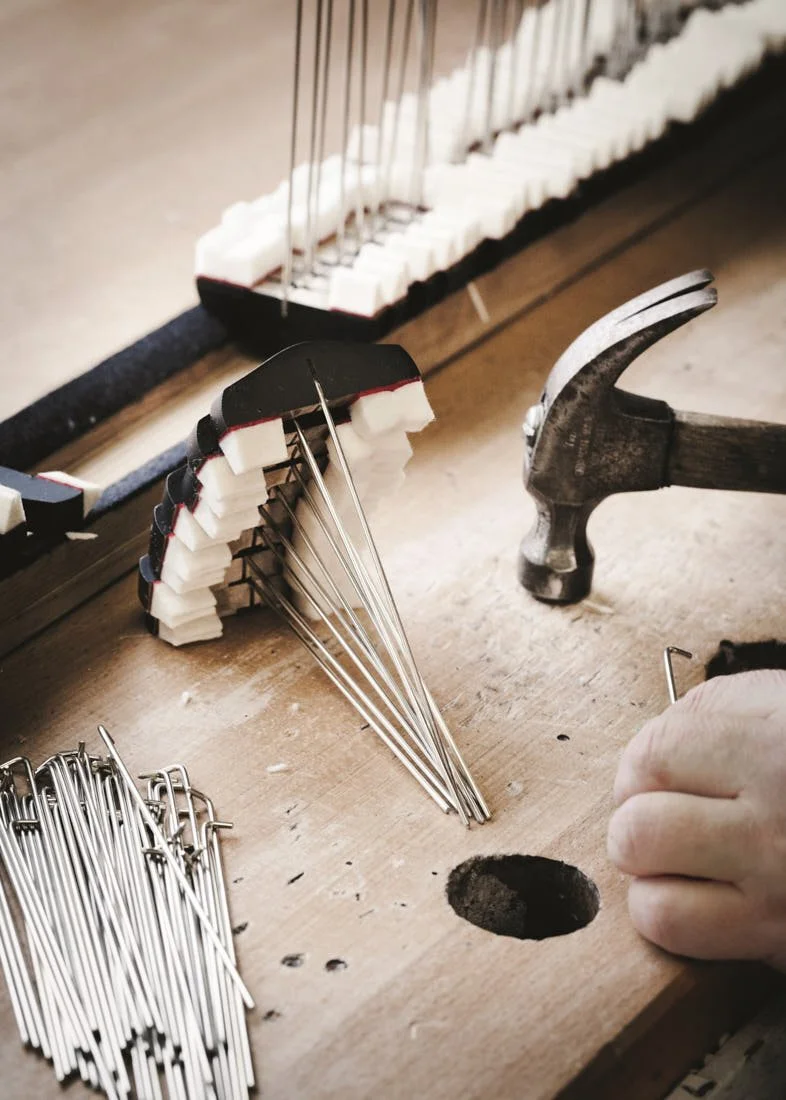
Inside the action, strings, hammers and felt are set into exact relation, bringing the piano’s hidden mechanics close to the hand.

Le Mile Magazine Steinway & Son Straw Marquetry Piano in collaboration with Studio Paelis by Manon Bouvier-Toth

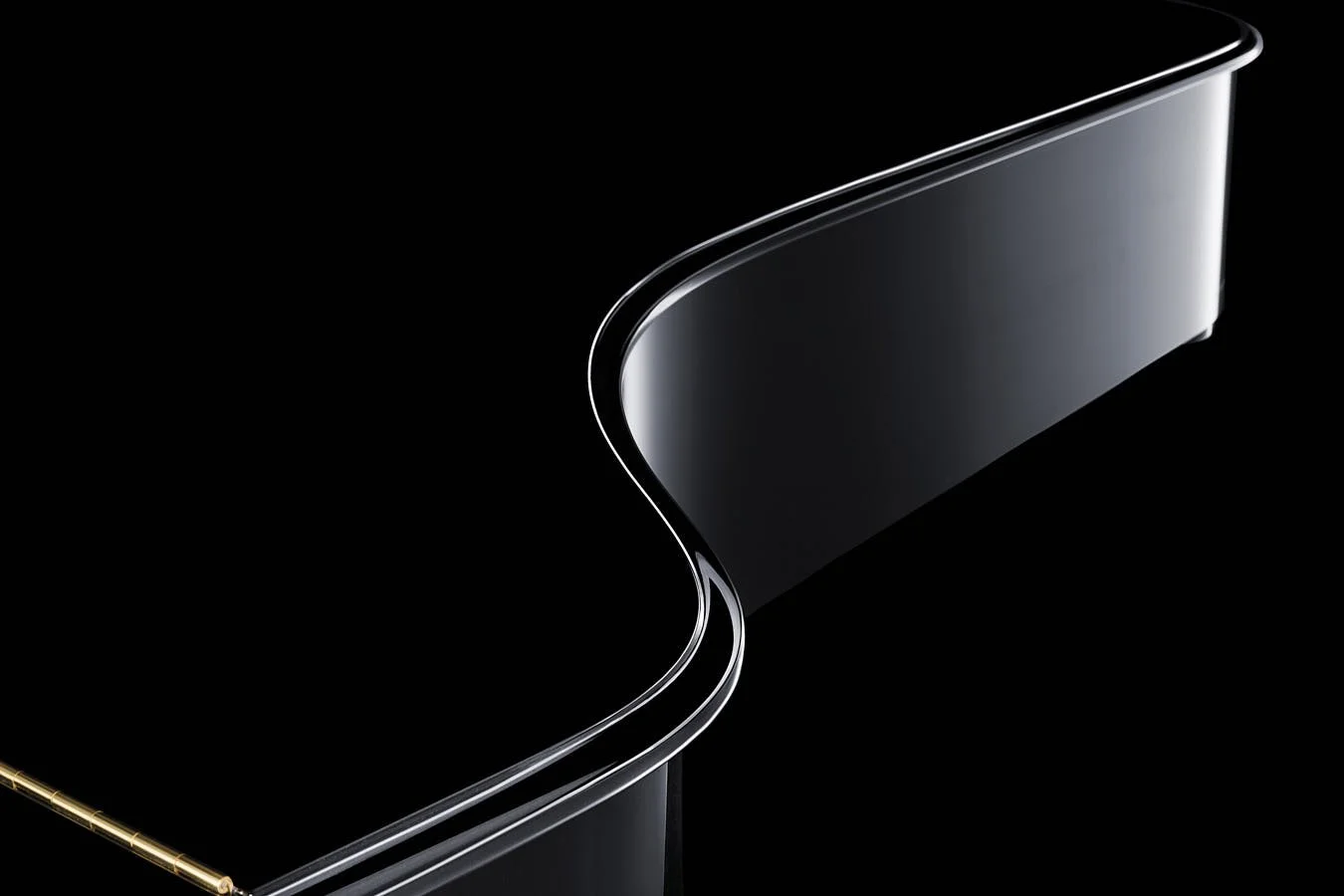
A finished curve of the Steinway piano catches the light, turning construction into a dark, almost liquid line.


For Steinway, the collaboration opens a new chapter in its long history of limited editions and artistic partnerships, because the grand piano already belongs to a world of extreme making. Every Steinway carries engineering, memory, acoustic intelligence and status in one body, and the straw marquetry appears at one of the instrument’s most intimate points. It covers the inner lid and music desk, the space a pianist sees while playing, where the piano opens itself to the room and where the visual experience becomes part of listening.

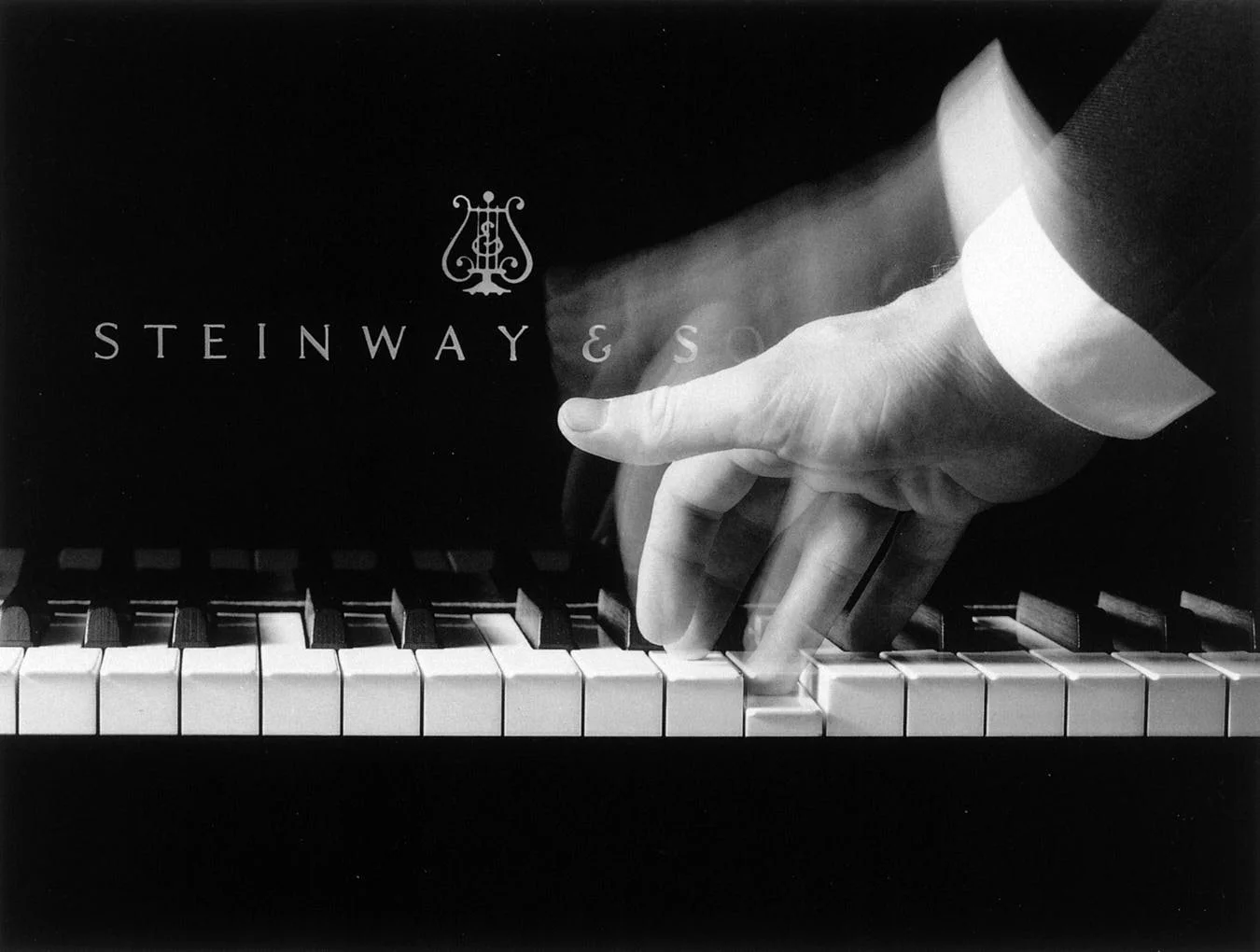
The first sight of the finished piano came on the evening before the factory visit, during dinner inside Steinway’s Hamburg world, with glasses on the table, voices moving through the room and the instrument already holding the attention before anyone had fully gathered around it. Then the keys began to move by themselves. The piano started playing into the room with a strange, precise intimacy, as if it had kept someone’s touch inside its body. Steinway’s SPIRIO technology captures and reproduces the finest movements of a performance, from the force of the hammers to the movement of the pedals, giving the instrument a second presence that feels almost bodily when experienced up close. As the straw inside the lid caught in small flashes, the collaboration stopped feeling like an idea and became something physical in the room. A historic craft, a living instrument, an absent hand made present again.

 
Le Mile Magazine Steinway & Son Straw Marquetry Piano in collaboration with Studio Paelis by Manon Bouvier-Toth

The hand disappears, but the touch remains inside the instrument.

 
Le Mile Magazine Steinway & Son Straw Marquetry Piano in collaboration with Studio Paelis by Manon Bouvier-Toth

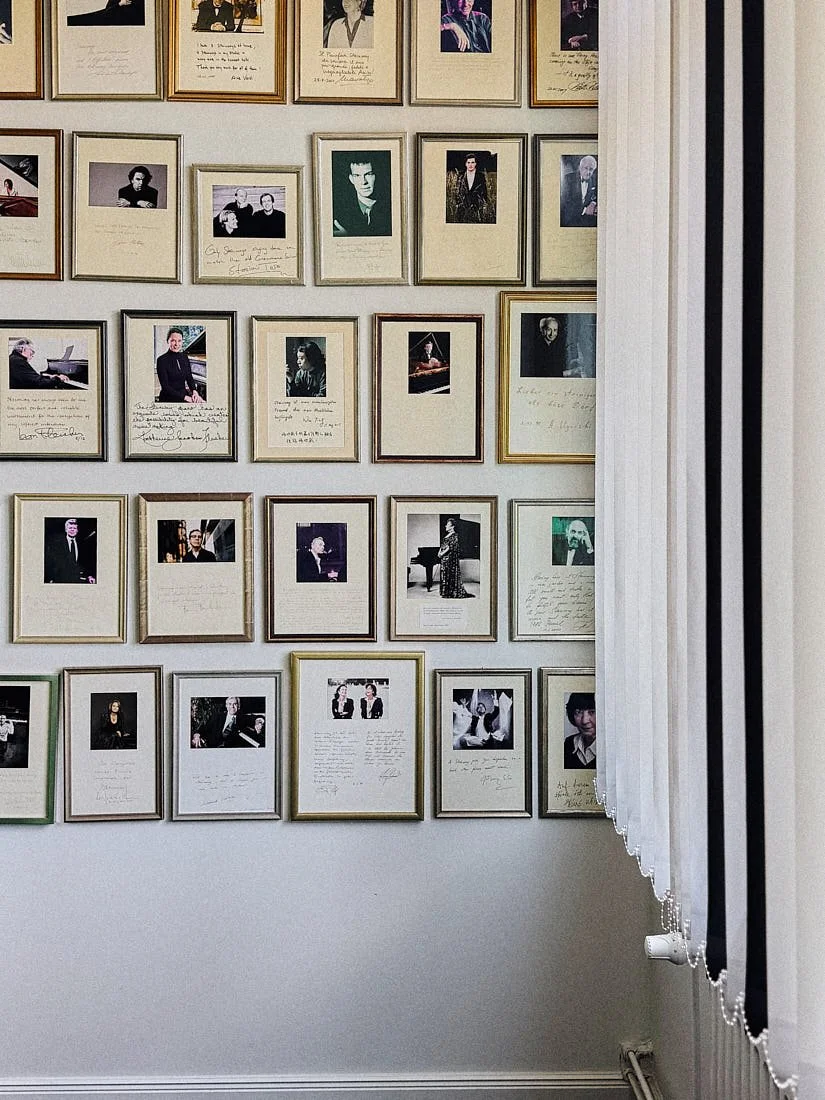
Inside Steinway’s Hamburg world, the wall of portraits holds a quiet record of the musicians who have passed through the house.

Image by LE MILE


Studio Paelis works with rye straw sourced from Burgundy, prepared by hand until the material becomes thin enough to follow light with extraordinary precision. Applied fibre by fibre across the piano’s inner surfaces, the straw gives the instrument a quiet luminosity that shifts with every angle and movement in the room.

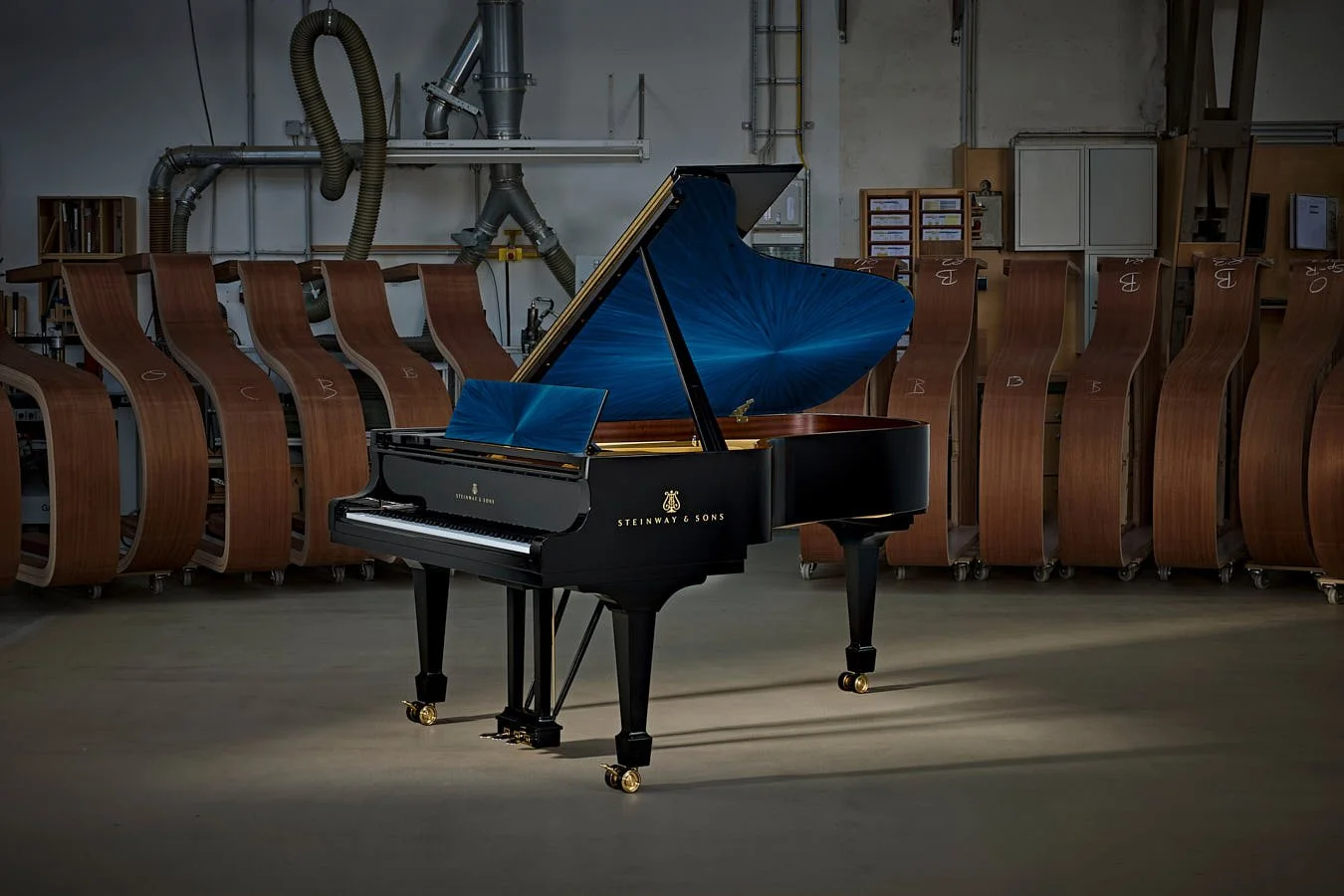
Across the piano’s interior, the straw behaves differently depending on how it has been laid. In one version, the fibres open from a centre point and pull the eye outward with a quiet, almost solar tension. In another, they move in softer rings, closer to the way sound seems to leave the instrument and remain in the air for a moment. The names of the designs matter less than the sensation they create, precise, restrained and strangely alive. For Bouvier-Toth and her atelier, the piano changed the scale of the gesture. The straw had to move across a body that curves, opens, closes and still remains an instrument before anything else. What remains is a surface that seems to belong there, quietly intensifying the space a pianist sees before the first note is played.


Le Mile Magazine Steinway & Son Straw Marquetry Piano in collaboration with Studio Paelis by Manon Bouvier-Toth

The finished Steinway piano stands inside the workshop, with the blue straw marquetry opening across the lid like a concentrated field of light.


Because Steinway has been building in Hamburg since the late 19th century, the factory carries its history through the movement of work, through materials being handled, surfaces being checked and gestures repeated with the calm of people who know exactly where their part of the instrument begins and where another hand will continue. A small adjustment, a surface checked again, a detail hidden deep inside the body of the piano, all of it belongs to a chain of decisions that eventually becomes sound.

During the factory visit, this sense of shared responsibility became one of the strongest impressions, because the work moved through conversations, glances, familiar gestures and routines carried by people who seemed deeply aware of how their own task would continue in someone else’s hands. The instruments were handled with a concentration that felt personal, almost familial, built from training, trust and the quiet awareness that every decision would eventually reach another bench, another hand, another ear.

Seen from the Hamburg factory, the collaboration with Studio Paelis gains its force through a shared belief in craft as something carried by hand, memory and exacting attention. In Bouvier-Toth’s hands, straw marquetry carries historical memory through a surface that feels alert, tactile and completely present, shaped by time, pressure and an exact understanding of surface. On the Steinway grand, that language settles into the inner architecture of the instrument and gives it another sensorial layer before the first note is played. Between the Hamburg manufactory and the Lyon atelier, the idea of a masterpiece becomes something quieter and more precise, held in the patience of people who understand how much presence an object can carry when it is made properly.


credits
all images (c) Steinway & Son

Amouage - Love Hibiscus


Amouage - Love Hibiscus


LOVE HIBISCUS
Amouage Returns to the Secret Garden


written ALBAN E. SMAJLI


Amouage has always understood perfume as a form of architecture, structured, atmospheric, dense with material memory. With Love Hibiscus, the Omani house returns to its Secret Garden Collection through a composition that treats floral sweetness as something more unstable, more textural, and more emotionally charged than the usual language of prettiness allows.


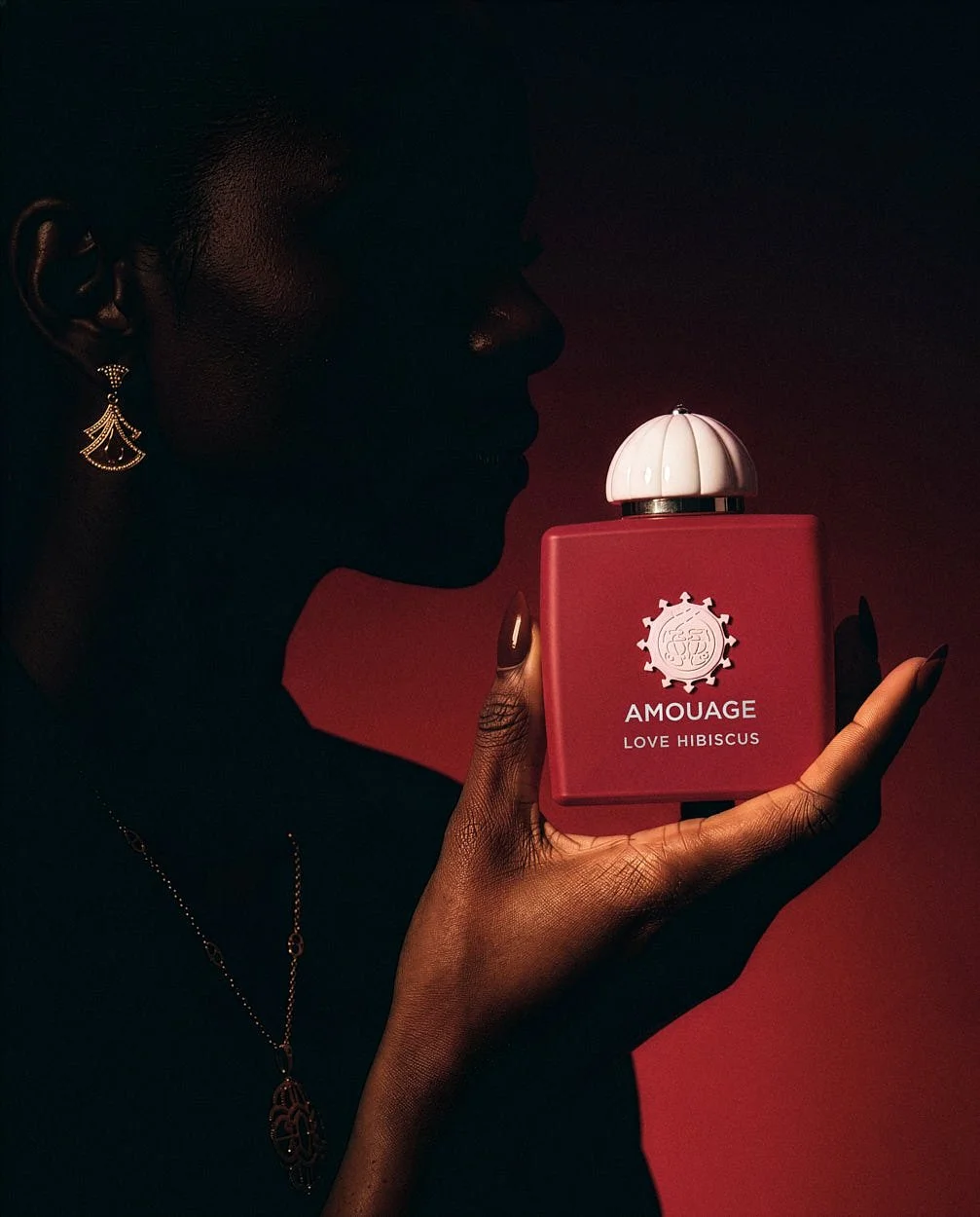
AMOUAGE Love Hibiscus perfume covered featured by LE MILE Magazine
 
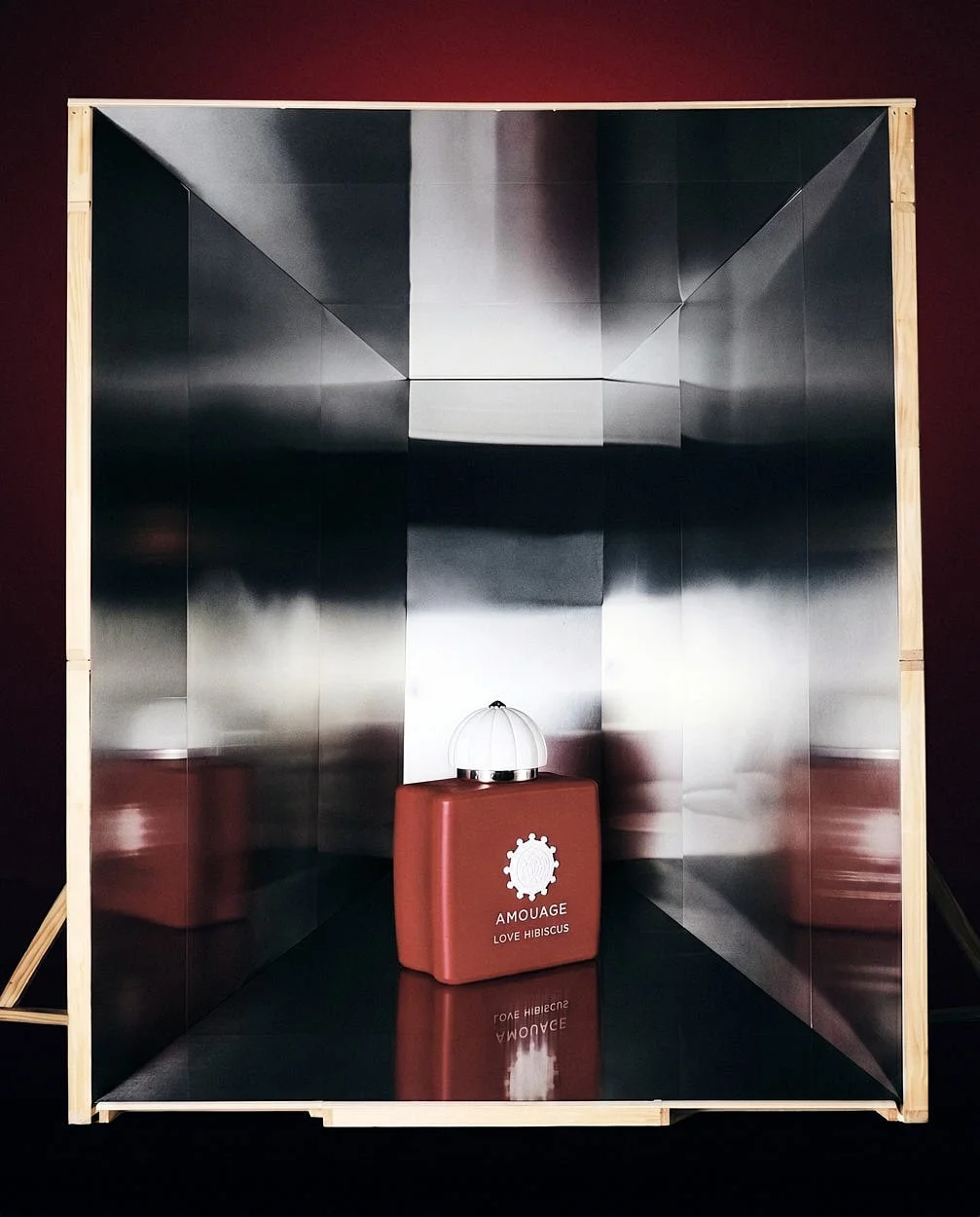
AMOUAGE Love Hibiscus perfume featured by LE MILE Magazine
 

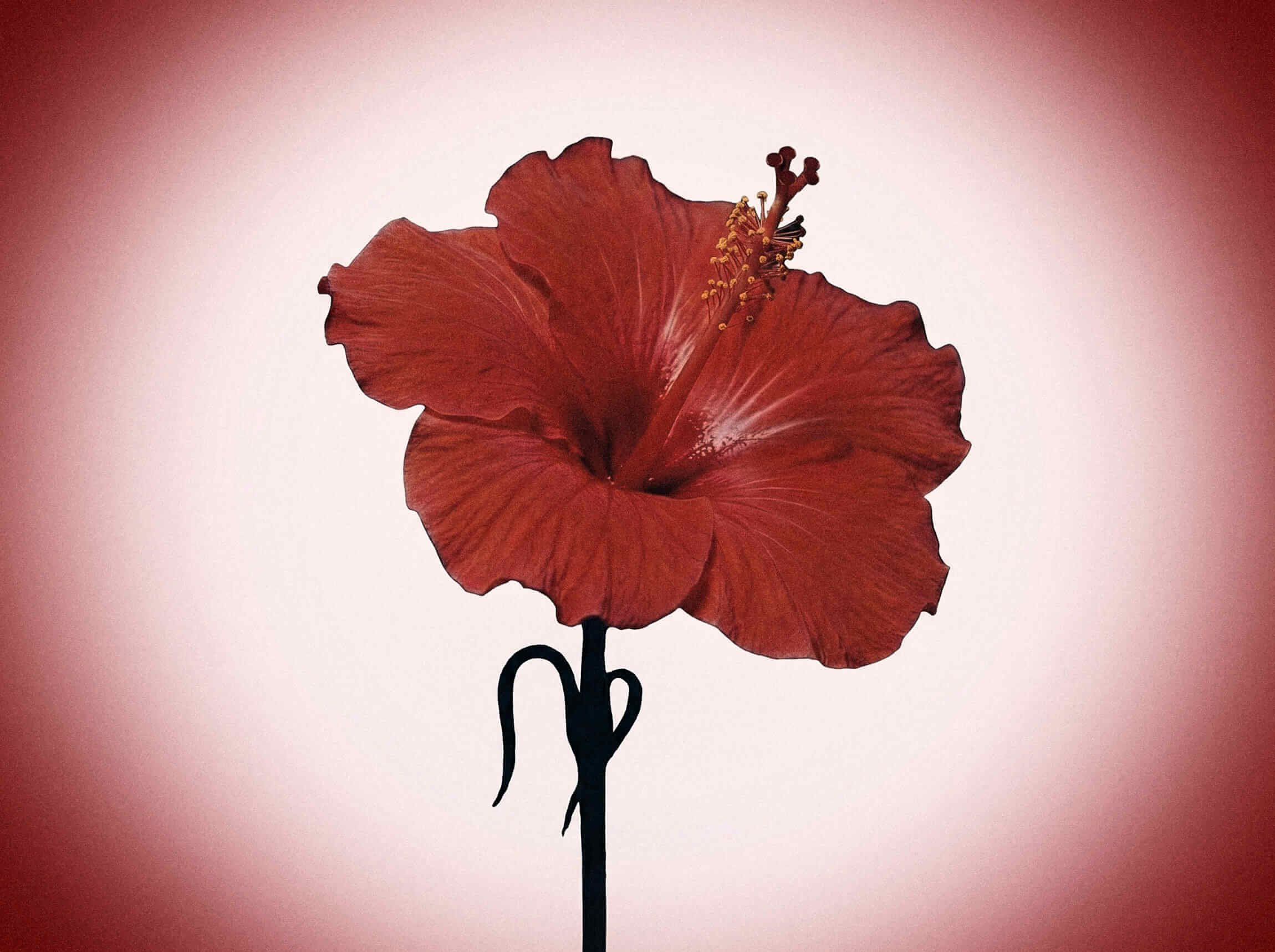
The Secret Garden Collection was first introduced in 2016 and reinterpreted in 2024, with each fragrance built around the meeting of a flower and a gourmand note. Love Hibiscus continues that principle, yet its point of departure feels unusually grounded. Renaud Salmon, Chief Creative Officer of Amouage, found the central flower not in an abstract fantasy of femininity, but in the daily landscape of Oman, where hibiscus grows with a vividness that is immediately visual before it becomes olfactive. Its petals suggest colour, heat, paper, fragility, a kind of botanical theatre that does not need to be softened into romance.


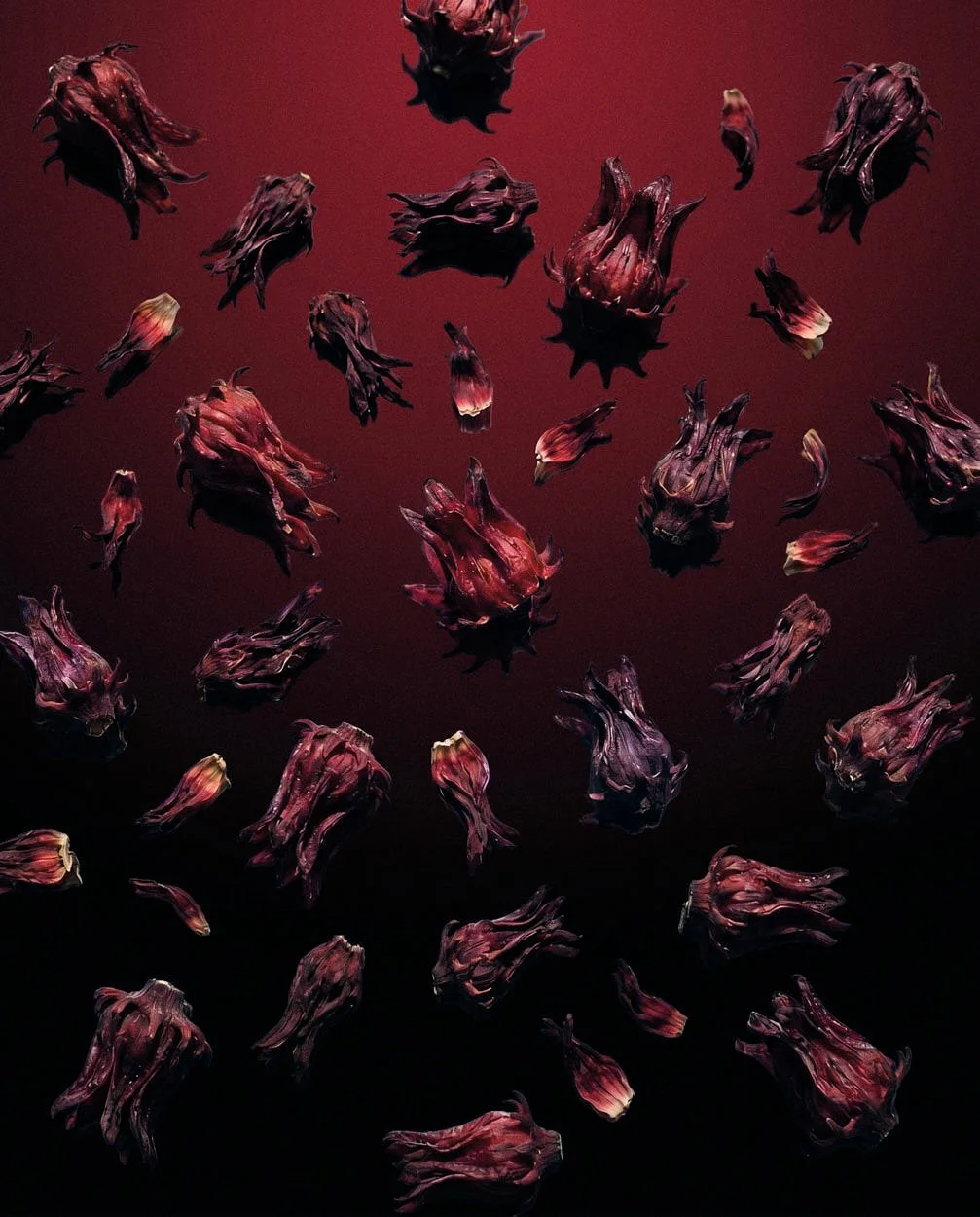
Hibiscus is a difficult flower to translate into scent, because many varieties are almost odourless, and the note is often understood through infusion. In Love Hibiscus, this gives the fragrance its most interesting tension, the flower is approached through tartness, red fruit, herbal depth and a slightly earthy undertone, closer to the sensation of hibiscus tea. Love Hibiscus is precise and sensorial, with a sour brightness that cuts through the composition from the opening.


AMOUAGE Love Hibiscus perfume featured by LE MILE Magazine
AMOUAGE Love Hibiscus perfume  model holding flacon featured by LE MILE Magazine


Jérôme Epinette, creating his first fragrance for Amouage, builds the scent around hibiscus, salted caramel, passion fruit, bergamot, iris, frankincense, sandalwood, cypriol and vanilla. The opening brings passion fruit and bergamot into the sharper register of hibiscus, giving the fragrance a bright, almost edible acidity. Salted caramel enters with a buttery warmth drawn from Salmon’s childhood memory of palmiers, the sugar-coated puff pastry associated here with domestic kitchens, folded dough and caramelised edges. The memory stays tactile and specific, carried by the sensation of folded dough, caramelised sugar and the warmth of a kitchen surface still holding the trace of preparation.

That is where Love Hibiscus becomes most aligned with the current moment in perfumery. Gourmand fragrances no longer need to announce sweetness as indulgence alone. The more interesting direction is material, where sugar becomes surface, butter becomes texture, fruit brings acidity and vanilla settles into shadow. Love Hibiscus belongs to this movement without losing the Amouage sense of density. Its gourmand element gives the hibiscus body, skin and a warmer afterimage, allowing the floral note to feel vivid, textured and fully held within the composition.

 
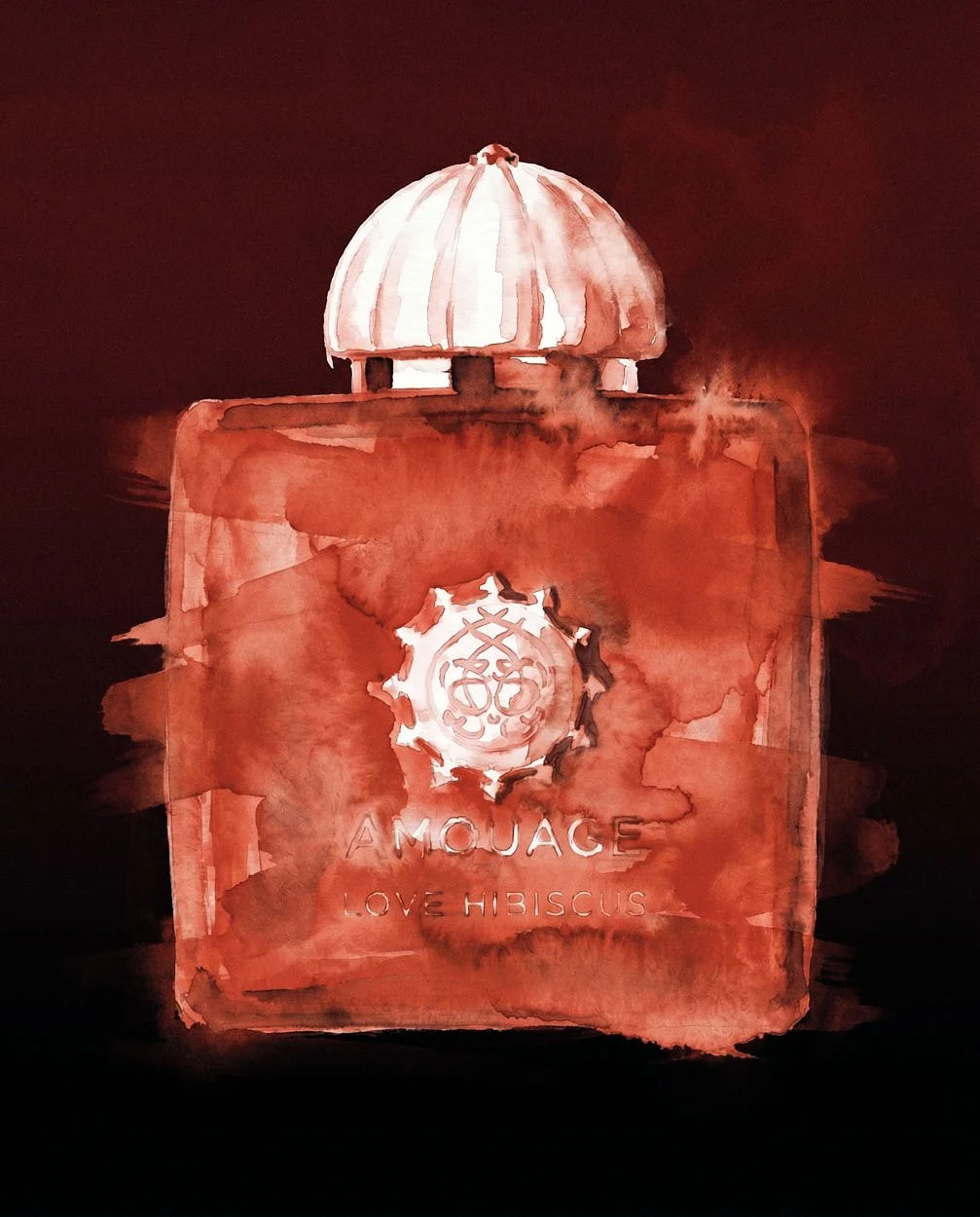
AMOUAGE Love Hibiscus perfume featured by LE MILE Magazine


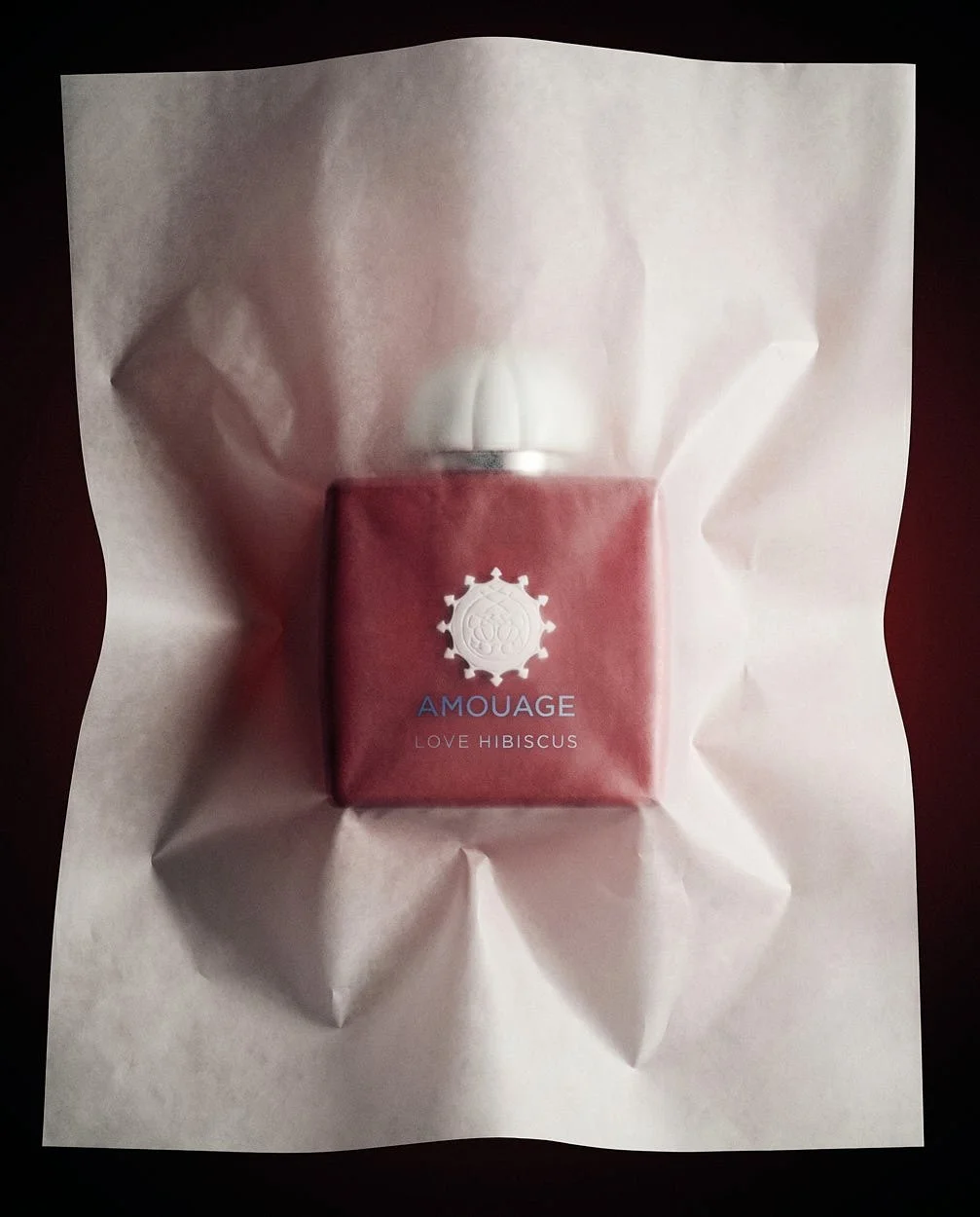
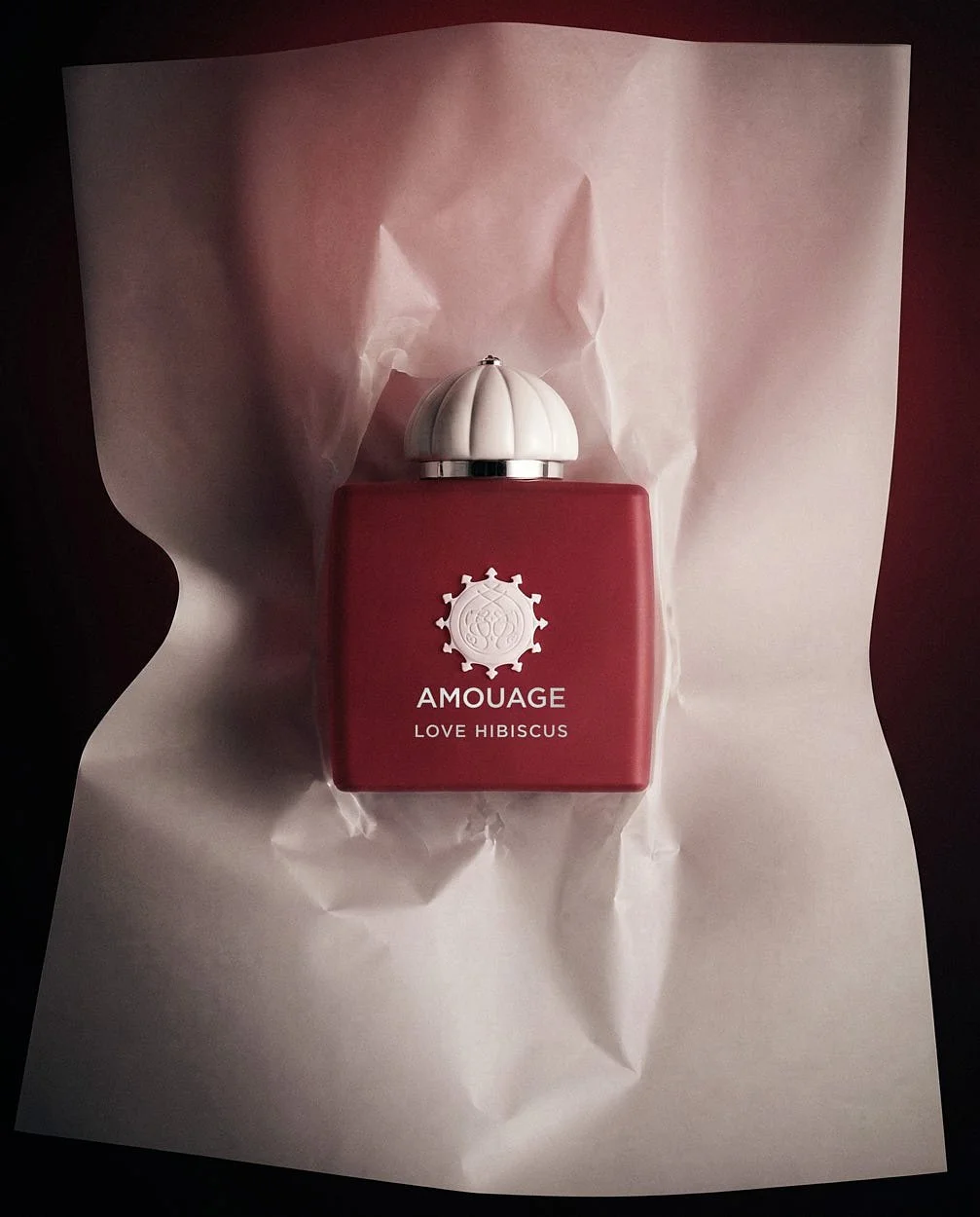
Frankincense, a material deeply connected to Oman and to the history of Amouage, plays an important role in keeping the composition from becoming purely confectionary. Here it appears soft, woody and luminous, creating a veil through which the fruit and caramel feel more diffused. Iris adds a subtle cosmetic dryness, while sandalwood, cypriol and vanilla give the base a rounded, lasting weight. The structure moves from vivid red brightness into something creamier and more resinous, with the hibiscus still present as a pulse. The flacon, presented in an intense hibiscus red with the Secret Garden Collection’s tactile ceramic finish, extends the fragrance’s language of saturated colour and surface.


From May 18th, 2026, Love Hibiscus will be available in 100ml Eau de Parfum, presented at €365. Its form carries the intensity of hibiscus red. Its essence holds the trace of flower, sugar, fruit and shadow.

discover more
www.amouage.com


(c) all visuals
lemilestudios

RIMOWA Design Prize 2026 - How Young Designers Are Reframing Mobility

RIMOWA Design Prize 2026 - How Young Designers Are Reframing Mobility

RIMOWA Design Prize 2026

How Young Designers Are Reframing Mobility


written KLAAS HAMMER


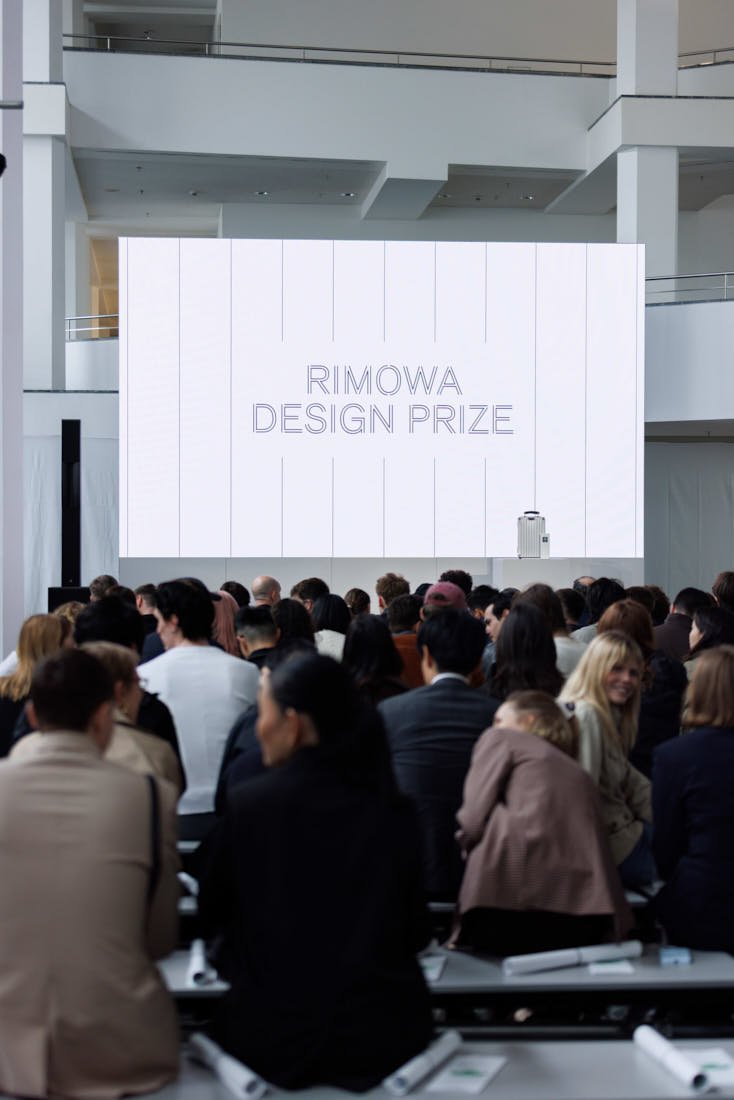
The future of German design is in good hands - a fact once again proven by this year’s RIMOWA Design Prize 2026. On May 11, seven finalists from universities across Germany presented their projects to an international audience in Berlin, showcasing a new generation of designers driven by innovation, purpose, and social impact.


First launched in 2023, the RIMOWA Design Prize was created to support emerging creative talent and champion the future of German design. Rooted in values such as innovation, inclusivity, and global transformation, the award once again centered this year around the theme of mobility - encouraging young designers to translate visionary ideas into tangible projects capable of creating lasting, sustainable impact on global challenges. And the finalists delivered. Their concepts demonstrated that mobility is about far more than movement alone; it is deeply connected to freedom, accessibility, resilience, and human connection. At the same time, the projects reflected the core principles long associated with RIMOWA - durability, excellence, and purposeful design.

 
Guests at the RIMOWA Design Prize 2026 ceremony in Berlin for LE MILE Magazine

Guests at the RIMOWA Design Prize 2026 ceremony in Berlin

 
The award presentation at the RIMOWA Design Prize 2026 ceremony in Berlin for LE MILE Magazine

The award presentation at the RIMOWA Design Prize 2026

 
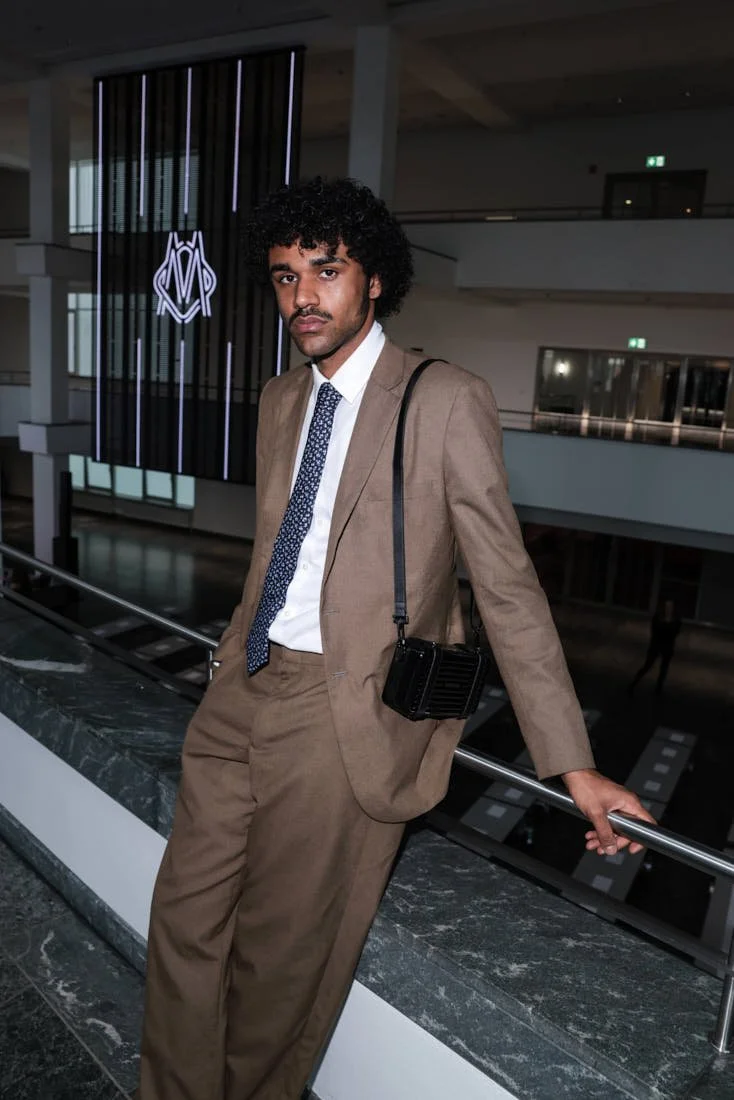
Langston Uibel at the RIMOWA Design Prize 2026 ceremony in Berlin for LE MILE Magazine

Langston Uibel at the RIMOWA Design Prize 2026

 
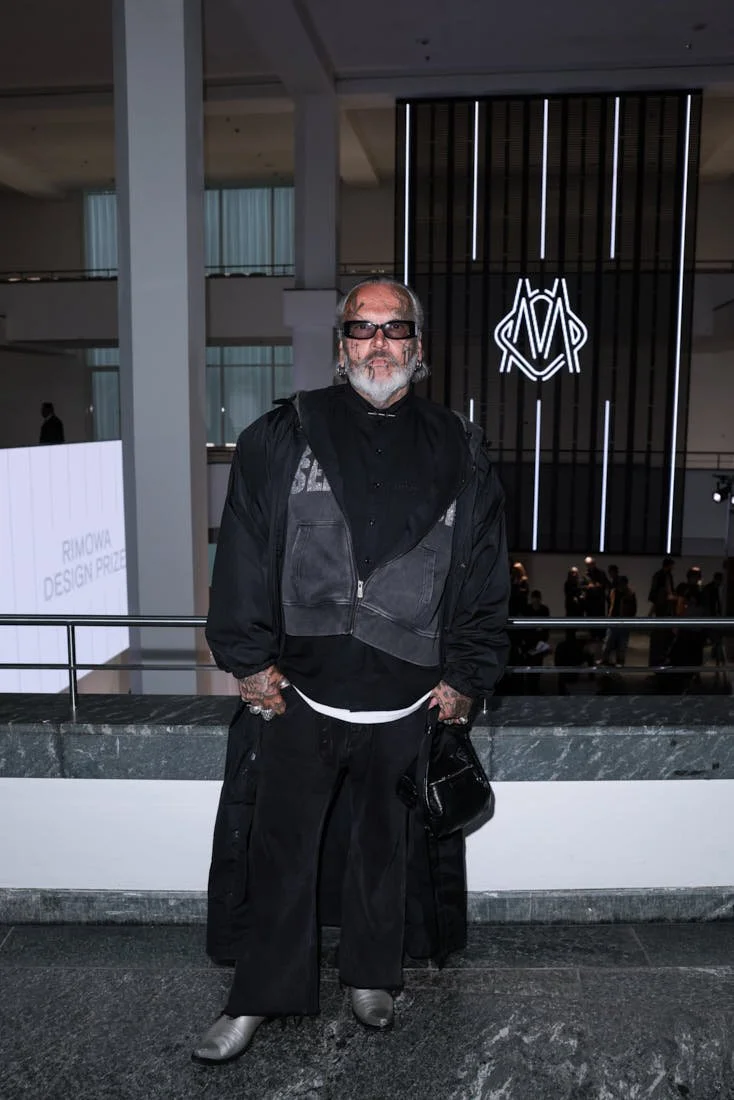
Sven Marquardt at the RIMOWA Design Prize 2026 ceremony in Berlin for LE MILE Magazine

Sven Marquardt at the RIMOWA Design Prize 2026


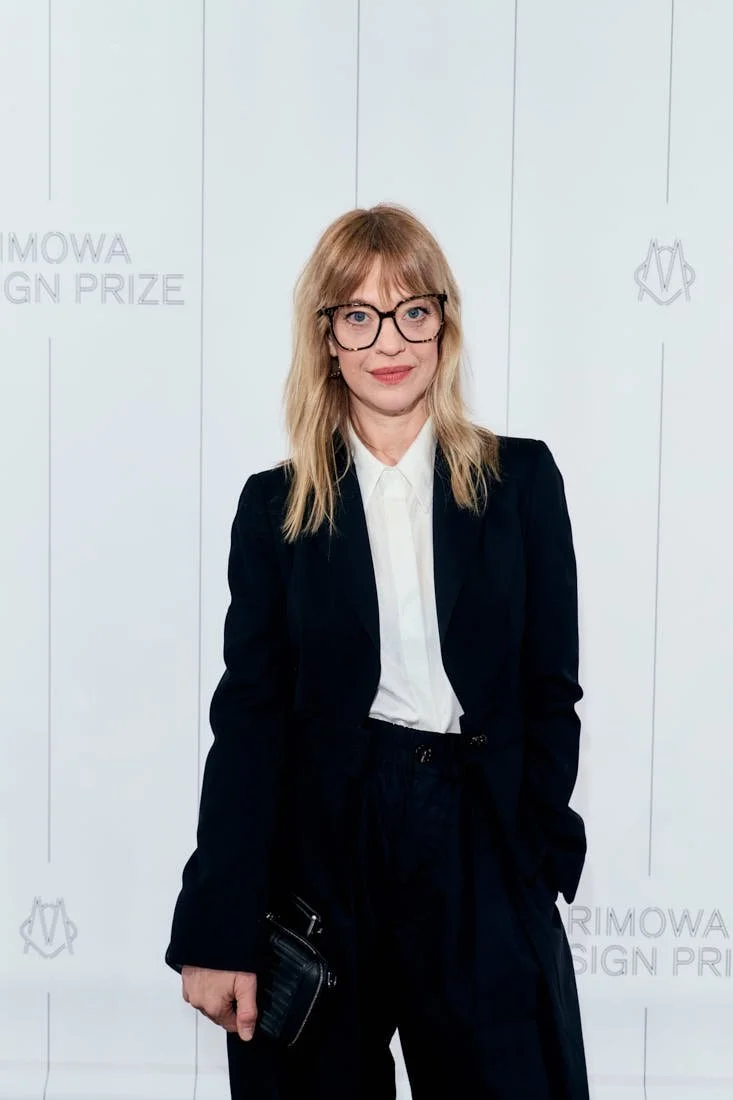
Heike Makatsch at the RIMOWA Design Prize 2026 in Berlin for LE MILE Magazine

Heike Makatsch at the RIMOWA Design Prize 2026


Set against the striking backdrop of Berlin’s Kulturforum, journalist Valerie Präkelt guided guests through both the press preview and the evening’s award ceremony, attended by Berlin creatives, talents such as Heike Makatsch, Langston Uibel, Justus Riesner, Paula Hartmann, industry professionals, and members of the international press. Also present was newly appointed RIMOWA CEO Beatrice Monguidi, who described the event as a meaningful introduction to her new role at the company, one that celebrates young creative voices and offers them real opportunities to shape the future. Monguidi, previously President of Louis Vuitton for Europe, the Middle East and Africa, succeeds Hugues Bonnet-Masimbert, who is stepping down after leading the company since 2021.

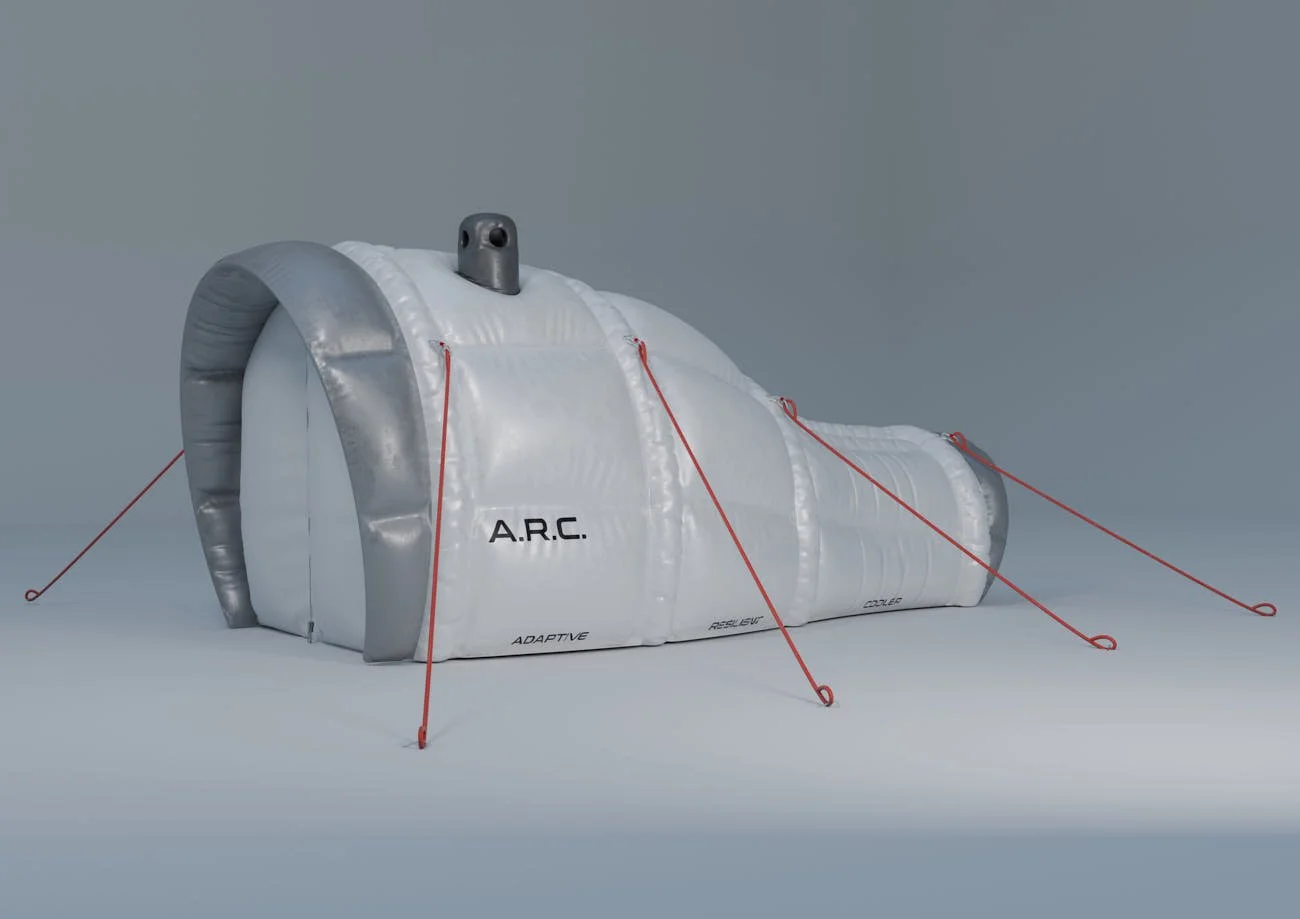
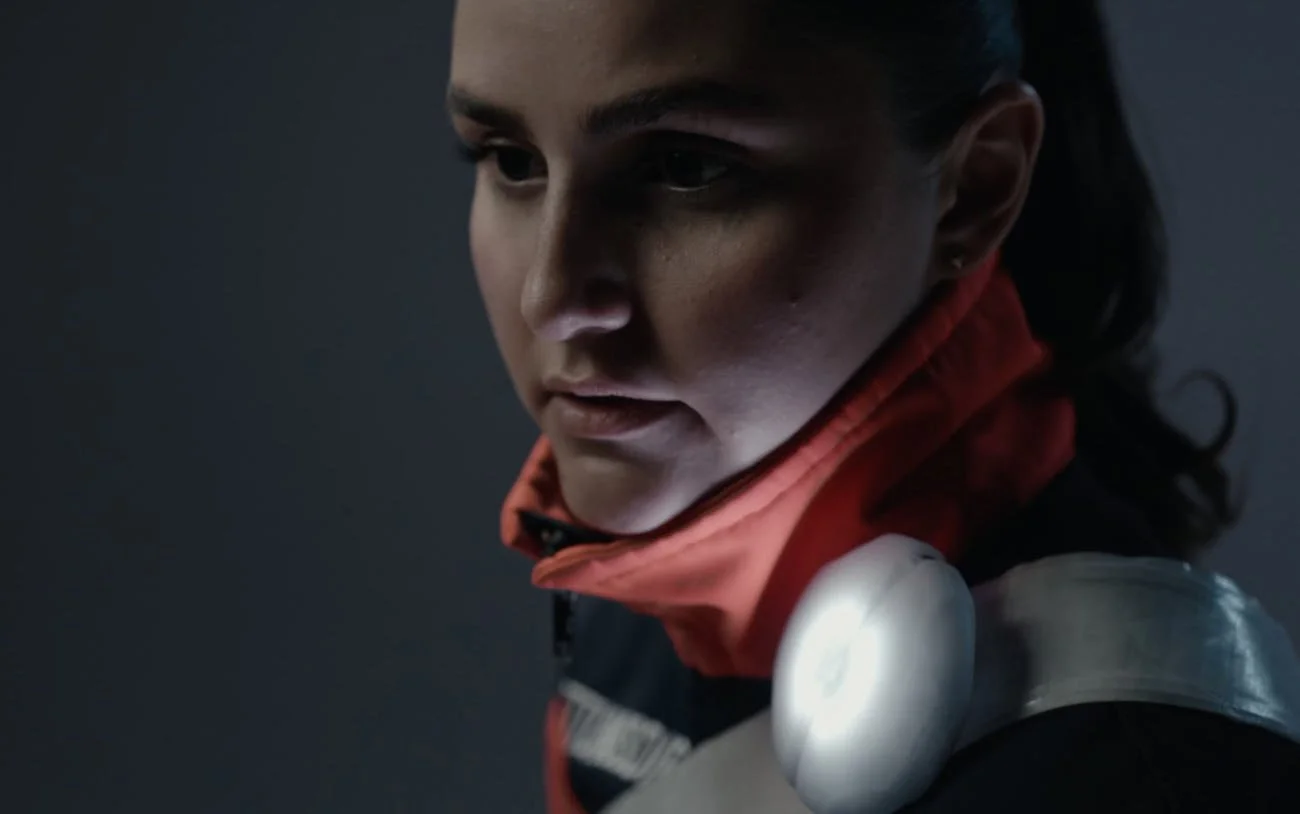
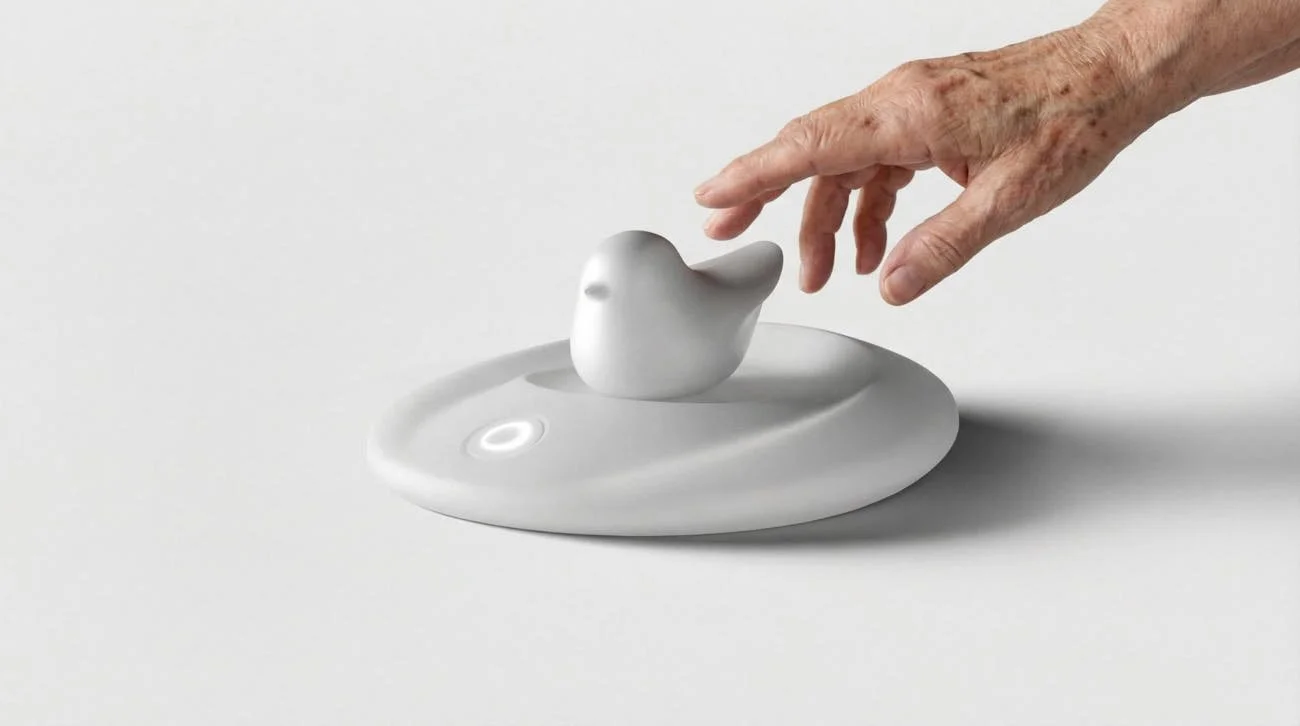
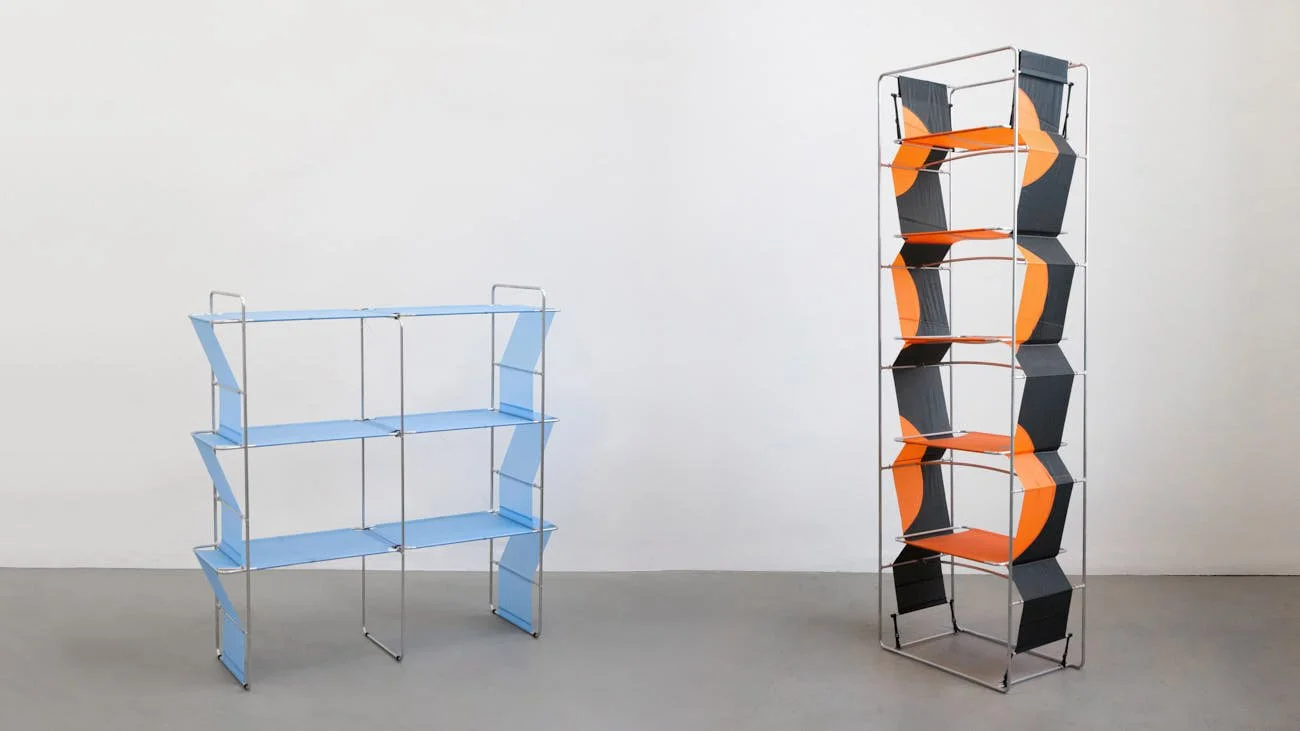
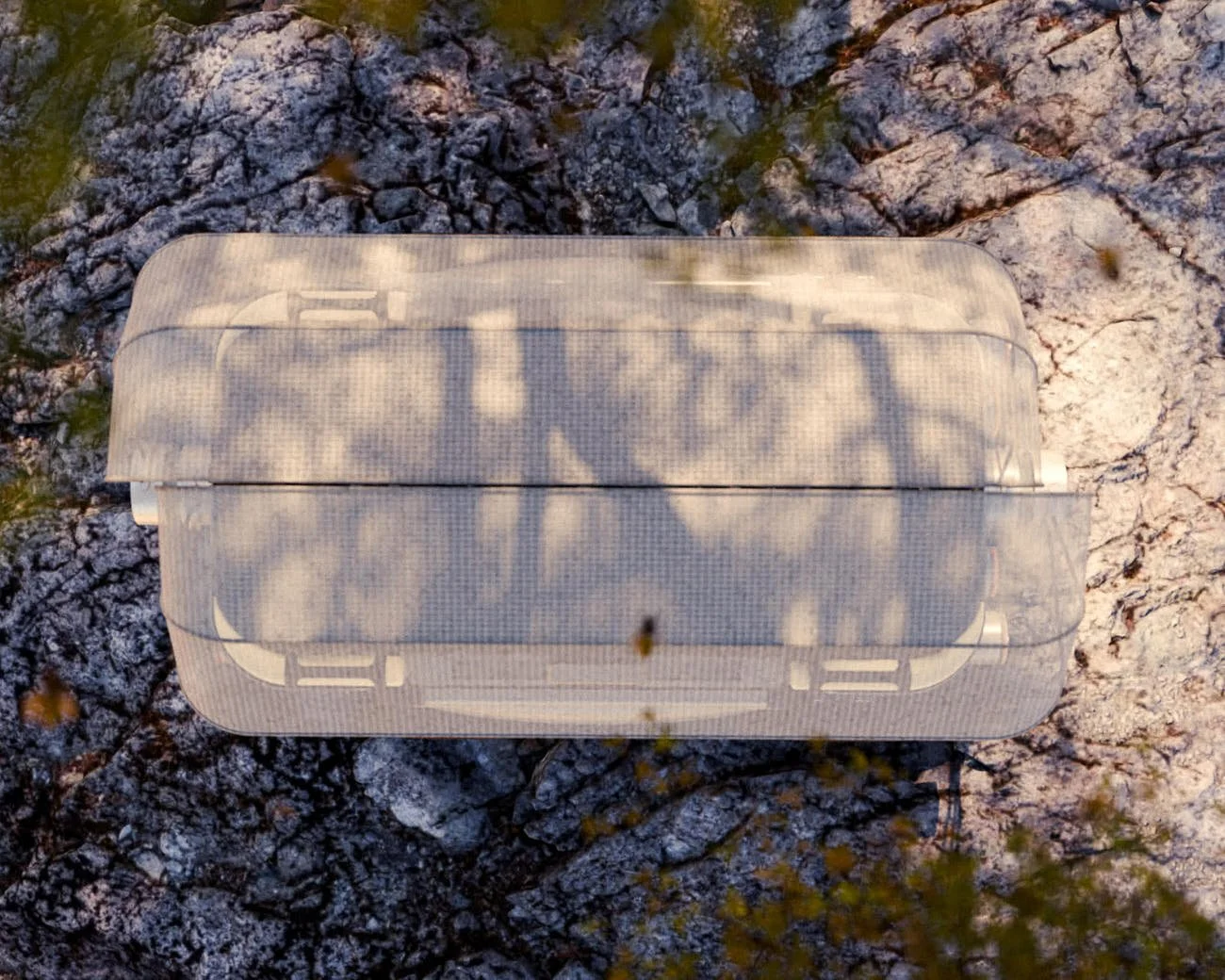
The finalists’ projects spanned a remarkable range of disciplines and ideas. Valerio Sampognaro, for example, presented ultra-lightweight furniture inspired by kite construction. Using sailcloth and aluminum tubing, he transformed principles of aerodynamics into functional everyday objects designed for a more mobile lifestyle. Meanwhile, Jakob Schlenker introduced “PIP,” a portable bird-shaped companion created for elderly people experiencing loneliness. Supported by AI technology, PIP encourages movement and social interaction through subtle prompts and emotional engagement. One of the evening’s most discussed projects, particularly due to its urgent real-world relevance, came from Tobias Kremer and Yannick Stilgenbauer. Their concept, A.R.C., proposes a portable cooling system for food and medicine designed for use in hot, arid crisis regions where infrastructure has collapsed.


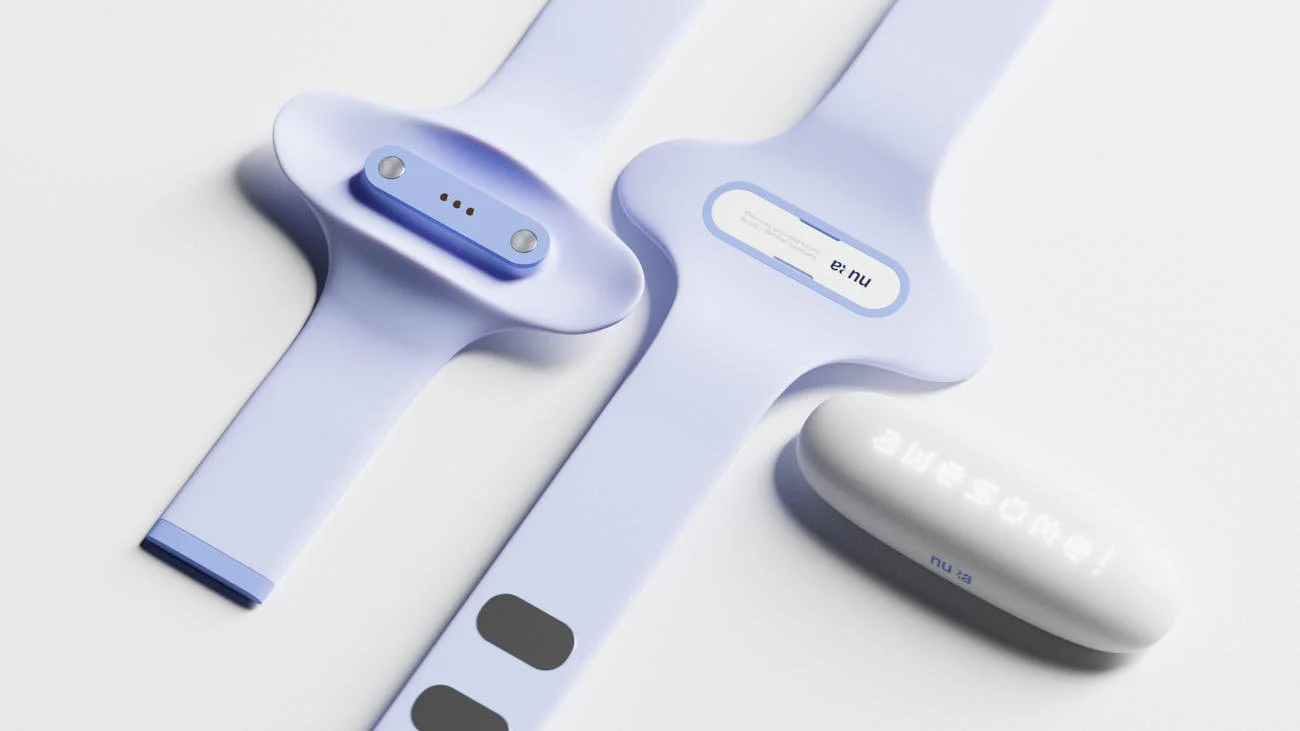
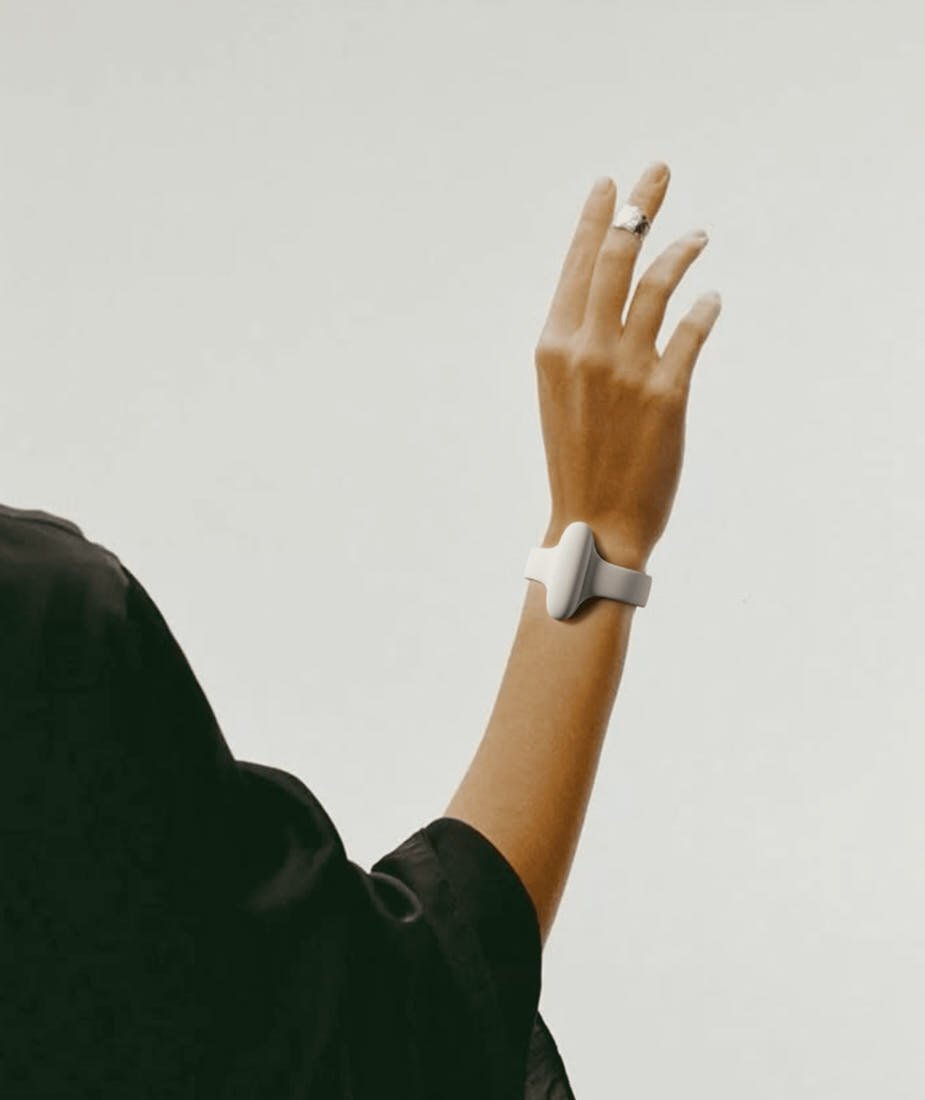
Samuel Nagel and Paul Feiler with their project NURA for the RIMOWA Design Prize 2026, featured by LE MILE Magazine

Samuel Nagel and Paul Feiler with their project NURA for the RIMOWA Design Prize 2026

Tobias Kremer and Yannick Stilgenbauer’s A.R.C. project for the RIMOWA Design Prize 2026, featured by LE MILE Magazine

Tobias Kremer and Yannick Stilgenbauer’s A.R.C. project for the RIMOWA Design Prize 2026

 
Tim Kipper and John Roller’s Compassion Aid project for the RIMOWA Design Prize 2026, featured by LE MILE Magazine

Tim Kipper and John Roller’s Compassion Aid project for the RIMOWA Design Prize 2026

Jakob Schlenker’s PIP project for the RIMOWA Design Prize 2026, featured by LE MILE Magazine

Jakob Schlenker’s PIP project for the RIMOWA Design Prize 2026

 
Samuel Nagel and Paul Feiler’s NURA project for the RIMOWA Design Prize 2026, featured by LE MILE Magazine

Samuel Nagel and Paul Feiler’s NURA project for the RIMOWA Design Prize 2026

 
Valerio Sampognaro’s Aerodomestics project for the RIMOWA Design Prize 2026, featured by LE MILE Magazine

Valerio Sampognaro’s Aerodomestics project for the RIMOWA Design Prize 2026

 
Nicolas Nielsen’s HYVE project for the RIMOWA Design Prize 2026, featured by LE MILE Magazine

Nicolas Nielsen’s HYVE project for the RIMOWA Design Prize 2026

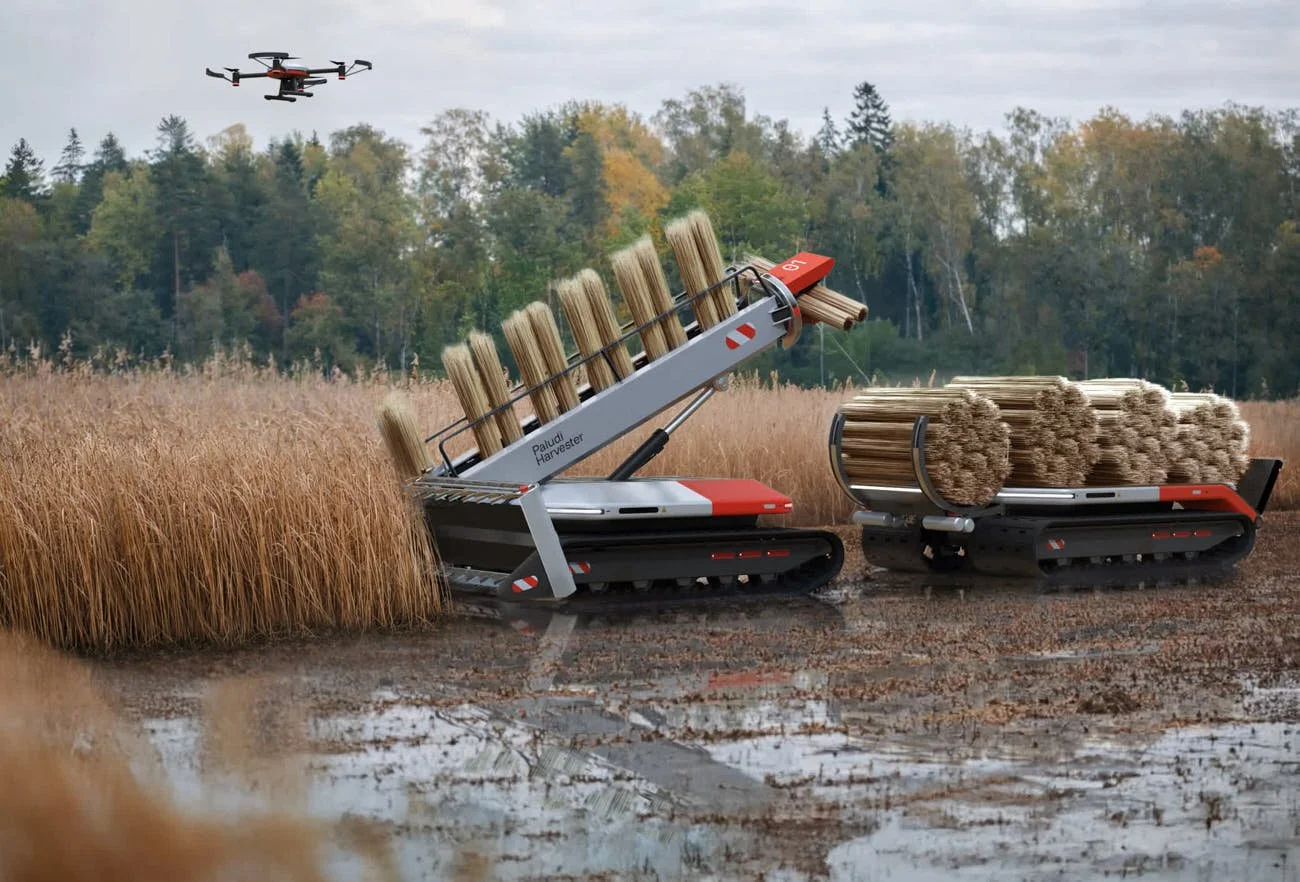
Niklas Henning’s Paludi Harvesters project for the RIMOWA Design Prize 2026, featured by LE MILE Magazine

Niklas Henning’s Paludi Harvesters project for the RIMOWA Design Prize 2026


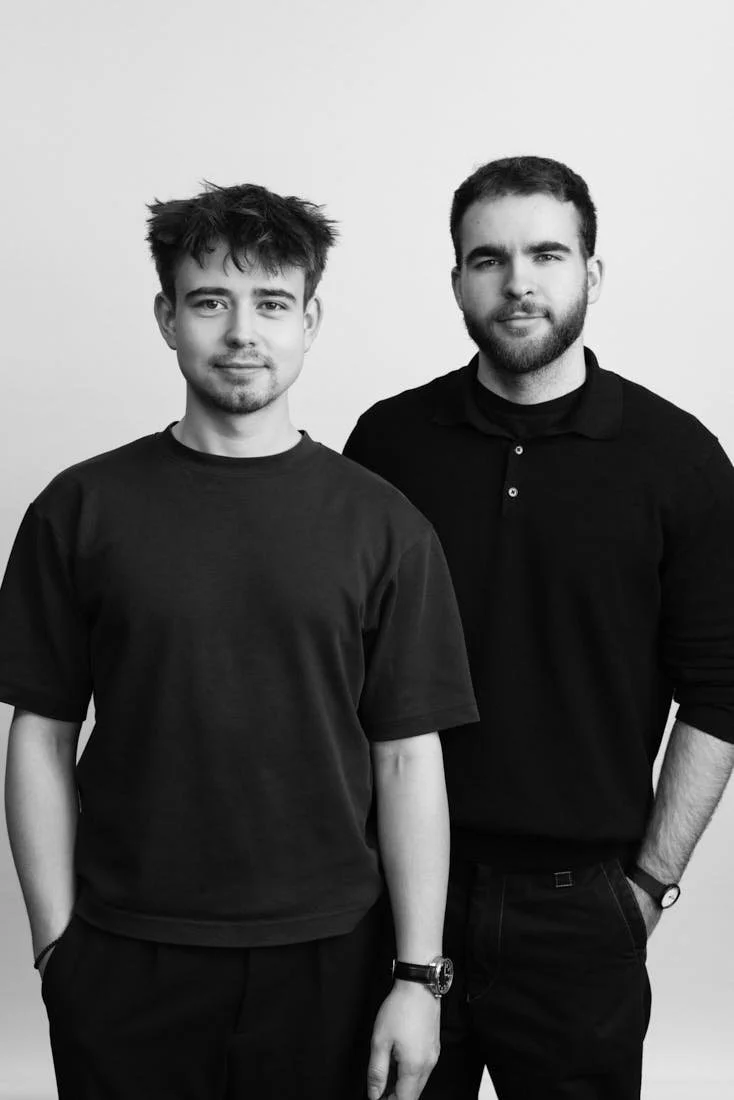
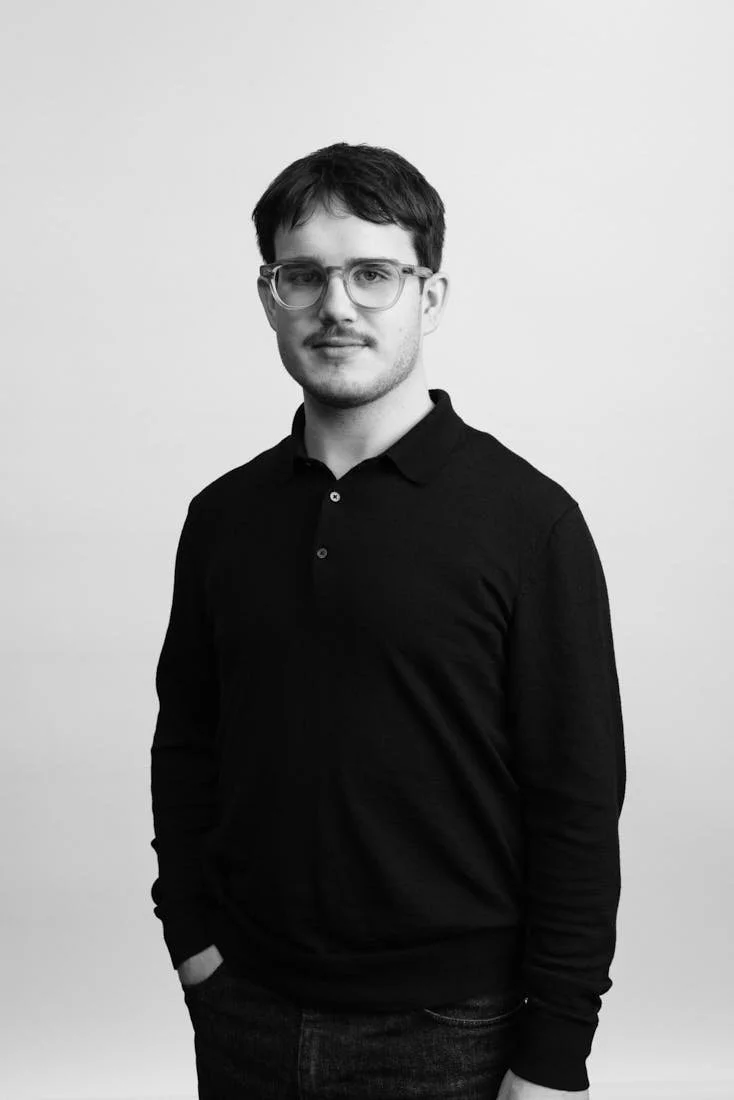
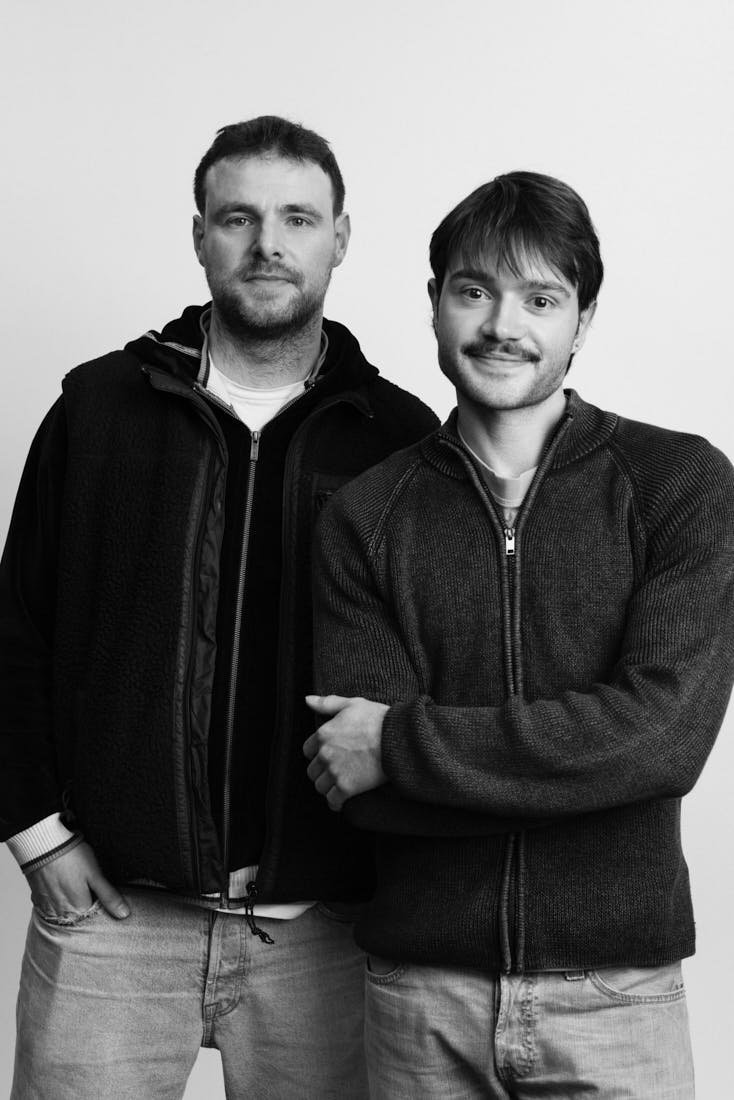
meet the finalists


meet the jury


Designers Tim Kipper and John Roller developed an intuitive communication device for emergency responders. Combining voice and visual input, the system enables clearer communication between rescue teams and patients in dense urban environments. Another standout was “HyVe,” created by Nicolas Nielsen, a nomadic home for bees aimed at restoring urban biodiversity. By reconnecting isolated green spaces, HyVe helps reactivate pollination systems and strengthen ecological networks within cities.

The evening’s first award, the “Special Mention,” went to Niklas Henning for “Paludi Harvesters,” an autonomous reed-harvesting machine designed for climate-positive agriculture. The project contributes to peatland preservation while simultaneously creating sustainable sources of income through ecological insulation materials.

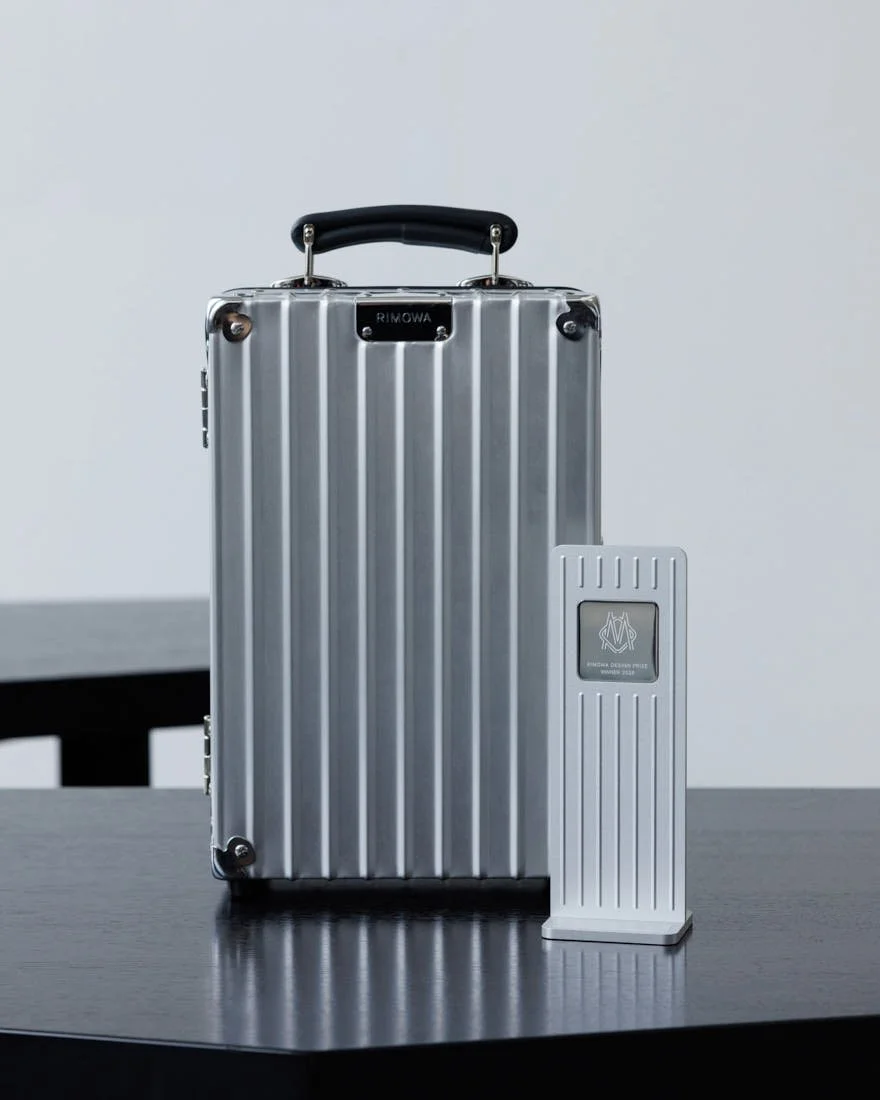
The overall winners of the 2026 RIMOWA Design Prize, and recipients of €20,000 in funding, were Samuel Nagel and Paul Feiler with their invention “Nura.” The wearable device uses EMG technology to translate sign language into speech and spoken language into text in real time. With Nura, the students aimed to create an elegant accessory that empowers rather than stigmatizes its users. According to the Deutscher Gehörlosen-Bund, approximately 0.1 percent of Germany’s population - around 83,000 people - are deaf. Innovations like Nura therefore have the potential to significantly improve communication and accessibility in everyday life. Nura is undoubtedly a deserving winner. Yet perhaps the true success of the evening lies in the fact that every finalist had already been given something invaluable: the opportunity to develop their ideas, present them on an international stage, and collaborate with renowned mentors through the support of RIMOWA.


What remains now is the exciting question of where these projects will go next and whether the concepts presented in Berlin may soon become part of our everyday lives and working environments.

Inside Dior’s Lady Woven Bag - Reinterpreted by Jonathan Anderson

Inside Dior’s Lady Woven Bag - Reinterpreted by Jonathan Anderson

Inside Dior’s Lady Woven Bag
Woven Leather Craftsmanship and the Evolution of the Lady Dior


written LE MILE


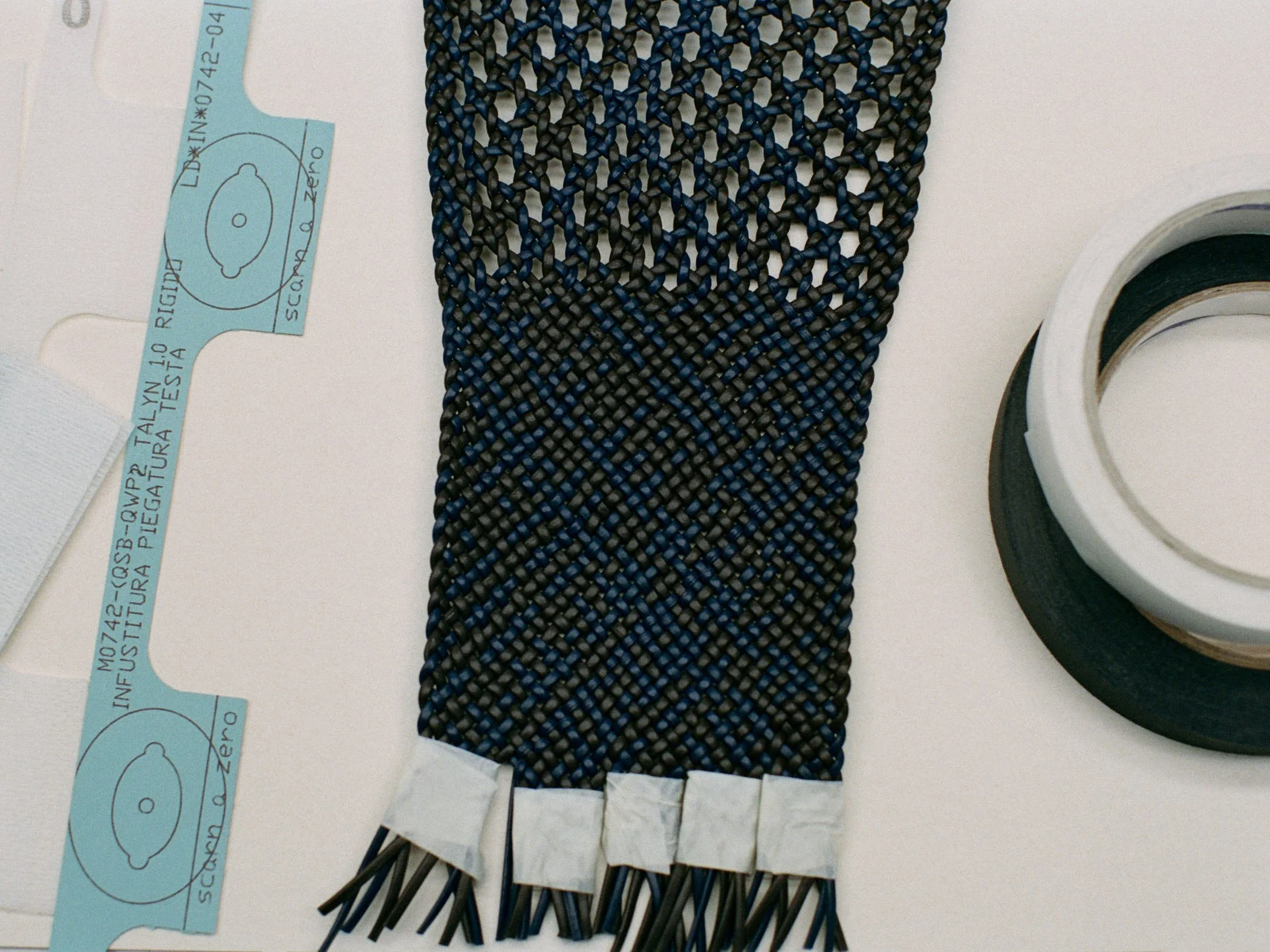
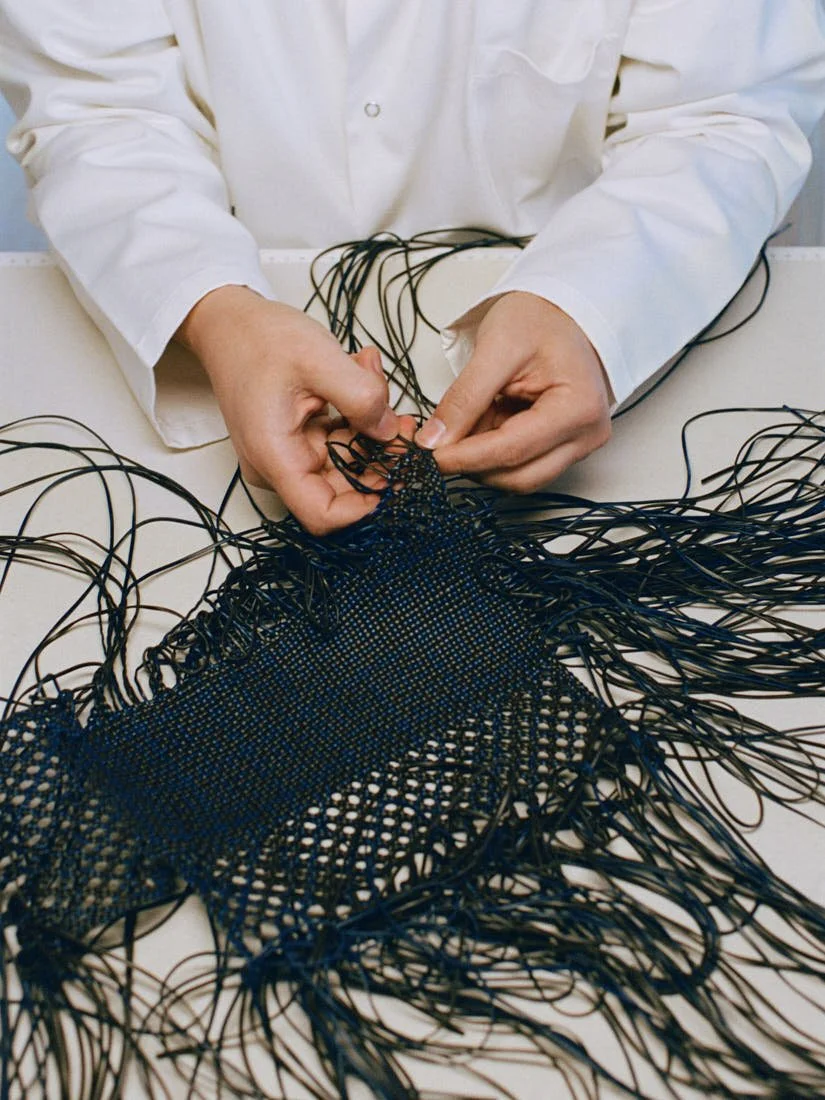
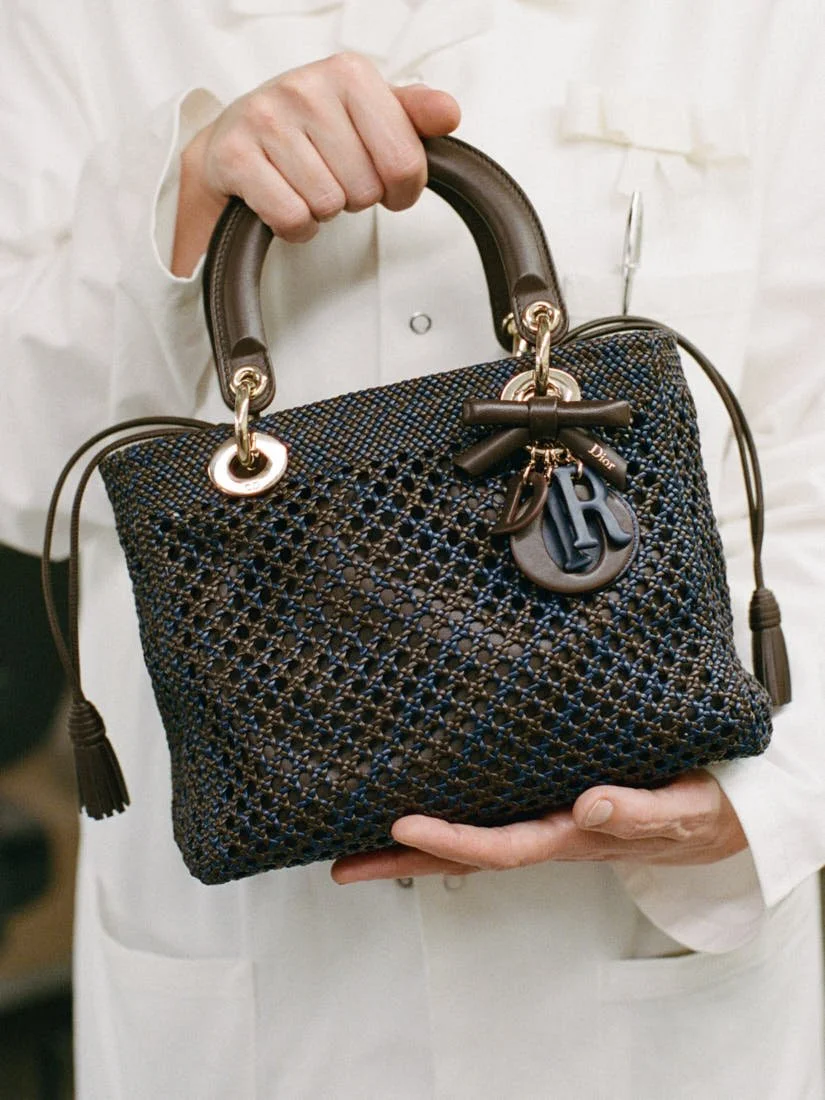
A recalibration of the Lady Dior begins at the level of structure, where the familiar density of the bag gives way to an interlaced field of leather that carries its shape through tension, spacing, and the accumulated rhythm of the weave. Under Jonathan Anderson, this gesture lands with precision and a certain insistence, redirecting attention toward the act of making and toward a surface that refuses to behave as a closed, resolved object.


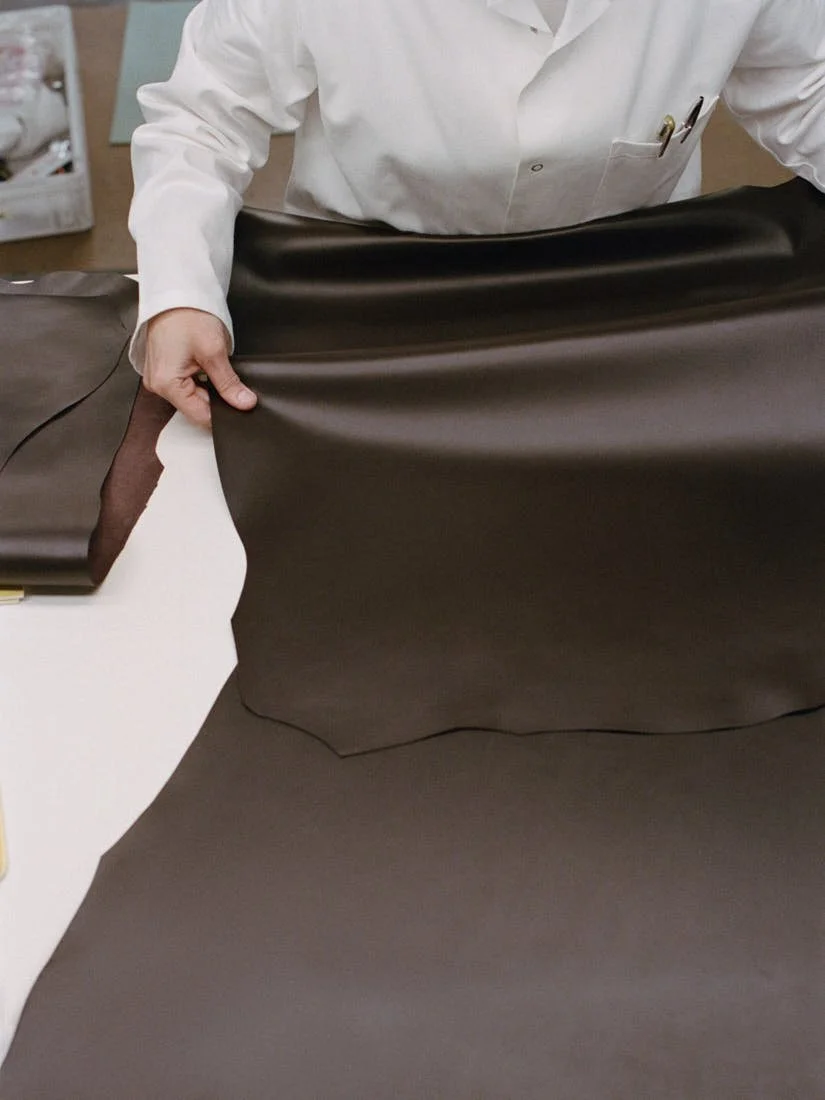
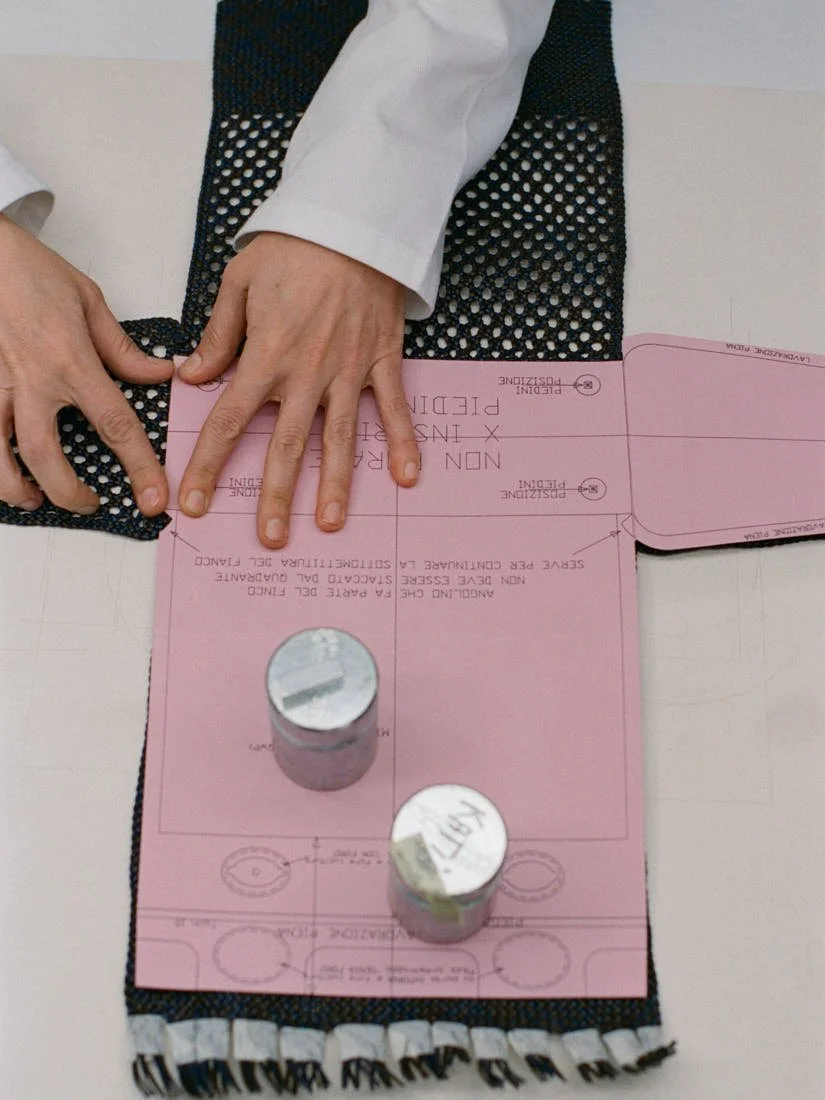
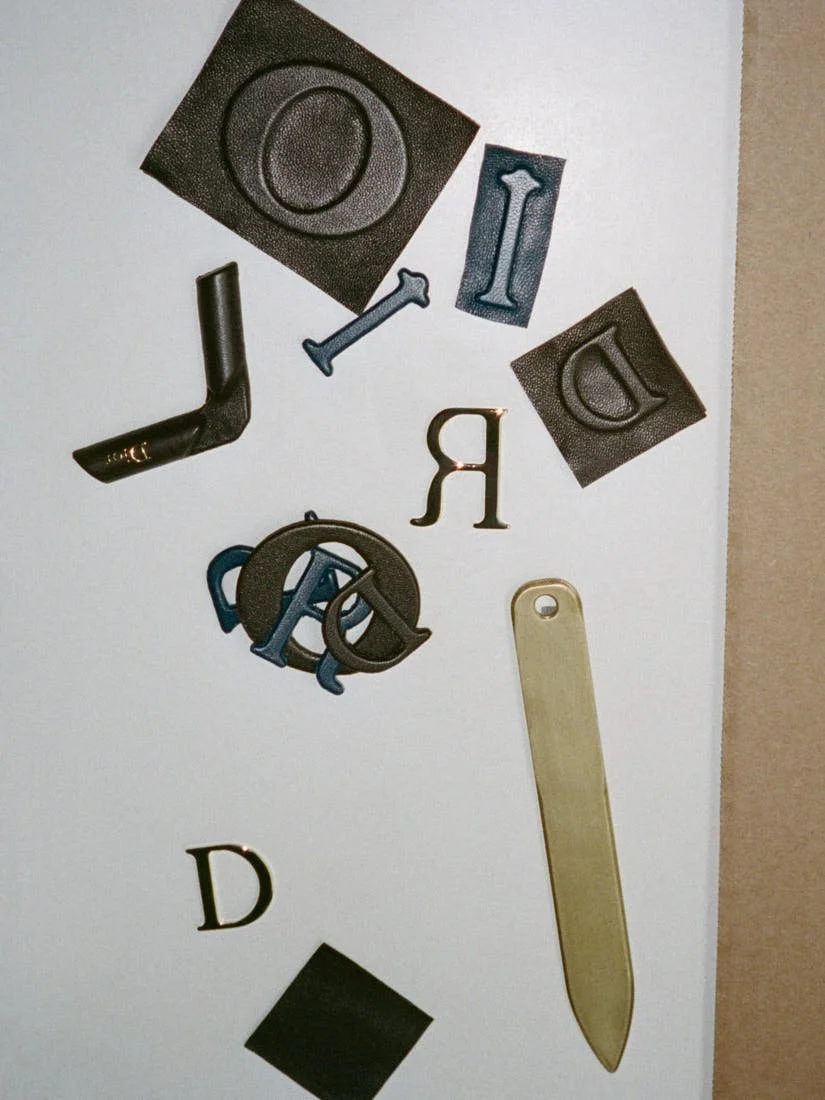
Leather is cut into narrow, consistent strands that remain supple in the hand, each one holding a slight tonal shift that becomes perceptible only once the weave begins to build and the pattern gathers visual weight. The process unfolds through repetition, though never mechanically, as each intersection demands adjustment, pressure, and a continuous reading of tension that lives somewhere between control and instinct. What emerges is a structure that feels worked rather than assembled, carrying within it the trace of time, of decisions made in sequence, of a hand that never fully disappears behind the object.


DIOR The Craftsmanship Behind the Lady Woven Bag LE MILE Magazine

The Craftsmanship Behind the Lady Woven Bag / DIOR Press

 
DIOR The Craftsmanship Behind the Lady Woven Bag LE MILE Magazine

The Craftsmanship Behind the Lady Woven Bag / DIOR Press


The lattice opens the bag to its surroundings in a way that feels immediate, allowing light to move through it and letting the interior register as part of the exterior presence, so that the object holds a certain instability, a subtle responsiveness that keeps it in motion even at rest. There is a clarity in how the form holds together, though it never settles into something static, as if the structure remains aware of the gestures that produced it.
Set within this open framework, a soft leather pouch gathers the contents into a more intimate volume, introducing a second register that feels closer to the body and to use. The drawstrings tighten with a quiet resistance, their hand-knotted tassels carrying a tactile weight that anchors the gesture of closure, so that the act of opening and closing the bag becomes part of its language.


watch / The Savoir-Faire of the Lady Woven Bag by Jonathan Anderson


The outer weave continues to dictate how the bag reads at a distance, while the inner pouch holds a different kind of presence, one that remains partially concealed yet always perceptible through the lattice. This interplay creates a layered experience of the object, where surface and interior remain in constant dialogue and where visibility becomes a controlled condition.
The familiar charms remain in place, accompanied by a bow that introduces a slight inflection within the composition, holding onto a lineage that runs through the house without interrupting the logic of the new construction. Their presence feels calibrated, integrated into a surface that is defined as much by what it reveals as by what it withholds.

Every crossing of leather records a moment of contact, every variation in tension carries a memory of the hand, and the Lady Woven bag retains that immediacy with a quiet intensity, allowing the process of making to remain fully present within the form it produces.

 
DIOR The Craftsmanship Behind the Lady Woven Bag LE MILE Magazine

The Craftsmanship Behind the Lady Woven Bag / DIOR Press

DIOR The Craftsmanship Behind the Lady Woven Bag LE MILE Magazine

The Craftsmanship Behind the Lady Woven Bag / DIOR Press

 
DIOR The Craftsmanship Behind the Lady Woven Bag LE MILE Magazine

The Craftsmanship Behind the Lady Woven Bag / DIOR Press


The Lady Woven bag is Jonathan Anderson’s new interpretation of the iconic Lady Dior, first created in 1995. 
all visuals / DIOR Press, 2026

Stella McCartney x H&M  — Twenty Years Later and No Longer an Experiment

Stella McCartney x H&M — Twenty Years Later and No Longer an Experiment

Stella McCartney x H&M
Twenty Years Later and No Longer an Experiment


written LE MILE


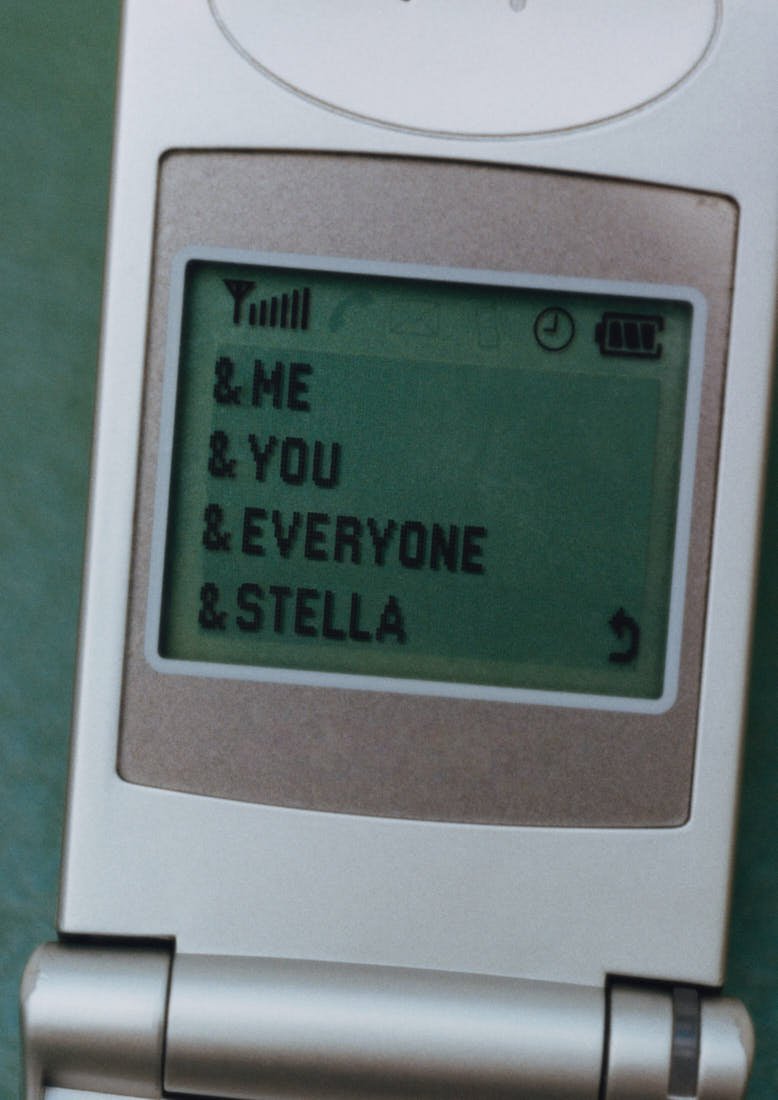
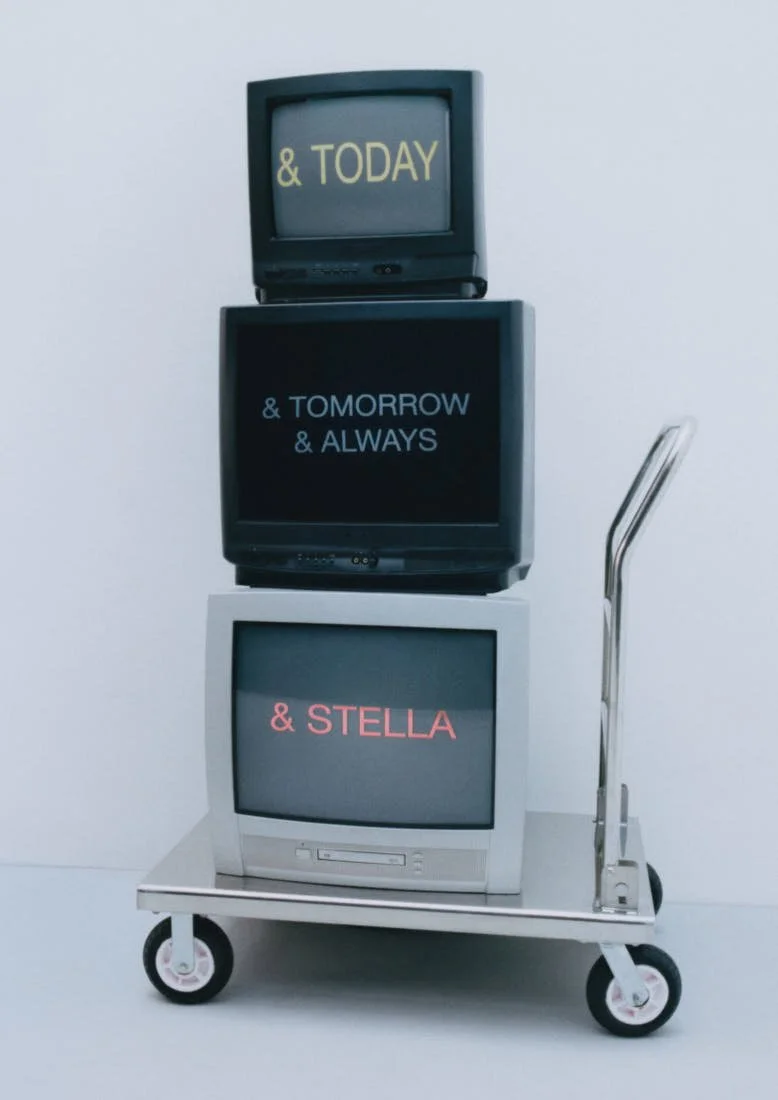
Two decades after their first collaboration, Stella McCartney and H&M return to a space that carries more weight this time. The context has shifted, and so has the reading of it. What once introduced the idea of a designer partnership at scale now lands in a fashion landscape shaped by material awareness, production realities, and a sharper understanding of longevity.


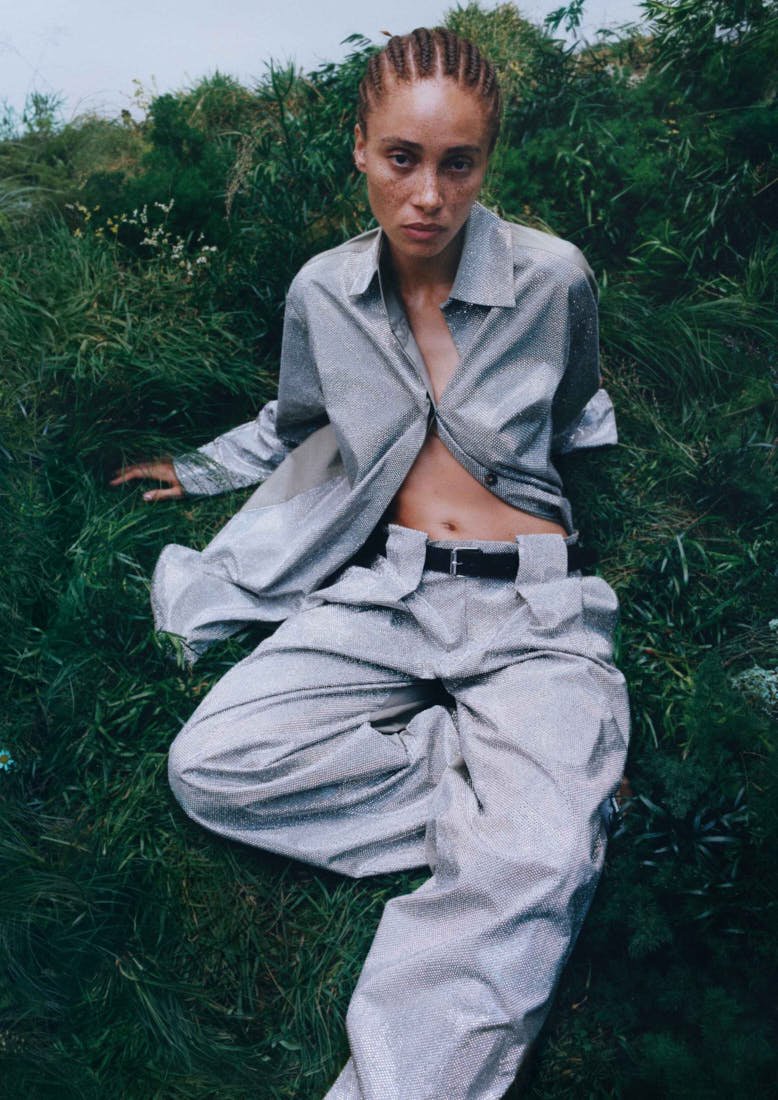
At its core, the collection pulls directly from McCartney’s archive, revisiting silhouettes and codes that have defined her work over 25 years. Oversized shirting, precise tailoring, and sweeping outerwear sit alongside bejewelled surfaces, slogan pieces, and references to her late-90s and early-2000s output. The strength lies in how naturally these elements hold together. It really doesn’t feel like a retrospective, it more reads as a continuous line, where past and present meet without friction, grounded in a design language that has stayed consistent while becoming more exact over time.


LE MILE Magazine STELLA MCCARTNEY H&M COLLECTION 2026

seen by Sam Rock / courtesy of H&M

 
LE MILE Magazine STELLA MCCARTNEY H&M COLLECTION 2026

seen by Sam Rock / courtesy of H&M


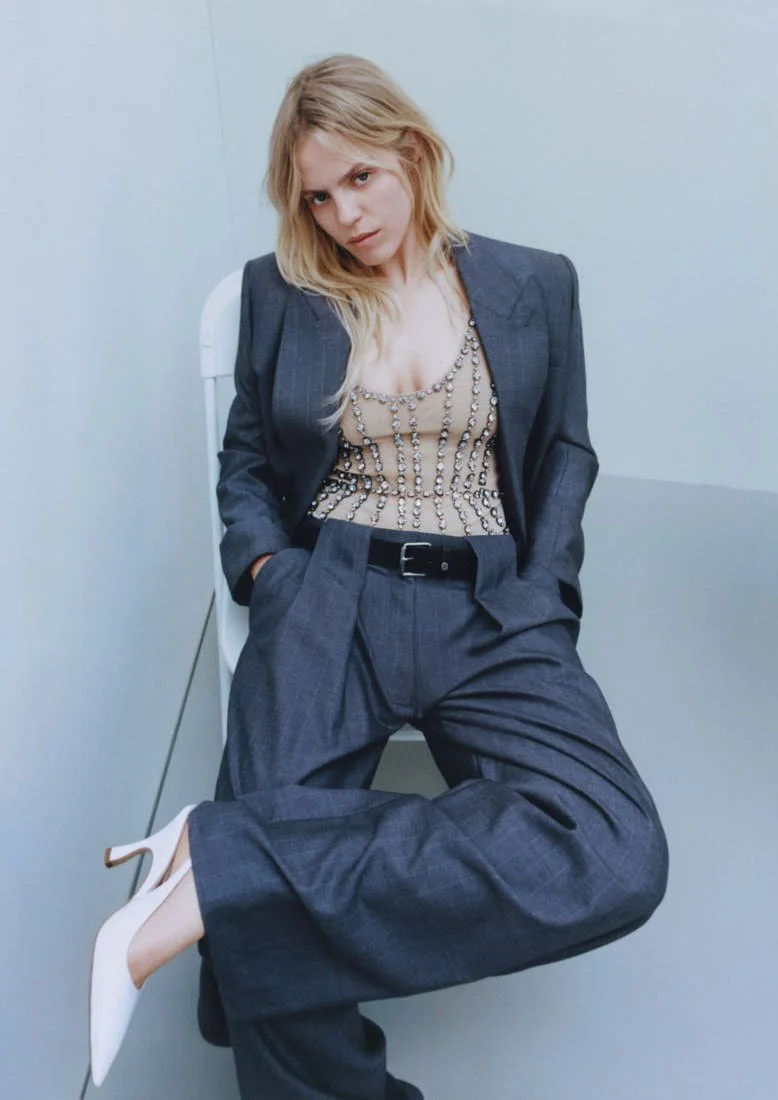
Grey melange suiting and pinstripes establish a clear foundation in tailoring, carried through precise cuts and a controlled shift in proportion. Pleated trousers and waistcoats open the construction, while a long white gown draws a circular line through its cape-like form, setting a counterpoint to shorter pieces shaped through ruched sleeves and fluid draping. Beading in recycled glass appears with restraint across key looks, supported by organic cottons, certified wool, and plant-based materials that define the garments from within. The Falabella chain runs through accessories and clothing, holding the collection together as a continuous element.

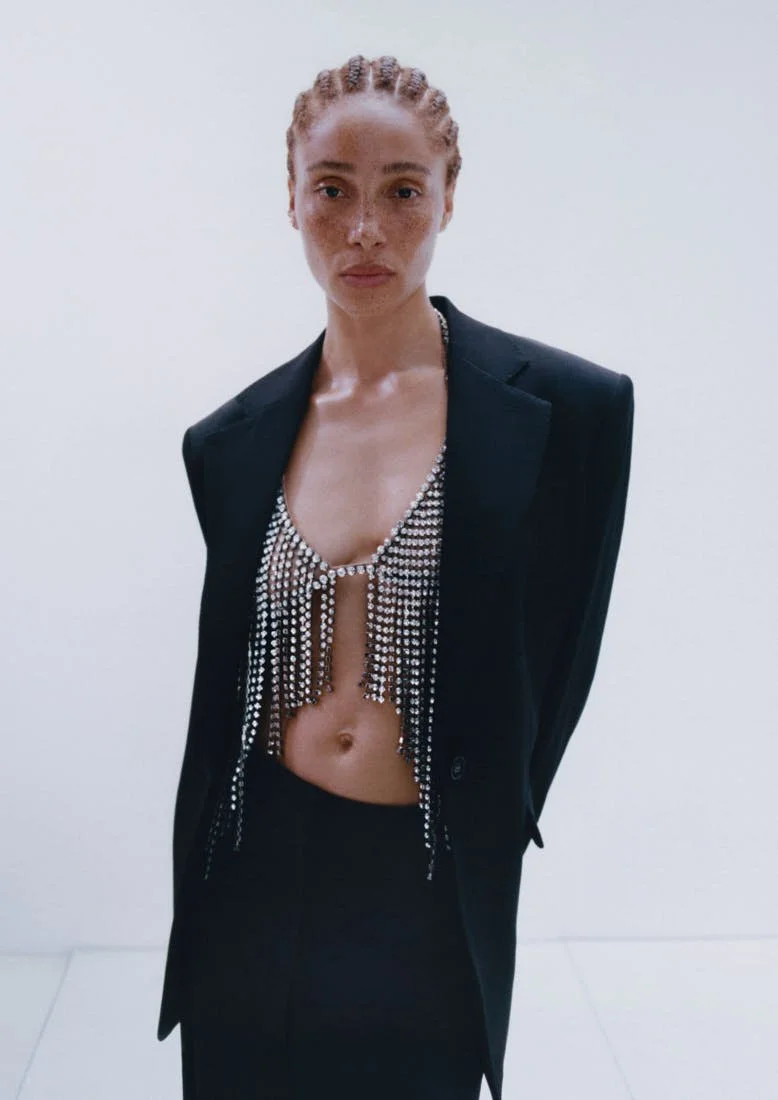
The campaign, photographed in London, introduces a cast that reflects a broader cultural positioning. Figures such as Renée Rapp, Angelina Kendall, and Adwoa Aboah bring a sense of immediacy to the images, grounding the collection in a present moment while echoing its archival references.

Timing carries weight here, as the launch comes almost exactly twenty years after the 2005 collaboration, placing the collection within a longer development of McCartney’s work. The distance between those moments makes the shift visible, where early ideas return with more precision, shaped through years of material research and a clearer construction language.


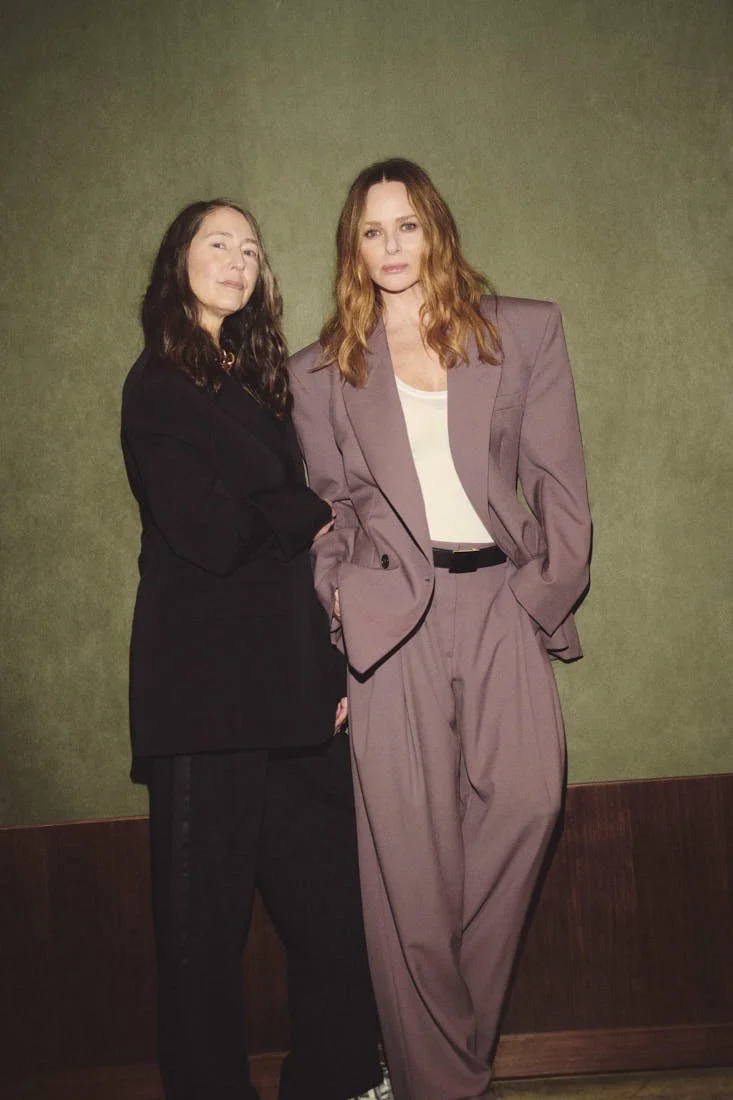
LE MILE Magazine STELLA MCCARTNEY H&M COLLECTION 2026 portrait Stella McCartney and Ann-Sofie-Johansson

portrait of
Ann-Sofie Johansson & Stella McCartney


What emerges is a collection that condenses key elements of Stella McCartney’s work and places them into a wider circulation. It brings together tailoring, surface, and material development in a format that moves beyond the structure of her main line. Within the H&M context, the focus shifts toward distribution, showing how a design language travels, is worn, and continues to develop through use.

The collection holds its relevance in how precisely it maps Stella McCartney’s design language across time. Tailoring, surface, and material development remain intact, sharpened through two decades of technical and conceptual work. Within H&M, these pieces move into a broader public space, where they are worn and integrated into everyday wardrobes. It leaves a clear question behind whether this second chapter, arriving twenty years after the first, stands as another long pause or sets the tone for a continuation that does not take another two decades to return.

The H&M x Stella McCartney collection launches on May 7, 2026, in selected stores and online.

 
LE MILE Magazine STELLA MCCARTNEY H&M COLLECTION 2026

seen by Sam Rock / courtesy of H&M

LE MILE Magazine STELLA MCCARTNEY H&M COLLECTION 2026

seen by Sam Rock / courtesy of H&M

 
LE MILE Magazine STELLA MCCARTNEY H&M COLLECTION 2026

seen by Sam Rock / courtesy of H&M


all visuals
Stella McCartney x H&M 2026
seen by Sam Rock courtesy of H&M

London Fashion Week 2026 - Future Fashion Stars

London Fashion Week 2026 - Future Fashion Stars

Where Do Fashion's Future Stars Come From?

Inside London Fashion Week: The Established Rebels, the Fresh Graduates and the Programme That Launched Lee McQueen


written Justina Snow


New York started fall/winter´26 fashion week with a wonderful debut of Rachel Scott for Proenza Schouler. Milan brought us the highly anticipated first prêt-à-porter show by Demna's Gucci. And it all wrapped up in Paris with a bittersweet farewell to Pieter Mulier's successful time at Alaïa. And somewhere in between, there was something spectacular London gave us too - the future of fashion (quite literally).


This is the place where future McQueens and Erdems are not taking spaces on the outskirts of the city with a few square meters for a showroom. In London, fashion week's baked-fresh-out-of-school talents are a well-respected part of the official schedule. This year's London Fashion Week schedule was embedded with 19 talented brands of NEWGEN - an official initiative by the British Fashion Council supporting young designers financially as well as with mentorship. Since launching in 1993 - when the fashion world was going crazy for supermodels and glamour - this program was the first step for the later skyrocketing careers of designers like Alexander McQueen, J.W. Anderson, Simone Rocha, and many others who are now synonymous with London fashion. And while you might have seen a lot of conversations in the past two years about LFW dying, as I bumped into Kate Moss at 180 Strand studios (where the NEWGEN runways were taking place), I knew that those talks are so far from reality.


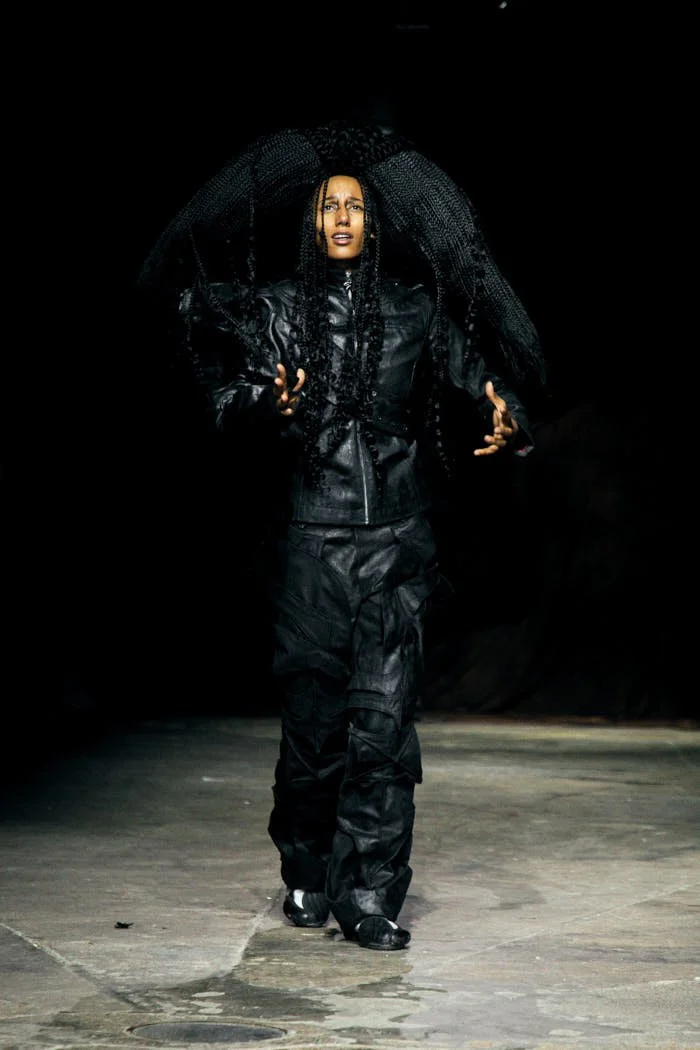
LE MILE Magazine YAKU AW26 Morgan Williams

YAKU AW26
seen by Morgan Williams

 
LE MILE Magazine YAKU AW26 Morgan Williams

YAKU AW26
seen by Morgan Williams


I spent a lot of time at the mentioned 180 Strand Studios this season, and I witnessed something opposite of fashion dying. I would maybe even call it a reincarnation. Fashion is definitely changing its shape. A big part of collections has become an experience in itself; presentations have become so much more interdisciplinary. One of the initiative´s brands, Yaku foreshadowed their somber mood with an installation of dark, shadow-like human figure statues, as if frozen in time. Yaku themselves said that "we're trying to make art that responds to the world rather than simply offering hope - exploring a negotiation with reality alongside the desire to evolve, because hope alone doesn't drive change." Given the state of the world, this hits close to home. And they translated this not into a runway show but into a performance of four acts, all circling around the concept of combat. And when the first model appears in choreographed movement, you know that the fashion - although very well executed - becomes part of the whole and helps translate the intention. And while flowing through martial-arts-inspired movements, the performers give so much personality to every garment they wear.


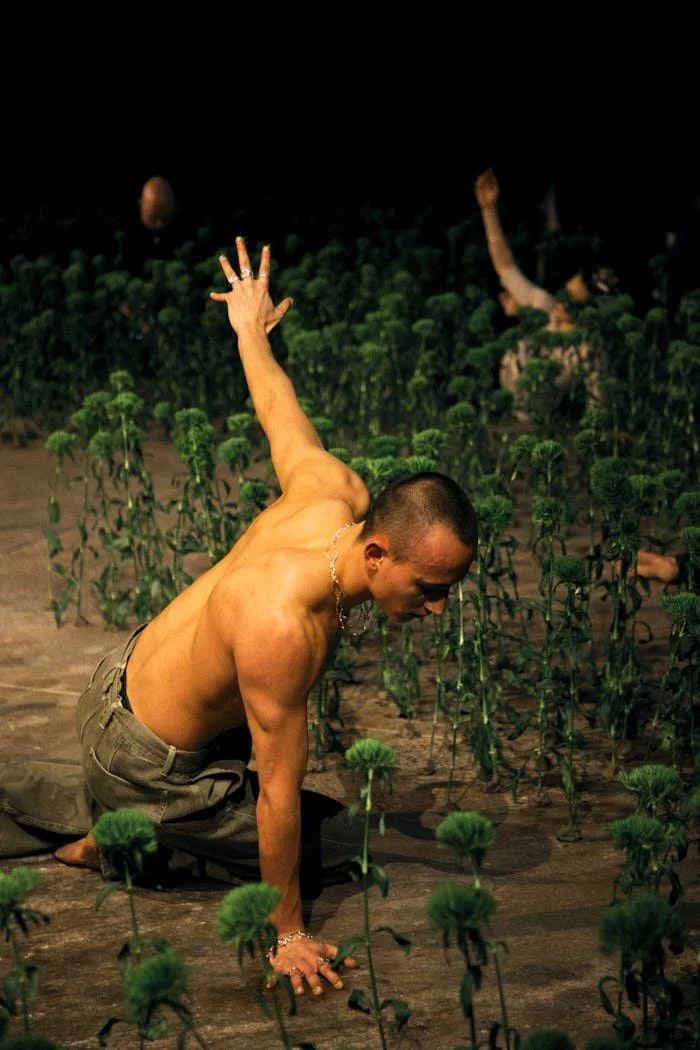
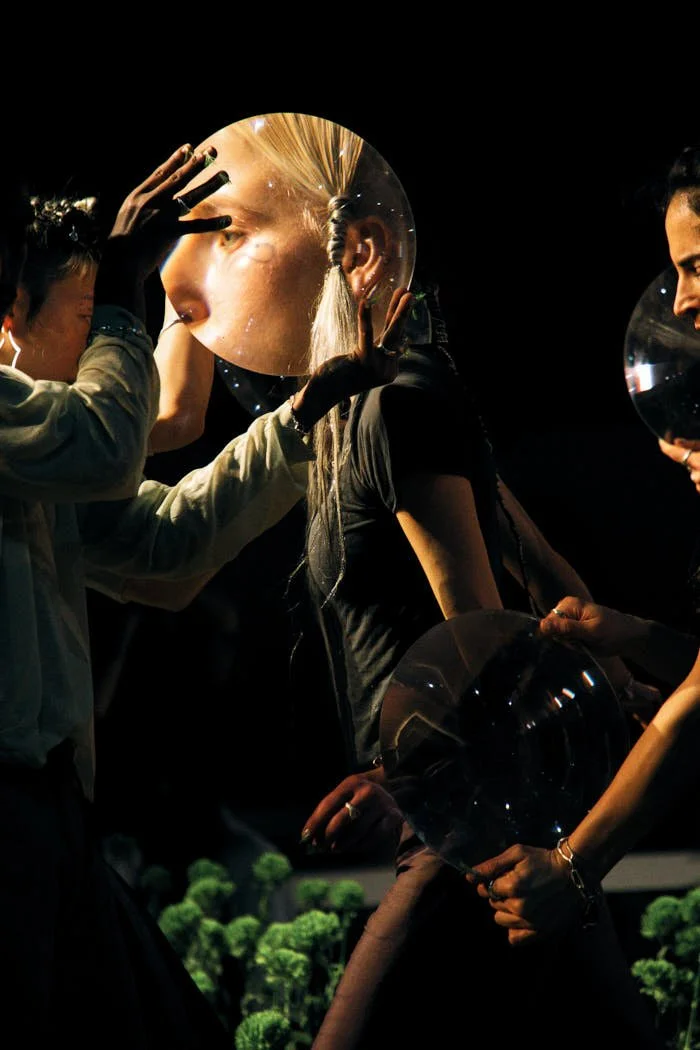
While personalisation and emotional charge remain important cornerstones this season, we also saw not only ready-to-wear collections but accessories as well. On a different occasion, when I entered the NEWGEN space (which had already become my third place by that point) for Octi's presentation, I saw a grass field. It was the opposite of a lush meadow: this field had a mysterious vibe, as the space itself is dark and concrete-dominated, yet I was face to face with nature there and then. Only after a while did I notice five bodies lying there motionless. Over time, their movements grew into a choreography that, according to the designer, illustrated the concepts of connection and "embody the fluidity and rigidity of the natural forms used in the collection." I could only describe this presentation as sensitive and magnetic - and hypnotizing, because I was sitting there staring at the choreography for almost an hour - and the designer, Octi Ransom, admitted that "I think sensitive and magnetic are also words I would use to describe the potential of jewellery." This is what we call great communication through presentation. And that's already a big achievement, as we are still largely focused on ready-to-wear collections. Octi also revealed that scale is a challenge in larger spaces: "Naturally, jewellery is physically much smaller than ready-to-wear. It usually takes up less space on the body, and becomes more of a challenge to communicate in larger spaces. But in the end I think this can work to an advantage, making room for new ideas on how this can be solved."


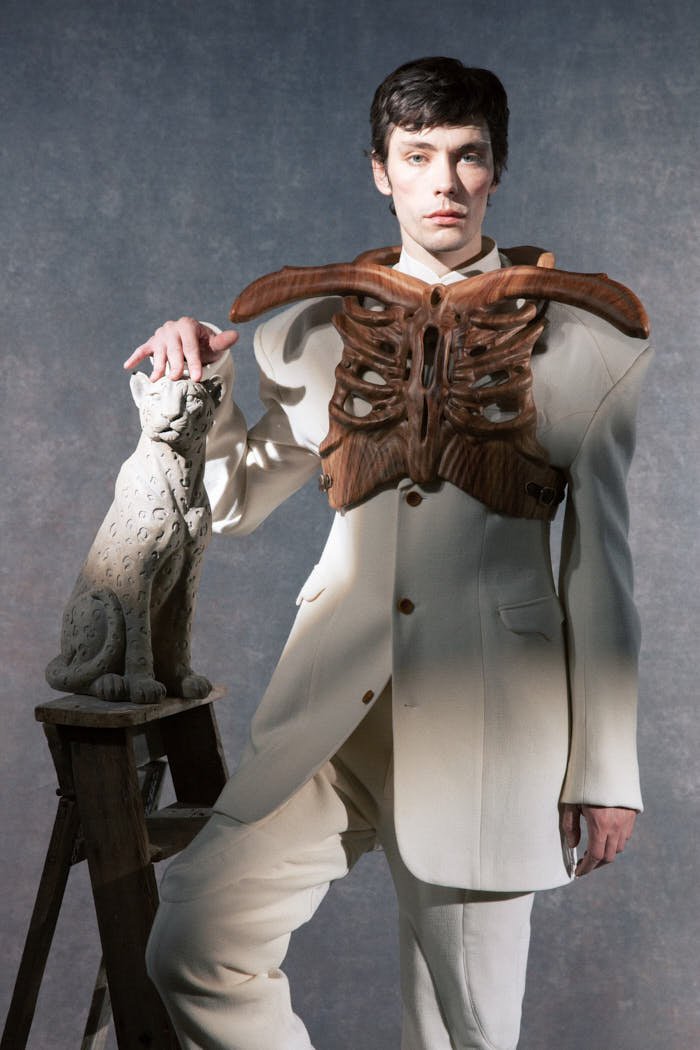
LE MILE Magazine Jiyuan Fan photo Han Yang

Jiyuan Fan
seen by Han Yang


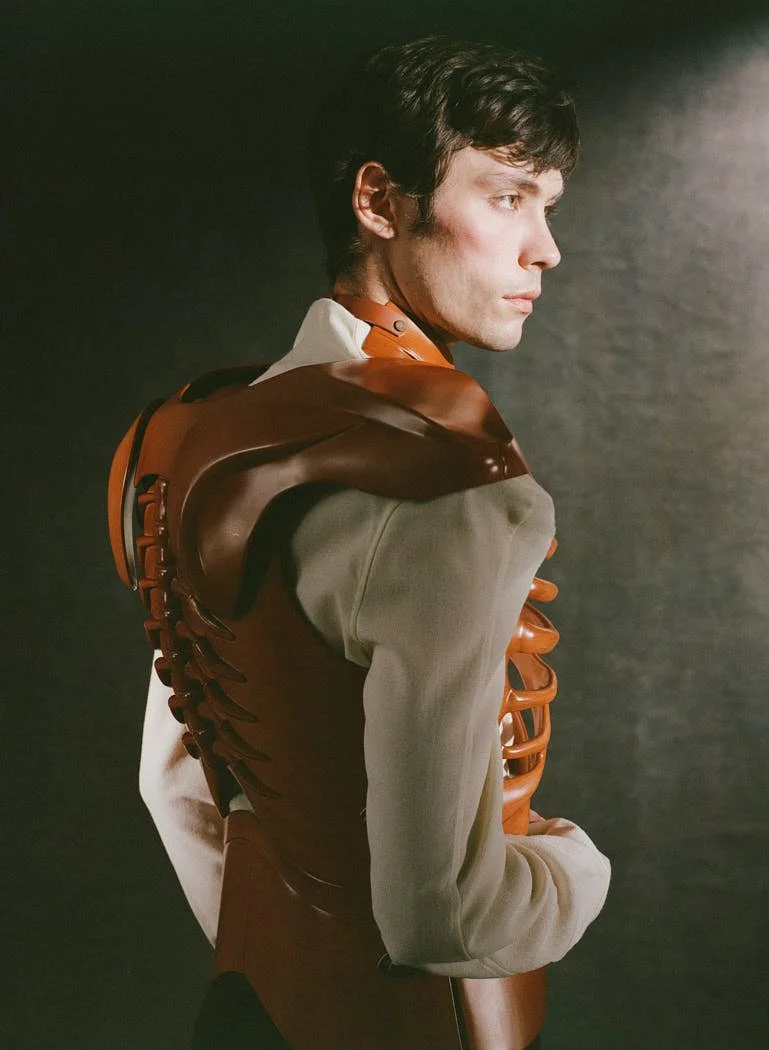
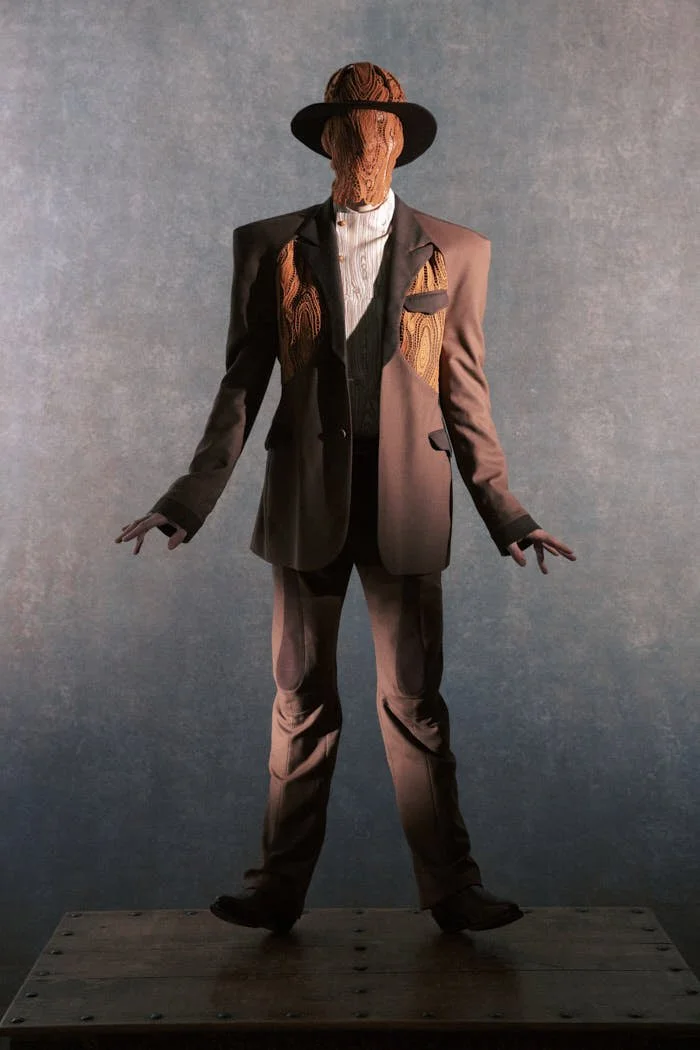
As much as NEWGEN designers steal the show, we cannot talk about fresh talents during London Fashion Week without covering the freshest of them all: MA student shows. There was one designer from London College of Fashion who stood out specifically - Jiyuan Fan. It didn't only catch my eye; it captivated me, and I felt like I was witnessing a scene from a very stylish body horror thriller - the models wore wooden-looking pieces representing skeleton parts and facial structures made out of lace, and I couldn't help but identify one more trend among young designers: alternative materials. Jiyuan himself reflected on this: "One important reason is that these materials allow designers to communicate their concepts more directly. ... I also thought about how people might remember my work. Fashion changes very quickly, and the use of materials always requires creativity and possibility. This is something every young designer has to think about." The designer's research began with hangers and human anatomy, and the project eventually raised a question about the visibility of support structures in garments. "In my collection some garments are cut according to the skeleton structure while others reveal the natural outline of the body once the structure is removed. The garments therefore have two states. One is supported by the Human Hanger structure and another exists without it. Through this process I developed my own visual language for menswear. It proposes what I describe as a new human body." - Jiyuan Fan explains.

 
LE MILE Magazine Jiyuan Fan photo Han Yang

Jiyuan Fan
seen by Han Yang

 
LE MILE Magazine Jiyuan Fan photo Han Yang

Jiyuan Fan
seen by Han Yang


Seeing so many young talents and a city supporting their growth, throughout London Fashion Week I had a lingering question in my mind: what does London have that other major fashion weeks don't? While we don't see behind the scenes, and knowing that the fashion industry is extremely competitive, the talents I got a chance to talk to - and the whole atmosphere during LFW - seem to be at ease. It's apparent that London has built something other cities haven't. At least not in this structure. While Paris has the LVMH Prize, which is a great opportunity, it requires you to already have at least two full ready-to-wear collections under your belt. New York also cannot offer the same; it usually relies on off-schedule events for young talent. So London truly seems to be more democratic in this sense. When talking about NEWGEN and London as a hub for young designers, Octi shared: "There are so many incredible young designers in London so it feels like a really special place to be creating, and I feel very grateful to be presenting as part of LFW amongst some of these people. I think presenting in this capacity anywhere as a jewellery designer is also something really exciting, and opens a door for people to be surprised by the possibilities of what this could look like."

Aspirational observations also come from designers with different backgrounds who didn't get a chance to grow up in a fashion capital. Norwegian designer Fam Irvoll is one of them. If you look at her designs, you would never think this is a Nordic designer - it's something opposite of Scandinavian minimalism. Fam graduated from CSM, has designed for the likes of Lady Gaga and Rihanna, and this is the sixth time she's showing her collection during London Fashion Week. I was curious whether London as a city had been a building power for her aesthetic. Fam reflects: "In my country I don't really fit in. . . . London did inspire me while I lived here, I was very much into the rave scene. With a lot of students from CSM we would just go crazy, the drag queen scene is also big. I became who I am because of London and the gay scene."

 
LE MILE Magazine Fam Irvoll photo Olu Ogunshakin

Fam Irvoll
seen by Olu Ogunshakin

 
LE MILE Magazine Fam Irvoll photo Olu Ogunshakin

Fam Irvoll
seen by Olu Ogunshakin


Jiyuan Fan also makes no secret of the fact that living and creating in London specifically plays a big part: "Living in London for two years was also a very fulfilling experience. London offers many fashion opportunities. Designers such as Kiko Kostadinov, Aitor Throup and Charlie Constantinou have built strong identities here. If you walk around Soho you can easily feel the strong energy of many independent designer brands. Even if you do not buy anything, simply observing their craftsmanship and fabrics can teach you a lot." I can only confirm that London, especially during London Fashion Week, has a creative aura about it - even just people-watching or browsing through a vintage shop is a contagious experience for unconventional fashion inspiration.

And nowhere is that energy more visible than inside the shows themselves. You rarely see an empty space during a NEWGEN or fashion school show. Quite the opposite - you will see a wall of standing fashion lovers just trying to soak in everything a young designer has to offer. I tried to answer the question of why London attracts so much interest in young talent, and at the same time why the rumour had been circulating that London Fashion Week is dying. Maybe it's simply about the big brands, maybe people have grown fatigued by them? Maybe they lack something that young talent can offer? Octi didn't want to treat them as two separate categories: "I think it really depends on the brand. But something I personally love when I look around at this generation of creatives is how the stories of the designers themselves are such an important part of the work, and how it's communicated. I think this then leads to so many interesting new outcomes, which all feel very different to one another."

Talking to these young talents left me extremely uplifted and hopeful. London is as we like it: diverse, unconventional and open. We would all do well to watch these talent programmes very closely, because one thing is certain: we are witnessing the rise of future stars, and trust me, you'll want to say you knew them from the beginning.


LE MILE Magazine OCTI AW26 photo Morgan Layla Williams

OCTI AW26
seen by Morgan Layla Williams


LE MILE Magazine OCTI AW26 photo Morgan Layla Williams

OCTI AW26
seen by Morgan Layla Williams

Paris Fashion Week Womenswear FW26 - Streetstyle

Paris Fashion Week Womenswear FW26 - Streetstyle

OUTSIDE THE SHOWS
That’s Paris Fashion Week Womenswear FW26


written LE MILE


Outside the official schedules and beyond the choreographed pace of the runway, Paris Fashion Week Womenswear FW26 appeared in fragments across the streets between venues, cafés, taxis and sudden crossings of the boulevard. The city once again became a moving stage where the rhythm of fashion month revealed itself in passing silhouettes and fleeting encounters.


Street Style Photography Paris Fashion Week Koby Photography IAN KOBYLANSKI COMME DES GARCONS 12 LE MILE Magazine

Paris Fashion Week FALL-WINTER 2026
COMME DES GARCONS

Street Style Photography Paris Fashion Week Koby Photography IAN KOBYLANSKI HERMES LE MILE Magazine

Paris Fashion Week FALL-WINTER 2026
HERMES

Street Style Photography Paris Fashion Week Koby Photography IAN KOBYLANSKI LOEWE LE MILE Magazine

Paris Fashion Week FALL-WINTER 2026
LOEWE

Street Style Photography Paris Fashion Week Koby Photography IAN KOBYLANSKI LOEWE LE MILE Magazine

Paris Fashion Week FALL-WINTER 2026
LOEWE

 
Street Style Photography Paris Fashion Week Koby Photography IAN KOBYLANSKI LOEWE LE MILE Magazine

Paris Fashion Week FALL-WINTER 2026
LOEWE


Across the runways in Paris, the season leaned into a heightened dialogue between structure and softness as designers revisited ideas of femininity through precision and fluidity. Romantic fabrics such as lace and sheer layers appeared alongside sculpted tailoring and sharply defined silhouettes, while sensual black, saturated colour and glossy materials punctuated the collections with moments of intensity. Houses including Dior, Saint Laurent, McQueen, Louis Vuitton, Miu Miu and Alaïa articulated a season balancing clarity with emotion, discipline with instinct.

Moving through the streets between venues, these ideas took on a more instinctive rhythm as attendees assembled their own visual language from fragments of the season. Elongated coats moved beside fluid dresses layered under oversized outerwear, precise tailoring met sheer textures and flashes of colour, while boots, sculptural bags, archival references and unexpected material contrasts appeared in motion as people travelled between appointments, presentations and late arrivals. Captured by Ian Kobylanski, Outside the Shows turns its attention to this transitional space where fashion briefly leaves the runway and enters the street, observing the individuals who animate the atmosphere surrounding the shows. Shot across Paris during the closing days of the womenswear calendar in early March, the series reflects a city temporarily transformed into a corridor of silhouettes where ideas introduced on the runway begin their first life in the open air.


Jessica Chastain Street Style Photography Paris Fashion Week Koby Photography IAN KOBYLANSKI ZIMMERMANN LE MILE Magazine

Paris Fashion Week FALL-WINTER 2026
Jessica Chastain, ZIMMERMANN

Street Style Photography Paris Fashion Week Koby Photography IAN KOBYLANSKI LACOSTE LE MILE Magazine

Paris Fashion Week FALL-WINTER 2026
LACOSTE

Street Style Photography Paris Fashion Week Koby Photography IAN KOBYLANSKI Givenchy LE MILE Magazine

Paris Fashion Week FALL-WINTER 2026
GIVENCHY

 
Street Style Photography Paris Fashion Week Koby Photography IAN KOBYLANSKI LACOSTE LE MILE Magazine

Paris Fashion Week FALL-WINTER 2026
LACOSTE

 
Street Style Photography Paris Fashion Week Koby Photography IAN KOBYLANSKI ISSEY MIYAKI LE MILE Magazine

Paris Fashion Week FALL-WINTER 2026
ISSEY MIYAKI

Street Style Photography Paris Fashion Week Koby Photography IAN KOBYLANSKI COMME DES GARCONS LE MILE Magazine

Paris Fashion Week FALL-WINTER 2026
COMME DES GARCONS

 
Street Style Photography Paris Fashion Week Koby Photography IAN KOBYLANSKI GABRIELA HEARST LE MILE Magazine

Paris Fashion Week FALL-WINTER 2026
GABRIELA HEARST

Street Style Photography Paris Fashion Week Koby Photography IAN KOBYLANSKI GIVENCHY LE MILE Magazine

Paris Fashion Week FALL-WINTER 2026
GIVENCHY

Street Style Photography Paris Fashion Week Koby Photography IAN KOBYLANSKI COMME DES GARCONS LE MILE Magazine

Paris Fashion Week FALL-WINTER 2026
COMME DES GARCONS


Street Style Photography Paris Fashion Week Koby Photography IAN KOBYLANSKI COMME DES GARCONS LE MILE Magazine

Paris Fashion Week FALL-WINTER 2026
COMME DES GARCONS


Street Style Photography Paris Fashion Week Koby Photography IAN KOBYLANSKI NINA RICCI LE MILE Magazine

Paris Fashion Week FALL-WINTER 2026
NINA RICCI

Street Style Photography Paris Fashion Week Koby Photography IAN KOBYLANSKI GIVENCHY LE MILE Magazine

Paris Fashion Week FALL-WINTER 2026
GIVENCHY

 
Street Style Photography Paris Fashion Week Koby Photography IAN KOBYLANSKI AKRIS LE MILE Magazine

Paris Fashion Week FALL-WINTER 2026
AKRIS

Street Style Photography Paris Fashion Week Koby Photography IAN KOBYLANSKI OTTOLINGER LE MILE Magazine

Paris Fashion Week FALL-WINTER 2026
OTTOLINGER

Street Style Photography Paris Fashion Week Koby Photography IAN KOBYLANSKI VIVIENNE WESTWOOD LE MILE Magazine

Paris Fashion Week FALL-WINTER 2026
VIVIENNE WESTWOOD


all visuals
(c) IAN KOBYLANSKI

Paris Fashion Week Womenswear FW26, March 2026

DAGGER Spring/Summer 2026 - Luke Rainey

DAGGER Spring/Summer 2026 - Luke Rainey

That’s Why DAGGER Spring Summer 2026 Feels Like a Love Letter to Skate Culture


written KLAAS HAMMER


Berlin-based brand DAGGER takes its name from the ceremonial blade used in pagan rituals, a symbol of endings, beginnings, and transformation. The brand was founded in 2020 by Luke Rainey after an unexpected job loss left him with nothing but €300 in government benefits and a dream.


Le Mile Magazine DAGGER SS26 Campaign images lemilestudios

DAGGER
Spring/Summer 2026

 
Le Mile Magazine DAGGER SS26 Campaign images lemilestudios

DAGGER
Spring/Summer 2026


The aesthetic was forged in Luke’s rebellious teenage years, growing up in a small Northern Irish town in the early 2000s, a place where money was tight but skate was currency. That era’s rough-edged, DIY spirit runs through every stitch: clothes that wear like scraped knees, cracked pavement, and midnight missions.

Luke describes the brand as “a queer-coded Tony Hawk Pro Skater character.” When people who don’t know the brand hear this, they immediately understand. “We show the scene through a queer lens, which is for sure sexy.”


Le Mile Magazine DAGGER SS26 Campaign images lemilestudios

DAGGER
Spring/Summer 2026


DROP OUT, the Spring/Summer 2026 collection, is inspired by misspent teenage years growing up in a skate town in the north of Ireland, as rough as it was beautiful. It is Luke’s love letter to the boys, the music, and the culture.

The label operates at the intersection of streetwear, subculture, and personal storytelling, deeply shaped by skate culture and an uncompromising DIY attitude. DAGGER has gained international recognition for its emotionally driven design language and is stocked globally, including at Dover Street Market Paris. Most recently, the brand presented its latest collection as part of INTERVENTION V during Berlin Fashion Week.

“Berlin has given me so much, and I want to give something back. It changed my creative approach because I wanted to fuck it up.”

 
Le Mile Magazine DAGGER SS26 Campaign images lemilestudios

DAGGER
Spring/Summer 2026 / making of

 
Le Mile Magazine DAGGER SS26 Campaign images lemilestudios

DAGGER
Spring/Summer 2026 / making of


all visuals
DAGGER SS26

Weekend Max Mara SS26 - A Weekend with an Artist

Weekend Max Mara SS26 - A Weekend with an Artist

How WEEKEND MAX MARA Brings Contemporary Artists Into The Language Of The Trench Coat


written LE MILE


For Spring/Summer 2026, WEEKEND MAX MARA expands its ongoing “Signature” capsule initiative with A Weekend with an Artist, a project that places contemporary artists at the center of the design process. The collection focuses on a single garment — the trench coat — and invites five internationally recognized artists to reinterpret the house’s Canasta trench as an individual artwork. The artists involved are Victoria Kosheleva, Paola Pivi, Tschabalala Self, Tai Shani, and Shafei Xia.


Their contributions form a small series of artist-designed pieces presented within the WEEKEND MAX MARA collection. The project was curated by art critic and curator Francesco Bonami, whose career includes directing the Venice Biennale, curating the Whitney Biennial, and serving as artistic director of BYArtmatters in Hangzhou. The collaboration reflects a long-standing relationship between fashion and contemporary art, one that has repeatedly reshaped the cultural position of clothing. Since the late twentieth century, fashion houses have increasingly invited artists into their design processes. The reasons vary, visual experimentation, cultural relevance, and the possibility of placing garments within a wider artistic conversation. Projects of this type also blur the boundaries between exhibition culture and fashion production. Garments circulate in retail spaces and on bodies, while simultaneously operating as artworks or limited objects shaped by artistic authorship.

The Max Mara project builds on this tradition by focusing on a single archetypal garment. The trench coat functions here as both product and canvas. Bonami describes the aim as offering “through an iconic garment, the opportunity for individual and personal expression.” The selection of artists follows curatorial logic. Distinct visual languages, generational diversity, and independence from market trends were central to the choice of participants.


Max Mara Weekend SS26 SIGNATURE COLLECTION A WEEKEND WITH AN ARTIST LE MILE Magazine

WEEKEND MAX MARA SS26 Signature Collection
A Weekend With An Artist, Tai Shani

 
Max Mara Weekend SS26 SIGNATURE COLLECTION A WEEKEND WITH AN ARTIST LE MILE Magazine

WEEKEND MAX MARA SS26 Signature Collection
A Weekend With An Artist, Tai Shani


Each artist approaches the trench through their existing artistic vocabulary. Russian artist Victoria Kosheleva worked directly on a prototype coat, painting motifs that later became the basis for printed reproductions. Her visual language merges contemporary imagery with references to classical painting, a direction she has described as “cyber expressionism.” For the trench project she imagined the garment as a theatrical surface. Checkerboard patterns, swirling lines, flowers, and a stylized eye spread across the coat, producing an image that resembles stage costume design as much as clothing.

Italian artist Paola Pivi, known for installations that reframe everyday objects, introduced a palette influenced by the light and color of Hawaii, where she currently lives. Vertical rainbow stripes run across the coat, narrowing toward the waist and creating an hourglass structure. The pattern references the double rainbows frequently visible in the island’s sky, translating a natural optical phenomenon into a garment surface.


Tschabalala Self approaches the trench through her ongoing exploration of identity and symbolism. Born in Harlem, Self works across painting, sculpture, and installation. Her trench coat appears in lacquered pastel yellow and carries her recurring “Infinity Flower” motif. The flower refers to cyclical growth and transformation. The pattern is applied through a stamping technique inspired by batik dyeing processes, introducing a craft reference into the garment’s production.

British artist Tai Shani brings a different aesthetic register. Her multidisciplinary practice spans film, performance, writing, and installation, often exploring feminist histories and collective structures. For the collection she designed a glossy black vinyl trench decorated with hand-drawn cat illustrations. The imagery references mid-century pin-up iconography while playing with the trench coat’s cultural associations with secrecy and disguise.


Max Mara Weekend SS26 SIGNATURE COLLECTION A WEEKEND WITH AN ARTIST LE MILE Magazine art work

WEEKEND MAX MARA SS26 Signature Collection
A Weekend With An Artist, Shafei Xia


The youngest artist in the project, Bologna-based Chinese painter Shafei Xia, contributes a watercolor composition originally painted on sandalwood paper. Her image shows a woman merging with a white tiger, surrounded by floral forms that spread across the coat’s back. Xia’s work often draws on historical East Asian erotic painting traditions while incorporating references to European art figures such as Luigi Ontani. The trench translates this visual narrative into a wearable surface.

The campaign accompanying the project was photographed by Petra Collins, an artist and director whose photographic work helped define the visual language of the 2010s. Collins appears in the images herself, wearing the five trench coats in a studio environment that resembles a storage warehouse filled with artworks. The setting positions the garments within an exhibition-like space, reinforcing their identity as art objects as much as clothing pieces. Artist collaborations of this kind continue a broader pattern within fashion history. Yves Saint Laurent’s Mondrian dresses of 1965 translated modernist painting into couture construction. Louis Vuitton’s partnerships with Takashi Murakami and Yayoi Kusama transformed accessories into mobile artworks. Prada has long worked with artists and architects across installations and runway environments. These examples demonstrate how art collaborations can operate as genuine exchanges when artists maintain their visual language rather than adapting to brand aesthetics.

 
Max Mara Weekend SS26 SIGNATURE COLLECTION A WEEKEND WITH AN ARTIST LE MILE Magazine rainbow coat

WEEKEND MAX MARA SS26 Signature Collection
A Weekend With An Artist, Paola Pivi

Max Mara Weekend SS26 SIGNATURE COLLECTION A WEEKEND WITH AN ARTIST LE MILE Magazine coat with flower prints

WEEKEND MAX MARA SS26 Signature Collection
A Weekend With An Artist, Tschabalala Self

 
Max Mara Weekend SS26 SIGNATURE COLLECTION A WEEKEND WITH AN ARTIST LE MILE Magazine

WEEKEND MAX MARA SS26 Signature Collection
A Weekend With An Artist, Shafei Xia


Projects like A Weekend with an Artist sit within this lineage, they highlight how garments can function as cultural surfaces where artistic practice and fashion design intersect. In this context, the trench coat becomes more than an outerwear staple. It carries the visual vocabulary of five different artists, each using the same garment to explore form, symbolism, or narrative. A small series of wearable works moves between fashion production, artistic authorship, and collector culture, positioning clothing simultaneously as design object and artistic medium.


all visuals
WEEKEND MAX MARA SS26

London Fashion Week Streetstyles AW26 - Streetstyle

London Fashion Week Streetstyles AW26 - Streetstyle

OUTSIDE THE SHOWS
*
That’s London Fashion Week AW26


written LE MILE


Beyond the curated cadence of catwalks and official showrooms, London Fashion Week AW26 played out on its streets, in the lively interstices between presentations and the unchoreographed gestures of a city steeped in creative flux. This season, the capital’s mood carried equal parts resilience and reinvention. Established houses revisited heritage with renewed focus, emerging voices amplified cultural narratives, and design vocabularies were read through lenses of inclusivity, texture, and urban poise.


London Fashion Week Street Style LFW AW26 Copyright Ian Kobylanski LE MILE Magazine Outside The Shows
 
London Fashion Week Street Style LFW AW26 Copyright Ian Kobylanski LE MILE Magazine Outside The Shows


In the in-between moments — arriving guests, impromptu clusters at side streets, front-row departures and post-show conversations — London’s style set assembled its own dialect of expression. Classic British tailoring appeared alongside bold colour juxtapositions; sculptural coats and ballet-flat combos shared pavements with purposeful layering, kitsch accoutrements, and subcultural inflections. Rain-ready outerwear, unexpected colour duos and inventive accessories punctuated everyday movement, revealing how personal style reflects and disrupts the season’s formal narratives.

Captured by Ian Kobylanski in the heart of London’s fashion-week flux, Outside the Shows turns its gaze toward the characters who populate these spontaneous spaces — individual storytellers forging distinctive looks from the season’s fragments. Seen and documented across late winter streets and show day thoroughfares, the series traces style in motion, observing how fashion is performed, adjusted and recalibrated beyond the frame of the runway.


London Fashion Week Street Style LFW AW26 Copyright Ian Kobylanski LE MILE Magazine Outside The Shows
 
London Fashion Week Street Style LFW AW26 Copyright Ian Kobylanski LE MILE Magazine Outside The Shows
 
London Fashion Week Street Style LFW AW26 Copyright Ian Kobylanski LE MILE Magazine Outside The Shows durex condoms on street
 
London Fashion Week Street Style LFW AW26 Copyright Ian Kobylanski LE MILE Magazine Outside The Shows
 
London Fashion Week Street Style LFW AW26 Copyright Ian Kobylanski LE MILE Magazine Outside The Shows
 
 
London Fashion Week Street Style LFW AW26 Copyright Ian Kobylanski LE MILE Magazine Outside The Shows The Times Newspaper of The arrest of Andrew Epstein Files
 
 
London Fashion Week Street Style LFW AW26 Copyright Ian Kobylanski LE MILE Magazine Outside The Shows
 
London Fashion Week Street Style LFW AW26 Copyright Ian Kobylanski LE MILE Magazine Outside The Shows


all visuals
(c) IAN KOBYLANSKI

London Fashion Week FW26, February 2026

Christian Louboutin - Colorful Summer 2026 Collection

Christian Louboutin - Colorful Summer 2026 Collection

Christian Louboutin Unveils Colorful Summer 2026 Collection

A review of the Christian Louboutin Summer 2026 womenswear collection


written MALCOLM THOMAS


On Tuesday, Christian Louboutin unveiled its sunny summer 2026 collection. Inspired by Louboutin’s lifelong admiration for the stage—the set reminiscent of the interior of a René Magritte, supported models propped in playful poses in the candy-colored collection. 


Christian Louboutin Summer 2026 collection campaign LE MILE Magazine male model

CHRISTIAN LOUBOUTIN
Summer 2026 Collection

 
Christian Louboutin Summer 2026 collection campaign LE MILE Magazine

CHRISTIAN LOUBOUTIN
Summer 2026 Collection


Debuting a new line of bags, dubbed the Venus after the Greek goddess of love, a range of styles from tote to mini-crossbody, with a focus on timeless luxury and pragmatic functionality, are sure to add a bit of excitement to the everyday.

Just in time for high summer, Christian Louboutin’s new footwear offerings are abundant. Meet Mulazee, a taffeta kitten-heel mule featuring a delicate ton-sur-ton bow that highlights the feminine décolleté. It’s high-heeled cousin Cassia, and its ankle-boot counterpart Pavolva will also be making their debuts in leather and crepe satin, both complementary additions to smart eveningwear. 


Christian Louboutin Summer 2026 collection campaign LE MILE Magazine

CHRISTIAN LOUBOUTIN
Summer 2026 Collection


Christian Louboutin Summer 2026 collection campaign LE MILE Magazine mens shoe

CHRISTIAN LOUBOUTIN
Summer 2026 Collection

Christian Louboutin Summer 2026 collection campaign LE MILE Magazine female bags colorful

CHRISTIAN LOUBOUTIN
Summer 2026 Collection

 
Christian Louboutin Summer 2026 collection campaign LE MILE Magazine womens footwear shoes

CHRISTIAN LOUBOUTIN
Summer 2026 Collection


Finally, the classic Chambelimoc and Chambelimonk silhouettes return in embossed crocodile-style burgundy calf patina leather, rounding out a collection that promises bright days (and fun nights) ahead.  


all visuals
CHRISTIAN LOUBOUTIN SS26