Viewing entries in
fashion

Dolomite Enters Its 130th Anniversary Year with ICONICA


Dolomite Enters Its 130th Anniversary Year with ICONICA


Double-click to edit...

130th Anniversary of Dolomite

Dolomite Takes Its Alpine Legacy to Milan


written KLAAS HAMMER


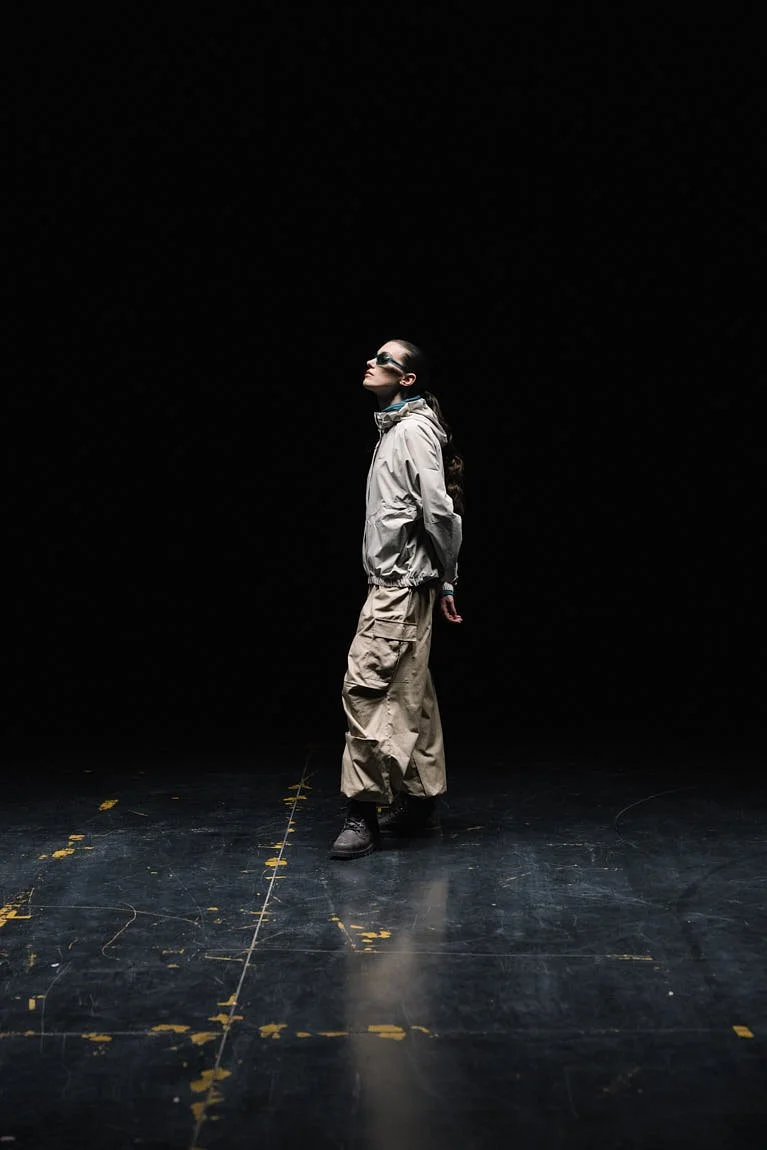
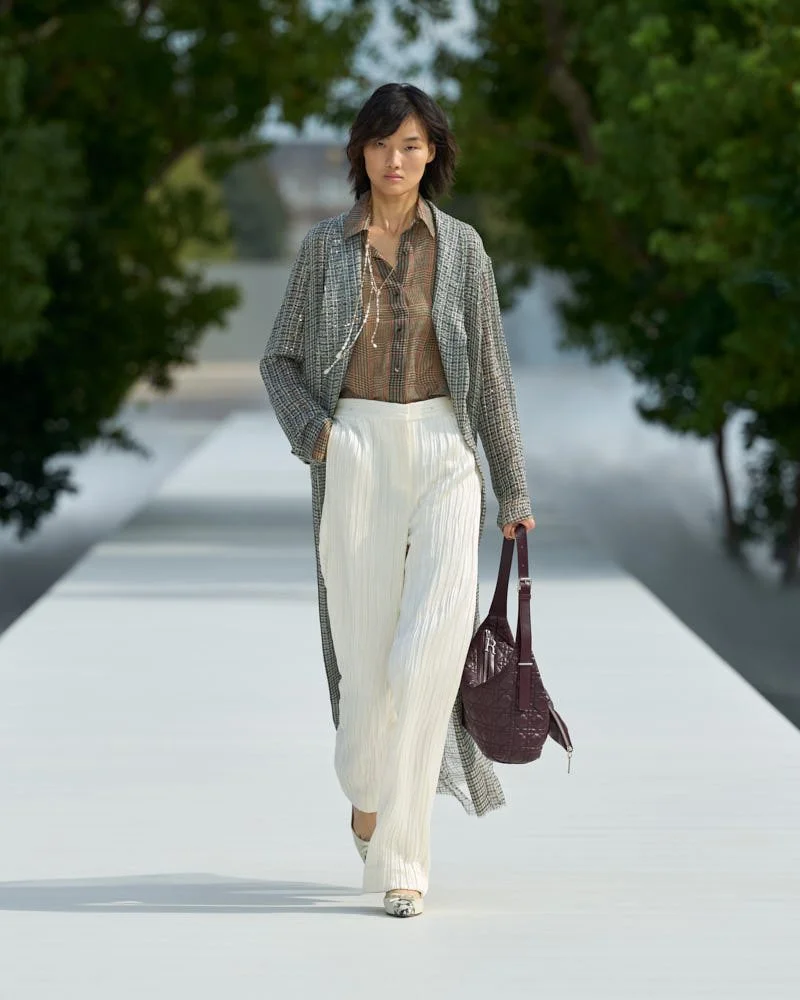
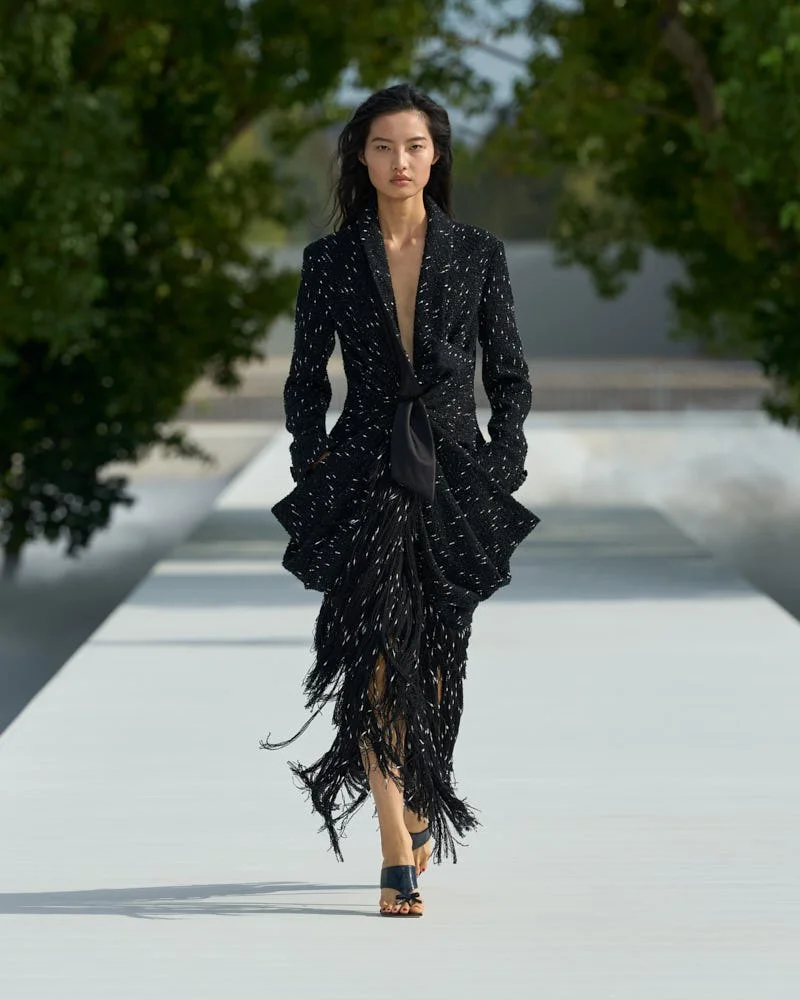
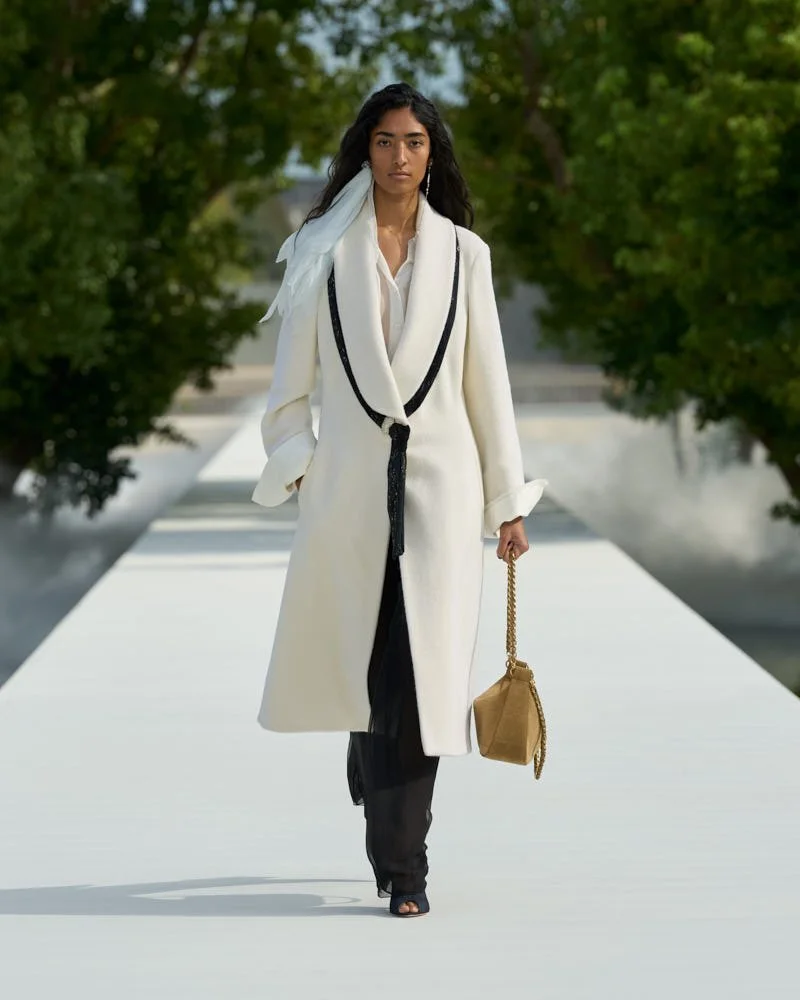
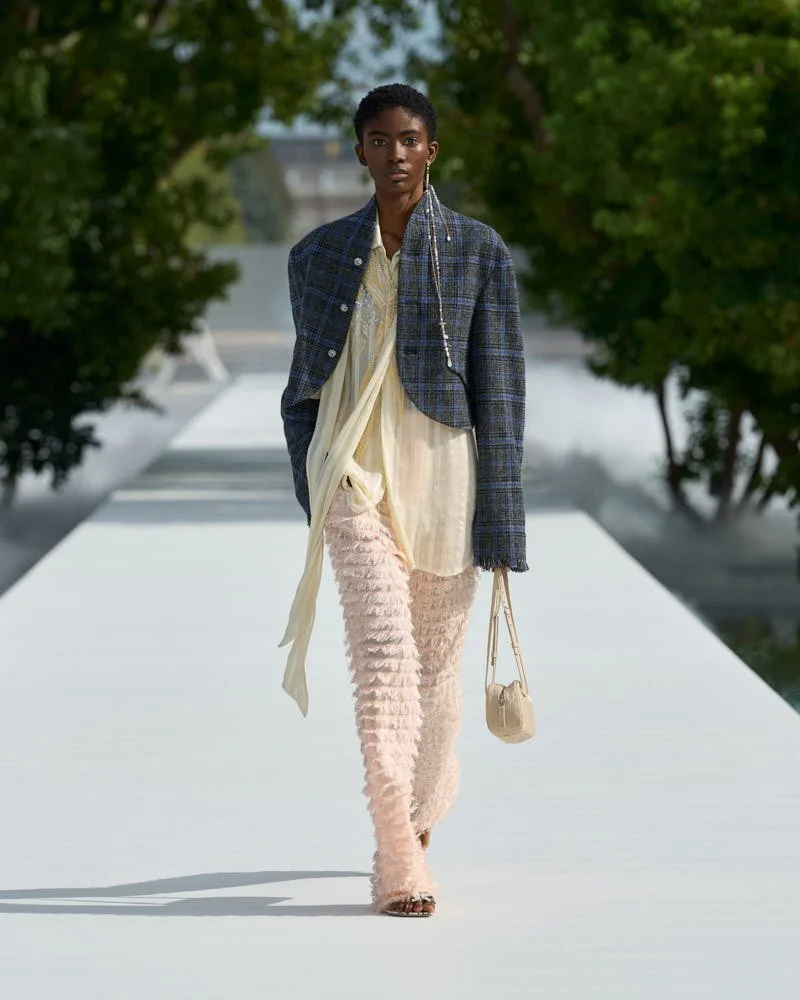
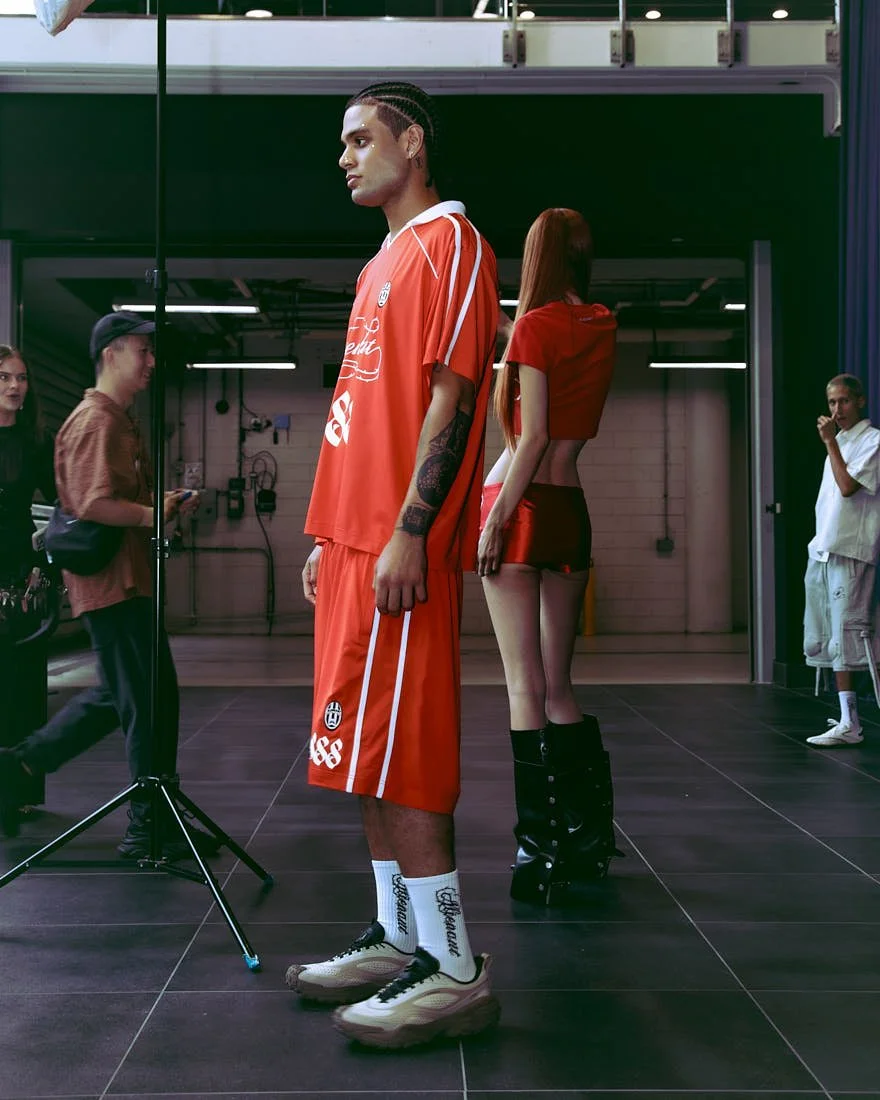
From conquering mountain peaks to shaping contemporary urban style, Italian outdoor brand Dolomite has spent 130 years evolving without losing sight of its roots. Founded in 1897, the brand is kicking off its anniversary celebrations ahead of 2027 with the launch of ICONICA, a new Made in Italy collection unveiled at Milan’s fashion destination ANTONIA.


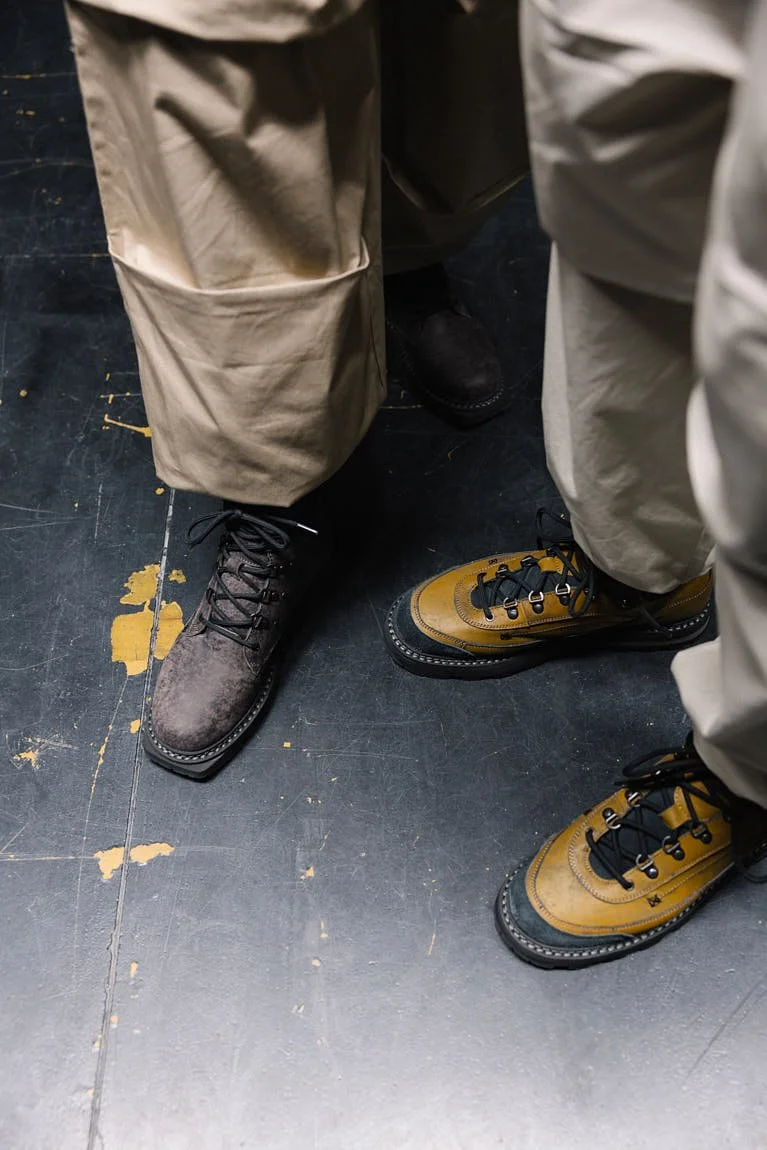
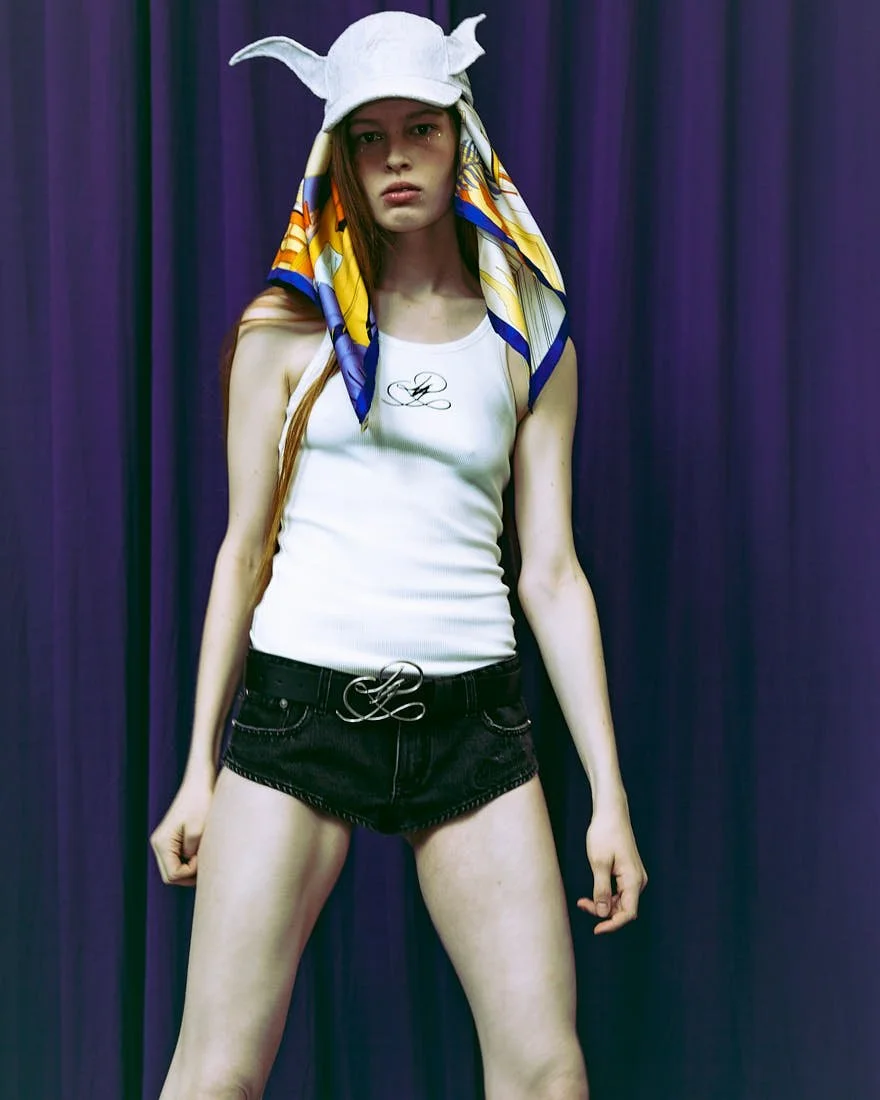
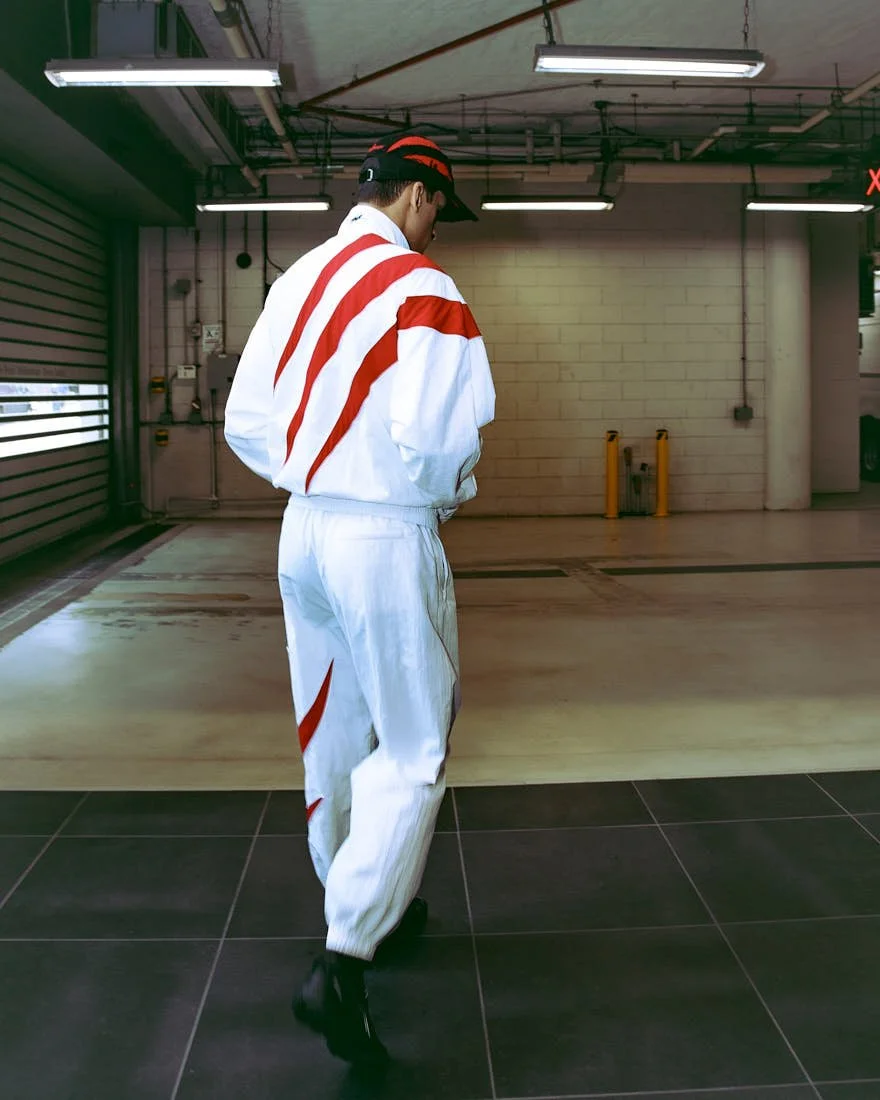
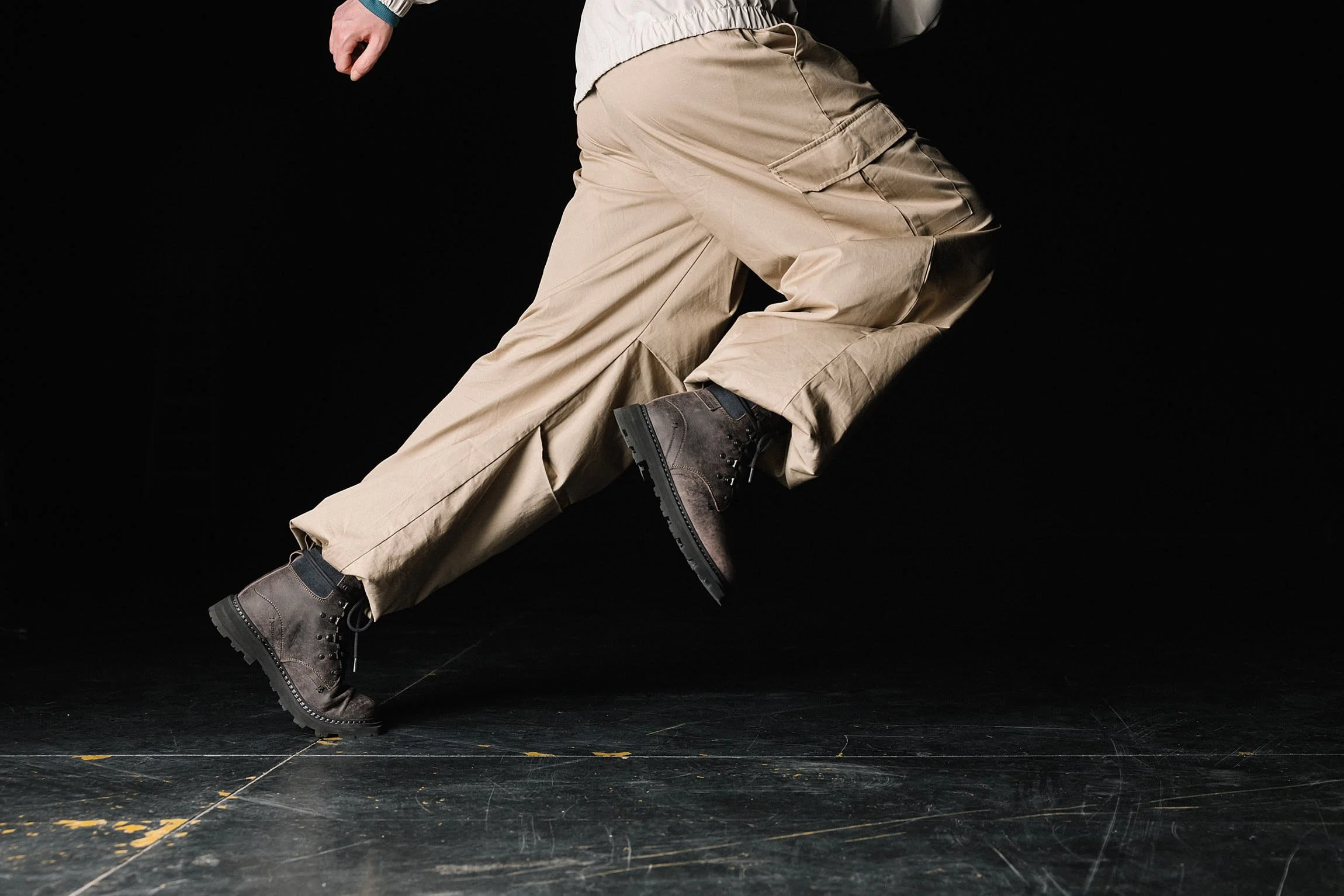
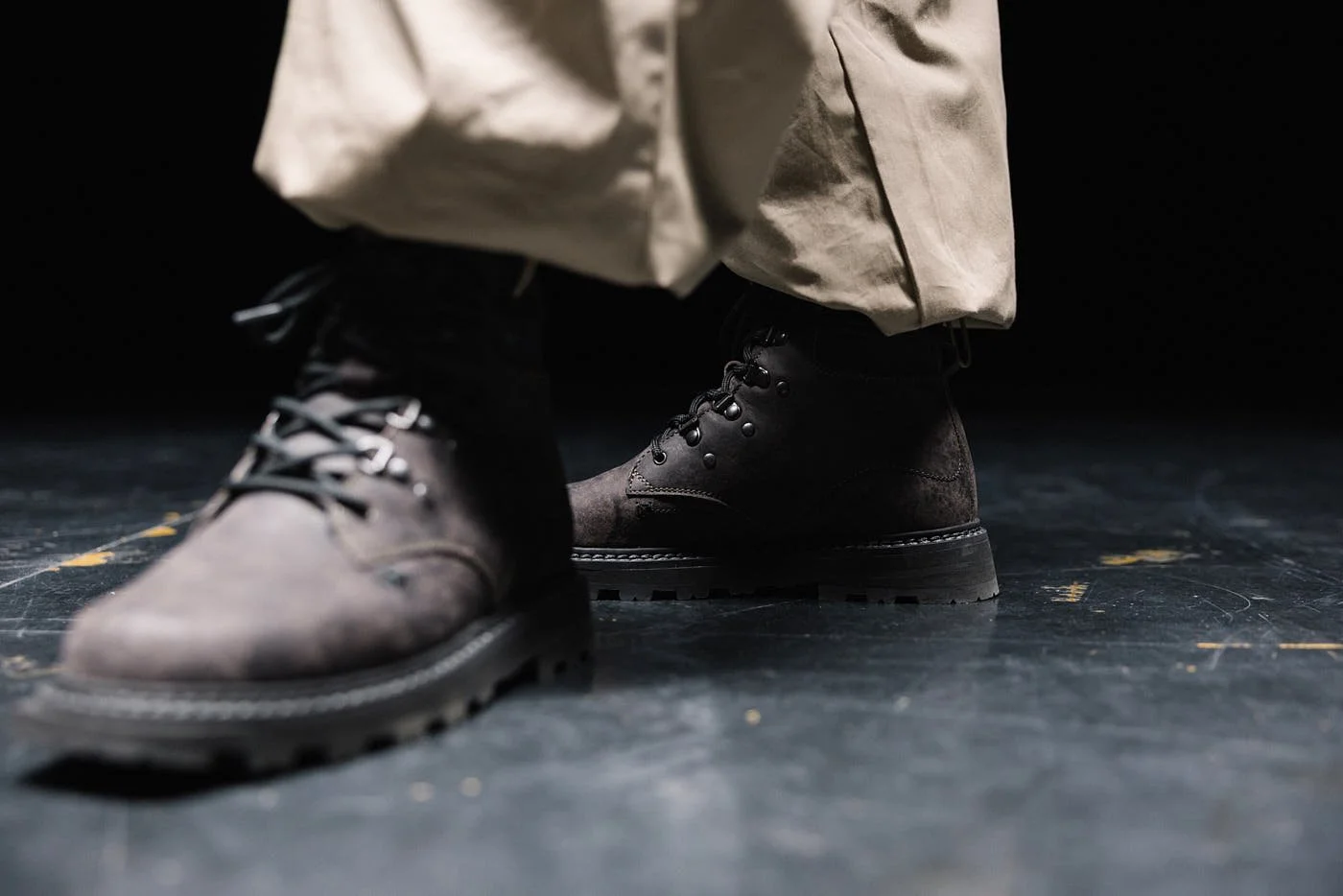
Conceived, designed and crafted entirely in Montebelluna, the collection brings Dolomite’s alpine heritage into a more sophisticated, contemporary context. ICONICA reinterprets the brand’s outdoor DNA through clean silhouettes, considered details and premium materials. Waxed suede leather from Leather Working Group-certified tanneries, full-grain leather linings and footbeds, as well as Vibram® soles with visible stitching, reflect the collection’s focus on craftsmanship and durability.
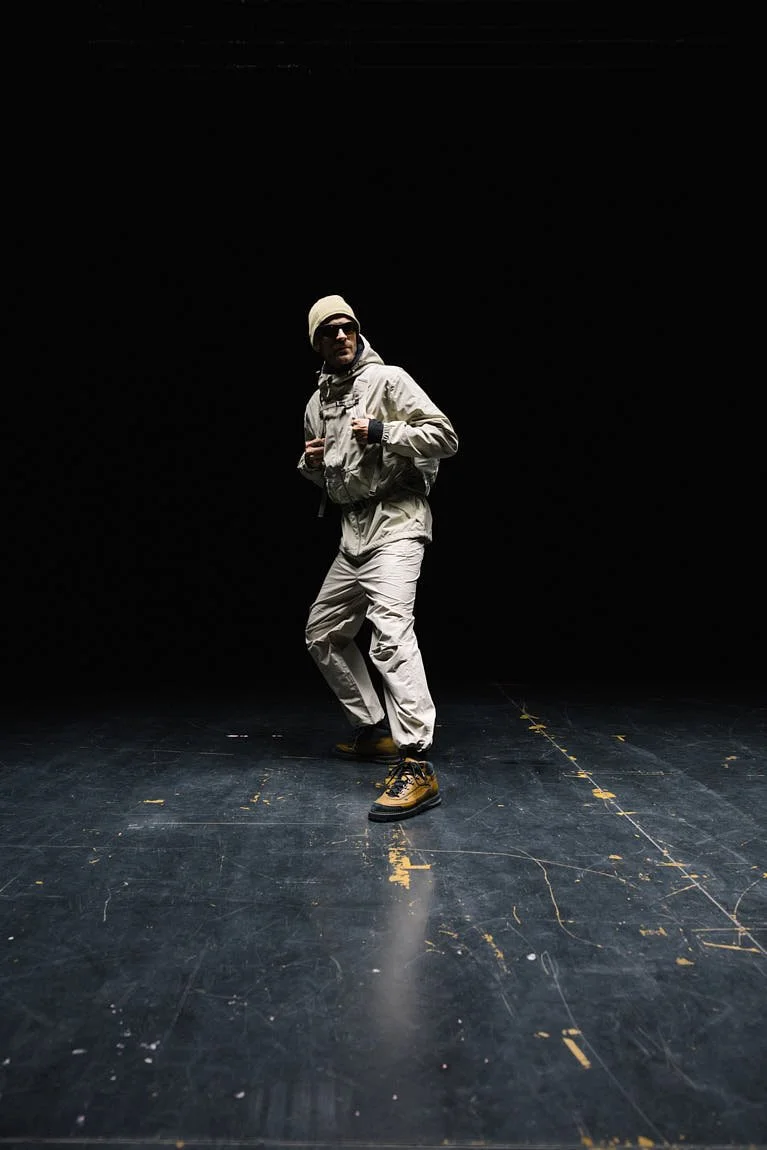


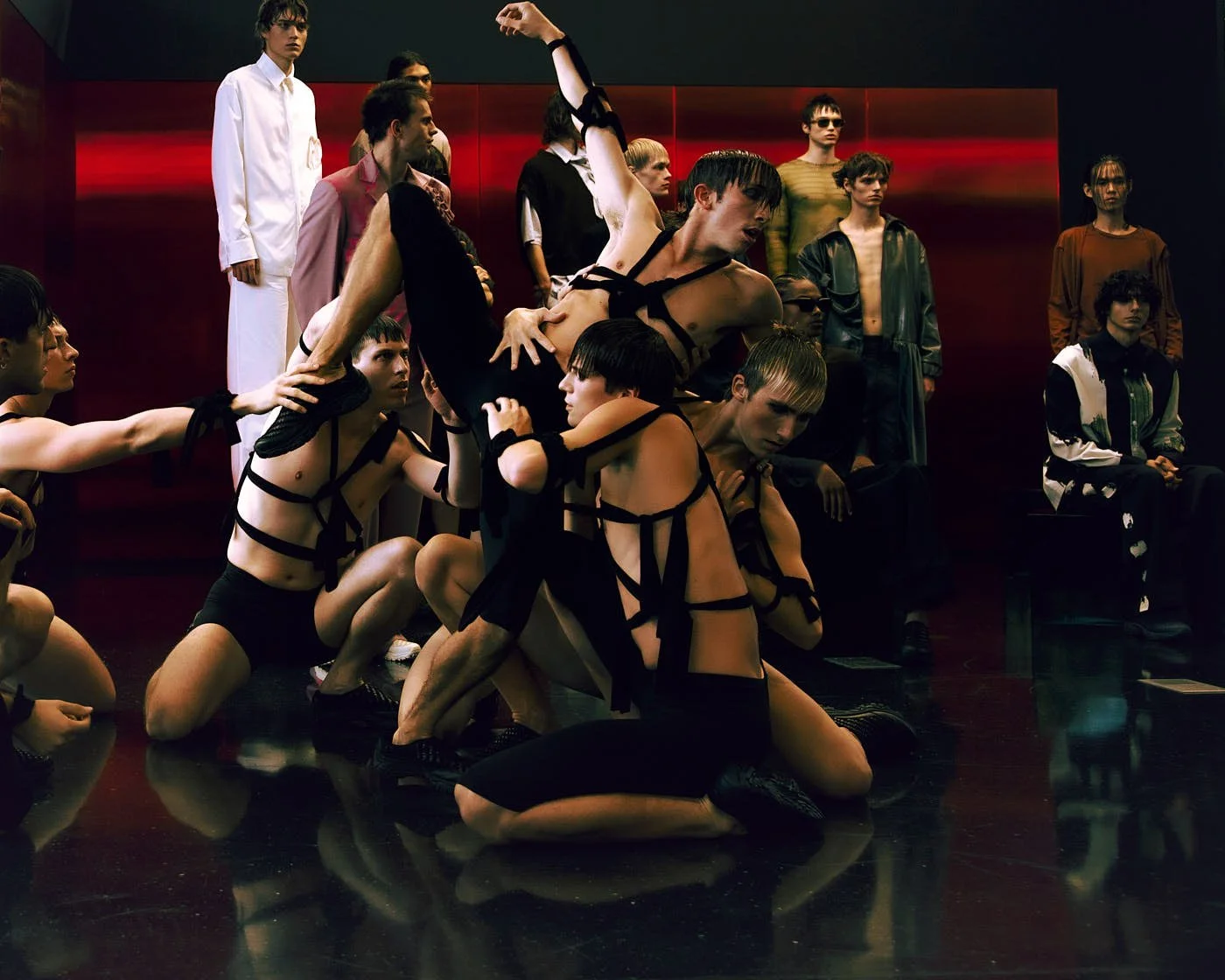
Dolomite’s story began with Giuseppe Garbuio, who founded Fabbrica Scarpe Montello at just 17 years old. Since then, the brand has accompanied landmark moments in mountaineering history, including the Italian expedition that first conquered K2 in 1954. Over the decades, its expertise has expanded beyond technical outdoor footwear into sportswear and lifestyle, with collections such as Cinquantaquattro bringing alpine aesthetics into everyday wardrobes. With ICONICA, Dolomite continues to bridge the worlds of outdoor performance and contemporary design – celebrating 130 years of Italian craftsmanship while looking firmly towards the future.
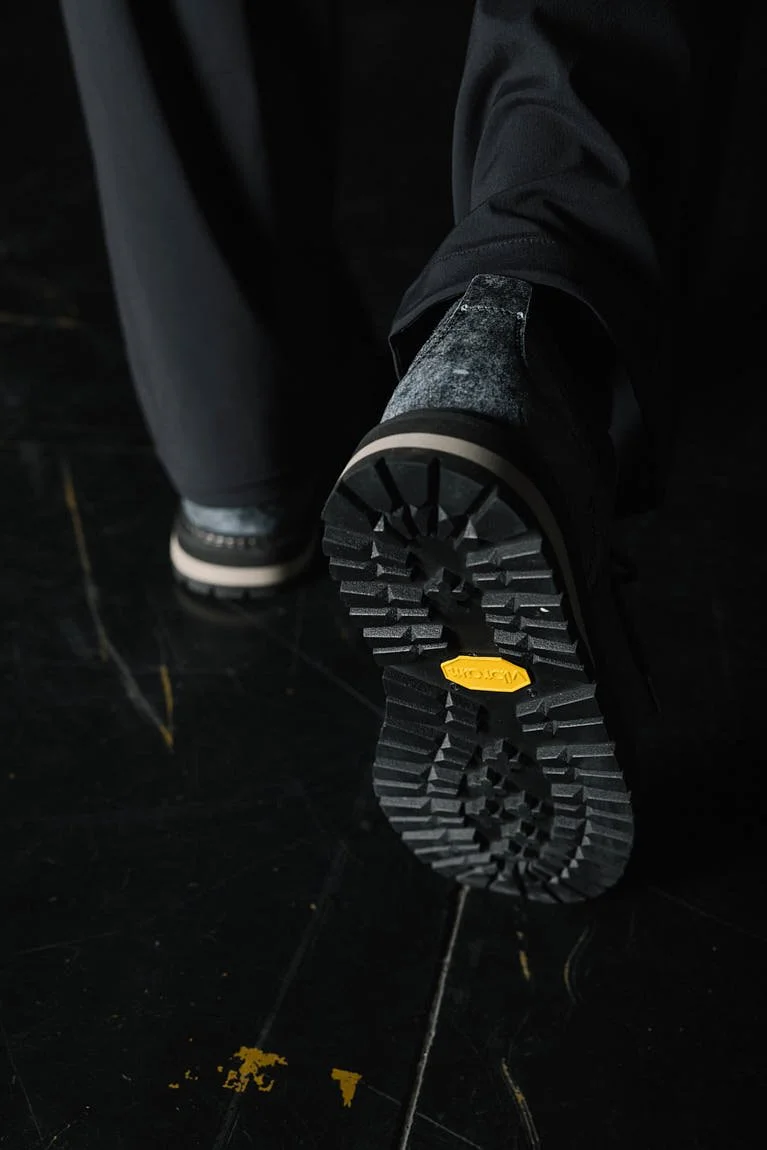
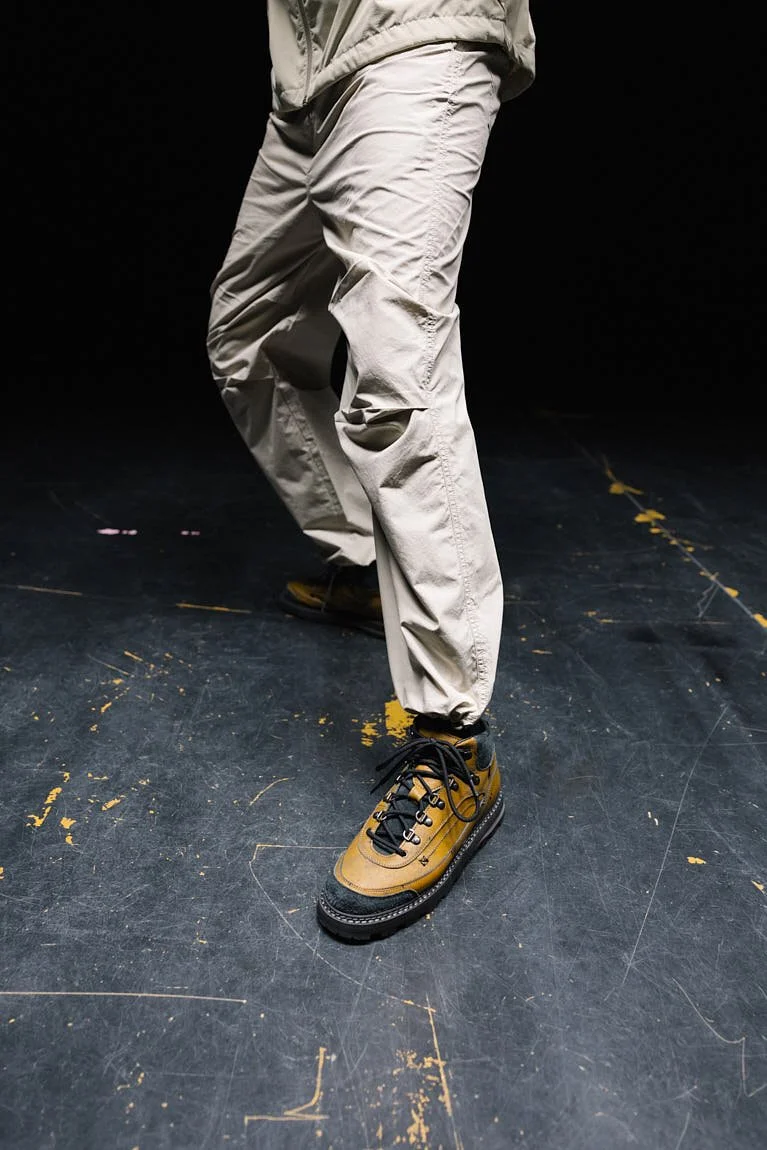


all images
/ courtesy of Dolomite
RIMOWA x Maison Margiela

RIMOWA x Maison Margiela

Double-click to edit...

.collaboration RIMOWA x Maison Margiela

From Margiela’s Painted Studio to a RIMOWA Suitcase


LE MILE


In Martin Margiela’s early Paris studio, furniture found at the Salvation Army was brought together under a coat of white paint. The treatment later reached Tabi shoes and clothes, whose surfaces cracked as they were worn, allowing the material underneath to show through. His interest in what could happen to an object after it left the workshop continued into a 1997 exhibition in Rotterdam, where reproductions of his designs were treated with bacteria and mould. Visitors encountered clothes whose colours and textures were still changing after the exhibition had opened.
 

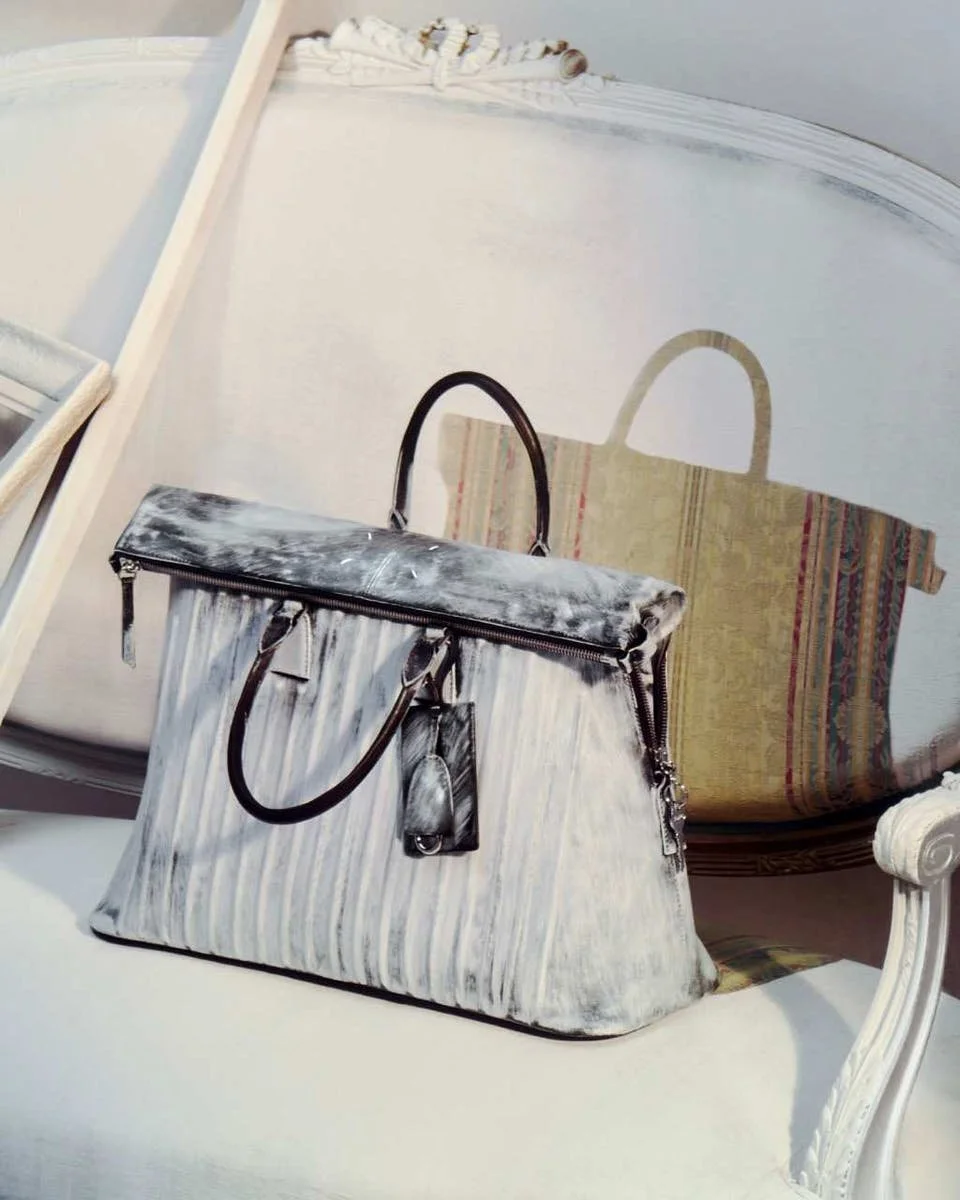
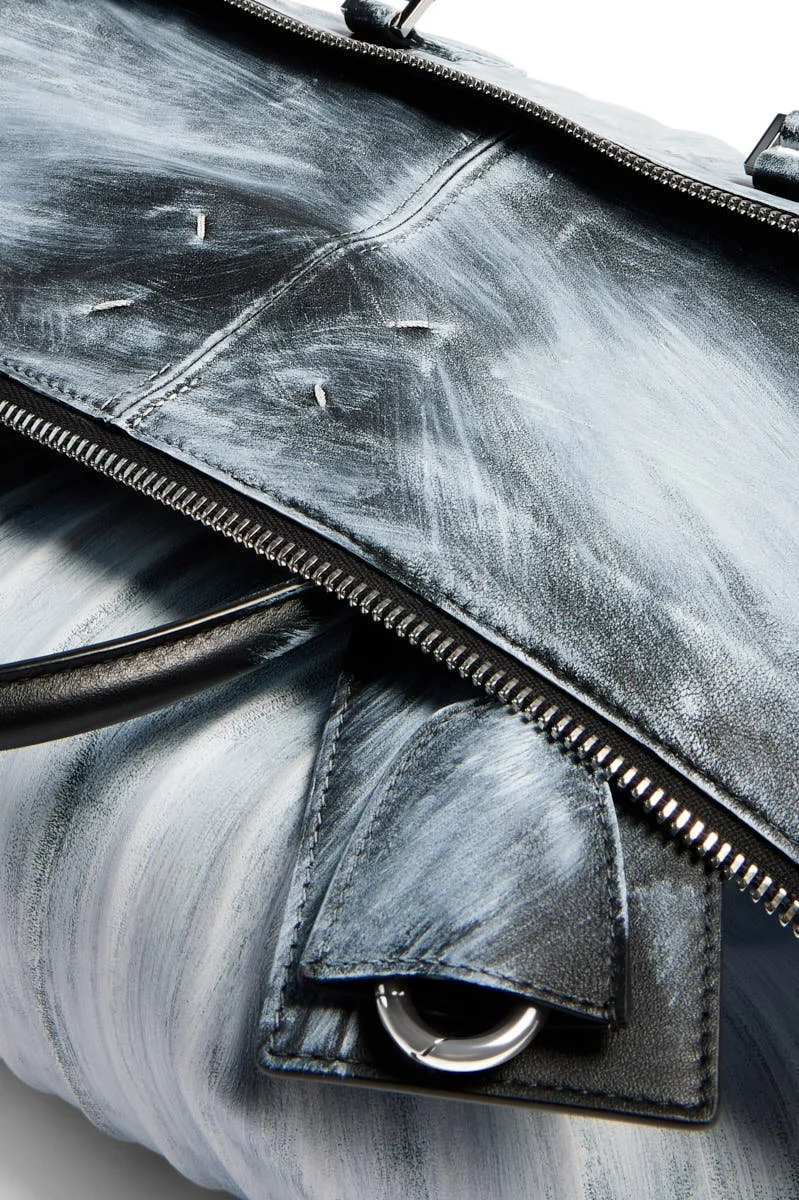
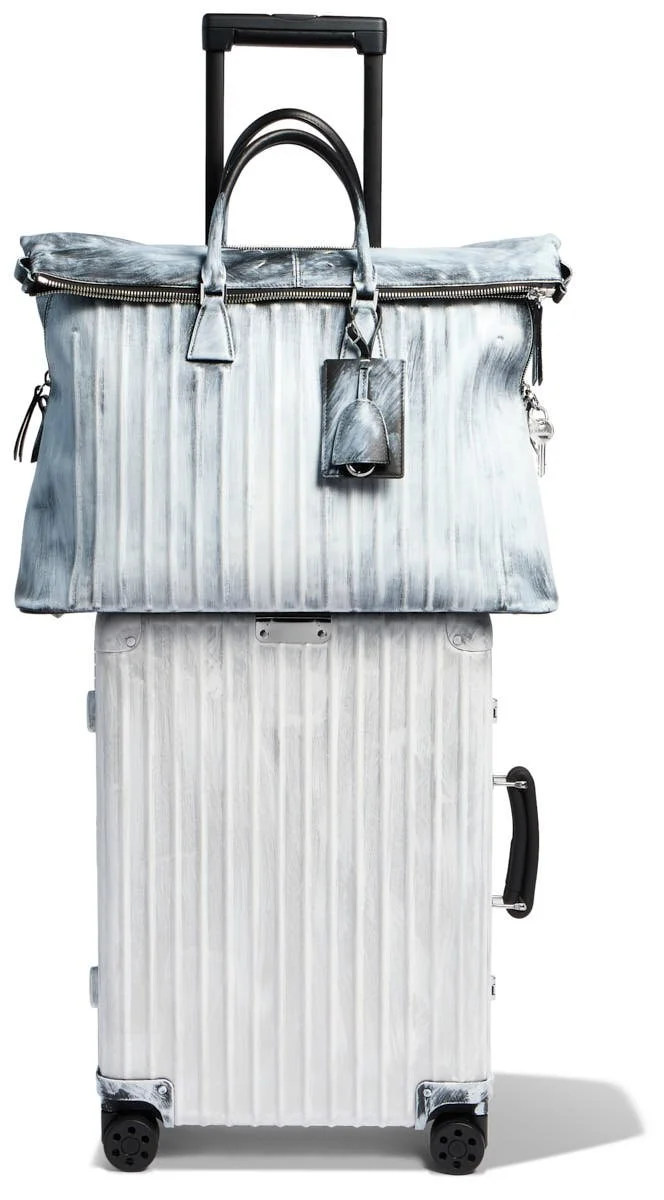
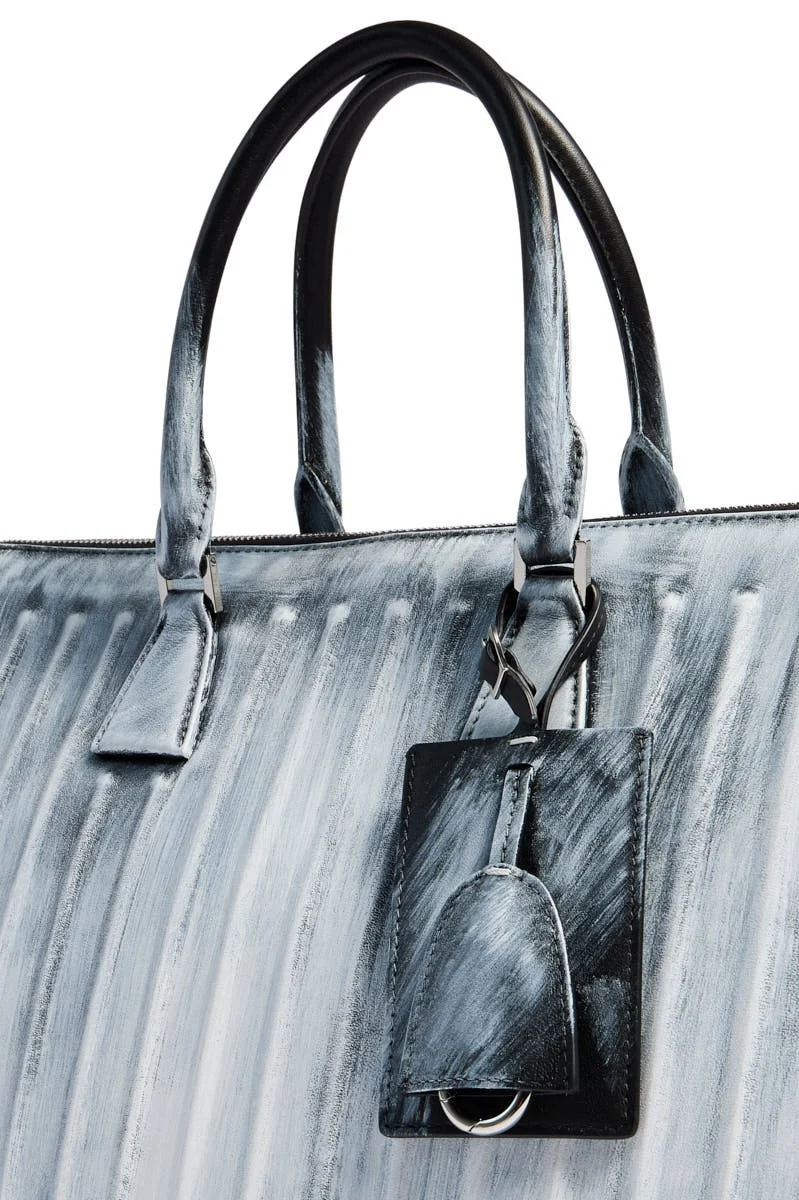
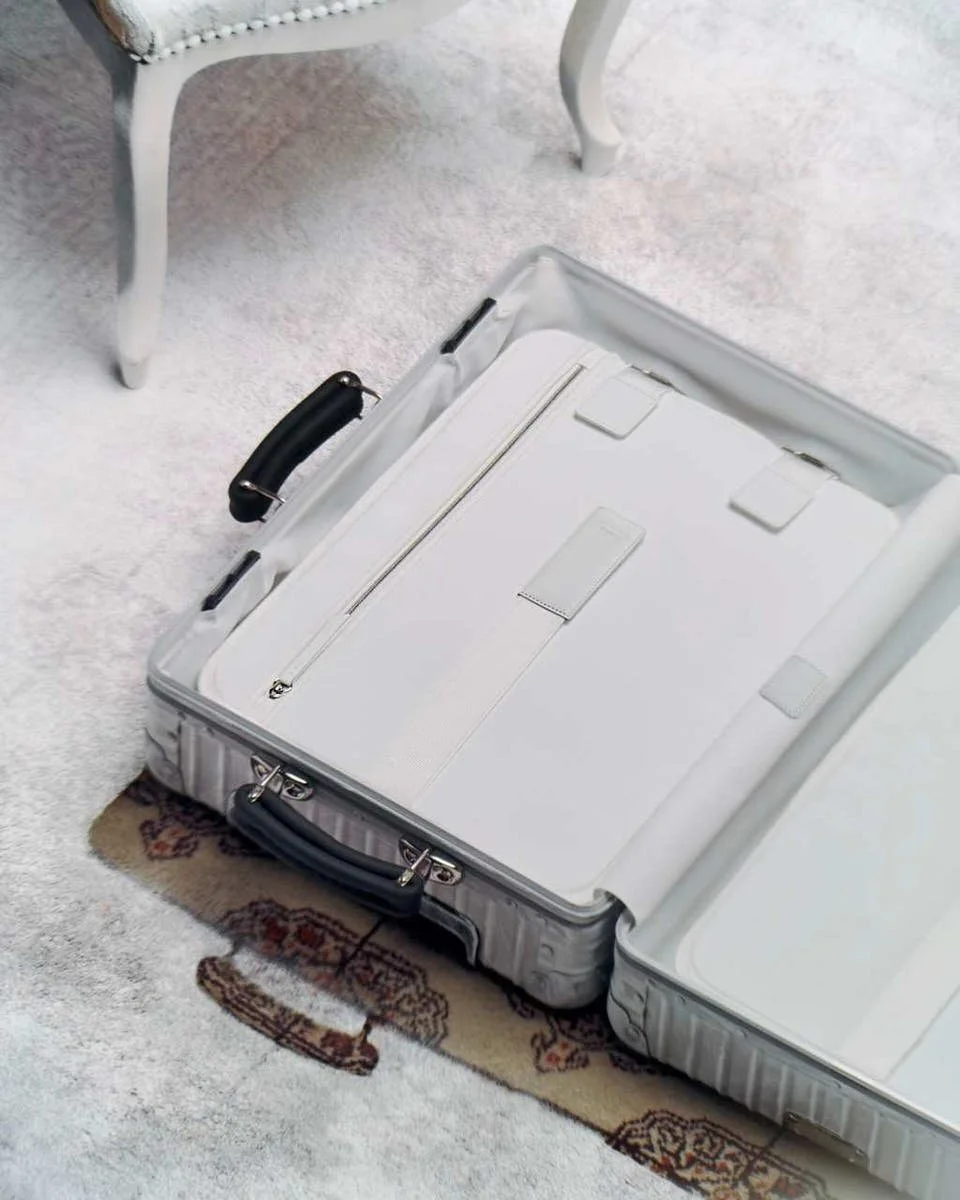
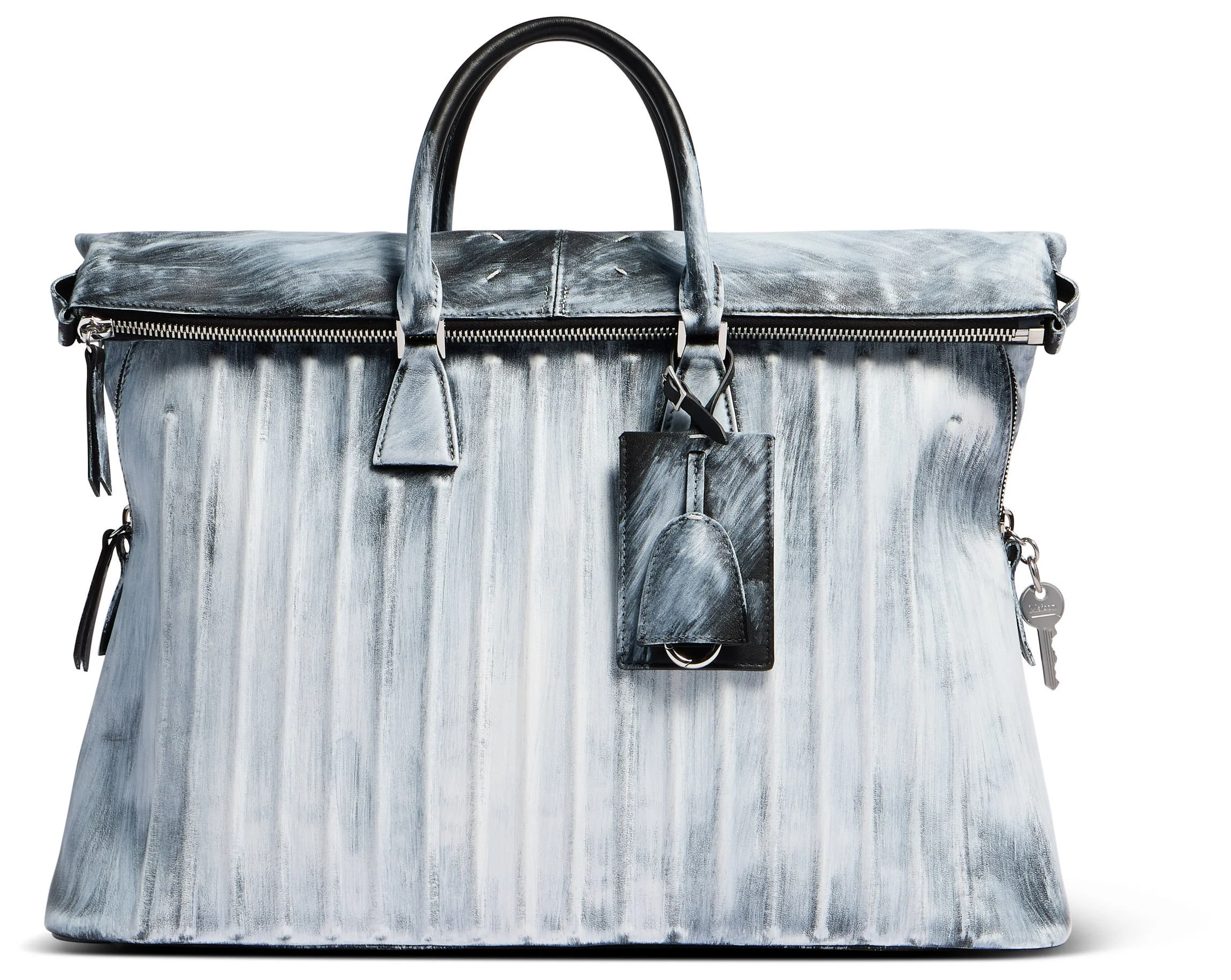
For the new RIMOWA x Maison Margiela collection, Bianchetto covers a Classic Cabin suitcase and a 5AC XL bag, although the work connecting them begins beneath the paint. RIMOWA’s aviation-inspired grooves, introduced on its aluminium cases in 1950, are formed directly into the leather of the 5AC, giving a supple bag the ridged surface of a hard shell. Inside the suitcase, visible seams and overlocked edges echo the bag’s exposed lining, carrying a detail of its construction into the case.


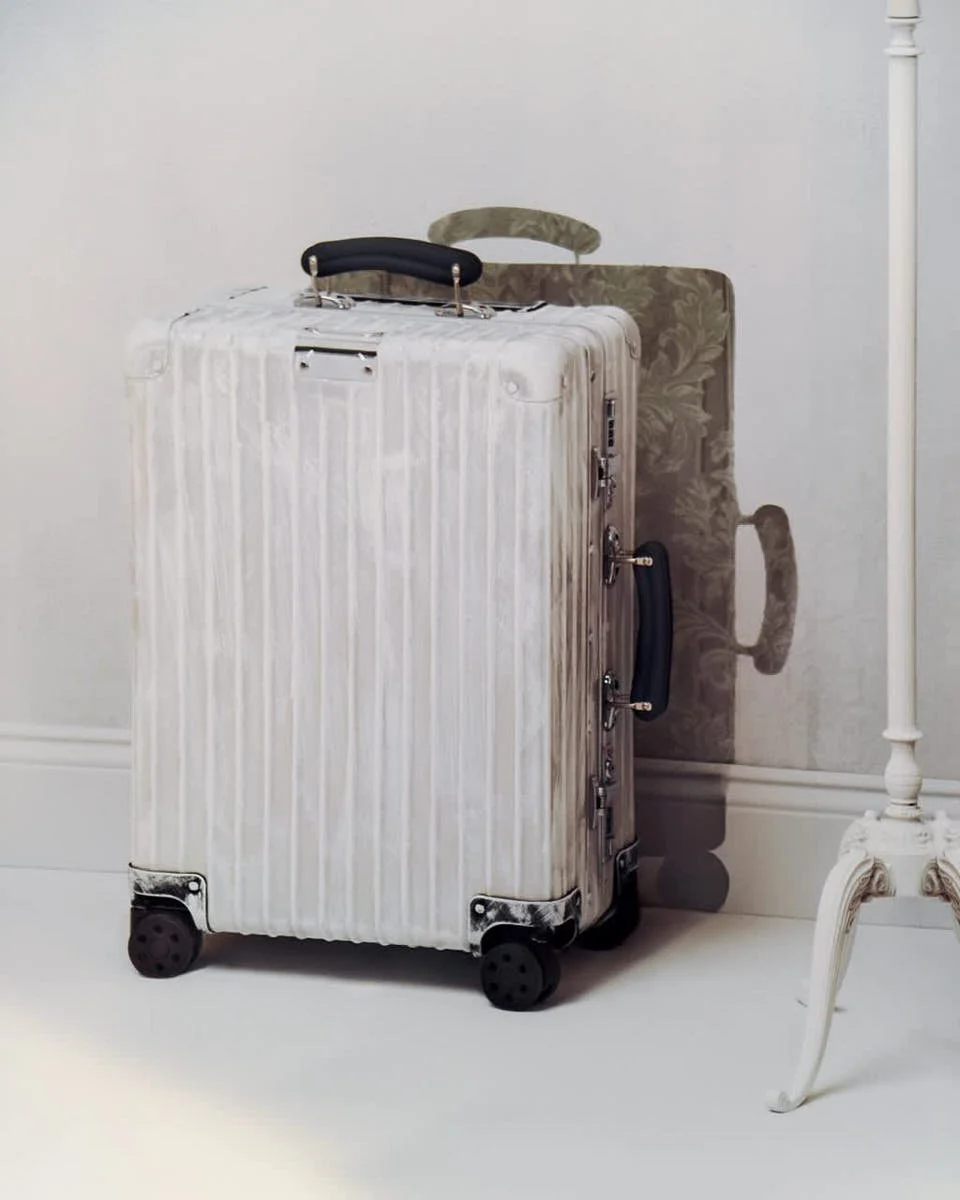
Both are painted by hand, with the finish intended to crack and flake as the luggage is used. At €3,200 for the case, its first scuff may still be difficult to welcome, even when the house has anticipated it as part of the design. Bianchetto brings the buyer into a process familiar to anyone who has worn Margiela’s painted shoes, where keeping the object in use gradually changes the surface that first attracted them.

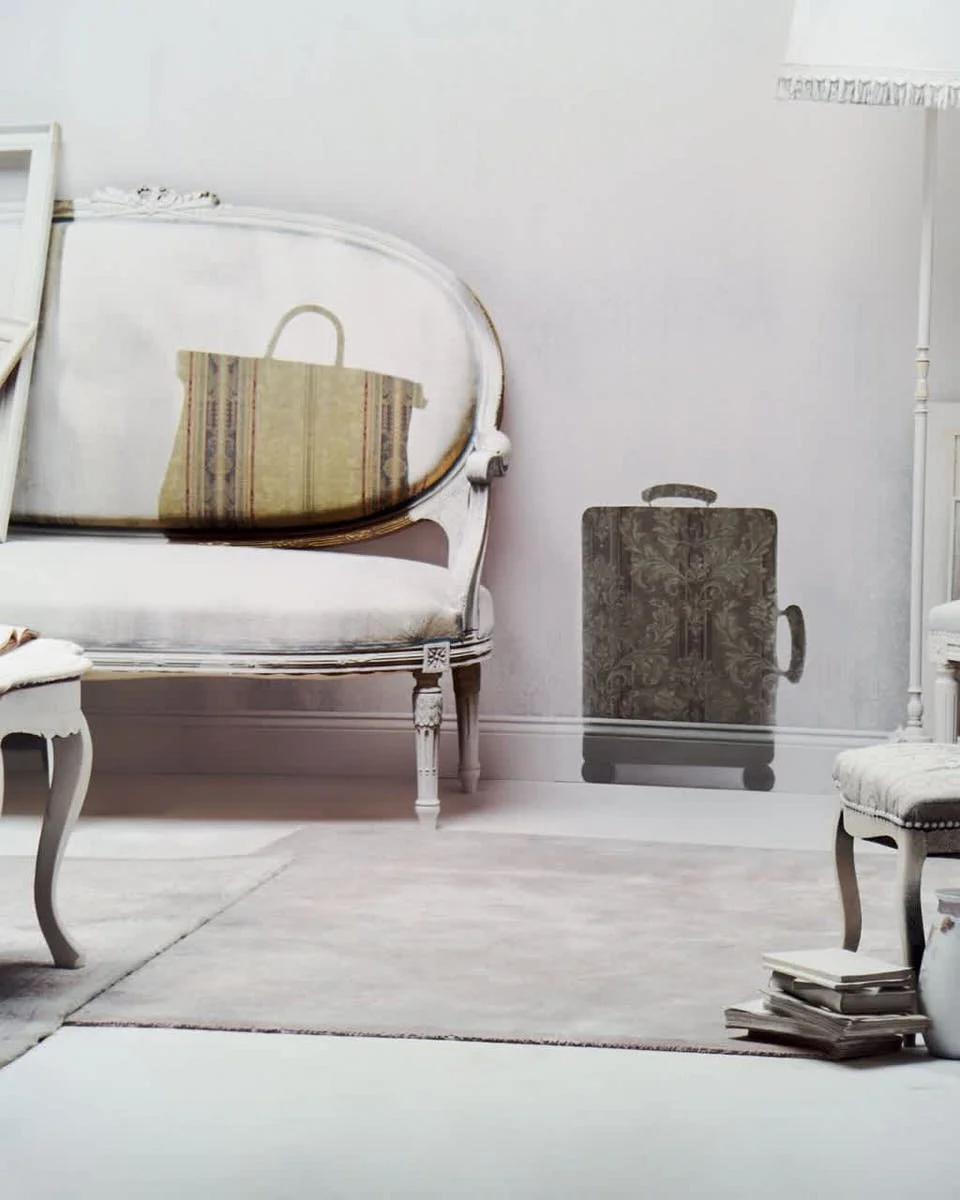
The campaign gives that paint job the run of a Haussmannian apartment, spraying the luggage and the room around it until the pieces leave their silhouettes on the wall. The domestic setting recalls the technique’s beginnings, now restaged with the extravagance of a luxury production. What started with second-hand studio furniture has become an occasion to paint an entire grand Paris room.

The Classic Cabin and 5AC XL launch on 19 November 2026, priced at €3,200 and €3,600 respectively, through selected stores and both houses’ websites.


/ image courtesy of RIMOWA x Maison Margiela

Wana Limar on dressing and belonging

Wana Limar on dressing and belonging

An interview with Wana Limar

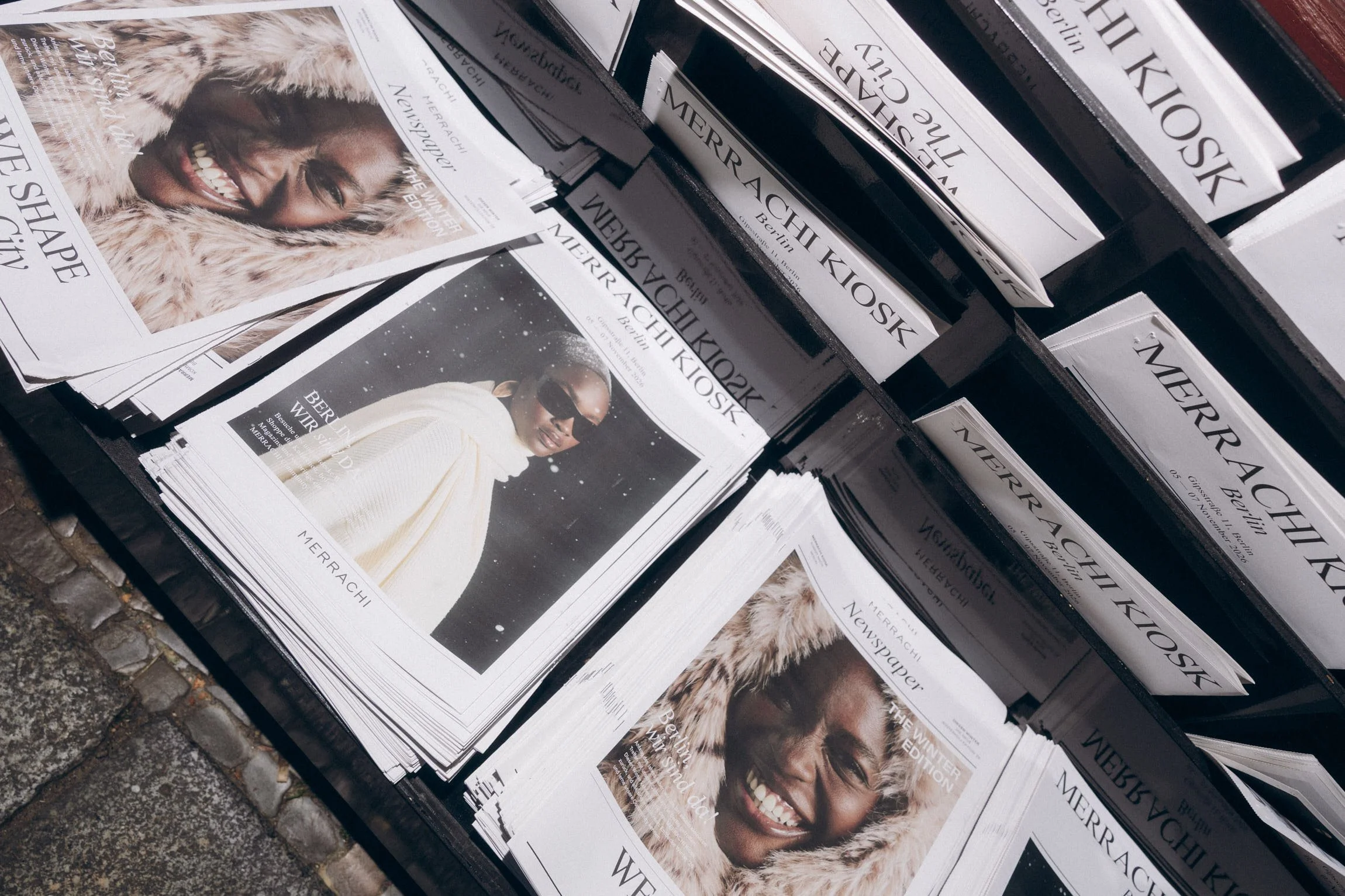
MERRACHI’s “We Shape the City” in Berlin


interview + written KLAAS HAMMER


What we wear is never just about what we put on. It can be a reflection of where we come from, a way of claiming space or simply an expression of who we choose to be. With its Winter ’26 campaign “We Shape the City”, MERRACHI celebrates women who shape their surroundings on their own terms, embracing individuality, cultural identity and the freedom of self-expression.


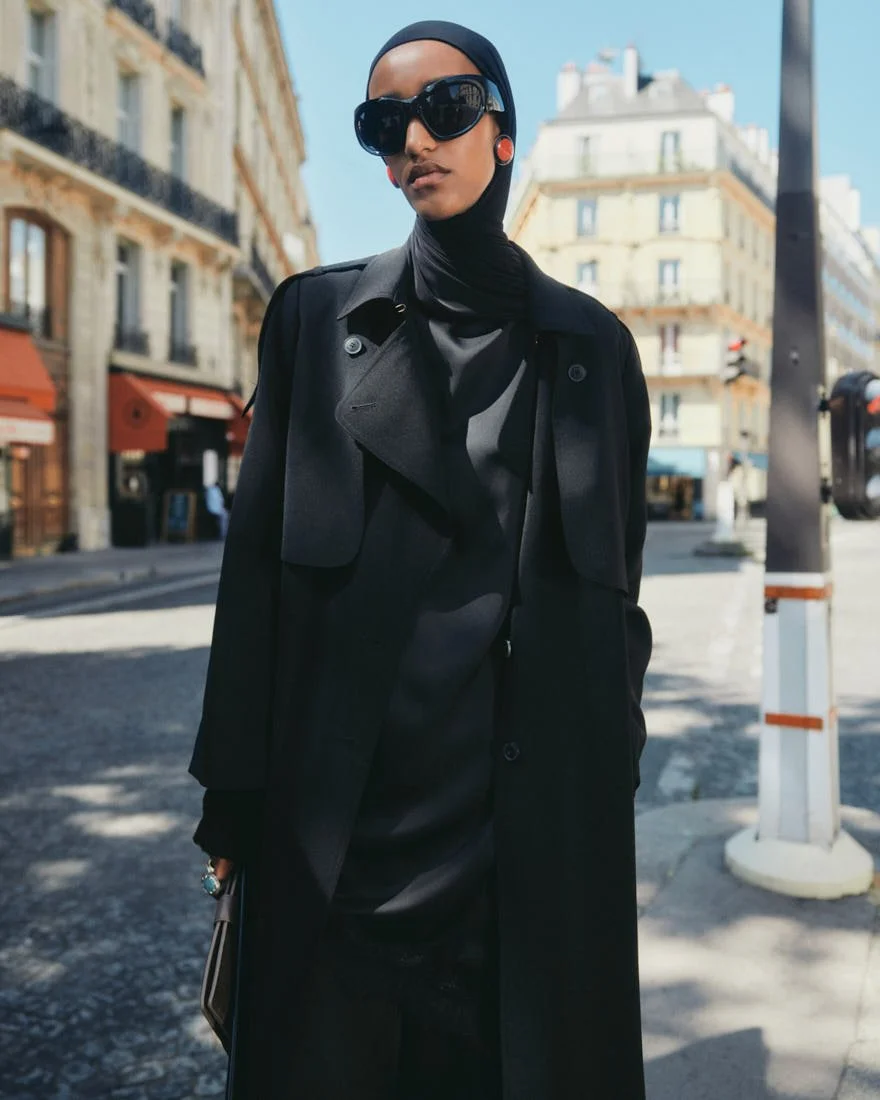
Model wearing a black hijab, oversized sunglasses and a long tailored black coat on a city street, from MERRACHI’s Autumn/Winter 2026 collection; LE MILE

MERRACHI Autumn/Winter 2026 Collection

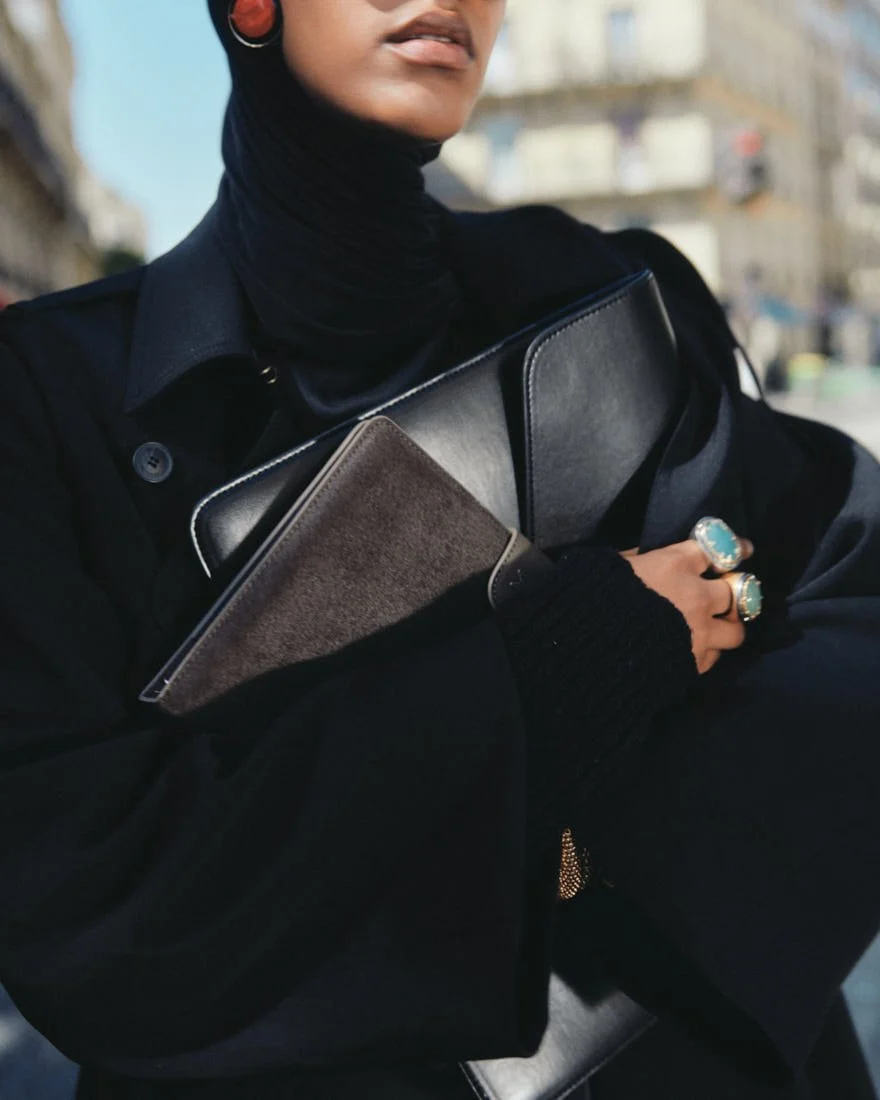
Close-up of a model wearing a black coat and headscarf, holding angular black leather accessories with turquoise rings visible, from MERRACHI’s Autumn/Winter 2026 campaign; LE MILE
 

For Wana Limar, creative, designer and podcast host, personal style has always existed somewhere between two worlds. Growing up in Hamburg with Afghan parents, she found herself navigating contrasting ideas of dressing up, standing out and fitting in. From the glamour and extravagance of Afghan traditions to an appreciation for effortless silhouettes and timeless elegance, these influences continue to inform her perspective on fashion and identity.

In conversation with LE MILE, she discusses the cultural roots of personal style, the importance of preserving heritage beyond aesthetics, and why female empowerment must go beyond individual confidence. She also talks about reclaiming space through fashion, questioning conventional ideas of success and reconnecting with forms of knowledge that modern society may have left behind.


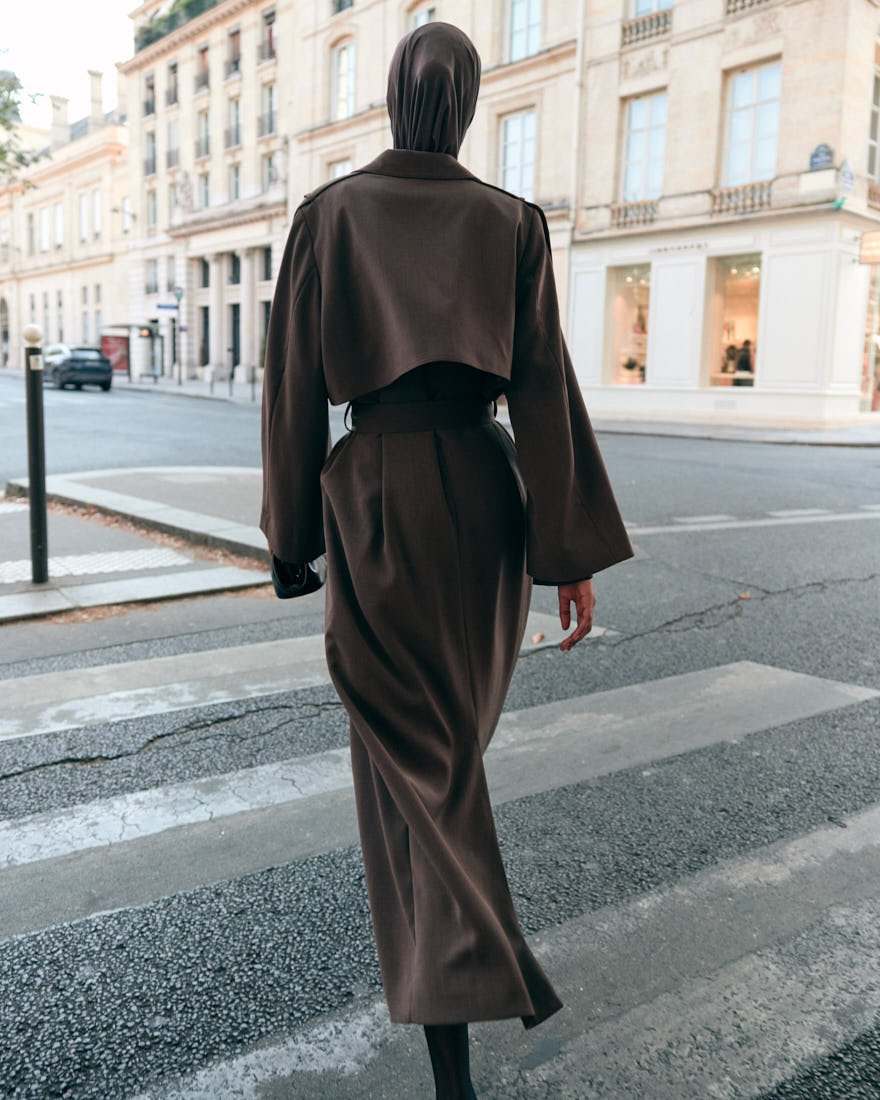
Rear view of a model wearing a long brown belted coat and black hijab while crossing a city street, photographed for MERRACHI’s Autumn/Winter 2026 campaign; LE MILE

MERRACHI Autumn/Winter 2026 Collection

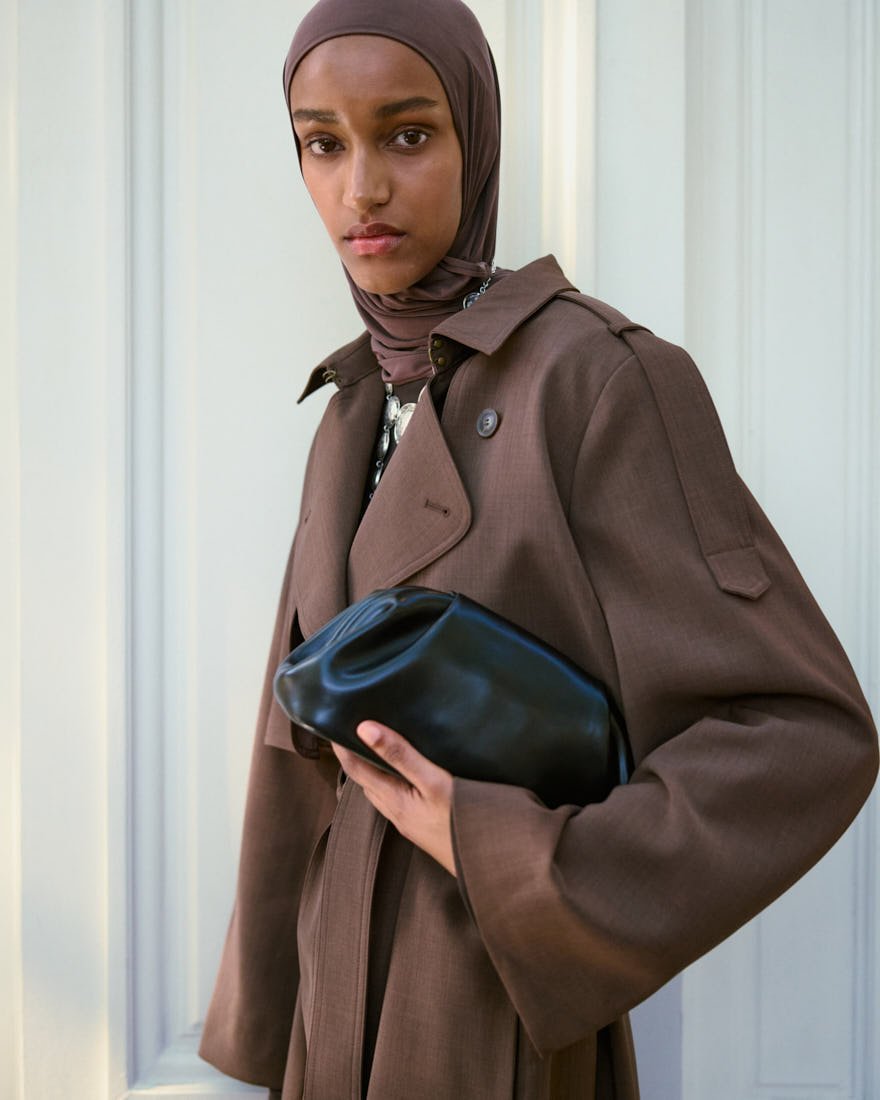
Model wearing a brown hijab and oversized tailored coat while holding a black leather clutch, from MERRACHI’s Autumn/Winter 2026 campaign; LE MILE


Klaas Hammer
How has your own identity shaped your personal style and the way you express yourself through fashion?


Wana Limar
I grew up in Hamburg with Afghan parents, and I feel like Germans have this almost cultural obsession with not showing off. Probably it has something to do with Germany’s history, like everything does. There’s this unwritten rule: don’t stand out, don’t show what you have. You could live in a million-euro villa and still drive a beat-up car. In the Afghan environment I grew up in, it was the complete opposite. More was more! Colors, glitter, sequins, big hair, full makeup. My uncle would literally wear a suit to go grocery shopping! And we grew up commenting on everyone’s looks, making fun of outfits and giving people nicknames based on their appearance. And making fun of how casually aka underdressed Germans dress for special occasions is practically a running gag in Afghan families. Like, what is this? Where is the outfit? You’re attending a wedding!
As a child, I loved dressing up in traditional Afghan clothes, stealing my mother’s red lipstick and staging little photoshoots. I think both worlds shaped my style. I love the glamour and playfulness of dressing up, but I’m equally drawn to simplicity, effortless silhouettes and timeless elegance. Trends can be inspiring, but I want my style to evolve with me, not with every trend.

MERRACHI brings together Moroccan heritage and contemporary design. What role do you think cultural heritage plays in shaping the future of fashion, and how can brands celebrate their roots while speaking to a global audience?


Fashion tells us so much about who we are, where we come from and how societies evolve. Understanding the history behind certain traditions, silhouettes or craftsmanship helps us understand our own identities.

With our jewelry brand SEVAR, we work with artisans in Afghanistan. For us, celebrating heritage means more than borrowing beautiful aesthetics. It’s about preserving craftsmanship, creating opportunities and making sure the communities behind these traditions actually benefit. Celebrating a culture also means valuing the people who keep it alive.

 
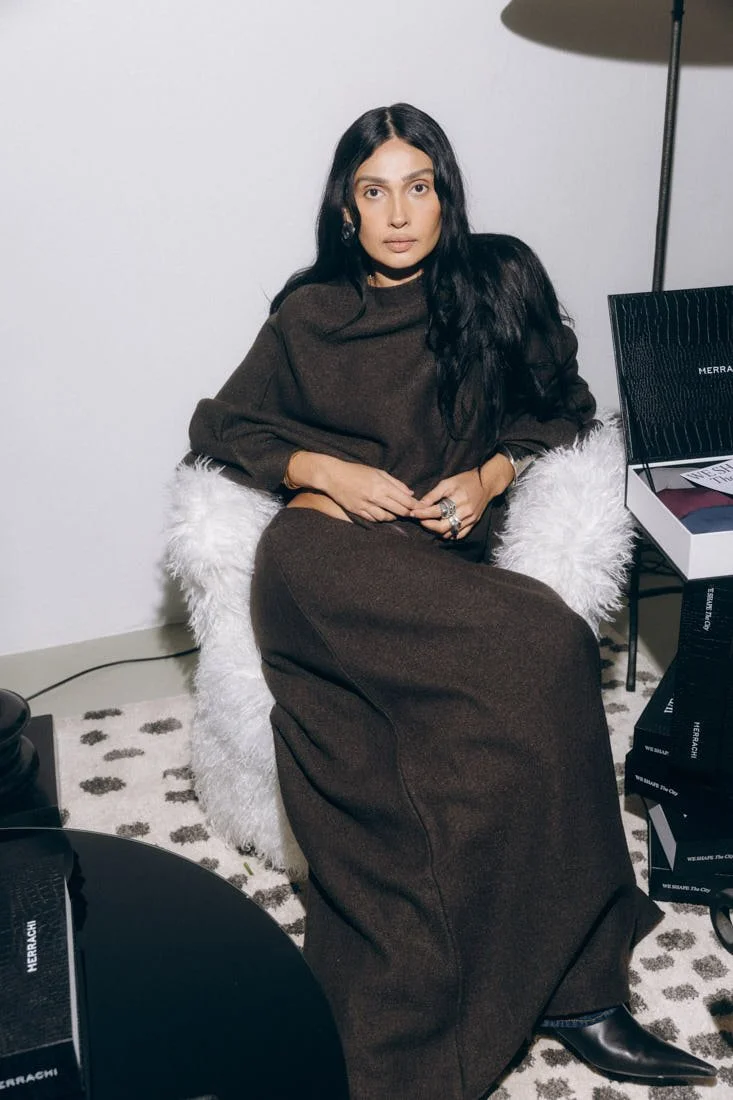
Wana Limar seated in a white textured armchair wearing a dark brown knit dress at MERRACHI’s “We Shape the City” launch event in Berlin; LE MILE
Wana Limar at the MERRACHI Berlin launch event
/photo Isabell Kessler

 
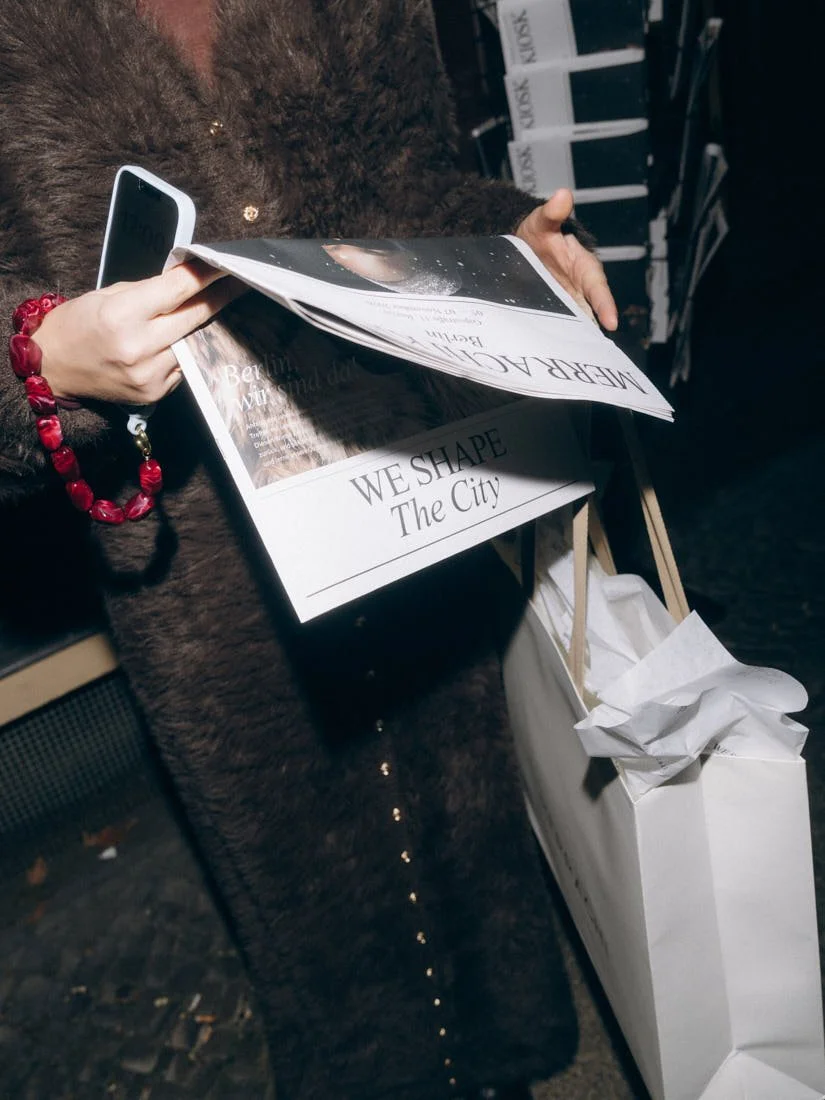
Person holding a MERRACHI “We Shape the City” newspaper and a white shopping bag at the Berlin launch event, wearing a dark textured coat; LE MILE
MERRACHI “We Shape the City” Berlin launch event
/photo Isabell Kessler


“But confidence doesn’t close the gender pay gap, and individual choices mean very little if the structures around you limit those choices.”


The campaign “We Shape the City” celebrates women who shape their environments in their own individual ways. What does female empowerment mean to you today, and how do you see women influencing culture beyond traditional definitions of success?


I think we sometimes talk about female empowerment as if it were simply a matter of confidence and personal ambition. But confidence doesn’t close the gender pay gap, and individual choices mean very little if the structures around you limit those choices. For me, empowerment starts with equal rights, equal opportunities and challenging the double standards women still face.

And women have always shaped our cities and societies far beyond traditional definitions of success: through education, care, community and creativity. We need to rethink not only who gets to succeed, but what we consider success and whose contributions we actually value.

Fashion can be a powerful tool for self-expression, but also for reclaiming space. Is there a particular piece, silhouette or styling choice that makes you feel most like yourself? And what do you think makes a look truly empowering?


To me, an empowering look is unapologetically you. People might not get it, they might not like it, they might think it’s ugly, that you don’t have taste or style whatsoever. But if you genuinely love it and feel confident wearing it, why should that matter? Sometimes simply being yourself means challenging what others expect from you.

My personal uniform would probably be an oversized shirt, an oversized blazer, wide trousers and flats. I love that timeless, effortless aesthetic, free from conventions about how a particular gender is supposed to dress. Of course, sometimes I also enjoy feeling desirable. But I don’t think those things contradict each other. The freedom to express yourself also means not having to be the same version of yourself every day.

 
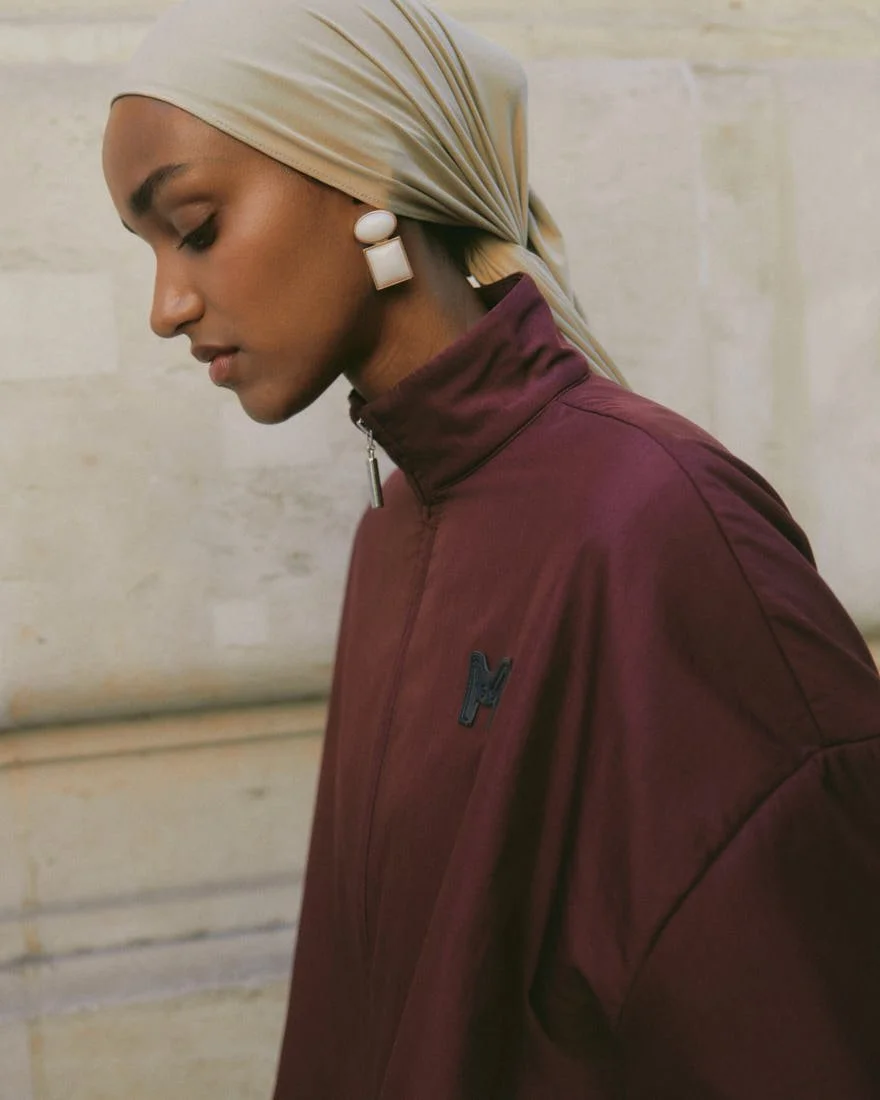
Side-profile portrait of a model wearing a beige headscarf, geometric earrings and a burgundy zip-up jacket from MERRACHI’s Autumn/Winter 2026 collection; LE MILE

MERRACHI Autumn/Winter 2026 Collection

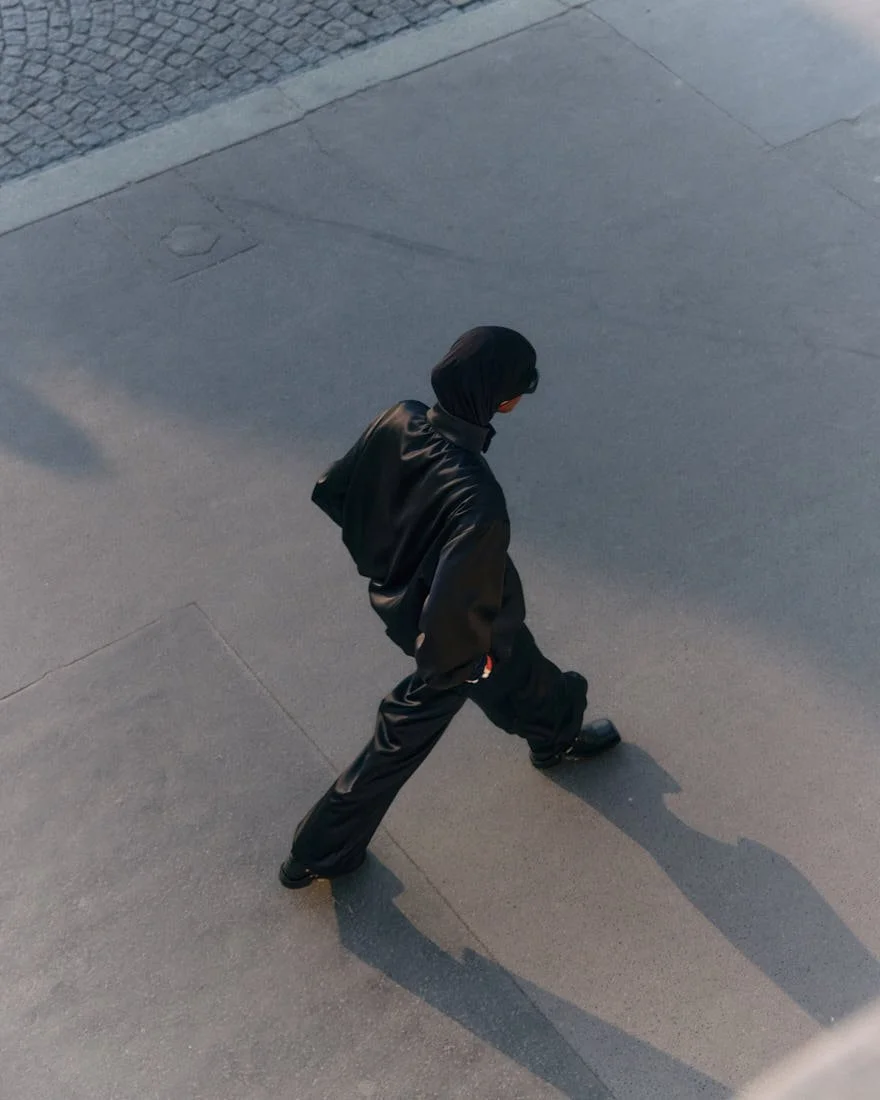
Overhead view of a model dressed in black walking across a paved street, casting a long shadow in MERRACHI’s Autumn/Winter 2026 fashion campaign; LE MILE
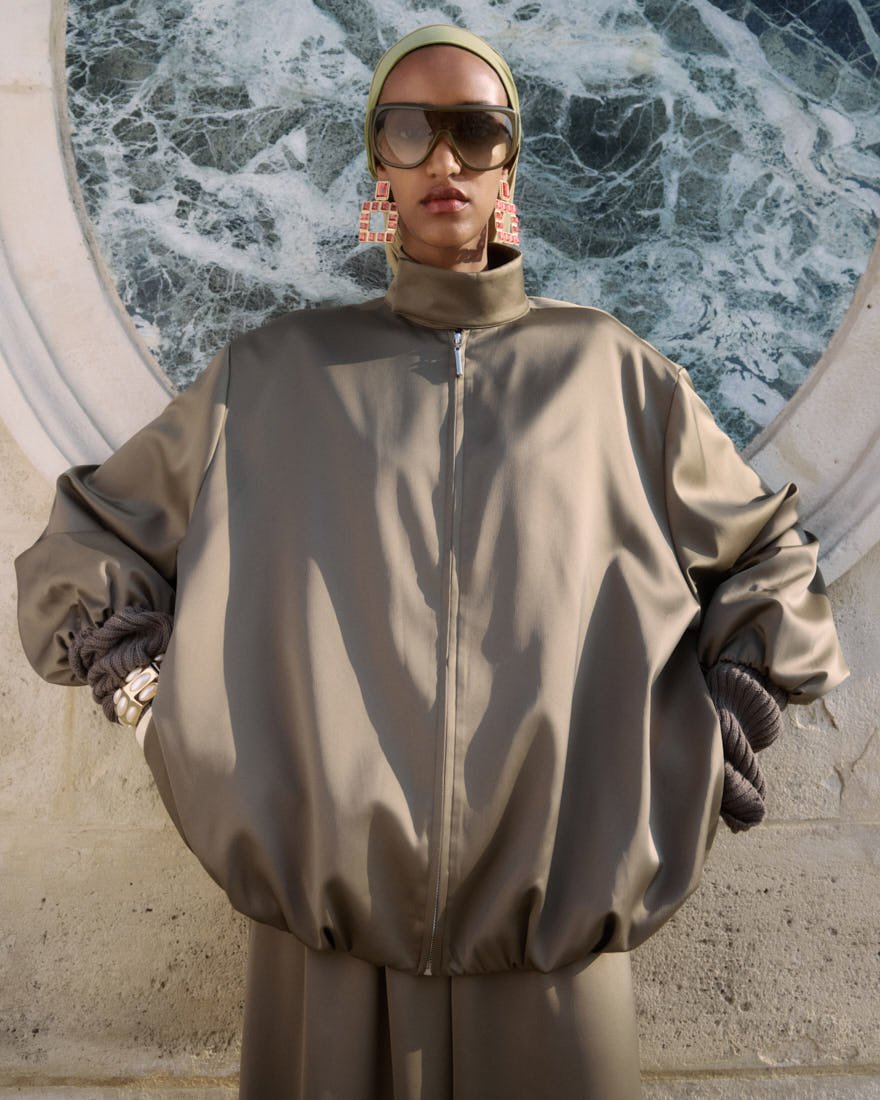
Model wearing an oversized olive-grey bomber jacket, green headscarf and large sunglasses in front of a circular marble wall, from MERRACHI’s Autumn/Winter 2026 collection; LE MILE
 

“And yet we assume we’re the most advanced civilization simply because we’ve made technological progress. But who actually defines progress? And what do we even consider knowledge?”


As a creative, designer and podcast host, you constantly explore new perspectives and ways of storytelling. What are you currently curious about, and what conversations around women, identity and creativity would you like to see more of?


I genuinely think we’ve become stupid as a civilization. We’re constantly busy, working, scrolling, consuming, completely disconnected from nature and from ourselves. We’re zombies. And yet we assume we’re the most advanced civilization simply because we’ve made technological progress. But who actually defines progress? And what do we even consider knowledge?

I honestly believe earlier civilizations were ahead of us in many ways, particularly in their understanding of nature, spirituality and how to live in harmony with their environment.

That’s what fascinates me about history and what I explore in my podcast GOTT & die welt, where science and spirituality meet. I’m interested in how different cultures understood the world, what they knew that we’ve forgotten, and how colonialism, racism and power shaped which knowledge survived. It’s also a way for me to reconnect with my cultural heritage and spiritual traditions. We’ve become obsessed with making life faster, easier and more efficient, but have we forgotten to ask what any of it is actually for?


images courtesy MERRACHI

DISCOVER MORE: www.merrachi.com
Explore MERRACHI’s Winter ’26 collection and the “We Shape the City” campaign.

Anna Teurnell Takes Back TEURN STUDIOS

Anna Teurnell Takes Back TEURN STUDIOS

An interview with Anna Teurnell

Why Anna Teurnell Wants her Clothes at TEURN Studios to become Vintage


written + interview ALBAN E. SMAJLI


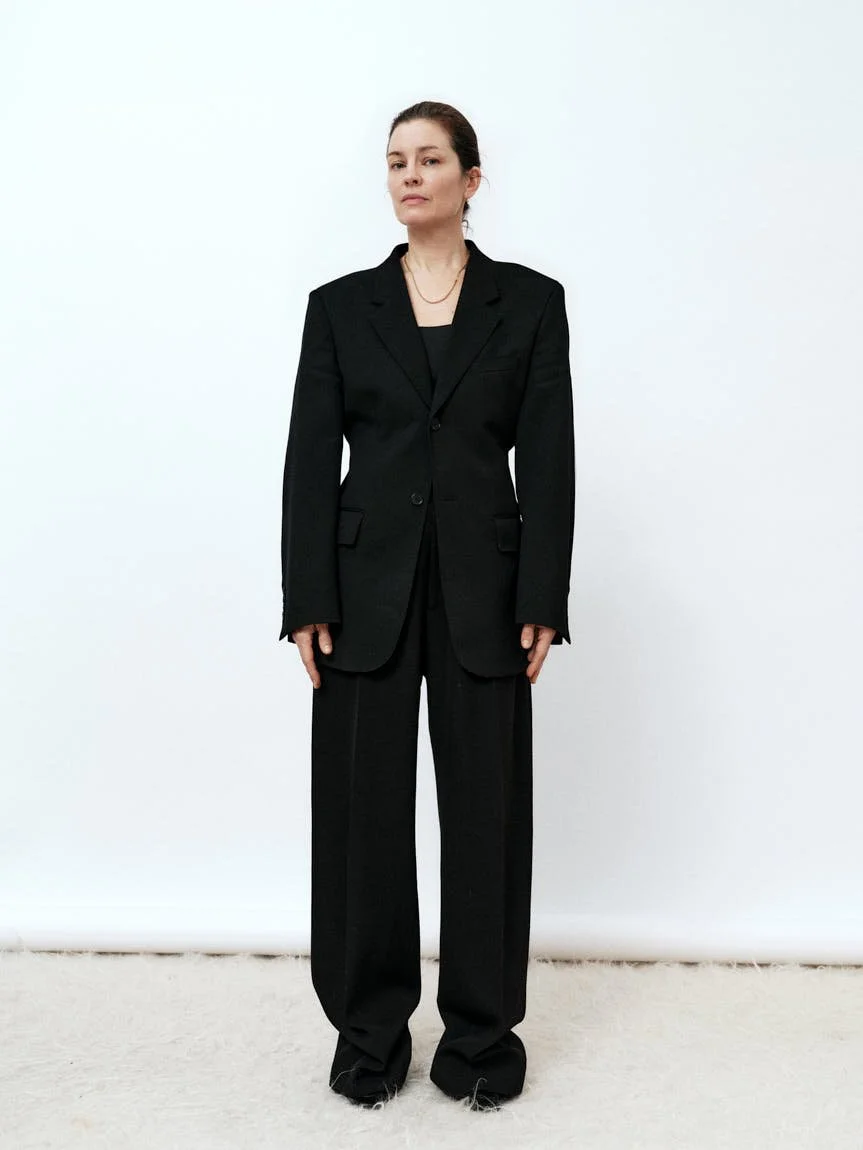
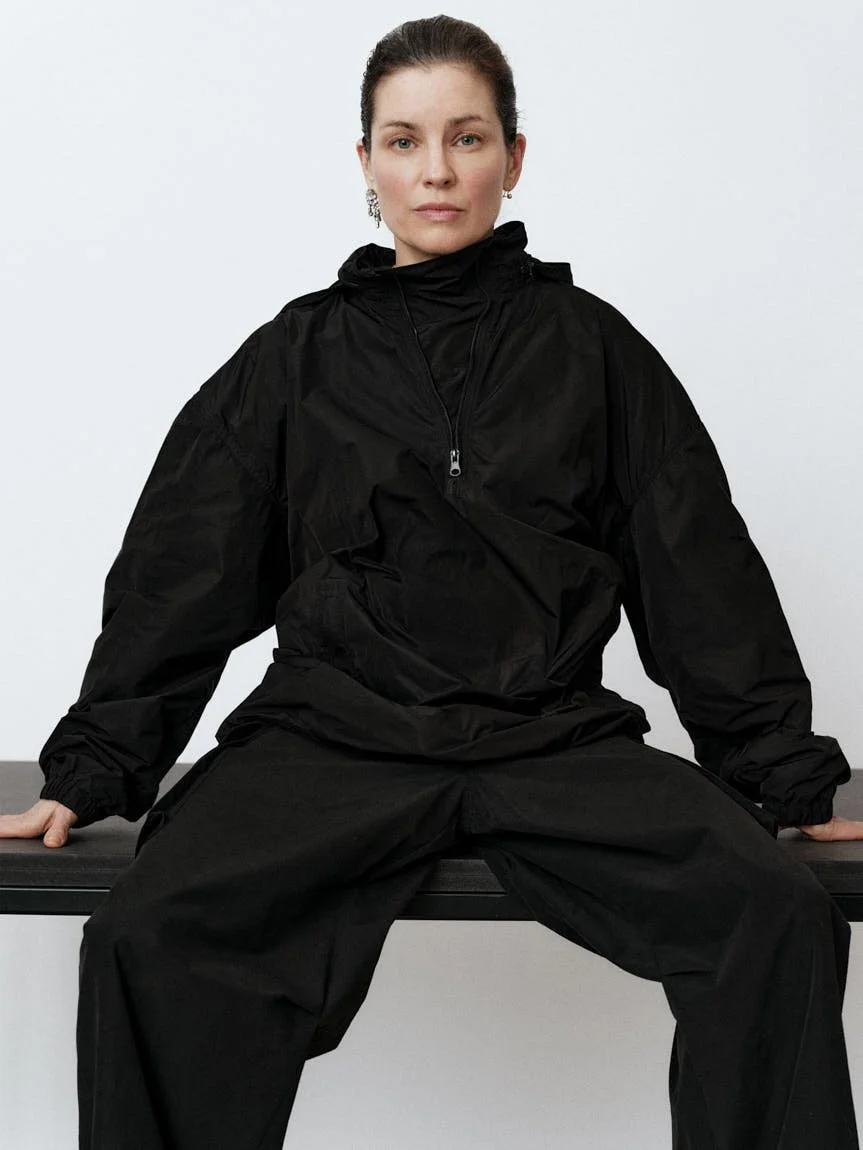
Anna Teurnell once bought a Céline coat for its extraordinary shape, then sold it after one or two wears. Designed during Phoebe Philo’s tenure, it was made in heavy Melton wool but had no buttons. A warm coat she couldn’t close made little sense to her. At TEURN Studios, the Swedish label she launched in 2021, she designs tailoring she can wear on long walks with her dogs, then take to work with a change of shoes.

 
TEURN STUDIOS FW26 Collection by Anna Teurnell for LE MILE Magazine

TEURN Studios
/FW26 Collection

Model seated on a black table wearing an oversized TEURN STUDIOS zip-neck jacket and wide-leg trousers in black.

TEURN Studios
/FW26 Collection

TEURN STUDIOS FW26 Collection by Anna Teurnell for LE MILE Magazine

TEURN Studios
/FW26 Collection


Having helped establish &Other Stories and served as Marimekko’s creative director, Teurnell had spent years working within other brands’ identities. Her own label grew from a preference for menswear and for having a uniform she could return to every day. A cashmere sweater and sharp trousers might stay much the same from one day to the next; a pink shoe or something glittering could change the mood. She still recognises herself in the description “candy minimalism.” In June 2025, the company behind TEURN went bankrupt amid financing difficulties and unpaid wholesale accounts. Teurnell bought back the brand that August. Speaking to LE MILE as it returns, she is candid about her own decisions: “We were perhaps a little blinded by the sales and the interest in the brand, and growth began to take up too much space.” The collections are now smaller, with no standalone shop planned for the restart.

European manufacturing remains central to her plans; she wants customers to pay for the quality of the clothes without an enormous marketing premium. Familiar gabardine tailoring returns, intended to work with pieces customers already own. When buyers ask for more dresses, she makes only those she would wear herself. Her version of a useful wardrobe also includes clothes that take the eye a while to accept. For Autumn/Winter 2026, she has been working on low-waisted trousers with zips and a slightly punkish character. “Are they pretty? I’m not sure, but I think they’re cool.”

 
TEURN STUDIOS FW26 Collection by Anna Teurnell for LE MILE Magazine

TEURN Studios
/FW26 Collection

TEURN STUDIOS FW26 Collection by Anna Teurnell for LE MILE Magazine

TEURN Studios
/FW26 Collection

TEURN STUDIOS FW26 Collection by Anna Teurnell for LE MILE Magazine

TEURN Studios
/FW26 Collection


When TEURN stopped producing new clothes, what did you miss first?

Anna Teurnell
I missed the process of creating a product from a vision, a need or simply a desire. Working through that process with skilled colleagues is what I love most. I find it meaningful to keep craftsmanship and manufacturing traditions alive, especially in Europe, and to make something of high quality with as few compromises as possible. It is fulfilling, and it is also a lot of fun.

In 2023 you said you wanted TEURN to become an “important and interesting fashion house.” Has losing the company, buying it back and starting again changed what that means to you?

Yes. I still have that ambition, but now I want to build it more carefully, with smaller collections and fewer compromises. What interests me most is everyday life: managing all the things you need to do while looking and feeling great. I do make pieces for more special occasions, but most of all I design for living your life: walking the dog, going to work, heading home with the kids, stopping at the playground, cooking dinner, then perhaps going out for a quick drink with a dear friend. That is the life I dress for.

I also hope to develop accessories further, because they can change a look so completely. Sharp trousers and a cashmere sweater can take you through much of that day. Change the shoes, perhaps add a sky-high heel, and the same clothes have a different energy.

“Every decision serves the product” is one of the clearest statements around the return. Looking back, where did the first TEURN occasionally lose sight of that?

We should have taken things more slowly. We were perhaps a little blinded by the sales and the interest in the brand, and growth began to take up too much space. Now I want to focus more closely on each individual piece: the fabric, the fit, the stitching and how it can be styled. Every detail should be considered and have a purpose. The customer should be able to see that care in the garment and feel it when wearing it.

We are starting with our own site and wholesale, without a store for now. I would love to have a store again, but it has to come at the right time. The business needs to give us the space to do this work properly.

Can “progressive luxury” still work in 2026 if you are producing with some of the same manufacturers as major luxury houses but trying to keep the final price substantially lower?

I believe it can, as long as we are honest about what quality costs. We know why high-end fashion is expensive, and we know why high-street fashion costs less. I want to work at a very high level of materials, construction and manufacturing, and charge what it actually takes to achieve that. I don’t want the customer to pay an enormous premium for marketing. The value should be real: something you can see and feel in the product, and experience in the world of TEURN.
That world of TEURN Studios matters to me too. I want our site to be inspiring, somewhere you enjoy spending time, discovering ideas and finding new ways to wear the clothes.


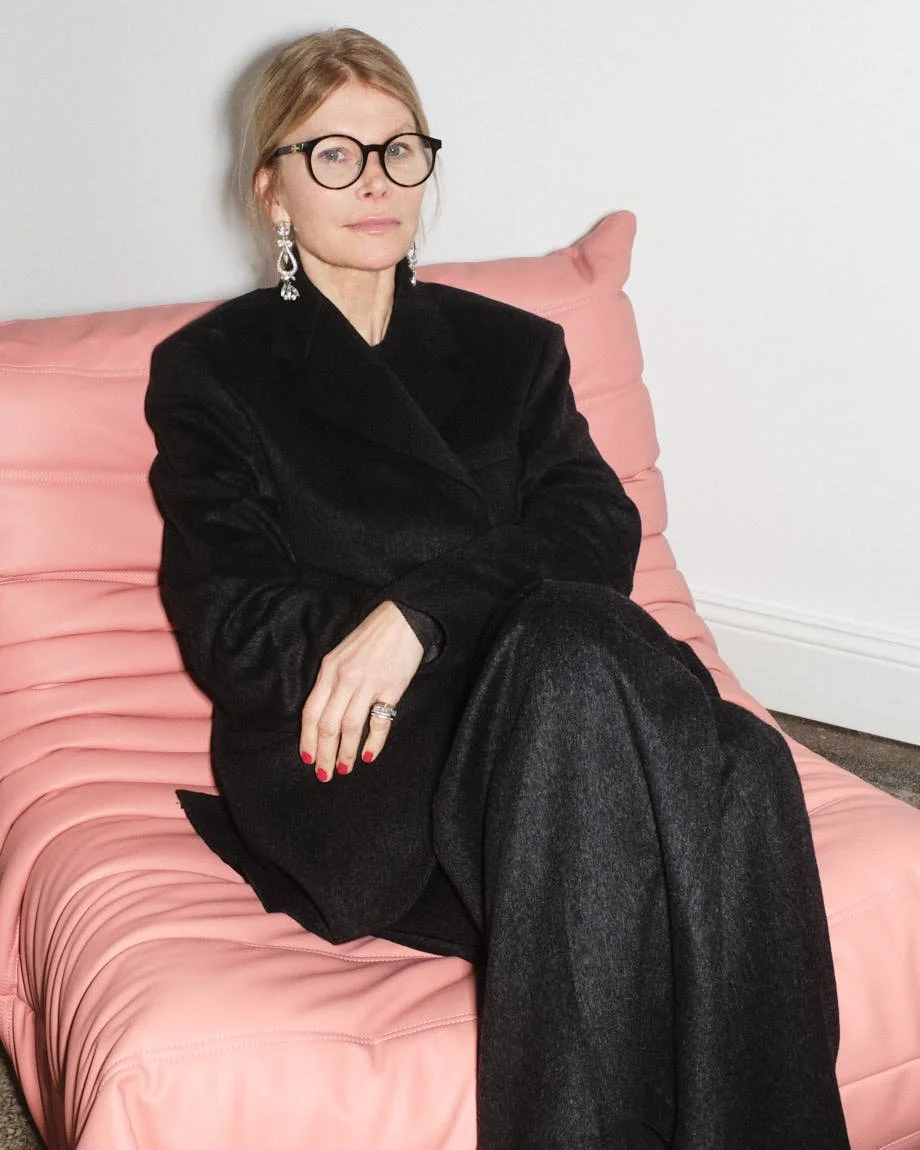
Anna Teurnell seated on a pink sofa in black tailoring, wearing round glasses and long drop earrings.

TEURN Studios
/founder Anna Teurnell


TEURN used to speak very explicitly about climate neutrality, recyclable constructions and choosing the lowest-impact material available. Now longevity is much more prominent. What changed?

I have become more careful with big claims. Material choices and how a garment is made still matter enormously, but no single material or construction makes a piece responsible by itself. Longevity is central to how I design: will you want to wear it often, care for it and return to it years from now? And if you no longer need it, could someone else be excited to buy it and wear it? I want TEURN pieces to have a life and a value beyond their first owner, perhaps even to become wonderful vintage finds one day. That takes quality, but also a design that remains interesting over time. It doesn’t replace the need to examine our impact and be transparent about it.

After H&M, Marimekko, ARKET and Filippa K, which habit from working inside large organisations became completely useless once the company was actually yours?

Waiting for permission! I started TEURN because I wanted to make what I really wanted to make and develop a design language of my own. That is an ongoing process; I don’t think it will ever be finished. I keep finding things I miss, things I like and new ways to approach them. It is a dialogue with myself, with the people I work with, like the team and the suppliers, and with the customer. That makes me happier and more creative, and it gives the work meaning.

Why not come back with ten perfect pieces? Why return with tailoring, leather, knitwear, accessories and jewellery all at once?

I wanted the collections to be more tightly edited, with fewer pieces and a clearer purpose for each one. At the same time, TEURN is a wardrobe, so tailoring, leather, knitwear and accessories need to work together. We will always have some recognisable TEURN pieces that return. They are important to our customers and make sense for the business, while new pieces add to the wardrobe and develop the look. The gabardine we use in our tailoring is a good example of that continuity. It is luxurious, easy to care for and something I hope customers will recognise. A new piece in that fabric can sit naturally alongside clothes they already own, including earlier TEURN.

Buyers kept asking you for more dresses while your own instinct pulled towards menswear and uniform dressing. Who won this time?

I listen to my inner voice. I won’t make dresses simply because there is a demand for them. I make a few, and I have to want to wear them myself. Right now I’m more interested in skirts. I love how Miuccia Prada has spoken about the skirt as a uniform. It is so easy to dress up or down: wear it with a jumper, a jacket or a blouse, and the feeling changes. That kind of versatility suits the way I live and design.

 
TEURN STUDIOS FW26 Collection by Anna Teurnell for LE MILE Magazine

TEURN Studios
/FW26 Collection

TEURN STUDIOS FW26 Collection by Anna Teurnell for LE MILE Magazine

TEURN Studios
/FW26 Collection

TEURN STUDIOS FW26 Collection by Anna Teurnell for LE MILE Magazine

TEURN Studios
/FW26 Collection


You once said you like testing things that sit almost on the edge of being ugly. Which AW26 piece got closest?

I’m glad you noticed that! Something that feels a little ugly at first can also feel new; sometimes your eye needs time to adjust. For AW26, I’ve been working on some low-waisted, slightly punkish trousers with zippers. Are they pretty? I’m not sure, but I think they’re cool. I also like the look of puffy trousers tucked into riding boots, with a slightly Cossack feeling. I’ve noticed that I often add the unexpected or cooler element to the lower half of the body.

Does “Candy minimalism” still describe TEURN, or has the brand become less sweet since the restart?

I’m still quite OK with the expression. But what I recognise most in my work is the element of surprise. I often start with fairly normal clothes and a masculine, minimal look, then add something unexpected. It might be an accessory, glitter, pink or a pair of heels, something sweet or traditionally considered feminine. That small change can alter the whole mood. I think that is what “candy minimalism” was trying to capture.

Which TEURN piece do you actually wear often enough to prove your idea of repeating the same wardrobe with small adjustments?

I think I dress a little the way people often say men do: once I find my style, I want to wear almost the same look day after day. I find myself looking for versions of pieces I already own and love, just with something slightly new about them. It becomes a uniform I return to every day.
There are many examples. I take long walks with our dogs every day, often for hours, and I might wear, quite sporty utility trousers or jeans or our tailored trousers with a simple knit, like the V-neck cashmere sweater we are about to launch. I like all our trousers and wear them all the time. When I go to work, I can change into shoes with a heel, and suddenly the same basic look has a little glamour.

I also wear our pleated skirts, which are coming soon, with an oversized shirt or roomy jumper. That works for me at work and afterwards. I often choose flats with skirts and dresses, perhaps to balance the feminine side a little.


all images courtesy TEURN Studios, FW26 Collection
discover more: www.teurnstudios.com

Pharrell Williams takes Louis Vuitton Out in the Rain

Pharrell Williams takes Louis Vuitton Out in the Rain

Double-click to edit...

A Review of the Louis Vuitton Spring/Summer 2027 Collection

Pharrell Williams takes Louis Vuitton out in the rain


LE MILE


By the time Pharrell Williams put Timberland boots on Louis Vuitton’s AW24 runway, hip-hop had spent decades demonstrating what a work boot could become. On New York streets, wheat-coloured nubuck and thick rubber soles had acquired the authority of a uniform.

 
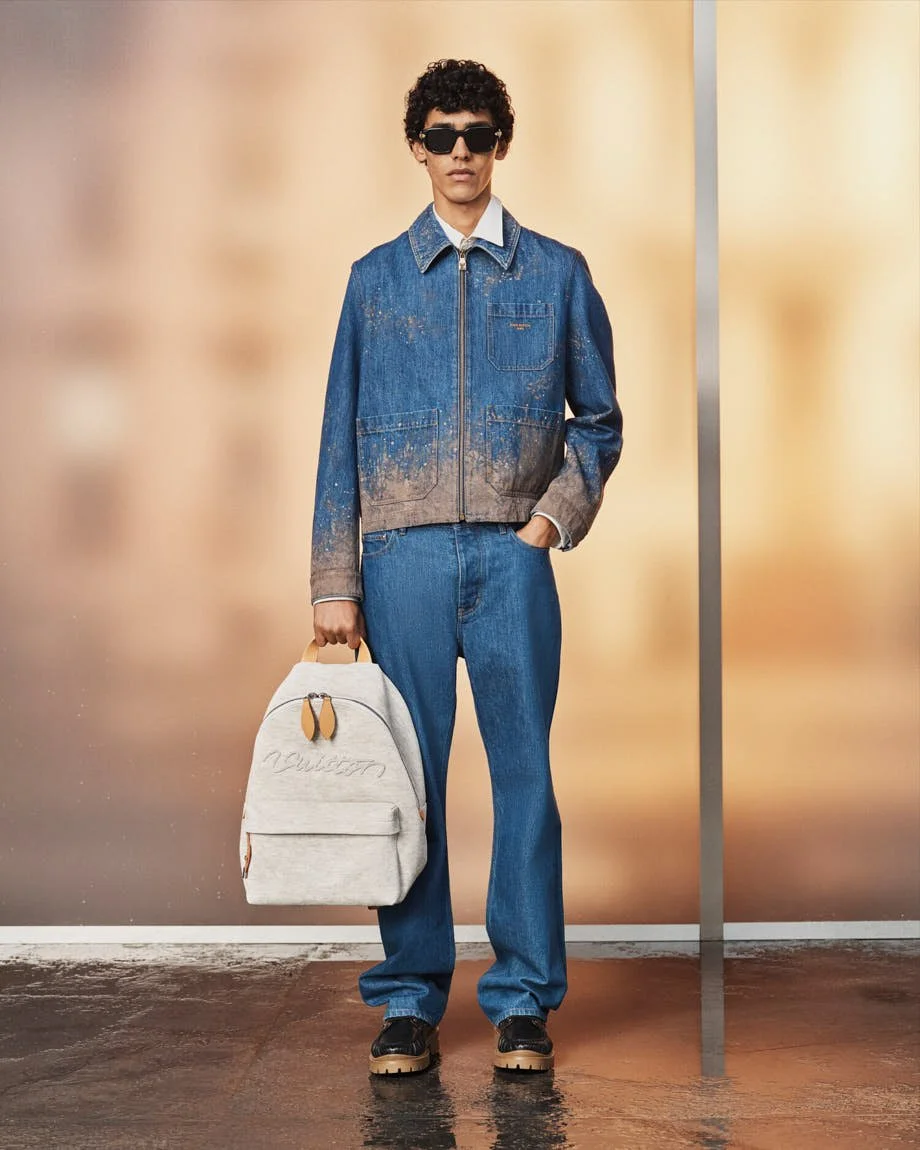
Model wearing a mud-effect Louis Vuitton denim jacket with blue jeans and carrying a pale grey backpack.

Louis Vuitton SS27 lookbook
/ shot by Sarah Blais

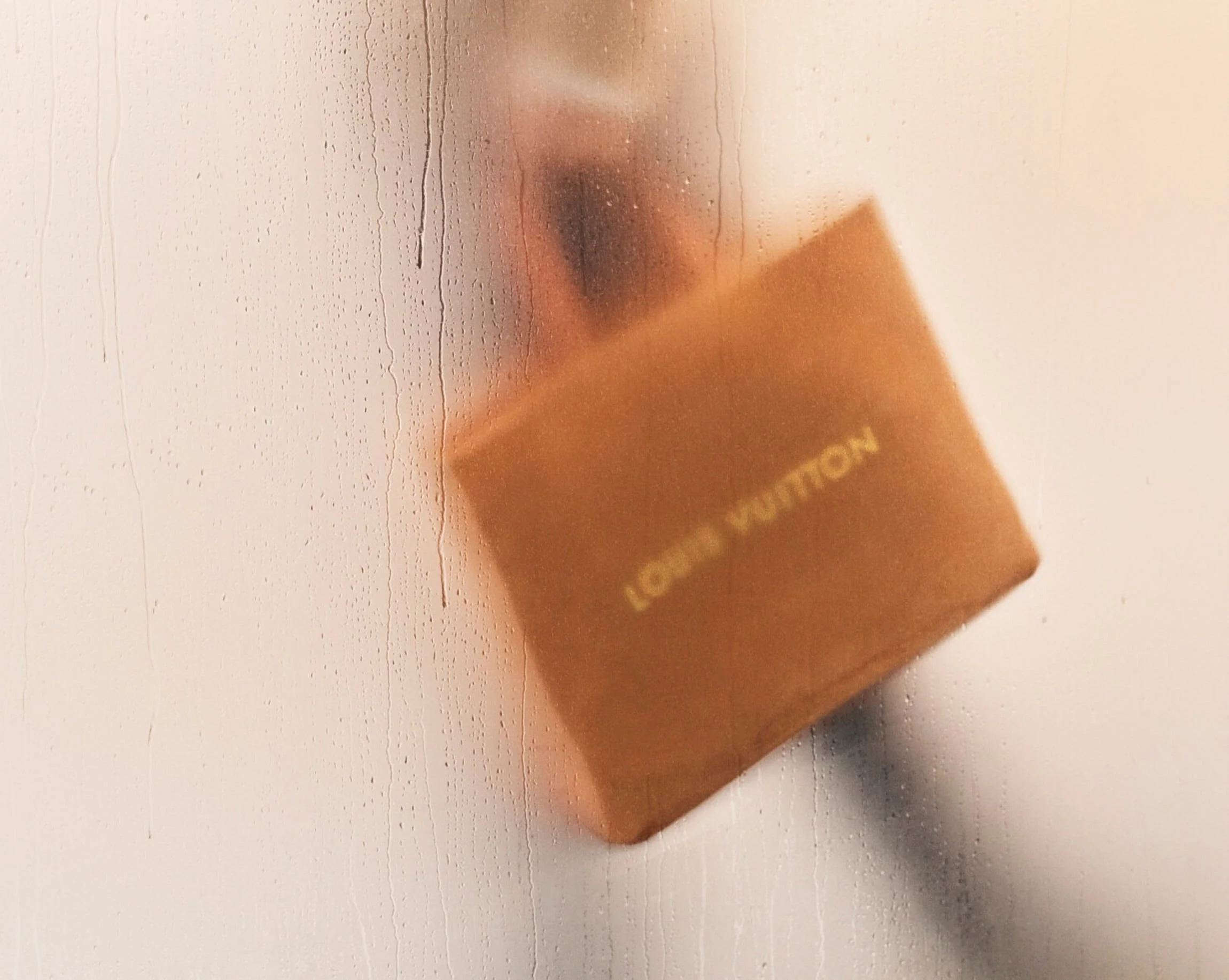
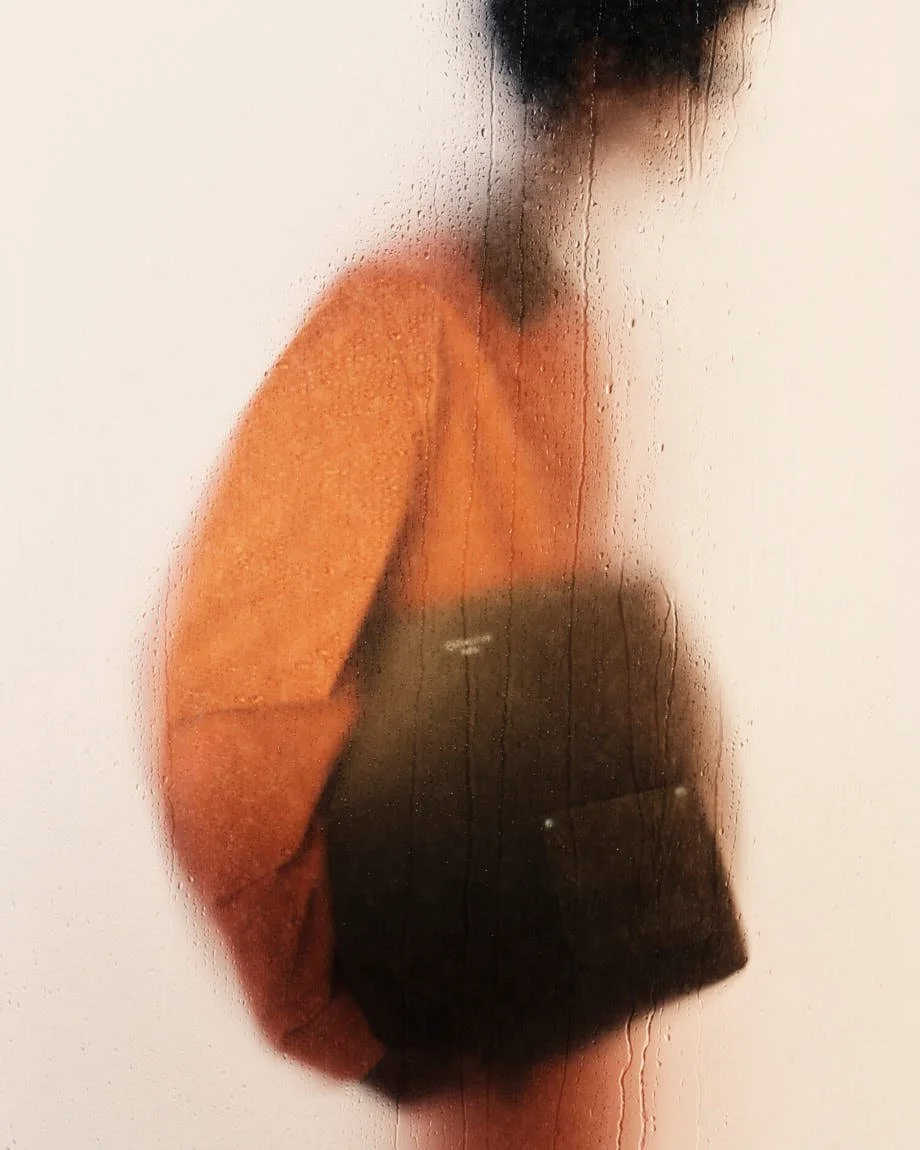
Orange Louis Vuitton workwear jacket and a dark brown tote photographed through rain-streaked glass.

Louis Vuitton SS27 lookbook
/ shot by Sarah Blais

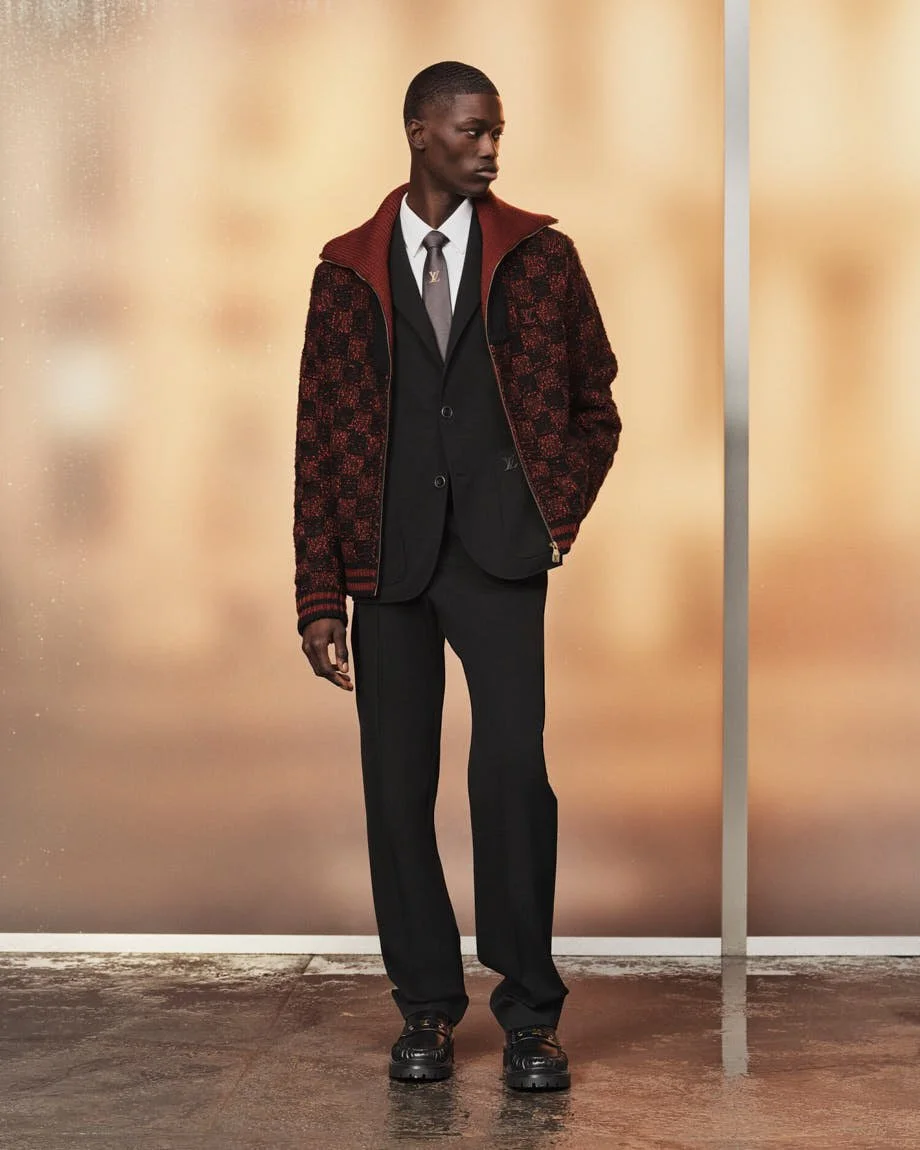
Model wearing a burgundy and black Louis Vuitton jacket over a dark suit, white shirt and tie.

Louis Vuitton SS27 lookbook
/ shot by Sarah Blais

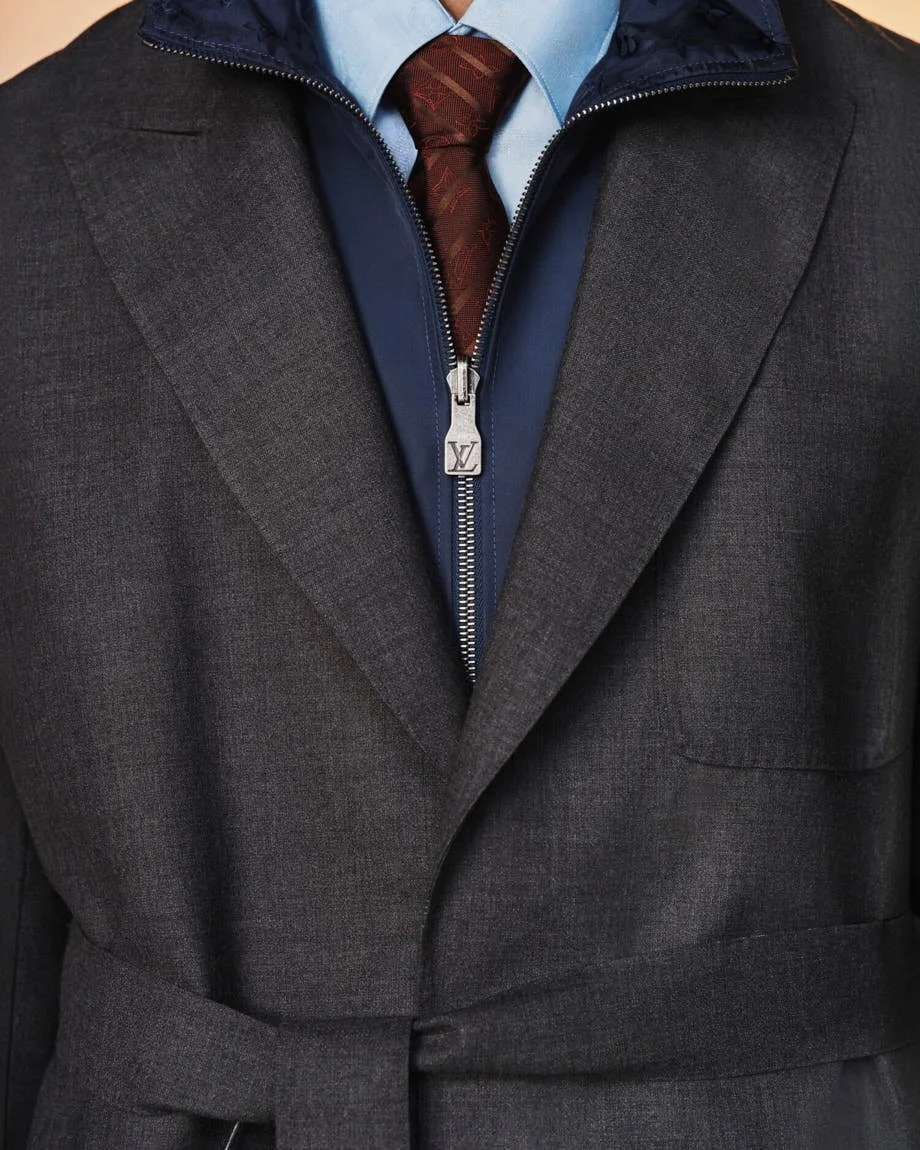
Close-up of Louis Vuitton’s belted charcoal tailoring with a blue zip collar and burgundy tie.

Louis Vuitton SS27 lookbook
/ shot by Sarah Blais

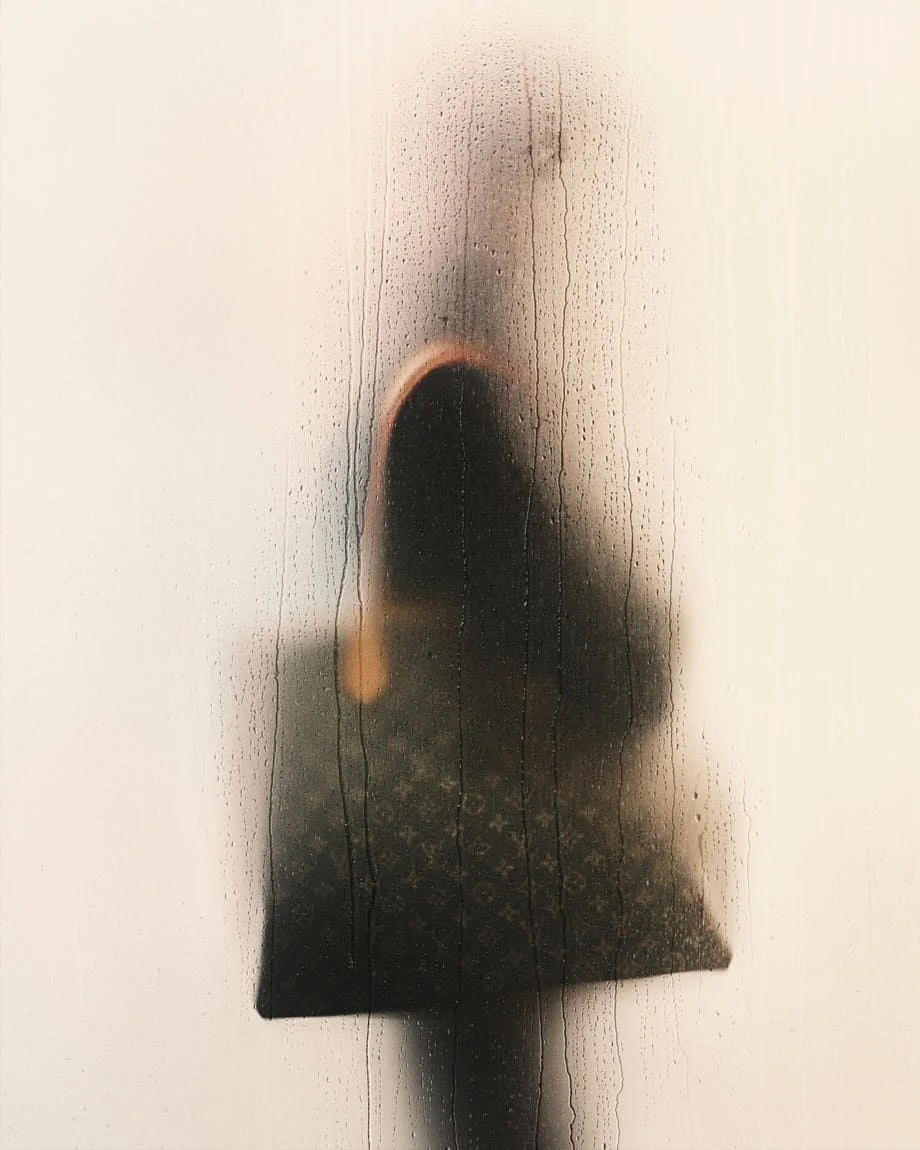
Blurred figure in dark Louis Vuitton clothing carrying a large bag behind rain-streaked glass.

Louis Vuitton SS27 lookbook
/ shot by Sarah Blais

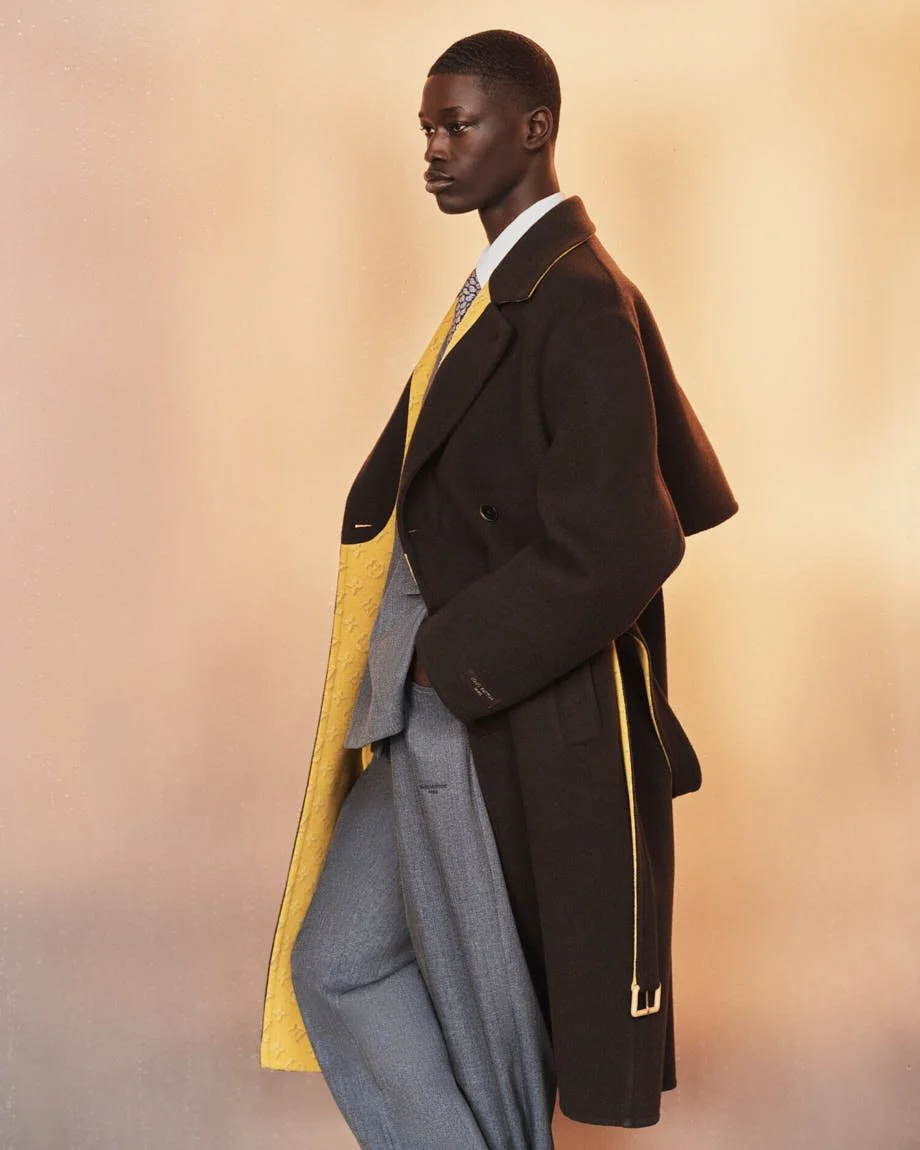
Side view of a model in a brown Louis Vuitton coat with yellow lining, layered over a grey suit.

Louis Vuitton SS27 lookbook
/ shot by Sarah Blais

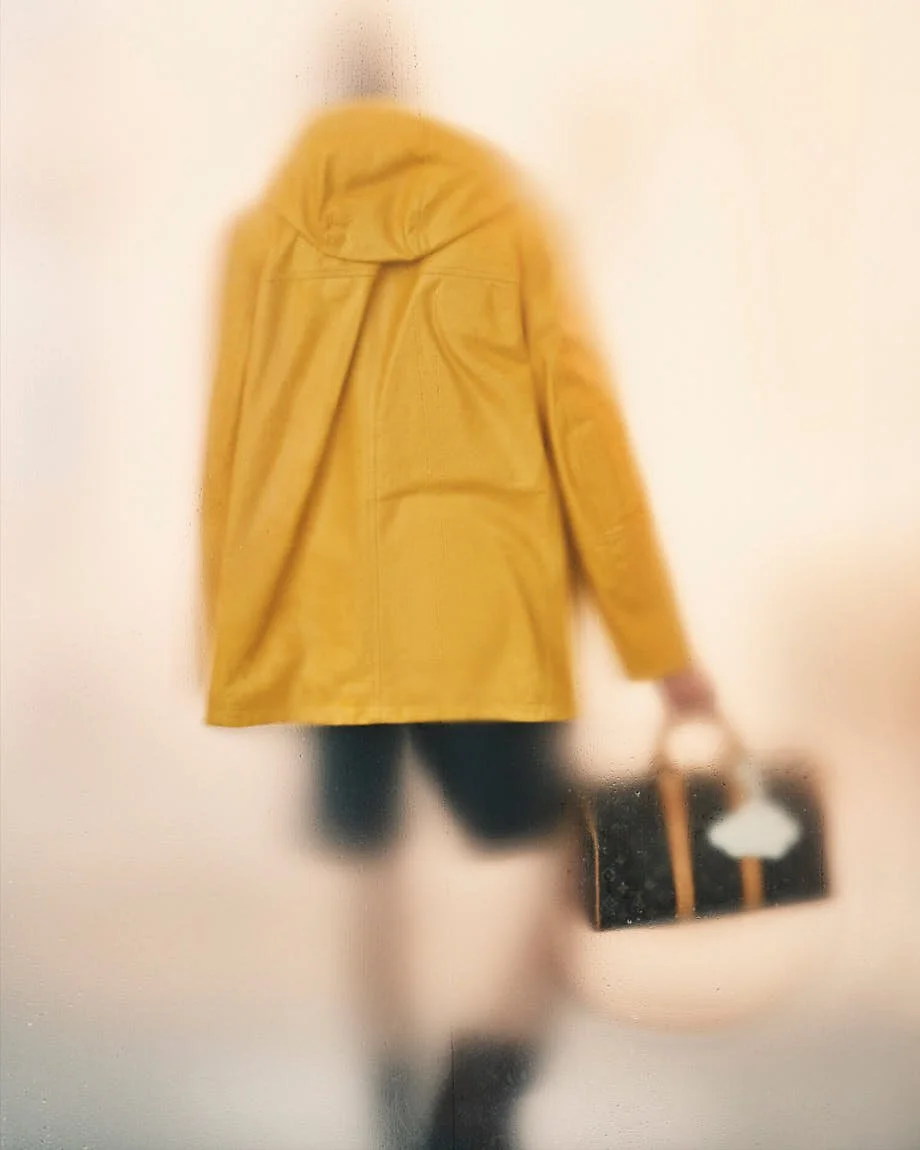
Rear view of a yellow Louis Vuitton hooded jacket and dark Monogram bag through rain-streaked glass.

Louis Vuitton SS27 lookbook
/ shot by Sarah Blais


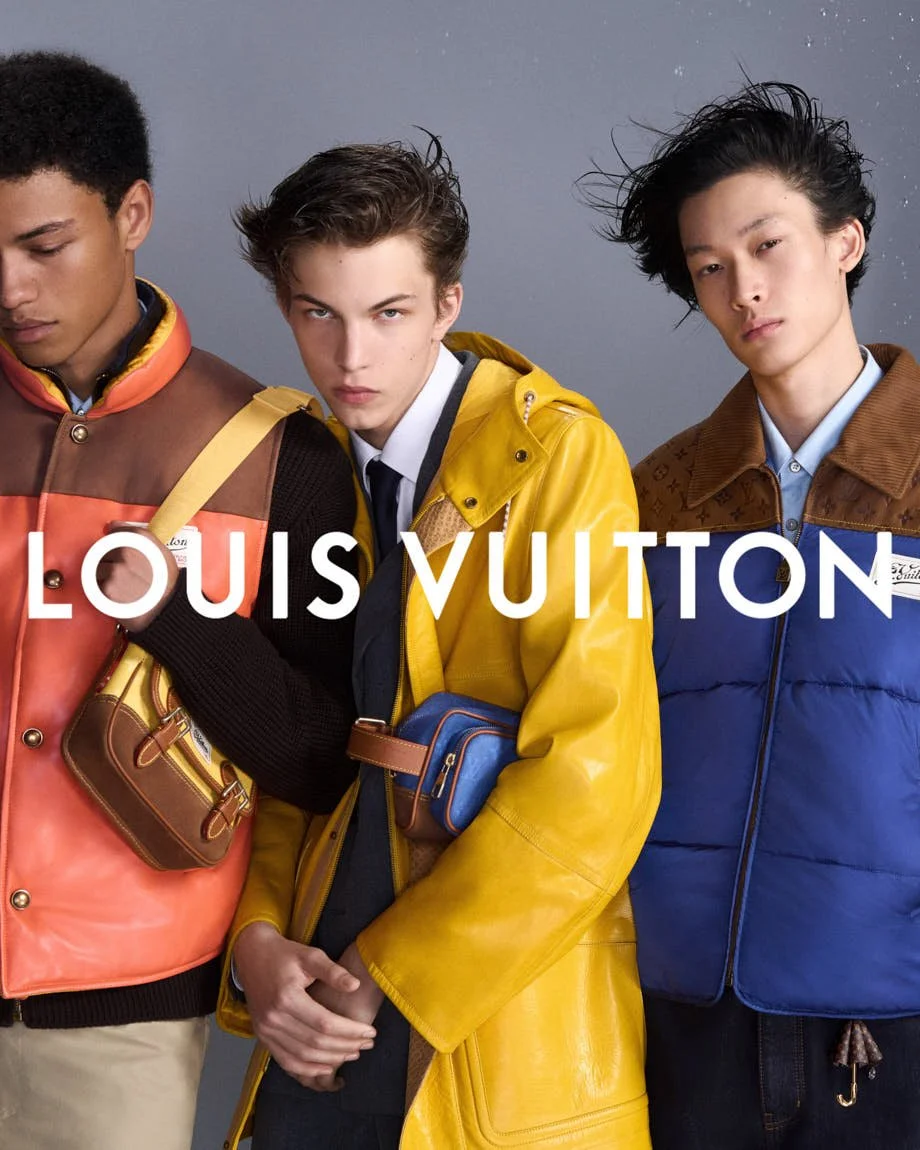
For Whatever the Weather, his Spring/Summer 2027 men’s pre-collection, Pharrell brings that history into Vuitton’s outdoor wardrobe. The Monogram leather shoulders on a blue puffer recall the logo-covered outerwear Dapper Dan made for Harlem’s musicians in the 1980s. The monogram became part of hip-hop’s vocabulary of display. Pharrell is designing inside a house whose glamour musicians and their tailors helped rewrite from outside. The house now makes the kinds of clothes its admirers once invented for themselves.

The leather hoodie takes that licence to remake familiar clothes into the Vuitton workshop, where craftspeople reproduce grey sweatshirt jersey down to the feel of the fabric. That labour is extravagant precisely because the desired effect is so ordinary. Pharrell understands how much attention can go into looking as though you have dressed without thinking. The factory-applied mud on denim and shoes extends menswear’s long habit of paying for scuffs and fading to the dirt itself. For Vuitton, whose business has been built around journeys, even the evidence of having travelled becomes a luxury service.

 
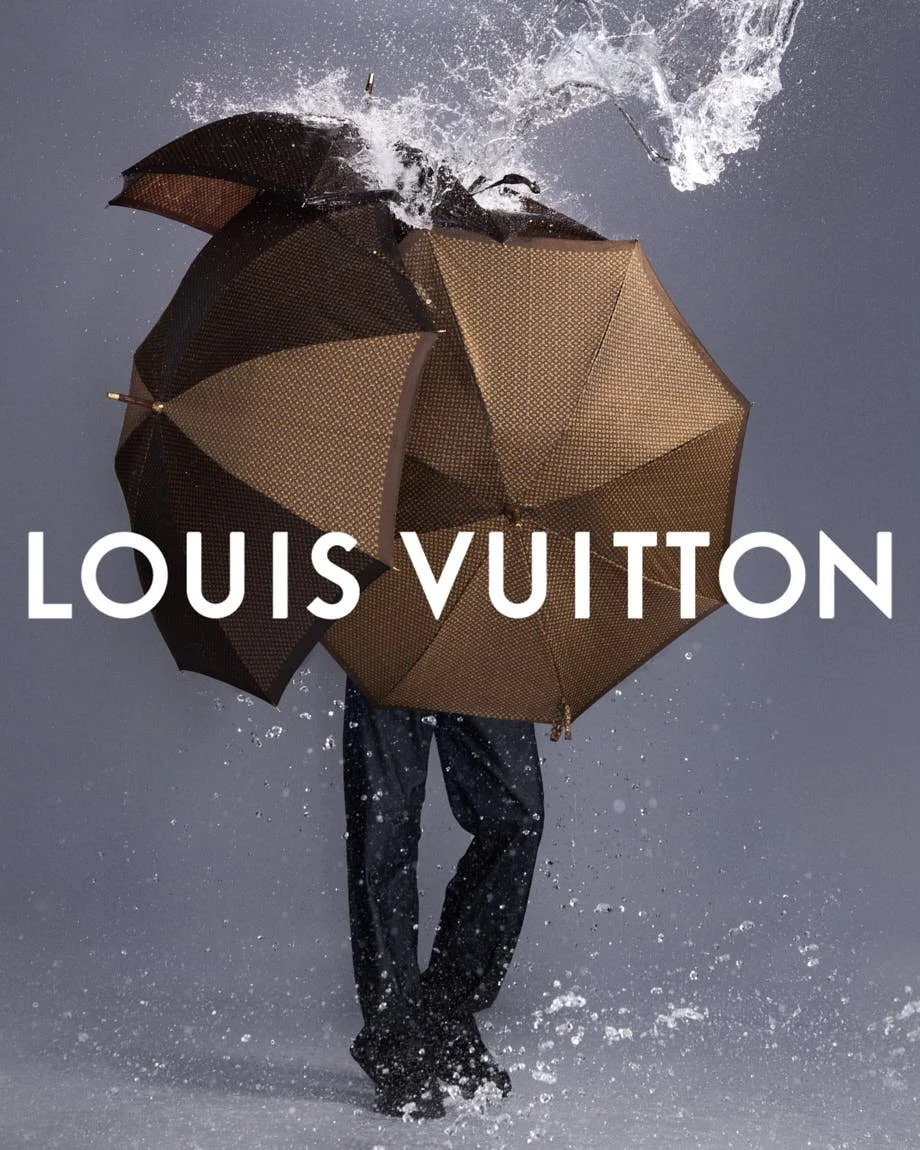
Model obscured by a brown umbrella as water splashes around him in the Louis Vuitton SS27 campaign.

Louis Vuitton SS27 campaign
/ shot by Oliver Hadlee Pearch

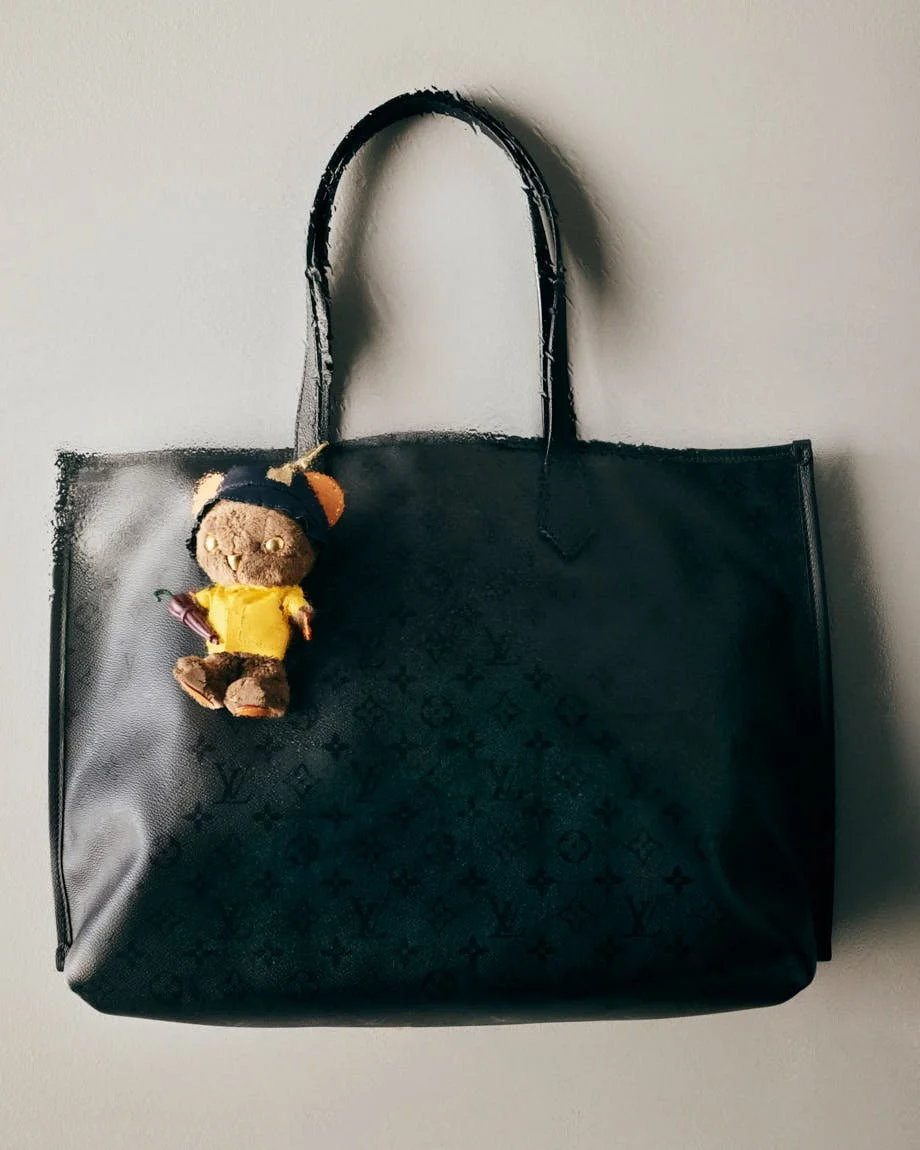
Dark green Louis Vuitton Monogram tote with a bear charm dressed in a yellow raincoat.

Louis Vuitton SS27 stills
/ shot by Eduard Sanchez

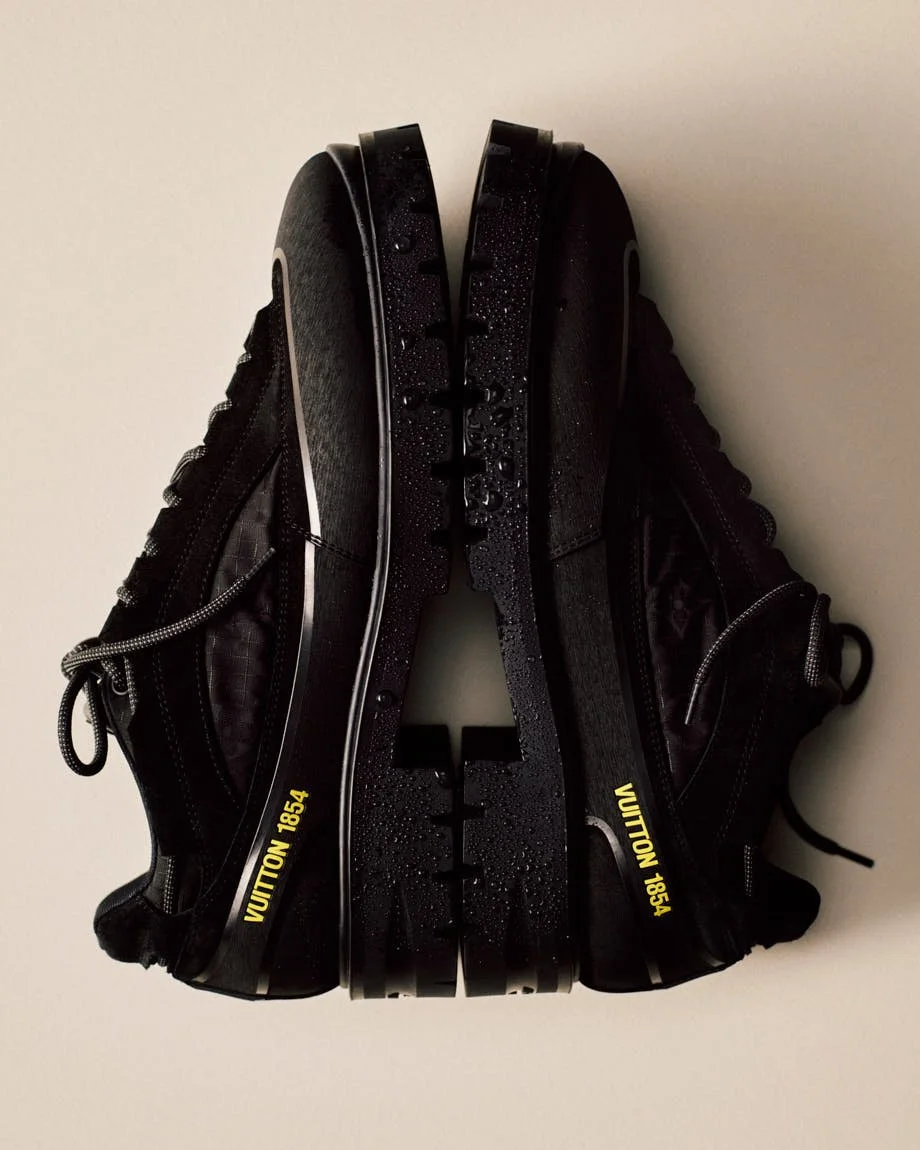
Pair of black Louis Vuitton lace-up shoes positioned to show their thick lugged soles and yellow details.

Louis Vuitton SS27 stills
/ shot by Eduard Sanchez

Three models in orange, yellow and blue Louis Vuitton outerwear against a grey backdrop.

Louis Vuitton SS27 campaign
/ shot by Oliver Hadlee Pearch

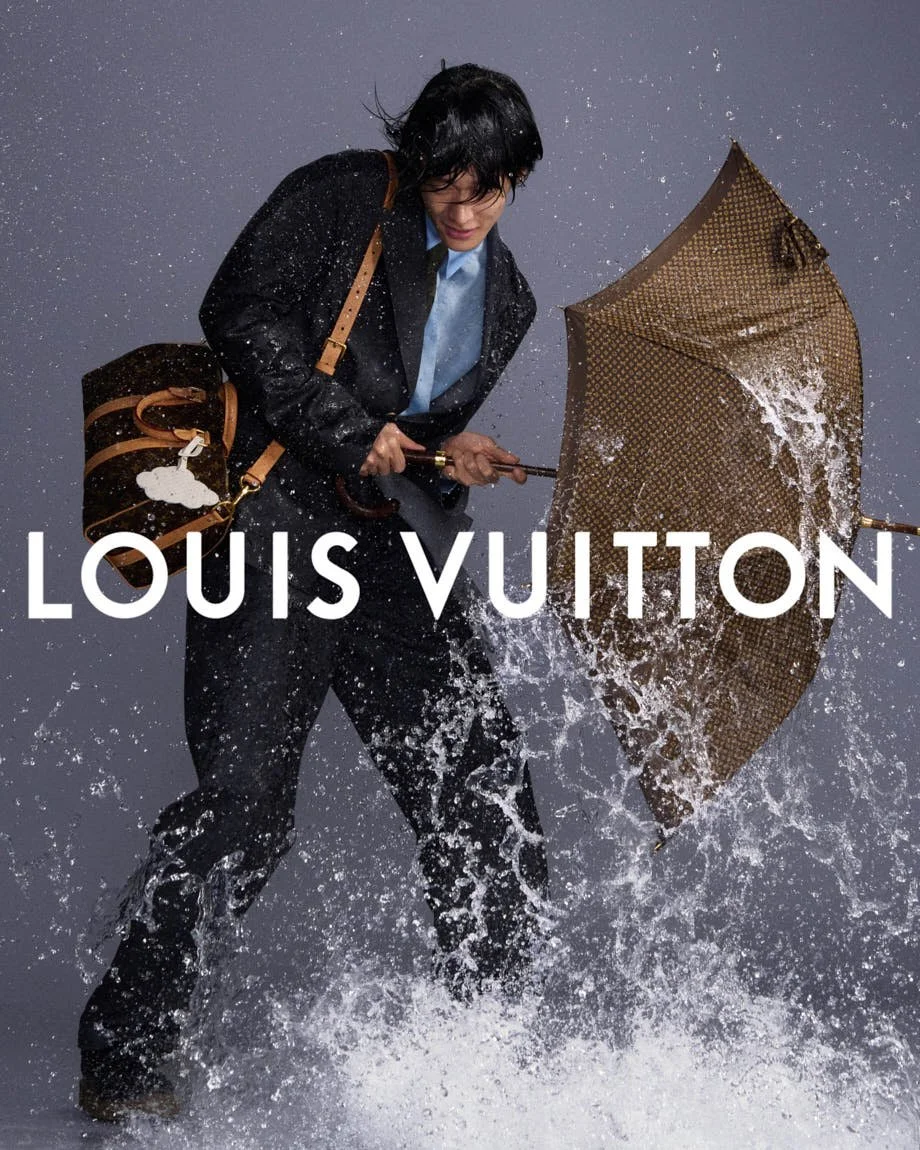
Model in dark Louis Vuitton tailoring holding a brown umbrella amid splashing water.

Louis Vuitton SS27 campaign
/ shot by Oliver Hadlee Pearch

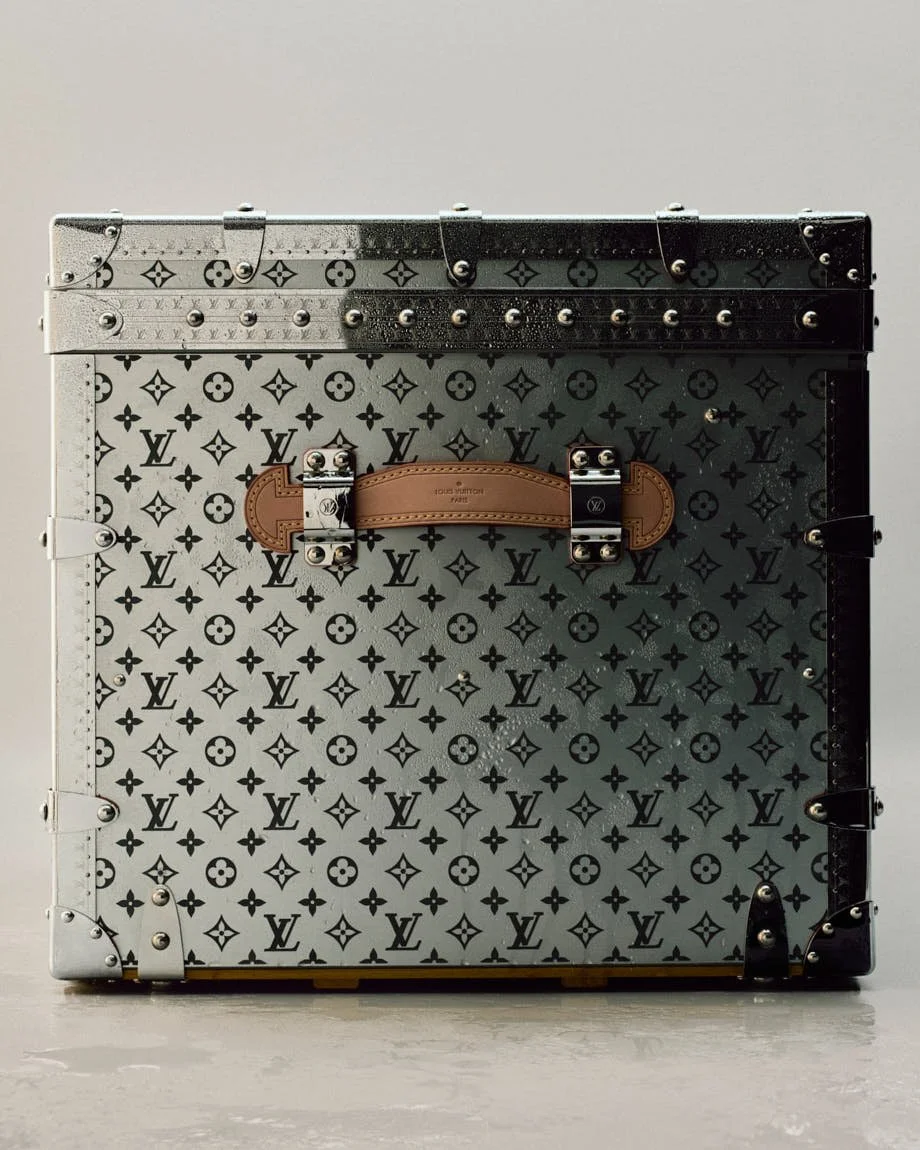
Silver-toned Louis Vuitton Monogram case with a tan leather handle and dark riveted edging.

Louis Vuitton SS27 stills
/ shot by Eduard Sanchez


The campaign treats this appetite for dressing up with a welcome lack of solemnity, its businessman caught in a storm belongs to the tradition of physical comedy, and Pharrell gives him the elaborate wardrobe the role deserves. The expense makes the predicament funnier. A house that has spent generations equipping travellers allows its customer to lose his composure.


all images (c) LV Press, Images courtesy of Louis Vuitton.
/ lookbook images shot by Sarah Blais, campaign images shot by Oliver Hadlee Pearch, still Life images shot by Eduard Sanchez.

Jonathan Anderson Picks Up Dior’s Ribbon

Jonathan Anderson Picks Up Dior’s Ribbon

Jonathan Anderson’s Dior Ribbon sneakers for Spring 2027


written LE MILE


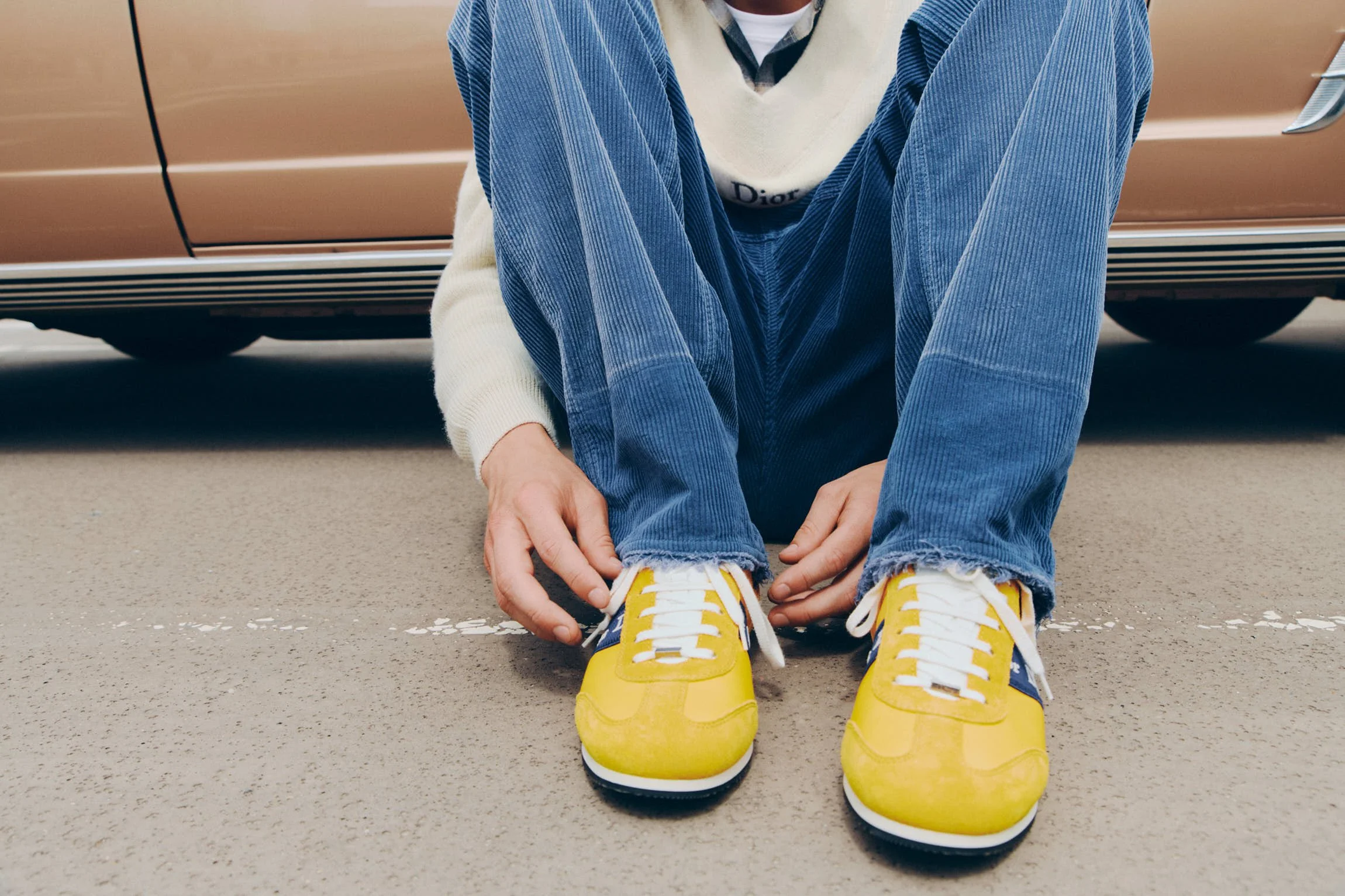
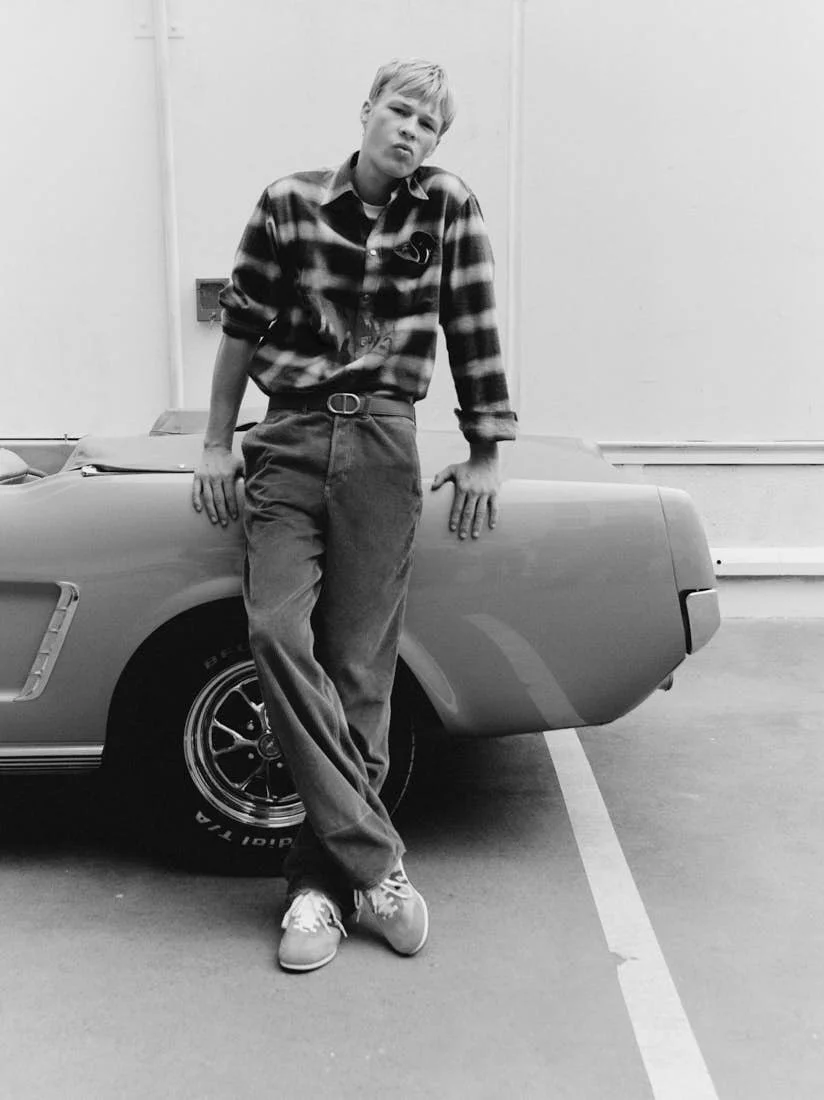
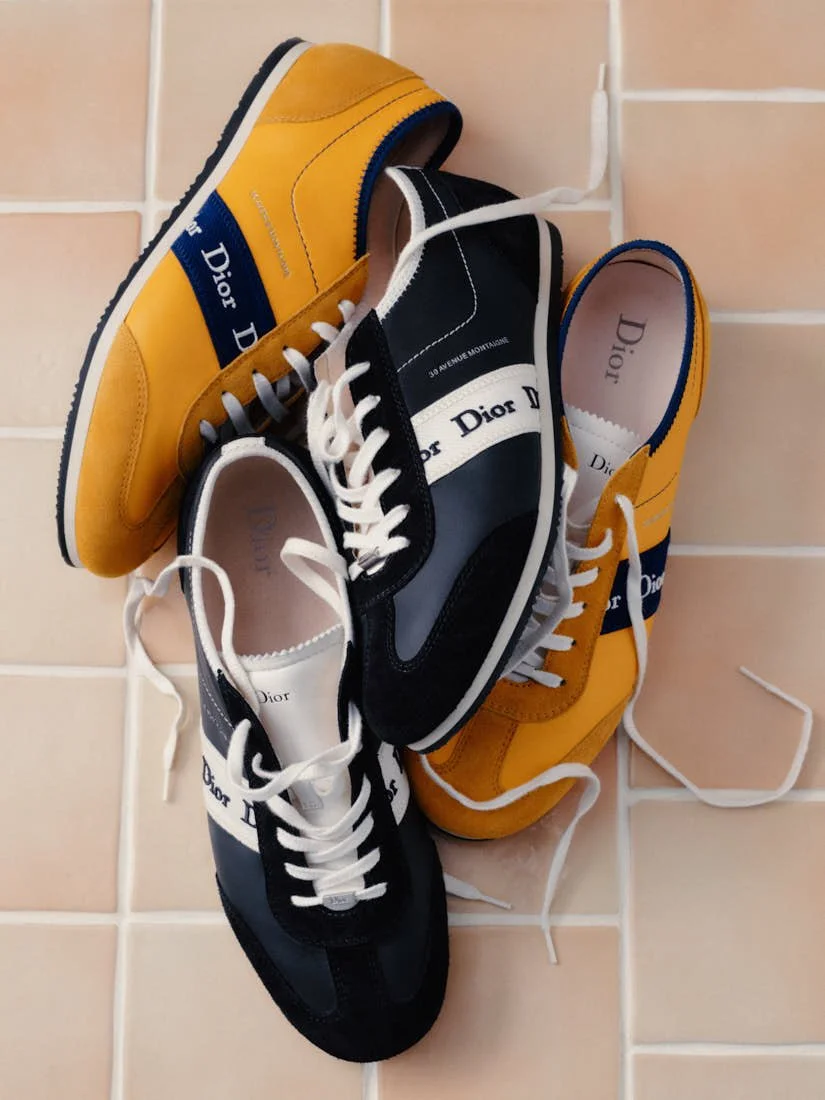
Jonathan Anderson picks up a familiar thread with the Dior Ribbon sneaker, borrowing the lettered tape associated with Maria Grazia Chiuri’s J’Adior slingbacks. The ribbon appeared on the straps of kitten heels in her Spring/Summer 2017 debut. For Spring 2027, Anderson gives that signature a place on a pared-down running shoe, carrying a recognisable piece of Dior into another part of the wardrobe.


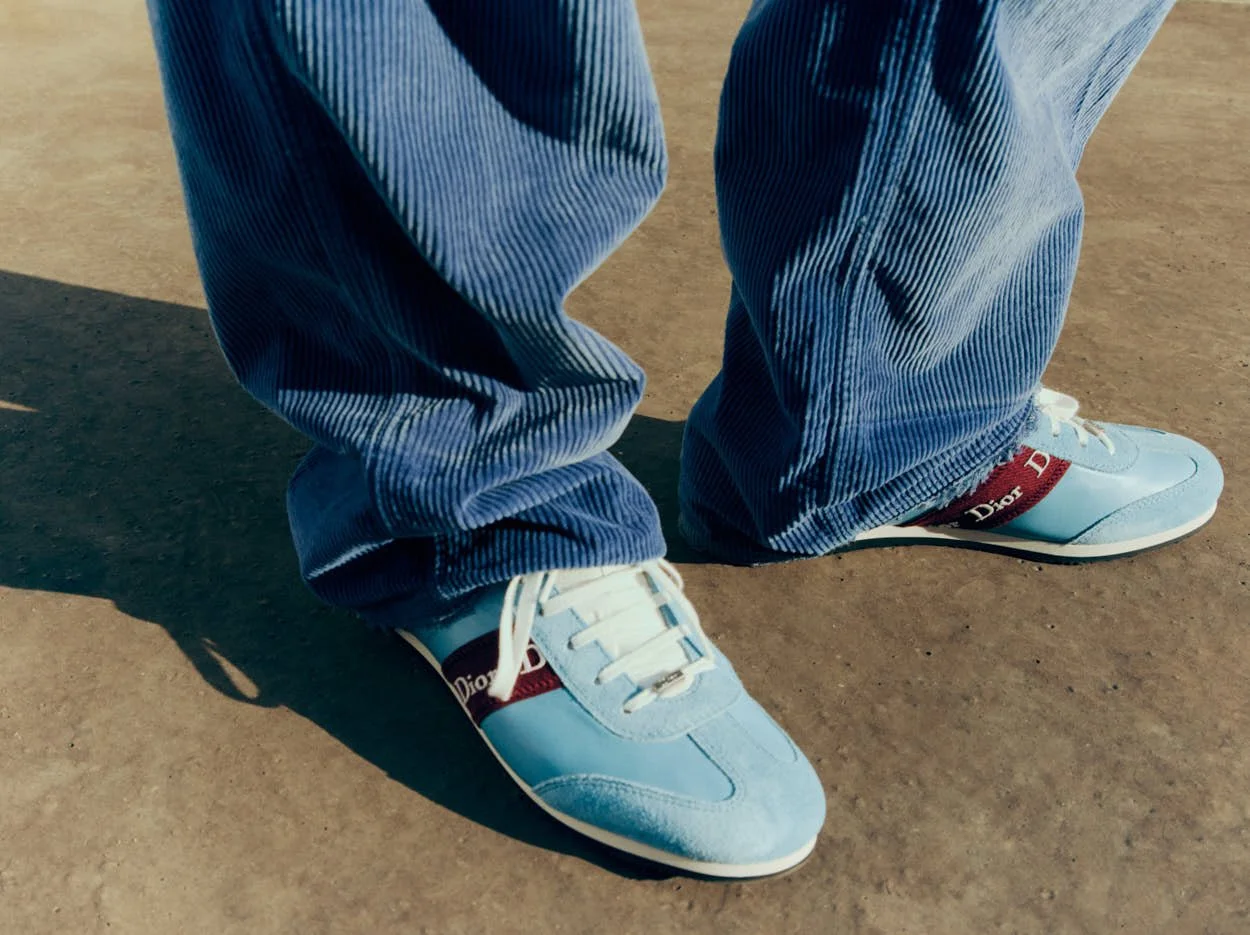
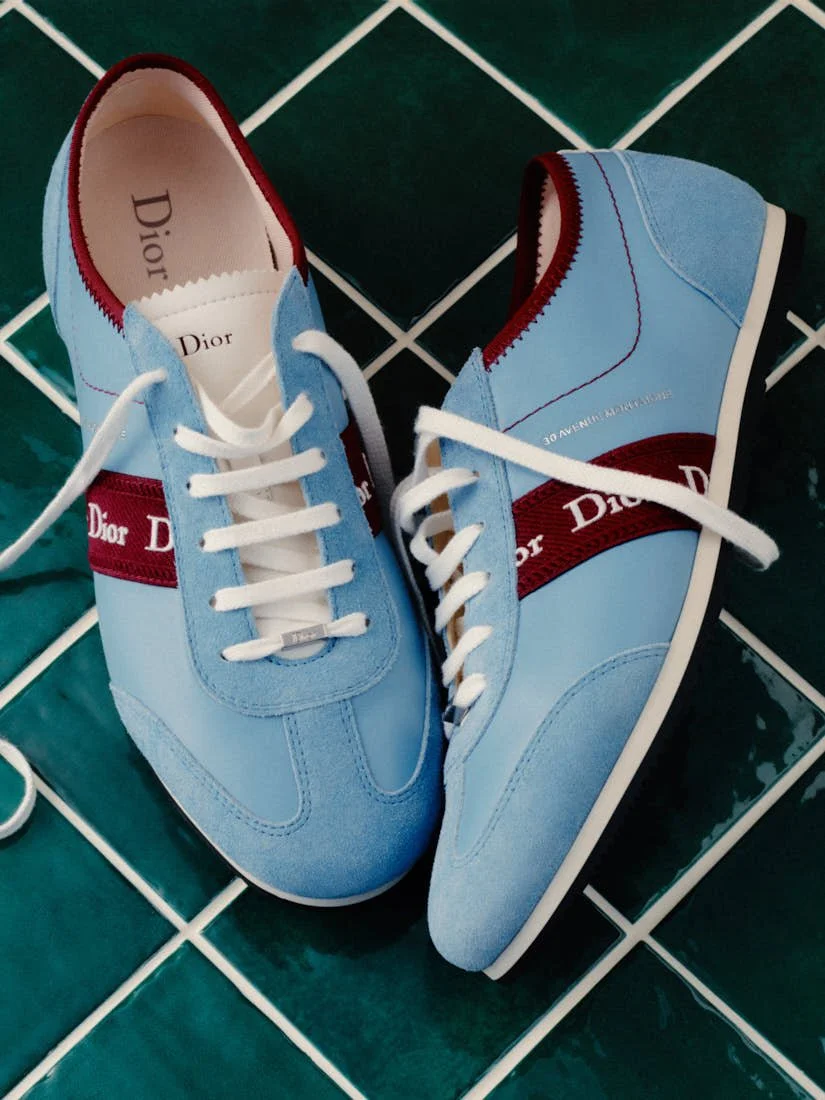
Across leather-and-suede combinations and a version bearing Dior Oblique, the Ribbon keeps the narrow profile of a retro runner. The band runs along its side, bringing the Dior name into the shoe’s panelled construction; other versions carry the signature moulded into the sole. The pleasure of the design lies in that slight incongruity. A ribbon associated with dressing up becomes part of a shoe someone can pull on with an old pair of jeans.


Pale blue Dior Ribbon sneakers with burgundy Dior bands on green tiles.

Pale blue Dior Ribbon sneakers with burgundy Dior bands on green tiles.
/ photo by Christian Colomer

Pale blue Dior Ribbon sneakers with burgundy bands beneath loose blue jeans.

/ photo by Romain Roucoules

Black-and-white portrait of a model wearing Dior Ribbon sneakers beside a vintage car.

/ photo by Christian Colomer

Yellow and black pairs of Dior Ribbon sneakers on peach-coloured tiles.

Yellow and black pairs of Dior Ribbon sneakers on peach-coloured tiles.
/ photo by Romain Roucoules


Chiuri’s Spring/Summer 2017 debut drew on fencing, with J’Adior ribbons appearing around waistbands and as bra straps across the collection. Seen in that context, Anderson’s runner picks up on a sporting connection already present in the ribbon’s history. The band takes the position of a stripe along the side of the foot, carrying a hint of underwear trim into the running shoe.


(c) all images DIOR Press. Images courtesy of Dior.
Editorial images photographed by Christian Colomer, Still Life images by Romain Roucoules.

Willy Chavarria’s Vision - adidas Originals adiSignature

Willy Chavarria’s Vision - adidas Originals adiSignature

Double-click to edit...

A review of the adidas adiSignature by Willy Chavarria FW26 collection

Willy Chavarria Puts Pride into adidas Originals adiSignature


LE MILE


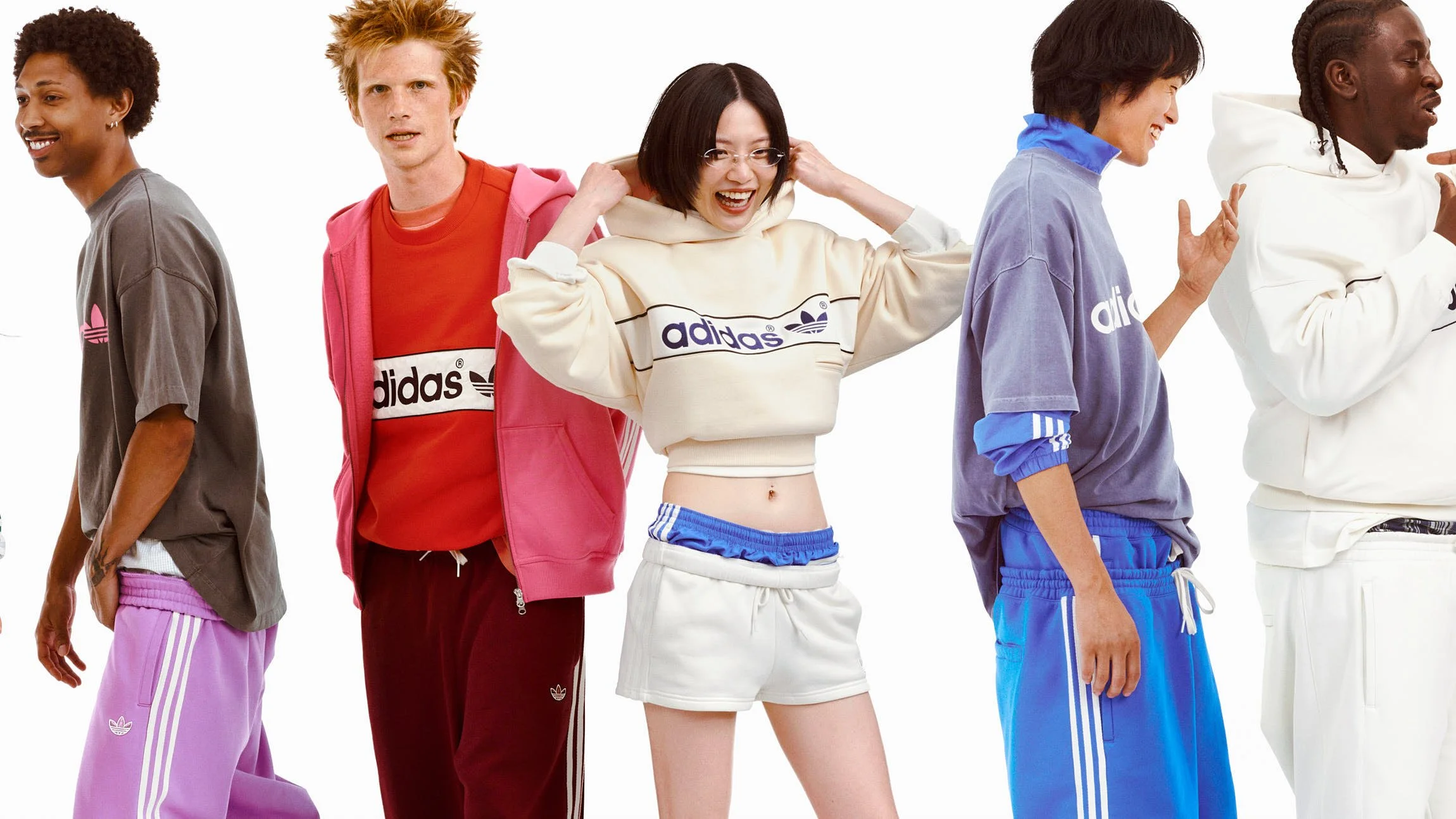
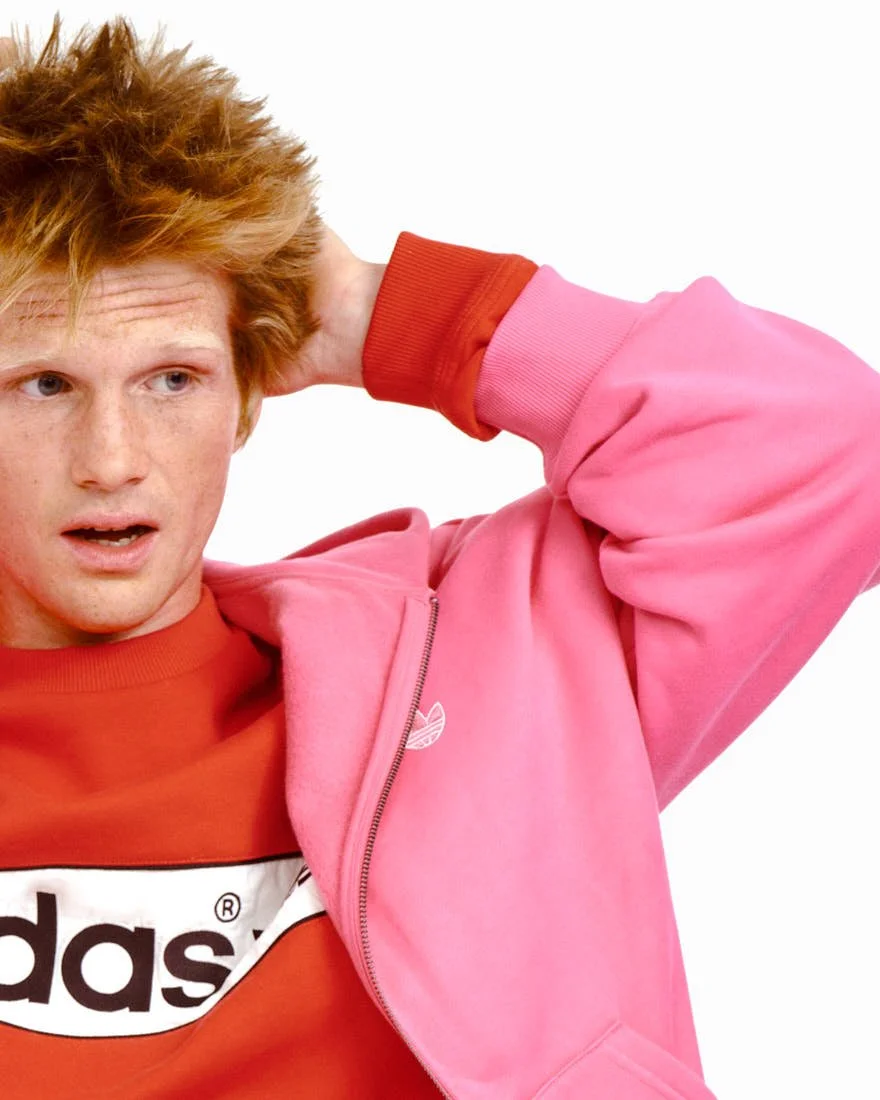
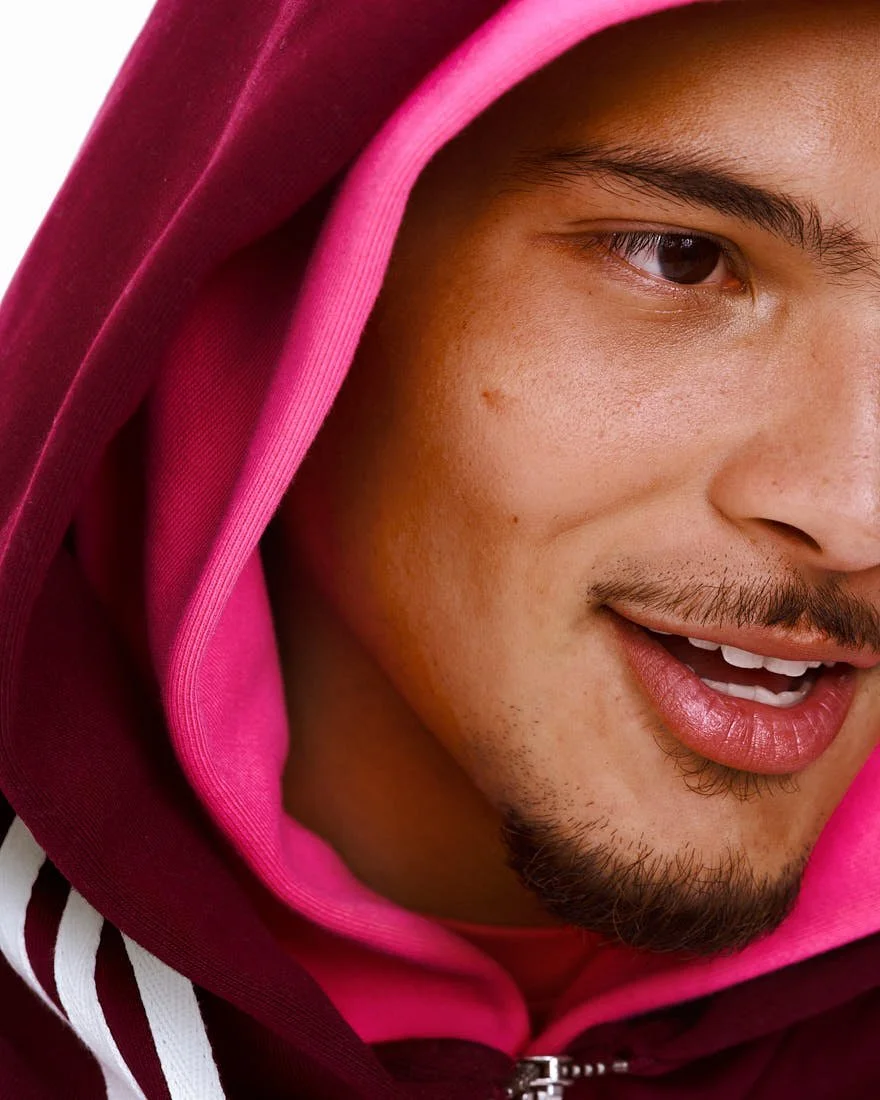
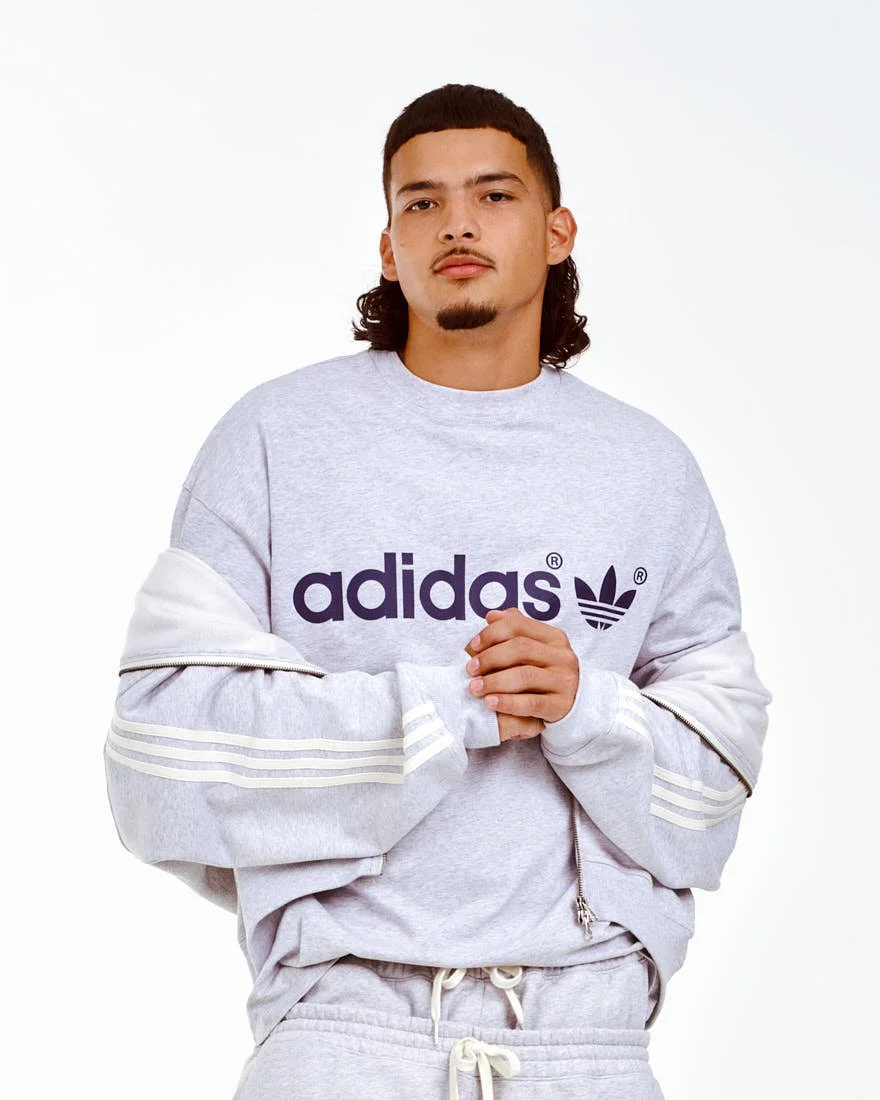
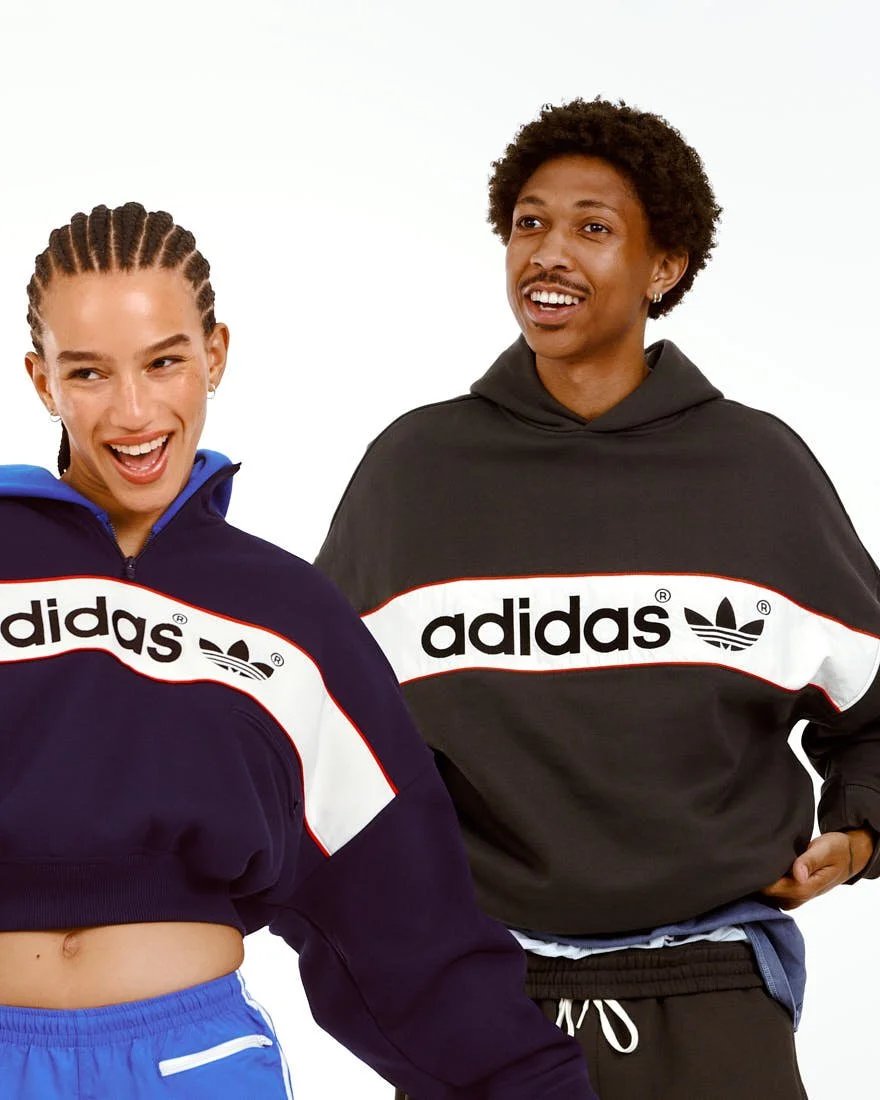
A pair of baggy trousers can carry a family history, and Willy Chavarria has built a career around giving that history room. Raised in California’s Central Valley, the Mexican-American designer draws on the working-class Chicano communities he grew up among. His clothes give their ways of dressing the scale of an occasion. With adiSignature, his role as creative advisor to adidas Originals brings that sensibility into the everyday sweatshirt.

 
Willy Chavarria brings his Chicano perspective to adidas Originals adiSignature, giving everyday sportswear a generous sense of presence and pride LE MILE Magazine

images courtesy of adidas Originals

Willy Chavarria brings his Chicano perspective to adidas Originals adiSignature, giving everyday sportswear a generous sense of presence and pride LE MILE Magazine

Willy Chavarria brings his Chicano perspective to adidas Originals adiSignature, giving everyday sportswear a generous sense of presence and pride. Images courtesy of adidas Originals

adidas Originals adiSignature, developed with Willy Chavarria as Creative Advisor. Photography and direction by Brianna Capozzi. Styling by Georgia Pendlebury. Images courtesy of adidas Originals LE MILE Magazine

developed with Willy Chavarria as Creative Advisor, photography and direction by Brianna Capozzi, styled by Georgia Pendlebury. Images courtesy of adidas Originals


Chavarria has traced his love of wide trousers to Pachuco counterculture in the late 1930s, connecting exaggerated proportions with the right to occupy space. “It is about the space that we occupy,” he told the CFDA in 2023. That belief gives the roomier cuts here an emotional charge. Getting dressed can make somebody feel magnificent, and a generous silhouette can give that feeling a physical presence. When Run-D.M.C. released “My Adidas” in 1986, the possessive captured something the brand’s wearers had already understood. Sportswear could become an expression of who you were and who you stood with. Chavarria brings his own cultural knowledge to that continuing exchange. His involvement recognises the authorship of people who make familiar clothes extraordinary through the way they wear them.

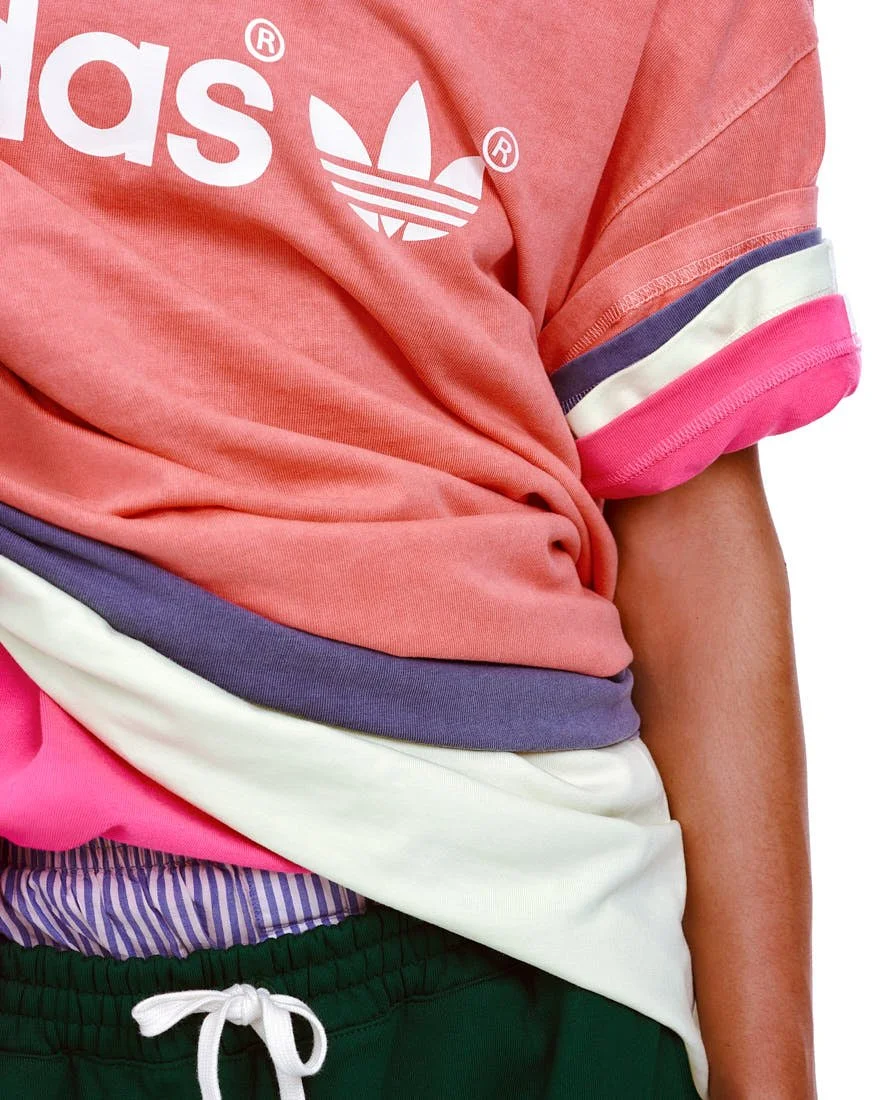
For the first adiSignature collection, Firebird and SST tracksuits join sweats cut with dropped shoulders and fuller legs, using heavyweight 420g brushed-back fleece. The 1980s colour blocking gives that volume an exuberance entirely at home in Chavarria’s world. There is affection in returning to these clothes and giving their proportions such close attention. A shoulder line or waistband can change how somebody holds themselves, bringing a little ceremony to pulling on a sweatshirt.

 
adidas Originals adiSignature, developed with Willy Chavarria as Creative Advisor. Photography and direction by Brianna Capozzi. Styling by Georgia Pendlebury. Images courtesy of adidas Originals.

images courtesy of adidas Originals

adidas Originals adiSignature, developed with Willy Chavarria as Creative Advisor. Photography and direction by Brianna Capozzi. Styling by Georgia Pendlebury. Images courtesy of adidas Originals.

images courtesy of adidas Originals
The first adidas Originals adiSignature collection launches on 23 October 2026.

adidas Originals adiSignature, developed with Willy Chavarria as Creative Advisor. Photography and direction by Brianna Capozzi. Styling by Georgia Pendlebury. Images courtesy of adidas Originals.

images courtesy of adidas Originals


“I grew up wearing it and still wearing it now,” Chavarria told the CFDA of the baggy trouser, a line that makes his investment in these clothes wonderfully clear. He is passing on a way of dressing he has lived with, bringing the pride he recognised in his own community into the adidas wardrobe. Willy Chavarria is passing on a way of dressing he has lived with, bringing the pride he recognised in his own community into the adidas wardrobe.


all images (c) adidas Originals Press, Images courtesy of adidas Originals
/ adidas Originals adiSignature, developed with Willy Chavarria as Creative Advisor, photography and direction by Brianna Capozzi, styled by Georgia Pendlebury.

Jonathan Anderson Introduces the Dior Double-Up

Jonathan Anderson Introduces the Dior Double-Up

A New Everyday Bag from Jonathan Anderson’s Dior


written LE MILE


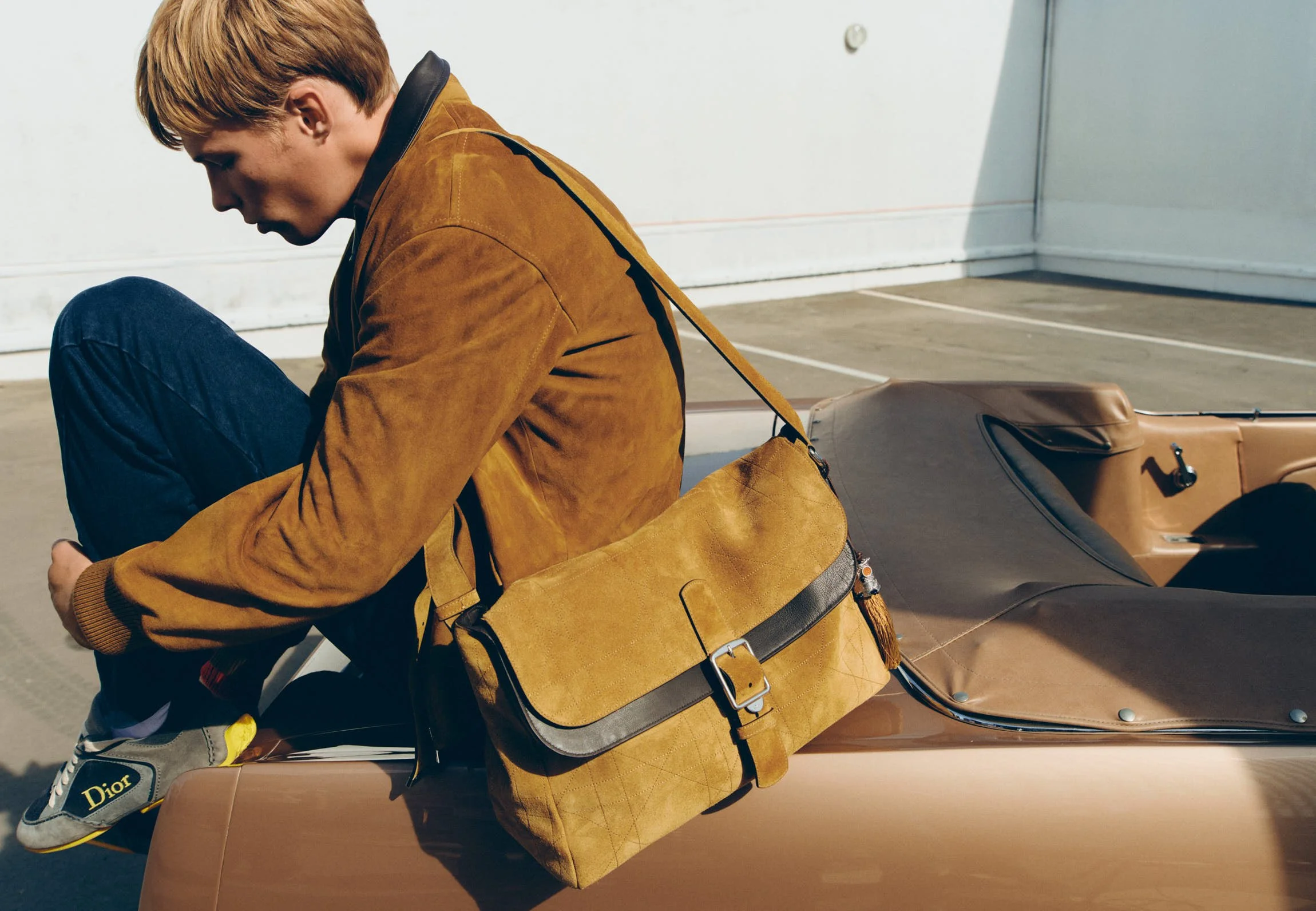
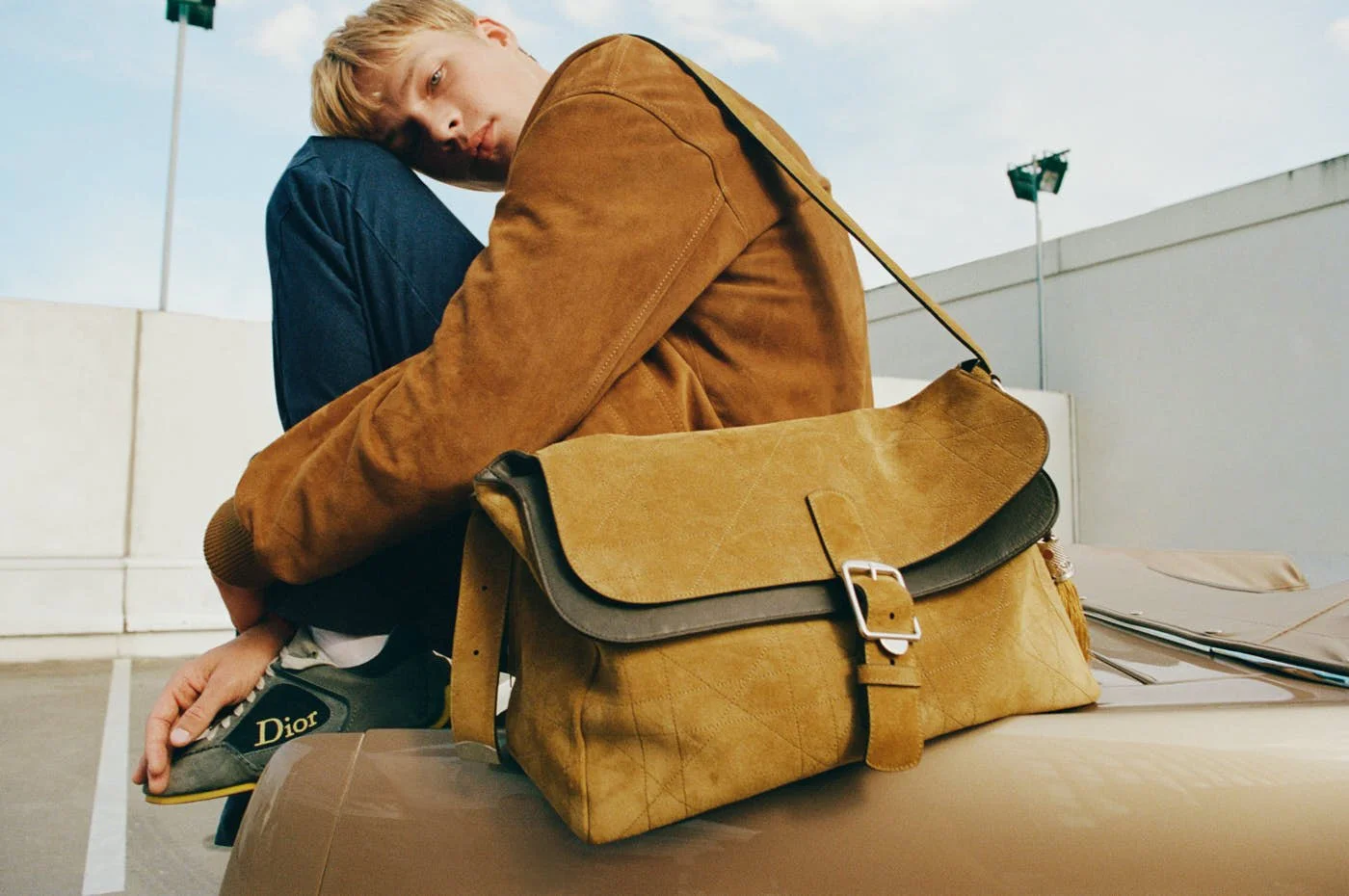
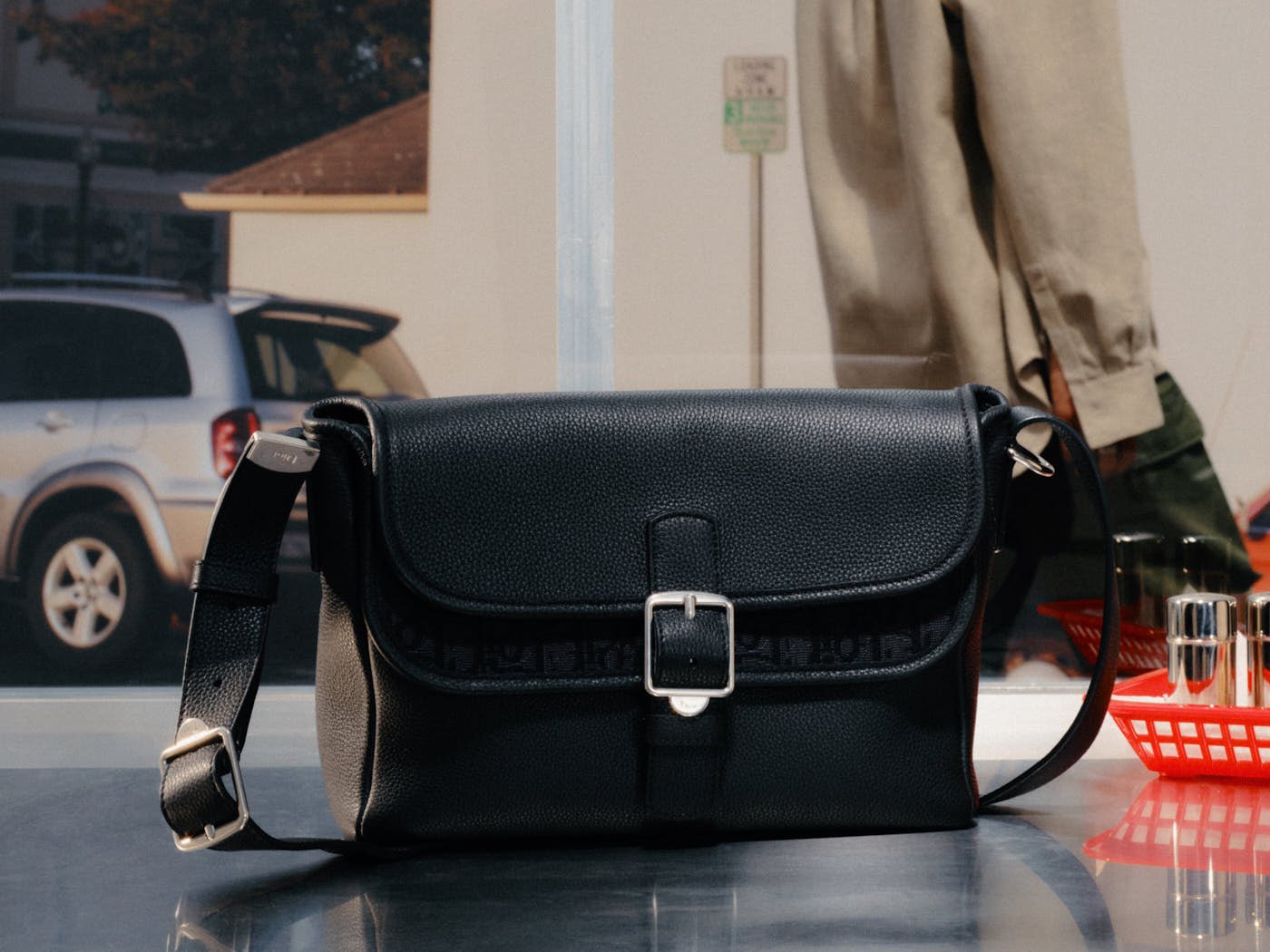
When Marc Bohan devised Dior’s Oblique monogram in 1967, the repeat gave the house a signature that could cover the entire surface of a bag. Almost six decades later, Jonathan Anderson tucks it into the lining of the small Double-Up messenger. The wearer encounters the jacquard on opening the flap, with grained leather and a central prong buckle defining the exterior.


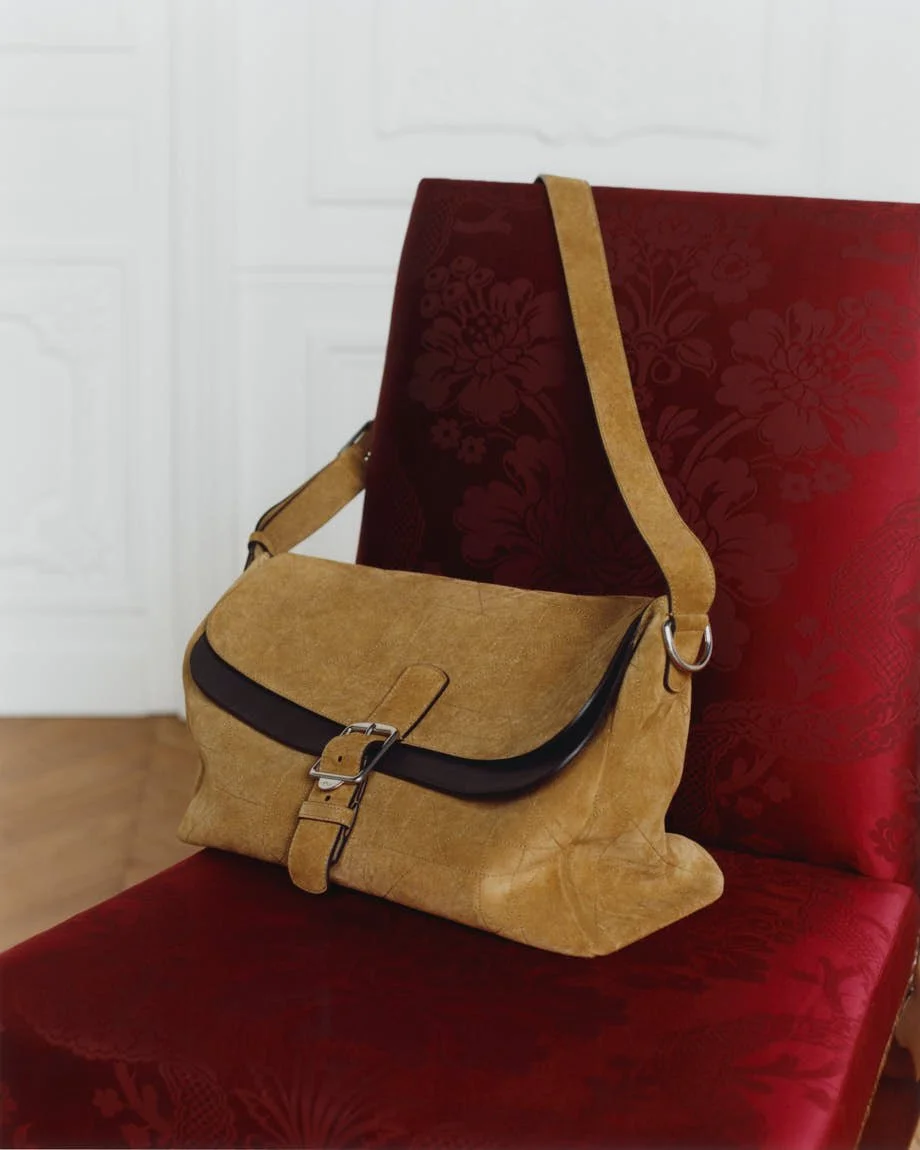
On the larger Double-Up, leather and suede carry cannage, whose geometry recalls the cane-seated Napoleon III chairs used at Christian Dior’s first show in 1947. Through its association with the Lady Dior, that pattern has acquired a particular formality. Anderson brings it to a supple messenger worn across the body, taking a reference rooted in the couture salon into the routines of an everyday bag. With those motifs already doing much of the work of identification, the central buckle has the task of giving the Double-Up an identity of its own. Beneath the flap, a concealed pocket supplements the main compartment. An extra pocket is a modest starting point for a luxury launch; the more consequential decision is how a new bag establishes itself within a house whose accessories already have such recognisable personalities.


LE MILE Magazine DIOR by Jonathan Anderson SPRING 27 COLLECTION VISUALS EDITORIAL by Christian Colomer

photo by Christian Colomer

LE MILE Magazine DIOR by Jonathan Anderson SPRING 27 COLLECTION VISUALS Still Life by Estelle Hanania

photo by Estelle Hanania

LE MILE Magazine DIOR by Jonathan Anderson SPRING 27 COLLECTION VISUALS Still Life by Romain Roucoules

photo by Romain Roucoules

LE MILE Magazine DIOR by Jonathan Anderson SPRING 27 COLLECTION VISUALS EDITORIAL by Christian Colomer

photo by Christian Colomer


Within the Spring 2027 collection, the small bag’s lining offers the clearest expression of Anderson’s intervention, making the monogram something encountered in use. The buckle handles recognition from the outside, bringing a familiar commercial question into focus. How much of the pleasure of owning a recognisable bag belongs to the person carrying it, and how much depends on everyone else seeing it?

Presented in black, deep blue, taupe and tan, the Dior Double-Up arrives in stores from late October 2026.


(c) all images DIOR Press
/ Editorial photographed by Christian Colomer, Still Life by Romain-Roucoules, Elevated Porte by Estelle Hanania

ELIE SAAB H&M — An Evening of Glamour in Berlin

ELIE SAAB H&M — An Evening of Glamour in Berlin

collaboration

ELIE SAAB H&M Celebrates a New Chapter in Berlin


LE MILE


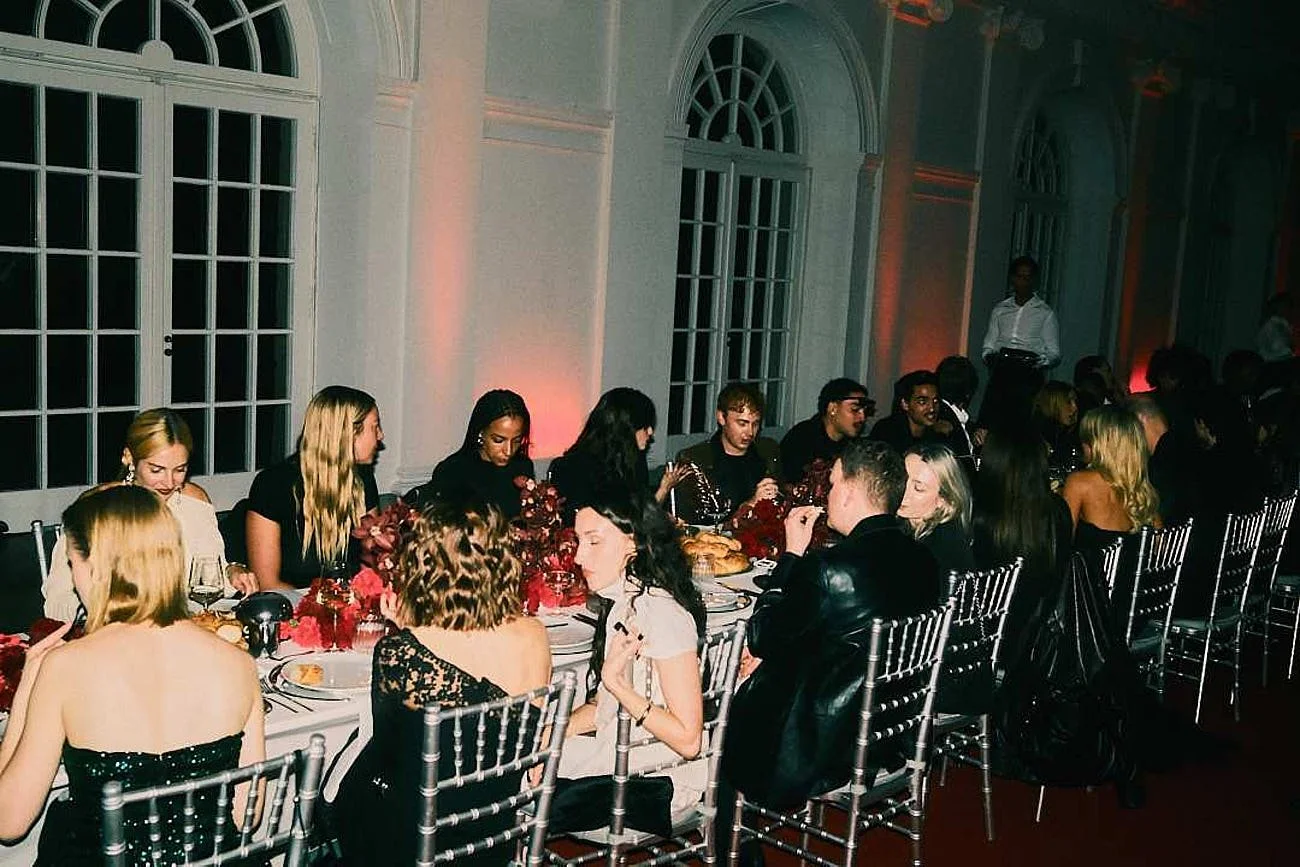
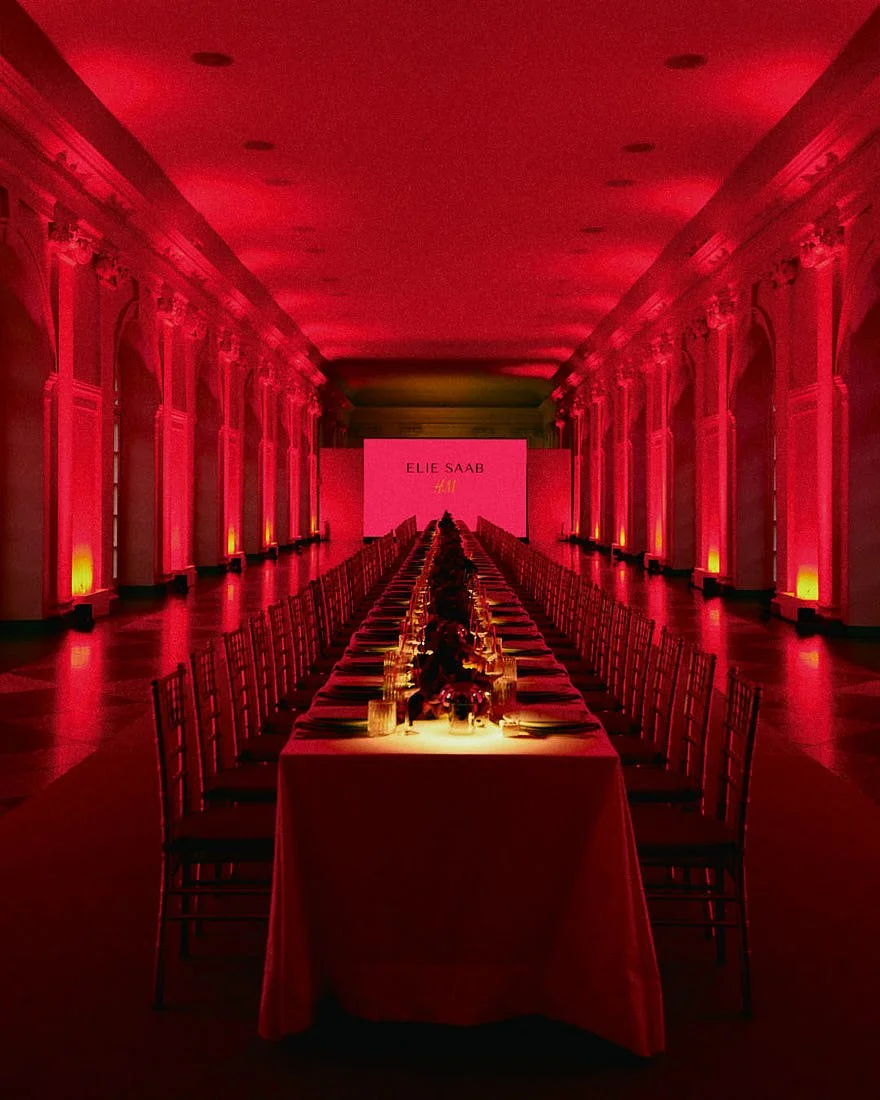
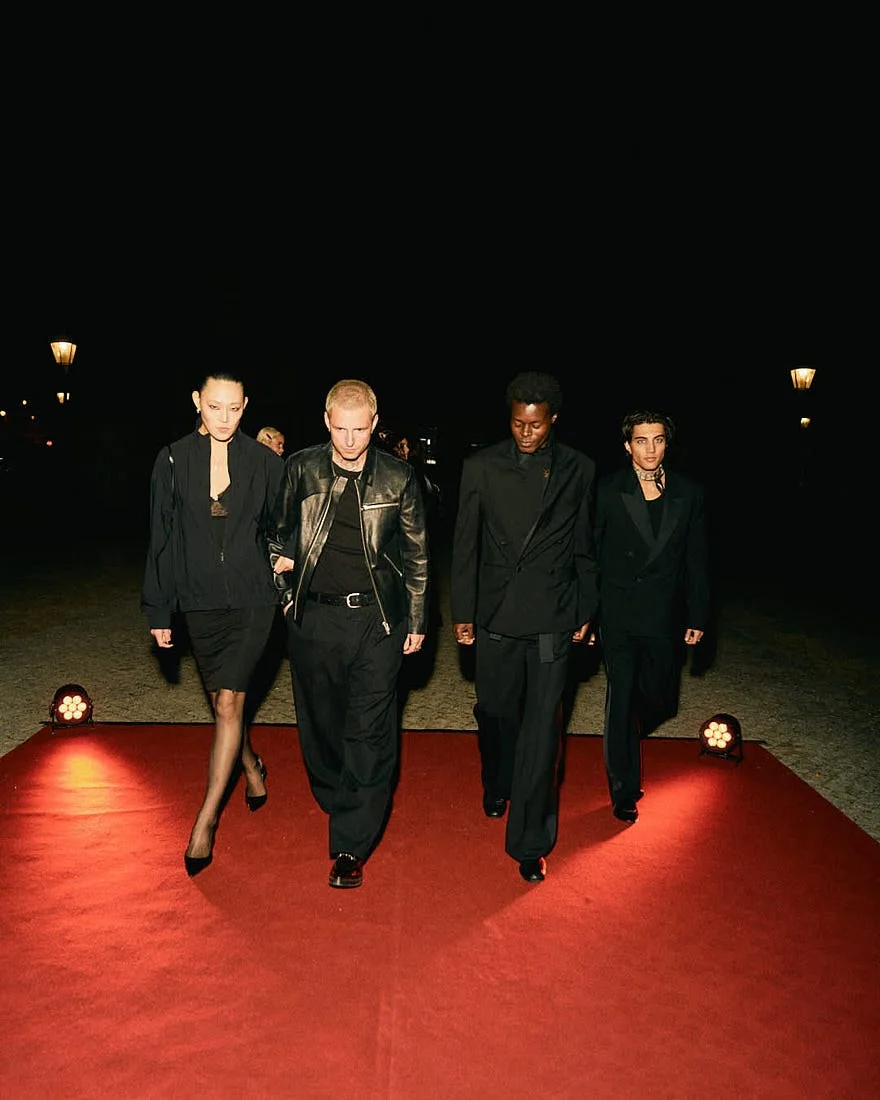
On October 14, H&M celebrated its collaboration with ELIE SAAB at Berlin’s historic Orangerie Charlottenburg, inviting guests into an evening devoted to the glamour and elegance that have shaped the designer’s work. A red carpet and specially conceived campaign installation welcomed Emilia Schüle, Caro Daur, Nic Kaufmann, Lera Abova, Stefanie Giesinger and Stella Bossi, among others, before a curtain opened to reveal the spectacular setting prepared for the night.


The ELIE SAAB H&M collection launches on October 22, 2026, in selected H&M stores and online.

ELIE SAAB H&M Celebrates Its Collaboration in Berlin photographed by Teun Sand

ELIE SAAB H&M Celebrates Its Collaboration in Berlin
/ photographed by Teun Sand

ELIE SAAB H&M Celebrates Its Collaboration in Berlin photographed by Teun Sand
 

Behind it, a long table stretched through a dining room illuminated in deep red, transforming the historic Orangerie into a striking setting for the celebration. The theatrical reveal, the richness of the lighting and the extraordinary attention to detail created an atmosphere that was remarkable to experience in person. Every element appeared carefully considered, from the arrangement of the dinner to the dramatic use of colour, reflecting the sophistication and sense of occasion associated with ELIE SAAB.

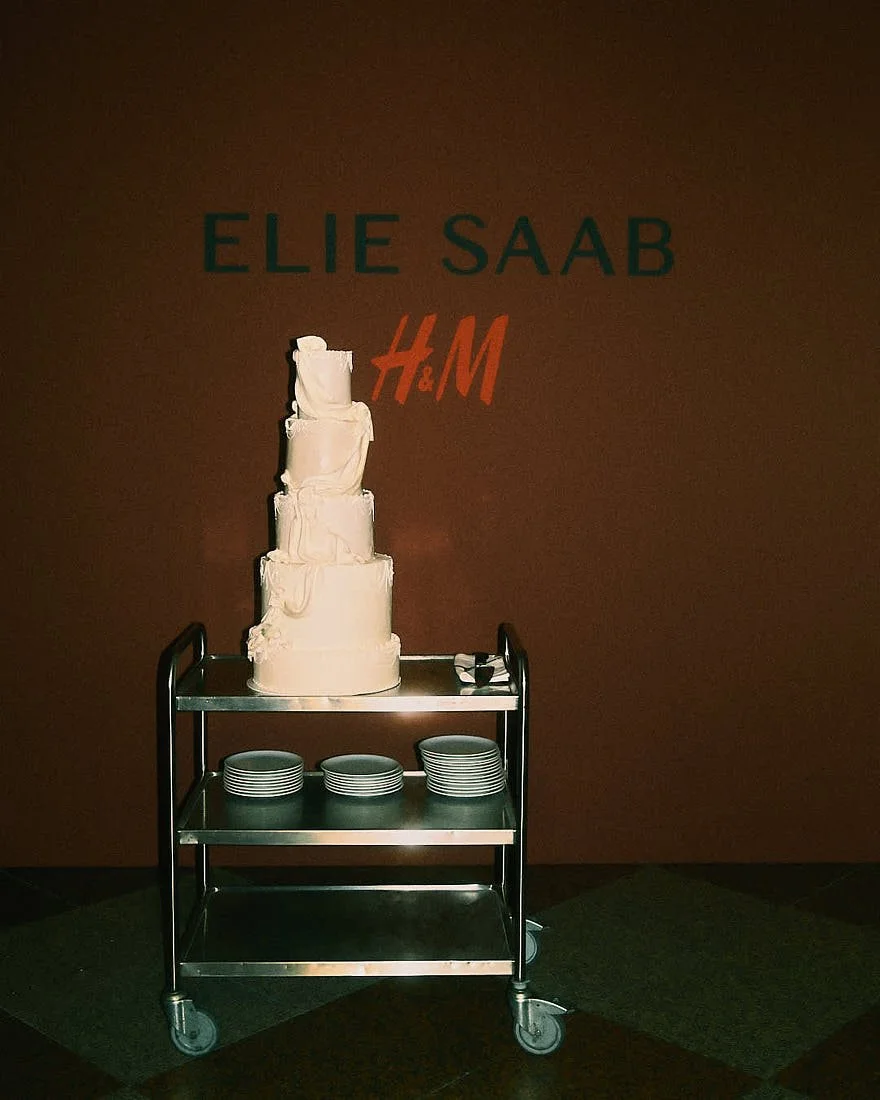
The evening continued with a surprise live performance by French musician Braths, also known as Thomas Horeczko, followed by another memorable moment as cake artist Sophia Stolz unveiled an elaborate wedding cake inspired by the bridal gown from the collection. The reference to Saab’s beginnings in bridalwear in Beirut felt particularly fitting, connecting the celebration to the history of the house. Cocktails and a DJ set by Kean Farrar accompanied the final part of what was a truly exceptional evening in Berlin.


ELIE SAAB H&M Collaboration Behind The Scene in Paris

ELIE SAAB H&M Collaboration
/ Behind The Scene

ELIE SAAB H&M Collaboration Behind The Scene in Paris
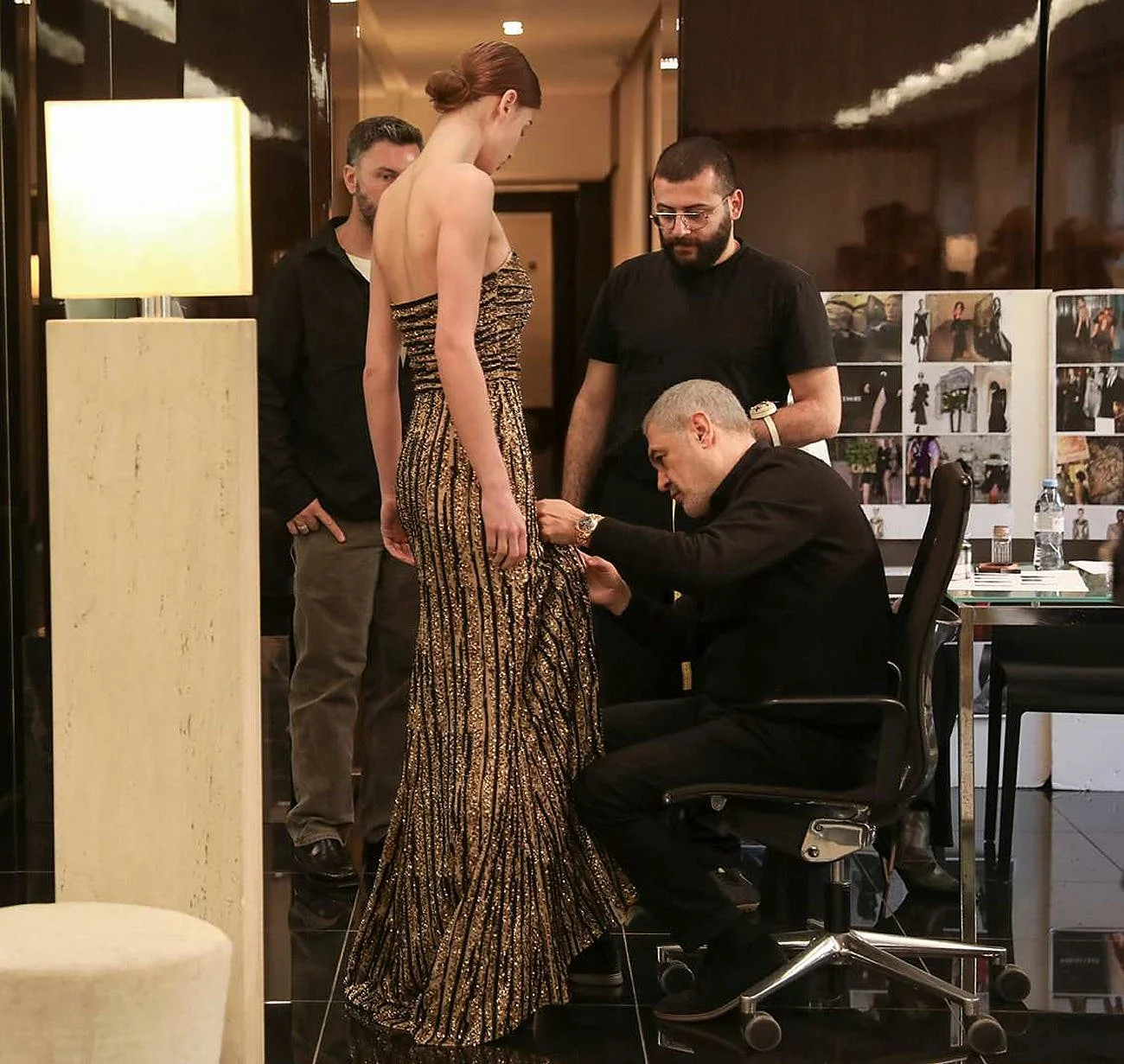
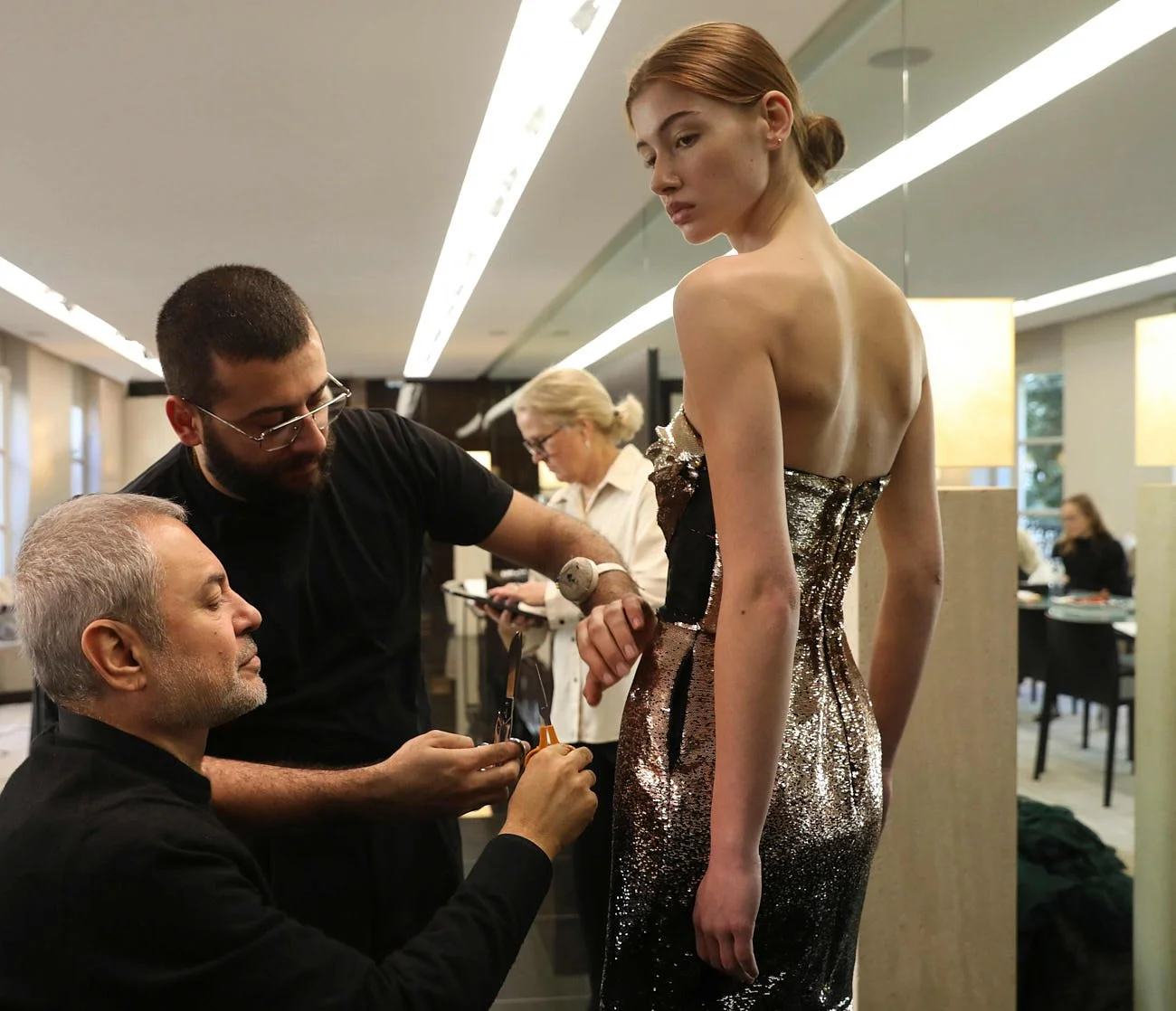
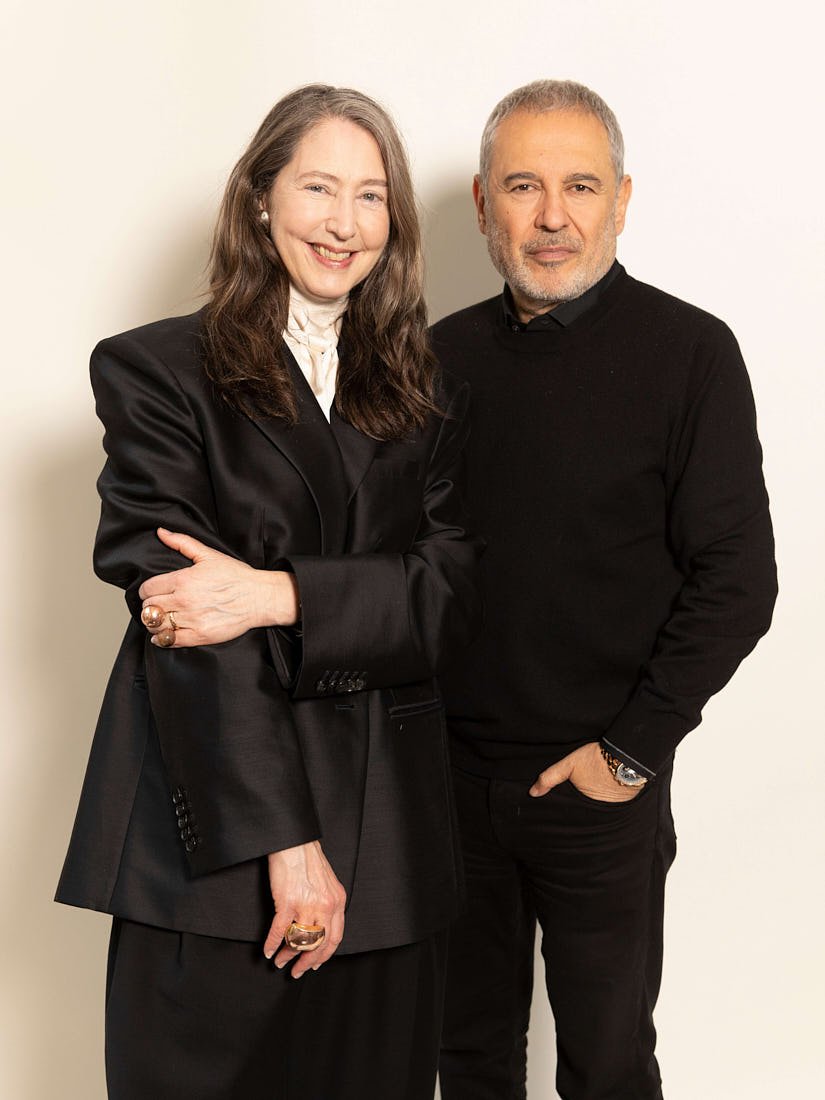
ELIE SAAB H&M Collaboration Designers photo Ann-Sofie Johansson and Elie Saab

Ann-Sofie Johansson + Elie Saab

ELIE SAAB H&M Collaboration Behind The Scene in Paris


Founded in Beirut in 1982, ELIE SAAB has established an unmistakable design language defined by elegant silhouettes, intricate embellishment and meticulous construction, signatures that also shape the new H&M collaboration. Among the collection’s highlights are a green evening gown with dramatic dégradé colouring, a sculptural black dress with an oversized bow and train, and sharply constructed tailoring finished with delicate embroidery and shimmering sequins. The collection also introduces menswear, relaxed separates and accessories, extending the house’s aesthetic across a complete wardrobe. As Elie Saab describes it, the collaboration is “a reflection of who we are,” bringing his distinctive vision to a wider audience.

The ELIE SAAB H&M collection launches on October 22, 2026, in selected H&M stores and online.


all images (c) H&M Press, event photographed by Teun Sand

Louis Vuitton Spring Summer 2027 - Nicolas Ghesquière

Louis Vuitton Spring Summer 2027 - Nicolas Ghesquière

Double-click to edit...

A review of the Louis Vuitton Spring Summer 2027 by Nicolas Ghesquière

A Hotter Future Calls for a Lighter Louis Vuitton


LE MILE


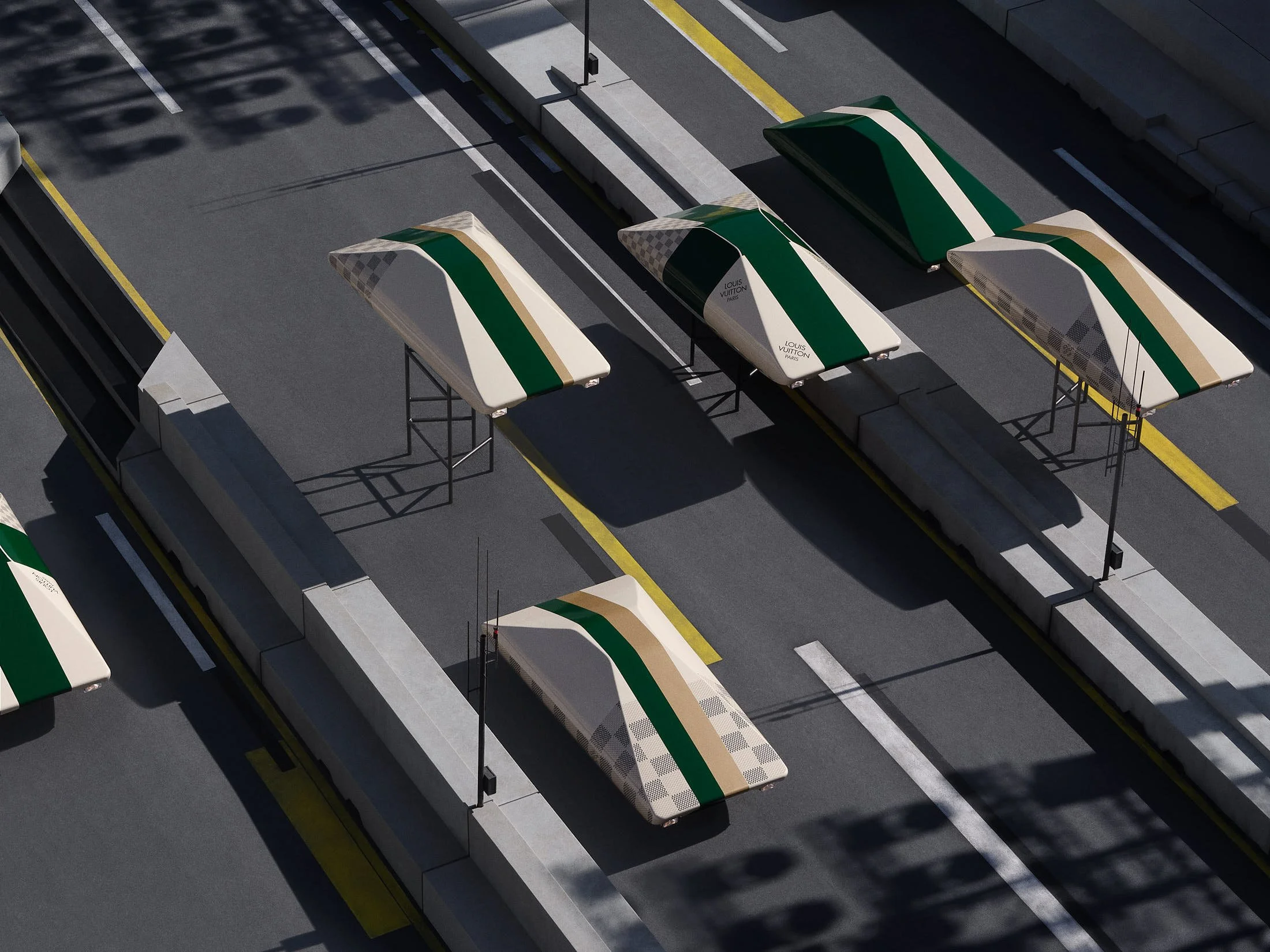
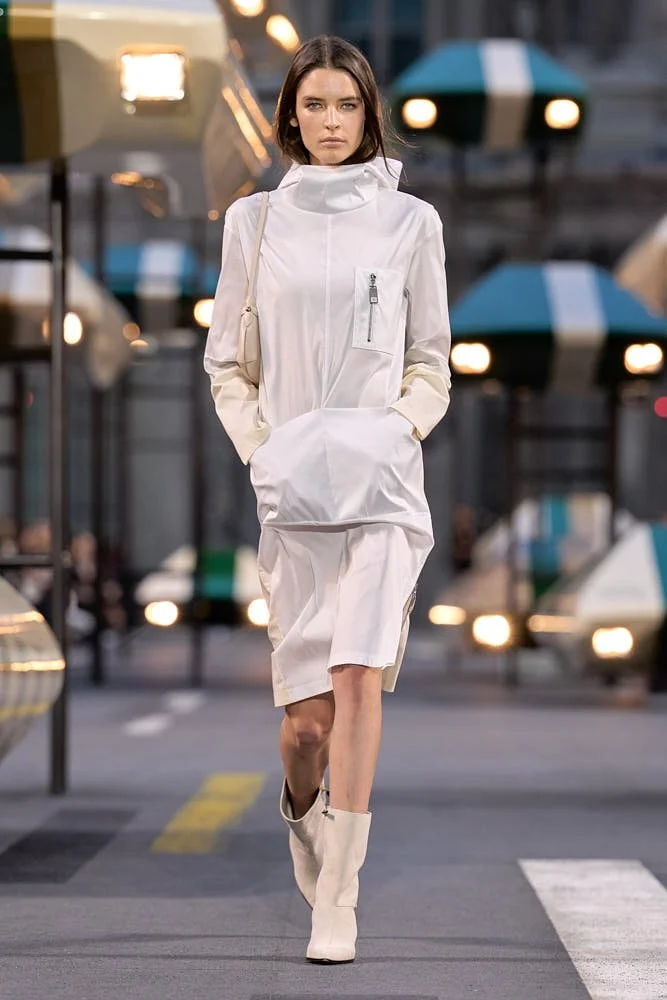
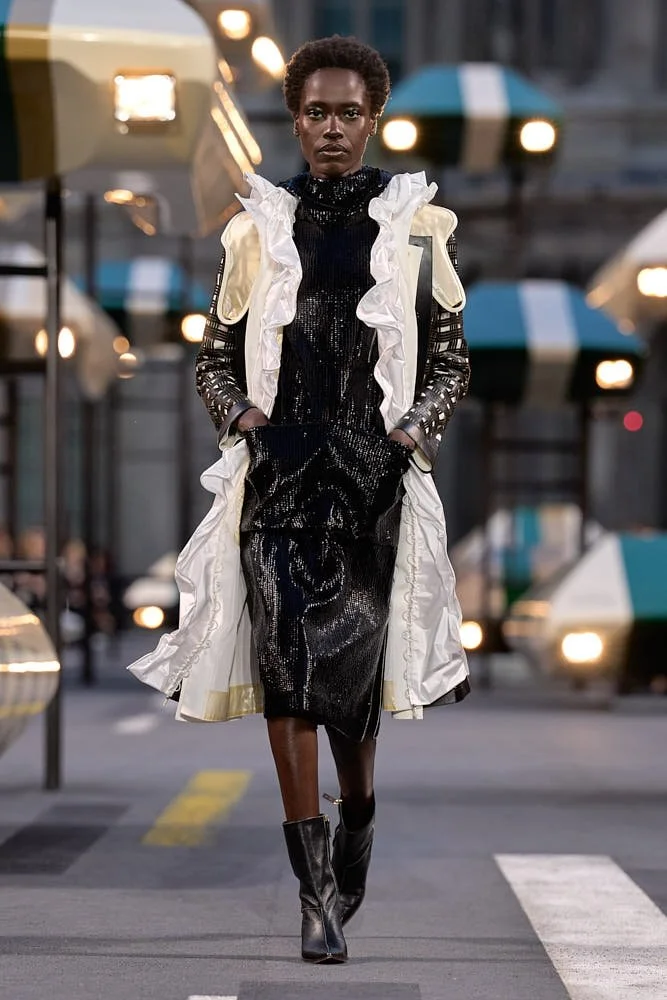
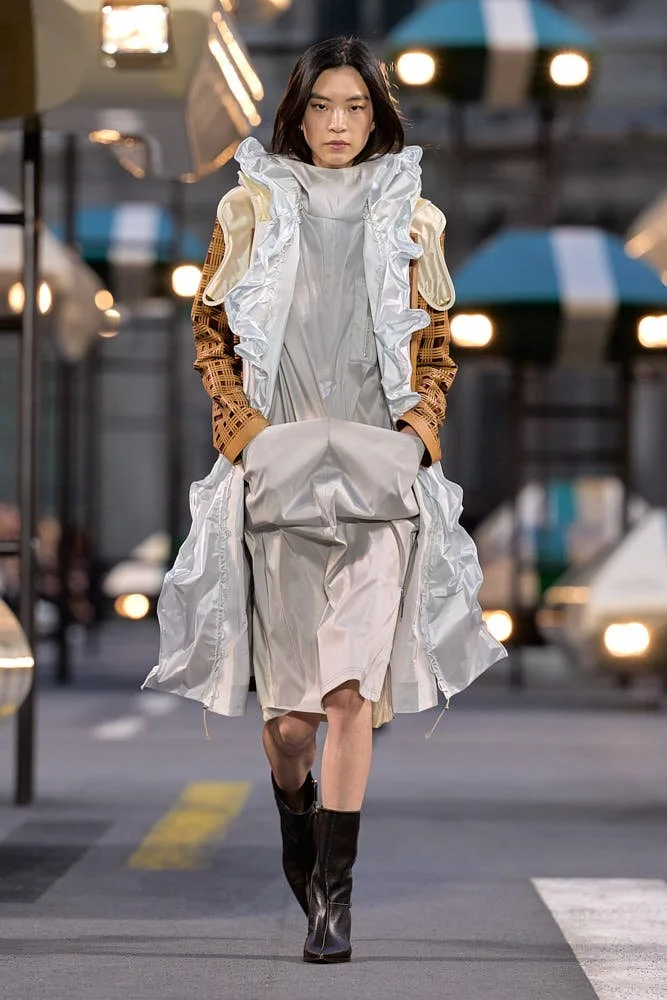
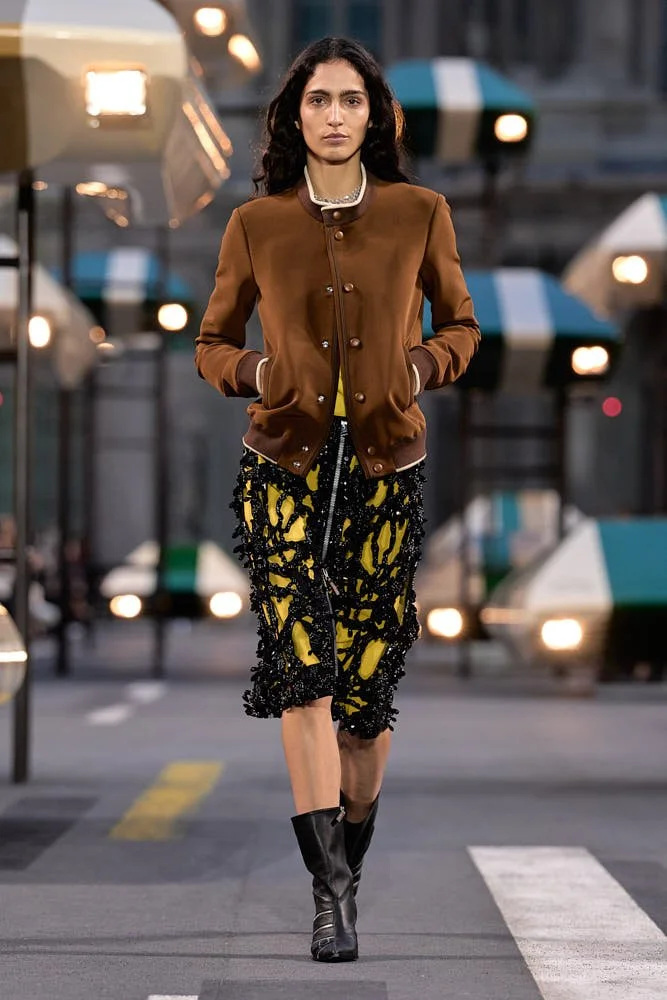
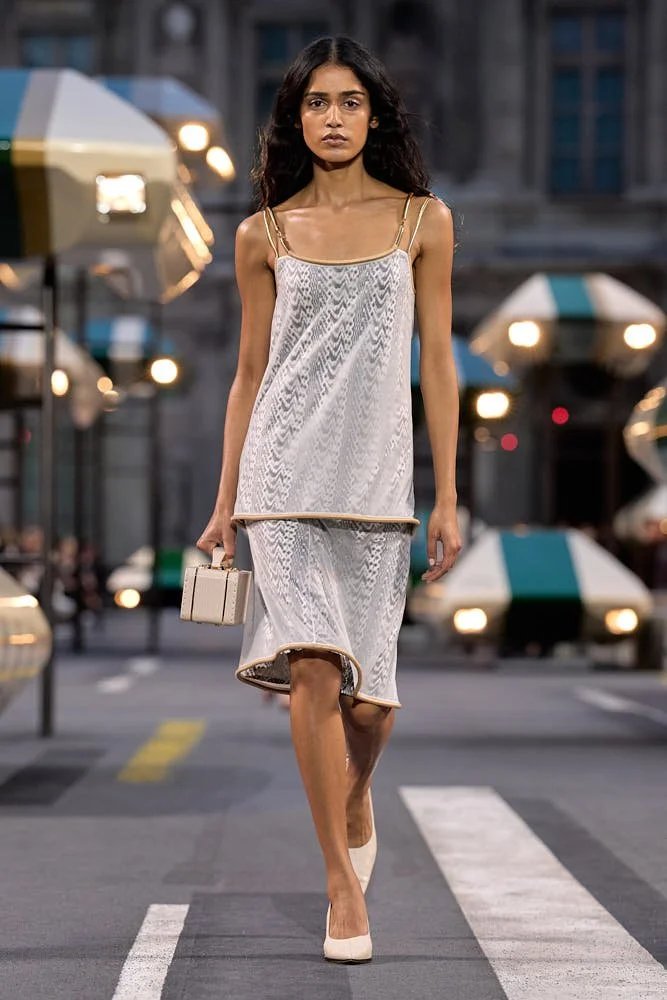
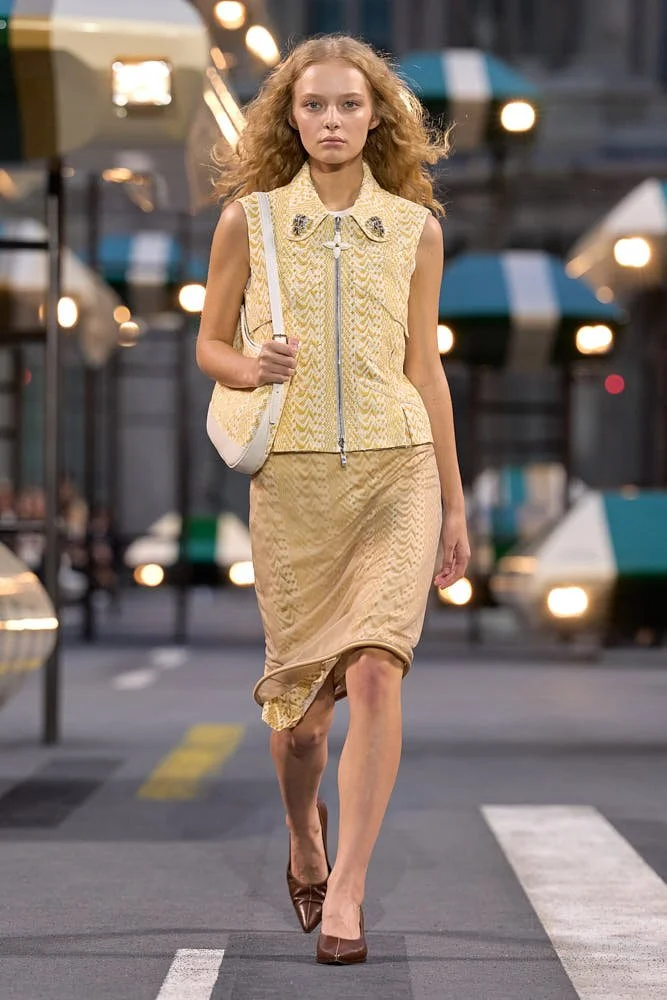
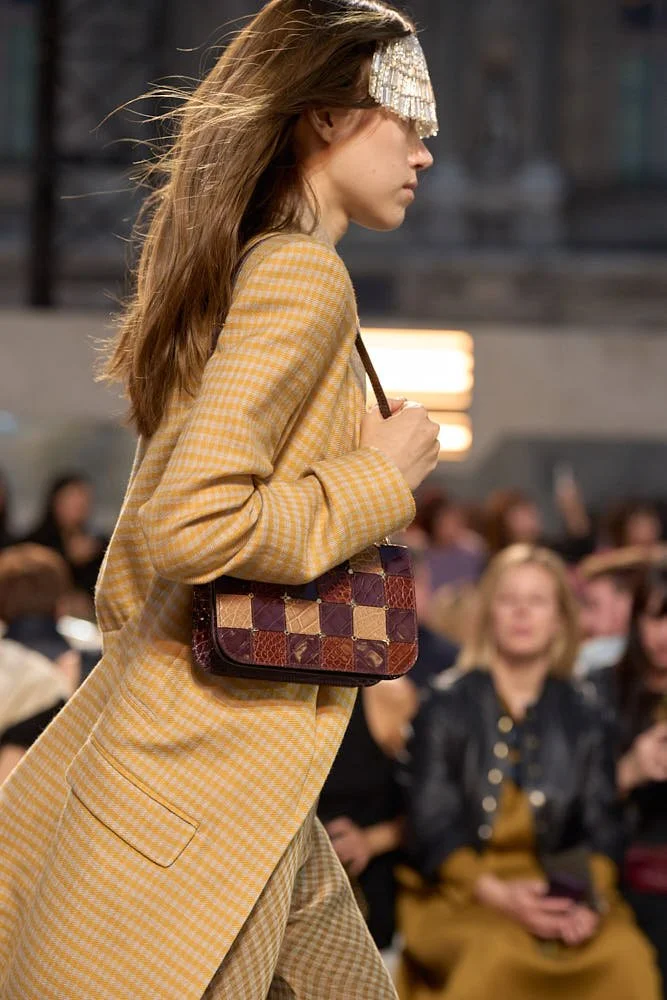
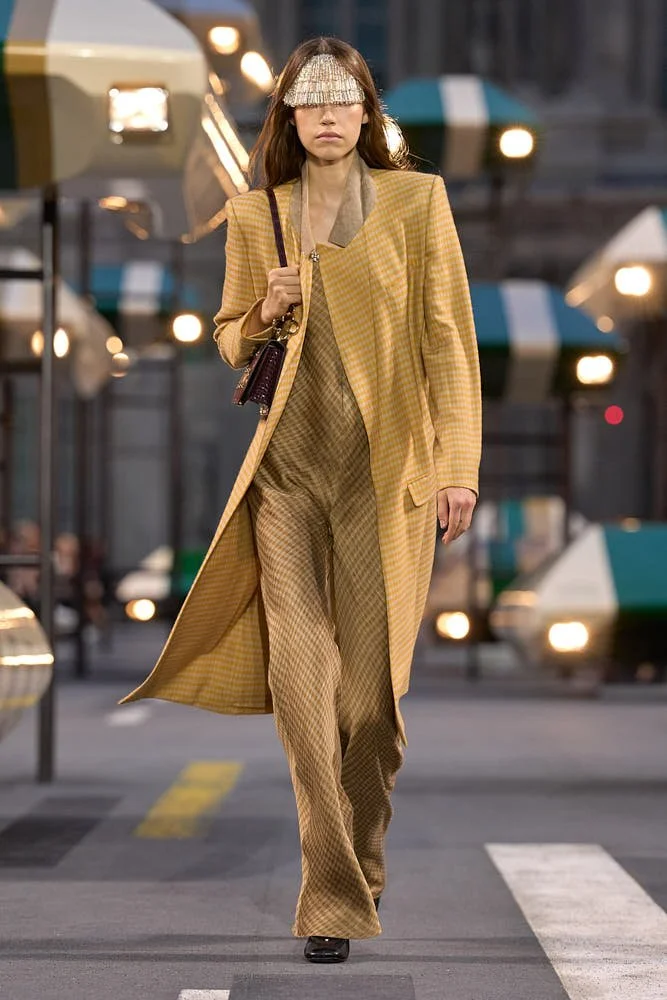
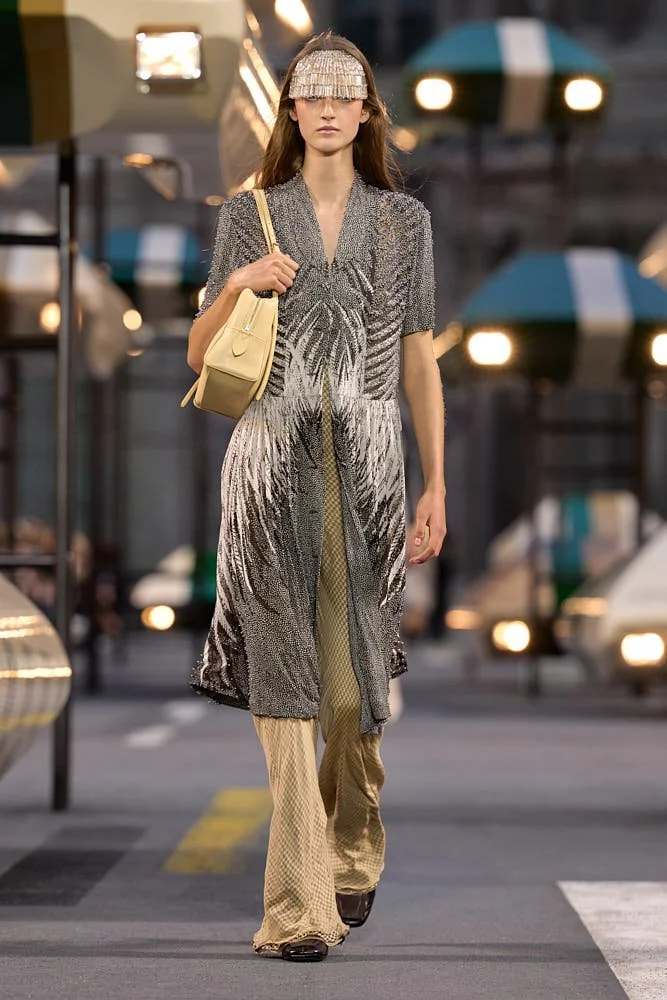
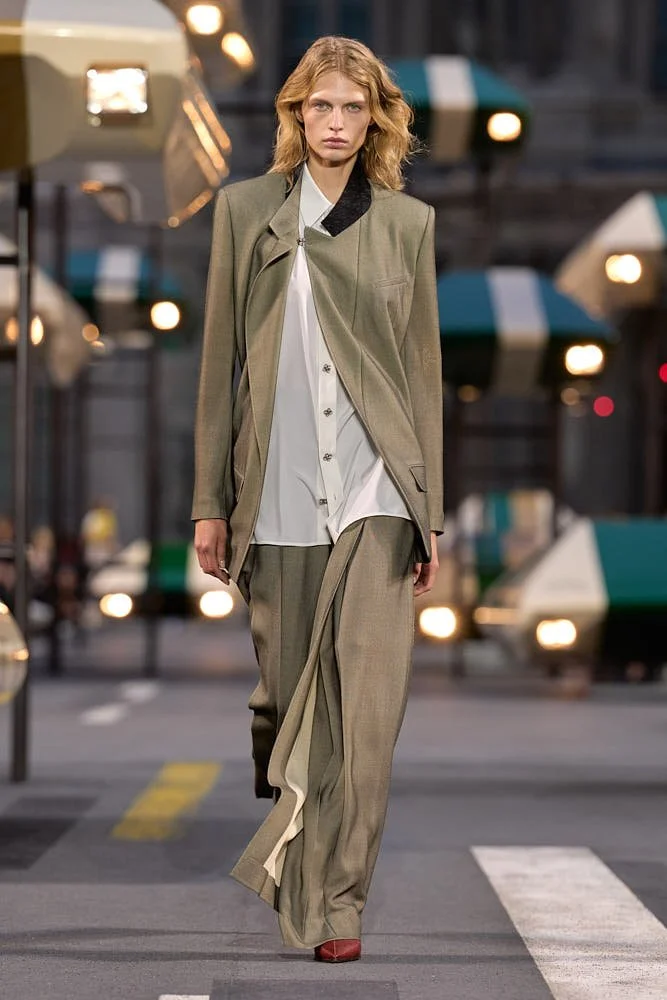
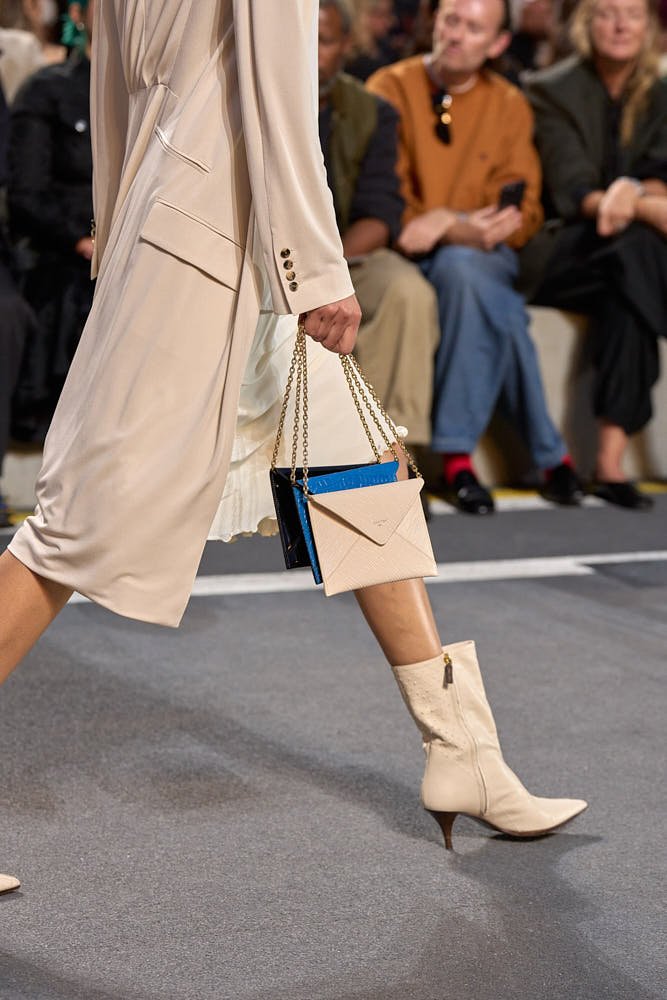
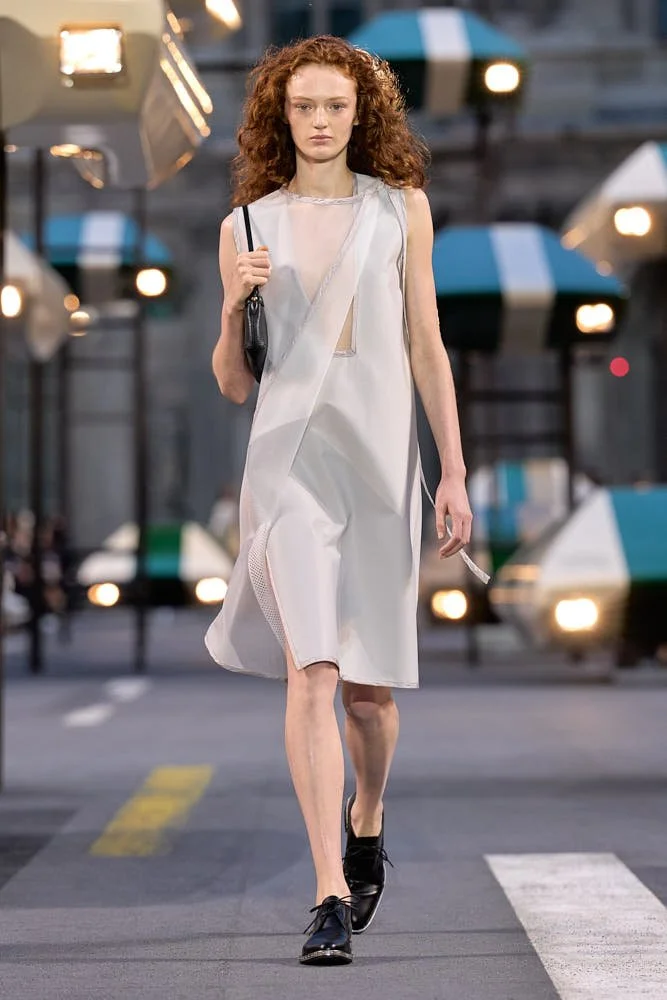
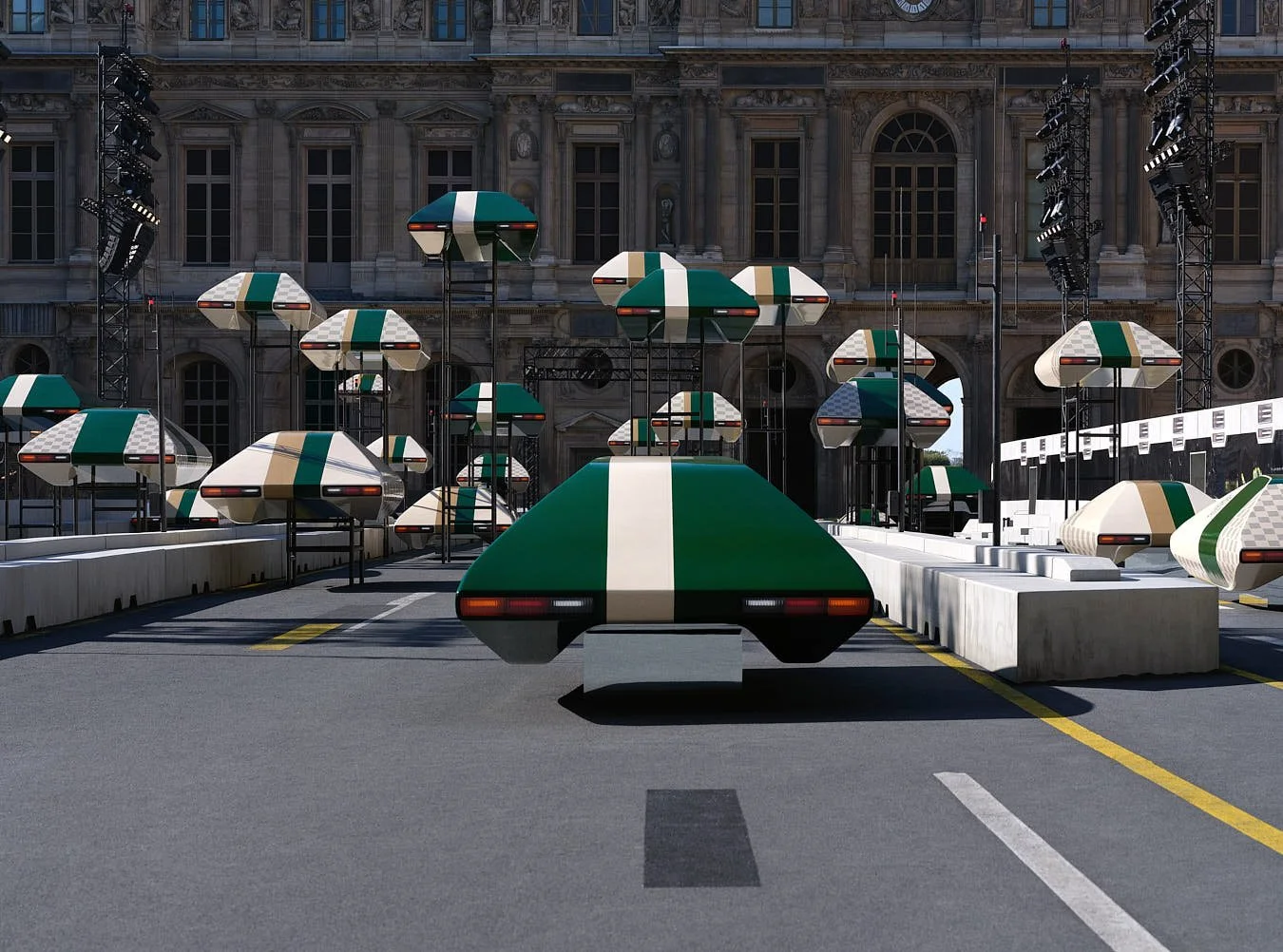
Thirty-four concept cars occupied the Louvre’s Cour Carrée as models crossed its painted road markings, an elaborate arrangement for giving pedestrians right of way. For Louis Vuitton’s Spring/Summer 2027 collection, Nicolas Ghesquière was reconsidering how much of his own architecture a woman needs to wear. He has described himself to Vogue as “a specialist in armour”; this season, the opening white dress hung from the shoulders in uneven, translucent planes, with black lace-up shoes keeping the outfit firmly on the pavement.


Louis Vuitton Womens Spring Summer 2027 Show ERGONOMIE Collection by Nicolas Ghesquière for LE MILE Magazine Scenography

Louis Vuitton Womens Spring/Summer 2027 Scenography
/ Ergonomie Collection by Nicolas Ghesquière

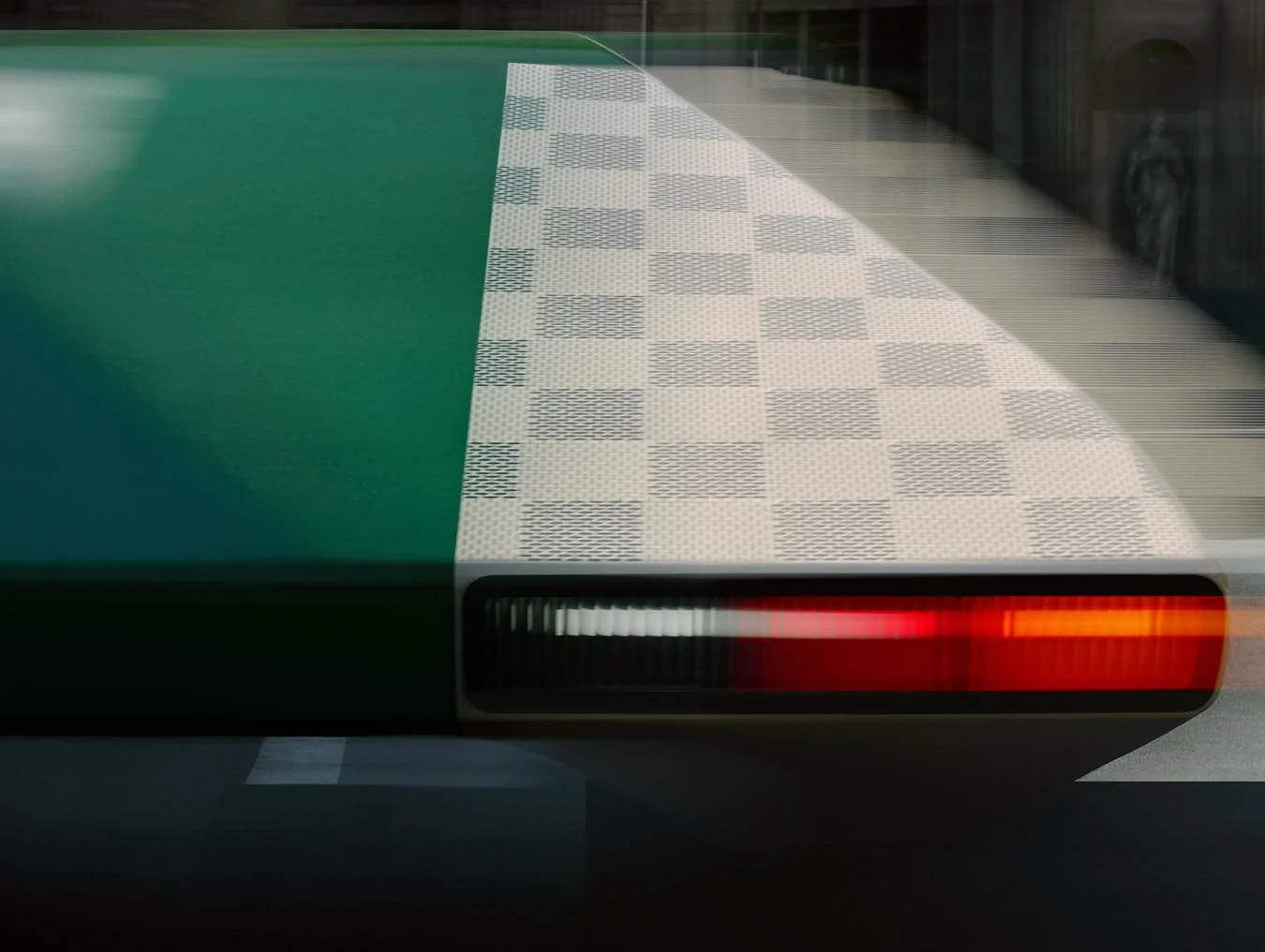
Ergonomie was the collection’s title, a word more readily associated with an office chair than a Paris runway. Ghesquière gave it a pressing reason to be here. “The world is getting warm,” he told journalists, explaining how heat had affected his thinking about clothes. James Chinlund’s wedge-shaped vehicles, raised at different heights and decorated with Vuitton’s Damier checks, imagined another technological leap in getting around. The clothes addressed the less glamorous matter of what to wear when the city becomes too hot.

Flat lids allowed luggage to be stacked; canvas lightened a covering previously made from leather. Ease was a practical problem the house set out to solve. Ghesquière returned to it inside the garment, removing internal layers from tailoring and using composite chiffons alongside scarf fabrics in silk and cashmere. The technical effort went into reducing what the customer would have to carry. That is a useful definition of luxury for a house capable of making even a journey look like an undertaking.

 
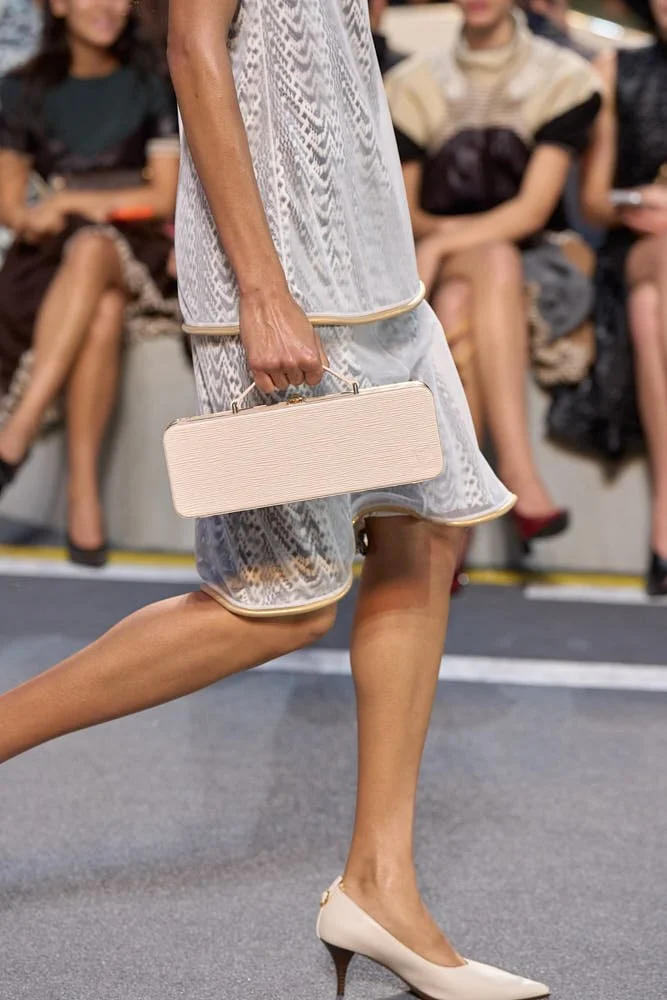
Louis Vuitton Womens Spring Summer 2027 Show ERGONOMIE Collection by Nicolas Ghesquière for LE MILE Magazine

Louis Vuitton Womens Spring/Summer 2027 Detail
/ Ergonomie Collection by Nicolas Ghesquière

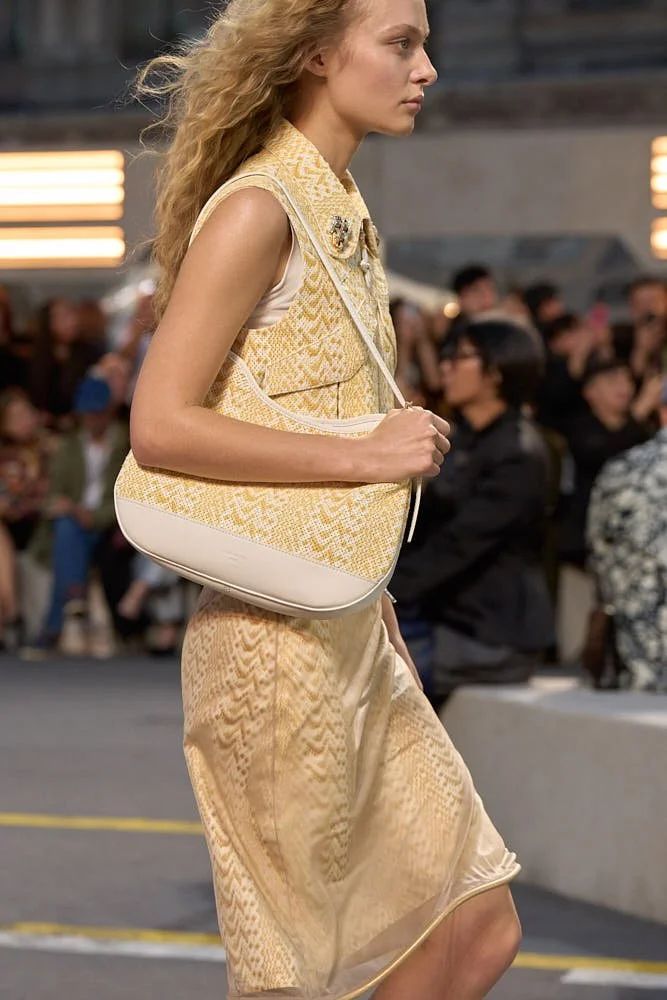
Louis Vuitton Womens Spring Summer 2027 Show ERGONOMIE Collection by Nicolas Ghesquière for LE MILE Magazine

Louis Vuitton Womens Spring/Summer 2027 Detail
/ Ergonomie Collection by Nicolas Ghesquière


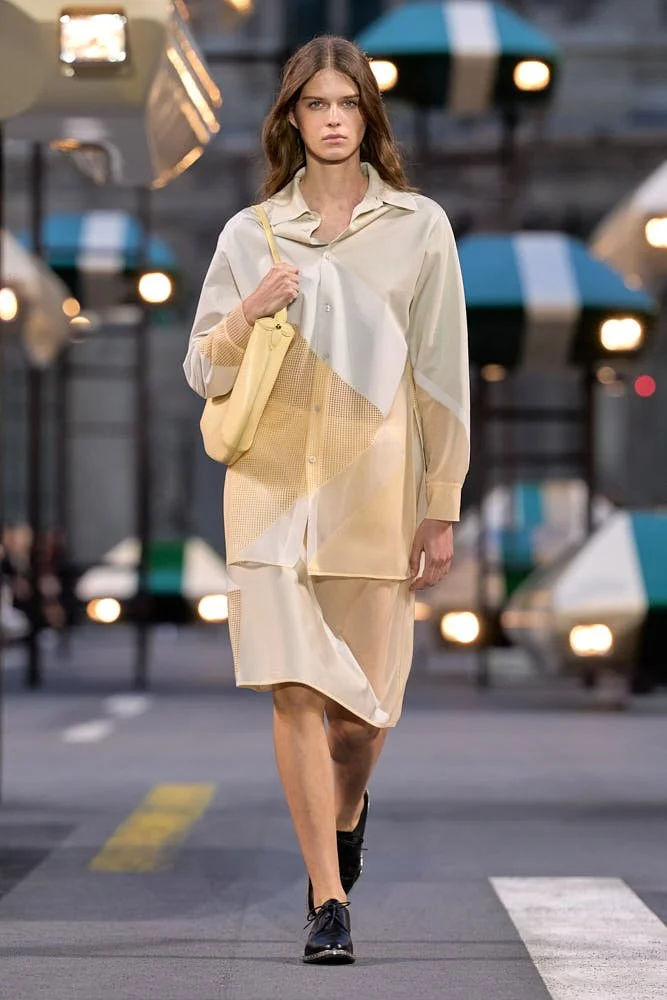
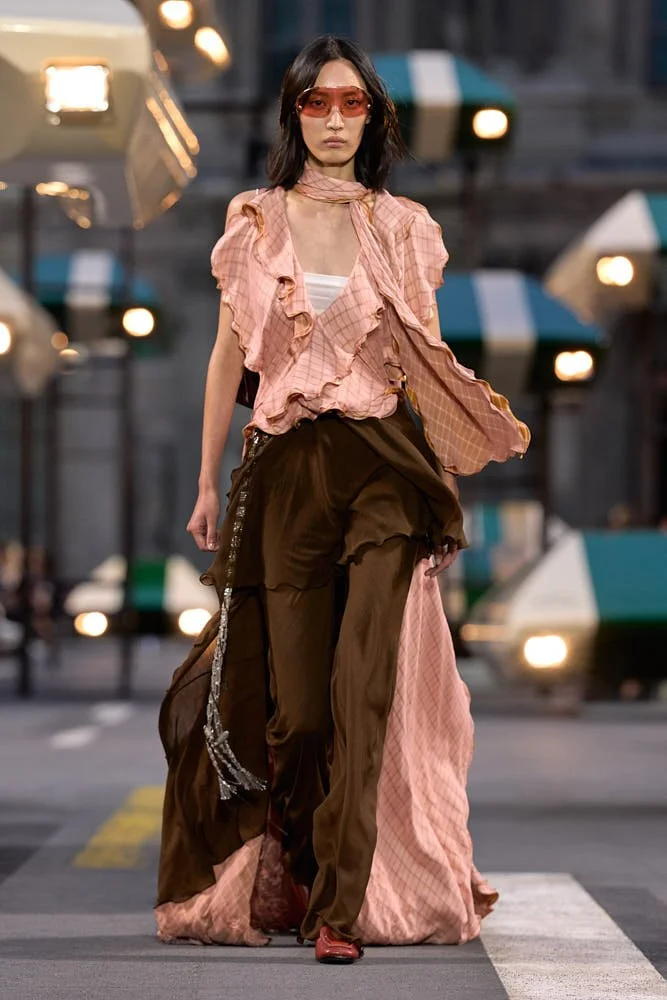
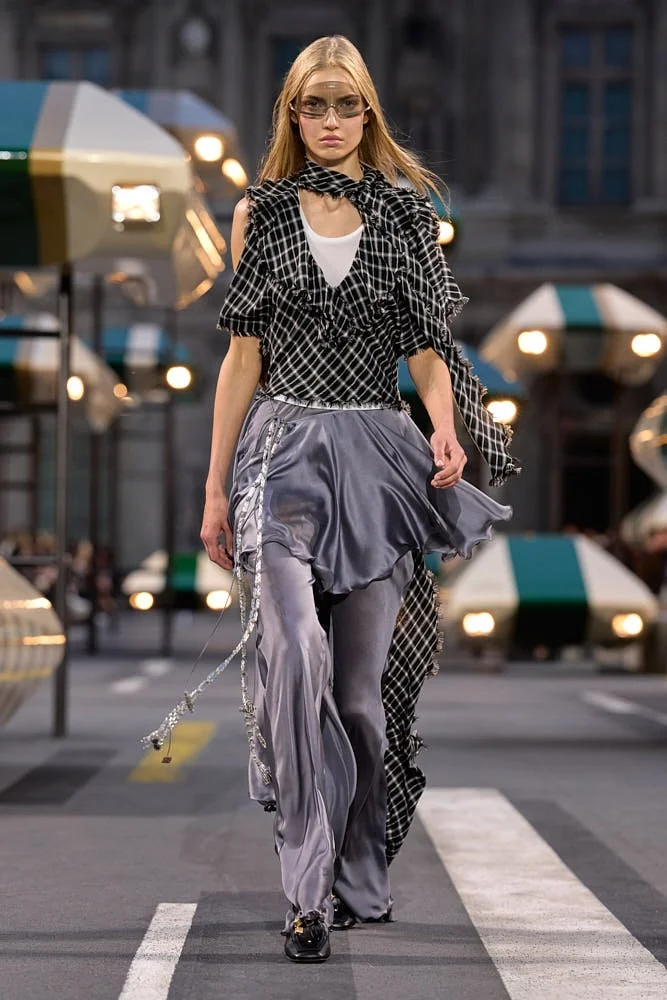
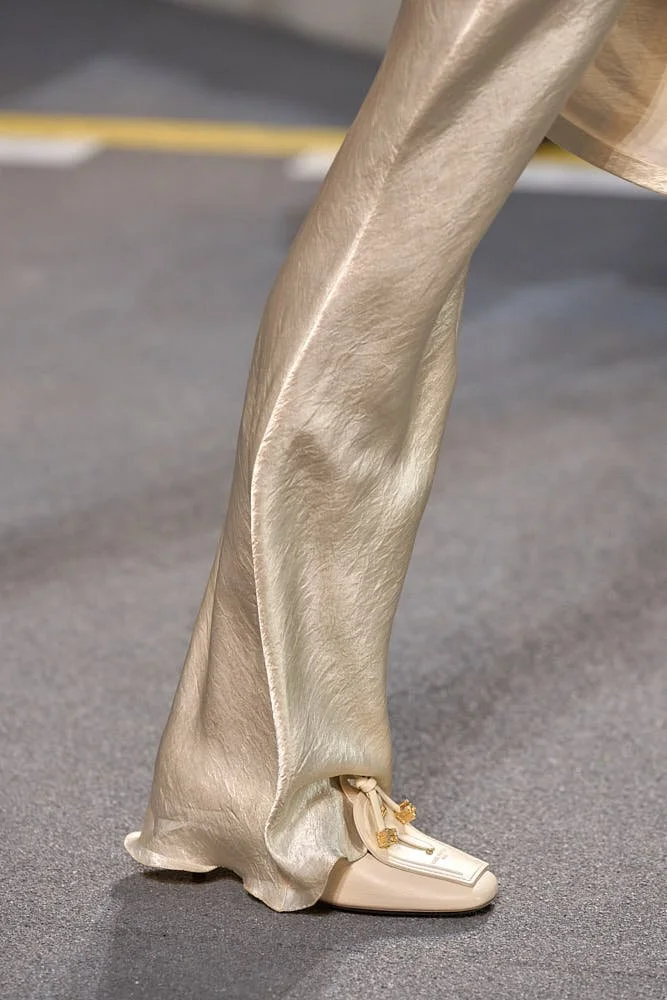
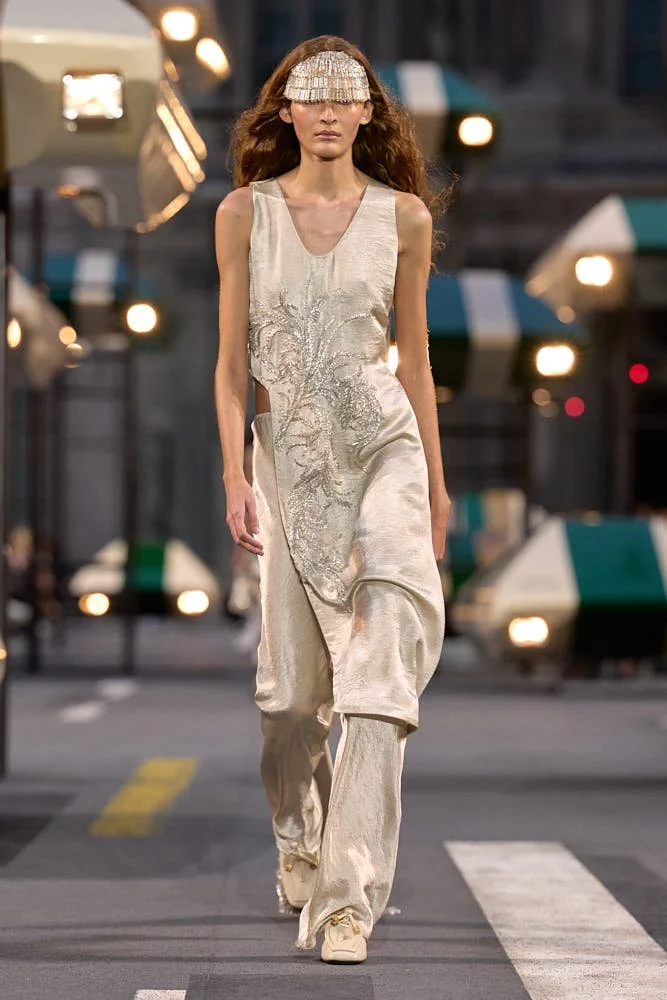
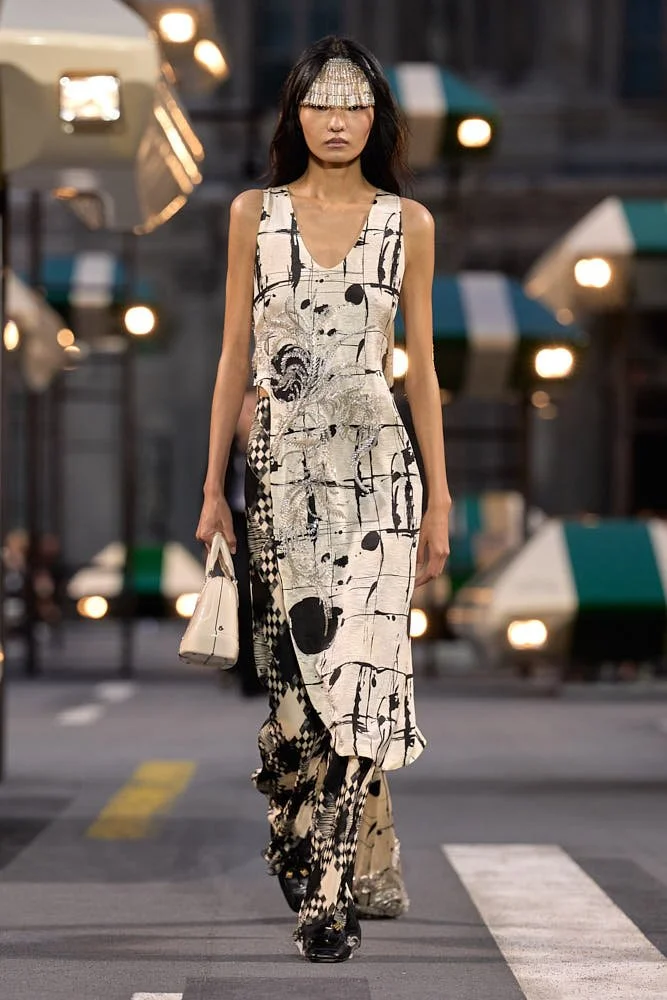
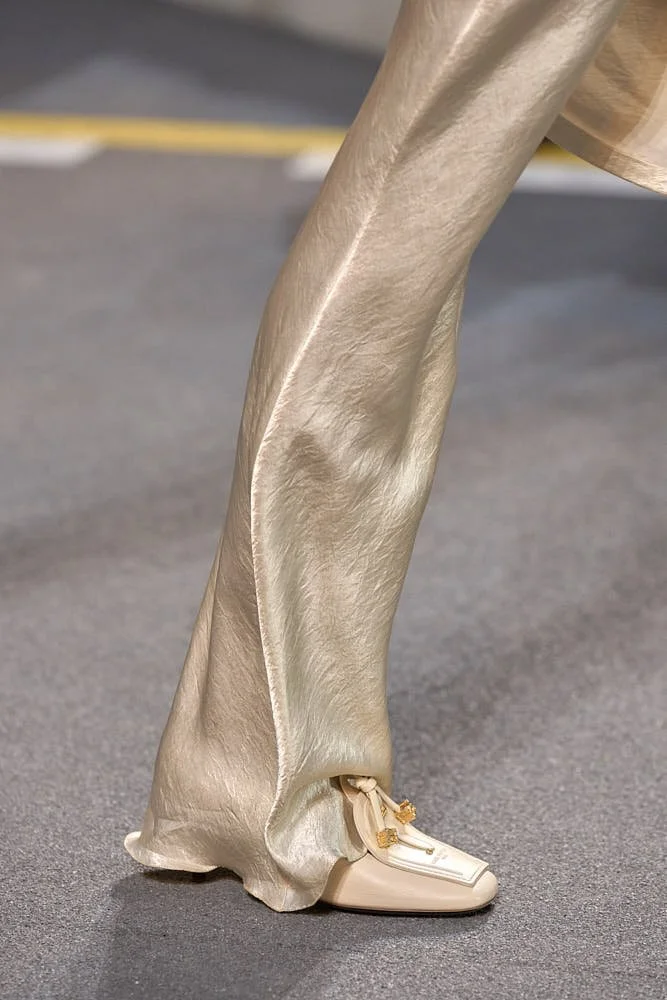
In the checked tailoring, a grey jacket extended into fabric that streamed beside the leg, while a black-and-white ensemble let its fronts fold over matching trousers. The patterns provided an orderly grid which the body kept disturbing. The opening dress had diagonal changes in transparency that complicated its surface without building volume around the wearer. This was the collection’s most persuasive work: construction that became visible through the act of wearing it.

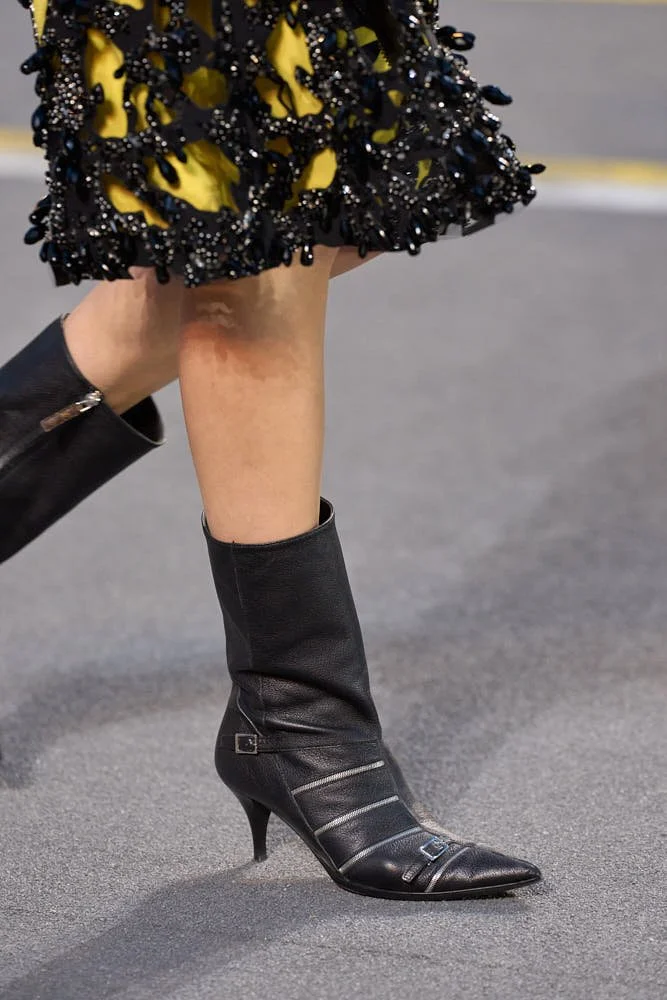
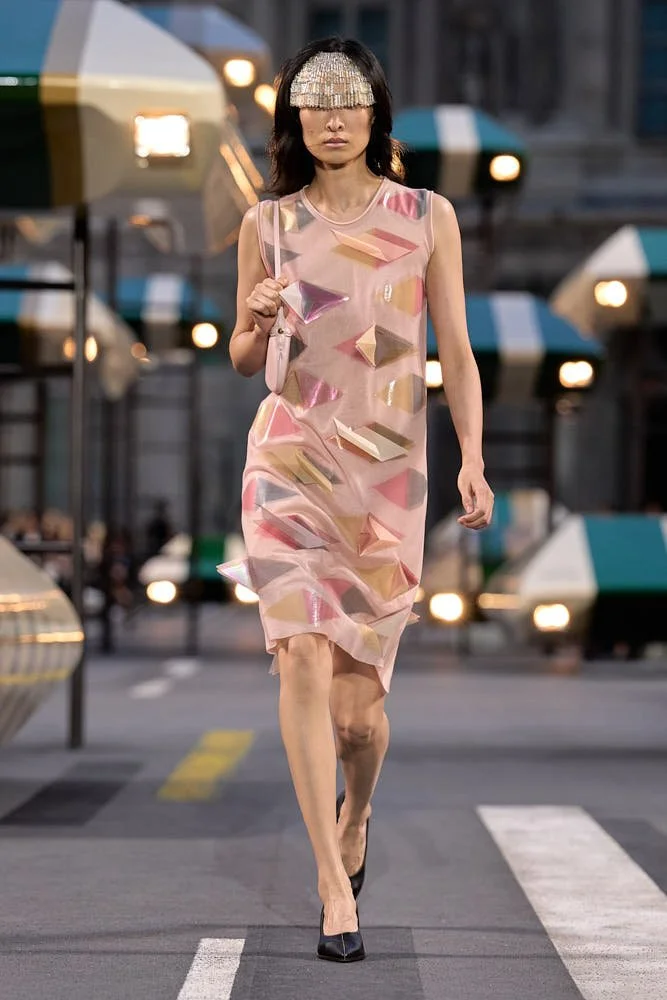
A yellow leather biker jacket over loose black trousers offered a particularly direct invitation to get dressed, with little obligation to adopt the entire Vuitton universe. The dresses scattered with iridescent diamonds asked for more attention. Their angular patches caught the light across a transparent ground, preserving something of Ghesquière’s taste for a faceted shell. He could still produce an extraordinary surface on a dress that hung quite simply from narrow straps.

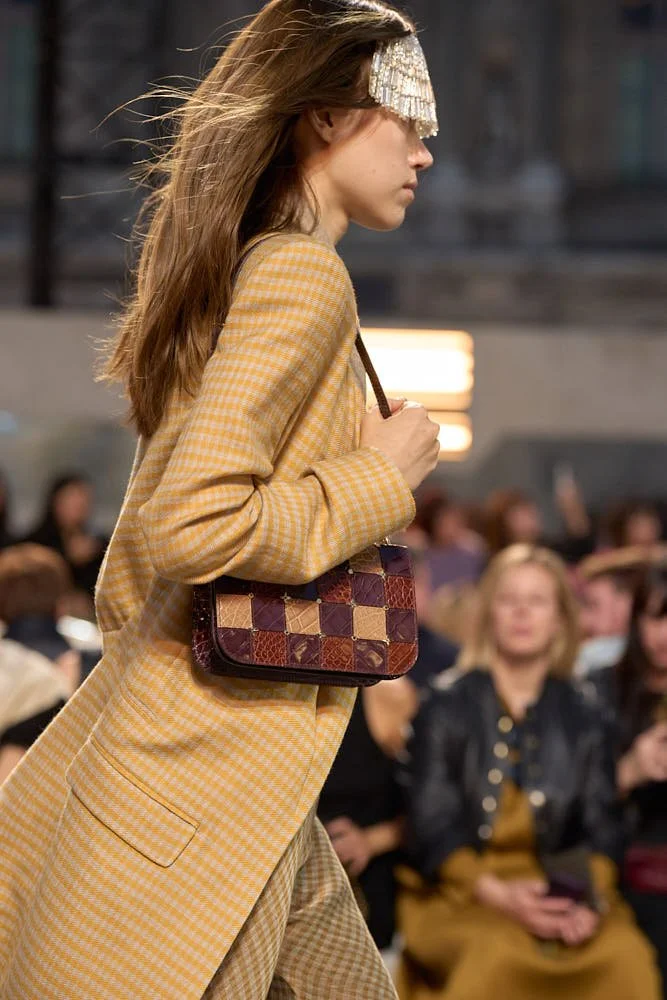
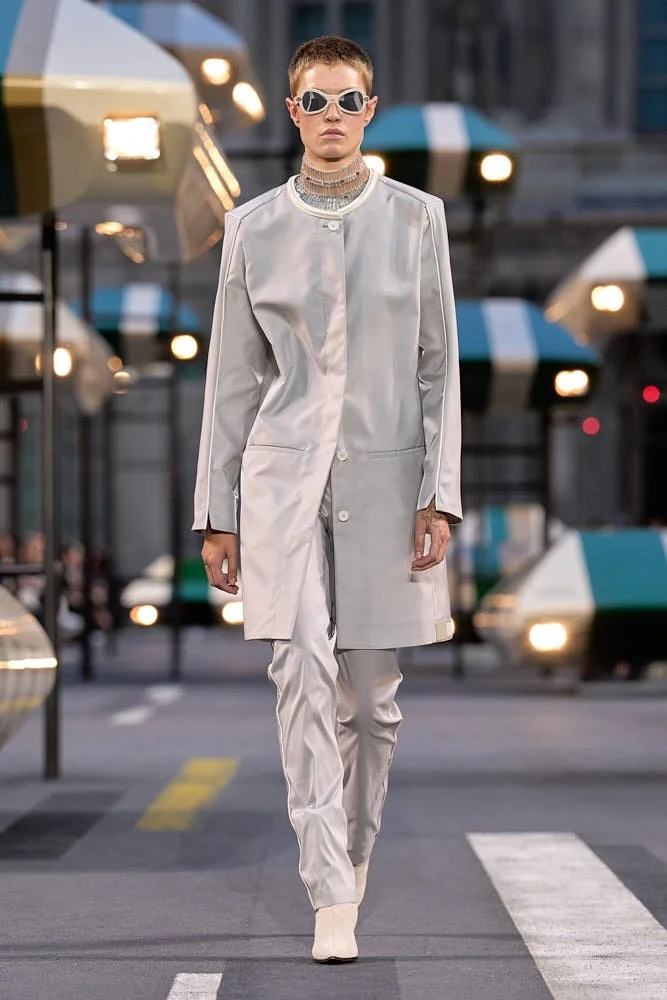
The final black suit came with a broad sweep of checked fabric gathered in one hand and trailing across the runway, a beautiful complication to give someone crossing a road. The jewelled fringes lowered over the models’ eyes also made a curious accessory for a collection concerned with accommodating the body. Ghesquière had loosened the clothes while retaining a small piece of armour directly in front of the face. Those interventions reveal the limit of the functional argument, and something essential to the collection’s appeal.


Louis Vuitton Womens Spring Summer 2027 Show ERGONOMIE Collection by Nicolas Ghesquière for LE MILE Magazine Scenography

Louis Vuitton Womens Spring/Summer 2027 Scenography
/ Ergonomie Collection by Nicolas Ghesquière


Vuitton is selling the pleasure of an exceptional appearance alongside any improvement in comfort. Its quieter clothes face a different test. A nearly plain white dress is available at every level of the market; here, its cut and material have to make the distinction convincing. The fit will need to do as much persuading as the image. Elaborate engineering carries little force if its benefits remain an explanation in the show notes. The opening look made the strongest case because its construction was already legible. The angled panels shifted across the torso, leaving the dress loose enough for the wearer to determine its outline. Ghesquière has spent years making the future look extraordinary; here, he made a case for making it bearable.


all images (c) Louis Vuitton Press

Valentino Spring/Summer 2027 - Inside Alessandro Michele’s Antibiblioteca

Valentino Spring/Summer 2027 - Inside Alessandro Michele’s Antibiblioteca

Double-click to edit...

A review of the Valentino Spring/Summer 2027 by Alessandro Michele

Valentino Spring/Summer 2027 Opens the Unread Wardrobe


LE MILE


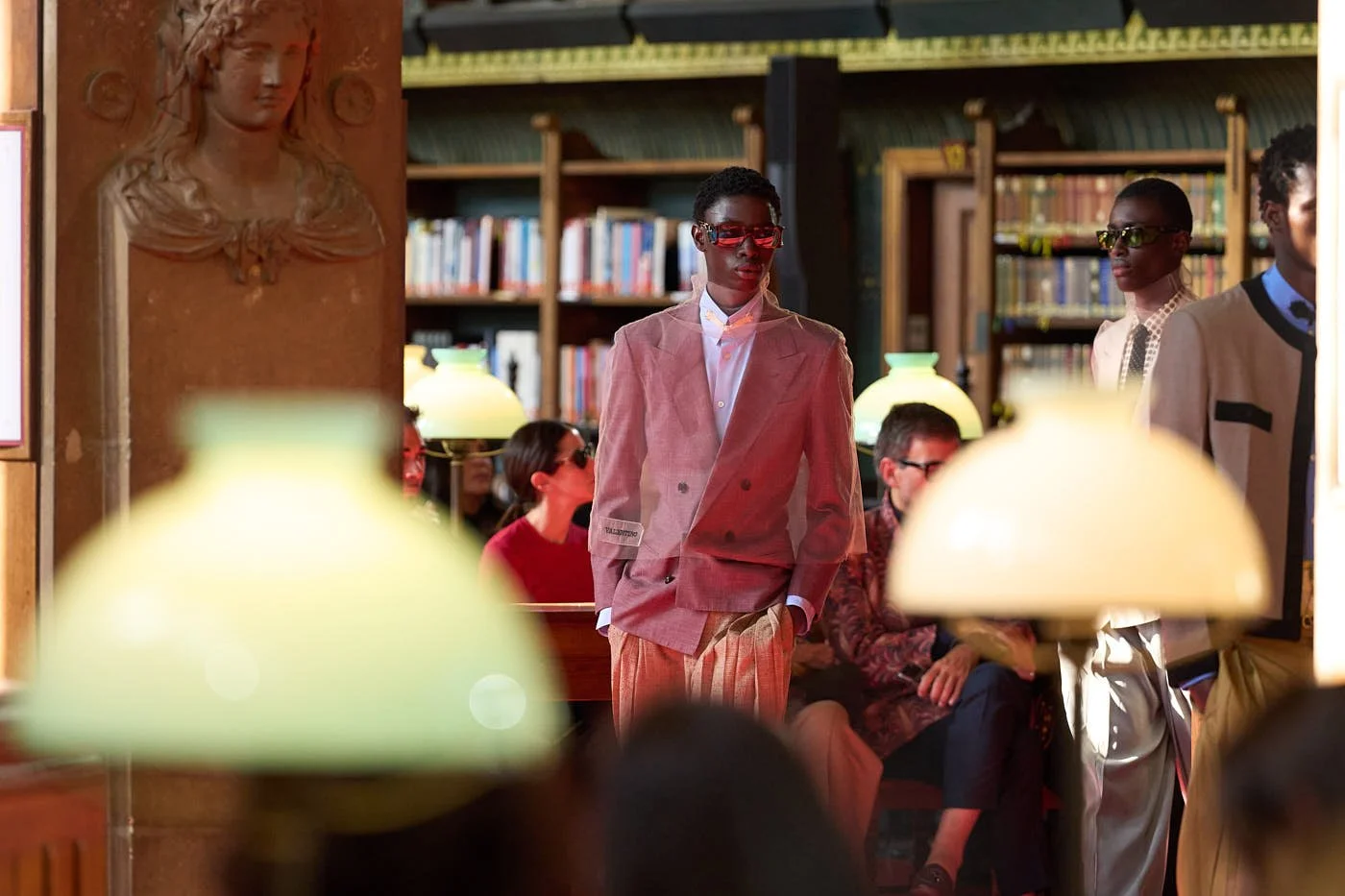
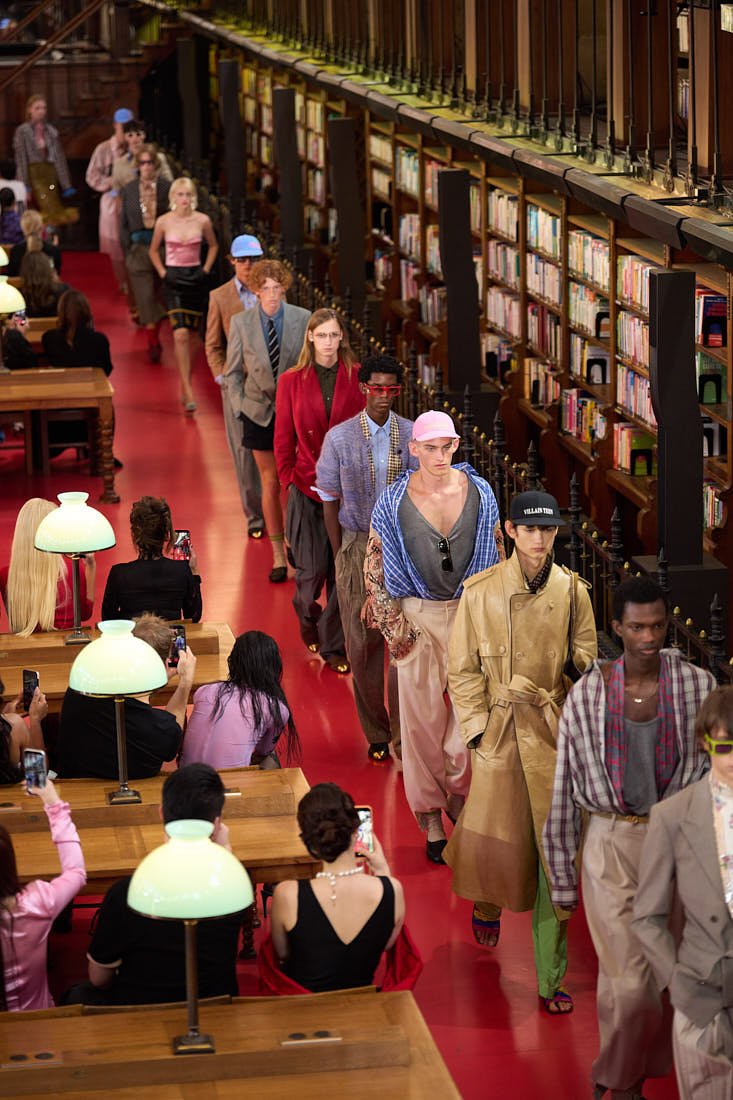
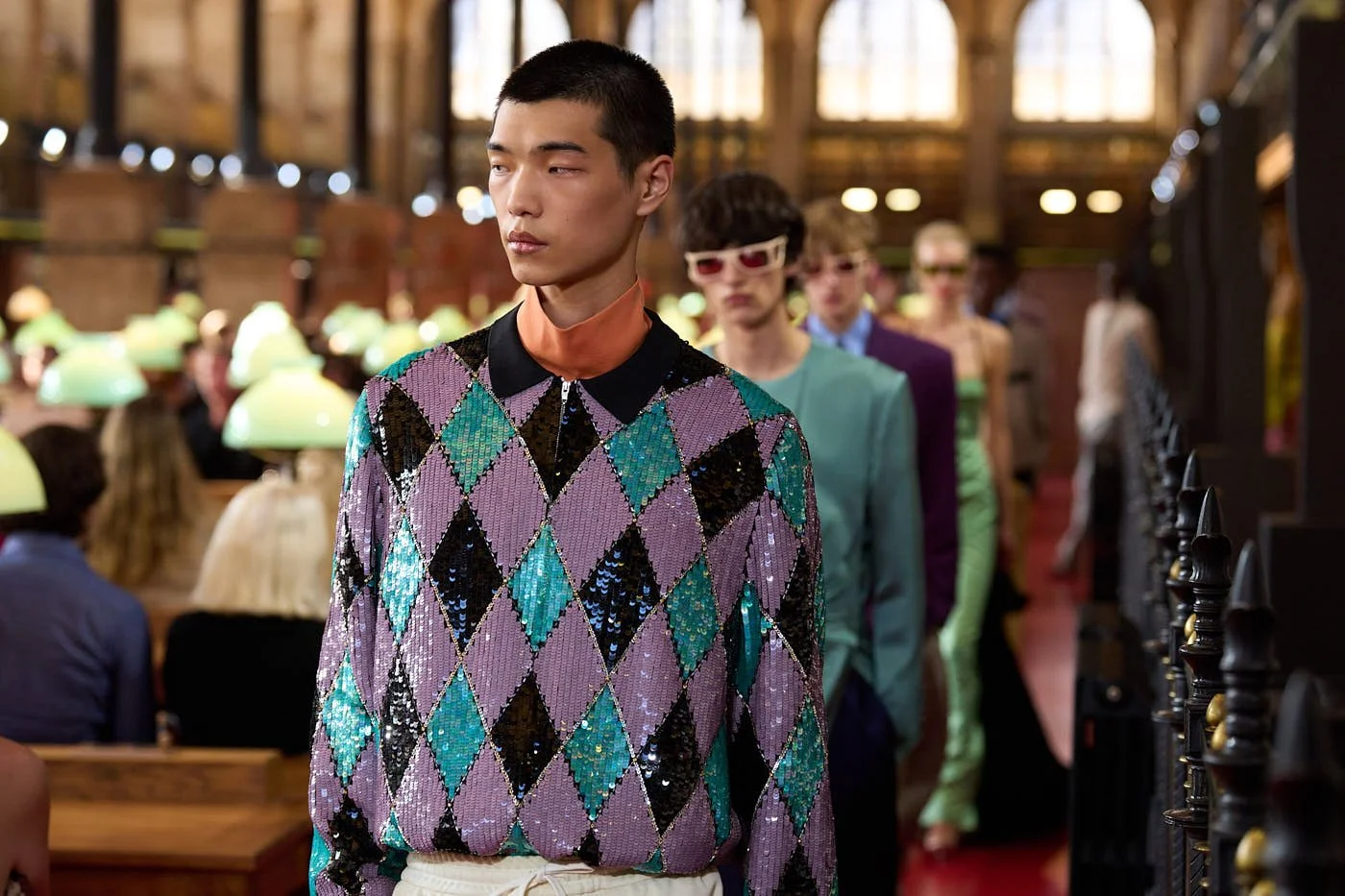
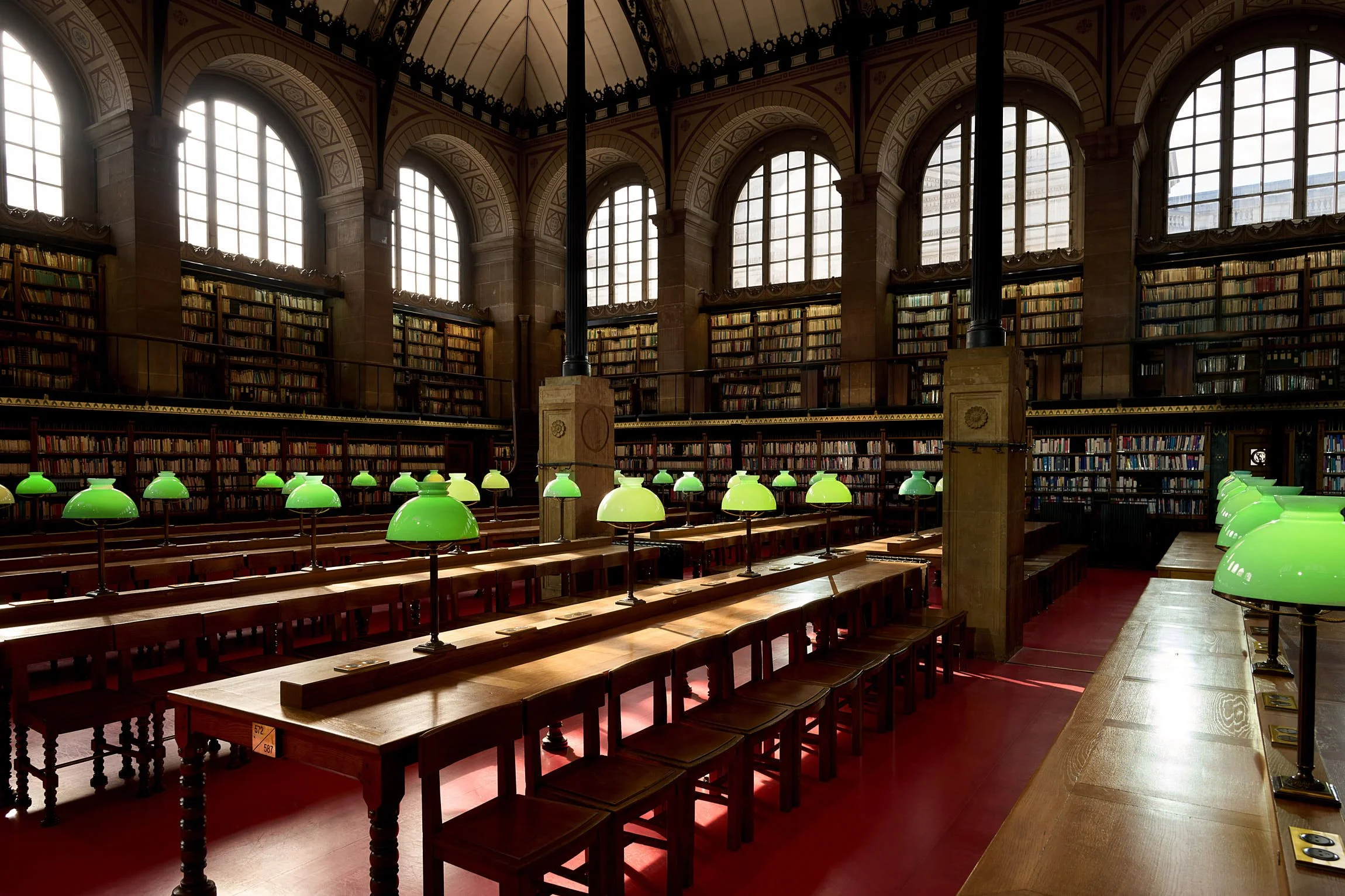
Long reading tables ran beneath green lamps, surrounded by shelves in the vast 19th-century room. The Bibliothèque Sainte-Geneviève gave Valentino’s Spring/Summer 2027 show a setting already dense with its own rituals, which Alessandro Michele quickly disturbed with strobe lights and Troye Sivan’s “Party” playing on loop. Guests arrived carrying books of their own, which were collected at the entrance for donation after the show.


VALENTINO ANTIBIBLIOTECA by ALESSANDRO MICHELE SS27 Show during Paris Fashion Week for LE MILE Magazine

Valentino Spring Summer 2027
/ Antibiblioteca by Alessandro Michele

VALENTINO ANTIBIBLIOTECA by ALESSANDRO MICHELE SS27 Show during Paris Fashion Week for LE MILE Magazine

Valentino Spring Summer 2027
/ Antibiblioteca by Alessandro Michele at Bibliothèque Sainte-Geneviève

VALENTINO ANTIBIBLIOTECA by ALESSANDRO MICHELE SS27 Show during Paris Fashion Week for LE MILE Magazine

Valentino Spring Summer 2027
/ Antibiblioteca by Alessandro Michele

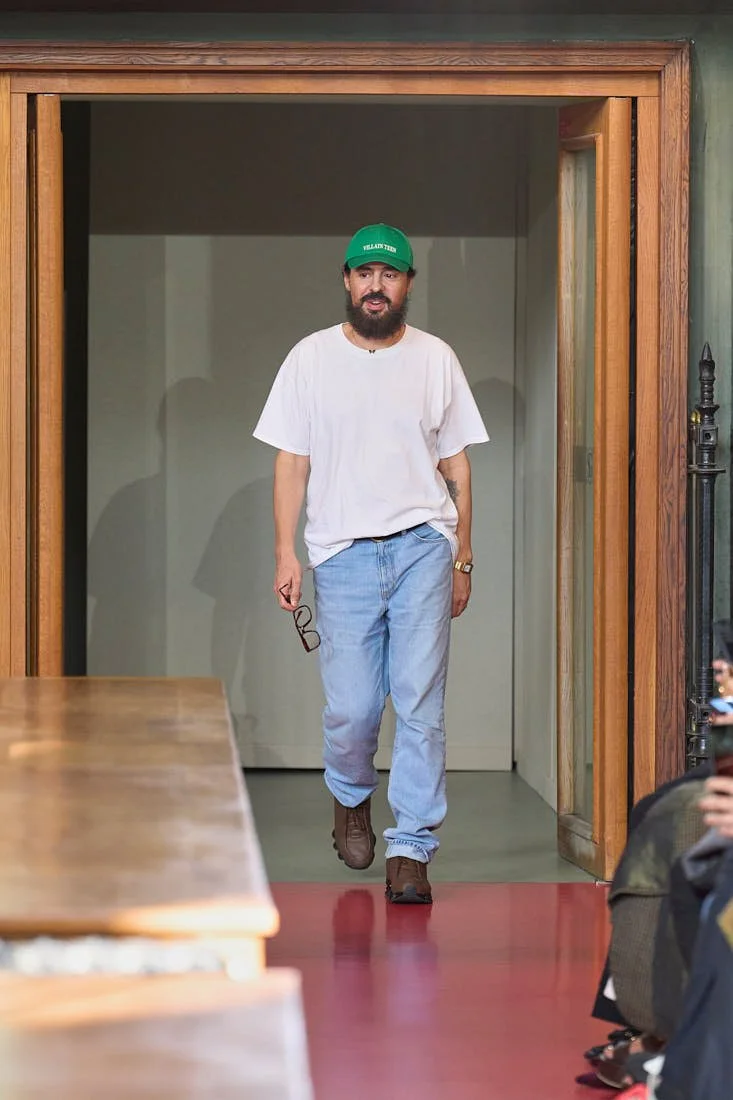
VALENTINO ANTIBIBLIOTECA by ALESSANDRO MICHELE SS27 Show during Paris Fashion Week for LE MILE Magazine

Valentino Spring Summer 2027
/ Antibiblioteca by Alessandro Michele


He called the collection Antibiblioteca, taking its name from Nassim Nicholas Taleb’s account of Umberto Eco’s personal library of some 30,000 books. Taleb was fascinated by the unread volumes and the knowledge they still contained. Michele transferred that idea to fashion, imagining clothes as carriers of lives still available to us. His notes also refer to the Japanese practice of tsundoku, the accumulation of unread books, and to Giorgio Agamben’s writing on potentiality. Across 80 looks, the runway became Michele’s own catalogue of possibilities. The opening established a silhouette around jewel-toned satin bustiers worn with knee-length skirts in crinkled crepon and floral silk dévoré. Leather entered the sequence with a harder surface, and feathered hems changed the line around the leg as the models walked. The exposed torso brought a directness to the collection. An ’80s-shaped jacket set with jewel buttons appeared over lace biker shorts, and a hot-pink strapless gown revealed a circular ruffle at the back as it turned, finished with an enormous black bow.

Double-breasted jackets were deliberately fastened off-centre, gathering fabric around the waist, while silk boxers rose high above trouser waistbands. Baseball caps printed with “Villain Teen” cut through the tailoring with the kind of peculiar humour that has followed Michele throughout his career. Jewellery became part of the silhouette, with long strands of pearls and oversized crystal pieces covering shirts or bare skin.


VALENTINO ANTIBIBLIOTECA by ALESSANDRO MICHELE SS27 Show during Paris Fashion Week for LE MILE Magazine

Valentino Spring Summer 2027
/ Antibiblioteca by Alessandro Michele


Satin columns allowed their construction to hold attention, while ruffles and rhinestones appeared elsewhere with greater theatricality. A black velvet dress plunging to the navel was covered at the neckline with gold and pearls, giving the body a strong frame without burying the dress itself. Here Michele’s instinct for decoration found a convincing scale within Valentino, a house whose founder understood glamour as something immediately visible across a room.This was Michele’s fourth ready-to-wear collection since taking over Valentino in 2024. The 80-look length occasionally blurred its focus, though the bustier silhouettes and evening dresses gave the collection a strong centre. Michele filled the library with possible lives and gave his appetite for abundance a reason to remain open-ended. The unread wardrobe, in his hands, still has plenty left on its shelves.


all images (c) Valentino Press

Christian Louboutin SS27 - Eternal Youth in Paris

Christian Louboutin SS27 - Eternal Youth in Paris

Double-click to edit...

A review of the Christian Louboutin Spring/Summer Women’s 2027 Show

Christian Louboutin’s Eternal Fairytale


written MALCOLM THOMAS


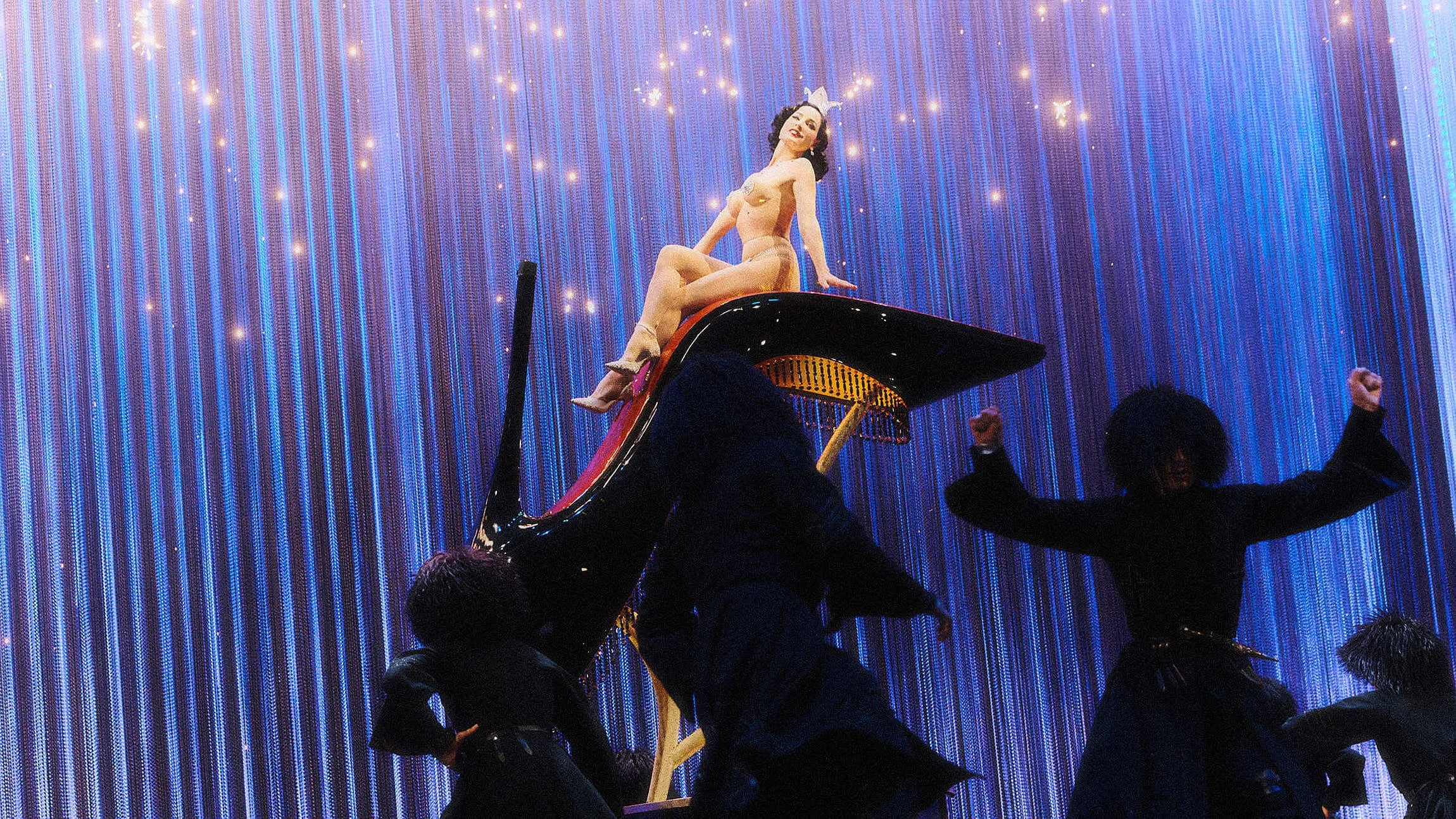
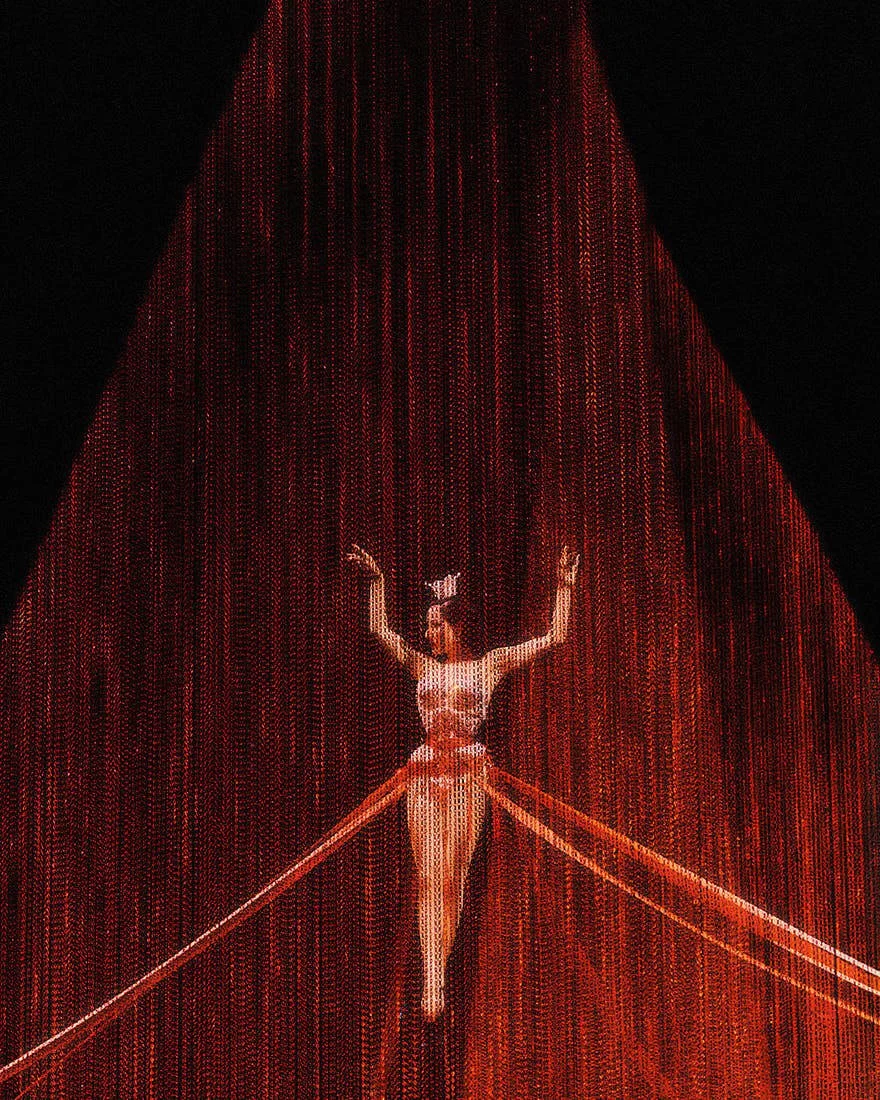
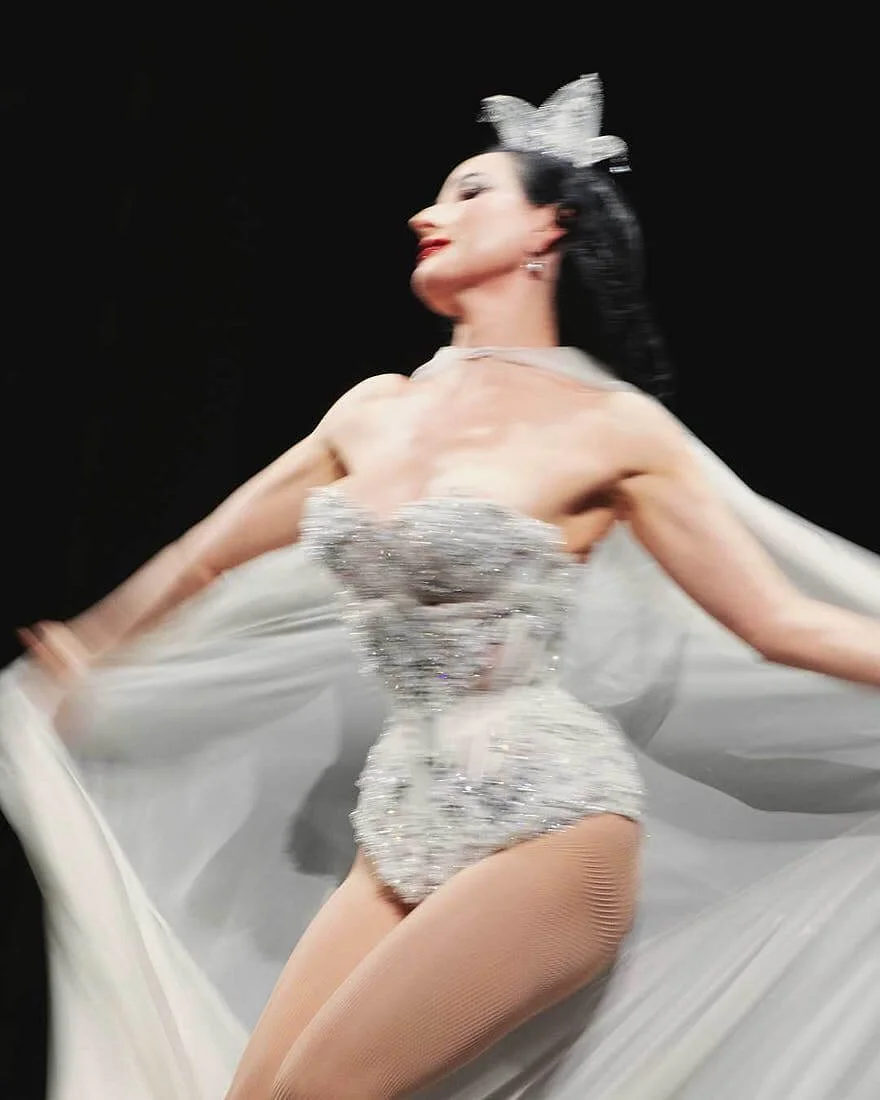
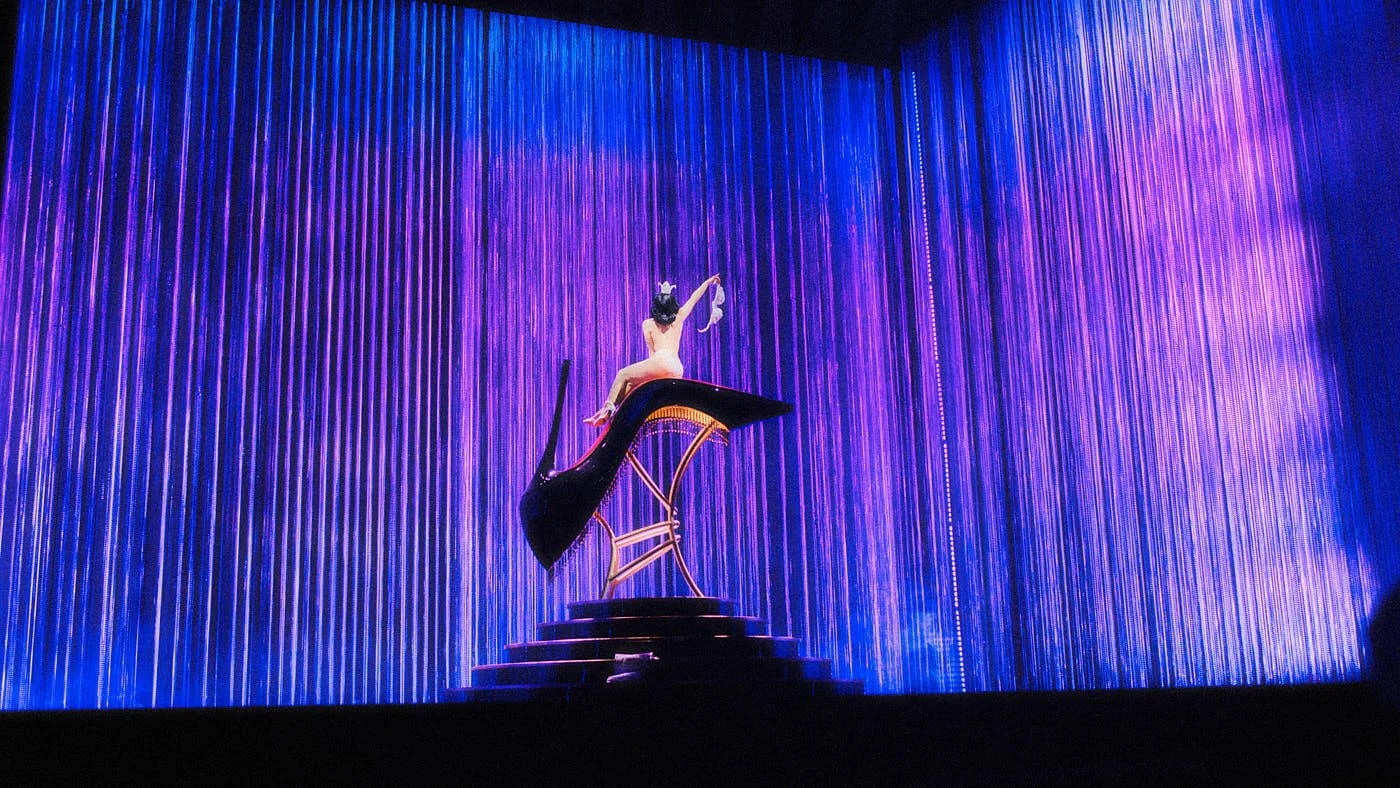
Long inspired by the cabaret, on Friday at the Théâtre du Chatelet Christian Louboutin unveiled a Baz Luhrmann Moulin Rouge-level production of “Eternal Youth”. The name of his theatrical Spring/Summer 2027 show. A cabaret starring Dita Von Teese, who at one point was perched atop the sole of a shoe. La Pigalle, of course, the iconic heel with which Louboutin will be forever known.


Christian Louboutin’s Eternal Fairytale  Womenswear Spring Summer 2026 Show Paris during Paris Fashion Week in Théâtre du Châtelet with Dita Von Teese

Christian Louboutin Women Spring Summer 2027
/ at Théâtre du Châtelet with Dita Von Teese

Christian Louboutin’s Eternal Fairytale  Womenswear Spring Summer 2026 Show Paris during Paris Fashion Week in Théâtre du Châtelet with Dita Von Teese

Christian Louboutin Women Spring Summer 2027
/ at Théâtre du Châtelet with Dita Von Teese

Christian Louboutin’s Eternal Fairytale  Womenswear Spring Summer 2026 Show Paris during Paris Fashion Week in Théâtre du Châtelet with Dita Von Teese

Christian Louboutin Women Spring Summer 2027
/ at Théâtre du Châtelet with Dita Von Teese

Christian Louboutin’s Eternal Fairytale  Womenswear Spring Summer 2026 Show Paris during Paris Fashion Week in Théâtre du Châtelet with Dita Von Teese

Christian Louboutin Women Spring Summer 2027
/ at Théâtre du Châtelet with Dita Von Teese


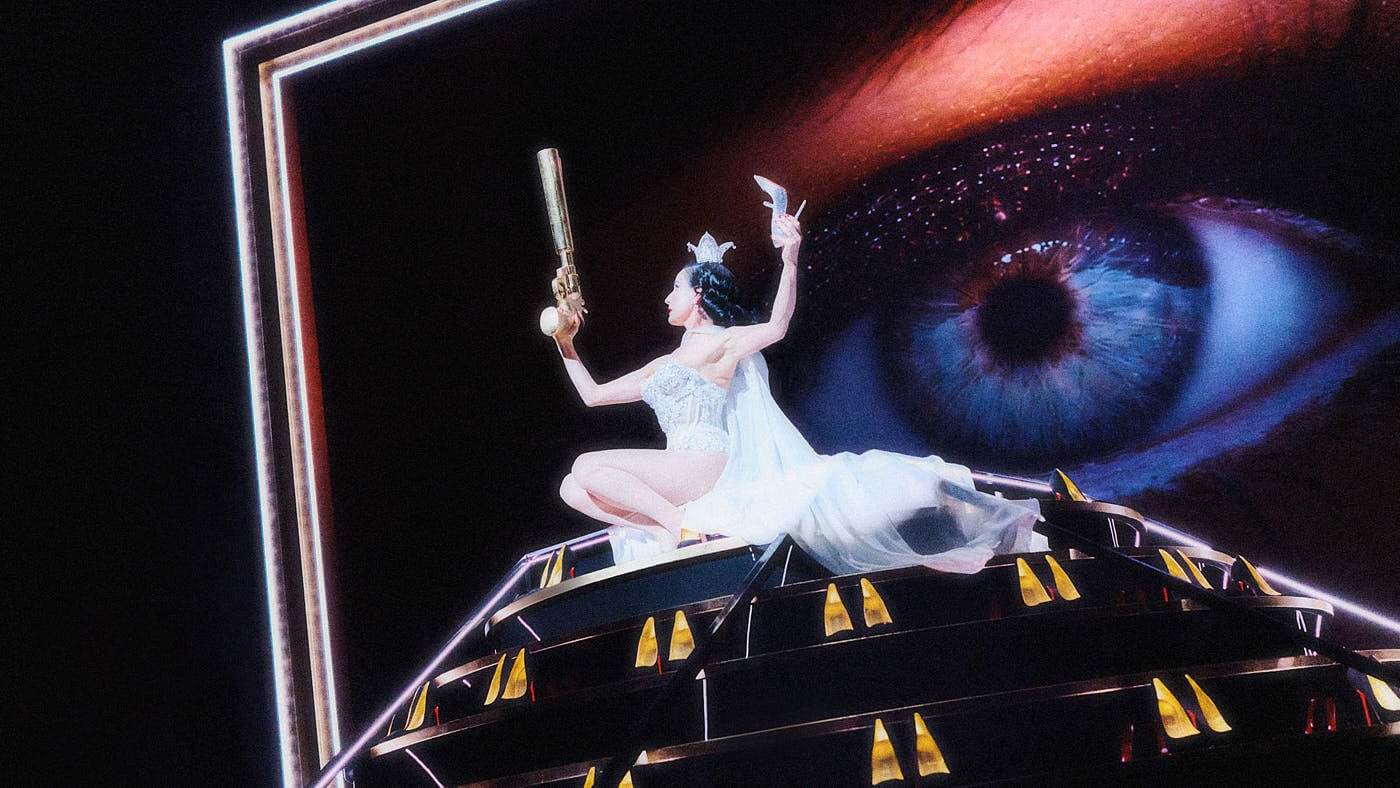
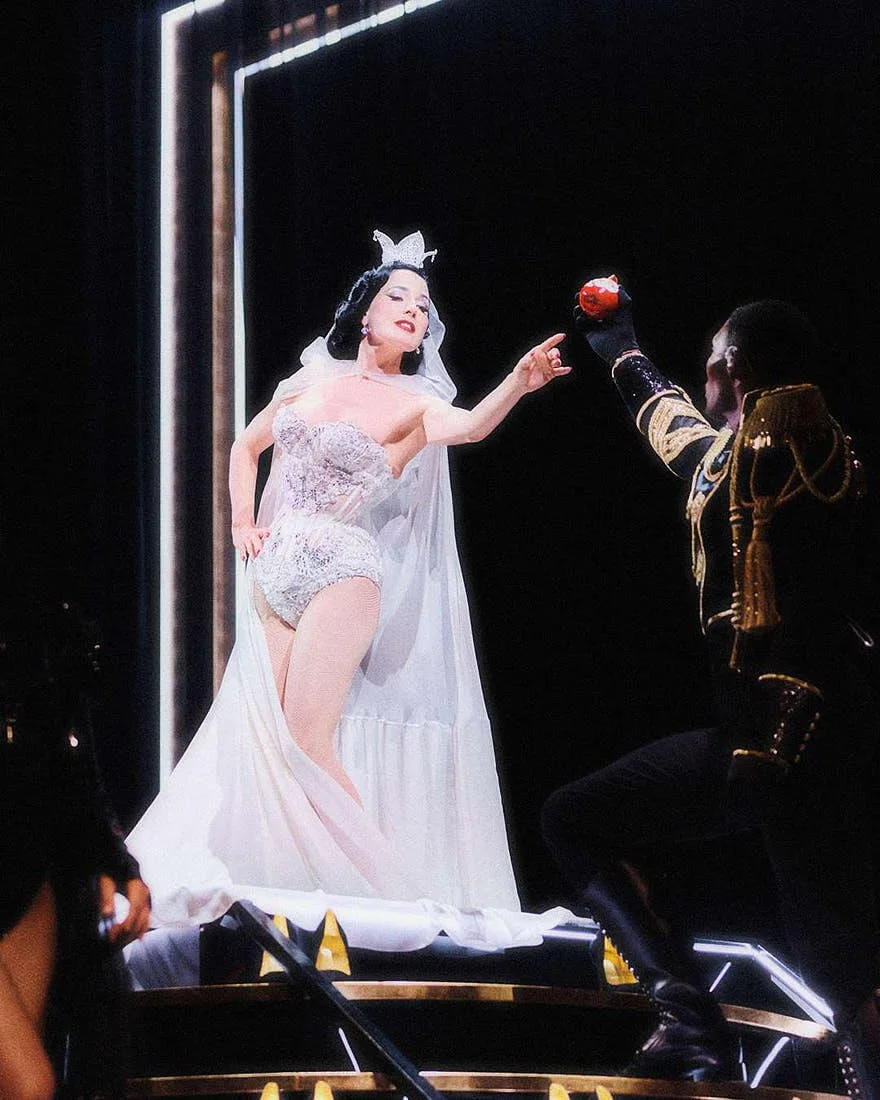
Built by Bruno de Lavenère, whose C.V. includes the Opening Ceremony at the 2024 Olympics, and featuring a world-class team of creative collaborators including Olivier Balazuc, Mathieu Herzog, Samy Bishai, Natacha Atlas, Josépha Madoki and the Bachana Dance Company, guests were dazzled by music, dance and a kind of vaudeville, old-timey glamour that’s never out of step in Paris. Artistic contributions from John Galliano, Stephen Jones and Mr. Pearl added to the “fairytale of empowerment” (a phrase coined by the house) with Von Teese affecting the visage of Snow White, hair black as ebony, skin pure as snow, lips red as blood, in her own liberated image.

Beginning in the deafening silence of a forgotten world, draped in sadness, Von Teese embarked on a journey of self-discovery and transformation, with enchanting footwear leading the way. Jewel-encrusted Red Shoes that brought endless dance, Seven-League Boots conquered distance, and Hermès' Winged Sandals granted flight. Each carrying the promise of movement, transformation, and freedom. A new way to tell the same story of the Christian Louboutin woman, self-possessed, independent and gloriously resilient.


Christian Louboutin’s Eternal Fairytale  Womenswear Spring Summer 2026 Show Paris during Paris Fashion Week in Théâtre du Châtelet with Dita Von Teese

Christian Louboutin Women Spring Summer 2027
/ at Théâtre du Châtelet with Dita Von Teese


all images (c) Christian Louboutin Press, photographed by Tanguy Sergheraert

Dior Summer 2027 - Jonathan Anderson at Paris Fashion Week

Dior Summer 2027 - Jonathan Anderson at Paris Fashion Week

Double-click to edit...

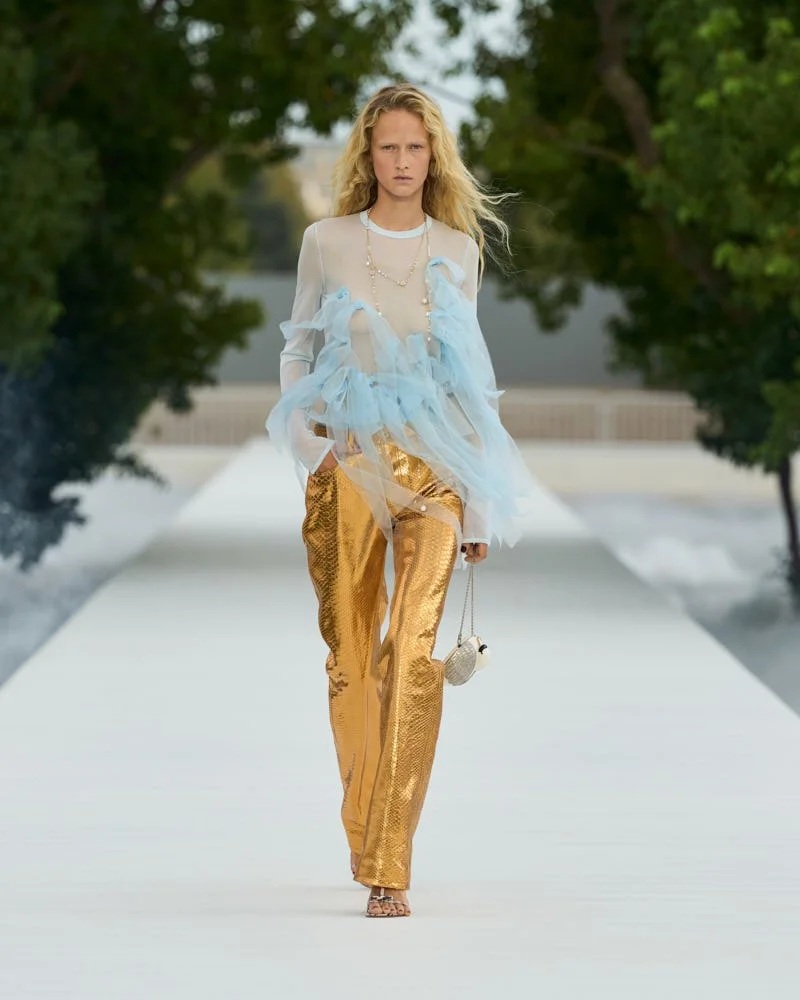
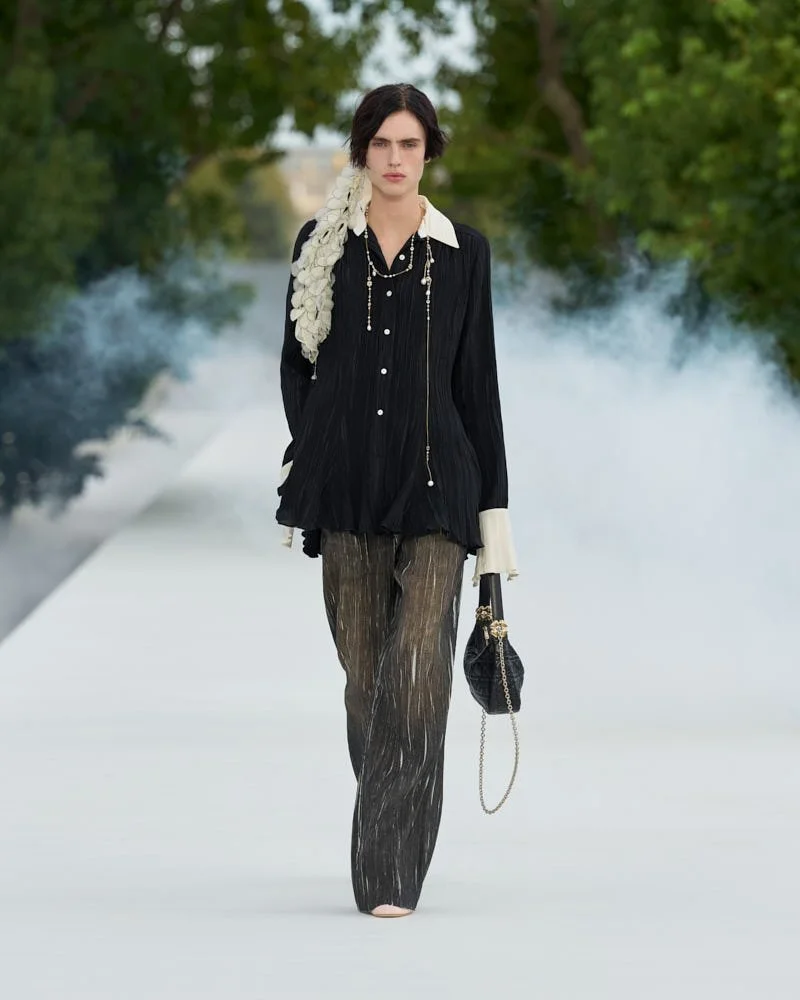
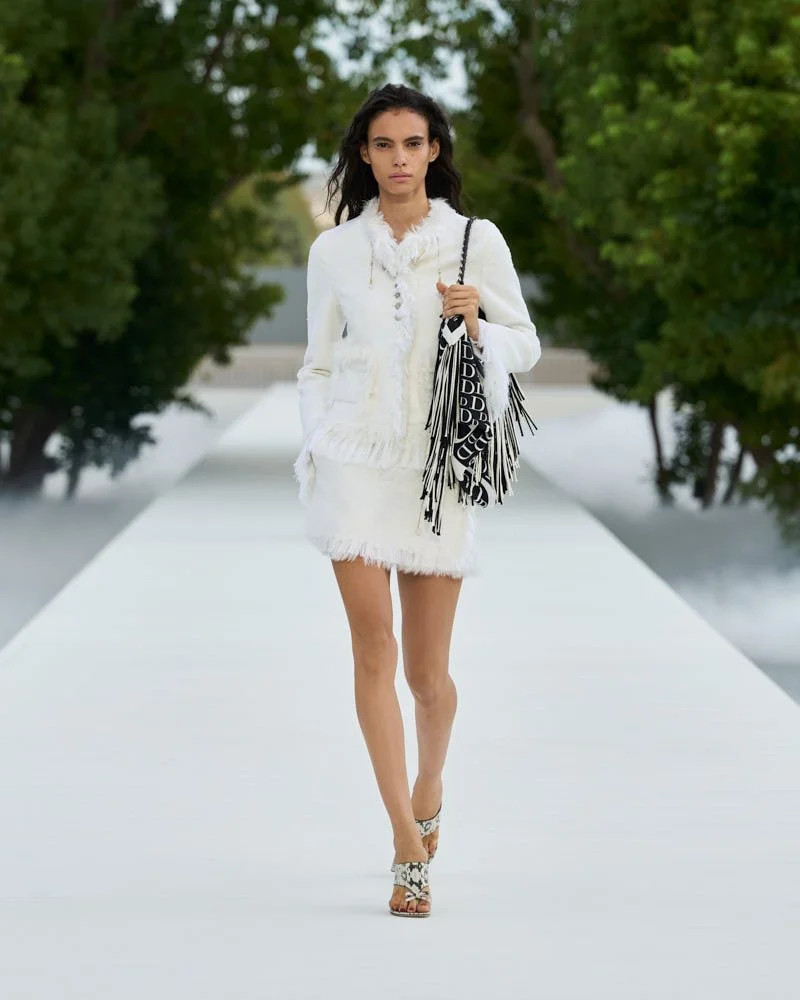
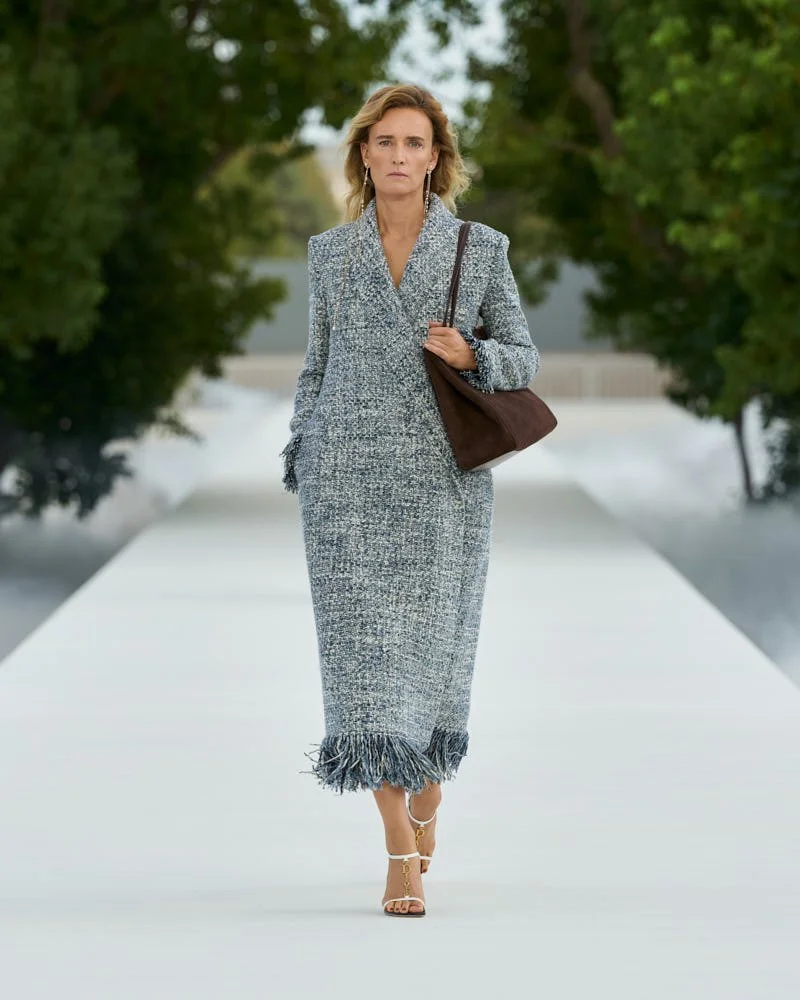
DIOR SUMMER 2027 during Paris Fashion Week

Jonathan Anderson Takes Dior Into the Tuileries


written ALBAN E. SMAJLI


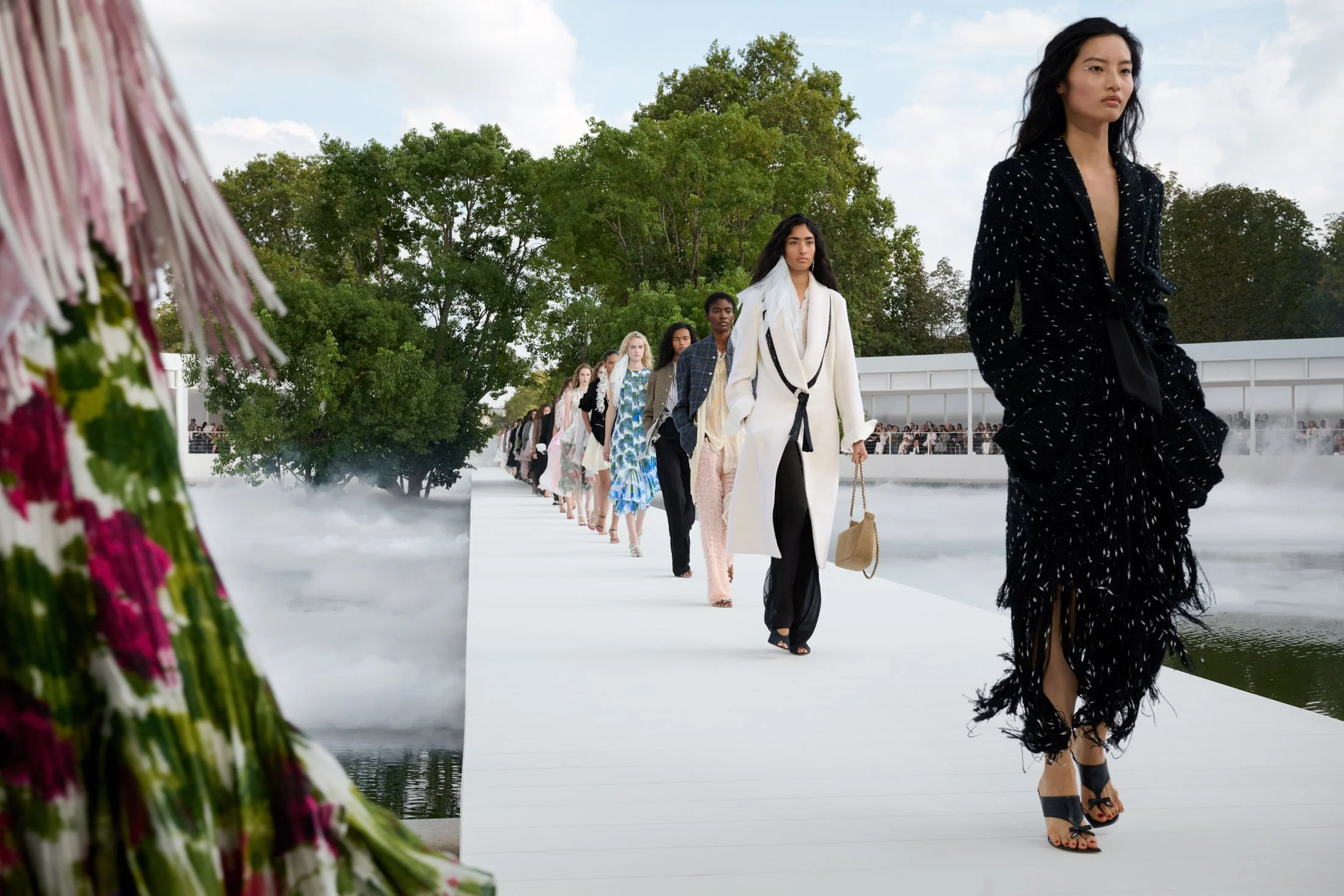
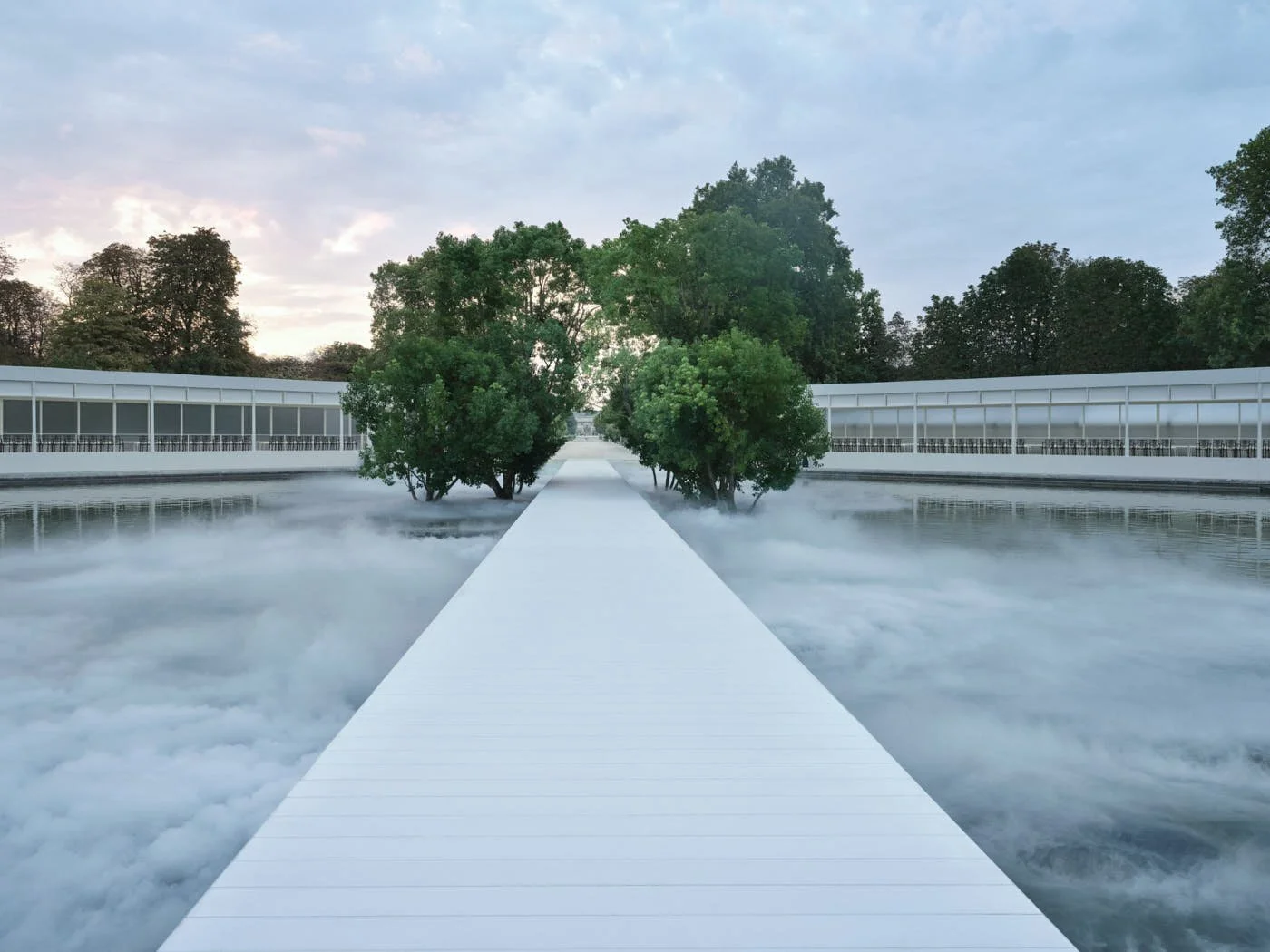
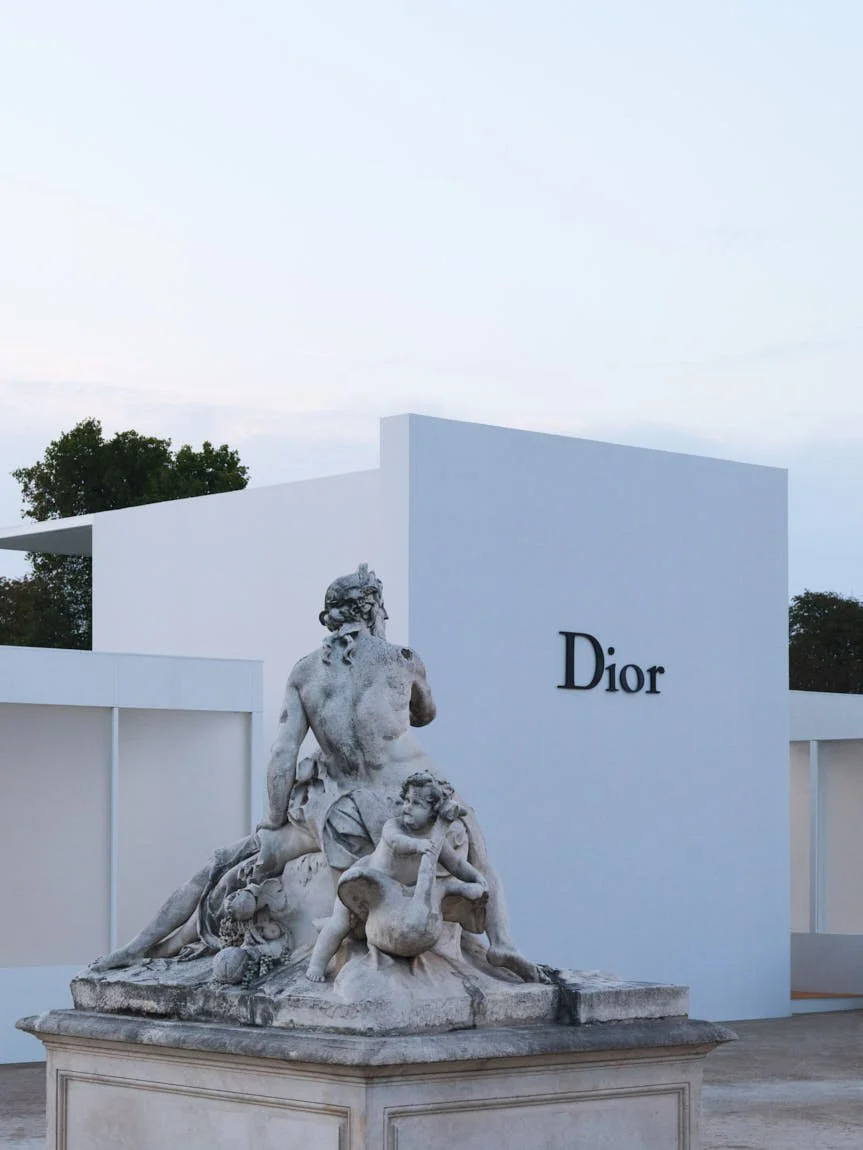
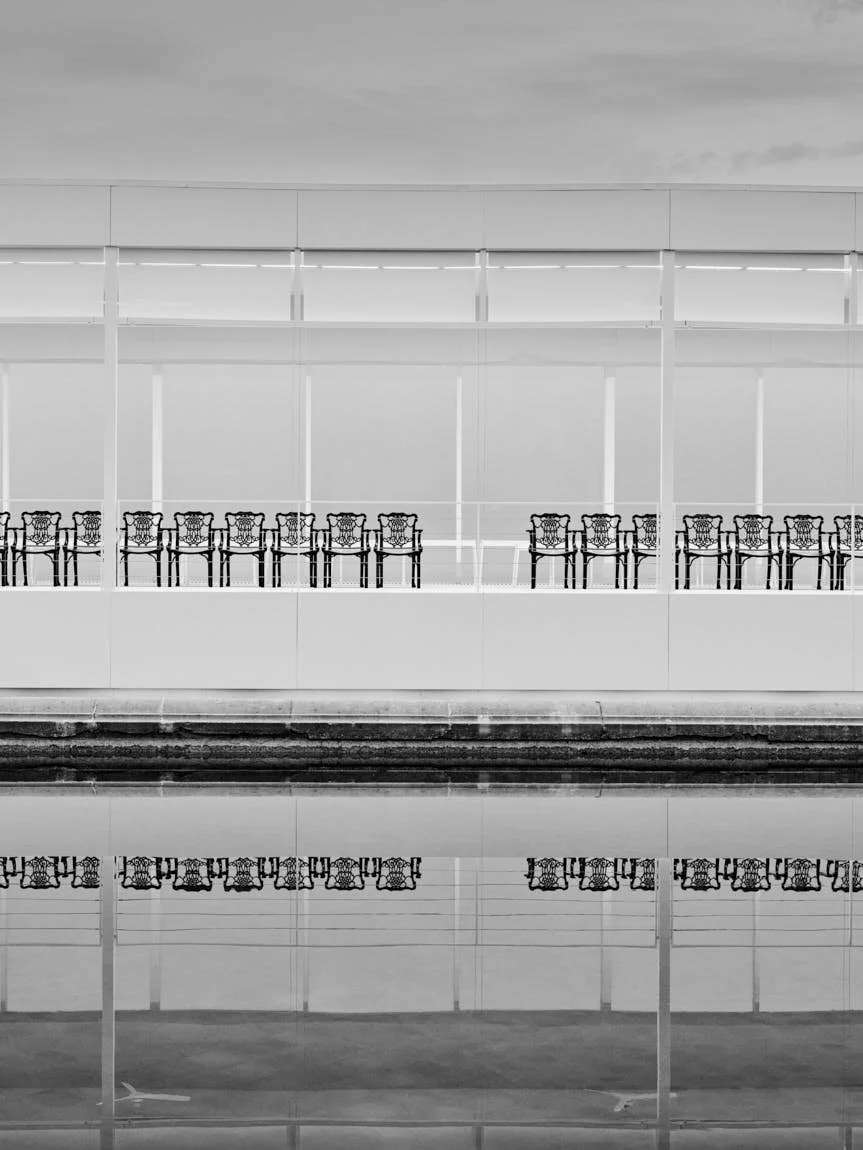
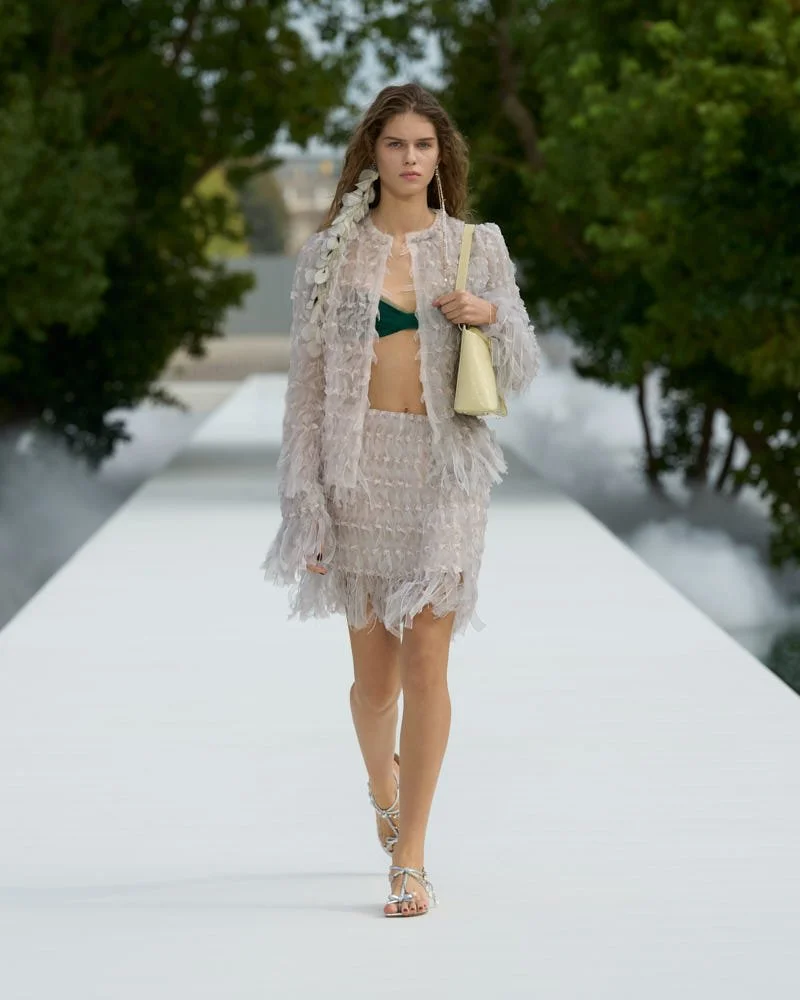
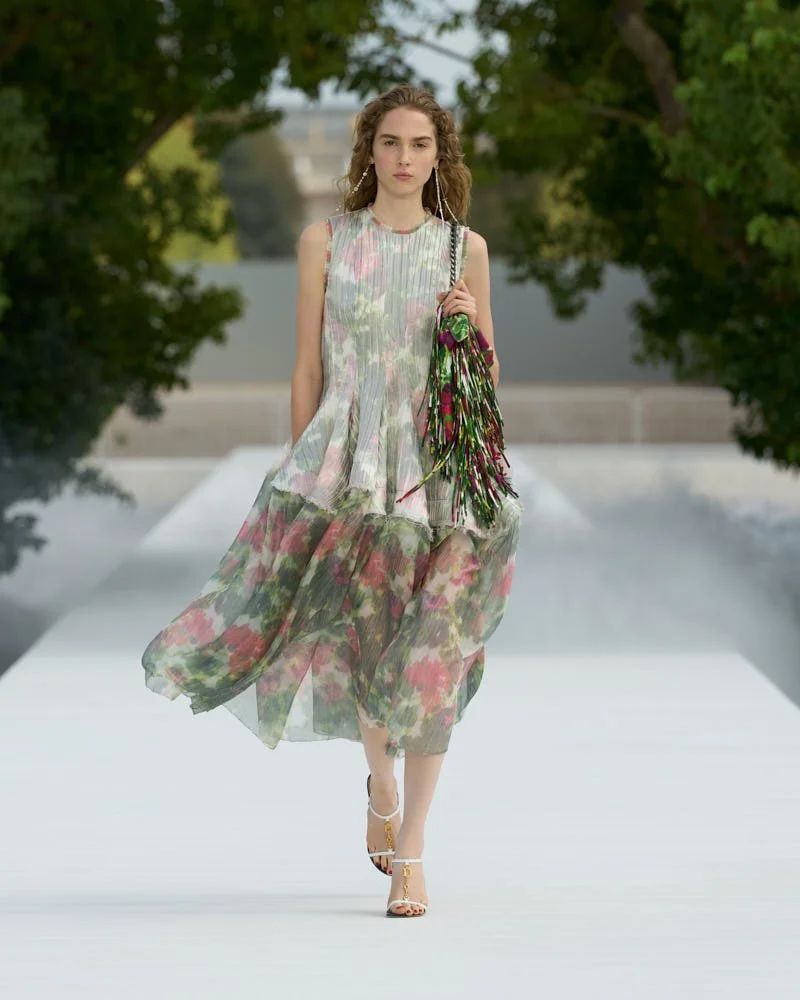
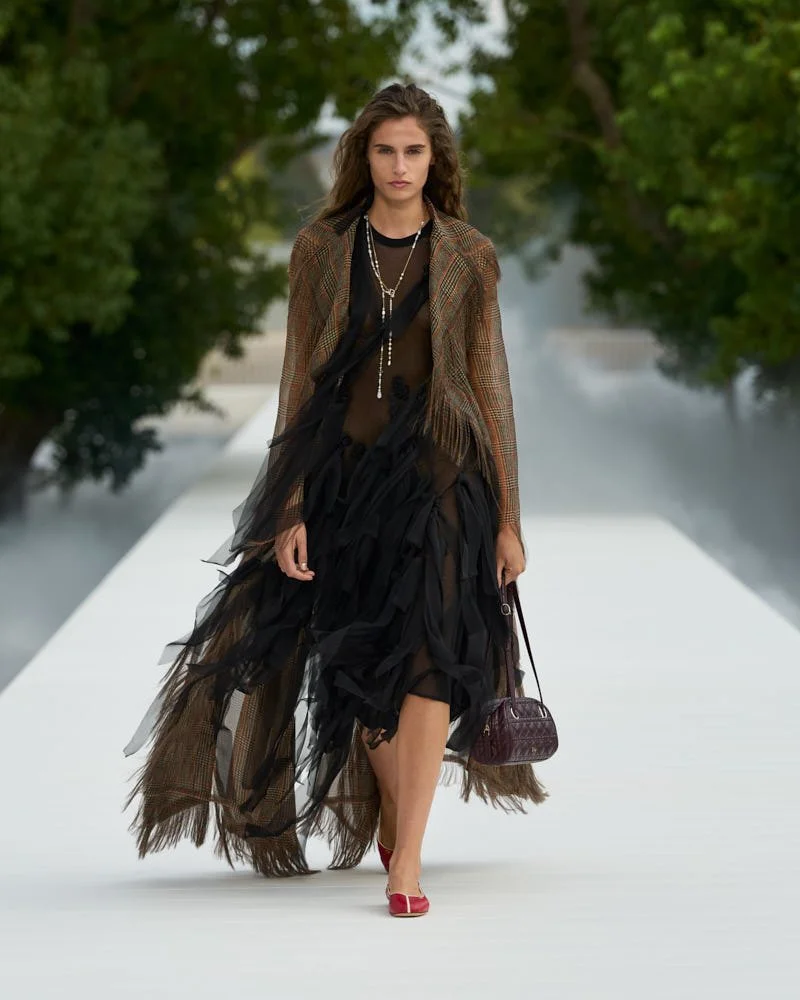
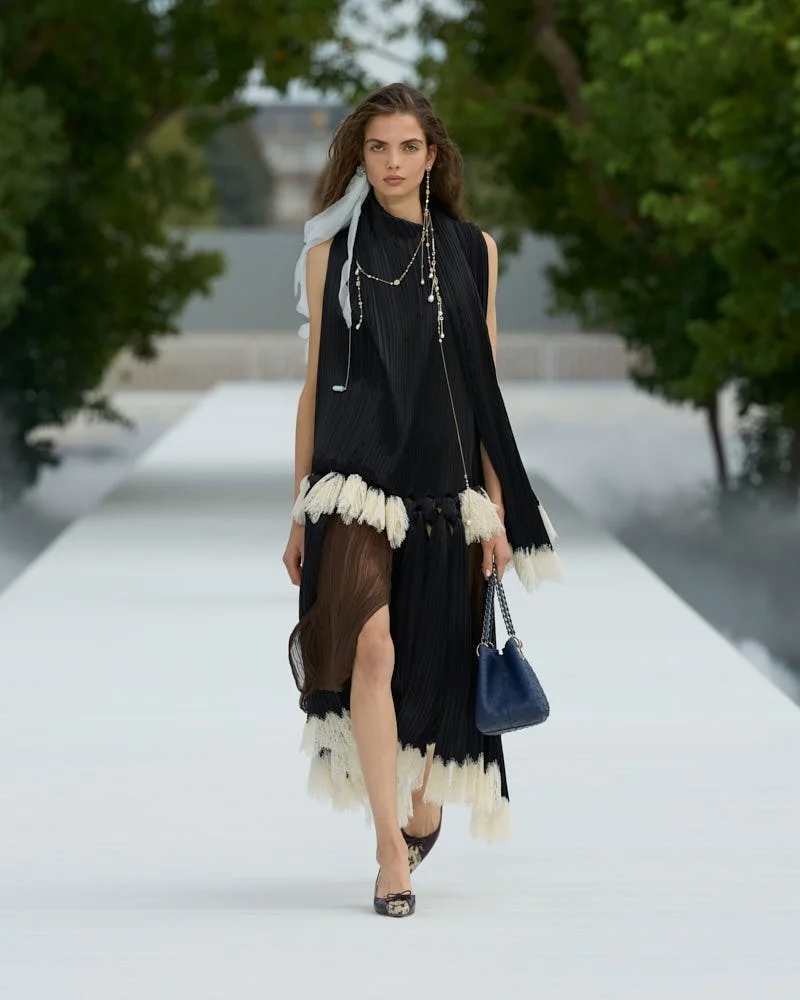
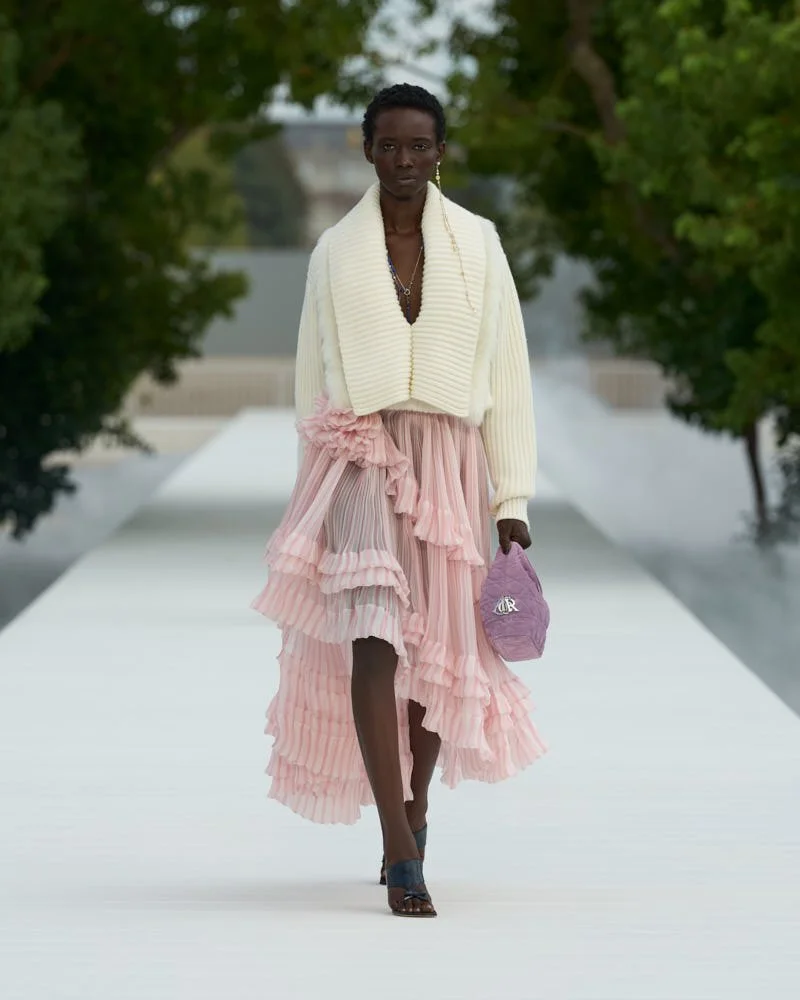
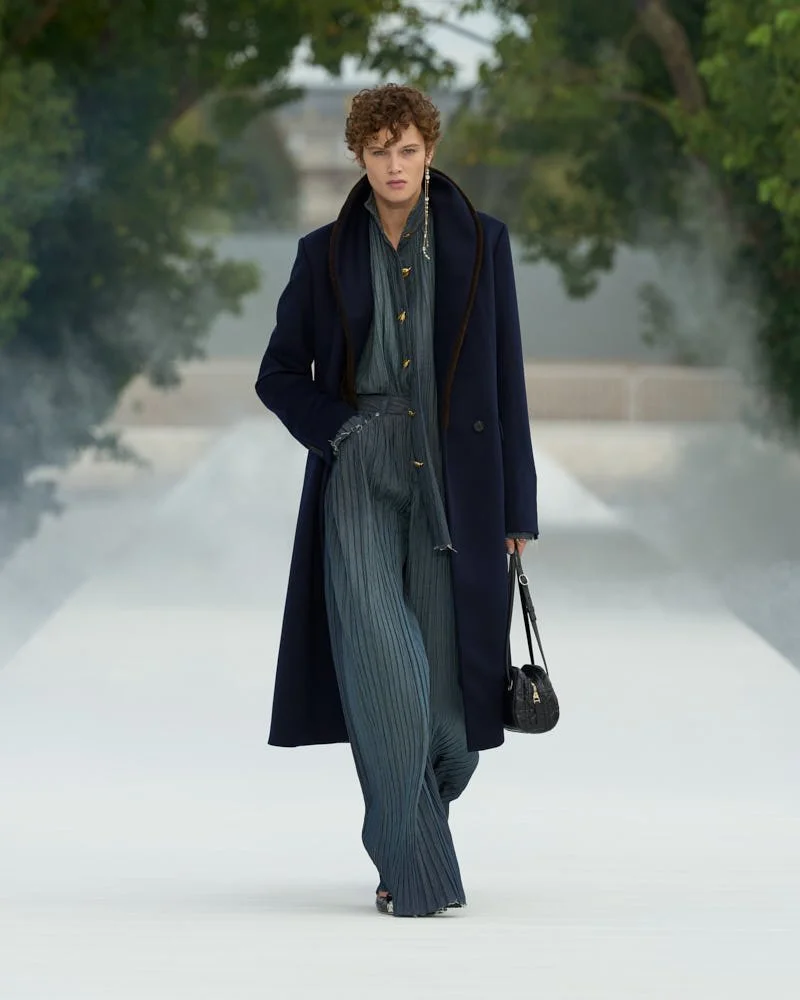
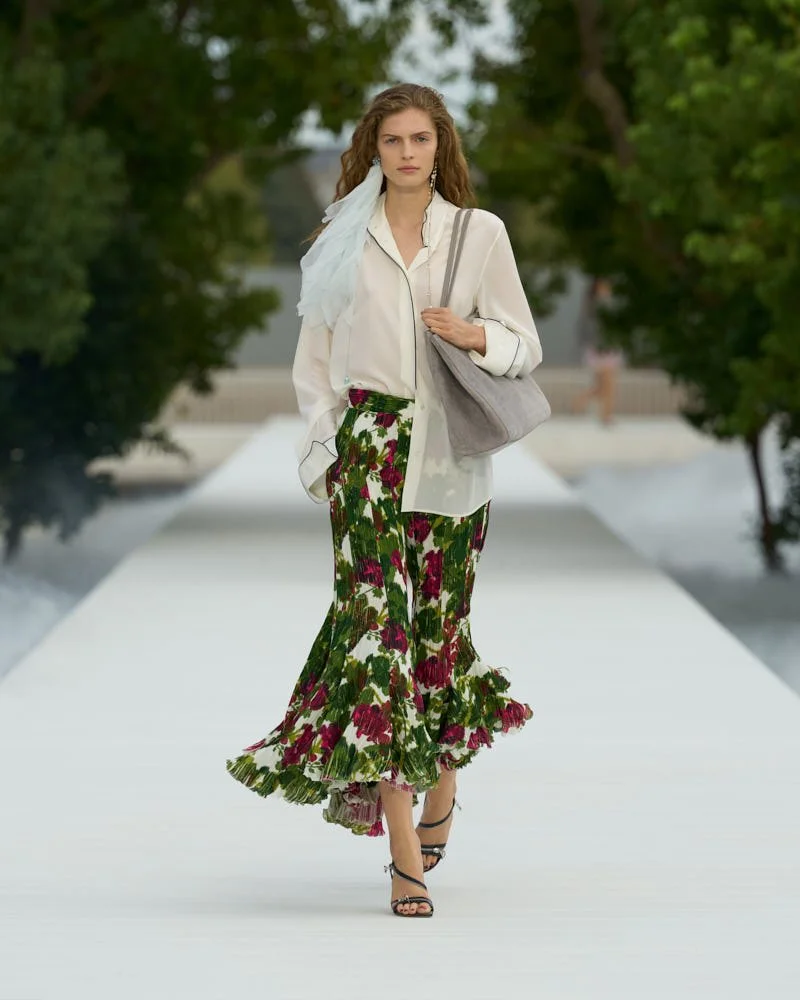
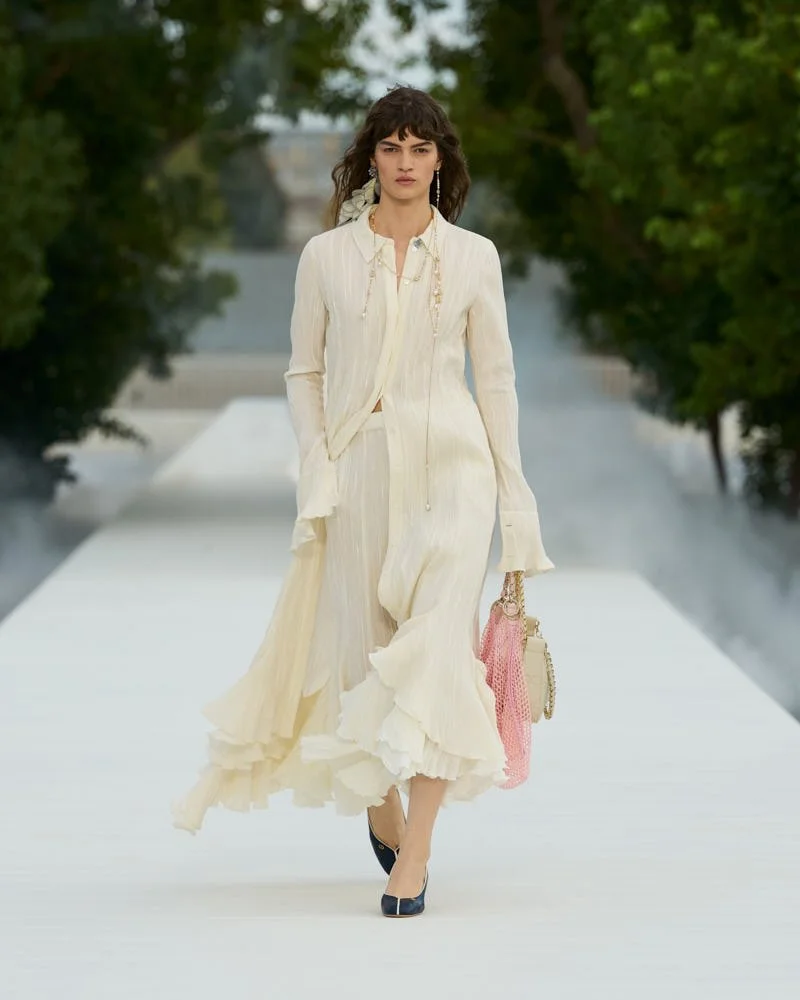
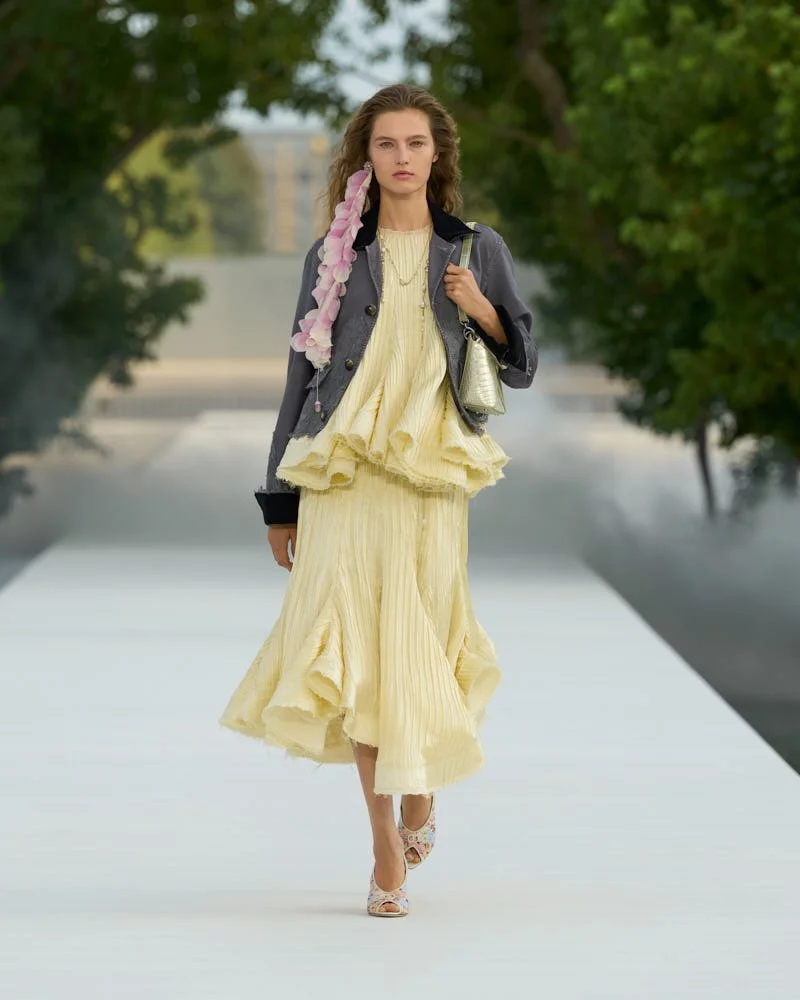
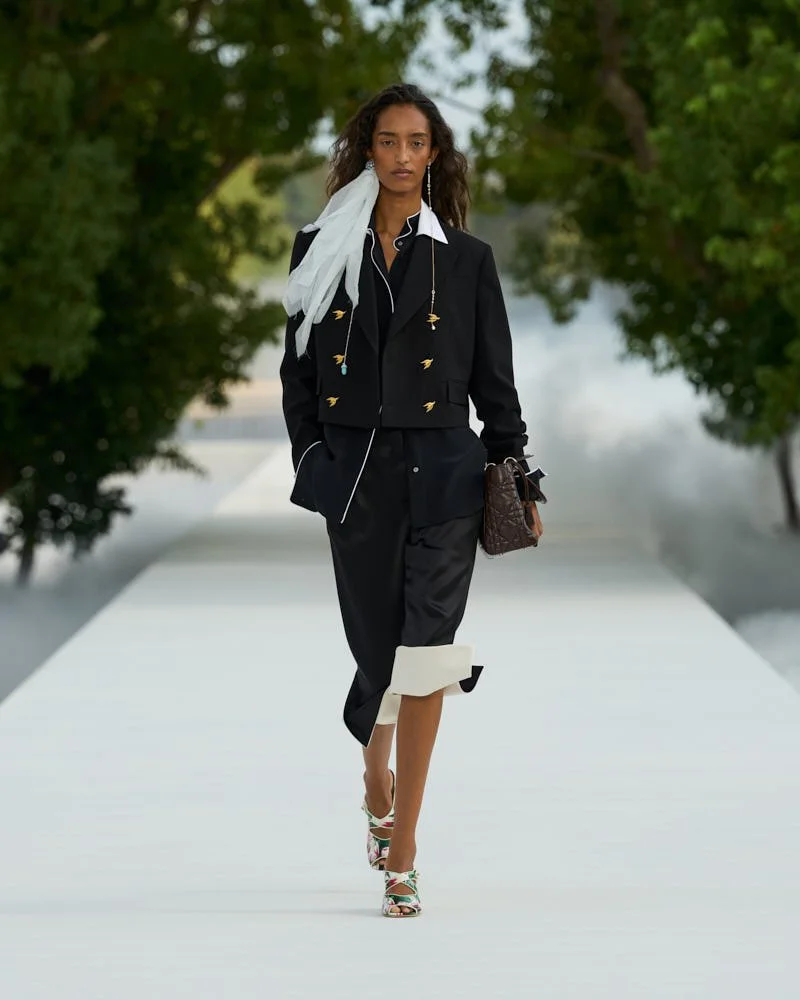
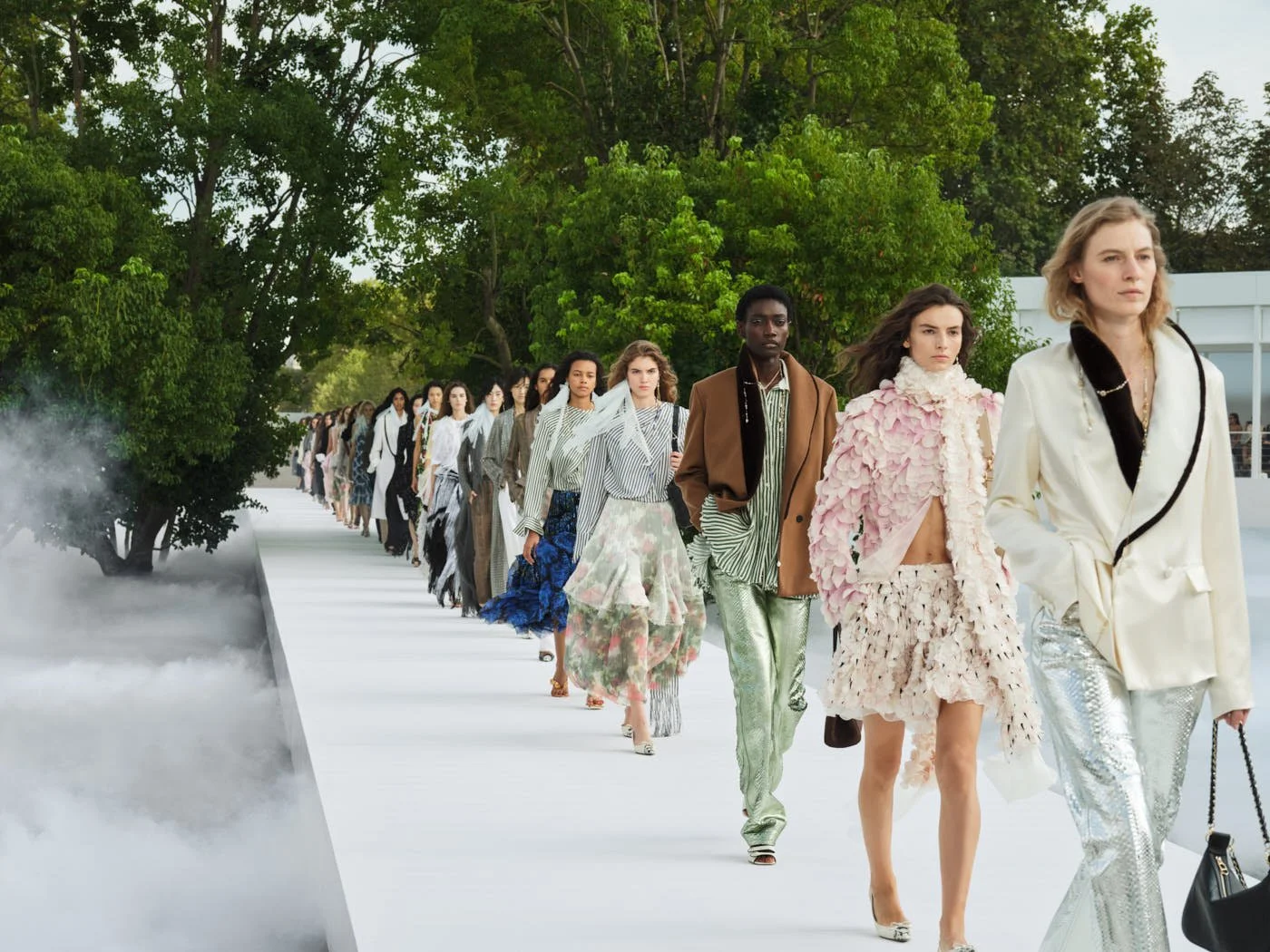
The Bassin Octogonal in the Jardin des Tuileries almost disappeared beneath Dior’s Summer 2027 set. A narrow white runway crossed the water, mature camphor trees rose from the basin and mist drifted around their trunks, leaving the models to emerge through foliage before coming sharply into view. From the surrounding white pavilion, the construction felt improbably calm for one of Paris Fashion Week’s biggest shows. Water held the reflection of the sky, leaves shifted in the breeze and the clothes registered through movement.


DIOR Spring Summer 2027 by Jonathan Anderson Front Runway for LE MILE Magazine Scenography photo by ADRIEN DIRAND

Scenography at Dior Summer 2027
Photo by Adrien Dirand


Guests had already received a clue in the invitation through two wénwán walnuts, objects traditionally rolled in the hand in China until years of handling give their ridged shells a polished patina. Anderson became interested in the knowledge contained in their natural form and in the irregularities that appear within apparent symmetry. Dior’s notes asked how light a garment could become and whether tailoring could be imagined as flou. Those questions shaped the collection directly.

 
DIOR Spring Summer 2027 by Jonathan Anderson Front Runway for LE MILE Magazine Scenography photo by ADRIEN DIRAND

Scenography at Dior Summer 2027
Photo by Adrien Dirand

 
DIOR Spring Summer 2027 by Jonathan Anderson Front Runway for LE MILE Magazine Scenography photo by ADRIEN DIRAND

Scenography at Dior Summer 2027
Photo by Adrien Dirand


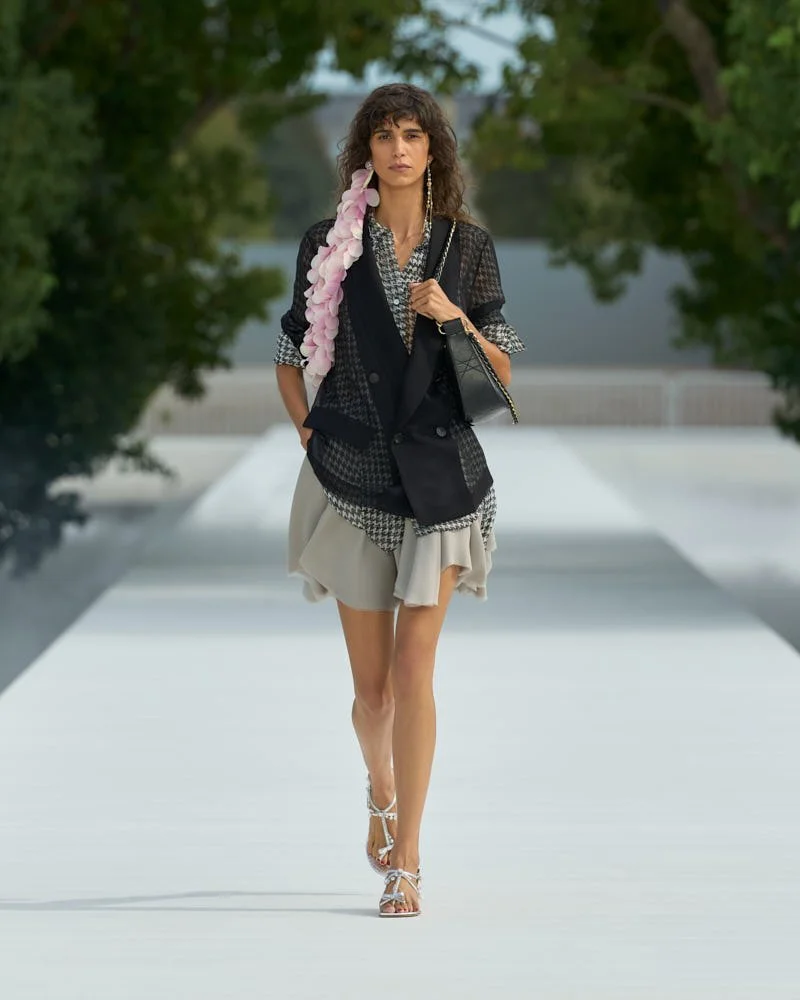
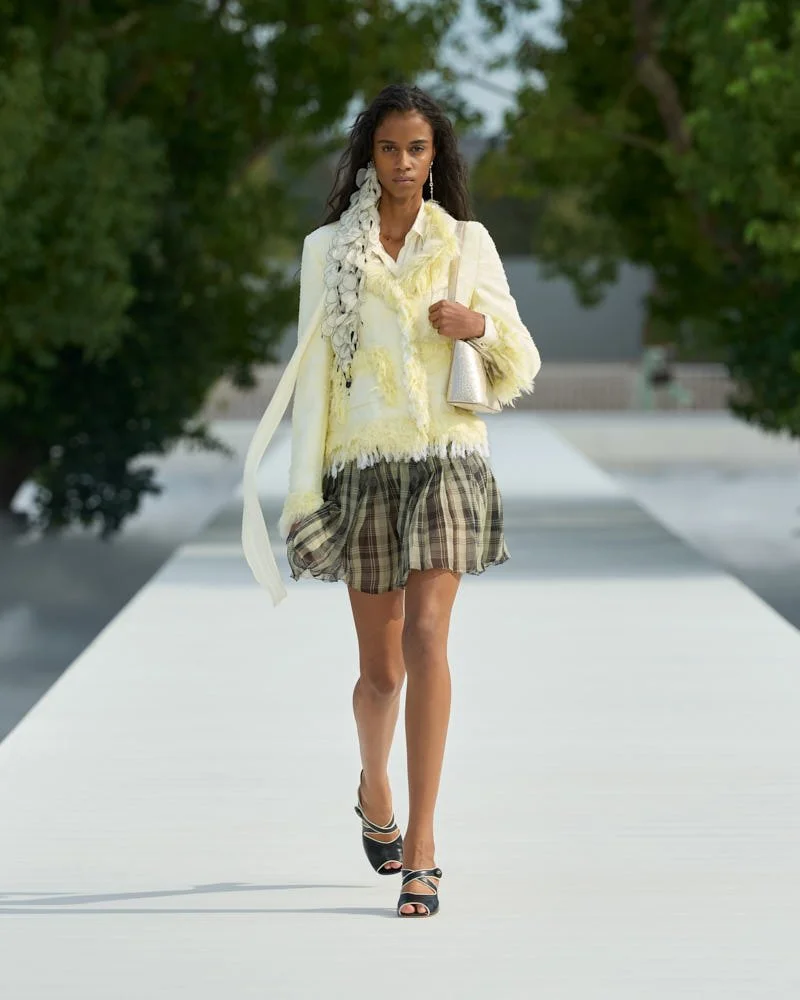
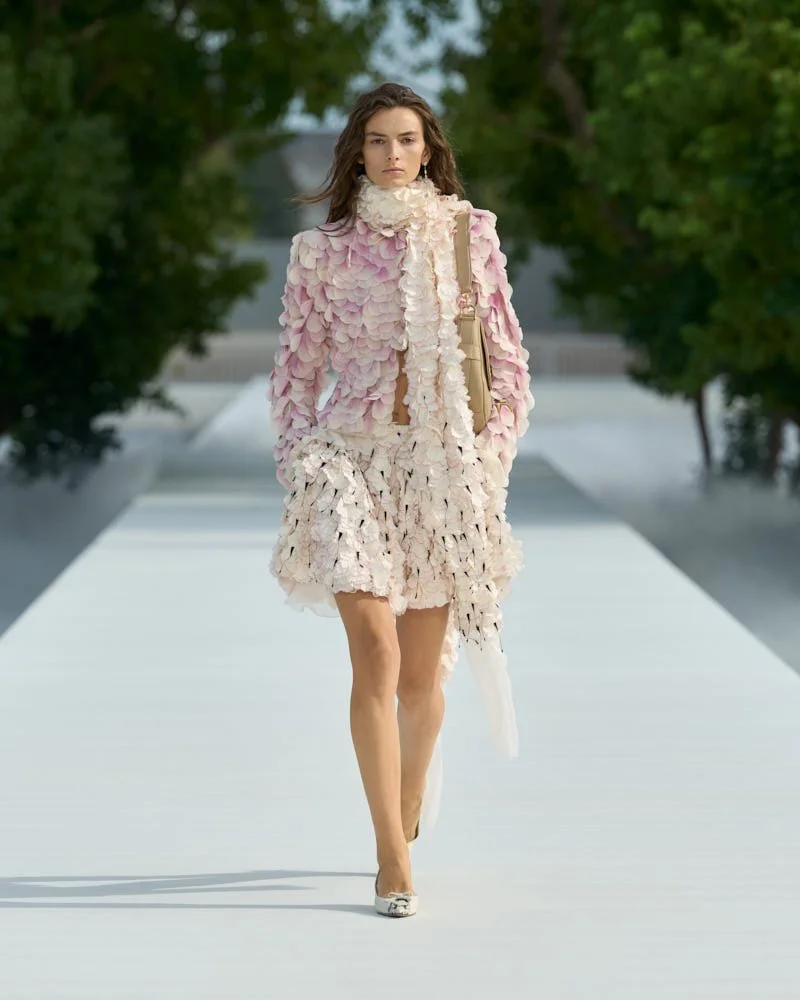
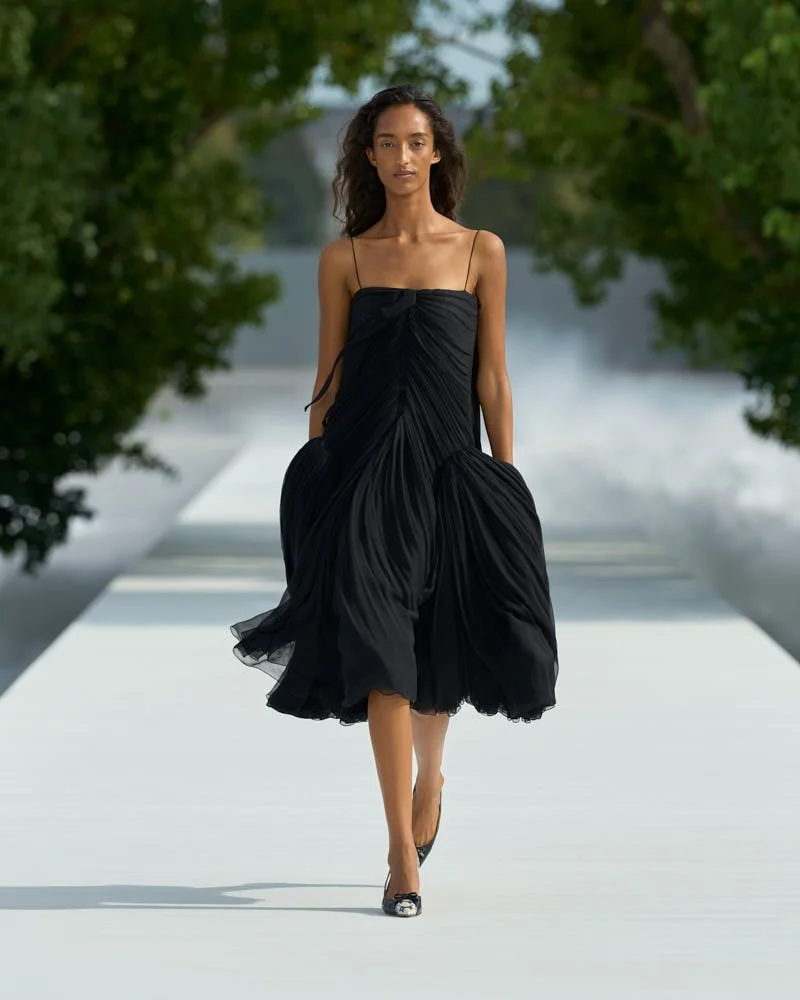
The opening looks established the direction of Jonathan Anderson’s Dior with transparent jackets sat over striped shirting, short chiffon skirts lifted as the models walked and wide trousers gave tailoring a relaxed line. Pleated jacquards appeared washed with colour, Chantilly lace was inset into translucent dresses and petals multiplied across jackets until their surfaces trembled with every step. The floral work came into focus once the models moved, with petals lifting from the jackets and changing their outline from one step to the next.

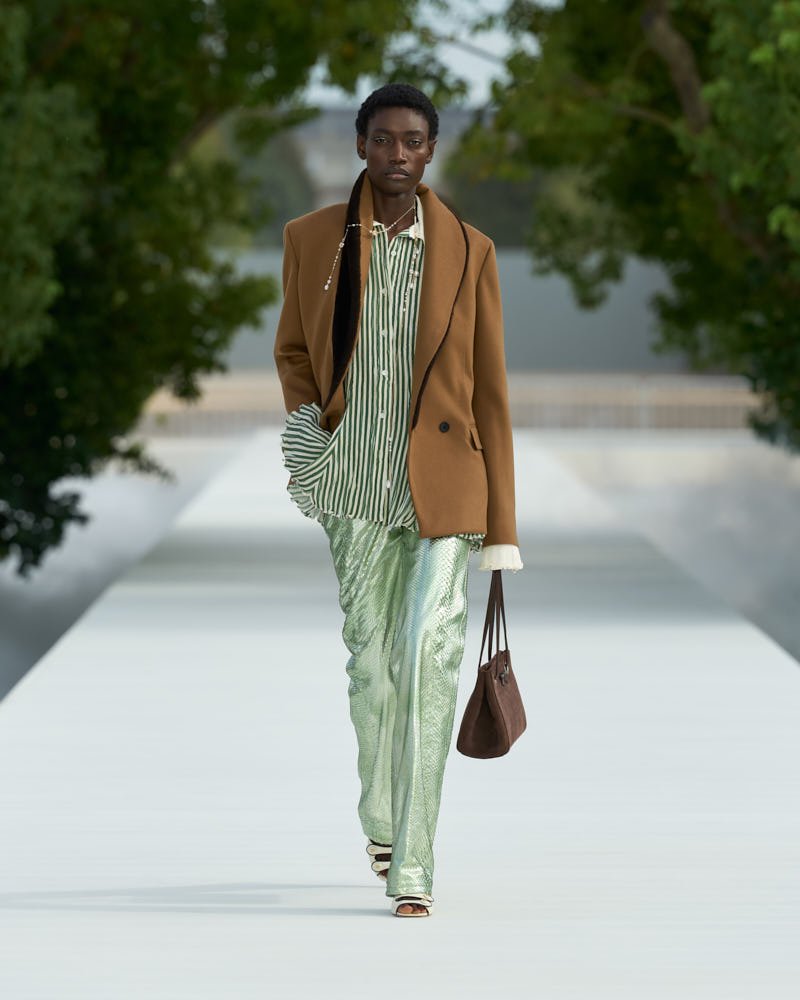
“We are in search of a silhouette,” Anderson said around the show, a line that became visible in the recurring short chiffon skirts and compact jackets. Short skirts appeared beneath compact jackets, sometimes joined by lengths of chiffon falling from an earring or shoulder. Metallic trousers in silver and green cut through the softer passages, and striped shirts brought an everyday familiarity into the collection. A white shawl-collar jacket worn with silver trousers became one of the clearest looks of the show, carrying evening attitude into the daylight of the Tuileries.

Across the collection, houndstooth appeared in sheer chiffon, Murano glass was used for buttons and zippered sandals from John Galliano’s years at Dior returned to the runway, giving Anderson a wide field of references to work through without letting any single period dominate the clothes. Anderson has spent his first year at Dior testing what the house can absorb, and his own description after the show was unusually direct. “This year was about trying to rattle the brand and see what falls out.”


—see the Key Looks


DIOR Spring Summer 2027 by Jonathan Anderson Front Runway for LE MILE Magazine Final photo by ADRIEN DIRAND

Final at Dior Summer 2027
Photo by Adrien Dirand


Some signatures are already taking shape through cropped proportions, petal work and familiar objects pulled slightly off course. Summer 2027 gave those ideas room to settle into a clearer language and the clothes moved easily outdoors and allowed the workmanship to reveal itself gradually, with the handwork becoming visible through motion.
The show notes ended with a dedication to Mathilde Favier, Dior’s longtime PR director, who died in August. Against the still water and the trees of the Tuileries, that final line gave the collection an unexpectedly personal weight and left the show with a sense of memory held quietly inside it.


all images (c) Dior

Milan Fashion Week SS27, Backstage for Spring 2027

Milan Fashion Week SS27, Backstage for Spring 2027

Double-click to edit...

Milan Fashion Week SS27 Backstage

Four Designers, Four Rooms


written MONICA DE LUNA
documented MARC HAEFFNER


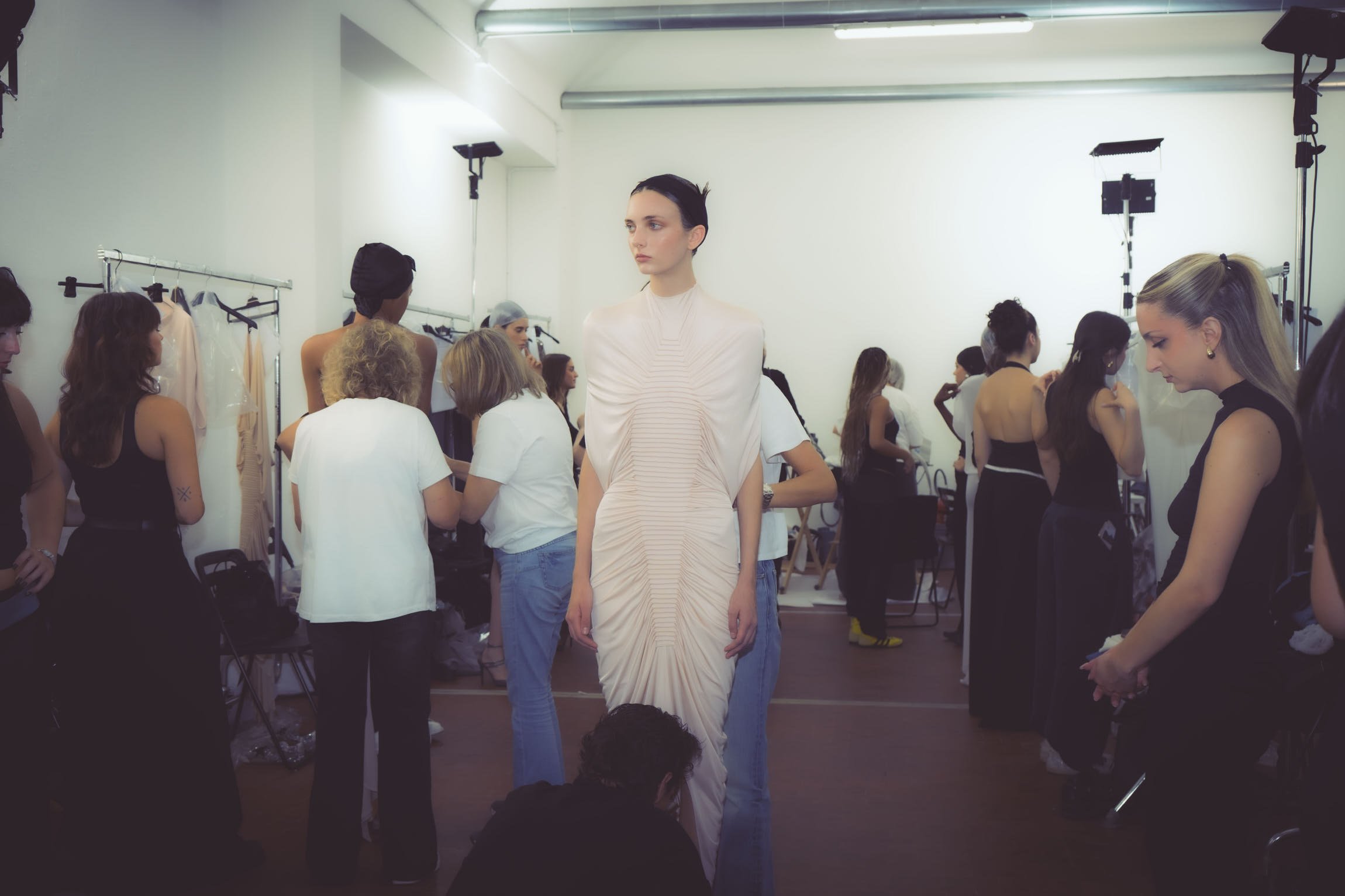
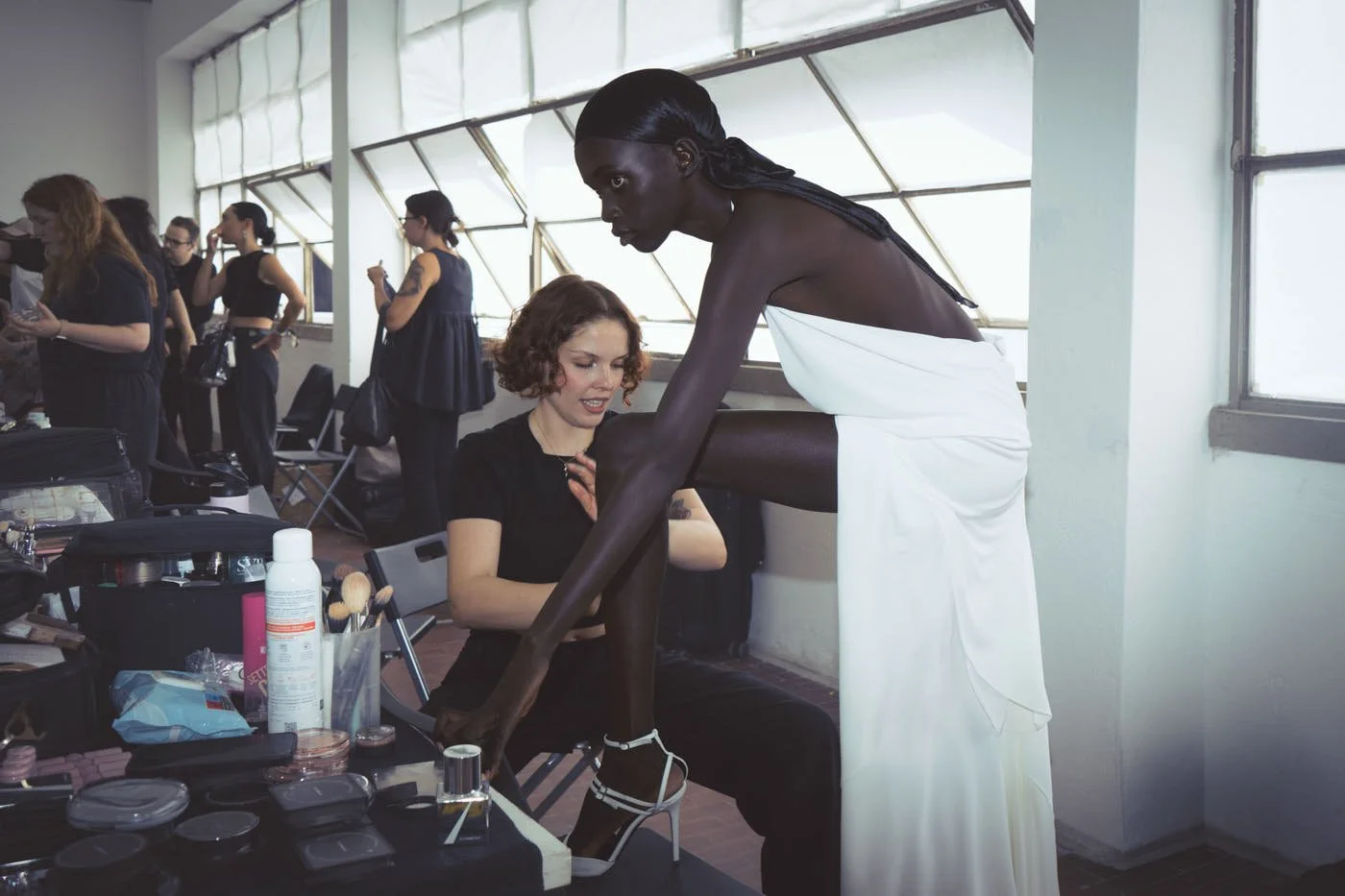
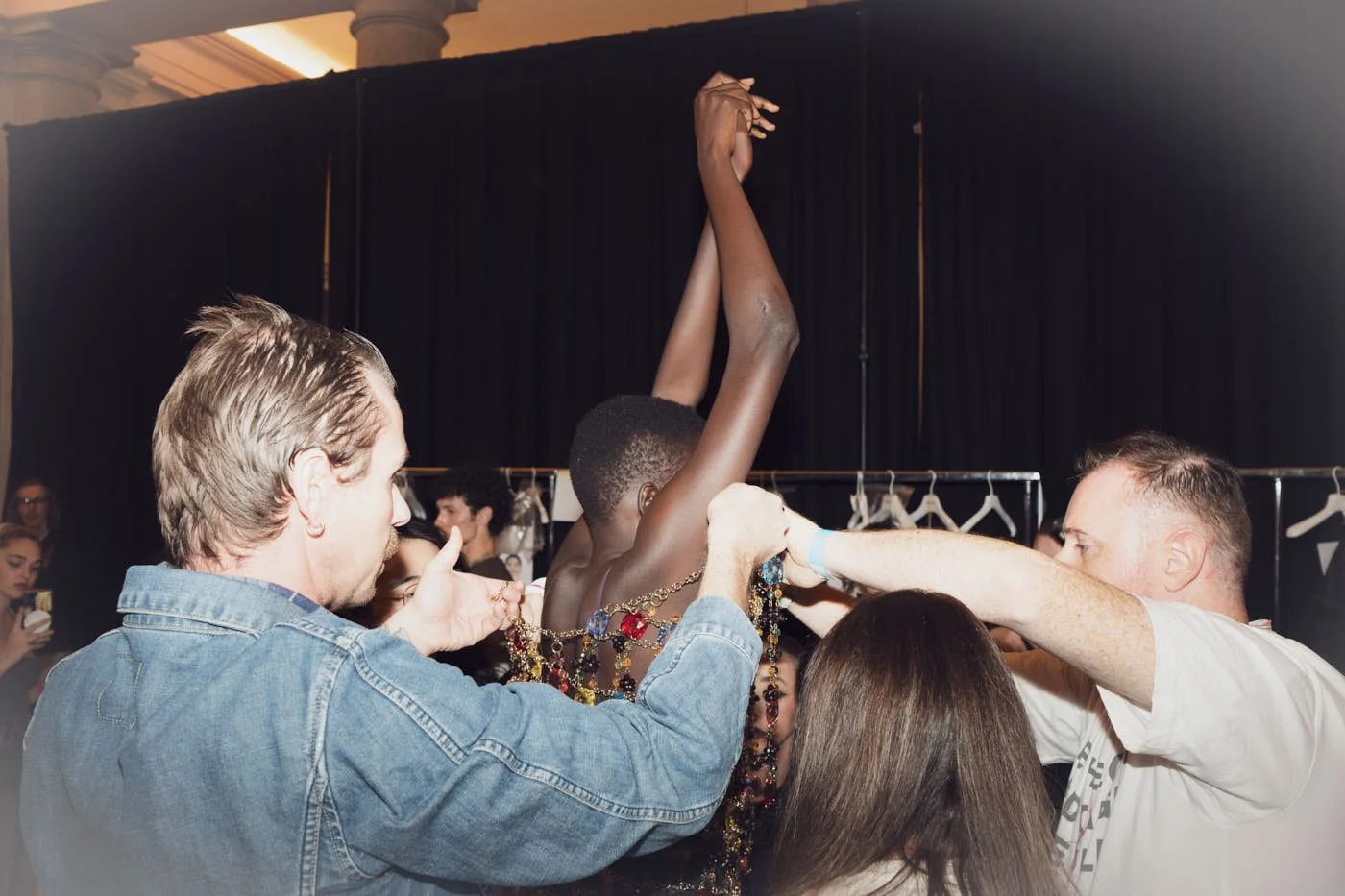
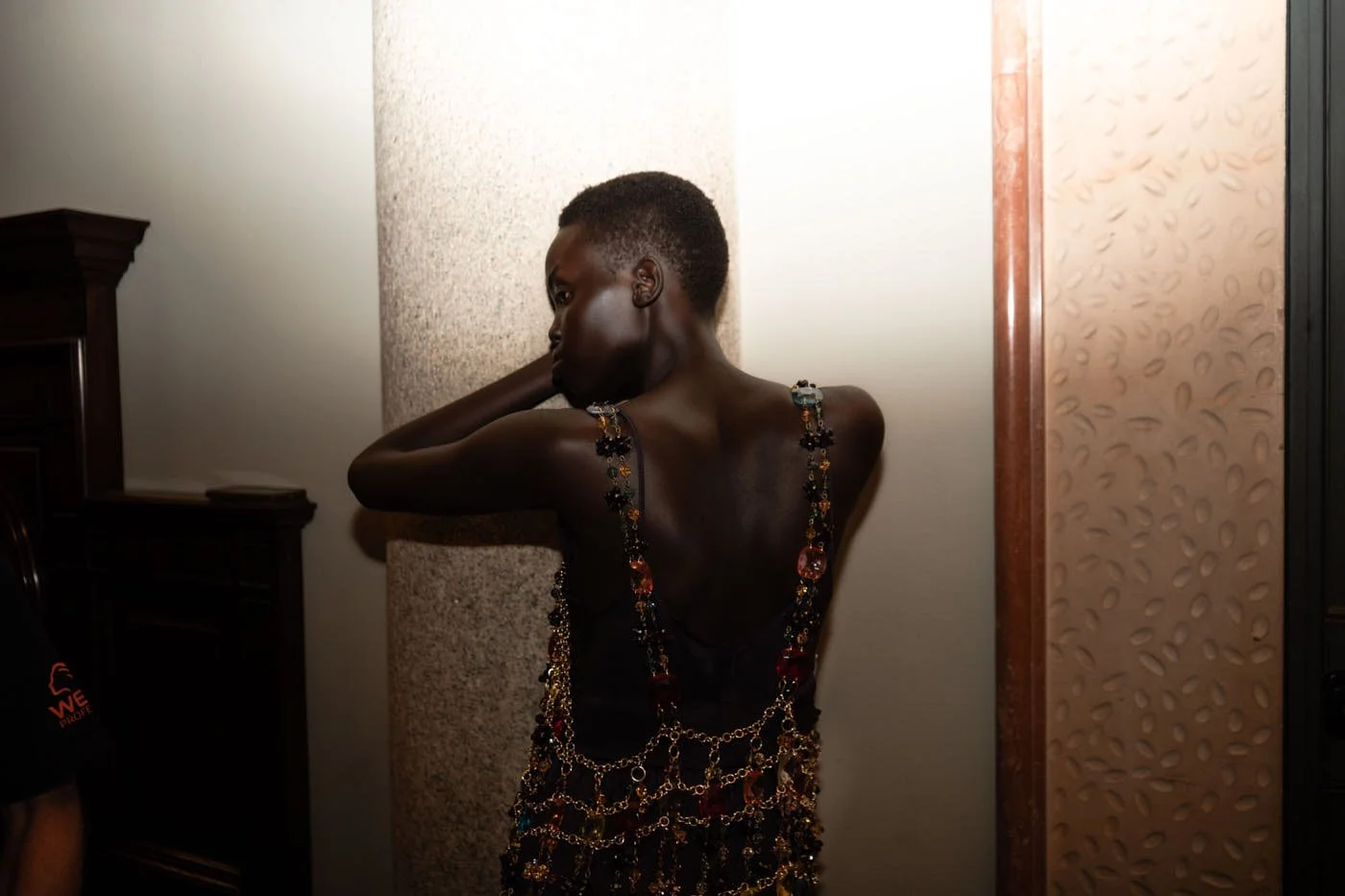
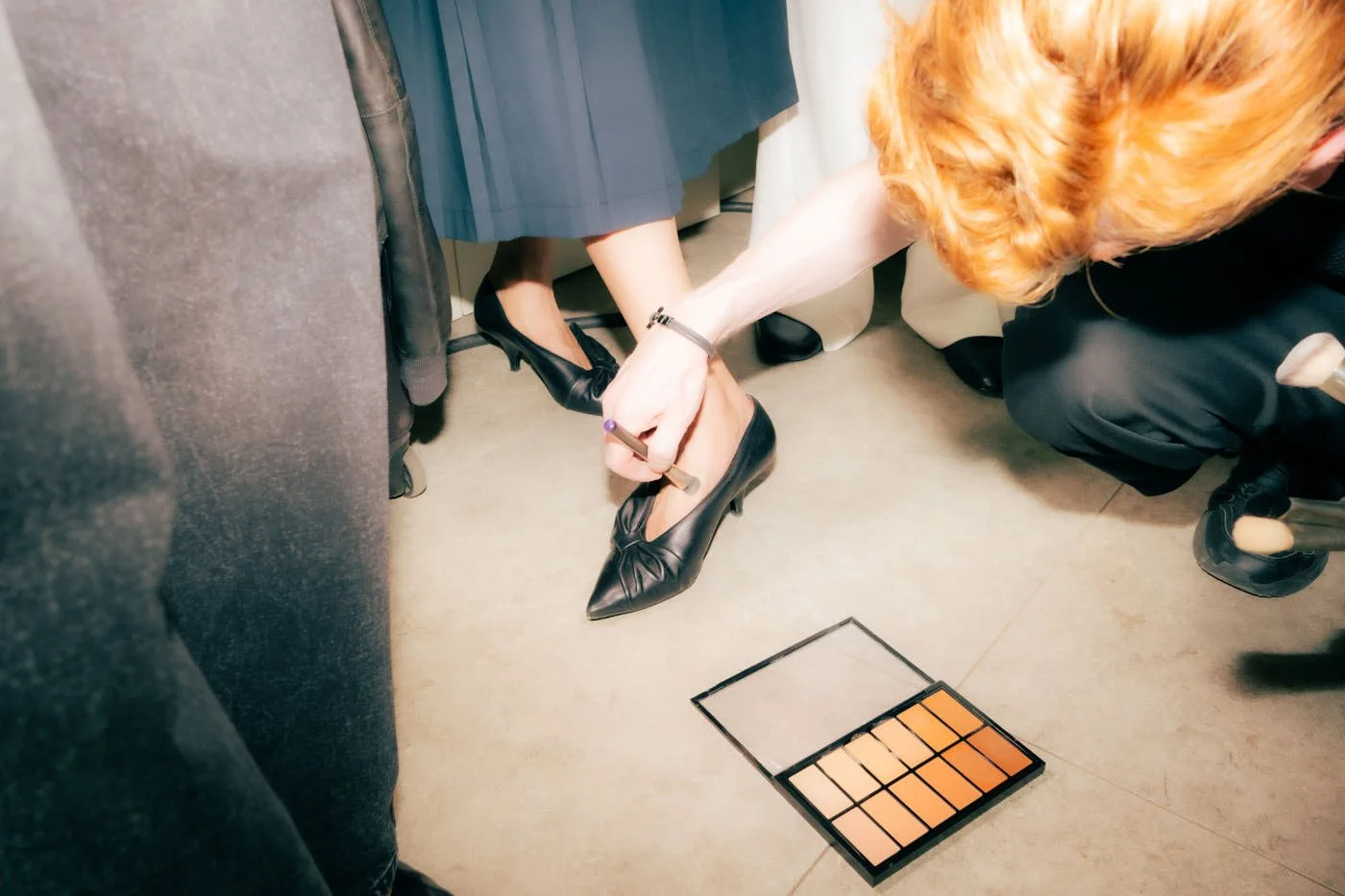
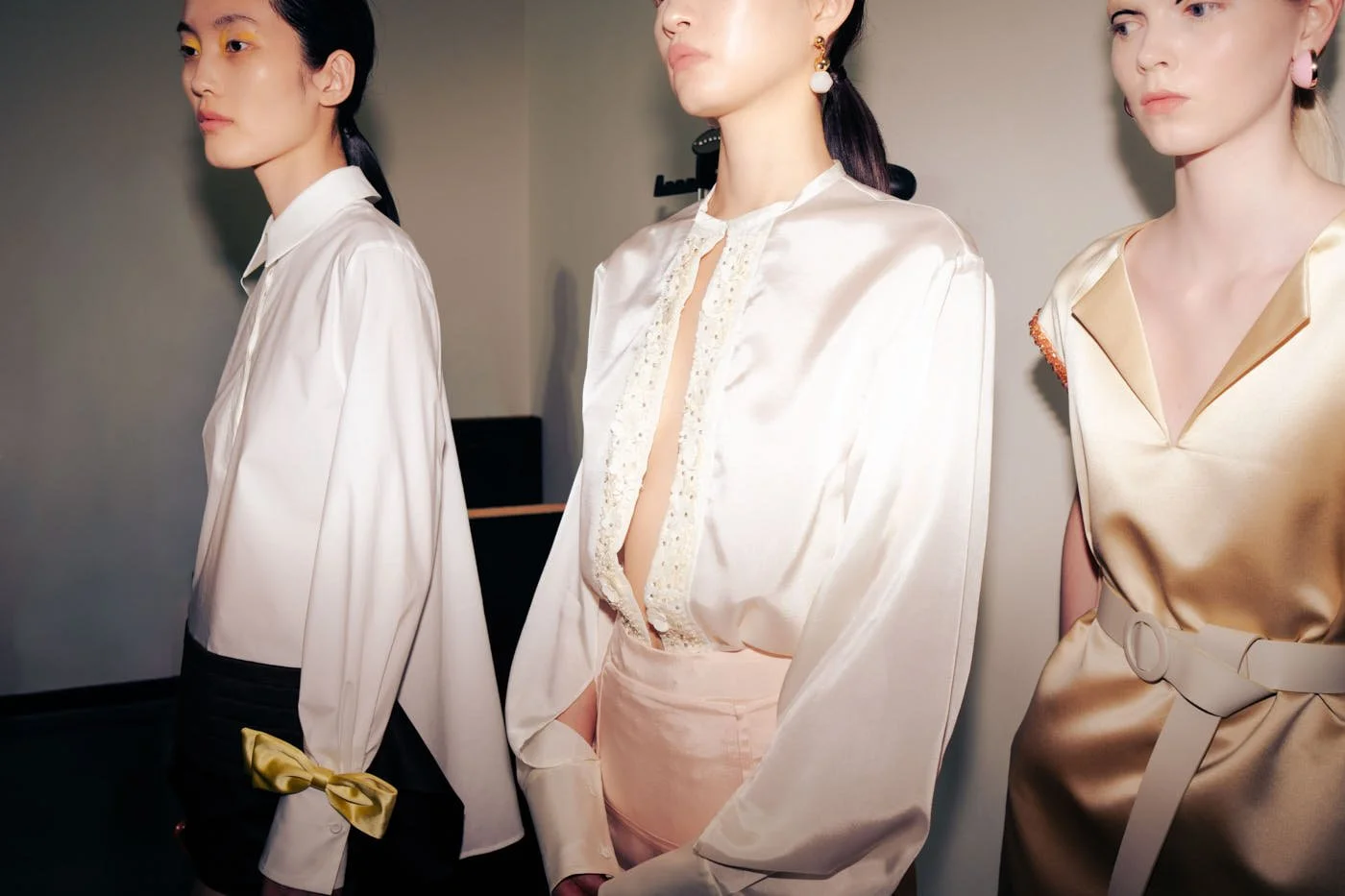
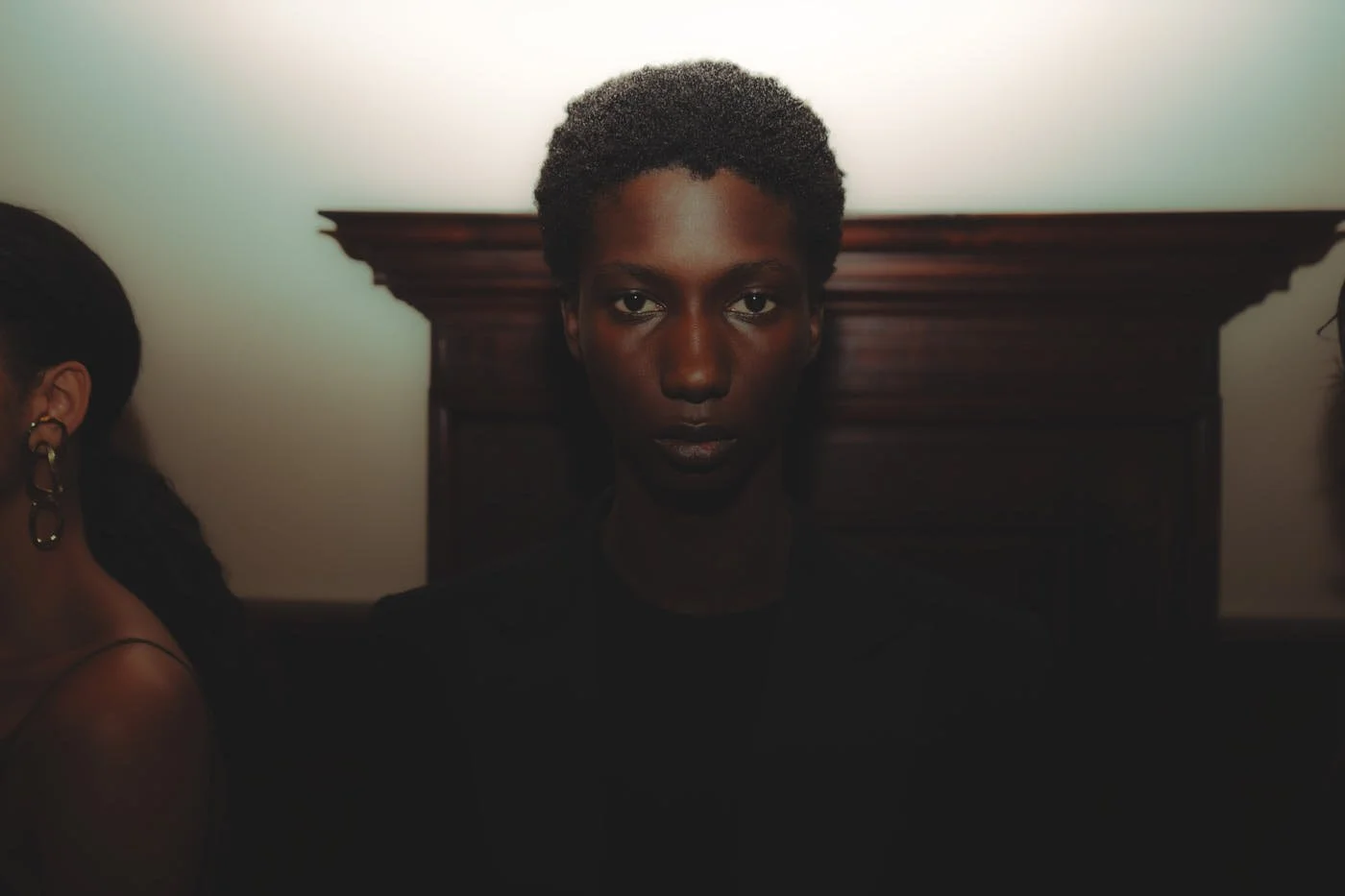
At Vivetta, a model lifts her arms while several people fasten a dress of coloured beads and chains around her. Nearby, a makeup artist kneels to brush colour onto another model’s ankle. Marc Haeffner photographed these moments for LE MILE Backstage at Milan Fashion Week Spring/Summer 2027.


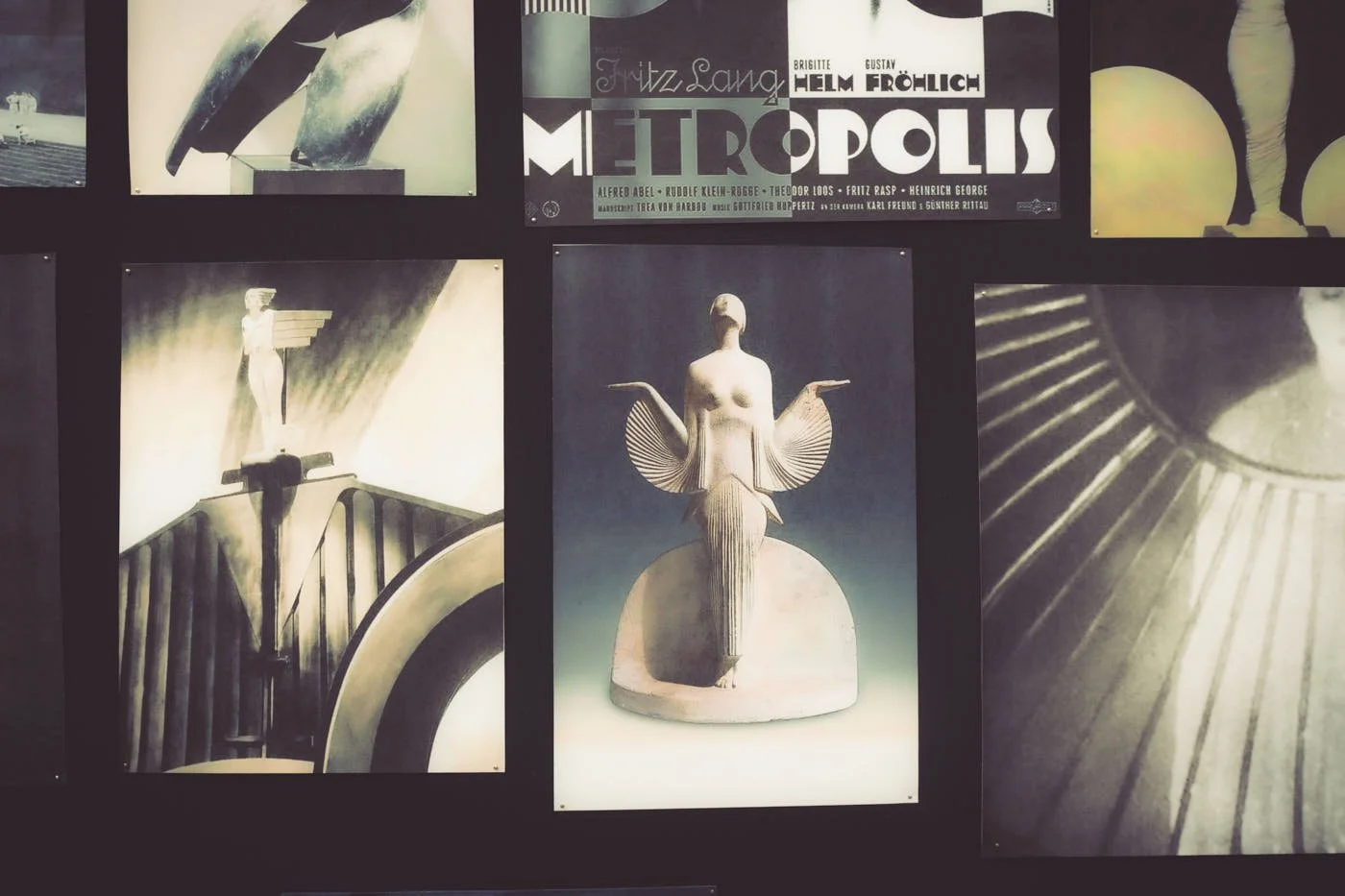
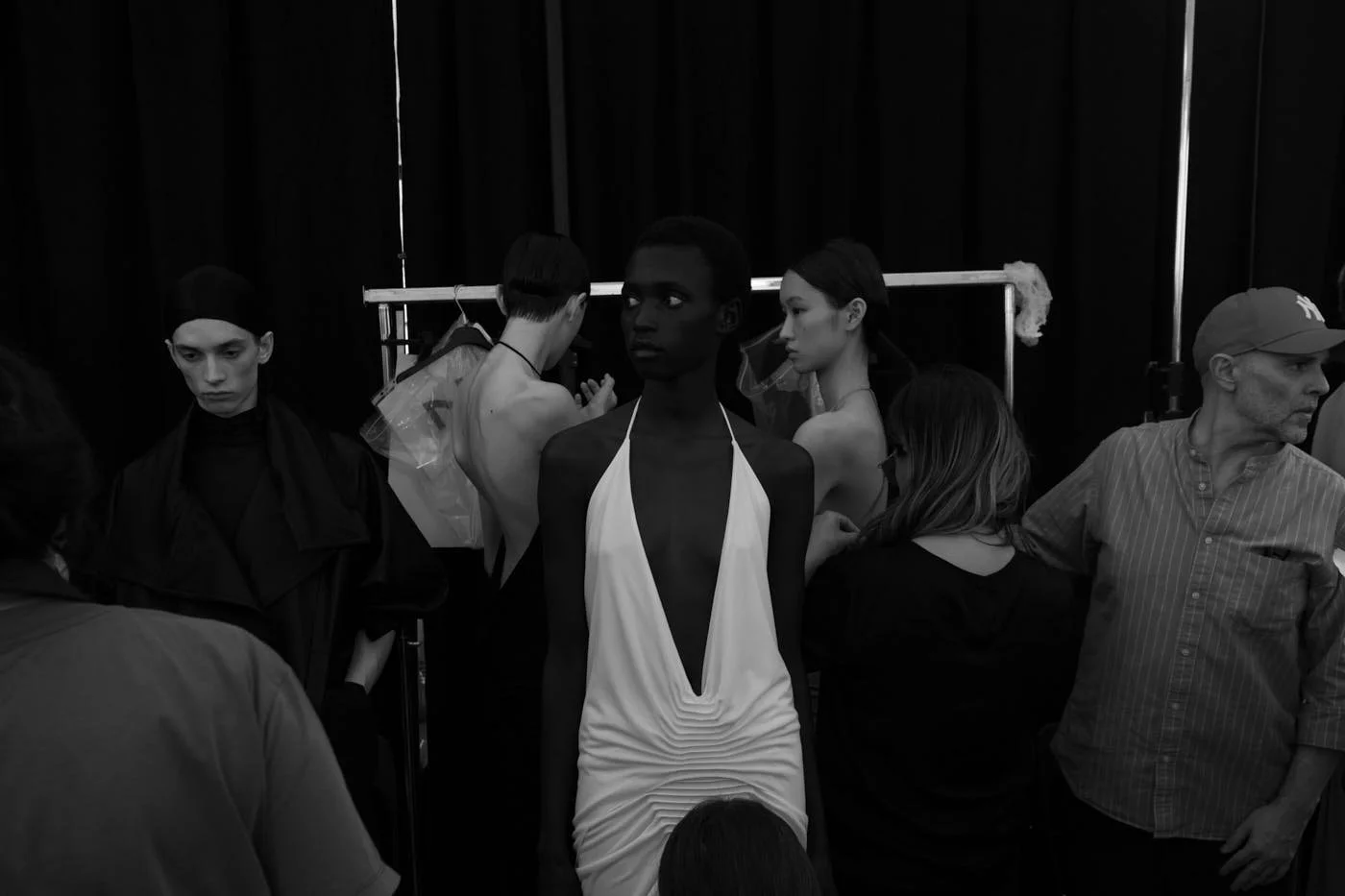
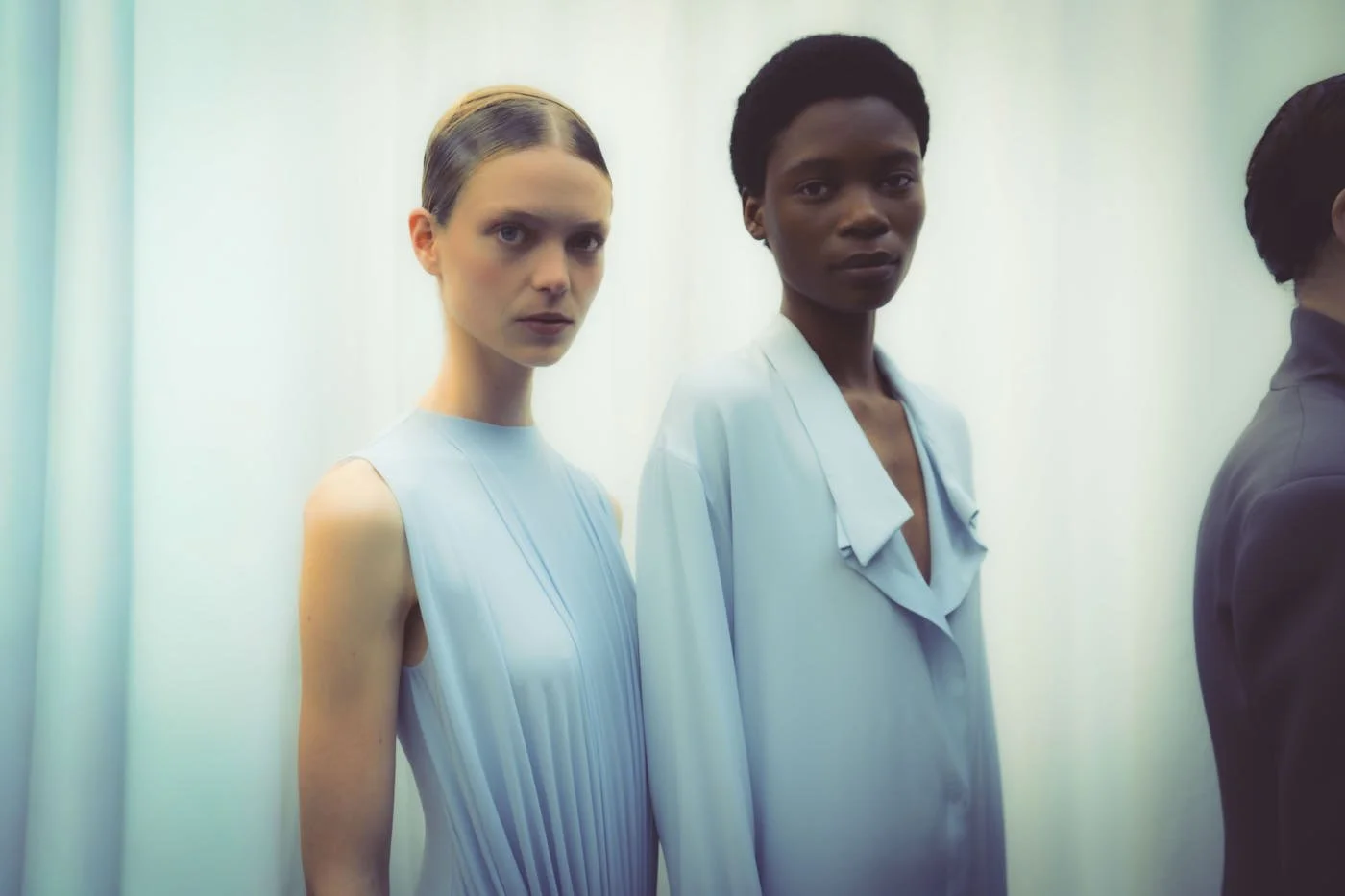
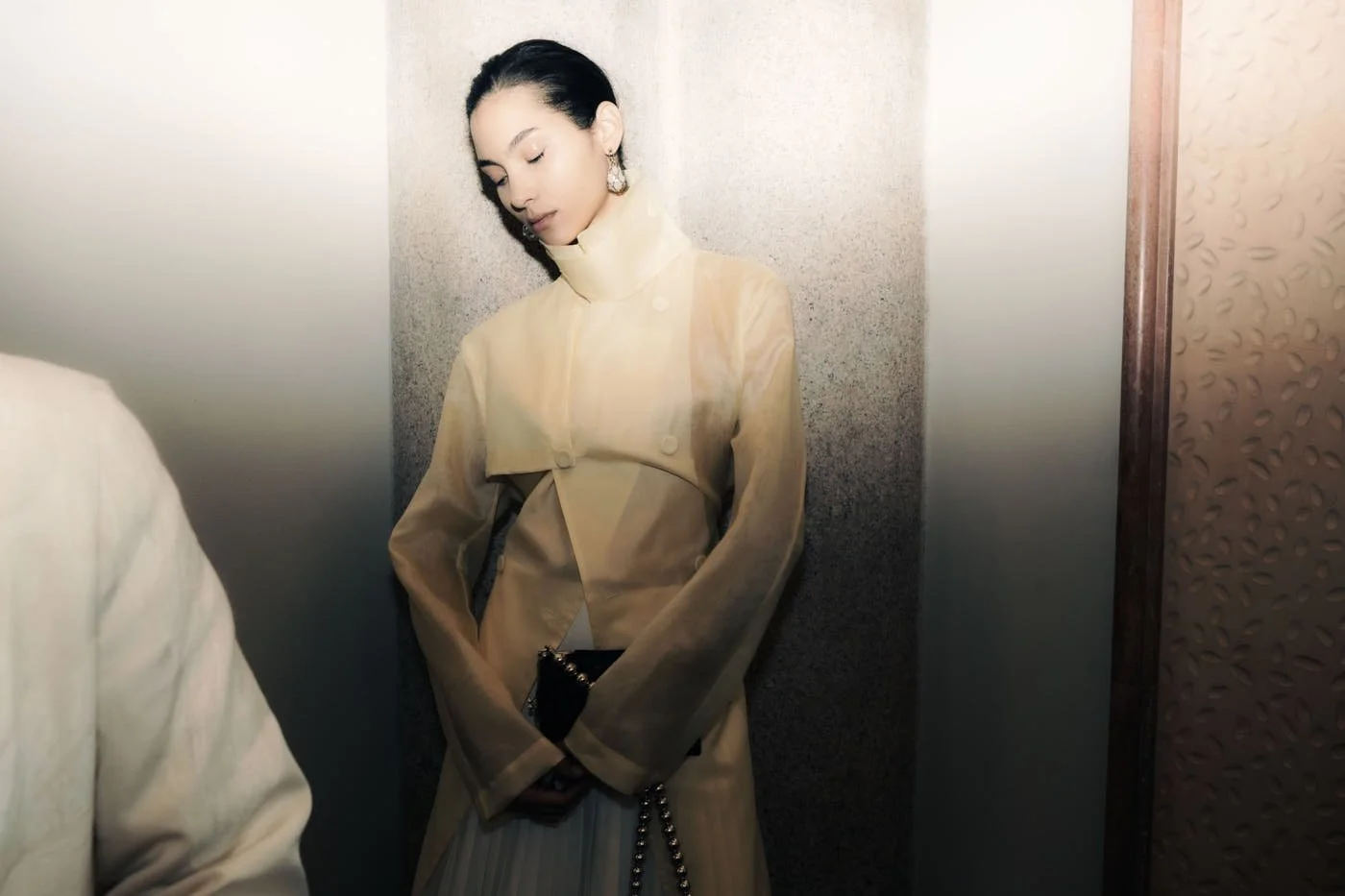
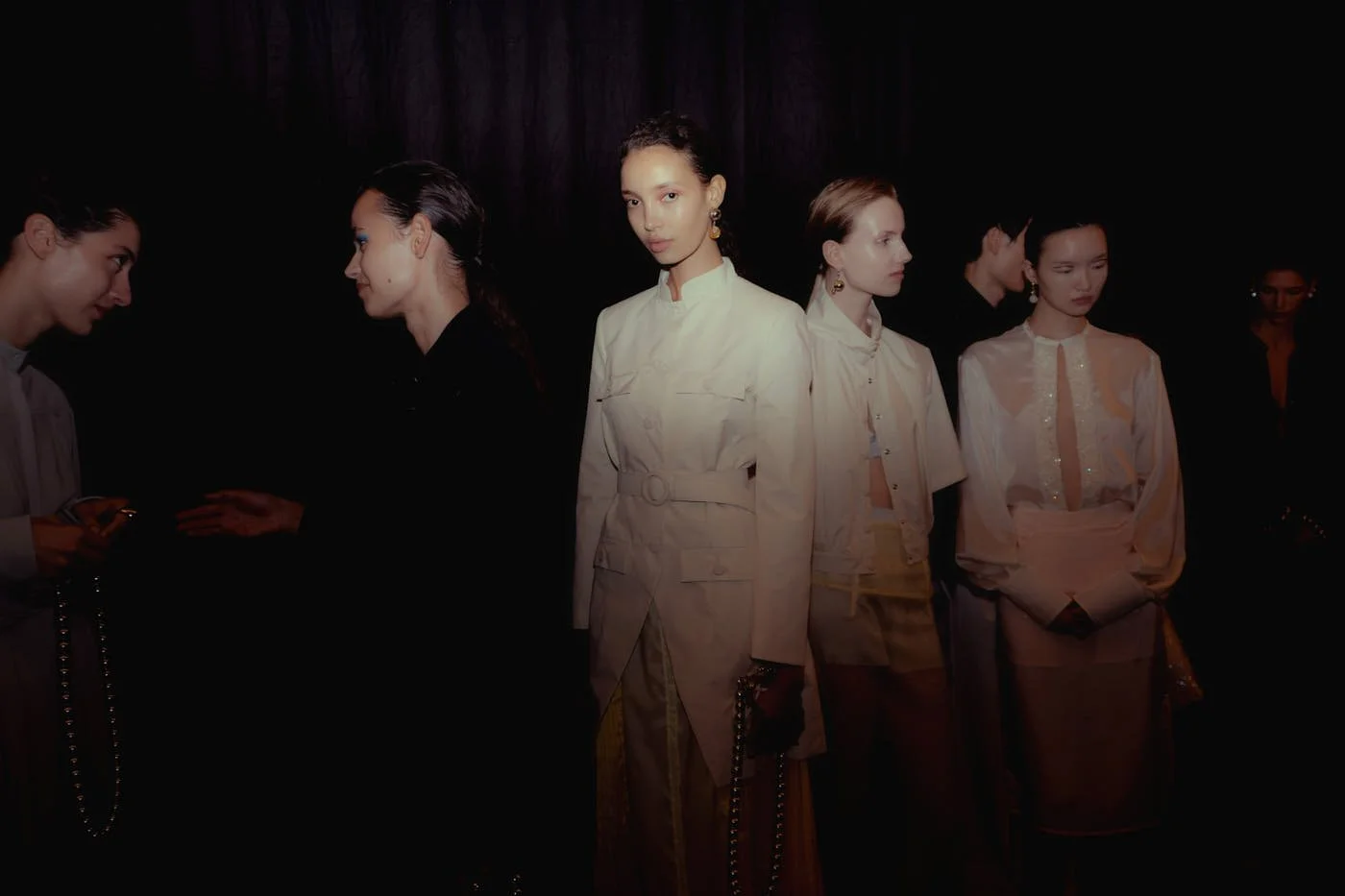
Murano’s room is brighter and busier, a model stands in a white pleated dress while someone works at her hem; another sits still as several people tend to her face and hair. Images from Fritz Lang’s Metropolis hang on the wall. Haeffner includes the makeup tables, clothes rails and people passing through the frame. He also gives the models time alone: a dress seen from behind, a face turned towards the camera, a pause before the show begins.

Vivetta’s team was working with the archive of a house whose founder had left. Murano had returned to draping by way of Metropolis. Phan Dang Hoang brought a Vietnamese folk tale to Milan; Simon Cracker recalled the costumes he had made for his neighbours as a child. Haeffner caught the clothes at the point where all those ideas had to be put on, adjusted and worn.

 
Murano Francesco during MFW SS27 photographed by Marc Haeffner for LE MILE Magazine Fritz Lang’s Metropolis Inspiration Images hanging on the wall

Francesco Murano SS27
Fritz Lang’s Metropolis Inspiration Images


Francesco Murano

Fritz Lang’s Metropolis premiered in 1927 and imagined a future set in 2026. Murano took the film’s two Marias, a woman and her mechanical double, into Éidola, his Spring/Summer 2027 collection. Haeffner photographed the reference images pinned up backstage, within sight of the team preparing the models.

Murano has worked with draping for several seasons, and here, glossy jersey was folded into precise ridges that loosened farther down the body; other dresses found their shape through panels held in place by folds, sometimes without seams. Capes covered the shoulders and opened at the back. Studs sewn onto georgette suggested chain mail, though the fabric remained soft. In Haeffner’s photographs, a model stands quietly in a white dress gathered into fine pleats. There is time to see what the folds are doing before she takes a step. Murano gave them a firmer line this season, while allowing the fabric to respond to every change in posture.

Murano Francesco during MFW SS27 photographed by Marc Haeffner for LE MILE Magazine

Francesco Murano SS27
Backstage

Murano Francesco during MFW SS27 photographed by Marc Haeffner for LE MILE Magazine

Francesco Murano SS27
Backstage

 
Murano Francesco during MFW SS27 photographed by Marc Haeffner for LE MILE Magazine

Francesco Murano SS27
Backstage

Murano Francesco during MFW SS27 photographed by Marc Haeffner for LE MILE Magazine

Francesco Murano SS27
Backstage

Murano Francesco during MFW SS27 photographed by Marc Haeffner for LE MILE Magazine

Francesco Murano SS27
Backstage


Vivetta during MFW SS27 photographed by Marc Haeffner for LE MILE Magazine

Vivetta SS27
Backstage

Vivetta

With Vivetta Ponti gone from the label she founded, Treasure & Trinkets offered a close look at what the new team intends to keep. The house’s taste for ornament was still there, though the clothes around it had grown more assured. Sheer shirts came with pronounced plastrons; long skirts and fitted jackets gave the collection a cleaner line. Pale yellow, peach and powder blue appeared alongside black and bone white.

Beads and other components from the 1970s, 1980s and 1990s were collected and remade as necklaces, bags and clothing. Haeffner photographed one of the beaded pieces as several people fastened it onto a model with her arms raised. The chains had to be positioned and secured before they could hang lightly from her body. It is a lovely, practical view of a dress that could easily appear effortless on the runway. The quieter jackets and skirts gave such pieces room to be as eccentric as Vivetta has always allowed.

Vivetta during MFW SS27 photographed by Marc Haeffner for LE MILE Magazine

Vivetta SS27
Backstage

Vivetta during MFW SS27 photographed by Marc Haeffner for LE MILE Magazine

Vivetta SS27
Backstage

 
Vivetta during MFW SS27 photographed by Marc Haeffner for LE MILE Magazine

Vivetta SS27
Backstage

Vivetta during MFW SS27 photographed by Marc Haeffner for LE MILE Magazine

Vivetta SS27
Backstage

Vivetta during MFW SS27 photographed by Marc Haeffner for LE MILE Magazine

Vivetta SS27
Backstage

Vivetta during MFW SS27 photographed by Marc Haeffner for LE MILE Magazine

Vivetta SS27
Backstage

 
Vivetta during MFW SS27 photographed by Marc Haeffner for LE MILE Magazine

Vivetta SS27
Backstage


Phan Dang Hoang

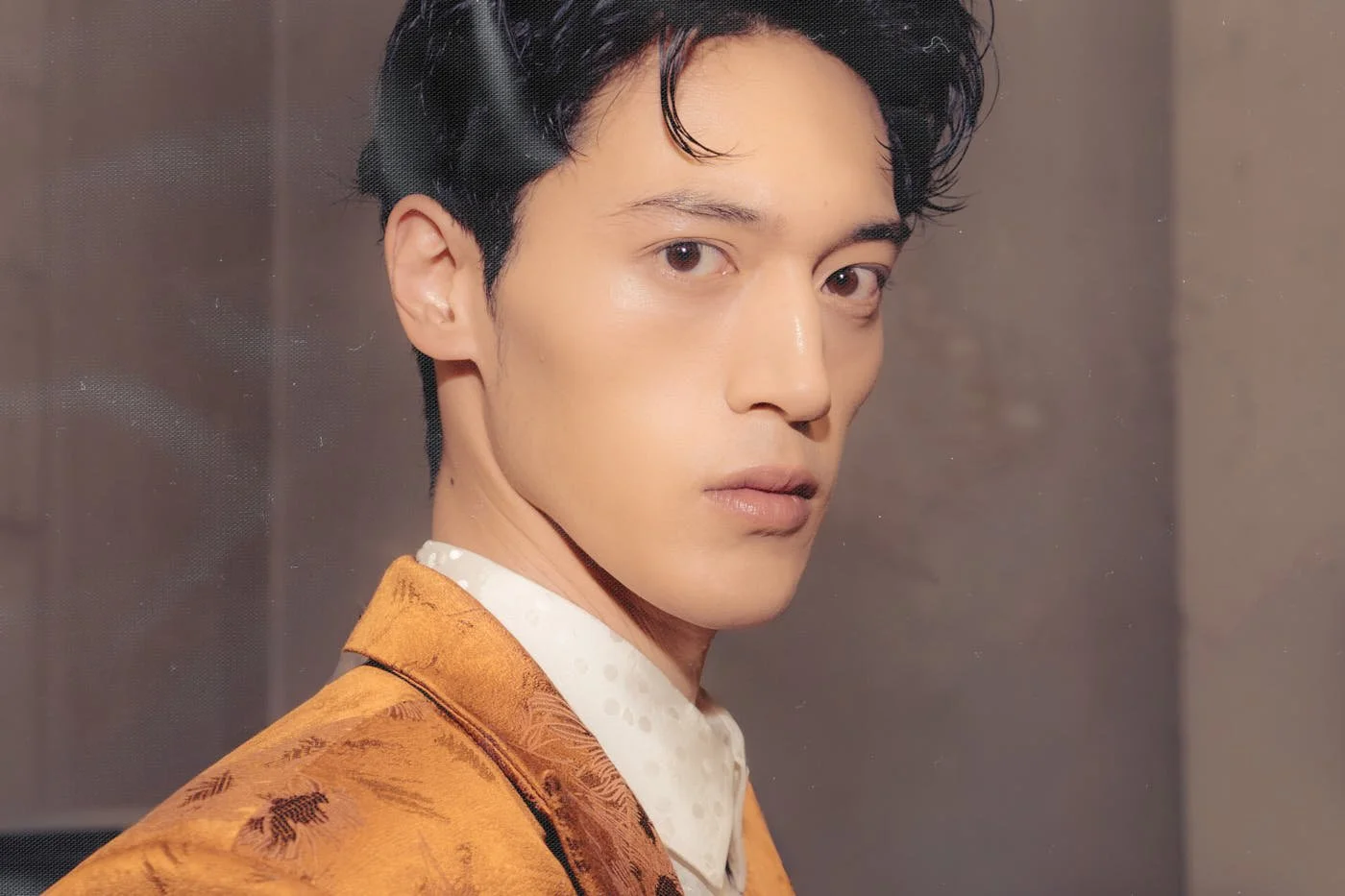
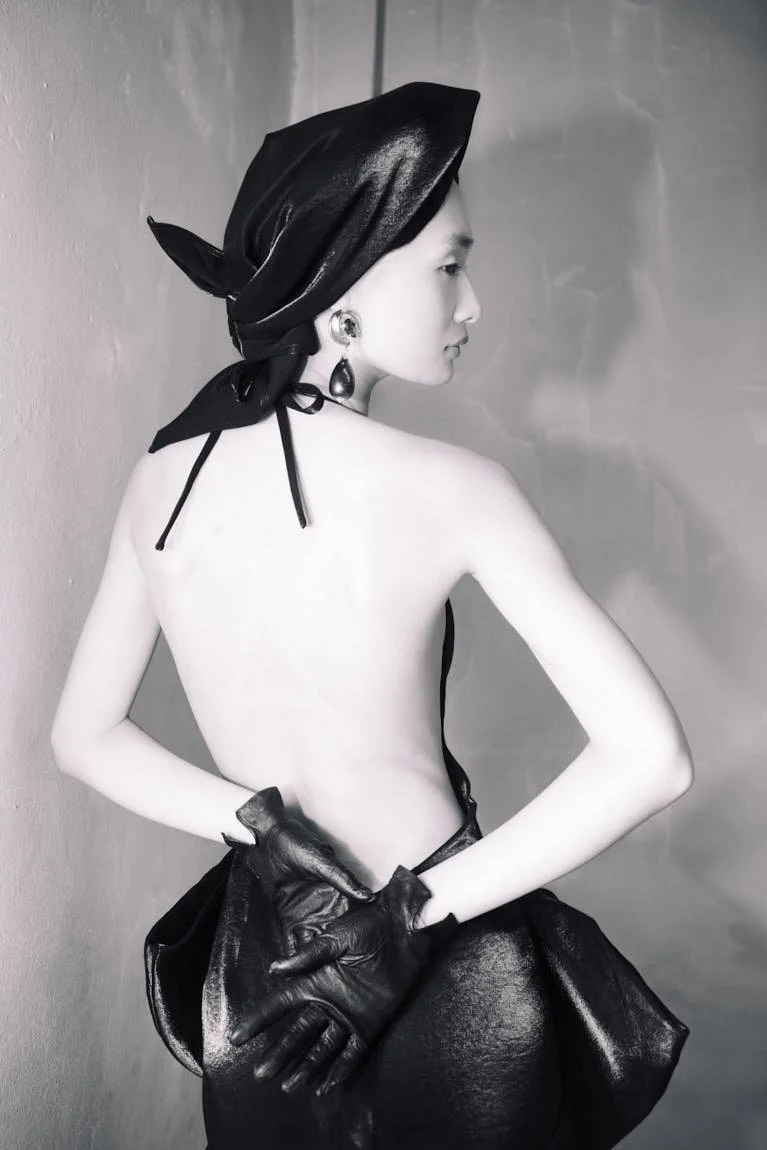
Phan Dang Hoang titled his SS27 collection Tấm Cám after the Vietnamese folk tale. He focused on Tấm, who survives a series of reversals by taking new forms. The show also drew on the women of Kinh Bắc and on garments such as the áo yếm and the mỏ quạ headscarf. Hoang brought those references into a wardrobe that included loose denim, oversized jackets and eveningwear.

Artisans from villages in northern Vietnam used silk thread to embroider lotus flowers and golden orioles onto the clothes. The work continues Hoang’s interest in Vietnamese craft across several Milan seasons, though this collection takes its cues from a story many Vietnamese people have known since childhood. Two of Haeffner’s portraits catch different parts of the collection. One centres on a patterned ochre jacket. In the other, a black headscarf is worn with gloves and a sculpted dress. That second image is particularly striking in its simplicity.

 
Phan Dang Hoang during MFW SS27 photographed by Marc Haeffner for LE MILE Magazine

Phan Dang Hoang SS27
Backstage

 
Phan Dang Hoang during MFW SS27 photographed by Marc Haeffner for LE MILE Magazine

Phan Dang Hoang SS27
Backstage


Simon Cracker

Via Francia is named after the street in Romagna where Simone Botte spent childhood summers with his grandparents. He and his cousin Nicoletta once staged a show for the neighbours, making costumes from curtains, tablecloths and clothes found in family trunks. Botte returned to that memory for Simon Cracker’s SS27 collection. He also had something direct to say about fashion’s prices: people who cannot buy a runway piece should feel free to make their own version.

Hooks let sections shift around the body and scrap fabrics were sewn into patchwork; promotional T-shirts appeared with gowns; lunchboxes became bags. Some garments were assembled entirely by hand, without electricity. At times, so much happens in a single look that the clothes get crowded out. But Botte has seen people in his community remake his earlier designs from things they already own, and Via Francia welcomes them to do it again.

 
Simon Cracker during MFW SS27 photographed by Marc Haeffner for LE MILE Magazine

Simon Cracker SS27
Backstage


Vivetta, Francesco Murano, Phan Dang Hoang and Simon Cracker, photographed for LE MILE by Marc Haeffner.

Best of New York Fashion Week SS27 - Ten Direction for Spring 2027

Best of New York Fashion Week SS27 - Ten Direction for Spring 2027

Double-click to edit...

Best Of New York Fashion Week SS27

New York, In Ten Collections


written ALBAN E. SMAJLI
documented NOA LESCHE


New York Fashion Week has rarely depended on a single definition of New York style. Its relevance comes from contradiction: commercial polish beside improvised presentation, established names sharing the calendar with designers still working out of small studios, and familiar American clothing pulled apart by people whose experiences of the city are anything but uniform. Spring/Summer 2027 made those differences particularly visible.


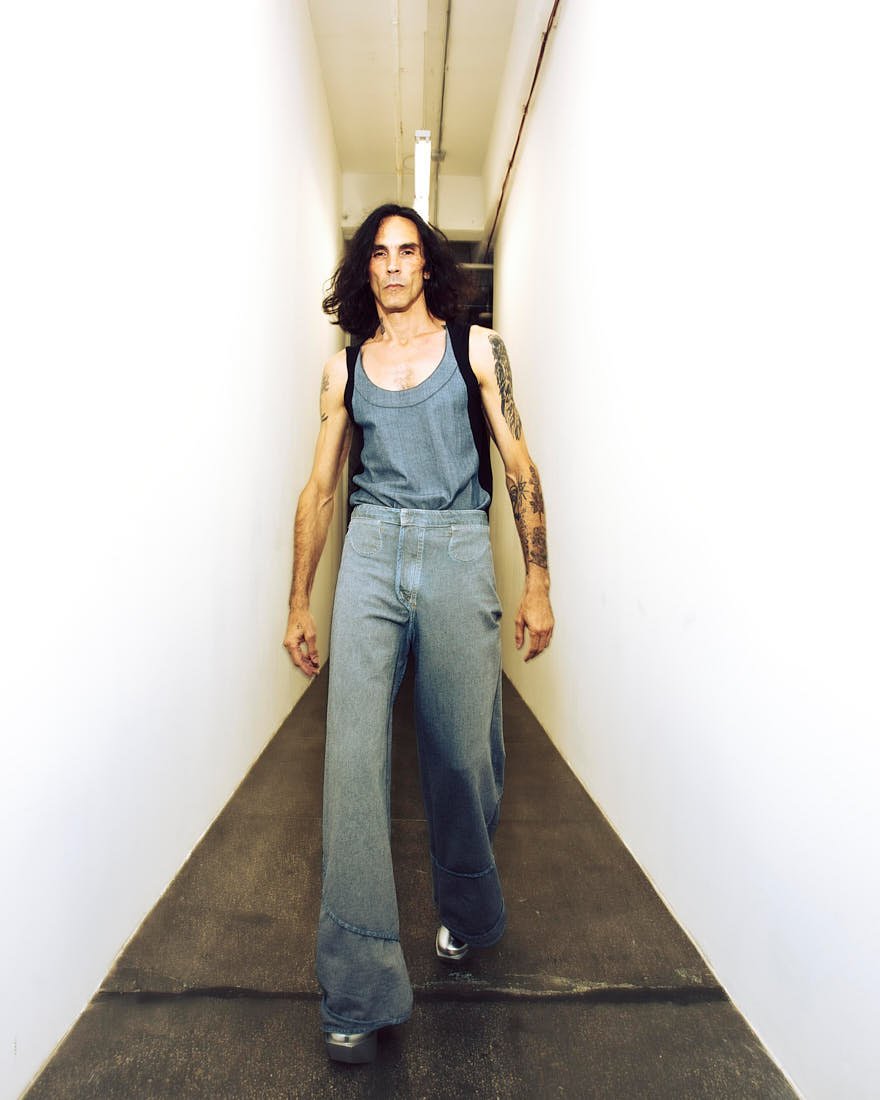
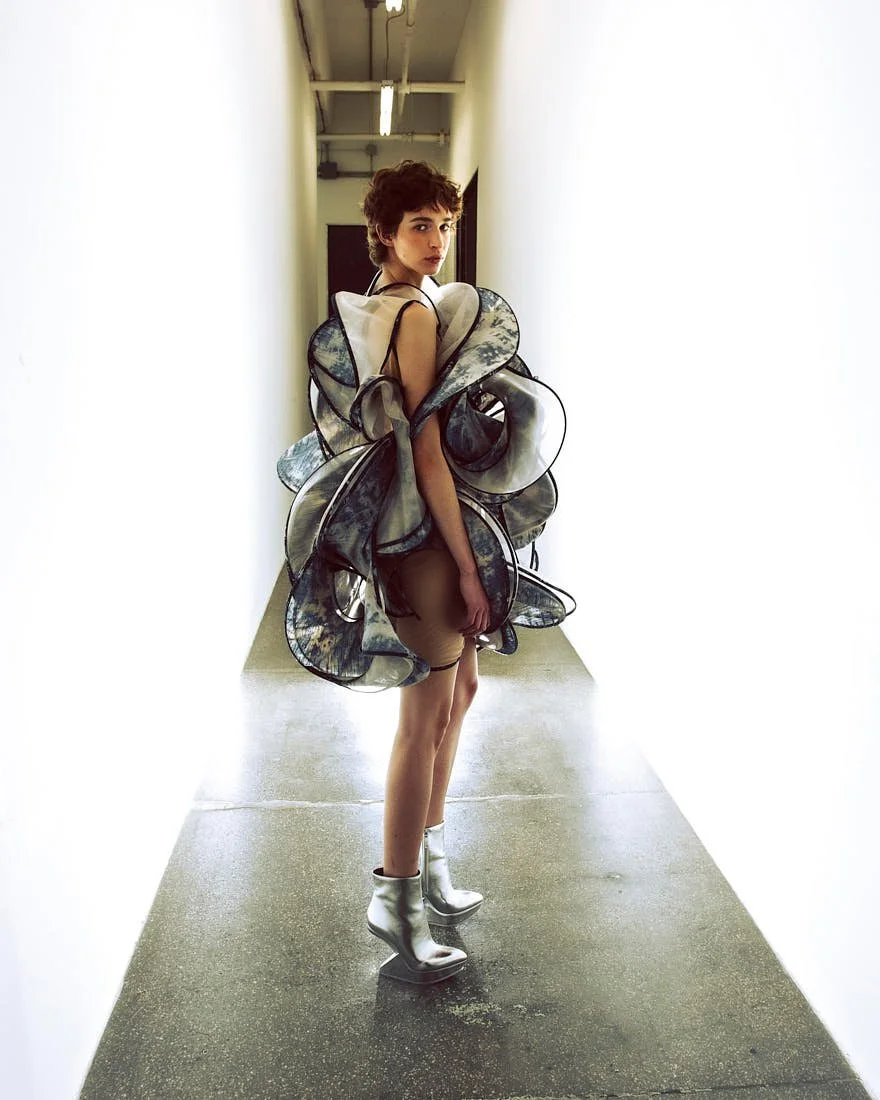
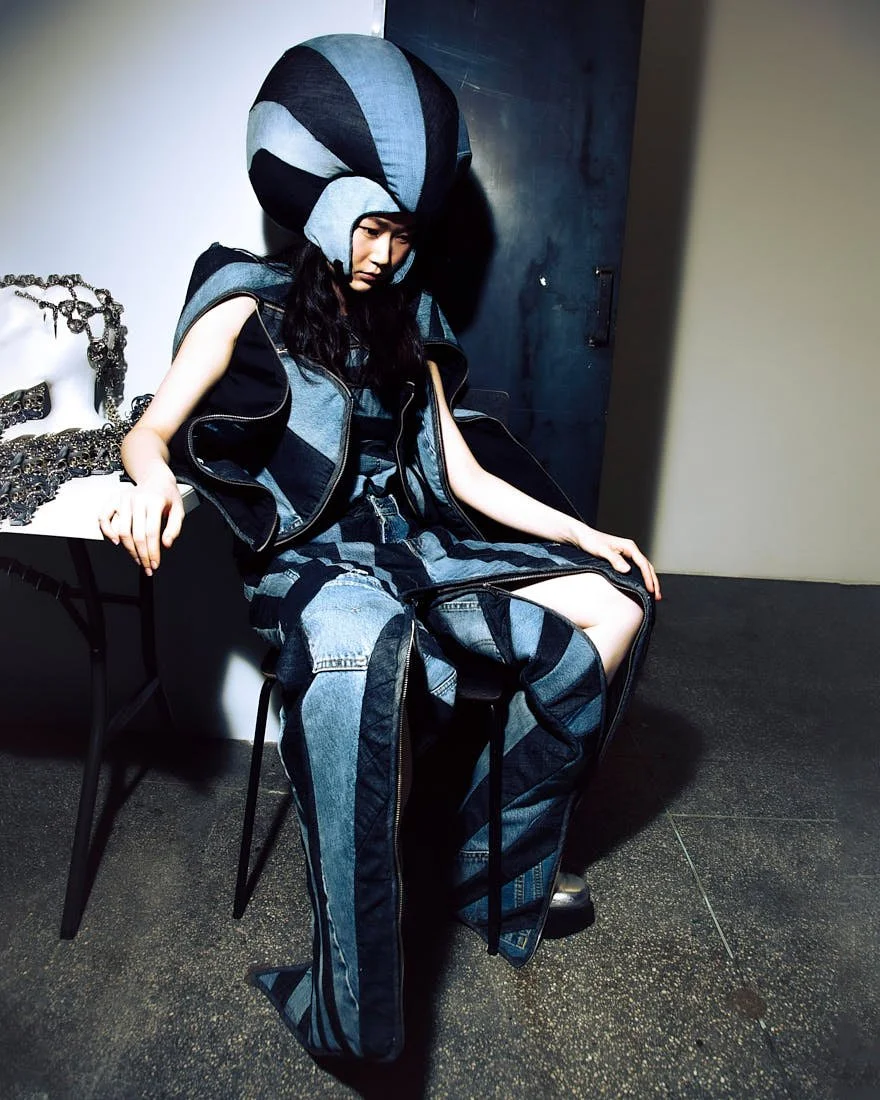
Photographed for LE MILE by Noa Lesche, this selection brings together ten SS27 collections shown across New York. It includes debut appearances, long-awaited returns and designers revisiting the ideas and techniques that have shaped their work. ThreeASFOUR returned to the runway after five years, using denim as an everyday material and a starting point for experimentation. Magda Butrym staged her first New York show, bringing her precise and sensual vision of womanhood to the city. Terrence Zhou’s BAD BINCH TONGTONG continued to explore how radically clothing can change the shape and presence of the body.

What can be done to a shirt, a military jacket, a pair of chinos or an oversized hoodie before it stops belonging to its original category? Avon Anglers and Ethan Lewy worked through recognisable menswear archetypes, while Clara Son introduced instability through twisting and knotting. Alienant turned streetwear into protective volume; Science Project Company examined the visual codes of hierarchy. Big Ocean’s collaboration with Andy Yu brought Korean pop culture into conversation with British military and Victorian references. RIO, meanwhile, looked towards plants, saturated architecture and the physical suggestion of new growth. Together, these collections offered something more accurate: ten distinct positions on clothing, identity and presentation, documented across a city whose fashion culture remains strongest when it resists speaking with one voice.

 
MAGDA BUTRYM SS27 New York Fashionweek Noa Lesche NYFW LE MILE Magazine

MAGDA BUTRYM SS27

MAGDA BUTRYM SS27 New York Fashionweek Noa Lesche NYFW LE MILE Magazine

MAGDA BUTRYM SS27


MAGDA BUTRYM

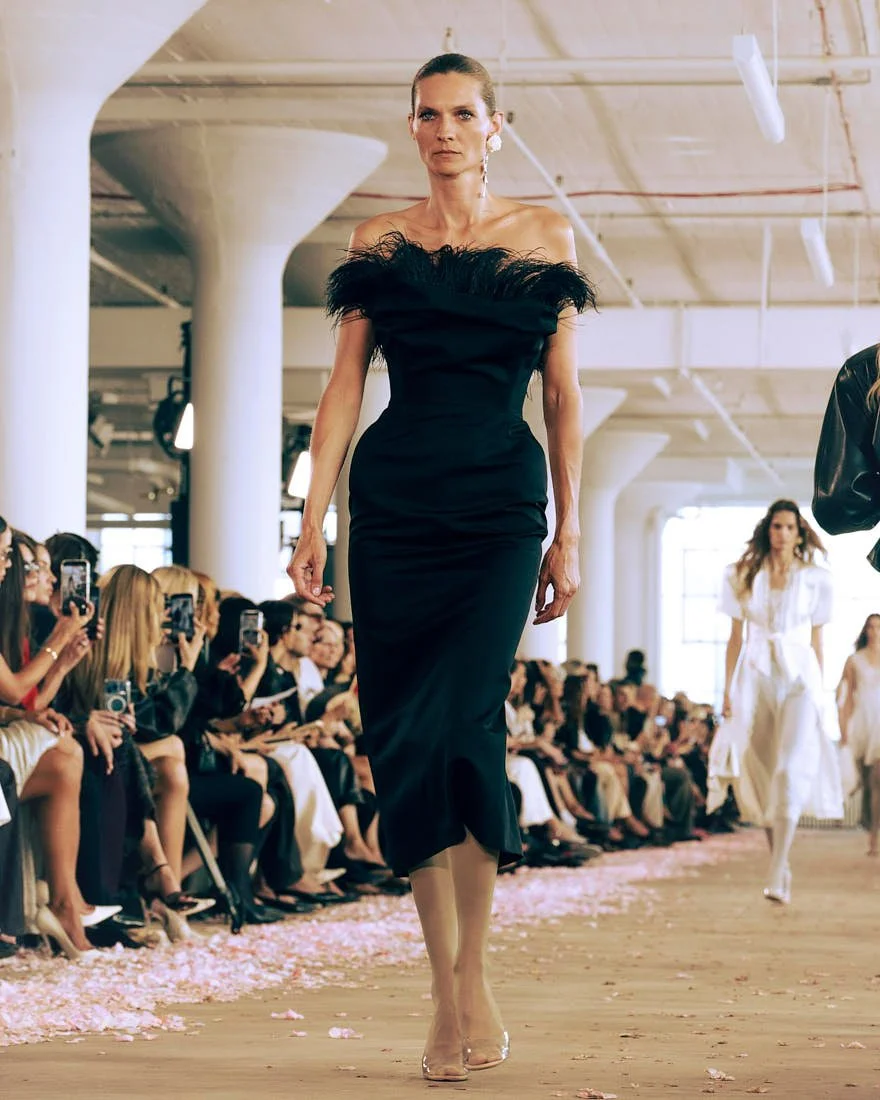
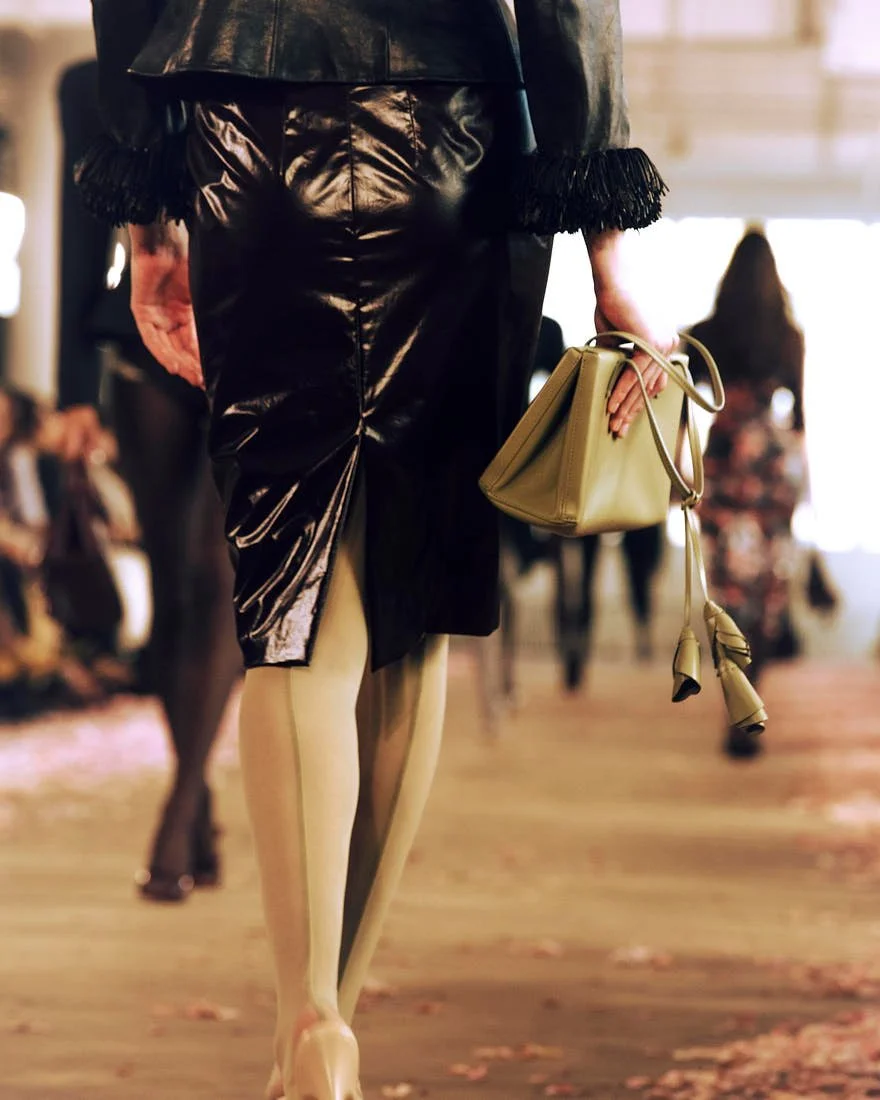
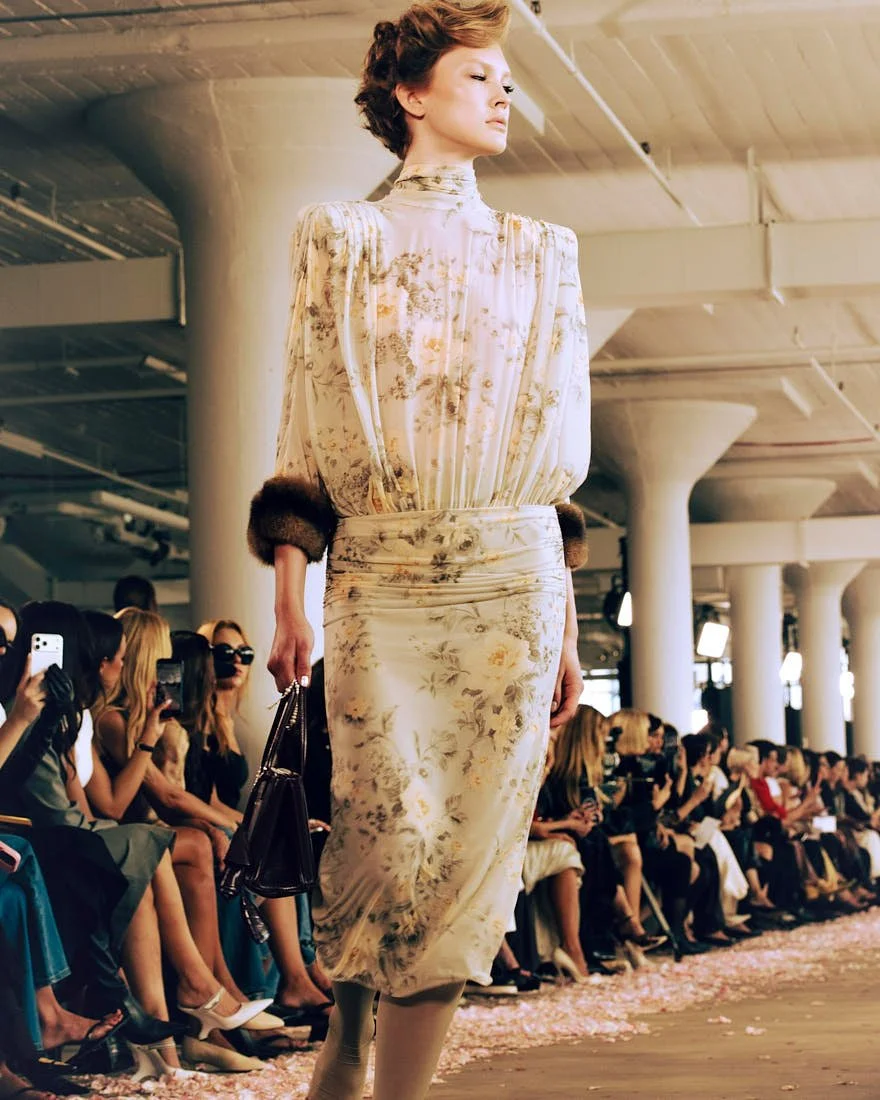
For her New York runway debut, Magda Butrym named the collection Natalia, referencing Polish artist Natalia LL and a model of femininity authored from within rather than arranged for an external gaze. Broad-shouldered coats and severe leather blousons were placed against transparent dresses, lace, lingerie constructions, feathers and pearls. A runway strewn with roses reinforced the brand’s familiar romantic vocabulary, but the collection was strongest in its harder collisions: foil-coated outerwear over exposed skin, or a black trench containing something almost weightless beneath it. Butrym’s sensuality remained deliberate, controlled and conscious of its own image-making power.

 
MAGDA BUTRYM SS27  New York Fashionweek Noa Lesche NYFW LE MILE Magazine

MAGDA BUTRYM SS27

MAGDA BUTRYM SS27  New York Fashionweek Noa Lesche NYFW LE MILE Magazine

MAGDA BUTRYM SS27

MAGDA BUTRYM SS27  New York Fashionweek Noa Lesche NYFW LE MILE Magazine

MAGDA BUTRYM SS27


ALIENANT

Yuchen Han titled Alienant’s SS27 collection A Glimpse of Divinity, beginning with a childhood image of an ant carrying a grain of rice larger than itself. That improbable burden became a study in endurance: oversized hoodies, track jackets and loose trousers surrounded the body with protective volume, while distressed surfaces kept the clothes from appearing comfortably insulated. The streetwear language itself was familiar, but Han made it personal through imbalance, abrasion and an almost defensive scale. Presented at New York Men’s Day, the collection framed resilienc as the physical effort of carrying what appears impossible.


Alienant SS27 New York Fashionweek Noa Lesche NYFW LE MILE Magazine

ALIENANT SS27

Alienant SS27 New York Fashionweek Noa Lesche NYFW LE MILE Magazine

ALIENANT SS27

Alienant SS27 New York Fashionweek Noa Lesche NYFW LE MILE Magazine

ALIENANT SS27

Alienant SS27 New York Fashionweek Noa Lesche NYFW LE MILE Magazine

ALIENANT SS27


Clara Son SS27 New York Fashionweek Noa Lesche NYFW LE MILE Magazine

CLARA SON SS27

CLARA SON

Clara Son disturbed tailored clothing through physical gestures that remained visible in the finished garments. Fabric twisted across the torso, seams changed direction and sections were gathered or knotted instead of settling into conventional symmetry. The presentation extended that instability through performance, allowing the clothing to be understood in movement rather than as a sequence of isolated looks. Son’s approach was most convincing when the intervention remained economical: a controlled fold or displaced fastening could make an otherwise familiar piece feel psychologically unsettled. SS27 continued her interest in menswear as an emotional form, capable of suggesting vulnerability without abandoning structure.

 
Clara Son SS27 New York Fashionweek Noa Lesche NYFW LE MILE Magazine

CLARA SON SS27

 
Clara Son SS27 New York Fashionweek Noa Lesche NYFW LE MILE Magazine

CLARA SON SS27


AVON ANGLERS SS27 New York Fashionweek Noa Lesche NYFW LE MILE Magazine

AVON ANGLERS SS27

AVON ANGLERS SS27 New York Fashionweek Noa Lesche NYFW LE MILE Magazine

Berlin Fashion Week SS27
/ Barragan seen by Nicolai Sauer


AVON ANGLERS

Patrik Rzepski approached American menswear from inside its most recognisable categories. Chinos, checked shirts, pleated trousers, denim and hoodies were retained as practical clothes, then reconsidered through fabric, proportion and construction. Japanese rainwear material gave a technical character to familiar shapes, while upcycled Carhartt trousers and bleached T-shirts introduced the evidence of prior use. Produced in New York, the collection resisted heritage nostalgia and gratuitous deconstruction. Its strongest pieces relied on small disruptions: a more deliberate volume, an unexpected surface or a workwear reference refined without being cleaned of its original purpose.

 
AVON ANGLERS SS27 New York Fashionweek Noa Lesche NYFW LE MILE Magazine

AVON ANGLERS SS27

 
AVON ANGLERS SS27 New York Fashionweek Noa Lesche NYFW LE MILE Magazine

AVON ANGLERS SS27


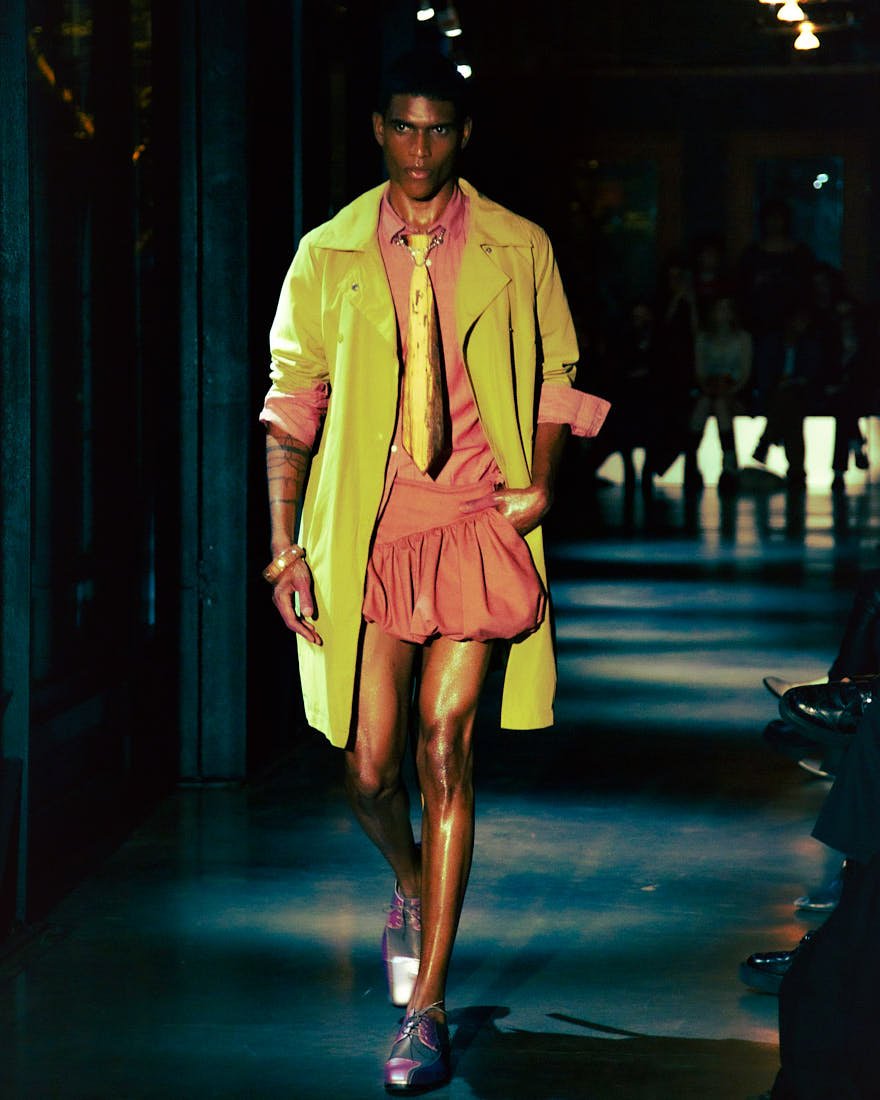
BAD BINCH TONGTONG

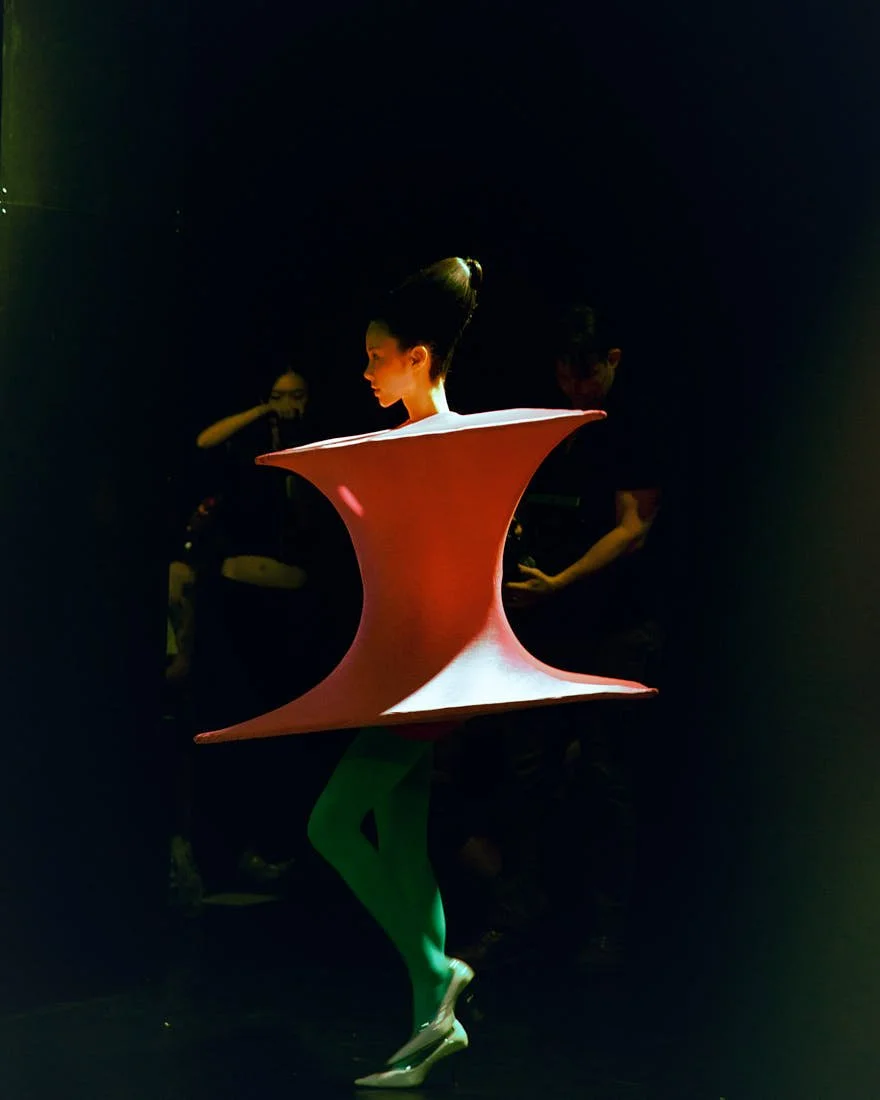
Terrence Zhou’s bodies rarely occupy only the space conventionally allowed to clothing. For SS27, hooped constructions pushed skirts far beyond the hips, spherical forms appeared to hover around the models and translucent fabric kept even the largest silhouettes unexpectedly light. Neon pinks, acid greens and illuminated elements gave the runway the heightened colour of an imagined world, culminating in Saweetie’s closing appearance. The collection’s spectacle rested on serious control: structures bounced, swayed and shifted without collapsing into static costume. Zhou’s achievement was to make extreme volume feel responsive to movement, giving fantasy a physical logic of its own.

 
BAD BINCH SS27 New York Fashionweek Noa Lesche NYFW LE MILE Magazine

BAD BINCH SS27

BAD BINCH SS27 New York Fashionweek Noa Lesche NYFW LE MILE Magazine

BAD BINCH SS27

BAD BINCH SS27 New York Fashionweek Noa Lesche NYFW LE MILE Magazine

BAD BINCH SS27


BIG OCEAN × ANDY YU SS27 New York Fashionweek Noa Lesche NYFW LE MILE Magazine

BIG OCEAN × ANDY YU SS27


BIG OCEAN × ANDY YU

Created with Big Ocean, the Korean group recognised as the first deaf K-pop boy band, Andy Yu’s collection assembled an unlikely vocabulary of British military dress, Victorian romance and hard-wearing denim. Cadet jackets were cropped or softened with lace; floral appliqués spilled from a blouson; loose shirting acquired ornamental overlays. Rather than translating the band’s identity into merchandise, Yu developed a fuller visual proposition around performance and communication. The ceremonial elements gave the clothes presence, while denim and workwear prevented the collection from becoming overly precious. It was among New York Men’s Day’s most resolved and genuinely surprising collaborations.

 
BIG OCEAN × ANDY YU SS27 New York Fashionweek Noa Lesche NYFW LE MILE Magazine BTS Show

BIG OCEAN × ANDY YU SS27

 
BIG OCEAN × ANDY YU SS27 New York Fashionweek Noa Lesche NYFW LE MILE Magazine

BIG OCEAN × ANDY YU SS27


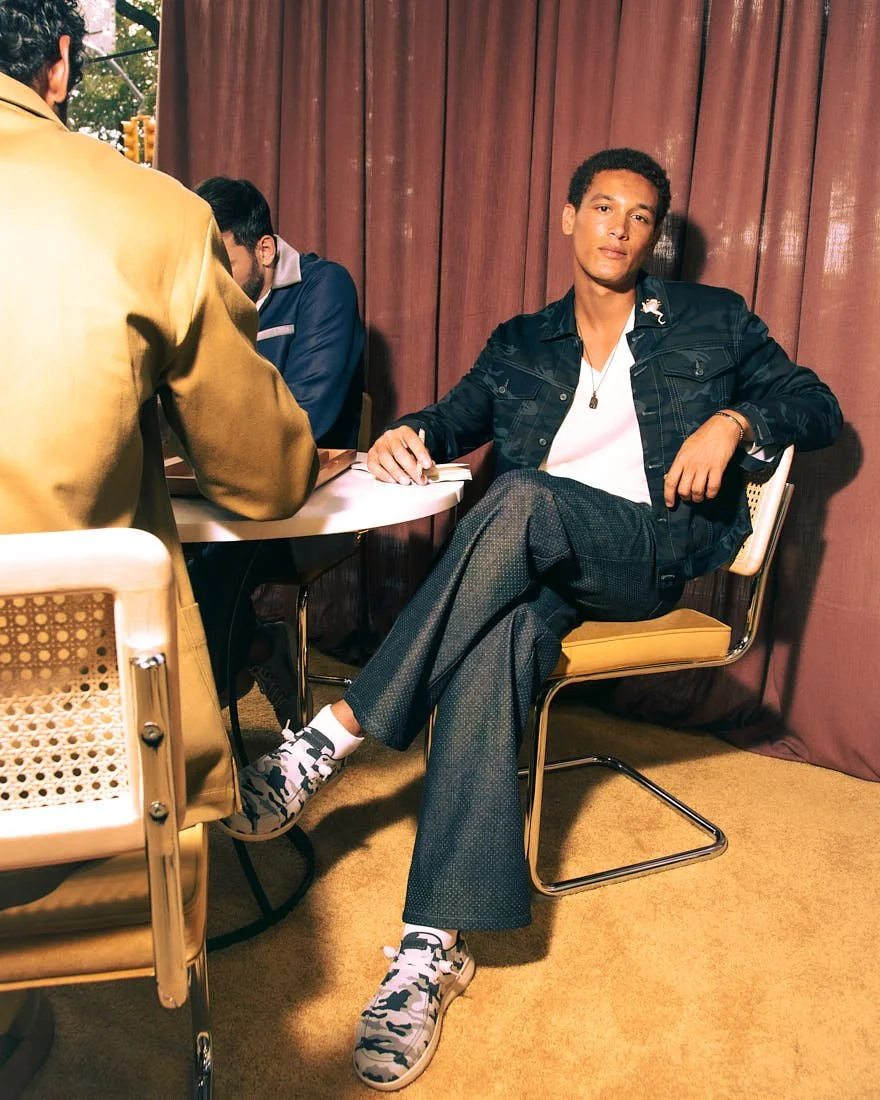
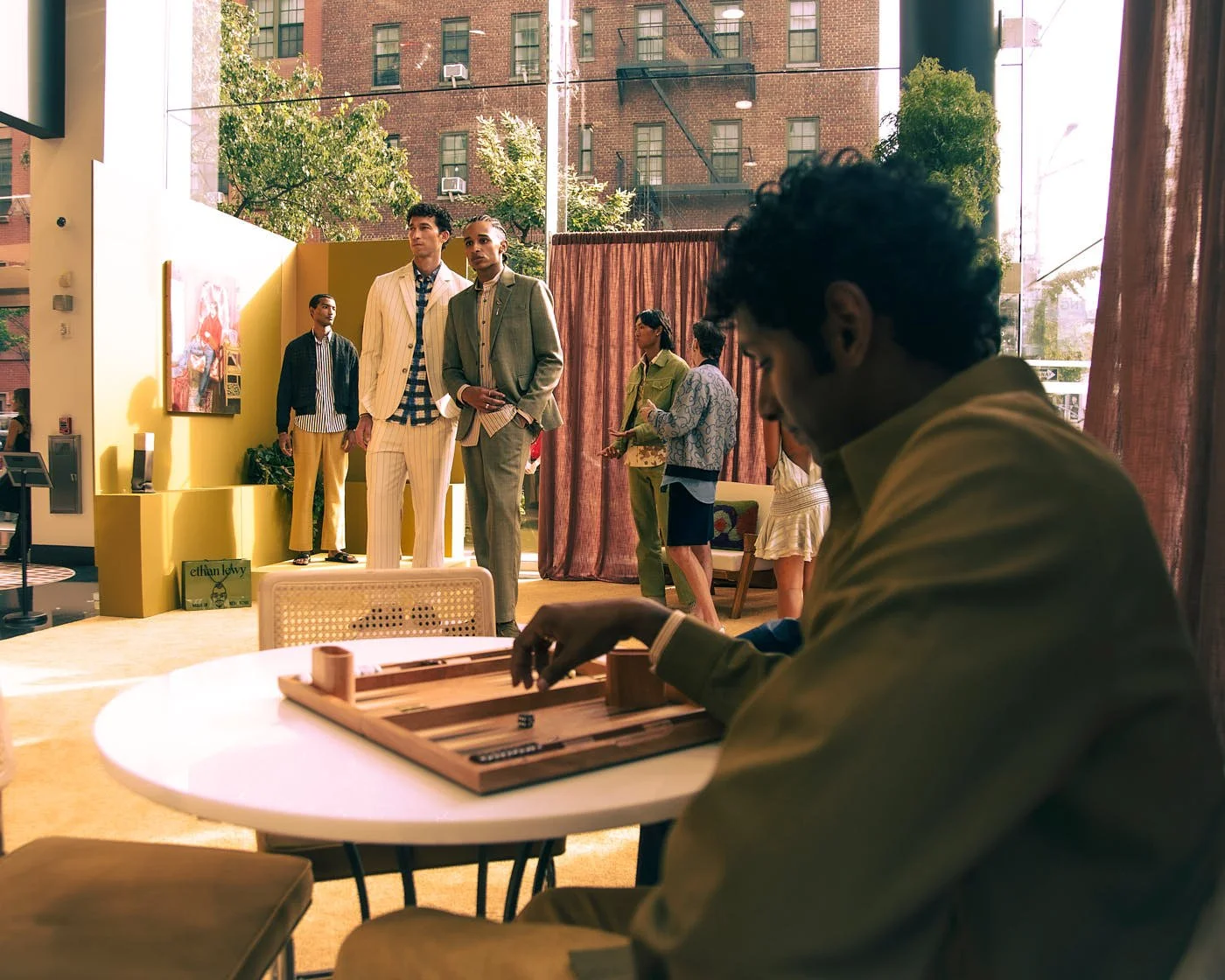
ETHAN LEWY

Ethan Lewy describes his work as “charming menswear,” and SS27 gave the phrase substance without relying entirely on nostalgia. Classic tailoring and neatly composed shirts appeared in spirited colours, faded camouflage, painterly checks and loose, ink-like patterns. The silhouettes remained legible, allowing surface and fabric to carry much of the collection’s personality. Made partly from luxury deadstock textiles, the clothes possessed the slight irregularity of pieces discovered rather than uniformly manufactured. At times the whimsy approached preciousness, but Lewy’s restraint in construction kept the presentation grounded. Its appeal lay in making conventional polish feel individual again.

 
ETHAN LEWY SS27 New York Fashionweek Noa Lesche NYFW LE MILE Magazine

ETHAN LEWY SS27

ETHAN LEWY SS27 New York Fashionweek Noa Lesche NYFW LE MILE Magazine

ETHAN LEWY SS27


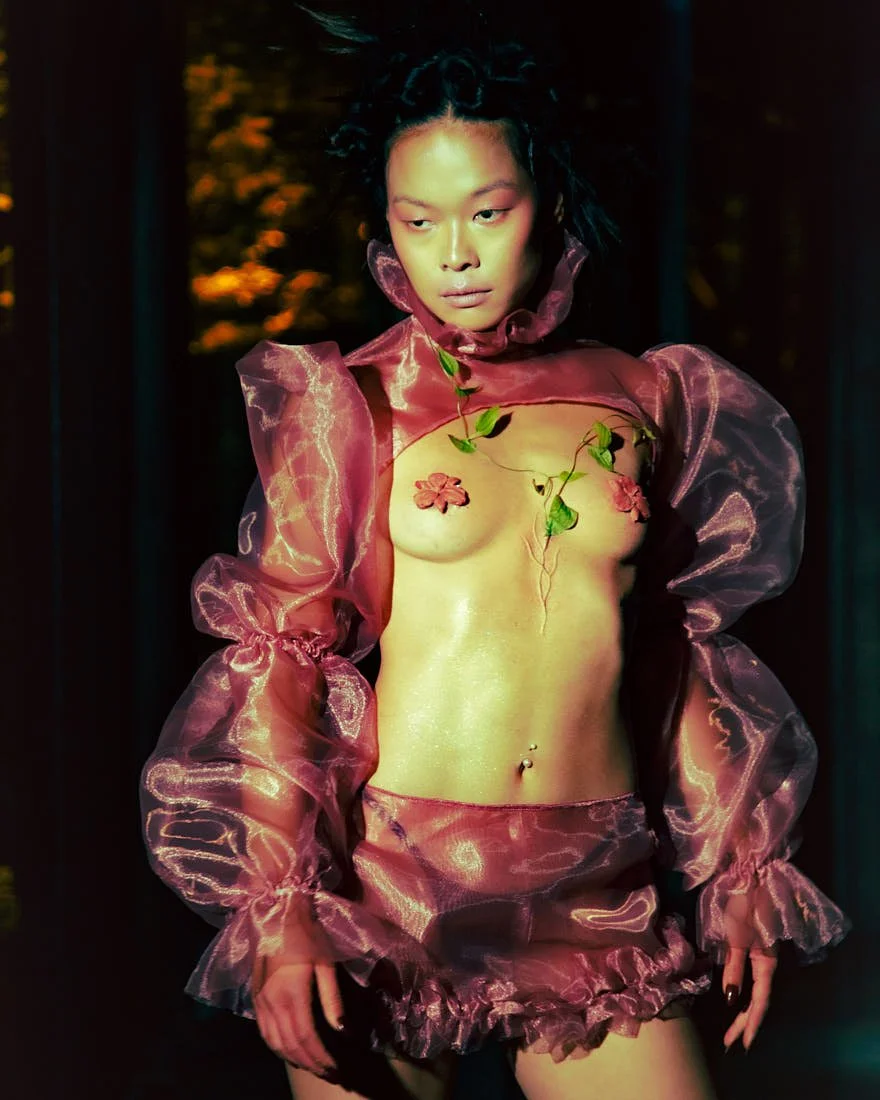
RIO

Rio Uribe’s Horizons looked to the architecture of Luis Barragán and to plants as models for colour, proportion and growth. Sun-faded pink, deep cyan, indigo and succulent green moved through relaxed sportswear, elongated silhouettes and more emphatically sculpted forms. Flowers and carnivorous plants informed shapes without being reproduced as polite decoration; their opening, folding and consuming structures were translated into volume around the body. Presented with RIO’s characteristic mix of streetwear and unapologetic individuality, the collection treated renewal as something physical. New beginnings arrived through saturated colour and silhouettes that appeared to be actively expanding.

RIO SS27 New York Fashionweek Noa Lesche NYFW LE MILE Magazine

RIO SS27

RIO SS27 New York Fashionweek Noa Lesche NYFW LE MILE Magazine

RIO SS27


SCIENCE PROJECT COMPANY SS27 New York Fashionweek Noa Lesche NYFW LE MILE Magazine

SCIENCE PROJECT COMPANY SS27


SCIENCE PROJECT COMPANY

Heginz Janvier called Science Project Company’s collection Reading the Room, using military clothing and technical tailoring to examine the social codes through which hierarchy and belonging are recognised. Uniform references appeared in controlled layers, functional detailing and garments that signalled different positions within an implied chain of command. The clothes drew equally from hip-hop’s use of dress to communicate status, protection and affiliation. Rather than reproducing literal service uniforms, Janvier focused on how authority is constructed visually—often before anyone speaks. The collection’s precision gave those questions clarity, while its street-level practicality prevented the concept from overwhelming the clothing.

 
SCIENCE PROJECT COMPANY SS27 New York Fashionweek Noa Lesche NYFW LE MILE Magazine

SCIENCE PROJECT COMPANY SS27

SCIENCE PROJECT COMPANY SS27 New York Fashionweek Noa Lesche NYFW LE MILE Magazine

SCIENCE PROJECT COMPANY SS27


THREEASFOUR

Returning to the runway after five years, threeASFOUR built its SS27 collection around denim, described by the designers as a “uniform of humanity.” New jeans and archetypal jackets appeared beside archival forms reconstructed in indigo-dyed cotton and repurposed vintage Levi’s. Spiral-cut, reversible trousers demonstrated the trio’s geometric pattern-making at its most functional; elsewhere, tetrahedral structures, illuminated icosahedrons, bubble helmets and a 3D-printed butterfly-wing dress pushed the material into speculative territory. The scale of the show occasionally bordered on excess, yet its central proposition remained clear: familiarity does not exclude experimentation. Even the most universal garment can support an entirely singular system of construction.

 
THREEASFOUR SS27 New York Fashionweek Noa Lesche NYFW LE MILE Magazine

THREEASFOUR SS27

THREEASFOUR SS27 New York Fashionweek Noa Lesche NYFW LE MILE Magazine

THREEASFOUR SS27

THREEASFOUR SS27 New York Fashionweek Noa Lesche NYFW LE MILE Magazine

THREEASFOUR SS27

THREEASFOUR SS27 New York Fashionweek Noa Lesche NYFW LE MILE Magazine

THREEASFOUR SS27


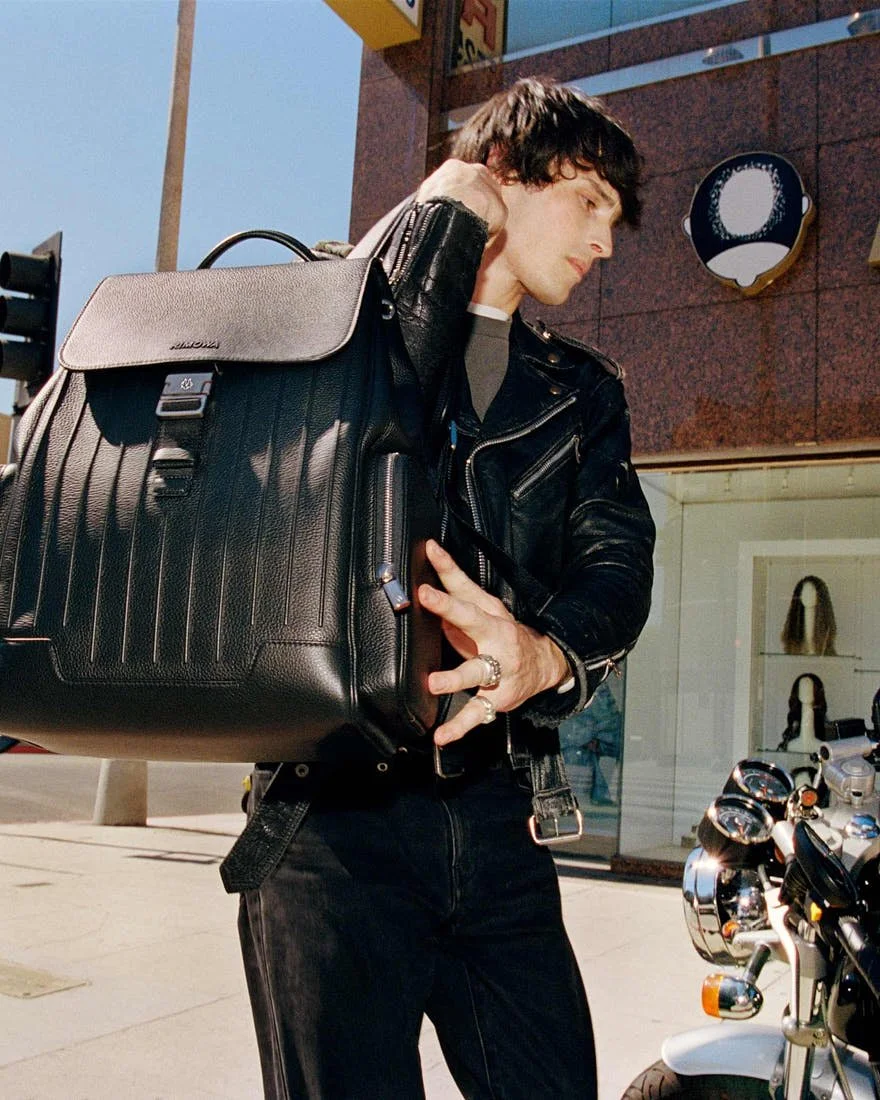
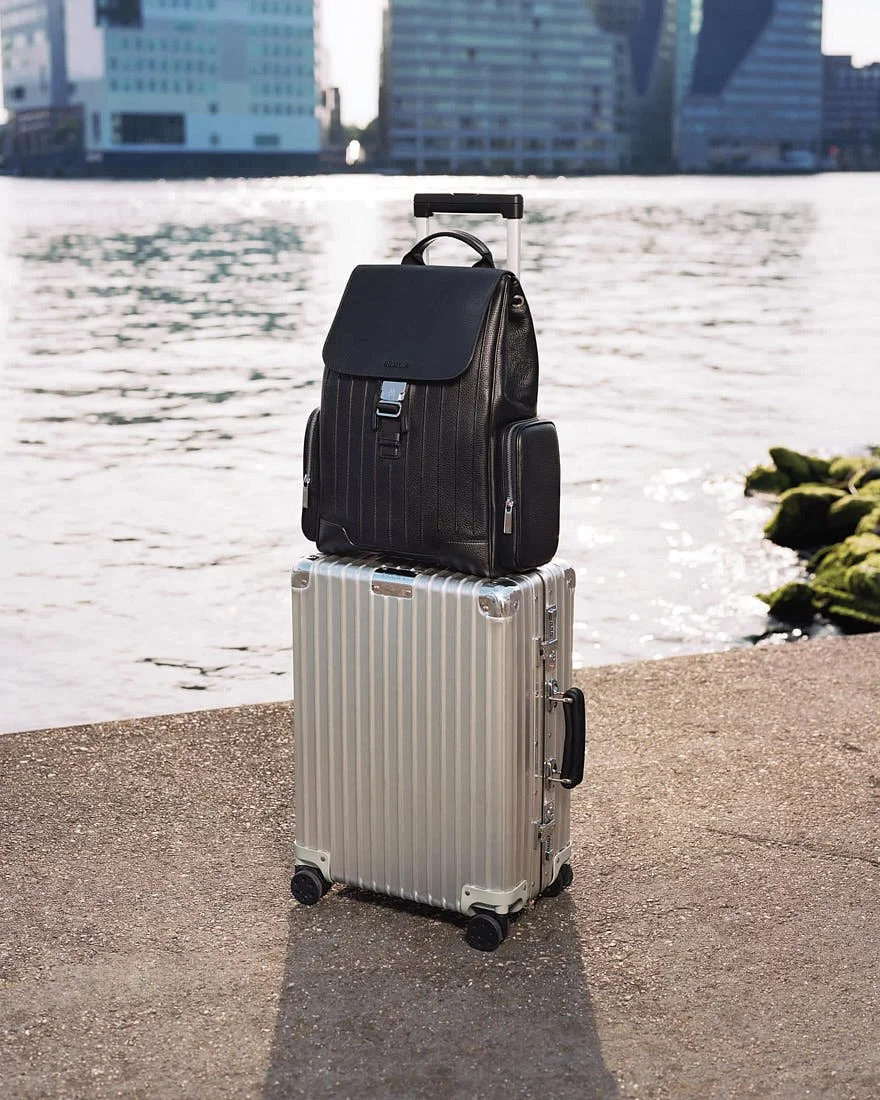
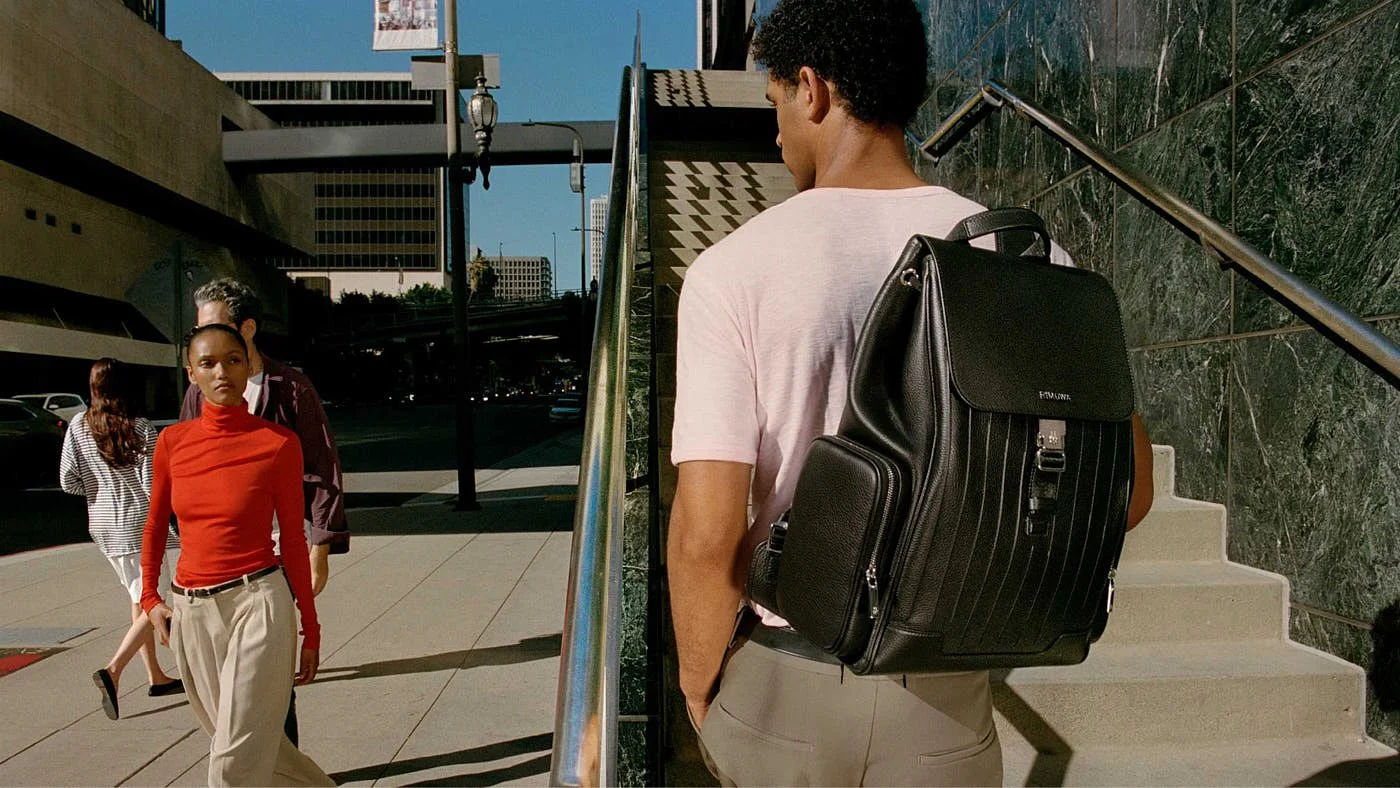
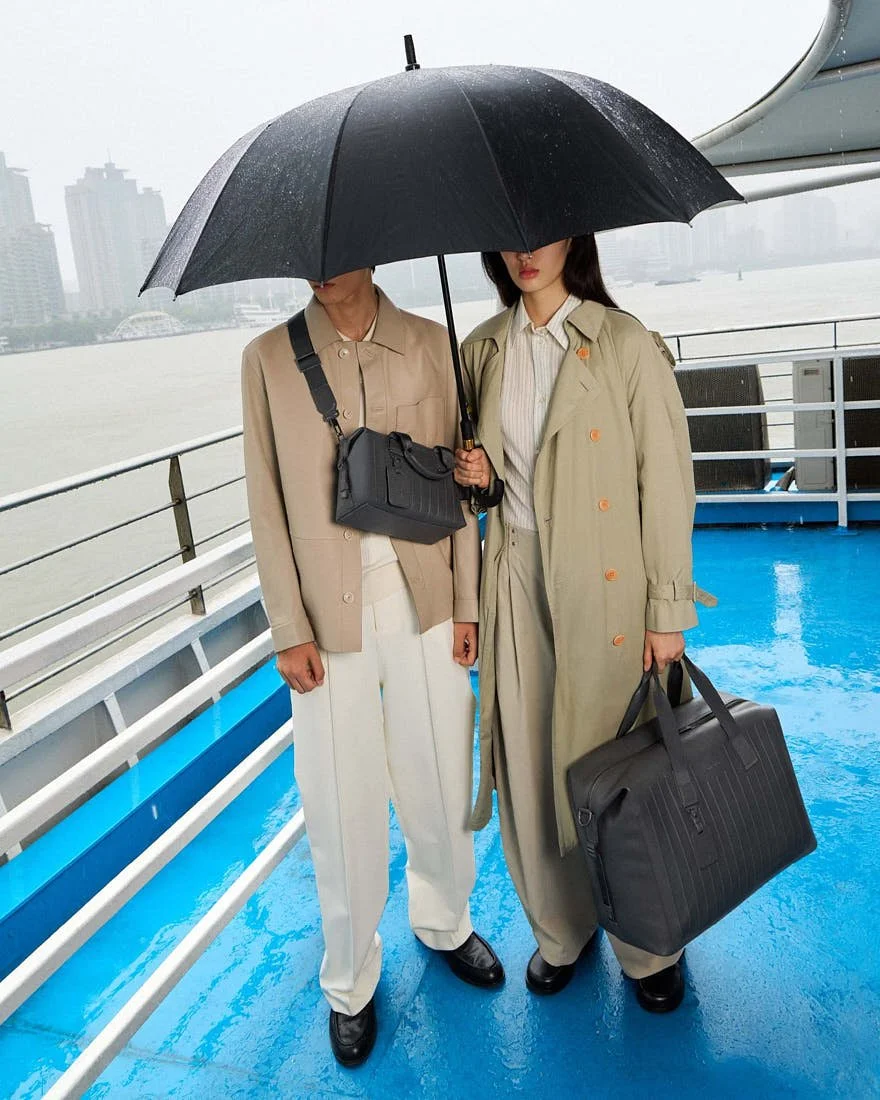
RIMOWA Never Still - Leather Bags & Distinct Cabin

RIMOWA Never Still - Leather Bags & Distinct Cabin

Double-click to edit...

A Review of the RIMOWA Never Still campaign

RIMOWA Never Still: The City as a Stop Along the Way


written KLAAS HAMMER


Not every journey requires a suitcase. Sometimes, all it takes is a trip through your own city. To the office, a café, the airport, or simply somewhere the day has yet to decide. With the latest expansion of its Never Still collection, RIMOWA turns its attention to these small movements that shape everyday life.

 
RIMOWA Never Still LE MILE Magazine Digital FW26 looks Tove Lo Cover LE MILE Magazine FW26
 
RIMOWA Never Still LE MILE Magazine Digital FW26 looks Tove Lo Cover LE MILE Magazine FW26


For the accompanying campaign, the brand brought together photographers Dana Lixenberg, Daniel Arnold, and Feng Li to capture moments in Amsterdam, Los Angeles, and Shanghai. Their images and films observe people on the move – between early morning light, car windows, and city streets – turning the seemingly ordinary into the focus itself.


RIMOWA Never Still LE MILE Magazine Digital FW26 looks Tove Lo Cover LE MILE Magazine FW26
 

The collection also introduces new leather bags that feel less like traditional travel luggage and more at home within an urban wardrobe. Anthracite and Mocha expand the colour palette with two understated shades: a smoky grey and a muted brown. RIMOWA’s signature grooved design appears throughout the bags, bringing the brand’s distinctive language to pieces made for journeys that may not necessarily appear on a map. New additions include smaller versions of the Leather Flap Backpack, Duffle Bags in different sizes, and a compact Cross-Body Bag. The latter translates the silhouette of the larger travel bag into a much smaller format, designed for everyday movement. Completing the collection is a black Zipped Tote, offering space for a laptop and daily essentials while effortlessly moving between work and life on the go.

The Distinct Cabin also receives a new interpretation in Anthracite. While remaining true to the classic RIMOWA suitcase, the model is distinguished by its fully leather exterior. Over time, the material develops a unique patina – fitting for a piece of luggage whose story truly begins with every journey. What makes the latest Never Still collection compelling is not necessarily the question of where it takes you. Instead, it is about all the small distances in between. Because movement does not only happen at the gate – it has already begun on the way there.

 
RIMOWA Never Still LE MILE Magazine Digital FW26 looks Tove Lo Cover LE MILE Magazine FW26
 
RIMOWA Never Still LE MILE Magazine Digital FW26 looks Tove Lo Cover LE MILE Magazine FW26
 

all images (c) RIMOWA Press

Christian Louboutin - Pop Art Fall/Winter 2026 Collection Campaign

Christian Louboutin - Pop Art Fall/Winter 2026 Collection Campaign

Double-click to edit...

A Review of the Christian Louboutin Fall/Winter 2026 womenswear campaign

Christian Louboutin Unveils Pop Art Fall/Winter 2026 Collection Campaign


written MALCOLM THOMAS


On Tuesday, Christian Louboutin unveiled its artful take on its Fall/Winter 2026 womenswear collection with a paint and watercolour-streaked campaign, an homage to fine art’s continued influence on the house. Previously inspired by René Magritte, this season a touch of 80’s style seemed to be on Louboutin’s mood board, featuring purples, yellows, greens and reds, splashed across sleek industrial environs to complement the offerings, highlighting above all else the enduring legacy of the Pigalle. Re-fashioned as La Pigalle, the infamous shoe now offers a padded insole for superior support, a deeper red sole and a fresh range of styles, currently available in water snake, python and crystal.  

 
Christian Louboutin Unveils Pop Art Fall/Winter 2026 Collection Campaign LE MILE Magazine
 
Christian Louboutin Unveils Pop Art Fall/Winter 2026 Collection Campaign LE MILE Magazine


Other additions include sculptural sandal Rosa Fruit, Einsail On The Feet, offered as both a pump and a mule, featuring lavish details such as leaves, flowers and hand-set crystal snails and the Kate Max Veggie, a pearl, sequin and crystal-embroidered vegetable delight, a direct influence from the vibrancy of Louboutin’s personal garden. Rounding out the new additions are the Plume and Birdie—feather, glittering crystal and stone-embellished footwear inspired by the cabaret.

 
Christian Louboutin Unveils Pop Art Fall/Winter 2026 Collection Campaign LE MILE Magazine
 
Christian Louboutin Unveils Pop Art Fall/Winter 2026 Collection Campaign LE MILE Magazine
 

Other styles of note are the Venus Tulip Baguette, named after the Roman goddess of love. The Tulip Baguette is a limited-edition bag of embossed tulip design, specially crafted by hand. The Bettina Tote was introduced in corn yellow this season; the Eva Shoulder Bag made its return in veau velours empire, and the Sabrina evening clutch, a satin-finished stretch neoprene pouch wristlet, is offered in black and empire, alongside a special edition adorned with feathers and strass.

Cheers to the art of dressing.

The Fall/Winter 2026 Women’s collection is now available in stores.


Christian Louboutin Unveils Pop Art Fall/Winter 2026 Collection Campaign LE MILE Magazine
 
Christian Louboutin Unveils Pop Art Fall/Winter 2026 Collection Campaign LE MILE Magazine
 

Christian Louboutin Unveils Pop Art Fall/Winter 2026 Collection Campaign
all images (c) Christian Louboutin Press

Louis Vuitton and Singer Reimagine the Porsche 911

Louis Vuitton and Singer Reimagine the Porsche 911

Double-click to edit...

What Happens When Louis Vuitton Gets Behind the Wheel of a Porsche 911


written LE MILE


A mechanical clock that can be lifted from a dashboard and carried to a desk feels almost anachronistic in 2026, and that small act of removal is where the Louis Vuitton and Singer project becomes interesting. The collaboration began with a request for a dashboard timepiece made at La Fabrique du Temps Louis Vuitton. Once the clock entered the cockpit, the surrounding instruments demanded the same degree of attention. The speedometer, rev counter and gauges followed, with Tambour hands, indexes and typography translated into automotive scale. What started as one object gradually occupied an entire interior, and eventually two cars.


The progression says something about the peculiar attraction of objects whose value reveals itself slowly. Attention settles on a knurled switch, the reflection across a rhodium-plated vent, the feel of a leather pull tab, the mechanical clock continuing to run after the engine has stopped. Somebody has already spent time thinking about the moment a hand reaches for each of them. That kind of care gives an object intimacy and it also gives it a future, through wear, touch, patina and the small habits that form around living with something for years.


Porsche 911 Reimagined by Singer and Louis Vuitton LE MILE Magazine

courtesy of LOUIS VUITTON


Singer’s work begins with the Porsche 911, a shape carrying decades of memory, obsession and personal mythology. The Californian atelier has made a practice of returning to that architecture and finding new possibilities within it. Louis Vuitton’s history with the road reaches back to the earliest years of motoring. Georges Vuitton was designing trunks specifically for automobiles by 1897, following their contours and developing luggage that could travel on their bodies. In 1909, Pierre and Jean Vuitton designed a car on a Stabilia sports chassis. Long before the automobile became another space for luxury branding, it was already changing the objects people needed and the way those objects were designed.

That history surfaces in the Porsche 911 Reimagined by Singer – Classic through decisions that carry their own memory. Saffron, cobalt blue and yellow draw from Vuitton’s visual archive, early Singer commissions and automobile trunks made for Citroën in 1924. Inside, natural leather, malletage quilting and hand-finished metal give the cabin the intimacy of something intended to age alongside its owner. Ventilation holes take the form of Monogram flowers. A roof rack accepts luggage, skis or a surfboard. Bags occupy the exact volumes available inside the car. There is an appealing certainty to objects made for one particular place.

 
Porsche 911 Reimagined by Singer and Louis Vuitton LE MILE Magazine surf

/ courtesy of LOUIS VUITTON

Porsche 911 Reimagined by Singer and Louis Vuitton LE MILE Magazine watch

/ courtesy of LOUIS VUITTON

Porsche 911 Reimagined by Singer and Louis Vuitton LE MILE Magazine car design

/ courtesy of LOUIS VUITTON


Nicolas Ghesquière develops another chapter of the project through a Porsche 911 Reimagined by Singer – Classic Turbo, conceived as a cabriolet in Calcaire Lutétien white with cognac leather, gold-toned details and American walnut. Classic motorboats inform the woodwork across the rear deck and luggage compartments, bringing the atmosphere of a runabout into the car. Ghesquière’s fascination with technical objects, futuristic surfaces and historical design finds an unusually physical setting here. Every idea eventually meets a hand, a body, the weather or the road. The luggage makes that relationship increasingly personal. A three-part trunk slots into the front boot. A garment bag folds into the cabin. The papers of the car travel in their own case. The key has a pouch. The dashboard clock leaves the vehicle and continues its life on a desk. The excess is part of the charm because it imagines travel as a sequence of rituals worth paying attention to: packing, fastening, opening, driving, stopping, unpacking, carrying something from one place into the next.


Porsche 911 Reimagined by Singer and Louis Vuitton LE MILE Magazine

/ courtesy of LOUIS VUITTON

Porsche 911 Reimagined by Singer and Louis Vuitton LE MILE Magazine

/ courtesy of LOUIS VUITTON


The emotional pull of a fitted suitcase lies in the way its empty space already anticipates what someone will bring, while its dimensions already know where the journey will place it. The same feeling runs through these cars. Materials are expected to acquire marks. Leather waits for patina. Mechanical movements continue keeping time. Wood and metal ask to be touched. The Porsche itself arrives with a history that every new owner inevitably adds to.

Louis Vuitton x Singer ultimately describes a fantasy in which every object seems to know where it belongs. The car becomes part of the rituals surrounding departure and return, filled with things designed to accompany a person through both. Perhaps that is why a clock was enough to start the whole project, time was already embedded everywhere else.

 
Porsche 911 Reimagined by Singer and Louis Vuitton LE MILE Magazine interior design leather

/ courtesy of LOUIS VUITTON

Porsche 911 Reimagined by Singer and Louis Vuitton LE MILE Magazine key

/ courtesy of LOUIS VUITTON


all images
/ courtesy of LOUIS VUITTON Press

Louis Vuitton´s Monogram Flower - Idylle Blossom Collection Returns in Diamonds

Louis Vuitton´s Monogram Flower - Idylle Blossom Collection Returns in Diamonds

Double-click to edit...

Louis Vuitton Gives Idylle Blossom a Diamond Edge


written SARAH ARENDTS


A flower designed for luggage in 1896 has ended up at the collarbone. More than a century after Georges Vuitton introduced the Monogram Flower, one of Louis Vuitton’s most recognisable signs now appears in white gold and diamonds, scaled down from the surface of the monogram into something worn close to the skin. In the latest Idylle Blossom pieces, the motif sits at the ear, curves around the neck and opens across the finger, carrying the memory of a house emblem into the intimate space of jewelry.


Seen in the campaign image, the new pieces use the face and neckline as scale. The earrings keep the flower compact against the hair, while the necklace follows the collarbone with a low curve that makes the motif readable in one glance. The design depends on a controlled outline: tapered petals, white-gold edges and diamonds placed along the form so the shape stays intact under light. That is where the new Idylle Blossom chapter becomes clearest. Louis Vuitton is working with a motif that has to remain recognisable even when reduced to the size of an earring or pendant.


Idylle Blossom 2026 Louis Vuitton Fine Jewelry still for LE MILE Magazine

Louis Vuitton Idylle Blossom High Jewelry
/ courtesy of LOUIS VUITTON

Idylle Blossom 2026 Louis Vuitton Fine Jewelry worn for LE MILE Magazine

Louis Vuitton Idylle Blossom High Jewelry
/ courtesy of LOUIS VUITTON


Louis Vuitton introduced Idylle Blossom in 2012, giving the Monogram Flower a dedicated jewelry line. The new additions continue that chapter through fine jewelry and high jewelry, both in white gold and diamonds. The fine-jewelry pieces are the most immediate. A pavé-band ring places the flower on the hand with enough weight to be noticed, earrings bring the motif to the face, and a pendant keeps the same shape close to the body. These pieces work best when the design stays compact. The diamonds sharpen the contour, and the flower remains readable without needing scale.

The high-jewelry pieces bring in another Vuitton code through the LV Monogram Star cut diamond. This is where the collection becomes more specific. The necklace follows the line of the neck with a central flower motif, while the star cut adds a second geometry to the piece. In the earrings and ring, the same relationship appears through pavé petals, round-cut diamonds and the sharper light of the star cut. The open Toi & Moi ring gives the idea its clearest form, placing the slender Monogram Flower opposite the LV Monogram Star cut diamond across the finger.


Idylle Blossom 2026 Louis Vuitton Fine Jewelry still for LE MILE Magazine

Inside Dior’s Grammar of Forms Exhibition
/ courtesy of LOUIS VUITTON


These new Idylle Blossom pieces arrive at a moment when luxury houses are asking their historic codes to work harder across image and body. Louis Vuitton has an advantage with the Monogram Flower because the sign was built for repetition from the beginning. In jewelry, that repetition is compressed. The motif has to survive at the scale of an earring, a pendant or the open curve of a ring, where there is little room for excess.

That compression gives the new pieces their focus. The earrings, pendant and Toi & Moi ring are strongest when the flower is held close, with the diamonds tracing the emblem instead of overwhelming it. The collection closes on a simple shift in scale: a symbol once made for the surface of travel is now carried on the skin, sharpened through white gold, diamond setting and the discipline of a recognisable line.


all images
/ courtesy of LOUIS VUITTON Press

Dior Haute Couture - Entering Lynda Benglis’s World of Form

Dior Haute Couture - Entering Lynda Benglis’s World of Form

Double-click to edit...

Inside Dior’s Grammar of Forms Exhibition

Jonathan Anderson Brings Lynda Benglis Into Dior Couture


written LE MILE


Inside the exhibition space for Grammar of Forms, Dior’s couture is placed among trees, glass vitrines, dark wood structures and a reflective floor that turns the room into something almost liquid. The same venue that hosted Jonathan Anderson’s couture show for the house now holds the collection in suspension. Dresses stand upright on slim plinths, some enclosed in tall glass cases, others left open to the surrounding greenery.


A metallic pleated form catches the light beside a black handbag, a white gown appears in a wooden frame, its folds held with the precision of a study object. In another corner, a bronze-toned dress rises from the body with sharp, crumpled volume, closer to sculpture than eveningwear. The exhibition follows Anderson’s second haute couture collection for Dior and gives each look the space to be studied up close. A fold can be read as structure, a pleat becomes a held gesture, and surfaces catch the light differently when the garment no longer passes in a few seconds. Here, the stillness makes the engineering visible.


DIOR Haute Couture Exhibition with artist LYNDA BENGLIS GRAMMAR OF FORMS in Paris for LE MILE Magazine

Inside Dior’s Grammar of Forms Exhibition
with Lynda Benglis


Inside Dior’s Grammar of Forms Exhibition
/ courtesy DIOR

Inside Dior’s Grammar of Forms Exhibition
/ courtesy DIOR


Born in Lake Charles, Louisiana in 1941, Lynda Benglis became one of the defining American artists of her generation after emerging in 1960s New York. Her work moved through poured latex floor pieces, polyurethane foam, wax, metal, gold leaf and glitter. She has always treated material as something active.

It spills, bends, hardens, folds and carries the trace of the body that shaped it. Her sculptures have often been described as frozen gestures, a phrase that returns throughout the Dior project because it gives language to what Anderson is also exploring through couture.

Anderson follows Benglis’s fascination with matter at the point where it begins to shift under pressure. Fabric is pressed into pleated volume and pulled into knotted density, while certain surfaces start to resemble paper or metal. Embroidery carries the glittered intensity of Benglis’s work into the surface of the clothes. What appears spontaneous has been calculated through couture engineering, with the Dior ateliers giving each fold the support it needs to hold its shape around the body. The strongest looks carry that exact tension. The fabric seems caught in the act of becoming an object, while the body remains its point of return.

 
DIOR Haute Couture Exhibition with artist LYNDA BENGLIS GRAMMAR OF FORMS in Paris for LE MILE Magazine

Inside Dior’s Grammar of Forms Exhibition
/ courtesy DIOR

DIOR Haute Couture Exhibition with artist LYNDA BENGLIS GRAMMAR OF FORMS in Paris for LE MILE Magazine

Inside Dior’s Grammar of Forms Exhibition
/ courtesy DIOR


The connection to Dior’s own history sits in the construction. In 1947, Christian Dior’s New Look relied on an internal structure of boning and padding, allowing fabric to create a silhouette that stood away from the body. Over the following decade, the house developed lines such as Zig-Zag, Tulip, A and H, each one treating shape as something deliberate and engineered. Anderson enters that history through Benglis, using her sculptural instinct to test how far Dior’s couture construction can be pushed in fabric.

By the time the viewer leaves Grammar of Forms, the exhibition has made its clearest point about Anderson’s first movements at Dior. The house is being approached through construction and the patient intelligence of the atelier, with Benglis opening a way to think about matter before it settles into form. Her presence keeps the collection away from simple archive exercise or art-world quotation. What remains is the sense of a beginning, carefully held, with Anderson using couture to test how much force a dress can carry before it returns to the body.


Inside Dior’s Grammar of Forms Exhibition
/ courtesy DIOR

Inside Dior’s Grammar of Forms Exhibition
/ courtesy DIOR


all images
/ courtesy of DIOR Press